



Abstract
In this article we reconsider Homer’s poetry in the light of modern achievements in neuroscience. This perspective offers some clues for examining specific patterns of brain functioning. Homer’s epics, for instance, painted a synthetic picture of the human body, emphasizing some parts and neglecting others. This led to the formation of a body schema reminiscent of a homunculus, which we call the “Homeric homunculus.” Both poems were largely the product of centuries of oral tradition, in which the prodigious memory of courtly rhapsodists was essential to the performance of the epics. The underlying cognitive functions required a close interplay of memory and language skills, supported by the musical and rhythmic cadence of Homeric verse.
Introduction
Literary and artistic sources can be powerful and elegant tools for exploring the mechanisms of the human brain. In Homer’s poetry we encounter a number of intriguing features that lead us to speculate on how our mind works in cognitive and linguistic activities. This essay is an attempt to reconsider and interpret some aspects of Homer’s ancient epics in the light of recent neuroscience achievements. It addresses some peculiarities of the matter to provoke reflection and inspire connective thinking.
Neurosciences and Literary Sources
Beginning in the late 1930s, neurosurgeon Wilder Graves Penfield (1891–1976) and his associates provided an impressive description of the primary motor and somatosensory cortices in the precentral and postcentral gyri of human brain (cytoarchitectonic areas 4 and 3, 1, 2 of Brodmann, respectively) (Penfield and Rasmussen 1950) (Fig. 1). The results were based on electrical stimulation during brain surgery under local anesthesia. This revealed the relative size of the cortical regions representing the different body parts. Graphical images of both cortices showed disproportionately large areas devoted to control of the hand, lips, and tongue. In comparison, the other body parts were scantily represented. The result was two grotesquely distorted human figures: the homunculus motorius and the homunculus sensitivus (Fig. 2). Despite criticism, this model of representing the human body continues to serve as a practical guide for clinicians and scientists, although brain representation of the human body has been the subject of new studies and important advances thanks to modern neuroimaging methods (Schott 1993; Stamenov 2005). Information from multiple sensory channels has been shown to be integrated in higher cognitive multisensory brain areas to construct a representation of body shape and size (Dijkerman and de Haan 2007). Imaging studies of the brain have identified some of these body-coding regions in the bilateral ventral premotor cortex, the left posterior parietal cortex, and the occipitotemporal areas, particularly the extrastriate body area (Cardini and others 2013; Downing and others 2006; Limanowski and Blankenburg 2016). We believe that some parallels with ancient Greek poetry, especially the Homeric poems, are conceivable. Here we find a number of terms denoting a particular perceptive, cognitive, and neurolinguistic approach to the reality of the human body.
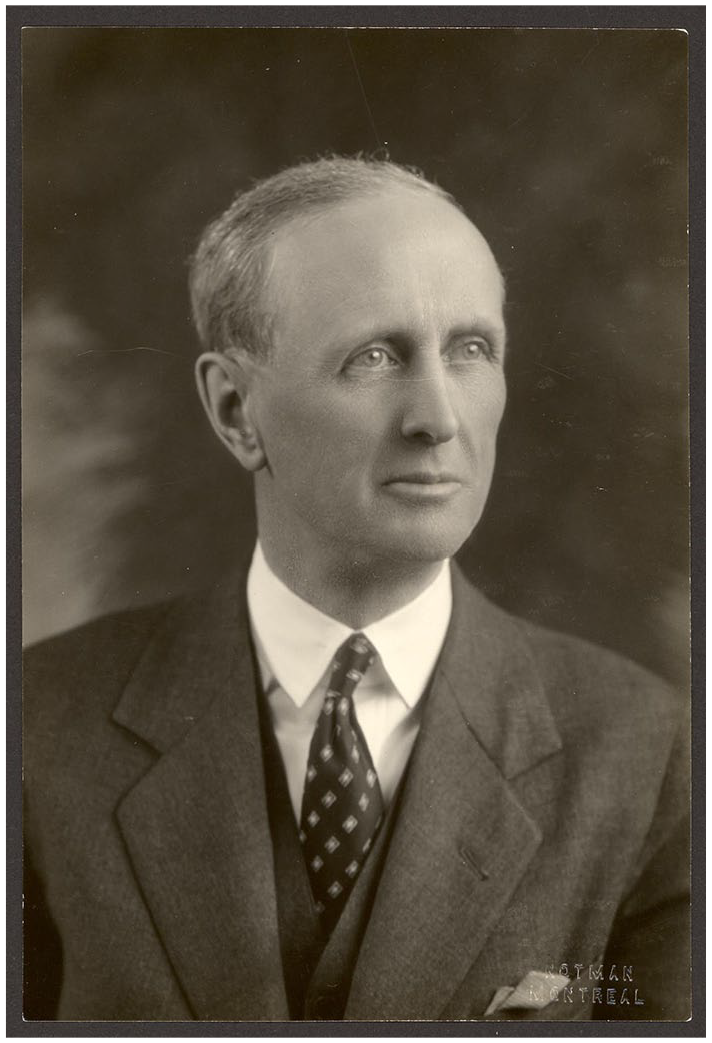
Wilder Graves Penfield (1891–1976). McGill University Archives/William Notman (PR010146).
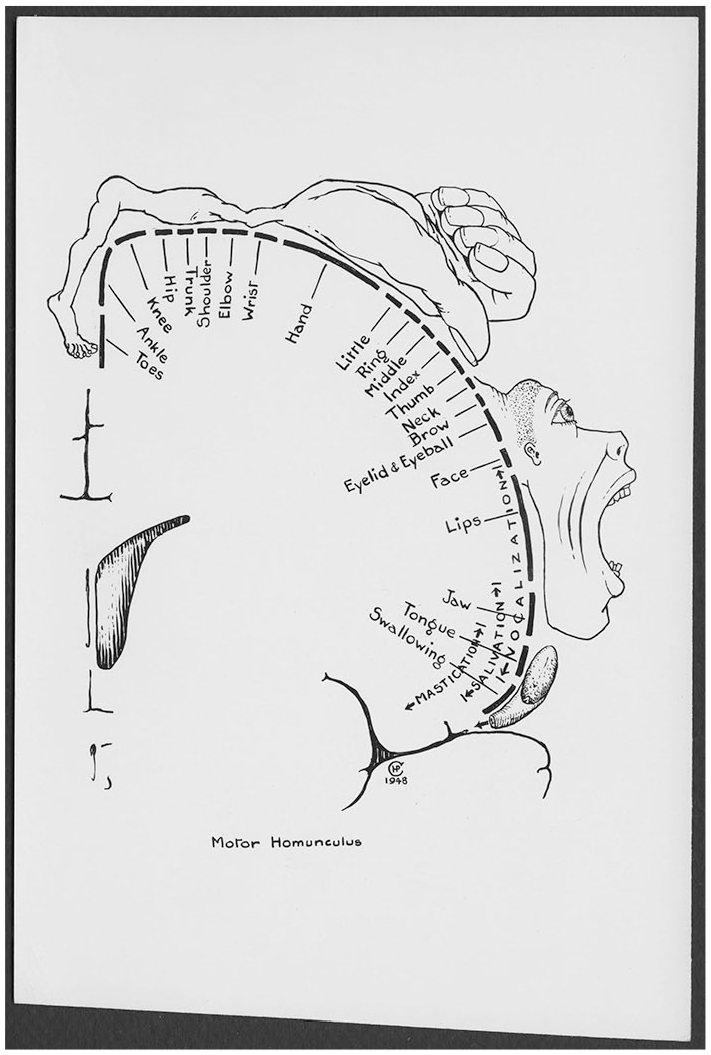
Illustration of the primary motor cortex attributed to Dr. Wilder Penfield’s book Epilepsy by Hortense Pauline Douglas Cantlie. In this homunculus motorius, proportions reflect the extent of the cortical areas controlling different parts of the body. Cantlie drew the original homunculus as it appeared in 1937, as well as its more familiar incarnation published in Penfield and Rasmussen’s The Cerebral Cortex of Man. McGill University Archives/Hortense P. Douglas Cantlie (PR028448).
Without entering the highly debated question raised in the last century by the German philologist Bruno Snell (1946), whether Homeric culture conceptualized the human body as a unity or as a multiplicity of components, we note that Homer’s language emphasizes certain parts of the body and tends to neglect others. This results in a deformed image of human body, like a homunculus, which we call “the Homeric homunculus.” For example, in classical Greek, the word cheir denotes the hand, whereas in Homer’s Greek, it designates not only the hand in the strict sense but also the wrist, the forearm, and the entire superior appendage. This undefined meaning is still attested in some fifth-century
Anthropology and Figurative Arts
Homer’s epics are deeply rooted in the Mycenaean world, the world of aoidoi, the professional court singers. The Mycenaeans, in turn, are closely linked to the Minoans and other civilizations in the Aegean and Anatolian regions, as recently demonstrated by genome-wide ancient DNA analysis (Lazaridis and others 2017). Turning now to Minoan-Mycenaean ceramics and pictorial vase paintings, we find some suggestive corroboration for the literary poems. A votive statuette, circa 13th century
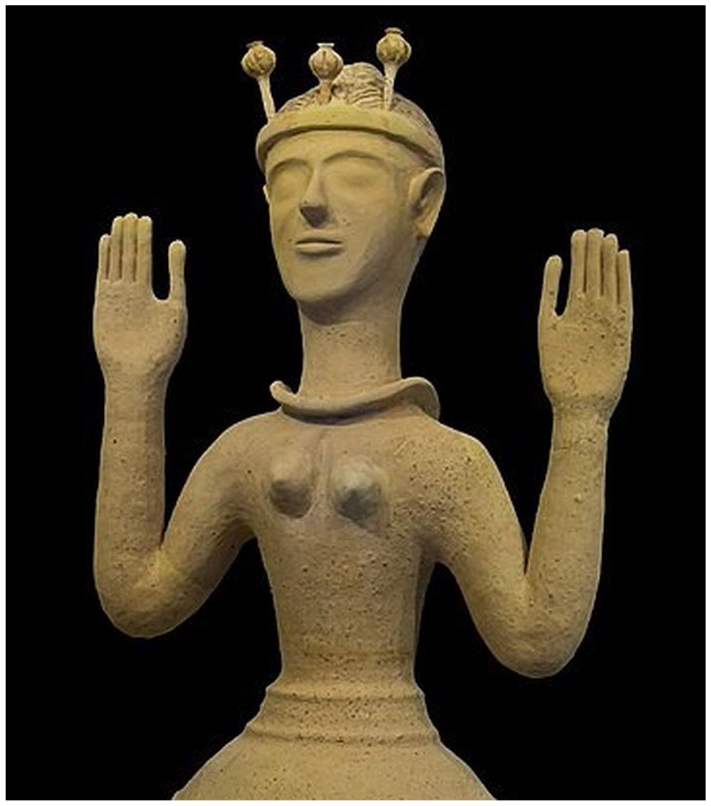
Minoan poppy goddess with raised arms. Terracotta (1400–1200
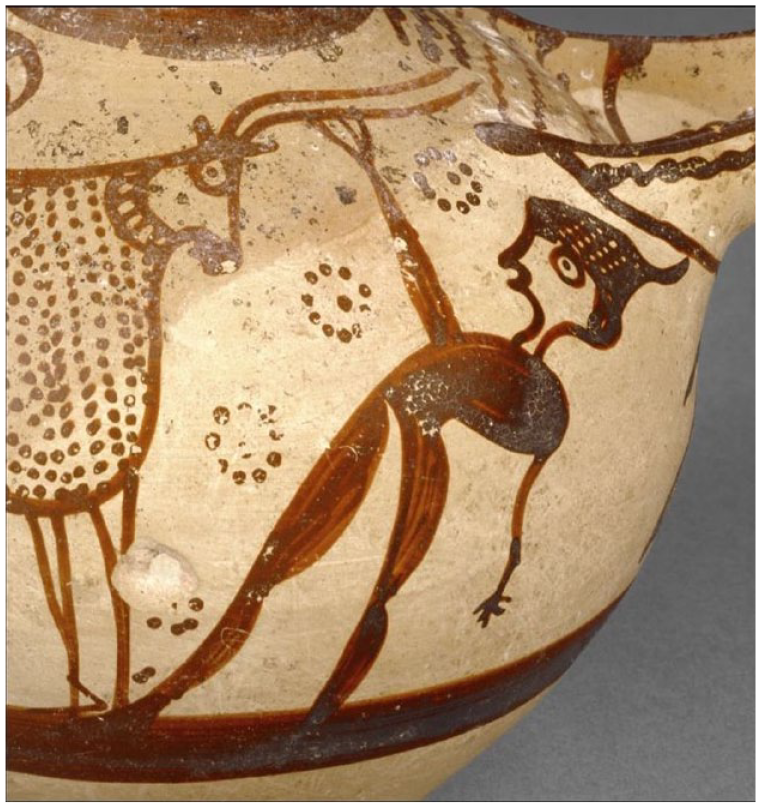
Mycenaean sieve jug. Terracotta attributed to Painter 20 (active 1250–1225
There seems to be a close relationship between the representation of limbs and cognitive and linguistic activities. In an archaic culture of warrior aristocracy from the Late Bronze Age, the arms, legs, and feet are paramount. They enable running, jumping, fighting, or fleeing. The Homeric cognitive approach extracts from reality those elements and properties that are functional for the daily life. Thus, limbs and junctions, guia and melea, are symbolic linguistic expressions that recur in Homeric poetry. Thanks to flexible limbs and elastic joints, warriors win or survive. Achilles is especially good at running because his feet are swift. Whenever a soldier dies, his knees are “loosened.” Thus, in the Homeric homunculus, the upper and lower limbs and the feet occupy a large space. This disproportion is part of the visual artistic pattern of the period, but it is destined to become a caricatural representation, just as homunculi motorius and sensitivus are grotesque representations. Fifty years ago Adkins (1970) published an excellent scholarly work on ancient Greek culture entitled From the Many to the One. This attempt was to show how Greek concepts such as the phsychē and some views of human nature underwent a process of aggregation, unification, and abstraction over time. We believe that the reverse psychological pattern is also true: “from the one to the many” or rather “from the few to multiplicity.” The archaic world is simple. Culture means complexity.
Learning, Memory, Language, and Music
From a neuroscience perspective, Homer’s epics appear to be a powerful framework for studying the intimate mechanisms of the human brain, as they allow us to come into contact with some integrative systems that seem to be at work in an ancient cultural setting and in an early evolution of language. Both poems originated and developed in the framework of the Greek epic tradition, which began in the proto-Mycenaean times (c. 1600
Memorization and linguistic processing are fundamental steps in the thought process that leads to concept formation. This is the viewpoint of empiricist philosophers such as John Locke (1689), who argued that the source of human knowledge is experience. Language, in turn, is closely related to music. Major thinkers, including Charles Darwin (1871) and philosophers such as Diderot and Herbert Spencer, believed that language and music have a common origin (Fitch 2010). Although this issue is currently controversial, music training has been shown to influence various aspects of language processing, and recent work has highlighted the importance of mastery of rhythm in music for mastery of language rhythm in normal and pathological populations (Besson and others 2011). Language and music are complex processing systems that maintain close relationships with attention, memory, and motor skills (Kunert and others 2015). The Iliad and Odyssey are largely the product of oral tradition, of a preliterate society, the creative work of aoidoi, the bards or court singers, and the cultural heritage of generations of oral poets (Kirk 1976). The prodigious memory of these rhapsodists was essential to the recital of the epic poems. Aoidoi were capable to learn by heart thousands upon thousands of words. Memory recall and the ability to remember were aided by the structure of Homer’s dactylic hexameter verse. Each consisted of two segments composed of short groups of words. Aoidoi did not learn each word but individual word blocks, which followed metrical cadence and rhythmic pulse like pieces of music. They are most fundamentally units of utterance, logical chunks of expression, sound bites, and thought bites that constitute Homer’s traditional language (Foley 2007). This accounts for the repetition of linguistic patterns in Homer’s epics and the use of formular phrases that leads to a somewhat codified and symbolic representation of events. A hypothetical analysis of phoneme representation in the ventral sensory-motor cortex of these rhapsodists would probably have revealed a specific hierarchical organization of some “phonetic features” (Conant and others 2014; Hickock and others 2021). Moreover, musical training itself has been shown to improve cognitive abilities, especially long-term verbal memory and working memory for verbal information, attributed to an improved mechanism for verbal rehearsal (Franklin and others 2008). This process is accompanied by neuroplastic changes in brain structure and activity. Musical training increases the volume of the planum temporale (Wernicke’s area), motor and premotor cortices, and inferior temporal and frontal regions, but it also promotes a greater left-sided lateralization, which in turn may affect verbal memory processes. According to some scholars, indeed, long- and short-term verbal memory mainly relies on left-hemisphere structures, although, according to others, the right hemisphere also plays an important role in language perception and comprehension (Federmeier and others 2008; Miendlarzewska and Trost 2014). Recent neurofunctional studies suggest that there is an overlap of shared brain networks between language and music that may be responsible for enhanced verbal skills such as speech fluency in music-trained subjects (Herholz and Zatorre 2012; Patel 2014; Patel and Morgan 2017; Zatorre 2013). In particular, there appears to be a close connection between rhythm, which defines the meter or temporal pattern of music, and language abilities. Neuronal populations might benefit from maintenance of rhythmic regularity in processes such as memory consolidation, especially during sleep (Fell and Axmacher 2011).
One further point should be made. Here we enter the mythology of Memory. Aoidoi sang while excited and possessed by a God, inspired by the Muses. They are the daughters of Mnemosyne, the embodiment of memory, the metaphor for the ability to process and recall information. In the Odyssey 8.47,483,539 Homer refers to the bard Demodocus as a “divine” creature. The possession of a God suggests that aoidoi may have performed their recitations under the influence of neuropharmacological conditioning substances that facilitate the retrieval of consolidated linguistic patterns. Interestingly, in the Odyssey 10.305, Odysseus makes use of a magical herb called mōly, given to him by Hermes, which protects from Circe’s enchantment. The powerful drugs, which the goddess poured out during the magic, acted as potent triggers of forgetfulness. Mōly was thus an antidote to oblivion, a substance aimed at remembering. The true nature of mōly is unknown. It was a fabulous herb. Later authors, such as Theophrastus and Pedanius Dioscorides, referred to mōly as garlic (Allium nigrum), but Pliny the Elder equated it with strychnon hypnotikon in his Natural History XXI.105,180. Medical historians have tentatively identified this substance with snowdrop, a flower that contains galantamine, an alkaloid with anticholinesterase activity used to treat cognitive decline in Alzheimer’s disease and various other memory impairments (Plaitakis and Duvoisin 1983; Stannard 1962).
The Female Body
We conclude this essay with a reference to the female body. In a world of bold heroes and brutal warriors, women’s bodies are usually disregarded. Homer, however, is not unsympathetic to the female body. On the contrary, he shows a kind of special sensitivity. He is not like the trivial, insolent Archilochus. His erotic approach is intense but chaste and discreet. When he describes a beautiful woman, a goddess, or a young girl with her seductive charms, he uses delicate metaphors, saying that she has “pleasant cheeks” or “graceful hair” or “white arms” or “thin waist.” Some distinct visual patterns of the female body are selected and reinforced in his narrative. No mention of the eyes, nose, lips, whole face, hands, torso, or other body parts. Except for one. The most erotic compliment that he paid a woman was that she had “beautiful ankles” (kallisphyros). Homer’s most important pictorial representation of female fascination seems to be limited to and condensed around the ankles. In the neural mapping of Homer’s brain, sensual interest is clearly focused on female ankles. Kallisphyros is an ancient term, probably of Mycenaean origin, composed of an adjective and a noun, one of those Homeric words that Page (1966) calls “Mycenaean linguistic relics” that survived in later Greek language. We believe that such a stylized and selective depiction of the female body entails a high degree of conceptualization. In general, the representation of the human body, male and female, is a highly complex cultural operation in which our brain grasps and elaborates some characteristic aspects of the corporal structures and combines them into conventional constructed patterns and stereotyped images (Dean-Jones 1991). In other words, the artist selects from reality and registers in one’s mind what he or she wants to see or can see. This condition is reminiscent of the familiar imagery of the Steatopygian Venus figures. Here, a grotesque, caricatured conceptualization of the female body could possibly be linked to a representation of female health, fertility, and maternal attitudes. Turning again to archaic Greek pottery images, we find female figures with elegant ankles protruding from elongated, grooved tunics, like magnificent columns of a temple. “Beautiful ankles,” a superb, exquisite image by a poet who was said to be blind.
Conclusions
In this study, we have attempted to interpret some aspects of Homer’s ancient epics in the light of recent achievements in the field of neuroscience research. We have seen that the Mycenaean bards and court singers conceived of the human body in an essentially minimalist and stylized manner, which emphasized particular structural features that differ substantially between male and female subjects. The neural functions underlying this creative process required a prodigious memory and fluency, aided by the rhythmic cadence of Homeric verse. Learning, memory, and linguistic and musical skills worked together to create an unsurpassed poetry that is still very touching and emotionally stirring today.
Footnotes
Declaration of Conflicting Interests
The authors declared no potential conflicts of interest with respect to the research, authorship, and/or publication of this article.
Funding
The authors received no financial support for the research, authorship, and/or publication of this article.

