




Abstract
The Parenting Styles and Dimensions Questionnaire (PSDQ), a widely used index of parenting, assesses authoritative, authoritarian, and permissive dimensions; however, there is little rigorous work to support this structure. In addition, research on the PSDQ has focused on maternal self-reports, leaving the structure of paternal self-reports and informant-reported caregiving poorly understood. We examined the structure of the PSDQ for mother and father self- and informant-report versions, using exploratory factor analyses, in 401 caregivers with 3-year-old children (Sample 1). A three-factor structure showed the best but not consistently acceptable fit; this was supported by confirmatory factor analyses (CFAs) conducted in a sample of 510 caregivers (Sample 2). Removing redundant items improved the fit of the CFAs, such that it was acceptable based on certain indices (i.e., RMSEA and SRMR). These findings support the continued use of the three-factor structure; however, they also indicate that certain items are not useful toward assessing contemporary parenting.
Introduction
Variation in parenting predicts an array of critical adaptive and maladaptive child outcomes, including children’s socioemotional development (Segrin & Flora, 2019), academic achievement (Checa & Alicia, 2018), and other key outcomes (Caron et al., 2006; Kuckertz et al., 2018). Valid assessment instruments of parenting are sorely needed to identify parenting behaviors that may serve as modifiable targets of early intervention and prevention.
Parenting is a construct comprised of stable attitudes (i.e., parenting styles) as well as specific child-rearing behaviors (i.e., parenting practices; Yaffe, 2023). The Parenting Styles and Dimensions Questionnaire (PSDQ; Robinson et al., 2001) 1 is one of the most widely used measures of parenting (e.g., Chequer de Castro Paiva et al., 2024; Delvecchio et al., 2020; Xu et al., 2009; Zhai et al., 2024); a PsycInfo search of “Parenting Styles and Dimensions Questionnaire” as a keyword yielded 399 results between 2003 and 2024. The PSDQ assesses three broad parenting styles initially described by Baumrind (1967, 1971): authoritative, authoritarian, and permissive parenting. Baumrind’s (1967) styles are widely used and were initially based upon two dimensions of parenting: responsiveness and demandingness (Maccoby & Martin, 1983); the same or analogous dimensions are found in other theories of parenting (e.g., control, acceptance, and warmth; Lamborn et al., 1991). Based on early observations of caregivers, Baumrind (1967) described authoritative parenting as the combination of control and demandingness alongside encouragement, warmth, and receptiveness to communication. Authoritarian parents are also high in control, but are detached and less warm, while permissive parents are warm, but noncontrolling and nondemanding (Baumrind, 1971). These domains were hypothesized as caregiving “patterns,” or types in which parents could be classified, rather than empirically derived parenting dimensions.
Decades later, Robinson et al. (1995) 2 developed self- and informant-report measures to assess Baumrind’s three parenting patterns and subdimensions; the informant version is designed to capture knowledgeable informants’ reports of the caregiving provided by a child’s caregiver. They used 133 items, either newly developed or drawn from Block’s (1965) Child-Rearing Practices Report. Based on principal axis factor analysis with varimax (i.e., orthogonal) rotation, their results provided support for Baumrind’s three patterns (i.e., authoritative, authoritarian, and permissive) as dimensions of parenting. Items were retained based on their factor loadings (i.e., 0.30 or greater for both mothers and fathers and both preschool and school-age children), resulting in the 62-item measure. This measure was the basis for a shortened 32-item version of the PSDQ that is now widely used (Robinson et al., 2001). Since then, the utility of the PSDQ has also been supported by associations between these parenting dimensions and child outcomes, including psychopathology (e.g., Delvecchio et al., 2020; Xu et al., 2009). For example, PSDQ authoritarian and authoritative parenting have been positively and negatively (respectively) associated with child maladjustment (Delvecchio et al., 2020). Further, maternal permissive parenting is positively associated with children’s externalizing symptoms in longitudinal studies (Kopala-Sibley et al., 2017).
We note that alternative theories exist concerning the nature and structure of caregiving; for instance, Gottman et al. (1996) discuss parent meta-emotions, meaning parents’ awareness and understanding of emotions in themselves and in their children, and describe different meta-emotion philosophies (e.g., emotion-coaching philosophy vs. dismissing meta-emotion philosophy). In addition, other measures of similar and distinct parenting factors may show superior psychometric properties to the PSDQ (see Hurley et al., 2014 for a review). Particularly in parents of young children, caregiving is often assessed using observational methods (e.g., Bradley, 2012; Cox & Crnic, 2003; Hill et al., 2008; Weinfield et al., 1997) rather than, or in addition to, self- or informant reports (e.g., Amicarelli et al., 2018; Smith et al., 2013). Despite the existence of these alternative theories and measures, many existing parenting instruments have not been subject to fulsome psychometric consideration (Hayden, 2022). This is why we wanted to conduct extensive analyses of the PSDQ.
To our knowledge, only four studies have examined the internal validity, reflected by the factor structure, of the PSDQ (see Olivari et al., 2013 for a review); of these, only one study used the 32-item version of the PSDQ, and this study examined maternal self-reports only. In this review, we focus on factor-analytic studies that examined the broad structure of the PSDQ (i.e., 32-item and 62-item English language versions, a 40-item version, and a 17-item version; Coolahan et al., 2002; Porter et al., 2005), either at the item- or subscale level (see Table S1 for a summary). Using the 62-item measure with a sample of Australian caregivers, Russell et al. (1998) performed an exploratory factor analysis (EFA) on the 11 subdimensions identified by Robinson et al. (1995). For mothers, a three-factor solution that included all three hypothesized dimensions was found, whereas a two-factor solution including authoritative and authoritarian factors best fit paternal parenting behaviors. Coolahan et al. (2002) tested a series of EFA solutions with orthogonal and oblique rotations to examine a modified 40-item version of the PDSQ in a sample of low-income African-American mothers and fathers, retaining a solution with three orthogonal factors. Two of their factors showed similarities to two of Robinson et al.’s (1995) factors (i.e., authoritative and authoritarian); however, the third factor differed from the permissive dimension as it did not include parental warmth (Coolahan et al., 2002). Finally, Kimble (2014) conducted an EFA of the 32-item PSDQ with female caregivers of children from rural Oklahoma. Like Robinson et al. (1995), Kimble (2014) used principal axis factor analysis with varimax rotation, concluding that either a three- or four-factor solution would be appropriate. The three-factor solution corresponded to the factors found by Robinson et al. (1995; i.e., authoritative, authoritarian, and permissive), while the four-factor solution also included an “uninvolved” dimension.
One additional study (Porter et al., 2005) performed a multigroup confirmatory factor analysis (CFA) on a 17-item version of the PSDQ that assessed authoritative and authoritarian parenting, comparing Chinese and American parents (i.e., mother and father informant reports). They did not present model fit information, but observed moderate-to-high factor loadings for each item on their respective dimensions. In recent years, many studies have examined the factor structure of translated versions of the measure (Arafat, 2018; Confalonieri et al., 2009; Fahiroh et al., 2019; Fu et al., 2013a, 2013b; Goodarzi et al., 2020; Ismaili, 2015; Kern & Jonyniene, 2012; Lee & Brown, 2020; Martins et al., 2018; Morowatisharifabad et al., 2016; Nunes & Mota, 2018; Oliveira et al., 2018; Önder & Gülay, 2009; Pedro et al., 2015; Rahmawati et al., 2022; Riany et al., 2018; Yaffe, 2018). In general, these studies show mixed support for the three parenting dimensions posited by Baumrind.
Of the factor-analytic studies previously conducted on the PSDQ, all showed support for the hypothesized authoritative and authoritarian dimensions. While Porter et al. (2005) examined only these two dimensions, other studies of the PSDQ have yielded mixed findings with respect to whether permissive or indifferent/uninvolved caregiving dimensions were found. While Kimble (2014) showed some support for this three-factor structure, this study observed that a four-factor structure, including an uninvolved dimension, showed somewhat superior fit. In addition, while Coolahan et al. (2002) also found support for the three-factor structure, they noted that their passive-permissive factor correlated negatively with another measure of parental warmth, speculating that this factor might be more similar to an indifferent-uninvolved factor. Finally, Russell et al. (1998) observed a permissive factor in mothers but not fathers. Therefore, it is possible that the permissive dimension includes some aspects of parental indifference and involvement, which may appear as its own factor in some samples.
In addition, very little is known about the structure of the PSDQ in the context of fathers’ caregiving, since no study, to our knowledge, has examined the factor structure for fathers based on the widely used 32-item version, and very few studies, described in the above paragraphs, have examined fathers’ responses using other versions of the measure. Assessing fathers’ parenting practices is important due to fathers’ increased involvement in parenting in recent years (Hewlett, 2017) and the role of paternal care in child development (Amodia-Bidakowska et al., 2020; Robinson et al., 2021) and psychopathology (e.g., Gryczkowski et al., 2010; Keown, 2012). Studies using both the PSDQ and other measures based on Baumrind’s theory of parenting have observed important links between these dimensions in fathers and child outcomes (e.g., Kuppens & Ceulemans, 2019). For example, Tavassolie et al. (2016) observed, using the PSDQ, that the parenting style of both parents is associated with child internalizing and externalizing problems, and that marital conflict was associated with mothers and fathers having different parenting styles. Panetta et al. (2014) observed that the most optimal outcomes in child personal adjustment are related to both parents showing a primarily authoritative style, poor outcomes were associated with permissive and neglectful styles, and girls and boys had differential outcomes when only one parent was authoritative (i.e., higher personal adjustment for girls but greater maladjustment at school for boys). Several studies have also shown the positive impact of fathers’ acceptance, and the negative impact of fathers’ neglectful parenting in adolescents (Forehand & Nousiainen, 1993; Hoeve et al., 2011). To draw conclusions about the role of paternal parenting styles in child outcomes as measured by the PSDQ, it is important to confirm that the three hypothesized dimensions (i.e., authoritative, authoritarian, and permissive parenting) show construct validity in fathers.
Current Study
Although factor analyses have been used to understand the structure of the PSDQ (see Olivari et al., 2013), no previous study has examined the factor structures of maternal and paternal self- and informant reports using the 32-item English language version of the PSDQ. Our primary study goal was to explore the structure of the PSDQ in different caregivers and informants. Our secondary goal was to identify any items that might be redundant or inapplicable to the assessment of parenting (i.e., show very high associations with other items or very low endorsement in the current sample), especially in light of cultural shifts in parenting practices since the PSDQ’s development (Gardner et al., 2009; Trifan et al., 2014). We, therefore, examined the structure of the 32-item PSDQ in a large sample of caregivers. We conducted EFAs separately for mothers and fathers as well as for self-report and informant-report versions of the measure. Finally, we used CFAs in a second large sample of caregivers to test the generalizability of the resulting structures.
Method
Participants and Procedure
The first sample (Sample 1) was dyads of mothers (N = 401; Mage = 33.94, SD = 4.91) and fathers (N = 364; Mage = 35.48, SD = 4.73) who completed both the self- and informant versions of the PSDQ 3 when their child was 3 years old (Mage = 3.02, SD = 0.16, 51% girls), between 2008 and 2010. We recruited participants through a university participant pool, online advertisements, and flyers placed in local daycares, preschools, and recreational facilities in the London, Ontario area (see Table 1 for demographic information). Eligible families had children without any serious medical or psychological conditions (e.g., a developmental disability), as determined by a trained research assistant during an initial screening interview. Information on race/ethnicity was unavailable for caregivers, but participating children were 94% White.
Demographic Information.
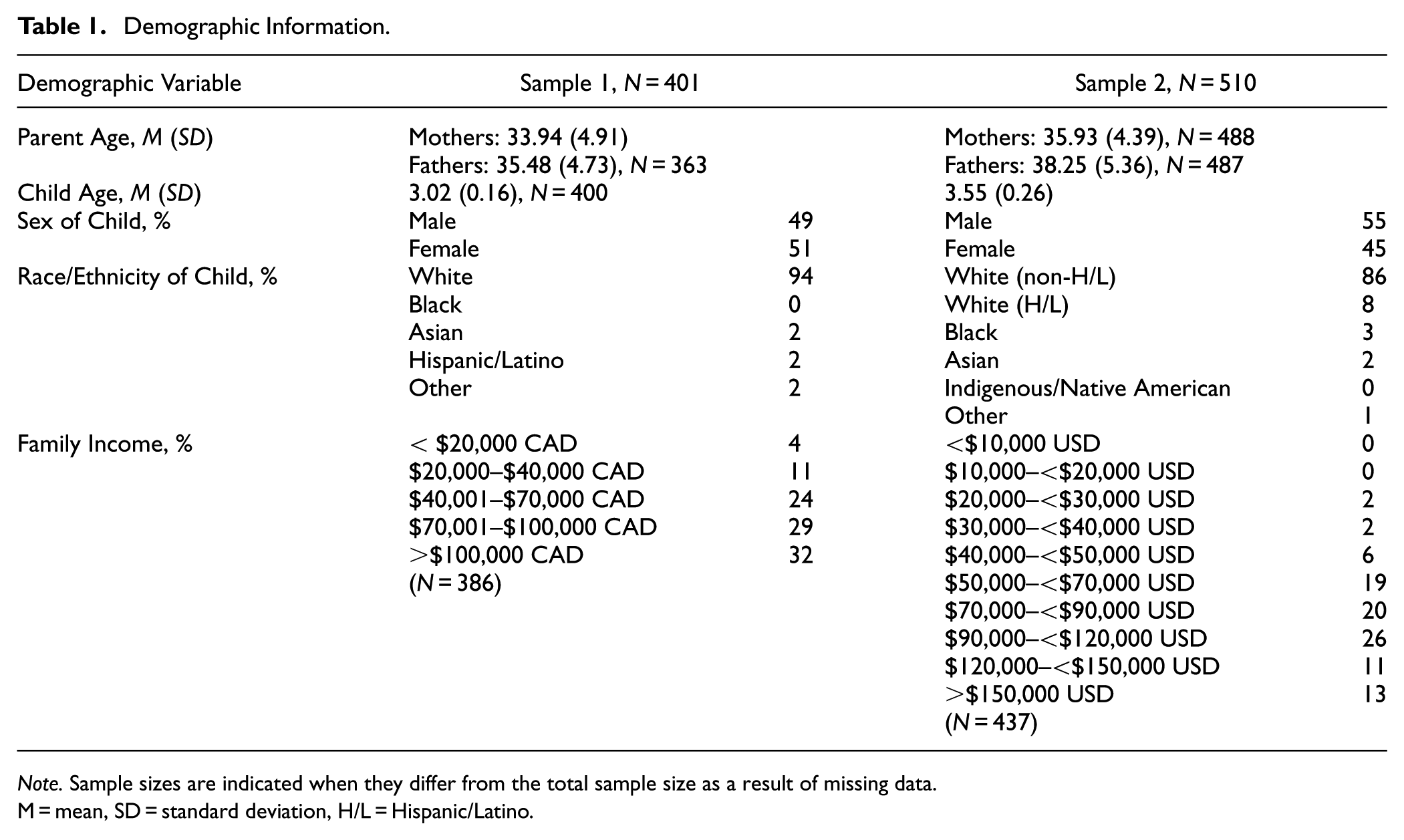
Note. Sample sizes are indicated when they differ from the total sample size as a result of missing data.
M = mean, SD = standard deviation, H/L = Hispanic/Latino.
The second sample (Sample 2) was dyads of mothers (N = 501; Mage = 35.83, SD = 4.39) and fathers (N = 398, Mage = 38.25, SD = 5.36) who provided PSDQ self-reports only 4 when their child was 3 years old (Mage = 3.55, SD = 0.26, 45% girls), between 2004 and 2007. Participants were from a middle-class community sample recruited for the Stony Brook Temperament Study (Klein & Finsaas, 2017), in Long Island, New York (see Table 1 for a full table of demographic information). Information on race/ethnicity was also not available for caregivers, but children were 86% White and non-Hispanic/Latino. Data collection for each study was approved by the appropriate research ethics boards at Western University and Stony Book University.
Assessment Using the PSDQ
Caregivers from Sample 1 completed the self- and informant reports of the 32-item version of the PSDQ, while caregivers from Sample 2 completed the self-reports only. Both versions contain items intended to assess authoritative (15 items; e.g., “I am responsive to our child’s feelings and needs”), authoritarian (12 items; e.g., “I yell or shout when our child misbehaves”), and permissive (5 items; e.g., “I find it difficult to discipline our child”) dimensions of parenting. For the informant version, items are identical except that the stem is “He” or “She.” Each item is rated on a five-point Likert scale spanning (1) Never, (2) Once in a while, (3) About half the time, (4) Very often, and (5) Always, to describe how often the caregiver exhibits each behavior with the child. Internal consistency values (i.e., Cronbach’s alpha, McDonald’s omega, 5 and average interitem correlations; Clark & Watson, 2019) can be found for each dimension in the Supplemental Material (Table S2).
Analyses
All analyses were performed using R 4.2.2 and RStudio 2022.07.2 (R Core Team, 2024; RStudio Team, 2024). 6 Missing data were handled using multiple imputation, using the mice package (Van Buuren & Groothuis-Oudshoorn, 2011). Results were automatically pooled across imputed datasets by the semTools package (Jorgensen et al., 2022; used for factor analyses) and the miceadds package (Robitzsch & Grund, 2023; used for bivariate correlations). Pearson correlations were conducted between demographic variables and caregiving dimensions, and were described based on Evans’ (1996) classifications of magnitude (i.e., <0.20 as very weak, 0.20–0.39 as weak, 0.40–0.59 as moderate, 0.60–0.79 as strong, and > 0.80 as very strong). Item-level correlations were examined and removal of items was considered based on item content and consistently high associations between a pair of items (i.e., > 0.70). In addition, between-sample differences across caregiving dimensions were examined using t-tests.
For Sample 1, we conducted parallel analyses using polychoric correlations to gauge the maximum number of factors to extract for each caregiver and informant (psych package; Revelle, 2022). We used the semTools package (Jorgensen et al., 2022) to perform EFAs for Sample 1, extracting a number of factors up to the maximum number determined. An oblimin rotation and the weighted least squares mean and variance (WLSMV) adjusted estimator were used, given ordinal items; semTools uses polychoric correlations when a weighted least squares estimator is used with ordinal data. Although other studies have used varimax rotation (Kimble, 2014; Robinson et al., 1995), oblimin rotation (i.e., oblique rotation) is more appropriate for factors that are not orthogonal, as is the case for the PSDQ (see Table 2). Optimal factor structures were selected based on both model fit and factor interpretability (Asparouhov & Muthen, 2009); fit indices were examined and factor interpretability was also considered based on the content and number of items with at least moderate (> 0.40) loadings as a guideline (e.g., Hogarty et al., 2004).
Correlations Between Demographic Variables and Parenting Dimensions.
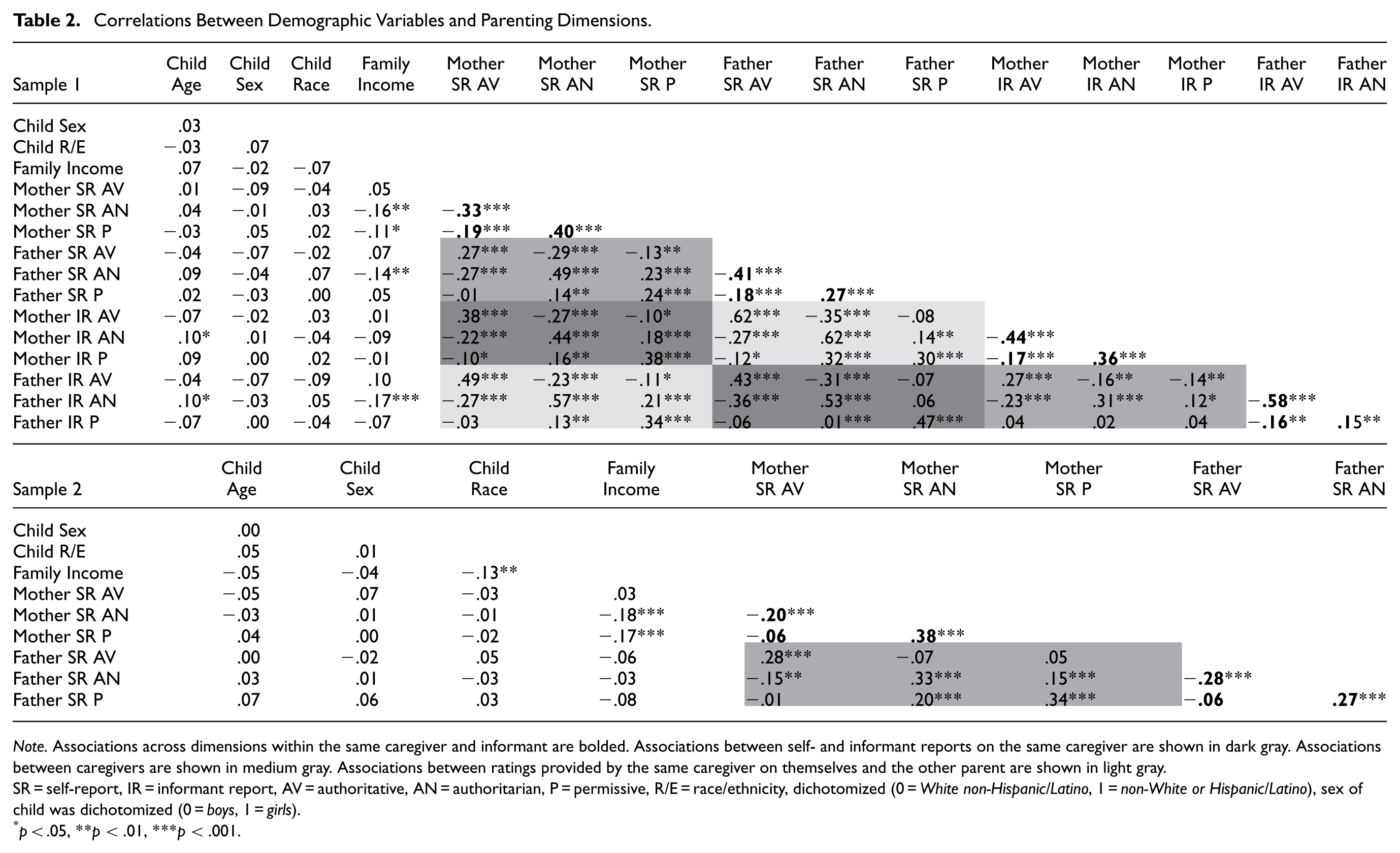
Note. Associations across dimensions within the same caregiver and informant are bolded. Associations between self- and informant reports on the same caregiver are shown in dark gray. Associations between caregivers are shown in medium gray. Associations between ratings provided by the same caregiver on themselves and the other parent are shown in light gray.
SR = self-report, IR = informant report, AV = authoritative, AN = authoritarian, P = permissive, R/E = race/ethnicity, dichotomized (0 = White non-Hispanic/Latino, 1 = non-White or Hispanic/Latino), sex of child was dichotomized (0 = boys, 1 = girls).
p < .05, **p < .01, ***p < .001.
For Sample 2, we used the semTools package (Jorgensen et al., 2022) to perform CFAs focusing on a three-factor structure, based on Robinson et al.’s (1995) original hypothesized structure. Because caregivers only completed the self-report measure in this sample, only CFAs for mother and father self-reports were possible. Again, the WLSMV estimator was used, due to the items being ordinal. In the case of unacceptable model fit, modification indices were examined to determine whether certain redundant items could be excluded and potentially improve the fit of the models. We also examined the content of items with high residual variances, to ensure that any item exclusions made sense theoretically (e.g., Brown & Moore, 2012), and to see whether the same dimensions could be measured with fewer items.
For all models, traditional cutoffs for acceptable fit index values were used: RMSEA ≤ 0.06, SRMR ≤ 0.08, CFI ≥ 0.95, and TLI ≥ 0.95 (Hu & Bentler, 1999). Because fit indices may be differentially impacted by the ordinal nature of the data (e.g., Clark & Bowles, 2018; Xia & Yang, 2019), we used all available fit indices in model adjudication and deemed models supported if at least two acceptable fit indices were found. In addition, as there are limitations to focusing on traditional benchmarks of model fit (Greene et al., 2022; Hopwood & Donnellan, 2010; Marsh et al., 2004), we considered other relevant issues such as item-loading patterns and interpretability in model adjudication. For a construct such as parenting style, which reflects caregiving across different contexts, multiple items are useful. Therefore, to ensure each dimension in our resulting model could be reliably assessed, models were excluded in which one or more factors had fewer than four indicators; Clark and Watson (1995) state that four to five items are needed to measure even narrow constructs, while more may be necessary for broader constructs. Further, given that the comprehensive set of analogous measures is a benefit of the PSDQ, we focused on modification indices that were consistent across versions of the measure.
Results
Missing Data
In Sample 1, missing data comprised 0.07% of PSDQ data for mother self-reports, 0.09% for father self-reports, 0.08% for informant reports on mothers, and 0.10% for informant reports on fathers. In Sample 2, missing data comprised 0.34% of PSDQ data for mother self-reports and 0.23% for father self-reports. Inspection of missing data patterns indicated that data were missing at random: In Sample 1, no caregiver had missing data for more than two PSDQ items and no PSDQ item was missing data for more than six individuals; in Sample 2, no caregiver had missing data for more than five PSDQ items and no PSDQ item was missing data for more than eight individuals. For items with more than two missing responses, associations between missingness and relevant demographic variables were examined. In Sample 1, the only association found was between child age and the item “I give in to our child when the child causes a commotion about something.” In Sample 2, missingness on five items showed associations with demographic variables; however, ratings given on these items were not associated with demographic variables. 7
Correlations
Sample 1
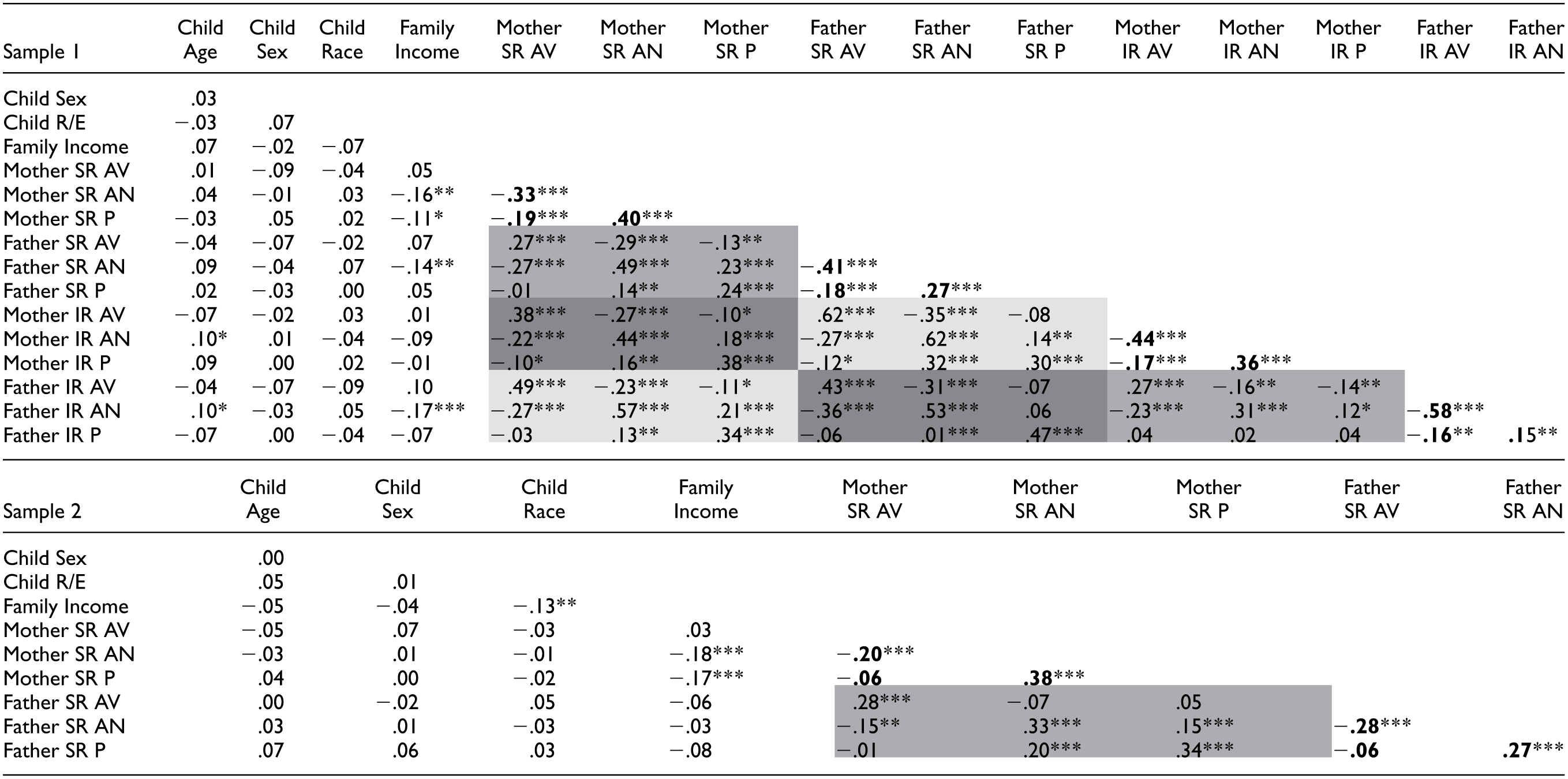
Pearson correlations between child age, sex of child, child race (dichotomized into White and non-White, given that both samples were predominantly White participants), family income, and each of the parenting dimensions (i.e., authoritative, authoritarian, and permissive) are in Table 2. Child age was very weakly positively associated with informant reports of both mothers’ and fathers’ authoritarian parenting. Boys and girls did not differ on any of these variables, and child race also was not significantly associated with reports of parenting. There were very weak negative associations between family income and mothers’ self-reported authoritarian and permissive parenting, fathers’ self-reported authoritarian parenting, and informant-reported authoritarian parenting in fathers.
For both mothers and fathers, self-reported authoritative parenting was weakly-to-moderately negatively associated with the same caregiver’s self-reported authoritarian parenting, and very weakly negatively associated with that caregiver’s self-reported permissive parenting, while self-reported authoritarian and permissive parenting were weakly-to-moderately positively correlated; for both caregivers, informant-reported authoritative parenting was moderately negatively associated with the same caregiver’s informant-reported authoritarian parenting, and very weakly negatively associated with permissive parenting, while informant-reported authoritarian and permissive parenting showed very weak to weak positive correlations.
Associations Between Self- and Informant PSDQ Dimensions
For both mothers and fathers, self-reported parenting on all dimensions was weakly-to-moderately positively associated with informant reports of the same dimension, indicating some degree of convergent agreement on caregiving behavior (again, see Table 2).
Associations Between Caregivers’ PSDQ Dimensions
Mother self-reports on each dimension were also weakly-to-moderately positively associated with father self-reports on the same dimension, indicating some similarity of self-rated parenting practices between mothers and fathers; informant-reported maternal and paternal authoritative parenting were also weakly positively associated, as were informant-reported maternal and paternal authoritarian parenting.
Associations Between PSDQ Dimensions Reported by the Same Caregiver
For each parenting dimension, mother self-reports were weakly-to-moderately positively associated with their reports on fathers on the same dimension; similarly, father self-reports were weakly to strongly positively associated with their reports on mothers, indicating that caregivers tended to view their and their coparent’s caregiving as similar.
Sample 2
Pearson correlations between child age, sex of child, child race/ethnicity (dichotomized into White non-Hispanic/Latino and non-White or Hispanic/Latino, given that both samples were predominantly White non-Hispanic/Latino participants), family income, and each of the parenting dimensions (i.e., authoritative, authoritarian, and permissive) are in Table 2. Neither age nor sex was associated with any other variables. Family income was very weakly positively associated with children being White and non-Hispanic/Latino, and very weakly negatively associated with mother self-reported authoritarian and permissive parenting. Mothers’ self-reported authoritative and authoritarian parenting were weakly negatively associated, while their authoritarian and permissive parenting were weakly positively correlated; fathers’ self-reports showed the same pattern. For each parenting dimension, mother self-reports were weakly positively associated with father self-reports on the same dimension.
Correlations After Item Removal
Correlations were re-run after the factor analyses, with certain PSDQ items eliminated; these associations, which were very similar to those in Table 2, can be found in Table S5. Specifically, in Sample 1, children being White and having a greater family income, both became associated with greater informant-reported authoritative parenting in fathers. Father’s self-reported authoritative parenting became negatively associated with informant reports on fathers’ permissive parenting. Finally, fathers’ self-reported permissive parenting became negatively associated with informant-reported authoritative parenting in both mothers and fathers. These effects were all very weak. Child age was no longer associated with informant-reported authoritarian parenting in either mothers or fathers, and fathers’ self-reported authoritarian parenting was no longer associated with informant reports on fathers’ permissive parenting. These effects were initially also very weak. In Sample 2, family income was negatively associated with fathers’ self-reported permissive parenting, and self-reported authoritative and permissive parenting were negatively associated in both mothers and fathers. These effects were all very weak.
Interitem Correlations Among the PSDQ Items
Item-level Spearman correlations were performed separately for each caregiver and informant, for both Samples 1 and 2. Spearman correlations were used due to the ordinal nature of the PSDQ items and because some items were skewed. We found that, across all caregiver-informant combinations, Item 2 (i.e., “I use physical punishment as a way of disciplining our child”) and Item 6 (“I spank when our child is disobedient”) were strongly correlated (i.e., ranging from r = .75–.81 in Sample 1 and r = .72–.73 in Sample 2). These high correlations lead to multicollinearity, which complicates factor analysis interpretability (Kyriazos & Poga, 2023). Because Item 2 more broadly encapsulates the use of physical punishment and also showed a more normal item response distribution, Item 6 was excluded from all future analyses. Other item-level correlations ranged from moderately negative to strongly positive (i.e., r = −.40–.69 in Sample 1 and r = −.28–.64 for Sample 2).
Between-Sample PSDQ Differences
Independent-samples t-tests indicated that mothers in each sample rated themselves comparably authoritative, t(897.91) = 0.16, p = .87, d = 0.01; however, mothers in the Stony Brook sample rated themselves as higher in authoritarian, t(897.91) = 4.28, p < .001, d = 0.29, and permissive, t(897.91) = 3.23, p = .001, d = 0.22, parenting. These effects remained significant when a Bonferroni correction was applied; however, Cohen’s d values showed weak effects only. In terms of fathers, the samples were similar on authoritative, t(755.93) = −0.60, p = .55, d = 0.04, authoritarian, t(755.93) = 1.35, p = .18, d = 0.10, and permissive, t(755.93) = 1.14, p = .26, d = 0.08, parenting. When these tests were re-run with redundant items excluded, the findings did not change. The differences in maternal parenting could reflect cultural differences in Canadian and American parenting styles or could possibly stem from the modest age differences between the two samples of children.
Parallel Analyses
Parallel analyses, first using factor eigenvalues, were performed using the original datasets from Sample 1, with pairwise deletion (see Figure S1), as well as each of five imputed datasets. Parallel analysis is one of the most accurate methods for informing the number of factors to extract in exploratory factor analysis (Garrido et al., 2013). The parallel analyses on the original datasets suggested up to six factors for mother self-reports, up to seven factors for father self-reports, up to eight factors for informant reports on mothers, and up to seven factors for informant reports on fathers. Parallel analyses on the imputed datasets found the same numbers of factors as with the original datasets for all caregiver-informant combinations. Because parallel analyses of factor eigenvalues with ordinal data may lead to retaining more factors than are useful (Garrido et al., 2013; Manapat et al., 2023), we also conducted parallel analyses using component eigenvalues. These suggested five to six components for mother self-reports, three components for father self-reports, and four components for informant reports on both mothers and fathers.
Exploratory Factor Analyses With Sample 1
For each model, we considered model fit information and the number of indicators 8 loading on each factor. While some items loaded onto factors other than their hypothesized dimensions, we rarely observed items with high cross-loadings.
Mother and Father Self-Reports
For mother self-reports, the five- and six-factor models were eliminated due to at least one factor having fewer than four indicators. While two of the four fit indices were acceptable for the three-factor solution according to traditional benchmarks (RMSEA = 0.058, SRMR = 0.069, CFI = 0.903, TLI =0.880) and four-factor solution (RMSEA = 0.052, SRMR = 0.061, CFI = 0.927, TLI = 0.902), the four-factor solution showed slightly better fit as expected due to consisting of a larger number of factors. No fit indices were acceptable for the one- or two-factor solutions.
For father self-reports, the four-, five-, six-, and seven-factor models were eliminated due to at least one factor having fewer than four indicators. The three-factor solution had one acceptable fit index (RMSEA = 0.065, SRMR = 0.064, CFI = 0.911, TLI = 0.889), while no fit indices were acceptable for the one- or two-factor solutions.
Mother and Father Informant Reports
For informant reports on mothers, the four-, five-, six-, seven-, and eight-factor models were eliminated due to at least one factor having fewer than four indicators. Of the remaining models, the three-factor solution had two acceptable fit indices (RMSEA = 0.060, SRMR = 0.063, CFI = 0.928, TLI = 0.911), while no fit indices were acceptable for the one- or two-factor solutions.
For informant reports on fathers, the four-, five-, six-, and seven-factor models were eliminated due to at least one factor having fewer than four indicators. Of the remaining models, the three-factor solution had two acceptable fit indices (RMSEA = 0.070, SRMR = 0.063, CFI = 0.932, TLI = 0.916), while no fit indices were acceptable for the one- or two-factor solutions.
Based on item-loading patterns and consideration of model fit, findings indicate that a three-factor structure was superior for all caregiver-informant combinations other except for mother self-reports. Regarding the structure of mother self-reports, because (a) the three- and four-factor solutions both had two acceptable fit indices for mother self-reports, and (b) one of the advantages of the PSDQ is its coverage of both caregivers using self- and informant reports, we focused on the three-factor solution for all versions. This included the father’s self-reports, despite the lack of acceptable fit indices for this model. In this case, we assumed that further modification would be necessary. Item loadings for the three-factor structures are in Tables 3 to 6. Fit indices for all structures can be found in Supplemental Material (Table S3). Most items loaded onto their expected dimensions, across all caregiver-informant combinations, with the exceptions of Items 4, 10, and 26. Although all these items were designed to assess authoritarian parenting, Item 4 loaded equally highly onto the permissive dimension for father self-reports. Items 10 and 26 loaded onto the permissive dimension for all EFAs other than informant reports on fathers, in which Item 10 loaded onto the authoritarian dimension. Based on these findings, we chose to examine the three-factor structure in our second sample and to specify item loadings in a manner consistent with how the measure is currently used in research (Robinson et al., 1995).
Loadings of Mother Self-Report Factor Analysis With 3 Factors.
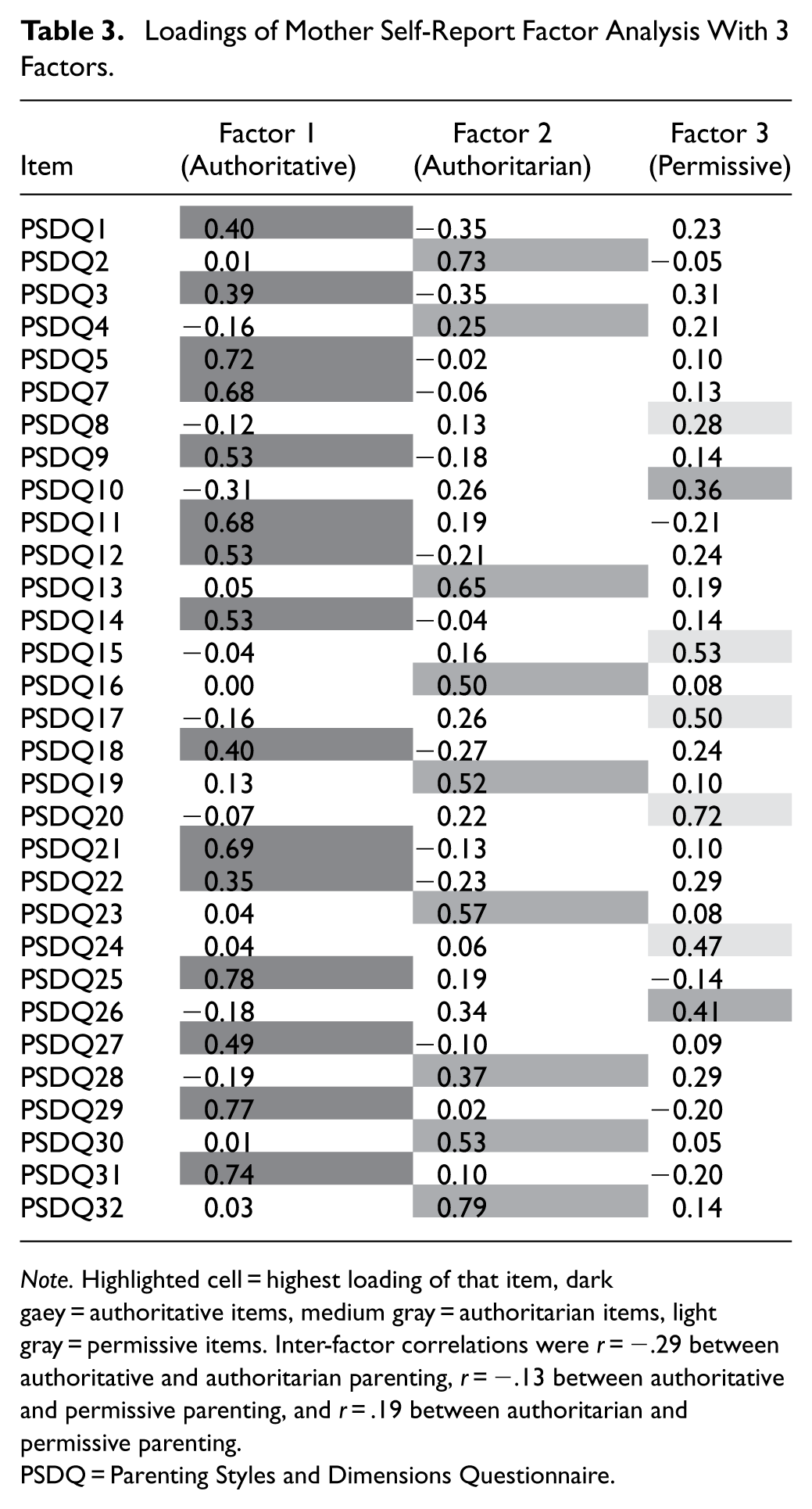
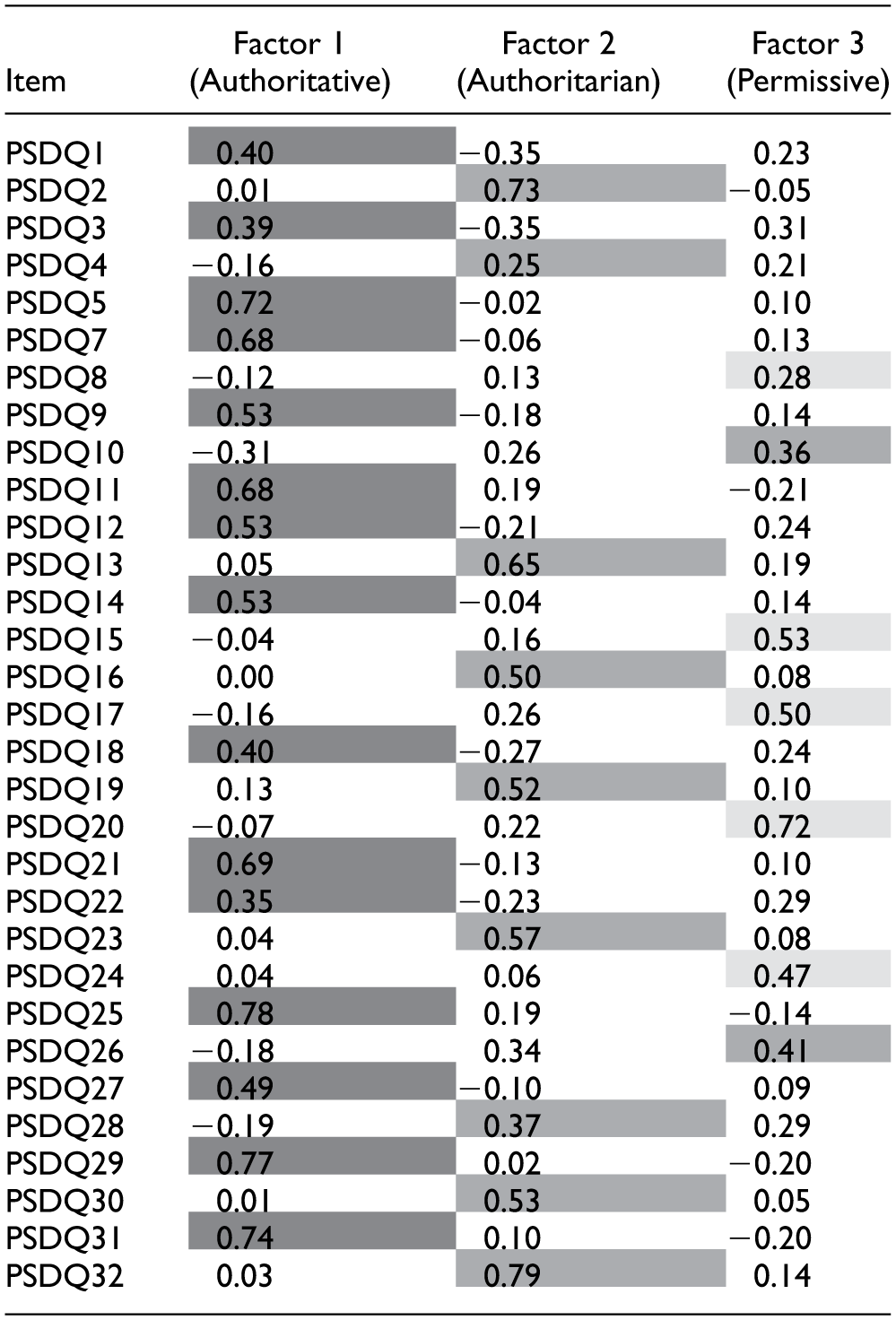
Note. Highlighted cell = highest loading of that item, dark gaey = authoritative items, medium gray = authoritarian items, light gray = permissive items. Inter-factor correlations were r = −.29 between authoritative and authoritarian parenting, r = −.13 between authoritative and permissive parenting, and r = .19 between authoritarian and permissive parenting.
PSDQ = Parenting Styles and Dimensions Questionnaire.
Loadings of Father Self-Report Factor Analysis With 3 Factors.
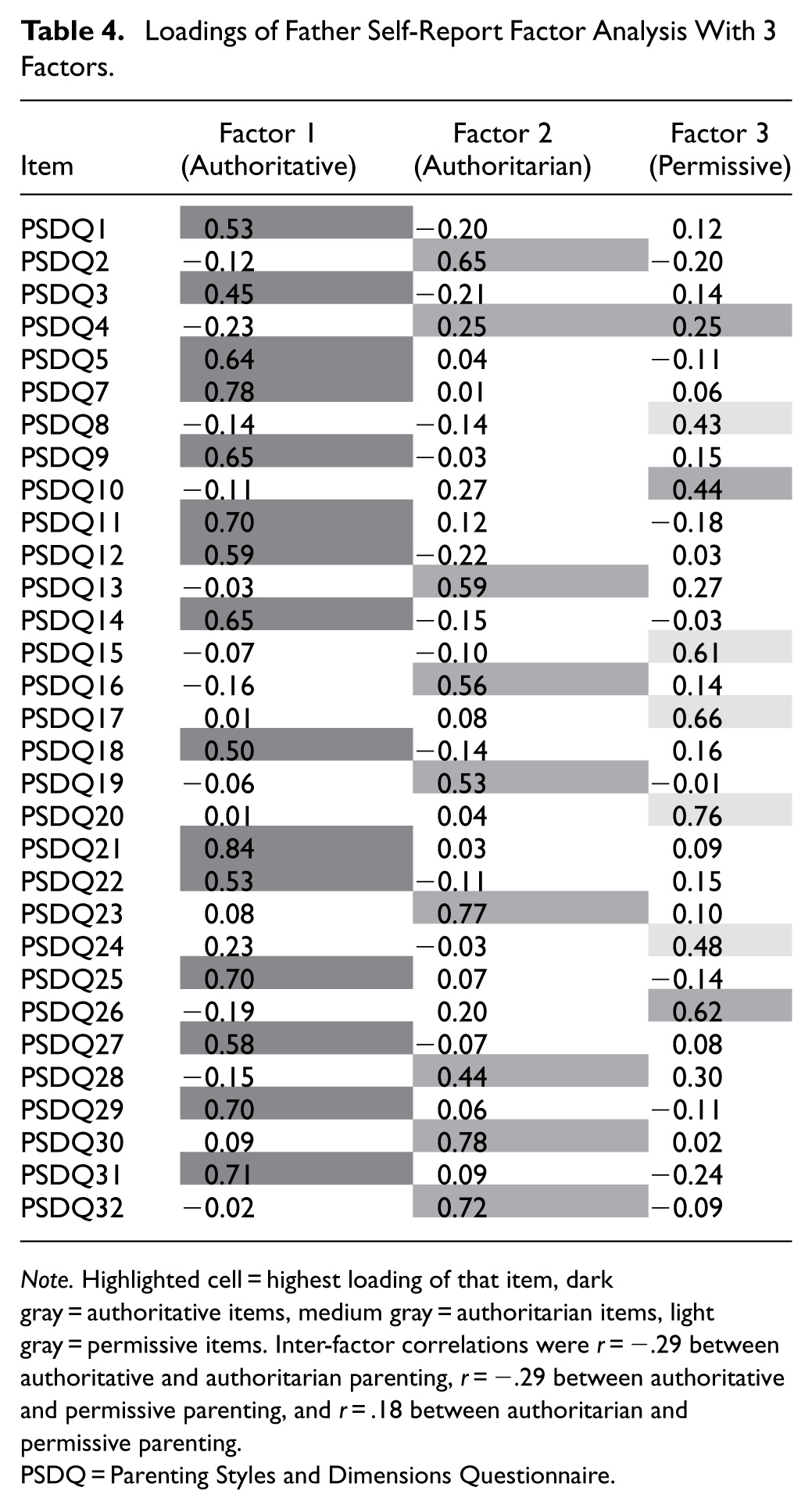
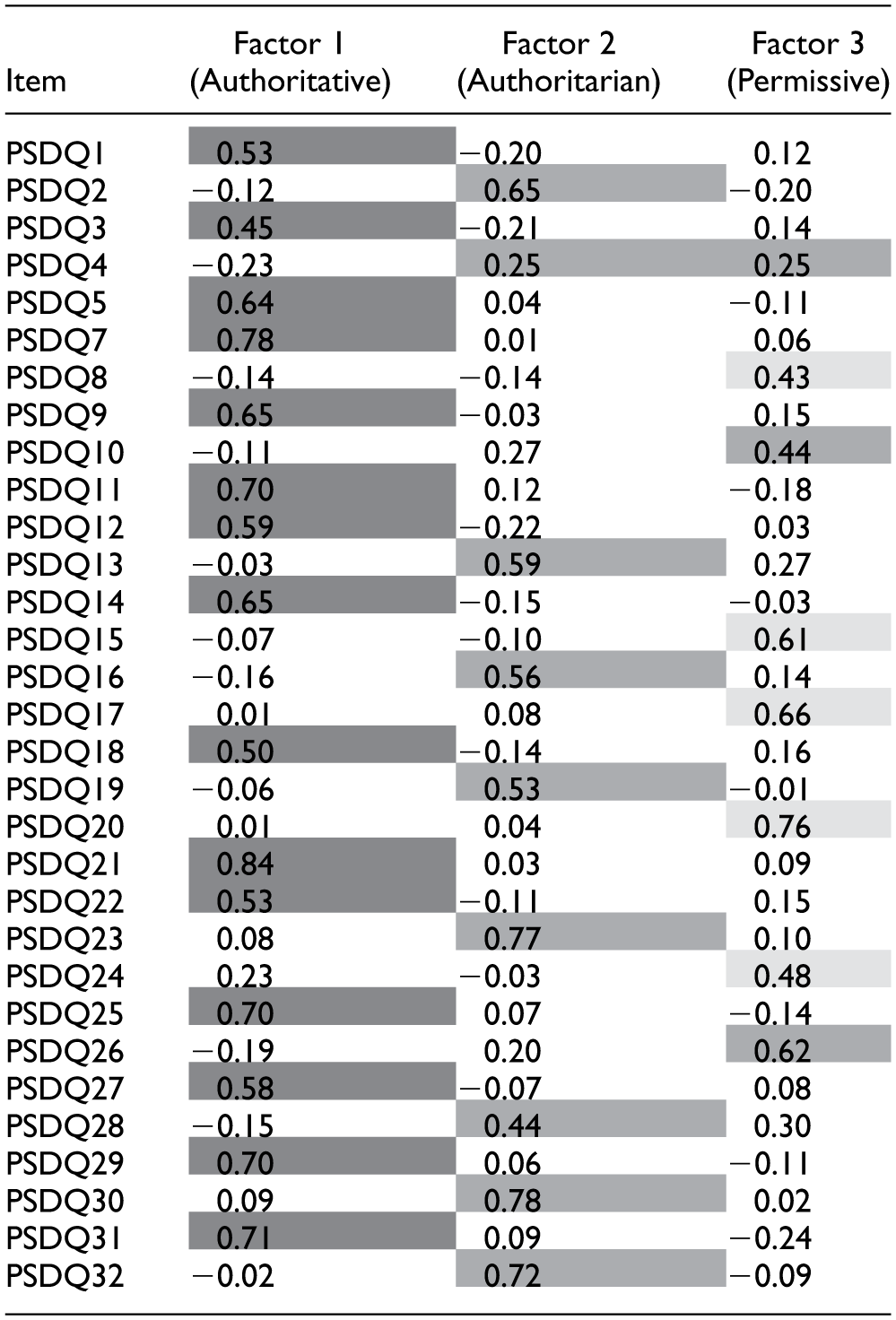
Note. Highlighted cell = highest loading of that item, dark gray = authoritative items, medium gray = authoritarian items, light gray = permissive items. Inter-factor correlations were r = −.29 between authoritative and authoritarian parenting, r = −.29 between authoritative and permissive parenting, and r = .18 between authoritarian and permissive parenting.
PSDQ = Parenting Styles and Dimensions Questionnaire.
Loadings of Informant Reports on Mothers Factor Analysis With 3 Factors.
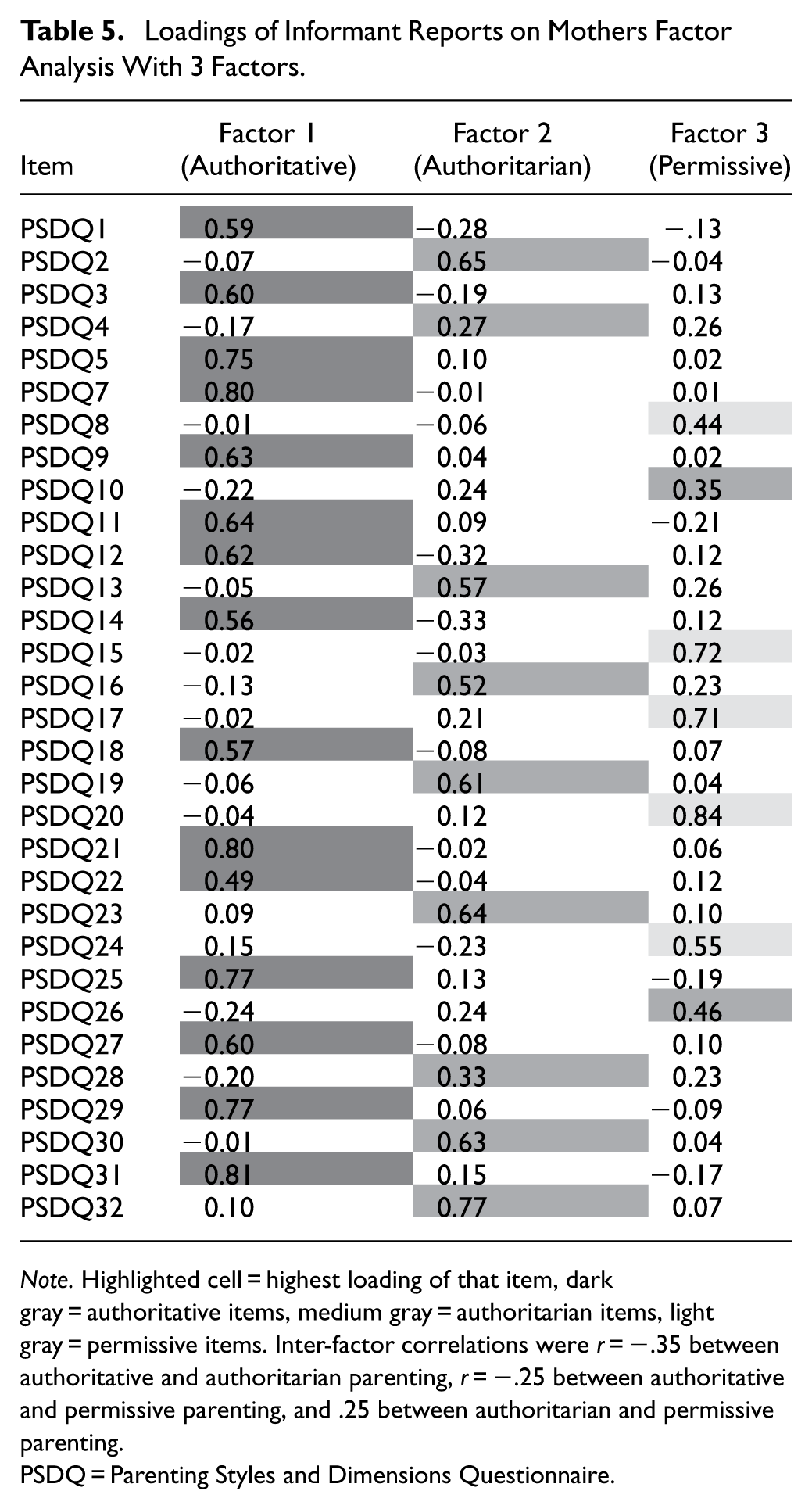
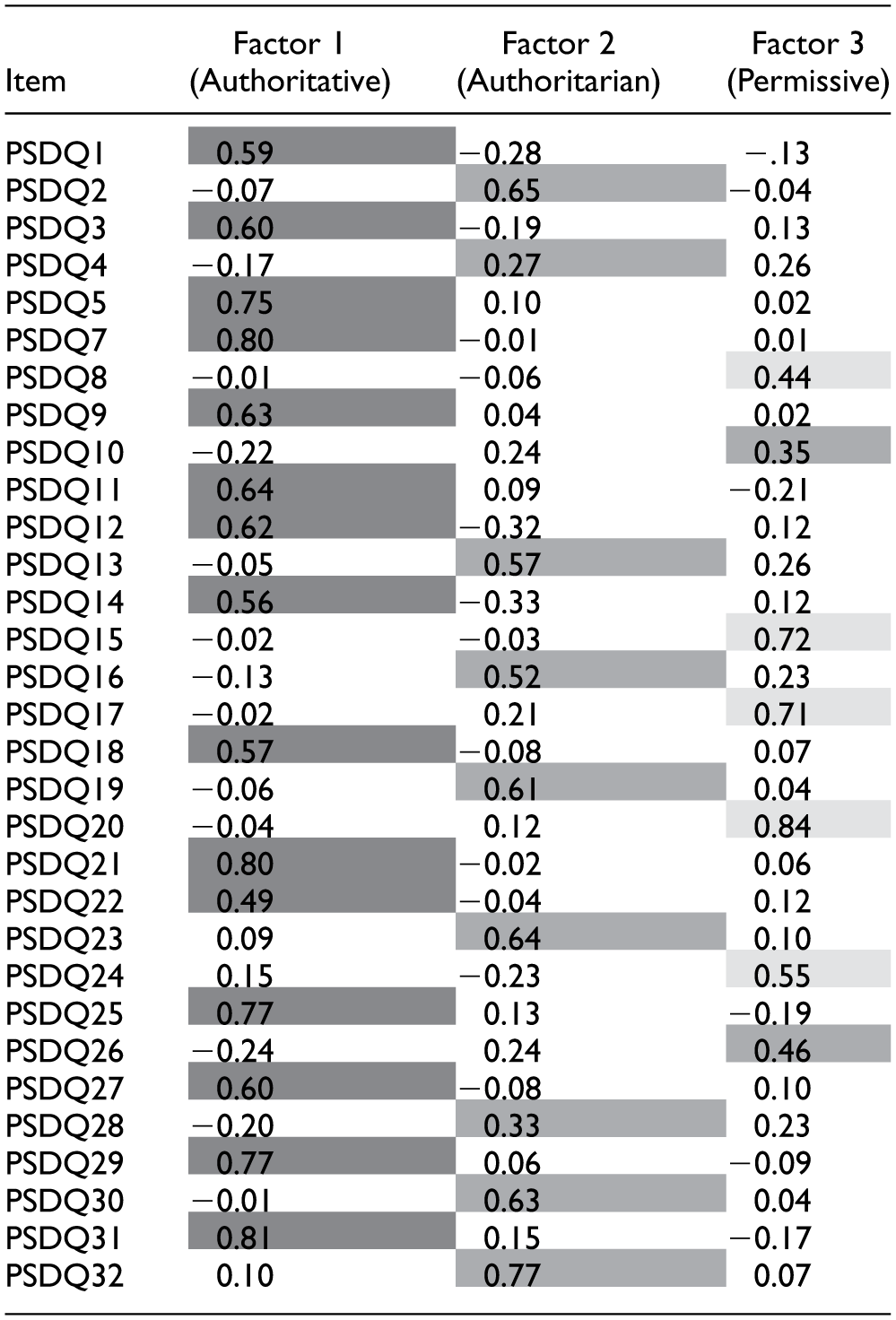
Note. Highlighted cell = highest loading of that item, dark gray = authoritative items, medium gray = authoritarian items, light gray = permissive items. Inter-factor correlations were r = −.35 between authoritative and authoritarian parenting, r = −.25 between authoritative and permissive parenting, and .25 between authoritarian and permissive parenting.
PSDQ = Parenting Styles and Dimensions Questionnaire.
Loadings of Informant Reports on Fathers Factor Analysis With 3 Factors.
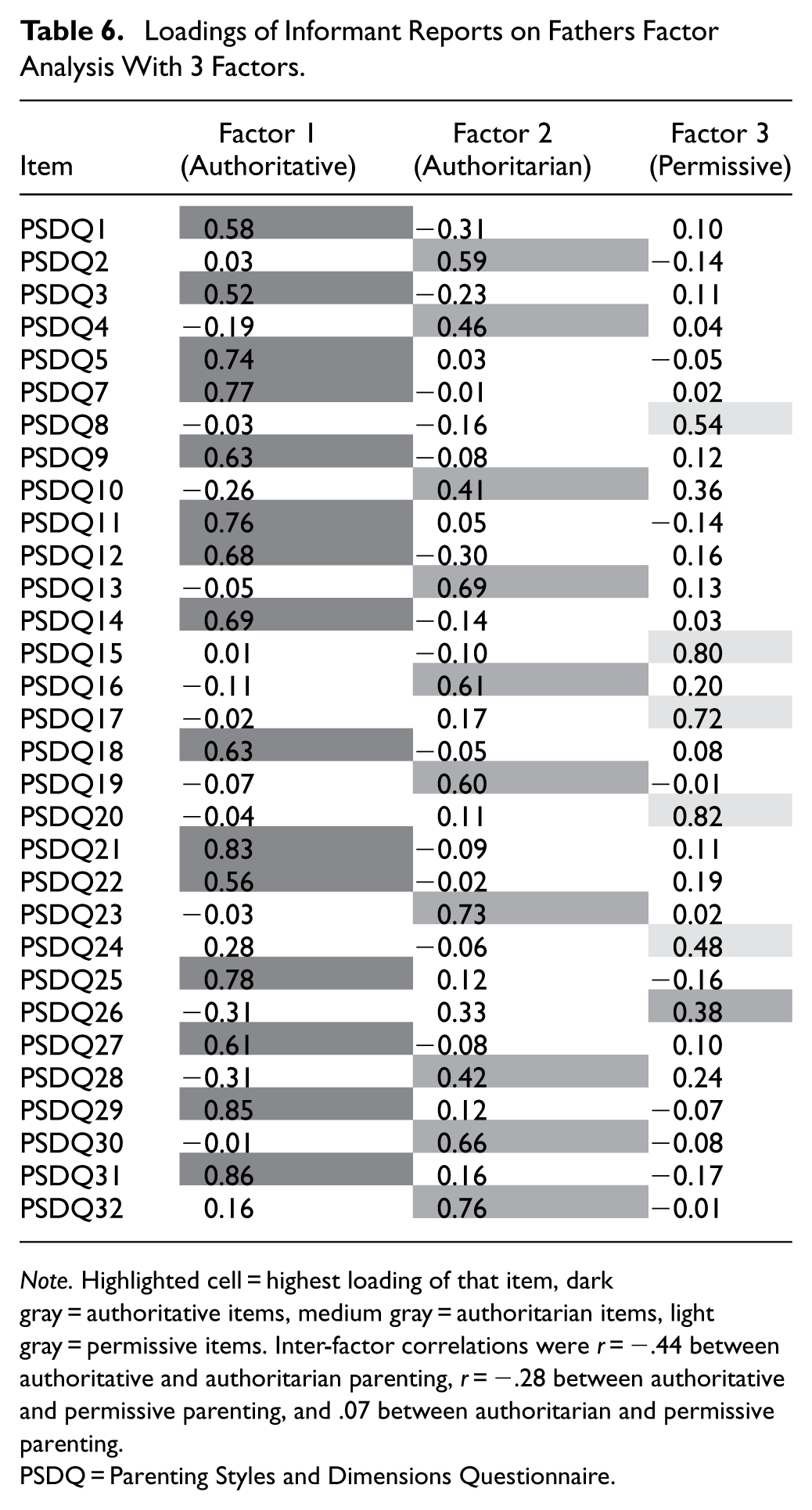
Note. Highlighted cell = highest loading of that item, dark gray = authoritative items, medium gray = authoritarian items, light gray = permissive items. Inter-factor correlations were r = −.44 between authoritative and authoritarian parenting, r = −.28 between authoritative and permissive parenting, and .07 between authoritarian and permissive parenting.
PSDQ = Parenting Styles and Dimensions Questionnaire.
CFA with Sample 2
Fit of the originally hypothesized three-factor models was examined for mother and father self-reports in Sample 2 (see Tables 7 and 8 for CFA loadings). For mother self-reports, only the RMSEA showed acceptable fit (RMSEA = 0.055, SRMR = 0.085, CFI = 0.897, TLI = 0.889). For father self-reports, similarly, only the RMSEA showed acceptable fit (RMSEA = 0.057, SRMR = 0.084, CFI = 0.913, TLI = 0.906); these findings do not indicate acceptable fit of the three-factor structure.
Sample 2 CFA Loadings of Mother Self-Reports.
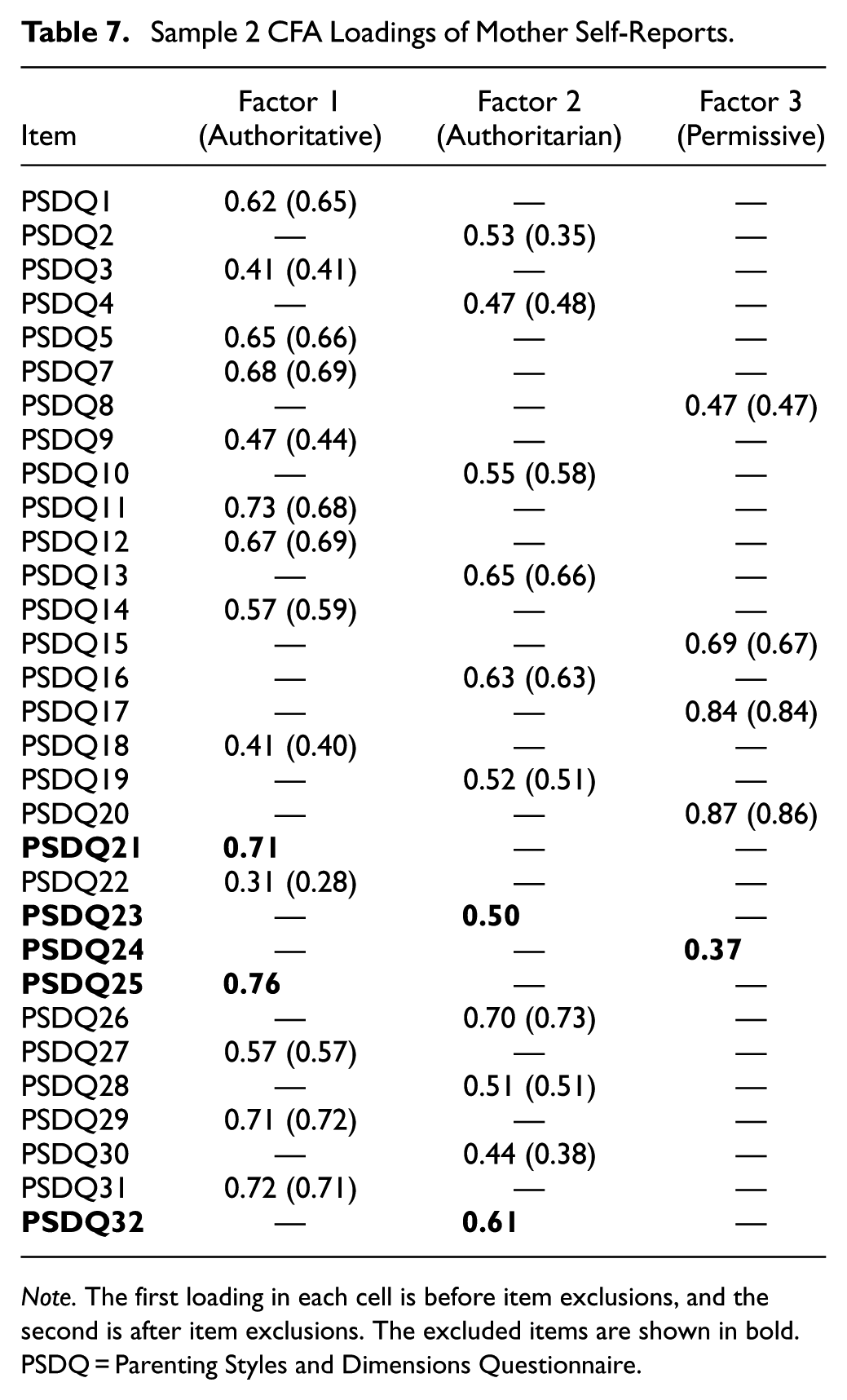
Note. The first loading in each cell is before item exclusions, and the second is after item exclusions. The excluded items are shown in bold.
PSDQ = Parenting Styles and Dimensions Questionnaire.
Sample 2 CFA Loadings of Father Self-Reports.
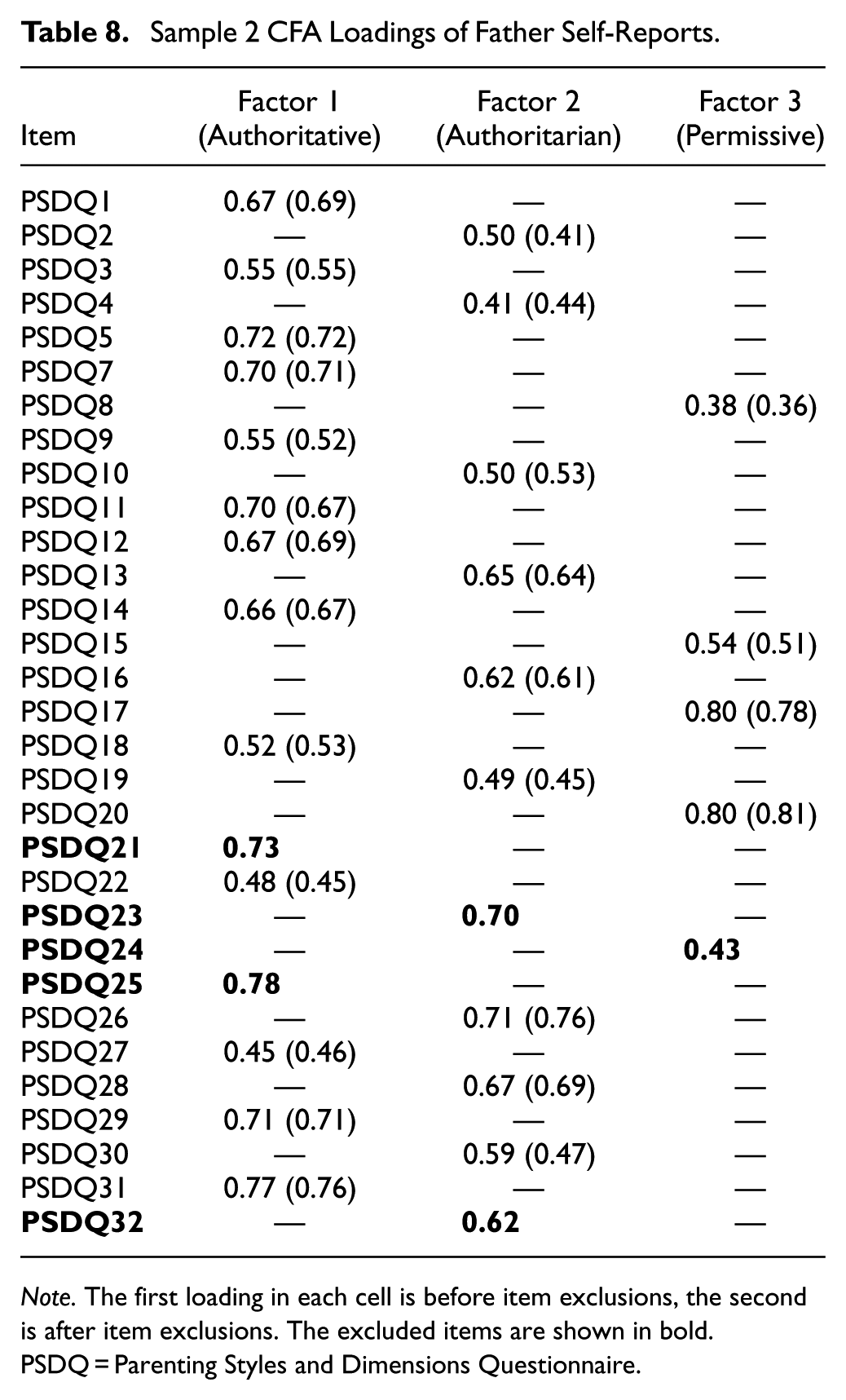
Note. The first loading in each cell is before item exclusions, the second is after item exclusions. The excluded items are shown in bold.
PSDQ = Parenting Styles and Dimensions Questionnaire.
When we examined modification indices, we observed that the top five modification indices for mother self-reports were also among the top eleven for father self-reports; therefore, we focused on these indices. Details on modification indices are shown in Table S4. Four pairs of items showed high residual correlations and were therefore considered for exclusion: Item 2 (“I use physical punishment as a way of disciplining our child”) and Item 32 (“I slap our child when the child misbehaves”), Item 23 (“I scold and criticize to make our child improve”) and Item 30 (“I scold or criticize when our child’s behavior doesn’t meet our expectations”), Item 11 (“I emphasize the reasons for rules”) and Item 25 (“I give our child reasons why rules should be obeyed”), and Item 9 (“I encourage our child to freely express himself/herself even when disagreeing with parents”) and Item 21 (“I show respect for our child’s opinions by encouraging our child to express them”). For each of these pairs of items, skewness and kurtosis were examined; the item with a more normal distribution was retained (i.e., Items 2, 9, and 30), with the goal of keeping items that better assessed individual differences in caregiving. For Items 11 and 25, the distributions were very similar; as was done with the physical punishment item, Item 11 was retained since the phrasing appeared to more broadly assess an emphasis on reasons for rules. The last modification index indicated that Item 24 (“I spoil our child”) loaded strongly onto the authoritative dimension, versus the permissive dimension; this may have been due to a shift in normative parenting behavior since the measure was written, or caregivers differing in their interpretation of this item (e.g., Solomon et al., 1993). This item was also excluded. With these adjustments made, the fit of the CFAs improved somewhat, with both the RMSEA and SRMR showing acceptable fit for mother self-reports (RMSEA = 0.048, SRMR = 0.073, CFI = 0.928, TLI = 0.920) and father self-reports (RMSEA = 0.056, SRMR = 0.078, CFI = 0.921, TLI = 0.913). The CFI and TLI also improved, but did not reach the recommended cutoff of 0.95 to establish a good fit. Loadings of the remaining items were very similar before and after item exclusion; all item loadings were greater than 0.30 for at least one caregiver and no additional items were excluded.
Discussion
To our knowledge, since the original development of the PSDQ, only one study (Kimble, 2014) has examined the factor structure of the widely used 32-item version; furthermore, no studies have examined how the factor structure might differ based on caregiver (i.e., mothers vs. fathers) or informant (i.e., self-reports vs. informant reports), or whether PSDQ items are redundant with one another. Given shifts in normative parenting practices (Gardner et al., 2009; Trifan et al., 2014), close psychometric scrutiny of this measure is needed. Thus, to address this gap, we conducted EFAs and CFAs of PSDQ data drawn from two different samples of caregiver dyads with a 3-year-old child to examine the factor structure for each caregiver-informant combination and the applicability of individual items.
We first examined interitem correlations to identify patterns of redundant items across the different versions of the PSDQ. We found that Item 2 (“I use physical punishment as a way of disciplining our child”) and Item 6 (“I spank when our child is disobedient”) consistently showed high correlations for all caregiver-informant combinations. This pattern suggests that Item 6 is likely redundant in the assessment of modern-day caregiving. While speculative, the low utility of this item could reflect changing parental attitudes regarding physical punishment, which has become less common as a parenting practice since the creation of the measure (Fréchette & Romano, 2015); in our two samples, very few caregivers endorsed responses greater than “(2) Once in a while” for either item.
Using our first sample of caregivers, we performed EFAs for each combination of caregiver and informant to determine whether a similar factor structure emerged for different versions of the PSDQ. The three-factor structure appeared to be optimal; a sufficient number of items loaded onto factors representing each parenting dimension, and similar item-loading patterns were observed for the parenting types described by Baumrind (1967, 1971). However, the three-factor models did not show consistently acceptable fit based on commonly used fit index cutoffs. Additionally, several items had fairly low loadings on the factors identified using EFAs; in particular, we found that Item 4 (“When our child asks why he/she has to conform, I state: because I said so, or I am your parent and I want you to”) had very low loadings (i.e., <0.30) across three of the four caregiver/informant combinations, and Item 8 (“I find it difficult to discipline our child”) had a very low loading for mother self-reports. In addition, Item 10 (“I punish by taking privileges away from our child with little if any explanations”) and Item 26 (“I use threats as punishment with little or no justification”) loaded onto dimensions other than authoritarian (i.e., the permissive dimension) across at least some caregiver-informant combinations. Developing a revised version of the PSDQ was not the goal of the current study, so we did not exclude items from the measure based on low or unexpected factor loadings. Thus, despite some support for the three-factor structure initially posited to underlie the PSDQ, our findings suggest that the measure could be improved.
The results of the EFA with Sample 1 were somewhat inconsistent with Robinson et al.’s (1995) findings; although most items loaded onto their expected dimensions, certain items from the authoritarian dimension tended to load onto other dimensions or show weak loadings across all dimensions. This may be, in part, because the study by Robinson et al. (1995) included more items, which they removed based on their loadings. Our EFA findings indicate that these items are not clear indicators of the construct they were designed to assess and that this subscale should not be used on its own. In general, our maternal self-report findings were quite similar to the three-factor structure loadings found by Kimble (2014). For instance, Kimble (2014) observed that Items 10 and 26 loaded most strongly onto the permissive dimension, rather than the authoritarian dimension, although Item 10 showed a loading of <0.40 on the permissive dimension. She also observed several items that showed low loadings across dimensions (i.e., Items 1, 3, 4, 18, 22, 27, and 28) some of which were consistent with what we observed for mother self-reports. In addition, similar to the current findings, she found that either a three- or four-factor structure would be acceptable for mother self-reports. Altogether, these findings suggest that, while a three-factor structure is likely the most appropriate for the PSDQ, certain items (e.g., Item 4) are not ideal, at least in the context of assessing caregiving in community samples of parents, while others (e.g., 10 and 26) may be assessing parenting practices other than the constructs they were designed to measure.
We also used a second sample of primary caregivers of 3-year-old children to validate the three-factor structure, examining mother and father self-reports. Although the RMSEA indicated acceptable fit for the three-factor structures, other fit indices did not. Modification indices suggested that Items 21, 23, 24, 25, and 32 either showed redundancy with other items or loaded strongly onto factors other than their hypothesized dimension and are therefore good candidates for exclusion. These items, which are drawn from all three dimensions of the measure (i.e., authoritative: Items 21 and 25; authoritarian: Items 23 and 32; permissive: Item 24), may not be useful indicators of these parenting styles and researchers should consider removing these items to improve construct validity. While these items may have had utility when the PSDQ was developed, as parenting norms change over time, measures of parenting may require revision as well. For instance, Trifan et al. (2014) observed a decline in authoritarian parenting over time. Other items might simply differ in how parents interpret them. For instance, the idea of “spoiling” has not been widely researched and has primarily been conducted with parents of infants (i.e., < 5 months of age to <1 year; e.g., Radnai-Griffin, 2006; Solomon et al., 1993; Wilson et al., 1981). It is difficult to conclude whether parents’ understanding of “spoiling” changed over that time. While the percentages different across studies, all of these researchers concluded that parents differ in their beliefs about whether children can be spoiled, and whether the impact of spoiling is positive or negative. All these studies also observed that younger parents and those with less education tended to have more negative views of spoiling, which may explain why interpretations of “spoiling” differ across samples.
The findings of the CFAs demonstrate that the hypothesized structure is the most appropriate for the PSDQ, with most items showing moderate-to-high loadings on their respective factors. One item (i.e., Item 22) had a loading of only 0.28 in the mothers’ CFA, but a loading of 0.45 for fathers. Because this item provided valuable information for fathers, we did not think it was appropriate to exclude it from the PSDQ. Our modifications appear to preserve the content of the factors, aside from removing items tapping particular behaviors (i.e., physical punishment, child expressing disagreement, communicating reasons for rules, scolding/criticizing) that may have had too many items devoted to them, in the PSDQ, and the removal of “spoiling our child” as behavior examined on the measure. However, in the current study, only the RMSEA and SRMR showed acceptable model fit, even after item removal. This indicates that, while the PSDQ may be an acceptable measure of parenting, the psychometric properties of other parenting measures should be examined to determine whether superior measures exist. In addition, any attempts at adding new items should consider their impact on the model structure and fit.
In the current study, parents’ self-reports and their partner’s informant reports of their parenting showed weak to moderate associations (i.e., ranging from 0.38 to 0.53 before item exclusions and 0.30 to 0.51 after item exclusions). Findings of only modest agreement between caregivers on each parent’s behavior are likely due to differing perspectives or contexts in which they view caregiving, and are consistent with other work on self- and informant measures of parenting (e.g., Augenstein et al., 2016; Bögels & Melick, 2004). Such patterns may indicate genuine differences between caregivers in perceptions of caregiving styles, but may also capture context-specific aspects of caregiving. How to best integrate diverging views on caregiving styles in research is unclear; in some circumstances, aggregating self- and informant reports leads to greater concurrent and predictive validity (Barry et al., 2008; Bögels & Melick, 2004), whereas in other instances, specific informants (Augenstein et al., 2016), or discrepancies themselves (Nichols & Tanner-Smith, 2022) may show unique links to other constructs. The similarities between the EFAs across the various caregivers and informants indicate that these versions are assessing the same caregiving dimensions; since each informant likely provides valuable information about their own and their partner’s caregiving style, we would recommend for future research to prioritize collecting self- and informant-reported data from both caregivers.
Strengths and Weaknesses of the Current Study and Conclusion
This study had several strengths, most notably the two independent samples of relatively large sizes. This allowed us to perform EFAs to test the PSDQ structure and to test this structure in a separate sample of caregivers with children of the same age. We also collected PSDQ responses from both caregivers in Sample 1, including self- and informant reports, which allowed us to compare the structures across these variables. However, this study had some important limitations; in particular, we examined caregiving in parents of typically developing 3-year-old children; future research should examine whether these dimensions are consistent throughout childhood and adolescence and in families with greater parent-child psychopathology and family conflict. In addition, we had limited diversity within both samples (e.g., predominantly White and non-Hispanic/Latino participants); while some studies, including research on translations of the measure, have been conducted in other samples (e.g., Lee & Brown, 2020; Oliveira et al., 2018; Porter et al., 2005), it is important to examine how the PSDQ functions in diverse samples of caregivers, particularly since Robinson et al. (1995) developed the measure based on a predominantly White sample. Furthermore, exploration of the differences between permissive and indifferent or uninvolved parenting, based either on the longer version of the PSDQ or the creation of new items, might elucidate why previous studies have differed in their findings regarding the permissive factor. The convergent validity of these dimensions should also be examined, using other measures of parenting, as was done in the study by Coolahan et al. (2002). Finally, while the current study provides some support for the continued use of the three-factor structure of the PSDQ, with some items removed, future studies should examine measurement invariance of the PSDQ to determine its utility in comparing parenting practices between caregivers. Acknowledging these issues, we demonstrated that the three-factor model is still the best-fitting structure when examining parenting practices, using the PSDQ, in modern-day community samples, and shows acceptable absolute fit (i.e., RMSEA and SRMR), as long as certain redundant or inapplicable items are removed.
Supplemental Material
sj-docx-1-asm-10.1177_10731911251363539 – Supplemental material for Factor Structure of the Self- and Informant-Report Versions of the Parenting Styles and Dimensions Questionnaire
Supplemental material, sj-docx-1-asm-10.1177_10731911251363539 for Factor Structure of the Self- and Informant-Report Versions of the Parenting Styles and Dimensions Questionnaire by Emma K. Stewart, Thomas M. Olino, Kasey Stanton, Daniel N. Klein and Elizabeth P. Hayden in Assessment
Footnotes
Declaration of Conflicting Interests
The authors declared no potential conflicts of interest with respect to the research, authorship, and/or publication of this article.
Funding
The authors disclosed receipt of the following financial support for the research, authorship, and/or publication of this article: We would like to thank the Canadian Institute of Health Research, the National Institute of Mental Health Research, and the Social Sciences and Humanities Research Council (Canadian Graduate Scholarship, Doctoral) for funding this research.

Supplemental Material
Supplemental material for this article is available online.
Notes
References
Supplementary Material
Please find the following supplemental material available below.
For Open Access articles published under a Creative Commons License, all supplemental material carries the same license as the article it is associated with.
For non-Open Access articles published, all supplemental material carries a non-exclusive license, and permission requests for re-use of supplemental material or any part of supplemental material shall be sent directly to the copyright owner as specified in the copyright notice associated with the article.
