



Abstract
Despite the desire of the postindustrial workforce, particularly women, for flexible work arrangements, only 4% of Canadian employees performed their job duties remotely before the pandemic. However, this segment grew dramatically in March 2020 when the COVID-19 lockdowns forced office employees to work from home (WFH). Because the merging of employment with the dwelling has affected the genders unevenly, we focused on the WFH experiences of women, living in the metropolitan area of Vancouver, British Columbia, Canada, with occupations that could be performed remotely during the pandemic. We further explored how women used their agency to overcome material and behavioral challenges encountered in the home workspace by implementing innovative modifications. Using a mixed-methods approach, data were collected from 96 women with an online questionnaire, followed by 15 semi-structured interviews. The results showed that each participant created a functional workspace (if one did not already exist), and successfully performed their paid employment at home. Despite the difficulties—some resulting from the pandemic—that complicated WFH, almost every woman wanted to continue working remotely in some capacity. The findings suggest that remote work is a viable labor model for women who want to combine paid and unpaid labor in a WFH nexus within the dwelling. Examples of home-workspace innovations are provided, revealing new design considerations that could influence residential design—especially in smaller homes—as the post-pandemic labor force evolves to include a larger segment of remote employees.
Introduction
Few people could have predicted the extent of the COVID-19 pandemic’s impact on our social and built environments when contagion fears led governments to mandate lockdowns. Despite COVID’s tragedies, this crisis created opportunities for sweeping social changes and adaptive design solutions (Ventriglio et al., 2021). For example, the pandemic’s effect on the built environment (Navaratnam et al., 2022) has challenged residential designers to consider new occupant needs as dwellings incorporated the roles of classroom, home gym, and workplace (Alonso & Jacoby, 2022). This ability to innovate, however, is not limited to those working in the creative professions, and the scope of creativity extends beyond world-changing eureka moments to include ideas that are only new to individuals (Boden, 2004). Exploring the human capacity for innovation grounded this research: creativity enables us to navigate uncertainty while facilitating adaptation and transformation during periods of instability such as the pandemic (Henriksen et al., 2022; Le Pontois & Jaillot, 2021; Tang et al., 2021). Thus, the purpose of this study was to explore the inventions that individual women implemented to successfully work from home (WFH) during the pandemic.
A confluence of social phenomena—knowledge work, remote work, 1 the housing crises in global cities like Vancouver, British Columbia (BC), Canada, and the gendered impacts of COVID—framed the research. Knowledge-based occupations, once limited to science and technology, now include those in creative thinking professions, such as artists, writers, academics, and designers (Beckstead & Gellatly, 2004). The growing postwar knowledge economy, coupled with the widespread adoption of information and communication technology, gave rise to flexible labor models such as remote work that suit the technical and collaborative skills of knowledge workers. When the pandemic emptied offices and institutions in 2020, sending millions home to work, the dwelling and the workplace merged into one WFH nexus (see Figure 1).
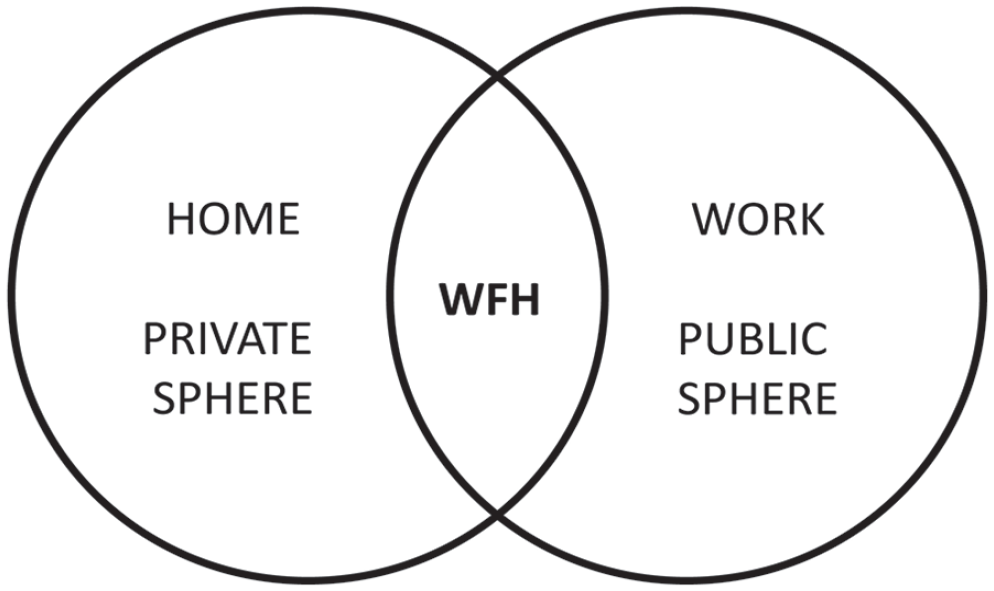
WFH nexus.
Yet, pandemic-induced WFH exposed inequalities in housing, as Alonso and Jacoby (2022) noted, that highlight the interconnection between floor space per person and socioeconomic factors. In cities like Vancouver where the cost of living is high, many residents inhabit small homes that are often shared, 2 and finding private space to perform job duties in these dwellings can be challenging. Paid labor’s integration in the home can impact domestic routines (Magee, 2000) when the employee and household interact within the dwelling. Altered work–life patterns may also influence the dwelling’s wider social and physical context, whether it is a unit in a high-rise tower or a house on a city lot (Ahrentzen, 1987). The home workspace and its surroundings reciprocally affect each other in ways that may be beyond the control of the employee. At the study’s core was the exploration of an interior design problem—the creation and merging of a workplace within the dwelling—but the scope transcended materiality to explore conditions directly and indirectly linked to remote work in the home such as employment, personal well-being, and domesticity. 3
This research acknowledged that while the pandemic’s effects were experienced globally, they were also gendered (Dunatchik et al., 2021). Therefore, we focused on the experiences of women, as they are still linked in western societies to the domestic sphere (Briganti & Mezei, 2012; Greenhaus & Beutell, 1985). As Munro and Madigan (1999) noted in their study on spatial conflicts in the family home, “family, house, and home have a particular salience for women, both ideologically in prescribing women’s work and women’s responsibilities, and in practice in that women still spend more time in the home, on housework, and on childcare” (p. 110). Women are more likely than men to seek flexible employment (Aksoy et al., 2022; Beatson, 2019; Cuerdo-Vilches et al., 2021) to better manage the second shift 4 of unpaid domestic duties they perform in addition to their paid labor. During COVID, women working both shifts in the home shouldered a heavier burden than men (Shockley et al., 2021), especially with the inclusion of new activities such as WFH and homeschooling.
Literature Review
Working in the home is not a new labor model; prior to the 19th century, the dwelling and workplace were spatially united (Hochschild, 1989). Industrialization removed paid labor from the home, creating separate, gendered spheres (Kwan, 1999) in which “women (middle-class women in particular) became the guardians of the private sphere of the home and men entered the public realm of the workplace” (Sparke, 2008, p. vi). As women joined the workforce, the flexibility afforded by performing paid labor in the dwelling, still considered the feminine domain, was beneficial (Aczel et al., 2021; Chow et al., 2022; Mas & Pallais, 2017; McCarthy, 2018). But seeking flexible employment arrangements such as job sharing or working remotely often came at the expense of women’s careers, as they took lower-paying or less-challenging positions that tolerated the interruptions of child-rearing (Anderson et al., 2003; Blair-Loy & Cech, 2017; Correll et al., 2007).
During the pandemic, information and communication technology made WFH possible for a much larger segment of the workforce. Although the concept of telework or remote work emerged in the 1950s, the practice of working outside the central office advanced with the introduction of personal computers and modems two decades later (Hill et al., 1996). Remote workers often occupied a private home office (Magee, 2000) with material characteristics that evolved alongside the development of new technologies (Messenger & Gschwind, 2016). The dedicated home office once accommodated stationary equipment like a desktop computer, landline, and filing cabinets, but today’s remote worker is freed from a fixed location by portable laptops, smartphones, and cloud-based storage (Camocini, 2011; Schaffers et al., 2020). Technology has rendered the employee’s “presence in an office no longer mandatory, and in some cases, it could even be considered redundant” (Antonelli, 2001, p. 11). Yet prior to the pandemic, the widespread adoption of remote work seemed unlikely (Junge, 2021). As recently as 2016, only 4% of Canadian employees worked remotely compared to 40% at the height of COVID (Mehdi & Morissette, 2021). Inspired by COVID, the rising demand for home workspaces (Alhadedy & Gabr, 2022; Yuko, 2020) is one outcome of the pandemic that will challenge residential designers.
The increasingly porous divide between the public–private spheres and virtual–physical spaces is of key interest to scholars studying domesticity and the home environment (Livingstone, 2005; Vaux & Langlais, 2023). Employment and personal life are merging as paid labor infiltrate the home aided by new media and technologies (Messenger & Gschwind, 2016). However, the dwelling and the workplace are distinctly separate design typologies—homes represent relaxation and comfort while we experience creativity and productivity in the workplace. By absorbing the activities of the workplace within the home, domestic rhythms and work–life balance can be disrupted (DeFilippis et al., 2020; Peeters et al., 2004), leaving the functional, social, and emotional needs of the employee and household unsatisfied (Oygür et al., 2022; Wang et al., 2021). Furthermore, the conflict between domesticity and paid labor that comes from the mutual incompatibility of employment with the family domain disproportionately affects women who are still performing more domestic duties than men (Junge, 2021; Sharma & Vaish, 2020).
The successful accommodation of paid labor in the dwelling, for many remote workers, relies on private space, which, in turn, depends on factors such as floor area, household composition, and the degree of openness in the floor plan (Alonso & Jacoby, 2022). Open planning is ubiquitous in Canada today. Cheaper to build and spatially efficient, the “open-plan home spread quickly [in Canada] during the great building boom of the decade before the First World War resulting in their current predominance” (Ward, 1999, p. 37). Open planning suits the informality of modern living (Luxton, 2000) and provides advantages that benefit small dwellings such as greater natural light and a sense of spaciousness. But without privacy, the noise and disruption inherent in open-plan corporate workstations (Kim & de Dear, 2013) also affect workers at home. Mothers contend with the most WFH interruptions as they are primarily responsible for childcare (Alonso & Jacoby, 2022; Galanti et al., 2021). As Dunatchik et al. (2021) acknowledged, “For reasons that need greater exploration, fathers who work from home are generally better able than mothers to protect themselves from the incursions of unpaid care work” (p. 7). Achieving privacy is a “changing process in which people open and close themselves to others, to different degrees at different times, using personal space, territorial behavior and other mechanisms” (Altman, 1975, p. 211). Furthermore, the design of contemporary mass housing does not always satisfy the “sometimes-contradictory demands of gender and family ideologies” (Munro & Madigan, 1999, p. 117) for individual solitude and family togetherness. Privacy issues in open-plan offices have been widely researched (Kaarlela-Tuomaala et al., 2009; Sundstrom et al., 1982), but few pre-COVID studies have examined the challenges faced by employees working in open-plan homes (Alfirevic & Simonović Alfirevic, 2016; Dowling, 2008). By exploring the solutions implemented by women who created home workspaces in predominantly open-plan dwellings, we aimed to address this gap.
Magee (2000) examined the environmental and behavioral strategies used by remote workers to mediate the merged dwelling and workplace, but most of the participants worked in enclosed rooms, not in open or shared areas. Using a mixed-methods approach of questionnaires and interviews, data were collected from home workers occupying suburban single-family homes in Cincinnati and Dallas. Men and women were almost equally represented in the study sample, and nuclear families (46%) predominated in the category of household composition. The majority (80%) were self-employed. In the findings, participants prioritized “territoriality, privacy, and control” (p. 35), with less emphasis on ergonomics and aesthetics, and the main reason for choosing a workspace (after availability) was its seclusion and separation from busy areas. One factor that separates Magee’s investigation and other prepandemic studies on WFH from research conducted during COVID is that these participants chose remote work or self-employment and were equipped for it. Those who were mandated to WFH during the pandemic were often not prepared (Costa Lemos et al., 2020). Furthermore, pandemic-related issues such as supply-chain shortages, lack of privacy, and unergonomic furniture in the home exacerbated remote workers’ difficulties (Wang et al., 2021), while women in particular struggled with extra domestic labor and homeschooling that often led to reduced work hours and declining mental well-being (Dunatchik et al., 2021).
Prepandemic research on the relationship between remote work and employee well-being included topics such as comfort and ergonomics (Burris et al., 2012; Vink et al., 2004), views and access to nature (Ahrentzen, 1987; Alexander et al., 1977), and work–life balance (Hill et al., 1996; Mas & Pallais, 2017; Peeters et al., 2004). When COVID forced corporate employees to WFH, often without appropriate space or furnishings, scholars responded by studying these topics in the context of the pandemic (Davis et al., 2020; De Vincenzi et al., 2022; Engineer et al., 2021). WFH is likely here to stay (Bossert & Olszansk, 2022; Robinson, 2022), so collaboration between workers, employers, and design professionals is necessary to ensure that the programmatic requirements of the merged dwelling and workspace are met. As Engineer et al. (2021) noted, “the same principles that apply to designing office spaces for optimizing integrative health and well-being apply to home workspaces” (p. 10).
Methodology
This study’s purpose was to explore (1) how women, many who were new to remote work, created and merged a workspace within their home during the first 2 years of COVID-19; (2) other difficulties that affected women working from home; (3) how they used their agency to create or improve their home workspaces to address challenges; and (4) their level of success. A mixed-methods approach was used to address the complex interactions framing these questions, consisting of an online questionnaire followed by semi-structured Zoom interviews. Because the study took place during the pandemic, public health measures mandated an online approach to data collection.
Recruitment and Sample
Study participants were recruited using a sampling strategy that targeted women who most likely would have worked from home—those in white-collar, professional, and knowledge-based occupations. Individuals who identified as women were eligible to participate if they had moved into their homes to continue their paid employment when workplaces closed due to COVID-19 lockdowns; lived in Metro Vancouver, BC; and provided consent to participate. The members of organizations with which the researcher was affiliated, such as BC’s professional interior design association, received the questionnaire link by email. The Liberal Studies and Gender Studies departments of Simon Fraser University also emailed the questionnaire link to their graduate students, faculty, and alumni. The researcher’s employer, the British Columbia Institute of Technology, advertised the questionnaire in its online employee newsletter. Concerned that mothers would be less likely to participate due to time constraints, resulting in under-representation in the study, the researcher emailed the questionnaire link to acquaintances with children, and they were asked to forward it to other women who had worked from home (snowball sampling method). Due to the nature of the sampling strategy, the number of women who received and read the invitation is unknown. In all, 96 women completed the questionnaire.
In total, 36 questionnaire participants agreed to be contacted for interviews. A total of 17 were invited to be interviewed, based on the following criteria: women who had either moved or renovated their homes during the pandemic or who worked as interior designers or architects and could therefore provide insight into the pandemic’s impact on residential design. After interviewing 7 women, 10 additional interviewees were invited to expand the sociodemographic range and generalize the study results over a wider population. While 27 women received interview invitations, 15 women in total were interviewed, representing a wide range of ages, ethnicities, household compositions, incomes, and dwelling types. Pseudonyms have been used for this article.
Instruments and Data Collection
Questionnaire
Data collection started with a self-report questionnaire 5 administered online using SurveyMonkey for 1 month from January to February 2022, a period that corresponded with the reestablishment of pandemic safety measures to counter the Omicron variant’s rapid spread. Participation was voluntary and no financial incentives were offered. The questionnaire consisted of 4 qualifying questions, 55 research questions, 9 additional research questions on childcare for mothers, and a final question asking whether the participant would consent to be contacted for an interview. The questionnaire included the following domains: demographics, domestic labor, dwelling, employment, household composition, and WFH-related challenges and solutions/innovations. Approximately 25% of the questions were open ended, and the rest were closed ended with multiple-choice responses (most with the addition of an “other” option to capture data missing from the predefined selection). The multiple-choice questions specified if more than one answer could be selected. The questionnaire was designed to provide a description of the sample’s sociodemographic characteristics and collect qualitative data that would enhance some of the quantitative answers. For example, an open-ended question asked participants to describe challenges they encountered that related to their physical workspaces at home during the pandemic, followed by a multiple-choice question about physical workspace challenges associated with WFH, with predetermined answers and an “other” answer option. Respondents were then asked to describe the modifications (if any) that they made to overcome their physical workspace challenges at home (see Table 1). This sequence was repeated for domestic and emotional challenges and modifications, and they were placed at the questionnaire’s start to collect data on these important topics before participants experienced questionnaire fatigue.
Sample Questionnaire and Interview Questions on the Topic of the Home Workspace.
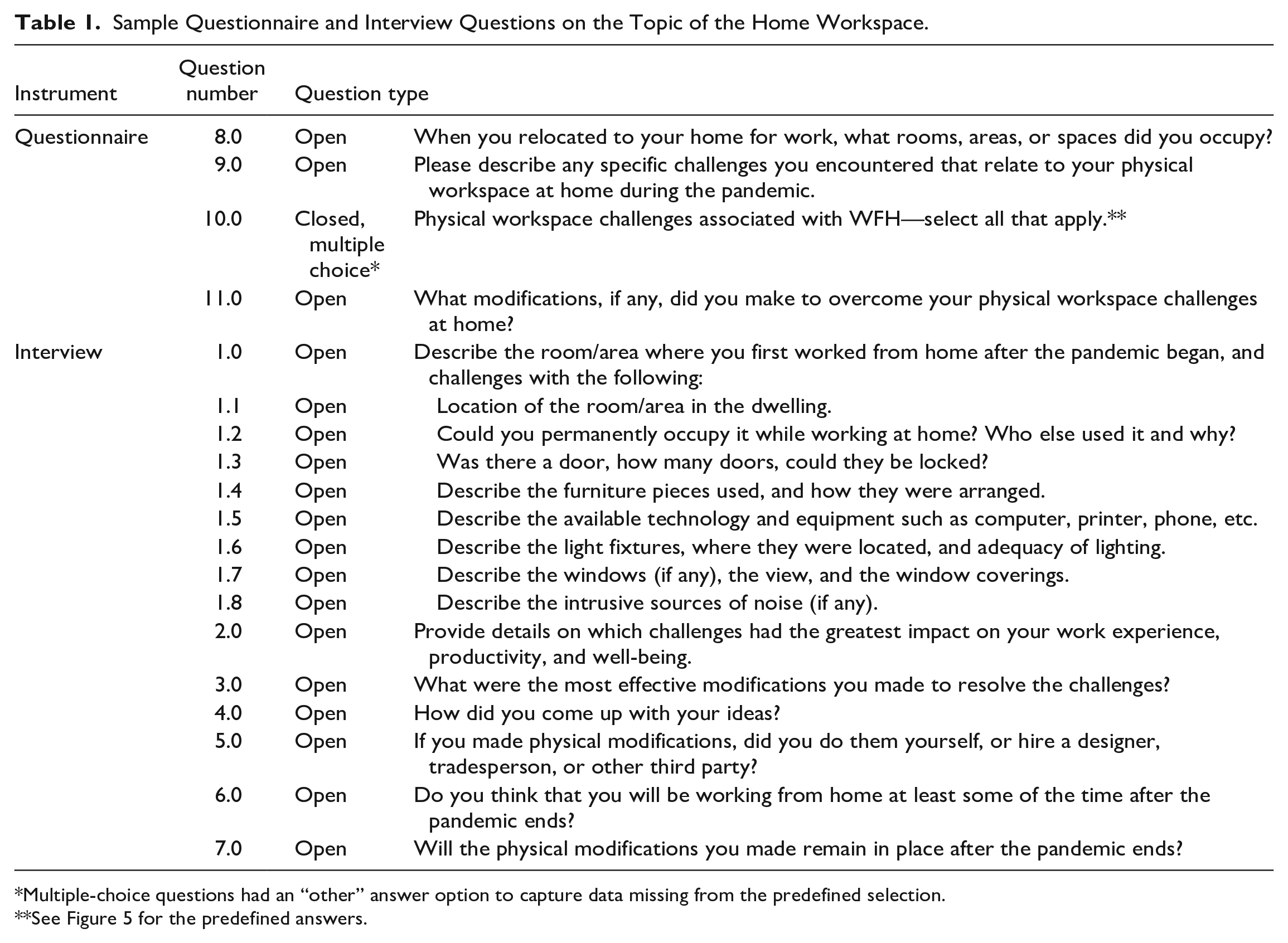
Multiple-choice questions had an “other” answer option to capture data missing from the predefined selection.
See Figure 5 for the predefined answers.
Interviews
The semi-structured interviews were conducted in February and March 2022 via Zoom. The standard script included 15 open-ended questions. Three additional question sets were asked of participants who had moved to a new home during the pandemic (two additional questions), renovated their home during the pandemic (seven additional questions), or worked as an interior designer or architect (one additional question). The script focused on the home workspace, with questions designed to elicit details beyond those provided in the questionnaire. While the basic structure and questions were predetermined, fine-tuning took place as the questionnaire data were analyzed. The questionnaire only touched on the topics of videoconferencing, moving, and renovating, and these were further explored during the interviews. Interviewees were asked if they would consent to the interview being recorded for transcription, and if they would like a copy of the recording. Interviews lasted between 30 minutes to 1 hour and were transcribed verbatim by the researcher.
Data Analysis
The data collected for the questionnaire by SurveyMonkey were exported as an Excel spreadsheet. SurveyMonkey’s data-analysis tool identified trends in the demographic variables and the other closed-ended questions. As each interview transcript was completed, the recording was replayed to capture any emotional nuances and background noises missing from the original transcript. The researcher and the project leader 6 listened to the recordings separately, noting how the interviewees’ experiences related to the questionnaire data. The qualitative data from the questionnaire and the transcribed interviews were analyzed using content analysis to determine appropriate categories by calculating the frequency of repeated words or phrases. 7
Results and Discussion
The data revealed diverse challenges experienced by women who worked remotely from home during the pandemic. Disadvantaged by a lack of preparation time and other pandemic-related difficulties, many received little or no assistance from their employers. Women used their agency to create a workspace where one had not existed or was not suited to full-time work. However, their WFH trials extended beyond the workspace to domestic, employment, and well-being issues that also needed to be addressed.
The women who worked from home during the pandemic did so because their occupations and technological skills made remote work possible. The questionnaire data revealed a descriptive overview of the participants’ sociodemographic characteristics (see Figure 2).
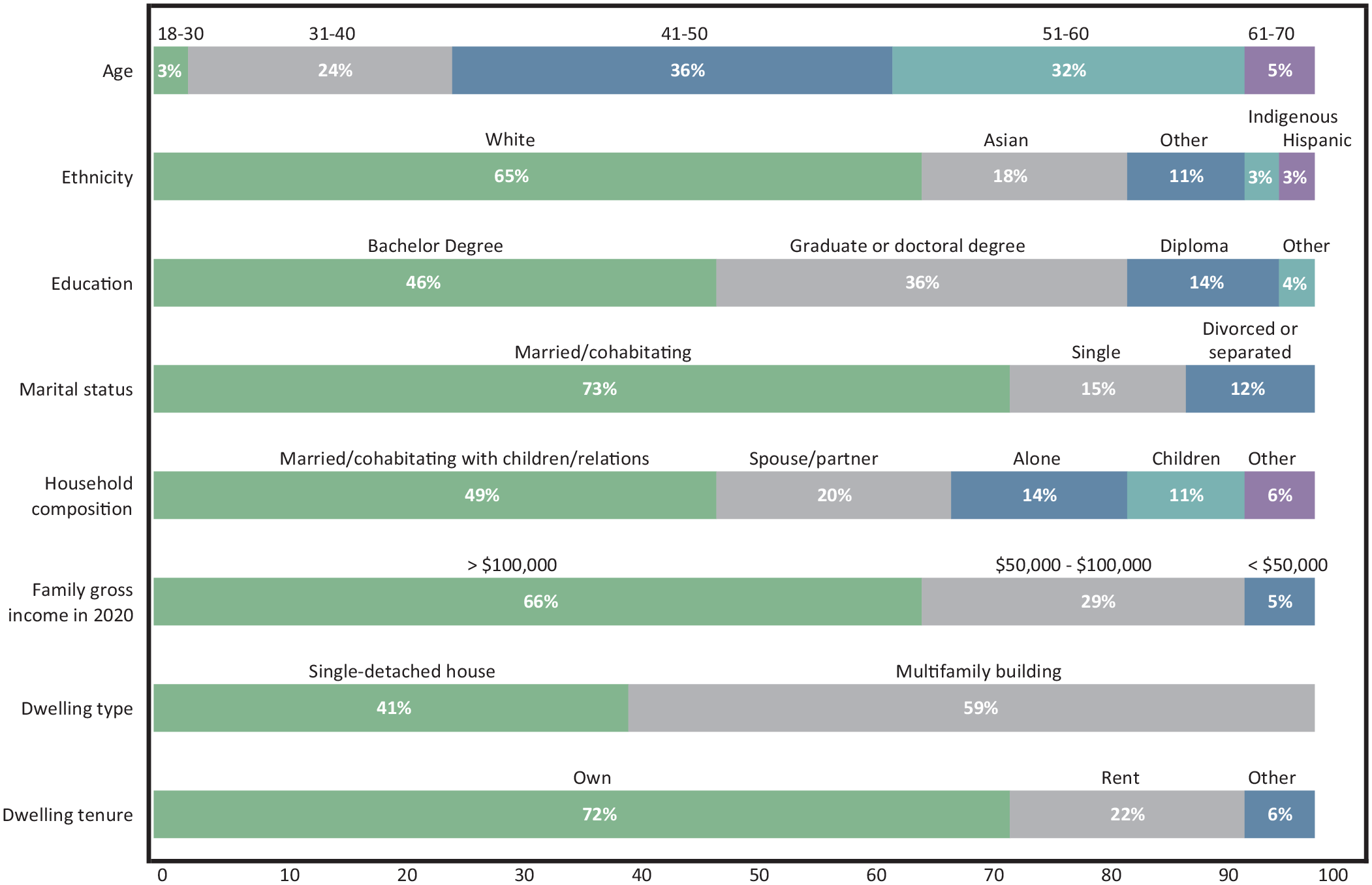
Descriptive characteristics of the study sample (n = 96).
Occupations were selected from the categories of the Canadian National Occupational Classification. Half of the respondents selected “Occupations in education, law and social, community and government services”, and 25% identified as designers, interior designers, and architects. The nuclear family predominated with 49% of the respondents living with a spouse/partner and children. Two-thirds of the participants had a family gross annual income in 2020 that exceeded $100,000, with 35% of the single women earning over $100,000 annually. 8 While participants in high-income households reported fewer domestic challenges (see Figure 3), this was not the result of outsourcing housework or childcare.
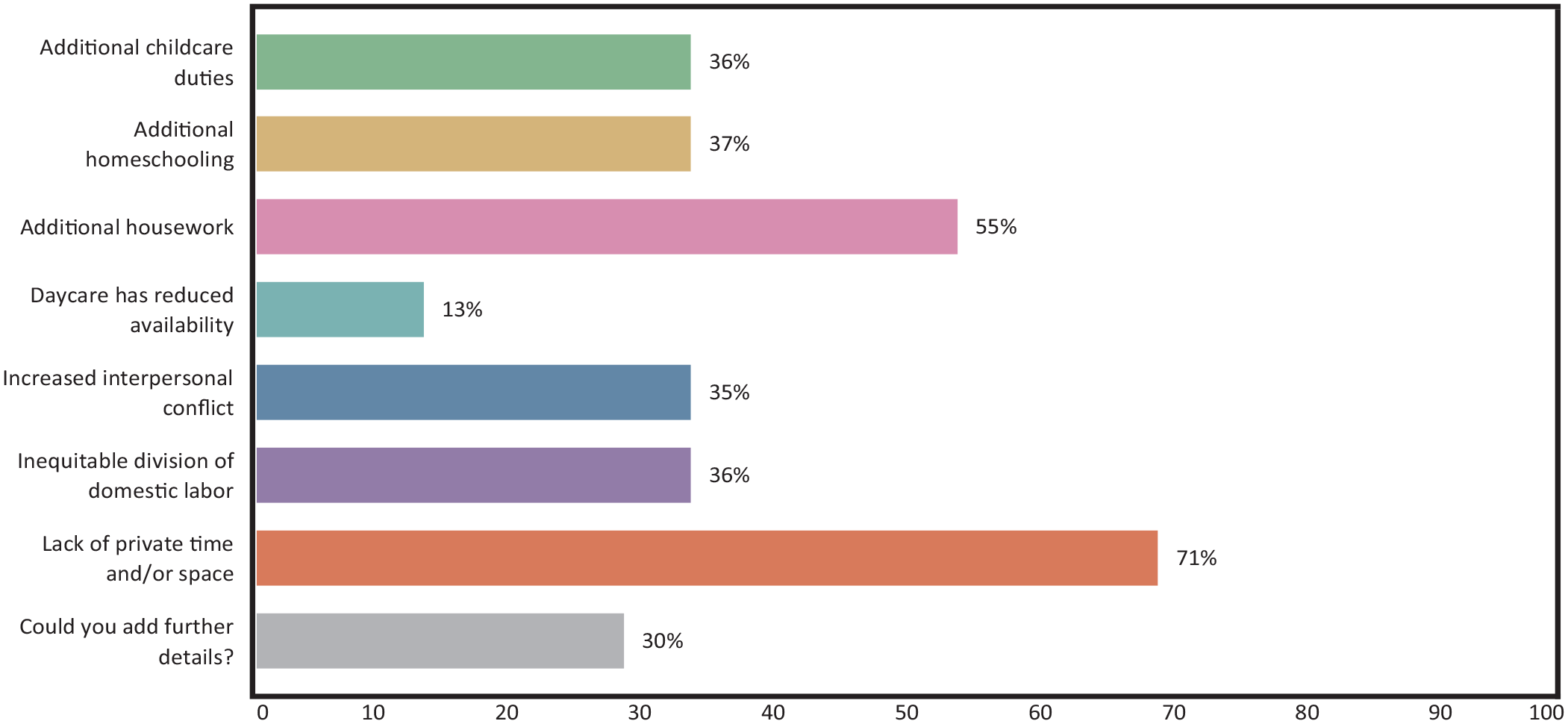
Domestic challenges experienced during WFH.
Seventy percent of the participants spent over 30% of the family’s gross annual income on shelter costs. 9 Almost three-quarters of the respondents owned their homes. Multifamily units housed 59% of the participants. Fifty-seven percent lived in dwellings under 1,500 square feet, mostly in multifamily housing, and 10% occupied 2,500 square feet or more. The majority (80%) lived in dwellings constructed after 1950 which would likely have open floorplans.
The sudden onset of the pandemic inhibited the innovative measures of a few participants who did nothing, hoping COVID would end quickly. Some women experienced financial, spatial, or other constraints that prevented them from making material changes. While a satisfied minority said they encountered only minor problems, every woman experienced domestic, workspace, and/or well-being challenges during WFH. The nature of their innovations transcended materiality, and sometimes the solution involved changing the behavior or expectations of the individual, their household, or colleagues. Whether material or behavioral, the modifications often had repercussions that radiated beyond the participant, affecting others in the household where shared space was compromised by job-related activities. The creative process was trial and error, and better solutions often evolved over time. A fix was often temporary or task specific, such as arranging bedroom furniture for Zoom calls, then moving it back to its original position. When asked about the longevity of their home modifications, most interviewees confirmed that some, or all, of their changes would be permanent, regardless of whether their WFH would continue.
In the study’s scale of home modifications, undertaking renovations or moving to a new dwelling, with the associated stress, labor, and significant financial commitment, represented the apex. One-quarter of the study’s participants either moved during the pandemic or planned to move, corroborating reports of pandemic-inspired mobility (Angus Reid Institute, 2022); several women said they moved to gain more space for working. Three interviewees noted that disruption from the noise of nearby construction had also motivated them to move. Twenty-two percent of the questionnaire respondents affirmed that the pandemic had provided the opportunity (more time and money) to renovate although these changes were, for the most part, anticipated before COVID and did not directly influence their workspaces. For a lucky few with the financial means and opportunity, moving to larger dwellings solved their workspace difficulties.
Home Workspace
The sudden relocation from the corporate office to the home workspace resulted in a common scenario where many women began WFH without adequate space, furniture, and/or equipment. Without knowing how long the pandemic would last, many relied on do-it-yourself solutions to create or enhance a workspace in the home, with varying degrees of success. In households where participants lived with other people, only 30% had a dedicated room for their employment duties. The rest set up workstations in rooms or areas meant for other purposes such as the kitchen or a child’s bedroom. The most frequently utilized rooms/areas were the living room and dining room, followed by the home office, kitchen, and primary bedroom (see Figure 4).
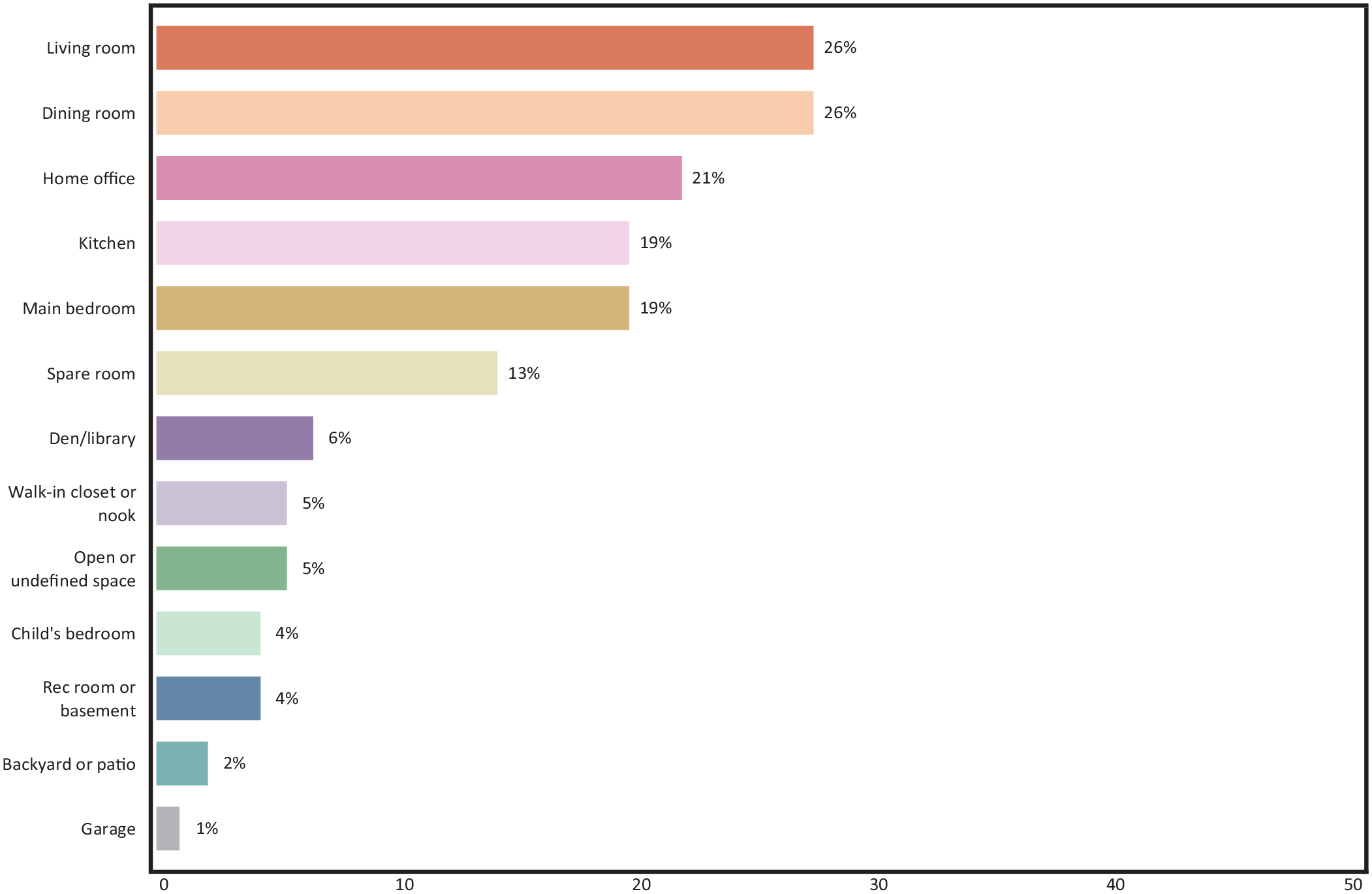
Workspace location in the home.
Some women started working in one location, then found a better place; others, like this mother with two teenagers, “just continued to play musical chairs in my home since I had no other option to continue to work from home.” Twenty-five percent of the women worked in two locations, while 15% moved between three or more locations. Performing paid labor in shared areas of open-plan homes was particularly disruptive, a finding consistent with Magee (2000). This participant noted that when schools were closed, “the kids were around more so I needed to move to different spaces as the day went on to find a quiet space to work” since her husband occupied the only home office. Finding a place to work challenged many women including this interviewee who described how she chose her work location to accommodate her family: I tucked myself away [in the dining room] so people could still go on with their daily lives even though it was a bit distracting for me. We had to figure out the best place so it wasn’t too restrictive. My husband works in the bedroom. I just need to know when he will be in there so I can get my stuff. [laughs]
In several households, the husband—not the wife—occupied the home office or private room. Sometimes the room had been his space prior to the pandemic, or it was due to the nature of his employment. In this example of a dual-earning couple working from home, the husband used the spare room because he had more conference calls, while the participant sat at “the kitchen table, setting up and taking down a monitor and workstation every day. There was no place for me to go and have a mental break, I was always surrounded by people and noise.”
The basic workspace consisted of a surface to hold the laptop, a chair, and an internet connection but the data revealed important additional needs (see Figure 5) which are discussed in the following section, organized into four subcategories: interior environmental quality (IEQ) and comfort, aesthetics, privacy, and videoconferencing.
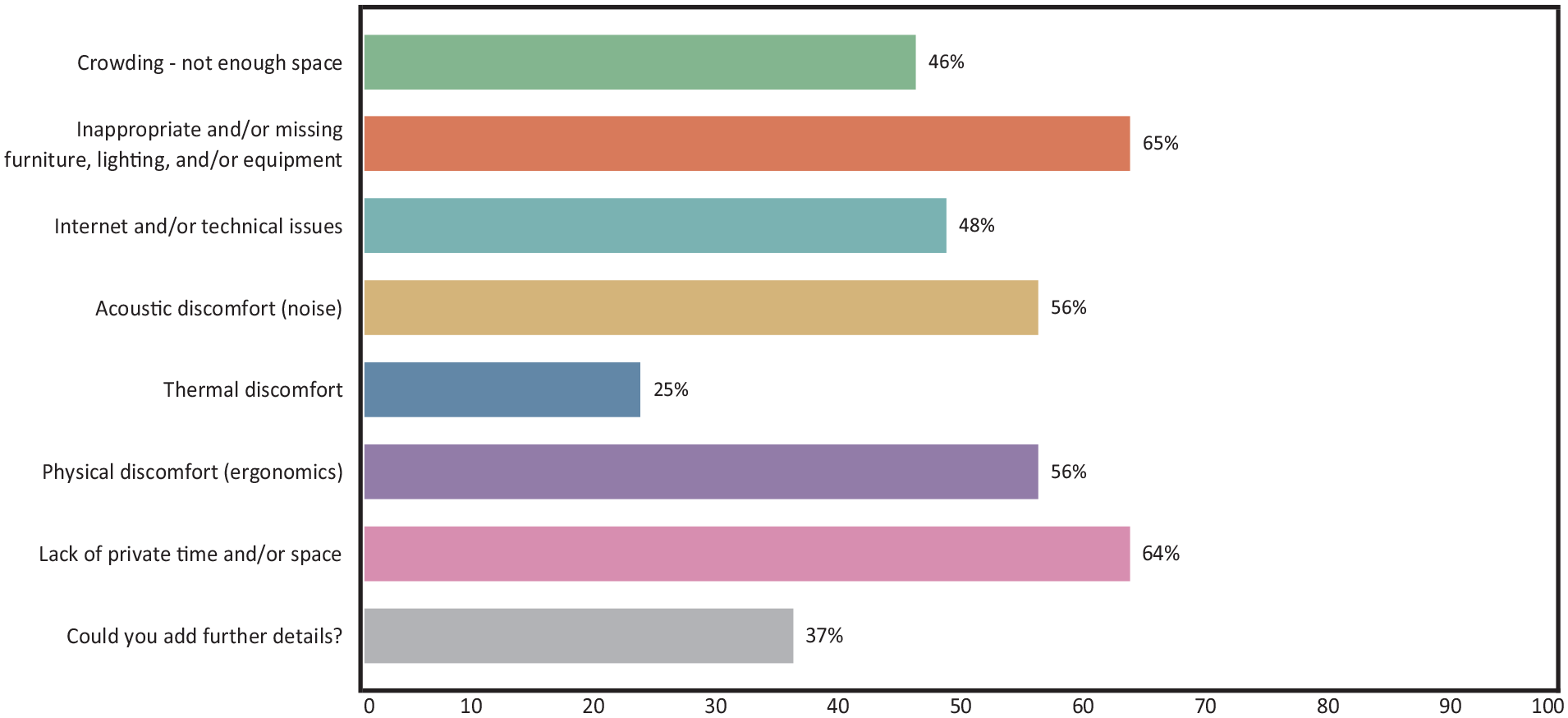
Physical workspace challenges experienced during WFH.
IEQ and Comfort
IEQ includes acoustics, lighting, air quality, temperature, and ventilation, and it significantly impacts health and well-being, as Engineer et al. (2021) confirmed. Environmental stressors such as noise, heat, and glare—often unavoidable and uncontrollable—aggravated the WFH experiences of this study’s participants. Noise, the most common complaint, came from internal and external sources. The sounds of domestic life distracted working women without home offices while the inability to control or avoid external noise from construction and landscaping increased their frustration. Outdoor noise was especially noxious in the summer when occupants opened windows and doors to the cooling breezes.
Solutions for blocking noise were limited to wearing noise-canceling headphones, or moving to a quieter neighborhood, as was the situation for Kate, a career educator in her mid-thirties. When the pandemic began, her family lived in a townhouse where Kate and her husband worked in a basement multipurpose room. Constant noise from a massive nearby construction project provoked them into moving, as did the neighbor’s son, who “started to play loud music during COVID and smoked pot next door. We were being hotboxed in our basement, and we had no windows to open.” My husband said, “We have to move,” and I said, “I will divorce you if we don’t move!” He was, like, “Ok.” They moved to a house in a quiet neighborhood where Kate had her own home office, resolving her issues with environmental stress and crowding. She indicated in the questionnaire that ideally she would WFH 31% to 60% of the time.
Quality interior lighting (including daylight) is critical to work performance and well-being. Achieving adequate light levels for videoconferencing was especially challenging, and participants often supplemented natural light by adding artificial sources such as ring lights around the desk. Installing new window coverings, or adjustments to window coverings, mediated overly bright daylight and glare. Several women mentioned their preference for working in proximity to natural light, and one woman described how she moved around the home with her laptop throughout the day to take advantage of optimal daylight conditions.
As Davis et al. (2020) noted, working from home “will likely be a mainstay for a large part of the population. . . As a result, millions of workers will be needing safe home offices” (p. 8). During COVID, participants often worked longer hours in front of screens, and they exercised less. Discomfort and injuries resulting from a lack of ergonomic furniture impaired their performance and well-being. To overcome these trials, women bought second-hand ergonomic furniture online or improvised by creating work furniture from household objects like a sit–stand desk from an ironing board, and monitor stands and footrests from stacked books. Some women mounted keyboard trays to the underside of the dining table. One participant built a makeshift standing desk comprised of a folded-up picnic table on top of a piano keyboard stand. Several noted that their employers lent them furniture and equipment or provided funds for purchasing new items.
Aesthetics
Although workspace aesthetics ranked lower as a priority, several comments regarding a desire for tidiness and organization emphasized the importance of harmony and order. The visual distraction of household clutter irritated some women, a finding that aligns with Vaux and Langlais (2023). Others gained peace of mind from their interior décor. Mirana, a single woman in her mid-thirties, worked as a constituency assistant. By repositioning her desk against the window wall, she could look out over the “beautiful trees on my street. In the winter they are bare, but as soon as spring starts, I can see the blossoms. From March to November, they are stunning.” Mirana also enjoyed “fresh flowers, and little things that make [home] nicer,” for herself, but also for those who could see into her studio apartment during Zoom calls. She chose not to buy an ergonomic office chair as its style would not work with her apartment’s décor, instead using “an armchair which was fine but a bit too low, so I’d prop it up with pillows.” Although she sometimes felt isolated from living and working alone, Mirana noted that she would like to spend 61% to 99% of her time working from home.
Privacy
Finding privacy presented a considerable challenge to the participants who lived with other household members. As Munro and Madigan (1999) corroborated, “women need time as well as space to enjoy privacy within the home” (p. 115), given the gender imbalance in domestic responsibilities. Some women used material solutions to achieve privacy such as installing doors, locks, or curtains. Others changed their schedules, working uninterrupted in the evening. The term “open plan” came up repeatedly when participants described their privacy issues, since having fewer interior walls multiplied the disruptions that affected women working in open areas. For one interviewee, privacy issues inspired by the pandemic impacted the end result of their kitchen renovation. The project was planned before COVID, but it took place during the pandemic while the family lived at home. Becky, an engineer in her mid-forties, worked primarily in the dining room (until construction noise forced a temporary relocation to her son’s bedroom) while her husband worked in his home office. Becky noted that her WFH experience in the dining room “helped influence us to keep a more closed concept to the house” even though their interior designer had recommended opening the kitchen to the dining room. Becky declined, saying “If we had gone with the open plan, and then the pandemic had happened, I wouldn’t have had a [quiet] place to work. The pandemic did influence our kitchen renovation being more closed than open.” Becky noted in the questionnaire that her ideal time working from home would be 61% to 99%.
Videoconferencing
As Vaux and Langlais (2023) reported, pandemic lockdowns transformed homes into physical sites for virtual activities such as WFH, online classes, and digital entertainment with the use of information and communication technologies such as videoconferencing. WFH’s success relied on videoconferencing, but its prevalence in the home introduced new privacy issues as the meetings took place in domestic settings where web cameras created portals through which colleagues and strangers could look into private residential areas. Opinions about this privacy breach varied widely. Some women had no concerns about showing their personal space, and even created engaging backgrounds with meaningful objects, images, and décor to welcome “visitors” and act as conversation starters. Others, with privacy concerns for themselves and their households, maintained visual separation using a blurred or artificial background feature, or positioning the camera away from personal belongings or domestic activities.
Videoconferencing could create family tension by generating disruptive noise especially if the call took place in an open area. Participants using Zoom were also distracted by household noise. When spouses shared a work area (for some women, working alongside their partner was not feasible due to privacy or noise concerns), they sometimes negotiated for Zoom sound space, which could lead to conflict regarding the values of their individual labor contributions. One woman, inhabiting a one-bedroom apartment with her husband, confirmed that videoconferencing negotiations “often became a debate about whose work was more important, and thus got priority,” although she did not report the outcome.
Domesticity
For women performing paid labor at home, the nature of the workspace and their work performance depended on variables related to the dwelling, but also to household composition, the domestic environment, and gender roles. These relationships were complicated and sometimes surprising, such as the mother who said she preferred to work centrally where she could monitor the household rather than in a private room. Additional domestic duties exacerbated an already-fraught situation for many women during WFH as Shockley et al. (2021) found in their study on domesticity and dual-income couples. With more people spending longer periods of time at home during the pandemic, housework and childcare duties escalated, especially when schools were closed. Women continued to experience the expectation that they manage the domestic labor and be the default “on call” parent as this mother noted, “When people are home all the time the house gets really dirty, really fast. That tends to fall to me.” Twenty-five percent of participants reduced their hours, changed jobs, or quit to perform extra domestic labor. While more participants believed their work performance had improved during pandemic-induced WFH (see Figure 6), most of the women reporting a decline had children under the age of 18, a finding that aligns with Costa Lemos et al. (2020).
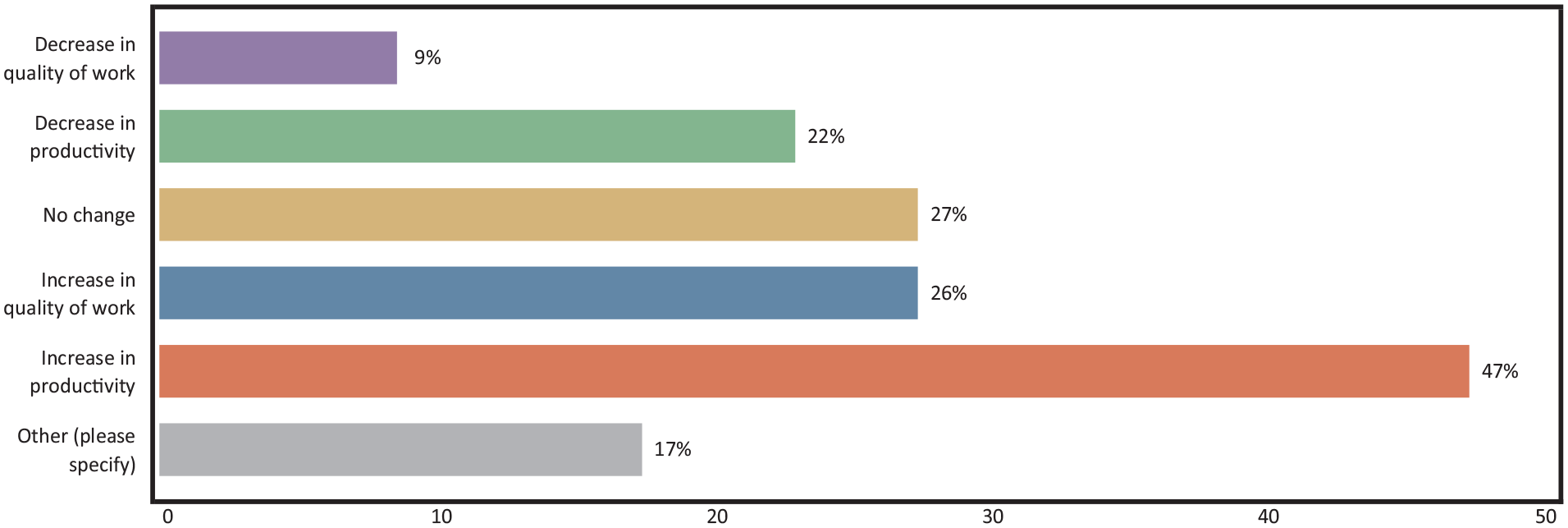
How was your work performance affected by WFH during the pandemic?
A participant working in the dining area felt doubly taxed by the lack of privacy and her caretaker role, saying “there was not much separation between being a mom and working. Even if my husband was home, children still came to me for all their problems.” This was corroborated by researchers (Junge, 2021) who noted that the uneven distribution of childcare duties between couples working from home put women at risk of “an increased burden, in particular for mothers, of mixing work and private life” (p. 7). One interviewee separated from her husband during the pandemic. While she continued to WFH and take care of their daughter, she noted that throughout the pandemic: He went to his workplace continuously; he never had to work from home. [Interviewer: was it easier for him to work outside the house?] It was easier for him and he wasn’t responsible for what happened at home, for the childcare part, and also it was easier for me.
Despite the extra housework, however, several women commented on how much they valued the opportunity to spend more time with their families during the pandemic, a result consistent with earlier studies such as Asmundsun et al. (2021).
Wellness
The results from this study illustrate the meaningful interconnection between personal well-being and factors related to the home workspace, such as aesthetics, ergonomics, privacy, and work–life separation (see Figure 7). Costa Lemos et al. (2020) stated that while “flexible working hours become an ally in harmonizing these [work and home] spheres. . .these arrangements do not always offer more balance” (p. 390) for women, a finding supported by this investigation. Furthermore, two factors were instrumental in achieving mental well-being: the availability of personal space and the ability to control one’s environment. With access to a private room, women could retreat from sources of stress like the messy house, noisy kids, and digital devices. When social venues closed during the lockdowns, spending time outdoors in the natural environment provided peace of mind (Engineer et al., 2021). For mothers of young children, however, finding solitude was only possible if they had access to childcare. Maintaining social connections during the pandemic also helped to alleviate stress. To illustrate, one family’s garage became a safe social space by “decorating one wall [and] setting up a buffet in the corner with an electric kettle. We could have friends over and hang out socially distanced while being technically outdoors (the garage doors open), without having to just stand around in the rain.”
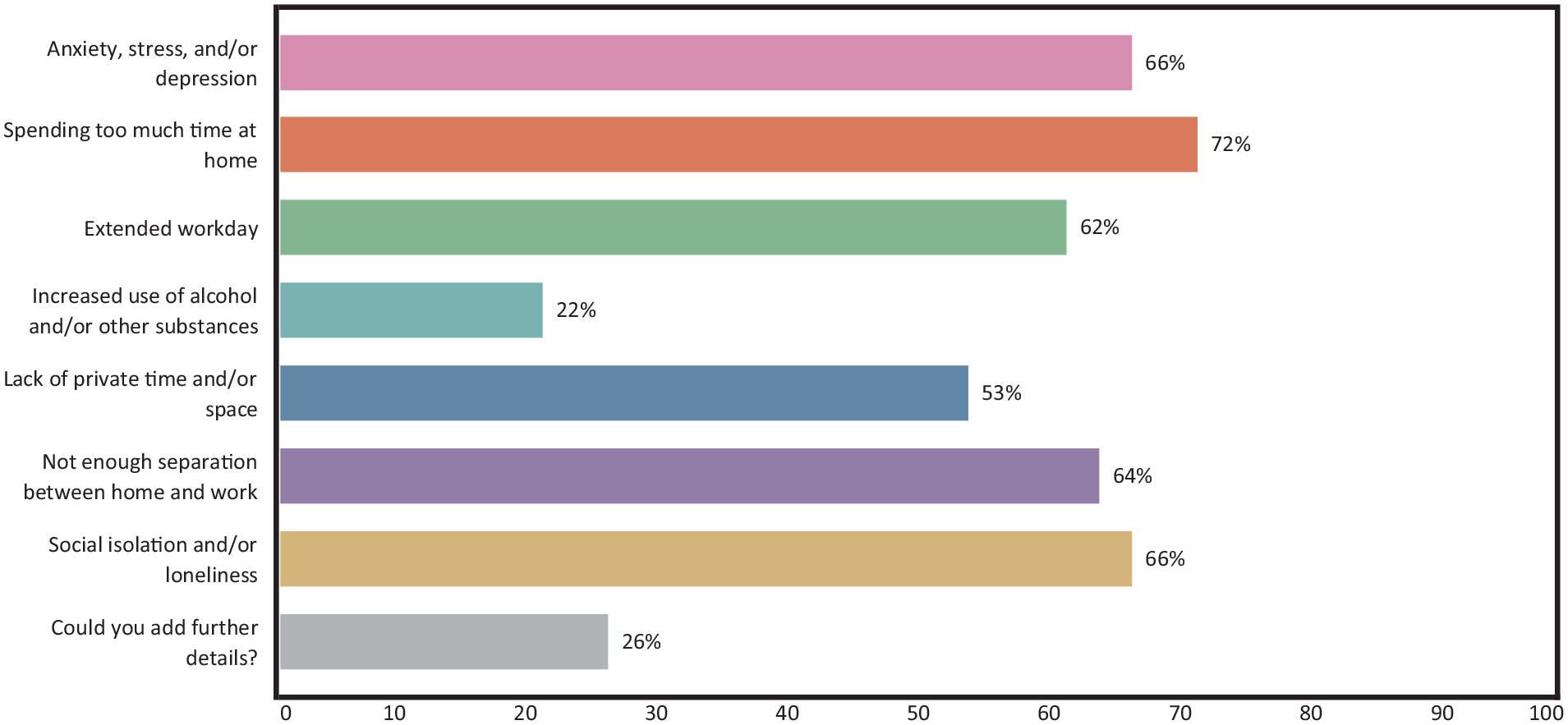
Emotional challenges experienced during WFH.
Forty-five percent reported working longer hours at home during WFH, and this was primarily due to the changed nature of their employment. A single woman employed in human resources commented that her work computer was “always out and accessible. It felt like I had to overcompensate for working from home; I had to be more available because I couldn’t meet people in the office.” Domestic spaces that were once areas of relaxation merged into workplaces yet separating them could be achieved by hiding the materials of paid labor, as evidenced by the woman who created “work-corners in the home so that work life was contained and not spilling into every space.” Another participant found that “moving to my own office space in the closet helped create separation between home and work.” For some, changing the room’s ambiance helped to restore work–life separation (Alonso & Jacoby, 2022). For Paula, an acting instructor in her mid-fifties, transforming her son’s recently vacated bedroom into a space for work and personal relaxation required material and behavioral changes: It was not just a place of work but also a place of rest. I put up my old theater posters and things like that. And a squashy old couch. And painting the walls purple. [Interviewer: Did it matter to you that this place of rest was also where you were doing your work?] No, because I had these rituals so when I was done teaching, I would change it back into my rest space.
The interconnection between well-being and some of this study’s themes such as the workspace, work–life separation, and privacy was further illustrated in Aarini’s interview. She was a research assistant in her mid-thirties who rented a bedroom in a shared house. When the pandemic began, she found privacy (and discomfort) by sitting on her bed to work. Aarini had never worked from home before and she felt “depressed and demotivated and anxious about everything because I couldn’t function in my bedroom. It was meant for relaxing, and I had to work in it.” When she moved into her own studio apartment, she arranged the furniture to separate the desk area from her living space. Now Aarini prefers to WFH, and she indicated in the questionnaire that her ideal WFH time would be 61% to 99%.
Implications
The intent of this study was to explore how women working from home during the pandemic innovated to overcome the challenges of the home workspace and other trials directly and indirectly linked to WFH. The results showed that women successfully merged workspaces into their homes, with material or behavioral modifications necessary in some situations. Findings suggest that WFH is a viable employment model for women who are combining paid and unpaid labor in the dwelling. The benefits afforded by remote work (see Figure 8) far outweighed the challenges. Only 3% planned to return full time to the corporate office while the remainder want to WFH in some capacity (see Figure 9), a finding confirmed by earlier studies (Chow et al., 2022).
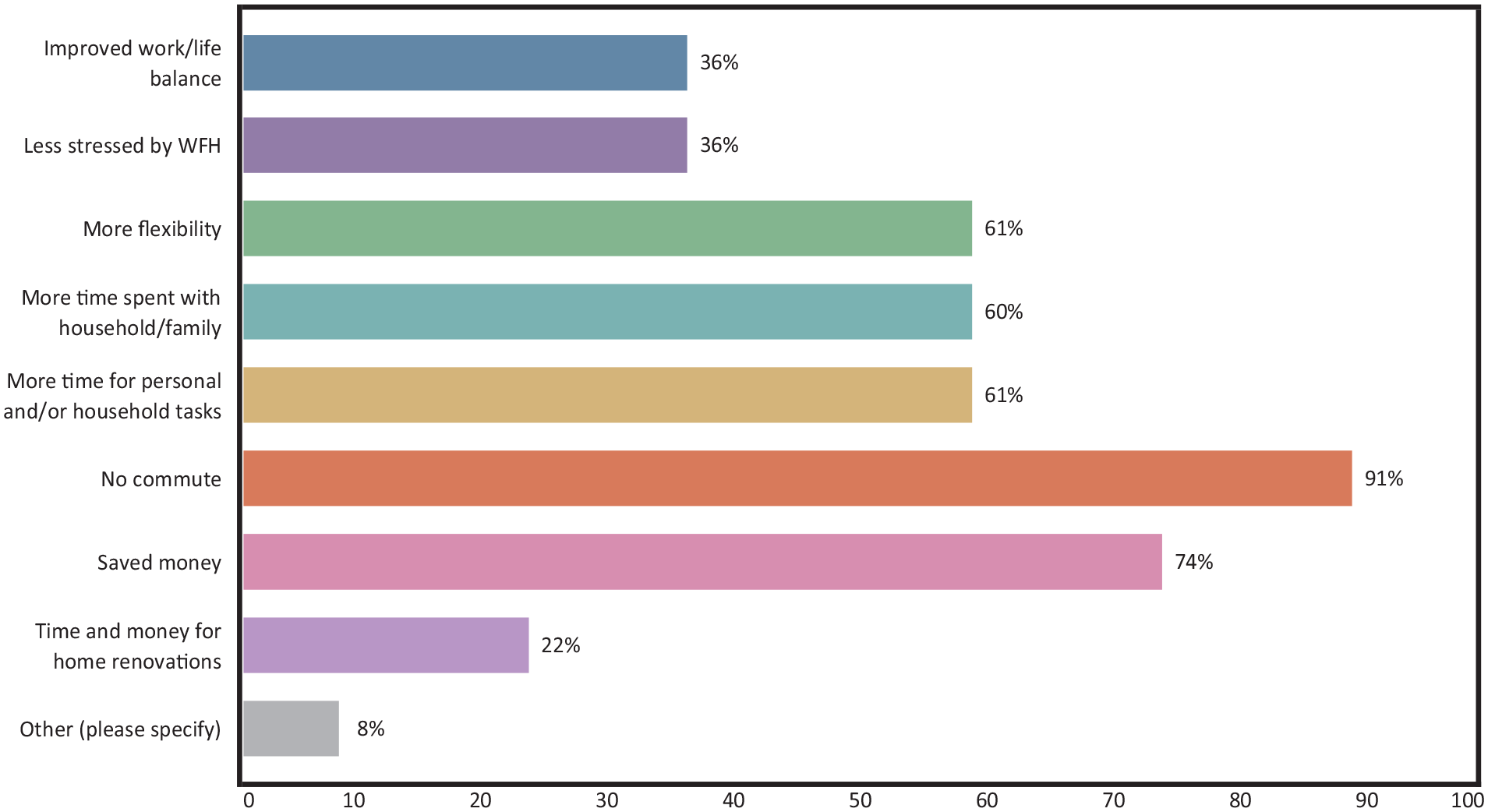
How did WFH benefit you during the pandemic?
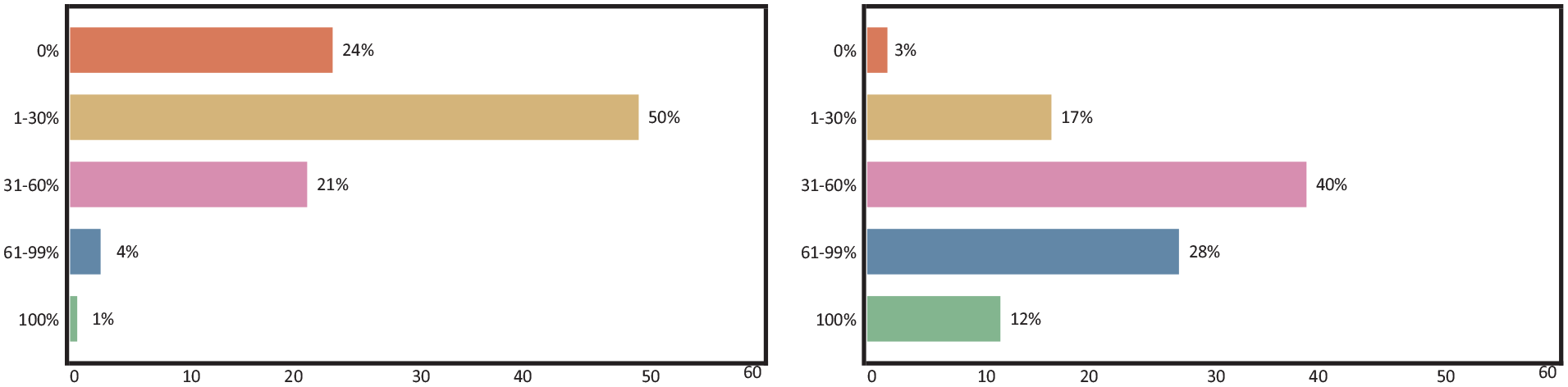
(Left) Percentage of time working from home before the pandemic. (Right) Percentage of time you would ideally work from home.
The concept of the blurring boundary between the workplace and the dwelling was the subject of academic interest long before the pandemic began. As scholars have noted (Kwan, 1999; Magee, 2000; Mas & Pallais, 2017), the convenience of performing paid labor in the home often results in work–life imbalance, especially for women who are also taking care of domestic duties. This burden was exacerbated for many women during COVID when their homes became the physical site for new virtual activities such as WFH and home-schooling (Vaux & Langlais, 2023).
A mixed-methods approach was employed in this study to explore the experience of the home as the primary location for women’s employment during COVID. Three categories of challenges affecting women’s WFH experiences were investigated: domesticity, home workspace, and personal well-being. While the results align with other current research (Alonso & Jacoby, 2022; Galanti et al., 2021; Sharma & Vaish, 2020; Shockley et al., 2021), what made this study unique was its focus on women’s individual agency and innovation in overcoming these difficulties. It illustrated how WFH required similar amenities and conditions as working in the corporate office (Engineer et al., 2021). Forced by the pandemic to WFH, women demonstrated resilience and creativity by making the material and behavioral modifications necessary to carry on working, and their solutions will be of interest to residential designers.
We also found that the majority of the participants had no access to a dedicated home office, and when they worked in open shared spaces, employment duties often interfered with the household and vice versa. Achieving work–life separation (spatially and mentally), and meeting privacy needs in the merged home and workplace played an important role in the success of WFH (Alonso & Jacoby, 2022). In particular, noise and other distractions from internal and external sources disrupted working women, especially in open-plan homes. Therefore, it will be necessary for interior designers to consider the home workspace as part of a wider environmental and social context with shifting programmatic needs when designing solutions to accommodate paid labor within the dwelling.
Conclusions and Limitations
How people use and modify their domestic spaces will continue to evolve, sometimes in response to external factors as the pandemic demonstrated. The focus of this study was on the phenomenon of WFH within the unique and narrow context of COVID-19 through a gender lens, examining the repercussions of a crisis that introduced trials specifically impacting the experiences of women working remotely in ways that gender-neutral, and prepandemic, studies did not encounter. Furthermore, COVID-19 is unlikely to be the last disruptive event necessitating a major labor decentralization. As a labor model, WFH has grown from exceptional to mainstream in just 2 years, a momentous outcome of the pandemic. This sociocultural shift will likely alter domestic and employment practices, in turn influencing the interior design of dwellings and workplaces.
By revealing the physical and behavioral limitations—often specific to women—of the merged home and workplace, this research has important implications for interior designers and the organizational decision-makers responsible for the welfare of remote employees starting or continuing WFH. Biophilia, ergonomics, IEQ, privacy needs, work–life separation, and other measures related to wellness can be spatially and materially addressed (Cuerdo-Vilches et al., 2021). Flexibility will be key as noted by the American Institute of Architect’s “Home Design Trends Survey” that identified the emerging desire for multifunctional spaces as a new trend (AIA, 2020). Building flexibility into homes could give remote employees more control over their personal space and the disruptions inherent to open-plan dwellings.
The remote-work revolution is another step toward a customization of work–life balance that will best accommodate every individual, in particular women who choose to combine paid and unpaid labor in the home. In this study, the experiences of a specific population of women were explored, yet future research could examine remote work by gender and in other demographic groups including sociocultural variations in different countries. Longitudinal studies of WFH during and after the pandemic would also be valuable. Other areas of research could include WFH’s impact on the corporate workplace, such as its interior design, remote-work policies, and managerial practices.
This study’s results should be considered in light of a few limitations. Because a convenience sampling method was used, the sample may not fully represent the study’s population. The sample was demographically homogeneous. All the participants identified as women, so the study could not compare experiences by gender. They were also predominantly White, educated, and middle-class home-owners whose occupations could be performed remotely. The study’s generalizability is limited due to its relatively small sample size and specific geographic context. One-quarter of the participants worked as architects and interior designers, and their responses would have greater awareness and understanding of the built-environment challenges fundamental to this research.
Despite these limitations, valuable insights into the WFH experiences of women living in Metro Vancouver, BC, during the pandemic were discovered, which may inform future research. By presenting evidence of wide-ranging creative responses to domestic, personal, and workspace difficulties during WFH, the research results illuminated new design considerations for the successful merging of domesticity and employment in residential design.
Footnotes
Declaration of Conflicting Interests
The author declared no potential conflicts of interest with respect to the research, authorship, and/or publication of this article.
Funding
The author received no financial support for the research, authorship, and/or publication of this article.
