



Abstract
Understanding the range of body sizes and shapes among children is critical for the design of products and systems to ensure safe and effective use and other safety considerations to reduce the risk of injury. The availability of useful data for youth is even more limited than for adults. To address this gap, methods were developed to gather detailed, integrated, three-dimensional (3D) data on anthropometry and to characterize the physical capability of children from ages 3 through 17 years. This paper provides an overview of the methods developed in a pilot study.
Introduction
Data on the body dimensions of youth are widely used in design and regulatory applications, such as creating bicycle helmets that fit well, designing medical devices that accommodate children, and designing product safety regulations to reduce injury risk to children. However, no publicly available dataset includes detailed, up-to-date body dimensions for U.S. youth, and even less information is available on body shape. The last major publically available dataset for U.S. youth was gathered by the University of Michigan (U-M) in the 1970s (Snyder et al., 1977). The study gathered manually measured dimensions from 4,127 children ages 1 month to 18 years. In more recent years, the U.S. National Center for Health Statistics has gathered data on stature, body weight, and a few other measures from youth as part of its ongoing National Health and Nutrition Examination Survey (NHANES, 2024), but this small number of measures is insufficient for most design and safety applications.
In the last two decades, three-dimensional (3D) anthropometric methods based on optical surface measurement have become widely used for adult surveys (Gordon et al., 2014; Park et al., 2022). Several large-scale 3D child surveys have been conducted in Europe (e.g., KidsCAN Anthropometric Survey, 2024), but no publicly available 3D datasets for U.S. youth are available. At U-M, the study team has conducted various 3D studies of children ages 6 months to 12 years with convenience samples of up to 150 children (Jones et al., 2018; Park & Reed, 2015; Park et al., 2017). Still, these data do not include adolescents and do not have sufficiently diverse samples to generalize to the U.S. population.
To address this gap, methods were developed to gather manual (traditional) anthropometry, whole-body 3D surface data in multiple poses, high-resolution 3D head, hand, and foot data, body composition data, and physical capability of children from ages 3 through 17 years.
Methods
Overview
A variety of measurements were taken for each participant, with the goal of integrating the measures to enable a wide range of analyses. Not all measurements were taken on all participants.
All study team members who interacted with minors participating as subjects completed comprehensive training and consented to background verifications to ensure the health, wellness, safety, and security of the child participants. In adherence with best practices for research with children, caregivers had to accompany their child throughout testing sessions, in addition to two research investigators. Data collection took place in laboratories at the University of Michigan Transportation Research Institute (UMTRI), except for physical activity data which was measured while participants went about their daily activities. The UMTRI laboratory used for body shape measurement has a private changing area, and the laboratories are closed spaces that are only accessible by the study team, participants, and their caregivers during data collection.
Upon arrival the study team reviewed the consent document and answered any questions from the caregiver and child before obtaining a signature from the caregiver. Oral assent was also obtained from the child participants.
Prior to laboratory measurements, participants changed into close-fitting exercise wear provided by the study. Both male and female participants wore elastic shorts extending to approximately midthigh (similar to bike shorts). Female participants wore sports bra over their own bra (if they arrived for data collection wearing a bra).
Standard Anthropometry
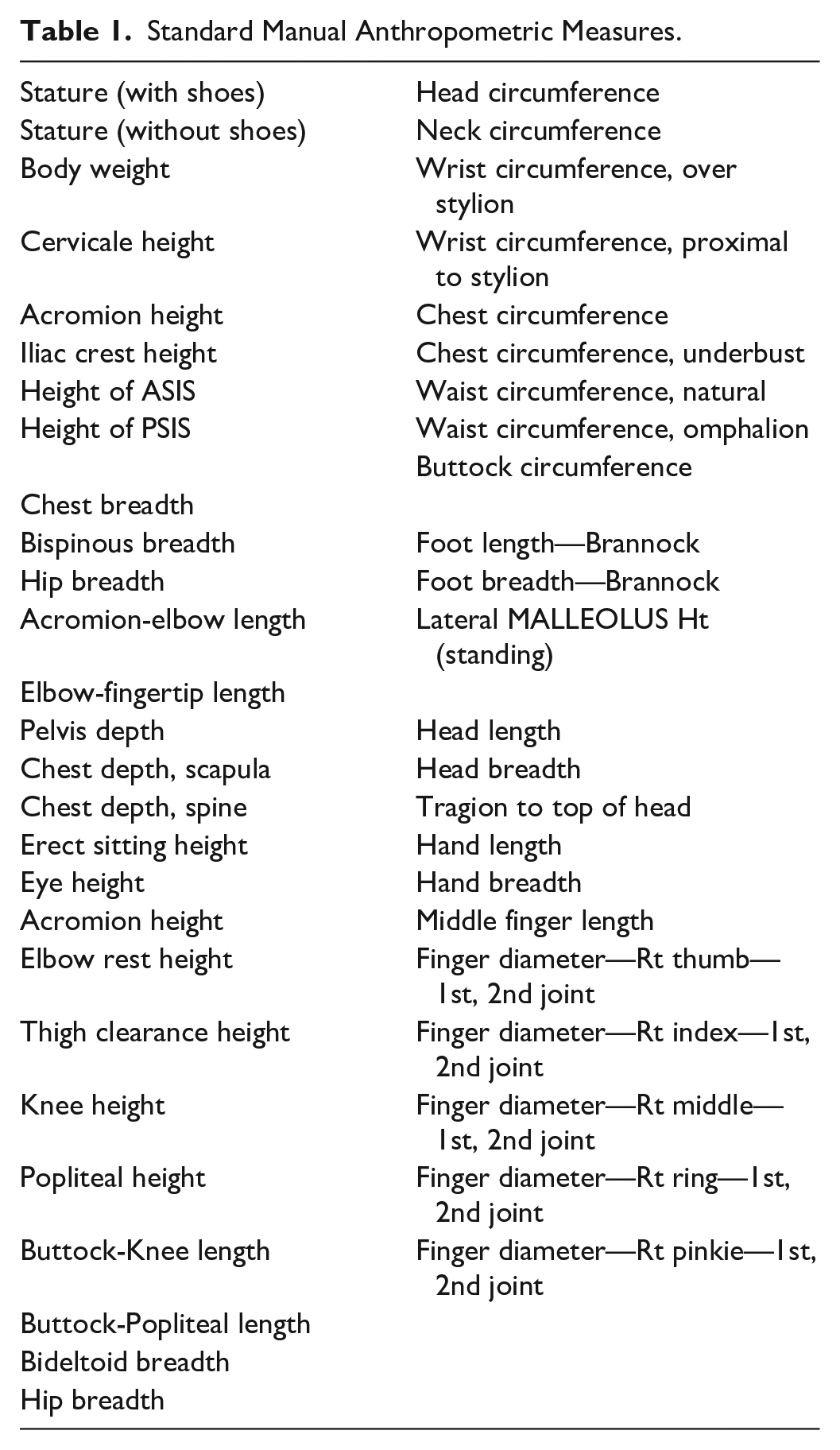
A set of 50 manual anthropometric measurements were obtained using standardized methods from prior large-scale studies where possible. These include stature, body weight, erect sitting height, and several measures, such as head length and breadth, that cannot be readily measured on 3D scans. Table 1 lists the measures. Standard manual measures are critical to link the 3D data to other sources (e.g., NHANES).
Standard Manual Anthropometric Measures.
Whole-Body 3D Scans
Surface body size and shape data were gathered using a VITUS XXL surface measurement system. Twenty-five scan poses were chosen to demonstrate body shape in various standing and seated torso and limb postures. Scanning in the VITUS XXL was conducted with the children wearing the study issued clothing so that the body shape could be measured as accurately and consistently as possible. We also scanned the children in standing posture wearing their own “normal, light, indoor clothing” they wore to the data collection appointment. Figure 1 shows child participants in the scanner. Each participant’s 3D clothed body shape was recorded in the VITUS XXL and using the PassFit™ portable anthropometry system that has been developed at U-M to provide fast body measurements of people in normal clothing (Park et al., 2015; Park et al., 2024).
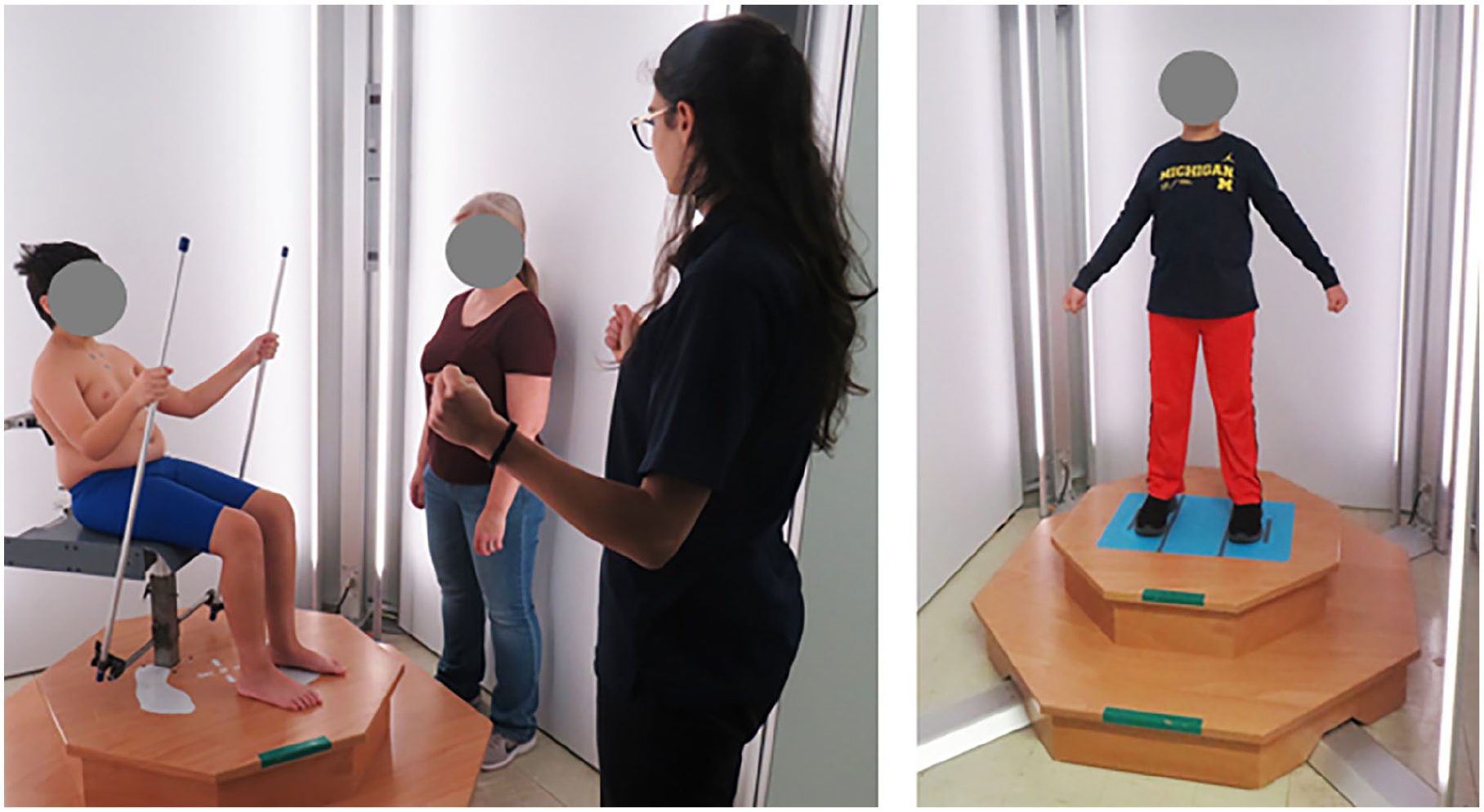
Child participant in the VITUS XXL scanner (staged photos).
Head and Hand 3D Scans
High-resolution head and face surface data were gathered in a 3dMD surface measurement system (https://3dmd.com/3dmdhead/). For these measurements, the participant sat in an adjustable chair with their heads or hands located at the center of the measurement volume. Child participants were scanned with their hair as they normally wear it and with the hair maximally raised and compressed with a wig cap so that their face, ears, and neck were imaged as completely as possible. Additional data on scalp contour were obtained using an optical probe with a rounded tip that enable the surface points to be computed. During the head probing protocol several points were digitized long the midsagittal, medial-lateral, and anterior-posterior planes of the head. Figure 2 illustrates both the head probing and scanning in the 3dMD scanner. Head scan data will enable the modeling of the shape of the scalp and face which are essential for the design of protective helmets and other head-borne equipment (Park et al., 2021; Park & Reed, 2022).
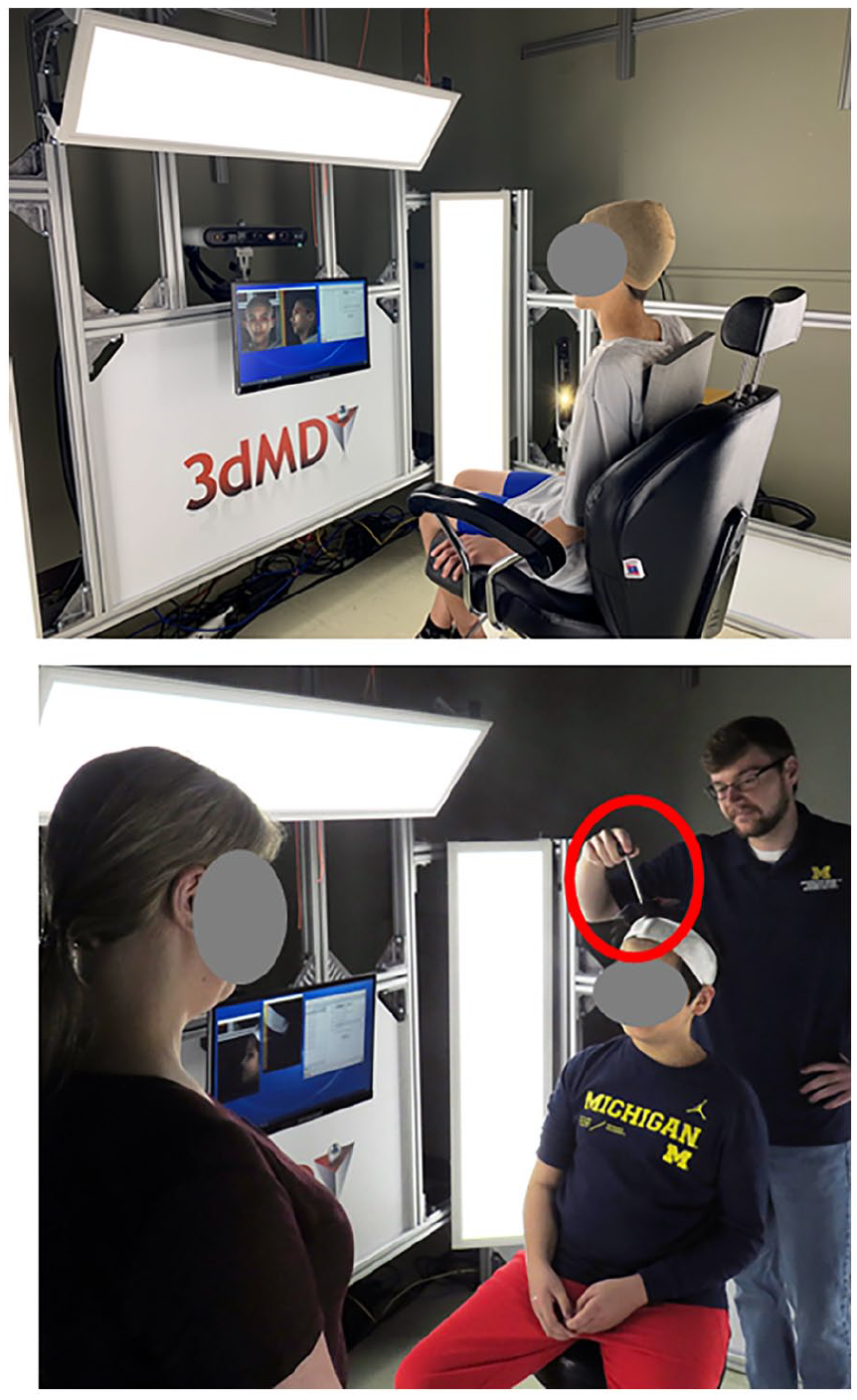
Head scanning and head probing protocols in the 3dMD scanner (staged photos).
An additional 24 scans of head, facial, and eye range of motion were recorded. These included various head postures, facial expressions, and poses pivoting the eyes up, down, left, and right, and opening the mouth to demonstrate jaw mobility. The objective was to gather head and face data with a range of facial expressions to capture the associated variation in face shape.
Three-dimensional hand size and shape data were also recorded in the 3dMD scanner. Scans included standardized and functional hand poses, including a flat hand, fist, and various grasps. For some poses the participant grasped or place their hands against an object, such as a cylinder or ball. These data will allow creation of an accurate, articulated model of the child’s hand from which a large number of dimensions can be extracted.
Foot 3D Scans
Static supported foot surface scans were obtained using a Revopoint hand-held scanner. Foot size and shape was recorded in both a standing flat foot posture and a toe-off posture with the heel lifted from the surface. Dynamic foot shape was also quantified during gait on a transparent surface using Microsoft Azure depth cameras. Figure 3 shows the foot surfaces being captured statically and in-motion. These data will be used to develop a statistical foot shape model that can be exercised to analyze changes in foot size and shape associated with gender, age, height, and BMI.
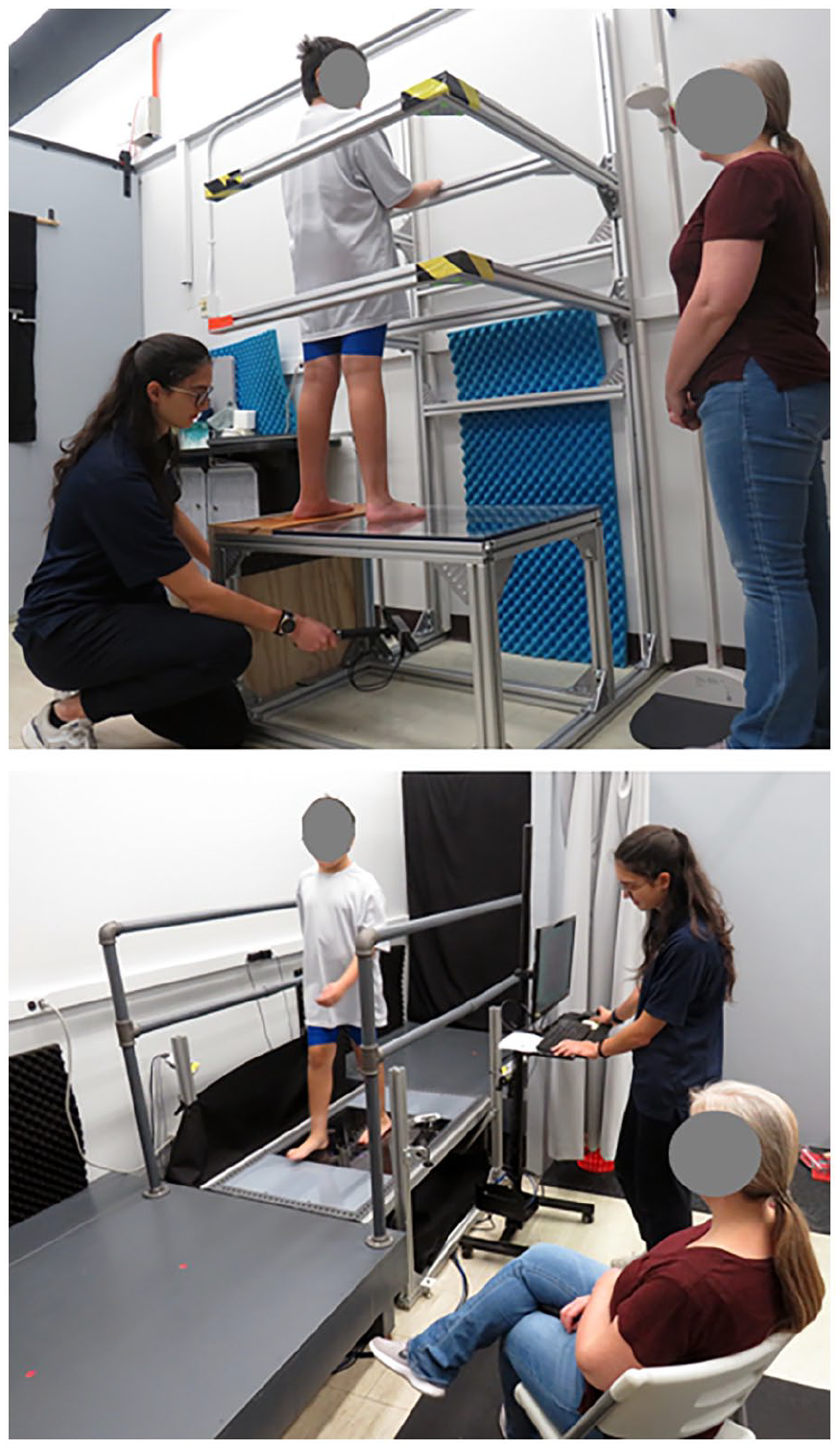
Static foot and dynamic foot-in-motion scanning protocols (staged photos).
Physical Activity
The 3D anthropometric dataset was augmented with measures associated with the physical activity (PA) levels of the child participants.
Questionnaire
We obtained information about the child participant, including demographic information (e.g., race/ethnicity) and the participant’s physical activity, participation in sports and other hobbies, and other information relevant to physical development using a questionnaire. The questionnaire was completed by either the caregiver and participant together, by the participant with guidance from the caregiver, or by the caregiver on behalf of the participant. Several questions were drawn from the U.S. National Youth Fitness Survey (NHANES) to ensure comparable data.
Weight and Body Composition
Body mass and composition (fat and lean mass percentages) were measured using a Tanita SC-331S bioelectric impedance analysis scale. Weight and percent body fat were the average of two measurements assessed (to the nearest 0.1 kg and 0.1%, respectively) with the Tanita scale.
Grip Strength
Grip strength in both hands was measured using a custom hand grip dynamometer. The aperture was adjusted to provide an equivalent hand posture for all participants. This measure was repeated three times using each hand, alternating between left and right, with the maximum value sustained for 3 s used as the measure of hand strength. Grip strength data will improve the linkage between the anthropometric data and physical fitness.
Lower-Extremity Power
Physical capability was also quantified by ground reaction forces measured during vertical jump exercises. Countermovement vertical jumps were repeated three times, with the maximum power value generated during a vertical jump used as the measure of lower extremity power. Peak power in the countermovement jump has been linked to various other measures of physical fitness.
Actigraphy
Physical activity during activities of daily living were measured using wearable sensors (ActiGraph GT3XBT) that record acceleration (motion). Sensors were mounted on a wrist strap and worn by the child for a 7- to 10-day period to track activities at home and school. Children wore the devices on the non-dominant wrist and were instructed to not remove the devices for sleep. Data on the activity profiles of the participants will allow investigation of relationships among body shape, body composition, strength, and physical activity.
Data Processing, Fitting, and Analysis
Template-fitting methods will be applied to 3D scan data to standardize the mesh structures across the participants and modeled using principal component analysis (PCA) and regression (Jones et al., 2018; Park & Reed, 2015; Park et al., 2017; Park et al., 2022). The standardized data from each individual will also be integrated into an avatar that is fitted to whole-body shapes across a range of postures. Each avatar will embody data obtained from an individual, including a de-identified high-resolution head model with accurate scalp plus hair, a hand model with pose library, a high-resolution articulated foot with gait sequence, and associated metadata, including manual anthropometry and grip strength, lower extremity power, and body fat percentage.
Data Sample
To date, over 550 children from ages 3 to 17 have been measured. Stature in this sample ranged from 928 to 1,942 mm, body weight from 14 to 158 kg, and body mass index from 12 to 53 kg/m2. The dataset currently includes over 14,000 3D whole-body scans, 1,700 head scans, 3,400 hand scans, 1,100 foot scans, and over 150 scalar variables for each participant. Figures 4 to 6 shows representative 3D whole body, hand, and foot scan images.
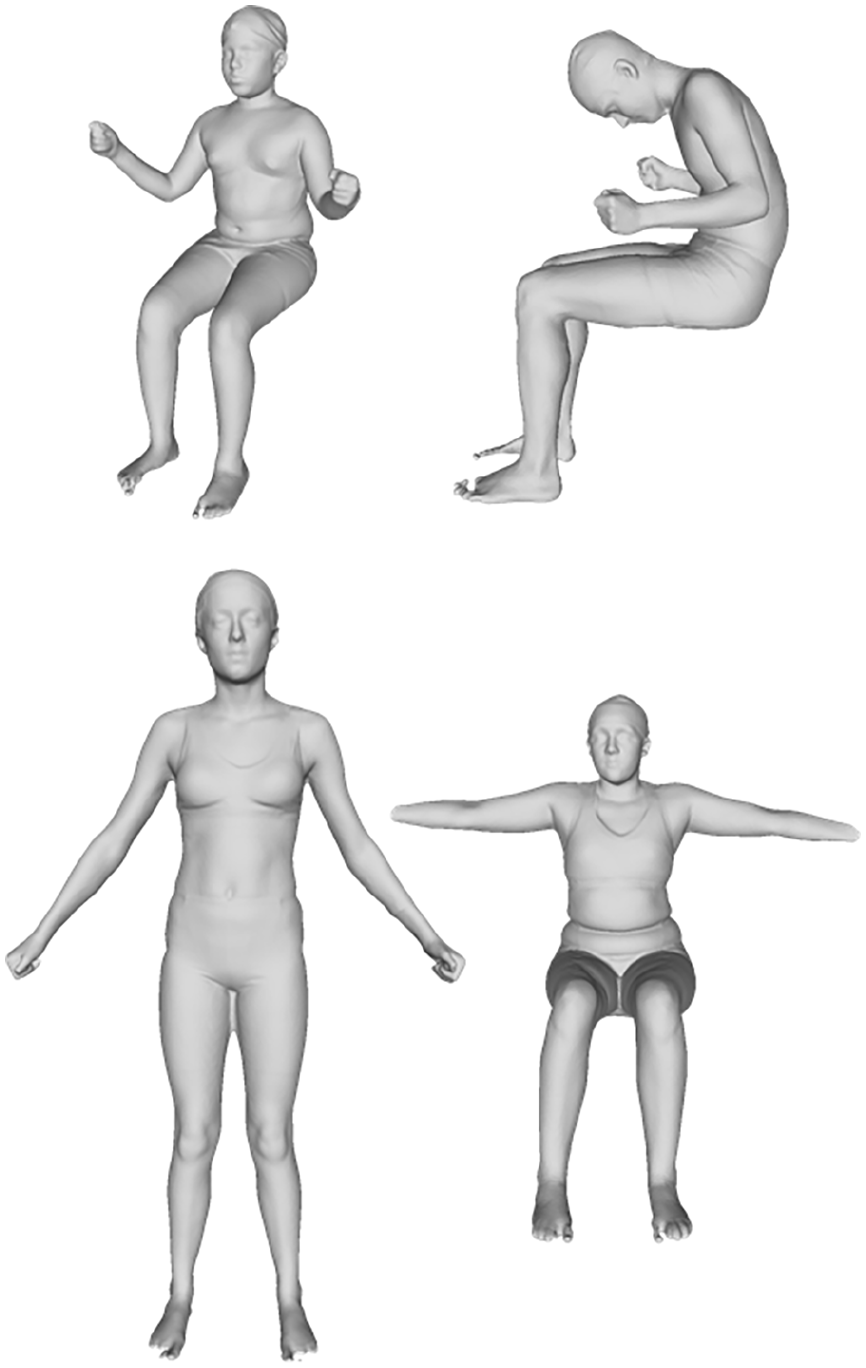
Sample 3D whole body images.
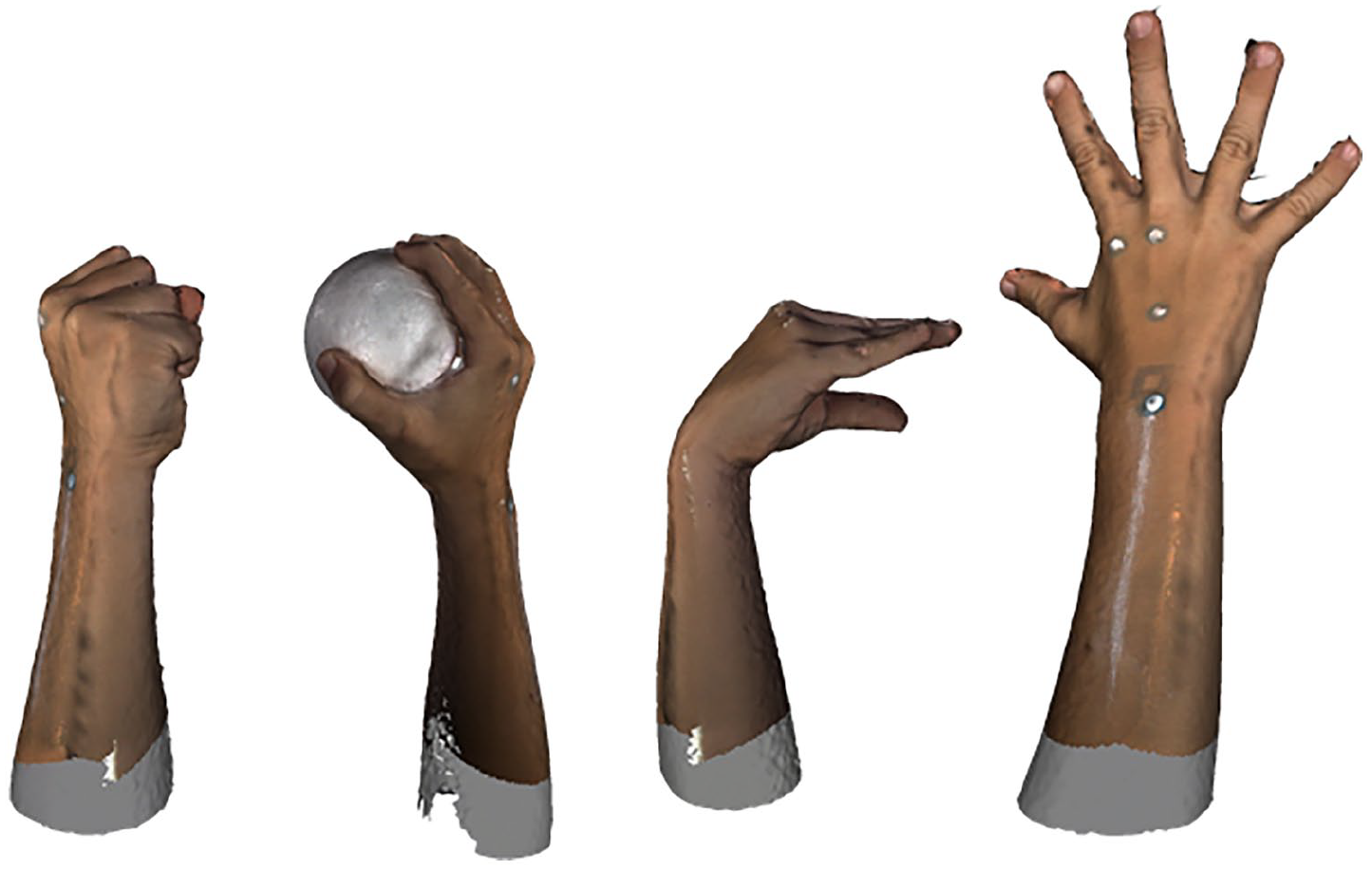
Sample 3D hand data.
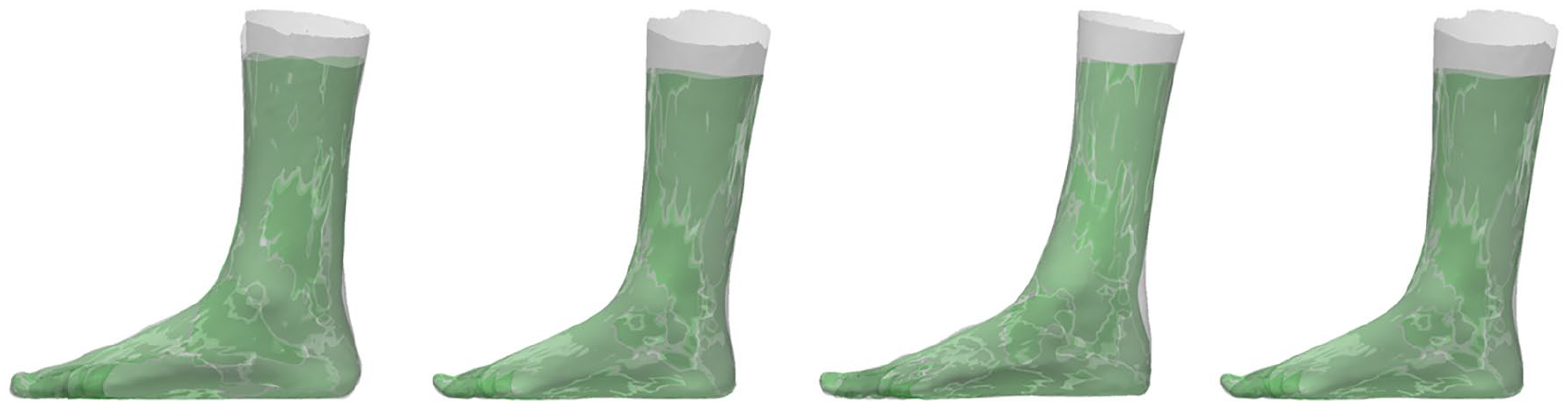
Sample 3D foot data.
Discussion
The methods developed in this pilot study have created a rich set of 3D child and adolescent body size and shape data. Data gathered will be used to create a new public archive of anthropometry and physical development data for U.S. youth based on laboratory research that spans ages 3 to 17 years. Unlike most archives that contain only one-dimensional information, either manually measured or extracted from scans, this comprehensive data resource will include accurate whole-body shape models, in a wide range of postures, in addition to standalone head, hand, and foot models similar to the adult models currently at HumanShape.org. These data will also allow investigation of relationships among body size and shape, body composition, strength, and physical activity across different age groups. The dataset will also serve as a valuable resource for product design and researchers studying child development as it may yield insights into patterns of growth and development and factors influencing overall health and well-being. Plans are underway to expand the pilot study to other locations in the U.S. to improve the distribution of race and ethnicity. The finding from the pilot study will guide the development of a large-scale national survey planned for 2025.
Footnotes
Declaration of Conflicting Interests
The author(s) declared no potential conflicts of interest with respect to the research, authorship, and/or publication of this article.
Funding
The author(s) disclosed receipt of the following financial support for the research, authorship, and/or publication of this article: This research is financially supported by Meta Platforms Technologies, LLC. The authors acknowledge the valuable contributions of many UMTRI staff who have contributed to the success of the study, including Laura Malik, Miranda St. Amour, Jamie Moore, Brian Eby, Laura De Marzi, Thane Deming, Sarah Rose Beechboard, Shinhae (Grace) Yeo, Carol Markley, Abigail Crawford, Kamryn Stafford, and several student research assistants.
