



Abstract
Background:
Bone tumors of the foot and ankle account for 1% to 2% of all skeletal tumors. Our review aimed to determine their distribution according to histologic type, anatomical site, affected bone, patient sex, and age group.
Methods:
We reviewed institutional epidemiologic studies focusing on surgically treated bone tumors of the foot and ankle, following the latest classification of the World Health Organization (2020). Our selection process adhered to the PRISMA guidelines. We provide a descriptive synthesis of the results from the included studies, along with subgroup analyses.
Results:
We included 20 studies, totaling 2541 tumors: 1810 (71.2%) benign, 279 (11.0%) intermediate, and 452 (17.8%) malignant. The most frequent benign tumors were enchondroma, osteoid osteoma, and simple bone cysts. Among intermediate tumors, giant cell tumor of bone and osteoblastoma were most common, whereas chondrosarcoma, Ewing sarcoma, and osteosarcoma were the most frequent malignant tumors. The hindfoot was the most affected segment, followed by the forefoot, ankle, and midfoot. The calcaneus was the bone most affected by both benign and malignant tumors, whereas the metatarsals were the most frequent site for intermediate tumors. There was a slight predominance in men (56.8%). Benign tumors were more prevalent in individuals <20 years of age, whereas intermediate and malignant tumors were more common between the ages of 20 and 59 years. All tumors in individuals aged 60 years and older were malignant.
Conclusion:
In surgically treated foot and ankle bone tumors, benign lesions predominated, malignancies comprised roughly 1 in 5, and the hindfoot, particularly the calcaneus, was most frequently involved. These patterns can guide differential diagnosis and operative planning, but heterogeneity and sparse demographic data (especially age) limit precision and preclude population-level estimates.
This is a visual representation of the abstract.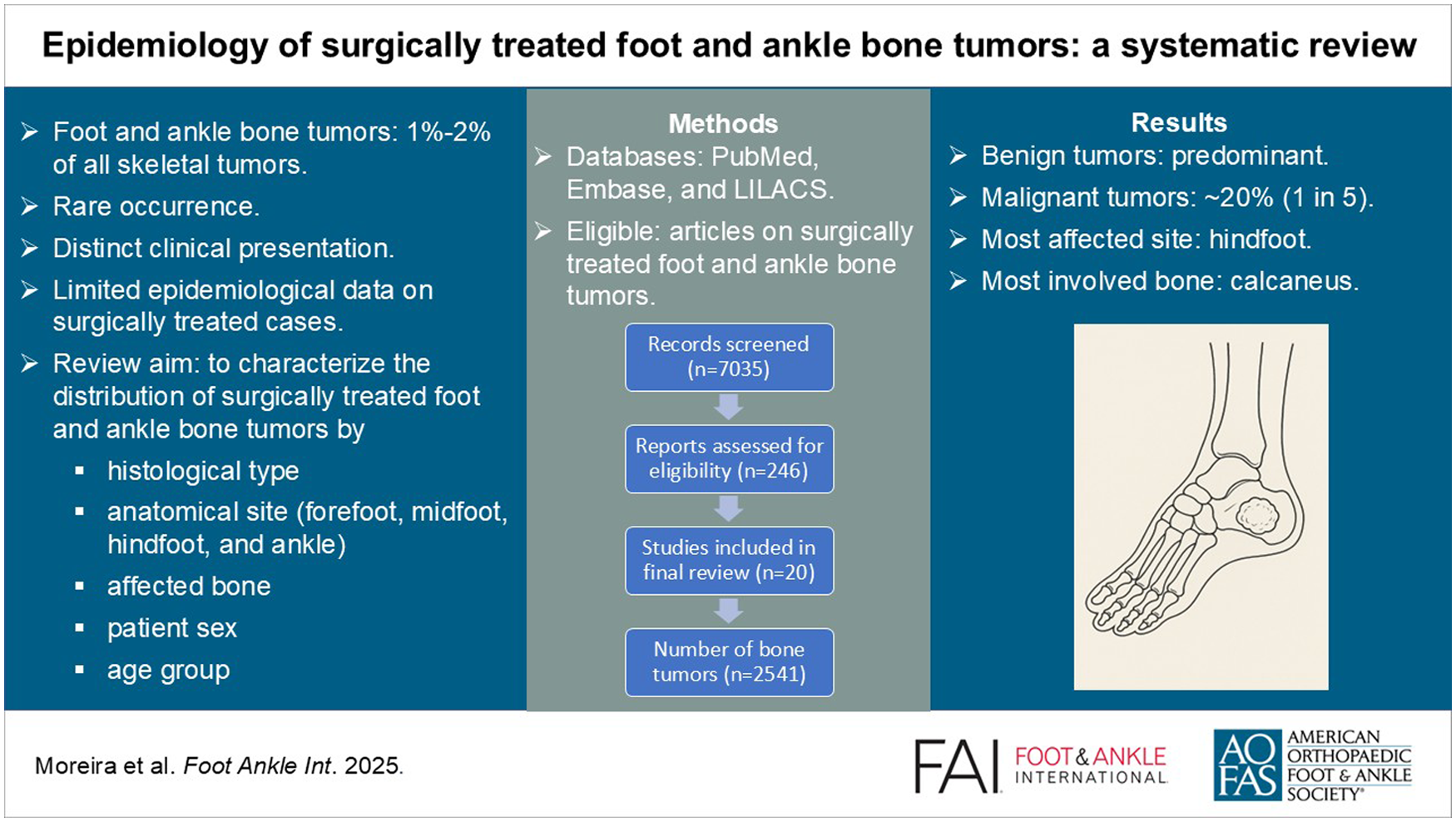
Get full access to this article
View all access options for this article.
References
Supplementary Material
Please find the following supplemental material available below.
For Open Access articles published under a Creative Commons License, all supplemental material carries the same license as the article it is associated with.
For non-Open Access articles published, all supplemental material carries a non-exclusive license, and permission requests for re-use of supplemental material or any part of supplemental material shall be sent directly to the copyright owner as specified in the copyright notice associated with the article.
