



Abstract
Background:
Cutaneous reflexes serve an integral role in maintaining efficient movement patterns and may be linked to sensory-perceptual deficits experienced by those with chronic ankle instability (CAI), namely, during the stance and transitional phases of the gait cycle. Abnormal reflex characteristics and perceptions of instability following unexpected perturbation have the potential to serve as potential patient-specific biomarkers for neuromuscular recovery following a lateral ankle sprain (LAS), however, these outcomes are scarcely explored.
Methods:
The purpose of this retrospective case control study (level III) was to observe lower limb cutaneous reflex patterns and variability as well as perceived instability following sural nerve stimulation in those with CAI. These outcomes were measured via electromyography of 6 lower limb muscles and self-reported perceived instability as participants received random, non-noxious stimulations while walking on a treadmill.
Results:
Those with CAI exhibited elevated peroneus longus facilitation and gastrocnemius reflex variability during midstance that were correlated with greater levels of perceived instability following sural stimulation.
Conclusion:
These findings indicate reflex alterations may contribute to perceived instability during functional activity, a hallmark symptom of CAI.
This is a visual representation of the abstract.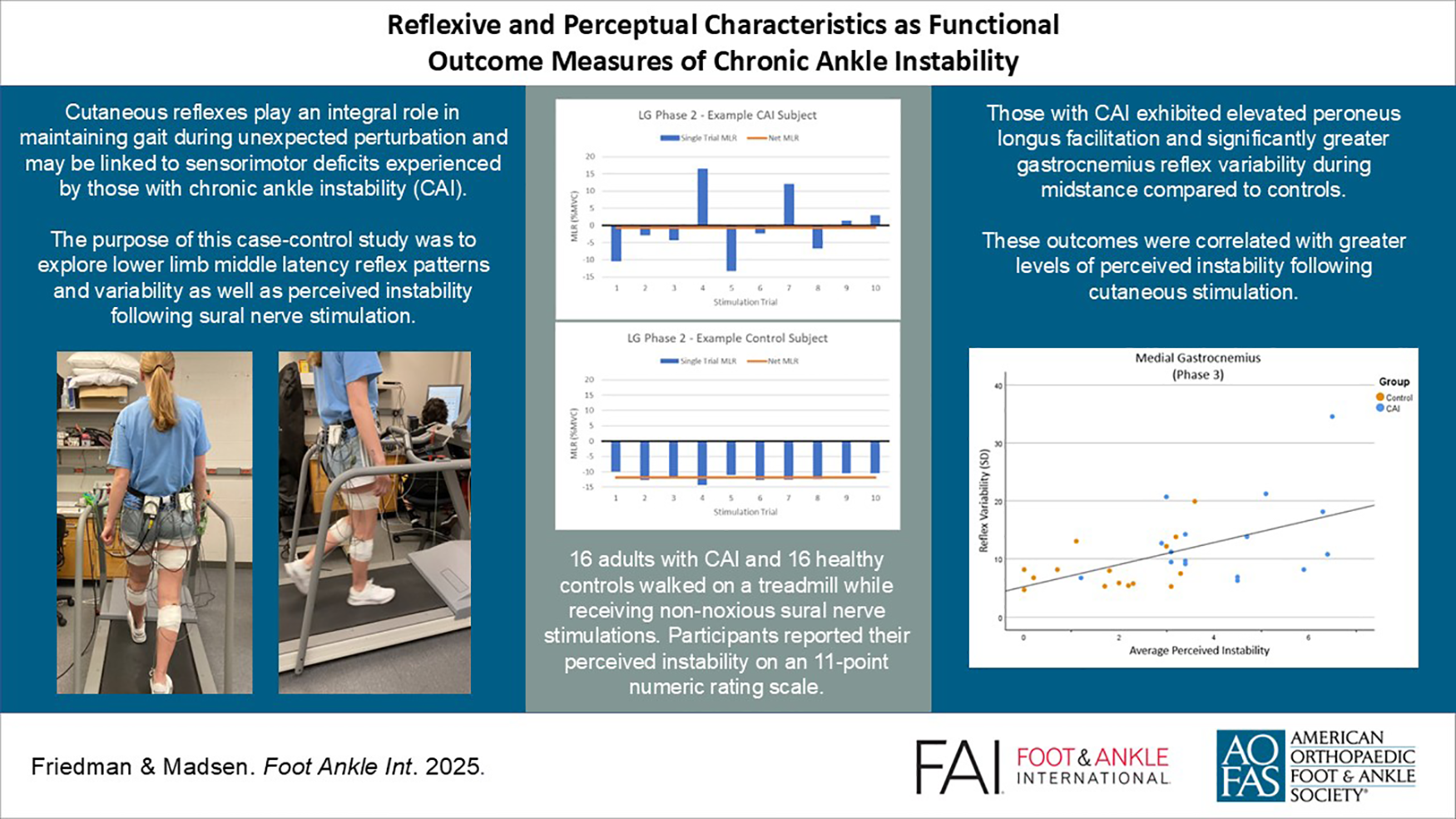
Get full access to this article
View all access options for this article.
References
Supplementary Material
Please find the following supplemental material available below.
For Open Access articles published under a Creative Commons License, all supplemental material carries the same license as the article it is associated with.
For non-Open Access articles published, all supplemental material carries a non-exclusive license, and permission requests for re-use of supplemental material or any part of supplemental material shall be sent directly to the copyright owner as specified in the copyright notice associated with the article.
