



Abstract
Background:
Diabetic foot is one of the major complications of diabetes, affecting 15% of patients with diabetes. This study aims to evaluate and compare the clinical and radiographic outcomes of patients with diabetes affected by forefoot plantar preulcerative or ulcerative lesions who have undergone minimally invasive distal metatarsal diaphyseal osteotomy (MIS-DMDO) to assess its efficacy in the prevention and treatment of chronic plantar diabetic foot ulcers (CPDFUs).
Methods:
The study included 60 patients, 38 with preulcers and 22 with ulcers, with at least 2 years of clinical and radiologic follow-up. Clinical outcomes were assessed using the European Foot and Ankle Society (EFAS) score, the Foot Function Index (FFI), and the Manchester-Oxford Foot Questionnaire (MOXFQ). The radiographic evaluation was performed according to the Maestro criteria.
Results:
Both groups improved in clinical and radiologic outcomes when comparing baseline measurements to those at the final follow-up. There were no statistical differences between preulcer and ulcer groups in terms of both clinical and radiologic outcomes, with the only exception being FFI, which was lower in the preulcerative group. In multivariate analysis, gender and glycated hemoglobin (HbA1c) were predictors of better outcomes. Specifically, FFI and MOXFQ (P < .05) exhibited larger improvements in females, while Maestro 1 and 2 were better in patients with lower HbA1c (P < .05). All patients were considered healed at the final follow-up.
Conclusion:
Carefully performed minimally invasive distal metatarsal diaphyseal osteotomy can be an effective approach to the care of impending or chronically present plantar diabetic foot ulcers.
This is a visual representation of the abstract.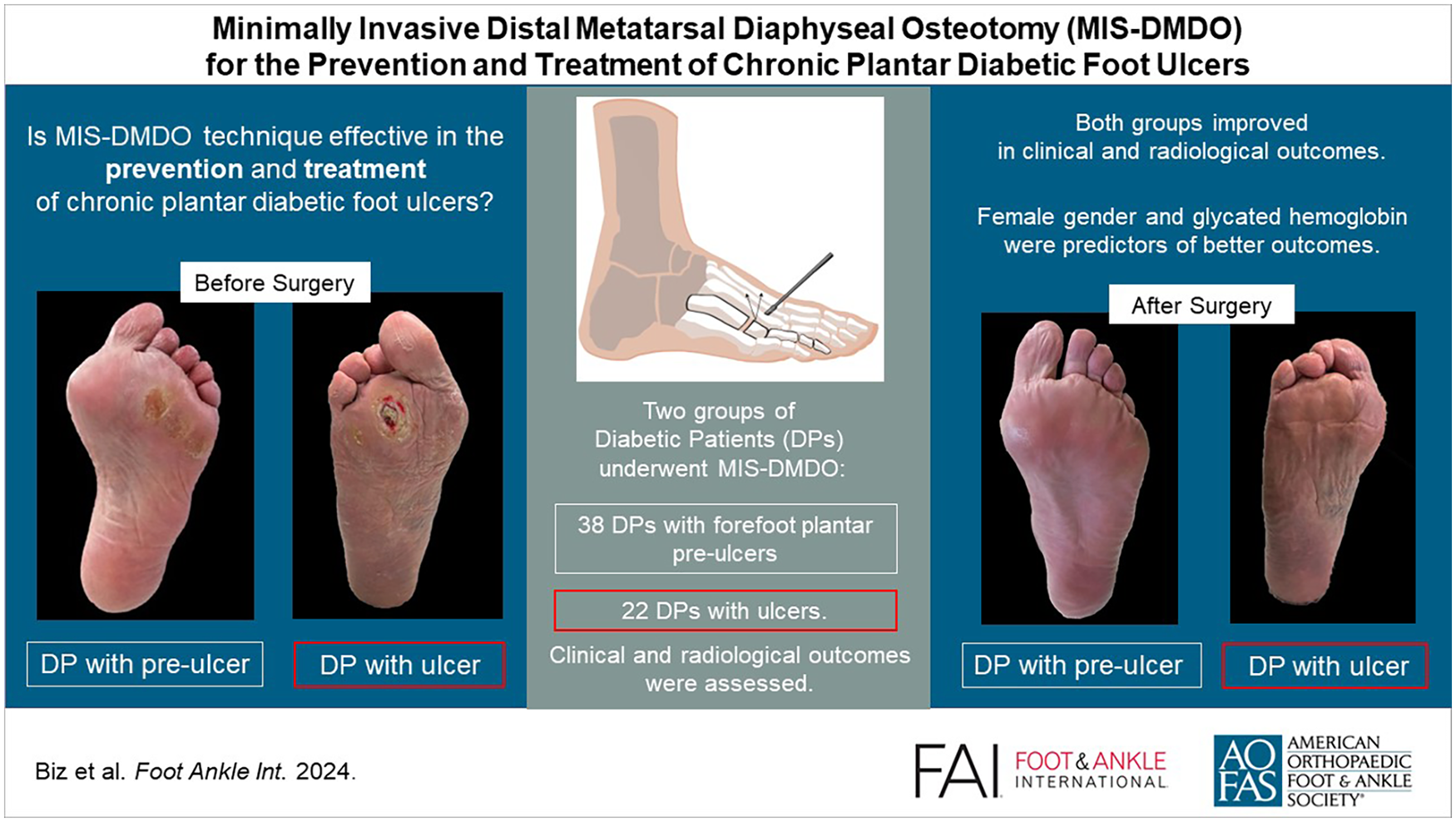
Get full access to this article
View all access options for this article.
References
Supplementary Material
Please find the following supplemental material available below.
For Open Access articles published under a Creative Commons License, all supplemental material carries the same license as the article it is associated with.
For non-Open Access articles published, all supplemental material carries a non-exclusive license, and permission requests for re-use of supplemental material or any part of supplemental material shall be sent directly to the copyright owner as specified in the copyright notice associated with the article.
