



Abstract
This article presents findings of the baseline survey for the project “Nature-based solutions for climate adaptation in the Guinean forests of West Africa” in the context of relevant legal, policy, institutional, and gender equity issues in six biodiverse and climate-change sensitive areas in three countries: Côte d’Ivoire, Ghana, and Guinea. Quantitative and qualitative data suggests that there are differences between the perceptions and/or experiences of male and female actors of many aspects of nature-based climate adaptation, such as perceptions of vulnerability to climate change, levels of participation of women in planning and implementing climate adaptation and reforestation activities, and knowledge of the concept of biodiversity. The data suggests that statutory and customary laws and local norms generally support women’s rights to actively participate in nature-based solutions such as agroforestry, although there are challenges in ensuring that women are fully involved in planning such activities, and benefit fully from them.
Introduction
The Guinean forest of West Africa has been identified as a “global biodiversity hotspot” (Myers et al., 2000), however, almost all major protected areas in the region face encroachment, especially for cocoa expansion (Gockowski & Sonwa, 2011, p. 318), and “at least 80% of West Africa’s original rainforest extent [is] now an agriculture-forest mosaic” (Maguire-Rajpaul et al., 2022). The region has a high population growth rate, and farming remains extensive rather than intensive, due to lack of access to capital, information, markets, and technologies. In rural areas of the subregion, households are heavily dependent on firewood and charcoal for energy, which drives deforestation. Large-scale activities, controlled by multinational companies, economic and political elites are also significant in some cases, and researchers have warned of “blame narratives” that focus on small-holders while ignoring these more powerful actors (Otutei, 2014 citing Fairhead & Leach, 1996; 1998; Leach & Mearns, 1996).
The West Africa region is particularly vulnerable to climate change impacts because of exposure to extreme weather conditions and limited adaptation potential relative to global averages (Gbode et al., 2023). The ND-Gain country rankings, which combine predicted exposure to climate change impacts with capacity to adapt, rank Guinea 157th, Côte D’Ivoire 140th, and Ghana 114th out of 185 countries (ND-Gain, 2023). Because agriculture plays a dominant role in livelihoods and economic activities in most West African countries, reduced yields due to climate change will have negative effects in terms of food security and macro-economic growth (Onyekuru, 2023). Changes in temperature and rainfall will make some crops (such as cocoa) viable only at higher altitudes (Laderach et al., 2013). Cocoa production is dominant in much of the Guinean Forest zone, but cocoa is not generally a resilient crop: it is very sensitive to rainfall, temperature and sunlight (Nunoo et al., 2015). Farmers of commercial crops, such as cocoa and coffee, have tended to reduce shade cover on their farms to maximize productivity; hybrid cocoa varieties have been introduced that require little or no shade (Critchley et al., 2021). Researchers modeling climate change impacts on cocoa production in the region, “recommend a comprehensive strategy aiming at the maintenance or increase of shade trees in cocoa farms” (Schroth et al., 2016). As one of many potential Nature-Based Solutions (NBS), increasing canopy cover within small-holder commercial farms, while also increasing fertilizer use, may be the best way to protect against further agricultural expansion and related deforestation: canopy cover of 35%–50% can provide high productivity while leading to limited biodiversity and ecosystem function decline (relative to 80% canopy, e.g., cultivation in degraded forest) (Gockowski & Sonwa, 2011).
While increasing canopy cover and implementing other NbS can help protect cocoa production from climate change impacts, there are significant gender-related obstacles to effectively implementing these strategies. In Côte d’Ivoire women own 25% of the cocoa plantations and make up about 68% of the workforce, but earn only 21% of the income generated (Marston, 2016); while in Ghana, women farmers in the cocoa sector are 20% less likely than men to have access to credit and almost 40% less likely to hold a bank account (Hiscox & Goldstein, 2014). Women often have less access to information on climate change and adaptation strategies, or access to scientific data. In addition, women’s indigenous knowledge is underestimated and sidelined. Gender roles and inequalities are closely related to the adoption of agricultural practices, land use options, and conservation of natural resources (Collins, 2018). The Gender Inequality Index ranks Ghana 130th, Côte d’Ivoire 155th and Guinea 157th out of 170 countries, indicating that progress is still needed to ensure women’s rights are fully respected and protected (UNDP, 2022).
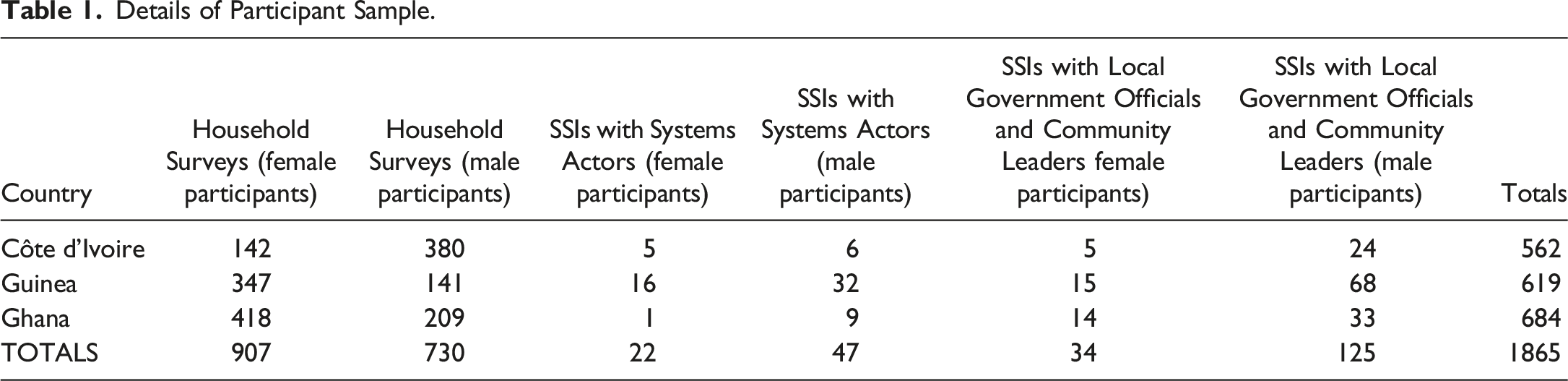
With the support of the Government of Canada, WUSC and its Partner organizations (The World Conservation Union, IUCN; Centre d'étude et de coopération international, CECI; and The World Agroforestry Centre, ICRAF) launched in 2023 a project to plan, pilot and scale NbS to climate adaptation that contribute to enhanced biodiversity and gender equality in communities in the Guinean forest areas of Côte D’Ivoire, Ghana and Guinea. This article presents baseline data from 1865 household surveys conducted in six project sites in the three countries as well as semi-structured interviews with 69 systems actors (e.g., private sector and community-based organization leaders) and 159 local leaders and other key informants. The data collection was intended to answer several key research questions, including: • How do perceptions of vulnerability to climate change differ between countries, and between different categories of stakeholders? • What kinds of reforestation activities are currently conducted in the project sites? • To what extent are women involved in planning and implementing reforestation projects? • How does knowledge of the concept of biodiversity differ between the project sites, and between different categories of stakeholders? • According to stakeholders, do state laws, customary laws, and community membership provide women with rights to participate in forest restoration?
The article seeks to address some gaps in the literature on NbS and climate change adaptation more generally in West Africa. For example, according to Denkyirah et al. (2017) most studies done on climate change, its effect and adaptation strategies in Ghana have targeted food crop farmers rather than producers of cocoa, coffee, or oil palm. Geographical gaps are also significant; a systematic review of literature on sustainable forest management in Africa found that only one of the three countries examined here (Ghana) appeared in their sample of 104 articles (Duguma et al., 2022). There is also a dearth of gender-disaggregated data on related issues. Denkyirah et al. (2017) report that over 80% of cocoa farmers in their sample in the Brong-Ahafo Region of Ghana perceive temperatures as increasing, and rainfall declining, in recent years; but do not disaggregate these figures according to gender, age, or other variables. Another study on agroforestry in Benin relied on a sample that was 95% male, making gender analysis impossible (Gnonlonfoun et al., 2019). Papa et al. (2020) ensured gender parity in their sample of households in Senegal but did not provide gender-disaggregated findings. Other studies are silent on the topic of gender (Addai, 2024; Camara et al., 2009). Some studies on perceptions of climate change in West Africa are also gender-blind (Addaney et al., 2021; Akponikpè et al., 2010; Yéo et al., 2016) though others identify gendered differences (Kusakari et al., 2014).
Literature Review: Biodiversity Conservation, Climate Change Adaptation and NbS
Definition and Examples of Nature-Based Solutions for Climate Adaptation
While there is no authoritative definition of NbS, influential definitions include: “actions to address environmental, social and economic challenges simultaneously by maximizing the benefits provided by nature (…) inspired by, supported by, or copied from nature” (EC, 2015), and “actions to protect, sustainably manage, and restore natural or modified ecosystems, that address societal challenges effectively and adaptively, simultaneously providing human well-being and biodiversity benefits” (Cohen-Shacham et al., 2016). The role of biodiversity in NbS can differ from one definition or project to another, and there is a risk that it can be overlooked (Seddon et al., 2021), for example, through a narrow focus on economic outcomes, ecosystem services and/or climate adaptation. However, biodiverse landscapes tend to provide greater ecosystem services and are more resilient in the long-term (Seddon et al., 2021). A “holistic approach” is recommended, including participatory design and implementation recognizing diverse forms of knowledge; a landscape approach that considers multiple connected ecosystems; identifying and managing trade-offs as well as benefits across habitats and communities; and implementing NbS as part of an integrated multi-sectoral strategy (Seddon et al., 2021: 1534). NbS implementation strategies may be categorized as: restoration, infrastructure (including natural infrastructure), management, and protection (including area-based conservation) (Brears, 2022: 15). A meta-study of agricultural adaptation strategies in West Africa found that, “planting of trees, increased use of fertilizers, use of resistant varieties, mixed farming and crop diversification are the strategies that generate the highest returns” (Onyekuru et al., 2023).
Agroforestry and Climate Adaptation
In many places, agroforestry is an important part of endogenous, customary land use practices (Gnonlonfoun et al., 2019). Crops like cocoa and coffee are well-suited to agroforestry, as they benefit from some shade. Trees on small-holder farms provide economic benefits (improved crop yields; fruits, nuts or other foods; fodder for livestock, firewood, timber and medicines) and environmental benefits (improving soil quality and soil fertility, reducing soil erosion, and potentially improving the local microclimate). Intercropped shade farm systems typically require less fertilizer and other agrichemicals (herbicides and pesticides) than no-shade farms (Nunoo et al., 2015). A mixed-method research project found that, “agroforestry practices in tropical humid West Africa offer multiple-win solutions that are relevant to address major local and global environmental challenges.” (Tschora & & Cherubini, 2020: 10). There are multiple agroforestry systems, from simple to more complex, and with different amounts of tree cover. It is crucial to balance the availability of light, nutrients, and water for both trees and crops (Edwards et al., 2021). Moreover, some tree species are better able to adapt to changing climatic conditions than others (Gnonlonfoun et al., 2019).
Tham-Agyekum et al. (2023) identify a research gap in the adoption patterns, drivers, and barriers of NBS practices among cocoa farmers in West Africa. However, some studies exist. Choices around integrating trees into small-holder farming systems are mediated by many factors including household assets, gender dynamics, and local socio-cultural factors. A study in the Gambia found that farmers who owned land and livestock were more likely to adopt agroforestry practices, with ownership of larger land parcels positively associated with adoption; fencing was also associated with agroforestry adoption, as fences prevent livestock from destroying seedlings; while female-headed households were more likely to adopt than male-headed households (Muthee et al., 2024). However this latter finding is not universal; in Côte d’Ivoire, “adoption of agroforestry is driven by gender, the length of residency, and the number of cash crops grown by the farmers” (Kouassi et al., 2023). Women are less likely to invest in agroforestry, probably because they have more limited land-tenure rights (Kouassi et al., 2023). While many organizations promote environmental outcomes, research has found that, “farmers’ pro-forest and pro-shade-tree behavioural changes were less motivated by ecological discourse, and more by… the potential to increase yields and/or bolster their farm’s climate resilience” (Maguire-Rajpaul et al., 2022: 84). Some households engage in their own autonomous, sustainable strategies to improve their livelihoods including, “raising rabbits and grasscutter rats (Thryonomys swinderianus) for meat; hunting common game…; gathering mushrooms… intercropping with locally valued trees,… growing nitrogen-fixing legumes for subsistence and improving soil fertility, and producing organic fertilisers from waste” (Maguire-Rajpaul et al., 2022: 85–86). These local livelihood diversification and adaptation strategies are not always acknowledged by agricultural extension workers who stick to prescribed interventions (ibid.)
Obstacles to small-holder tree-planting (e.g., in Ghana) include extra labor and financial costs of tree-planting and maintenance; the relatively long period between planting and direct benefits (such as harvesting fruit or timber); lack of credit; lack of land rights documentation; and perceived insecurity of rights to trees (Boni, 2006, cited in Osei et al., 2019). Another study from Ghana, which looked at climate adaptation in the cocoa sector, found that barriers to adaptation were (in order of significance), lack of information on climate change and adaptation strategies, insufficient financial resources, high costs of climate change adaptation, high costs of agricultural inputs, and insufficient labor (Denkyirah et al., 2017). The same study found that married farmers, and those with less land, were less likely than single and/or land-wealthy farmers to implement adaptation strategies. Overall, “gender, marital status, educational level, household size, engagement in other economic activities, farming experience, access to extension services, access to credit/loans, and cocoa income influenced cocoa farmers’ choice of adaptation strategies” (Denkyirah et al., 2017, p. 18).
Studies of large-scale, externally led reforestation projects found that they rarely succeed, because planted trees are not cared for, the land is used for livestock grazing, or is recleared for agriculture (Holl & Brancalion, 2020). The same authors recommend that tree-planting should be part of broader approaches; be carefully planned to maximise benefits; and should be have financial and policy support over the long-term.
Introduction to the Case Study
The NbS Guinean Forests project works with a wide range of stakeholders to develop local and regional capacity to use evidence and engage with women and marginalized groups to prioritize locally relevant NbS for climate change adaptation. The project supports more inclusive planning processes, the restoration of degraded forests and support an increase in investments for NbS and biodiversity and influence key intermediaries involved in forest governance and relevant value chains. (e.g., local village leadership, national women’s organizations, business owners/leaders, policy makers, investors and donors) (Figure 1). Location of fieldsites. Adapted from World University Services Canada (used with permission) (1) Wassa Amenfi Landscape, Ghana; (2) Lake Bosomtwe Landscape, Ghana; (3) Taï National Park landscape, Côte d’Ivoire; (4) Lôh-Djiboua Region, Côte d’Ivoire; (5) Kounounkan Forest Reserve, Guinea; (6) Madina Oula, Guinea.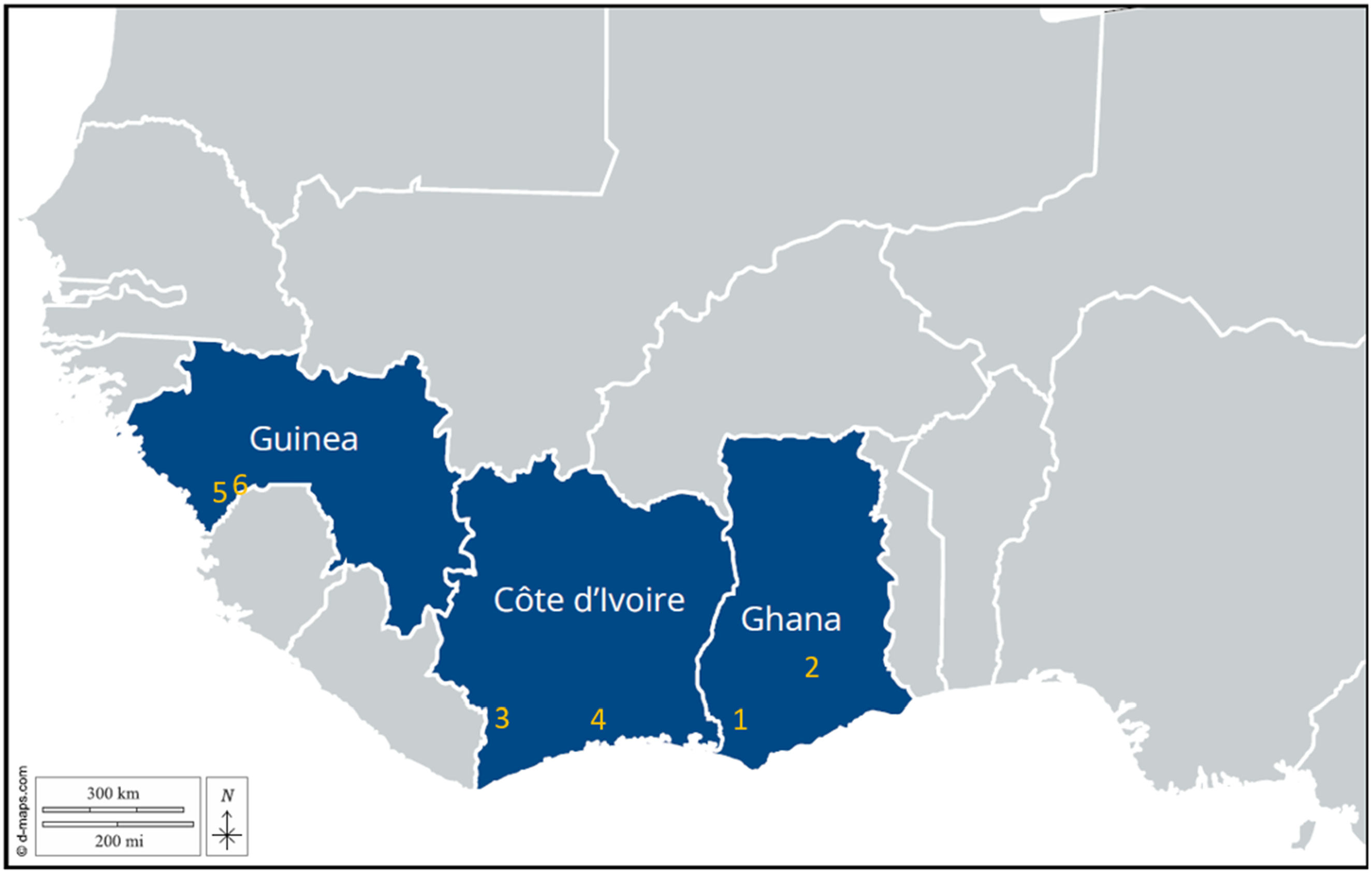
The NbS Guinean Forests project is being implemented in the following countries and areas:
Ghana:
In Ghana, the NbS Guinean Forests project is being implemented in the Wassa Amenfi Landscape and the Lake Bosomtwe Landscape. There are several legal categories of trees in Ghana. Naturally growing trees in forest reserves are fully controlled by government. Natural trees off-reserve can be commercially exploited by the state or others by permit, but royalties are paid to land owners. Planted trees on-reserve require specific contracts between the tree-planters and the state. For trees planted as commercial plantations, the tree owner has full rights, but trees planted for shade on cocoa farms cannot be cut without a license from government (USAID, 2018). In Ghana, both men and women generally have the right to own land and resources in the traditional setting, though this varies according to custom. However, “indigenous” inhabitants have more secure land rights compared to migrants. The land rights of migrants are based on agreements with chiefs or “indigenous” land-users. Migrants cannot lease or gift land but can inherit it, if the successor complies with customary commitments. Also, migrants cannot plant tree crops without permission from the land owner, and misunderstandings over rights to land, and trees are common (USAID, 2018, n. d.). In Ghana, men typically own larger farms than women (Asare & Ræbild, 2016), and so are better able to dedicate land to tree-planting (Hashmiu, 2015). While chiefs are the traditional guardians of forests, they may receive payments from commercial logging companies for the right to log on stool lands (Otutei, 2014). Deforestation in Ghana is driven by, “overexploitation of natural resources through illegal and unsustainable logging and mining, and agricultural expansion, coupled with land tenure insecurity” (Acheampong et al., 2019: 2)
The Wassa Amenfi Landscape is comprised of Wassa Amenfi West district, Wassa Amenfi East district, and Amenfi Central district (formerly Wassa Amenfi Central), part of the Western Region of Ghana. Part of the landscape is in the wet evergreen zone (to the south) and part in the moist evergreen zone (to the north). The majority of the population practice farming, particularly of commercial crops such as cocoa, coffee, palm oil, kola and rubber, as well as food crops for sale and subsistence consumption. Other key livelihood practices include harvesting timber, gathering non-timber forest products (NTFPs), artisanal and small-scale mining (ASM), livestock-keeping, and fish farming. Between 1990 and 2010, the proportion of land cover characterized as forest in the Western Region declined from 68% to 26%, largely because of cocoa production (Williamson, 2019).
Lake Bosomtwe is located in the Ashanti Region of Ghana, within the moist semi-deciduous forest zone of the country. The Lake Bosomtwe Landscape incorporates the UNESCO Lake Bosomtwe Biosphere Reserve, which is comprised of the lake’s watershed. The lake is the largest natural lake in West Africa and Ghana’s only natural lake. The reserve is important as a significant area of biodiversity and as a tourist attraction. As of 2021, about 50,000 people lived within 24 communities in the catchment, most of whom practice fishing and farming, and/or ASM to a much lesser extent.
Côte d’Ivoire
In Côte d’Ivoire, the NbS Guinean Forests project is being implemented in the Taï National Park landscape and the Lôh-Djiboua Region. The previous Forest Code gave ownership of trees to the state, but tree tenure has been transferred to citizens in the 2019 code, which also promotes cocoa agroforestry for forest restoration. However, these changes may not be common knowledge among local communities (Kouassi et al., 2023). The Forest Code specifies that, “ownership of a newly established forest or a planted tree lies with the landowner” but rights to a tree can be held by the person who established or planted it under an agreement with the landowner (Republique de Cote’D’Ivoire, 2019). This situation is clear where the “landowner” has either a land title or a land certificate, but not on land subject to customary rights (ClientEarth, 2021, p. 6). Rural land is considered state property and only the State, public agencies and Ivorian individuals who acquired land before 23 December 1998 can own a land title. All others (Ivorian or foreign) may only lease land from the state through a land certificate. Only 8% of women hold a land title or a certificate, compared to 22% of men (Banque Mondiale, 2017). Customary land rights are recognized by the state as long as they have been held continuously and without disputes; such land cannot be sold or leased. The vast majority of rural land is held under customary tenure arrangements (Pritchard, 2016). The state has tried to encourage registration of customary land, but registration is expensive. Under custom, land rights are usually vested in the family and lineage of the person who first cleared the land. Traditionally, migrants (from other areas of Cote d’Ivoire, or other countries) only have user rights to land through payment of tributes, gifts, or services to indigenous land owning families. Commercialization of the agricultural sector has led to significant tensions between immigrants and indigenous land-owners, which played out as land conflicts in previous decades. Scholars warn that these issues are largely ignored by contemporary “zero-deforestation” schemes and campaigns led by multinational cocoa-purchasing corporations (Maguire-Rajpaul et al., 2022).
The Taï National Park is a UNESCO world heritage site, and the largest protected rainforest in West Africa. It is surrounded by several protected forest areas; however, most nearby protected forests have experienced very high rates of deforestation, due primarily to conversion to cocoa plantations. Other activities include production of rubber, coffee, palm oil, and food crops (rice, maize, cassava, yam, eggplant, okra, pepper, plantain) (Kouassi et al., 2023).
Lôh-Djiboua Region is one of two regions in Gôh-Djiboua District, in the south-western part of Cote d’Ivoire. The population is about 65% rural. Cocoa production predominates. The total forest area in the 1960s was about 8.14 million ha; by the 1980s this had declined to 2.6 million ha and by the early 2000s it was just 1.35 million ha (KONÉ et al., 2014). The main reasons are forest clearance for logging and agriculture. Some ASM also takes place in the region.
Guinea
In Guinea, the NbS Guinean Forests project is being implemented in Kounounkan Forest Reserve and the Madina Oula area. Barriers to reducing deforestation, and expanding forest cover, include “a growing population, undocumented fragmented land ownership, pressure from poor socioeconomic conditions, and a lack of institutional collaboration” (Williamson, 2019). Customary rights to land are not recognized under Guinean law; though customary land can be registered, the process is expensive and complex (Diallo et al., 2021). Most rural land therefore legally remains the property of the state (ARD, 2008). The Guinean constitution, land law, civil code and other laws and policies guarantee women’s rights to own land, but in rural areas, customary laws and socio-cultural norms mean that in practice, land is owned and controlled by men (Diallo et al., 2021).
The Kounounkan massif and plateau are located in the Forécariah Prefecture of Kindia Region. The Kounounkan Classified Forest (also known as Kamalayah), is home to 30 threatened plant species, including eight unique endemic species. The number of forest guards is limited, compared to the large area of the reserve (Couch et al., 2019). Pastoralists practice seasonal grazing on the massif, and start small fires, which can threaten biodiversity. Communities engage in non-commercial harvesting of timber.
Madina Oula borders Sierra Leone, and is a transit route for cross-border travelers, with a high proportion of female-headed households in the area due to male outmigration (Camara et al., 2009). It has a relatively high deforestation rate, but research conducted by ICRAF in 2009 found that 98% of people interviewed in the area participated in collective reforestation and protection (Ngendakumana et al., 2012). Unfortunately, the same research found that there is typically only a 10% survival rate for trees planted.
Methods
Baseline data was collected through a literature review, and primary data collection conducted in August 2023. Teams of 12 enumerators and a local field coordinator in each of the three countries (managed by an overall coordinator) collected data, as follows:
Data Collection Instruments and Training
The research involved semi-structured interviews (SSI) and household surveys. SSIs were conducted with systems actors (govt. officials, women’s org. leaders, private sector, etc.) who could potentially play a direct role in the project; and with local government officials and customary leaders. SSIs with key informants provided data on issues such as the participants’ understandings of biodiversity; perceptions of women’s knowledge and capacities regarding reforestation and related practices; ability of women’s groups to access resources for climate adaptation or forest conservation; and knowledge of gender-responsive NbS.
Details of Participant Sample.
Key Findings
Perceptions of Vulnerability to Climate Change Impacts
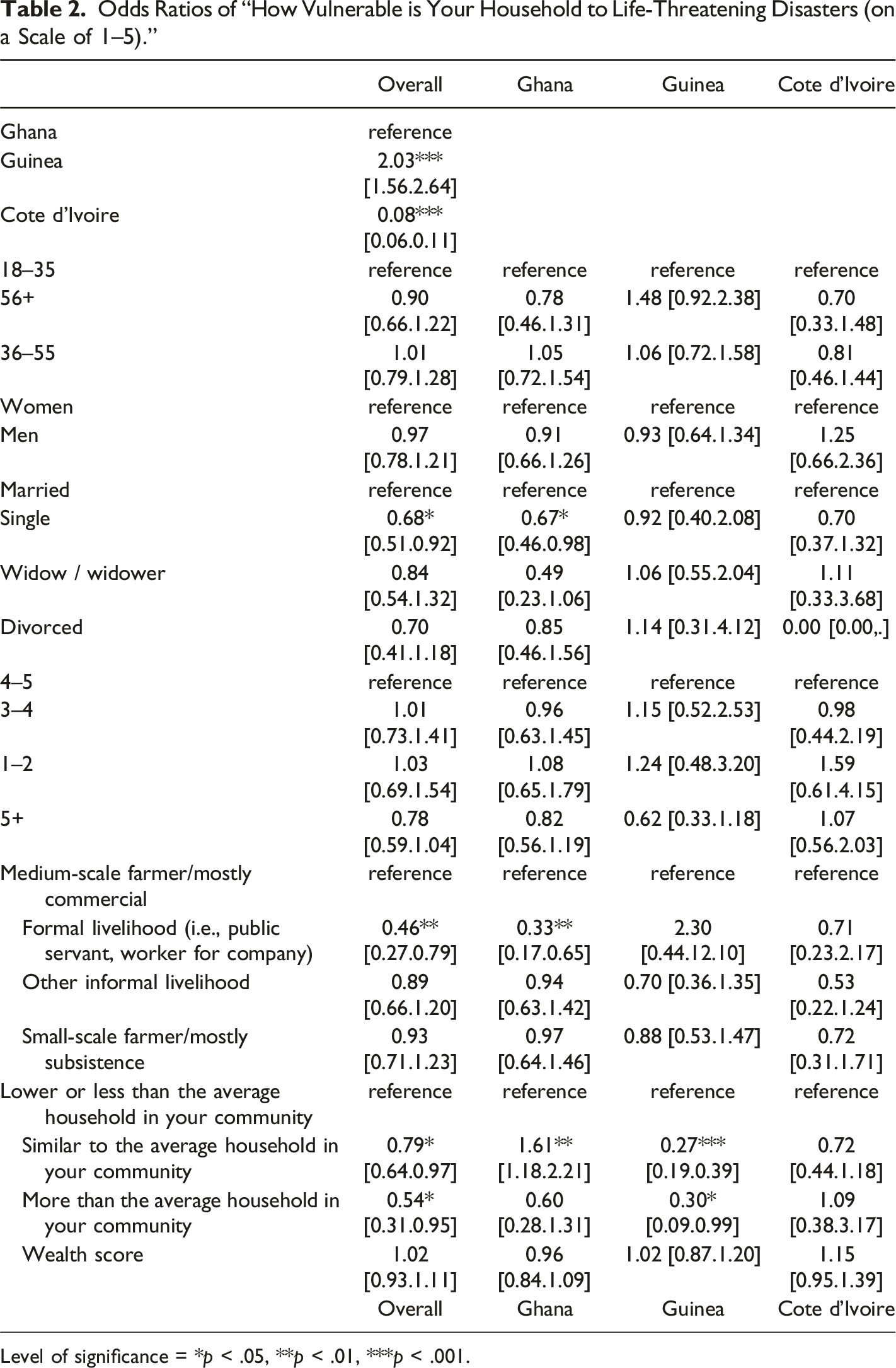
Odds Ratios of “How Vulnerable is Your Household to Life-Threatening Disasters (on a Scale of 1–5).”
Level of significance = *p < .05, **p < .01, ***p < .001.
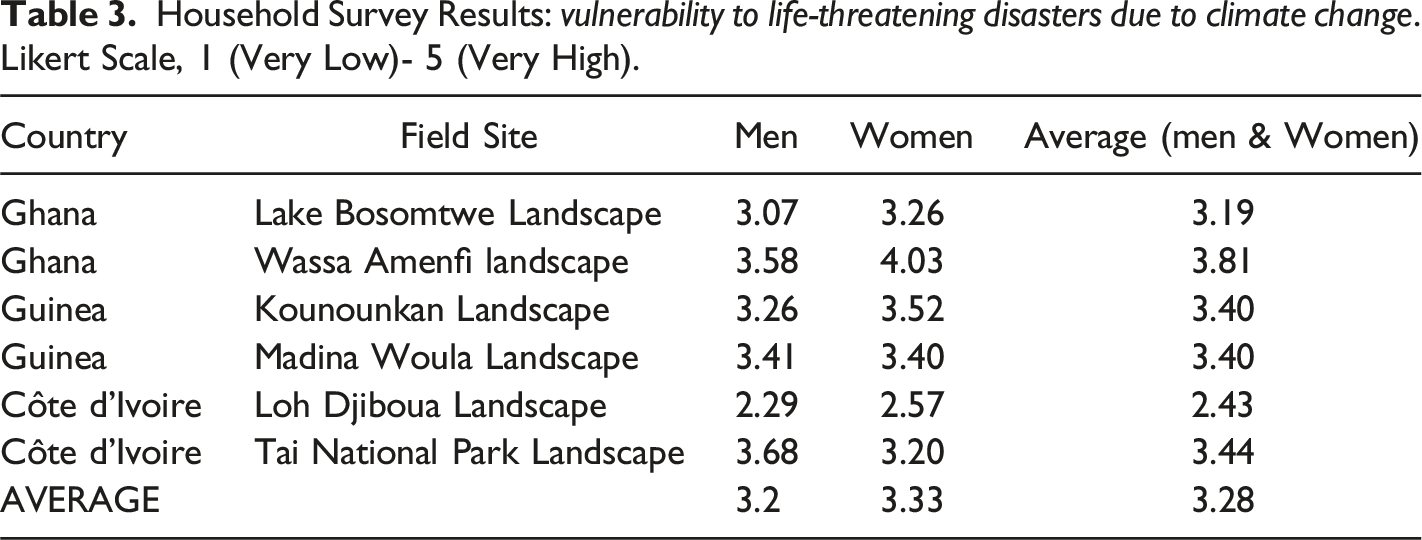
Household Survey Results: vulnerability to life-threatening disasters due to climate change. Likert Scale, 1 (Very Low)- 5 (Very High).
Other important variables include: • Marital status: Single individuals reported significantly lower perceptions of vulnerability compared to married individuals in Ghana (OR = 0.68, 95% CI = 0.51–0.92) and Guinea (OR = 0.67, 95% CI = 0.46–0.98). • Formal Livelihood: Individuals engaged in formal livelihoods, such as public servants or workers for companies, reported significantly lower perceptions of vulnerability compared to medium-scale farmers or those mostly engaged in commercial activities in Ghana (OR = 0.46, 95% CI = 0.27–0.79) and Guinea (OR = 0.33, 95% CI = 0.17–0.65).
Income Level
Those reporting a household level similar to the average in their community reported significantly lower perceptions of vulnerability in Ghana (OR = 0.79, 95% CI = 0.64–0.97) and significantly lower odds in Cote d'Ivoire (OR = 0.27, 95% CI = 0.19–0.39). Individuals with a household income level higher than the average in their community reported significantly lower perceptions of vulnerability in Guinea (OR = 0.30, 95% CI = 0.09–0.99).
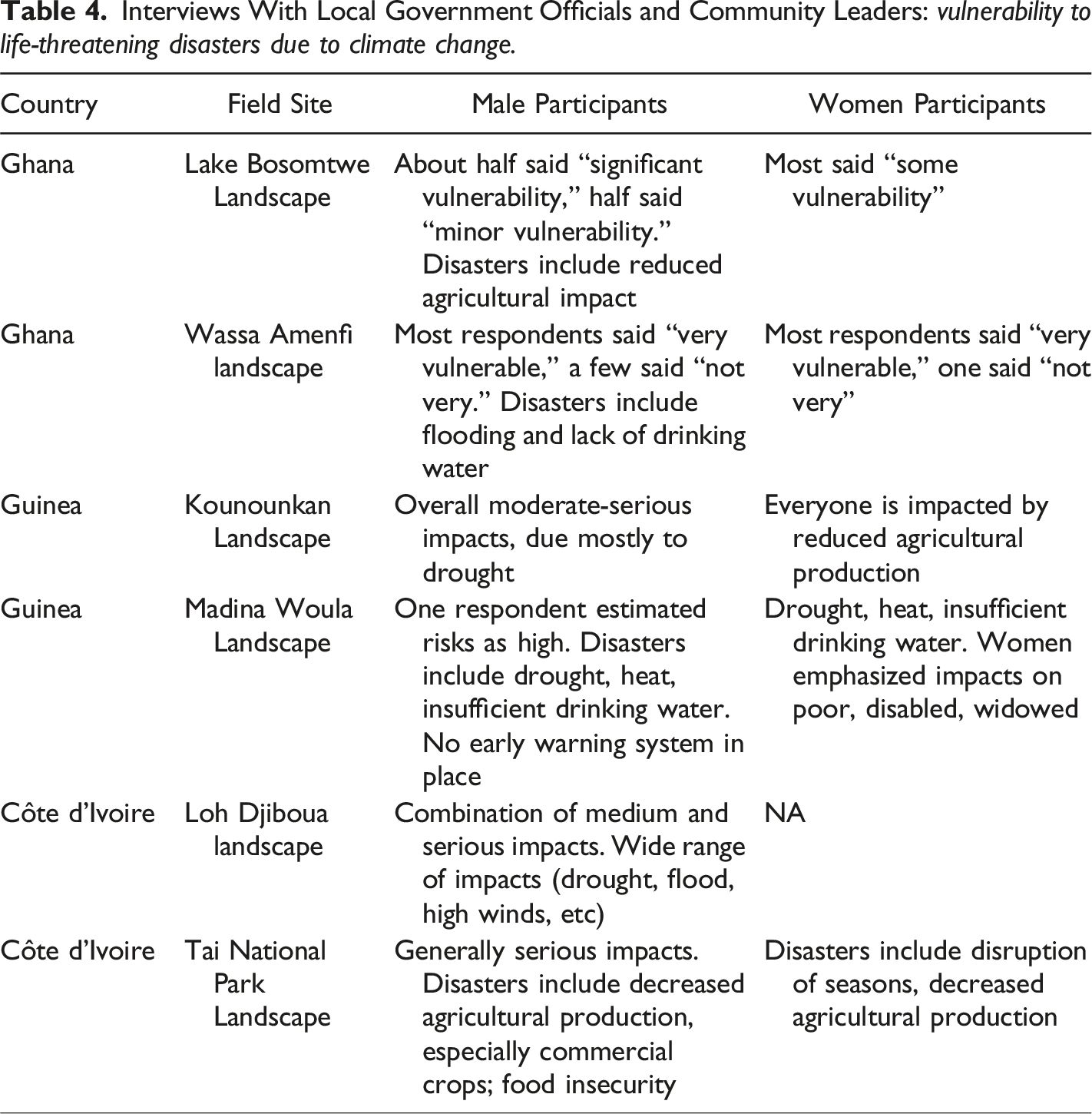
Interviews With Local Government Officials and Community Leaders: vulnerability to life-threatening disasters due to climate change.
Odds Ratio of “How Vulnerable is Your Household to Negative Impacts on Livelihood due to Climate Change.”
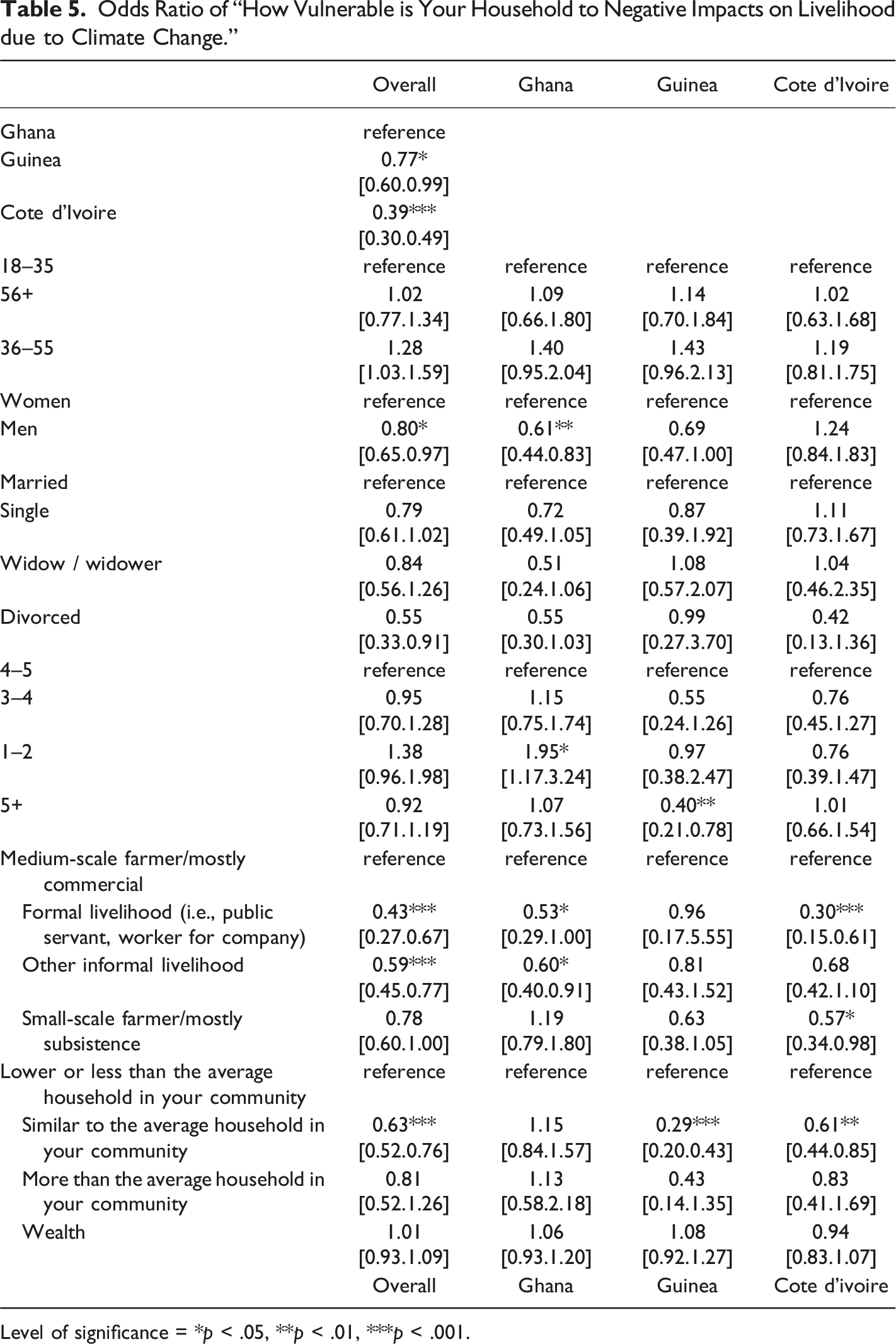
Level of significance = *p < .05, **p < .01, ***p < .001.
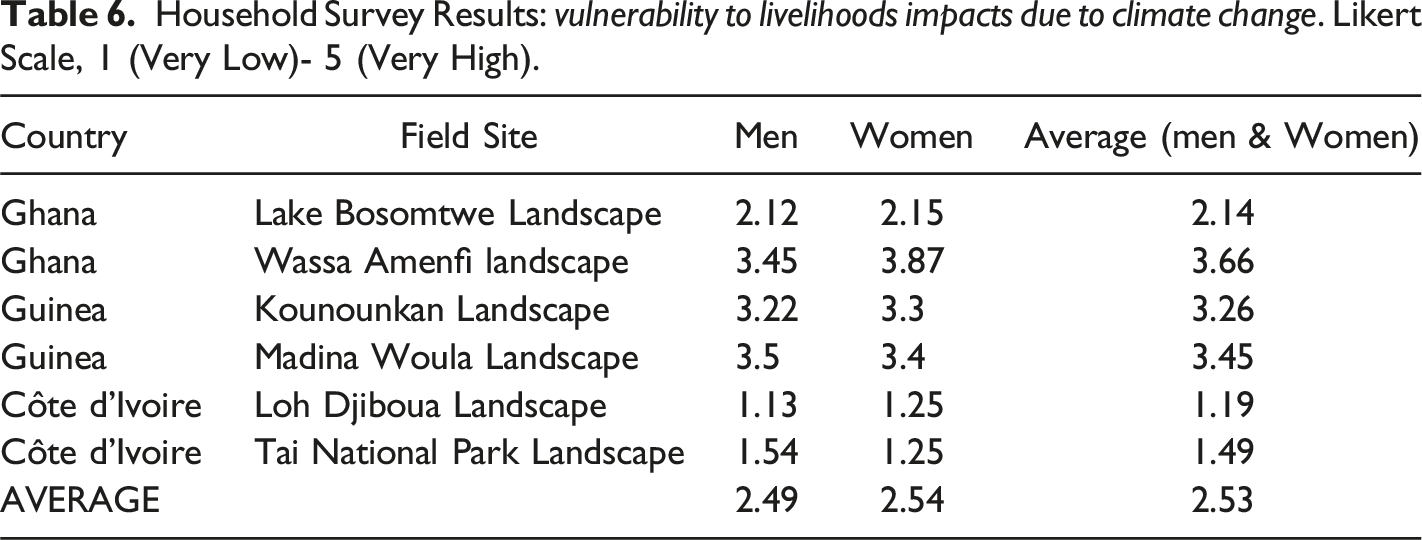
Some significant variables include: • Age groups (Individuals aged 36–55 individuals reported significantly higher perceptions of vulnerability compared to the 18–35 age group in Ghana (OR = 1.28, 95% CI = 1.03–1.59)); • Sex (men reported significantly lower perceptions of vulnerability compared to women in Ghana (OR = 0.80, 95% CI = 0.65–0.97) and Guinea (OR = 0.61, 95% CI = 0.44–0.83); • Marital status (divorced individuals reported significantly lower perceptions of vulnerability compared to those who are married in Ghana (OR = 0.55, 95% CI = 0.33–0.91)), • Household size (households with 1–2 members reported significantly higher perceptions of vulnerability compared to those with 4–5 in Guinea (OR = 1.95, 95% CI = 1.17–3.24), while households with 5+ members reported significantly lower perceptions of vulnerability compared to those with 4–5 in Cote d'Ivoire (OR = 0.40, 95% CI = 0.21–0.78)); • Livelihood (individuals engaged in formal livelihoods reported significantly lower perceptions of vulnerability compared to those engaged in medium-scale farming/mostly commercial activities in Ghana (OR = 0.53, 95% CI = 0.29–1.00), and Cote d'Ivoire (OR = 0.30, 95% CI = 0.15–0.61). Those engaged in small-scale farming/mostly subsistence reported significantly lower perceptions of vulnerability compared to those engaged in medium-scale farming/mostly commercial activities in Cote d'Ivoire (OR = 0.57, 95% CI = 0.34–0.98)). • Income level (Those with a household income level similar to the average in their community have significantly lower odds of reporting vulnerability in Guinea (OR = 0.29, 95% CI = 0.20–0.43) and Cote d'Ivoire (OR = 0.61, 95% CI = 0.44.0.85) (Table 6). Household Survey Results: vulnerability to livelihoods impacts due to climate change. Likert Scale, 1 (Very Low)- 5 (Very High).
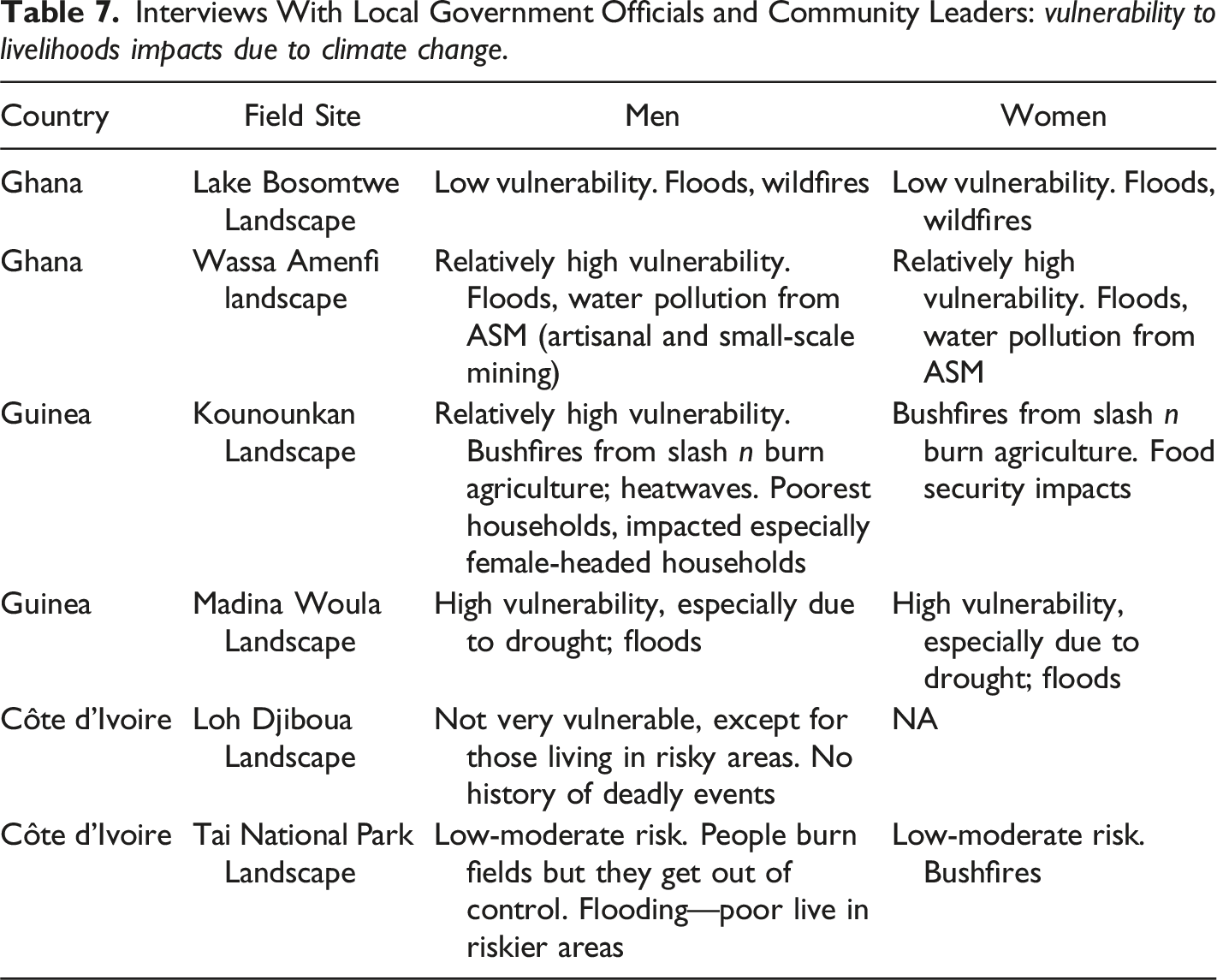
Interviews With Local Government Officials and Community Leaders: vulnerability to livelihoods impacts due to climate change.
Perceptions of Gendered Use of Trees and Forests
The strong connections between access to forests and livelihoods, especially women’s livelihoods, were clear from the SSIs and household survey responses. NTFPs such as herbal and bark extract medicines, nutritious food and firewood are particularly important. Fruit trees were identified as vital for household food security, and are largely the domain of women. It remains unclear whether many community members, particularly women, depend on resources gathered from within protected areas. Participants emphasized the importance of “forests” for community livelihoods, but did not specify whether these were protected areas.
Local Knowledge of Biodiversity
Household survey results suggest that women are less likely to have heard of biodiversity than men. Participants in Côte d'Ivoire had the lowest scores for knowledge of biodiversity. Younger women (18–35) were more likely to reply that they knew what biodiversity was, compared to older women, whereas for men, age differences showed no clear pattern. However, this indicator should be treated with caution. While participants may not have heard of the term “biodiversity,” they may nevertheless have valuable knowledge related to the topic.
Existing Reforestation and Climate Adaptation Activities
Women were less likely than men to report that reforestation activities were taking place in their communities. This may indicate differences in the level of knowledge about such activities, and could be linked to gendered differences in participation, etc. Most respondents said that trees used in reforestation were moderately appropriate for women’s economic needs. There were no clear gender patterns in responses to this question. Older participants provided lower scores, on average, than the 18–35 age group. This may mean that older people have different preferences for tree species, or that older people have a different level or kinds of knowledge, than younger people.
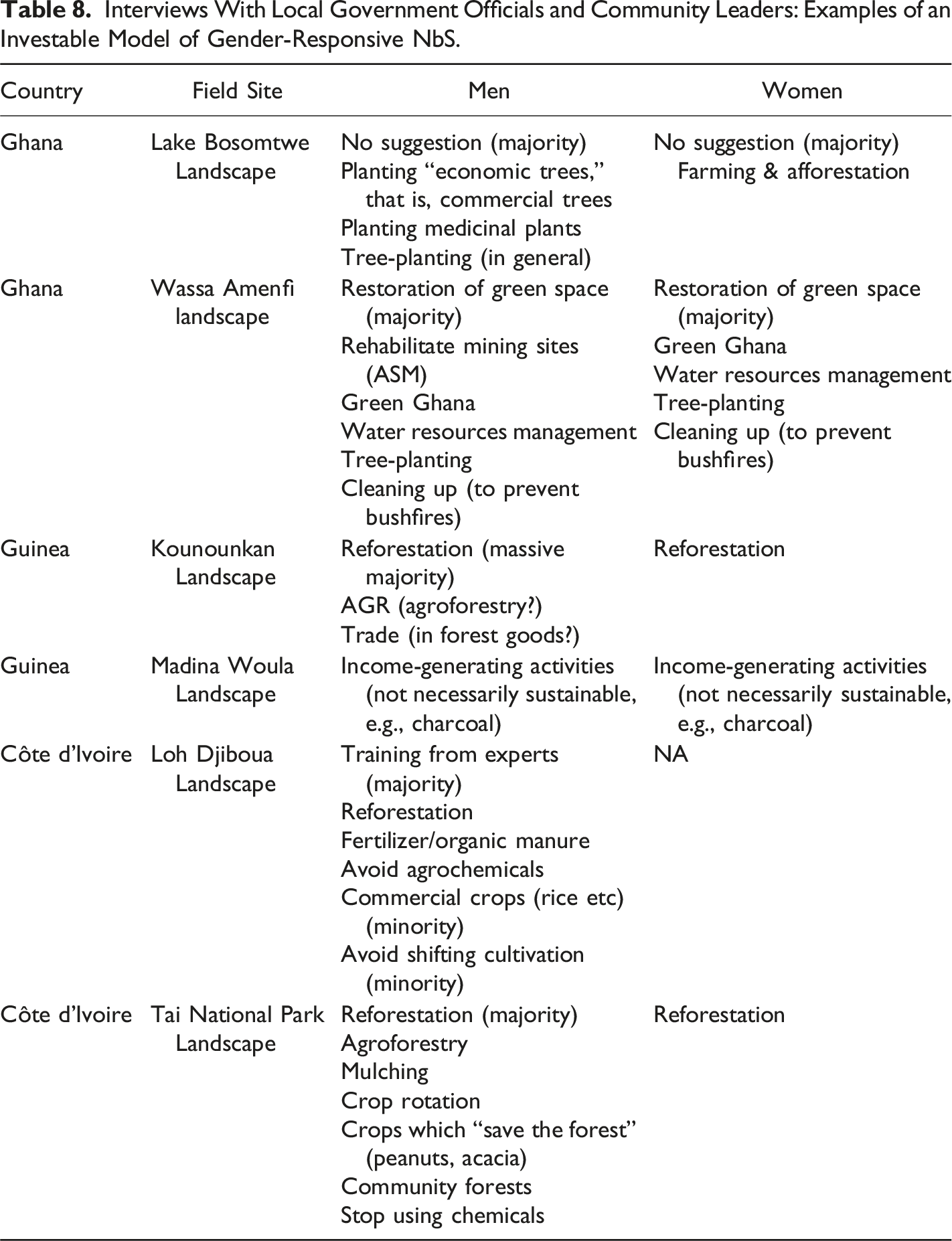
Interviews With Local Government Officials and Community Leaders: Examples of an Investable Model of Gender-Responsive NbS.
Roles and Capacities of Women in NbS
The majority of household members surveyed, both men and women, reported that laws in the three countries provided women with the right to participate in forest restoration. The positive responses were highest in Ghana. Younger women (18–35) were slightly more likely than older women to say that state laws provided women with rights, while younger men (18–35) were less likely than older men to say that state laws provided rights. In addition, most household members reported that customary laws provided women with the right to participate in forest restoration. Women 18–35 responded slightly less positively than older women; men 18–35 were also less positive than older men. The question “do women have rights as community members to participate in forest restoration” resulted in high levels of positive responses. These responses indicate that forest restoration projects have a firm legal and customary basis, in most communities, to fully involve women.
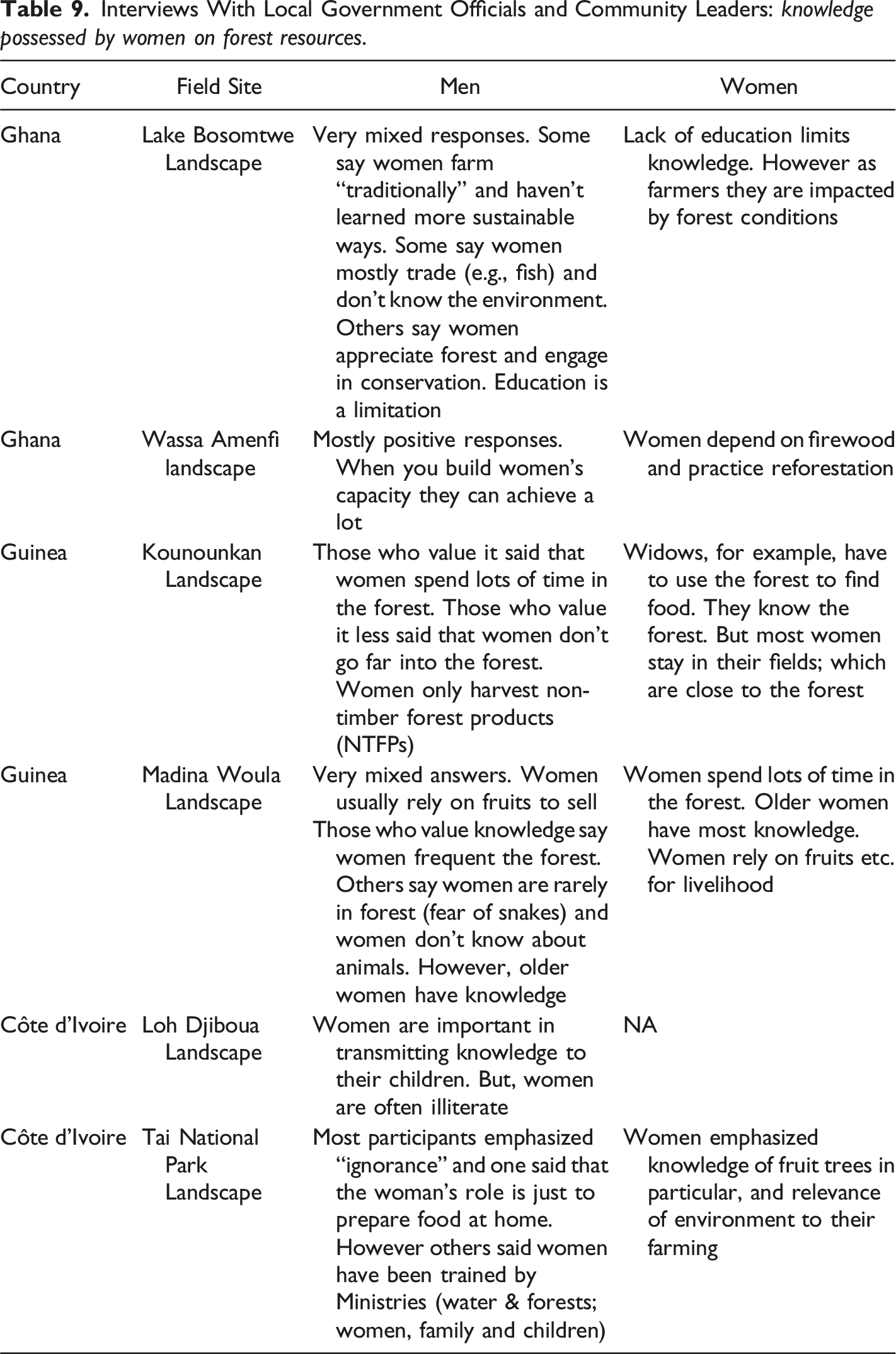
Interviews With Local Government Officials and Community Leaders: knowledge possessed by women on forest resources.
Discussion of Findings
Perceptions of Risks from Climate Change
The data suggests that men and women have different perceptions of vulnerability to climate change. Women often reported higher levels of vulnerability (to climate change impacts on livelihoods as well as disasters) than men. Also, on average younger people (18–35) tended to perceive their households as less vulnerable to climate change impacts, compared to older participants. This could be interpreted in different ways: older people may be more risk-averse than younger people; alternatively, older people may be responding based on their longer life experience. Overall, participants perceived livelihoods in their households as moderately vulnerable to climate change impacts, while household vulnerability to climate change-related disasters was also seen as moderate. Disaster risks were perceived as relatively low in Côte d'Ivoire compared to the other two countries.
The survey data reinforces some common assumptions. For example, medium-scale farmers and those in the informal sector perceive themselves as more vulnerable to life-threatening disasters than those in formal employment, perhaps because of financial assets. Those with higher incomes are generally are less likely to see themselves as vulnerable. Men perceive themselves as less vulnerable than women in Ghana and Guinea; this supports thinking on gendered notions of risk (women are generally more risk-averse; see, for example, Eckel & Grossman, 2008). Participants from larger households have a lower perception of risk than those from smaller households in Guinea and Cote d'Ivoire. Such differentiation supports the findings of other studies in West Africa, which found that perceptions of climate change impacts differed according to gender (Antwi-Agyei et al., 2017); “gender, age group (elders and youth), community, and livelihood activities” (Kusakari, 2014: 524); and “age, gender, education, farm characteristics, farming experience, access to credit and extension” (Owusu et al., 2021, p. 8). The research supports calls for gender-sensitive climate change adaptation policies (Antwi-Agyei et al., 2017).
Tree-Planting, Forest Management, and Conservation
The notion amongst participants that women are not involved in planning tree-planting activities, but mostly provide labor, is supported by literature that finds women in Africa tend to be less involved in tree-planting than men, due partly to unequal access to resources, such as land; unequal ownership rights to trees; and their heavy workload (Duguma et al., 2022). Including women could improve the effectiveness of forest management, as “silvicultural knowledge within a rural population varies with ethnicity, socioeconomic standing, age, and gender” (Carney & Elias, 2014, p. 232). As women only represent around 18% of the members of formal forest user groups in Africa (Duguma et al., 2022), forest restoration projects will have to move carefully to ensure women play a role in planning as well as implementation.
There remain important questions regarding how tree-planting and (agro)forestry activities (especially by women and vulnerable groups) fit into different land-tenure categories within the project sites. For example, very few participants mentioned protected areas, or institutional forest protection (except community forests). How communities feel about restricted access to forests in the context of NbS is an issue for further action-research.
Participants mentioned many kinds of trees that are planted, and highlighted those of economic use for women. However, it is important to identify any (unintended?) consequences of gendered approaches to tree-planting to land-tenure patterns, including land disputes. In many cultures, trees are customarily used to indicate ownership of land. For example, in Ghana, women have utilized their access to cashew trees to try to strengthen their land rights (Evans et al., 2015). There is evidence that where trees become commercially rewarding, men may take over the benefits derived from them (Friman, 2023; Schroeder, 1999). NbS projects should consider this as a risk and put in place mitigation strategies. Kiptot (2015) identifies some tree species generally associated with women in West Africa, such as bush mango (I. gabonensis), bread fruit (Sterculia Africana (Lour.) Fiori) and oil bean (Pentaclethra macrophylla Benth) but points out that for some species, such as oil palm, men typically own the tree, but women typically control the fruits of the tree. Abane (2007) argues that the reliance on NTFPs by women in South-West Ghana is driven by poverty rather than preference, and also contends that while formal forest governance and other institutions play important roles in mediating access to resources such as NTFPs and firewood, household- and community-level relationships, which are highly gendered, (and also somewhat open to negotiation) are key. It is therefore important to understand the local micro-context.
The survey represents a preliminary investigation of knowledge of biodiversity. Results suggest a range of understandings of biodiversity amongst participants, with some focusing on on-farm biodiversity (including agro-diversity) while others associate the term with off-farm environments. While most participants had limited knowledge of the term “biodiversity,” such findings should not contribute to a, “pervasive issue in restoration framing…the notion that local communities in the Global South lack sufficient knowledge and innovations to restore their environment, or that their knowledge is inferior” (Edwards et al., 2021: 1335). Project communication strategies could use locally specific terms and examples of biodiversity, and more data could be collected on gendered understandings of biodiversity.
There are tensions between some proposed solutions and the aims of the project, for example, clearing undergrowth may reduce risks of bushfires, but may have a negative impact on biodiversity. Participants did not mention restricting burning fields as a potential NbS. Other studies have found that farmers in Cote D’Ivoire try to prevent wildfires by creating firebreaks around fields before burning (Kouassi et al., 2020); potential activities should be assessed to look at long-term and short-term impacts on biodiversity. The role of charcoal and firewood in local economies—particularly women’s livelihoods—should also be examined further. Many participants mentioned that reforestation could benefit women’s livelihoods, but if these livelihoods are heavily reliant on charcoal production, this could undermine project outcomes. Based on work in Burkina Faso, Friman (2023) argues that “gendered power relations that are embedded in informal and formal forest institutions form unequal opportunities to access and control firewood,” creating a situation in which women are under pressure to perform gendered labor roles (e.g., acquiring fuel for cooking fires) but are excluded from decision-making which constrains their ability to perform those roles.
A study in Guinea found that adoption of coping strategies by farmers was influenced by, “perceived climate change impacts and socio-economic characteristics, particularly gender, the experience of crop failure, and ownership of assets” (Samoura et al., 2023, p. 18). Other studies have argued that facilitating climate adaptation through NbS such as agroforestry in the region requires increased investment in state extension services, improving farmer access to credit, and land-tenure reform (Papa et al., 2020: 228). A study in Cote D’Ivoire recommended improving access to extension, and argued that in order to put in place long-term adaptation strategies, the rural poor require support from the government, NGOs, and the private sector (Comoé & Siegrist, 2015).
Conclusions
This research was conducted in six sites across three countries. It suggests that marital status, income level and livelihood (formal/informal) are all significant variables in perceptions of vulnerability to life-threatening disasters due to climate change; and that age, sex, household size, livelihood type and income level are all significant variables in perceptions of vulnerability to impacts on livelihoods due to climate change. The data suggests that more can be done to ensure that women’s ability to actively plan and implement reforestation activities is recognized by stakeholders, as “understanding the gender-specific knowledge and expertise involved in the selection, protection, and conservation of desirable [tree] species… affects not only local environments, but also the social and economic well-being of women” (Carney & Elias, 2014: 238). In addition, the capacities of rural women should be strengthened as much as possible (e.g., through training, access to resources, increased membership of women’s groups).
Researchers such as Nyerges and Green (2000) contend that to understand NRM, researchers should “relate people’s positions in local social hierarchies to the exploitation of the natural resources on which they depend.” Further, they argue that “forests in western Africa, while not strictly anthropogenic, have been fully part of human social life for centuries if not millennia,” and hence insist upon understanding forests as part of social life. Similarly, the “political forest” concept demonstrates that, “forests are never entirely natural: political forests are created and always in the process of being created through politics and cultural ways of seeing” (Peluso & Vandergeest, 2020). Very often, state agencies, conservation organizations, and other institutions tend to focus on legal definitions or scientific indicators, neglecting the broader historical and socio-political aspects of access to, or exclusion from, particular areas. Future research could clarify local understandings of where communities assume trees should be planted, and rights of ownership and use. Research is needed to identify potential consequences to land-tenure patterns, including land disputes, of gendered approaches to tree-planting. It is important that materials supplied to participants (e.g., seedlings) are not used to convert existing forest to farmland. Where forest is degraded, it is important to consider legal, ecological, and other criteria when deciding if it should be (re)planted with species that have livelihood benefits. Nevertheless, the data suggests that statutory and customary laws and local norms generally support women’s rights to actively participate from nature-based solutions such as reforestation and agroforestry.
Footnotes
Acknowledgments
The authors would like to acknowledge the important roles of Kevin Enongene and Kalame Fobissie (both of FOKABS) in coordinating fieldwork for the baseline survey, Sheila Rao in gender analysis, as well as Jim Delaney, Patience Nambo, Marcella Randazzo, and Olivia Nasewitz (all of World University Services Canada, WUSC) in commissioning and facilitating the baseline survey. The data presented in this article is property of WUSC. The authors also acknowledge the assistance of various personnel from The World Conservation Union, IUCN; Centre d'étude et de coopération international, CECI; and the World Agroforestry Centre, ICRAF, for their advice and assistance. Further, the authors thank the enumerators who conducted the interviews and surveys, and the participants who generously provided their time, and knowledge.
Declaration of Conflicting Interests
The author(s) declared no potential conflicts of interest with respect to the research, authorship, and/or publication of this article.
Funding
The author(s) disclosed receipt of the following financial support for the research, authorship, and/or publication of this article: This work was supported by the World University Services Canada.
