



Abstract
Several supply chain-related laws have recently been passed in Europe and the United States as a result of successful NGO campaigns, which have addressed the challenges of accountability in a globalized world. Based on the analysis of campaign documents and semi-structured interviews, the article examines the accountability narratives used by NGOs in recent campaigns for an EU Corporate Sustainability Due Diligence Directive (CSDDD). The results show that the campaigns portray European corporations as perpetrators, people in producing countries as mere victims, and NGOs as heroic liberators. NGOs reproduce postcolonial trajectories by advocating a supply chain law in the Global North as the central solution to problems in the Global South. While rescue politics is thus the defining feature of NGO campaigns, there is no evidence of the strategic use of pseudo-causal narratives that are empirically inaccurate.
Non-governmental organizations (NGOs) in Europe and the United States are advocating for ethical consumption and new laws that require greater due diligence from importing companies (Partzsch & Vlaskamp, 2016). By aiming to hold corporate perpetrators accountable for human rights violations and environmental pollution abroad, campaigns address accountability challenges in a globalized world (Gustafsson et al., 2022). NGOs act in a solidaristic manner when they are in a close contact with the people whose interests they represent. When they are distant, however, they run the risk of using narratives that undermine the agency of people in producing countries and misrepresenting their interests (Autesserre, 2012; Koenig-Archibugi & Macdonald, 2013; Zaun & Nantermoz, 2022). Against the backdrop of this debate, I systematically examine the narratives used by NGOs in current campaigns for an EU Corporate Sustainability Due Diligence Directive (CSDDD). What stories do NGOs tell to advocate for their cause, and do narratives come at the expense of people’s ability in producing countries to represent their own interests?
A Chronology of the EU Corporate Sustainability Due Diligence Directive (CSDDD).
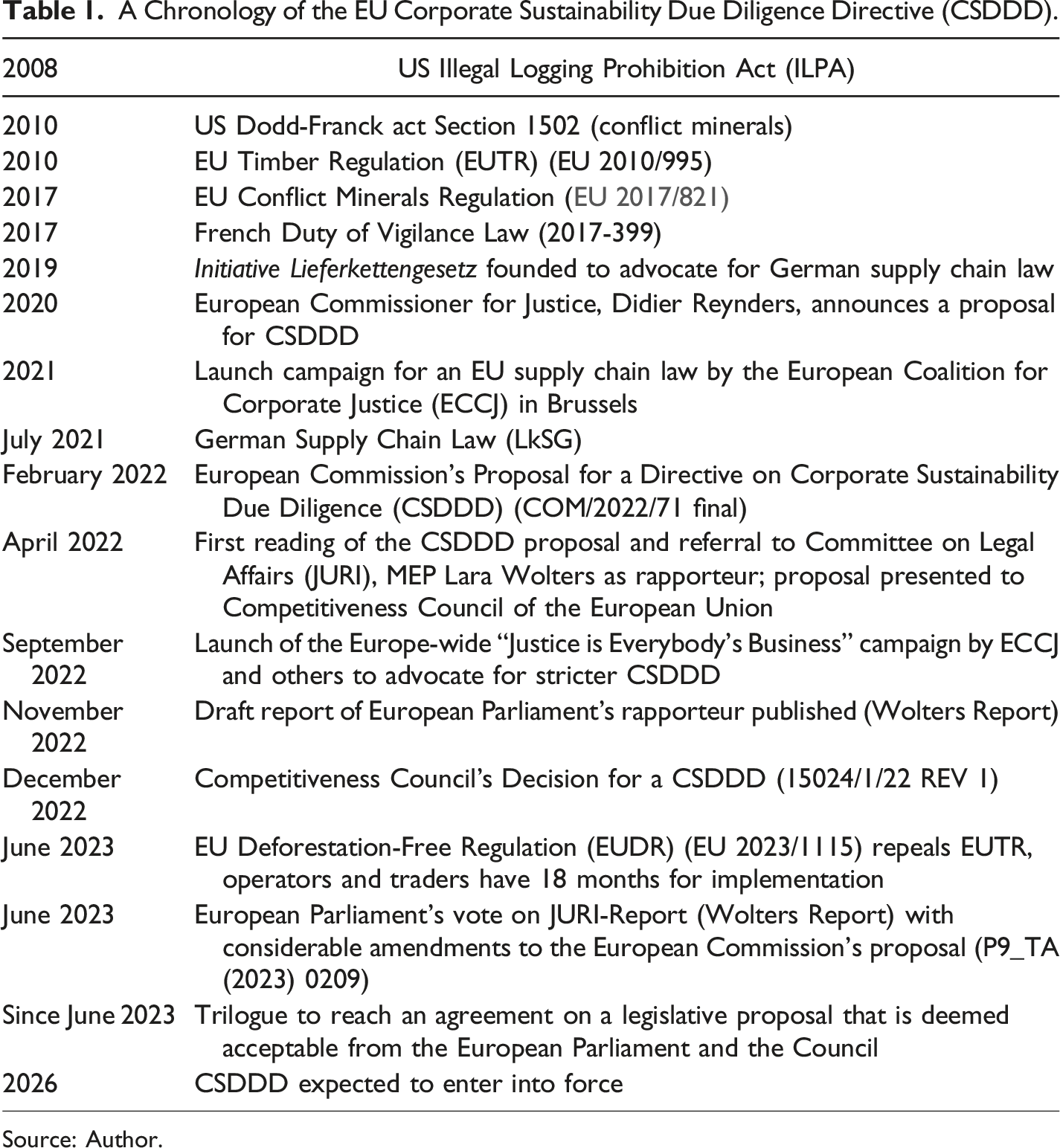
Source: Author.
Narratives are “shared stories (that) provide grounds for common understandings and interpretation” (Patterson & Renwick Monroe, 1998, p. 322). They play a central role in recognizing and organizing our perceptions of reality into a coherent and meaningful pattern. Scholars have shown that the EU uses “pseudo-causal” narratives in a strategic manner (Zaun & Nantermoz, 2022) and, in a similar vein, development studies have criticized NGOs from Europe and the United States for using “simple” narratives about the Global South to communicate their causes (Autesserre, 2012; Gilfoy, 2015). Simple narratives result from a lack of situated knowledge and overlooking complexities in producing countries. Scholars have shown in particular that, when ethical consumption campaigns build on images of producers in the Global South as authentic and exotic “others,” they reproduce postcolonial trajectories and serve to legitimize outside interventions that do more harm than good in producing countries (Fog Olwig & Bull Christiansen, 2016; Nygren, 2015).
The article begins with an introduction to debates on FCA in global supply chains, in which I explain how narrative analysis has been proven to be useful in revealing underlying assumptions about agency. I outline three simple narratives of cause, consequence, and solution, which Autesserre (2012) identifies in past supply chain campaigns, and explain why she and others find them to be harmful. In the fourth section, after explaining my methodological approach, I empirically examine whether such narratives are also prevalent in current campaigns for a CSDDD. The current campaigns are coordinated by the European Coalition for Corporate Justice (ECCJ) in Brussels since 2021. In six countries, ECCJ members have run campaigns, with the German campaign being by far the largest with 138 participating NGOs. My analysis is based on 167 documents from these NGOs and semi-structured interviews with their representatives as well as representatives of an independent NGO, targeted corporations, and a public authority representative involved in supply chain standard-setting.
Similar to criticism surrounding past supply chain campaigns, I find that local people are repeatedly portrayed as mere victims, subjects of corporate greed for profit. Simple narratives about cause and consequence create an increased demand for a CSDDD as an outside solution. In this vein, the shared story does not provide grounds for an understanding of people in producing countries having agency to hold corporate perpetrators accountable. However, while NGOs use simple narratives, there is no evidence for the strategic use of pseudo-causal narratives that are empirically inaccurate.
Proxy Accountability and Narratives on Global Supply Chains
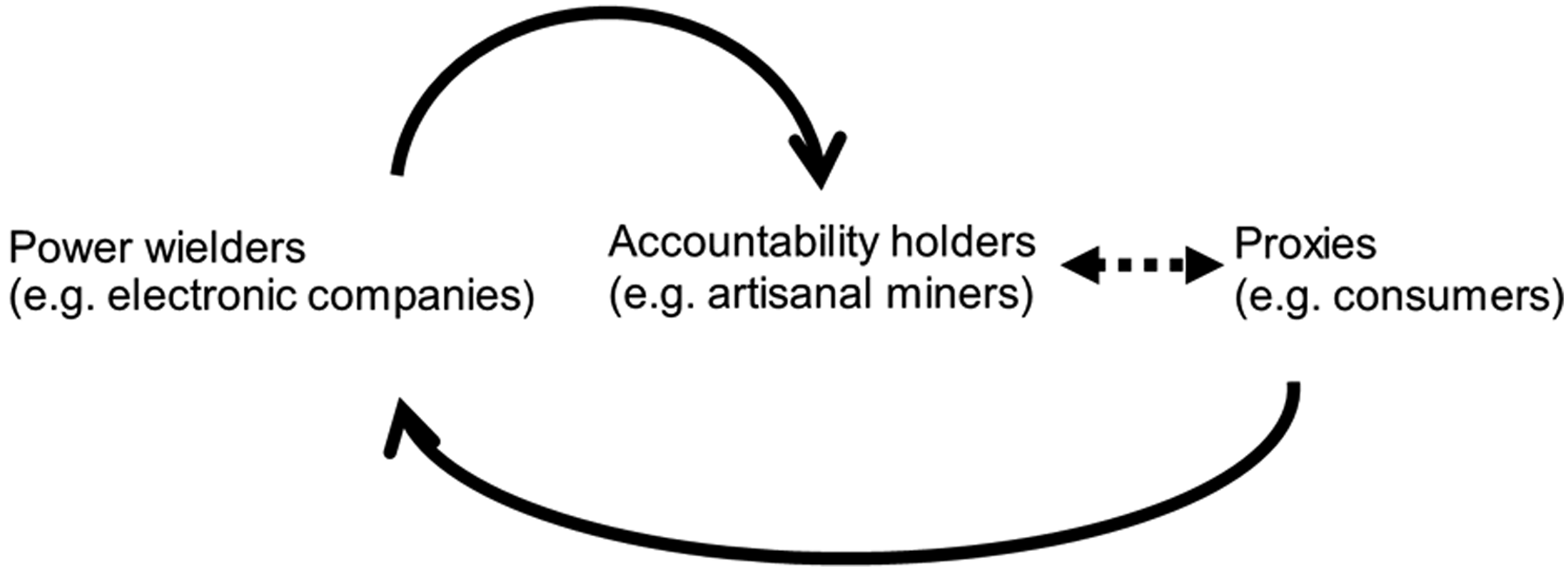
Holding consumers and corporations accountable for environmental and social problems in foreign countries is an extension of the standard notion of public accountability. In democracies, a political community (accountability holder) elects a government (power wielder) to represent the constituency and act on its behalf. There is a bi-directional power relation if, in case of dissatisfaction, people can hold the decision-makers accountable and vote them out of office (see Figure 1) (Goetz & Jenkins, 2005). In addition to such standard accountability, there are other arrangements in which external actors and background institutions, which are not themselves accountable to the affected people, exercise accountability on their behalf, as in the case of FCA (see Figure 2). Koenig-Archibugi and Macdonald (2013) call these latter situations “accountability-by-proxy.” In such arrangements, “activists and consumers in the global north see themselves as holding both companies and (non-state governance arrangements) accountable ‘on behalf of’ workers and affected communities because the latter are not powerful enough to control the behavior of those companies themselves” (Koenig-Archibugi & Macdonald, 2013, p. 500). Standard Accountability as a Bi-directional Power Relation (source: author). Proxy Accountability Arrangement (source: author).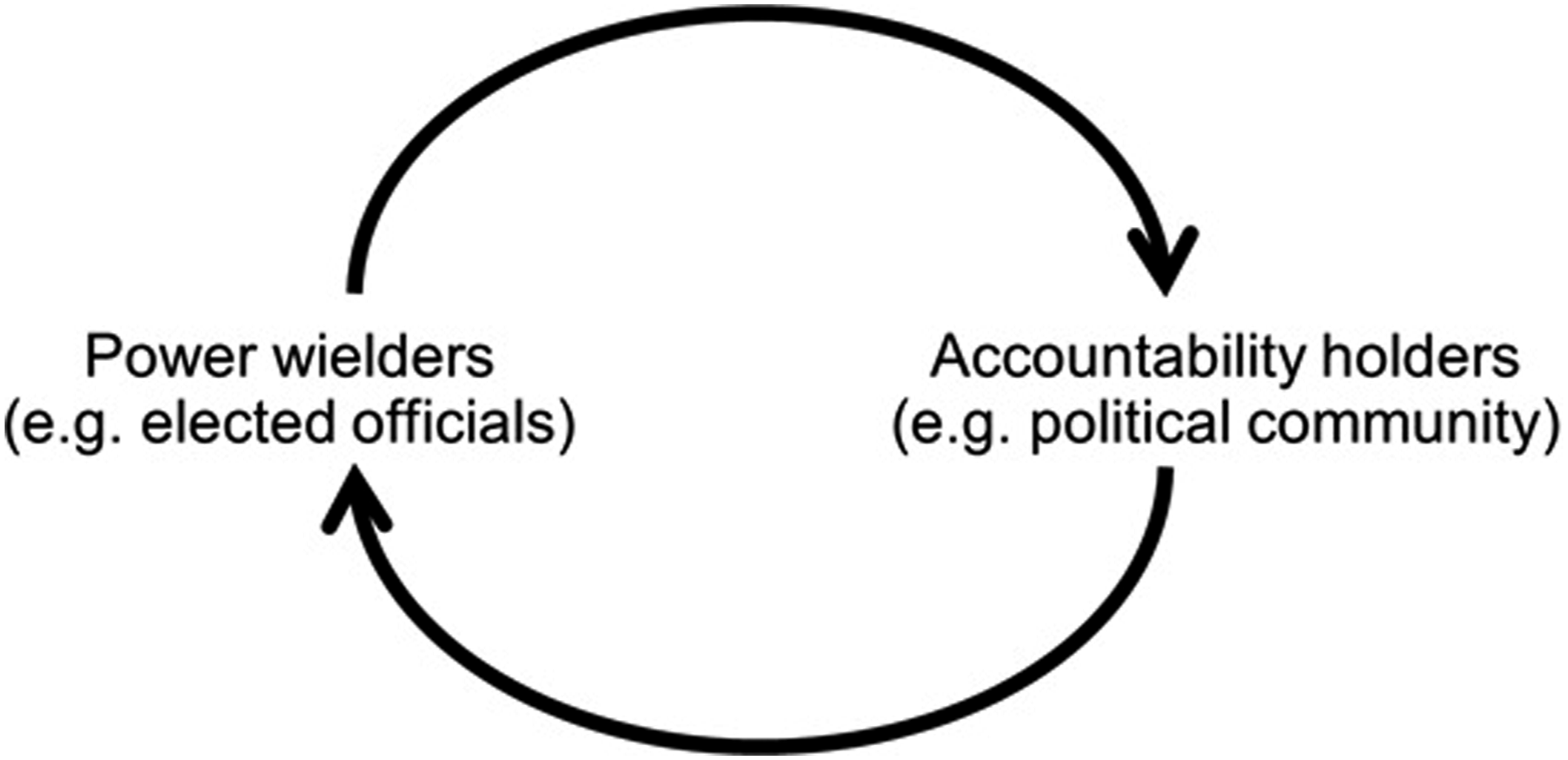
More recently, the EU, the United States, and other predominantly Global Northern countries have passed public supply chain legislation to prevent greater harm, primarily in upstream countries of the Global South. Unlike earlier voluntary standards, enforcement no longer depends on activists’ demands and individual consumer preferences for ethical products. Now, governments are leveraging their countries’ collective purchasing power by enforcing rules on all importers (Partzsch, 2020; Sarfaty, 2015). Therefore, scholars consider them an important step for “hardening” FCA (Gustafsson et al., 2023). So far, the EU has adopted sector-specific supply chain laws, in particular, the 2017 EU Conflict Minerals Regulation and the 2023 EU Regulation on Deforestation-free Products Regulation (EUDR), which is replacing the 2010 EU Timber Regulation (EUTR). In addition, several European countries have adopted more comprehensive and cross-sectoral laws, notably the 2017 French Duty of Vigilance Law, the 2021 German Supply Chain Due Diligence Law, and the 2022 Norwegian Transparency Act (Gustafsson et al., 2023). A CSDDD at the EU level, which is expected to be passed in 2024 and enter into force in 2026, could potentially unify the emerging patchwork of legislations in EU member states (see Table 1).
What all supply chain laws have in common is an extraterritorial dimension in their design and application, with consuming countries acting as proxies for people suffering from consumption-related problems in producing countries (Gustafsson et al., 2022). Different from previous anti-corruption laws, such as the US Foreign Corrupt Practices Act (FCPA), companies are now required to report on an annual basis. Traditional regulations often affect global supply chains, but only with these new laws have supply chains become the direct target of regulation (Sarfaty, 2015, p. 427).
In Europe, there has been little public discussion of the unintended consequences of new supply chain legislations, unlike discussions in the United States regarding Section 1502 of the Dodd-Frank Act of 2010 (Autesserre, 2012; Geenen, 2012; Partzsch & Vlaskamp, 2016). Under Section 1502, US-listed companies must disclose what due diligence they have conducted to ensure that tungsten, tantalum, tin, and gold (3TG) in their supply chain are not contributing to armed conflict in the Great Lakes region of Africa (Jeffrey, 2012). Scholars have shown that NGOs used simple narratives in their campaigns for this law: Rebels’ illegal exploitation and trading of minerals in the Democratic Republic of the Congo (DRC) was presented as the main cause of violence in the region, sexual abuse as the worst consequence, and external intervention in the form of supply chain regulation as the main solution (Autesserre, 2012; see also Vogel, 2021).
Campaigns neglected causes of conflict other than illegal exploitation and consequent policy actions, in particular, the resolution of grassroots antagonisms, the fight against corruption, and the reform of state administration (Autesserre, 2012, p. 215). The international focus on sexual violence against girls and women as the worst consequence has diverted attention away from other issues and links to the international political economy (Meger, 2016). Autesserre (2012, p. 216) argues that armed groups in the DRC only began to perceive sexual violence as an effective bargaining tool as a result of the international campaigns’ focus on it. Accordingly, “at times,” there was even an increase in the use of sexual abuse by combatants (Autesserre, 2012, p. 216; similar in Vogel, 2021). In addition, the campaigns further damaged the international image of the DRC (Jeffrey, 2012). Section 1502, which was presented by NGOs as the main solution, had several negative consequences, which led to the exclusion of artisanal miners in the DRC from trading minerals, depriving them of their livelihoods (Autesserre, 2012; see also Vogel, 2021). Since the capacity of companies to perform due diligence is important, other sectors also bear witness to the fact that FCA gives precedence to large companies and has a cartel-like effect, which helps Western companies maintain dominance over global supply chains (McDermott et al., 2015; Sarfaty, 2015).
Koch and Burlyuk (2020, p. 1459) note with regard to the EU Conflict Minerals Regulation, that “EU institutions were willing and capable of making efforts to mitigate consequences.” For example, the EU Regulation covers any “high-risk area”; it does not apply solely to the DRC (see also Partzsch, 2018). However, scholars who have studied the DRC criticize that the mineral supply chain laws in both the United States and Europe result from the same simple narratives (Autesserre, 2012; Vogel, 2021).
Narratives always suggest the speaker’s view of what is canonical and thereby lend legitimacy and credibility to certain actors and their policy positions (Patterson & Renwick Monroe, 1998). When NGOs use particular narratives, they adopt a specific view, while prescribing the roles of protagonists (agents) and subjects (subalterns). Although taking agency on behalf of others is sometimes normatively required, for example, in the case of human rights violations, it still reproduces positional power in hierarchies. Only if one perceives accountability holders as incapable of holding the power wielder accountable, and thus only if one denies that the people in producing countries themselves have agency, can an external NGO legitimately claim to act on behalf of the accountability holders as a proxy (Koenig-Archibugi & Macdonald, 2013; Partzsch, 2021).
Structural asymmetries of international trade, which are at the heart of misery in global supply chains, tend to reproduce a “politics of rescue” which “discursively creates the roles of victim, exploiter, and heroic liberator” (McGrath et al., 2022, p. 914). Koenig-Archibugi and Macdonald (2013, p. 503) differentiate between “distant” and “solidaristic” proxy arrangements. Distant proxies are defined by exercising accountability in an atomistic way. Typically, they make impulsive purchasing decisions based on what Autesserre defines as simple narratives. By contrast, solidaristic action is defined as “the collective action of a (pre-constituted) group to advance their common interests” (McGrath et al., 2022, p. 914). Solidaristic proxies invest considerable time and energy to learn how beneficiaries perceive their situation and to build solidaristic relationships with them (Koenig-Archibugi & Macdonald, 2013). The latter thus acknowledge the agency of accountability holders, but proxy arrangements always bear the risk of misrepresenting the accountability holders’ priorities. Van der Ven (2019, p. 64) uses the metaphor of the broken telephone game to describe the risk of misrepresentation. In such cases, proxy action undermines the agency of affected people and does more harm than good.
Given the risk of misrepresentation perpetuated by proxies, it is highly problematic that NGOs from Europe and North America have been found to generally lack “situated knowledge” in countries like the DRC (Vogel, 2021, p. 11). With regard to the aforementioned “conflict” minerals campaigns, Vogel (2021, p. 6) argues that “(t)he Enough Project [a key NGO in the US conflict minerals campaign] invested more time convincing American college students of the ‘conflict minerals’ story than investigating actual conflict dynamics.” He speaks of “white saviourism” to describe how Western consumers are “ideologically colonizing the most remote places and galvanizing into armchair human rights movements promoting a better world” (Vogel, 2021, pp. 2–3).
While simple narratives are not necessarily postcolonial, Gilfoy (2015, p. 187) explains that Western understanding of local impacts is frequently “funneled through the institutional prisms.” To “sell” their causes, NGOs use narratives already familiar to the target audience, and this selection often reproduces postcolonial and imperialistic attitudes in the form of North-South proxy arrangements (see also Fog Olwig & Bull Christiansen, 2016; Hilson et al., 2016). Against this backdrop, Nygren (2015) explains how ethical consumption campaigns build upon images of producers in the Global South as authentic and exotic “others.” The stories behind the products are crucial to their sale, and images of people are carefully selected. For example, forest certification initiatives do not choose pictures of people sawing timber barefoot or carrying planks on their shoulders on muddy slopes. There is little consideration of the degree, to which Southern producers participate in ethical markets, or the distribution of benefits and constraints amongst actors involved in certification (Fog Olwig & Bull Christiansen, 2016; Nygren, 2015). The sheer absence of people from the Global South in regulating global supply chains replicates power imbalances within our international legal order, historically originating from the colonial encounter (Dehbi & Martin-Ortega, 2023; Wijaya & Glasbergen, 2016).
Zaun and Nantermoz (2022, p. 514) speak of “pseudo-causal narratives” that “can convince audiences and triumph debate despite their empirical inaccuracy.” Their point of reference is EU migration policy, for which the authors show that European actors claim, in their interest, that more development aid prevents migration, even though there is a broad academic consensus that development fuels migration. In a similar vein, scholars have shown how the EU strategically presents itself as a leader in sustainability while hiding its economic interests (Levidow, 2013; Pichler, 2013). As mentioned before, supply chain laws help Western companies maintain dominance over global supply chains (McDermott et al., 2015; Sarfaty, 2015). Narratives are used strategically to legitimize the EU’s proxy accountability, for example, in the case of tropical deforestation (Partzsch, 2021).
In sum, on the one hand, FCA provides an opportunity to hold corporate perpetrators accountable for social and environmental abuses in global supply chains (Dehbi & Martin-Ortega, 2023; Weihrauch et al., 2022). On the other hand, following research on the EU’s strategic use of narratives (Zaun & Nantermoz, 2022) and in line with development studies (e.g., Autesserre, 2012; Nygren, 2015), we may assume that European actors are pushing simple and pseudo narratives to promote policies that legitimize their political dominance in international trade, regardless of concerns about the continuation of postcolonial asymmetries.
Methodology
NGOs from all over Europe are currently working to get a CSDDD passed. The European Coalition for Corporate Justice (ECCJ) was set up in 2006 and has campaigned for the CSDDD since 2021 (see Table 1). It represents a network of 480 NGOs from 18 countries (ECCJ, 2023). In six of these countries, national umbrella organizations have run campaigns in addition to the European campaign for a CSDDD, that is, in Austria (NeSoVe), Finland (Finnwatch), Germany (Initiative Lieferkettengesetz), the Netherlands (MVO), Luxembourg (L'Initiative pour un Devoir de Vigilance), and Spain (Observatorio de Responsabilidad Social Corporativa). I focus on the German campaign titled “Initiative Lieferkettengesetz” (in English “Supply Chain Law Initiative”), which is by far the largest with 138 member organizations, ranging from German branches of international NGOs (e.g., Amnesty International, with 10 million supporters worldwide, including 130,000 members in Germany) to larger nationwide NGOs (e.g., BUND—Bund für Umwelt und Naturschutz Deutschland, with 675,000 members) and local groups with few individual members (e.g., Campo Limpo with 200 members) (see list of NGOs in Annex 1). Several of these groups previously campaigned for the EU Conflict Minerals Regulation and the German Supply Chain Law (Weihrauch et al., 2022).
My empirical corpus consists of campaign documents published by the organizational members of Initiative Lieferkettengesetz on their homepages. In addition, after I evaluated the documents, I conducted semi-structured interviews. All NGOs involved in Initiative Lieferkettengesetz had homepages at the time of data collection in September 2022. The main language of the homepages was German, except for one which was only available in English (Mighty Earth). Using the search function on the homepages, up to three documents per homepage were collected. The first search was based on the German term “supply chain law EU” (“Lieferkettengesetz EU”). If this search led to less than three results related to supply chain regulation, the second search term was “supply chain law” (“Lieferkettengesetz”) and, if there were less than three results, the third and final search term was “supply chain” (“Lieferkette”). Out of the 138 NGOs participating in Initiative Lieferkettengesetz, 98 members published relevant documents on their homepages, that is, 40 NGO members did not. Some of them published far more than three documents, but to keep the sample representative for the current campaigns and to avoid bias towards larger members, I decided to evaluate a maximum of three documents per homepage. In total, my sample included 167 relevant documents.
Moreover, I conducted nine semi-structured interviews with five representatives of NGOs participating in the campaign, a representative of an NGO which does not participate, a German public representative, and two representatives responsible for sustainability in supply chain management of transnational corporations attacked by the campaigns. The interviews were conducted in German lasting from 30 minutes to an hour. Using MAXQDA software, all NGO documents and interview transcripts were coded along claims of (non-) agency and accountability and narratives about cause, consequence, and supply chain regulation as one among other potential solutions. I used the code “solution” with the subcode “supply chain laws” and additional subcodes for other solutions that were found inductively in the documents, for example, “development aid.” In line with Autesserre’s findings, I also coded segments on “greed,” “armed conflict,” “sexual violence,” and gender codes, that is, “women and girls,” “men and boys,” and “diverse.” In addition, I used a code called “country” and created a separate code for each country referenced more than once in the documents, including “DRC” to assess which countries were mentioned most frequently.
MAXQDA software recognizes which codes are used in combination. My particular focus was knowledge generation, personal relations between NGOs in Germany and people in upstream countries, and trade-offs involving communication with target groups in Germany. For this purpose, I used the codes “knowledge (generation),” “NGOs and activists,” “people in the Global South,” and “communication trade-offs.” In addition to analyzing the narrative content of cause, consequence, and solution, the goal was to see if there was evidence of strategic or incidental use of simple and pseudonarratives.
Results: Narratives in the CSDDD Campaigns
In this results section, I first present narratives about the main cause, consequence, and solution presented by the NGOs in their current campaigns for a CSDDD and their backgrounds and origins in a fourth subsection. Do NGOs use simple or pseudo-narratives to advance their cause? I start each subsection by presenting my results from document analysis followed by the results of the interviews first with the NGOs and second with the public and corporate representatives.
Cause: European Corporate Greed for Profit
Tracing narratives about causes of social and environmental problems in global supply chains, I found examples of corporate malfeasance to be central to the NGOs’ advocacy. Compared with previous campaigns on “conflict” minerals, the focus has shifted from rebels and arms funding to corporations and their greed for profit: “For decades, European companies have exploited workers, especially in poorer countries. They have displaced people and left them without homes and means of survival. All because of greed for profit (FIAN Deutschland, 2022, p. 1, emphasis added).”
1
In the campaign material for a CSDDD, European corporations are presented as power wielders exploiting people and ecosystems in the upstream part of global supply chains (Initiative Lieferkettengesetz, 2022). Corporations are shown to be protagonists with agency; although they are understood to be embedded in the capitalist economic system, they are considered driving rather than driven actors. Bayer serves as a prominent example of a German corporation that “deliberately accepts the violation of social and ecological standards in their business dealings” (CBG, 2019, p. 12, emphasis added).”
2
The corporation is said to be “unimpressed by the risks and side-effects of its supply chains in the pharmaceutical sector (…). And that has devastating consequences for people's health and ecosystems. (…) The discharge of wastewater containing antibiotics into rivers and lakes has a particularly fatal effect because the permanent supply of the substances causes the pathogens to become accustomed to the substances and develop resistance to the most common preparations. ‘Superbugs’ of this kind are spreading nowhere in the world as strongly as in India. In 2013 alone, 58,000 babies died there because they had become infected with germs against which there was no cure (CBG, 2019, p. 12).”
3
The quote illustrates the use of simple narratives well. A total of 58,000 dead babies all over India are rhetorically linked to wastewater discharges from a Bayer plant. The European corporation is presented as the perpetrator, while babies are synonymous for victims in producing countries. Many similar segments refer to “children and families” as victims of corporate greed for profit. NGOs use them as synonyms for local people (Leifker, 2019, p. 3, “children,” e.g., in Informationsstelle Peru, 2021, p. 2; Kindernothilfe, 2020, p. 9). Using babies and children as synonymously with local people means that they are not given agency; they are victims on whose behalf German NGOs get involved. The local people themselves are presented as subjects of corporate greed with no agency of their own.
In the campaign material for a CSDDD, I found only a few references to armed conflicts and the DRC, which demonstrate links between the supply chain campaigns. In contrast to what Autessere describes for previous campaigns, illegal resource exploitation is nevertheless not presented as the primary cause of armed conflict or other social and environmental problems in global supply chains in current campaigns. I coded only 12 segments (in 167 documents) that mention armed conflict, and eight of these segments refer to the Russian invasion of Ukraine in 2022. None of the interviewees named armed conflict as a central issue.
In one publication, an NGO argues that sanctions imposed against Russia, following its invasion of Ukraine, may increase the pressure elsewhere to exploit and export natural resources, in particular, on indigenous people in Columbia (Eine Welt Netz NRW, 2022, p. 1). There are very few references to the US Dodd-Frank Act Section 1502 and the EU Conflict Minerals Regulation saying that these laws aim to prevent armed conflict (such exceptions include Amnesty International Deutschland, 2021, p. 4; Hoffmann et al., 2020, p. 4). An NGO argues in a document that, “(i)n the mining industry, the failure of companies to conduct appropriate audits and respond to human rights abuses and risks at (…) the mines themselves (…) has resulted in gold and other child-mined minerals entering supply chains, as well as conflict-related violence and environmental damage continuing to go unchecked (HRW, 2022, p. 2).”
4
Hence, illegal exploitation of resources (i.e., child-mined minerals) continues to be seen as a main cause of misery. Unlike previous campaigns, however, the rebels are no longer portrayed to be the cause of evil but rather corporate greed for profit.
When confronted with the fact that their employers were labeled as “bad” examples, interviewees from the corporate sector not only said they were aware of and generally agreed with “the need for improvement” (interviews on 6 and 9 March 2023) but also that NGOs name “relevant brands” more often for strategic purposes, instead of picking the worst cases (interview with a corporate representative on 6 March 2023). Similarly, my interviewee from the public sector said that improvements cannot be expected within short periods (interview on 20 March 2023).
Consequence: People in Upstream are Victims of European Greed
The top five countries identified as suffering as a consequence of European corporate greed are Bangladesh (43 coded segments), India (40), and Pakistan (29), followed by Brazil (26) and the DRC (18). Like in previous campaigns on conflict minerals, which were primarily focused on sexual violence against girls and women as a consequence of armed conflict, NGOs now present sexual violence as a problem, but only as one among many others in global supply chains. In total, only seven NGOs mention sexual violence (against women or girls). There is no specific reference to the DRC in this context. Instead, the campaigns for a CSDDD focus on the textile sector in Bangladesh (where the Rana Plaza factory collapsed in 2013, with major headlines in Germany) and the textile, pharmaceutical, and mining sectors in India and Pakistan.
Sexual violence is shown to be a direct consequence of European corporate greed for profit; for example, corporations are said to frequently hire security service personnel who harass and rape women around mining projects and palm oil plantations (ASW 2021b, p. 3). As the campaigns’ focus is on the textile sector, female seamstresses are highlighted as victims. Several documents state that “approximately 35 percent of all girls and women over the age of 15 worldwide – 818 million women – have suffered physical and/or sexual violence (at their workplace in the textile industry)” 5 (ASW, 2020, p. 12; very similar in GfbV, 2021, p. 2; KFDB, 2020, p. 2).
NGOs demand that companies be required to provide women affected by sexual violence with important information regarding their rights, taking into account access to information, language, and literacy level (ASW, 2020, p. 18). In “an open letter to the EU,” Aktionsgemeinschaft Solidarische Welt (ASW; in English “Action Group Solidarity World”) demands “solid liability rules (ASW, 2021a)” in case of gender-specific violence and sexual harassment.
Independent from gender, people in producing countries are consistently portrayed as victims with no enforceable rights. NGO documents state that “the very beginnings of supply chains are often found in countries where the rule of law is weak (IJM, 2019, p. 1).”
6
The effectiveness of existing regulation is described as being limited by a lack of enforcement: “Regulations are often not complied with – due to lack of control, lack of resources, or corruption” (WEED, 2020, p. 3, similar in Verheyen, 2020, p. 8). Governments and employers are said to restrict workers’ freedom of association and their right to collective bargaining (e.g., interview with an NGO representative on 20 March 2023; Kampagne für Saubere Kleidung Deutschland, 2022, p. 1). In this context, producing countries are described as “low-wage countries” (e.g., Schmitt, 2022, p. 1). NGOs make general claims such as “minimum wages set by the state are not enough to survive,” while emphasizing that performance targets have been increasing (ASW, 2020, p. 12). The generalizations that take place with reference to the Global South became particularly clear in some of the interviews, especially with regard to women in the textile industry: “They (women textile workers) are simply insulted and the pressure that the (male) supervisor has (...) they just pass it on. (...) It goes so far that some of the women don't drink so that they don't have to go to the toilet (...). But in these countries there is simply an understanding that the men can do whatever they want with the women (...) (interview with NGO representative on 6 March 2023).”
7
Such generalizing statements are made for workers in the Global South, without a distinction between countries. When I asked my interviewees about actual existing rights of workers and unions in exporting countries like Bangladesh, NGO representatives acknowledged that there were legal possibilities there as well. However, they later emphasized that the unions depend on financial support from NGOs like them to successfully take legal action. (e.g., interview with an NGO representative on 6 March 2023). The public representative I interviewed admitted that she usually speaks to “contact persons” instead of being in direct exchange with affected people (interview on 20 March 2023). In a similar vein, the company representatives said that they were not only in close exchange with work councils but also reached beyond that with NGOs in countries where they had the impression that these did not represent all groups, for example, in countries where women had no right of assembly (interviews on 6 and 9 March 2023).
Solution: European Supply Chain Law
It is not surprising that NGOs present a supply chain law as a primary solution in campaigns for a CSDDD. As in previous campaigns for mandatory due diligence on the import of potential “conflict” minerals, NGOs present this external intervention as a silver bullet rather than as part of a larger set of changes. The NGOs tell the story of transnational corporations using lax labor and environmental regulations in producing countries of the Global South as a “locational advantage” (CBG, 2022, p. 1). As noted above, while regulations do exist in producer countries, their effectiveness is described as limited (WEED, 2020, p. 3, similar in Verheyen, 2020, p. 8). In this context, campaigns mention a need for a fundamental transformation of political-economic relations. However, NGOs argue that a CSDDD that provides people in producing countries with the ability to take legal action in consuming countries of the EU is an essential step toward such a transformation (e.g., Dürmeier, 2022; Verheyen, 2020).
Moreover, given the narrative of international competition between countries for foreign investment, a CSDDD is presented as a way “to encourage producing countries [outside of Europe] to improve their governance structures and their negotiating position vis-à-vis investors” (Hoffmann et al., 2020, p. 6). On the one hand, NGOs recognize state failure to promote accountability and respect for human rights in exporting countries (e.g., IJM, 2019, p. 1). Governments are said to generally advocate for employers’ rather than workers’ rights (WEED, 2020, p. 3). Corruption is mentioned (CBG, 2022, p. 1). However, on the other hand, NGOs demand that governments of producing countries should receive more development aid to strengthen state enforcement capacities (e.g., Hoffmann et al., 2020, p. 9). NGOs call upon the German government to financially support governments of exporting countries in creating the necessary framework conditions for implementing supply chain laws on the ground using bilateral state-to-state development aid (Hoffmann et al., 2020, p. 7). In line with the NGOs, the interviewee from the public sector emphasized the need for state-to-state cooperation, and interviewees from the corporate sector warned that one needs “to be realistic that companies (alone) will not save the world,” and official development aid continues to be needed (interview on 9 March 2023; similar in interview with a corporate representative on 6 March 2023).
Lack of Situated Knowledge versus Strategy
The NGOs use unified narratives about the central cause, consequence, and solution in their campaigns for a CSDDD. Given research debates about simple narratives based on lack of knowledge and pseudo-causal narratives as part of strategic communication, I was interested in the NGOs’ knowledge generation to which narratives are linked. I found no information when analyzing documents. Interviewees were very frank about their limited knowledge of producing countries. They admitted that they organize campaigns, which affect major world regions that they have not yet visited themselves (e.g., interviews with NGO representatives on 6, 9, and 28 March 2023). On the one hand, interviewees argued that, as situations on the ground are complex and dynamic, it would be impossible for them as outsiders to understand what is really going on (e.g., interview with an NGO representative on 16 March 2023). On the other hand, interviewees described the situation for NGOs in Germany and Europe as a balancing act between acknowledging complex realities and communicating it in a way that is easy to understand: “There is (...) a conflict about representation. Somehow I have to reduce it to personal stories (to attract donors). Of course, we try to get (the stories) through our partners (...). And even then there is still a gap. (The partners) live in a big city. They in turn support local partners on site, (who) function differently than urban colleagues (...). And then you noticed that they already interpreted the statements that were made (interview with NGO representative on 13 March 2023).”
8
The NGO representatives considered field visits necessary in cases where it was impossible to understand the situation from afar (e.g., interview on 13, 16, and 28 March 2023). However, even when visiting an upstream country, these German NGO representatives meet with NGO representatives who are often not directly affected themselves but speak on behalf of other groups. Thus there is a chain of representation that leads to NGO narratives on global supply chains. Public authorities in Germany depend on actors in the exporting countries for information. Similarly, European corporate representatives work with international NGOs to address grievances in their supply chains (interviews with corporate representatives on 6 and 9 March 2023).
Discussion: Rescue Politics by Proxies?
With public supply chain-related laws, governments of consuming countries are enforcing rules on importers, their subsidiaries, and suppliers. NGOs provide coherent narratives to legitimize the new type of law, with consuming countries acting as protagonists and exporting countries as subjects. European corporate greed for profit is identified as the central cause of problems in global supply chains, for example, the displacement of people, contaminated water, and sexual abuse. The central consequence is the suffering of people in the Global South, for example, women workers in the textile industry in Bangladesh, whose victimhood is emphasized. A CSDDD as an outside intervention is presented as the primary solution, in addition to official development aid.
Compared with the previous narratives, identified by Autesserre (2012) and others for “conflict” minerals campaigns, current campaigns present a postcolonial twist. Instead of depicting domestic rebels and their attempts to finance arms through international trade as the cause of evil, there is now a depersonalized external (European) entity responsible for abuses in countries of the Global South. This “white” (European) perpetration requires European NGOs to act on behalf of affected people. At the same time, victimhood remains “non-white” in the sense of non-European. This means that current campaigns follow a postcolonial framing, which Vogel (2021, p. 16) defines as “white saviourism,” because Europeans continue to be portrayed as the ones who have agency, while local people in producing countries continue to be identified as victims lacking agency of their own (documents highlight “babies” and “children” when referring to the local context and people).
The German NGOs exercise a “politics of rescue” (McGrath et al., 2022, p. 914). On the one hand, the NGO representatives made clear in my interviews that, in addition to improving the immediate conditions of production, they aim to transform the overall international trade system. Such a transformation would imply overcoming North-South asymmetries (Partzsch, 2020; Pichler, 2013). On the other hand, interviewees described a chain of representation in line with the metaphor of the broken telephone game (van der Ven, 2019), that is, NGO representatives are not directly involved with affected people but act as what Koenig-Archibugi and Macdonald (2013, p. 503) define as distant proxies. When the German NGO representatives spoke to me about the circumstances in producing countries, some interviewees reproduced images of people in the Global South, for example, women textile workers in Bangladesh, as “others” needing German advocacy and financial support. The campaigns neglect seamstresses or other workers in Germany and Europe suffering from work pressure or sexual harassment. No numbers of babies dying from superbugs in Europe are provided. NGO representatives did not identify themselves as members of a group affected by problems caused by European corporate greed (in line with Nygren, 2015; Pichler, 2013).
Although supply chain laws offer an opportunity to reorganize international trade and to provide legal enforceability for rightsholders themselves (Dehbi & Martin-Ortega, 2023), this is presented to be possible only with (outside) help from German NGOs. In this vein, local impacts are reinserted into institutionalized patterns (confirming Gilfoy, 2015). Narratives reproduce roles of people in producing countries as victims and NGOs as heroic liberators in line with rescue politics (McGrath et al., 2022). NGOs sell their causes based on postcolonial narratives familiar to their target audience (confirming Nygren, 2015; Pichler, 2013). There is no solidaristic action in terms of advancing common interests (see also McGrath et al., 2022).
As in past campaigns on “conflict” minerals, NGO campaigns present supply chain laws as a primary solution. I found that NGOs do recognize state failure to promote accountability and respect for human rights in exporting countries. However, despite this recognition, as outlined above, NGOs want governments of importing countries to rely on and cooperate with governments of exporting countries, where regulation should be enforced against corporations. State-to-state cooperation is seen as the central solution against corporate greed and the suffering of people in producing countries. In this vein, NGOs present a coherent and, compared with previous campaigns on “conflict” minerals (Autesserre, 2012; Vogel, 2021), only slightly adapted story of cause (European greed) and consequence (suffering in the Global South), with supply chain regulation as the solution.
What became clear in my interviews is that NGOs do not choose their narratives arbitrarily, but strategically. There is no immediate evidence of “pseudo-causal” narratives (Zaun & Nantermoz, 2022) in the sense of NGOs strategically using “white savior” argumentation to pursue European interests. However, in line with what has been criticized in development studies (Autesserre, 2012; Gilfoy, 2015; Nygren, 2015), NGOs use simple narratives to convey a story that serves their advocacy for a CSDDD as an external intervention. They practice a “politics of rescue” (McGrath et al., 2022) that comes at the expense of the ability of people in producing countries to represent their own interests.
Conclusions: The Need to Recognize New Relationships of Accountability
It is beyond question that many problems in global supply chains, such as superbugs killing babies, require urgent action. NGOs use simple rather than pseudo-causal narratives to rally European citizens and consumers around their cause. As NGOs perpetuate the idea that local victims are incapable of handling the consequences of corporate greed, they legitimize proxies (NGOs and Western governments) to take agency on these victims’ behalf (the accountability holders).
NGOs (re-) produce images of helpless people in the Global South who are dependent on German aid, especially when they use local people and “babies” synonymously (as in the above quote on the superbugs). The campaigns do not explicitly state how NGOs are linked to local people in the upstream of supply chains, nor what they do to increase their agency. Demands are made regarding the rights of affected people themselves to sue European companies, but a CSDDD is provided as the only solution, meaning that people from the Global South have to go through European jurisdictions instead of domestic ones to get justice and improve the situation in producing countries.
By merely victimizing people in the Global South, NGO campaigns risk further disempowering local people, denying both the agency and accountability of non-European perpetrators. My analysis has confirmed the lack of situated knowledge as the main reason, besides strategic motifs of effectively speaking to target audiences in Germany and Europe. Interviewees admitted their limited access to information and explained how they cooperate with local partners to make up for the deficit. In this vein, different from earlier research, I did not find NGOs to be ignorant or to strategically use narratives in pursuit of their own interests.
However, what constitutes “white saviourism” (Vogel, 2021) is that agency is solely associated with European corporations and consumers. Following the storyline of current NGO campaigns, “white saviors” are required to show limits to European corporations as “white perpetrators.” In consequence, following respective narratives, policy interventions must come externally. In the current campaigns for a CSDDD, NGOs do not exercise solidaristic action in terms of advancing common interests (McGrath et al., 2022, p. 914). Solidaristic proxies would not only invest considerable time and energy to learn how beneficiaries perceive their situation but also build solidaristic relationships with them (Koenig-Archibugi & Macdonald, 2013). Supply chain laws imply more state-to-state regulation, but this is not an equal relationship, especially when accompanied by de facto unidirectional development aid from Europe to countries in the Global South.
On the one hand, NGOs take a step forward by holding consumers and importing countries accountable for problems in the upstream of global supply chains. This narrative diverges from standard conceptions of accountability, which presuppose the nation-state. On the other hand, NGOs do not thoroughly consider new accountability relations. People in exporting countries are not presented as accountability holders capable of dealing with their problems. Using the metaphor of the broken telephone game again, overcoming “white saviourism” would require NGOs to identify who exactly is on the other line. Belonging to the same group of people (workers, parents etc.,) would allow for solidaristic action between people in Europe and elsewhere.
Supplemental Material
Supplemental Material - Narratives Campaigning for Greater Accountability in Global Supply Chains
Supplemental Material for NGO Stories About Accountability in Global Supply Chains by Lena Partzsch in The Journal of Environment & Development.
Footnotes
Declaration of Conflicting Interests
The author(s) declared no potential conflicts of interest with respect to the research, authorship, and/or publication of this article.
Funding
The author(s) received no financial support for the research, authorship, and/or publication of this article.

Supplemental Material
Supplemental material for this article is available online.
Notes
Author Biography
References
Supplementary Material
Please find the following supplemental material available below.
For Open Access articles published under a Creative Commons License, all supplemental material carries the same license as the article it is associated with.
For non-Open Access articles published, all supplemental material carries a non-exclusive license, and permission requests for re-use of supplemental material or any part of supplemental material shall be sent directly to the copyright owner as specified in the copyright notice associated with the article.
