




Abstract
This article examines factors and root causes of dilemma and environmental governance challenges in the Red River Delta of Vietnam. Since the Renovation (Đổi Mới) period, there has been an accelerating growth of craft villages and industrial clusters in rural areas. While these processes contribute to creating jobs, increasing rural income, and assuaging rural–urban migration pressures, little attention is devoted to environmental effects they have caused at the village level. Drawing on case studies in the Red River Delta and desk reviews, this study suggests that rural industrialization has witnessed rapid expansion of craft villages and intense market competition among them, leading to environmental pollution and resource depletion. Although the Vietnamese government has issued directives and environmental laws to regulate and control environmental pollution, the situations remain unabated. This study calls for sound environmental policies to sustain the operation of craft villages while ensuring the effective governance of rural industrialization.
Keywords
Over the last 20 years, the image of many traditional craft villages in Bac Ninh province has been transformed into a new modernized version; the number of extravagant houses has grown over time; nice new roads have been built for cars and trucks going into the villages to transport raw materials . . But sadly, it is just superficial, because the fragmented and spontaneous development and an inadequate planning of many craft villages in Bac Ninh have caused extreme damage to the environment. (Tuan, 2018)
This is a piece of text extracted from thousands of similar media items concerning the consequences of emerging small rural industries and their environmental impacts after two decades of government promotion of craft industries as part of initiatives to industrialize and modernize rural areas.
For some time, Vietnam has been praised as a phenomenal economic success. Originally as one of the poorest countries in the world at the outset of the Đổi Mới (Renovation policy) in the mid-1980s, the country has sustained fast economic growth and recently leaped up to the middle-income status. Vietnam has also been praised for its remarkable progress in poverty reduction and human development. The poverty rate fell rapidly from 50% in the early 1990s to 3% in 2018 (World Bank, 2018). This progress has been achieved through Vietnam’s industrialization and transition toward a market-based and open economy since the Đổi Mới period and the integration into the World Trade Organization in 2007 (Nguyen et al., 2016).
By the same token, this process has also been marked by agricultural decollectivization, farmland allocation to individual households, and trade liberalization policies, which together have released the tremendous growth potential for the rural Vietnam. Agricultural production has been revitalized, making Vietnam escape from chronic food deficits to being one of the world’s largest rice exporters. Along with the urban-based industrialization through development of Industrial Zones and Export Processing Zones, Vietnam has also witnessed the revival and emergence of rural industries that had been significantly suppressed during the collectivization period. The government’s recognition of the private sector, the removal of restrictions on entrepreneurial freedom, and continuing rural unemployment pressure have led to a recovery of craft production in many villages (Spitzenpfeil, 1999).
Recognizing the benefit of small rural industries and the limitations of urban-based and foreign direct investment-led industrialization in generating employment and improving rural income, Vietnamese policy makers decided to encourage the development of domestic small and medium enterprises (SME) and small rural industries and initiate rural industrialization and the modernization of the rural sector. Since 2000, the central government has initiated several policies to promote the development of rural nonfarming businesses and craft villages. The promotion of these enterprises forms an essential component of state-led industrialization and modernization in rural areas.
Inspired by the economic success of rural industrialization in some Asian countries, especially the Township and Village Enterprises in China and the effectiveness of the “One Village, One Product” (mỗi làng một sản phẩm) movement initiated in Japan, Vietnamese policy makers and aid donors have called for accelerating rural industrialization and modernization in rural areas. A new program “One Village, One Occupation” (mỗi làng một nghề) has been promoted (Institute for Policy and Strategy for Agriculture and Rural Development, 2018). Since then, rural industrialization has intensified, and the number of craft villages and rural industrial clusters has grown quickly. There were 1,450 craft villages in 2006, but now this figure has passed 5,000 (Phu, 2019). Craft villages now employ a total workforce of about 15 million, and their exports average US$1.7 billion per year. Small rural industries make significant contribution to creating jobs, increasing rural income, reducing rural poverty rate, and assuaging rural–urban migration pressures.
Although small rural industries contribute substantially to the rural economy and society, these benefits have come at the cost of severe environmental pollution and resource depletion. Since the 1990s, pollution in industrial villages has become an important focus of national and local concerns. Although the Vietnamese government has issued directives and environmental laws to regulate rural industrial activities and control pollution, pollution in industrial villages remains unresolved but is even increasing rapidly. As rural industries have expanded, modernized, and diversified their products to meet international and domestic demands, environmental challenges have increased exponentially. Severe pollution contaminates the air, water, and soil with respective impacts on agricultural production, the health, and welfare of local residents and neighboring communities. The rapid growth of rural industries has also caused depletion of many local resources such as timber, clay, plant leaves, and groundwater.
This study aims to identify key drivers for the emergence of rural industry and its impact on the local environment and human health. The article argues that the environmental governance challenges of Vietnam’s small rural industries are derived not only from the characteristics of rural industries themselves but also from the impracticability of current legislations and the competing goals and priorities of local governments that are in charge of environmental protection within their jurisdictions. It adds an important empirical contribution to the scholarship of environmental governance, which has been a big challenge in most developing countries, especially in the area of rural industrialization.
Research Methods
This study was based on four case study villages in the Red River Delta, Northern Vietnam. The four cases include (a) Duong Noi (a textile village in Ha Dong, Hanoi), (b) Nha Xa (a silk village in Ha Nam Province), (c) Duong Lieu (a food processing village in Ha Tay, Hanoi), and (d) Phong Khe (a recycled paper village in Bac Ninh Province; Table 1). The selection was conditioned upon the fact that the villages had high levels of water pollution and were situated in provinces at varying distances from Hanoi, the capital city of Vietnam.
The Four Selected Case Study Villages.
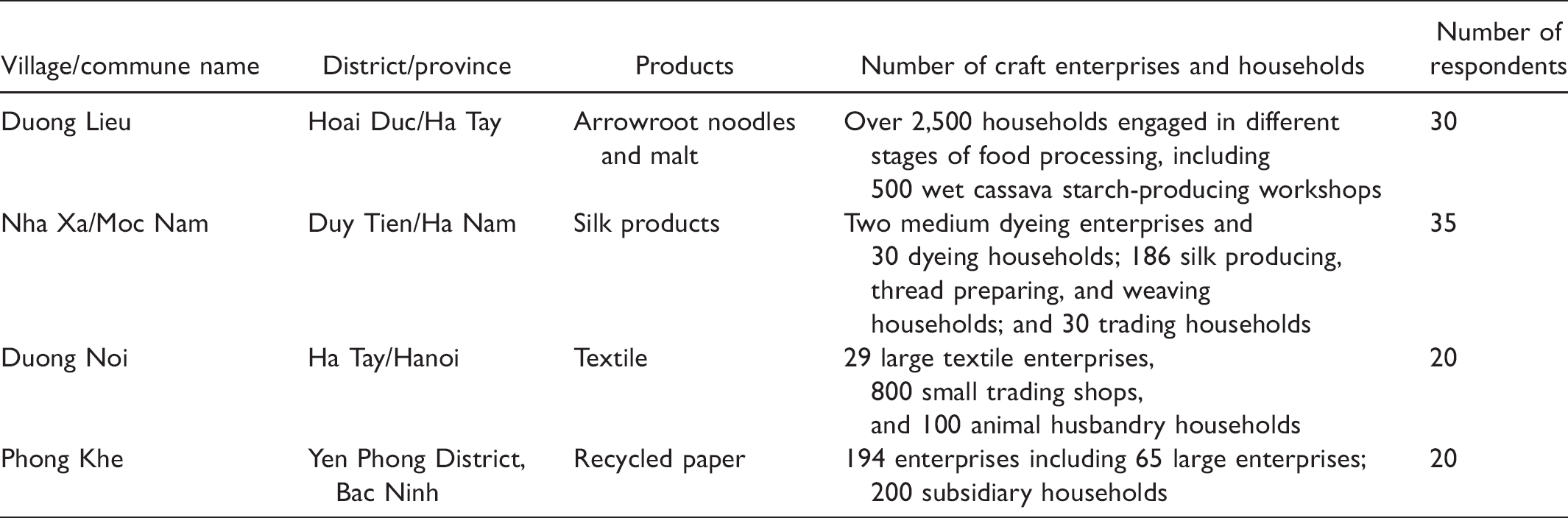
Semistructured interviews were employed as the main approach for data collection that lasted from 2009 to 2012. More than 100 key respondents were recruited for interviews, including local inhabitants and local and national government officials (see Table 1). Apart from the fieldwork data, we collected a large quantity of secondary sources from media, government documents, and national and international scientific reports. Concerning these, we adopted the qualitative content analysis approach to identify themes and patterns that arise out of the texts (Hsieh & Shannon, 2005). The NVivo (version 12) was applied to implement the analysis. We used the software to query the transcribed texts for analysis, by which we also cross-checked the validity of the collected data (Bazeley & Jackson, 2013).
Development of Small Rural Industries in Vietnam
Rural Industrialization Process in Vietnam
Since the early 1990s, Vietnam has witnessed an increase in the share of rural population engaged in nonfarm activities. This could be seen as a response to the “push” of rural growing underemployment due to the problem of small family landholdings, while in some cases, it has been a response to the “pull” of new opportunities in rural economy. Nonfarm self-employment was the highest in the Red River Delta that had the highest population density and the highest number of craft villages (World Bank, 2005). Vietnamese policy makers recognized a variety of benefits of nonfarm activities, especially craft villages and SMEs including generating jobs, stimulating economic growth, and rural development.
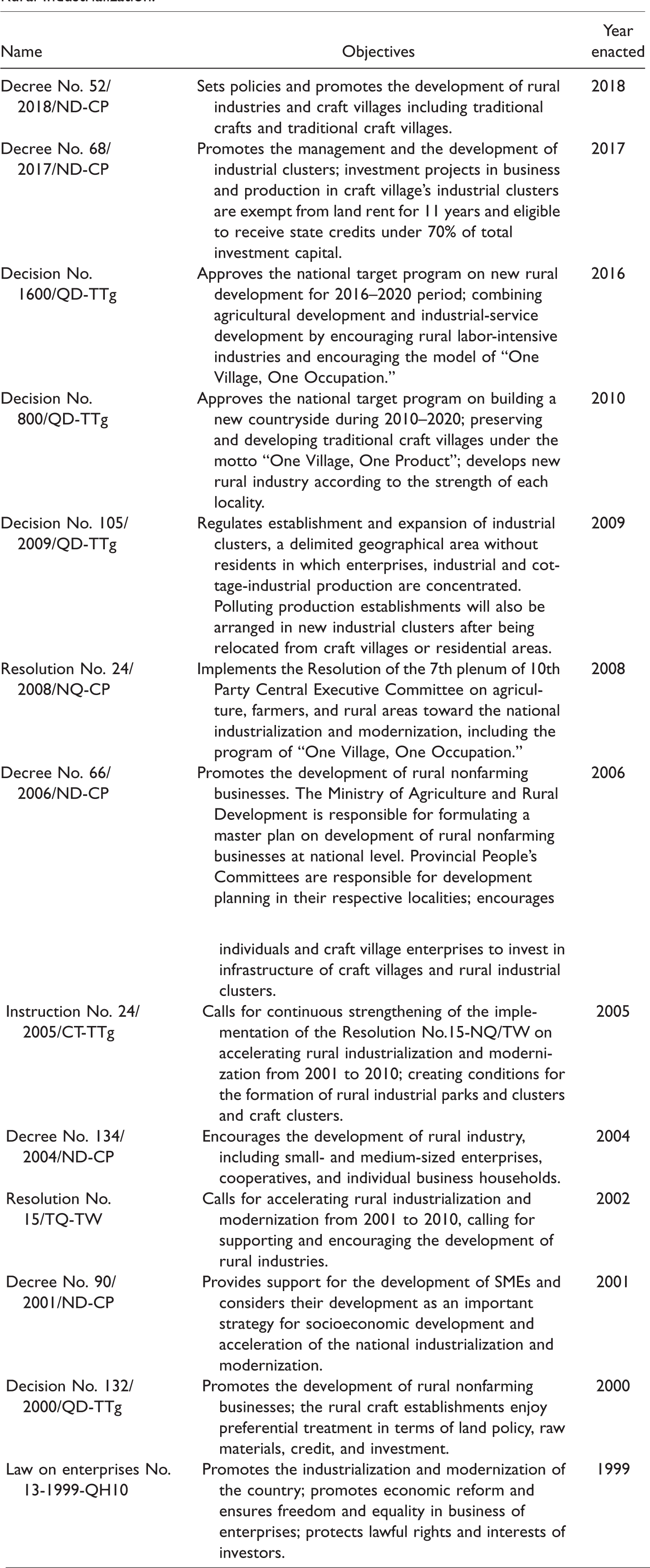
To promote the development of SMEs and facilitate rural industrialization, the Enterprise Law was approved by the National Assembly in 1999. Several policies were subsequently introduced to promote and reinforce the development of SMEs, nonfarming businesses, rural industries, and rural industrialization (Table 2). The Vietnam’s 10-year Socio‐Economic Development Strategy of 2011–2020 continued to emphasize the importance of the private sector toward achieving the country’s vision to become an industrialized nation by 2020. The strategy specifies the government’s role in creating favorable conditions for the private sectors, especially SMEs, which is considered a driving force for economic growth (Benedikter et al., 2013).
Vietnam’s Policies on the Promotion of Small and Medium Enterprises (SMEs) and Rural Industrialization.
Since the government recognized the specific role of SMEs, registered SMEs grew quickly from 63,000 in 2002 to around 270,000 in 2007 (Nguyen et al., 2015) and up to around 500,000 in 2016, accounting for 98% of the total operational businesses and contributing 45% of Vietnam’s gross domestic product (Dung, 2016). According to a survey of SMEs conducted in 2011, about 70% were microenterprises, the majority of which were household enterprises (Table 3), and only about 6% were medium enterprises (Vu & Doan, 2015). According to a World Bank report in 2016, while household enterprises have significantly improved living standards for millions of Vietnamese, they are limited in their potential for productivity growth (Figure 1).
Characteristics of Vietnam’s Household Enterprises.
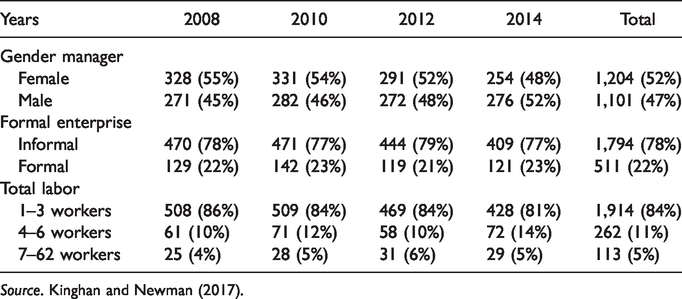
Source. Kinghan and Newman (2017).
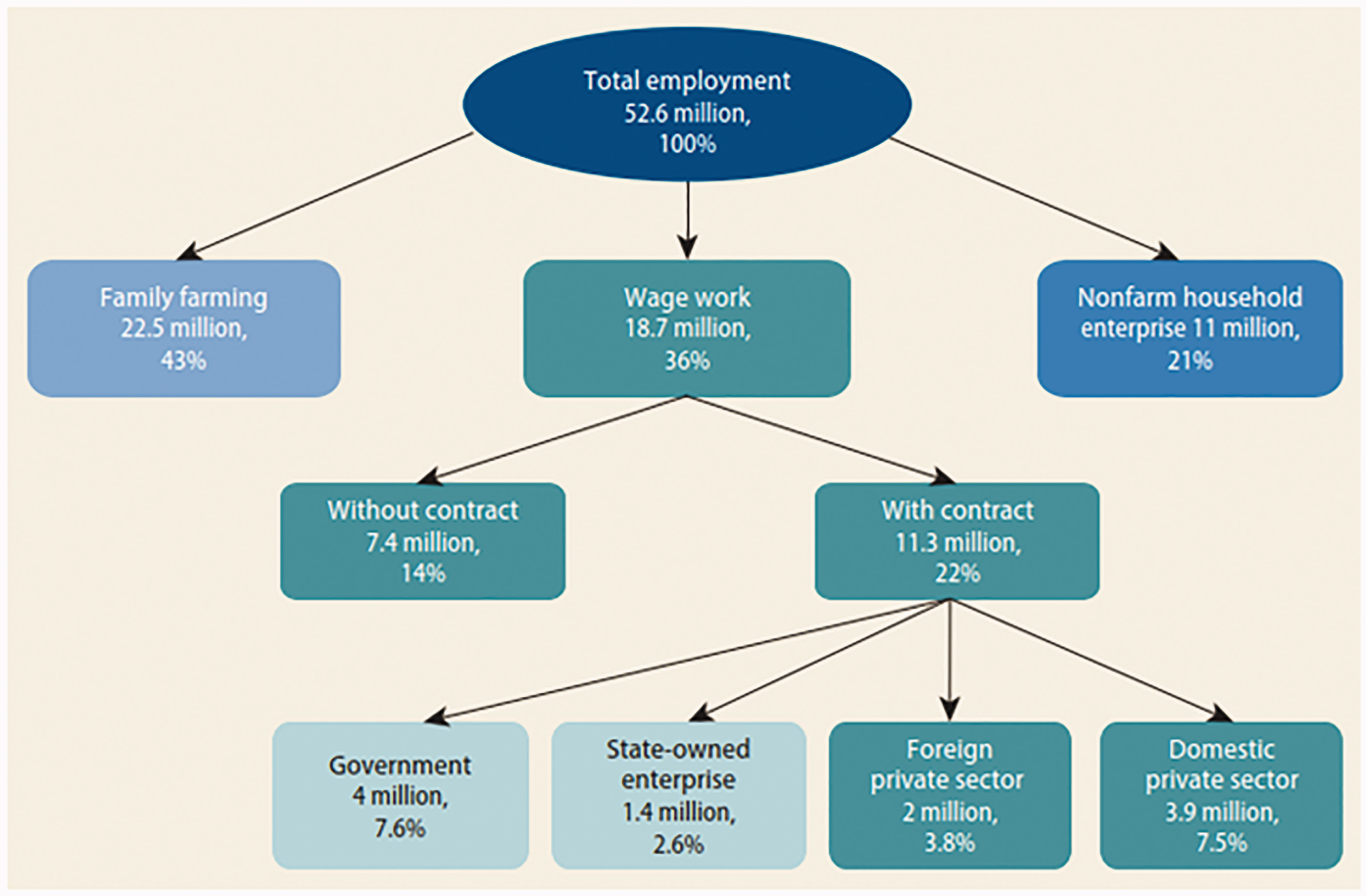
The Distribution of Informal and Formal Employment in Vietnam.
Expansion of Craft Villages in the Red River Delta
The growth of household enterprises and SMEs has occurred in parallel with the growth of the craft industry. In response to new market opportunities, peasants and artisans actively engaged in all kinds of profit-making ventures, producing commodities such as wood carving, making objects of worship, foodstuffs, weaving, pottery, and sewing for the domestic market and export. A household enterprise could function as a small business, employing family members (full- or part-time) and hiring additional labor on a daily or piecework basis (DiGregorio, 2008). Meanwhile, many households continued to engage in farming and increasingly diversified their activities and sources of income. According to a recent study, livelihood diversification contributes to improving rural households’ welfare, and the most beneficial form of diversification was into household enterprise (Bui & Hoang, 2011).
Traditionally, craft production in Vietnam has been largely undertaken by small household units. Now besides family-based workshops (kinh tế hộ gia đình), other types of enterprises, such as small-scale cooperatives (tổ sản xuất), large-scale cooperatives (hợp tác xã), registered private enterprises (doanh nghiệp tư nhân), limited companies (công ty trách nhiệm hữu hạn), and joint-stock companies (công ty cổ phần), have emerged along with the market economy (Mahanty & Dang, 2013). According to a 2008 survey by Ministry of Natural Resources and Environment (MONRE), 72% of production units in craft villages were small households or small-scale family-based workshops, 18% were cooperatives, and 10% were large-scale registered private enterprises (MONRE, 2008).
While classifying craft enterprises is useful for identifying the legal status of craft enterprises (e.g., registered or unregistered), these classifications did not necessarily reflect their true scale of production, which varies considerably from village to village. In Nha Xa and Duong Lieu, production systems were highly complex and interdependent and involved numerous small-scale, largely unregistered enterprises. Most of these enterprises used family labor, sometimes supplemented with a small number of additional workers. There were a few medium enterprises with more than 10 regular workers (unregistered; interviews in Duong Lieu and Nha Xa, March and July 2010).
In contrast, Duong Noi featured 29 medium- to large-scale workshops and the main stages of textile production—weaving, dyeing, printing, and marketing—were all handled within the one enterprise. Each enterprise employs from 30 to 60 regular workers and 60 to 200 seasonal workers. Only four of the workshops were registered as companies and two as joint ventures. A mix of scales and complex production chains was found in Phong Khe, where large-, medium-, and small-scale paper-processing factories were supported by thousands of smaller household businesses (with fewer than three workers) and subcontractors that sorted, weighed, carried wastepaper, printed, packaged, or traded the finished product. Only seven of these enterprises were formally registered. In interviews, owners of medium-sized enterprises expressed a reluctance to register their workshops, although it is regulated that a family-based workshop with more than 10 workers has to be registered. One of them expressed, My enterprise produces 2,000 tons of box and carton paper per year. It has 20 regular workers but still functions as family-based workshop. I do not want to expand more because if we expand more, it is too hard for me to control because of lack of skills and capacity . . I think with my current size, it is easier for me to manage everything. It is more suitable for me to control a family or medium enterprise. (Interview with Mr. Minh, Phong Khe, April 2010)
Market Competitiveness and Livelihood Imperative
Despite difference in type of products, scale of production, and market targets, most craft producers share similar constraints in the form of old technology, the use of family homes as production sites, lack of space, and shortage of capital. Over the past decades, there has been a sharp increase in the number of craft enterprises and craft villages that conducted the same production stage or produced the same product. This led to fierce market competition among producers in a craft village and among craft villages and between Vietnamese crafts with their neighbors. A craft trader who also was a chairman of the Farmer Association in Duong Lieu complained about his diminishing income: We have to face the competition which has become much more and more fierce. Another problem is that the state has not introduced any measure to protect the trademarks of local products. (Interview, April 2010)
Environmental Degradation, Resource Depletion, and Health Effects
Environmental Degradation and Resource Depletion
A craft village has a high population density and is often located near a river system. Almost all craft households and enterprises use their houses and gardens as production sites. The use of old, low-cost, and inefficient technologies is also often a primary feature of craft enterprises. Due to capital constraints, many craft workshops continue to use old machinery that was purchased from state-run factories prior to Đổi Mới. Many enterprises were classified as “semimechanized,” having a low degree of mechanization or still using manual technology that does not meet basic health, safety, and hygiene requirements (Dang et al., 2005; Konstadakopulos, 2008; O’Rourke, 2004).
Our observations confirm that the level of mechanization and modernization varies from one village to another and from one enterprise to another. For instance, in Duong Lieu and Nha Xa, where small family-based workshops are dominant and where livelihoods are still partially dependent on farming, production is less mechanized than that in Phong Khe and Duong Noi, where livelihoods are primarily derived from craft production and are now quite independent of farming.
During the processes of mechanization and production expansion, many traditional craft villages have become intensive industrial sites, of which use of machinery, labor, materials, and energy can be compared with larger industrial zones. For example, Phong Khe craft village had produced traditional paper since the 15th century that was primarily used for calligraphy, painting, and fireworks. In the wake of Đổi Mới and a ban on fireworks production in 1994, craft enterprises in Phong Khe shifted to production of recycled paper products for domestic markets (Phong Khe Commune People’s Committee, 2009). A medium-scale enterprise owner explained that the growth of this production sector was largely a spontaneous response to new market opportunities, with little planning or government support. He noted that since the early 1990s we installed machines–before that we did everything by hand. Then we had to fill up the ponds to build our place and some people didn’t have enough money to rent space in the industrial zone so they installed machines in their house. We were too dynamic – developed too fast without planning. (Male enterprise owner, Phong Khe, July 2009)
It is clear that the rapid growth of craft villages and their production capacity has been associated with severe environmental degradation including depletion of raw materials and natural resources, air, soil, and water pollution and negative health impacts. Almost all craft villages including Phong Khe produced craft products by making use of available local natural resources such as wood, soil, stone, and so forth, most of which could be easily found within communes or in places with easy accessibility. As the number of villages has increased, their extensive exploitation of raw materials together with other industries has caused the depletion of such resources (MONRE, 2008). A survey in 2003 found that more than 30% of the craft villages had “problems” or “serious problems” with raw material sourcing (Ministry of Agriculture and Rural Development and the Japan International Cooperation Agency, 2003). A study in 2010 by Vietnam’s Central Institute for Economic Management shows that one of the challenges for sustainable development of craft villages is a lack and unstable sourcing of raw materials, which causes 60% of the villages to be stagnant in their production and 20% to be in danger of bankruptcy. The growth of craft villages and other industries that have indiscriminately exploited local wood, rare plants, rattan, and bamboo for production or export has led to the substantial depletion of these natural resources. Craft villages now have to rely on the import of rattan, bamboo, and wood materials from abroad (Nghiem, 2010). Our field study in four craft villages also confirms that all of them consider a lack of raw materials as a strong barrier against their future business development (Dang et al., 2013).
Water pollution has become an urgent issue in many craft villages in the Red River Delta. Silk and textile production villages discharged a large amount of wastewater every day. The wastewater contains high levels of pollutants, which are many times beyond Vietnam’s permissible standards (MONRE, 2014). A silk and textile production village could discharge up to 1,000 cubic meters of wastewater per day, mostly resulting from dyeing and bleaching activities. About 30% of dyes and 85% to 90% of chemicals are dissolved into wastewater that is discharged without proper treatment (MONRE, 2008). A resident in Nha Xa complained, Regarding surface water quality, it’s so polluted now that nobody dares to use any pond water for domestic purposes. I’m concerned it will also pollute the groundwater. The water has a very bad smell – when it evaporates into the air, the smell is really sour. Now none of the children ever dare to play or swim in the pond. (Interview with Women’s Association leader, Nha Xa, July 2010)
According to a survey of 52 craft villages conducted by the Ministry of Agricultural and Rural Development released in 2011, 46% were considered as heavily polluted, 27% as medium, and 27% as slightly polluted (MONRE, 2014). According to the MONRE, only 4.1% of craft villages used wastewater treatment systems. In Hanoi alone, 1,350 craft villages discharged up to 156,000 cubic meters of untreated wastewater per day into the environment. The four craft villages of Duong Lieu, Cat Que, Minh Khai, and Son Dong in Hoai Duc district, Hanoi alone released about 8,200 cubic meters of untreated wastewater into the environment each day (Vietnamnet, 2017b).
Although wastewater discharge in each craft village is a relatively small pollution source compared with large-scale industrial zone and urban waste, a high concentration of many craft villages within a particular commune, district, province, or a subbasin can have a huge accumulative impact on local environment and downstream areas. For example, wastewater in Duong Lieu commune through its open drainage system can impact several communes and districts until it reaches the Nhue–Day River subbasin (Interview, Hoai Duc district official, July 2010). Water pollution in Phong Khe has contaminated and made hundreds of hectares of local rice land unsuitable for cultivation and also contributed to “the death” 2 of Ngu Huyen Khue River that irrigates thousands of hectares of agricultural land in five districts: Dong Anh (Hanoi), Tu Son, Yen Phong, Tien Du, and Bac Ninh City (Linh, 2018).
Another problem caused by craft production activities is air pollution, which is more serious in villages making ceramic, lacquer, stone graving, plastic and metal recycling, and building materials. For example, a chairman of Phong Khe commune mentioned the environmental pollution caused by paper recycled enterprises in his village as follows: The village suffers serious pollution associated with smoke, dust and water and solid waste. We have limited production space with an industrial concentrated area of only about 30.5 ha. This space is not enough for enterprises, so people use their homes as production sites. We still keep suffering from air pollution. (Interview, July 2009)
Recycling work, especially with metal and plastic and paper, is considered as the most seriously air polluted (Nguyen et al., 2004), releasing emitted toxic gases such as acid and alkali fumes many times the allowed limits (MONRE, 2008). A recent survey of 65 craft villages by the Hanoi Department of National Resources and Environment found that water pollution in 40 craft villages and air pollution in 12 craft villages has reached serious pollution levels (Trieu & An, 2018). Our data suggested that Phong Khe paper recycling villages burned 383 tons of such waste in 2014, which made it seriously polluted with thick black smoke and bad odors and caused breathing problems (Phu, 2018).
Solid pollution is closely associated with production activities at craft villages, which also adds enormous environmental pressures to environment. Large amounts of solid waste have been discharged indiscriminately to the surroundings or untreated landfill sites nearby. A survey on solid waste in Bac Ninh in 2012 found that craft villages discharged about 75,819 tons of solid waste per year (Khong, 2013). Food-processing and waste-recycling craft villages are considered to release the largest amounts of solid waste. Around 50% of input from food processing was discharged as solid waste (Dang et al., 2013; MONRE, 2008). For example, in Duong Lieu, more than 2,000 households are engaged in starch processing, vermicelli, and confectionery production. It is estimated that 45% of cassava roots and 60% of arrowroots are discharged as waste. The decomposition process of these wastes has released liquid fumes with bad odor that significantly affect the water, soil, and air environment of the village (Dang et al., 2010). Duong Lieu commune chairman said, After producers peel the skin of cassava and arrow roots, they use machines to process them into powder and use water to purify. One day they release more than 500,000 tons of liquid waste. This causes severe water and solid waste pollution. (Interview, July 2009)
Negative Environmental Effects on Public Health
The impacts of craft village pollution pose direct health risks to family members, workers, and nearby residents. According to MONRE (2008), 95% of workers in craft villages are exposed to toxic airborne particles, 85.9% to heat, and 59.6% to toxic chemicals. The life expectancy of craft villagers was reported to be 10 years shorter than the national average and 5 to 10 years shorter than that of non-craft villagers (MONRE, 2008; Trung, 2011). A study by the Korean Environmental Institute and the World Bank in Red River Delta region found that the health status of craft village residents is poor compared with those living in agricultural villages. Craft villagers are exposed to eye diseases, respiratory conditions, and intestinal and skin diseases (Knowledge Economy Index & World Bank, 2003). Similarly, a survey in Ha Nam Province report revealed that incidences of skin, respiratory, and intestinal diseases among residents in craft villages are many times higher than those in non-craft villages. In particular, the rate of respiratory diseases in craft and non-craft villages is 50% and 40%, respectively. For skin diseases, 70% of craft villages suffer from these ailments compared with 20% in non-craft villages (MONRE, 2008; Figure 2).
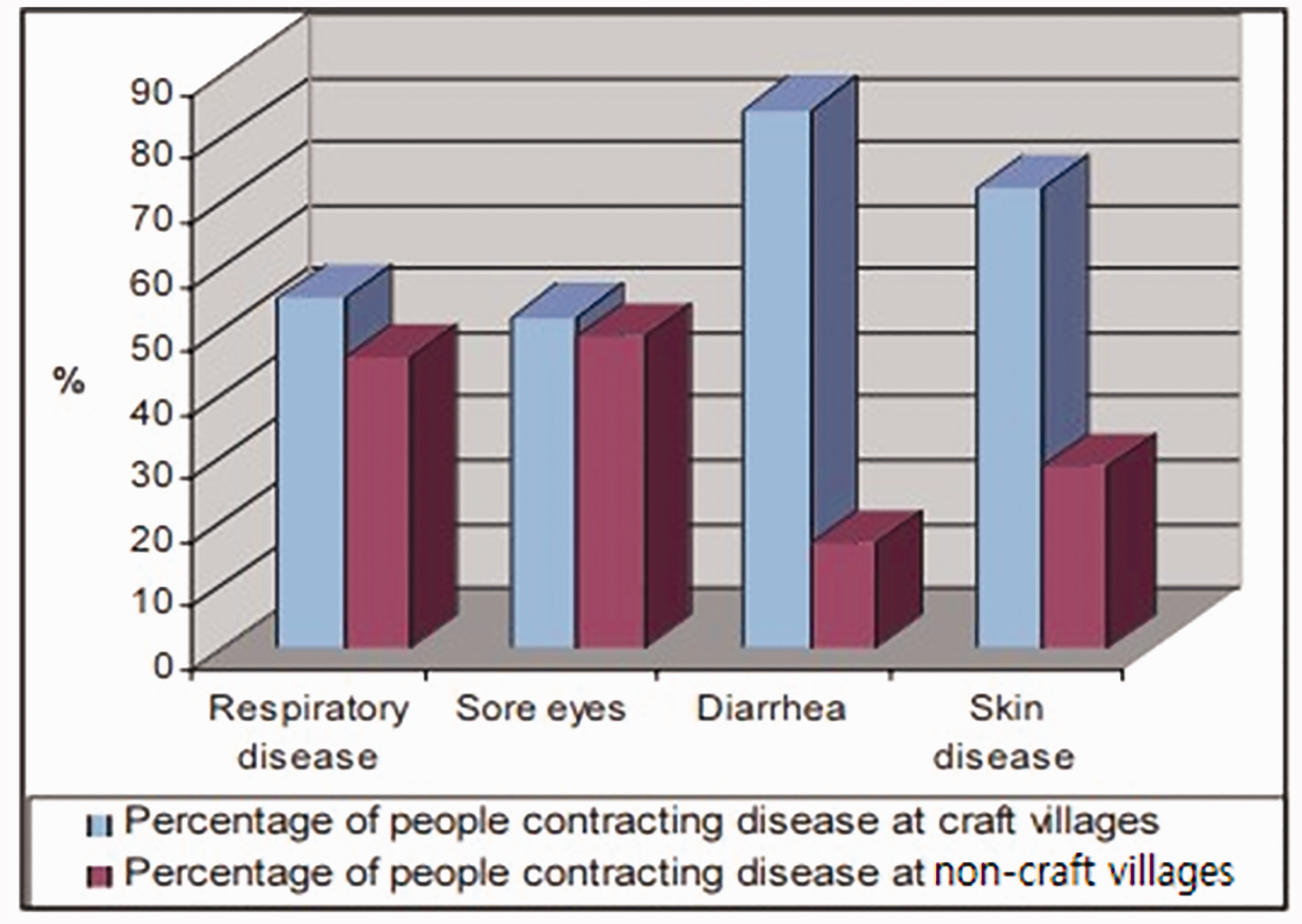
Percentages of People Exposed to Diseases at Craft Villages and Non-Craft Villages.
Certain types of diseases are associated with particular types of craft village. For example, pollution in Nha Xa, a weaving craft village, is associated with high rate of respiratory diseases, lung disease, intestinal diseases, sleep disorders, and skin diseases, especially for those involved in bleaching and dyeing silk. A female weaver living next to a dyeing workshop noted, Women in the village have lung diseases and digestive problems. Around 70% have gynecology-related diseases. If we eat vegetables grown near the edge of the ponds, we can get stomach problems. There are 3 or 4 cases of stomach cancer. (Interview with a female weaver, Nha Xa, July 2010)
Craft villages affect children’s health in different ways. For example, all children living in Dong Mai lead-acid battery recycling craft village in Hung Yen province had high blood lead level in which 40% had blood lead level C45 lg/dL (Tran & Salhofer, 2016). A pilot study of 20 children in Nghia Lo village, a smelting craft village 25 km southeast of Hanoi, found that children living in a battery recycling community had elevated levels of blood lead and elevated levels of lead, mercury, and manganese in toenail samples (Sanders et al., 2014). Children are also affected by air and noise pollution. A study conducted in a weaving village, with 142 households and 131 children aged 6 to 17 years, found that dust and loud noise have negatively affected children’s health. Children living in families that use their homes as weaving workshops are exposed to sore throat (22.9%), nasal asphyxia (19.1%), wheezing (15.5%), prolonged cough (9.9%), and itchy eyes (7.6%; MONRE, 2014).
Environmental Governance Challenges
Vietnamese policy makers introduced several policies and measures to cope with environmental problems caused by operations in craft villages. However, none of these measures seems to have been effective. In craft villages, environmental degradation continues to get worse when the industry has expanded and the level of mechanization increased. The current measures to deal with and mitigate environmental pollution in craft villages can be broadly classified into three primary areas: (a) direct regulations (or command and control), (b) establishing concentrated industrial zoning and moving polluting enterprises away from residential areas, and (c) introducing innovative technology.
Direct Regulation
Although craft industries in Vietnam have expanded rapidly in the wake of Đổi Mới policy, no specific law or regulation to manage craft activities and regulate related pollution existed until the enactment of Vietnam’s Law of Environmental Protection in 1994. Although the law has 55 articles associated with legislations to control air and water pollution and to manage and treat solid wastes, it does not have any specific provision for dealing with pollution in craft villages. The law revised in 2005 emphasized environmental protection in craft villages and assigned responsibility to provincial level. The revision in 2014 created basic foundation for environmental protection, including craft villages. New concepts such as environmental sustainability, green growth, and environmentally friendly products were added.
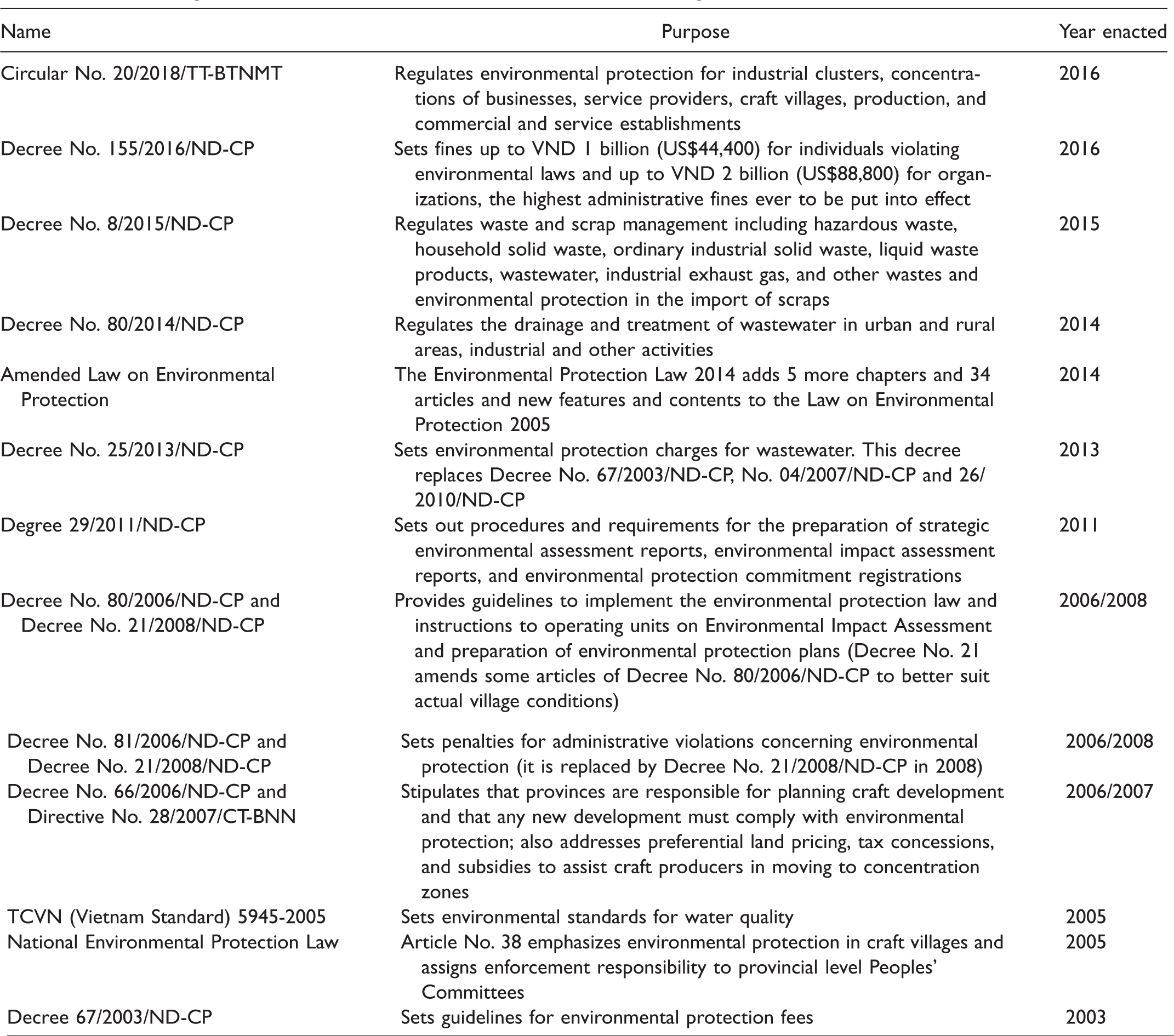
Besides the environmental protection law, there have been several additional regulations to guide the implementation of the environmental protection laws and provide procedures for environmental plans and reports by enterprises (e.g., Decree 80/2006/ND-CP). Others include laws specifying emissions standards (TCVN [Vietnam Standard] 5945-2005) or setting penalties for administrative violations in the domain of environmental protection (e.g., Decree No. 81/2006/ND-CP; Table 4). Decree No. 155/2016/ND-CP sets the highest administrative fines for individuals and organizations that violate the environmental laws. It places fines up to VND 1 billion (US$44,400) for individuals violating environmental laws and up to VND 2 billion (US$88,800) for organizations (International Trade Administration, 2019).
Laws and Regulations Related to Environmental Protection in Craft Villages.
Our data suggested that, although Vietnam has environmental law and issues a large number of regulations, there were no specific guides or strong enforcement of these rules in practice. A medical doctor in Phong Khe commune commented, We have sufficient government laws, rules and awareness campaigns. However, there were specific regulations on waste with no sanctions effectively exercised. The most critical issue now is air pollution. The producers prioritize their livelihoods at the expense of the environment. They are only concerned about it when they get sick. (Interview, May 2010)
Four main reasons that explain challenges in enforcing environmental regulations in craft villages are illustrated in the following.
First, existing legal documents have been created to apply to all types of industries, enterprises, and industrial producers in Vietnam without distinguishing between craft villages and household enterprises and other large-scale industries and corporations (Bui & Hoang, 2011). The practicability of enforcing the existing regulations on craft enterprises is thus very low. As a general rule, the larger the size and the more formal the status of an enterprise, the more likely and easier it is for the environmental protection agencies to identify and enforce their environmental rules and collect environmental fees. Similarly, larger enterprises have greater capacity to treat pollution to meet the national standards.
Second, there is shortage of qualified staff working on the environmental management sector. In 2010, the whole country had about 2,601 staff in environmental management across administrative scales; however, 95% did not have specialized qualifications (Loi, 2011). According to MONRE, the staff is still considered insufficient and weak compared with their roles, responsibilities, and increasing loads of tasks (Chi, 2017a, 2017b). Moreover, the national budget for environmental protection is limited, accounting only 1% of total budget spending, meeting only 55% of the demand in 2017 (Chi, 2017a, 2017b).
Third, given the insufficiency of resources and staff and competing tasks and priorities, the responsibilities for environmental protection in craft villages are shifted to local authorities, especially at the commune level. This led to a conflict of interests because the local government has dual responsibilities at the same time. On one hand, they are responsible for promoting and supporting craft village developments in response to the central government’s rural industrialization policies. On the other hand, they are responsible for monitoring and implementing environmental protection in those villages. One commune environmental official in Duong Lieu revealed, One of the major causes of pollution is the weak sanctions and the tolerant attitude of environmental officials to violating households. Besides, it is also very difficult to control the production due to the large number of households operating in different time. Sometimes when the officers visit their house, their production has completed or has been postponed, which causes a lot of difficulties for us. (Interview, April 2010)
Concentrated Industrial Zoning
The environmental protection law stipulates that the state should encourage the development of industrial zones and clusters to implement environmental protection in craft villages. By 2011, about 35 out of 63 provinces and cities had initiated plans and guidance for environmental protection in general and in craft villages in particular. However, not many industrial clusters for these villages have been established yet due to limited financial and land resources, as well as weak coordination between different levels of local authorities (Anh, 2011; Bui & Hoang, 2011). In provinces and districts with a high population density, a high rate of urbanization and industrialization makes it hard to acquire land to establish such clusters (Anh, 2011).
Under the national rapid urbanization and industrialization processes, land has become a scarce, valuable resource and a source of disputes. Vietnam’s land tenure system is distinguished by state ownership with allocation of limited rights to land users through “red book certificates” that bestow rights for specific periods of time, for instance, 20 years for annual crops and 50 years for perennials (Dang, 2010; Kerkvliet, 2006). Vietnam’s legislation also allowed local authorities to use areas of farmland to establish industrial clusters/zones and gave craft enterprises, especially polluting ones, priority to acquire the land at minimum prices. However, in practice, most communes where craft villages are situated have very little land available for the establishment of such industrial clusters. Moreover, industrial clusters have thus become a source of corruption and disputes among craft producers and between commune authorities and local residents. A resident in Duong Lieu described the problems in his commune as follows: Ten years ago, the commune authority decided to establish an industrial zone so that they could move some enterprises from residential areas to industrial zones. The authority had acquired 13 hectares of farmland from the people to build an industrial zone. However, due to the lack of genuine interest and corruption of the local authority, the zone has not been established yet. It was said that the purpose of the industrial zone was to move craft production out of residential areas, but in fact the authority just wanted to use it to sell the land for profit. (Interview, March 2010)
A handful of districts and communes used their own budgets and available land to establish industrial zones for craft villages. However, given a lack of capital, sufficient land, expertise, clear planning, and strategy and corruption, few zones have sufficient drainage and treatment infrastructure. An investigation of 615 industrial clusters in 2016 found that only 5% had wastewater treatment systems (Hoai, 2016). In most craft villages’ industrial clusters, infrastructure is limited to roads and electricity, and there are no standards and rules for environmental protection and water treatment (Dang & Mahanty, 2010). Responsibilities to establish craft villages’ industrial clusters in Bac Ninh Province were assumed by the Commune People’s Committee. However, in practice, they did not provide waste treatment infrastructures but only prepared ground and sold land plots and allocated the responsibility of waste treatment to craft enterprises (Khong, 2013).
Introducing Innovative Technology
Given that shortage of land, capital, low investment, livelihood imperatives, and strong market competition are the main futures of craft enterprises, it is not feasible for craft producers to adopt clean technology because of high running costs and technical inconvenience. Producers revealed in interviews that they were reluctant to upgrade their machines due to the lacks of capital, production space, and knowledge. Most considered livelihood as a top priority in their daily decision making, even though they knew the risks associated with pollution. In Nha Xa as well as in most craft villages in Vietnam, the shortage of capital is a key challenge to the improvement of machinery and technology. Duong Lieu’s commune chairman also claimed that the demand for loans far outstripped supply in terms of available bank loans and SME Credit Guarantee Funding. Lengthy bureaucratic processes and limited funding meant that many craft enterprises could not access government credit schemes (Interview, November 2009).
A villager in Nha Xa explained that a state agency had sponsored a water treatment pilot (costing from US$4,000–45,000) and installed it at one silk weaving and dyeing enterprise in Nha Xa, Ha Nam, in the mid-1990s. The treatment facility initially worked well and delivered water clean enough “to raise fish,” but once the running costs were handed over to the enterprise, the owner could not continue its operation due to high running costs. He reported that these additional costs made his business uncompetitive with other producers in other parts of Vietnam and China (Interviews, July 2010). Duong Lieu also faced the same situation where a common treatment facility was sponsored to treat wastewater for hundreds of food-processing households in 1994. However, after a few years of operation, due to high running cost and overloading, the facility operations had to stop (Interview, March 2010).
The continued environmental degradation in craft villages suggests that the root of the problem is not attributed to the low awareness of craft producers but rather a complex set of interlocked social, cultural, economic, and political forces that influence producers’ daily and long-term decisions and consequently lead to a collective action problem or collective inaction. Our findings indicated that, given resource constraints (including land, capital, and technology), marginal profit, livelihood imperatives, and uneven application and impracticability of the current environmental regulations and laws, producers prefer to accept the health risks, a kind of “self-exploitation,” to secure the livelihood and economic success of their household enterprises and their craft villages. A villager in Nha Xa admitted that this is a gradual suicide for the villagers. . Actually, we have no way around this. We have to choose to keep our livelihood and would rather die gradually. (Interview, July 2010)
Conclusion
Over the past few decades, rural Vietnam has witnessed the rapid growth of SMEs and small rural industries (i.e., craft villages), which serve as a driving force for poverty reduction, job creation, and acceleration of rural development. There are two key factors contributing to the rapid growth of craft villages. First, available market opportunities and the liberalization of private sector, especially when Vietnamese policy makers promoted the development of SMEs and rural industrialization and modernization of rural areas, create favorable macroinstitutional conditions for the development of craft villages. Second, the stagnation of agriculture and strong employment pressure caused by population growth and the limitation of agricultural sector and urban-based industrialization to generate jobs led the majority of rural villagers to seek alternative nonfarm livelihood activities.
While the expansion of craft villages has contributed significantly to economic growth and employment, these benefits have come at severe environmental and social costs. Untreated pollution caused by craft production contaminates the air, water, and soil, with serious implications for the health, livelihoods, and welfare of both craft producers and their neighbors. Despite environmental regulations put in place and a variety of measures employed, the craft village pollution has not been well addressed but seems to get worse over time. The implementation gaps result not only from the particular characteristics of craft enterprises that undermine current environmental governance but also from the unrealistic expectations of the current regulations and competing interests and priorities of local governments.
Small-scale, unregistered, and dispersed nature of craft enterprises; the use of cheap available local resources and outdated machinery; the use of homes as production sites; and the shortage of land, production space, capital, and skilled labor are still key features of craft enterprises. These characteristics enable craft enterprises to grow, survive, and adapt well to the rural conditions, but they are also direct drivers for environmental degradation and pose major challenges for local environmental protection agencies to monitor and control. Less capital investment, strong market competitiveness, and livelihood imperatives make craft enterprises reluctant and unwilling to comply with the formal regulations, to adopt clean technology, and/or to accept any treatment facilities that can incur extra costs.
The transfer of the responsibility of environmental protection in craft villages to local governments has resulted in relaxed enforcement of rules and regulations. The local government has dual responsibilities of promoting the development of craft villages and enforcing environmental protection at the same time. Given a weak capacity and strong ties to local communities, and craft villages being a source of local government’s revenues, the local governments tend to underenforce the top-down regulations to protect their local economic interests. Moreover, the current legal framework has a low level of legitimacy among craft producers, who view the current regulations as unrealistic, while there is a lack of government investment in the necessary infrastructure and technical assistance in wastewater treatment. This lack of support has made them less willing to follow regulations. It is likely that low awareness is not the fundamental driver of pollution; instead, the problem lies in the need for collective action or the absence of coordinated governance arrangements that could motivate local producers into collective behavioral change. This study offers a valued opportunity for future research to explore the relationships between the local people and governments and their implications for environmental governance on the ground.
Footnotes
Acknowledgments
This work was undertaken as part of the first author’s research project “Crafting Sustainability – Addressing Water Pollution in Vietnam’s Craft Villages” (ADRA-0800080) undertaken in Vietnam from 2009 to 2012 and the second author’s research project “Sustainable Governance of the Transboundary Environmental Commons in Southeast Asia” (MOE2016-SSRTG-068). The first author is particularly grateful to the Asia Research Institute, National University of Singapore for providing a fellowship (September to December 2019) that enables the continued study and production of this article. The authors also gratefully acknowledge the Inter-Asia Engagements cluster at the Asia Research Institute and Bruce Lockhart for their valuable comments on the earlier version of the article. Last, the authors would like to thank the respondents for contributing their time and information to the study.
Declaration of Conflicting Interests
The authors declared no potential conflicts of interest regarding the research, authorship and publication of this article.
Funding
The authors received no financial support for the research, authorship, and/or publication of this article.
