




Abstract
The COVID-19 pandemic and the steps governments took to combat it tormented societies across the globe. Accordingly, existential positive psychologists have emphasized the importance of self-transcendence in mitigating the distress and agony caused by prolonged and rigorous health measures. In this cross-cultural study, the correlation between self-transcendence, people’s confidence in government, and democracy was examined. Based on the findings of an online survey (n = 36,304) conducted in 16 societies in Europe, Latin America, Asia, and the Commonwealth of Independent States (CIS), the multi-level analysis established that self-transcendence had a negative relationship with people’s confidence in their own government, especially in less democratic societies. Besides expanding the Schwartz theory of basic values and inspiring theoretical developments for new research, this paper recommends that related institutions obtain community consent before pushing out strict health measures.
Introduction
Self-transcendence is a pro-social value with “the state in which an individual is able to look beyond himself or herself and adopt a larger perspective that includes concern for others” (American Psychological Association, 2022). According to the paradigm of existential positive psychology, which aims to transform suffering into human flourishing, self-transcendence is suggested as a remedy during the pandemic (Wong et al., 2021). It can balance the tragic triad of primitive dark emotions - guilt, suffering, and death (Frankl, 1972; Wong, 2021). As Wong (2021) pointed out, the value of self-transcendence is key to achieving psychological relief from the pandemic.
It is important to understand self-transcendence’s relationship with people’s confidence in different democratic governments since self-transcendence is a pro-social value, and the government is a key administrator in a society. During the pandemic, governments with different levels of democracy actively adopted various health measures to suppress the virus’s spread at the societal level: school and workplace closings, cancelation of public events, travel controls, and restrictions on gatherings. However, it is unknown if citizens consider these health measures as pro-social acts. To put this into perspective, government and governmental health institutions took measures that inflicted mental suffering on their citizens to protect people in society. And yet, people’s confidence in the government has proven to be the main force for compliance with these health measures (Chan et al., 2020; Shanka and Menebo, 2022; Wright et al., 2021). The contribution of self-transcendence to this phenomenon deserves an appraisal with the scrutiny of the democracy level. A negative relationship between self-transcendence and people’s confidence in government would also suggest a damaging effect on people’s subjective wellbeing, which is not ideal for the development of a society.
And by using the online surveys in 16 societies from the global Values in Crisis study (Aschauer et al., 2021), the current research also focuses primarily on the level of democracy. The relationship between democracy and COVID-19 has been scrutinized by many scholars in different disciplines. For example, scholars have evaluated the effectiveness of health measures in different democratic countries and how COVID-19 has affected democratic systems (Bol et al., 2021; Frey et al., 2020; Karabulut et al., 2021; Rapeli and Saikkonen, 2020).
Literature Review
Self-Transcendence
Self-transcendence entails a pro-social value that motivates individuals to experience nature, science, religion, politics, or culture —all matters larger than their own self. It involves emotions such as love and gratitude that connect people in social relationships. And it inspires altruistic and pro-social behaviors. Self-transcendence also is highly related to self-actualization as it surpasses one’s limit toward the greater good (Wong et al., 2021; Worth and Smith, 2021).
Existential positive psychologists advocate the importance of self-transcendence during adversity, such as in the COVID-19 pandemic. Wong et al. (2021) proposed a golden triangle of self-transcendence consisting of spirituality/faith, agency/hope, and communion/love. They suggested that realizing this human value could overcome the harsh reality of life by fostering personal growth and community development. Their empirical investigation of this topic concluded that these three pillars of mental health facilitated individuals in effectively managing the suffering brought about by the pandemic.
The Schwartz theory of basic values has advanced human values, including self-transcendence, with cross-country validation of its universality (Döring et al., 2015; Vecchione et al., 2012). Schwartz developed a circular model partitioned into four higher-order values, 10 basic values, and 19 refined values. The higher-order values include openness to change, self-enhancement, conservation, and self-transcendence. The openness to change dimension includes values related to the pursuit of innovation, creativity, and new experiences. The four basic values in this dimension are 1) self-direction: the pursuit of personal freedom, creativity, and independence; 2) stimulation: the desire for excitement and novelty; 3) hedonism: the pursuit of pleasure and sensuous gratification. Self-enhancement dimension includes values that focus on pursuing self-interest and personal achievement. The two basic values in this dimension are 1) power: the desire for control or dominance over people and resources, and 2) achievement: the pursuit of success, competence, and recognition. The conservation dimension includes values that highlight preserving traditional values and social order. The three basic values in this dimension are 1) conformity: the desire to avoid disapproval and maintain social norms and expectations; 2) tradition: preserving customs and ideas that are seen as important; and 3) security: the desire for safety, stability, and order. Please refer to Sagiv and Schwartz (2022) 's study for further details on basic values and refined values.
Self-transcendence focuses on social outcomes and growth motivation. This higher-order value contains the basic values of 1) benevolence and 2) universalism, which are later refined with more detail. Benevolence means protecting and improving the welfare of one’s in-group members. This value emphasizes dependability and caring for in-group members. People who are strong in benevolence would desire to be reliable, trustworthy, and committed to their in-group’s welfare. Universalism refers to understanding, enduring, and preserving everyone’s and nature’s interests. People more oriented toward universalism would commit to equality, justice, protection for all people, preservation of nature, and tolerance of those different from them. Humility, a refined value, is added later with its association with self-transcendence. People with high humility would recognize their own unimportance in the universe’s grand scheme (Grigoryan and Schwartz, 2021; Sagiv et al., 2017; Sagiv and Schwartz, 2022).
Human values, including self-transcendence, are described as desirable and trans-situational goals that guide people’s lives and influence aspects of attitudes, emotions, and behavior (Lins De Holanda Coelho et al., 2022; Schwartz, 2007; Seddig and Davidov, 2018). Self-transcendence, with basic values of universalism and benevolence, expresses the motivation to care for others. It positively predicts pro-social preferences, choices, and observable actions, which benefit others beyond oneself. Universalism is seen to support a diversity of ideas and customs. In line with conformity and tradition, benevolence emphasizes dedication to their in-group members, promoting in-group’s harmony (Sagiv and Roccas, 2021). Consistent with the proposition of existential positive psychology, Bilsky and Schwartz (1994) identified self-transcendence as a value that fosters healthy growth and is positively linked to subjective wellbeing. It is recommended that self-transcendence is nurtured to overcome contextual barriers (Sagiv and Schwartz, 2022).
Scholars have studied the predictive function of personal value on attitude and behavior for decades. Grigoryan and Schwartz (2021) examined the dimension of self-transcendence and self-enhancement towards the attitude toward cultural diversity in Russia. Lou and Li (2022) reviewed the mediating role of self-enhancement between power distance/individualism-collectivism and pro-environmental attitude. Boer and Fischer (2013) conducted a meta-analysis to elucidate the relationship of all Schwartz’s values towards five social attitudes under the ecological, economic, and cultural contexts. They found that people’s openness to change value tended to lessen in times of disease contagion, and they reasoned that the disease stress collectively brings people to live conservative lifestyles. To further advance the understanding of personal value, the current study explores the predicting power of self-transcendence over the attitude toward government by measuring people’s confidence towards the institutions in the pandemic context.
People’s Confidence in Their Government
The present scholarship has aided in identifying potential sources of political confidence, and among them, government performance is a crucial factor. As Yamagishi and Yamagishi (1994, p. 131) explicated, confidence is the “expectation of competence.” It is about our expectation regarding individuals involved in our social relationships or systems to demonstrate technically competent performance in their respective roles (Barber, 1983). Jennings et al. (1998) and Miller and Listhaug (1990) also upheld the importance of government performance and citizens’ perceptions in shaping confidence in government. Jennings et al. (1998) proposed that political confidence was determined by performance, the linkage between the citizenry and the government, and probity. Performance concerns how well a government performs its functions, while government-citizenry linkage and probity affect citizens’ perceptions of governments' representativeness and accountability. Miller and Listhaug (1990) believed that confidence in governments is jointly defined by political trust and political efficacy. Political trust hinges on the government’s perceived willingness and capabilities to respond to citizens’ needs; political efficacy represents individuals’ perceptions and judgments of citizens’ competence in participating in political acts.
Other scholars have attributed people’s confidence in the government to an affective perspective. These emotions stem from the cultural impact of internalized norms or sentiments surrounding politicians or political institutions (Bianco and Bianco, 2010; Zhai, 2018). Social-psychological factors, including optimism, a sense of cooperation, and trust in others, might facilitate people’s confidence in political affairs and even politicians in general (Rosenberg, 1956). This viewpoint is contentious; opponents held that social-trusting people were not necessarily political-trusting and vice versa (Newton and Norris, 2000)
The findings about the association between self-transcendence and trust in institutions are inconclusive with studies. Moosa et al. (2021) found no correlation between self-transcendence and confidence in the government in Maldives during pandemic times. Morselli et al. (2012) concluded that only benevolence, not universalism, has a positive relationship with trust in institutions based on the non-student sample in World Values Survey. On the other hand, based on the student sample in Switzerland, Devos et al. (2002) deduced that universalism is negatively related to trust in institutions while there is no correlation with benevolence.
Cultural factors have shed new light on the possible roots of political trust. In the Western world, cultural practices of individualism, self-interest maximization, conflict acceptance, and procedural justice have rendered political support contingent on governments' commitment to citizens' expectations. In contrast, conflict avoidance, substantive justice, and beliefs in collective interests and social hierarchies have made people in East Asia much friendlier to governments (Shi, 2014). Though intangible, cultural factors could be powerful explanatory factors and mediate people’s rational judgments on governments (Shi, 2001; Zhai, 2018).
During the pandemic, even though emotional and cultural factors might influence the level of people’s confidence in the government, with thousands of deaths from and confirmed cases of COVID-19, the government’s performance, especially regarding health measures, was deemed less than favorable by their populations. Therefore, our research hypothesizes a negative relationship between self-transcendence and people’s confidence in government (Hypothesis 1).
Democracy
Our study employs the level of democracy as the concept of cultural moderation in different social and political settings to examine the relationship between self-transcendence and people’s confidence in their governments. Culture has been suggested as a moderator of the relationship between human values and their related outcomes, for example, attitudes, emotions, and behavior. Sagiv and Roccas (2021) proposed that cultural meaning might influence the likelihood of recognizing a behavior as relevant in expressing a human value. Using religiousness as a case in point, they reasoned that different cultural groups with different social structures and institutions might have different interpretations of the same matter.
Our study uses democratic forms of government as the moderator of the relationship between self-transcendence and confidence in government, recognizing that societies with different levels of democracy used different methods to contain the spread of COVID-19. Scholars and media have compared and discussed the effectiveness of democratic and authoritarian governments in managing the COVID-19 pandemic (Frey et al., 2020; Karabulut et al., 2021; The Economist Intelligence Unit, 2021). In authoritarianism, centralized power allowed decisive action, but the practice of suppressing information could ignore potential problems. On the other hand, in democracies, transparency was beneficial in spotting threats, but the decentralization of power could lead to a slow and potentially ineffective response (Stasavage, 2020). Although the effectiveness of handling the pandemic has not yet been decided, Frey et al. (2020) compared data across 111 countries regarding government effectiveness in managing people’s travel and movement for COVID-19 management. The findings suggested that democratic countries introduced fewer lockdown measures but were more effective in reducing such mobility than authoritarian countries.
In his Gettysburg Address, Lincoln (1863) said that democracy is about the “government of the people, by the people, for the people.” It generally refers to a system of government in which all citizens are involved in making decisions about the country’s affairs. For example, citizens are entitled to elect representatives of a legislature. All citizens enjoy equal political rights with no distinctions of class or rank. Views of all parties are tolerated and respected for deliberation. Fair and equal treatment is a fundamental value (Oxford English Dictionary, n. d.). The notion of democracy has evolved, and different countries have different levels of democracy. The Economist Intelligence Unit (2021) uses a scoring system to categorize regions into full democracies, flawed democracies, hybrid regimes, and authoritarian regimes.
Studies connecting people’s confidence in the government with democracy can be traced back to the 1970s when there was a dramatic plunge in support for the U.S. government from high points during the early 1960s (Brooks & Cheng, 2001; Miller & Listhaug, 1990; Putnam, 2015). One stream of academic debate reasoned that distrust in democracy was the core of the issue. Putnam (2000) probed the issue from the civil society perspective and concluded that the broad and continuing erosion of civic engagement from the 1970s was a primary reason for the democratic disarray in America. Tolbert and Mossberger (2006) asserted that the decline in people’s confidence in the government was due to the government’s declining transparency and effectiveness, accessibility, and responsiveness. Along with the electoral process, the reasonings are key attributes of democracy: the functioning of government and political participation.
Nevertheless, Thomassen (1998) clarified that the crumbling confidence in government is due to its functioning of democracy and is unrelated to the support for democracy as a form of government. In fact, according to the Eurobarometer survey from 1976 to 1991, most European citizens supported the idea of democracy (Fuchs et al., 1998). As Fuchs et al. (1998) contended, critics of the democratic system did not advocate for a complete replacement of the current political system with a different one. Instead, they sought to enhance it through direct forms of democracy, such as increasing political participation. With that said, the fundamental concept of democracy is positively associated with confidence in government. Governments that uphold high levels of democracy foster a political culture where citizens can freely express their views and engage in the political process, which enhances the legitimacy of the regime by reflecting and representing one’s interest in the decision-making area, ultimately increasing people’s confidence in the government (Miller & Listhaug, 1990). Admittedly, during the COVID-19 era, democracies have acted slowly during the pandemic due to the concern for civil rights (Juan, 2022), the level of public support for the government can be influenced by various aspects of a democratic system, such as transparency, accountability, and responsiveness (Liu et al., 2022).
Vecchione et al. (2015) and Rudnev (2021) concluded that variations in the systems across different countries influenced the relationship between human values and attitudes/outcomes toward government. We hypothesize that the level of democracy would significantly moderate the relationship between self-transcendence and people’s confidence in government. As we expect self-transcendence and trust in government to be negatively correlated, we hypothesize that a high level of democracy would attenuate the negativity and a low level of democracy would intensify it (Hypothesis 2).
Method
The data came from the global Values in Crisis study (Aschauer et al., 2021), which measured individuals' values and attitudes to understand social-political tensions during the pandemic. While Fischer and Karl (2023) also used this dataset to review personality across societies, the current study is the pioneer in using it to analyze self-transcendence with confidence in government and the level of democracy.
The study employed an online survey with the collaboration of researchers from various countries. The core teams in Germany and the United Kingdom developed a standardized questionnaire for approximately 20 minutes. They also invited researchers from different countries across the globe to participate in the project by gathering data in their respective nations. Researchers in the respective countries secured funding and translated/adapted the English questionnaire. During the process, they modified to include additional items or adjusted questions to ensure comparability with country-specific surveys. Quota sampling took place from May 2020 to January 2021. For example, in Hong Kong, the Values in Crisis study used stratified quota sampling based on the distribution of gender, age, and residence, as reported in the city’s 2016 census. After the data collection, the archiving team from the University of Salzburg and the Austrian Social Science Data Archive (AUSSDA) merged and harmonized the data for the research community’s use.
Our study aggregated 36,304 individual responses from 16 societies included in the Values in Crisis survey: 1 seven European nations (Germany, Austria, UK, Sweden, Poland, Italy, and Greece), three from Latin America (Brazil, Colombia, and Chile), three from Asia (Japan, Hong Kong, South Korea), and three from the Commonwealth of Independent States (CIS) namely Kazakhstan, Georgia, and Russia. See Appendix A1 for each society’s sample size and data collection period.
Measurement
Self-transcendence was measured with the basic values of benevolence and universalism in PVQ-21 (Schwartz, 2003), whose cross-country comparison validity was confirmed by Eldad (2008). With five questions on a five-point Likert scale where 1 = “very like me” and 5 = “not at all like me,” respondents read descriptions of people and rated how similar that person was to themselves. For benevolence, the descriptions included: (1) "It’s very important to her/him to help the people around her/him. She/he wants to care for their wellbeing”, and (2) “It is important to her/him to be loyal to her/his friends. She/he wants to devote herself/himself to people close to her/him”. For universalism, the descriptions included (1) “it is important to her/him to listen to people who are different from her/him. Even when she/he disagrees with them, she/he still wants to understand them”, (2) “she/he strongly believes that people should care for nature. Looking after the environment is important to her/him”, and (3) “she/he thinks it is important that every person in the world should be treated equally. She/he believes everyone should have equal opportunities in life”. Items were mean-centered with other Schwartz’s basic values and averaged for the value of self-transcendence. With 36,304 individual responses and five items, the Cronbach alpha reliability was .82.
People’s confidence in government was assessed by asking respondents to indicate their degree of confidence with their own society’s (1) “government,” (2) “health sectors,” and (3) “institutions as a whole.” A four-point scale was utilized where 1 was “a great deal,” and 4 was “none at all.” The scales were later reverse-coded for analysis. A mean score representing people’s confidence in the government was calculated by combining the items. The Cronbach alpha reliability was .79.
The level of democracy was determined by The Economist Intelligence Unit (2021)'s democracy index. Although the index is calculated by the combination of a dichotomous and a three-point scoring system, it is widely used by scholars for cross-national comparisons (Adams and Downey, 2014; Dempere, 2021; Dubrow et al., 2008; Vecchione et al., 2015). The index score is based on five elements: 1) “electoral process and pluralism,” 2) “functioning of government,” 3) “political participation,” 4) “political culture,” and 5) “civil liberties.” Based on the scoring, the report categorizes 167 countries with four regimes: “full democracy,” “flawed democracy,” “hybrid regime,” and “authoritarian regime” (The Economist Intelligence Unit, 2021, p. 5).
Socio-demographic variables were treated as control variables: age, gender, education, and income. Education was harmonized with the International Standard Classification of Education (ISCED) by UNESCO. Income was grouped by specific quartiles and validated by respective researcher teams in different societies. Gender was a dummy variable with 1 = male.
Statistical Analyses
Cross-cultural measurement invariance was examined with AMOS’s multiple-group confirmatory factor analysis (Byrne, 2010). This examination verified that the same constructs of self-transcendence and people’s confidence in government were evaluated across societies. Referring to Rudnev (2021), a common confirmatory factor analysis by individual societies was also performed for self-transcendence and people’s confidence in government.
Multi-level models with restricted maximum likelihood estimators were conducted. The democracy index at the societal level explains the variability. Besides a null model, this study was examined with a fixed effect model and a model with the interaction of democracy. For the democracy interaction model, we used a random slope model of self-transcendence (ST). Below are the equations.
Fixed effect model

A model with the interaction of democracy
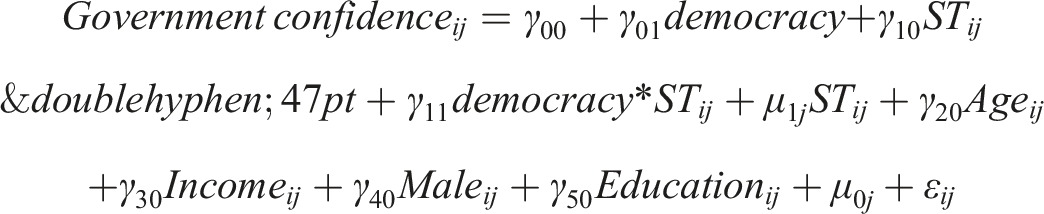
Hierarchical linear regression models by each society were also conducted in SPSS. The models included people’s confidence in government as the dependent variable, self-transcendence as the independent variable, and also socio-demographics as control variables (income, age, education, and gender).
Results
Descriptive Statistics
The means of self-transcendence and people’s confidence in government varied across societies. The means of centered value for self-transcendence ranged from .082 in South Korea to .81 in Sweden. They were all in a normal distribution, with kurtosis being −.3 to 2.5 and skewness being −.19 to .55. The means of people’s confidence in government varied from 1.98 (SD = .72) in Hong Kong to 3.03 (SD = .56) in Sweden with normal distribution. Kurtosis differed from −.82 to .62, and acceptable skewness from −.54 to .57.
Confirmatory Factor Analysis
Various confirmatory factor analyses (CFA) confirmed the construct validity. With multiple group CFA (MGCFA), self-transcendence was modestly well fitted with the metric invariance model across societies (CFI: .97, RMSEA: .015, X2 (149) = 1414.99, Δ CFI = .01). By constraining the parameters of government and health sector, people’s confidence in government was considered marginally fitting across societies in metric invariance model (CFI: .96, RMSEA: .032, X2 (33) = 1,258.69, Δ CFI = .013). The MGCFA of both self-transcendence and people’s confidence in government also demonstrated a marginal fit to the data in the metric invariance model (CFI = .96, RMSEA = .014, X2 (394) = 3598.34, Δ CFI = .018). Additionally, all societies demonstrated good fits to the measurement model of both self-transcendence and people’s confidence in government (see Appendix A2).
Multi-Level Model
The Results of the Multi-Level Modeling. Dependent Variable: People’s Confidence in government.
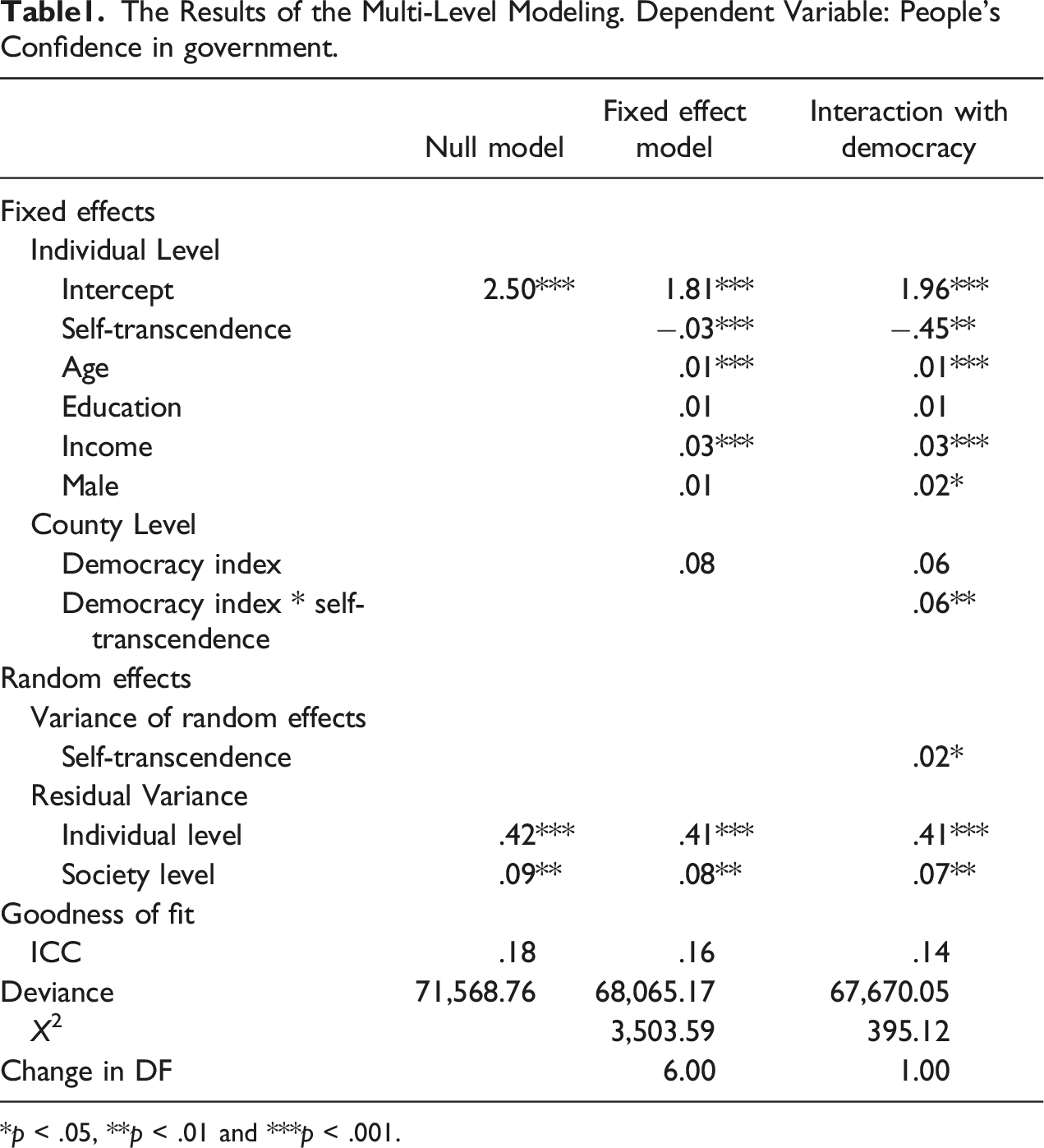
*p < .05, **p < .01 and ***p < .001.
From the model of fixed effect, self-transcendence was a significant negative predictor of people’s confidence in government (b = −.029, s. e. = .0065, p < .001), indicating that within their society, people scoring higher on self-transcendence were predicted to have lower confidence in government. On the other hand, age and income were significant positive predictors of confidence in government (age: b = .012, s. e. = .0012, p < .001, income: b = .029, s. e. = .0036, p < .001). Higher-income or older people tended to have higher confidence in the government.
In the model with the interaction of democracy, by setting self-transcendence into a random slope, it was validated that this human value was negatively related to people’s confidence in government at the societal level. The interaction term of self-transcendence at the individual level and democracy at the societal level was statistically significant (γ11 = .057, p < .01).
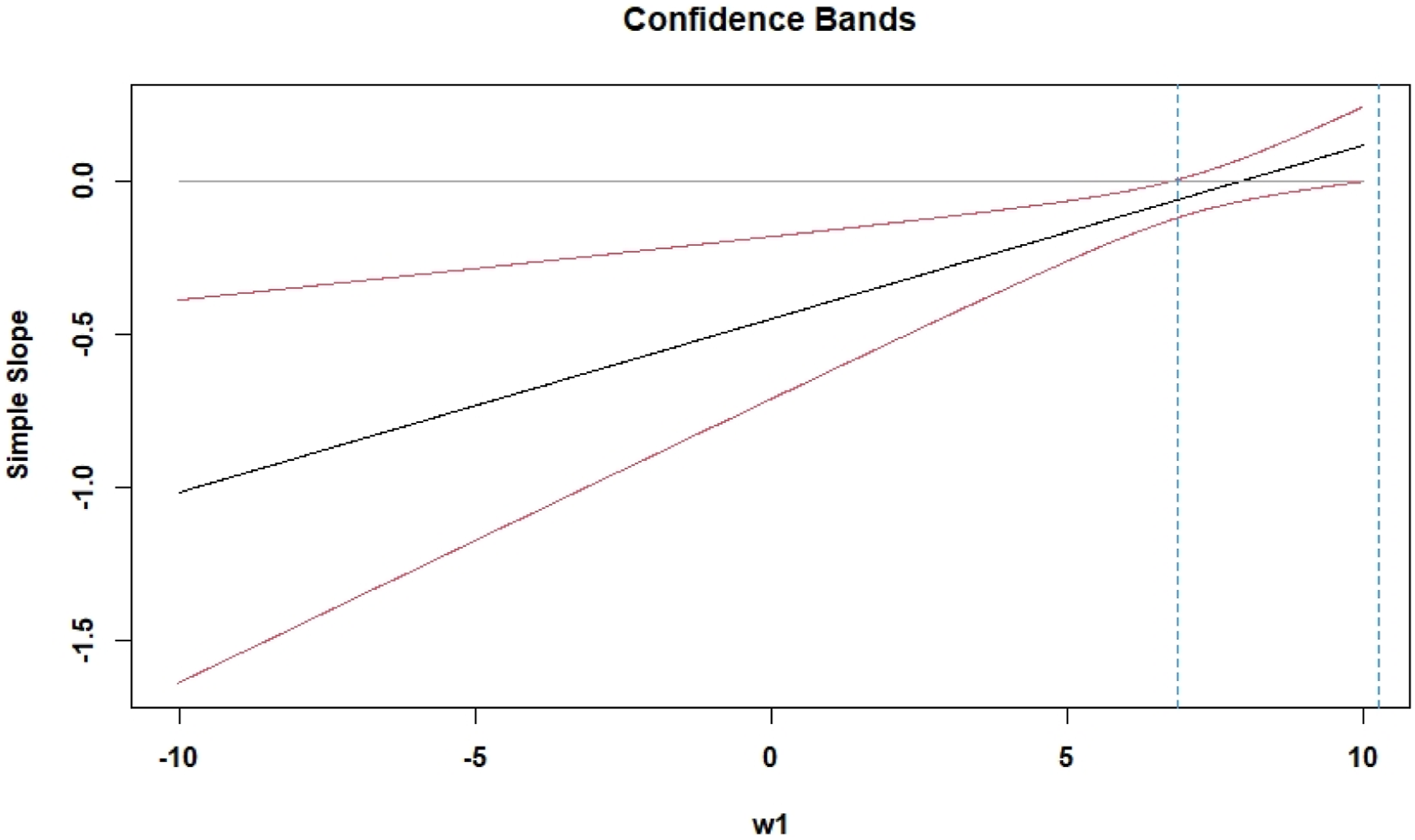
In terms of moderation, low levels of democracy (W) were confirmed to enhance the negative effect of self-transcendence on people’s confidence in government. Figure 1 displays the unstandardized simple slopes with the multi-modeling approach devised by Preacher et al. (2006). With the pick-a-point analysis, simple slopes for the relationship between self-transcendence (x1) and people’s confidence in government (Y) at low (-1SD), medium (mean), and high (+1SD) values on the societal level of democracy (W) were plotted. At -1SD on W, self-transcendence was negative and significant (b = . −.15, p < .001). At the mean of W, the human value was negative but not significant (b = −.051, n. s.). At +1SD on W, the slope was positive but not significant (b = .05, n. s.). With that said, at a low level of democracy, it was significant that the higher the value of self-transcendence, the lower the people’s confidence in government. Figure 2 features the plot of the confidence bands referenced with the Johnson–Neyman (J-N) technique (Johnson and Fay, 1950). As the confidence intervals did not encompass simple slopes of zero for democracy values lower than 6.87, it was determined that the simple slopes of people’s confidence in government regressed on self-transcendence significantly differed from zero for democracy values beneath this threshold. Mean plot illustrating the interaction of self-transcendence (x1) and democracy (W) with people’s confidence in government (Y). More negative slopes correspond to lower levels of democracy (-1SD). W1(1)=-1SD, W1(2)=Mean, W1(3)=+1SD Plot illustrating confidence bands for observed sample values of democracy (w1).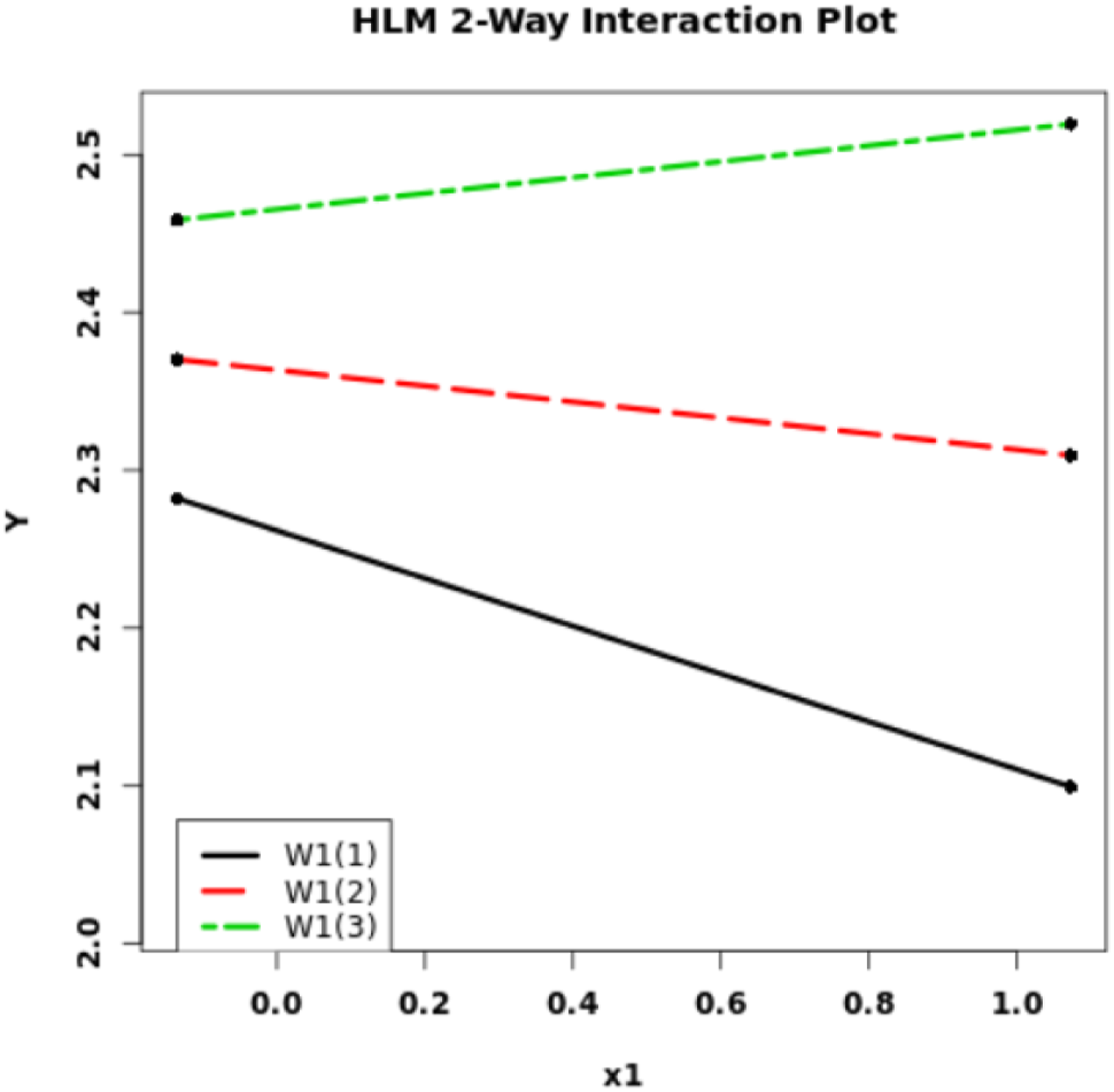
Hierarchical Regression Model
By performing separate analyses of each society to explore the generalizability of findings (see Appendix B), self-transcendence was significantly correlated with confidence in the government in most societies, except Georgia, Japan, Poland, Colombia, Italy, and Russia. The standardized coefficient ranged from −.25 to .27. Among the significant relationships, self-transcendence was positively related in four societies: Austria, Germany, South Korea, and Sweden, and was negatively related with the other six societies: Brazil, Greece, Kazakhstan, the United Kingdom, Hong Kong, and Chile. This human value explained the most variance in Sweden, Greece, and Kazakhstan, with 4% or more of accounted variance.
Discussion
The findings from the multi-level analysis of the fixed effect model and model with the interaction of democracy conclude a negative relationship between self-transcendence and people’s confidence in government. This finding supports hypothesis 1 and is in line with the suggestion that government performance, including the imposed health measures, for example, school lockdowns and social distancing, was harmful from the perspective of self-transcendence, which is about caring for others.
This study also sheds light on the moderator role of democracy, with hypothesis 2 partially supported. Only societies with a low level of democracy further fostered a negative relationship between self-transcendence and people’s confidence in government. Namely, in less democratic societies, people with strong self-transcendence have much lower confidence in government than those in more democratic societies. Interestingly, the presence of democratic government systems does not improve the inverse relationship between self-transcendence and confidence in government. This could be explained by declining civic engagement and distrust in democracy. Democratic systems are designed to serve their people, but their actual performance might fail to meet expectations. Another reason may be the failure of governments to consult with their citizens before imposing and enforcing health measures during the pandemic. While the time urgency is well understood, implementing mandates without community consent does not enhance the link between pro-social values and attitudes toward government.
It is worth noting that Austria, Germany, South Korea, and Sweden, societies with positive relationships on self-transcendence and confidence in government, are full democracies, according to the democracy index. Societies with no significant relationship mostly fall under a flawed democracy or hybrid regime, for example, Georgia, Poland, Colombia, and Italy. Although the overall findings do not conclude that the higher the level of democracy, the stronger the power in alleviating the negative relationship between self-transcendence and confidence in government, the hierarchical regression model indirectly indicates the power of full democracy to promote a positive relationship between self-transcendence and confidence in government.
In terms of contribution, the findings extend the Schwartz theory of basic values by expanding sparse knowledge on the relations between self-transcendence and people’s confidence in the government with democracy level during a pandemic. Sortheix and Schwartz (2017) previously examined the relationship of Schwartz’s value with subjective wellbeing in the context of cultural egalitarianism and the level of human development. In their analysis of 32 countries and the application of PVQ-21, self-transcendence was positively related to subjective wellbeing, measured by life satisfaction versus depression. The positive relationship was weaker in less egalitarian countries, as such environments encouraged competition to foster success. Having said that, their findings established the validity of linking self-transcendence and subjective wellbeing in different countries. Our research advances cross-cultural knowledge by connecting the effect of government performance with human value, which is the remedy for subjective wellbeing during the pandemic.
The insignificant moderating effect of democracy in democratic societies serves as indirect evidence for the argument that democratic systems were crumbling, as proposed by Putnam (2000) and supported by the findings of Edelman (2022) trust barometer report 2022. Edelman (2022) revealed that democratic countries, such as U.K., U.S., and Germany, had a much lower score than the non-democratic countries in the trust index. In an ideal scenario, a democratic system should be able to ease the negative relationship between self-transcendence and confidence in government. Nevertheless, the current findings might suggest that democratic governments have failed to maintain a transparent, effective, accessible, and responsive imposition of COVID-19 health measures (Tolbert and Mossberger, 2006). Unfortunately, the beauty of democracy could not help democratic institutions alleviate the negative relationship between self-transcendence and confidence in government, which, in turn, would have helped the implementation of health measures.
Given the current research revealing a negative relationship between self-transcendence and confidence in government, it is important to acknowledge the paradoxical relationship between pro-social value and government administration. As a pro-social value, self-transcendence did not agree with the government’s performance. Government actions are perceived as not benefiting society. Since confidence in government derives from a government’s performance and people’s perception of its capability, the administrations should re-evaluate their approach to formulating health measures and seek a process that their public considers pro-social (Jennings et al., 1998; Miller & Listhaug, 1990). Large-scale protests against vaccination mandates in Germany, Canada, and Australia (Kelly, 2022; Mailliet, 2022; Mitchell and Stacey, 2022) demonstrate this need. For the benefit of society, governments must seek alternative approaches that are not seen as violating their citizens' rights.
Based on the findings of this study, governments, especially those with low levels of democracy, should take into account the negative impact that certain policies, such as school lockdowns and social distancing measures, may have on self-transcendence, an important value in suffering times (Wong et al., 2021). The administrations should be transparent and consult with citizens before implementing such policies. It would be ideal if they could work to improve civic engagement and the level of democracy in order to strengthen the relationship between self-transcendence and confidence in government. One might reference Sweden as a full democracy with a positive relationship between self-transcendence and public confidence in government. The Swedish government explained that its health measures were based on scientific evaluation and collaboration with regional, national, and international partners. There was a consensus in Sweden not to impose lockdowns. Most importantly, the government communicated its detailed strategy to Swedish citizens (Ministry of Health and Social Affairs, 2020).
Organizations and institutions that seek to promote pro-social values, such as non-governmental organizations (NGOs), civil society groups, and community-based organizations, can use this study’s findings as their advocacy efforts. They can be a liaison between the public and government to ensure that policies are implemented with community consent and that the public is engaged in decision-making, just like the NGO’s role in environmental issues (Wang et al., 2020).
Several shortcomings of the present research are worth noting. The representativeness of quota sampling across societies might be challenged as it was up to the researchers' discretion to decide how to divide their research populations into subgroups. Although the research teams aimed to achieve methodological equivalence, tradeoffs were made to have context-specific questionnaires in local versions to cover meaningful constructs in the different regions.
This cross-sectional study could only affirm the relationship at one point in time. The dynamic of health measures and relief efforts, such as government loans or grants, may alter people’s confidence in government institutions. For example, at the end of 2020, the European Commission created a €25 billion Pan-European Guarantee Fund to support companies affected by the coronavirus (European Commission, n. d.). This financial aid could be viewed as a pro-social act, which could positively moderate the relationship between self-transcendence and confidence in government. Additional studies should be pursued after the pandemic’s end to compare with the current study. With the benchmark of the current study, the additional findings would provide a strong reference in evaluating people’s opinions on governments and their subjective wellbeing in the post-COVID era.
The current research is primarily focused on the democratic level of government and has not delved into the influence of the government’s socio-economic status on people’s confidence in the government. Wei et al. (2021) suggested that governments in low-income economies lack the necessary funds and resources to respond to the crisis effectively. A disappointing performance, in turn, would influence people’s confidence in the government. Bottasso et al. (2022) also found that political trust is higher in countries with high institutional quality than in those with low institutional quality. Therefore, future research should consider the socio-economic factors in understanding people’s confidence in the government during pandemic times.
While the current research focuses on the relationship between self-transcendence and confidence in government during the pandemic, future research should also explore such a relationship with other higher-order values in Schwartz’s theory of basic values: openness to change, self-enhancement, and conservation. Schwartz’s theory suggests that human values are organized according to a two-dimensional structure. Also, conflict occurs among human values. For example, self-enhancement is the opposite end of self-transcendence (Schwartz, 2007). Devos et al. (2002) extrapolated the motivational continuum of conservation and openness to change with the student sample in Switzerland. The findings suggested that trust in institutions is positively related to conservation (security, conformity, and tradition) but negatively to self-direction. Morselli et al. (2012) also attested similar results with the data of students and teachers across different countries. Although Moosa et al. (2021) found no zero-order correlation between human values and perception of government in the Maldives, it is worthwhile to revisit the higher-order values at the cross-country level to establish universality.
Conclusion
It is a concern when citizen considers their government not acting in the interest of society. For the sake of citizens’ subjective wellbeing and the ease of implementing health measures, governments from all levels of democracy should treat this matter seriously and work out solutions. It is worthwhile for the administrations to consider obtaining community consent before implementing strict health measures to ease the tension between governments and citizens in the next pandemic. The value of self-transcendence should be cultivated in times of suffering, just as existential positive psychology suggested. And governments should not take an impeding role in the process.
Supplemental Material
Supplemental Material - Self-Transcendence: A Cross-Cultural Study With Democracy in the COVID-19 Pandemic
Supplemental Material for Self-Transcendence: A Cross-Cultural Study With Democracy in the COVID-19 Pandemic by Jennifer Lau, Yi-Hui Christine Huang, Qinxian Cai, Jun Li, Jie Sun, and Ruoheng Liu in Cross-Cultural Research
Footnotes
Declaration of Conflicting Interests
The author(s) declared no potential conflicts of interest with respect to the research, authorship, and/or publication of this article.
Funding
The author(s) disclosed receipt of the following financial support for the research, authorship, and/or publication of this article: This research was funded by Department of Media and Communication, City University of Hong Kong, Grant No. 9618019.
Ethical Approval
The study was approved by the Research Ethics Committee at City University of Hong Kong and have been performed in accordance with the ethical standards
Informed Consent
Informed consent was obtained from all individual participants included in the study
Data Availability Statement
The data that support the findings of this study are openly available in AUSSDA at 
Supplemental Material
Supplemental material for this article is available online.
Note
Author Biographies
References
Supplementary Material
Please find the following supplemental material available below.
For Open Access articles published under a Creative Commons License, all supplemental material carries the same license as the article it is associated with.
For non-Open Access articles published, all supplemental material carries a non-exclusive license, and permission requests for re-use of supplemental material or any part of supplemental material shall be sent directly to the copyright owner as specified in the copyright notice associated with the article.
