




Abstract
Parental burnout (PB) is a pervasive phenomenon. Parenting is embedded in cultural values, and previous research has shown the role of individualism in PB. In this paper, we reanalyze previously collected data to identify profiles based on the four dimensions of PB, and explore whether these profiles vary across countries’ levels of collectivistic-individualistic (COL-IND) values. Our sample comprised 16,885 individuals from 36 countries (73% women; 27% men), and we used a latent profile approach to uncover PB profiles. The findings showed five profiles: Fulfilled, Not in PB, Low risk of PB, High risk of PB and Burned out. The profiles pointed to climbing levels of PB in the total sample and in each of the three country groups (High COL/Low IND, Medium COL-IND, Low COL/High IND). Exploratory analyses revealed that distinct dimensions of PB had the most prominent roles in the climbing pattern, depending on the countries’ levels of COL/IND. In particular, we found contrast to be a hallmark dimension and an indicator of severe burnout for individualistic countries. Contrary to our predictions, emotional distance and saturation did not allow a clear differentiation across collectivistic countries. Our findings support several research avenues regarding PB measurement and intervention.
An impressive set of studies have been published in the past five to 10 years on the specific topic of parental burnout (PB). PB is characterized by i) an overwhelming sense of exhaustion related to the parental role, which leaves the parent feeling emotionally drained; ii) a strong contrast between how parents see themselves acting now compared to before—parents no longer recognize themselves in their parental role (Roskam et al., 2018); iii) saturation or feeling fed up with parenting—parents find their parental role burdensome, and no longer enjoy being with their children, and iv) emotional distancing of parents from their children, limiting interactions to functional or instrumental issues, without responding to their emotional needs (Roskam et al., 2018). Parental burnout has been shown to differ from other related constructs, such as job burnout and depressive symptoms, as reported by a recent study by Mikolajczak et al. (2020). In their study using factor analysis and associations with other constructs, the authors ascertained the distinctiveness of parental burnout in both axes: parental burnout is factorially distinct from job burnout and depressive symptomatology and has specific consequences which could not be predicted by job burnout and depression, such as parental neglect and violence (Mikolajczak et al., 2020).
Despite the reasons for taking a multifaceted approach to PB, the specific role of the four dimensions on its severity remains unexplored mainly because the validation study of the Parental Burnout Assessment (PBA, Roskam et al., 2018) found a high correlation between the four dimensions. This high association was further replicated in several samples and in several languages (e.g., Arikan et al., 2020; Aunola et al., 2020; Cheng et al., 2020; Furutani et al., 2020; Gannaé et al., 2020; Hamvai et al., 2022; Manrique-Millones et al., 2020; Matias et al., 2020; Mousavi et al., 2020; Sodi et al., 2020; Stănculescu et al., 2020; Szczygieł et al., 2020). Not surprisingly, most subsequent studies - with notable exceptions such as Hansotte et al. (2021), Roskam et al. (2021), and Roskam & Mikolajczak (2021)—have used the total score for PB, leaving the contribution of PB-specific dimensions largely unexplored.
However, PB is a developmental process. The symptoms (dimensions) do not appear altogether, and some dimensions, i.e., emotional distancing and a sense of inefficacy in the parental role, reinforce each other over time (Roskam & Mikolajczak, 2021). It is likely that, depending on where they are in the process, parents do not experience high levels in all four dimensions. It is also likely that parents scoring high on PB could either be particularly exhausted and fed up with the parental role or instead, feel contrast with their previous parental self and emotional distance from their children. Therefore, different profiles of PB should occur and the specific role of the four dimensions in PB deserves better attention.
Studies of PB profiles are scarce. Apart from Roskam and Mikolajczak (2021), who studied the developmental process of PB with a variable-centered approach, Hansotte et al., (2021) is currently the only study that has taken a person-centered approach to disentangle PB profiles. Five profiles of parents were identified: two profiles (not in parental burnout and inefficient) that could be regarded as not representing PB since the scores on emotional exhaustion were low; a profile of emotionally exhausted parents (at risk of parental burnout); and two other profiles representing largely exhausted parents (emotionally exhausted and distant and burned out parents), in which the dimensions of PB were present but with different intensities. These findings were promising and pointed to the relevance of a person-centered approach.
Those two exceptional studies assessed the PB dimensions using the Parental Burnout Inventory (PBI, Roskam et al., 2017), a measure derived from the theoretical framework for job burnout. But researchers have questioned whether the items derived from the work context best represent burnout in the parenting context (see Roskam et al., 2018). The PBA was more recently developed using an inductive method, which constructed the items based on interviews with burned-out parents. In this way, the PBA overcame some of the PBI’s important limitations by including two unidentified dimensions which surfaced in burned-out parents’ testimonies, i.e., saturation in the parental role (feelings of being fed up) and contrast with previous parental self. Although saturation in the parental role is close to the loss of personal accomplishment dimension of the PBI, contrast is not evaluated by the PBI. This fundamental diagnostic criterion is only captured by the PBA. And in the absence of any contrast with the parent they once were, no parent can be said to be in burnout.
Based on its background and the excellent psychometric properties of its test score across studies (e.g., Arikan et al., 2020; Aunola et al., 2020; Chen et al., 2020; Furutani et al., 2020; Matias et al., 2020; Mousavi et al., 2020; Roskam et al., 2018; Stănculescu et al., 2020; Szczygieł et al., 2020), the PBA is now considered the gold standard measure for parental burnout, i.e., the best single test and the preferred method of diagnosing parental burnout, against which other methods of diagnosing parental burnout should be compared. The current work aims to expand previous findings to a worldwide sample of parents, using a person-centered approach with the PBA.
Cultural Variation in Parental Burnout Profiles
Culture deeply influences parenting (Harkness & Super, 1996; Jose et al., 2000); thus, parenting cultures emerge around the globe (Lin et al., 2022). They are characterized by specific beliefs and norms about how one should feel, think, and behave as a parent (Bornstein, 2012). “Good parent” beliefs in different cultural contexts may translate not only into differences in the frequency of PB, as suggested by Roskam et al. (2021), but also into differences in how the four dimensions combine to form profiles of PB. Roskam et al. (2021) showed that PB as measured by the total score of the PBA was more prevalent in cultures with higher individualistic values. However, less is known about how the distinct facets of parental burnout vary according to individualistic cultural values. Shedding light on this may respond to the need identified by Roskam et al. (2021) to clarify why parents in more individualistic or less collectivistic countries are more exposed to parental burnout.
Individualism centralizes the personal and peripheralizes the social (Oyserman et al., 2002). In individualistic cultures, self-reliance is highly valued by parents, and they raise their children to be independent, self-interested and materially more successful than themselves (Harkness & Super, 2021; Super & Harkness, 2002). Furthermore, in such cultures where a preoccupation with performance and high standards prevail in most life domains, including parenting, adults, including mothers or fathers, are focused on personal autonomy and self-fulfillment as the basis of identity (Hofstede, 1983; Triandis, 1995). With the spread of a new ideology of intensive parenting in most Euro-American countries, the requirements for being a “good parent” became more demanding (Hays, 1996; Milkie et al., 2010). Parents who share individualistic values face tremendous pressure, exacerbating the risk of PB. In this context, it is likely that the contrast dimension of PB will be particularly salient when parents believe that they are no longer “good parents”, being unable to fulfill the social prescriptions for the parenting role. As Roskam et al. (2021) showed, such self-discrepancies are associated with higher parental burnout. We can thus expect that in individualistic cultures, contrast will be a stronger marker of burnout profiles. Testing this prediction will help us gain a deeper understanding of parental burnout and of the previous findings of Roskam et al. (2023) regarding the role of individualism.
Whereas individualistic cultures promote higher individuation and value independent construals of self (Markus & Kitayama, 1991), group membership and maintaining harmonious relationships with close others are central aspects of identity in collectivistic cultures (Oyserman et al., 2002). In such cultures, individuals consider themselves to be closely related to or connected with others. Collectivistic individuals are expressly motivated by the goals, norms and values of their cultural or social group (Mann & Cheng, 2013). Successful childrearing is more a collective than a personal challenge, and responsibility for the intensive demands of parenting is shared with other members of the community who are expected to support the parents. To achieve this kind of solidarity, parents in collectivist cultures rely on close relationships between family members. As closeness in relationships is the basis of society, feelings of emotional distance from one’s children would be particularly harmful. We can thus expect that in collectivist cultures, Emotional Distance from the children will be the stronger marker of burnout profiles. Detailing the role of specific PB facets is an innovative approach that should yield a deeper understanding of the links between cultural values and PB.
The Current Study
In the current study, we first explored the profiles of PB using the PBA completed by parents from 36 countries. Second, at the individual level, we explored the profiles according to the parents’ sociodemographic characteristics. Third, at the country level, we explored the profiles of PB in collectivistic and individualistic countries separately. We then compared the mean levels of the dimensions in each profile according to the countries’ level of collectivism-individualism.
Method
Participants and Data Collection Procedure
Using data from a previous study (Roskam et al., 2021) conducted by the IIPB Consortium, which covers 42 countries, we performed further analyses encompassing the parental burnout facets and the countries’ levels of collectivism-individualism. Ethics approval was obtained in all participating countries before the data collection. To participate in the study, parents were required to have at least one child, regardless of age, still living at home.
Data Collection Procedures in Each Country.
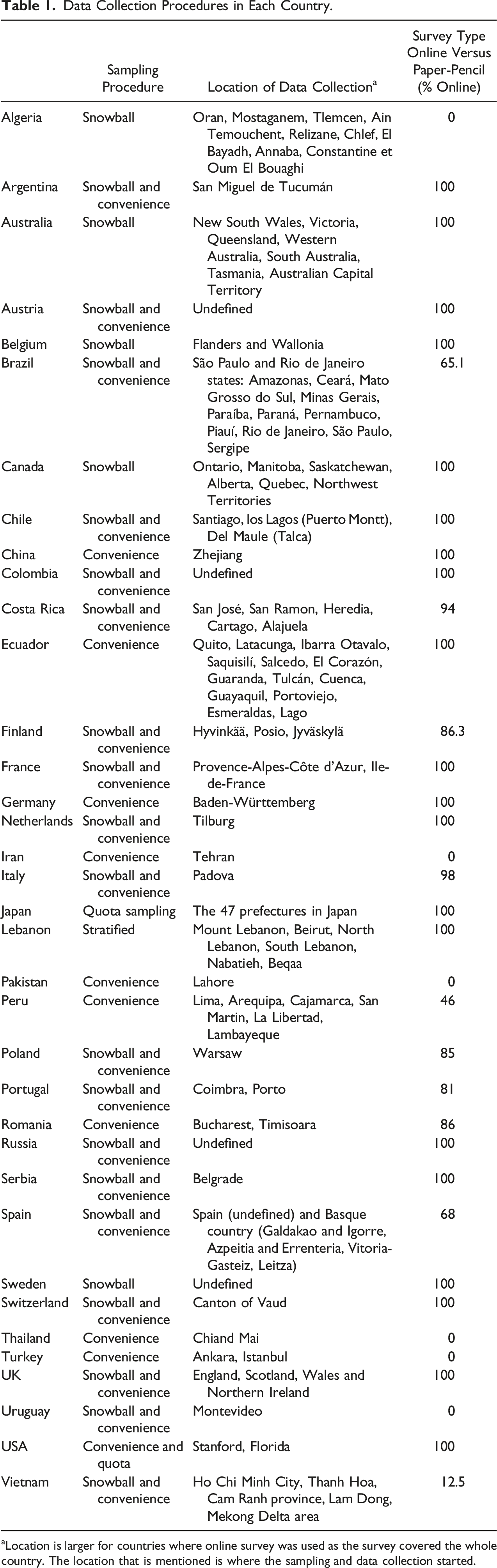
aLocation is larger for countries where online survey was used as the survey covered the whole country. The location that is mentioned is where the sampling and data collection started.
Sociodemographic Characteristics of Respondents in Each Country.
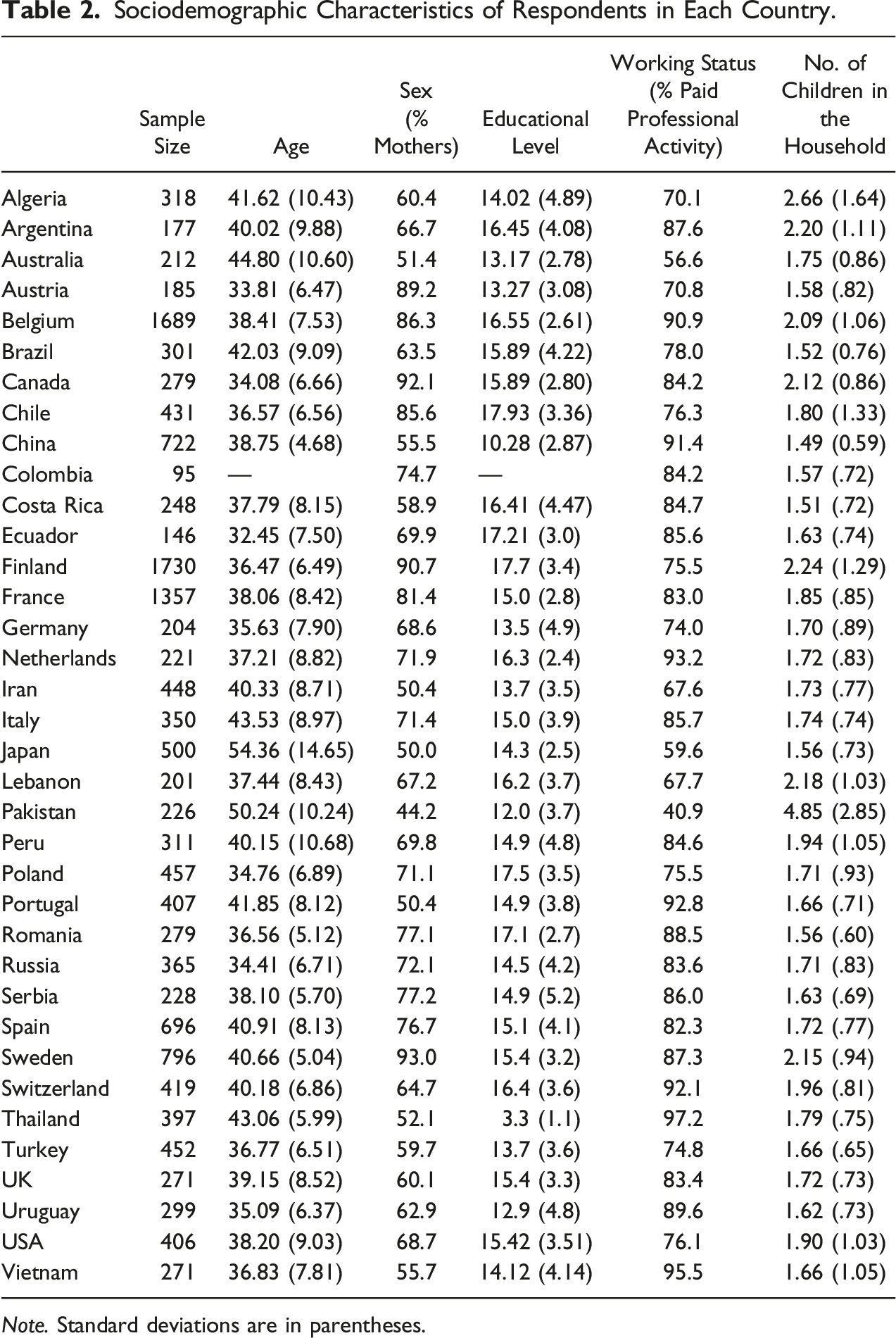
Note. Standard deviations are in parentheses.
The majority of participants were part of two-parent families (79.2%), were women (73%), and were active in the labor market (82%). The other family compositions were single-parent families (8.6%), step-families (6.1%), multigenerational families (4.3%), same-sex couple families (.4%), polygamous families (.1%) and other types of families (1.4%). The mean age of participants was around 39 years (M = 39.09; SD = 8.81), varying from 33.81 (SD = 6.47) years in Austria to 54.36 (SD = 14.65) in Japan. The average number of years of education was 15 (M = 15.06; SD = 4.3), varying from 10.28 (SD = 2.87) in China to 17.5 (SD = 3.5) in Poland. The average number of children in the household was two (M = 1.94; SD = 1.02). A more detailed sample description can be found in the seminal paper of the IIPB consortium by Roskam et al. (2021).
Measures
Sociodemographic Characteristics
Age, gender, number of children, age of children, nationality, relationship status, type of family, and level of education.
Parental Burnout
Parental burnout was assessed with the Parental Burnout Assessment—PBA (Roskam et al., 2018), a 23-item questionnaire assessing the four core symptoms of PB: emotional exhaustion (9 items, e.g., “I feel completely run down by my role as a parent”), contrast (6 items, e.g., “I’m no longer proud of myself as a parent”), saturation or feelings of being fed up (5 items, e.g., “I can’t stand my role as father/mother anymore”), and emotional distancing (3 items, e.g., “I do what I’m supposed to do for my child(ren), but nothing more”). Items are rated on a 7-point frequency scale: never (0), a few times a year or less (1), once a month or less (2), a few times a month (3), once a week (4), a few times a week (5), every day (6).
In all participating countries, the instrument was translated, back-translated and adapted to local languages. In the past years, several validation studies of the measure have been published (Aunola et al., 2020; Cheng et al., 2020; Matias et al., 2020; Mousavi et al., 2020). Roskam et al. (2021) provide detailed data on the validation structure of the scale and establish the measurement invariance of the parental burnout measure according to language.
Collectivism-Individualism
The degree of collectivism-individualism was assessed using Hofstede’s framework and classification (Hofstede, 2001). Cultural value scores, including collectivism-individualism, range between 0 and 100 (retrieved from https://www.hofstede-insights.com/product/compare-countries/). Highly collectivistic cultures are those with lower scores and highly individualistic cultures are those with higher scores. Individualism scores were divided into three levels (up to 33; 33–66; more than 66). The division into three groups was determined to allow comparisons of more contrasted groups alongside individualistic values. High Collectivism/Low Individualism (High COL-Low IND) aggregated 23.4% of the sample (Chile, China, Colombia, Costa Rica, Equator, Peru, Portugal, Romania, Thailand, Vietnam, Pakistan, Serbia); Medium Collectivism/Medium Individualism (Medium COL-IND) aggregated 38.1% of the sample (Algeria, Argentina, Austria, Brazil, Finland, Iran, Japan, Lebanon, Poland, Russia, Spain, Turkey, Uruguay); and Low Collectivism/High Individualism (Low COL-High IND) encompassed 38.6% of the sample (Australia, Belgium, Canada, France, Germany, The Netherlands, Italy, Sweden, Switzerland, UK, USA).
Statistical Analyses
Latent profile analysis (LPA) was performed using Mplus version 8.5 (Muthén & Muthén, 1998-2020) and the robust maximum likelihood estimator (MLR) to explore the profiles of PB. Standardized scores for the four parental burnout dimensions were used as input data. To prevent converging on local solutions, latent profiles were estimated with 3000 random start values, 100 iterations, and 100 solutions retained for final stage optimization (see, e.g., Morin, 2016). One to six latent profiles were specified and the means of emotional exhaustion, saturation, emotional distancing and contrast were freely estimated across all profiles, but not their variances, which were constrained to equality. As variances are, by default, constrained to equality in Mplus, we constrained variances to be equal across latent classes to increase the models’ parsimony and stability. To determine the optimal number of profiles, we relied on a set of indicators of fit: log-likelihood (LL), the Akaïke information criterion (AIC), the Bayesian information criterion (BIC), the sample-size adjusted BIC (SSA-BIC), Lo, Mendell and Rubin’s adjusted likelihood ratio test (LMR-LRT), the bootstrap likelihood ratio test (BLRT), and entropy (entropy scores closest to one suggest clear delineation of profiles: Celeux & Soromenho, 1996). (For further details, see Morin, 2016). Furthermore, the profile solution chosen also needed to consider the substantive meaning of the retained profiles. LPA was performed in the entire sample and replicated in each group of collectivistic-individualistic countries.
Second, after the optimal number of profiles had been determined and named, profiles were compared according to the parents’ sociodemographic characteristics using ANOVAs and chi-square independence tests. Third, we reran LPA in collectivistic countries and individualistic countries separately and compared the mean of the dimensions in each profile, contrasting High COL-Low IND countries and Low COL-High IND countries, using t-tests.
Results
The Parental Burnout Profiles
Fit Indicators of the LPA (n = 16,885).
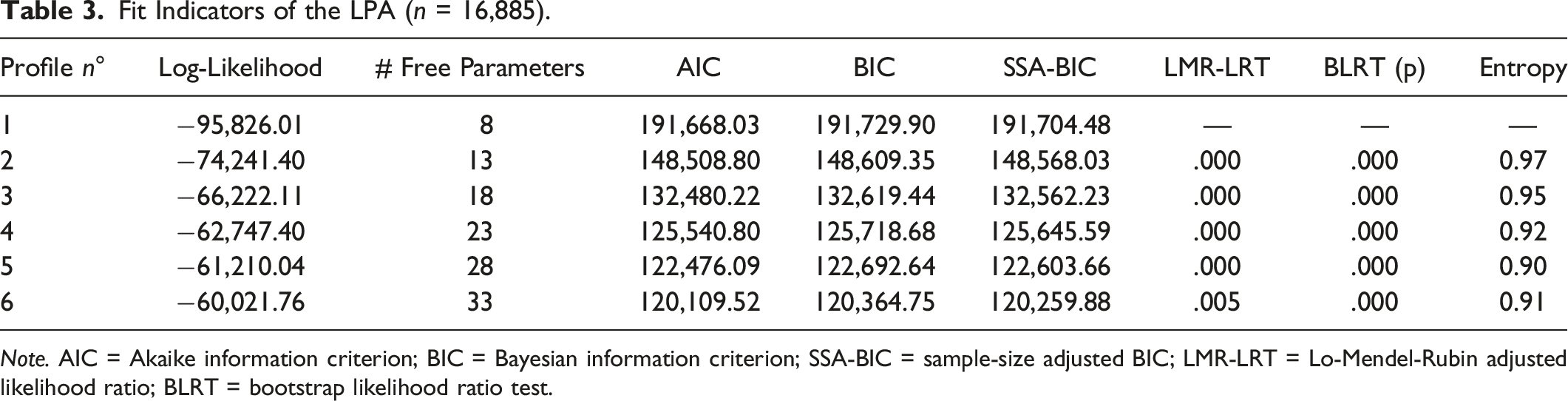
Note. AIC = Akaike information criterion; BIC = Bayesian information criterion; SSA-BIC = sample-size adjusted BIC; LMR-LRT = Lo-Mendel-Rubin adjusted likelihood ratio; BLRT = bootstrap likelihood ratio test.
Profile Means for the Five-Profile Solution (n = 16,885).
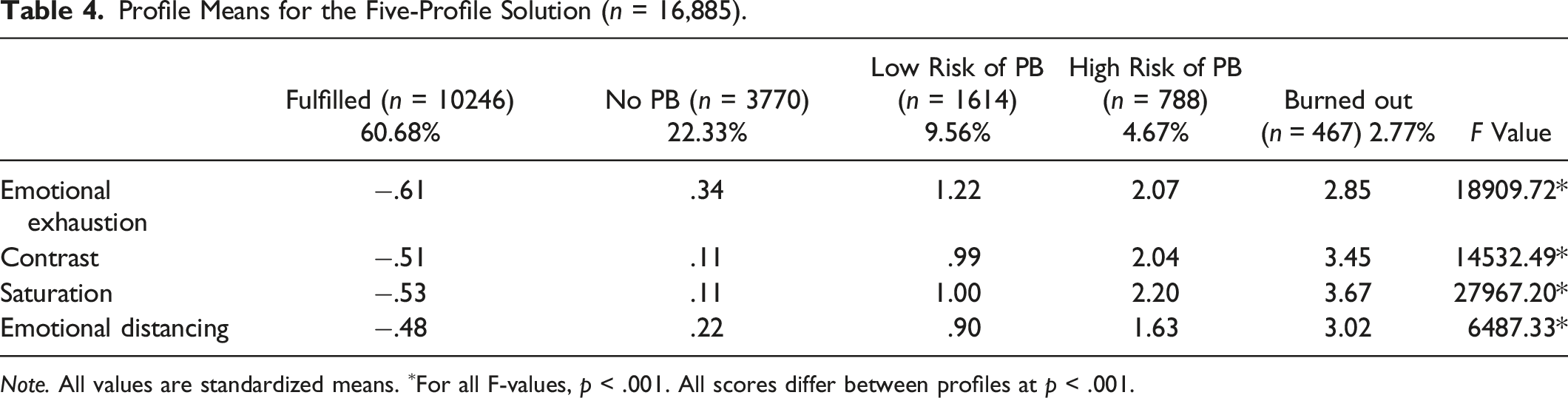
Note. All values are standardized means. ∗For all F-values, p < .001. All scores differ between profiles at p < .001.
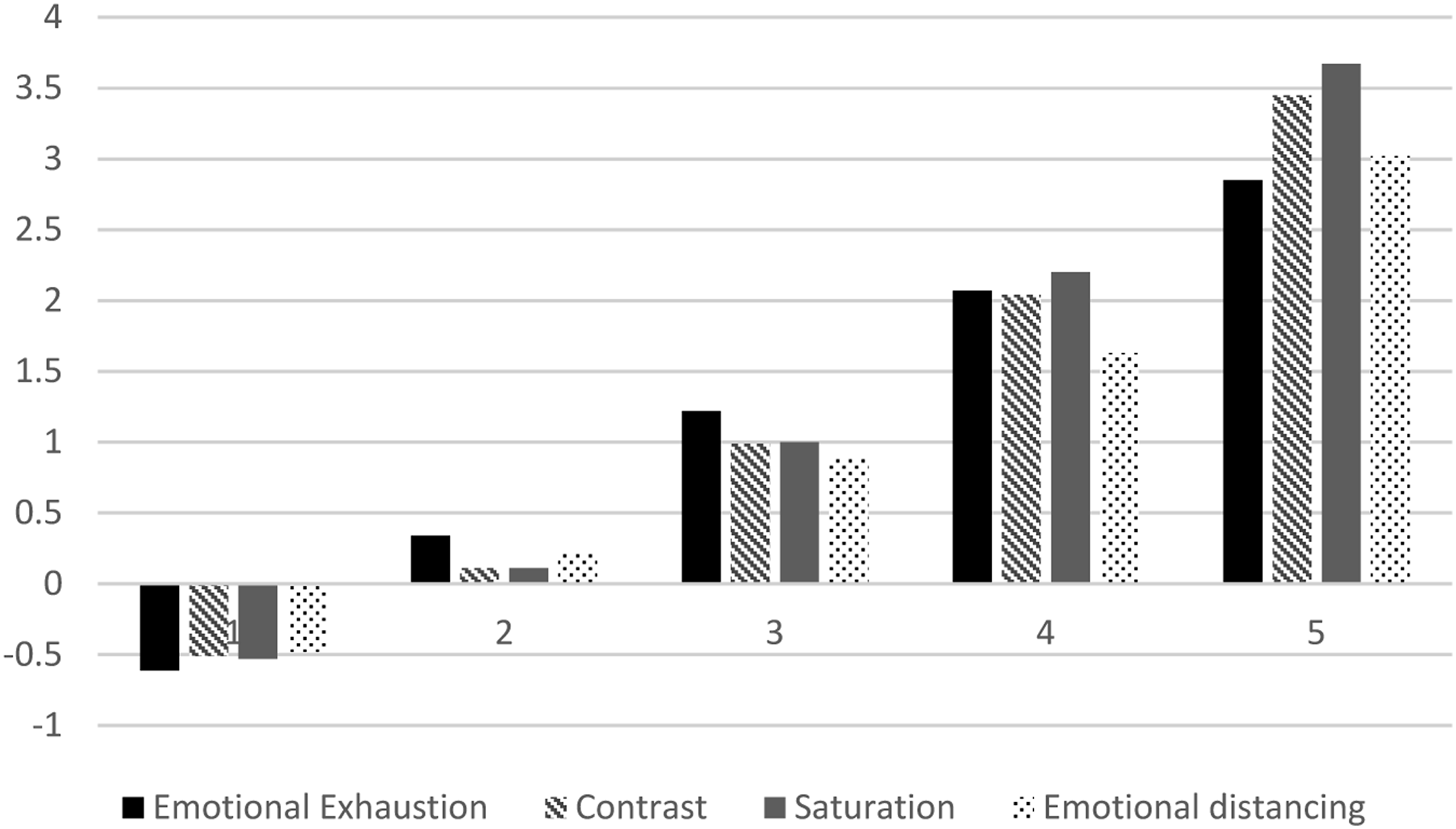
Graphical depiction of the mean for the five profile solution (n = 16,885).
To further validate these results, we identified the proportion of parents scoring higher than the clinical cut-off of the PBA total score (i.e., 92/138) in each profile (see Roskam et al., 2021 for further details). The first three profiles had no parents in burnout, while Profile 4 (High risk of PB) had 20.7% and Profile 5 (Burned out) had 98.8% of parents in burnout. In the total sample 3.6% of parents could be said to be in PB.
The Sociodemographic Characteristics of Parental Burnout Profiles
Background Differences in Parental Burnout Profiles.
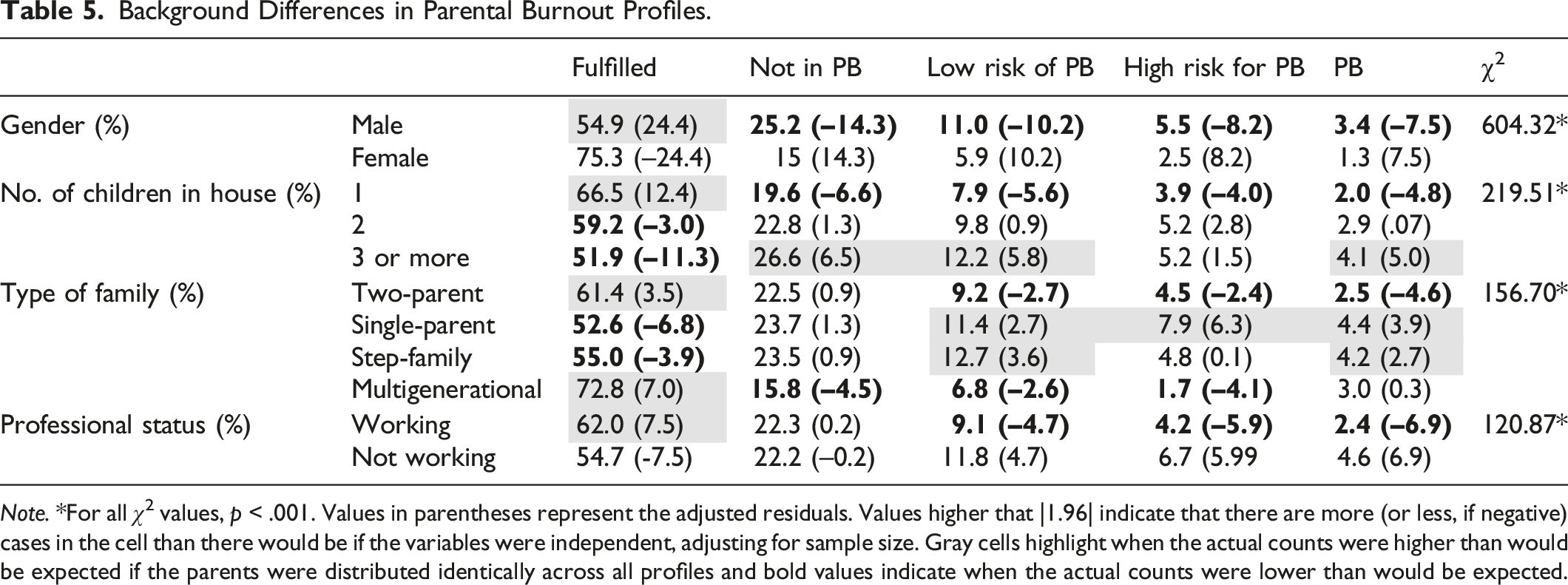
Note. *For all χ2 values, p < .001. Values in parentheses represent the adjusted residuals. Values higher that |1.96| indicate that there are more (or less, if negative) cases in the cell than there would be if the variables were independent, adjusting for sample size. Gray cells highlight when the actual counts were higher than would be expected if the parents were distributed identically across all profiles and bold values indicate when the actual counts were lower than would be expected.
Parental Burnout Profiles in Collectivistic and Individualistic Countries
Fit Indicators of the LPA (n = 16,885) According to the Levels of Individualism and Collectivism.
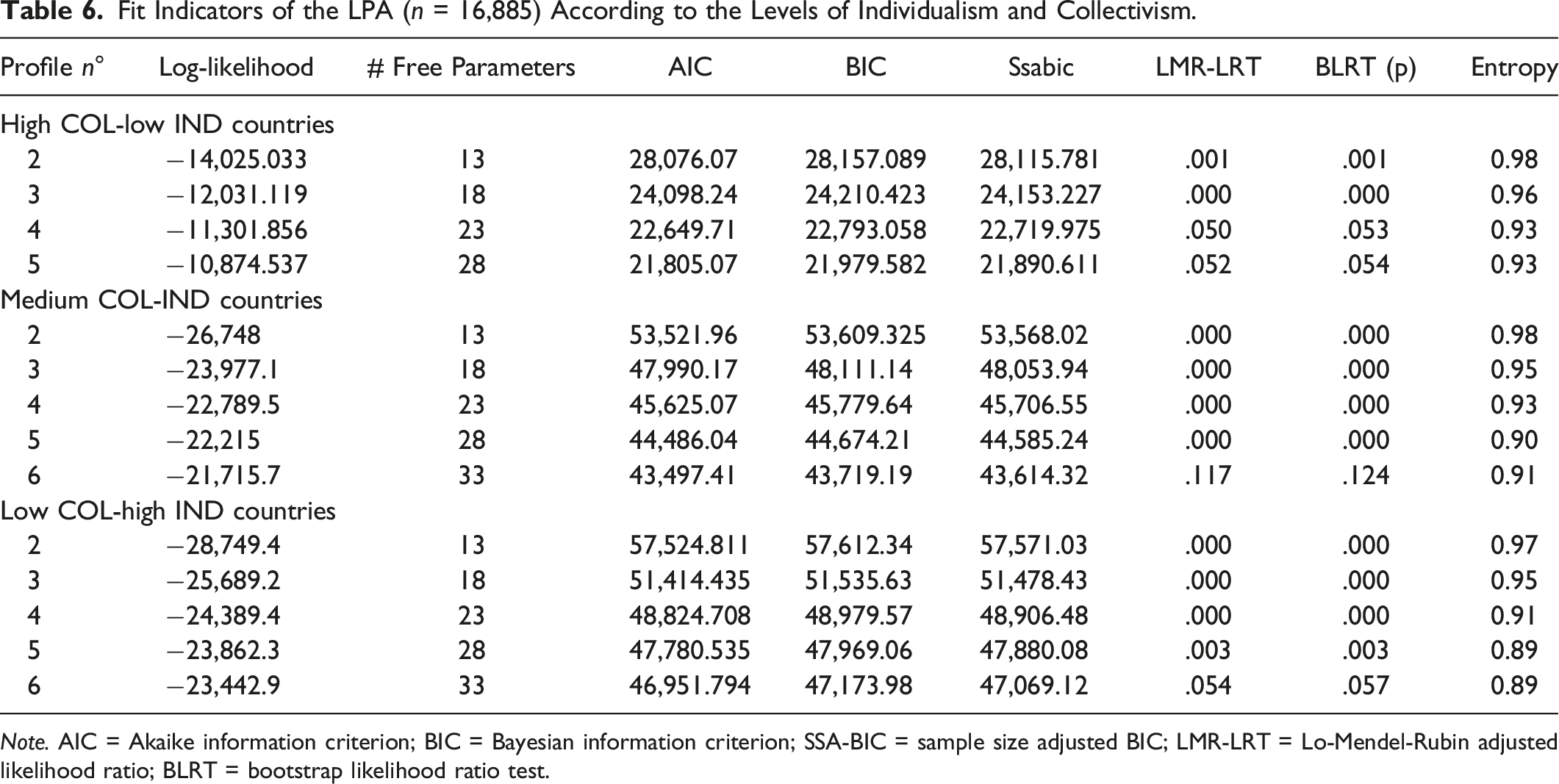
Note. AIC = Akaike information criterion; BIC = Bayesian information criterion; SSA-BIC = sample size adjusted BIC; LMR-LRT = Lo-Mendel-Rubin adjusted likelihood ratio; BLRT = bootstrap likelihood ratio test.
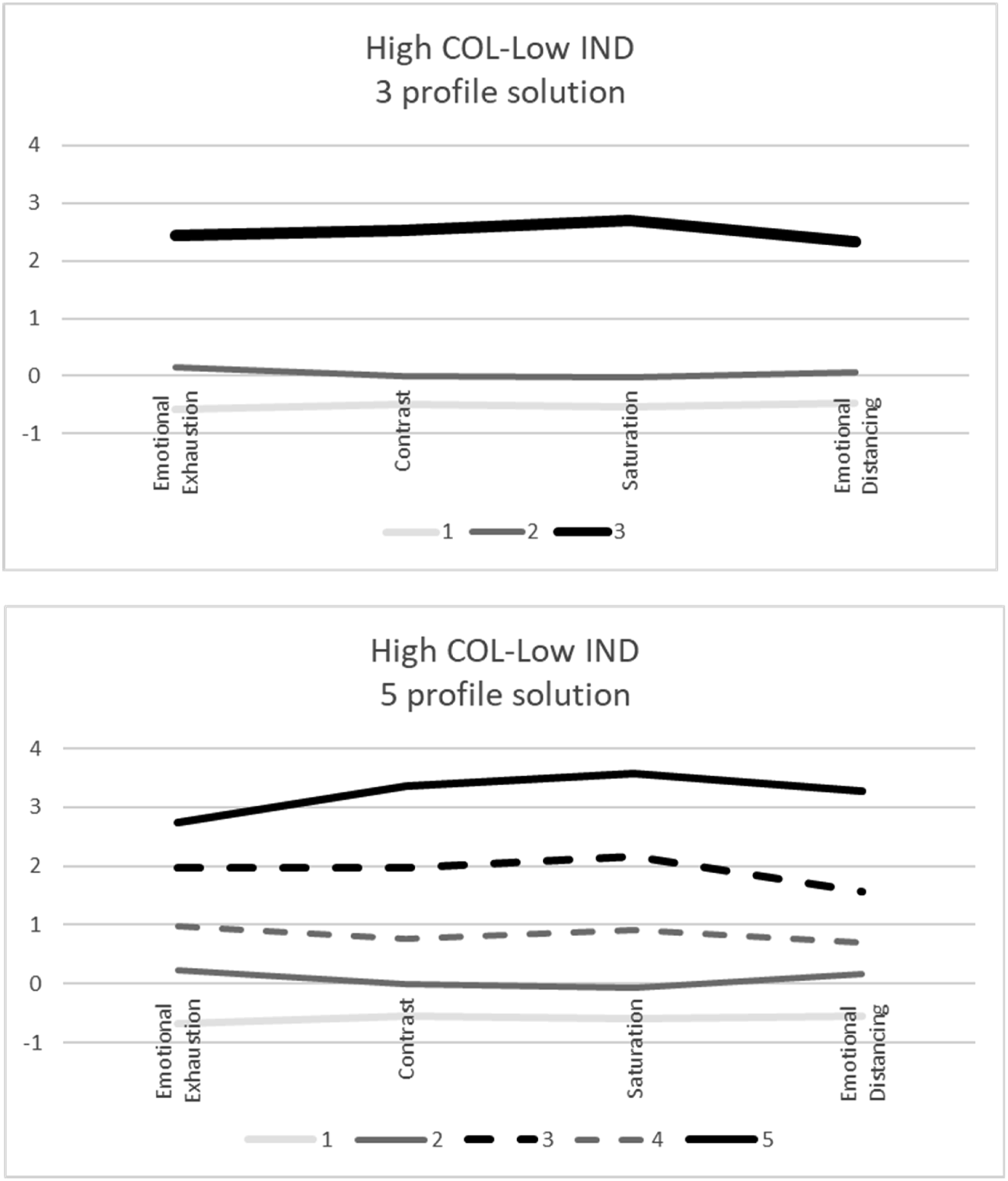
Comparison of the mean levels on each PB dimension for the three-and five-profile solutions for high COL-low IND countries.
Standardized Mean Levels of PB Dimensions in Each Profile Across the Two Most Contrasting Groups—High COL-Low IND Versus Low COL-High IND Countries.
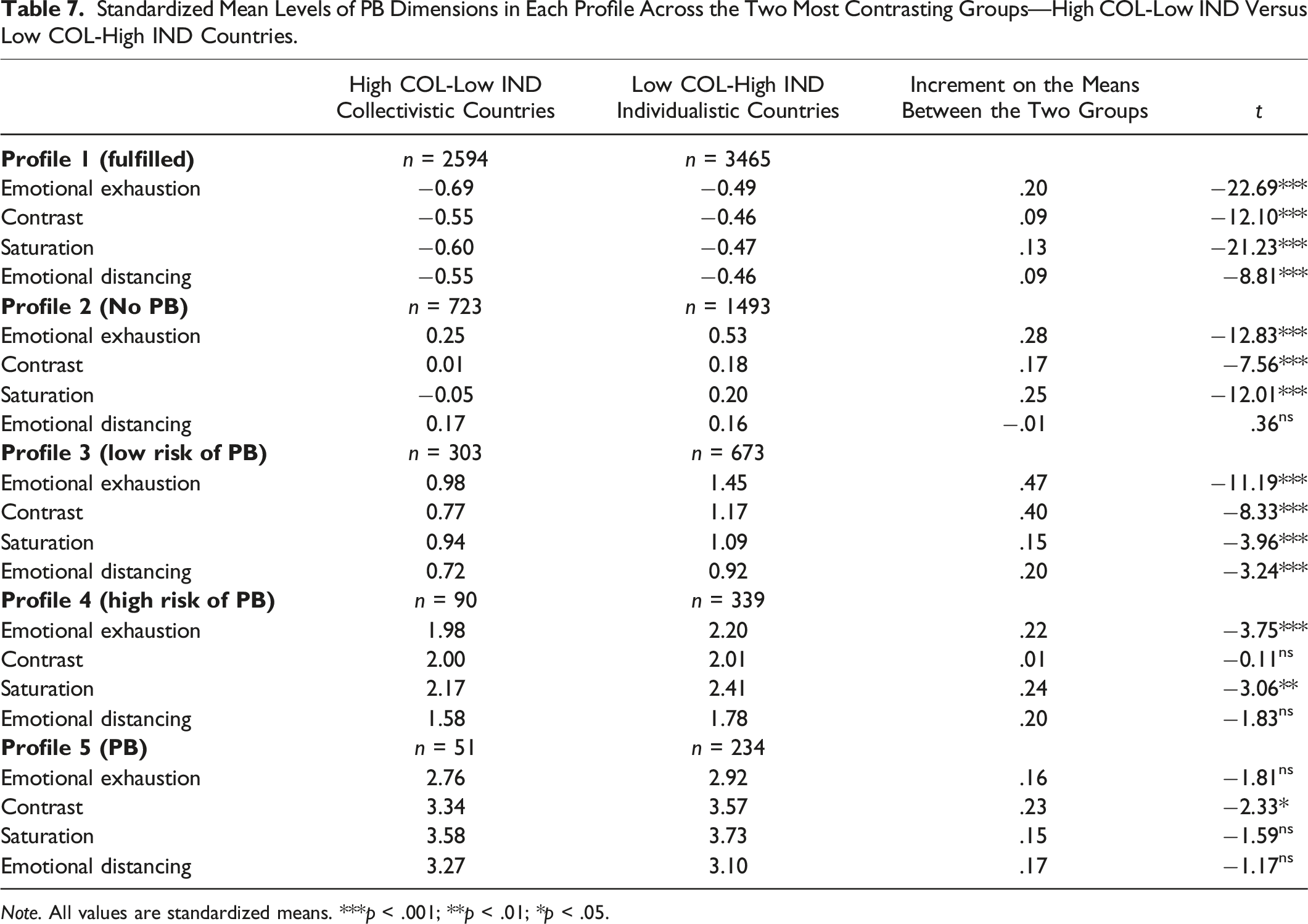
Note. All values are standardized means. ***p < .001; **p < .01; *p < .05.
In sum, as expected, contrast was the only dimension in the Burned out parents profile to show a significant difference between individualistic and collectivistic countries. Emotional distancing was significantly lower in collectivistic than in individualistic countries in Profile 3. However, the level of emotional distancing in the collectivistic countries was higher in Profile four and Profile 5. In the latter profile, it reached the level found in individualistic countries. A similar pattern of results occurred for both saturation and emotional exhaustion. These two dimensions were lower in collectivistic than in individualistic countries in Profile four and Profile 5. Again, in these latter profile, they both reached the level found in individualistic countries.
Discussion
In this study, we aimed to go deeper into the analyses of PB profiles and examine how these profiles varied in prevalence and were shaped by different cultural contexts. Using the gold-standard measure of assessing parental burnout, the Parental Burnout Assessment (PBA) (Roskam et al., 2018), we can first highlight that PB dimensions translated into five profiles. Of these, one profile consisted of Fulfilled parents and another of parents who were not in burnout; the remaining three were more related to different expressions of PB. These expressions of PB are distinct from those found in the earlier study, probably because the PBA allows a distinction to be made between saturation and contrast, unlike the PBI (used in the earlier study). We were also able to support the validity of these profiles, given that Profile 5, Burned out parents, aggregated 99% of parents who could be said to be in clinical burnout.
Another remarkable finding is that most parents belonged to the Fulfilled profile. This profile also had a relatively high proportion of men, working parents of a single child and parents in two-parent or multigenerational families. These results are consistent with previous evidence in the field of PB. Although socio-demographic variables explained a very low part of the variance, gender-related differences previously reported mean that the high proportion of men in this profile was not surprising: most parental tasks are still performed by women worldwide, and women report higher parental stress than men (Aguiar et al., 2021; Roskam et al., 2022). Although this finding was consistent with previous studies, it was interesting to note that working outside the home was a protective factor (working parents were more frequent in the Fulfilled profile). It seems helpful for parents to have another role to focus on and perhaps to derive satisfaction and self-esteem from. Belonging to a two-parent or multigenerational family also appeared to be a protective factor, probably because more support is available in such households (i.e., the task of parenting can be shared with the partner or other family members).
In the total sample, but also in both the High COL-Low IND and the Low COL-High IND country groups, the scores in each PB facet were progressively higher from one profile to another. Although we retained the five-profile solution for all groups, we noted that a three-profile solution would also fit the data in the High COL-Low IND group. Both the three- and five-profile solution pointed to the same progressive pattern. As the internal consistency between the four scales of the PBA and between the 23 items in general was very high, it was difficult to identify profiles that were anything other than levels of burnout. However, a closer look at the values of each PB facet in the two country groups showed that the absolute value of each facet was higher in the Low COL-High IND group. For this group of countries, the absolute values for emotional exhaustion and saturation were quite high in all profiles but the last, even in the Fulfilled profile. In the Low and High risk of PB profiles, besides these two facets, emotional distancing was also much higher in the Low COL-High IND group. Although the contrast dimension was higher in all profiles except for High risk of PB, it was noteworthy that in the Burned out profile, the contrast dimension was the only one which differentiated the parents from collectivistic and individualistic countries. These results supported our hypothesis that contrast was the hallmark for burned out parents in highly individualistic countries.
Considering the mean levels of each dimension within countries and across profiles, especially between the High risk of PB and Burned out profiles, we saw that in the individualistic countries, the dimension that increased the most between these two profiles was contrast (from 2.01 to 3.57). A larger mean difference was also observed for emotional exhaustion in both collectivistic and individualistic countries. This set of findings may be considered together with previous results using the PBI in a longitudinal perspective that suggested exhaustion as a first step in the PB process across different countries (Roskam & Mikolajczak, 2021).
We hypothesized that specific dimensions would play a particular role in the two cultural groups. Although we could not confirm our predictions of different profiles for different cultural groups, we saw that being Burned out is the result of higher levels in all dimensions. However, a major increase of contrast seems to be the final sign of severe burnout, depending on the level of collectivism-individualism of the country. In the Low COL-High IND countries, the profiles were marked by the largest differences in contrast. This distinctive role of contrast seems to align with our prediction that in this type of country, as parents are more focused on their own achievement and autonomy, contrast is what increases the most in the Burned out profile. For these parents, it seems that this is the most relevant facet of the experience of burnout. Interestingly, this dimension, which is not present in the model of job burnout, emerged saliently from the testimonies of burned-out parents that were used to conceptualize parental burnout and develop the PBA. Such results are in line with previous studies that have suggested parental perfectionism as a major risk factor for parental burnout (Furutani et al., 2020; Lin et al., 2021; Sorkkila & Aunola, 2020; Stănculescu et al., 2020), and higher parental goals as a possible mediator between culture and parental burnout (Roskam et al., 2023). Our results also point in this direction. In a culture where concerns about performance and exacting standards prevail in most life domains, including parenting, feeling a contrast between the parent one is and the parent one was or wanted to be is a very salient aspect.
Our predictions regarding emotional distancing as the most relevant sign for severe burnout in High COL/Low IND countries were not supported. Emotional distancing showed an upward trend across profiles which was quite similar for both groups of countries. In Profile 4, emotional distancing was higher for Low COL/High IND countries, but in Profile five this difference was reversed, and emotional distancing was higher for High COL/Low IND countries. One methodological explanation for this finding could be that the number of participants from individualistic countries was much higher than that of participants from collectivist countries. Another explanation could be that parents’ testimonies used to conceptualize parental burnout and to develop the PBA were collected from Western parents. There may be specific facets of parental burnout in collectivist cultures that the PBA does not fully assess. Although the PBA validation has been replicated in non-Western countries, there may be specific dimensions of parental burnout that are not present in these countries, and other culture-specific dimensions may not be fully grasped by the PBA. Therefore, despite our use of a new methodological approach on these data, we could not fully discern the role of specific facets in the most collectivist countries. If this interpretation is correct, inductive research needs to be conducted in the most collectivist countries to test whether the same or other new dimensions appear in parental burnout.
These findings add to our knowledge of the structure of parental burnout across the globe and also point to important practical implications regarding how the process unfolds. For individualistic countries, contrast seems to be particularly disturbing. This disillusioned self-image may have important implications for individuals’ wellbeing, self-esteem and life satisfaction. As this is likely the result of stringent parenting norms, an effort needs to be made in these countries to change the social discourse around parenting in order to reduce parental burnout. At the same time, emotional exhaustion seems to be the first dimension of parental burnout that pushes parents into the Low risk profile and remains high in the three profiles with higher risk of burnout. Thus, a preventive approach would imply the early identification of exhausted parents. If parental burnout is the result of a chronic lack of resources to meet parenting needs, emotional exhaustion can be seen as the first sign of energy depletion.
Our predictions regarding emotional distancing were not supported. As mentioned, inductive approaches to collectivist societies may help deepen the assessment of parental burnout. The PBA is currently the best instrument for measuring parental burnout due to the use of an inductive method in its development. Nevertheless, it was developed based on the emic perspective of more individualistic cultures. It will be important to consider in future studies how to make the instrument more flexible and ensure that it encompasses the experiences of parents in collectivist cultures.
Limitations and Future Perspectives
Despite its rigor and the conclusions that can be drawn, our study is not without limitations. The first limitation is that the study lacks an outcome variable either for the parent (e.g., somatic complaints or addictive behaviors) or for the child (e.g., externalizing and internalizing behavior) to validate the profiles across all countries. Another limitation is due to the cross-sectional nature of the data, which prevented us from studying the process of PB across the five profiles. A third limitation derives from the collectivism-individualism dimension. The fact that levels of COL-IND were based on countries’ scores prevented us from making inferences about individual parents’ assessment of cultural values. By using data about individuals’ endorsement of cultural values, we could combine the country level of COL-IND with individual assessments and disentangle the distinct effects of these two layers of social influence. A fourth limitation is the instrument used for assessing PB. Although the evidence for its psychometric properties is consistent even in collectivistic countries, the PBA is based on the views and experiences of parents from more individualistic cultures.
Finally, the sample was potentially biased both because the number of mothers was higher than the number of fathers, and because the number of parents was higher in Low COL-High IND than in High COL-Low IND countries. It is noteworthy that, despite these limitations, a great diversity of countries was included in the study, which allowed us to further explore the links between collectivism-individualism and parental burnout profiles, highlighting the role of different PB facets across countries.
Conclusions
The analyses performed in this study underscore the relevance of addressing parental burnout in its different facets. Our findings draw attention to the role of contrast in PB experiences, especially in more individualistic countries. However, the experience of parents in collectivistic countries includes facets that are not yet fully understood or covered by the available instruments. These reinforce the relevance of studying cultural aspects in the parenting experience and considering the cultural mediators of PB. In addition, given the negative consequences that pressure on parents to perform seems to entail, more awareness is needed in social discourses and social policies of the harmful effects of this pressure on parenting. In parallel, our findings may help initiate meaningful conversations about parental burnout facets and measurement in collectivistic countries, deepening our emic approach to this phenomenon which is less endemic in collectivistic cultures; this in turn may make it possible to encompass the complexities of parenting experiences more comprehensively.
Footnotes
Appendix 1: Characterization of parents in each parental burnout profile
To increase our understanding of the link between profiles and background characteristics, bias in the distribution of profiles according to parents’ gender, age, educational level, professional status, number and age of children living in the household, and type of family were tested (Table A1 and A2).
Men were more represented in the “Fulfilled” profile and were less represented in all remaining profiles. The “Fulfilled” profile is also characterized by having more two parents and multigenerational families and having only one child living in the household. Parents in this profile tend to be working, are younger, and less educated, and their younger children are the oldest when compared with the remaining profiles. Also, parents in this profile tend to spend less time with their children daily.
The “Low risk”, “High Risk” and “Burned out” profiles are characterized by having a higher number of single-parent families and by not having a paid professional activity. The “Low risk of PB” and “Burned out” parents also have more children living in the household (3 or more) and are part of stepfamilies at a higher degree.
The profile of “No PB” is further characterized by having three or more children living in the household, not having a multigenerational type of family, being younger than the “Low risk” and “High risk of PB” and spending a less number of hours per day with their children than the “High risk” and “Burned out” profiles.
Background differences in parental burnout profiles. Note: ∗For all χ2 values, p < .001. Values in brackets represent the adjusted residuals. Values higher than |1.96| indicate that there are more (or fewer) cases in the cell than if the variables were independent.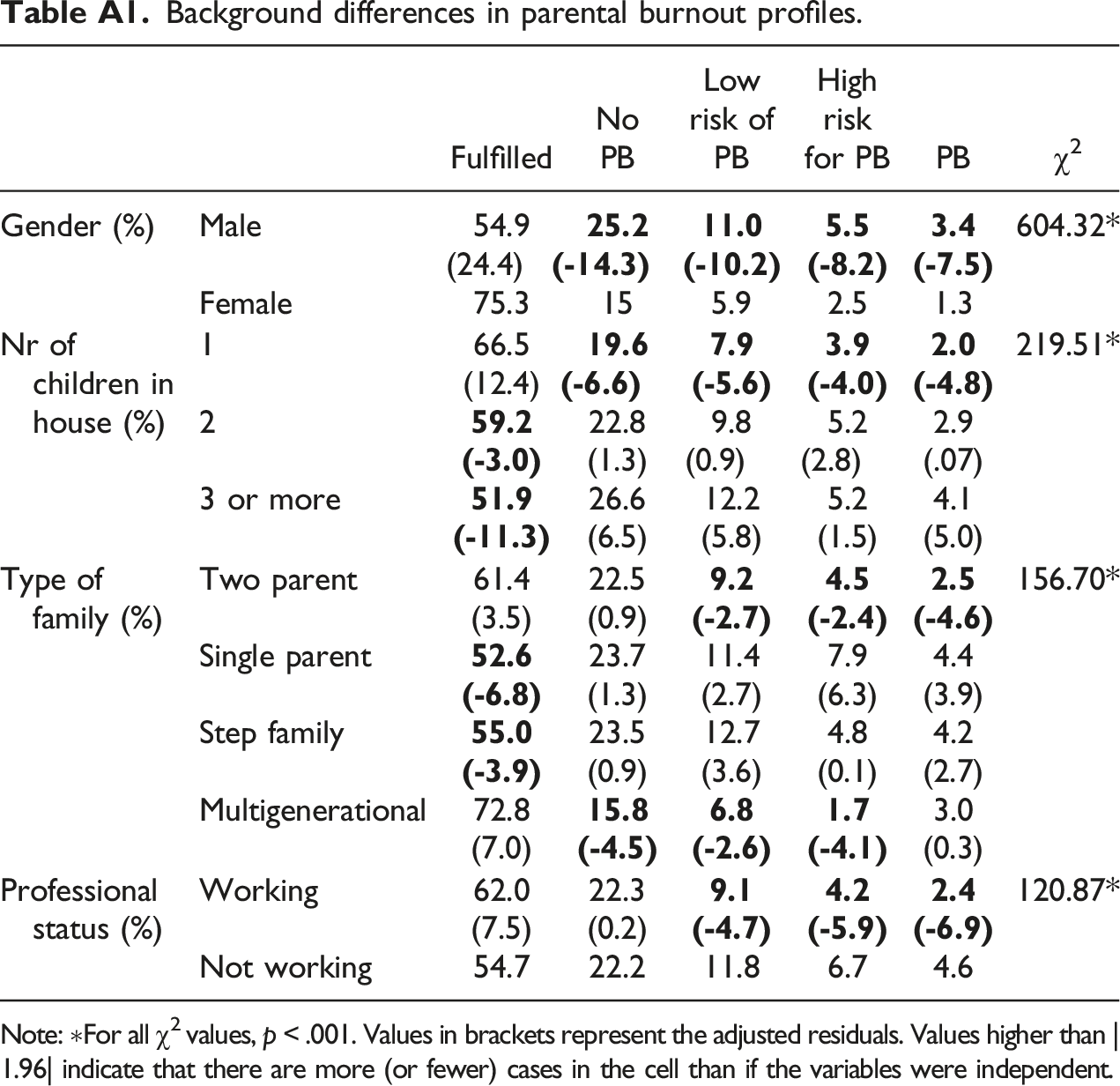
Fulfilled
No PB
Low risk of PB
High risk for PB
PB
χ2
Gender (%)
Male
54.9
(24.4)
604.32*
Female
75.3
15
5.9
2.5
1.3
Nr of children in house (%)
1
66.5 (12.4)
219.51*
2
22.8 (1.3)
9.8
5.2
2.9 (.07)
3 or more
26.6 (6.5)
12.2 (5.8)
5.2 (1.5)
4.1 (5.0)
Type of family (%)
Two parent
61.4 (3.5)
22.5 (0.9)
156.70*
Single parent
23.7 (1.3)
11.4 (2.7)
7.9 (6.3)
4.4 (3.9)
Step family
23.5 (0.9)
12.7 (3.6)
4.8 (0.1)
4.2 (2.7)
Multigenerational
72.8 (7.0)
3.0 (0.3)
Professional status (%)
Working
62.0 (7.5)
22.3 (0.2)
120.87*
Not working
54.7
22.2
11.8
6.7
4.6
Grey cells highlight when the distribution is higher than expected, and bold values indicate when the distribution is lower than expected if the variables were independent.
Appendix 2: Characterization of Parental Burnout profiles according to each individualism group of countries
Background differences in parental burnout profiles. Note: ∗For all F-values, p < .001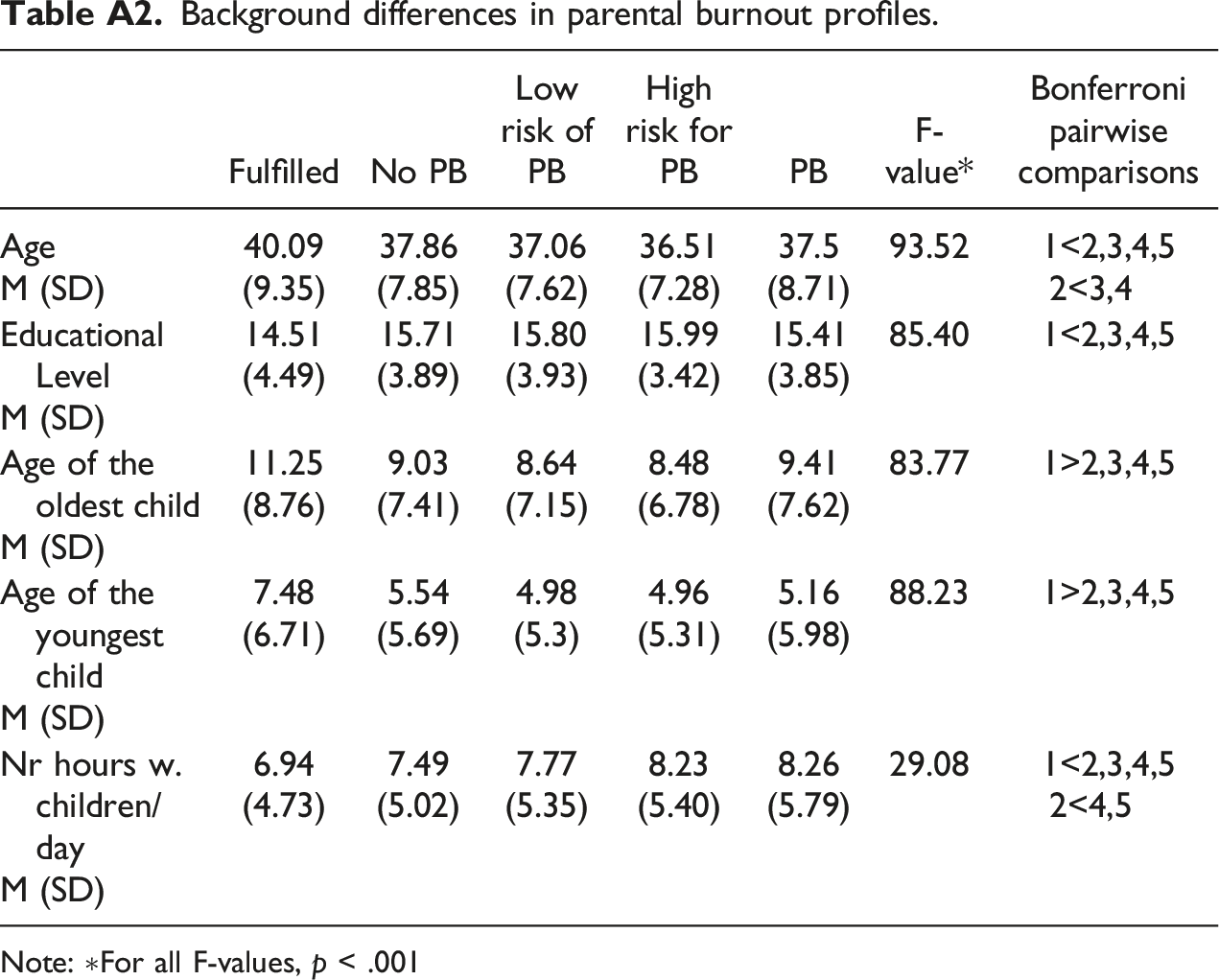
Fulfilled
No PB
Low risk of PB
High risk for PB
PB
F-value*
Bonferroni pairwise comparisons
Age
M (SD)40.09 (9.35)
37.86 (7.85)
37.06 (7.62)
36.51 (7.28)
37.5 (8.71)
93.52
1<2,3,4,5
2<3,4
Educational Level
M (SD)14.51 (4.49)
15.71 (3.89)
15.80 (3.93)
15.99 (3.42)
15.41 (3.85)
85.40
1<2,3,4,5
Age of the oldest child
M (SD)11.25 (8.76)
9.03 (7.41)
8.64 (7.15)
8.48 (6.78)
9.41 (7.62)
83.77
1>2,3,4,5
Age of the youngest child
M (SD)7.48 (6.71)
5.54 (5.69)
4.98 (5.3)
4.96 (5.31)
5.16 (5.98)
88.23
1>2,3,4,5
Nr hours w. children/day
M (SD)6.94 (4.73)
7.49 (5.02)
7.77 (5.35)
8.23 (5.40)
8.26 (5.79)
29.08
1<2,3,4,5
2<4,5
On the next table the prevalence of each profile according to the level of countries collectivism-individualism can be found. The High COL-Low IND and Low COL-High IND groups show an opposite pattern. There are more parents on the fulfilled profile than expected in the High COL-Low IND countries and more parents on all other profiles in the Low COL-High IND group of countries. For the Medium COL-IND group the distribution across the five profiles is according to expected in a random distribution. Profile means for the five-profile solution according to each individualism group. Note: All values are standardized means. ∗For all F-values, p < .001. All scores differ per row at p < .001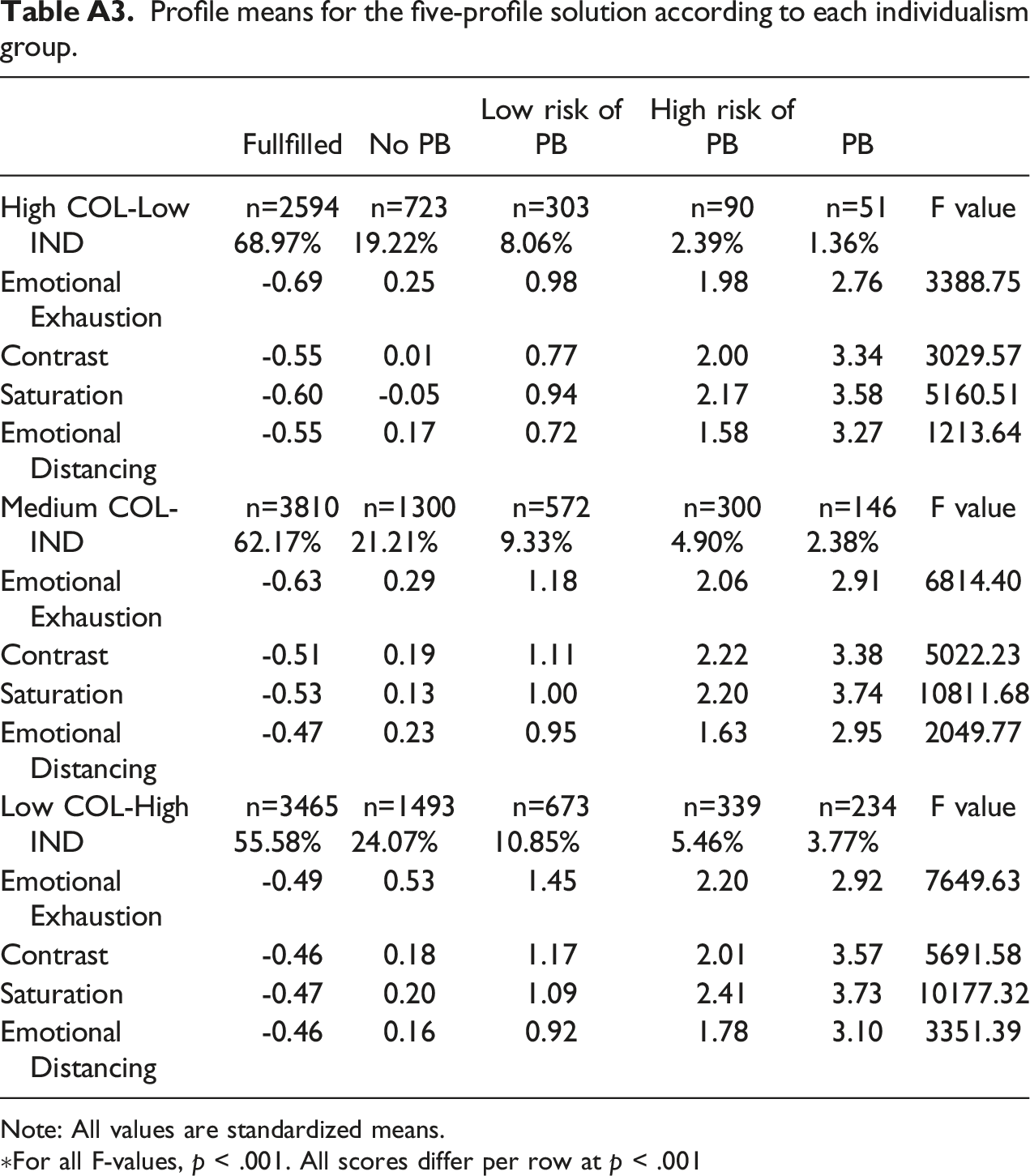
Fullfilled
No PB
Low risk of PB
High risk of PB
PB
High COL-Low IND
n=2594
68.97%n=723
19.22%n=303
8.06%n=90
2.39%n=51
1.36%F value
Emotional Exhaustion
-0.69
0.25
0.98
1.98
2.76
3388.75
Contrast
-0.55
0.01
0.77
2.00
3.34
3029.57
Saturation
-0.60
-0.05
0.94
2.17
3.58
5160.51
Emotional Distancing
-0.55
0.17
0.72
1.58
3.27
1213.64
Medium COL- IND
n=3810
62.17%n=1300
21.21%n=572
9.33%n=300
4.90%n=146
2.38%F value
Emotional Exhaustion
-0.63
0.29
1.18
2.06
2.91
6814.40
Contrast
-0.51
0.19
1.11
2.22
3.38
5022.23
Saturation
-0.53
0.13
1.00
2.20
3.74
10811.68
Emotional Distancing
-0.47
0.23
0.95
1.63
2.95
2049.77
Low COL-High IND
n=3465
55.58%n=1493
24.07%n=673
10.85%n=339
5.46%n=234
3.77%F value
Emotional Exhaustion
-0.49
0.53
1.45
2.20
2.92
7649.63
Contrast
-0.46
0.18
1.17
2.01
3.57
5691.58
Saturation
-0.47
0.20
1.09
2.41
3.73
10177.32
Emotional Distancing
-0.46
0.16
0.92
1.78
3.10
3351.39
Parental burnout profiles and COL-IND groups (%). Note: ∗For all χ2 values, p < .001. Values in brackets represent the adjusted residuals. Values higher than |1.96| indicate that there are more (or fewer) cases in the cell than there would be if the variables were independent. Grey cells highlight when the distribution is higher than expected, and bold values indicate when the distribution is lower than expected if the variables were independent.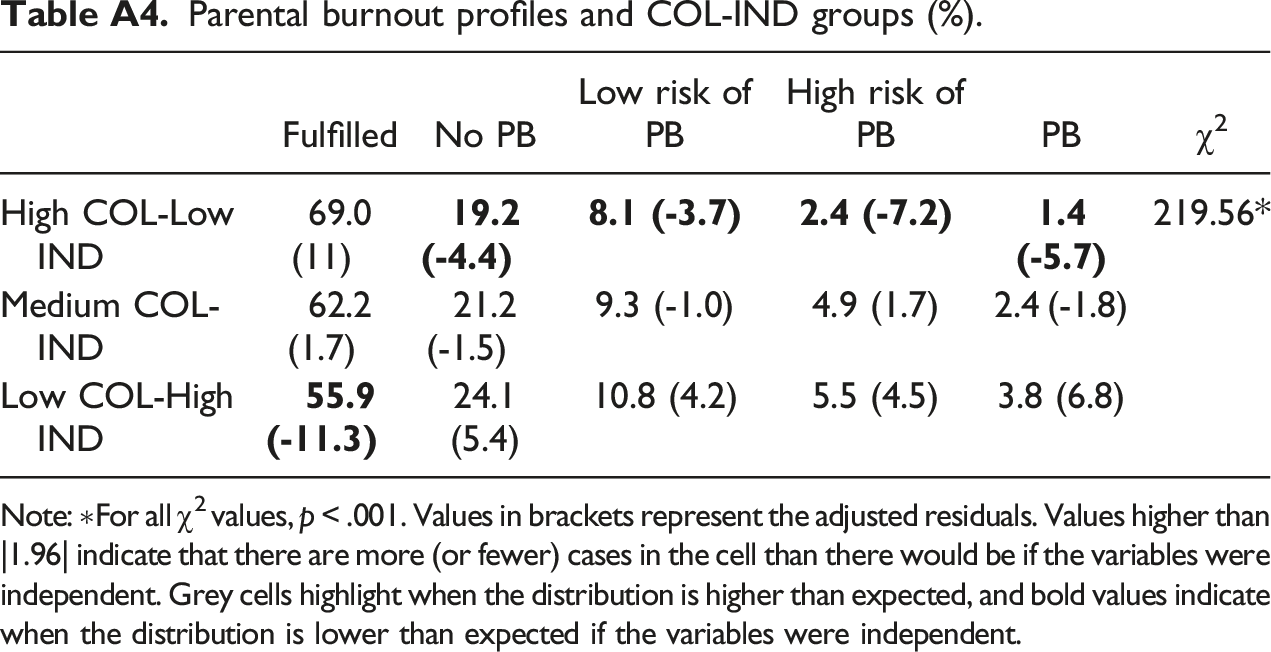
Fulfilled
No PB
Low risk of PB
High risk of PB
PB
χ2
High COL-Low IND
69.0
(11)
219.56*
Medium COL- IND
62.2
(1.7)21.2
(-1.5)9.3 (-1.0)
4.9 (1.7)
2.4 (-1.8)
Low COL-High IND
24.1 (5.4)
10.8 (4.2)
5.5 (4.5)
3.8 (6.8)
Declaration of Conflicting Interests
The author(s) declared no potential conflicts of interest with respect to the research, authorship, and/or publication of this article.
Funding
The author(s) disclosed receipt of the following financial support for the research, authorship, and/or publication of this article: This work was supported by Fundação para a Ciência e a Tecnologia under grant FCTUIDB/00050/2020.
Correction (July 2023):
Article has been updated to correct affiliations for authors Matilda Sorkkila, Elena Stănculescu and Elena Starchenkova.
ORCID iDs
Author Biographies
 ). His research focuses on emotion regulation, and he has ˜600 publications, which have been cited ˜200,000 times.