




Abstract
The development and predictors of career adaptability in academically demanding general upper secondary education have remained largely understudied. Based on career construction theory, this longitudinal study followed Finnish academic-track students (214 boys and 243 girls at the beginning of the study) over three years to examine their development in terms of the dimensions of career adaptability and how personal (socioemotional difficulties and strengths) and societal factors (gender, caregivers’ educational backgrounds, self-reported family income, and schools’ geographical locations) predicted this development. Findings from the latent growth modeling revealed significant individual differences in all career adaptability dimensions. Initial levels were predicted by gender, family income, and school location: males scored higher in curiosity, concern, and confidence; students in rural schools showed lower control, concern, and confidence; and lower perceived income predicted lower control and curiosity. Further, there were individual differences in the development of career curiosity, confidence, and concern. Females exhibited greater growth in confidence and concern, while emotional difficulties negatively influenced the development of concern. These findings highlight the need for more equitable and inclusive guidance practices and emphasize the impact of both personal and societal factors on students’ career development in academically demanding settings.
Keywords
Introduction
During the upper secondary education, adolescents assess different career options, reflect on their personal strengths and aspirations, and reevaluate their vocational decisions based on their abilities, challenges, and future goals (Oliveira et al., 2023; Savickas & Savickas, 2017). According to career construction theory (CCT; Savickas, 2002, 2020; Savickas & Porfeli, 2012), career adaptability is a key conceptualization in the relational and socially constructed capabilities and competencies that individuals use to cope with both educational and occupational transitions and tasks. However, empirical research examining the development of career adaptability in the context of academically rigorous general upper secondary school—that is, the academic track in upper secondary education, which is typically attended by students aged 16 to 19 who are preparing for higher education—is scarce. In addition, prior studies relied on cross-sectional data (Hirschi et al., 2015; Šverko & Babarović, 2019), which leaves the progression of students’ career adaptability unclear. While such studies—primarily focused on the influence of personal factors—have produced valuable findings, societal variables have been largely neglected in this stream of research (Magnano et al., 2021; Savickas & Porfeli, 2012). This is the case despite evidence indicating that individuals’ horizons and responses to transitions and tasks vary depending on their backgrounds, available resources, and potential barriers, which some sociologically oriented studies have emphasized (Blustein et al., 2002; Eshelman & Rottinghaus, 2015; Heiskala et al., 2023; Schellenberg et al., 2022). Moreover, within the framework CCT (Savickas, 2002, 2020), the specific roles of socioemotional difficulties and strengths as traits influencing career adaptability remain insufficiently understood when considering these personal factors as indicators of adaptive readiness. For instance, socioemotional strengths may contribute to strengthening the core dimensions of career adaptability through fostering interpersonal skills, building social capital, and promoting a sense of purpose (Oliveira et al., 2023; Savickas & Porfeli, 2012). Therefore, drawing on the above-mentioned foundation and the meta-analysis done by Rudolph et al. (2017), this longitudinal study examines two categories of variables: (1) personal factors, including prosocial behavior and emotional difficulties, and (2) societal factors, such as gender, perceived income, parents’ educational background, and school’s geographical location. This approach enables us to examine not only the development of different dimensions of career adaptability but also how the chosen variables predict such development in the context of Finnish students’ three-year general upper secondary education.
Career Adaptability and Career Construction: Theoretical Perspectives
Within the framework of CCT (Hirschi et al., 2015; Rudolph et al., 2017; Savickas, 2020; Savickas & Porfeli, 2012), career adaptability refers to an individual’s self-regulation resources and capacity to cope with both current and anticipated career-related tasks, transitions, and challenges (Savickas & Porfeli, 2012). According to the CCT model of adaptation, individuals vary in terms of their readiness to adapt (adaptivity or adaptive readiness) and capacity to adapt (adaptability resources or career adaptability), which shape how they respond to changing circumstances (adapting responses) and navigate work- and education-related transitions (adaptation results) (Rudolph et al., 2017; Savickas, 2020). In this model, personal factors (e.g., emotional difficulties and prosocial behavior) can be understood as indicators of adaptive readiness (adaptivity)—that is, traits influencing the extent to which individuals can develop and utilize their career adaptability resources.
Career adaptability resources are operationalized through four interrelated yet distinct variables—concern, control, curiosity, and confidence—so that they encompass the cognitive abilities individuals possess and use when preparing for career and educational transitions (Savickas & Porfeli, 2012). According to CCT, career concern is the most important dimension of career adaptability. It relates to an individual’s outlook on the future, particularly their awareness of and readiness for the challenges and responsibilities associated with career development (Savickas, 2020). A lack of career concern can lead to difficulties in terms of career planning or indifference toward future opportunities. Career control is seen as an aspect of the intrapersonal processes that promote self-regulation and prompt individuals to engage in vocational development tasks and negotiate occupational transitions. Career control also reflects the degree to which individuals take ownership of and seek to actively shape their career paths. Students who exhibit strong career control perceive themselves to be responsible for their own future and demonstrate a proactive approach to decision-making as well as a clear understanding of their vocational choices (Hirschi, 2009; Savickas, 2020). A sense of self-control can inspire students to explore potential career paths and opportunities, which will likely lead to increased curiosity. Career curiosity refers to an individual’s willingness to explore different career options and envision possible future selves. An insufficient level of career curiosity may hinder an individual’s career planning, delay essential preparatory actions, and limit the development of realistic self-perception. Finally, career confidence represents an individual’s belief in their ability to navigate career-related challenges, achieve goals, and make informed decisions (Savickas & Porfeli, 2012). As such, a lack of career confidence can lead to career stagnation and hamper both role fulfillment and goal achievement (Magnano et al., 2021; Rudolph et al., 2017; Savickas, 2020).
Empirical research has highlighted the distinctions between these four dimensions, revealing them to be associated with various career difficulties and suggesting they influence career decisions in different ways (Karacan-Ozdemir, 2019; Rudolph et al., 2017). Such psychological resources may develop at different rates, and individuals may rely more on some dimensions than on others, depending on their experience and stage of career development (Hartung & Cadaret, 2017; Hirschi et al., 2015). Therefore, in this study, we focus on career resources rather than on outcomes or adaptation results, which reflects the understanding that career-related decision-making is an ongoing process wherein career adaptability can fluctuate over time in response to both personal and environmental circumstances (Autin et al., 2017; Negru-Subtirica et al., 2015). This approach also reflects the notion that career adaptability represents a mechanism through which these personal and contextual resources are translated into concrete adaptation outcomes (Rudolph et al., 2017).
The Development of Career Adaptability
Vocational development is a complicated process that encompasses a series of life stages linked to specific career-related tasks. The process of career development begins, according to Super (1953), with the growth stage (ages 4–13) when individuals encounter various vocational tasks that challenge them to shape their vocational self-concepts, develop concern for their future careers, and recognize their ability to shape their futures through self-determination and negotiation. They also become curious about potential career paths and future scenarios while building confidence in their ability to implement plans and overcome obstacles. While this progression continues through the disengagement stage (age 65 and beyond), the exploration stage (ages 14–29) is considered the most significant and challenging because it represents to adolescents in general upper secondary education a critical transition phase for making educational choices and transitions to higher education (Blustein et al., 2002; Savickas & Savickas, 2017). Previous research (Savickas & Savickas, 2017; Verhoeven et al., 2019) showed that professional self-concept develops in social contexts and environments where adolescents grow up, practice essential attitudes and behaviors, form values and interests, and develop skills and abilities (Savickas & Savickas, 2017). Therefore, the social order—marked by inequalities, such as gender, social roles, places of residence, and class divisions (i.e., family income)—shapes young people’s perceptions of their opportunities and their career and educational choices (Alexander, 2025; Blustein et al., 2002; Hou & Liu, 2021; Savickas, 2020).
Previous research showed that different dimensions of career adaptability function distinctly, with each operating in unique ways, depending on the context. For instance, Negru-Subtirica et al. (2015) observed a significant decline in career adaptability dimensions within a single academic year among students in grades 8 to 12, while Fu et al. (2022) documented positive development in career adaptability among university students in a course of one year, which they primarily attributed to identity construction. In contrast, a decline in adaptability (Negru-Subtirica et al., 2015) was observed among youth who initially reported high levels of confidence and curiosity regarding their careers, which suggested a greater susceptibility to longitudinal decreases in these dimensions. Research (Koen et al., 2012) conducted with university graduates indicated that career concern developed during adolescence as individuals begin to plan educational and career paths and that interventions targeting these stages can enhance career-planning skills. In contrast, career control becomes more prominent as individuals move through adolescence, particularly as they assume greater independence and responsibility for their career decisions (Savickas & Porfeli, 2012). Furthermore, research on working aged people suggested that career control strengthens in competitive environments, where individuals take a more proactive role in their career trajectories, thus helping them navigate career challenges more effectively (Yu Haibo, 2017). Career curiosity, on the other hand, typically emerges during transitions, as individuals explore career options (Savickas, 2020). Career confidence, as identified in previous studies (e.g., Savickas & Porfeli, 2012), develops as individuals achieve competence in their chosen fields and is strongly linked to self-efficacy and resilience. These different dimensions can be enhanced through career guidance and interventions, which further bolster individuals’ overall career adaptability (Jemini-Gashi et al., 2019; Whiston et al., 2017).
In the context of academically demanding general upper secondary school, previous research on career adaptability development is limited. A cross-sectional study conducted in Croatia by Babarović and Šverko (2016) among students in general upper secondary education revealed minimal vocational development during this period. Similar findings were reported in a longitudinal study on student-athletes’ career adaptability in Finland by Nikander et al. (2022), which demonstrated that different dimensions of adaptability remained relatively stable throughout general upper secondary education. The only notable difference in both studies emerged in the concern subscale, where older students exhibited a higher level of concern, and curiosity was the least developed. Studies (e.g., Negru-Subtirica et al., 2015) have also shown that adolescents attending academically demanding schools reported more concern, curiosity, and confidence about their careers. Given these limited and contradictory findings and the increasing significance of general upper secondary school in accessing further studies, further research is necessary to clarify the developmental patterns of career adaptability in academically demanding, general upper secondary school.
Predictors of Career Adaptability
Previous empirical studies concerning career adaptability have been conducted among various sociocultural groups and in different contexts; however, such studies have mainly focused on university students and school-to-work transitions (Creed et al., 2010; Fu et al., 2022; Goetzee & Harry, 2014; Hirschi, 2009; Hou & Liu, 2021). Furthermore, consistent with the CCT framework, prior research has identified socioeconomic background (Blustein et al., 2002; Eshelman & Rottinghaus, 2015; Hou & Liu, 2021; Richard, 2018), socioemotional skills (Leung et al., 2022; Oliveira et al., 2023), and various personality constructs (e.g., proactive personality, emotional regulation; Magnano et al., 2021; Savickas & Porfeli, 2012; Šverko & Babarović, 2019) as significant predictors of career adaptability.
While CCT does not explicitly propose associations between career adaptability and societal factors (Rudolph et al., 2017), the significance of an individual’s social background in relation to their career choices has been highlighted in previous studies conducted in Finland. For instance, Heiskala et al. (2023) found that Finnish young people from higher social classes have a greater likelihood of entering university than their peers from lower social classes, even if their secondary education grades of the former are lower than those of the latter. Are lower than those of the lower social-class students. Furthermore, individuals from prosperous urban families are known to be overrepresented among university students in Finland (Nevala & Nori, 2017; Nori, 2011). In terms of career adaptability, the role of socioeconomic status (SES) has been associated with inconsistent findings, likely due to variations in how SES is conceptualized across different studies (Autin et al., 2017; Blustein et al., 2002; Eshelman & Rottinghaus, 2015). Hence, empirical evidence suggests that assessing SES solely via objective measures (e.g., caregivers’ educational backgrounds) is insufficient, given that subjective perceptions—including an individual’s sense of their societal status—also play a crucial role (Autin et al., 2017; Richard, 2018), despite the challenges related to the subjective SES measures highlighted by Moisio and Karvonen (2007). These perceptions significantly impact psychological functions—such as pessimism, sense of control, and active coping—at least as much as traditional, objective indicators of social standing (Adler et al., 2000). While prior research underscored the need to expand empirical investigations beyond middle-class populations (Blustein et al., 2002) and elucidated the significance of an individual’s social background in shaping their career choices (Autin et al., 2017; Eshelman & Rottinghaus, 2015), the evidence remains inconclusive. Notably, there are gaps in the literature in terms of understanding which factors of socioeconomic background—both subjective and objective—contribute to career adaptability and how such factors influence its development during general upper secondary education. Addressing these gaps is essential for the promotion and development of equitable and evidence-based career guidance practices in this educational context.
Previous studies also reported interesting results regarding the influence of geographical distance on career aspirations, finding that it can lead to students’ self-exclusion from educational intentions. In fact, young adults in sparsely populated regions—both in Finland and internationally—tend to perceive narrower horizons when it comes to their future opportunities (Alexander, 2025; Armila et al., 2018). These adolescents in sparsely populated regions are often forced to construct their educational choices through a series of compromises and set aside their personal aspirations. Moreover, those who remain living in rural areas may experience difficultly relating to conventional notions of “career” and “career choice” (Bakke & Hooley, 2022). Thus, adolescents in rural areas represent a critical target group for education interventions while simultaneously facing a heightened risk of systemic inequality. In addition, studies concerning career adaptability have reported conflicting outcomes based on regional differences. For example, Urbanaviciute et al. (2014) found no significant differences, whereas Hou and Liu (2021) highlighted differences in career adaptability between rural and urban students. According to Hou and Liu (2021), these disparities can be largely explained by family socioeconomic status, cultural differences, and differential access to capital resources.
Within the CCT framework, the role of gender in the development of career adaptability is complex and not straightforward. As careers are known to be shaped by the ongoing interactions between personal identities and social environments (Savickas, 2020), adolescents must fulfill their needs by adopting the social roles established by the communities to which they belong. These roles are also often defined by factors such as gender and social class (Gibson & Lawrence, 2010; Verhoeven et al., 2019). Moreover, communities (e.g., schools) play a key role in socializing individuals by introducing them to these roles and conveying expectations regarding how they should be performed (Savickas & Savickas, 2017; Verhoeven et al., 2019). Previous studies that examined gender differences consistently showed that females tend to score higher than males with regard to career adaptability (Creed et al., 2010; Negru-Subtirica et al., 2015). In particular, females report higher levels of career concern and lower levels of curiosity than males. By contrast, some studies found no gender-based differences in relation to general upper secondary education (e.g., Babarović & Šverko, 2016), concluding that males and females face similar challenges in this context. Furthermore, Hirschi (2009) determined that males demonstrate higher career adaptability than females (see also Nikander et al., 2022), although gender did not affect the development of career adaptability among young students. These contradictory findings suggest that career adaptability may develop differently for females and males in upper secondary school, highlighting the need for further research in this area.
Socioemotional strengths (which CCT conceptualize as indicators of adaptive readiness) have been shown to predict career adaptability (Leung et al., 2022; Oliveira et al., 2023) by playing a crucial role in how adolescents navigate developmental tasks and prepare for educational transitions (Savickas, 2020; Schellenberg et al., 2022). Furthermore, a meta-analysis by Rudolph et al. (2017) identified several personality-related traits, including emotional stability (negatively related to emotional difficulties) and proactivity (closely related to prosocial tendencies) as significant predictors of career adaptability, suggesting that these traits may provide interpersonal and motivational resources that help adolescents navigate educational and occupational transitions. Conversely, previous studies have emphasized that certain barriers—such as challenges related to well-being, anxiety, and emotional difficulties—can hinder adolescents’ interactions with their environments and affect how they perceive opportunities, make decisions, and build careers (Savickas, 2002, 2020). Given the critical developmental stage that is adolescence and the high academic demands associated with general upper secondary education, additional research is needed to examine how these factors predict career adaptability and its ongoing development.
Context: The Finnish Education System and the Role of Guidance Counseling
Schools serve as crucial social environments for adolescents by providing opportunities to foster not only skills that are essential when transitioning to further education but also skills that drive the development of an occupational identity (Verhoeven et al., 2019). In Finland, at the age of sixteen, after nine years of basic education (including grades 1–6 of primary school and grades 7–9 of lower-secondary school), students start their upper secondary education by choosing between the academically demanding general upper -secondary school track and vocational training, where the latter is more practical and aims to develop competence in certain jobs (Finnish National Agency for Education [EDUFI], 2025). Admission to both these three-year tracks is based on students’ grade point average (GPA).
In recent years, general upper secondary education in Finland has undergone significant reforms, which emphasized the need for enhanced guidance counseling services and streamlined direct transitions from upper secondary education to higher education (EDUFI, 2025). As a result of these reforms, the amount of guidance counseling provided to upper secondary students was increased just before the data collection period of this study. Therefore, the participating students were the first cohort to receive both individual and classroom-based guidance also during their second and third years of upper secondary education (EDUFI, 2025). As a consequence, general upper secondary education has become a pivotal phase in which students make key vocational decisions and begin to construct their vocational identities. Previous research demonstrated that guidance counseling plays a vital role not only in supporting students’ transitions to upper secondary and higher education but also in promoting educational equity (Niemi & Laaksonen, 2020; Hooley et al., 2018). However, these studies also revealed that the guidance provided is often insufficient for the very students who need it the most during these critical transitions—that is, during a period that not only involves making career choices but also marks the beginning of an adolescent’s exploration and development of their vocational identity according to their career resources.
Research Questions
Based on prior, we formulated two research questions, as follows. RQ1: How do the four dimensions of career adaptability (concern, control, curiosity, and confidence) develop over time during general upper secondary school, and to what extent do students differ in terms of their initial levels and growth trajectories? RQ2: How do students’ gender, family SES, and socioemotional difficulties and strengths predict their career adaptability dimensions in the first year of general upper secondary education and their development over the three years of study?
Methods
Participants and Procedures
The present study is part of a three-year longitudinal study called “Pathway to Supported and Holistic Career Counseling in General Upper Secondary Education” (2018–2021)” that was conducted in six general upper secondary schools in Finland. Three of the schools were located in urban areas and three in rural areas within the same region. Data were collected from the same group of students at three time points: during the spring semester of their first year (Timepoint 1 (T1), N = 461; females = 243, males = 214, others = 4; mean age = 15.86, SD = 0.77) and at the end of the autumn semester in both their second (Timepoint 2 (T2), N = 399; females = 205, males = 191, others = 3) and third years (Timepoint 3 (T3), N = 336; females = 184, males = 152, others = 0). Participation in the study was entirely voluntary, and the students could withdraw at any stage. Participant attrition appeared to be random, and no consistent patterns were identified in the profiles of the students who withdrew from the study.
Before the data collection commenced, the participants were informed about the study’s purpose and procedures and assured of the confidentiality of their responses. Data were collected via an Internet-based survey with approval from the school principals and city education officials, in accordance with the ethical guidelines of the Finnish National Advisory Board on Research Ethics (2009). Additionally, the students’ guardians were informed about the study’s objectives and procedures.
Measurements
Career Adaptability
The adolescents evaluated their career adaptability during each year of their studies using the Finnish short version of the Career Adapt-Abilities Scale (Timonen et al., 2016). It consists of 12 statements, three items in each of the four subscales, assessed on a 5-point Likert scale from 1 (weak) to 5 (extremely strong). Each value is based on a person’s self-reported belief in his or her level of ability. The four scales measure concern (e.g., “planning how to achieve my goals”), control (e.g., “taking responsibility for my actions”), curiosity (e.g., “observing different ways of doing things”), and confidence (e.g., “solving problems”). Cronbach’s alphas for the subscales ranged in T1 between .79 and .86, in T2 between .78 and .85, and between .72 and .78 at T3. Descriptive statistics and correlations representing each subscale are shown in Supplemental Materials in Tables 1–4.
Socioemotional Strengths and Difficulties
Adolescents’ socioemotional strengths and difficulties were assessed in the first year of their studies using relevant sections of the Strengths and Difficulties Questionnaire (SDQ; Goodman et al., 1998). The questionnaire included ten items administered in Finnish: five measuring socioemotional difficulties (operationalized as emotional symptoms) (e.g., “I worry a lot”) and five assessing socioemotional strengths (operationalized as prosocial behavior (e.g., “I often volunteer to help others”). The Finnish version of SDQ has been translated using a standards forward-backward translation procedure and has been used extensively in national studies among adolescents (Koskelainen et al., 2001). The participants rated each item on a 3-point Likert scale ranging from 1 (“not true”) to 3 (“certainly true”). Mean sum scores were calculated for the two subscales. Cronbach’s alpha for the emotional symptoms subscale (N = 457, M = 3.51, SD = 2.38) was .74 and for the prosocial behavior subscale (N = 452, M = 7.44, SD = 1.83) it was .67.
SES
The students’ socio-economic status (SES) was assessed during the first year of their studies. The assessment was based on the following variables, which were utilized as independent predictors. (1) The self-reported assessment of family income (originally on a scale from 1 = poor income to 10 = excellent income) was categorized into three groups: 1 = low family income (N = 111, 24.9%), 2 = moderate family income (N = 263, 59.1%), and 3 = high family income (N = 71, 16%). This classification was based on the Finnish Youth Barometer (Personal e-mail, 2020). (2) The educational backgrounds of primary and secondary caregivers were categorized based on their highest level of education reported by the students. For the primary caregivers, 1 = basic education only (N = 1, 0.2%), 2 = general upper secondary education (N = 88, 21.6%), 3 = vocational education (N = 103, 25.2%), 4 = university of applied sciences education (N = 112, 27.5%), and 5 = university education (N = 104, 25.5%). For the secondary caregivers, 1 = basic education only (N = 14, 3.7%), 2 = general upper secondary education (N = 57, 15%) 3 = vocational education (N = 150, 39.6%), 4 = university of applied sciences education (N = 93, 24.5%), and 5 = university education (n = 65, 17.2%). This classification followed the categories defined by Statistics Finland (2022). (3) Schools were classified as urban or rural based on their geographical location and placement of higher education institutions. Higher education institutions are located in urban areas, while access to them in rural areas typically requires relocation. Each category included three schools. Among the participants, 79.2% attended schools in urban areas, while 20.8% studied in rural areas.
Gender
Student gender was coded as a dichotomous variable: 1 = female (54.3%), and 2 = male (45.7%). The small number of students who selected “other” for their gender (N = 7) were recoded as missing data.
Analysis Strategy
Before constructing the growth-factor models to address our research questions, we conducted longitudinal measurement invariance tests separately for each of the four dimensions of career adaptability. At each step, the comparative model fit was evaluated using chi-squared difference tests (Δχ2) with the Satorra-Bentler scaled chi-square, the method described by Satorra (2000). The equality constraints are supported if the Δχ2-test produces a nonsignificant loss of fit for the constrained model as compared to the unconstrained model. These tests revealed that full scalar invariance was not met, but partial scalar invariance was established in each career adaptability dimension by releasing the means of the three indicators at the third measurement point. After that, the linear growth model analysis was conducted in two steps. First, to answer RQ1, the intercepts (initial levels) and the linear growth rates (slopes) were estimated for all of the dimensions of career adaptability. For the intercept factor, the factor loadings of the observed variables were fixed at 1 across all three measurement points. For the linear growth factor, the factor loadings were fixed to follow a linear time scale (i.e., 0, 1, 2).
In the next step, to answer RQ2, emotional difficulties, prosocial behavior, gender, and all of the SES variables were added as independent predictors for the intercept and slope factors of the four career adaptability dimensions, allowing their intercorrelations. At each step, the model fit was evaluated using the chi-squared test (χ2), the root mean square error of approximation (RMSEA), the standardized root mean square residual (SRMR), the comparative fit index (CFI), and the Tucker-Lewis index (TLI). For the RMSEA and SRMR, values under 0.08 (0.10) were considered an acceptable fit, whereas values under 0.05 represented an excellent fit to the data (Marsh, Hau, & Grayson, 2005). For the CFI and TLI, values of 0.90 and above were considered to reflect a good fit and values over 0.95 an excellent fit to the data (Marsh et al., 2005). All analyses were performed using the Mplus statistical package (version 8.11; Muthén & Muthén, 2017). The models were estimated using MLR estimation with standard errors that were robust to non-normality. The full maximum likelihood method was used because this method enabled all of the available data to be utilized in the estimation of the parameters. The amount of missing data for each data collecting point was less than 1.9% in every CAAS dimension and less than 4.1% in every predictor variable. Little’s test of missing completely at random was nonsignificant (p > .05), thereby indicating that missing was completely random. The descriptive statistics for the career adaptability variables are presented in Supplemental Materials in Tables 1–4.
Results
Associations Between the Latent Level and Slope Factors of Career Adaptability
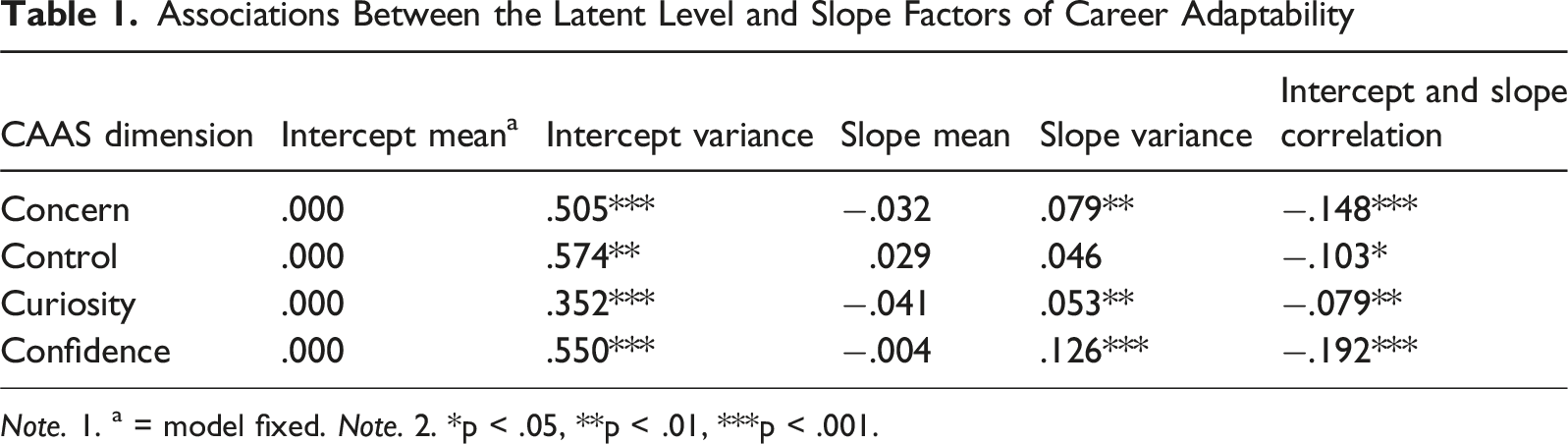
Note. 1. a = model fixed. Note. 2. *p < .05, **p < .01, ***p < .001.
To answer the second research question, emotional difficulties, prosocial behavior, gender, and all SES variables, including caregivers’ educational background, self-reported family income, and the school’s geographical location, were added to the models as predictors of the initial levels for all of the dimensions of career adaptability and the development of career curiosity, career confidence, and career concern. All the predictors were allowed to correlate with each other. The model for career control (Figure 1) had an excellent fit to the data: χ2 (70) = 106.916, CFI = .978, TLI = .969, RMSEA = .029, 90% CI [.017, .039], SRMR = .035. The results showed that perceived family income positively predicted the initial level of career control so that the higher the students perceived their family income, the higher the initial level of career control was. In turn, the schools’ geographical location negatively predicted career control such that students who attended school in rural areas had lower initial level of career control than students in urban areas. The other predictors did not predict the initial level of career control. Additionally, none of the predictors statistically significantly predicted the development of career curiosity. Predictors for the Initial Levels and Development of the Control Dimension of Career Adaptability. Only Statistically Significant Paths are Presented (Standardized estimates).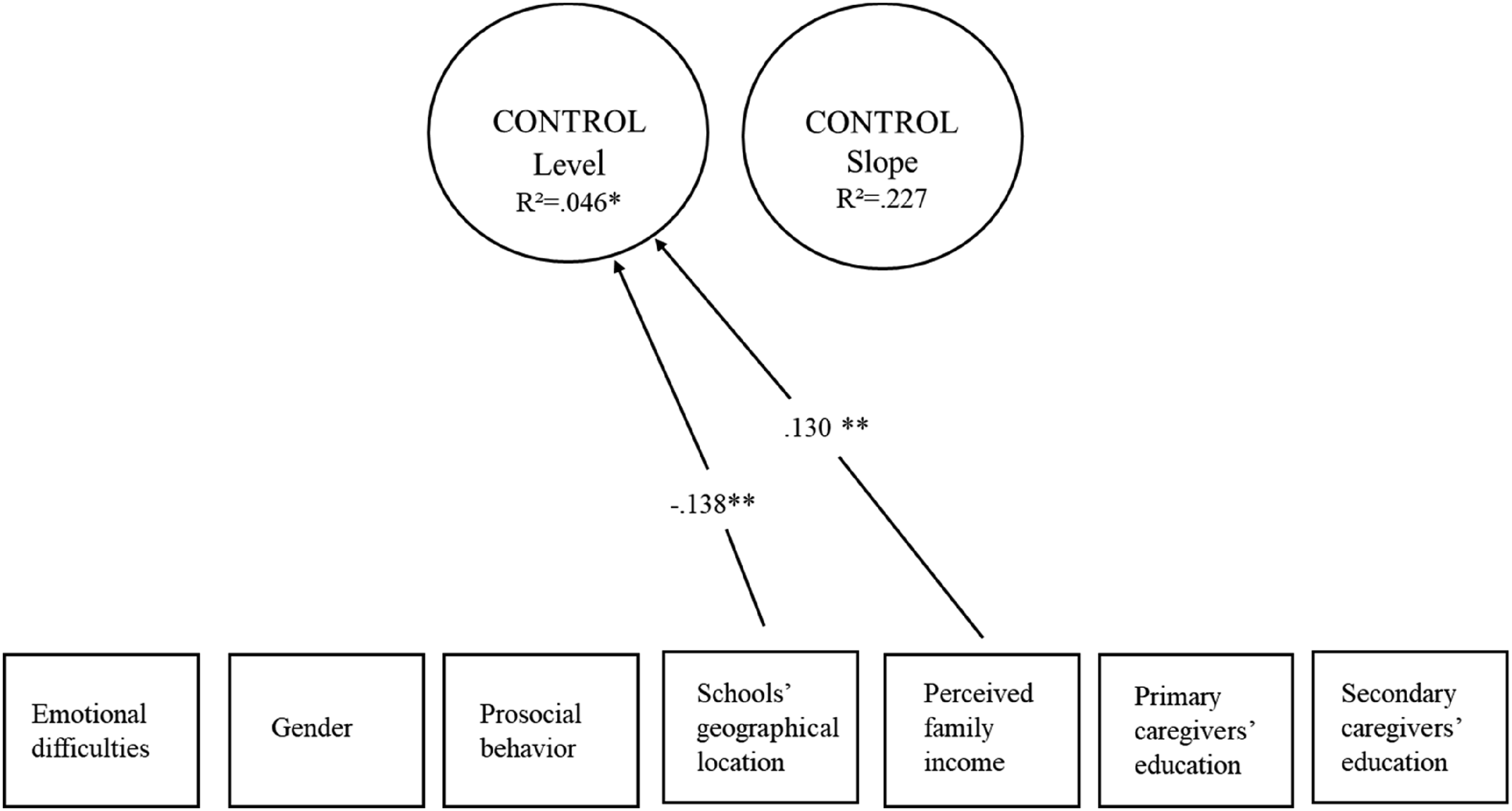
The model for career curiosity (Figure 2) had a good fit to the data: χ2 (70) = 156.699, CFI = .942, TLI = .918, RMSEA = .044, 90% CI [.035, .053], SRMR = .048. The results revealed that gender and perceived family income positively predicted the initial level of career curiosity, thereby suggesting that males had a higher initial level of curiosity compared to females and that the higher the perceived family income, the higher were students’ initial level of curiosity. Furthermore, none of the predictors contributed to the development of career curiosity. Predictors for the Initial Levels and Development of Curiosity Dimension of Career Adaptability. Only Statistically Significant Paths are Presented (Standardized estimates).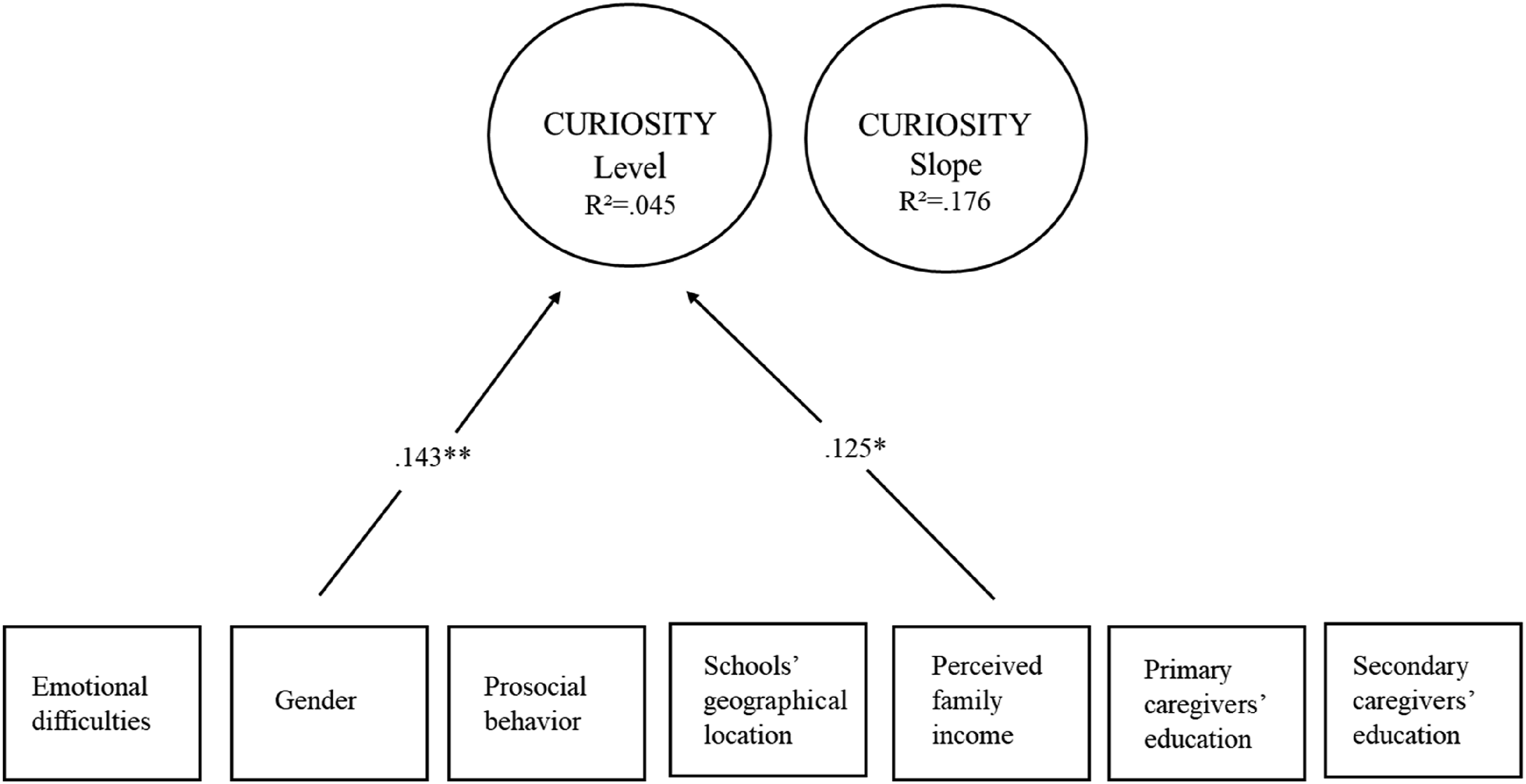
The model for career concern (Figure 3) had an excellent fit to the data: χ2 (69) = 83.545, CFI = .993, TLI = .990, RMSEA = .018, 90% CI [.000, .031], SRMR = .037. The results showed that gender positively and schools’ geographical location negatively predicted the initial level of career concern. Males had a higher initial level of concern than females, and students who attended general upper secondary school in rural environments had lower initial levels of career concern than students in urban areas. Additionally, gender and emotional difficulties both negatively predicted the slope of career concern. Although female students had a lower initial level of career concern, their concern increased more than that of the male students. In addition, the more emotional difficulties students reported, the less their career concern increased. Predictors for the Initial Levels and Development of Concern Dimension of Career Adaptability. Only Statistically Significant Paths are Presented (Standardized estimates).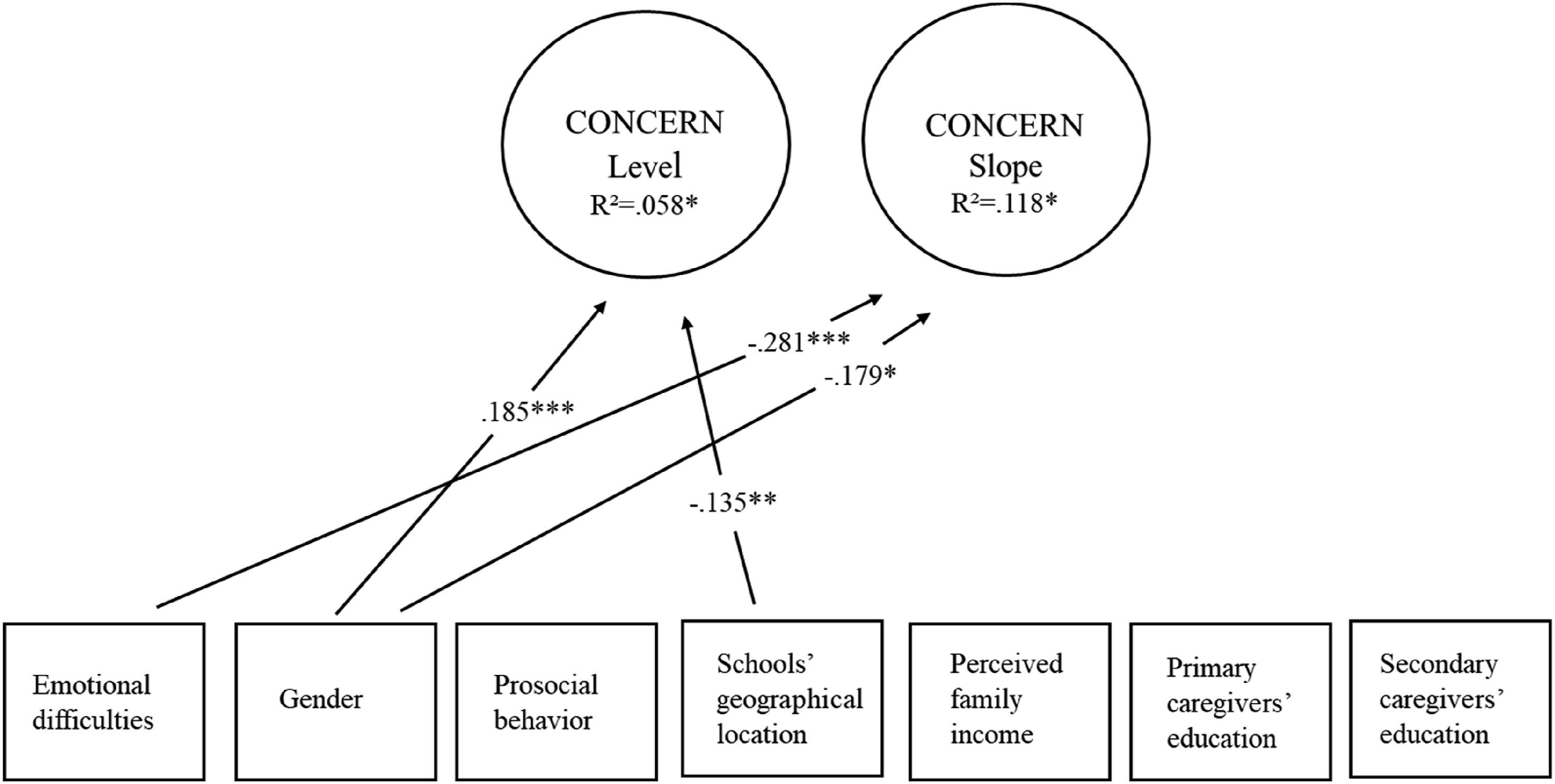
The final model for career confidence (Figure 4) had an excellent fit to the data: χ2 (70) = 83.073, CFI = .992, TLI = .989, RMSEA = .017, 90% CI [.000, .030], SRMR = .033. The results showed that gender positively and schools’ geographical locations negatively predicted the initial level of career confidence: males and urban students reported higher levels of career confidence. In addition, gender also negatively predicted the development of career confidence such that although the males’ initial level of career confidence was higher, their confidence increased less than the female students’. Predictors for the Initial Levels and Development of Confidence Dimension of Career Adaptability. Only Statistically Significant Paths are Presented (Standardized estimates).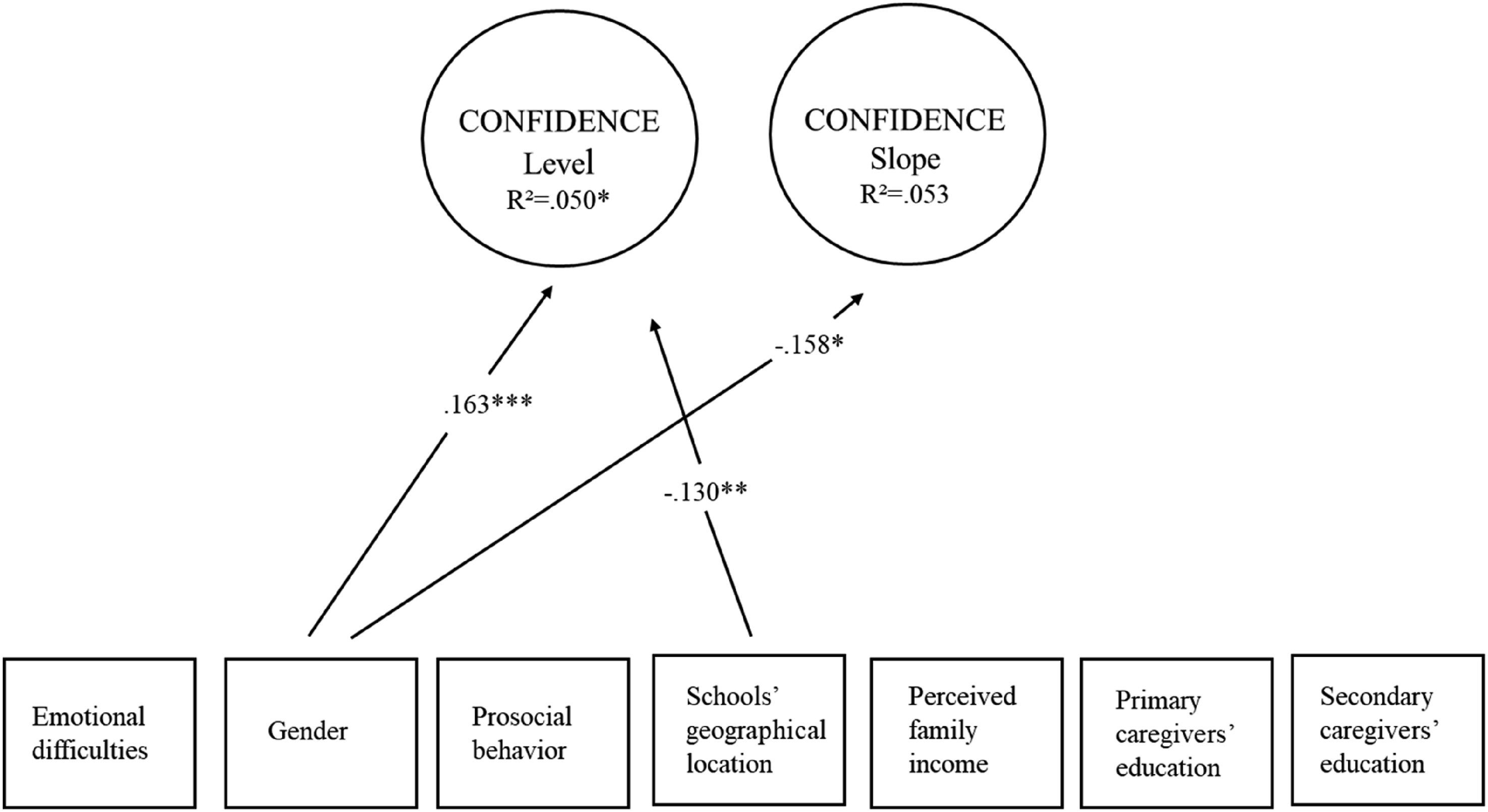
Discussion
Guided by the CCT theoretical framework (Savickas, 2002; Savickas & Porfeli, 2012), this study examined how the four dimensions of career adaptability (control, curiosity, confidence and concern) developed over time in academically demanding, general upper secondary education and to what extent students differed in terms of their initial levels and development of these dimensions. We were also interested in identifying how SES, gender, and socioemotional difficulties and strengths as independent predicters predicted initial levels and the development of the different career adaptability dimensions.
First, our findings showed that there were significant inter-individual differences in students’ levels of career adaptability in all the dimensions. This suggests that students enter into general upper secondary education with varying levels of career-related resources, reflecting differences in developmental pace and reliance on specific dimensions shaped by prior experiences and career stage (Hartung & Cadaret, 2017; Hirschi et al., 2015). This result also emphasized the critical role of career guidance in academically demanding general upper secondary education. Given that students are expected to make key educational decisions relatively early, the observed variability in the dimensions of career adaptability underscored the need to identify students who may lack essential psychosocial resources, as has also been stated by other scholars, such as Jemini-Gashi et al. (2019) and Whiston et al. (2017).
Second, our study identified several predictors that explained the differences in the students’ career adaptability levels. Notably, gender was a significant factor predicting initial levels of career curiosity, concern, and confidence. Specifically, males scored higher than females across all these dimensions, consistent with previous research reporting higher levels of career adaptability among male students. (Hirschi, 2009; Nikander et al., 2022). However, our results also contradicted the prevailing pattern in the literature, where many studies reported the opposite finding—that females had reported higher career adaptability than males (Creed et al., 2010; Negru-Subtirica et al., 2015). These contradictory results suggest that gender differences in career adaptability are complex and may vary depending on cultural, developmental and educational contexts, as suggested in CCT (Savickas, 2002). Several factors may explain the higher levels of career adaptability among males in our study. Prior research suggest that males often report higher self-esteem and a stronger sense of agency than females (Orth et al., 2012), which may contribute to a greater perceived ability to shape their career paths. Conversely, social expectations for females to establish plans early may constrain perceived flexibility, expectations, and confidence regarding career choices (Gibson & Lawrence, 2010) leading to lower self-assessed levels of career curiosity, concern, and confidence. On the other hand, no gender differences were observed in the career control dimension, which suggested that both genders are equally engaged in career-related activities and show a willingness to reflect on their future career choices in academically demanding general upper secondary education.
Our study also demonstrated that the geographical location of the schools significantly predicted students’ initial levels of career control, concern, and confidence. Specifically, students enrolled in rural schools reported lower initial levels in these dimensions compared to their peers in urban environments. These findings support and extend the work of Armila et al. (2018), Alexander (2025), and Bakke and Hooley (2022), who showed that young people in sparsely populated regions often face narrower horizons for career decision-making and are more frequently required to make compromises in their educational and vocational paths. Youth in rural areas perceive limited opportunities and lower confidence, whereas urban environments provide a greater sense of possibilities in career choice. Such disparities may also be partially explained by similar findings from Hou and Liu (2021), who emphasized the role of family socioeconomic status and access to capital resources in shaping students’ career adaptability differences. Consistent with this finding, our study found that perceived family income also was a significant predictor of students’ initial levels of career control and curiosity. When students perceived that their family income was low, it predicted lower initial levels of control and curiosity. This result aligns with previous research (Adler et al., 2000; Autin et al., 2017; Blustein et al., 2002), which demonstrated that subjective social status—one’s perception of their socioeconomic position—can influence key psychological processes, such as perceived control, optimism, and coping strategies, as much as objective indicators of social standing. These psychological factors as stated in CCT, in turn, have a profound impact on the career perspectives of young people (Adler et al., 2000).
Examining the development of career adaptability and the factors that predict this development our findings indicated that all dimensions of career adaptability remained relatively stable over the three-year period of general upper secondary education. However, statistically significant differences between students were observed in the development of three specific dimensions: curiosity, confidence, and concern. While these dimensions were stable on average, individual differences emerged. As CCT suggest, career adaptability evolves and strengthens with age, education and experience, as individuals encounter a variety of career-related decisions and choices shaped by contextual influences (Babarović & Šverko, 2016; Savickas, 2020). Consequently, it can be argued that some students may benefit more than others from the guidance practices and content provided in general upper secondary education. As Savickas (2020) noted, such development can be supported by targeted interventions to enhance individuals’ overall career adaptability—a claim substantiated by prior research demonstrating the effectiveness of such interventions (Jemini-Gashi et al., 2019; Whiston et al., 2017). Our findings also showed that career control remained relatively stable during upper secondary education. This stability may suggest that students’ decision-making abilities and their sense of control over future career-related choices undergo limited development. Although schools are recognized as critical environments for shaping students’ occupational identities (Verhoeven et al., 2019), these findings suggest that, in the context of general upper secondary education, some students may not develop a clear understanding of their vocational options—particularly in terms of control. This is noteworthy because career control is considered a key aspect of successful transition from education to work (Savickas, 2020).
Our findings concerning the predictors of career adaptability development revealed that gender significantly predicted the development of career concern and confidence, with females exhibiting greater increases than males. Notably, although female students began general upper secondary school with lower initial levels of concern and confidence, they demonstrated more substantial developmental gains in these dimensions over time. This aligns with research showing consistently that girls tend to exhibit higher future orientation, academic motivation, and a sense of responsibility during adolescence than boys (Gibson & Lawrence, 2010; Käyhkö, 2011) therefore fostering the development of future-oriented adaptabilities, such as career concern and confidence. Specifically, career concern refers to the degree to which individuals anticipate and prepare for their future roles, while career confidence denotes their perceived ability to cope with challenges and make decisions (Savickas & Porfeli, 2012). Moreover, females may receive more encouragement and reinforcement for planning and help-seeking behaviors (Gibson & Lawrence, 2010)—factors that are positively associated with the development of these adaptability dimensions. It has been suggested that school counselling practices tend to align with communicative and reflective learning styles which are more common among female students, resulting more support to females than males in terms of career planning (Watson & McMahon, 2005).
This study also found that emotional difficulties (e.g., anxiety and depressive symptoms) predicted the development of career concern such that the more students reported these difficulties, the less their career concern increased. In line with CCT model of adaptation, it can be suggested that emotional difficulties, as indicators of adaptative readiness, may interfere with the forward-looking readiness associated with career development (Savickas, 2020). Career concern, defined as the extent to which individuals are oriented toward and engaged with their future careers (Savickas & Porfeli, 2012), requires a degree of psychological stability and future orientation. Emotional difficulties may impair these capacities by narrowing the horizon, reducing individuals’ ability to plan ahead or imagine positive future outcomes (Savickas, 2020; Schellenberg et al., 2022). In this light, emotional well-being can be seen as a foundational resource for adaptive career development as also suggested Rudolph et al. (2017).
Limitations and Future Directions
Although the results of the current study provide new insight into the development of career adaptability and the role of predictors, some limitations should be noted. First, this study was conducted in a specific educational system in Finland; the development and predictors of career adaptability should be studied in different educational systems and cultural contexts. Second, although the variables in this study significantly predicted the development of career adaptability, the explanatory power of the models (R2 values) was relatively low, indicating that only a small portion of the overall phenomenon was explained. Future studies could explore additional variables to capture more of the variance. Third, some participants withdrew from the study; thus, future research should consider strategies to enhance participant retention to ensure continued engagement. Finally, given that subjective SES was measured using a single-item indicator, future research would benefit from integrating register data to capture both objective and subjective dimensions of SES.
Conclusion
Our research shows that there are individual differences in career adaptability among students at the outset of upper secondary education, nor does it develop uniformly. Our findings reveal that in line with CCT, both personal and societal factors distinctly shape not only the initial levels of career adaptability dimensions (concern, control, curiosity, confidence), but also their developmental patterns throughout schooling. Importantly, our findings underscore a broader social-justice issue and draw attention to often-overlooked social factors in guidance—issues that critics such as Blustein et al. (2002) and Hooley et al. (2018) have emphasized. The results reinforce arguments in the literature that social inequalities must be explicitly acknowledged in career guidance practices. Also, while some approaches, such as CCT (Savickas, 2002), are acknowledged as shaped within social contexts, they remain insufficient to address the impact of power relations and social structures on individual agency (McCrory, 2022).
As our data demonstrate, the students’ perceptions of limited financial resources, gender, emotional difficulties, and the geographical location of school were significant factors that have already influenced—and continue to shape—the development of career adaptability in general upper secondary education. As these predictive factors largely relate to initial levels of career adaptability, it suggest that students’ starting points appear predetermined, and existing guidance systems are insufficient to narrow these gaps. These findings provide an empirical basis for developing career guidance in academically demanding school environments, stating the need for more inclusive, equity-driven guidance and targeted counseling interventions. Such support not only facilitates smoother transitions and promotes educational equity (Hooley et al., 2018; Niemi & Laaksonen, 2020) but also enhances aspects of career adaptability, thereby ultimately empowering students to navigate their future career paths more effectively (Jemini-Gashi et al., 2019; Whiston et al., 2017).
Supplemental Material
Supplemental Material - Career Adaptability in General Upper Secondary Education: The Role of SES, Gender, and Socioemotional Factors
Supplemental Material for Career Adaptability in General Upper Secondary Education: The Role of SES, Gender, and Socioemotional Factors by Hanna Nuutinen, Jaana Viljaranta, Riikka Hirvonen, Anne-Mari Souto, Kristiina Lappalainen in Career Assessment.
Footnotes
Acknowledgements
The authors thank Heli Pesonen for co-collecting the data presented in this article. The project was funded by the Finnish Ministry of Education and Culture (OKM/57/592/2018).

Ethical Considerations
Ethical approval was not required in accordance with the Finnish national guidelines (Finnish National Board on Research Integrity, 2009).
Funding
The authors disclosed receipt of the following financial support for the research, authorship, and/or publication of this article: This study is supported by the Finnish Ministry of Education and Culture (OKM/57/592/2018).
Declaration of conflicting interests
The authors declared no potential conflicts of interest with respect to the research, authorship, and/or publication of this article.
Supplemental Material
Supplemental material for this article is available online.
References
Supplementary Material
Please find the following supplemental material available below.
For Open Access articles published under a Creative Commons License, all supplemental material carries the same license as the article it is associated with.
For non-Open Access articles published, all supplemental material carries a non-exclusive license, and permission requests for re-use of supplemental material or any part of supplemental material shall be sent directly to the copyright owner as specified in the copyright notice associated with the article.
