




Abstract
The purpose of this study was to describe the development of a new intervention for jobseekers and to assess its efficacy using a naturalistic, pre-post intervention design. In contrast to existing work-based interventions, the Work Intervention Network (WIN) intervention targets multiple intersecting domains through four modules and via six group sessions: deepening and sustaining relationships; fostering social awareness and reducing self-blame; building emotional resilience and self-care; and planning, exploring, and engaging in the job search. To evaluate the intervention, we first recruited a sample of 33 jobseekers to provide feedback on the program. Integrating their feedback into the design of the program, we then recruited a sample of 108 jobseekers who filled out surveys before and after the six-session intervention, which assessed work and mental health functioning across the four domains. Results revealed that participants were highly satisfied with the intervention and reported large increases in social support, belonging, psychological well-being, job search engagement, and work hope as well as decreases in isolation and self-blame. This study provides strong support for the WIN intervention and has implications for how to support jobseekers in an increasingly precarious labor environment.
Keywords
Across the globe, losing a job and/or facing a work-based transition (particularly an involuntary transition) evokes anxiety and, at times, existential threat given the integral relationships between access to work and survival (Blustein et al., 2021; Duffy et al., 2016; Thompson & Dahling, 2019). In addition to the obvious loss of resources, involuntary work disruptions (such as unemployment and underemployment) have been associated with mental health struggles, family conflicts, and social isolation (Paul & Moser, 2009; Wanberg, 2012). For example, workers who are underemployed – workers involuntarily in substandard employment – often experience comparable disruptions to their psychological, financial, and social functioning to those who are unemployed (Allan & Kim, 2020). In addition, workers facing precarious conditions (such as lack of stability, short-term contracts, gig work) experience mental health and social challenges that parallel the lives of unemployed and underemployed individuals (Allan et al., 2021). In this study, we describe and evaluate a newly developed intervention that seeks to support workers who are seeking jobs in a period of considerable precarity and disruption (Autin et al., 2022; Blustein et al., 2021). While the samples used in this study include primarily people who are unemployed and underemployed, the cohering link among the sample is searching for a job, hence our use of the term jobseekers as the designation for participants in the WIN program. We define jobseekers as individuals who are engaged in an active job search to replace a current job and/or to locate employment during periods of unemployment or underemployment (Wanberg et al., 2020a). The job search generally involves goal-directed activities that can include the following: “clarifying one’s goals (e.g., what type of job do I want?), preparing/revising a résumé, researching companies and job search engines, networking, identifying and applying to open positions, and preparing for interviews with interested employers” (Wanberg et al., 2020a, p. 316). Wanberg and colleagues (2020a) further noted that the job search often involves complex psychological challenges that can evoke feelings of rejection and uncertainty.
The inspiration for the development of a new intervention paradigm for jobseekers emerged during the early months of the COVID-19 pandemic, which were characterized by massive unemployment and underemployment across many sectors of the globe (Blustein et al., 2021). The major disruptions in the workplace, coupled with other losses in relation to health, financial stability, family relationships, and psychosocial functioning coalesced to create a discernible sense of crisis and precarity across various domains of life, including mental and physical health, work, social and racial justice, relationships, and existential survival (Autin et al., 2022; Duffy et al., 2022). In this context, we developed the Work Intervention Network (WIN) program to support jobseekers who increasingly face losses that cut across interrelated aspects of their lives (Blustein et al., 2021). The WIN team integrated evidence-based theories that embrace social justice and systemic perspectives (critical consciousness; Cadenas & McWhirter, 2022; shame/self-blame (Cinamon & Blustein, 2020; Sharone, 2013; psychology of working theory; PWT; Duffy et al., 2016; relational theories, Blustein, 2011; Richardson, 2012) in the design of a holistic set of these workshops. The program was initially designed to meet the needs of unemployed and underemployed jobseekers but expanded its scope as the participants gradually began to encompass people at various phases of their employment status and job search goals. The core elements of the WIN program include four modules, delivered across six group sessions, that focus on deepening and sustaining relational connections, fostering social awareness and reducing self-blame, building emotional resilience and self-care, and planning, exploring, and engaging in the job search. In this article, we review the WIN program’s theoretical, empirical, and integrative practice framework, summarize the program’s intervention content, and present evaluation data supporting its effectiveness.
Existing Unemployment Interventions: Why a New Paradigm is Needed
As summarized by Wanberg and colleagues (2020a), the primary focus of research, theory, and practice on job seeking is the instrumental goal of locating a job, with a particular emphasis on the approaches and tools that individuals can use to maximize their chances of obtaining a job. While these efforts are important, recent research, theory development, and public policy analyses have identified a broader array of issues that may optimally be targeted in interventions for unemployed individuals and other jobseekers, such as enhancing coping strategies, reducing stigma and shame, and deepening relationships (e.g., Allan & Kim, 2020; Cinamon & Blustein, 2020; Sharone, 2013, in press). While many interventions focus specifically on the tasks of the job search, some innovative programs have adopted a more holistic approach. For example, the JOBS intervention (Vinokur et al., 1995) provides a theory-driven and evidence-based intervention that offers job-seeking training to long-term unemployed individuals with varying risks for depression. This intervention is rooted in a motivation-based conceptual framework (Vinokur et al., 1995) founded on the idea that prior experiences, including setbacks, influence motivation. By enhancing workers’ sense of mastery through acquiring job-search and problem-solving skills, this intervention seeks to help people overcome setbacks in the job-search process (Vinokur & Price, 2015).
Researchers also have developed evidence-based interventions focused on job-interview simulation training (Aysina et al., 2016), career decision making (Bullock-Yowell et al., 2014), goal orientation (van Hooft & Noordzij, 2009), and self-confidence (Hillman & Knill, 2018). In addition, Wanberg and colleagues (2020b) designed an online networking intervention (Building Relationships and Improving Opportunities; BRIO) to support unemployed individuals by enhancing their networking skills and options (i.e., using existing or new social contacts to find work and obtain instrumental support for their job applications), which demonstrated positive effects on networking self-efficacy and the quality of re-employment (Wanberg et al., 2020b). However, while JOBS and BRIO have an evidence-base, these interventions focus on ramping up clients’ job searches without sufficient attention to the interrelated psychosocial challenges evoked by challenging work-based transitions. In addition, interventions that solely focus on job search skills may implicitly convey the message that unemployment is an individual problem and that jobseekers are to blame for their own unemployment (Sharone, 2013, in press).
In contrast, the WIN program differs from existing interventions in important ways, such as offering a broader and more psychologically inclusive perspective and approach to job-seeking interventions. First, the WIN program is based on a holistic view of people struggling with employment disruption. Rather than viewing psychosocial or networking interventions as a means of enhancing connections primarily to facilitate the job search, the WIN program positions mental health, relational connections, career planning, and reducing self-blame and shame as goals in and of themselves. We argue that jobseekers need to attend to the full scope of issues that are evoked by work-based transitions, particularly during periods of uncertainty and precarity (which has been the case for many populations across the globe, particularly since the advent of the pandemic; see Blustein et al., 2022). Second, the WIN program seeks to integrate mental health and relational domains of functioning with work-based issues, thereby breaking down the artificial boundaries that have created siloed interventions (Blustein et al., 2021; Richardson, 2012). Third, the WIN program focuses on prevention as an intervention strategy, with the intention of enhancing clients’ capacities to manage stress and improve self-care strategies. Fourth, building on research that affirms the intersection of macro-level and social justice frameworks in understanding unemployment (e.g., Blustein, 2019; Sharone, 2013, in press), the WIN intervention focuses on reducing shame and self-blame, which is one of the most adverse outcomes for jobseekers (Autin et al., 2022; Cinamon & Blustein, 2020; Sharone, in press). Taken together, the WIN program represents a new paradigm in interventions for jobseekers that offers evidence-based tools for preventing and mitigating the negative impact of the job search.
Theoretical and Empirical Foundation of the Work Intervention Network Program
Primarily informed by PWT, relational theories of working, and shame/self-blame theories (Blustein et al., 2021, 2019; Cinamon & Blustein, 2020; Duffy et al., 2016; Richardson, 2012; Sharone, in press), the WIN program is based on an inclusive view of how work functions in individuals’ lives. As a theory of vocational development, PWT critiqued, extended, and expanded existing theoretical contributions with a deliberate attempt to include all individuals who work and who want to work. Central to the premises of PWT and the WIN program is the notion that working can fulfill a variety of core needs, including needs for survival and power, social connection, contribution, and self-determination. PWT also emphasizes the integration of life roles (work and non-work), experiences, contexts, and calls for interventions at individual and systemic levels (Blustein et al., 2019; Duffy et al., 2016).
According to the core tenets of PWT, work is inherently connected to an individual’s health and well-being (Blustein et al., 2019; Duffy et al., 2016). The close connection between work and mental health is a central tenet of PWT and informs intervention strategies that intentionally seek to integrate life experiences across contexts, as is the case with the WIN program (Blustein et al., 2021). As detailed in the PWT model (Duffy et al., 2016), macro-level factors predict access to decent work, as mediated by career adaptability and work volition. Access to decent work optimally facilitates fulfillment of basic needs, which then culminates in well-being and work satisfaction. Therefore, the WIN program includes factors from the PWT model that are amenable to intervention and that fit the specific needs of jobseekers, such as enhancing social awareness and social support, which are integral aspects of the WIN program. Consistent with the essential role of well-being in PWT, we developed a module that focuses on self-care and building emotional resilience. Moreover, PWT was instrumental in the construction of the module on planning, exploring, and engaging in the job search by informing the application of work hope and agency as viable goals for jobseekers (Blustein et al., 2019).
Another theoretical influence on the WIN program are relational theories of working, which have foregrounded the importance of relationships and social support in nearly all aspects of career development, work adjustment, and work-based transitions (e.g., Blustein, 2011; Richardson, 2012). The WIN program infuses interventions derived from relational theories in designing all four of the modules, as reflected in the use of a group format, which intentionally is designed to foster connection and mitigate the social isolation of the job search. Moreover, the module devoted to deepening and sustaining relationships reflects relational theory by providing participants with a means of enhancing their interpersonal connections. In addition, the theoretical tenet of relational theories that articulates the entire enterprise of working as a relational act is embodied throughout the WIN program in its clear attention to the social and relational nature of work and the job search process.
Critical consciousness, shame, and self-blame theories and perspectives also informed the WIN program, particularly the module focused on fostering social awareness. Critical consciousness refers to the capacity to read the world, understand the nature of structural and systemic forces, and optimally act on these adverse conditions (Cadenas & McWhirter, 2022; Diemer & Blustein, 2006). As a meta-framework for the intervention, critical consciousness served as a conceptual lens to inform the underlying narrative of the WIN program, which focuses on helping participants to understand the nature of the job search challenges from a broad, systemic vantage point. The WIN program also highlights the differential nature of the job search, which is deeply shaped by privilege and marginalization as well as contextual factors, such as the duration of unemployment, ageism, and other stigmatizing factors. In this project, we designed interventions that seek to shift the perspective about job search barriers away from the self toward the broader social and economic systems that shape access to the world of work with the intention of reducing self-blame and shame (Cinamon & Blustein, 2020; Sharone, 2013, in press). Cinamon and Blustein (2020) describe shame as self-conscious emotions that evoke embarrassment, humiliation, and rupture in social and community-based connections; in the working context, shame may be a consequence of internalizing self-blame in the struggles of a job search.
Examining these theoretical contentions, a recent study tested the theoretical framework of the WIN program by developing a structural model of the core constructs that inform the development of the intervention (Autin et al., 2022). As reflected in the theoretical framework of the WIN program, the model examined the contribution of un/underemployment in predicting life satisfaction, well-being, and psychological distress. Using constructs that reflect each of the four modules of the WIN program (i.e., career engagement, social support, emotional resilience/self-care, and shame/self-blame), the authors found that the core elements of the theoretical model underlying the WIN program mediated the relation between un/underemployment and the aforementioned outcomes, thereby supporting the conceptual framework of this initiative.
An Overview of the Work Intervention Network Program
The WIN program encompasses four major thematic threads based on the literature on interventions designed to support people who are facing work-based transitions. Each of the following modules is reflected in the WIN program by one or two workshop sessions that provide psychoeducation and psychosocial support. (Further details on the WIN program including the objectives, purpose, sample activities, and materials for each module can be found in Appendix A, which is available by request from the first author).
Building Emotional Resilience and Self-Care (Two Sessions)
Work disruptions (such as unemployment and underemployment) can have considerable adverse impacts on mental health, especially for individuals facing long-term unemployment (Artazcoz et al., 2004; Caplan et al., 1989). The strong connection between unemployment and psychological distress, including feelings of hopelessness, uselessness, and isolation, has been particularly problematic during national and global periods of economic hardship such as the Great Recession (Blustein, 2019) and the early phases of the COVID-19 pandemic (Blustein et al., 2021). Given the pervasiveness of mental health impacts of unemployment, there is a substantial body of evidence underscoring the important role of emotional resilience and self-care in managing work-related disruptions (e.g., Pelaez-Fernandez et al., 2021; Sojo & Guarino, 2011). As suggested by these studies and by the theoretical and empirical connections between unemployment and mental health identified in both PWT and relational theories of working (Blustein, 2019; Paul & Moser, 2009; Richardson, 2012), the WIN program centers on the development of coping strategies as a key goal for participants facing unemployment and other work-related stressors (such as challenging job searches and precarious work). By developing emotional resilience, our program seeks to bolster participants’ protective factors against the detrimental mental health effects of the job search via structured exercises, mindfulness practice, group discussions, and psychoeducational interventions.
Planning, Exploring, and Engaging in Job Search (Two Sessions)
Focusing on job-search strategies alone may not sufficiently address the full range of barriers, motivators, and psychological processes that underlie an individual’s job-search pursuits such as goal exploration, goal clarity, and self-regulation (van Hooft et al., 2021). Thus, while prioritizing individuals’ needs for survival, job-search interventions may also incorporate strategies that enhance self-awareness and other career planning behaviors. This module of the WIN workshops incorporates a discussion of evidence-based job-searching skills, along with exploration of one’s self-concept, connecting (or reconnecting) with one’s aspirations and hopes, and developing skills for coping with a potentially long and challenging job-search process. This module also seeks to promote work hope, with a particular focus on the agency aspect of this construct, which reflects the importance of participants developing a positive intention to engage in their job search. Moreover, the development of agency is an optimal psychological resource in work and career development processes, as articulated in both PWT and relational theories, and therefore served as a target of this module.
Deepening and Sustaining Connections (One Session)
One of the most challenging aspects of the job search is the social isolation that is associated with job loss, unemployment, and precarious work (Allan & Kim, 2020). Informed by relational theories of working and PWT, this module focuses on supporting the participants in developing connections both within the group and their broader social networks. This module’s intention is to deepen and expand participants’ connections to gain the psychological and social resources they need to manage the loss of relational support at work and stressors within their existing relationships. Relational theories of working have underscored the importance of social support and relationships in managing work-based transitions (e.g., Blustein, 2011; Richardson, 2012). Moreover, empirical research has demonstrated that people are able to manage the stress of unemployment better when they have access to both emotional and instrumental support (e.g., Blustein, 2019). As opposed to interventions that focus on building networks to enhance leads on a job search, this workshop is devoted to deepening and sustaining connections to support jobseekers’ well-being and capacity to manage stress.
Fostering Social Awareness and Reducing Self-Blame (One Session)
A key attribute of the WIN program is the module devoted to enhancing social awareness and reducing shame and self-blame. Although unemployment is a social problem rooted in social and economic forces, unemployed and underemployed jobseekers typically encounter a strong societal stigma and the perception of others that they are tainted, flawed, or otherwise responsible for their own unemployment (e.g., Goffman, 1963; Pedulla, 2020). As such, one of the most challenging aspects faced by jobseekers is the tendency to internalize the sense of rejection and isolation, which can contribute to shame and to declines in physical and mental health, thereby undermining one’s effectiveness in the job search (Cinamon & Blustein, 2020; Pugh, 2015; Sharone, 2013, in press). Despite the negative consequences of shame and self-blame, most interventions do not address these issues and may in fact reinforce it with the individualistic message that unemployed jobseekers’ primary focus should be to improve their job search skills (Sharone, 2013, in press). By contrast, the WIN program is specifically designed to support jobseekers in combating the tendency to internalize stigma, thereby making explicit the external forces contributing to unemployment.
The Present Study
The purpose of this study was to evaluate the effectiveness of the WIN intervention using a naturalistic, pre-post evaluation design with jobseekers accessing services at community-based agencies. Specifically, we aimed to (a) assess participants’ reactions to the intervention as a source of initial evaluation feedback and a means of providing input on program modifications and (b) investigate whether participants reported improved functioning after the intervention in areas targeted by this program. Therefore, the initial phase of the study was an exploratory assessment of participants’ feedback about the WIN intervention, followed by a second phase of a systematic pre-post evaluation. This methodology fits the naturalistic design of the WIN program and provides a needed opportunity to establish an empirical foundation for further dissemination and evaluation of the program. For the latter phase of this project, we hypothesized that participation in the WIN program would be associated with significant and meaningful increases in social support, belonging, psychological well-being, job search engagement, and work hope as well as decreases in isolation and self-blame.
Method
Participants
The sample who completed the initial feedback survey consisted of 33 participants, with ages ranging from 32 years to 73 years (M = 54.79; SD = 11.49). Most participants identified as women (n = 20, 66.7%), followed by men (n = 10, 33.3%). In terms of racial and ethnic background, most identified as white (n = 20, 60.6%), followed multiracial (n = 3, 9.1%), Black/African American (n = 2, 6.1%), and Hispanic/Latinx (n = 2, 6.1%). A majority of the sample reported that the highest level of education they had attained was at the four-year college or university level (n = 15, 51.7%), followed by graduate school (n = 7, 24.1%), professional school (n = 4, 13.8%), and community college (n = 3, 10.3%).
In the second phase of the study, 108 jobseeking adults completed the pre-post evaluation surveys. Participants ranged in age from 22 years to 76 years (M = 49.22; SD = 14.70) and most participants identified as women (n = 78, 72.2%), followed by men (n = 22, 20.4%) and non-binary (n = 3, 2.8%). In terms of racial and ethnic background, most of the sample identified as white (n = 80, 74.1%), followed by multiracial (n = 5, 4.6%), Hispanic/Latinx (n = 5, 4.6%), Black/African American (n = 3, 2.8%), Asian/Asian American (n = 3, 2.8%), Native American/Indigenous (n = 2, 1.9%), and Middle Eastern/Arab American (n = 1, .9%). Most of the sample had attained a graduate school level of education (n = 42, 40.8%), followed by four-year college or university (n = 40, 38.8%), community college (n = 9, 8.7%), high school (n = 8, 7.8%), and professional school (n = 4, 3.7%). For employment status, most participants reported that they were unemployed (n = 64, 62.1%), followed by part-time work (n = 13, 12.6%), short-term work (n = 12, 11.7%), full-time work (n = 12, 11.7%), and other work statuses (n = 5, 1.9%).
Measures
Feedback Survey
Means and Standard Deviations of Intervention Feasibility Questions (N = 33).
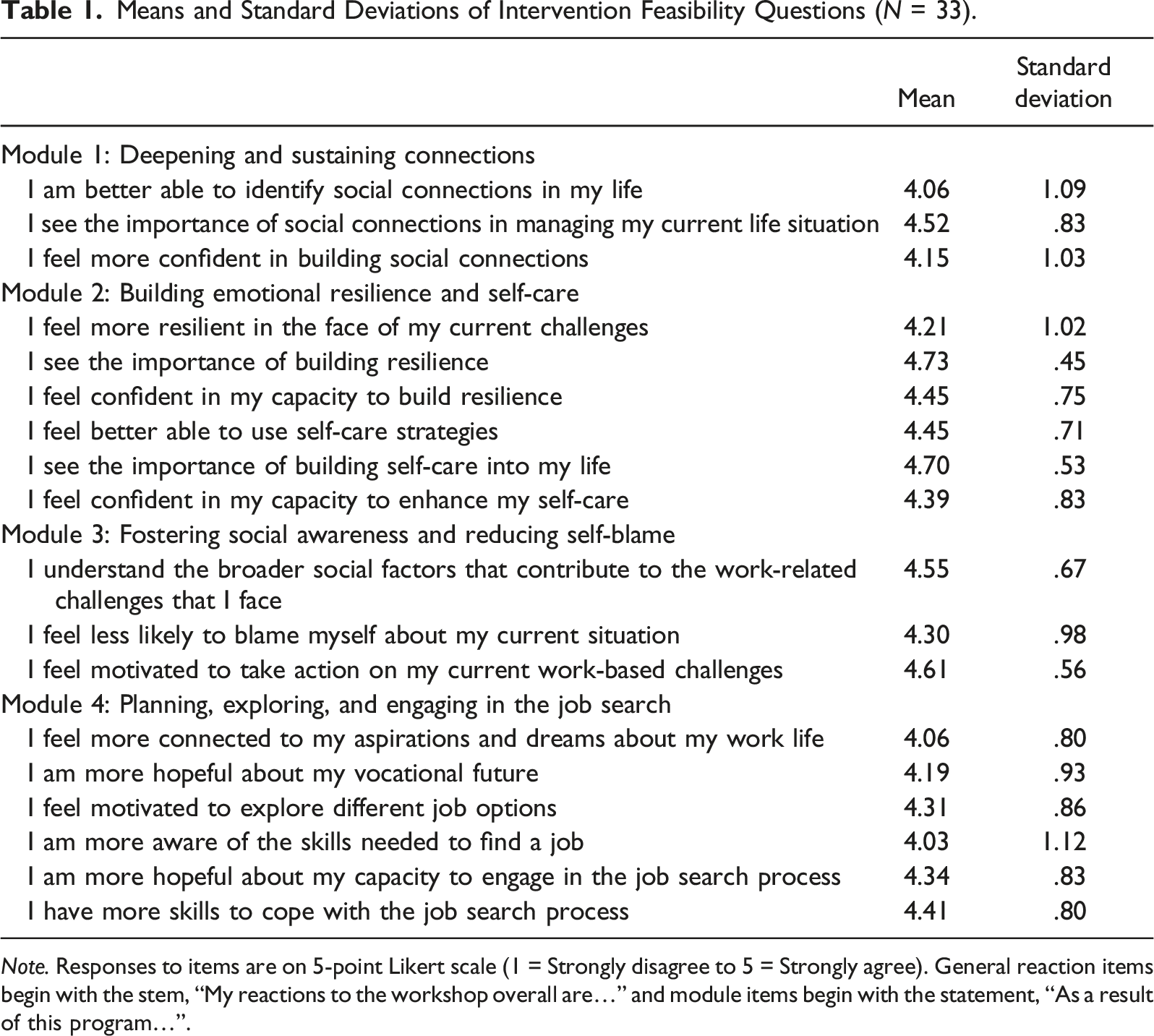
Note. Responses to items are on 5-point Likert scale (1 = Strongly disagree to 5 = Strongly agree). General reaction items begin with the stem, “My reactions to the workshop overall are…” and module items begin with the statement, “As a result of this program…”.
Because these items were used solely to assess participants’ reactions to the intervention rather than to make statistical inferences, we did not create constructs or composite scales; rather, we examined the scores of each individual item and the overall means. In the design of this survey, we focused on ensuring that the items had clear content validity and that they were consistent with the literature that informed the development of the WIN program. Thus, each item was based on specific attributes or goals for the program. High scores on these items reflect greater self-reported progress in managing given challenges of unemployment.
Social Support and Isolation
As described in more detail later, we developed five new scales to capture experiences targeted in the intervention, for which there were no existing questionnaires; these items were used in tandem with existing validated scales. (The newly developed items are provided in Appendix B, which is available by request from the first author.) First, to target the Deepening and Sustaining Relationships workshop, we measured social support with two items and social isolation with three items based on the psychological and social aspects of unemployment (Sharone, 2013; Wanberg et al., 2020a). Participants responded to items on a seven-point Likert scale ranging from (1) Strongly Disagree to (7) Strongly Agree with higher scores reflecting greater levels of social support and social isolation. Sample items include, “I have people I can talk to about the challenges of my work situation” (social support) and “My challenges with employment make me feel alone” (isolation). In the current study, the estimated internal consistencies for social support using the Spearman-Brown coefficient for a two-item scale (Eisinga et al., 2013) were ρ = .71 (pre-intervention) and ρ = .70 (post-intervention). The estimated internal consistencies for isolation were α = .81 (pre-intervention) and α = .78 (post-intervention).
Belonging
Also related to the Deepening and Sustaining Relationships workshop, we measured participants’ sense of belonging using the six-item Acceptance/Inclusion subscale from the General Belongingness Scale (GBS; Malone et al., 2012) because of its clarity and relevance for the WIN program. Participants responded to items on a seven-point Likert scale ranging from (1) Strongly Disagree to (7) Strongly Agree. Higher scores indicate higher levels of belongingness. Sample items include “I feel accepted by others” and “I have a sense of belonging.” In the initial validation study, the scale correlated in expected directions with the Big Five personality traits and demonstrated good internal consistency (α = .92). In the current study, the internal consistency reliability estimates were α = .93 (pre-intervention) and α = .95 (post-intervention).
Self-Blame
To assess outcomes of the Fostering Social Awareness and Reducing Self-Blame workshop, we developed four items to assess shame and self-blame related to participants' work situations. The content of these items derived from shame theory (e.g., Tangney et al., 2007), and more specifically, the application of shame and self-blame to the unemployment and job search experiences (Cinamon & Blustein, 2020; Sharone, 2013). Participants responded to items on a seven-point Likert scale ranging from (1) Strongly Disagree to (7) Strongly Agree. Higher scores indicate higher levels of self-blame and shame, and a sample item includes, “I feel ashamed about my work situation”. In the current study, the estimated internal consistencies for this measure were α = .82 (pre-intervention) and α = .83 (post-intervention).
Mental Health
To assess outcomes related to Building Emotional Resilience and Self-Care, we measured participants’ mental health with the six-item psychological well-being subscale from Lamers and colleagues’ (2011) Mental Health Continuum-Short Form. Participants responded to items on a six-point Likert scale ranging from (1) Never to (6) Every Day. Higher scores indicate higher levels of well-being. The stem was, “During the past month, how often did you feel …” and items included “That you liked most parts of your personality” and “That your life has a sense of direction or meaning to it.” In the initial validation study, the scale correlated in expected directions with related constructs and demonstrated good internal consistency (α = .89). The estimated internal consistencies in the current study were α = .83 (pre-intervention) and α = .80 (post-intervention).
Job Search Engagement
To assess outcomes related to the Planning, Exploring, and Engaging in Job Search workshop, we created five items measuring engagement related to the specific set of tasks of managing unemployment and the job search process. Accordingly, the new items were based on current theory, research, and practice on the challenges of seeking work in the current context (e.g., Autin et al., 2022; Blustein, 2019; Sharone, 2013; Wanberg et al., 2020a). Participants responded to items on a seven-point Likert scale ranging from (1) Strongly Disagree to (7) Strongly Agree with higher scores reflecting greater levels of job search engagement. Sample items include, “I know how to make progress in my employment goals” and “I can stay motivated in a challenging job-search process”. The internal consistency reliability estimate in the current study was α = .84 (pre-intervention) and α = .83 (post-intervention).
Work Hope
Also related to the Planning, Exploring, and Engaging in the Job Search workshop, we measured work hope using the nine-item Agency subscale of Juntunen and Wettersten’s (2006) Work Hope Scale (WHS). Participants responded to items on a seven-point Likert scale ranging from (1) Strongly Disagree to (7) Strongly Agree with higher scores indicating higher levels of work hope agency. Sample items include, “I have the skills and attitude needed to find and keep a meaningful job” and “I believe that I am capable of meeting the work-related goals I have set for myself.” In the initial validation study, the Agency subscale correlated positively with career decision-making, work goals, and vocational identity; demonstrated stability over time; and had good internal consistency (α = .87; Juntunen & Wettersten, 2006). In the current study, the internal consistency reliability estimate was α = .86 (pre-intervention) and α = .89 (post-intervention).
Evaluation Design
The evaluation portion of the WIN program received approval from the University’s Institutional Review Board affiliated with the senior author of this project. In addition, an informed consent form was reviewed and signed by all the participants prior to the start of the workshops. This study was a naturalistic intervention study with an initial feedback survey phase followed by a pre-post evaluation design with surveys distributed to participants before and after the intervention. First, we implemented the intervention with 33 participants who completed the feedback surveys after the intervention. We used information gathered from this initial survey to make slight modifications to the content and structure of the WIN workshops and to scaffold our transition to the pre-post evaluation study.
Following this initial evaluation, we conducted a pre-post evaluation among a new sample of 108 participants. A naturalistic pre-post evaluation design has been used in previous career intervention studies as a means of establishing a foundational understanding of the efficacy of innovative projects (see, for example, Ali et al., 2017; Gibbons et al., 2020 for studies with similar designs). All participants completed a demographic questionnaire, along with the pre-post measures discussed previously. Some early participants in the pre-post evaluation also completed the feedback surveys, but these initial surveys were discontinued part way through the pre-post evaluation due to participant burden and consistent reports of high satisfaction. At the outset of the pre-post evaluation study, some participants opted out or did not complete the survey. Therefore, we began providing a modest incentive ($5 Amazon gift cards) for completion of each pre- and post-evaluation survey.
The trained facilitators and other staff from the agencies recruited participants from the client populations within participating agencies via direct referrals from career practitioners, announcements via email, and outreach to clients being served by that agency. The criteria to join the WIN program were based on self-selection and recommendations from career service providers. The common themes and phrases were used in recruitment emails and flyers include the following: free support and skill building workshop; create a supportive network by bringing together a small group of clients for group discussions about barriers; focus on the social/emotional aspects of being in a job search; support in dealing with stressors of the job search. One of the major sources of client interest was based on the holistic approach and the attention to a broad array of issues that were targeted by the WIN program.
The prospective participants were also informed that they would be asked to complete a voluntary evaluation survey at the outset of the program (during the early part of the first session) and at the conclusion of the final session. All the workshops met via an online video conference platform (such as Zoom) and the surveys were also distributed online via a Qualtrics link posted on the chat. Specifically, the pre-evaluation survey was administered after the general introduction of the workshops and the icebreakers during the first session; the post-evaluation survey was administered toward the end of the final workshop session after the content was completed. For the most part, the surveys were completed during workshop time, which facilitated participation. The facilitators, and often a member of the WIN program staff, were available during the survey completion to respond to any questions that arose.
Intervention
The intervention integrates evidence-based research and practical experience within four modules delivered as a series of six 60-to-90-minute workshops: Deepening and Sustaining Relationships; Fostering Social Awareness and Reducing Self-Blame; Building Emotional Resilience and Self-Care; and Planning, Exploring, and Engaging in the Job Search. We developed a detailed program manual organized by these modules, which includes agendas, suggested prompts, exercises, meditations, reflections, homework assignments, resource lists, and handouts. In the spring of 2021, we began offering the intervention through a non-profit vocational service organization with national and international affiliates, with whom our team had an existing professional connection. This non-profit agency is a leader in providing career and work interventions across North America focusing on work-based transitions, unemployment, underemployment; at some locations, services are provided for refugees, people with disabling conditions, and people who have been incarcerated. The WIN program team developed a partnership with the network that coordinated and supported the agencies; this partnership provided a means for the WIN team to recruit potential workshop facilitators and to coordinate efforts with other related initiatives designed to support jobseekers. Within these affiliates, members of the WIN program contacted potential providers by reaching out to agency leadership to recruit participants for the two-hour, free online video training that provided an overview of each of the four modules in the manual and focused on the psychosocial/emotional and systemic issues that job seekers encounter. Each of the WIN program facilitators had extensive experience in offering career development and job search interventions for individuals and groups and developing job search/career planning materials; a majority of the facilitators had master’s level training in either social work, counseling or related fields, and all of the facilitators had extensive on-the-job training in designing and delivering job search interventions. The prospective facilitators were asked to adhere to the main content elements of each module while also using some flexibility to adapt the content to the unique context and population of their groups. In sum, adherence to the program model was systematically provided via the use of the required training session, the detailed manual, and the availability of consultation for facilitators. (Readers interested in learning more about the program and/or replicating and extending this study are encouraged to contact the first author for access to the program manual, Web site, and pro-bono training to deliver the program.)
Scale Development
At the outset of the pre-post intervention study, we developed scale items to assess change in constructs not adequately captured by existing questionnaires. For example, while there are general social support and self-blame questionnaires, these do not refer directly to the experience of jobseekers. Therefore, we developed scales for social support, isolation, self-blame, and job search engagement that reflect the experiences targeted in the intervention, while also including some existing validated scales. We developed our original scales through an iterative process by conducting exploratory factors analysis halfway through the intervention and deleting poor performing items (Worthington & Whittaker, 2006). To evaluate the factor structure of the final used scales in the current study, we conducted confirmatory factor analysis on scale scores from the pre-intervention survey. Specifically, our primary goal was to confirm the final scales fit the data well within a correlational model and that items loaded sufficiently on their constructs. To evaluate fit, we tested models in AMOS 29.0 with maximum likelihood estimation and used the chi-square test (χ2), the comparative fit index (CFI), and the root mean square error of approximation (RMSEA). A significant χ2 can indicate a poor fitting model, but this test is not reliable in larger samples. Criteria for the CFI and RMSEA have ranged from less conservative (CFI ≥ .90; RMSEA ≤ .10) to more conservative (CFI ≥ .95; RMSEA ≤ .08; Hu & Bentler, 1999).
Results
Preliminary Analyses
None of the study variables had skewness or kurtosis values outside acceptable limits (Weston & Gore, 2006), and we did not identify any outlier scores. In terms of missing data, 75 (69.4%) participants completed both the pre and post surveys, and 33 (30.6%) participants completed only one survey of data. To assess for bias related to dropout, we created a missing data dummy code variable (0 = stayed in the study; 1 = dropped out after pre-survey) and correlated it with study variables. This dummy code was not significantly related to any study variables, indicating no issues with dropout. Little’s missing completely at random (MCAR) test conducted with all items was also not significant, χ2 (458) = 444.76, p = .663, indicating that data was MCAR. Therefore, we used multiple imputation with pooled estimates from 20 datasets in SPSS to handle missing data, which is superior to other approaches like listwise deletion (Schafer & Graham, 2002).
Confirmatory Factor Analysis
As noted previously, we tested our original scales in one correlational model. This model had good fit to the data, χ2 (71) = 106.66, p = .004, CFI = .94, and RMSEA = .07, 90% CI [.04, .09], and all items loaded onto their constructs at .61 or above.
Feedback Survey Results
Table 1 displays the descriptive statistics for the initial feedback questions, which were measured on a five-point Likert scale (1 = Strongly disagree to 5 = Strongly agree). As seen in the table, average responses to items ranged from 4.03 to 4.70, which correspond to between “agree” and “strongly agree” on the Likert scale. The participants also shared qualitative suggestions, which resulted in the following changes in the WIN program: providing more time to process group-related experiences; supporting participants in integrating new ways of approaching their current situation; informing the participants at the outset about the group focus and the shift from traditional job search groups; ensuring that facilitators had access to numerous materials, activities and resources.
Pre-Post Test Evaluation
Correlations Among Study Variables.
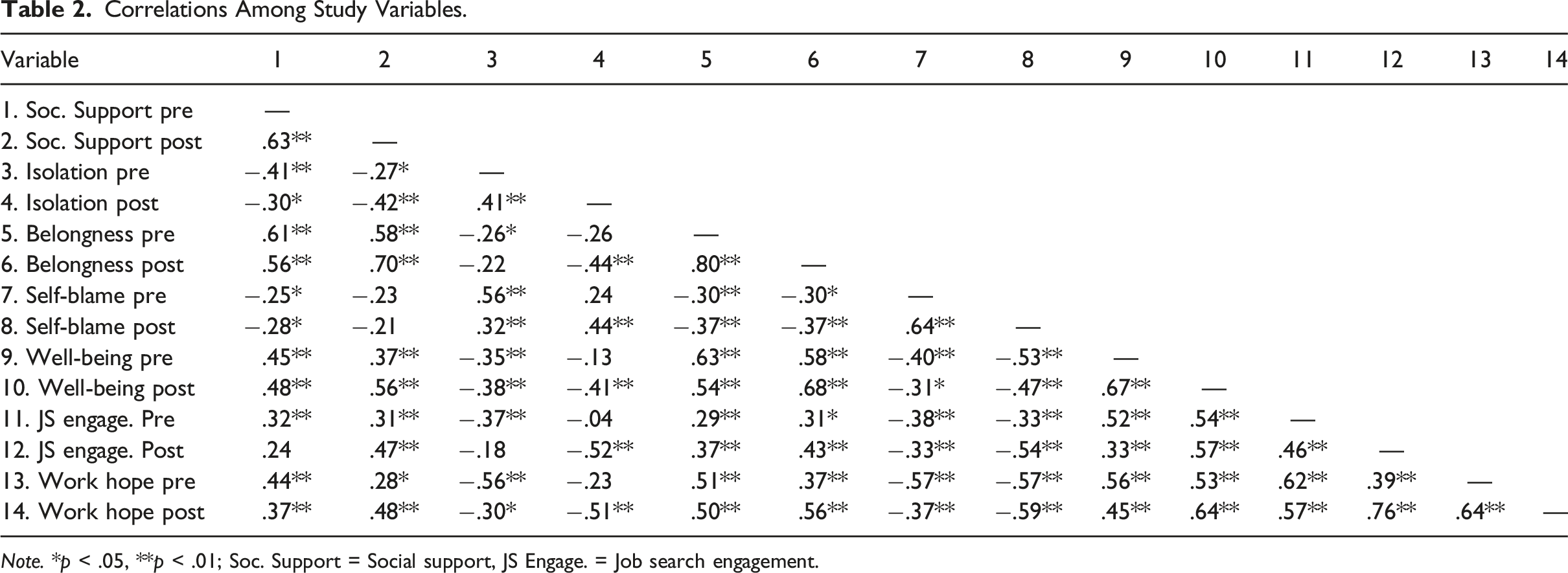
Note. *p < .05, **p < .01; Soc. Support = Social support, JS Engage. = Job search engagement.
Paired Samples T-Tests Comparing pre- and Post-Intervention Study Variables Means.
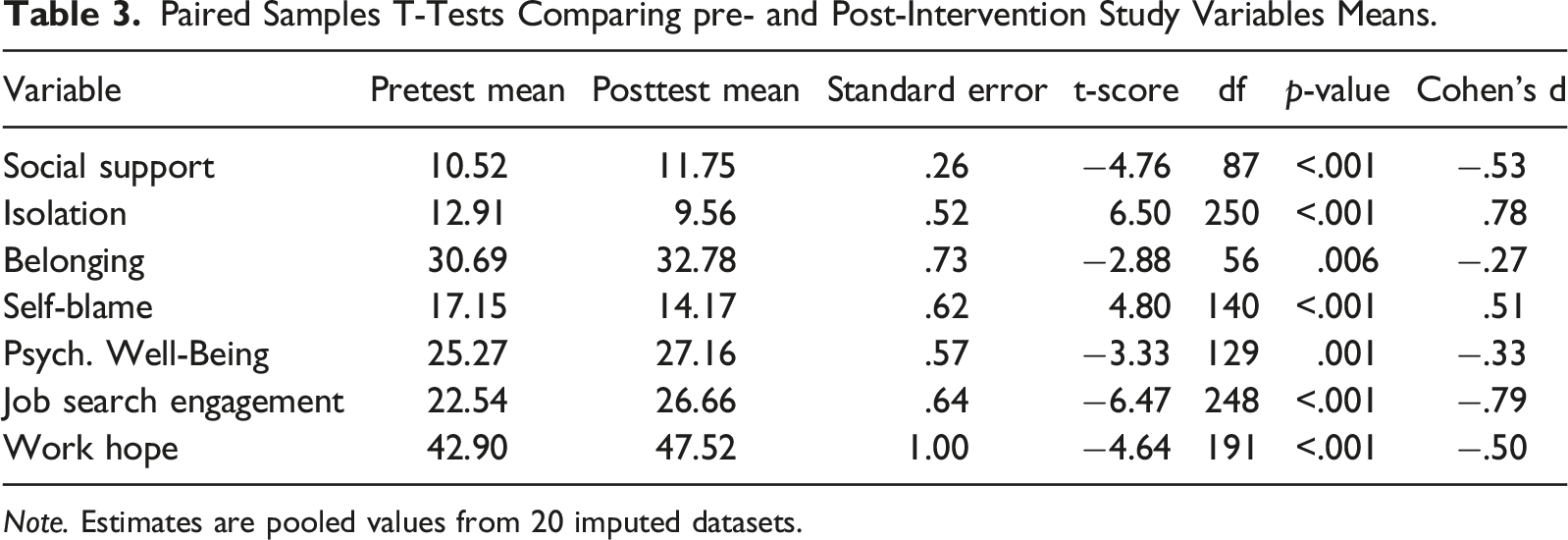
Note. Estimates are pooled values from 20 imputed datasets.
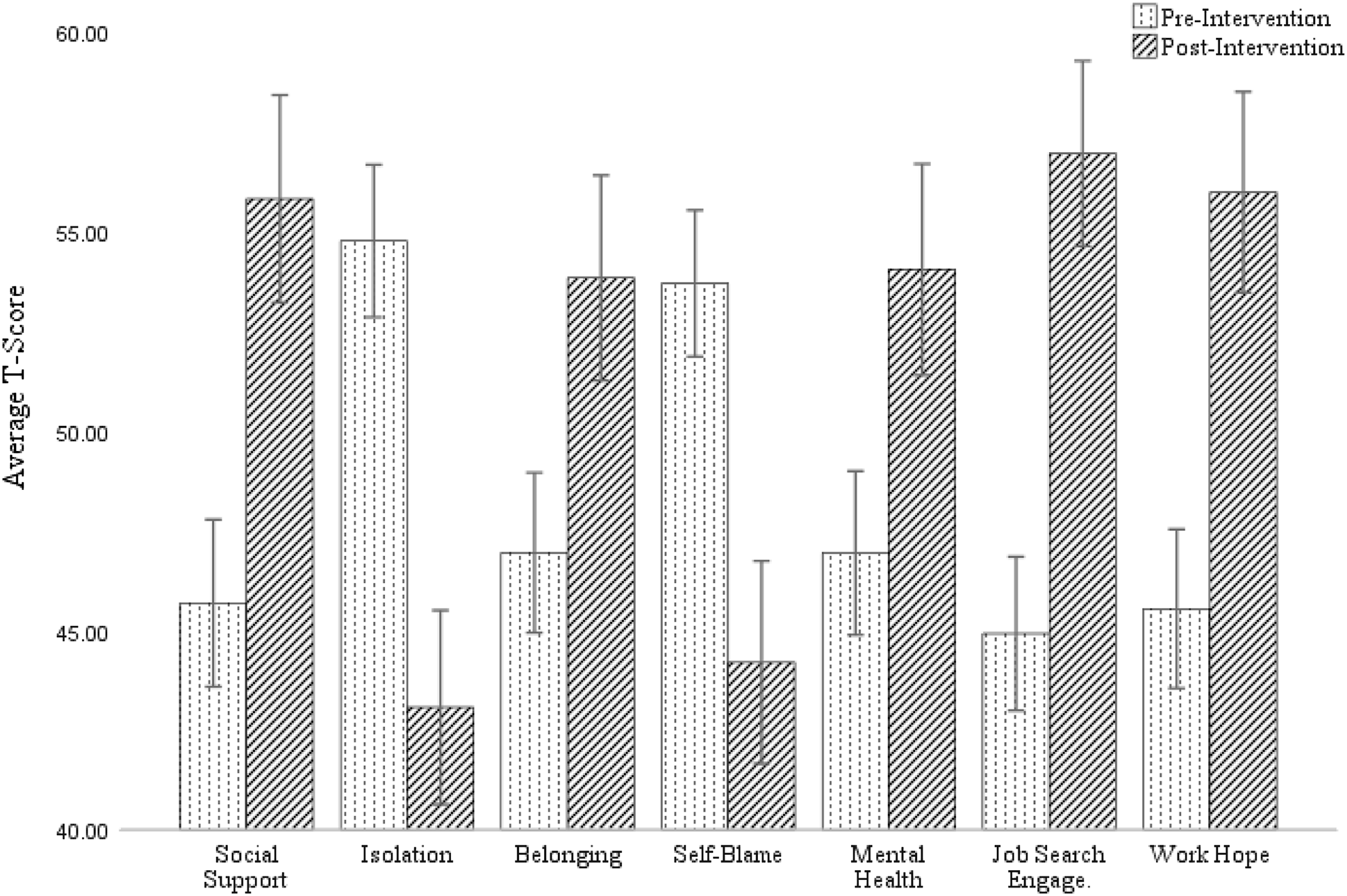
Change in Study Variables from Pre-to Post-Intervention. Note. Variables are presented in t-scores from the original data. Error bars represent corrected 95% confidence intervals.
Discussion
The results of this study support the effectiveness of the WIN program, which was manifested in self-reported positive gains in participants’ functioning across multiple domains. Specifically, the feedback survey findings indicated that the participants reported positive experiences, benefits, and engagement in the program. Moreover, the pre-post evaluation revealed moderate to large changes in the hypothesized directions across all the evaluation measures, reflecting the strong effect of the intervention. Taken together, the gains across the full spectrum of foci within the WIN program underscore the importance of integrative interventions that embrace both the work and mental health contexts of unemployment, underemployment, precarious work, and challenging job searches. The results also have important implications for theory, research, practice, and policy on work-related disruptions, job search struggles, and integrative work-mental health interventions, as reviewed below.
The workshops demonstrating clear and substantive gains from the pre-post evaluation suggests that the composition of each of the workshops within the WIN program resonated with the participants and was associated with self-reported improved functioning across the targeted domains of this intervention. The robust effect sizes of the changes indicate that targeted interventions have the potential to significantly enhance functioning across an array of contexts, thereby providing jobseekers with support, resources, and a critical perspective of their situation. In addition, the integrative nature of the WIN program underscores that the work-based and mental health aspects of seeking a job during periods of precarity call for interventions that offer support across the relevant life domains of work, mental health, relational functioning, and social awareness/shame/self-blame (Blustein et al., 2022).
Implications for Theory, Research, Practice, and Policy
By creating a series of workshops informed by theory and research (e.g., Autin et al., 2022; Blustein et al., 2021; Duffy et al., 2016; Richardson, 2012; Sharone, 2013), the WIN program provides unemployment and job search services that include often neglected areas such as building interpersonal connections and sources of support, fostering self-awareness and a better understanding of the role of macro-economic and institutional factors, and building emotional resilience and practicing self-care. The compelling nature of the findings, coupled with the clear theoretical framework of the WIN program, strengthens the argument that interventions can reach across seemingly disparate boundaries to create an integrated whole that makes a difference in the lives of jobseekers (Autin et al., 2022). From a broader perspective, the promising findings reported here support efforts to integrate work and mental health in both conceptualizations of psychosocial functioning and in the design and delivery of interventions (cf. Blustein et al., 2021; Richardson, 2012). These findings point to the utility of psychologists and counselors transcending artificial professional boundaries that have separated work and mental health practice in designing and delivering interventions. The results also highlight the importance of developing new ways of supporting jobseekers, who have often been exposed to primarily instrumental help in seeking a job without sufficient attention to the broader array of issues and challenges. Thus, the WIN program fits with the nascent movement to enrich job search interventions via the infusion of more holistic support, as exemplified in the JOBS program (Vinokur & Price, 2015).
The results of the present study also provide empirical support for the relevance of PWT, relational, self-blame/shame, and other social justice-informed theories that aim to support and empower vulnerable communities (Autin et al., 2022; Blustein et al., 2019; Duffy et al., 2016; Richardson, 2012; Sharone, in press). In essence, the WIN program describes an intervention that was informed by the key premises of PWT, highlighting the pivotal role of work in mental health (Blustein, 2019) and the importance of identifying macro-level factors that shape access to work as key elements in interventions. Consistent with Blustein and colleagues’ (2019) theory of change approach to PWT, this study affirms community programs that go beyond traditional job-search interventions and include a more integrative and systemic approach that incorporates work-based counseling, mental health support, and social justice-informed interventions. In addition, this study affirms PWT’s stance on including multiple domains of people’s life experiences including emotional well-being, engagement in social relationships/connections and community, and fostering social awareness to support vulnerable communities, which may be even more critical during turbulent and precarious periods. Moreover, the findings support the tenets of relational theories of working, which have highlighted the critical role of social support and connection in managing work-based challenges and transitions (Blustein, 2011; Richardson, 2012).
The WIN program also provides a broad perspective on the importance of social awareness and critical consciousness, encompassing interventions that focus on reducing shame and self-blame. While the WIN program only briefly refers to the general importance of “reading” the labor market and political nature of the economy, it did include direct attention to the tendency for unemployed people and other jobseekers to feel shame and self-blame about their work situation (Blustein, 2019; Sharone, in press). This focus on shame and self-blame reflects an intentional challenge to narratives that decenter contextual factors and overly emphasize individual volition and agency, which was reflected in the items that were significant across pre and post conditions. The results of this study support further exploration of the theoretical connection between critical consciousness, as the overarching conceptual framework, and the reduction of shame and self-blame, as evidenced in the strong changes in these measures in the pre-post evaluation. Indeed, this conceptual framework is more fully explored in Sharone’s (in press) recent contribution on the psychosocial consequences of long-term unemployment and holds promise for further informing interventions that can effectively counter the tendency for people to blame themselves for the adverse consequences of the job search and involuntary work transitions.
The promising findings observed in this study suggest that the WIN program merits further research, particularly using a randomized control treatment (RCT) approach, which would allow for more precise causal connections between the intervention and outcomes. An RCT design should include deliberate incorporation of randomization of participants and career practitioners and the inclusion of a comparison group. For example, a treatment as usual condition could include weekly support group meetings for individuals who are unemployed and incorporate a delayed-start model in which all interested participants eventually would be provided access to complete the intervention regardless of which module they enter in the program.
In addition, the core elements of the WIN program can be used with other populations experiencing work-related challenges. For example, integrative interventions constructed around the themes of this project may be useful for low-wage workers, precarious workers, and others who are on the margins of a decent and dignified work life. Furthermore, the synthesis of work-based interventions into mental health treatment and prevention may be relevant for psychotherapists who wish to integrate work-based content into their work with populations that are struggling to move out of poverty and to establish meaningful work as a source of both sustainability and purpose. The promising findings from this study also have important public policy implications for understanding and reducing the psychological challenges of disruptive work challenges and conditions. The strong results from this study, coupled with related research (Allan & Kim, 2020; Blustein et al., 2022), underscore that work disruptions have a broad and predictable impact, which exacts a toll on individuals and the broader community. As such, we advocate for serious consideration of policies to reduce the instability of work and to enhance support services for people who are adversely affected by job loss and precarious work (Blustein, 2019). In particular, policies that ensure a commitment to decent and dignified work and living wages for all, coupled with basic income guarantees for those who cannot locate work would be useful in supporting the full array of people who are vulnerable to precarious work and life conditions (Allan & Kim, 2020; Blustein et al., 2022; Blustein, 2019; Sharone, in press). In addition, the results support a broad-based dissemination process to create a new understanding of work disruptions that highlights not only the economic/financial consequences, but also the social and psychological hardships encountered by individuals and families who are affected by these conditions.
Limitations
Results of this study should be interpreted within the context of limitations to its sample, measurement, and design. First, all of the groups were conducted virtually due to the COVID-19 pandemic and held across a circumscribed array of U.S. and Canadian communities which limits the generalizability of the results. Second, measures used in this study were adapted from previously established and validated measures of the primary constructs or were created for the purposes of this study. We were aware of participants’ time and energy commitment to complete evaluation measures following each session and intentionally chose not to overburden participants by asking them to complete extensive measures. Although initial psychometric data appear promising, further research with larger samples is needed to establish their psychometric support more fully. Third, the sample was circumscribed in some notable ways, including more highly educated participants and less diversity than the overall population of jobseekers. While it is not entirely clear how the somewhat circumscribed sample may have affected the findings, literature on long-term unemployment among college-educated workers clearly points to major psychological and financial losses that may parallel some of the challenges of marginalized populations, including pervasive poverty and stigma (see Sharone, 2013, in press for further elaboration). Future research on the WIN program should include participants who are more diverse across the range of demographic and social identities.
Fourth, the pre-post design did not include randomization or a control group, which limits the interpretation of the findings. However, these limitations should be viewed considering the naturalistic design, which prohibited a waitlist or comparison group due to agency limitations, the pressing need to initiate a holistic intervention quickly at the peak of the pandemic, and the fact that it was ethically challenging to withhold treatment or locate a meaningful comparison intervention during a period of major employment precarity. A mitigating factor regarding the pre-post design is the strong effect sizes across nearly all the variables, which underscores the strength of the intervention and counters the possibility that the changes are due to maturation or other factors (cf. Ali et al., 2017; Gibbons et al., 2020). Moreover, the results from this study are essential in providing the basis for more rigorous designs, which is the next step for the WIN program.
Finally, some attrition did occur in the sample, which is not atypical in job search and work-based interventions focused on employment issues. The facilitators shared with us that once some of the participants found jobs, they often dropped out of the group because they could not attend the meetings and/or they felt that they did not need to continue with the workshops. This limitation is mitigated by the statistical analyses of the dropouts in comparison to the completers, which did not yield any differences across the study variables. Taken together, the limitations in this study reflect the field-based nature of the project, which was embedded in a dynamic and organic context.
Conclusion
In closing, this study has provided evidence supporting the effectiveness of the WIN program as an innovative, integrative, and social justice-informed intervention that can be widely disseminated to clients facing work disruptions. When considered collectively, the theoretically rich content of the WIN program coupled with its unique delivery design (of focusing on training workshop facilitators to deliver interventions) is now complemented by empirical support for its capacity to facilitate important gains across work-based and mental health contexts.
Footnotes
Declaration of Conflicting Interests
The author(s) declared no potential conflicts of interest with respect to the research, authorship, and/or publication of this article.
Funding
The author(s) disclosed receipt of the following financial support for the research, authorship, and/or publication of this article: This work was supported by funding and a partnership with the Network for Jewish Human Service Agencies (grant # 5111391).
