




Abstract
In the context of the global crisis presented by the COVID-19 pandemic, the authors investigate the perspectives of sales managers regarding their organizations’ responses to the crisis and future expectations in a post-COVID-19 world. While there has been much discussion about these topics in the sales literature, very little research has examined them globally by collecting data from many nations and across many continents. Yet, how can global events be understood without analyzing global data? In response, the authors convened the first, to their knowledge, global data coalition by hosting video-recorded group interviews with 76 sales executives representing 27 nations. This inductive investigation, informed by institutional logics, reveals how organizations accepted new norms, retained old ones, or blended the old with the new in response to the crisis. The results simultaneously validate certain emerging concepts on a global scale (e.g., customer success management, bricolage) and give rise to several insights not currently detailed by extant scholarship (e.g., localization, cultural cringe). This work also catalyzes new, relevant avenues for international research and sheds light on issues facing sales practice globally.
Keywords
The popular press loves to poeticize about the global nature of business, often suggesting the world is “flat,” connected, and shrinking (Friedman 2006; Lerman 2019; Miller 2016). The trend toward internationalization driving these claims has also spurred increased scholarly attention to issues of international selling and sales management. The past ten years alone have delivered special journal issues, data initiatives, and conference sessions all focused on international sales topics (Chaker et al. 2024; Dugan et al. 2020; Sharma 2016). Despite this excitement, collecting global data remains prohibitively difficult. For scholars trying to study such topics, the world seems mountainous, fragmented, and expanding. And yet, creating quite an impasse, how are we to understand global topics, or the effects of global events, if not by collecting global data?
Take the COVID-19 pandemic, for example, which spurred a wave of research activity from sales scholars over the past four years (e.g., Anwar, Coviello, and Rouziou 2023). Whereas a product recall crisis might affect an organization (Cleeren, Van Heerde, and Dekimpe 2013), an economic crisis might affect a nation (Kottika et al. 2020), and a natural disaster might affect a region (Raggio and Folse 2011), COVID-19 was uniquely global in that it touched every part of the world. Yet almost all research on the topic utilizes data drawn from one or two nations (e.g., Bonney, Beeler, and Chaker 2022; Epler and Leach 2021; Hartmann et al. 2024). These focused studies are certainly worthwhile and can begin to provide global insights if aggregated (assuming many studies use data from a wide variety of nations), but a more direct approach to understanding global phenomena by collecting data from around the globe seems a worthy research endeavor.
While epidemiologists predict that more pandemics are likely to occur in the future (Montanari 2020), public health scares are not the only global events on the horizon. Indeed, phenomena like climate change and technology developments are almost certain to impact sales organizations globally. Further, even seemingly local crises can have global effects. For instance, the 2021 Suez Canal obstruction (Chellel, Campbell, and Oanh Ha 2021) was a local crisis, yet its impact was felt globally as supply chains, and the selling functions that drive them, were halted. Similarly, the 2010 Icelandic volcano eruption, again a local event, halted flights into and out of Europe, profoundly disrupting businesses that rely on air transport worldwide (BBC 2010). Regardless of the nature of the event, we argue that global data should be used to understand global events.
Motivated by all these factors, we applied a novel data acquisition method we call a global data coalition (detailed herein). Through this global data coalition, we conducted qualitative group interviews with 76 sales executives representing 27 countries on five continents to understand two research questions (RQs): (1) how did sales organizations respond to COVID-19 around the globe, and (2) what future expectations do managers have for their sales organizations around the globe? While our data collection approach was novel, the resulting interviews were video recorded and subjected to standard analytic procedures used in inductive research (Christianson 2018; LeBaron et al. 2018).
Overall, interviewees described resources for COVID-19 response (RQ1) that fall into four categories: capabilities (e.g., bricolage, sales enablement), digital transformation (e.g., online channels, virtual sales meetings), relationship investments (e.g., internal cooperation, new approaches to customers), and leadership (e.g., transformational, transactional). Interviewees also shared perspectives on the future of sales organizations (RQ2) that fall into four areas: business models, human capital development, role characteristics, and societal implications. It should go without saying that these “future foci” were not created by the COVID-19 crisis but were informed by it (along with the response resources). Through these results, interpreted via institutional logics (Flaherty and Schroeder 2022), we offer three main contributions.
First, we reveal important insights that either align with new or old institutional logics (i.e., “socially constructed … pattern[s] of … practices, assumptions, values, beliefs, and rules”; Thornton and Ocasio 1999, p. 804) that emerged during the crisis or represent a blend of the new and old logics. The insights that align with the new logics contribute to marketing knowledge by validating important concepts on a global stage. For example, concepts like bricolage (i.e., creatively utilizing available resources to navigate uncertainty; Epler et al. 2023) and customer success management (i.e., a sales-adjacent role focused on ensuring customers achieve desired postpurchase outcomes; Hochstein et al. 2023) have emerged as important features of sales organizations in recent years but have been predicated primarily on data from Western economies.
Insights that adhere to the old logics reveal several provocative perspectives that should be accounted for by practitioners and scholars. For example, it is now widely accepted that business models that emphasize virtuality (including virtual sales meetings) are the way of the future (Rangarajan et al. 2021; Yu et al. 2024). Yet, when we spoke with respondents from around the globe, we found valid reasons to question, or even reject, the universality of this notion. As another example, it is often taken for granted that internationalization is the way of the future (Biçakcioğlou-Peynirci and Morgan 2022), ensuring organizational performance and global economic welfare; however, when we spoke with respondents from around the globe, we found sales leaders who stressed localization in the face of the COVID-19 crisis instead. Regarding all insights, we attempt to focus on the longer-term expectations related to sales. While there has been a surge of research on the immediate response of sales organizations to COVID-19 (e.g., Bonney, Beeler, and Chaker 2022; Dugan et al. 2023; Habel et al. 2020), there has been relatively little work discussing longer-term implications (Good, Pullins, and Rouziou 2022), let alone discussing these implications from a global perspective.
Second, we demonstrate the effectiveness of the global data coalition method of acquiring data. This approach involves partnering with scholars from around the world to collect data from their local areas following a shared procedure that facilitates the combination of the data into a larger global dataset. In our case, this meant partnering with 23 professors from nearly every continent to collect qualitative interview data from 76 sales executives (i.e., key informants who speak on behalf of their sales organizations and locales; e.g., Hewett and Bearden 2001; Jayachandran, Hewett, and Kaufman 2004; Leonidou et al. 2019) from around the globe. Others have hinted at the value of a system like this (see Panagopoulos et al. 2011, p. 232), but we are the first to show proof of concept—a fact we hope will spur new global research efforts.
Third, our work responds to calls for research using data collected from sales managers. Just as sales organizations have been criticized for focusing the preponderance of their development efforts on salespeople (vs. sales managers; Kraaijbeek 2018; Vera 2020), sales scholars have been criticized for focusing the preponderance of their research attention similarly (Plank et al. 2018). Our work makes use of sales managers and executives—individuals ranging from first-line sales managers to top executives, all with responsibilities for sales in their firms—in order to contribute to the literature by leveraging these individuals as important data sources. The value of doing this is demonstrated by our provocative findings.
Literature Review
Before proceeding, we next provide a more explicit review of two research streams relevant to the present work: (1) international (vs. global) selling and sales management and (2) sales organizations’ crisis response (COVID-19 and otherwise). Overall, a review of these literature streams (see Web Appendix A) reinforces the value of our intended contributions.
International Versus Global Sales Research
Turning first to the international sales literature, we can make two key observations (see Web Appendix A). First, compared with sales research in general, this work is relatively rare (though, as noted, increasing). While recent reviews on broad topics like performance may need to cover hundreds of articles from recent decades alone (Bolander et al. 2021; Kerr and Marcos-Cuevas 2023), our effort to identify international sales articles produces fewer than 100 publications. Second, much of this work tends to simply compare one developed nation, often the United States, with a single nation outside North America, often in Europe or Asia (e.g., Baldauf and Lee 2011), or to examine interactions between salespeople based in one developed nation, again often the United States, selling to customers internationally without specifying the markets involved (e.g., Rutherford et al. 2023; Schrock et al. 2024). Many of these articles align with Chaker et al.’s (2024) definition of international selling and sales management research concerning interactions between any two sales stakeholders (i.e., customers, salespeople, or managers) who operate in different national markets. And yet, a review of this literature reveals more of a gorge than a gap. Specifically, international sales research is not equivalent to global sales research.
We offer a precise definition of global sales research as “that which examines sales and sales management issues using data collected from one or more nations from at least four of the world's continents” (allowing representation from the majority of inhabited continents). This definition provides a simple, concrete way to identify whether research is sufficiently global by accounting for both the number of nations and the geographies that those nations represent and can be thought of as a minimum threshold for work to be considered global. That is, this definition is conservative in how it defines globalness. Certainly, collecting data from multiple nations from every continent would be ideal, but if an article does not at least collect data from a slight majority of continents, in what way can it be considered global? Under this definition, a scholar using data from all 27 members of the European Union (EU), while accomplishing something very impressive, would not be conducting global sales research as they collect data solely from Europe. However, a scholar collecting data from five nations, each on a different continent, would be conducting global sales research as they are gathering data from a range of locales.
When we revisit our literature review with this definition in mind, we identify only 11 examples of global sales research. These articles explore topics including (among others) industrial purchasing (e.g., Habel et al. 2020), sales innovation (e.g., Hohenberg and Homburg 2016), compensation (e.g., Rouziès, Onyemah, and Iacobucci 2017), and sales stereotypes (Fournier et al. 2014) around the globe. Given how the global economy is described in the popular press (Friedman 2006; Lerman 2019; Miller 2016), this number is surprisingly low. We argue that the primary reason for this low number is not insufficient analytic capabilities or scholarly disinterest, but rather the immense difficulty in collecting global data (Dugan et al. 2020), which strengthens the value of our demonstration of the global data coalition.
Research on Sales Crisis Response
A flurry of recent research has focused on consumer and organizational responses to COVID-19 (in addition to work on crises in general). Much of this work focuses on immediate outcomes. On the consumer side, articles explore differences in stockpiling behaviors during and immediately following the crisis (e.g., Ahmadi et al. 2022; Kim, Sheng, and Ketron 2022; Krasnikov, Shultz, and Rebiazina 2022). On the organizational side, articles discuss virtual customer interactions (e.g., Dugan et al. 2023), hybrid work environments (e.g., Ewe and Ho 2022), and leveraging the disruption to improve sales training (Habel et al. 2020) or to better understand opportunities (Bonney, Beeler, and Chaker 2022). However, not much attention is paid to what the world will look like in the long term for sales organizations (Good, Pullins, and Rouziou 2022).
Similar to what we previously noted about the sales management literature, much of the international crisis research also tends to look at a small number of countries. Tuan (2022) focuses on leader behaviors in Vietnam, Ewe and Ho (2022) study sales organizations in Malaysia, and Epler and Leach (2021) examine salespeople in the United States. These single-nation studies are certainly valuable, yet as discussed, are not global in themselves.
Finally, much of the crisis-focused research highlights the importance of some expected capabilities in dealing with turbulent times. Specifically, in addition to leadership behaviors (Alavi, Ehlig, and Habel 2022; Tuan 2022), several studies examine some somewhat expected salesperson constructs like resilience, perseverance, and agility (Dugan et al. 2023; Epler and Leach 2021). While there is little reason to doubt that these variables can play a role in crisis response, this body of work does beg the question of whether truly global data might avail any less conventional insights.
Theoretical Background: Institutional Logics During Crisis
Although inductive, our work relies on institutional theory's focus on “logics,” or organizing principles that direct thoughts and behaviors of people and organizations through a “socially constructed … pattern of … practices, assumptions, values, beliefs, and rules” (Thornton and Ocasio 1999, p. 804; see also Flaherty and Schroeder 2022). The institutional logics lens enables a holistic understanding of the institutional system, facilitating a deeper exploration of grand challenges (Ertimur and Coskuner-Balli 2015). Indeed, at the pandemic's outbreak, many sales organizations conformed to new dominant patterns and norms (Thornton and Ocasio 1999) dictated by the crisis (i.e., new logics). However, in some cases, sales organizations defied new logics (Agrawal and Henderson 2002) by retaining the old ones. There also exists a middle ground between complete adherence to new norms and outright nonconformity (Chow and Tsui-Auch 2020) where these contrasting logics are blended and reconciled.
To be clear, we are leveraging institutional logics to interpret our findings, not to predict hypotheses. This is in line with inductive research both within (Bonney, Beeler, and Chaker 2022) and beyond (Ketokivi and Mantere 2010) marketing, in enhancing the process of deriving theoretical conclusions from empirical data in a manner that is both credible and comprehensible to scholarly and practitioner audiences.
Method: A Global Data Coalition for Inductive Inquiry
Data Collection Process
To collect truly global data, a global cohort of academics (henceforth, “discussion chairs”) were recruited to organize video-recorded group interviews in parts of the world where they live, work, or have connections. 1 Twenty-three academics agreed to participate in the creation of these discussions. Discussion chairs leveraged their networks (local to their nation) by inviting sales executives and managers to participate in an interview as key informants (similar to the tradition of using authoritative individuals to speak on behalf of larger groups; e.g., Hewett and Bearden 2001; Jayachandran, Hewett, and Kaufman 2004; Leonidou et al. 2019). Discussion chairs were also encouraged to conduct the interviews—if possible—in the mother tongue of each nation to ensure cultural and linguistic richness (indeed, ten discussions, or nearly half, were conducted in a language other than English). The interview guide provided to all discussion chairs is included in Web Appendix B.
The size of each local group was a function of the availability of qualified interviewees and ranged from two to six individuals per nation (not counting the discussion chair). In addition, strict screening criteria were applied to participants to ensure that each interviewee, regardless of their title, had responsibilities related directly to the sales force and was a valid key informant. For example, one interviewee's title is chief executive officer, but this individual worked in an organization that is primarily a sales force, giving them direct knowledge of the sales function. Each interview lasted approximately one hour.
A total of 21 group interviews were completed, and the dataset consisting of these videos includes nations from almost every continent, thus providing uniquely comprehensive global coverage. 2 Taken together, these interviews feature the perspectives of 76 sales executives representing 27 countries and regions (see Web Appendix C for a complete list). Both men (58) and women (18) participated, and a multitude of company sizes and industries (consumer goods, software, financial services, health care, manufacturing, and wholesalers) were represented. The discussions were video recorded and, when necessary, translated and captioned by native speakers of the language in question who were also fluent in English. Web Appendix D contains additional guidance on collecting data via a global coalition.
Research and Analysis Approach
Video-based research (and, by extension, education) enables the investigation of organizational phenomena, such as rhetoric, emotion, and interactions, by providing auditory, visible, and temporal characteristics (Christianson 2018; Gylfe et al. 2016; LeBaron et al. 2018). Our recorded interviews focus on two questions of particular interest: (RQ1) responses to the COVID-19 crisis by sales organizations around the globe and (RQ2) their expectations for the future of sales organizations around the globe.
To begin to understand our global respondents’ perspectives on these topics, the 23 discussion chairs provided a written summary of the key responses from their nation, along with representative quotes from the interviewees that support their summary. Four researchers (“regional summary coordinators”), each responsible for a continent or region (i.e., North America, South America, Europe, Asia-Pacific), then validated these summaries, interacting with the original discussion chairs to resolve any inconsistencies (which were, in most cases, nonexistent). These validated interview summaries then became the focus of our ongoing analysis. Figure 1 depicts a visualization of this process.
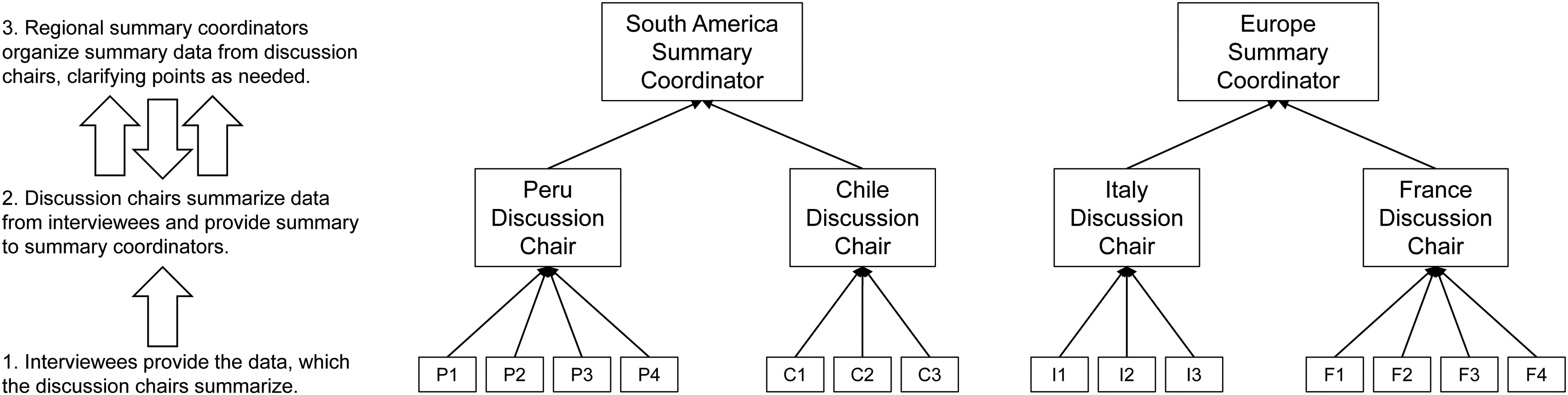
Visualization of Data Collection and Organizing Process.
For analysis, we rely on Gioia, Corley, and Hamilton’s (2013) method to list the empirically driven subthemes (see Tables 1–6). Given our exploratory intent, this open-ended exploration is ideal. To that end, we follow an ex post inductive approach in which the summary coordinators scrutinized the content and identified subthemes that condense the responses of their interviewees. The identified patterns were then independently validated by another two discussion chairs to ensure that the best interpretations had been made.
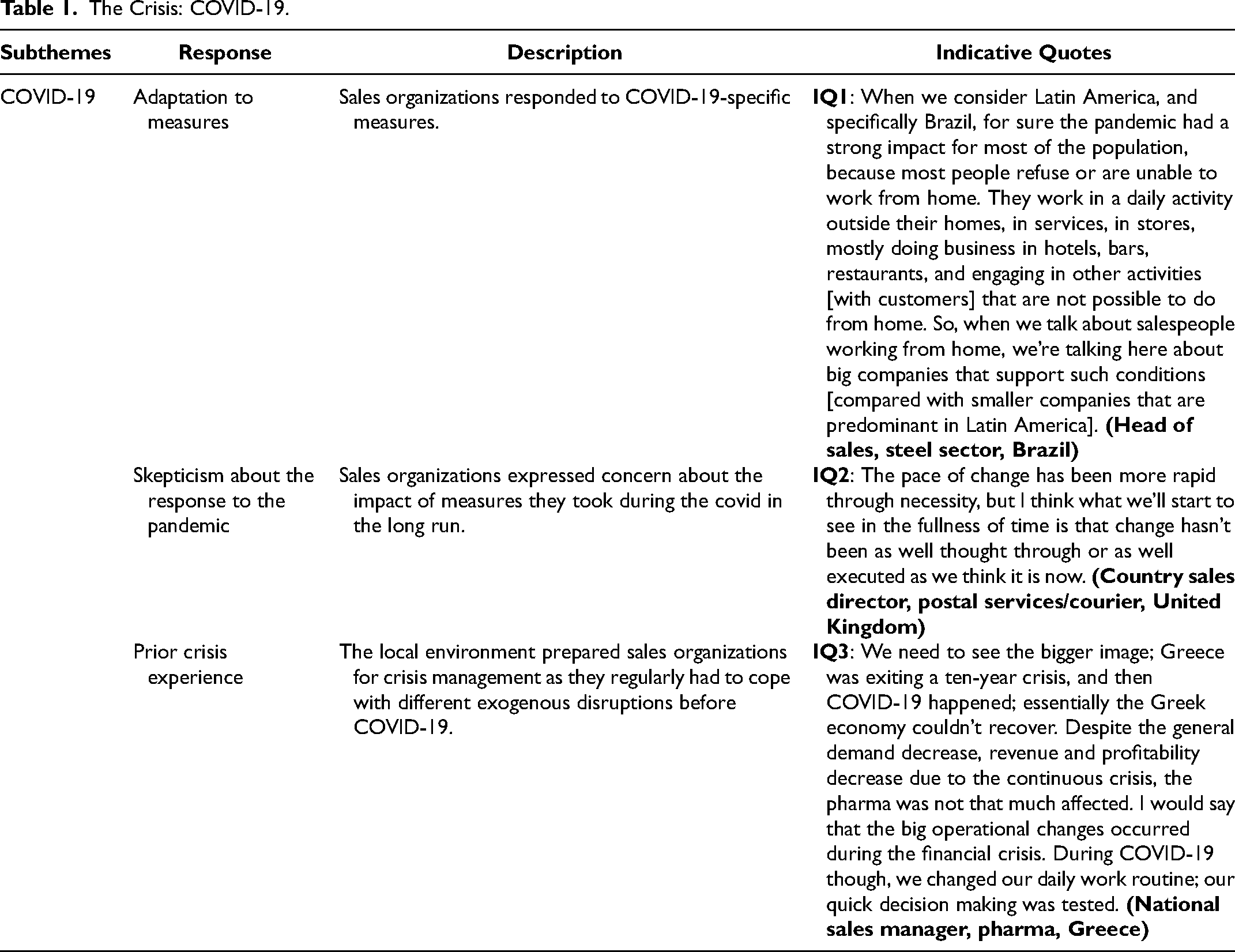
The Crisis: COVID-19.
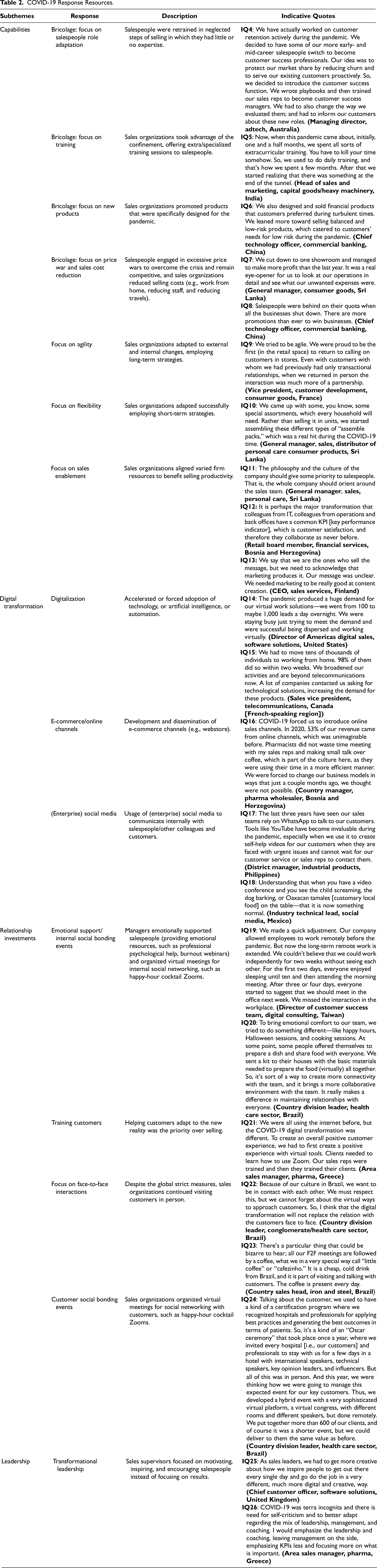
COVID-19 Response Resources.
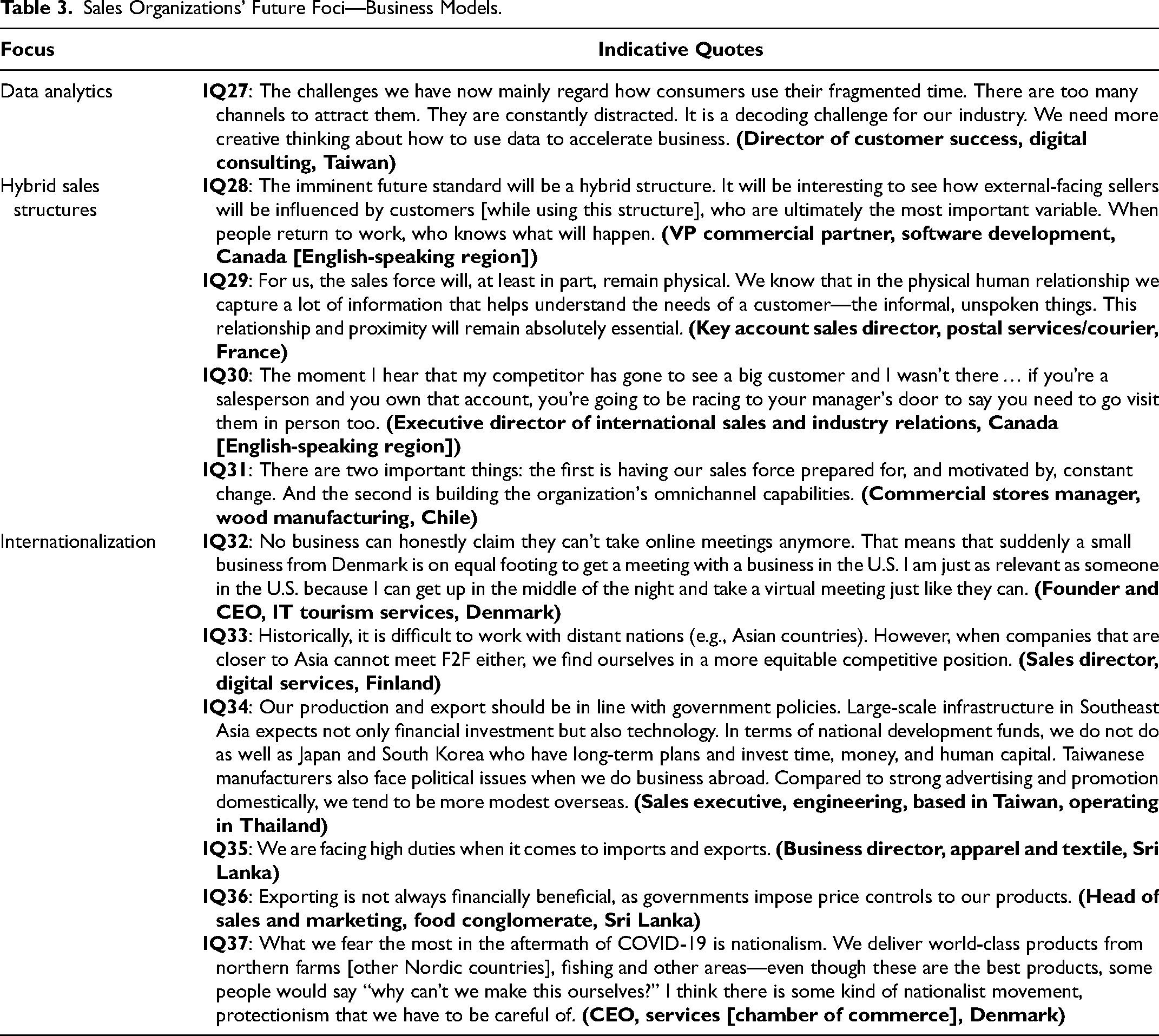
Sales Organizations’ Future Foci—Business Models.
Sales Organizations’ Future Foci—Human Capital Development.
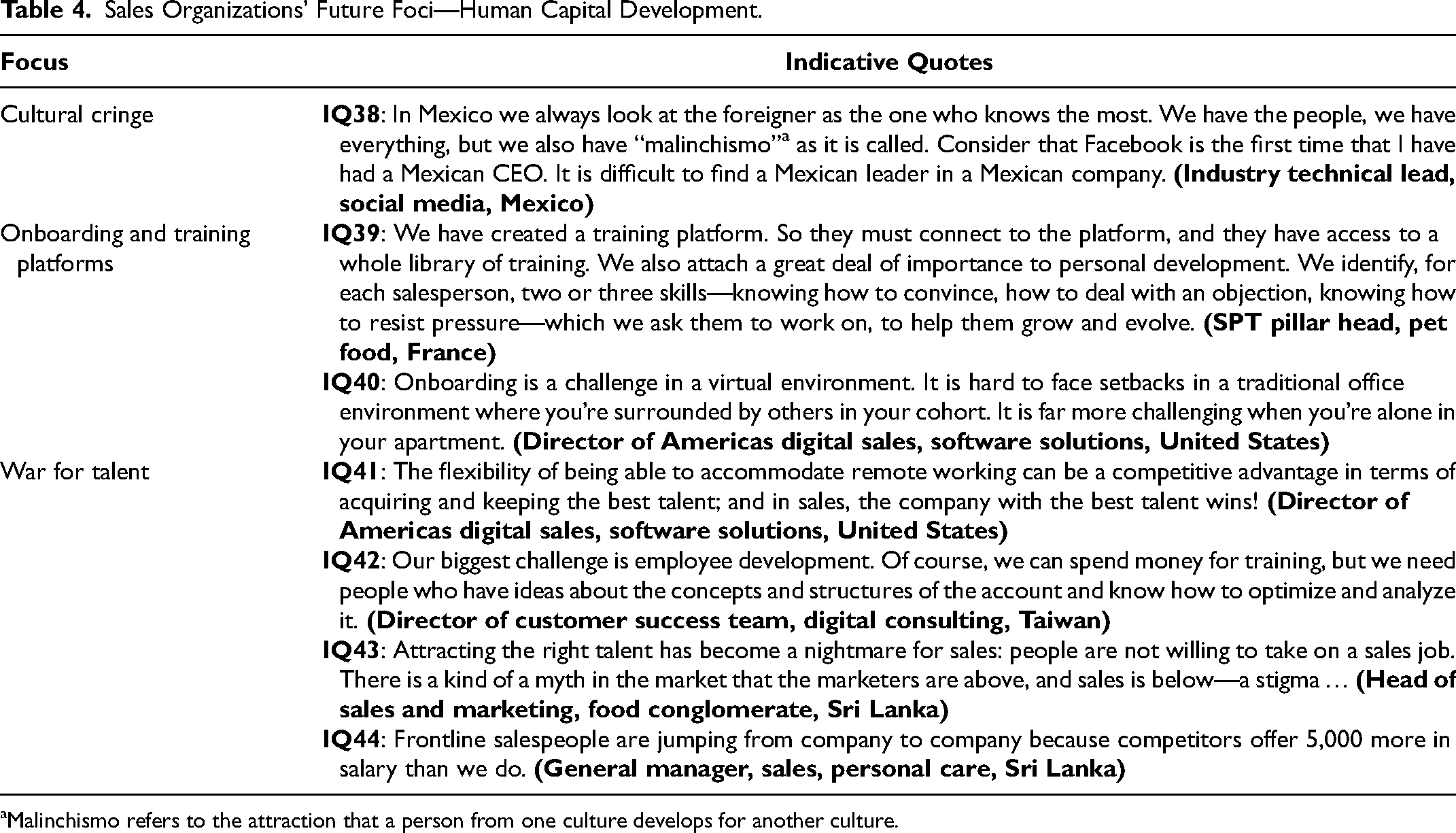
Malinchismo refers to the attraction that a person from one culture develops for another culture.
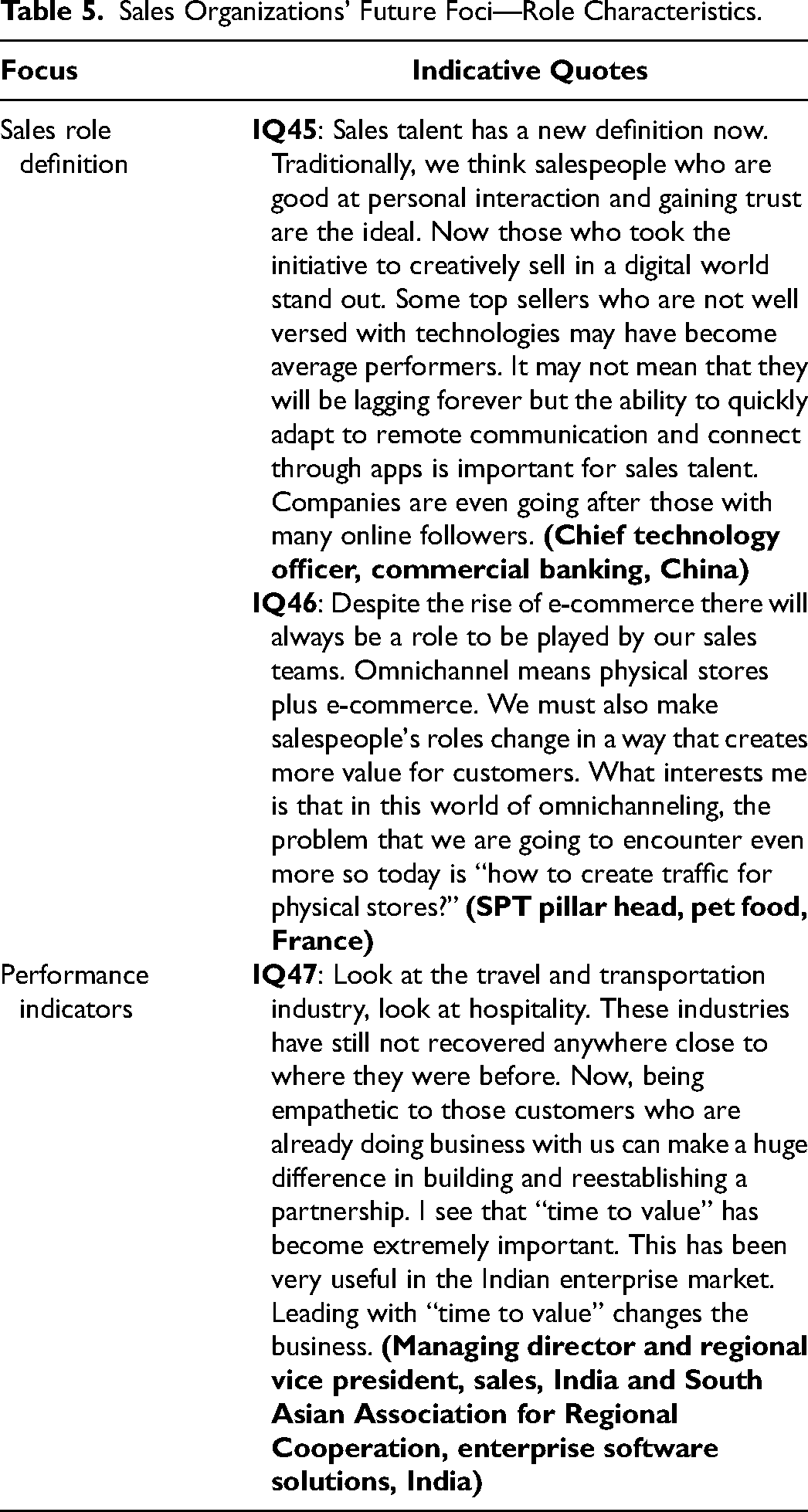
Sales Organizations’ Future Foci—Role Characteristics.
Sales Organizations’ Future Foci—Societal Implications.
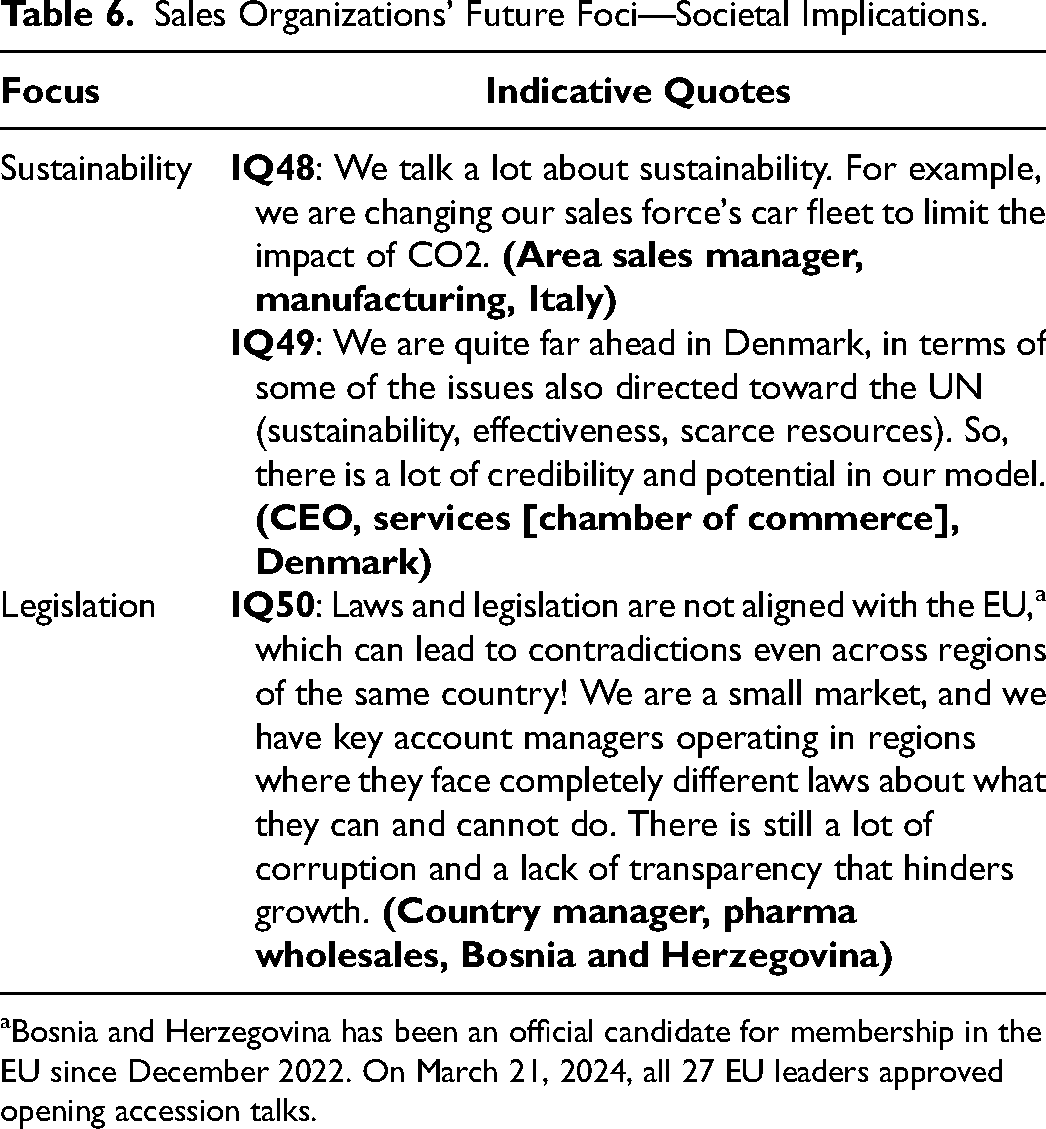
Bosnia and Herzegovina has been an official candidate for membership in the EU since December 2022. On March 21, 2024, all 27 EU leaders approved opening accession talks.
Findings: Inductive Research Themes
While our dataset—consisting of several hours of audio-video content—has many things to say, to properly answer our two focal RQs and manage space constraints, we use tables to present and organize indicative quotes (henceforth, IQs) from each of our themes and subthemes (rather than including quotes in the text directly) and focus on these themes as findings (consistent with Bonney, Beeler, and Chaker 2022). Of course, the quotes we share are not exhaustive, and, for each theme, there are other supporting examples. However, we cannot publish every data point, and, just as an empirical article publishes summaries and results as opposed to raw data, we refer to particularly impactful and representative examples. We also use descriptive language in this section to save more theoretically rich language for our discussion section. Finally, while we refrain from overdetailing the COVID-19 pandemic, as it is described elsewhere (e.g., Dugan et al. 2023; Good, Pullins, and Rouziou 2022), and assume that the reader already understands this context, we offer a few initial comments (based on quotes highlighted in Table 1).
First, responses vary considerably between organizations from different nations and between organizations within one nation. While many respondents reported obeying strict regulations, not all did. For instance, a Brazilian head of sales described how, based on cultural preferences, many workers refused to work from home (IQ1). Second, since most decisions during the crisis were made amid serious constraints, doubt remains about how well things were handled (as explained by a U.K. respondent in IQ2). Third, respondents who had weathered prior crises recently expressed greater comfort in handling the pandemic (IQ3 regarding Greece's financial crisis). Thus, some countries benefited from their prior crisis management experiences.
Resources in Response to the COVID-19 Crisis
With regard to RQ1—how did sales organizations respond to the crisis around the globe?—we highlight four themes representing resources that arose from our data: capabilities, digital transformation, relationship investments, and leadership. These response resources and their IQs are highlighted in Table 2.
Capabilities
The crisis placed new demands on sales organizations, and many participants highlighted the necessity of new capabilities as resources. For instance, adaptability was crucial during the crisis as changes occurred rapidly without the luxury of time for deep deliberation (Rangarajan et al. 2021). This quick adjustment is encapsulated by the term—recently introduced to the sales literature—“bricolage,” which is defined as “making do with what is at hand” and “creating something from nothing by combining resources for new purposes” (Epler and Leach 2021, p. 115). Many respondents mentioned immediate improvised actions, including adapting the salesperson's role (IQ4), focusing on training (IQ5) and products (IQ6), reducing sales-related costs (IQ7), and increasing price promotions (IQ8). To prevent salespeople from losing their jobs or being furloughed, their roles had to be adapted to promoting (even more so) customer success (IQ4; Hochstein et al. 2023). Overall, the notion of bricolage was implied by respondents in a range of countries including Australia, India, Sri Lanka, and China.
Related, a French respondent highlighted the necessity of agility (IQ9), specifically by understanding the psychological implications of the crisis for customers and shifting previously transactional relationships toward ones that are more empathetic. Indeed, marketing agility reflects the rate at which an entity iterates between understanding the market and executing marketing decisions to adapt to the environment (Kalaignanam et al. 2021). Respondents also mentioned organizational flexibility (IQ10) by developing and implementing short-term tactics for survival. Again, without time to determine the optimal long-term solution, action was needed.
Moreover, during the crisis, the idea that sales organizations must establish a capability that ties internal resources to the success of the sales function was further embraced. Recently, this capability was branded “sales enablement” (Peterson et al. 2021). A Sri Lankan respondent astutely noted that during the crisis the entire organization should pivot its focus toward the sales function (IQ11). In addition, interviewees indicated that the crisis brought sales and nonsales entities together, for instance, connecting sales with information technology (IT) as a lifeline for smooth digitalization (IQ12; e.g., Bosnia and Herzegovina and Greece), and sales with marketing as a lifeline for digital content creation (IQ13; e.g., Finland and Thailand). Such cross-functional synergies are a critical indicator of sales enablement (Rangarajan et al. 2020).
Digital transformation
While digital transformation (i.e., the application of digital technologies to enhance a firm's value proposition; Singh et al. 2019) was already underway, as many nations faced lockdowns and travel restrictions, COVID-19 functioned as an accelerant to these changes. As a result, digital transformation emerged as an important resource according to our respondents. For instance, respondents from the United States stressed the importance of virtual communication tools and solutions (IQ14), and those from Canada described remote work and virtual meetings (IQ15). Further, respondents from at least six countries (Bosnia and Herzegovina, Chile, China, Finland, France, and Sri Lanka) confirmed a drastic transition to e-commerce (IQ16). As traditional face-to-face (F2F) exchanges rapidly shifted to virtual ones, communication increasingly occurred online via enterprise social media platforms like Microsoft Teams, Facebook Workplace groups, and Zoom (IQ17). Firms and customers alike were challenged by this kind of communication. Interestingly, while meeting virtually rather than F2F sometimes led to depersonalization, at other times, as indicated by a Mexican respondent, it increased intimacy in that salespeople were virtually entering customers’ homes (IQ18).
Relationship investments
Another category of response resources focused on various forms of relationship investments. Internal relationships are an established performance driver (Bolander et al. 2015; Burchett et al. 2024), and many firms were concerned about psychological challenges stemming from employee isolation and social loneliness (Chaker et al. 2021). Indeed, one Taiwanese respondent explained how working from home, while welcome at the beginning, quickly became a point of frustration (IQ19). As a result, salespeople found creative ways to engage with colleagues. A Brazilian respondent described a variety of virtual events intended to bring sales employees together and enhance connectivity and performance, including virtual happy hours and cooking events (IQ20).
Additionally, new approaches to external relations with customers were necessary as salespeople employed new tactics to better serve customers. For example, it is well known that salespeople train their customers to use their solutions. Yet a Greek respondent discussed also having to educate their tech-laggard clients on new digital tools during the crisis (IQ21), going on to state that training customers was given a higher priority than even closing sales. Further, respondents in certain areas, where relationships are of great importance, reported that for coworkers and customers alike, F2F interactions remained common (IQ22). A Brazilian respondent even emphasized the importance of a F2F coffee ritual (“cafezinho”) to bond with customers (IQ23). To further enhance bonding, some firms worked to approximate events they would have historically done in person. Another Brazilian respondent explained that their organization held a virtual “Oscar-themed” awards ceremony for their customers (IQ24).
Leadership
The final response resource that emerged from our interviews involves leadership. A participant from the United Kingdom highlighted the benefits of transformational leadership during a crisis (IQ25), presenting a contrast to recent results from Alavi, Ehlig, and Habel (2022), who conclude that transactional leadership's benefits are superior during a crisis. A Greek respondent similarly discussed leadership, coaching, and management, specifying that he would “leave management on the side” (IQ26) to focus on what scholars would seemingly describe as transformational behaviors.
Future (Post-COVID-19) Foci of Sales Organizations Around the Globe
With regard to RQ2—what will selling and sales management look like in the (post-COVID-19) future?—we highlight four themes representing future foci that stemmed from our interviews: business models, human capital development, role characteristics, and societal implications. Of course, many of these issues were salient prior to our research or even the COVID-19 crisis. However, each of these foci emerged from our respondents as a matter of importance for the future of selling and sales management, and many were implied to have been altered in some way by the crisis.
Business models
Traditional business models were questioned during the crisis (Dugan et al. 2023; Rangarajan et al. 2021), suggesting new ways of doing business that will persist into the future (Table 3 presents relevant IQs). For instance, participants were certain that, given increased information availability (Hochstein et al. 2021), more informed buyers (Hochstein et al. 2019), and the heightened need for salespeople to possess analytic skills (Peesker et al. 2022), organizations will have to contend with big data in the future. A Taiwanese respondent detailed how data are essential to “decode” the best method for attracting customers (IQ27). Indeed, future business models must account for using data to drive decisions.
Participants also discussed the importance of hybrid selling (i.e., combining virtual and F2F selling in an omnichannel setting) proceeding into the future (IQ28). Importantly, this stands in contrast to a fully virtual model, which our respondents suggested is not realistic in the long term (as stated by a French respondent in IQ29). A Canadian respondent summarized that the minute he loses an account to a competitor who engaged the customer F2F, a model that is at least partially F2F will become a matter of necessity (IQ30). Thus, all voices concurred that a hybrid sales model will pervade in the post-COVID-19 era, forcing sales forces to develop the necessary skills to prevail in both F2F and digital channels (per a Chilean respondent in IQ31).
Finally, participants had interesting things to say about internationalization and, in some cases, de-internationalization (i.e., “localization”). With COVID-19 establishing the viability of virtual communication, respondents from both Denmark (IQ32) and Finland (IQ33) expressed that the future involves a more level “playing field” than they have known previously. For instance, when in the past they were unable to build relationships with Asian customers, virtuality allowed them to forge bonds as competitors closer to the customer were also prevented from meeting with them F2F.
However, respondents also noted societal challenges to internationalization. For example, a Taiwanese respondent expressed the need to overcome governmental obstacles and align with geopolitical constraints in going global (IQ34). Sri Lankan respondents also described facing high duties on imports/exports (IQ35) and price controls (IQ36), both hindrances to internationalization. Additionally, border closures led to local sourcing. De-internationalization remains far less recognized than internationalization and requires a self-sustaining supply chain of local materials, production processes, and markets. Of course, this notion has political implications, as a Danish respondent flagged concerns with “localization” possibly transforming into nationalism (IQ37).
Human capital development
It is well known that the crisis halted talent acquisition and stunted retention (Good, Pullins, and Rouziou 2022), precipitating a collapse in human capital in sales organizations. It seems this challenge will have persistent effects well into the future. Our participants pointed to three subthemes along these lines: cultural cringe, onboarding/training platforms, and the war for sales talent (refer to IQs in Table 4).
Respondents implied future concerns about “cultural cringe,” or an internalized inferiority complex that causes people in a nation to disregard their own culture as inferior to that of others (Feather 1993). While there can be benefits to utilizing an international sales force, sometimes organizations—particularly those in smaller countries—overrely on international personnel and dismiss local talent, especially when filling leadership positions (as a Mexican respondent describes in IQ38). This excessive “import” of foreign leaders can make local talent wonder if they lack requisite skills and can accentuate inferiority perceptions.
Respondents also described how the expectation of persisting remote and hybrid work drives the need for training and onboarding to adjust accordingly. A French respondent described the use of a virtual training and development platform (IQ39) to guide salesperson development into the future. A U.S. respondent (IQ40) stressed the challenge innate in onboarding in virtual work environments, comparing the difficulty of starting one's sales career in an organizational setting (implying a relatively strong culture and normative socialization) with the enhanced difficulty of starting a sales career in one's apartment (without these normative elements).
Finally, respondents recognized the essential relationship between talent quality and business performance (see IQ41 stating that the organization with the best talent wins). This realization has resulted in a “war for talent” (i.e., the fierce competition to attract and retain salespeople). This subtheme is different from our previous discussion of training and development. As a respondent from Taiwan stated (IQ42), training is insufficient; organizations also need salespeople with ideas and know-how in analyzing accounts. In some regions, the challenge of attracting talented salespeople seems amplified by the bad reputation of the profession. A Sri Lankan respondent described this as both a “stigma” and a “nightmare” (IQ43). Adding further to the difficulty, once organizations manage to find these quality hires, they face a constant threat of poaching from competitors offering better professional conditions (IQ44). Taken together, our respondents’ insights provide a compelling narrative of how the current and future war for talent will affect all aspects of human capital development in sales.
Role characteristics
Whereas Rangarajan et al. (2021) call for salespeople's adaptive role in the postpandemic era, Alavi, Ehlig, and Habel (2022) reiterate the need for sales role redefinition. In agreement with both positions, our respondents detailed how the role of salespeople will be redefined in the future. Two specific subthemes emerged on this topic (see Table 5 for IQs). First, if business models need to change moving forward (as previously outlined), perhaps the definition of the future sales role does as well? A Chinese respondent (IQ45) described a new definition of the sales role that, in addition to gaining trust through personal interaction, includes adaptive technology use and even a quantified social media presence. A French respondent added thoughts (IQ46) about the need for the future sales role to include an ability to drive customers to a physical store in an omnichannel environment. Second, the future sales role may need to incorporate new performance metrics that align with the new environment and role definition. An Indian respondent, for example, highlighted the emergence of “time to value” as a crucial performance indicator (IQ47). This metric gauges the duration it takes for a new client to derive benefits from a seller's solution after purchase.
Societal implications
Finally, respondents made several comments that seemed to home in on the future importance of the societal impact of selling practices (see Table 6). Jones et al. (2005) have previously noted that one's legal and ethical environment can constrain a sales organization's ability to effectively pursue its activities and emphasized the importance of transparent ethical operations. Yet since the publication of their work, this topic has not been discussed frequently in the sales literature. Nevertheless, our respondents commented on sustainability and the legal and political environment. Respondents from both Italy (IQ48) and Denmark (IQ49), for example, emphasized the growing importance of environmental impact, sustainability, and renewable resources. These topics have not historically been the focus of sales organizations. Also, some respondents expressed concerns related to the impact of laws and legislation on sales. A respondent from Bosnia and Herzegovina pointed out that governmental inertia and political uncertainty are major factors impacting their perception of the future of sales organizations (IQ50).
General Discussion
The COVID-19 crisis represented a major shock (Hartmann et al. 2024) that forced sales organizations to respond in a variety of ways. If they responded by adopting the new socially constructed “rules of the game,” they are said to have embraced new institutional logics (Thornton and Ocasio 1999). If they held to the prior socially constructed “rules,” they are said to have held to the old logics (Agrawal and Henderson 2002). Some responses fell between these two extremes and are said to be blended (Chow and Tsui-Auch 2020). These responses, we argue, not only describe the immediate post-COVID-19 world but also provide glimpses into the longer-term future. We therefore seek to transform our findings into a forecast of the future of selling and sales management as interpreted via institutional logics. Which new logics will dominate the future, which old logics will remain, and in what ways will the old and the new be blended? By asking these questions, we address our first intended contribution.
We offer a few notes before moving forward. Certain broad themes, for instance, digital transformation, underlie many of our results and are not discussed much in this section as doing so would distract from our more nuanced points. We assume in our discussion that the reader is aware of the role of digitalization. Also, our discussion does not repeat our results section as it is meant to serve a unique purpose. Specifically, while the results section describes the themes and subthemes that arise from our data, the discussion section is intended to offer more elaborative thoughts that address the question: What do the results mean?
Global Practices Aligning with New Institutional Logics
We begin by discussing findings that align with new institutional logics, meaning that our respondents implied an acceptance of new socially constructed norms coming out of the COVID-19 crisis. Many of these insights are important because they confirm emerging wisdom and globally validate certain concepts previously based only on Western data. Our data seem to speak to four key new logics that inform the future of selling and sales management and warrant further discussion: resilient agility, internationalization, sales enablement, and new metrics.
Resilient agility and adaptability
Research emphasizes resilience as a key competency (Anwar, Coviello, and Rouziou 2023), and during the crisis, many organizations are said to have embraced resilience (Cancialosi 2020). Despite its popularity, though, none of our participants used this term. Instead, they anchored on concepts like agility and flexibility (Dugan et al. 2023). A quick glance at this discrepancy could lead one to think that our results value agility over resilience. However, revisiting relevant quotes (coming from Canada [French-speaking region], Chile, France, India, and Sri Lanka), it seems that these two terms are being used interchangeably and that, conversationally at least, they are two sides of the same coin (see Cancialosi 2020). In any event, it is interesting to note that this conceptualization of resilience does not refer to a rigid obstinance but a commitment to withstand challenges by adapting to them. This smart, adaptive resilience appears meaningful in various parts of the globe.
One specific manifestation of such adaptability comes in the form of bricolage (Epler et al. 2023), a concept that has grown in popularity since the beginning of COVID-19 but appears entirely grounded in data from the U.S. economy (Epler and Leach 2021; Epler et al. 2023). Respondents from nations as varied as Australia, China, and India implied the importance of this capability, demonstrating its applicability in various places around the globe and cementing it as an important new logic for the future of selling and sales management.
Internationalization and localization
Internationalization is not a new undertaking and, therefore, does not represent a novel institutional logic for well-established sales organizations from larger nations equipped with the resources (e.g., technology savvy [Singh et al. 2019]; client relationships [Sharma 2016]; customer-centricity [Habel et al. 2020]) required to expand into new markets. However, these resources and the knowledge available online (Fletcher, Harris, and Richey 2013) lead less established sales organizations—especially those from smaller nations—to reap the benefits of digitalization and going international (Weiger 2023). In short, virtual tools have somewhat opened the marketplace for smaller players. Moreover, voices are speaking against the tendency toward internationalization. Danish executives reported that the crisis turned business customers toward local suppliers (or de-internationalization) to support the local market or enhance patriotic sentiment. The crisis in international supply management studies demonstrates that localized systems are likely to be more robust and resilient than global supply chains (Nandi et al. 2021). This suggests an opportunity for suppliers’ sales organizations to leverage the advantage of serving local customers when global systems fail.
Sometimes, though, localization is linked to nationalism, and while nationalism has received relatively little attention in marketing, it is becoming recognized as a potent antiglobalization force worldwide (Strizhakova and Coulter 2019). Such research claims that nationalistic beliefs are promulgated by countries to secure their own economic, cultural, and geopolitical interests. Admittedly, the political implications of nationalism are beyond the scope of our analysis. However, the current nationalism revival has become inextricably intertwined with the practices of promotion and consumption (Castelló and Mihelj 2018), providing opportunities for sales organizations that represent local brands.
Based on our research findings, however, an intriguing observation emerges: In the realms of both internationalization and localization, there is a pronounced emphasis on the “local.” With the advent of digitalization, smaller enterprises now have the means to market their local goods on a global scale, while sales organizations are increasingly valuing the reliability of locally produced goods, particularly underscored during times of crisis. This shift could potentially steer the focus toward the promotion of local products over their international counterparts. The mantra of “think locally, sell globally” encapsulates this paradigm shift. As smaller players gain international visibility, it is imperative for them to cultivate the requisite capabilities and allocate resources toward comprehending and surmounting the challenges of global selling. For example, research entertains the concept of cultural distance as a tool for enhancing understanding of market entry strategies and their efficacy, particularly in the contexts of market penetration and consumer behavior (Vendrell-Herrero et al. 2018; Yu et al. 2024). Therefore, sales organizations, in collaboration with marketing teams (in alignment with the principles of sales enablement), can leverage local talent to craft “cultural content,” thereby projecting a positive image for their offerings (Vendrell-Herrero et al. 2018).
Sales enablement
Sales enablement is defined as the overarching dynamic capability that aligns varied firm resources to benefit the customer journey and selling productivity (Peterson et al. 2021) and seems useful as somewhat of an umbrella term because, with its broad definition, it can encompass several capabilities that emerged in our data. For instance, customer success management, or the focus on not only acquiring new customers but ensuring the success of those customers in the long term, is a way for organizations to incorporate sales into a function that, in the past, may have been solely focused on service. Our global respondents confirm the significance of customer success on a global scale (Madruga et al. 2024), which represents a contribution in itself. Moreover, two noteworthy observations emerge from the importance of sales enablement as a new logic being embraced.
First, while interest in various interfaces (e.g., marketing–sales [Rouziès and Hulland 2014]; marketing–finance [Edeling, Srinivasan, and Hanssens 2021]) has been increasing in recent decades, this interest is always on a dyadic interface (i.e., two departments interacting). Our respondents encourage a more complicated, and we think more interesting, reality—that of triadic organizational interfaces. Specifically, we note the three-way relationship between sales, marketing, and IT (where all play a role in creating and delivering tech-enabled messaging and solutions) as a critical consideration for both scholars and practitioners. Given the ongoing advancements in AI and technology (Pappas et al. 2023), it becomes increasingly apparent that we should anticipate the circulation of ideas and data among these, and perhaps other, functions in the future. In short, as unrealistic as it is to consider organizational functions in silos, focusing solely on dyadic interfaces is only one step (out of many potential steps) better.
Second, while those in sales have long been aware that, as the adage goes, “nothing happens until someone sells something,” the growth of sales enablement around the globe seems to suggest that other functions are also coming to this same realization. During the COVID-19 crisis, as revenues dried up for many organizations, it apparently became clear to those occupying roles not typically considered “quota bearing” that bottomed-out sales would result in their unemployment and, therefore, they are on a “quota” of sorts (just a quota outsourced to others). It is interesting to see signs of the rest of the organization rallying behind this critical mission, even if it may only be out of self-interest.
New metrics
Organizations are increasingly concerned with not only immediate dollar sales but also long-term customer success (Hochstein et al. 2023; Madruga et al. 2024). Given this fact, along with the growth of sales enablement, it is not surprising that a final element of the new logics forecast should involve new metrics. Indeed, given the many changes navigated by sales organizations of late, the standard performance metrics (Bolander et al. 2021) will be rightfully questioned. For instance, an Indian respondent identified “time to value” as an emerging performance indicator that relates to the amount of time it takes for a new client to benefit from a seller's solution after purchase. This metric is very much in the spirit of customer success from an economic standpoint (Katsikeas et al. 2016).
Our research also confirms the growing emphasis on issues of environmental and societal impact of business activities, including sales. Comments from our Danish and Italian respondents are consistent with voices that advocate firms’ societal impact transparency (Cohen and Serafeim 2020). Accordingly, there also exists a need to incorporate societal success dimensions into performance metrics. While traditional metrics typically assess the outcomes of decisions, societal metrics often extend beyond the direct control of salespeople and may reflect organizational performance rather than individual contributions (e.g., reduced environmental footprint; customers’ well-being; diversity, equity, and inclusion initiatives). Consequently, the introduction of societal metrics may not always be warmly received by the sales force but is in the spirit of customer success from a noneconomic standpoint (see also the discussion of “customer health” in Hochstein et al. [2023, p. 919]).
Global Practices Embracing Old Institutional Logics
We also highlight several findings that run counter to the new institutional logics and appear to embrace the old logics. These insights are critical as they challenge and provoke the emerging wisdom coming out of the COVID-19 crisis. Moreover, the divergence of these insights from these socially constructed new logics reinforces the importance of assessing global data in trying to understand global phenomena. Indeed, a review of the literature largely coming from Western economies might imply more homogeneity than we see when collecting data from a variety of places around the globe. Our data seem to speak to three key old logics that inform the future of selling and sales management and warrant further discussion: emphasizing local talent, leadership, and legislative and governmental constraints.
Local talent
An old logic that continues to be embraced by some, despite not appearing to be advantageous in the war for talent, is the tendency of some regions to devalue local achievement. The oppressive impact of cultural cringe (referred to as “malinchismo” by a Mexican interviewee) in preventing local professionals, regardless of qualifications, from moving into leadership positions in their firms was an intriguing insight. Cultural cringe may have implications for sales organizations as it is generally negatively associated with organizational and brand identification, runs counter to an organization's national standing, and favors the fall of high achievers while disfavoring their awards (Feather 1993).
One can imagine at least two ways that the cultural cringe associated with local talent could affect sales organizations. For instance, in the context of new market entry, sales organizations need to consider staffing with talent local to the new market versus importing talent from elsewhere. This decision may be particularly nuanced as an organization may prioritize local talent but will also need to consider how customers in the new market will respond. There may also be some complicated long-term versus short-term challenges associated with the decision. For instance, perhaps it would be simpler in the short run to respond to cultural cringe in a new market by importing managers from elsewhere (Dabic, González-Loureiro, and Harvey 2015), but care should be taken to consider whether there may be more long-term value in explicitly working to counter cultural cringe by hiring and developing local talent in an attempt to, over time, sway these attitudes. This issue is also likely to play out during international mergers and acquisitions (Cooke et al. 2018). Often, the acquiring or “stronger” company may rely heavily on expatriates to oversee the newly acquired entities. However, managers must be mindful of such approaches and carefully consider the effects of these decisions.
Leadership
Researchers and practitioners alike have debated which leadership style is most effective both in times of stability and in times of crisis (Bartsch et al. 2021; Hayati, Atefi, and Ahearne 2018). Throughout the recent challenges, supervisors have extended various forms of support to their sales forces, including bonding events, remote working facilitation, and psychological assistance. Contrary to popular belief favoring transformational leadership, recent research suggests that during crises, sales teams often require clear directives and specific resources to navigate through adversity (Alavi, Ehlig, and Habel 2022), highlighting the efficacy of the less celebrated transactional leadership. While our findings underscore the importance of resources during crises, they predominantly endorse supervisors’ efforts to motivate and inspire salespeople—a perspective aligned with transformational leadership. This highlights an interesting tension with the findings of Alavi, Ehlig, and Habel (2022) and questions their applicability on the global stage. Of course, there is also a possibility that our qualitative results emphasizing transformational leadership reflect more about respondents’ implicit beliefs or preferences rather than empirical reality. We acknowledge the ongoing tension between these two leadership styles and are hopeful for future work to disentangle the role of leadership globally.
Legislative and governmental constraints
For scholars based in more developed economies, it can seem like “free trade” is the dominant economic scenario around the world (recall, once again, the “world is flat” narrative). Yet, our respondents highlight situations where this is not the case due to legislative and government barriers. Bosnian and Brazilian respondents, for example, mentioned that salespeople need the ability to adapt specifically to new challenges generated by governmental inertia, corruption, and economic depression. Such abilities, for instance, adaptation, agility, and resilience (Dugan et al. 2023; Epler and Leach 2021), could also facilitate sales organizations becoming increasingly global in their orientation and thus more likely to be faced with conflicting legislation and corrupt markets (Lindgreen 2004). While adaptive selling is arguably one of the most important concepts in research on selling (Alavi, Habel, and Linsenmayer 2019), it is interesting to note that it has yet to say much about adapting to such macro-level constraints.
Global Practices Blending New and Old Institutional Logics
We next highlight key findings that appear to represent a blending of old and new logics. These insights involve a combination of retained old logics and embraced new logics and demonstrate the value of balance in crisis response. Our data seem to speak to two key blended logics that inform the future of selling and sales management and warrant further discussion: the nature of business relationships and the sales role itself.
Nature of business relationships
There have been many voices in recent years promoting the idea that virtuality will dominate the future of business relationships (Rangarajan et al. 2021). Certainly, the emphasis on virtual communication was undeniable during the COVID-19 crisis. Our respondents provided rich insights into the various ways that this reality unfolded—for instance, working to preserve traditional standards of hosting social bonding events, which might have otherwise been canceled, by simulating the in-person experience to the greatest extent feasible (e.g., virtual “Oscar-like” awards ceremony to celebrate their customers, virtual cooking lessons). Nevertheless, we are compelled to draw further attention to our respondents whose comments cast doubt on this as the lone path into the future. We highlight three considerations in this regard, with the first two focused on external customer relationships and the third on internal employee relationships.
First, even during the height of the COVID-19 crisis, some respondents pushed back against virtual interactions. Those from South America, for instance, lamented the lack of human touch and nonverbal cues in virtual interactions and reported sticking to old logics that prioritize F2F interactions (e.g., the “cafezinho” coffee ritual of companionship as a play of autotelic and interpersonal actions; see also Karababa and Ger 2011). So even at a time when virtuality was most likely to be embraced, it found resistance.
Second, in a clear forecast of a blended logics future, a Canadian respondent provided a powerful perspective by noting that solely virtual selling would instantly be disrupted when one organization starts winning business over others by conducting F2F sales calls rather than virtual ones. This manager agreed with many of the purported positives of selling via digital technologies but also viewed competitive necessity as a potential threat to its ongoing use. Indeed, if virtual selling becomes a liability, the goal of efficiency will take a back seat to that of simple effectiveness. In other words, it will not matter how little virtual sales calls cost to conduct if they do not result in sales.
Third, focusing on internal business relationships, that is, those with sales employees, we note a particular concern related to the socialization and training of new employees in a purely virtual environment. Respondents from France and the United States each described the difficulty of creating an enriching onboarding experience for salespeople without the ability to meet with them F2F, sit next to them in the office, and so forth. Given the inextricable link between normative cues and effective socialization (Wiseman et al. 2022), the question of how to approximate the F2F new employee onboarding process by virtual means remains completely unresolved. We can detail policies and procedures through a computer, but socializing newcomers into an organization requires far more than that (e.g., interaction, vicarious learning).
On balance, similar to how some have recently argued that AI will not replace human salespeople (Pappas et al. 2023), we must predict that virtual business relationships—internal or external—will not entirely replace F2F ones. Yes, virtual sales calls seem here to stay, but that does not mean that F2F interactions do not bring unique value to business relationships. People buy from people, even in the most rigid and mechanical business-to-business settings, and thus the F2F interaction, or the “last three feet” as George (2012) calls it, will remain critical.
The sales role
We also note a blended logics future for the sales role itself. While the world is changing drastically, and this results in some dramatic alterations to the sales role—including remote work and integrating AI into the sales process (Pappas et al. 2023)—several aspects of selling and sales management will maintain their importance in the future. We offer two specific insights that relate to the future of sales around the globe from a blended logics perspective: salesperson capabilities and the ongoing stigma of the profession.
As an initial insight, the future expectations of what a salesperson needs to be able to do, or the capabilities they need to possess, clearly blend both new and old logics. Regarding old logics, we see widespread agreement from our respondents that salespeople in the future will still need to be able to perform many of the tasks traditionally associated with success in the sales role, for instance, establishing relationships and building trust (Burchett et al. 2024). At the same time, drawing on new logics, respondents from nations including China and France pointed to some very nontraditional expectations for salespeople now and in the future. These include things like, seemingly sharing in the spirit of bricolage, adapting technology use to solve novel problems, building and maintaining a large social media presence, and identifying ways to drive customers into physical stores or offices in an omnichannel environment.
The notion that salespeople will need to maintain a strong social media presence and perhaps even have to achieve a certain threshold of online “followers” is particularly intriguing. It might seem strange to imagine postings for a sales job with a minimum number of followers in addition to the seemingly boilerplate criteria of prior experience, education, and so forth. Yet, the strangeness of this vision is offset by the strong rationale propping it up. Taking LinkedIn as a single example, with its effectiveness in helping salespeople connect with targeted prospects, it seems well within reason that a firm facing two otherwise identical candidates for a sales job would pick the one with more followers and online influence (see Peterson and Dover 2014). So, this element of the future of the sales role, while quite new, appears well-grounded.
Overall, though, comments like these seem to reinforce recent research pointing to the importance of salesperson competencies like analytic skills (Peesker et al. 2022), creativity (Kalra, Itani, and Rostami 2023), digital selling readiness (Mullins and Agnihotri 2022), and social media aptitude (Schmitt et al. 2024). Indeed, the days of the fast-talking and charismatic, but otherwise low-competence, salesperson are over. The future, it would seem, does not need mere talking heads; it needs intellectually sophisticated experts who are also adept at influencing and persuading others. It needs salespeople who possess both “hard” and “soft” skills.
Considering the preceding insights, the “professionalization” of selling (Fournier et al. 2014), and the growth and efficacy of sales education (Bolander et al. 2020), it might be tempting to imagine, at least in many Western economies, that the historical stigma associated with selling (Lanzrath, Homburg, and Ruhnau 2024) is disappearing. However, this appears far from true globally. Respondents from nations including China and Sri Lanka report considerable challenges regarding the stigmatization of the sales profession and the resulting effects on the ability of sales organizations to hire and retain salespeople. Interestingly, there may be some apparent tension between the competencies sales organizations will desire in the future and the strength of the sales stigma. For instance, our respondents discuss expanding the sales role to include social media influence, perhaps even down to a minimum threshold of followers. It is easy to imagine that this type of emphasis might further aggravate the social stigma of the profession by appearing to emphasize activities that, at least in the past, have been associated with leisure and frivolity.
Implications for Scholars
The preceding “General Discussion” section was aimed at providing a longer-term forecast of the future of selling and sales management that can be helpful to both practitioners and scholars. In addition, we next discuss two important scholar-specific contributions coming out of this work that we hope will encourage and inform future scholarly efforts.
Proof of Concept of the Global Data Coalition
Collecting truly global data represents an entrenched challenge for scholars (recall that a literature review using our conservative definition of global sales research uncovered only 11 articles). As a step toward improving this number, in this work, we executed the first global data coalition method (a data collection method only hinted at previously; see Panagopoulos et al. [2011, p. 232]). While this method involves a fairly large number of people and quite a few moving parts, the delegation inherent in the process also makes it appealingly simple. Indeed, if a scholar can connect with several other scholars in other parts of the world and identify some common research interests, then collecting global data may be well within their reach (see also Web Appendix D for additional recommendations). It is worth mentioning that this approach enabled us to produce important insights in the present work (an already useful contribution). Yet the greatest contribution of showing proof of concept of this approach is not in the present findings, but in the potential for others to apply it to other topics and questions in the future.
Importantly, while we executed the global data coalition method with qualitative data, there seems no reason it could not be executed with quantitative data. What if, rather than asking all our discussion chairs to conduct interviews with sales executives, we asked them to obtain survey responses from a target number of salespeople on a topic of shared interest? Data from each coalition member could then be aggregated into a much larger, perhaps multilevel (i.e., where salespeople are nested within nations), dataset on which a model could be run to assess within- and between-nation effects. In addition to potentially producing unique data, this approach could save scholars from paying data brokerage firms large amounts for data that are often not as high quality as one would hope (around USD 25 per response in our experience). We hope that our demonstration of proof of concept of the global data coalition eliminates some barriers to collecting global data and spurs activity across a variety of marketing subdisciplines.
Sales Managers as Data Sources
In addition to answering the call for global sales research (Dugan et al. 2020; Sharma 2016), this work is the first to our knowledge to examine the perspectives of a variety of global sales managers (as opposed to salespeople, or salesperson–leader dyads; e.g., Peesker et al. 2019) as our focal unit of analysis. By doing so, we echo Plank et al.’s (2018) voice about the importance of managers in sales research. Indeed, the manager holds a unique and important perspective on salespeople and processes, and, perhaps especially, the effects of more macro events on the sales organization. Specifically, sales managers make strategic and tactical decisions that have a great influence on the success of their organizations. Thus, our study helps gain wisdom on how these leaders equip their teams with the right resources, thereby empowering their strategies (Friend et al. 2024). Furthermore, sales managers are recognized as role models who shape salespeople's behaviors, attitudes, and work habits (Bolander et al. 2020; Rich 1997), and they serve as central figures connecting salespeople with the organization and, often, with customers as well (Peesker et al. 2019). We hope our enthusiasm for leveraging managers as data sources is embraced by the field broadly.
Limitations and Future Research
As with all research, ours comes with some limitations. First, our data are qualitative. While we feel this has just as many strengths as it does drawbacks, particularly in our ability to probe for perspectives that would be difficult to discover through, say, a survey designed a priori, it would be worthwhile to apply the global data coalition in a quantitative context. Second, there are two very large omissions in our otherwise global data. We have no data from the Middle East or Africa. In fact, not much research is conducted in these areas—a reality long overdue to change. Third, our data are cross-sectional in that we conducted our interviews at a single point in time. Qualitative research can be made longitudinal by conducting interviews in meaningful increments, or before and after critical events, and we strongly encourage such work. Fourth, the global data coalition included 23 professors serving as discussion chairs who relied on their personal networks to conduct interviews. This approach introduces the potential for sampling bias, as the sample might not accurately represent the broader population. As a result, to ensure generalizability of findings, we encourage future research to explore more sophisticated sampling methods.
Beyond these specific limitations, we simply encourage scholars to address global sales questions using global data (per the definition offered herein). Our global data coalition method for acquiring this type of rare data can and should be used liberally in this pursuit. We do not have the space to provide a comprehensive discussion of all worthwhile directions that one could take, but in Web Appendix E we list several future research directions that stem from our discussion. For instance, the notion of triadic interfaces (perhaps between IT, sales, and marketing) appears interesting and worthy of exploration, but are these complex interfaces equally relevant across the globe? Further, do they operate differently in different locales? Or, thinking about internationalization versus localization, how might competing perceptions—perhaps a well-regarded sales organization operating from a stigmatized locale, or a poorly perceived organization operating from a highly favored locale—interact to affect performance? Finally, how can sales organizations from around the world measure and report their societal impact? In any event, the global intricacies of these and other notions should be further fleshed out. We encourage readers to refer to Web Appendix E for more of these ideas and, again, to leverage the global data coalition approach in this pursuit.
Supplemental Material
sj-pdf-1-jig-10.1177_1069031X241282431 - Supplemental material for Global Events Demand Global Data: COVID-19 Crisis Responses and the Future of Selling and Sales Management Around the Globe
Supplemental material, sj-pdf-1-jig-10.1177_1069031X241282431 for Global Events Demand Global Data: COVID-19 Crisis Responses and the Future of Selling and Sales Management Around the Globe by Maria Rouziou, Willy Bolander, Karen Peesker, Pia Hautamäki, Deva Rangarajan, Manoshi Samaraweera, Jorge Bullemore, Michel Klein, Raj Agnihotri, Karina Burgdorff Jensen and Danny Pimentel Claro, Christophe Fournier, Gabriel R. Gonzalez, Paolo Guenzi, Selma Kadić-Maglajlić, Christine Lai-Bennejean, Walter Palomino-Tamayo, Carla Ramos, Lynette Ryals, Jim Salas, Huanhuan Shi, Philip Squire, Jörg Westphal in Journal of International Marketing
Footnotes
Acknowledgments
The rest of the author team would like to thank coauthor Pia Hautamäki for first conceiving of the idea of the global coalition and giving rise to this research.
Editor
Kelly Hewett
Associate Editor
Nawar Chaker
Declaration of Conflicting Interests
The author(s) declared no potential conflicts of interest with respect to the research, authorship, and/or publication of this article.
Funding
The author(s) received no financial support for the research, authorship, and/or publication of this article.
ORCID iDs

Notes
References
Supplementary Material
Please find the following supplemental material available below.
For Open Access articles published under a Creative Commons License, all supplemental material carries the same license as the article it is associated with.
For non-Open Access articles published, all supplemental material carries a non-exclusive license, and permission requests for re-use of supplemental material or any part of supplemental material shall be sent directly to the copyright owner as specified in the copyright notice associated with the article.
