




Abstract
Abundant consumer data has made decision-making more complicated, rather than simple, for marketers. This raises an important question about which variables in the data contain reliable information for retailers to predict future consumer purchase value (CPV) to guide strategic decisions. The authors address this question by exploring the variables “distinctive choice of brand country of origin” (DBCOO) and “country of origin diversity” (COO diversity) as analytical tools to extract insights from consumer purchase data. Building on signaling theory, the authors theorize and empirically test that DBCOO and COO diversity in a consumer's purchase history can signal, and therefore help predict, CPV. Moreover, the authors explore high-involvement product categories and purchase frequency as boundary conditions to develop a comprehensive framework of COO signals as strategic analytical tools. They find that DBCOO in a consumer's purchase history indeed increases CPV and that this relationship is enhanced for high-involvement product categories but moderated curvilinearly by purchase frequency. Moreover, they find that the COO diversity–CPV link is positive but interacts negatively with both moderators. This allows retailers to successfully distinguish high- from low-CPV consumers and thus enables them to manage the marketing mix and resources more effectively.
Keywords
Analytics applied to consumer data has emerged as the prime focus of multinational companies to generate revenue and drive growth (Chen, Chiang, and Storey 2012; Grewal and Roggeveen 2020). However, anecdotal evidence suggests that despite an abundance of consumer data, managers often do not know where to look in the data to extract meaningful insights (Bradlow et al. 2017). This lack of knowledge about relevant metrics prevents firms from using consumer data effectively to tailor their marketing mix according to high- versus low-spending consumers, thus inhibiting firm growth potential (Saxena and Lamest 2018).
Influential studies suggest that a brand's country of origin (COO) affects consumer attitudes and influences 75% of consumers’ purchase decisions (Kock, Josiassen, and Assaf 2019; Verlegh and Steenkamp 1999; Nielsen 2016). This influence can happen consciously or subconsciously (Herz and Diamantopoulos 2017). Moreover, consumers vary in their knowledge about which countries are home to outstanding products and brands (Samiee and Chabowski 2021). Despite the focus on variance in consumers’ COO knowledge, evaluations, and usage (Balabanis and Diamantopoulos 2008; Batra et al. 2000; Samiee, Shimp, and Sharma 2005), researchers have largely ignored how COO choice variance in consumers’ purchase histories can be a vital metric and analytical tool for firms.
This study focuses on one such strategic analytical tool: the distinctive choice of brand country of origin (DBCOO). In this article, we argue that DBCOO can reveal consumers with superior knowledge, which in turn indicates high-spending consumers. We define DBCOO as a country of origin that is associated with a superior value proposition, yet is nondominant (Balabanis and Diamantopoulos 2008; Payne, Frow, and Eggert 2017). These two pillars, superior value proposition and nondominance, are rooted in the COO literature and signaling theory, respectively. COO literature suggests that the image of a certain country is linked to consumer associations that promise products of superior value to consumers (Agrawal and Kamakura 1999; Payne, Frow, and Eggert 2017). The superior value proposition ensures that consumers rely on the COO cue in their purchase decision and thus constitutes the first pillar of the DBCOO construct. In order for COO to work as an effective signal for companies, it also needs to satisfy the condition to differentiate high-quality from low-quality customers (Connelly et al. 2011; Spence 2002). Therefore, COO nondominance is the second pillar of the DBCOO construct and refers to a COO that is not readily or frequently evoked in a product category (Balabanis and Diamantopoulos 2008).
COO nondominance therefore enables us to distinguish high-quality customers (i.e., highly knowledgeable and well-informed) from average and low-quality customers, who are more likely to opt for common and dominant COOs (Balabanis and Diamantopoulos 2008; Pecotich and Ward 2017). The nondominant nature of DBCOO decreases signaling noise and is therefore a condition for an effective signal (Connelly et al. 2011).
As an illustration, due to the dominance of French beauty products, the average consumer may opt for French skincare brands. In contrast, knowledgeable consumers who are aware of the natural ingredients and recent research-and-development (R&D) investments of Korean brands may opt for Korean skincare brands considering the superior value (e.g., Esteé Lauder admires the R&D of Korean beauty brands; Chitrakorn 2021). Considering France's ubiquity and dominance, French skincare brands are a common choice, while Korean skincare purchases may reflect a consumer's DBCOO.
While the COO literature mostly views COO as a cue from firms to consumers (see Table 1), we posit that COO can also be employed in the opposite direction (i.e., from consumers to firms). Specifically, consumers leave unintentional COO signals in their purchase history, which firms can extract and use as strategic analytical tools. The unintentional signaling inherent in DBCOO provides actionable insights in three ways. First, DBCOO assists firms in developing predictions about future purchases. Second, DBCOO can help firms distinguish consumers based on their consumer purchase value (CPV), which refers to the monetary value of a consumer's total purchases (e.g., US$500, US$2,000) in a given period. Such a segmentation enables firms to manage the marketing mix and resources more effectively. For example, firms can apply better-targeted advertising, promotions, and preferential handling of orders for consumers with a high CPV. Such managerial actions can maximize the lifetime value of consumers with a high CPV, thus decreasing spending on low-CPV consumers (Venkatesan and Kumar 2004). Third, DBCOO can be an effective tool for firms in emerging markets, where aligning resources to reach consumers with a high CPV is vital for the firm's survival and growth (Cavusgil et al. 2018; Kravets and Sandikci 2014).
Exemplary Studies of Important Streams in COO Research.

A = attitudinal; B = behavioral; N.A. = not applicable.
Despite the benefits of an analytical approach, prior research ignored the potential of the DBCOO signal as an accessible tool to distinguish between high- and low-CPV consumers. While recent studies have indicated the potential of brand COO for firms (Chiang and Yang 2018; Magnusson, Zdravkovic, and Westjohn 2022), they fall short of developing a comprehensive framework to provide strategic value to COO signals. We address this gap by developing a framework that depicts the use of DBCOO as a strategic analytical tool to guide marketing strategy (Marketing Science Institute 2020). In particular, we focus on three research questions: First, does a DBCOO in a consumer's purchase history allow a firm to extract information about their CPV? Second, can COO diversity in the purchase basket also distinctively signal higher CPV? Finally, do variables readily observable for retailers (e.g., high-involvement product category, purchase frequency) moderate the DBCOO–CPV and COO diversity–CPV relationships?
In exploring these research questions, we make three novel contributions to marketing literature and managerial practice. First, we respond to recent calls by leading marketing scholars to develop analytical tools. For example, Bradlow et al. (2017, p. 85) state that “big data provides the opportunity for business intelligence, but the theory is needed to guide ‘where to look’ in the data and develop sharp hypotheses that can be tested against the data.” Drawing on signaling theory, this study shows how firms can use DBCOO as an analytical tool. Previous research has identified COO as a cue consumers can use to extract information about a brand or a firm (e.g., a cue to assess product quality or brand equity) (Table 1). In contrast, we investigate whether DBCOO can function as a signal in the opposite direction and reveal strategic information about consumers to firms. Notably, our argument builds on consumer knowledge variance revealed by DBCOO choices, and we account for COO price differences that may otherwise drive the effect.
Second, diversity has been introduced as an important variable in adjacent marketing fields, such as related to the consideration set (Amaldoss and He 2019) or customer diversity (Park, Voss, and Voss 2023). Previous literature has studied diversity as an explanatory variable in hypothesis testing or as a control variable, but never as a diagnostic analytical tool. We examine COO diversity as an additional diagnostic analytical tool for separating high- and low-CPV consumers. COO diversity refers to the variety of COOs present in a consumer's purchase basket, capturing the relative competition between COOs in the purchase basket.
Third, we contribute to the literature on signaling theory. Consumers do not use DBCOO and COO diversity as signals to firms deliberately. Previous research has concentrated on intentional signals while neglecting unintentional ones despite the complexity of the latter due to its nondeliberate nature (Connelly et al. 2011; Vasudeva, Nachum, and Say 2018). Moderating conditions can introduce multiple, potentially conflicting effects; yet the literature has not examined the moderating conditions of unintentional signals (Connelly et al. 2011). We explore two moderators, readily available for retailers, on the main effects of DBCOO and COO diversity on CPV: high-involvement product (HIP) and purchase frequency. HIP and purchase frequency relate to a signal-sender's perceived risk and signal noise in the signaling process, respectively (Connelly et al. 2011; Hoyer 1984; Smith and Bird 2005). These moderators are crucial for firms as scholars suggest tailoring strategies for HIPs and being cautious about unusually high purchase frequencies (Kukar-Kinney, Ridgway, and Monroe 2012).
Literature Review
COO-related scholarly contributions are at the heart of international marketing literature (Pappu, Quester, and Cooksey 2006; Samiee and Chabowski 2021). Recent influential works suggest that despite decades of research and debate, COO still commands high scholarly interest and practical relevance (Lu et al. 2016; Samiee and Chabowski 2021; Verlegh and Steenkamp 1999). Thus far, several streams of research have emerged in the field of COO research (Table 1), including, but not limited to, COO and consumer evaluation (Agrawal and Kamakura 1999; Verlegh, Steenkamp, and Meulenberg 2005), COO recognition accuracy (Balabanis and Diamantopoulos 2011; Samiee, Shimp, and Sharma 2005), animosity, ethnocentrism, consumer psychography, brand origin (Batra et al. 2000; Sun et al. 2021), and COO fit (Chiang and Yang 2018; Sichtmann and Diamantopoulos 2013). For the purposes of the current study, this literature review mainly focuses on consumers’ COO evaluation and COO recognition accuracy.
The COO literature has considered many derivatives of origin, such as brand origin (brand COO), country of assembly, country of manufacture, country of design, and so forth (Allman et al. 2016; Balabanis and Diamantopoulos 2008; Herz and Diamantopoulos 2017; Magnusson, Zdravkovic, and Westjohn 2022). Although scholars have found that information related to product origin and country of manufacturing (i.e., “made in”) are relevant, recent COO research has identified that the most important cue is brand COO (Herz and Diamantopoulos 2017). For example, Lindt chocolate is considered a Swiss brand regardless of the import of key ingredients such as cocoa beans and milk (Ozretic-Dosen, Skare, and Krupka 2007). Brand COO is more influential on consumer decisions than information such as country of manufacturing, as brands tend to clearly communicate their origin, and brand COO is stable over time (Herz and Diamantopoulos 2017).
The influence of brand COO on consumer purchase decisions depends on consumers’ knowledge and recognition accuracy of brand COO (Balabanis and Diamantopoulos 2011; Samiee, Shimp, and Sharma 2005). Consumers’ experience, income, socioeconomic status, level of spending, and category expertise are positively related to brand COO knowledge and its effect on purchase decisions (Davvetas, Diamantopoulos, and Liu 2020, Herz and Diamantopoulos 2017; Samiee, Shimp, and Sharma 2005). As such, knowledgeable high-spending consumers rely more on brand COO than average consumers do (Balabanis and Diamantopoulos 2008; Bloemer, Brijs, and Kasper 2009; Pecotich and Ward 2017). Therefore, consumers’ brand COO choices may contain information about consumer attributes, such as their knowledge and spending patterns. This would enable firms to rely on brand COO–related information in a consumer's purchase history as a strategic diagnostic tool to segment consumers. The finance literature has long held that banks and insurance companies can retrieve signals about customers’ credit worthiness from their financial transaction histories (Broecker 1990; Linsley and Shrives 2000). Financial institutions routinely rely on signals such as credit scores and previous purchases to distinguish high from low default risk. In other words, these firms rely on signals to infer customer quality. Similarly, COO-related metrics could be viewed as a signal of customers’ quality in terms of their knowledge and future purchase value.
Theoretical Framework
Signaling Theory
We approach this study from a signaling theory perspective. Signaling theory addresses information asymmetry in a market (Akerlof 1970; Spence 1973) and has been widely applied in marketing research (e.g., Bellezza and Berger 2020; Kirmani and Rao 2000; Özsomer 2012). Information asymmetry occurs when different market entities (e.g., firms and consumers) do not have access to the same valuable information (Akerlof 1970; Stiglitz 2002). The information is not directly observable or detectable by the other entity, causing asymmetry (Connelly et al. 2011; Spence 2002). Interpreting signals transmitted by a sender (intentionally or unintentionally) is one way to decrease information asymmetry (Connelly et al. 2011). A necessary condition for successful signaling is that a signal needs to be costly to the sender; otherwise, “lemons” could simply engage in dishonest signaling (Spence 2002). If a signal involves a cost for the sender, then the receiver can elicit information about the sender, as some signalers are more willing or able to absorb the cost. For example, purchasing a specific product may reveal that a customer is knowledgeable about certain product attributes that nonbuyers of the product do not appreciate (ignoring potential differences in disposable income). The purchase could therefore carry valuable information for a firm as a signal receiver.
Drawing on signaling theory, this study investigates signals related to DBCOO in customers’ prior purchases. We argue that DBCOOs are signals that allow firms to extract certain customer knowledge traits, which in turn allow firms to differentiate high-CPV from low-CPV customers (Akerlof 1970; Spence 2002). Importantly, actual purchases represent costs for consumers, which renders them credible signals (Stiglitz 1985). Therefore, our use of signaling theory differs from previous studies on the COO effect that have relied on the theory but viewed the firm's origin as a cue for consumers (e.g., Jiménez and San Martín 2010). In the context of previous studies, a firm could disguise its origin or even hint at a false origin to consumers without higher costs than would be required to signal its true origin. For example, Chinese electronics brand Haier disguises its origin with a German-sounding brand name without any extra cost (Shukla 2017). Because “cost” is essential for signaling theory (Smith and Bird 2005), “cue” is a more appropriate word for the COO effect when the consumer interprets brand information that is not tied to costs for firms (see Table 1).
Consumer purchases hold unintentional signals from customers to firms. Researchers often examine intentional signals, which are easier to detect (e.g., Essman et al. 2021), but the importance of unintentional signals has been noted only recently (e.g., Friske, Hoelscher, and Nikolov 2022; Grecu et al. 2022; Horner et al. 2022). Several differences between intentional and unintentional signals have been identified. First, unintentional signals are more trustworthy (Vasudeva, Nachum, and Say 2018) because senders are less likely to send dishonest signals. Second, unintended signals are often more difficult to observe. Because signal observability is a necessary condition according to the theory (Connelly et al. 2011), we argue that “big data” opens up new opportunities for firms to observe and thus utilize unintentional signals. Nowadays, firms have access to extensive and granular consumer data that was impossible to access or process previously (Bradlow et al. 2017). We argue that with proper tools and specific theoretical guidelines, unintentional signals hidden in purchase data can reveal customer knowledge traits that differentiate high- and low-CPV consumers.
An important caveat about unintentional signals is that the receiver's interpretation of the signal is more complex (Vasudeva, Nachum, and Say 2018). In particular, the receiver needs to observe and interpret conditions that may shift the meaning of a signal. One such condition is the sender's perceived risk. For intentional signals, it is rational for a sender to send more precise signals under high-risk conditions, which would enhance the effect of signaling (e.g., Cui, Jo, and Na 2018; Eliashberg and Robertson 1988). High risk makes the reduction of information asymmetry more critical; thus, senders are more precise in their signaling, which enhances the signaling impact. Unintentional signals, however, are more difficult to interpret, as a sender's perceived risk may either increase a certain behavior (e.g., purchasing more of the same product) or change the behavior (e.g., purchasing a different product). We address this challenge for firms by testing HIP purchases as a boundary condition. HIP purchases are generally connected to higher risk for buyers (Hoyer 1984; Van Trijp, Hoyer, and Inman 1996), and thus they are a vital moderator to consider.
Similarly, signal frequency is generally understood to enhance the observability and interpretability of an intentional signal, which in turn increases the strength and effectiveness of that signal (Connelly et al. 2011). However, a more complex narrative may be connected to unintentional signals such as consumer purchases. For example, more frequent buying behavior could indicate a higher level of customer knowledge (Ofir et al. 2008), but it may also indicate changing preferences (Smith and Bird 2005), gift purchases, or group shopping (Eggert, Steinhoff, and Witte 2019). In signaling theory terms, more frequent unintentional signals cause noise, which makes the interpretability of signals more difficult (Connelly et al. 2011). To disentangle the effect, we consider purchase frequency as a potential moderating effect on COO signaling.
Hypothesis Development
Main Effects
The information consumers hold about countries and their preferences for certain countries’ products differ across consumers (Bruwer and Buller 2013; Cakici and Shukla 2017). For example, socioeconomic status and gender influence COO recognition accuracy (Samiee, Shimp, and Sharma 2005). Moreover, country preferences depend on psychographic and situational factors such as consumers’ expertise (Pecotich and Ward 2017), anticipated regret, and global category schema (Davvetas, Diamantopoulos, and Liu 2020). In other words, while consumers’ brand COO choices contain informational value, interpreting them as a signal for firms about consumers’ specific traits is not clear-cut due to noise in the data.
We argue that the signaling value of COO information from past purchases is heightened if it is possible to identify a DBCOO. The DBCOO would need to be an unconventional, nondominant COO that may be favored only if consumers have high interest in and knowledge about a certain product category. Given this, it would be possible to distinguish between ordinary consumers and those who possess high interest and knowledge. Such traits are desirable for firms because they are linked to high-purchase consumers, who spend substantially more in a product category than average consumers (Berger and Ward 2010; Wang and John 2019). For example, Ecuador is a source of cocoa beans, but not a dominant COO among chocolate brands. Accordingly, consumers choosing an Ecuadorian chocolate brand such as Pacari instead of dominant Swiss or Belgian chocolate brands are likely to have a higher interest in the product category. These consumers may know, for example, that the Pacari brand earned more than 300 international awards, beating companies from Switzerland, Belgium, and Italy (Velasco and Noboa 2017). Consumers with a high interest in and knowledge about chocolate also tend to spend more in this product category. As such, a DBCOO in the purchase basket may reveal potential high-CPV consumers (Velasco and Noboa 2017).
Conversely, average consumers may rely more on stereotypes related to a COO when forming a purchase decision (Cakici and Shukla 2017). Thus, less knowledgeable consumers might recognize and purchase only from the dominant COOs associated with a product category (e.g., Swiss and Belgian chocolate), while highly knowledgeable consumers may make more DBCOO choices (Balabanis and Diamantopoulos 2008). Similarly, previous studies suggest that COO effects can differ between knowledgeable and less knowledgeable consumers (Josiassen, Lukas, and Whitwell 2008). The traits inherent in distinctive choices can communicate subtle signals to firms and tend to be more common among high-CPV consumers (Berger and Ward 2010). Thus, a DBCOO in previous purchases may be used to differentiate high- (vs. low-) CPV consumers.
Previous studies suggest that expert high-CPV consumers use COO cues selectively and conditionally (Hong, Pecotich, and Shultz 2002; Pecotich and Ward 2017) and that the choice and combination of COOs depend on consumer knowledge and purchase extent (Ahmed and d’Astous 2008; Cakici and Shukla 2017). Therefore, high-CPV consumers’ COO choices may be more complex and detailed than those of average consumers. Signaling theory indicates that more complex decision processes lead to more diverse signals (Drover, Wood, and Corbett 2018). Thus, COO diversity (i.e., the combination of COOs in the purchase basket) can be used to assess CPV variance among customers.
There are three reasons for this effect. First, COO selection among high-CPV consumers may be nuanced at the product level (Bloemer, Brijs, and Kasper 2009). In other words, high-CPV consumers may know precisely which COO is the leader in a particular product subcategory (Callaghan and Teichner 2021). Consider shoes as an example: high-CPV consumers may distinguish between brand COO in terms of which country tends to make better formal shoes (e.g., Italy) and which country makes better sports shoes (e.g., Germany, the United States). Therefore, high-CPV customers may intentionally choose different COOs for different product subcategories rather than succumb to the COO halo effect (Cakici and Shukla 2017). As such, consumers who choose distinct COOs for different product subcategories may have diverse COOs in their purchase basket. This reasoning is in line with signaling theory, which suggests that diversity is a signal for high-quality units (Miller and Triana 2009). Thus, COO diversity does not reflect mere variety seeking; rather, it reflects a conscious and meticulous effort on behalf of knowledgeable consumers to make the best use of COO information.
Second, high-CPV consumers often engage in extensive trial and error before they come to trust a particular COO (Pecotich and Ward 2017). Consequently, such consumers may consider a pool of diverse COOs before committing to a particular one. Therefore, a diverse set of COOs in a purchase basket may indicate the more intensive selection process of high-CPVs consumers, while average consumers may simply purchase the dominant COOs associated with a product-country image.
Third, high-CPV consumers may use diverse brands to express their uniqueness (Bellezza and Berger 2020). Such consumers may select brands from a range of unusual COOs to distinguish themselves from average consumers (Velasco and Noboa 2017; Wang and John 2019). This would allow firms to use COO diversity to identify high-CPV consumers. In conclusion, COO diversity in prior purchases might suggest that consumers are more nuanced in their selection, follow a more complex selection process, and use diverse COOs to articulate their uniqueness, which in turn is linked to high CPV.
Moderation: High-Involvement Product (HIP) Category
Product involvement is a vital moderator in consumer decision-making (Celsi and Olson 1988). Consumers care more about quality when purchasing HIPs (Lin, MacInnis, and Eisingerich 2020). HIP purchases often cost more than low-involvement ones (Hoyer 1984), and there are higher stakes connected to faulty purchase decisions (e.g., bad medicine can be life threatening) (Deshpande and Hoyer 1983; Van Trijp, Hoyer, and Inman 1996). Thus, HIPs are commonly linked to greater buyer risk (Hoyer 1984; Van Trijp, Hoyer, and Inman 1996).
According to signaling theory, higher perceived risk leads to more precise intentional signaling, as decreased information asymmetry becomes more critical (Spence 1973). While the literature has discussed unintentional signals to a lesser extent, marketing studies report findings similar to intentional signaling for riskier products. Considering the high risk associated with many HIP purchases, consumers tend to follow a more thorough and sequential assessment of these products and rely on mostly trusted sources (Menidjel et al. 2020; Nayeem and Casidy 2013; Quester et al. 2007). For example, “a consumer who feels strong hope and strong anxiety about a new skincare product might plan to read usage instructions carefully, to ask friends if they have tried it, and to look up the product's ingredients and potential side effects” (Lin, MacInnis, and Eisingerich 2020, p. 60). Thus, due to risk and anxiety, consumers may conduct more research when considering the variance among countries in product quality and ingredient regulation (Becker 2016). This practice would, in turn, help consumers stay updated about COOs and make distinctive choices rather than going with more common decision rules (e.g., all U.S. products are good).
We argue that more careful consideration leads high-CPV consumers to access more information (Leung et al. 2022) and to consult their trusted network more to identify DBCOOs that promise the best quality (Bloemer, Brijs, and Kasper 2009; Lin, MacInnis, and Eisingerich 2020). This practice may lead consumers to choose a DBCOO rather than exhibit the dominant COO halo effect for HIPs.
While the more deliberate consideration associated with HIPs leads to an enhanced signaling effect for a DBCOO, we argue that it attenuates the signaling effect in the case of COO diversity. The higher risk associated with HIPs decreases consumers’ experimentation and variety seeking (Van Trijp, Hoyer, and Inman 1996). Instead of experimenting to test different COOs, consumers may rely more on published information and word of mouth from trusted peers to identify the best COO. For example, consumers experience more pleasure when searching for information for HIPs (vs. low-involvement products) (Mathwick and Rigdon 2004). In addition, variety seeking is more risky for HIPs, and consumers may be better off selecting a brand from a trusted COO (Van Trijp, Hoyer, and Inman 1996).
Furthermore, different countries have distinctive product standards and guidelines (Lalor and Wall 2011). Thus, regulation and product information vary from country to country, which poses a higher risk for consumers to experiment. This point is especially relevant for emerging-market consumers who cannot always rely on stringent product safety regulations in their home country. For example, the European Union has banned 1,300 chemical ingredients in personal care products, while the United States has banned only 11 chemical ingredients (Becker 2016). Therefore, for HIP (i.e., high-risk) categories, the COO diversity signal is expected to decrease in strength because consumers choose trusted, more strongly regulated COOs rather than experimenting with diverse COOs.
Moderation: Purchase Frequency
Signaling theory suggests that increasing the frequency of intentional signals enhances the observability and credibility of the signal (Connelly et al. 2011; Janney and Folta 2003) and thus strengthens its accuracy (Filatotchev and Bishop 2002). A similar argument may apply to unintentional signals. Studies suggest that consumers who shop frequently make informed decisions and retain brand information better than those who shop less often (Ofir et al. 2008). Customers who are more interested and knowledgeable may choose a DBCOO more deliberately, which would enhance the accuracy of the signal and thus strengthen the ability of a DBCOO to indicate CPV.
However, the logic behind unintentional signals is more complex, as more frequent unintentional signals may also cause noise, which makes the signal more difficult to interpret and decreases its strength (Connelly et al. 2011). Noise may be introduced for several reasons. First, a higher shopping frequency may reflect a customer's rapidly changing brand preferences (Smith and Bird 2005). In this case, higher shopping frequency may indicate less- (vs. more-) informed consumers. In addition, the purchase basket of frequent shoppers may reflect group shopping (Eggert, Steinhoff, and Witte 2019). In such a case, signals from multiple consumers would be mixed, which introduces noise into the signaling process and curtails the explanatory power of the DBCOO signal. Frequent shoppers may purchase products as gifts along with products for personal use (Eggert, Steinhoff, and Witte 2019). In this case, noise is introduced by mixing the preferences of different consumers, and noise in the signaling process reduces the DBCOO signal's strength to indicate high-CPV consumers.
In summary, purchase frequency can introduce opposing effects into the signaling process. On the one hand, signaling may become more accurate when purchase frequency indicates that customers are more informed and consider their decisions more deliberately. On the other hand, the signaling effect may become weaker if purchase frequency introduces noise into the signaling process (Connelly et al. 2011). We argue that for low levels of purchase frequency, both effects are low, so there is little moderation of the main effect of DBCOO on CPV. For medium levels of purchase frequency, the signal would mainly indicate that customers are more informed and knowledgeable, with little noise that would disturb this effect. As such, the main effect of DBCOO on CPV would be enhanced relative to low levels of purchase frequency. At high levels of purchase frequency, however, the effect of signaling noise—caused, for example, by group or gift shopping—would dominate, and DBCOO's ability to signal CPV would be suppressed. Therefore, moderation of the main effect describes a curvilinear relationship.
While we anticipate that a DBCOO's signal of CPV is quadratic due to the opposite effects of purchase frequency, we expect a linear negative effect for purchase frequency's moderation of the COO diversity–CPV link (see Figure 1). Both effects related to purchase frequency (i.e., knowledgeable consumers and signaling noise) point in the same direction for the COO diversity signal. In other words, we expect that the positive effect of COO diversity on CPV will be attenuated for highly frequent customers.

Conceptual Model.
Empirical research indicates that consumer product knowledge increases with shopping frequency (Mägi and Julander 2005). Consumers who shop often make decisions that are more informed and retain brand information better than those who shop less frequently (Ofir et al. 2008). More informed decisions reduce experimentation with different COOs among high-CPV consumers, thus leading to more stable choices and decreasing the effect of COO diversity on CPV. For example, retail research suggests that frequent consumers tend to repurchase the same products (Macdonald and Sharp 2000). As such, the signaling effect related to knowledgeable consumers suggests a negative moderating influence of purchase frequency on the COO diversity–CPV link. In addition, the effect of noise for high-frequency shoppers would decrease the signaling strength (Connelly et al. 2011). Specifically, high-frequency shoppers’ purchase baskets may make their diverse COO preferences a less trustworthy signal because high frequency may be the result of shopping for others (e.g., gifts, community shopping) (Eggert, Steinhoff, and Witte 2019). Such behavior may reflect the COO preferences of multiple consumers rather than the focal customer. Therefore, purchase frequency can create unwanted noise in the COO diversity signal that may be difficult to declutter (Kukar-Kinney, Ridgway, and Monroe 2012). In conclusion, effects related to knowledgeable consumers and signaling noise both suggest a decrease in the explanatory power of the COO diversity signal for increasing levels of purchase frequency.
Method
Empirical Context
Country selection
To test our theoretical model, we selected Bangladesh for two reasons. First, Bangladesh is an emerging market of growing importance where consumers rely heavily on COO in their purchasing decisions due to weak regulations in local product quality (Boston Consultancy Group 2022; Kaynak, Kucukemiroglu, and Hyder 2000). Eighty percent of Bangladeshi consumers consider brand origin when assessing product quality (Munir, Muehlstein, and Nauhbar 2015). Second, the estimated 3.5 million medium-income and affluent Bangladeshi consumers by 2025 represents a substantial base of high-CPV consumers (Boston Consultancy Group 2022). Bangladeshi consumers earn more than those in their neighboring countries (e.g., India, Pakistan) and are willing to spend more for quality products (International Monetary Fund 2022; Munir, Muehlstein, and Nauhbar 2015). These indicators make Bangladesh a promising context for testing COO-related signal effectiveness. Yet Bangladesh has been largely ignored by marketing researchers (see Table 1). The context–theory match and lack of research on Bangladeshi consumers justify our choice of Bangladesh as an empirical setting.
Category selection
We selected beauty products as an appropriate category for the following reasons. First, recent studies suggest that beauty ideals and purchase choices are strongly interlinked with consumer aspirations (Madan et al. 2018; Mady et al. 2023). Furthermore, such aspirations attached to beauty products are connected to COO. Research suggests that consumers from certain countries aspire to a bright and fair look (Kim and Hong 2017). For example, Indian subcontinent consumers who want fair-looking skin are particularly fond of products from countries that follow a similar ideal (Moniea and Roy 2022). This strong connection between aspirational purchases and COO in the beauty product category may be less vital in other categories (e.g., soft drinks, cars) (Aichner 2014; Melnyk, Klein, and Völckner 2012).
Second, beauty products have a lot of variety in terms of ingredients, suitability, and product styles (Madan et al. 2018). This makes consumer knowledge a key attribute that influences purchases. Moreover, beauty product regulation differs considerably among countries, which drives consumers to focus more on COO to attenuate risk factors inherent in using ingredients not suitable for their skin (Becker 2016). Thus, the beauty product category is ideal for COO signaling research based on consumers’ knowledge variance.
DBCOO selection
We chose Korea as the focal DBCOO for several reasons. Korea has positioned itself as a strong COO in the beauty industry. In 2005, the Korean government initiated the “Hallyu! The Korean Wave” project, which helped Korea connect its media, culture, and representations of beauty to the broader world (Li, Min, and Lee 2021). The Korean Wave hit the Bangladeshi upper-income-segment consumers and shaped their beauty purchase behavior (Moniea and Roy 2022; Shaan 2022). One reason for this is that Korean beauty products focus on fair-complexion “glass skin” (referring to a flawless, glowing, lighter-skin ideal), which resonates with the aspirations of many Bangladeshi consumers to have a lighter skin tone (Deshpande and Chaturvedi 2016; Karnani 2007; Kim and Hong 2017). Second, although Korea has made commendable advancements in beauty product R&D, it is still considered a COO for “people in the know,” which helps ensure that Korean beauty products command exclusivity among consumers (Kim and Hong 2017; Li, Min, and Lee 2021). Exclusive stores and expert consumer segments are more inclined toward Korean beauty products than is represented in the mass-merchandise beauty product market (Caldwell 2016; Morosini 2019). Therefore, the affection for Korean beauty products is associated with a distinguished segment of consumers, not the mass market. Thus, Korea represents a DBCOO for beauty products in Bangladesh.
In contrast, French and other European country beauty brands are popular among mass-market segments. These more dominant beauty brands rely on strong advertising spending and may be present among high- and low-CPV consumers. Thus, while expensive, such a brand COO may not effectively indicate high CPV. Therefore, we view Korea as a viable DBCOO that differentiates consumers with expertise (and potentially high CPV) from others.
Qualitative Research
Qualitative studies are recommended for exploratory field research to identify potential variables, validate information, and prepare for quantitative research (Guo, Heinberg, and Zou 2019; Hennink 2014). We conducted three online qualitative focus group discussions in preparation for the quantitative study. We wanted to precisely understand Bangladeshi consumers’ take on Korean brands as a DBCOO choice. Moreover, we focused on exploring how skincare and makeup products are distinct in consumers’ perceptions and COO choice. Thus, this qualitative study was essential to improve the rigor of our study.
Methodology
Each discussion consisted of four to six participants and lasted approximately 60–75 minutes (Hennink 2014). Participants were from diverse occupational background that includes (but is not limited to) managers, entrepreneurs, homemakers, students, lawyers and academics. We were careful to get participants’ consent and ensure their comfort during the focus group discussions.
As a screening process, we first assessed participants’ recognition of brand COO and product categories. Participants were shown ten logos from brands represented in the Bangladeshi market. Brands were from a diverse range of countries and prices. On average, participants identified three out of four brand origins correctly. Moreover, we showed pictures of ten different beauty categories (including skincare, haircare, and makeup) to participants. All participants accurately identified the beauty categories such as skincare and makeup for the products. Following the screening process, we started the discussion session. To facilitate the discussion, we have focused on topics that include, but are not limited to, consumers’ reliance on COO, perception regarding different COOs and distinctions, product category importance, purchase frequency, COO exposure, and others. Please refer to Web Appendix A for detailed topics and questions. Next, we summarize key findings of the focus group discussion.
Korea as DBCOO
Korea's country image was described as “science and R&D [focused]” as well as “nature and wellness friendly,” which is a match for attributes respondents valued in beauty products. This suggests that Korea fulfills the requirement according to the first pillar of our DBCOO definition: superior value proposition linked to the country image. Most participants revealed that they had been exposed to Korean beauty products through sources in their network (e.g., beauty consultants, friends, colleagues) and reviews. Korean products are not advertised or communicated as broadly as Western beauty products in Bangladesh, making it difficult for most to access this information. This suggests that Korea fulfills the requirement according to the second pillar of our DBCOO definition (nondominant COO). Moreover, it became apparent in the focus group that knowledge of Korean beauty products translated into purchases. For example, participants stated that they repeatedly use Korean products because of the scientifically selected natural ingredients, which lead to lower perceived risk when applied to the skin and promise superior results. These qualitative findings support our choice of Korea as a DBCOO for beauty products in Bangladesh.
COO diversity as a signal of high CPV
There was some evidence that those different preferences are more common among high-spending participants. For example, one high-spending participant said, “Well, one country makes one product well; another country, another. For example, I really like makeup from the U.S.A. and U.K. because of more options. I opt for Bangladeshi natural remedies for haircare. For skincare, I rely on Korean products and homemade natural remedies.” In contrast, a low-middle-spending consumer stated, “Well, I generally don’t care much. However, products from wealthy countries such as the U.S. and U.K. are usually good. I don’t care much about Indian or Bangladeshi products though, I generally avoid them.” This suggests that COO diversity is not mere variety seeking, but a conscious effort to use COO cues meticulously, especially for high-spending consumers. In comparison, the COO halo effect was more prevalent for low-middle-spending consumers. Hence, we see support for the notion that COO diversity may signal consumer purchase value.
Skincare as a HIP category
Participants suggested that they were more concerned about the ingredients, COO, brand reputation, and reviews for skincare products than for makeup or haircare products. Furthermore, participants generally expressed that skincare is the most important category to them, which translates into more knowledge-seeking for this subcategory. As one participant stated, “I take extra caution when choosing skincare because I think of it as a long-term investment; if a skincare product goes wrong it can harm my skin and health tremendously.” This finding complements our desk research and indicates that skincare has a higher degree of involvement than other beauty products (e.g., makeup, haircare) and is thus a HIP. For a detailed discussion, see Web Appendix A.
Quantitative Research
Data and sample
We test our hypotheses using consumer purchase history data from one of Bangladesh's largest online beauty product retail platform. We observed more than a million transactions (1,044,079) from 327,863 consumers across 12 months (2021–2022). The data contain purchase histories of beauty products from 613 brands and 26 COOs. Beauty products were mainly from skincare, haircare, and makeup categories, with few products coded as “other.”
Data preparation and operationalization
We first explored initial insights and salient subsets in the data (Chiang and Yang 2018) and then coded each product according to its category (i.e., skincare, makeup, haircare, other). Subsequently, we coded brands according to their COO (e.g., Korea, the United States, Bangladesh). Considering multiple transactions per consumer across the observation period of one year, we set up the data as a monthly panel in which each consumer is observed over 12 monthly time windows. The monthly panel suits a common purchase interval for beauty products (Kantar 2022; Statista 2023). In the observation period, the top 10% most frequent consumers made 15 or more purchases, consumers ranking 11%–25% in terms of frequency made 7–14 purchases, those ranking 26%–50% in terms of frequency made 4–6 purchases, and consumers ranking in the bottom 25% in terms of frequency made 1 purchase.
Variable Operationalization and Measurement
Dependent variable
Our dependent variable, CPV, refers to a consumer's total monetary value of purchases in a given period (in Bangladeshi taka [BDT]). We applied a logarithmic transformation to CPV to reduce the influence of extreme cases (Hendry and Ericsson 1991). Because the value of zero is not permitted in logarithmic transformations, we add a negligible value of 1 BDT (equivalent to .001 USD) to all calculated CPVs before the transformation (see Table 2).
Variables and Operationalization.

DBCOO
We refer to DBCOO as the share of a nondominant yet superior value–proposing COO in the consumer's purchase history. We chose Korea as the DBCOO following our desk and qualitative research. DBCOO is the ratio of the number of Korean products in a customer's purchase history to the sum of products from other COOs in their purchase history (see Table 2).
COO diversity (COOdiv)
COO diversity reflects the variety of COOs in a consumer's purchase basket, thus capturing the relative competition among COOs in the consumer's purchase basket. To measure COO diversity, we use the Herfindahl–Hirschman index (Churchill and Smyth 2017; Vassallo et al. 2019). First, we square the share of each COO in the purchase basket and then sum the resulting numbers as follows: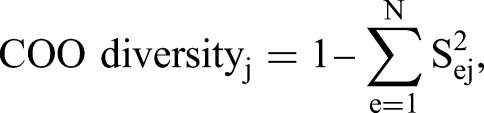
HIP category
Based on our qualitative research, skincare products entail a higher level of involvement than other beauty products and thus represent a HIP category. The literature supports this; consumers exhibit high anxiety and caution when purchasing skincare products, which is evident through their intensive recommendation-seeking and knowledge-acquisition activities (Lin, MacInnis, and Eisingerich 2020). Due to high health risks and long-term effects, consumers are concerned about ingredients and safety when purchasing skincare products (Euromonitor 2022). These attributes constitute a HIP, as consumers engage in more information processing and are cautious when purchasing skincare products (Leung et al. 2022; Reardon, Vianelli, and Miller 2017). While makeup products promise instant results, consumers need longer-term usage of skincare products to achieve the desired results. Such attributes closely match HIP attributes in the literature (Reardon, Vianelli, and Miller 2017). Furthermore, previous literature has considered skincare an HIP (e.g., Cho 2010). We measure HIP by assessing the presence of skincare products in the consumer purchase basket, such that HIP = 1 (otherwise 0).
Purchase frequency (Pfreq)
Purchase frequency refers to the number of specific times a particular consumer makes a purchase throughout the observation period (Connelly et al. 2011; Smith and Bird 2005).
Western developed-country brands share (WDB share)
WDB refers to brands from Western developed countries such as the United States, the United Kingdom, Germany, France, Italy, Switzerland, Sweden, Denmark, and Spain. We calculate WDB as a ratio of the number of WDB products to the sum of products from other COOs in the consumer's purchase basket.
Local brand share
Local brand share refers to brands from Bangladesh, which is the local brand in the context of this study. We measure local brand share as the ratio of the number of Bangladeshi products in the consumer's purchase basket to the sum of products from other COOs in the consumer's purchase basket.
Indian brand share
We measure Indian brand share as the ratio of the number of Indian products in the consumer's purchase basket to the sum of products from other COOs in the consumer's purchase basket.
Average price of COOs
We control for the average price of COOs to ensure that our findings are robust across price effects. We do this to rule out the possibility that a higher CPV is simply driven by a higher price of products from some countries. We control for the average price of Korean (avK), WDB (avWDB), local brand share (avLocal), and Indian products (avInd) in a consumer's purchase history.
Product categories (haircare and makeup)
We control for the presence of haircare and makeup products in the consumer purchase basket.
Basket size
Basket size refers to the average number of products a consumer purchased per shopping trip (Sorensen et al. 2017). We operationalize basket size by dividing the total unit of products a consumer purchased over the observation period by that consumer's purchase frequency.
Model and Estimation
To test our hypotheses, we run a monthly panel regression analysis on the following model: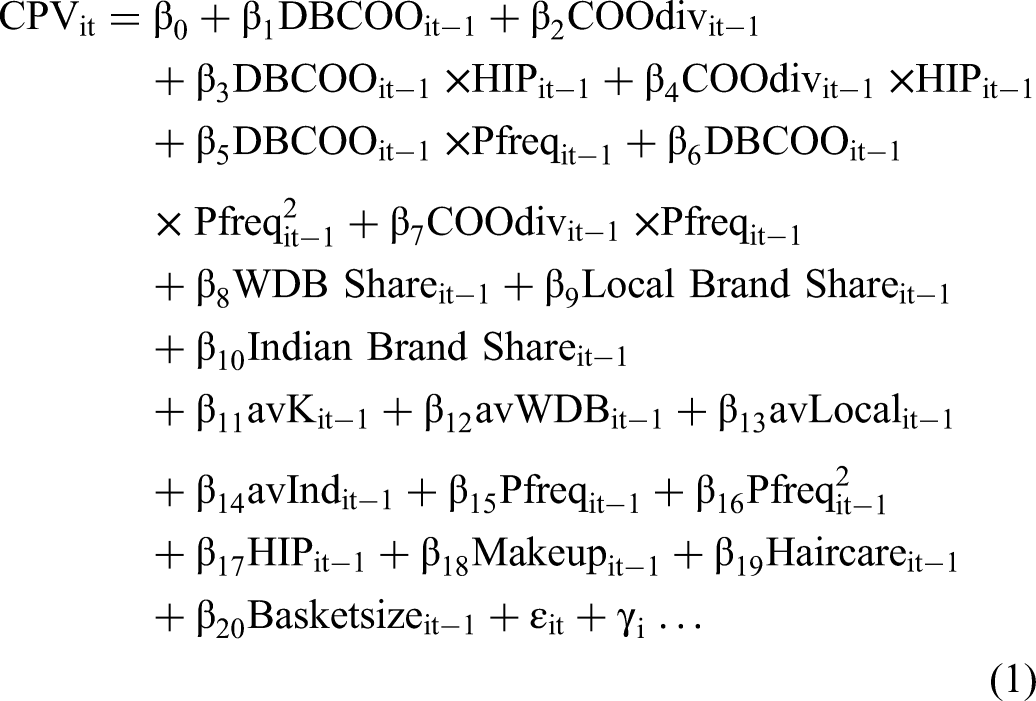
Analysis and Results
Before testing the hypotheses, we assessed multicollinearity. We estimated the variance inflation index; the mean variance inflation factor (VIF) (3.54) and individual VIFs are below the threshold of 10 (Hair et al. 2010; Kock and Lynn 2012). Thus, we do not find evidence of multicollinearity. Descriptive statistics and correlations appear in Table 3.
Descriptive Statistics and Correlations.

*p < .05.
Hypothesis testing
H1 suggests that DBCOO is positively related to CPV. In support of H1, the coefficient of DBCOO is positive and significant (β = .13, p < .01) (Table 4, Column 4). This result implies that the presence of Korean brands in the purchase basket is an essential indicator of a high-CPV consumer. We also controlled for brands from other nondistinctive COOs: WDB share (β = .05, p < .01), local brand share (β = –.05, p < .01), and Indian brand share (β = −.21, p < .01). Following a reviewer's suggestion, we assessed if other countries (e.g., France) could substitute for Korea as a DBCOO. According to our argument and additional test, France would be a common and dominant COO and thus would not help identify knowledgeable consumers. Our results confirm this: while the DBCOO strongly signals high CPV, nondistinctive COOs such as France do not (see Web Appendix B).
Results.

*p < .05. **p < .01.
H2 suggests that COO diversity is positively related to CPV. The results show that the coefficient of COO diversity (COOdiv) is positive and significant (β = .35, p < .01), in support of H2 (Table 4, Column 4). This finding suggests that greater COO diversity increases CPV in the consumer's purchase basket. H3 suggests that HIPs enhance the positive relationship between DBCOO and CPV. The results support this positive moderation (β = .14, p < .01, 95% CI: [.120, .249]; Table 4, Column 4). H4 suggests that HIPs attenuate the positive relationship between COO diversity and CPV. The results support H4 (β = −.55, p < .01, 95% CI: [−.604, −.509]; Table 4, Column 4). H5 suggests that purchase frequency (Pfreq) has a quadratic moderation effect on the positive relationship between DBCOO and CPV. The results support H5 (β = −.29, p < .01, 95% CI: [−.150, −.336]; Table 4, Column 4). H6 predicts that purchase frequency attenuates the effect of COOdiv on CPV. The results support H6 (β = −.06, p < .01, 95% CI: [−.043, −.239]; Table 4, Column 4). See Figure 2 for the graphical illustration of the moderating hypotheses.

Graphical Illustration of Moderation Effects.
Additional Analyses and Robustness Checks
Panel regression model with deeper purchase incidents
As a robustness test, we ran the panel model with deeper purchase incidents as controls. To account for deeper purchase incidents, we included independent variables and controls for (t − 2) and (t − 3) time periods. The results with deeper purchase incident controls are consistent with the results of our main model presented in Equation 1 (for equations and results, see Web Appendix C). For example, the coefficient of DBCOO is positive and significant (β = .14, p < .01), in support of H1, and the coefficient of COO diversity on CPV is positive and significant (β = .29, p < .01), in support of H2.
Alternative model estimation
We ran two additional models for robustness purposes (for equations and results, see Web Appendix D). An ordinary least square (OLS) regression analysis confirms that the results are not confined to our panel regression. For example, the coefficient of DBCOO is positive and significant (β = .71, p < .01), in support of H1, and the coefficient of COO diversity on CPV is positive and significant (β = 1.48, p < .01), in support of H2. An additional OLS predictive model splits the observation window into two periods and measures the independent variables based on the first six months (i.e., January–June) and the dependent variable based on the subsequent six months (i.e., July–December) of our observation window. This model supports our hypotheses; for example, the coefficient of DBCOO is positive and significant (β = .30, p < .01), in support of H1, and the coefficient of COO diversity on CPV is positive and significant (β = 4.38, p < .01) in support of H2. This additional model confirms that our results are robust for longer observation periods than the monthly panel estimation.
Accounting for unobserved heterogeneity
Although we included numerous controls in our model, the concern about unobserved heterogeneity remains. In particular, there may be unobserved heterogeneity caused by unobserved consumer characteristics. We ran the model controlling for festive season sales and ethnocentric purchases to account for unobserved heterogeneity. Festive season sales were coded as 1 if the sales were during the month of the three main festivals in Bangladesh (Eid al-Fitr, Eid al-Adha, and Bengali New Year), and as 0 otherwise (Hussain 2019). Ethnocentric purchase was coded as 1 if a consumer only purchased local brands, and as 0 otherwise. Moreover, while we do not have income data, consumers’ income might fluctuate in every quarter for macroeconomic reasons. Thus, we controlled for quarterly purchases. The results remain stable when controlling for these variables that account for some unobserved heterogeneity (see Web Appendix E). For example, the coefficient of DBCOO is positive and significant (β = .17, p < .05), in support of H1, and the coefficient of COO diversity on CPV is positive and significant (β = .22, p < .01), supporting H2.
Subsample test
Considering the large data set, the strong statistical power demands a test with a smaller sample size. Thus, we reran our panel regression model with a randomly selected smaller sample of 1/30th of the whole sample (n = 10,929). The results are similar to the panel regression with the whole data set (see Web Appendix F), adding robustness to our findings.
Endogeneity test
To account for endogeneity due to a potential omitted variable that simultaneously drives both independent and dependent variables in our model, we calculated a Gaussian copula for the independent variables DBCOO and COO diversity and plugged it into Equation 1 (Eckert and Hohberger 2022; Hult et al. 2018; Park and Gupta 2012; Vassallo et al. 2023). The results reveal similar findings after accounting for endogeneity in Equation 1 (see Table 4, Column 6).
Impact analysis with median splits
To assess the real-world relevance of our findings, we conducted a median split on our two independent variables and assessed if above- and below-median groups differ in their CPV. The results reveal that consumers with above- (vs. below-) median DBCOO have an average CPV of 2,631.29 BDT (vs. 672.51 BDT). Similarly, average CPV of consumers with COO diversity above the median is higher than it is for those below the COOdiv median (1,367.93 BDT vs. 451.18 BDT) (see Web Appendix G). Such stark differences demonstrate real-world impact of DBCOO and COO diversity on CPV.
Impact analysis with deciles
Table 5 confirms that this real-world impact exists across high- and low-CPV consumers. For a more granular picture, we split consumers into above- and below-median values of DBCOO and project the CPV in deciles corresponding to the DBCOO median split. For every decile, the CPV difference between above-median DBCOO and below-median DBCOO increases and ranges from 259 BDT (decile 10) to 6,868 BDT (decile 1). Moreover, we split consumers into groups of above- and below-median values of COOdiv and project the CPV in deciles corresponding to the COOdiv median split. For every decile, the CPV increases in both groups, from 83 BDT to 3,997 BDT. Thus, the impact analysis reveals that margins of the distribution do not cause the effect of DBCOO and COOdiv but are prevalent throughout the distribution and add tangible results that inform the managerial implications of our firm-focused study.
Impact Analysis with Deciles.

Notes: Average CPV in Bangladeshi taka.
Discussion
Theoretical Contribution
This study makes several theoretical contributions. First, we identify DBCOO as an unintentional consumer signal that firms can interpret to decrease information asymmetry. We theorize that consumers’ choices of brand COO can contain informational value, but that COO signals usually carry a lot of noise because consumers’ COO knowledge and usage differ widely (Davvetas, Diamantopoulos, and Liu 2020; Samiee, Shimp, and Sharma 2005). However, we hypothesize that the signaling value of COO information increases when we consider DBCOOs, unconventional COOs favored by consumers with high interest in and knowledge about a certain product category. In this sense, it is possible to distinguish ordinary consumers from those who possess desirable traits such as high interest and knowledge, which in turn indicate higher spending (Berger and Ward 2010; Wang and John 2019). This finding presents a novel contribution to current COO research, which has mainly developed along four key streams: COO and consumer evaluation (e.g., Verlegh, Steenkamp, and Meulenberg 2005); COO recognition accuracy (e.g., Balabanis and Diamantopoulos 2008); animosity, ethnocentrism, consumer psychograph, and brand origin (e.g., Sun et al. 2021); and COO fit (e.g., Sichtmann and Diamantopoulos 2013). These streams all view COO as a cue that helps consumers decrease their information asymmetry with respect to a product or brand. Our findings demonstrate that the signal can be read in the opposite way; specifically, firms can decrease information asymmetry about a consumer's purchase value.
Importantly, our findings do not contradict prior COO research but rather rely on and support previous studies. It is precisely because consumers use COO as a cue (e.g., Herz and Diamantopoulos 2017) that it is possible for firms to read DBCOO as a signal. This is also evident in the first pillar of the DBCOO concept, which builds on the key proposition of COO research—namely, that a country of origin can be associated with a superior value proposition (Balabanis and Diamantopoulos 2008; Payne, Frow, and Eggert 2017). Connecting this research with the second pillar (i.e., nondominance of the COO) turns DBCOO into a signal that can be employed as a strategic diagnostic tool that managers can use to extract meaningful insights about future potential spending (Bradlow et al. 2017; Marketing Science Institute 2020). We provide a comprehensive framework that investigates how COO signals from consumers can hold strategic value for firms. We extend recent COO studies that indicate that monitoring sales over time based on brand COO may be advantageous for firms (Chiang and Yang 2018; Magnusson, Zdravkovic, and Westjohn 2022).
Second, this study is the first to use the diversity concept in COO research. Although related marketing fields have used the diversity concept as a variable (Amaldoss and He 2019; Park, Voss, and Voss 2023), COO diversity has not been employed as a diagnostic signal for firms to extract consumer information. Our findings indicate that COO diversity has a positive effect on CPV and align with COO studies that suggest that decision-making processes related to brand COO are complex (Cakici and Shukla 2017; Pecotich and Ward 2017). The literature suggests that a diverse selection can indicate nuanced evaluations of subcategories, a careful learning and selection process, or consumers’ differentiation needs (Bellezza and Berger 2020; Bloemer, Brijs, and Kasper 2009; Pecotich and Ward 2017). Such complex decision-making processes relate to deeper consumer knowledge and higher spending (Cakici and Shukla 2017; Wang and John 2019). The positive effect of COO diversity is in line with current COO research on the coalescence effect, suggesting that consumers can bridge potentially contradictory cues related to a brand's origin appeal (Hu et al. 2022).
Third, we contribute to the literature on unintentional signals. DBCOO and COO diversity are not deliberate signals sent by consumers, a fact that may imply higher trustworthiness, but also limited observability compared with intentional signals (Cui, Jo, and Na 2018; Vasudeva, Nachum, and Say 2018). Unintentional signals are important, but the literature is just emerging (Connelly et al. 2011; Grecu et al. 2022; Horner et al. 2022). We examine the boundary conditions of two unintentional signal effects (DBCOO and COO diversity) on CPV, which is important because of the complexity of unintentional signals (Vasudeva, Nachum, and Say 2018). We consider HIP categories and purchase frequency as moderators because they are easily accessible variables for retailers.
Our findings indicate that the relationship between DBCOO and CPV is stronger for HIPs. On the contrary, the relationship between COO diversity and CPV is weaker for HIPs. The logic for both effects is consistent because consumers try to decrease risk related to HIP purchases by reducing variety seeking and by employing a more thorough consideration of their choice (Bruwer and Buller 2013; Simonson 2005; Suh and Youjae 2006). We also shed light on the moderating effect of purchase frequency on the DBCOO–CPV and COO diversity–CPV links. Again, the logic for our results is consistent for both relationships. Still, effects show different tendencies: a quadratic inverse U-shaped relationship for the DBCOO–CPV interaction and a linear negative effect for the COO diversity–CPV interaction. Both moderation effects are rooted in two rationales connected to purchase frequency. On the one hand, frequent customers tend to make more informed choices (Ofir et al. 2008); on the other hand, purchase frequency can imply more signaling noise. Our results align with previous studies, indicating that frequency can have positive and negative moderation effects (Smith and Bird 2005; Venkatesan and Kumar 2004).
Managerial Implications
The current work has critical implications for marketing managers. Many managers believe that firms should continuously track consumers, identify high-yield customers, and then pay specific attention to them by utilizing priority distribution, exclusive product offers, or targeted communication. However, managers face the problem of identifying high-yield consumers because initial purchases contain very little information. Our research suggests that managers can tap unintentional signals hidden in a consumer's purchase history to decrease information asymmetry and identify potentially high-CPV consumers. Such insights are essential as managers often lack the theoretical understanding to make pertinent use of available data. Even in the age of artificial intelligence and deep learning, plain business metrics are important for firms, especially in emerging markets, which often lack the infrastructure, resources, and expertise for complex technology-dependent analyses (Sheth 2011).
Our study offers three key implications for managers. First, we demonstrate how DBCOO in consumers’ purchase history (in our case, a Korean COO) can help managers predict CPV. Brand COO is relevant to consumers’ purchase decisions and is easily observed from purchase history data. An essential requirement is that brand managers need to rely on research to identify DBCOOs that can act as unintentional signals. Our desk research and our qualitative study identify Korea as a signal for beauty products in Bangladesh. Our result suggests that consumers with above-median DBCOO in their purchase history have almost four times higher average CPV in our observation year than consumers with below-median DBCOO. Considering these strong differences in CPV will enable managers to channel their marketing resources to further increase the customer lifetime value of high-CPV consumers and reduce marketing spending on low-CPV consumers. The DBCOO signal may differ depending on the product category or market. Thus, we encourage managers to build on research to identify these valuable and relevant signals, which can decrease information asymmetry about consumer spending power (Bradlow et al. 2017; Saxena and Lamest 2018).
Second, we identify COO diversity as an additional signal that managers can tap to segment consumers according to their purchase value. According to our theory-based argument, COO diversity is a universal signal that managers can interpret and is not tied to a specific context, but further research is needed to add robustness to our findings. Our impact analysis indicates that consumers with above-median COO diversity have a three-times-higher average CPV in our year of observation than consumers with below-median COO diversity. Importantly, the COO diversity metric is distinct from DBCOO. We have analyzed the overlap between consumers belonging to the highest decile in DBCOO and the highest decile in COO diversity, and only 9.4% of consumers in those groups overlap. In other words, DBCOO and COO diversity are complementary signals that allow firms to segment consumers according to their CPV, thus providing valuable strategic analytical tools. The measure of COO diversity builds on the approach managers use to evaluate firms’ relative market share (Cetorelli and Strahan 2006; Giroud and Mueller 2011). Thus, we posit that the metric can be implemented by marketing managers in a straightforward way.
To assess the potential impact of DBCOO and COO diversity metrics, we presented our findings to four distinguished managers from different levels and collected their feedback. Managers’ positions were CEO, analytics and digital marketing manager, operations manager, and sales manager. They mentioned that both signals are novel and pointed out that relying on these signals as analytical tools would help them better distinguish high- from low-CPV consumers. As one manager stated, “Implementing these COO signals would enable us to find high-purchasing consumers [high CPV] more effectively than before. Previously, we have used many complicated metrics, but the results were not as effective as these.” The managers also stated that they look forward to applying DBCOO and COOdiv metrics in the future.
Third, our moderator analysis of HIPs and purchase frequency presents important boundary conditions that managers need to account for in interpreting signals. Both variables are easy to access for managers and are typically considered in the retailing context (Reinartz, Wiegand, and Imschloss 2019). Importantly, DBCOO signals increase in strength for HIPs, whereas the COO diversity signal decreases in strength. Thus, the former signal would be more trustworthy for HIPs (e.g., skincare products), while the latter signal would be more trustworthy for low-involvement product categories. Our findings also provide guidance for managers with respect to the complexities of unintentional signals and the role of signal noises. For example, for very frequent and very infrequent shoppers, the DBCOO signal loses its informative value. These nuances are crucial for managers to understand when segmenting consumers according to their purchase value to develop distinctive targeting strategies.
Limitations and Implications for Further Research
This study has some limitations, which reflect opportunities for future work. First, our study is limited to assessing the direct effect of unintentional signals (DBCOO and COO diversity) in indicating CPV. We do not investigate the mechanism behind this relationship. Further research is needed to understand mediating effects to yield a clearer understanding of the paths through which these signals travel. Second, due to limited information in our secondary data, we did not take important COO-related variables into account, such as consumers’ income, socioeconomic status, ethnocentrism, or cosmopolitanism. Moreover, while we control for price and product category effects, we were unable to account for other variations of marketing mix-variables, such as promotion and distribution. Connecting these aspects with consumer purchase histories will increase our understanding of COO-related unintentional signals and reduce unobserved heterogeneity. Third, we only touch on consumers’ COO-related signals for product purchase. These effects may hold even greater significance in other areas (e.g., subscription services). For example, one avenue for future work would be to investigate if COO signals contain information about subscription renewal or withdrawal. In addition, alternative dependent variables such as profit per customer may be worthy of consideration. Fourth, because we have introduced COO diversity for the first time, we do not study potential motives, such as variety seeking. We encourage researchers to study the motives of COO diversity in greater detail. Fifth, further research is needed to add robustness to our findings for different contexts. A multicountry (emerging vs. developed market) and multicategory approach could enhance the generalizability of our findings. Lastly, although we have anecdotal evidence on chocolate products and empirical evidence for beauty products, our findings still need to be generalized for other segments. Hence, we encourage researchers to conduct future studies on different product categories.
Supplemental Material
sj-pdf-1-jig-10.1177_1069031X241254038 - Supplemental material for A Good Signal: How Firms Can Utilize Country of Origin as a Strategic Analytical Tool
Supplemental material, sj-pdf-1-jig-10.1177_1069031X241254038 for A Good Signal: How Firms Can Utilize Country of Origin as a Strategic Analytical Tool by Rafid Ur Rahman, Martin Heinberg, Sourindra Banerjee and Constantine S. Katsikeas in Journal of International Marketing
Footnotes
Special Issue Editors
Rajeev Batra, Kelly Hewett, Ayşegül Özsomer, and Jan-Benedict E.M. Steenkamp
Declaration of Conflicting Interests
The authors declared no potential conflicts of interest with respect to the research, authorship, and/or publication of this article.
Funding
The authors received no financial support for the research, authorship, and/or publication of this article.

References
Supplementary Material
Please find the following supplemental material available below.
For Open Access articles published under a Creative Commons License, all supplemental material carries the same license as the article it is associated with.
For non-Open Access articles published, all supplemental material carries a non-exclusive license, and permission requests for re-use of supplemental material or any part of supplemental material shall be sent directly to the copyright owner as specified in the copyright notice associated with the article.
