




Abstract
Relational trauma is characterized by disturbances in the interactions and emotional bond between parent and child. We conducted a systematic review to identify the change processes used within interventions for children who experienced relational trauma. We identified 12 articles that met our search criteria. The articles are classified as: (a) quantitative, (b) qualitative, (c) mixed methods, or (d) case studies. These articles are represented in 10 journals published between the years of 2012 and 2023. We used Prochaska and DiClemente’s conceptualization of intervention changes processes and found consciousness raising, catharsis, and conditional stimuli were most commonly implemented. Overall, findings indicate that the change processes used in the interventions were demonstrably effective in alleviating adverse outcomes and improving the relationship outcomes among and between both parents and children. We discuss implications for the change processes of relational trauma interventions and directions for future research.
Keywords
In community mental health clinics, nearly 80% of clients report having experienced at least one instance of trauma during their life, which equates to nearly 5 in every 6 clients (Breslau & Kessler, 2001). Trauma has been defined and redefined innumerably over time (Anders et al., 2012; Dalenberg et al., 2017). Trauma was previously defined as an event existing “outside the range of usual human experience” (APA, 1980, p. 236; Boals, 2018). However, trauma is currently defined as requiring “actual or threatened death, serious injury, or sexual violence” (American Psychiatric Association, 2022, p. 271). One category of trauma which falls outside of this definition and has been identified to be particularly distressing, is relational trauma (Anders et al., 2012). In fact, of non-criterion A-1 events, interpersonal events are the most likely to lead to symptoms of post-traumatic stress disorder (PTSD) (Anders et al., 2011).
Relational Trauma
Relational trauma is characterized during early stages of development by a disturbance in the interaction and emotional bond between parent and child, which stems from stressed or distressed parental caregiving and can lead to significant distortions in providing emotional care (Booth et al., 2022; Forbes et al., 2012). These distortions can result in anxiety, uncertainty, or fear in infants within their primary attachment relationships, which disrupts the normal developmental processes during the neonatal and early childhood phases (Forbes et al., 2012). Consequently, these disruptions can have far-reaching effects on social and emotional development throughout an individual's life (Scarborough et al., 2009; Schore, 2001; Schore & McIntosh, 2011).
Relational trauma distinguishes itself from single-incident trauma, which typically arises from isolated and unpredictable events like severe accidents; rather relational trauma embeds itself in ongoing patterns of disrupted interactions between caregivers and children (Scarborough et al., 2009). Its causes are multifaceted and include parental mental illness, substance abuse, unresolved intergenerational grief, abuse, loss, and various stressors such as family violence, interpersonal conflicts, or homelessness (Newman & O'shaughnessy, 2015; Norman et al., 2012).
Early recognition of symptoms associated with relational trauma in both parents and infants becomes crucial for facilitating timely support and opportunities for repair (Newman & O'shaughnessy, 2015; Norman et al., 2012). Children who have undergone relational trauma, enduring experiences like abuse, neglect, loss, or exposure to traumatic environments without parental protection, often grapple with profound feelings of shame and fear (Golding et al., 2021). These experiences distort their developing self-identity and shape their expectations of others (Golding et al., 2021).
Relational trauma occurs early in a child's development and is characterized by disturbances in the parent–child bond, specifically as it relates to interactions and emotional attachment (Booth et al., 2022). Also known as developmental trauma, relational trauma during early stages of development is characterized by a disturbance in the bond between parent and child (Booth et al., 2022). This often stems from stressed or distressed parental caregiving and can lead to significant distortions in providing emotional care (Forbes et al., 2012). These distortions can trigger anxiety, uncertainty, or fear in infants within their primary attachment relationships, disrupting the normal developmental processes during the neonatal and early childhood phases (Forbes et al., 2012). Infants, children, and adolescents will be focused on particularly throughout this review as relational trauma, which occurs relatively early developmentally, can have a lasting impact on the shaping of their developing identity (Golding et al., 2021). This impact on development can become intrenched, altering the individual's perceptions of both themselves, others, and the world around them as they enter adulthood (Sacks & Murphey, 2018). Thus, it is important to address the issue of relational trauma early on. The specific change processes this population may undergo are highlighted throughout the review and include consciousness raising, catharsis, choosing, conditional stimuli, and contingency control.
Among retrospective studies with adults, 50% to 60% have a history of childhood abuse or neglect that has impacted their emotional development, assumptions about themselves and their worlds, and their functioning as adults (Sacks & Murphey, 2018). Moreover, secure attachments and emotional bonds with caregivers during childhood are thought to be protective against the development of mental health symptoms and diagnoses later in adulthood (Schore, 2012). Therefore, addressing and utilizing interventions with children exhibiting signs of relational trauma is vital (Treisman, 2016). However, unified ideologies regarding intervention efficacy with this nature of trauma on this young population is sparse (Edwards et al., 2017).
Similarly, change processes, or the activities used to alter emotions, thoughts, behaviors, or relationships related to a particular problem or pattern of living, need further investigation within this population (Prochaska & Norcross, 2018). Understanding stages of change can offer counselors insight into client readiness (McConnaughy et al., 1983). Moreover, clients feeling pushed to change before entering a phase of readiness can lead to noncompliance and lack of motivation, which culminate in client failure (McConnaughy et al., 1983). Therefore, understanding readiness for change, approaching barriers, and anticipating setbacks can improve client outcomes (McConnaughy et al., 1983). Thus, the purpose of the current review is to determine which change processes are associated with interventions that efficaciously address relational trauma for infants, children, and adolescents.
Change Processes
While Counseling hosts an array of diverse theoretical orientations and techniques, there is no current consensus regarding which is most efficacious. However, overarching these theories and techniques lies the intermediate level of abstraction, known as the processes of change (Prochaska & DiClemente, 1982). The gap between global theories (e.g., psychoanalysis, cognitive, and humanistic approaches) and specific techniques (e.g., dream analysis, progressive muscle relaxation, and family sculpting) is bridged by the consistent presence of conceptualizations of client change processes. According to Prochaska and Norcross (2018) the point at which change processes bridge global theories and specific techniques is the same point at which psychotherapists develop their treatment plans. Processes of change encompass both overt and covert actions that individuals may employ to modify their emotions, thoughts, behaviors, and/or relationships, serving as the mechanism by which people change both within and in-between therapy sessions (Prochaska & DiClemente, 1982; Prochaska & Norcross, 2018).
Consciousness raising or enhancing an individual's awareness about self and problem, stands as a central process in counseling for fostering change (Prochaska et al., 1992). Therapies focused on raising consciousness aim to expand individuals’ information base, enabling them to make more effective life choices (Prochaska & DiClemente, 1982). Concurrently, choice or choosing hinges on the belief that clients possess the innate capacity to choose to change as a result of counseling (Prochaska & Norcross, 2018). This empowerment to choose is believed to stem from consciousness-raising, in that as consciousness increases, individuals gain awareness of potential choices, enabling them to opt for the most constructive options (Prochaska & DiClemente, 1982).
Contrasting with choice as the driving factor to change, conditional stimuli refers to the notion that conditions or environments dictate individual responses (Prochaska & DiClemente, 1982). Conditional stimuli is therefore the understanding that one's actions are triggered by cues. If reactions are learned and connected to specific cues, being aware of those cues usually isn’t enough to make a change; rather, individuals need to either adjust the situation or change their behavior (Prochaska & DiClemente, 1982). Where counterconditioning is about altering how one responds to certain triggers, stimulus control focuses on changing the environment to lower the chances of a specific trigger occurring (Prochaska & DiClemente, 1982). Similarly, Contingency control refers to modifying behaviors by altering the environmental factors that influence or reinforce those behaviors (Prochaska & DiClemente, 1982). This change process focuses on manipulating the contingencies or connections between behaviors and their consequences in order to shape or modify the behavior itself (Prochaska & DiClemente, 1982; Prochaska & Norcross, 2018).
Catharsis, viewed from the paradigm of counseling, encompasses the process of releasing pent-up feelings or suppressed emotions to produce an experience of therapeutic liberation (Prochaska & DiClemente, 1982; Prochaska & Norcross, 2018). This endeavors to aid individuals in breaking through the emotional barriers that inhibit their well-being (Prochaska & Norcross, 2018). This liberation and acceptance of oneself is believed to foster a sense of emotional relief and pave the way for growth and healing within the therapeutic process (Prochaska & DiClemente, 1982).
Changes Processes of Relational Trauma Interventions
In order to comprehensively evaluate the efficacy of interventions, researchers should identify and examine the processes of change, as outlined by Prochaska and DiClemente (1982). This approach to examining treatment efficacy allows for a focus on the details and complexities of each stage of change, as elicited by therapeutic intervention. Identifying the change processes of interventions aimed at addressing relational trauma may therefore produce novel insights into the mechanisms of intervention effectiveness. Further, understanding the role change processes play in intervention effectiveness may inform future treatment approaches by engaging intentional decision-making strategies regarding treatment intervention, as well as support the development of novel approaches to most efficaciously address an array of symptoms and diagnoses.
Therefore, this study aims to identify and evaluate change processes used in interventions for infants, children, and adolescents to mitigate adverse outcomes from relational trauma. The objective is to understand the efficacy of differing mechanisms of change employed by therapeutic interventions. These interventions target adverse psychological outcomes in children and adolescents who have experienced relational-based traumas. The following research question guided this investigation: What change processes are associated with interventions that address relational trauma for infants, toddlers, children, and adolescents?
Methodology
To address the primary research question, we adopted a systematic approach to comprehensively review pertinent literature. The focus was on delineating the characteristics and outcomes of therapeutic interventions designed to alleviate negative psychological consequences in children and adolescents with a history of relational-based traumas. Our nuanced methodology integrated a meticulous examination, emphasizing the identification and evaluation of distinct processes of change, adhering to conceptualizations of awareness- and action-based change processes proposed by Prochaska and Norcross (2018), elicited through each intervention strategy.
We adhered to the Preferred Reporting Items for Systematic Reviews and Meta-Analyses Extension for Systematic Reviews (PRISMA-P) methodology, as outlined by Moher et al. (2015). The PRISMA-P checklist guided our approach in (a) establishing review criteria, (b) formulating a comprehensive list of screening items, (c) achieving consensus among the research team on pertinent variables, (d) distinguishing and presenting data, (e) critically evaluating included articles, and (f) synthesizing the gathered data (Moher et al., 2015).
Search Strategies
The research team conducted a systematic search of the PsycINFO database (October 17, 2023) following the PICO (Population, Intervention, Comparison, Outcome) framework (Pollock & Berge, 2018) to guide our search strategy. Through this PICO search strategy, we developed initial search sets utilizing keywords and search terms aimed at targeting literature that included our population of interest, the presenting problem of relational trauma, and included an intervention. Examples of search terms that were population-focused and included within search sets were “children,” “teen,” “adolescent,” “child,” and similar terms. Relational trauma is comprised of two components, which need to be broken down through search terms to promote allocation of relevant literature. Therefore, search terms utilized to target literature incorporating the relational trauma component of this review included trauma-based terms such as “trauma,” “attachment,” “maltreatment,” and “abuse,” while trauma specifier terms such as “relational,” “parent–child,” “friends,” “romantic relationships,” “peer relations,” and “teacher-child” were used to further specify the type of trauma we were hoping to examine. Lastly, to ensure literature derived from the search included a specific intervention for addressing relational trauma, we utilized additional terms such as “counseling,” “therapy,” “intervention,” and “treatment.”
Eligibility Criteria
To ensure the relevance and currency of the literature included in this systematic review, eligibility for inclusion was restricted to empirical articles published in peer-reviewed journals between 2012 and 2023. This temporal scope was selected to promote a focus on recent research and findings. Only articles published in English or fully translated in English were included. Records gathered from an initial database search were excluded if they were (a) not accessible, (b) non-peer-reviewed journal publications, (c) dissertations, (d) conceptual articles, (e) meta-analyses, (f) literature reviews, and (g) books. Articles that included quantitative, qualitative, mixed-methods, and case-study methodologies were included. Identification and examination of change processes derived from interventions is the central aim of this investigation; therefore, eligible articles were required to incorporate studies examining specific interventions with the primary focus of addressing relational trauma. The intervention and primary focus of relational trauma had to be associated with child populations, which meant articles were only eligible in the sample population included was between the ages of 0 and 19 years old. Any studies assessing relational trauma interventions for populations outside this age range were considered ineligible for inclusion. Examination of studies’ research questions, methodology, and implications supported our ability to assess and determine article eligibility. Additionally, any articles requiring the researchers to pay a monetary fee for full-text access were excluded.
Data Extraction
As a team, we conducted an initial search of the PsycINFO database, producing a preliminary list of articles for inclusion in this review. This initial database search used keywords and search-terms, determined through research team discussion and consensus, to target and gather articles incorporating: (a) therapeutic interventions, (b) relational trauma, and (c) child populations. The preliminary list of articles was reviewed and collaboratively examined for eligibility. The articles were then divided equally among research team members, who then became responsible for assessing the eligibility of assigned articles. Following the recommendation of Levac et al. (2010), the research team collaboratively developed a data-charting form to promote consistency among researchers when reviewing articles for eligibility. The data-charting form utilized for this review required researchers to extract article variables including: (a) author(s), (b) year of publication, (c) title of the article, (d) study methodology employed (quantitative, qualitative, mixed-method, case-study), (e) a brief sample population description, and (f) name of the intervention. Three independent levels of article screenings were conducted in sequential order (level 1, level 2, level 3) and were used to determine article eligibility to produce a final yield list of articles included in the data set synthesized in this review.
Level 1
Articles identified from the initial search of the PsycINFO database were reviewed to identify and remove any duplicates. The research team collaboratively reviewed the title of each article to make an initial determination of relevance for eligibility. Articles were subsequently organized within the data-charting form. Articles were removed if they were published prior to 2012 or if they were not written in English. All remaining articles were included and progressed to screening at level 2 and were divided evenly among the research team members for review.
Level 2
Team members independently screened their assigned articles for level 2. Focusing on examination of each article's abstract, eligibility determinations were made. Eligibility was determined by assessing article accessibility, peer-reviewed status, and article type. In circumstances where the abstract was insufficient for determining eligibility, researchers proceeded by reviewing the full article. All articles that were dissertations, conceptual, meta-analyses, literature reviews, or books were excluded. On the data-charting form, team members assigned each article an eligibility designation of “include,” “exclude,” or “unsure,” which were identified using a corresponding color. Eligibility designations and their corresponding colors were predetermined collaboratively among researchers. Purple represented “include,” red represented “exclude,” and yellow represented “unsure.” All articles marked yellow for “unsure” were reviewed during a team meeting for consensus on designating each as either “include” or “exclude” before proceeding to level 3.
Level 3
The articles deemed eligible and included in the level 2 screening process were then compiled into a new yield list and divided equally among team members. A final eligibility review was conducted by each team member for their assigned articles and incorporated an examination of the full-text of each. This final eligibility review emphasized exclusion of articles that were not relevant and did not address the primary focus for this review. Specifically, articles were determined ineligible at level 3 if the study did not include a specific therapeutic intervention, the primary focus was not relational trauma, and the study sample population did not address this review's population of interest (i.e., participants were not infants, children, or adolescents). Lastly, any articles requiring payment for full-text access were excluded. Articles identified as eligible for inclusion at level 3 were compiled into a final yield list and were designated as the data set that would be utilized for synthesis to inform review outcomes and findings.
Results
An initial search of the PsycINFO database was conducted, which identified a total of 206 records. Level 1 screening identified and excluded records that were published before 2012 (n = 130) and not available in English (n = 2), resulting in the exclusion of 132 records. A total of 74 records were identified for inclusion and progressed to a second round of screening. Level 2 screening excluded records if they were: not accessible (n = 3), not peer-reviewed (n = 2), dissertations (n = 7), conceptual articles (n = 8), meta-analyses (n = 1), literature reviews (n = 4), and books (n = 6). The level 2 screening resulted in the research team excluding an additional 31 records, subsequently identifying 43 articles for inclusion in the level 3 eligibility assessment. The researchers conducted full-text examinations of each of the 43 articles included in level 3 to determine eligibility. This final data extraction resulted in the exclusion of 31 articles for the following reasons: intervention not included (n = 24), does not address primary focus (n = 3), participant age (n = 3), and required purchase for full access (n = 1). Completion of all three levels of data extraction produced a final yield of 12 articles incorporating studies consisting of quantitative (n = 4), qualitative (n = 2), mixed-methods (n = 3), and case-study (n = 3) methodologies. These 12 articles comprised the final yield list and were included for synthesis Figure 1.
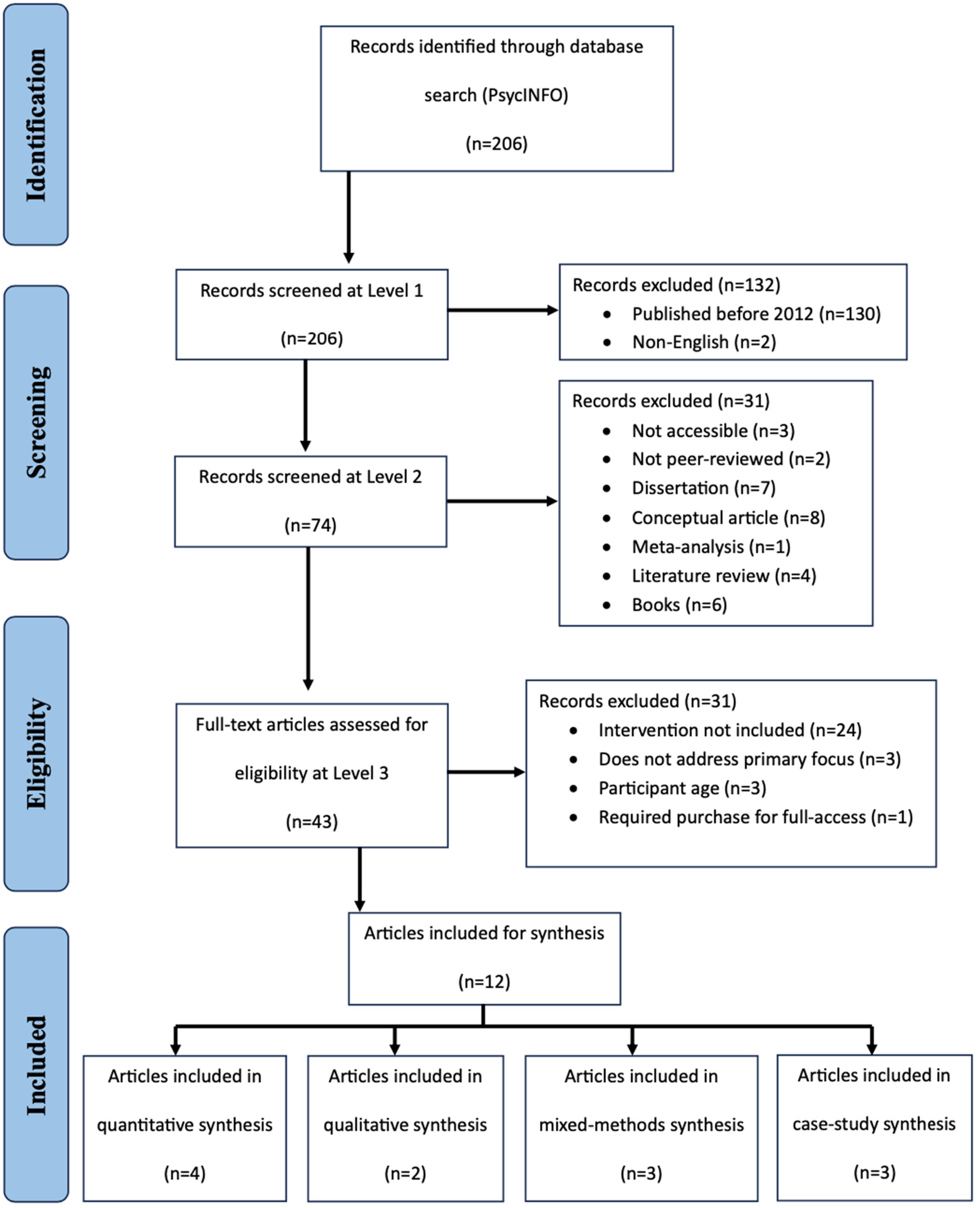
PRISMA flow diagram. Note. The PRISMA flow diagram outlines exclusion and inclusion protocol for articles in this systematic review, following the PRISMA 2009 protocol (Moher et al., 2009).
Study Outcomes
The 12 empirical articles included in this review address results and findings derive from novel explorations of therapeutic interventions aimed at addressing relational trauma and implemented with sample populations aged 2 days to 17 years. Data derived from the included articles is outlined in a manner that adheres to the authors’ classification of the study methodology (e.g., quantitative, qualitative, mixed-method, case-study), the N and profile of participants, research of interest and results from their analysis. The study outcomes section to follow will synthesize results from quantitative (n = 4), qualitative (n = 5), mixed method (n = 2), and case studies (n = 1). The sections will be organized according to the respective methodology.
Quantitative Studies
Our review of quantitative findings included four studies (Cerezo et al., 2013; Hoye et al., 2020; Pons-Salvador et al., 2014; Weir et al., 2021) and three mixed methods designs (Allen et al., 2014; Stronach et al., 2013; Van der Asdonk et al., 2020). The quantitative studies included three pre- and post-test designs (Cerezo et al., 2013; Hoye et al., 2020; Pons-Salvador et al., 2014) and one quasi-experimental design (Weir et al., 2021). The studies utilizing the pre- and post-test measures specifically reported a significant increase in the functioning of the family and parenting systems following the interventions. Pons-Salvador noted that the higher the number of sessions of the Parent–Child Psychological Support Program (PCPS), the stronger the level of secure attachment the child showed during the Strange Situation post-test. Similarly, Hoye et al. (2020) noted that parents that underwent the Attachment and Biobehavioral Catch-Up (ABC) reported more positive parenting techniques, higher sensitivity to the needs of the child, and lower levels of maladaptive interactions or conversations. The children that were part of the experimental group displayed a significantly higher level of positive behavioral change and interactions within the family system. Cerezo et al. (2013) reported that both parents and children found a significant difference in attachment level when a higher “dose” of PCPS was implemented post-intervention. This increase was measured using the Program Dose impact on Parental Sense of Competence (PSOC), Parental Self-efficacy (PEff), and Parental Satisfaction (PSat) pre- and post-intervention. The children were measured through a brief observation by researchers, which assessed the type of attachment the children showed.
The quasi-experimental design method (Weir et al., 2021) implemented the McMaster Family Assessment Device (FAD), the Outcome Questionnaire-45 (OQ) and the Youth Outcome Questionnaire 2.01 (Y-OQ). These were measured prior to the intervention to assess the family's overall reported functioning. The OQ was used to measure the efficacy of the intervention for the parents, whereas the Y-OQ was used to measure the effectiveness of the intervention for the children. T-tests were used to measure the statistically significant amount of improvement following the intervention. Out of the 95 T-tests conducted in total, 10 were found to be statistically significant, suggesting that family systemic functioning showed improvement after Whole Family Theraplay treatment.
Population
The populations studied within these methods looked at differences between parents and children based on various categories of relational trauma. The quantitative studies all looked at the infants or children (Cerezo et al., 2013; Hoye et al., 2020; Pons-Salvador et al., 2014; Weir et al., 2021) of mothers that have previously experienced relational trauma in their lives, which in effect has played an impact on their attachment style.
The population examined within this study consisted of n=? total participants, who fell between the ages of 2 days old to 17 years old. These studies frequently focused on the differences between parents and children based on various categories of relational trauma. The quantitative studies included all looked at infants or children of mothers who previously experienced relational trauma which in turn, has impacted their current attachment style (Cerezo et al., 2013; Hoye et al., 2020; Pons-Salvador et al., 2014; Weir et al., 2021).
Intervention Characteristics
Following review of the quantitative articles, we found similar intervention characteristics among studies. Synthesis of these findings resulted in the consensus of (a) Consciousness Raising and (b) Conditional Stimuli, which was viewed from both subcategories including (a) Counterconditioning and (b) Stimulus Control. The interventions assessed within these studies included different methods of consciousness raising, as they provided the parents with psychoeducation about their children and how to connect with them in the most effective manner (Cerezo et al., 2013; Hoye et al., 2020; Pons-Salvador et al., 2014; Weir et al., 2021). Conditional stimuli was another recurrent theme across these studies, as the interventions themselves often included education for parents regarding how to best alter their response to a stimulus (counterconditioning) or changing the environment in which the stimulus, or negative behavior, happens (stimulus control).
Qualitative Studies
The review of articles resulted in five qualitative studies (Agazzi et al., 2023; Bademci et al., 2015; Balch & Golub, 2020; Caron et al., 2016; Moss et al., 2014), three of which included case studies (Agazzi et al., 2023; Balch & Golub, 2020; Moss et al., 2014) and two included semi-structured interviews or tasks that were then coded (Bademci et al., 2015; Caron et al., 2016). Bademci et al. (2015) recorded interviews with participants and compared similar themes that arose across interviews. Participants received a mentor from the University to spend time with them and help them discuss and learn more about health, safety, and self-care. Common themes that arose from the analysis included feelings of security and trust after being hesitant to open up to the peer mentors. Characteristics of the volunteers from the University that were reported as helpful included feelings of empathy and increased sensitivity to the needs of the boys, as well as showing the boys that they remember them, and details shared with them previously (Bademci et al., 2015). Caron et al. (2016) coded video observations of parents and their children interacting in play methods prior to and following the intervention of ABC. The video recordings were coded through a separate University that had no knowledge of the hypotheses as to reduce any bias on the areas being studied. Similar themes were coded through this process, including an increase in the positive interactions and moods of the parents, and a decrease in intrusiveness and negative interactions on the part of the parents. These findings were consistent with previous randomized controlled trials of ABC (Caron et al., 2016).
The case studies reviewed through this process included one following a 4-year-old child who was put into the care of his grandparents and aunt and uncle due to the maltreatment he was receiving from his mother (Agazzi et al., 2023). Agazzi et al. (2023) assessed changes within the child and his caregivers following the intervention of PCIT through the Eyberg Child Behavior Inventory (ECBI) and the Dyadic Parent–Child Interaction Coding System (DPICS). Similar themes that were found through the study included improvements in the behaviors of the child (ECBI) as reported by his caregivers, as well as decreases in negative statements from caregivers and increases in positive statements or praises toward the child (DPICS).
Another case study looked at two young siblings that were taken out of their parents’ custody due to abuse and neglect. Through the intervention of play therapy, the children played out their past and eventually played through their feelings, finally entering a place of healing (Balch & Golub, 2020). Both children in the study experienced and played through their traumas in different ways, with the male showing externalizing symptoms and the female showing internalizing symptoms. However, following the interventions set forth, the children were both able to play through their respective traumas and communicate more effectively with their current caregivers, without hindrances from the past trauma (Balch & Golub, 2020).
The case study conducted by Moss et al. (2014) was modeled after a prior quantitative study. It followed the interactions of a two-and-a-half-year-old child of a mother who recently regained custody. The interactions between the mother and her son were recorded, observed, and coded before and after the intervention of play therapy and PCIT. The findings of the recorded interactions were consistent with the previously measured study the case study was based upon. These findings included a secure attachment on the part of the child post-intervention, as well as a higher level of support and sensitivity from the mother following the intervention. This was a significant difference from the pre-intervention recordings wherein the mother displayed a low level of sensitivity towards the child and his creations during play, while making condescending comments about his behavior (Moss et al., 2014).
Population
The population examined in the qualitative studies encompassed a wider range of ages than the other methodologies. This included infants between the ages of 2 and 27 months of age (Caron et al., 2016), 1 to 5 years of age (Agazzi et al., 2023; Balch & Golub, 2020; Moss et al., 2014), and the ages of 14 to 17 years (Bademci et al., 2015). Moreover, within this population, a diverse range of background characteristics, including ethnic background, homelessness or adoption, and various levels of trauma within the family systems, was included (Agazzi et al., 2023; Bademci et al., 2015; Balch & Golub, 2020; Caron et al., 2016; Moss et al., 2014).
Intervention Characteristics
The qualitative studies reviewed in this analysis shared common themes related to change processes, similar to the quantitative studies examined. These processes included consciousness raising, conditional stimuli, and catharsis. All the studies included consciousness raising and conditional stimuli, incorporating both subcategories—counterconditioning and stimulus control—whereas two of the studies specifically addressed catharsis, or the release of pent-up emotions (as expressed through non-directive play therapy).
Mixed-Methods Approaches
Within the mixed-methods studies examined, one article (Allen et al., 2014) used the Child Behavior Checklist (CBCL), ECBI, and Parenting Stress Inventory – Short Form (PSI-SF) to assess differences between the beginning of treatment, following the first phase of treatment (CDI), and directly after treatment concluded. Following data analyses, a significant improvement was showed in the internalizing and externalizing of behaviors as measured by the CBCL (Overall F(3, 70) = 7.46, p b .001, η2 = .24, observed power = .98) (Allen et al., 2014) as well as a significant decrease in the amount of and intensity of behavior problems reported by the ECBI (Overall F(2, 68) = 38.86, p b .001, η2 = .52, Observed power = 1.0) (Allen et al., 2014). Repeated measures of analysis of covariance were conducted to assess the reported differences in parental stress of adoptive parents from the initial pre-test to the end of treatment. Results indicated a significant decrease in parent stress or distress and dysfunctional relationship of the child and parent. The assessments of the interactions between parent and child were coded using the DPICS. Results of the analysis showed a significantly different increase in appropriate communication patterns between parent and child (Pre-treatment: M = 26.05, SD = 14.1; Final assessment: M = 49.47, SD = 18.1; F(1, 37) = 72.3, p b .001, η2 = .69, Observed power =1.0) and a significant decrease in maladaptive communications, such as yelling, critiques, and demands (Pre-treatment: M = 33.71, SD = 15.0; Final assessment: M = 8.84, SD = 7.0; F(1, 37) = 83.1, p b .001, η2 = .70, Observed power = 1.0) (Allen et al., 2014). These findings indicate significant differences in the children's behaviors and emotions as well as the stress related to parenting, emphasizing the positive outcomes in the relationships between the parents and children.
Another mixed-methods study looked at the differences in effects of interventions including child–parent psychotherapy (CPP), psychoeducational parenting intervention (PPI), and Community Standard (CS) (Stronach et al., 2013). The CPP intervention was utilized to help the mothers of the group provide a better standard of care and emotional needs to their children after their own negative experiences from their own parents. The PPI intervention was included as a way to let the parents receive psychoeducation about the developmental stages of children, parenting skills, and reduce the stress of parenting (Stronach et al., 2013). These interventions were then measured through a qualitative analysis of conducting the Strange Situation through a one-way mirror in which researchers observed and coded the findings. Following the data analyses, the participants in the group receiving CPP showed significantly higher levels of secure attachment than their pre-intervention status and lower levels of disorganized attachment. There were not any significant differences in the groups that received PPI or CS. These findings suggest that the intervention that included the parents becoming aware of their own trauma and making efforts to change their thought processes about their upbringing were the most beneficial
The study conducted by van der Asdonk et al. (2020) reviewed the effects of the VIPP-SD as an intervention as measured by the PAC for pre- and post-test assessment. It included a qualitative aspect which was comprised of the Maternal Maltreatment Classification Interview (MMCI), which is a semi-structured interview related to potential child abuse and interactions with child protective services (van der Asdonk et al., 2020) This study did not show a significant difference in the studied intervention (t(51.94) = 1.08, p = .28), suggesting that the video intervention was not an effective intervention method.
Population
These studies included a diverse age range of children starting at 6 months old, all the way to the age of 8 years (Allen et al., 2014; Stronach et al., 2013; van der Asdonk et al., 2020). These three studies all included children that were previously maltreated, while two of them included children that were in the process of adoption, foster placement, or were recently adopted.
Intervention Characteristics
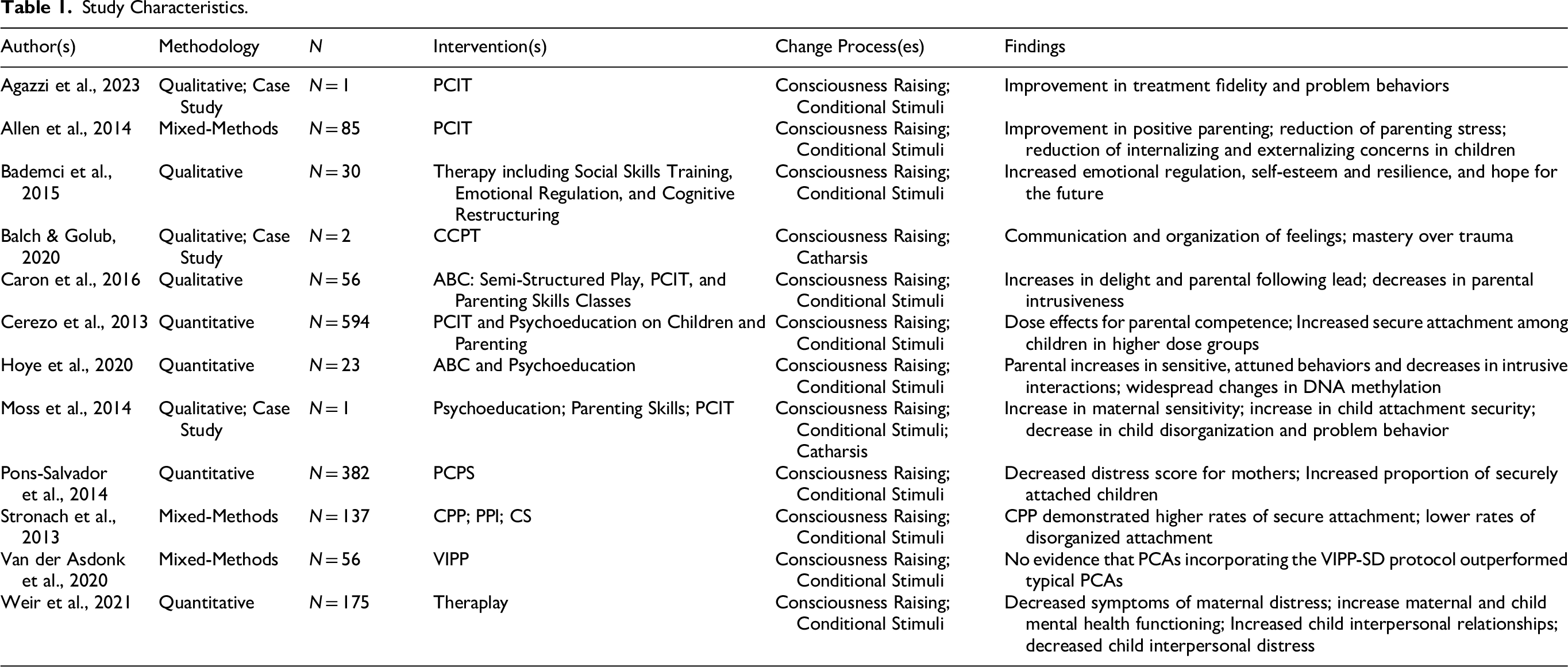
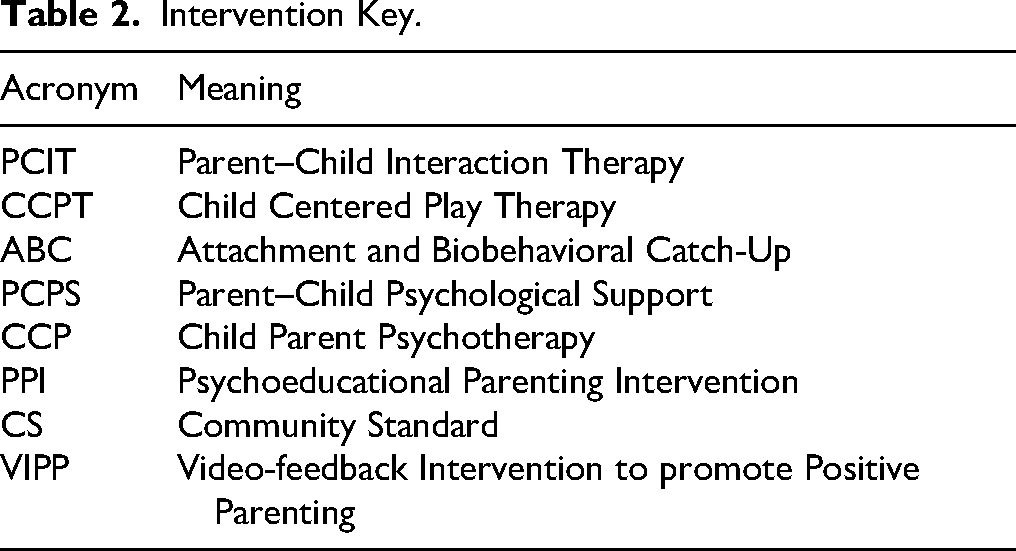
All mixed-methods designs included in this review addressed consciousness raising and conditional stimuli as change processes through the interventions implemented. These included PCIT, VIPP, and CPP as effective interventions to educate parents on proper parenting skills as well as the cognitive abilities of their children. Conditional stimuli were also addressed, as the parents were taught to change the ways they respond to a certain stimulus (counterconditioning) or how to change the environment in which the stimulus happens (stimulus control) (Tables 1 and 2).
Study Characteristics.
Intervention Key.
Discussion
Relational trauma is a complex topic that continues to be heavily researched. The purpose of this systematic review was to identify and evaluate the change processes used within interventions that aimed to mitigate adverse outcomes stemming from relational trauma for infants, toddlers, children, and adolescents. We found through an extensive literature review, that few studies focus on the change processes associated with the interventions used within counseling infants, toddlers, children, and adolescents that present with relational trauma. In order to best understand the change processes outlined within the considered studies, a brief overview of main interventions is included to provide necessary context.
Parent–Child Interaction Therapy (PCIT)
PCIT, implemented in several of the studies included in this review, consistently demonstrated positive effects in isolation, or coupled with additional interventions, both among parents and children. PCIT is a structured, evidence-based therapy approach that engages parents in real-time coaching as they interact with their child. This therapy is utilized to promote relationship development and improve behavioral challenges for the child (Weisz et al., 2020). PCIT as an intervention utilizes consciousness raising by teaching parenting strategies, increasing parental awareness. Additionally, PCIT uses conditional stimuli through a process of reshaping the parent–child dynamics via real-time guidance and coaching by a professional therapist (Weisz et al., 2020). Change processes accompanying this intervention therefore include consciousness raising, conditional stimuli, and catharsis.
Child Centered Play Therapy (CCPT)
While CCPT was only implemented in one included article, authors reported its efficacy in improving child articulation and organization of emotions, as well as mastery over trauma. CCPT as an intervention emphasizes a child's autonomy and allows children to lead therapeutic sessions through play, which becomes the medium for expressing their internal world (e.g., emotions and experiences; Lin et al., 2021). As an intervention, CCPT promotes catharsis as children are provided ample opportunity and a safe environment to externalize trauma. Furthermore, consciousness raising is embedded within this intervention as a change process for caregivers and parents as they observe emotional themes and triggers externalized by the child throughout the play. Change processes accompanying this intervention include consciousness raising and conditional stimuli.
Attachment and Biobehavioral Catch-Up
ABC, used in two of the studies included in this review, consistently demonstrated (alongside additional interventions) decreases in parental intrusiveness (where high levels are marked by a disregard for the child's cues for disengagement, or engagement in unwanted physical contact with the child; where low levels are marked by few or no instances of verbally or physically intrusive behaviors; Yarger et al., 2016) and increases in attuned behaviors. ABC is a home-based intervention comprised of 10 sessions that focus on increasing parental responsiveness and sensitivity (Dozier et al., 2021). This intervention is particularly helpful with children who have faced early adversity. As an intervention, ABC employs consciousness raising through reflective discussions and conditional stimuli by working to adjust and shift parental responses to the child. As an intervention, ABC employs the change processes of consciousness raising, through reflective parental discussions, and conditional stimuli, by focusing on adjusting and shifting parental responses to the child.
Parent–Child Psychological Support (PCPS)
Although PCPS was only utilized in one of the reviewed studies, its implementation in isolation was reported to decrease distress score for mothers and increase the proportion of securely attached children. PCPS involves regular parent–infant consultations, which focus on addressing parental confidence, reflective functioning, and attachment (Cerezo et al., 2021). This intervention emphasizes consciousness raising by engaging parents in psychoeducation. Conditional stimuli is additionally employed as parents engage in structured parent–infant play that focuses on reshaping relational patterns. Change processes accompanying this intervention include consciousness raising and conditional stimuli.
Child Parent Psychotherapy (CPP)
CCP, included in one study, was compared against PPI and CS. In the mixed methods work, CCP stood out among its counterparts as demonstrating higher rates of secure attachment and lower rates of disorganized attachment among the children in the sample. Through the integration of developmental, attachment, and trauma theories, CPP is utilized as an intervention to address the parent–child relationship following trauma (Lieberman et al., 2020). CPP promotes consciousness raising by helping parents recognize and understand how their own trauma shapes and affects their parenting. Further, CPP uses conditional stimuli to foster healthier relational patterns through engagement in joint sessions with the child. Therefore, change processes accompanying this intervention include consciousness raising and catharsis.
Psychoeducational Parenting Intervention
PPI, included in one of the articles in this review, demonstrated less significant effects when compared to relationship-based interventions, specifically CCP. PPI offers structured information about child development and tangible parenting strategies, with the aim of reducing parenting stress and improving parenting practices (McLuckie et al., 2019). The focus of PPI is on consciousness raising through the acquisition of knowledge and psychoeducation. Change processes accompanying this intervention include consciousness raising and conditional stimuli.
Community Standard
Similarly, in the included study, CS was demonstrated to have less impact than CPP. CS most often involves referrals to existing community services that do not maintain a specific therapeutic framework (Stronach et al., 2013). It lacks the depth of consciousness raising or stimuli control, and outcomes from the reviewed studies demonstrate minimal improvement compared to targeted interventions explored above. Change processes accompanying this intervention include consciousness raising and conditional stimuli.
Video-Feedback Intervention to Promote Positive Parenting (VIPP)
VIPP was an intervention implemented in only one of the included studies. Within this work, it was used alongside Parenting Capacity Assessments (PCAs) as a way to provide evidence-based protocol for PCA use. VIPP uses video recordings of parent–child interactions to promote self-reflection and behavioral change (Balldin et al., 2018). Through VIPP, consciousness raising is facilitated by allowing parents to view and subsequently discuss their interactions with the child. Conditional stimuli is also in effect as parents are guided in adjusting maladaptive behaviors. According to the included study, the implementation of VIPP did not add to the quality of the regular assessment procedure (RAP). Change processes accompanying this intervention include consciousness raising and conditional stimuli.
Theraplay
Theraplay was used in one study from this review, with results indicating its efficacy in decreasing symptoms of child and maternal distress while increasing both child and maternal mental health functioning. Theraplay is an attachment-based, structured play therapy intervention that focuses on enhancing attunement and positive emotional experiences in the parent–child relationship through interactive activity completion (Weir et al., 2021). It engages consciousness raising and conditional stimuli by creating positive and predictable interactions that are intended to replace negative and maladaptive patterns. Change processes accompanying this intervention include consciousness raising and conditional stimuli.
Social Skills Training, Emotional Regulation, and Cognitive Restructuring
This intervention specifically paired street-involved youth with university mentors to build relational and emotional awareness (Bademci et al., 2015). Emphasizing consciousness raising and conditional stimuli, this intervention worked by fostering safe and consistent relational experiences while also exploring healthier interpersonal behaviors through positive mentorship. Overall, the qualitative and quantitative findings from the studies indicate a positive reaction to the interventions used through both play therapy and the use of ABC. The interventions used in these methodologies included consciousness—raising, conditional stimuli, and catharsis. Mixed method findings indicated a significant improvement on internalizing and externalizing behaviors in children ages 6 months to 8 years old. Also noted was a significant decrease in the amount and intensity of behaviors after utilizing the interventions noted above. Moreover, change processes interventions such as consciousness-raising, and conditional stimuli were able to assist parents in becoming aware of their own trauma and making efforts to change their thought processes to benefit their child.
Limitations
To best interpret the findings of this review, multiple considerations regarding its limitations must be evaluated. First, it must be noted that studies or articles that show significant positive results are more likely to be published (Jordan, 2010). This may lead to an overrepresentation of findings, which may in turn impact the results or conclusion of the review. Second, the time frame within which the review was conducted also serves as a notable consideration. During the conducting of this systematic review, new information may have arisen which is not accounted for within the current work.
In this systematic review, the authors also did not evaluate articles based on the quality of the article. The authors ensured that the article met the search criteria only. If an article did not meet the defined search criteria, the article was not used in the review. Due to the specificity of the search criteria regarding considerations for both intervention change processes and children and adolescents experience of relational trauma, singularly related articles were excluded. The focus of this review was to explore the change processes of interventions used to address relational trauma. The search terms used did not account for other forms of trauma that may be experienced. The search terms also did not account for age ranges out of infant, toddler, child, and adolescent years.
Implications for Marriage and Family Counselors
The findings of this systematic review offer several important implications for clinical practice and future research in the treatment of relational trauma among children and adolescents. This review identified specific change processes of consciousness-raising, conditional stimuli, and catharsis, as mechanisms contributing to intervention efficacy. This supports a more nuanced understanding of how therapeutic outcomes are achieved. Clinically, these results emphasize the value of integrating targeted change processes into trauma-informed interventions. For example, consciousness-raising was not only effective in addressing child outcomes but also proved impactful in promoting parental self-awareness and cognitive restructuring. This suggests that relational trauma interventions may benefit from explicitly incorporating parent-focused components that support intergenerational healing and emotional attunement.
Furthermore, the success of play therapy and ABC in improving internalizing and externalizing behaviors highlights the potential for developmentally conscious experiential approaches in early intervention settings. The effectiveness of these strategies for children as young as six months old also emphasizes the importance of early detection and treatment of relational trauma. From a research standpoint, these findings support the utility of Prochaska and DiClemente's (1982) processes of change model in guiding evaluations of therapeutic efficacy. Future research should continue to operationalize and measure these processes within intervention studies to clarify the causal pathways of change.
Additionally, as the number of articles included in this review (n = 12) was sparse, it is clear that further research needs to be conducted on this subject. Further studies examining change processes alongside other areas of trauma could provide additionally helpful insight to clinicians. For example, adolescent dating violence (ADV) has become increasingly prevalent and can have serious health consequences (Taquette & Monteiro, 2019). ADV could also be predictor of intimate partner violence in adulthood. As a result, this vein of youth relational trauma may raise new areas of interest that should be further researched. Moreover, as this study focused primarily on early developmental years, future studies may examine the mid to later stages of development, such as middle and late adulthood, as this may help elucidate the longitudinal development of mental health diagnoses.
Conclusion
Approximately 80% of clients who seek treatment in community mental health clinics have experienced at least one incident of serious trauma in their lives (Breslau & Kessler, 2001). Of those numbers, 1 in 7 are children and adolescents who have experienced some form of relational trauma (Norman et al., 2012). Relational trauma and the interventions implemented when focusing on relational trauma are both quickly emerging subjects in the counseling field. Our systematic review identified empirical articles found in two literature databases between the years of 2012 and 2023. This resulted in the review of 12 articles. The articles chosen for this study were reviewed, organized, and categorized by the research team. Within this systematic review, there exists a potential for fresh and new information surrounding the fundamental problems of relational trauma in the early years of life. Research should continue to focus on the outcomes, implications, and intervention change processes needed to alleviate relational trauma within infant, child, and adolescent populations.
Footnotes

Authors’ Contributions
Regin Dean did conceptualization, writing, data extraction, editing; Jessica Rexrode did conceptualization, data extraction, writing; Brittany Sandonato did writing, data extraction; Jessica Barnes did writing, data extraction; Leah S. Eckstrom did conceptualization, data extraction; Jonathan Ohrt did conceptualization, editing, review. All authors provided critical aspects which helped shape the review.
Funding
The authors received no financial support for the research, authorship, and/or publication of this article.
Declaration of Conflicting Interests
The authors declared no potential conflicts of interest with respect to the research, authorship, and/or publication of this article.