




Abstract
Due to the changing society, the demand for parenting training is growing and many programs have been developed. Based on Alfred Adler's Individual psychology approach, the Systematic Training for Effective Parenting (STEP) is one of the well-established programs used worldwide. However, despite many outcome studies of parenting programs in general and STEP in particular, only a few address parents of adolescents and changes in their parenting behaviors, especially its positive aspects. Thus, the present study aimed to fill this gap by evaluating the changes in parenting behaviors and involvement in adolescents’ schoolwork among parents of 12- to 14-year-old adolescents during the STEP/Teen program. A quasi-experimental study design with pre- and post-test evaluations and a no-intervention comparison group was used. The outcome was measured using the Multidimensional Assessment of Parenting Scale (MAPS) and the Parents’ Choice of Involvement Questionnaire. Results revealed that after participation in the STEP/Teens parenting program, overall scores of positive and negative parenting behaviors and most of their aspects improved significantly in the intervention group and were significantly larger than in the comparison group with medium effect sizes. However, after participating in the STEP/Teen program there was no significant change in parental involvement in adolescents’ schoolwork. Finally, in the intervention group, there was a relationship between the magnitude of change in some of the outcome measures and participants’ age, referral type, and the need for other psychosocial services. These findings and implications for practice are further discussed in the article.
Keywords
Introduction
Developmental Challenges in Adolescence and Changing Relationships With Parents
In the past decades, along with material aspects of family life gradually becoming less challenging in most regions of the World, a tendency to devote more attention to nurturing interpersonal relationships and searching for more constructive and positive solutions to family issues and conflicts can be seen. However, despite the growing focus on positive parenting in most societies, some problems still need to be addressed. European statistical data suggest that up to 50% of parents need help with parenting (Kleinschrot et al., 2020). In Lithuania, a European country where the current study originated, according to the Statistics Department of 2021, 10- to 14-year-old adolescents are among society groups still exposed to large amounts of domestic violence.
This is no wonder, having in mind that sudden psychosocial changes, related to identity crisis, still limited communication skills and self-control, along with demands to perform at school or in other activities (e.g., sports, music) challenge adolescents’ ability to cope (Crocetti et al., 2012; Juang et al., 2020) and affect the family relationship dynamics, sometimes resulting in communication difficulties and conflicts with the parents (Kaniušonytė et al., 2021). Research reveals that the main aspects of parents’ relationship with their adolescents are related to effective conflict management, demonstrating warmth, closeness, and encouragement, as well as the ability to effectively set boundaries adequate for this age (Kaniušonytė & Laursen, 2021; Kleinschrot et al., 2020; Steeger & Gondoli, 2012).
Research shows that development-related changes in relationships and following difficulties affect adolescents and their parents, often resulting in sadness and disappointment on both sides (Moed et al., 2015). Nevertheless, adults are expected to be the ones responsible for demonstrating a good example of constructive coping with difficulties and management of conflicts, while at the same time caring for themselves, others, and relationships (Branje et al., 2012; Moed et al., 2015). Hence, research show that relationship difficulties are only temporal in those families, where parents create a sensitive empathetic environment and strong emotional bonds with adolescents (Van Lissa et al., 2015) and such stable, safe, and warm relationships with parents often become an important protective factor for adolescent's constructive coping with developmental challenges.
Another source of potential tension and conflicts in the relationships with parents is adolescents’ need to experiment with new emerging abilities and possibilities and to independently set and prioritize personal life and school-related goals, which at times interfere with parents’ expectations and family rules (Wang & Eccles, 2012). Research confirms this claim, showing that school-related difficulties, such as missed homework, absence from school, negative attitude, and lack of motivation often become an object of conflicts with parents (Kaniušonytė & Laursen, 2021; Kaniušonytė et al., 2021). However, parental involvement in adolescents’ schoolwork has two sides. On the one hand, researches show that overt parental involvement in adolescents’ schoolwork results in their limited autonomy, self-confidence, and responsibility (Patall et al., 2008; Pomerantz et al., 2007; Trautwein et al., 2006). On the other hand, parental involvement through encouragement, emotional support, and conversations about school-related experiences are positively linked to adolescents’ higher academic motivation, self-efficacy, and results (Duchesne & Ratelle, 2010; Hill & Tyson, 2009; Lam & Ducreux, 2013). Most researchers agree that parental involvement in adolescents’ schoolwork is the most effective when it is planned, structured, based on positive attitudes, emotionally supportive, and expressed through indirect interventions by parents (Knollmann & Wild, 2007; Lihong et al., 2022; Pomerantz et al., 2007; Yuke et al., 2021). Hence, the most favorable model for family relationships and adolescent development is when adolescents are responsible for the process and results of studying and parents—for helping to create a productive environment and being available when help is needed (Dinkmeyer et al., 2008).
Parenting Training Programs and Their Effectiveness
Due to rapid social, economic, and cultural changes parenting models and methods passed by older generations became insufficient and ineffective. Parenting training is one of the options for assisting parents in dealing with the above-mentioned developmental challenges in the modern world. The new generation understands that becoming a parent is a learning process and that parenting training programs can provide growth opportunities (Hoghughi & Long, 2004; Kluwe, 2011). Thus, in some European countries and the USA, parenting training programs are promoted as part of family policy striving for a physically and mentally healthier society (Saywitz et al., 2009). Parenting training is no longer considered a means for improving the skills of at-risk parents, but rather a means for socially responsible parents to develop and nurture relationships with their children (Glaser, 2000). Thanks to an opportunity to share parenting issues with other parents, and to get professional information and support from a psychologist or social worker, parents, attending training programs, often learn that growing together with their adolescents can be easier and more satisfying (Dinkmeyer et al., 2008).
Competences are essential for positive parenting, but they are not a given. They can only be acquired by learning new information and skills. However, the constantly growing body of knowledge on parenting requires refreshing and systemization, while skills can only be learned and mastered through practice. Thus, parenting training focuses on providing necessary information and practicing essential skills to change parents’ attitudes and behaviors, which later translate into improved relationships and children's better functioning.
Parenting training programs have been developed for several decades (Darmad, 2006; Dinkmeyer et al., 1990; Summerlin, 1978), and research has demonstrated high demand for such programs among parents of adolescence and their importance for the parent-child relationship (Broning et al., 2013; Choi et al., 2016; Jonyniene, 2011; Kleinschrot et al., 2020).
Separate studies and meta-analyses have revealed significant positive, yet medium, effects of parenting training programs on parents, especially on their behavior (Beelmann et al., 2023; Choi et al., 2016; Jonyniene et al., 2015; Kleinschrot et al., 2020; Lösel et al., 2006; McVittle & Best, 2009; Salari et al., 2014; Steketee et al., 2021; Weiss et al., 2015; Wetterborg et al., 2019). Nevertheless, existing research shows that parenting training decreases the risk of parents’ inappropriate behavior and increases protective factors for preventing such behavior (Britner & Reppucci, 1997; Chen & Chan, 2015; Reid et al., 2004) but tells little about the increase in positive aspects of parenting behavior. In addition, Kleinschrot et al. (2020) claim that we still lack well-designed large-scale controlled outcome studies and meta-analyses evaluating the effectiveness of parenting training programs. Other studies reveal that such factors as optimal length, accessibility, attendance, active participation, involvement in homework assignments, and others contribute to better outcomes of parenting training, while lack of motivation or time, negative attitudes, and absence of follow-up among others are often named as contraindications for parenting training (Chen & Chan, 2015; Darmad, 2006; Kaminski et al., 2008; Leijten et al., 2019; Sanders et al., 2014; Spencer et al., 2020). There have been claims that parenting programs are more effective for parents raising younger children, but a recent meta-analysis demonstrated that a child's age has a relatively small effect on the outcome (Beelmann et al., 2023). Therefore, further studies on this aspect are necessary since the socio-political context of parenting is changing and the demand for parenting training programs is gradually growing. Besides, the vast majority of parenting training studies address programs for parents of preschool or primary school children, so there is a lack of data on the effectiveness of parenting training programs for parents raising adolescents (Choi et al., 2016; Darmad, 2006).
Finally, even though worrying about children's future is the main reason for participating in parenting training, as reported by 35% of parents (Kleinschrot et al., 2020), there is little to no knowledge of the effectiveness of parenting training for changes in parental involvement in adolescents’ schoolwork (Yuke et al., 2021).
Effectiveness of the STEP Parenting Program
Systematic Training for Effective Parenting (STEP) is a well-established parenting training program successfully implemented around the World (e.g., USA, Mexico, Spain, Germany, Austria, Belgium, Thailand, Lithuania). It is based on the Individual psychology approach by Alfred Adler (1870–1937), often named a beginner of the positive parenting movement. Following the ideas of Individual psychology, STEP training stresses the importance of building a relationship based on equality, mutual respect, collaboration, and encouragement. Such a relationship creates a context in which children do their best, possess well-being, and become socially aware and active (McVittle & Best, 2009).
Despite being implemented in practice for decades, STEP still lacks rigorous outcome studies. Few existing studies mainly focus on changes in parents’ attitudes and parenting style, but little is known about parenting behavior change after participation in the program (Jonyniene et al., 2015). Thus, we know that participation in the STEP leads to an improvement in the parenting style, that is, attitudes and emotional climate created in the relationship through encouragement, nonverbal communication, voice tone, etc. However, changes in attitudes or micro-level communication do not always lead to changes in actual behavior, that is, parenting practices expressed through concrete goals and actions, for example, ways to discipline a child, which is essential in parenting (Darmad, 2006; Kaniušonytė et al., 2021; Taylor & Biglan, 1998). Finally, positive parenting is not only about the absence of problematic behaviors but also about the presence of positive behaviors, training of which is an important part of STEP. However, there are few studies on the change in positive parenting behaviors during the STEP or other parenting programs (Kleinschrot et al., 2020; McVittle & Best, 2009; Salari et al., 2014; Steketee et al., 2021). Finally, the research has mainly been focused on parenting younger children or children of various ages with less specific attention given to older ones—adolescents. This raises further, more complex research questions about STEP effectiveness for parents of adolescents.
Thus, the current study aimed to address some of the above-mentioned shortcomings in outcome research of parenting training in general and STEP program in particular by evaluating (a) the effectiveness of the STEP/Teen parenting program for improving not only negative but also positive aspects of parenting behaviors and parental involvement in children's schoolwork by reinforcement behaviors among parents of adolescents; (b) which parents’ socio-demographic characteristics are related to the outcome of the STEP/Teen parenting program.
Method
Study Procedures
A quasi-experimental research design with the intervention and non-intervention comparison groups, as well as pre-test and post-test assessments over 8 weeks, was used in the study. The intervention group consisted of parents of adolescents (aged 12–14), who had attended the STEP/Teen program and volunteered to participate in the study. The intervention group attended 9 weekly STEP/Teen group meetings. The comparison group was a convenience sample of parents of adolescents, who had not attended any parenting skills program or intervention but expressed interest in participating if they had a chance and volunteered to participate in the study. The comparison group was not exposed to any intervention between the pre- and post-test assessments.
The study was carried out in collaboration with an organization that manages the STEP program in Lithuania. With consent from the administration, all facilitators of forthcoming STEP/Teen groups for parents of adolescents across Lithuania were informed of the proposed study and invited to participate. Facilitators who agreed to participate were informed about the study objectives, design, their role, confidentiality, and the voluntary participation of the group facilitators and the participants. A schedule was then agreed upon with each group facilitator to administer the research questionnaires at the beginning and the end of a STEP/Teen group. One of the researchers and co-authors was available for consultations during the period of the research. As the groups started at different times, the whole period of data collection lasted for 5 months.
Research questionnaires for printing were later e-mailed to each group facilitator following the agreed schedule (a day before the introductory and final group meetings), with the printing costs reimbursed later. One of the researchers participated in the introductory meetings of each STEP/Teen group to introduce the study and participation conditions and invite parents to participate. Parents who agreed to participate in the study completed the pre-test questionnaire after the introductory group meeting. At the final group meetings, parents were reminded of the study and those who had taken part in the pre-test survey were invited to fill in the post-test questionnaire again after the meeting.
Participants and Sample
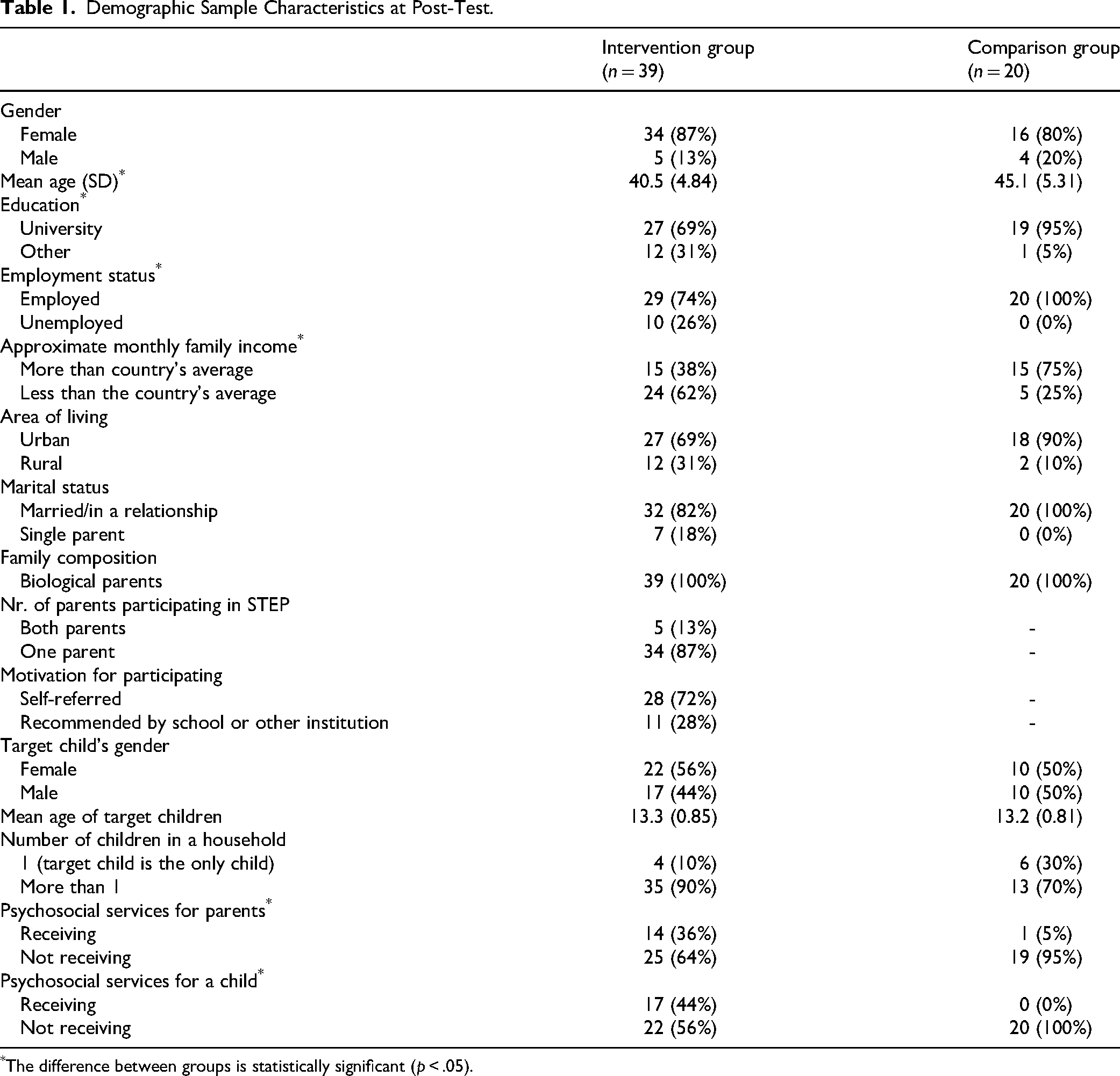
During the period of data collection, 9 STEP/Teen groups were run across Lithuania and facilitators of all groups agreed to participate in the study. All group facilitators were female, aged 35 to 50 years, working at schools as psychologists, and had completed the STEP training for group facilitators. A total of 72 parents were enrolled in the STEP groups during the data collection (17 or 24% dropped out) and 47 (65%) of them agreed to participate in the study and filled in the pre-test questionnaire. Among them, 41 (87%) were females and 6 (13%) were males with an average age of 40.36. However, 8 participants dropped out from the STEP program or did not participate in the final meeting and did not fill in the post-test questionnaire. Thus, the final sample for the intervention group was 39: 34 (87%) females and 5 (13%) males with an average age of 41 (see Table 1).
Demographic Sample Characteristics at Post-Test.
The difference between groups is statistically significant (p < .05).
We can see that more parents from the intervention group lived in urban areas, held university degrees, were employed with a family income lower than country average per month, were married or in a relationship, and had more than one child. In all cases, they were biological parents of target children for whom they participated in the STEP/Teens program. Most of them were self-referred, were not receiving other psychosocial services and in most cases, only one of the parents attended the program. As for target children, gender distribution was quite equal and almost half of them were receiving psychosocial services.
The comparison group consisted of 20 participants—16 (80%) females and 4 (20%) males with an average age of 45. Most characteristics were distributed quite similarly in both groups (Table 1). However, parents in the comparison group were statistically significantly older, more of them held university degrees, and were employed with higher monthly income than parents in the intervention group, while in the former statistically significantly more parents and target children were receiving psychosocial services. Thus, we should note that on a group level, the intervention group tended to be younger, possess lower socioeconomic status, and have higher demand for psychosocial services.
Intervention
The STEP program is rooted in Adlerian psychology and provides parenting training by using structured parent education study groups to help parents learn effective ways to relate to their children and deal with parenting challenges more effectively. STEP is offered in three separate programs covering early and late childhood, and adolescence. Each program contains a group facilitator's resource guide, promotional tools, and a parent's handbook.
The STEP/Teens program for parents of adolescents was used in the current study. The program consisted of 9 weekly highly structured group meetings (120 min. each) facilitated by trained group facilitators who organized activities, monitored time, made the materials available, presented the curriculum for each session, and moderated discussions and exercises following the facilitator's Resource Guide (Dinkmeyer et al., 1997). Using all available materials, group facilitators aimed at teaching participants to understand their teenager's behavior and misbehavior, talk about feelings respectfully, practice positive listening, give encouragement (rather than praise), explore alternative parenting behaviors and express ideas and feelings, develop their child's responsibilities, apply natural and logical consequences, convene family meetings, and develop their child's confidence. During the meetings, participants discussed the chapters of the Teenager's Parent's Handbook (Dinkmeyer et al., 2008), engaged in role-plays, exercises, discussions of hypothetical parenting situations, and the sharing of personal experiences. Participants were consistently encouraged to read the handbook at home and complete their homework. Nevertheless, each participant is free to decide on their level of involvement in the training process.
Instruments
The Multidimensional Assessment of Parenting Scale (MAPS) (Parent & Forehand, 2017) is a 34-item scale developed to specifically measure parenting behaviors consisting of positive and negative dimensions across several child development stages between 3 and 17 years (Parent & Forehand, 2017). The MAPS measures positive and negative parenting behaviors across the following 7 dimensions: proactive parenting, positive reinforcement, warmth, supportiveness, hostility, lax control, and physical control. Each item was rated on a 5-point Likert scale ranging from 1 (never) to 5 (always) with higher scores reflecting higher levels of certain dimensions of parenting behaviors. Internal consistency reliability for the current study's data was adequate for all subscales with Cronbach-α ranging from .68 to .82.
Parental Reinforcement Scale from Parents’ Choice of Involvement Questionnaire (Walker et al., 2005) is a 13-item scale, assessing parents’ involvement in adolescents’ schoolwork by reinforcement behaviors. The scale uses a 6-point Likert scale: 1 = not at all true, 2 = a little bit true, 3 = somewhat true, 4 = often true, 5 = mostly true, and 6 = completely true. Internal consistency reliability for the current study's data was high with Cronbach-α = .93.
Two single-item 10-point scales were designed for this study and used at the post-test assessment to evaluate intervention group parents’ subjective perception of the usefulness of STEP/Teens for improving their parenting behaviors and involvement in adolescents’ schoolwork. Parents were invited to respond to the following items: “Evaluate how much STEP training has helped you to change your parenting behaviors on the scale where 0 stands for ‘did not help at all’ and 10 stands for ‘helped a lot’” and “Evaluate how much STEP training has helped you to change your involvement in your child's schoolwork on the scale where 0 stands for ‘did not help at all’ and 10 stands for ‘helped a lot’.”
Data Analysis
Descriptive statistics and Chi-squared test were used to compare the distribution of participants among different socio-demographic groups. To assess the effectiveness of the STEP/Teens program, a paired t-test was used to evaluate the within-group differences at pre- and post-test, and Repeated Measures Analysis of Variance (ANOVA) was used to evaluate the between-group effects on the change of outcome measures between pre- and post-test. Finally, the GLM Univariate ANOVA was performed to evaluate the effect of intervention group parents’ socio-demographic characteristics on the magnitude of change of the outcome measures.
Results
The Effectiveness of the STEP/Teens Program
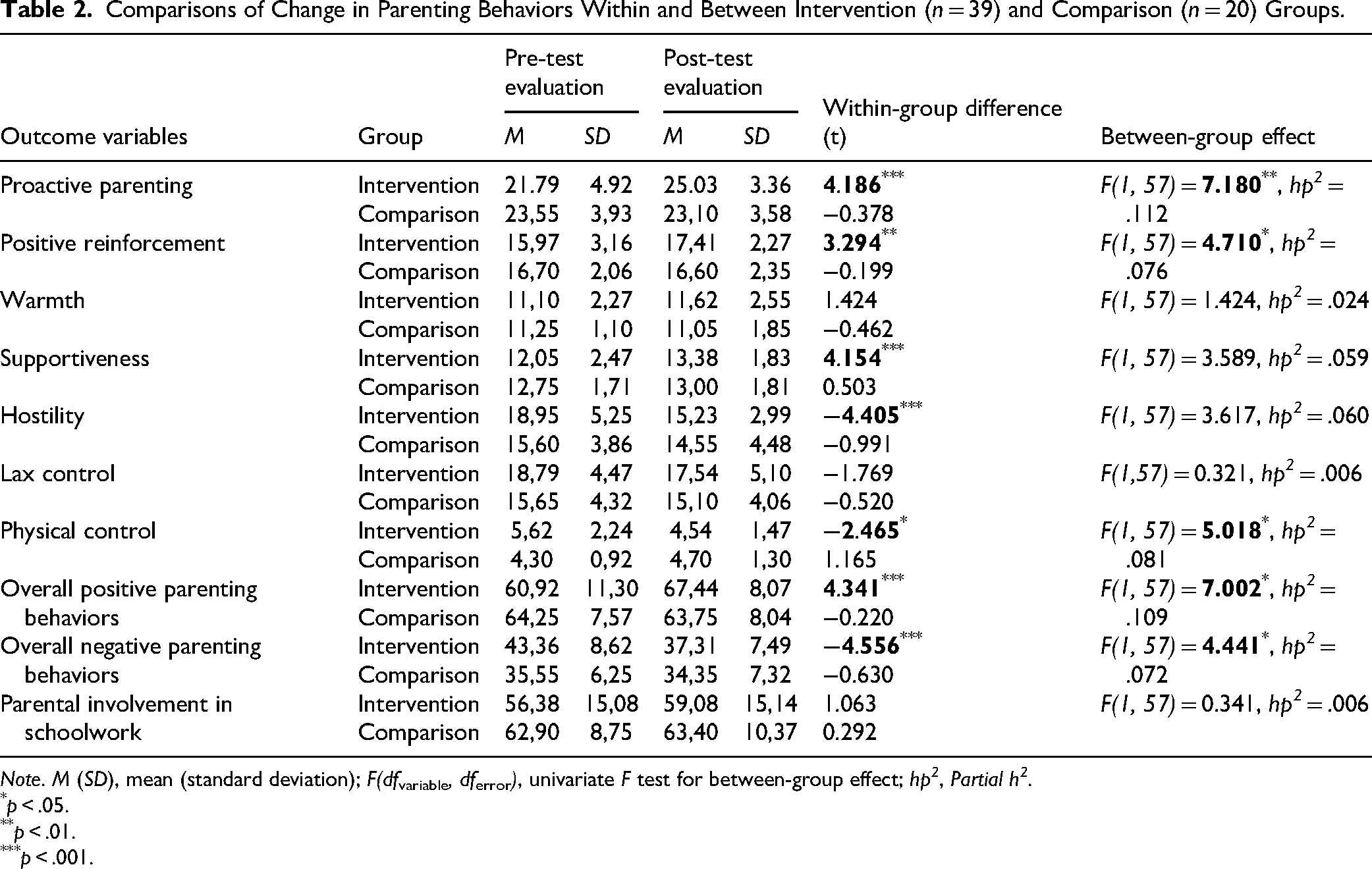
Results of the effectiveness of the STEP/Teens program are presented in Table 2. Descriptive statistics indicate that pre-test and post-test score differences show parenting behavior improvement on all used outcome measures in the intervention group. This improvement was statistically significant on most outcome measures, except for two parenting subscales (warmth and lax control) and parental involvement in adolescents’ schoolwork by reinforcement behaviors scale. Within-group changes among parents of the comparison group were much smaller and none of them reached a statistical significance level.
Comparisons of Change in Parenting Behaviors Within and Between Intervention (n = 39) and Comparison (n = 20) Groups.
Note. M (SD), mean (standard deviation); F(dfvariable, dferror), univariate F test for between-group effect; hp2, Partial h2.
p < .05.
p < .01.
p < .001.
Results of the Repeated Measures ANOVA (Table 2), assessing the between-group differences, revealed that improvements in overall positive and negative parenting behaviors scales were significantly larger in the intervention group with medium effect sizes. The same applies to three out of seven MAPS subscales, that is, proactive parenting, positive reinforcement, and physical control, where improvement was significantly larger in the intervention group reaching medium effect sizes. There were no significant between-group differences for the rest of the MAPS subscales and parental involvement in adolescents’ schoolwork by reinforcement behaviors scale.
Based on the intervention group parents’ subjective evaluation (on 10-point scales) we can state that on average parents were satisfied with the usefulness of the STEP/Teens program for improving parenting behaviors (scores ranged between 5 and 10; M = 8.23; SD = 1.44) while evaluation of the program's usefulness for increasing involvement in an adolescent's schoolwork was somewhat lower (scores ranged between 0 and 10; M = 7.10; SD = 2.66).
The Importance of Parents’ Socio-Demographic Characteristics For the Outcome of the STEP/Teens Program
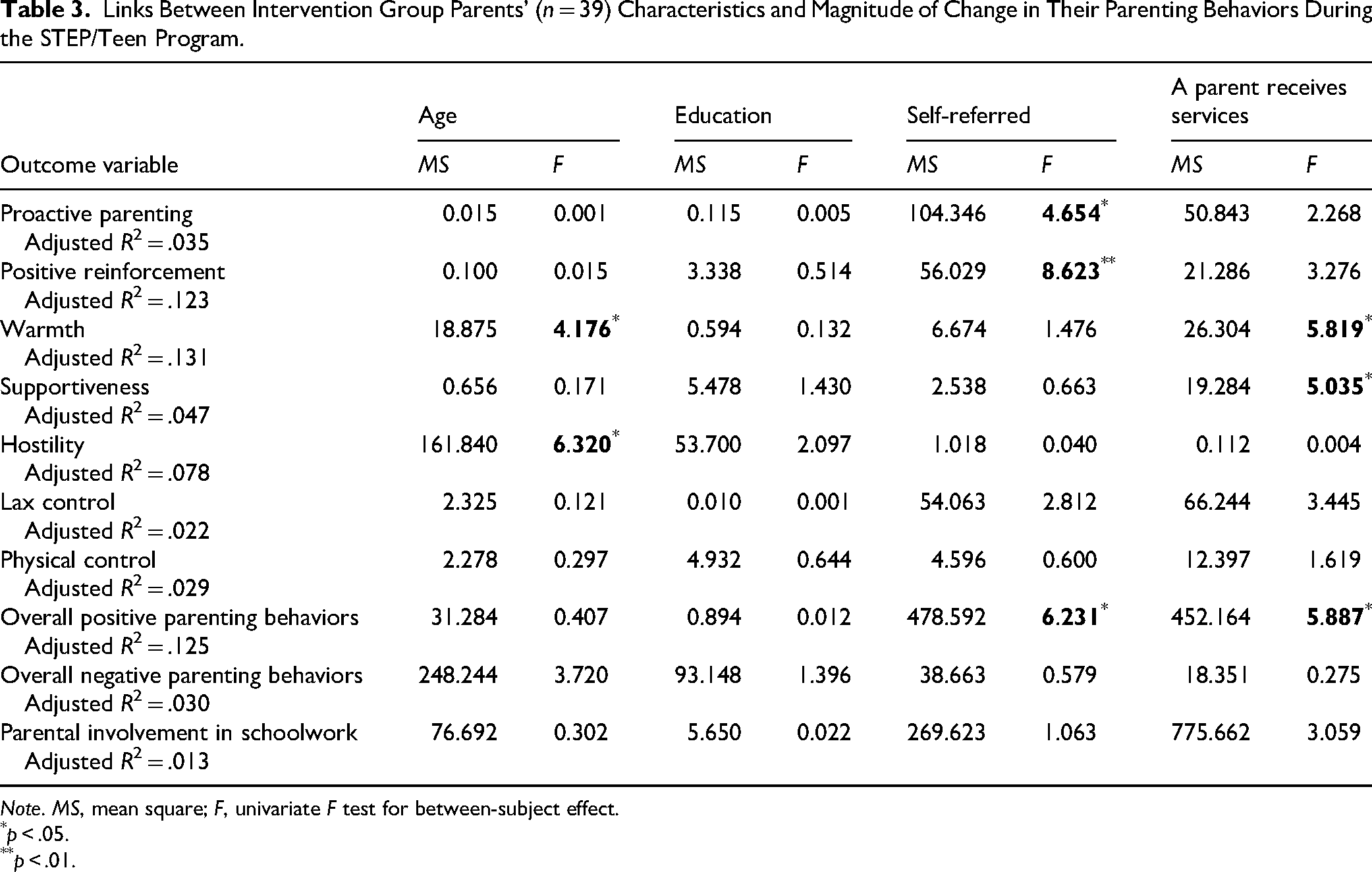
To evaluate the relationships between characteristics of the intervention group parents and the magnitude of change in their parenting behaviors the GLM Univariate ANOVA was performed (Table 3). Due to the comparatively small sample size, only those parents’ characteristics, which correlated with the outcome variables at pre-test and did not have multicollinearity issues were included in the model as independent variables (i.e., age, education, type of referral to the program, and receiving of psychosocial services).
Links Between Intervention Group Parents’ (n = 39) Characteristics and Magnitude of Change in Their Parenting Behaviors During the STEP/Teen Program.
Note. MS, mean square; F, univariate F test for between-subject effect.
p < .05.
p < .01.
Results revealed that changes in parental involvement in adolescents’ schoolwork by reinforcement behaviors and overall negative parenting behaviors, as well as its’ two aspects (lax control and physical control), were not significantly related to any of the analyzed parents’ characteristics. Only a larger improvement in one aspect of negative parenting behaviors, namely hostility, was significantly related to parents’ older age. In contrast, the larger increase in overall positive parenting behaviors was related to enrollment in the program following recommendations from schools or other institutions and not receiving psychosocial services. Interestingly, larger increases in all aspects of positive parenting were also related either to the enrollment following recommendations (proactive parenting and positive reinforcement) or to the absence of psychosocial services (warmth and supportiveness). In addition, the larger increase in warmth was related to younger parents’ age.
Discussion
Due to the developmental challenges in adolescence, the relationships with parents serve as a significant background for successful personality development at this age. For decades, especially in the fast-changing world of the 21st century, parents have been searching for effective ways to balance out adolescents’ autonomy and reasonable discipline. Parenting programs, such as the STEP/Teen program, have been developed to provide parents with an opportunity to refresh and expand their parenting-related knowledge and increase their positive parenting behaviors and skills. However, there still are some gaps in the body of knowledge about the effectiveness of parenting programs, prompting scholars to address different aspects of their effectiveness.
The current study aimed to evaluate the effectiveness of the STEP program for improving parenting behaviors and involvement in schoolwork among parents of adolescents (aged 12–14). The outcome results revealed a significant pre- to post-test increase in overall positive and a decrease in overall negative parenting behaviors in the intervention group and these changes were significantly larger than in the comparison group with an average effect size. In addition, most aspects of positive and negative parenting behaviors improved statistically significantly in the intervention group, while in the comparison group, there was no significant increase in any of the outcome measures. Nevertheless, significant between-group differences with average effect sizes were only for proactive parenting, positive reinforcement, and physical control subscales. Thus, after completing the STEP/Teen program parents reported significant improvement in these parenting behaviors and the improvement was significantly larger than in the comparison group. Such findings are in line with the results of other studies investigating the effectiveness of different parenting programs (e.g., Chen & Chan, 2015; Reid et al., 2004; Weiss et al., 2015) and the STEP program in particular (e.g., Huebner, 2002; Jonyniene et al., 2015), suggesting that parents of adolescents likely benefited from STEP/Teen program by training to use more of the child-centered appropriate responses to anticipated difficulties, contingent encouraging reactions to positive behaviors or display approval and decreasing physical discipline in general or in anger-, frustration-related situations.
The finding showing that parental warmth and lax control did not change significantly in the intervention group could be explained by some research revealing that displaying affection (e.g., sharing hugs, kisses, or pats) might require deeper traditions in families, higher parents’ self-confidence, and adolescents might be not so open to some parenting practices introduced by parents (Loiselle et al., 2021). Besides, changes in parental permissiveness and inconsistent discipline (part of lax control) might require longer periods and more effort from parents before they become a natural part of their parenting.
Finally, the lack of significant change in parental involvement in adolescents’ schoolwork by reinforcement behaviors raises more questions than suggests answers. On the one hand, schoolwork and studying-related responsibilities cause many disagreements between adolescents and parents: adolescents demand space and independent solutions while parents anticipate commitment, effort, and higher grades (Kaniušonytė & Laursen, 2021; Wang & Eccles, 2012). In the STEP/Teen program, parents learn about trust and adolescents’ needs, therefore they can start putting their sincere efforts into encouraging, discussing alternative solutions, and experiencing the consequences (Dinkmeyer et al., 2008). As a result, parents might not need to get involved in school-related issues much, because adolescents start taking their responsibilities more effectively. The existing research studies confirm that authoritative parents reinforce adolescents’ responsible school-related behavior without active involvement (or even control) in schoolwork but invite further investigations into underlying mechanisms of the constructs discussed (Patall et al., 2008; Rivers et al., 2012; Veas et al., 2018).
Additional valuable results came from the analysis of the relationship between parents’ socio-demographic characteristics and the magnitude of change of outcome measures during the STEP/Teen program. More specifically, parents’ older age was related to a larger decrease in hostility scores and a smaller increase in warmth scores. This means that after completing the STEP/Teen program older parents started showing less overcontrolling and harshness as compared to younger parents as well as less affection and cooperation with their teenagers as compared to younger parents. Notably, parents’ ages in this study were quite similar (mostly between 35 and 45), which is not a wide range of ages to explore. However, the current result might suggest some insights about aging parents who get more and more conscious about their relationships, and who reconsider the overcontrolling and hostile behavior as harming close and democratic family communication. Moreover, the connection between hostility and cooperation might be seen as a continuum. In this way, the current result suggests that older parents are “quicker to move” from overcontrolling to cooperative family culture. Since this finding might be hardly supported or disproved by other research studies, future researchers should explore more thoroughly the connection between parents’ age and parenting practices used and the effectiveness of parenting programs.
Parents who enrolled in the program following recommendations from school or other institutions experienced more significant changes in positive parenting practices compared to parents who enrolled by themselves, particularly in proactive parenting and positive reinforcement. They demonstrated more child-appropriate and encouraging responses in challenging situations. Such findings might seem surprising to the researchers and current parenting program facilitators. However, one of the explanations could be that usually parents, who are recommended to participate, at the beginning of the program have less science-based knowledge about dealing with adolescence-related situations. They care about children but are more inclined to accept spontaneous or maladaptive decisions. Moreover, their skills in reflecting and analyzing behavior might be limited. Therefore at the end of the program, they might sound more excited and willing to verbalize changes (even if they are only modest). Despite of that, further discussion with other researchers from any other country might be particularly valuable for deeper insights into the underlying mechanisms of this particular finding. However, none of the research studies were found by the authors to continue.
Finally, parents, who received no psychosocial services at the time of participating in the STEP/Teen program, showed more significant improvement in positive parenting, particularly in warmth and supportiveness. The particular finding suggests that parenting programs can be more effective for parents of adolescents who do not require additional psychosocial services, meaning that their difficulties can be solved by parents within a family. The knowledge and skills received in parenting classes help parents to feel self-confident, capable of dealing with existing problems and have more resources for sharing emotional connections and support with their adolescents. On the other hand, for parents who struggle with their lives, expanding the reportage of positive parenting practices could be more challenging, and thus, complex services provided by psychologists, social workers, or case managers could be beneficial in addition to parenting training. Some investigations confirm the necessity and benefits of combined services for parents (Asmussen et al., 2007; Rostad et al., 2018).
Interestingly, parents’ education was not related to the magnitude of change in any of the outcome measures, suggesting that the STEP/Teen program can be equally helpful for improving parenting behaviors despite parents’ education. The current finding sounds particularly promising and suggests the potential versatility of the STEP/Teen program. The authors were not able to find other studies with this issue addressed. The only exception was a study with a Lithuanian sample, showing that parents with lower education benefit more from parenting programs (Jonyniene et al., 2015). Thus, further investigations are needed to reveal the importance of parents’ education for the effectiveness of the STEP/Teen program.
To sum up, the results of the current study provide some valuable adding to the existing body of research on the outcomes of the STEP program, suggesting that it can be effective not only for parents of young children, but also for parents of 12- to 14-year adolescents; not only for improving parenting attitudes, but also for improving parents’ behavior; not only for decreasing negative, but also for increasing positive aspects of parenting behavior. In addition, some parents’ characteristics (i.e., age, type of referral, and usage of psychosocial services) are related to the outcome of the STEP/Teen program.
Limitations and Future Research
First, the present study was conducted with a comparatively small sample of parents from quite a narrow cultural and social context in a small and culturally homogenous country. Besides, the parents’ and their children's age distribution was not very large. Second, the intervention group's parents’ socioeconomic status was somewhat lower, and more of them, as well as their children, were using psychosocial services compared to the comparison group. Thus, results should be interpreted with precaution and future studies should involve a larger and less homogeneous sample and a more similar comparison group. Finally, parents, who participated in the program with recommendations from schools or other institutions, might tend to overestimate their outcome or provide socially desirable answers. This could potentially affect the results, and thus future studies could address this issue.
Implications for Practice and Research
The findings of the current research study suggest some valuable insights for family counsellors working with parents of older children and teenagers in particular. The results add to the body of research supporting the benefits of parenting programs. This means that psychologists or counsellors should continue to trust and use parenting programs for strengthening families in the changing after-pandemic world. The psychoeducational programs, which last for 2 or 3 months, are effective enough to seek changes in the behaviors of parents of teenagers. The researchers even add that STEP or any other group-based program helps parents with deepening their knowledge in adolescent psychology, finding ways of respectful, nurturing discipline, discovering the feeling of belonging to the community of teenagers’ parents, and developing the inner strength to deal with current or future challenges in families (Chen & Chan, 2015; Leijten et al., 2019; Salari et al., 2014; Sanders et al., 2014; Spencer et al., 2020; Steketee et al., 2021; Wetterborg et al., 2019).
However, the current study raises some important questions for future researchers. The authors could hardly find any corresponding studies regarding the importance of parental age and reference to the program (self-referred vs. non-self-referred parents) for the effectiveness of parenting programs, thus further research studies are highly needed. The relationship between the effectiveness of parenting programs and parental involvement in adolescent's schoolwork still requires a more thorough analytical approach. In parenting groups, many parents are struggling with the answer to who is finally responsible for teaching their child to learn, doing homework, and solving learning challenges. Researchers might come into help suggesting some valuable boundaries for today's parents.
Footnotes
Acknowledgments
The authors give special thanks to the Lithuanian public institution “Courage to Grow” and STEP group facilitators for their invaluable assistance with data collection.

Ethical Considerations
The current research study is a part of Master thesis completed at Vytautas Magnus university under the supervision of scientific advisor, defense committee, and program coordinating institution “Courage to Grow.” According to the university procedures at that time, there was no specific need for ethics approval regarding anonymised data collection, analysis and publication in this non-interventional study with non-sensitive sample. Participant informed consent was obtained verbally with agreement to answer the research questions.
Authors contributions
R.P and R.S. created the presented idea and planned the research design. R.S. completed the research study and performed the preliminary statistical analysis of the data. All authors of the publication discussed the results, improved the analysis, worked on the paper and contributed to the final manuscript.
Funding
The authors received no financial support for the research, authorship, and/or publication of this article.
Declaration of Conflicting Interests
The authors declared no potential conflicts of interest with respect to the research, authorship, and/or publication of this article.
Data Availability Statement
The data that support the findings of this study are available from the corresponding author upon reasonable request.