




Abstract
Due to its nature, art psychotherapy can offer adopted children the capacity and opportunity to face problems that might occur at a young age. This paper examines what adoption means to children and how it impacts their mental, social, and emotional well-being. It goes on to provide an insight into how art psychotherapy can address emotional conflict, foster coping mechanisms, reduce anxiety, improve problems solving skills, and integrate traumatic experiences in ways that are not feasible through verbal therapy. A series of guidelines and activities are proposed in order to stimulate the creative therapeutic process. The conclusion is that art psychotherapy, together with the safety of a stable home and caring family, can allow adopted children to face past problems and live a more balanced life.
We shall not cease from exploration
And the end of all our exploring
Will be to arrive where we started
And know the place for the first time
T.S. Eliot
Introduction
Ellie is a young girl who grew up in a caring home with two parents that always offered her the best they could. Therefore, Ellie was able to attend the best schools, study abroad, and enjoy the appropriate moral, material, psychological, and family support she needed. Currently, she is in a stable relationship with a man who loves and supports her.
However, there was always something missing, as she always felt a void deep inside. And while she is a caring individual, full of sincerity, love, and concern for the world and life in general, even as a child—as remembered by her parents—she was worried, full of vexation, anger, obsessive ideas, and fears. Even now, she claims that she constantly lives with the fear of being rejected, be it in her relationship, with her friends, at her workplace, or in her family environment.
Ellie grew up knowing from a quite young age that she was an adopted child. Her parents were not able to have their own children but bore the love, will, and strength to welcome a child in their lives, with Ellie being adopted around the age of one.
She grew up without ever realizing or accepting that adoption had, beyond its positive side, a negative and quite painful one.
“You have this vague feeling within that something is off,” she confesses.
Certainly, not all adopted children experience this feeling of loss (of their biological parents—the first acknowledgment that the child belongs to someone) in the same manner or to the same degree. However, most people express conflicted or painful feelings toward their adoption at some point in their lives.
For this reason, certain requirements need to be fulfilled to allow healthy relationships to be developed within families with adopted children. The adopted children need to be informed by their foster parents the soonest possible, allowing space for discussion, recognition, and expression of feelings and needs. Above all, love, devotion, and availability must be in place; as the experience of adoption, especially on the part of the adoptees, might prove traumatic and bear an impact on their development and, therefore, the rest of their life, the proper and timely understanding of difficulties that might arise and the prevention of problems remain critical prerequisites.
Due to its nature, art psychotherapy can offer the adoptee the capacity and opportunity to face problems that might occur at a young age. Ellie was aware all her life about her adoption and yet she faced her “past demons” at a later age. She came to art psychotherapy in order to start comprehending all the difficulties that emerged (Figure 1: Where do I come from?) and, provided that these are addressed with the additional help of her parents, there is a chance of laying the right foundations for the development of solid relationships in her life.
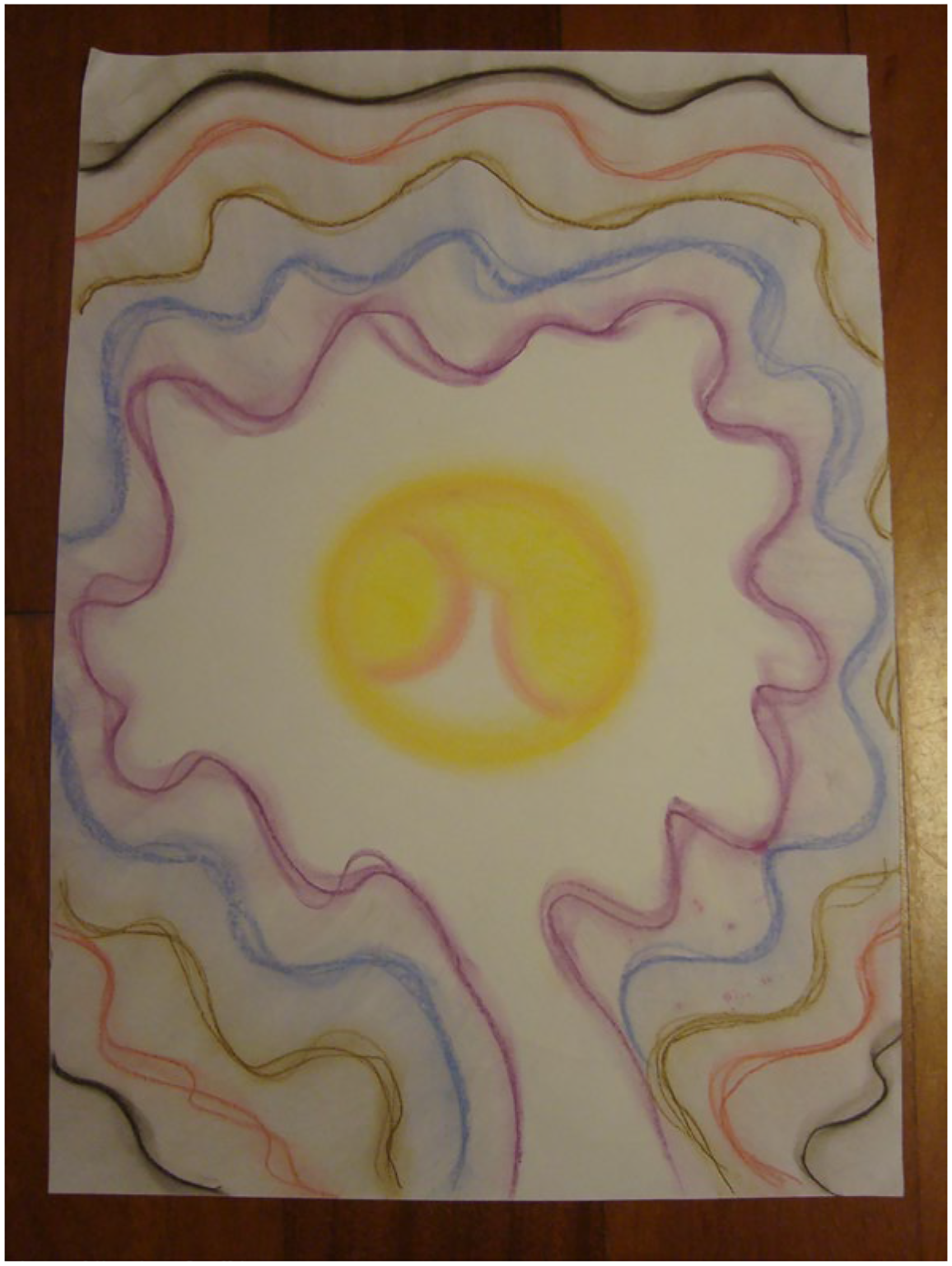
Where do I come from?
What is Adoption
All children deserve the inalienable right to their parents’ affection, care, and protection, while the psychological health in the course of their life depends on the degree to which these basic needs are fulfilled. However, for various reasons, some children might end without their biological parents or the latter may not be able to substantially fulfill their parental role. The need for a new bond, one that will compensate or replace the blood bond necessary for the development of the children, becomes apparent, and adoption could cover this need.
“From ancient times, adoption foresees the full integration of children into a family other than their biological one” (Emilianidou, 2014). Through the act of adoption, the children belong to the parents that adopt them and reserve the same rights and obligations as any other child—meaning equally that the parents also belong to the child in a certain manner. Adoption constitutes a legal, a social as well as a psychoemotional act that primarily is put into effect for the benefit of the child. “Adoption should not be simply perceived as the satisfaction of a childless couple's need to have a child by any means, but above all the fortunate coincidence of this desire with the actual need of a child to find a new and steady family environment” (Emilianidou, 2014).
As a human condition, adoption can be traced back to all civilizations, from antiquity to our day. In ancient Greece, it was Solon who first introduced a legislative act in 594 B.C. to protect childless families from eliminating. In our times, the first legislative act on adoption is traced to Massachusetts, USA, in 1851. The objective behind the bill was to regulate the condition of orphaned or out-of-wedlock children, who were usually given to farmer families. That law essentially provided foster parents with a type of household worker within a profoundly rural economy. In the UK, the first bill regarding adoption was passed in 1926 and comprised an urgent measure to address the problem of the increase of out-of-wedlock and orphaned children due to the First World War. From the late 1960s and onwards, a new type of adoption was developed. Adoption began to be viewed as a child protection service that aimed to safeguard the child's interests rather than the ones of the childless couple. In its current form, it mostly pertains to interpersonal relationships and bonds, addressing now mostly families that are eager and capable of offering a child their love and care.
What Does Adoption Mean for a Child
Although adoption is the wondrous process of a child's unification with a caring family, the process itself may prove stressful for the child, the foster parents, and the emergent family, since the act of adoption concerns the future of both the child and the parents.
According to Bowlby (1962), families with adopted children differ from typical families due to the relationships of bonding and attachment that develop differently as per the case. “Attachment is the first interpersonal relationship that shapes the individual, therefore its repercussions on his/her successive emotional and societal development are deemed significant. This first interpersonal relationship between child and mother is considered the template from which all the following interpersonal relationships of the individual will be formulated” (Paraskevopoulos, 1985). In the case of adoptees, their parents lack the 9-month period that would allow them to properly prepare for their coming. Moreover, the bond developed with the child's biological mother during gestation is decisively different from the one developed with the foster one. “The first 6 months comprise for the babies the so-called syncytial period, where the babies are united with their mother and the bond created determines the children's brain structure, what kind of person they will become, what kind of relationships they will form later as adults. Moreover, breastfeeding offers practical help to the child (e.g., protection from gastroenteritis, asthma, etc.)” (Papavassiliou, 2009). Between 7 and 9 months, the infants begin to manifest anxiety toward unknown persons, reaching an apex approximately by the end of their first year. After this, the anxiety begins to gradually recede and then dissolve, as the infants expand the circle of their attachments and the persons with whom they’re coming into contact (Paraskevopoulos, 1985). Attachment may manifest at any moment after the first 7 and 9 months, especially when the ones who are tending to the infants dedicate a significant amount of time nurturing them.
Infants adopted in the neonatal stage should be granted the opportunity to develop a tight bond with the adoptive parents. If any children remain at the hospital or, moreover, are not allowed time with their biological mother, they may react to change. Even infants may recall cases from previous years and present problems later in their development and behavior.
According to prenatal psychologist Olga Gouni (2011), when the biological mother is absent, the message projected is along the lines of “I don’t want you in my life, I can’t keep you” and consequently the children are forced to grow up abruptly (premature Ego development). Due to this abandoning, they often find the world hostile and create a distinct Ego before their time, in order to survive, a reaction that can take place days from their birth. On the one hand, this strategy allows them to survive, on the other hand, it introduces an element of excessive alertness and unease in the place of calmness and safety supplied by the primary mother–child relationship. The fear that their guardian may disappear at any time confines them to a state of constant alertness and always call their environment into question. Many adopted children feel that they cannot rely on anybody except themselves, while others manifest psychosomatic symptoms or chronic illnesses that are rooted in their childhood years and have progressed into their adultness: migraines, stomachaches, headaches, asthma, allergies, stuttering, twitching, and skin ailments. Rollo May discussed the close relationship between gastrointestinal function and the desire for care, support, and love, which is genetically connected with the mother's nourishment (Verrier, 2005).
The uncertainty on whether the maternal figure shall remain or not is manifested through two contrasting behaviors: Aggressive/defiant behavior or withdrawal. For instance, such crises quite often outbreak at significant moments during one's life (on birthdays, Christmas, name-days, graduation from school or University, etc.), with other behavioral problems including theft and accumulation and the need for control lies. “These behaviors are the transference of a previous abandonment experience. Destructive behavior becomes a tool that the children employ to bring the attention of others, and especially their adult caregiver, to their pain. Feeling lost inside, it generates further chaos outside. A parent failing to understand this reacts dismissively and the children consequently confirm their initial self-criticism that no one understands them” (Gouni, 2011).
A significant role is additionally played by the formation of the child's identity, which evolves gradually and refers to the image that persons maintain for themselves. The more stable the determining parameters are—such as nationality, the composition and history of the family, and inherited features that mostly derive from biological parents—the more complete the persons’ identity is, augmenting the satisfaction they feel for themselves. The uncertainty and confusion of adopted children about their biological family, about who they truly are, and the reasons they were given for adoption, magnify their sense of insecurity. The situation becomes more complex when they are not allowed to become acquainted or even ponder and inquire around issues that concern their origin and history. These persons have to incorporate both the biological and the foster family in their evolving personalities. The children are concerned about the fact of their family's demise, but at the same time wonder if they were ever wanted and loved, if they deserved to be loved, causing feelings of rejection, loss, and guilt, since the children might assume that they themselves are to blame for this primary rejection. If this is not addressed early on, it might affect the children's self-esteem and impart a negative self-image. These are further complemented by feelings of depression, despair, and anger, which are often directed toward their foster parents, with the biological ones also constituting a target.
At times, this may lead the children to withdraw and create an artificial self, believing that they will secure it from further rejection and abandonment. This mask becomes then the identity and the children relinquish themselves. On the outside, they appear polite, collaborative, charming, the “good child” that never says no. On the inside, they are full of pain and fear that the abandoned, unwanted child who died would resurface.
According to Gouni (2011), the adopted or foster children regard their foster mother either as a savior figure or as an abandoning mother and, therefore, feel often ambivalent, sometimes being obedient and other times hostile. If the foster mother is insecure herself (about her role as a mother), then the children may exert significant power over her. On the contrary, if she feels rejection, she might then become angry and more rejective herself, commencing a new cycle. Or, if the children are told that they are very special, they may feel that they have to be perfect to maintain the love and acceptance of their parents and, therefore, exert great pressure on themselves to respond successfully to their expectations—which are at many times hyperbolic and not always satisfied—leading to feelings of shame, incompetence, inadequacy, and worthlessness. This notion of having to be good to stay with the family is very significant for these children, many of who were given for adoption by their biological mother because she loved them or were abandoned as she judged that she could not offer them the best. In this way, a pattern of “if they love you, they abandon you” is instilled within the child. This dilemma is quite intense, as on the one hand children want to be loved, and on the other hand, love appears threatening.
Social acceptance and status, as expressed by the broader family and the school environment, can also stigmatize these children. The adoptees begin to regard themselves as different from the rest and are under pressure to perform an additional effort to accept this very difference. In families of other nationalities, cultures, or races—where the biological difference is evident—the adoptees find themselves in a much more difficult position and are expected to demonstrate achievements that the rest of the children are not required to do so. Besides social stigmatization and depending on the time of adoption, they have higher possibilities of presenting learning difficulties or behavioral problems, as seen above.
Young children can understand the differences between birth and foster family by the age of seven, but, provided the proper conditions, they may foster bonds just as biological children. Children seek protection, emotional and physical support, and safety from the ones who take care of them, and when these needs are met, they can grow up normally.
However, older adopted children may experience more problems. They find it difficult to adjust—maybe they have been mistreated in some way or may have suffered greatly from their parents’ loss. They may feel constantly angry or repressed, display intense reactions and a general negative mood, be irascible or morose, and in general, demonstrate behavior without inhibitions, one that bears similarities to attachment disorders. According to research, it is confirmed that insecure attachment is related to personality disorders, including narcissistic and borderline disorders (Crawford et al., 2007; Kaurin et al., 2020). Moreover, children with insecure attachment, extrovert and nervous demeanor, tend to suffer from eating disorders (Eggert et al., 2007; Gander et al., 2015). Children adopted after the age of 8 tend to be more disorganized, with this becoming more intense the older they are, since it is more difficult for older children to be adopted. These children require great love, patience, and subtlety.
A significant factor in children's self-esteem and the manner they become successfully incorporated into the foster family is how the foster family discusses with the children their adoption, the way the adoptees view the period of their life prior to the adoption, and the time spent with their biological family provided they were older when they were adopted, etc. Many children, especially during adolescence, construct a “family narrative” according to which their parents are ideal. This fantasy is manifested through doubt about their descent from their particular parents (Vassiliou, 2012). Adopted children carry stories that are similar to the unconscious fantasies of the rest of the children only in their case they are real. For this reason, they must know from the beginning that they are adopted. If they believe that they are genuine descendants and discover the truth later, they might experience intense feelings of bitterness and disbelief. Howe (1998) notes “if children sense that the issue of adoption makes their parents uneasy, then they refrain from any reference to emotionally charged issues. The worry of parents causes further anxiety to the children, who fear a second rejection. This particular denial of addressing highly significant information may distort relationships and obscure the capacity of adopted children to formulate a limpid identity. […] In certain cases, an impression is further formed that being different means being inadequate or deviant. Therefore, being different acquires a negative tinge.” Some children navigate this negativity by denying significant aspects of their adoption.
Loss, grief, rejection, guilt and shame, familiarity, control, and identity formation are seven key issues that concern biological and foster parents, as well as adopted children. This set of parameters was defined by Silverstein and Kaplan (1982) and has been employed and modified by adoption researchers ever since. If these issues are not addressed properly, they might lead to maladaptive forms of communication and intrapersonal conflict.
Art Psychotherapy and Adopted Children
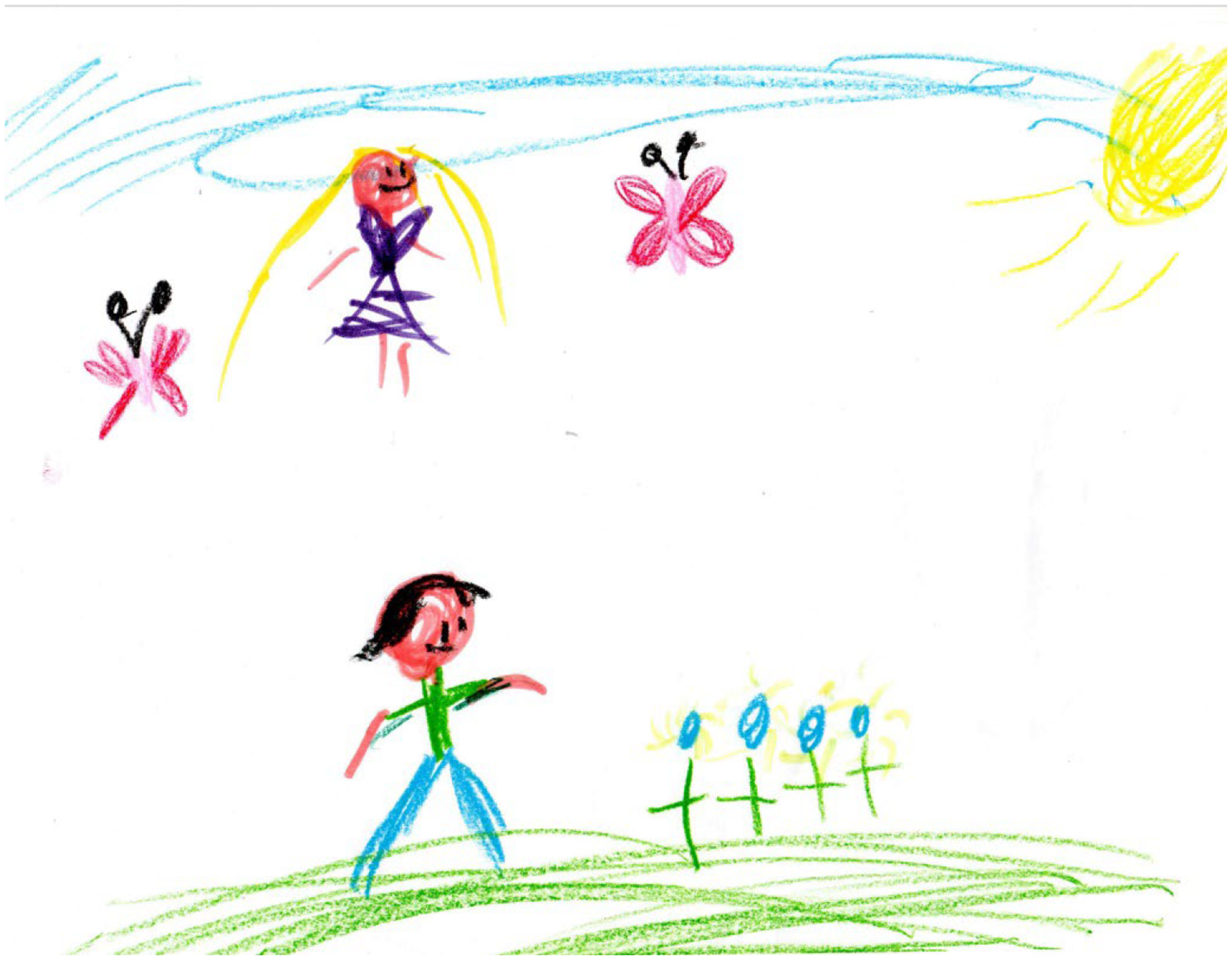
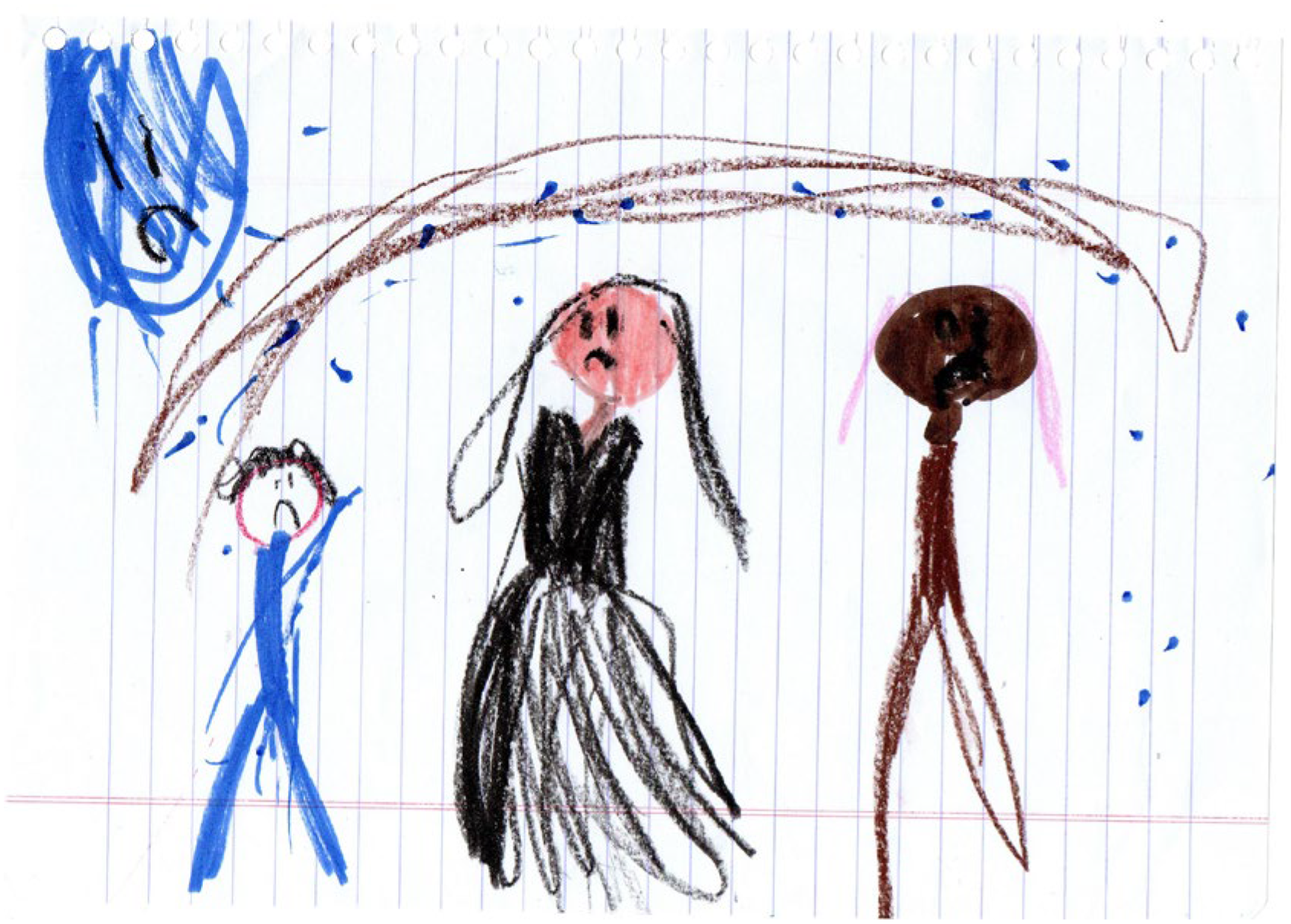
The adopted girl that made these drawings was seven years old. Her parents had decided not to tell her about her adoption. However, one day she heard it by mistake from one of her schoolmates. The drawings reveal the crisis she went through in the aftermath of this. Before learning of her adoption, her drawings appeared properly formed, developed, and aligned with her age (Figure 2). Following the incident though, a regression seems to have taken place (Figure 3). This regression is telling of her feelings—sad faces, no arms on the figures, no distinct colors, “frozen” sun. In addition, her anger became evident in her behavior at school.
According to the definition of the American Art Therapy Association (AATA) (2023): “Art therapy is a mental health profession that enriches the lives of individuals, families, and communities through active artmaking, creative process, applied psychological theory, and human experience within a psychotherapeutic relationship. Art therapy, facilitated by a professional art therapist, effectively supports personal and relational treatment goals as well as community concerns. Art therapy is used to improve cognitive and sensorimotor functions, foster self-esteem and self-awareness, cultivate emotional resilience, promote insight, enhance social skills, reduce and resolve conflicts and distress, and advance societal and ecological change” (2023).
Most of the time, adoptees find great difficulty in expressing their thoughts and feelings. The employment of art psychotherapy is an alternative means through which patients can describe what they feel but are unable to express verbally. Especially for children, the creative process can be a fun and joyous experience, as well as a way of expressing their feelings at a moment when language is not fully developed. As researchers have underlined, art psychotherapy can mitigate direct symptoms, deflecting, and emotional numbness, as well as address emotional conflict, self-reflection, foster coping mechanisms, reduce anxiety, improve problem-solving skills, and integrate traumatic experiences in ways that are not feasible through verbal therapy (Collie et al., 2006; Ugurlu et al., 2016). They also note that the strength of using art during treatment is that language is through expression rather than words, which are not always the easiest to formulate for youth.
The images produced by children reflect the experiences they draw from the world. The use of materials applies form to the here and now of the inner reality of the adoptees and the healing journey may commence with the aid of the psychotherapist. Through this creative stimulation, adoptees associate with the known and unknown parts of themselves, a connection difficult to be established in their case, since the feeling of trust is fragile, and the sense of a fragmented self is indeed highly apparent. Art psychotherapy offers the capacity to determine these issues further within a safe and supportive environment, while at the same time granting these persons the opportunity to externalize their anger, frustration, pain, and disappointment on adoption through the use of materials and the creative process overall.
Henley (2005) showed how the stimulation of the creative process, along with the produced work and the cohesion of rules as set during the therapeutic process, allows the adoptees to attenuate their hypermobility and impulsivity, two features closely related to issues of attachment.
The resulting work offers both patients and psychotherapists one tangible and visible exemplification of those issues that were either lurking on a subconscious level or the patients simply ignored and avoided disclosing. Especially for children and adolescents, the image may be used as a springboard, in conjunction with their memories and imagination, to speak more freely about their feelings, to understand how they were integrated into a foster family, to acknowledge their cultural history or double identity, to relate with themselves and their feelings, and develop capacities for addressing their problems. Many of the children adopted directly after their birth or at a small age possess scarce information on their biological parents or the conditions that led them to adoption. In those cases, engulfed in silence, psychotherapists must help children to create cohesive stories relating to their identities. Art psychotherapy, with the aid of painting, images, photographs, prose or poem writing, memorabilia, fairy tales, and illustrated books, may prove a highly significant tool in this “co-construction” process.
In the course of this process, the child/adolescent may likely develop transference to the person of the psychotherapist, with the latter substituting the lost biological parent. Through this, the adoptees can explore safely their desires, dreams, and beliefs on what the biological parent means to them, as well as to express their ambiguity toward their foster parents.
In addition, the process of art psychotherapy places children and parents on an equal footing in the moment of creation, with the utmost objective of addressing and mitigating anxiety and/or depression, healing trauma, and building a trustful relationship between parents and children within a short period. As the process involves eye contact, touching, and interaction between the members, relationships are easily fostered between them. Children that experience unsafe attachments may use art as a way to connect with the image before finally being ready to confer their trust to the parent.
According to Harvey (1991), the therapeutic goal of art psychotherapy is to assist families in demystifying and redefining significant dramatic events, elements, and people that affect their lives, to enhance greater emotional familiarity (between the members), and recalibrate the existing maladaptive roles. For the assessment of adopted children, Harvey provides as a guideline either the creation of a free drawing or the creation of a common drawing with the parents, in order to be able to determine the self-regulation status of the children and how they react to their adult caregivers. The reactions of the children may be also assessed through a common kinetic activity with their parents.
During therapy of the families, Harvey provides two additional guidelines for the coordination of the emotional states of the members and their respective styles of expression:
An interactive activity with the family and/or between the foster mother and the adopted child. The furthering and expansion of this interaction to the point where significant issues shall be recognized or the members shall shift the way they interact with each other.
He maintains that the recognition of significant issues relating to adoption allows these very issues to emerge and individuals can then discuss freely feelings of loss, pain, guilt, and shame. Through the use of clay, the creation of drawing images, and structured verbalization, the therapist can assist the family into reaching the objectives described above.
In accordance with the seven lifelong or core issues mentioned by Silverstein and Kaplan to be encountered among adoptees, Lee Crawford and Leah Pomerantz (2008) suggest various art psychotherapy activities for their tackling. For example, a person may use clay to shape and/or externalize his/her anger and frustration, and therefore, control the situation by transforming reactive emotions and thoughts into a constructive solution. In the case of adoption, expressing loss and grief may highly contribute to healing.
As mentioned before, many adopted children experience separation from their physical families as a rejection, affecting their confidence and self-esteem as a result. Foster parents may struggle for years trying to help their child override this feeling. The search for a sense of “belonging,” as in the case of Ellie, is deemed highly significant to counterbalance the emotions of rejection and separation. Art psychotherapy helps the adoptees to express their fears and concerns regarding issues of rejection. The therapist must monitor how the adoptees react to the works they create, as the acceptance of these images by them reveals to a certain degree how they accept themselves or not.
We already mentioned how art psychotherapy assists in the search for identity through creative expression. Guidelines that may be offered include “Draw how adoption changed the way you see yourself” or “Imagine yourself happy with being who you truly want to be and create a landscape that reflects all these feelings, placing yourself somewhere within the drawing.” Another activity may be “Imagine yourself as a symbol that represents self-empowerment. Build it with clay and put it in a place at your home where you can see it every day.”
Guilt and shame affect both the biological and foster parents, as well as the adoptees, for different reasons in each case. Art psychotherapy may accordingly assist children in expressing their feelings and transform their experience from “bad baby” to “good and loveable baby,” biological mothers in becoming empowered through the nonjudgmental process of creation, and foster parents in expressing their guilt for not being the primary parents of the child and their shame for not being able to have their own child. Related activities may include “I feel sad when… (Complete the sentence and draw a picture),” “Can you tell where you feel? Draw the outline of a body, pick a color for each feeling and draw it.”
As each adoption begins with separation and loss, new ways for expressing familiarity are being created, which in turn affect how attachments are established, maintained, or dismantled. For instance, many adult adoptees begin relationships but are afraid to trust the other person, as they believe that he/she will abandon them and leave at some point. Group art psychotherapy has proven effective in such cases, as it offers the opportunity to all involved parties to share their stories with other individuals who have similar experiences. Bird's Nest Drawing drawn by Kaiser (1996)—a projective drawing symbolically portraying a bird's nest as a means to assess how attachment takes place—may prove useful in setting a framework that will assist in the readjustment of the individual's unsafe attachment and, therefore, in the expression and acceptance of familiarity.
Finally, the sense of dominance and control are directly affected, both in biological and foster parents, as well as the child. Almost none of these parties have control over what is happening—the biological mother is unable to decide where her child will be given for adoption, the foster parents can’t affect the fact of their sterility, and the adopted children do not maintain any control when they become separated from their biological mother or when it is decided where they will be given. Art psychotherapy may help all of them to restore a sense of authority in their lives. Activities for children may include “Think about the phrase: ‘I’ve got my talents, capacities and ideas about what I want to do in the future.’ Picture yourself as an adult doing something important.” Moreover, they can create pictures of dear heroes that destroy the evil ones or notebooks, in which they can write the history of their lives, projecting themselves and the relationships with the ones around them in a positive light.
Heegaard (2007), art psychotherapist and clinical social worker, published the book Adopted and Wondering: Drawing Out Feeling in 2007 for adopted children between 6 and 12 years old. It is a book children can use along with their parents on a journey of exploration and understanding through words and images of their adoption, themselves, and their feelings.
Conclusion
Lifton (1988) offers an indeed astute description of the true mother: “For me, a real mother is one who recognizes and respects the whole identity of her child and does not ask him to deny any part of himself.” There are instances, as in the case of Ellie, where the adopted child may never understand what is missing, as what is truly missing is a part of the self.
Art psychotherapy is above all a learning experience. Creatively weaving emotion and symbolism, it promotes development, as well as the acceptance of reality. Through its journey, it might help the child to express and apprehend the complexities of adoption. Art psychotherapy, in conjunction with the safety provided by a stable home and a caring family, may allow the adopted children to face the problems of the past and move forward toward a more calm, responsible, and balanced life.
Footnotes
Declaration of Conflicting Interests
The author declared no potential conflicts of interest with respect to the research, authorship, and/or publication of this article.
Funding
The author received no financial support for the research, authorship, and/or publication of this article.
