



Abstract
This study examined the role of ethical responsiveness on relationship satisfaction from a partner's perspective after experiencing a distressing life event (DLE). We used data from the Panel Analysis of Intimate Relationships and Family Dynamics (pairfam), which is a multidisciplinary, longitudinal study in Germany. Our study used anchor data, the original respondents who were randomly selected and gave permission to interview their partners. This study included two waves of anchor responses, which were 2016 and 2018, respectively. We utilized longitudinal structural equation modeling to evaluate whether the partner's ethical responsiveness buffers the negative impact of DLEs on relationship satisfaction per anchor's perspective. The results of our study indicated that partner's ethical responsiveness can buffer the negative impact of DLEs on anchor's perception of relationship satisfaction. Additionally, according to the perception of the anchors, we found that the partners who showed high levels of ethical responsiveness not only maintained their relationship satisfaction but even improved upon it 2 years beyond the DLE. Conversely, relationship satisfaction decreased over time for anchors who reported their partner with an average or lower level of ethical responsiveness. Clinical implications and limitations are also discussed.
Introduction
Distressing life events (DLEs) often lead to negative consequences individually and interpersonally (Tesser and Beach, 1998). Understanding how couples mitigate negative effects of stress is central to understanding how and in what condition relationships endure (Falconier et al., 2015; Thoits, 2011). Recently, theorists posited that, from a strong relationality perspective, ethical responsiveness (ER) mediates the effects of stress on relationship quality (Galovan & Schramm, 2018). A relationality perspective is grounded in the philosophical work of Buber (1958), Hiedegger (1962), and Levinas (1969) who argued that the self is defined in terms of the ethical demands inherent in our relationships with one another (Galovan & Schramm, 2018). ER refers to the nature of one's response to these ethical demands within their relationships (Galovan & Schramm, 2018). The nature of one's responsiveness to ethical demands is conceptualized in a variety of ways, which we will discuss later. Our primary concern is to better understand from the perspective of the individual who experienced DLE on how ER influences their relationship satisfaction despite DLEs and if it can mitigate related negative effects on relationship satisfaction. To do this, we used data of 2,467 individuals who are in a couple's relationship and had experienced DLE from the pairfam dataset from Germany and a longitudinal structural equation model which accounted for two waves of data spanning 2 years (Thӧnnissen et al., 2019). By empirically examining the longitudinal influence of ER on relationship satisfaction after experiencing a DLE, we aimed to provide insight into opportunities for intervention and education that can facilitate hope for couples who navigating distress in their life and the clinicians who help them.
Literature Review
Relationality and ER
The perspective of strong relationality is founded on philosophical claims that the self is not a self-contained individual but always and already relational (Buber, 1958; Heidegger, 1962; Levinas, 1969). From this perspective, Levinas claims that a priori ethical priorities exist within each relationship and that our response to these demands defines our way of being (Levinas, 1969). Family scientists and therapists posit that this leads to understanding the self in terms of ethical relationality (Galovan & Schramm, 2018; Slife & Wiggins, 2009). Galovan and Schramm (2018) explain, “from a strong relationality perspective, who we are is who we are in relation to others” (p.199). Therefore, when we attempt to study couple relationships from this perspective, we ought to study them not as self-contained and separate from the other, but in the context of their relation to the other. This conceptualization of the self has led to the development of a new framework for studying couple relationships (Galovan & Schramm, 2018).
The strong relationality model of relationship flourishing (SRRF) presents ER as partially mediating the effect of stress and contextual factors on relationship quality (Galovan & Schramm, 2018). They also argue that ER is influenced by stress and contextual factors (Galovan & Schramm, 2018). They acknowledge that “both acute and chronic stressors could lead to greater stress and less ethical responsiveness” (Galovan & Schramm, 2018, p.207). However, we currently lack empirical evidence to support these claims.
Distressing Life Events
The DLEs are negatively associated with relationship quality and life satisfaction while being positively related to psychological disturbance and depression (Marum et al., 2013; Neff & Karney, 2004; Tesser & Beach, 1998). Recent studies have shown evidence that DLEs are more likely to relate to depression (Paykel, 2003; Stroud et al., 2008). Tennant (2002) explored how DLEs contribute to the maintenance and depressive relapses. In this study, the empirical finding brought a clear picture of how ongoing DLEs are associated with a higher frequency of depressive relapse (Tennant, 2002).
The general population might associate DLEs with PTSD. However, we must understand that everyone experiences traumatic events differently. “Some individuals may clearly display criteria associated with PTSD, but many more individuals will exhibit resilient responses or brief subclinical symptoms or consequences that fall outside of diagnostic criteria” (U.S. Department of Health and Human Services, 2014, p. 59). Not everyone who experiences trauma would receive a PTSD diagnosis. Therefore, in this study, we used the term DLEs instead of trauma.
Many situations can be considered as DLEs. In our literature review, we focused on the following events: victims of physical violence, victims of sexual assault, victims of harassment, severe physical illness or accident, and mental illness.
Physical Violence
Experiencing physical violence as a child, for example, was positively related to poorer romantic competence (Demaris & Kaukinen, 2005; Labella et al., 2017). Wheeler and colleagues (2018) have also found that ACEs are positively associated with maladaptive intimate partner conflict strategies in adulthood. Godbout and colleagues (2017) found that early exposure to physical violence is related to increased relationship violence and decreased relationship satisfaction later in life. Numerous studies suggested physical violence predicts a wide range of negative outcomes but articles regarding what can buffer this predictor remain limited (Godbout et al., 2017).
Sexual Violence
Additionally, researchers have found that DLEs related to sexual health (i.e., sexual assault, rape) not only affect the mental, physical, and spiritual well-being of the survivor but that it also can negatively affect the couple's relationship (Ahrens & Aldana, 2012; Perilloux et al., 2012). Although some survivors report increased relationship support and satisfaction, others reported the opposite. Ahrens and Aldana (2012) found that, out of 128 survivors that talked about experiencing sexual assault, 18% reported receiving only positive reactions from friends, family, and partners. Most survivors, 82%, reported receiving a mixture of positive and negative reactions or only negative reactions (Ahrens & Aldana, 2012). Further, Perilloux and colleagues (2012) found that survivors of rape experienced negative outcomes related to self-esteem, perceived value as a romantic partner, sexual reputation, frequency of sex, sexual desire, enjoyment of sex, attractiveness, social reputation, health, social life, work life, long-term relationships, and family relationships.
Physical Illness, Accident, and Mental Health
Some DLEs cause cognitive or behavioral impairment such as physical illness and accidents. Choi and colleagues (2016) examined the impact between painful stimuli and life satisfaction among industrial workers who experienced an accident at work. They found that the increased number of painful stimuli directly influenced worker's self-esteem, sleeping time, and life satisfaction (Choi et al., 2016). Forsberg-Wärleby and colleagues (2004) conducted a longitudinal study to investigate spouses’ relationships after a stroke at three different time points. They found that 4 months after their partner's stroke, spouses’ satisfaction with life, sex, leisure time, intimate relationships, and social contacts significantly decreased (Forsberg-Wärleby et al., 2004). Ross and colleagues (2015) conducted a longitudinal study to examine relationship satisfaction with couples facing prostate cancer. They found that a patient's physical illness predicts their own relationship satisfaction while their partner's mental health predicts the patient's relationship satisfaction. Another study also suggested that the stability of one's mental health impacts the consistency of their relationship satisfaction (Whitton & Whisman, 2010). The negative consequences caused by DLEs raise the importance of finding strategies or interventions to buffer the negative outcomes.
Relational Satisfaction
Relationship dissatisfaction can lead to depression and anxiety (Hammett et al., 2016; Whitton & Whisman, 2010). Hence, the importance of examining how relationship satisfaction can play an important role in DLEs becomes crucial. Relationship satisfaction is one of the main empirical concepts when it comes to adult romantic relationships and it is the predictor of relational dissolution (Fincham et al., 2018). Hence, many researchers have tried to understand relationship satisfaction through different lenses. The biggest three indicators of relationship satisfaction are communication, emotional and sexual intimacy (Yoo et al., 2014), and couple interaction affect (Gottman & Levenson, 1985). Gottman (1999) points out that there is no “ideal” for marriages rather healthy relationships are defined by the level of satisfaction and stability. Moreover, the level of positive or negative interaction in a relationship is the characteristics of unsatisfied couples (Carstensen et al., 1995; Gottman, 1999). Hence, the emotional connection between those positive and negative interactions became the focus of relational satisfaction.
Both DLEs and relationship dissatisfaction can lead to depression (Hammen, 2005; Hammett et al., 2016; Paykel, 2003; Whitton & Whisman, 2010). Emotion is one of the keys to organizing attachment behaviors, self, and the interaction of experience in a relationship. Distress exists in a relationship when the interactional patterns and emotional experience, attachment needs, and the desires of partners are essentially healthy and adaptive, and change happens through emotional experiences (Johnson, 2004). DLE can influence couples’ self and the interaction within the relationship. As it continues, it may cause a decrease in couples’ relational satisfaction. Emotion safety nurtures the source of security for couples on how they handle the experience, emotion, and interaction of DLE (Johnson, 2004). The key issue in marital conflict is the security of an emotional bond which shows that such bonds address one's innate need for security, protection, and contact. As a result, when a couple is not emotionally secure, it creates marital conflicts which causes relational dissatisfaction. As a result, when couples are facing DLEs and they respond ethically, it can strengthen their emotional connection, therefore, increase the level of relational satisfaction.
Ethical Responsiveness Mediating the Impact of Stress
Although there is strong theoretical and philosophical support for the claim that ER would mediate the negative effects of these types of DLE, there remain little empirical results. In 2008, a group of researchers tested Ivan Boszormenyi-Nagy's contextual theory and found that higher relational ethics, meaning a higher balance of give-and-take in a relationship, predicted greater marital satisfaction (Grames et al., 2008). Nagy describes relational ethics as the balance of give-and-take in a relationship, which is grounded in interhuman obligations, an innate sense of justice, and an acknowledgment of one another (Boszormenyi-Nagy & Krasner, 1986). Tangential to Nagy, Buber (1958) and Levinas (1969) both assert that relational ethics is a matter of acknowledging and responding to each other's infinite value. Galovan and Schramm (2018) expand these ideas into the SRRF, which maps out the relationship between individual, relational, and contextual factors and their influence on relational stress and relationship quality. They posit that a key variable for relational flourishing is ER, which is a way of being in relationships that maintains a responsive heart and acknowledges the infinite worth of one another. For the purposes of this study, we measure ER via reports from a partner which reflect portions of the virtues necessary for a responsive heart (i.e., awareness and support).
Although limited empirical evidence supports the SRRF framework, some studies found benefits on relationship quality regarding virtues included in the framework, such as compassion and responsible actions. For example, Jiang et al. (2019) found the significant effect of individual compassion on marital relationship quality by conducting an Actor–Partner Interdependent Model with Chinese couples. Fincham et al. (2002) found a significant relationship between marital quality and responsibility attribution. Although Galovan and Schramm (2018) serve as an important foundation for ER and relationship quality, this study wants to test this framework to provide a solid understanding. In this study, we hypothesize that ER can moderate the negative impact DLE has on relationship satisfaction.
Method
Samples and Procedure
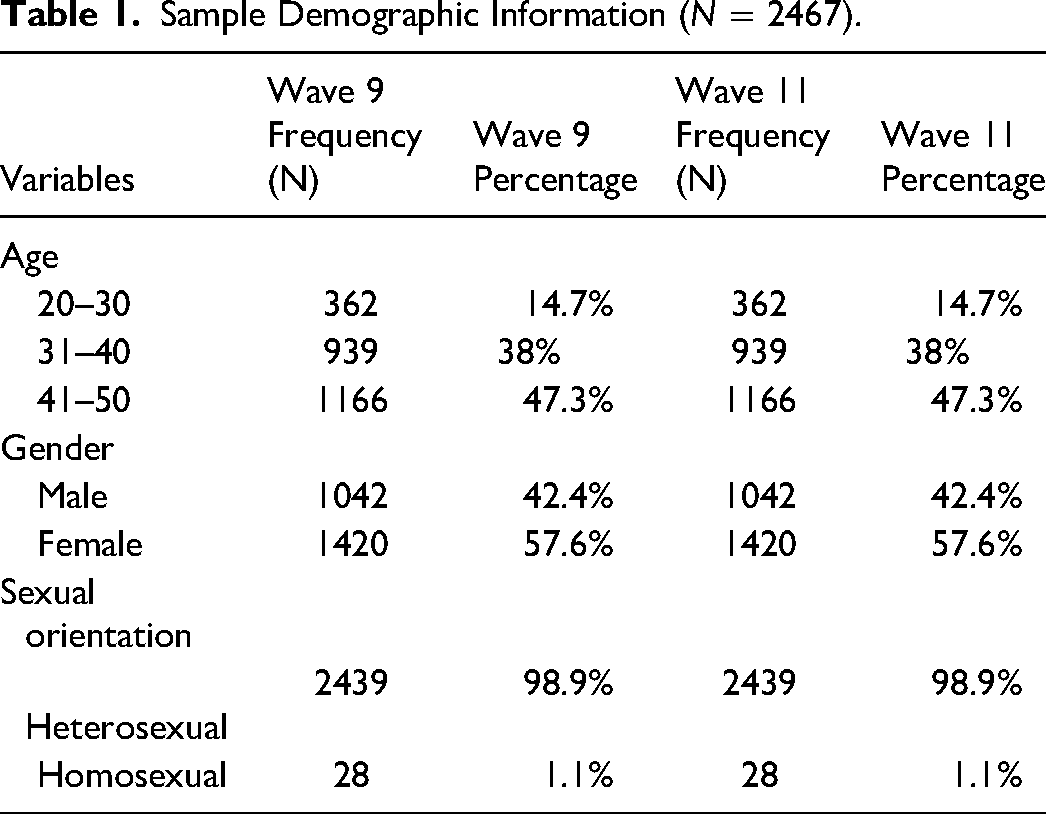
This study used data from the German Family Panel (pairfam), release 11.0 (Brüderl et al., 2020), which is a multidisciplinary, longitudinal study in Germany. A detailed description of the study can be found in Huinink et al. (2011). The data consist of 12,000 anchors who were randomly selected from the following three birth cohorts: 1991–1993, 1981–1983, and 1971–1973. Anchors were the individuals who were asked to give permission to interview their partners, children, and parents. Anchors were interviewed using a Computer-Assisted Personal Interview. The first wave of data was collected during September 2008 and will be collected annually for 14 years (Huinink et al., 2011). In Wave 11, a new birth cohort, 2001–2003, and a refreshment sample of the 1991–1993 and 1981–1983 cohorts were added (Brüderl et al., 2020). The sample for this study included 2,467 anchors who maintained the same romantic relationship between Wave 9 and Wave 11. Table 1 presents the demographic for this sample. The average age of our participants was 38.4 years old with gender being split proportionally, 57.6% female, 42.4% male. The sexual orientations represented in the sample were heterosexual (98.9%) and homosexual (1.1%). Wave 9 and wave 11 had 28 and 33 participants missing, respectively.
Sample Demographic Information (N = 2467).
Measures
Distressing Life Events
The DLEs variable was measured by asking if the participants had experienced a critical life event (i.e., physical violence, sexual assault, serious physical illness) in the past 2 years. DLE data were collected every other year starting with Wave 7 from 2014. We used the DLE data from wave 9 and wave 11, which were collected in 2016 and 2018, respectively. The available responses were “Yes,” “No,” “I don’t know,” “I don’t want to answer that,” and “Does not apply.” These responses were recoded as a dichotomous variable with 1 representing “Yes” and 0 representing all non-Yes responses.
Ethical Responsiveness
To measure ER, we created a manifest variable by combining three items used to assess the anchor's perception of their partner's responsiveness to the anchor. The three items were questions regarding how often their partner (1) lets the anchor know they understand, (2) listens, gives the anchor a chance to express themselves, and 3) supports the anchor when they have a problem. The responses ranged from 1 = “Never,” to 5 = “Always.” In order to have the same baseline of the relationship satisfaction variable, we recoded the range as 0 = “Never” through 4 = “Always.” The three items were then averaged to create a mean score. The Cronbach's alpha score (three items; α = .97) suggested excellent internal reliability.
Interaction Variable
We then created an interaction variable (ERxDLE) to account for any moderation effect ER would have on the relationship between DLE and relationship satisfaction. We standardized the ER scores and created the new variable by multiplying the standardized ER scores (ZER) by the DLE scores.
Relationship Satisfaction
Relationship satisfaction was measured by asking how satisfied anchors were with their relationship with their current partner. The response ranged from 0 = “Very dissatisfied” to 10 = “Very satisfied.” This variable was used as the endogenous variable in this study.
Data Analysis Plan
Before data analysis, the researchers consulted with experts in the field to ensure the content and construct validity of the measurements. Following the validity of the measures, data analysis began with cleaning data by using SPSS 25.0. The vertical data were restructured horizontally in order to find anchors with the same partners overtime. To prevent type II error, the internal reliability of the variables was tested (Williams et al., 2014). Next, we recoded the values of the categorical variables by using dummy coding. Additionally, we recoded the continuous variables which resulted in the same baseline starting at zero. Next, we computed multiple items into one manifest variable and then transformed the variables into standardized z-scores. After that, we computed the interaction between DLE and ER which generated the moderator variable. Then, we used Mplus 8.5 to check the model fit and run the moderation model. This model included predictors—DLE, ER, relationship satisfaction, and the moderator variable at wave 9, and the exogenous variable—relationship satisfaction at wave 11. We conducted a multiple linear regression analysis to determine whether the predictor variables significantly predict the outcome. Finally, we interpreted the model fit by looking at the chi-square, CFI, TLI, RMSEA, and SRMR. To have a good model fit, chi-square should be insignificant, CFI and TLI should be greater than .90, and RMSEA and SRMR should be lower than .08 (Little, 2013).
Results
To test the hypothesis that the ER moderates the impact of DLE on relationship satisfaction, we conducted a hierarchical multiple regression analysis. Model fit indicated just identified. However, the following statistic identified the overall model as significant, R2 = .039, F(1, 2431) = 99.469, p < .001. Based on our study's results, we rejected the null hypothesis that ER has a moderating effect on the relationship between DLE and relationship satisfaction.
Figure 1 shows the moderation model of this study. We control our demographic variables including age, gender, and sexual orientation in our results. The interaction variable, ERxDLE, at wave 9 had a significant, positive relationship with relationship satisfaction at wave 11 (b = .05, p < .05, SE = 0.2). Although DLE at wave 9 predicted a decrease in relationship satisfaction at wave 11, it was not statistically significant (b = −.03, p > .05, SE = .02). This confirmed one null hypothesis. However, ER at wave 9 predicted an increase in relationship satisfaction at wave 11 (b = .12, p < .001, SE = .02). Further, relationship satisfaction in wave 9 predicted greater relationship satisfaction at wave 11 (b = .43, p < 001, SE = .02). Figure 2 shows the simple slope of the moderation model. We found that if anchors who experienced DLEs in the past 2 years rated their partner as having high ER, their relationship satisfaction increased after 2 years. For those who rated their partner as having average ER, their relationship satisfaction slightly decreased over time. When a partner had a low ER score to begin with, the relationship satisfaction decreased 2 years later.
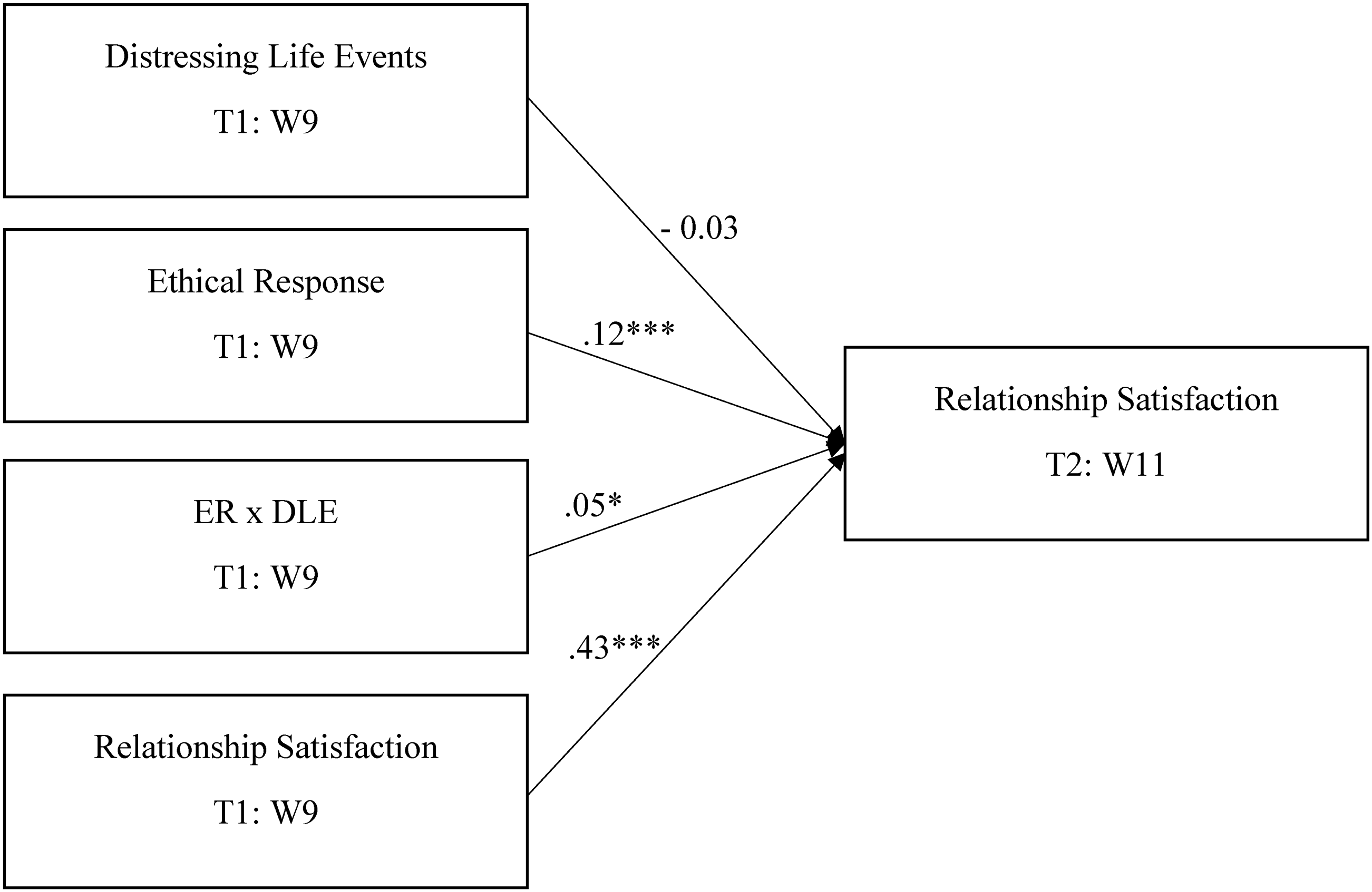
Longitudinal moderation model of ethical responsiveness, distressing life events, and relationship satisfaction.
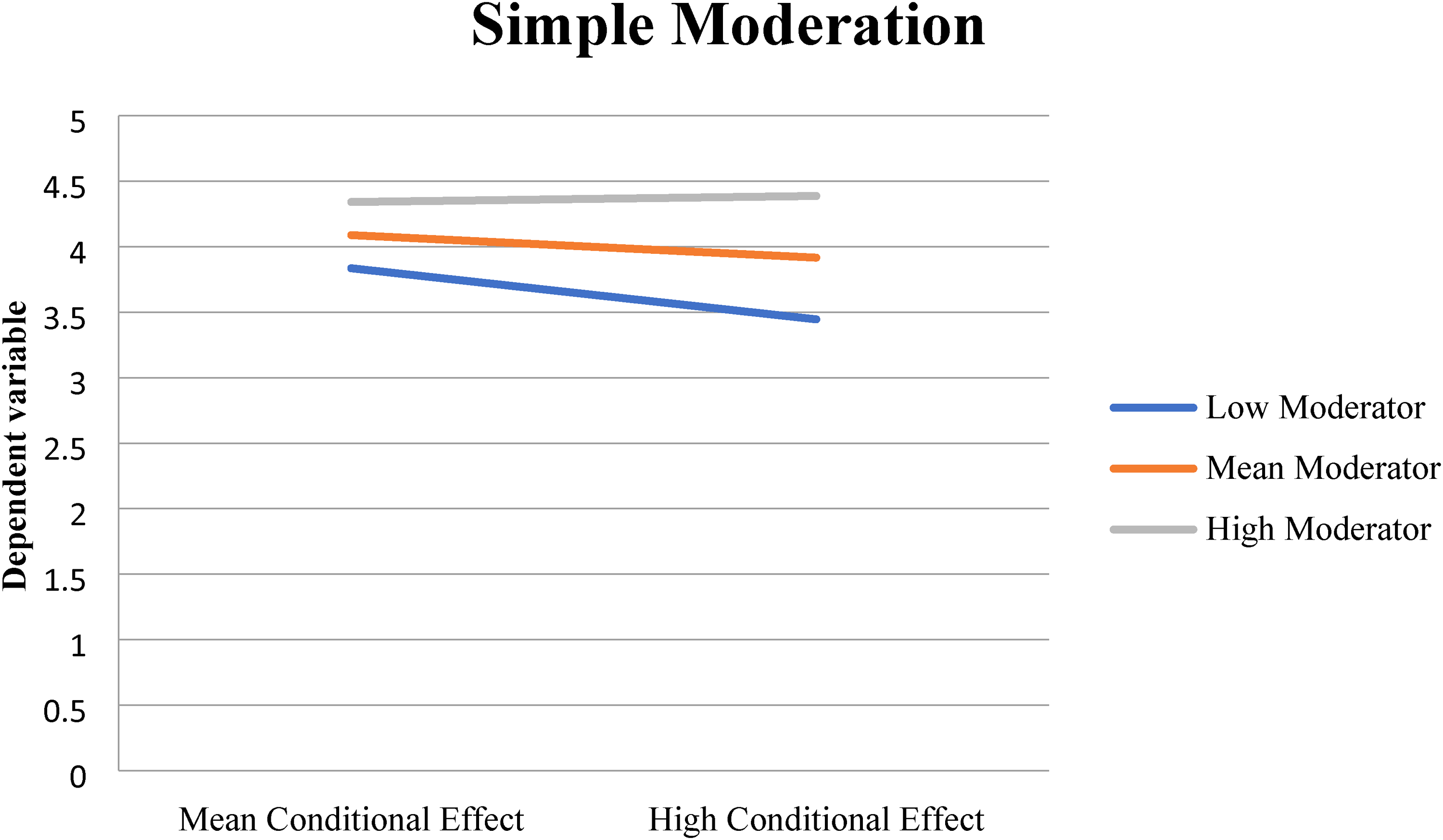
Simple moderation model.
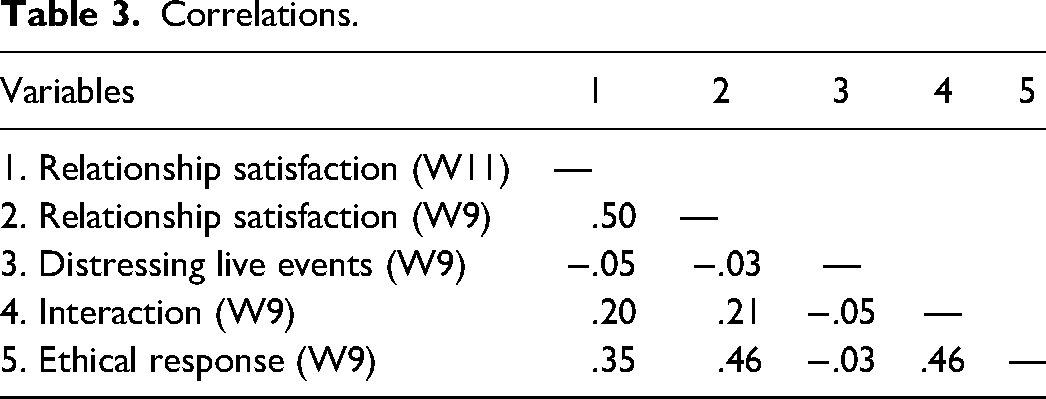
Table 2 provides the means, standard deviations, ranges, and Cronbach's alpha scores of the variables. Table 3 contains the list of correlations between this study's variables.
Variable Descriptive Information (N = 2439).
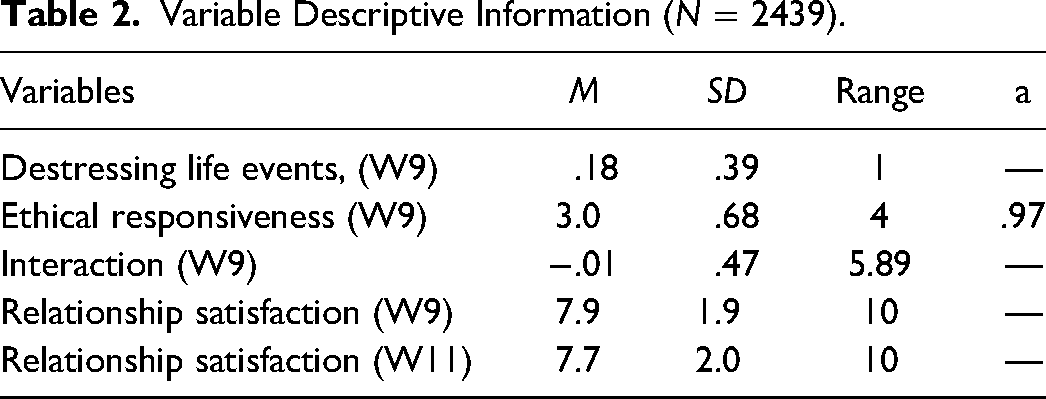
Correlations.
Discussion
The result supports our hypothesis that increases in ER would moderate the impact of DLE on relationship satisfaction. The result also indicates ER and RS from the first time point can predict the RS of the second time point significantly. As our study suggests, there is support for Galovan and Schramm's claim that ER moderates the influence of DLE on relationship quality as measured by RS. As the interaction variable at time one predicts increased RS at time two, we not only conclude that ER moderates the influence of DLE on RS but also observe how robust ER is to deleterious influences, such as stress and time. To highlight its robustness, first, consider that a partner's ER can predict RS 2 years later. Then consider that this influence persists despite the anchor reporting DLE. With this finding, we conclude the significant role of ER in relationship satisfaction.
Despite DLEs, some relationship satisfaction endured and, in some cases, even improved. Figure 2 showcases the nuanced relationship between varying levels of ER and RS. In cases where there was low ER, RS significantly dropped between times one and two. Whereas with average levels of ER, RS dropped slightly over the same time period. Most significant, however, is that high levels of ER not only maintained RS at time two, it also improved it. In a practical sense, when individuals experience significant distress, if their partner demonstrates high levels of ER, we can predict that their RS will improve.
Similar to the finding of Grames et al. (2008), higher relationality predicts greater marital satisfaction. Our study suggests while strong ER improved relationship satisfaction and moderated the negative impact of DLE on RS, when the anchor reported moderate to low levels ER, we could predict decreased RS over time. We believe this finding can be explained by the negative impact stress has on ER in addition to the need for increased responsiveness from partners during distressing experiences. Consistent with Galovan and Schramm's model of strong relationality (2018), we theorize that this decrease in responsiveness is due to the increase in stress. Furthermore, we theorize that maintaining the status quo regarding levels of ER is insufficient during times of distress. With increased distress, only those anchors who reported strong or above-average ER from their partner resulted in increased or maintained RS.
Clinical Implications
For clinicians who treat couples who have experienced DLE, we suggest a thorough assessment of past and present patterns of ER. According to this study, facilitating improvements in ER supports improved relationship satisfaction. Our study suggests clinicians should focus on the clinical process of increasing levels of ER in response to DLE. Based on the sufficient finding of the interaction between ER and DLE, future studies can focus on creating clinical interventions to improve ER between couples. Lastly, our study supports previous theories of therapy that assume responsiveness as being a critical mechanism of change within relationships and relational processes. Therefore, clinicians who utilize psychotherapeutic modalities which focus on relational responsiveness or relational ethics will find this study supports prioritizing assessments and interventions which improve ER.
Limitations
First and foremost, our study is limited by the sample. The pairfam dataset, although large and multifaceted, represents the nation of Germany. Although many countries, demographics, and cultures were represented in the data, we acknowledge that these findings may not be representative of all countries or cultures. For these reasons, we strongly suggest clinicians and researchers should consider other sociocultural factors that may be playing a role. Despite this limitation, Germany is a large country with a diverse population and given the number of participants who fit the criteria for this study, the dataset can be representative of large groups of people. Additionally, we take into account the difficulty of procuring such a complex set of data for 14 years. For this reason, we feel this study contributes to scholarly work on the impact of ER in couple relationships.
Second, we acknowledge that our model did not support the claim that DLE significantly predicted a decrease in relationship satisfaction over time. Although other studies have found DLE to negatively impact relationship satisfaction (Lund & Thomas, 2014; Manne et al., 2004), our study did not produce the same results. We theorize this could be due to the measure of DLE which focuses on 2 years of time (i.e., “In the past two years, have you experienced…”). Thus, the measure used for relationship satisfaction implied a present assessment. Therefore, we suggest that the statistically insignificant relationship between DLE and relationship satisfaction should be understood within the context of the discrepancy between the time references within these two measures.
Lastly, we recognize that our measures for ER and relationship satisfaction do not exactly replicate the Galovan and Schramm model, on which the study was based. Although their model accounts for dyadic interactions, our study solely addresses the anchor's perception of their partner's responsiveness. We still believe the anchor's perspective is critical when assessing the impact of responsiveness on relationship satisfaction; and encourage other researchers to further explore dyadic interactions around these constructs. For example, future studies can explore the interaction between both the anchor's and partner's perceptions of ER on relationship satisfaction over time. Additionally, our measure for relationship satisfaction does not match the construct of relationship quality outlined in the Galovan and Schramm model. Our measure was a single question, while their construct of relationship satisfaction contained multiple variables that make up relationship quality. Further research on this model will need to include or validate measures that account for the complex construction of relationship quality.
Conclusion
We found significant evidence to support some of the basic claims in Galovan and Schramm's SRRF model. First and foremost, we found that strong relationality does moderate the negative impact of DLEs on relationship satisfaction. We also found support for their assertion that stress negatively impacts ER. Lastly, we recognize that measuring relationship satisfaction does not capture the breadth and depth of relationship quality. For this reason, we recommend that researchers continue to explore how stress and responsiveness interact with the many variables that constitute relationship quality.
Footnotes
Declaration of Conflicting Interests
The author(s) declared no potential conflicts of interest with respect to the research, authorship, and/or publication of this article.
Funding
The author(s) received no financial support for the research, authorship, and/or publication of this article.
