




Abstract
Traditional physical workspaces have gone after the pandemic has happened. Individuals working at home have distractions that they would have not faced earlier. The usual working hours have taken a toll after they have started to work from home. Mental health and emotional support are not the same for professionals. Infidelity or extramarital affairs are also increasing in this situation where the individual is trying to date someone outside their marriage for emotional or mental support. The negative effect of an extramarital affair is expected to be exacerbated for the individuals working from home and involved in infidelity. The process of healing can also take time making a huge influence on the family relationships including children. In India, extradyadic relationships are not commonly talked about because of the wide cultural and societal influence. But the ground reality according to research studies is that there are many who indulge in the same. This article gives a brief background of extramarital and infidelity research carried out in the past 10 years (2012–2021) and sees how the extramarital affair in families has evolved and impacted individuals working from home during the pandemic.
Introduction
Working from home is not a new concept in the world. People who worked as farmers or artisans before the industrial revolution worked from their households. Post industrialisation, individuals moved from households to factory setup (Productivity Commission, 2021). With the advent of technology, the ease of working has become effortless. Remote working conditions came into existence again with the COVID-19 pandemic. However, there were differences in working from home style when compared with older times. Organisations were more positive about their employees working from home and estimated the benefits of it. The benefits include reduced costs on maintenance, office utilities, telephone, and equipment (Lupu, 2017).
Is there something missing in between all these positives of work from home? The informal interactions and the social support that the employees had in a physical workplace are missing when you work from home – which is also called as social capital (Baym et al., 2021). Employees looked up to the social capital in the physical workplace when things went wrong. It is also a source of information flow at workplace. By working from home, they might not be able to reach out to colleagues as they might have other commitments. Employees felt disconnected most of the time and could not share social space with friends. Loneliness and social distancing became major concerns for mental health (Killgore et al., 2020). Employees’ priorities changed to domestic roles and manage their work along with the family obligations (Farooq & Sultana, 2021). For a middle-aged man or woman, the key relationship in their life is their immediate family members mostly their spouse and children. Outside his work hours he/she would want to spend time with spouse and children which is a part of their leisure time. Surprisingly, this trend has been changing in the recent years. With the arrival of social media and access to personal devices with internet especially the mobile phone, finding a partner or a relationship outside of marriage is not a big challenge. There are enormous studies which explains jealousy, cheating, romance, and infidelity in the field of family studies. Research has also found that infidelities occur in around 25% of the marriages (Gordon & Mitchell, 2020). At present, it is too early to get the statistics on the rate of infidelity. It is common that stress in one partner can affect the other which is also known as dyadic stress. Dyadic stress is also related with low sexual and marital satisfaction (Bodenmann, 2005; Rusu et al., 2020). Studies also conclude that the dissatisfaction in life satisfaction is the main reason for having an extradyadic partner or extramarital relationship (Jahan et al., 2017; Khorramabadi et al., 2019). Furthermore, individuals who are satisfied in the marital and sexual relationship have less chance of getting into an extramarital relationship (Maddox Shaw et al., 2013). According to an article by The Society for Human Resource Management (SHRM), it states that nearly one-quarter of the employees had a workplace relationship involving a person who was married (Loveland, 2019). Employers in many organisations have brought policies on workplace romance. They have included “no fraternisation” and “no romantic relationships” policies especially after the #MeToo movement in India. This also keeps check on the workplace harassments. Instances of workplace romance, extramarital or not can interfere in the productivity and harming the workplace morale (Loveland, 2019). To avoid uncomfortable situation of extradyadic partners, now the employers ask their employees to disclose the relationships beforehand. There are organisations that support extradyadic relationships in their workplace. They have seen increase in satisfaction, reduced attrition, and improved citizenship behaviour when they have a partner within the organisation. Due to the work from home in pandemic, the number of physical interactions in the workplace has reduced but the employees who intend to continue having an extradyadic relationship is finding connections online using various apps and websites. Earlier studies endorses that the pandemic has created an extra want for infidelity, the method to contact the extradyadic partner might be different this time (Gordon & Mitchell, 2020).
Various age groups find several apps or social media platforms to look for extradyadic partners. Teens and youngsters use apps such as Tinder, Skout, and Yubo. Whereas there are apps and websites that help individuals in their middle age to find right partners. App-based platform like Gleeden and websites like ExtramaritalAffair.com helps individuals find partners of their interests and get connected. Apart from these specialised apps, there are online chat platforms where they can get connected to people from around the globe. These platforms have given a different perspective and ease for individuals to have intimate relationships and sexual partners.
In 2019, Gleeden conducted survey among women across Europe and the UK that found 33% of women admitting them having extradyadic partner (Gleeden Publishes Statistics Revealing Who the Average British Adulteress Is, 2019). Gleeden app that was launched in 2009 now has more than 7 million users from India, Europe, and Turkey. The number of users has increased substantially after the lockdown in various countries. This app is also the first app exclusively for married people launched in Europe. Another survey on Indians and British conducted by Gleeden found that 55% of Indian couples are oriented towards having extramarital affairs (India VS the British Indian Community: Contrasting Attitude Towards Infidelity - Pressroom.Gleeden.Com, 2020). These alarming statistics are an eye opener to the Indians. India being deeply rooted in culture and sacred relationships of marriage is changing these days. The survey by Gleeden was conducted only in the Tier 1 cities. The other parts of the country even when they are socially conservative might see a change in the coming years with the use of a wide range of technology available. Focus of this article is to understand the relationship of individuals with extradyadic partners they have found over the internet during work from home. The other objective of this article is to find the research gap on extradyadic partners in the workplace.
Systematic Literature Review (SLR) of Various Associated Constructs
Systematic literature review can be cogitated as synthesising available studies on a particular topic that contributes to scientific knowledge and practice (Brewster et al., 2021). SLRs are progressively carried out in the medical field and recently we have seen SLR getting its popularity in social science domain. To understand this multifaceted research area, the authors have used a systematic literature review to see the depth in the field of extramarital affairs or extradyadic relationships. By this process, understand the boundaries of our review and see the areas that are studied along with this topic. Through the systematic literature review, the authors were able to select a relevant paper in the field of extramarital affair or extradyadic partner or infidelity. The article is framed using bibliometric analysis and shows a longitudinal study of studies done in the years 2012–2021. The authors keen focus is on the research in the past 10 years in the field of infidelity, extramarital affair, and extradyadic partners. These terminologies are used interchangeably in the field of family studies and hence asserting on a holistic approach.
According to Fair (1978), extramarital affair is the leisure time that the individual spends with non-household members in one particular type. There are various studies that try to define term infidelity based on the experiences from individuals attending counselling therapy (Moller & Vossler, 2015). The study includes extramarital relationships, having an affair with extradyadic partner, cheating, and jealousy among partners. There are also various aspects of infidelity such as physical infidelity, cyber infidelity, emotional infidelity, and personal attachment. Very few studies concentrate on the systematic literature review of extramarital affair, infidelity, and extradyadic partners. Extradyadic behaviours without the primary partner's consent are painful according to many researchers. Human beings being emotional lot of studies concentrate on studying these extradyadic behaviours (Arantes et al., 2020). The novelty of this article stands on the inclusion of understanding of how the concept of extramarital or marital infidelity has changed over the years. Indeed, there is a growing demand in the studies related to extramarital and family studies in the domain of evolutionary psychology.
Methodology
This article uses bibliometric analysis, which is largely used in the field of research especially in medical and social science research. The advantage of the bibliometric analysis is that it allows researchers to explore the area in depth, systematically and without any bias. The study utilises statistical techniques in the field of extramarital, infidelity, and extradyadic partners in longitudinal approach, the research papers being collected from 17 journals published in the years from 2012 to 2021. This approach will give scholars an understanding of specialist literature review by linking various terms and traditional disciplines associated with the area of study. These journals were picked from the Web of Science database which gives relevant, peer-reviewed, and good-quality articles.
Within the bibliometric analysis, there is quantitative analysis that combines the relational methods with evaluative techniques. The technique also uses the citation data to evaluate the count and ranks of the scientific research productivity. A visualisation can be obtained to see the co-citations that have happened across countries.
The flowchart based on the PRISMA guidelines (Liberati et al., 2009) is presented in Figure 1. A total of 787 articles were retrieved from the Web of Science database. We did not have any duplicate records as the articles were retrieved only from one source. From this, the authors screened the research articles that were from the irrelevant journals. In the screening process, the authors also read through the abstract of the research papers to pick the most relevant papers. The authors excluded that were concentrating on the counselling therapy of individuals after extramarital relationships. Based on available full-text research articles, 301articles were eligible. After a detailed reading of these research papers, 18 articles that included studies on bisexual, gay, or LBGTQ + were not considered as they were not in the representative sample. The total number of articles included for the study were 283.
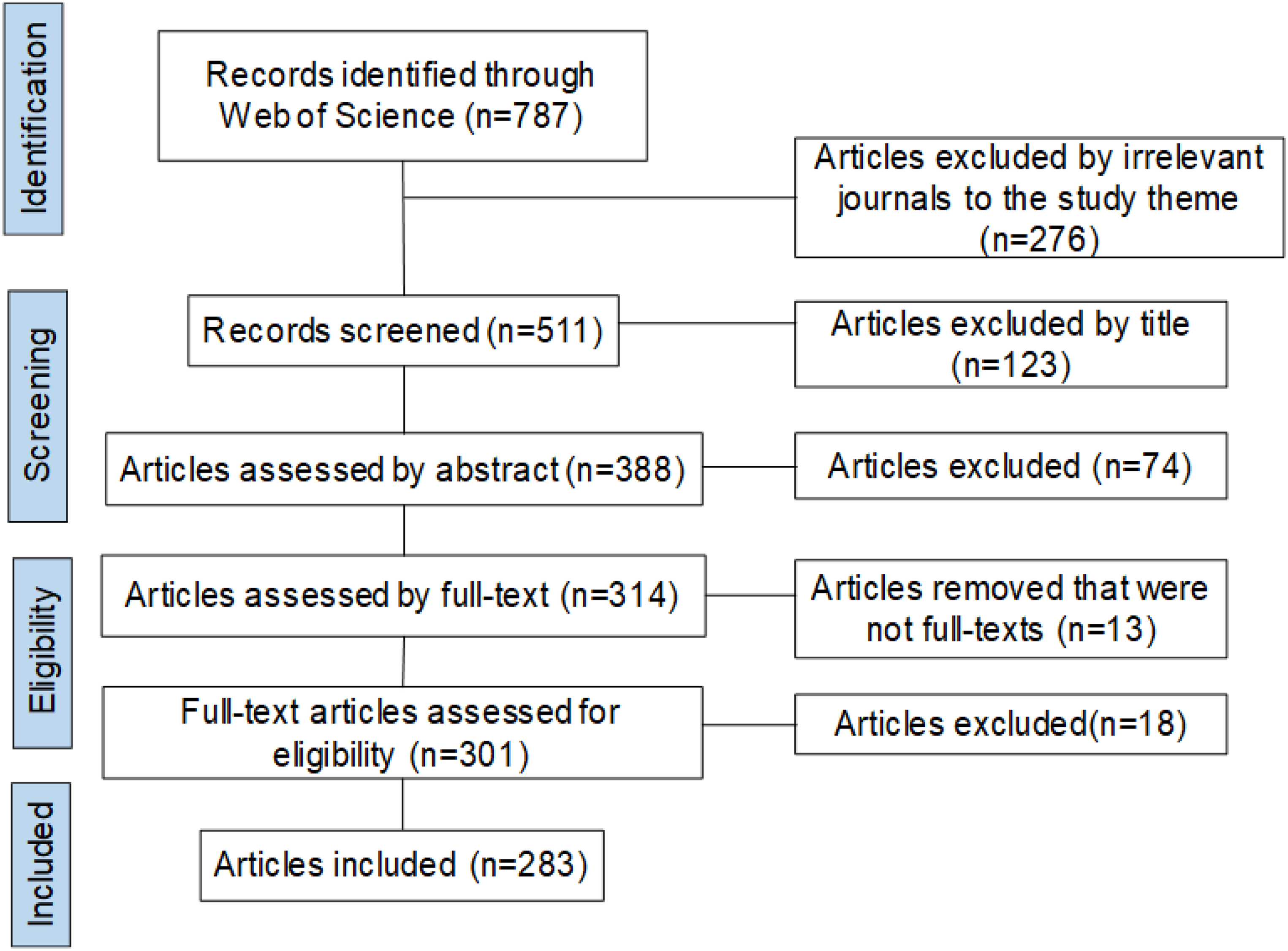
Flow diagram on research articles selection for the study.
The authors performed the bibliometric analysis through the R package – Biblioshiny, a tool that is specifically designed for quantitative research of scientometrics and bibliometrics. To obtain the relevant articles from Web of Science, the authors used the following keywords with a combination of the Boolean operators:
Extramarital* Extra-marital* Infidelity Extradyadic partners
The words ending with the asterisk mark include all the words that contain the root word. For example, extramarital* can fetch research articles that include extramarital relationship extramarital sex or extramarital affair. This process will help to get the maximum research papers studying on this topic.
The analysis also uses a bar chart to understand the publication per year in the past 10 years. A thematic evolution map with time splits is carried out to understand the differences between two periods given. The map is also divided into four quadrants namely – niche themes, motor themes, isolated themes, and emerging or declining themes (Nasir et al., 2020). The authors have also used network analysis to comprehend and visualise the conceptual structure in the network of words.
Discussion
The authors have considered the research articles from the past 10 years. We have seen a steady number of publications almost from 20 to 39 papers a year. The first few years of this period we see research articles based on the extramarital affairs and infidelity related to jealousy, doubts in relationships and researchers finding the reasons to understand why partners get into such extradyadic partners. In the later years, we see infidelity has been classified into various categories and in which internet infidelity is more common. Internet fidelity is also an emerging topic. With the ease of using technology tools and smartphones, individuals will find accessing the extramarital apps and websites for online dating effortlessly. The statistics might be horrifying at a later stage where we will see at least one partner from every household having a secret affair. Figure 2 shows the publication trend on the topics related to extramarital, infidelity, and extradyadic partner from 2012 to 2021.
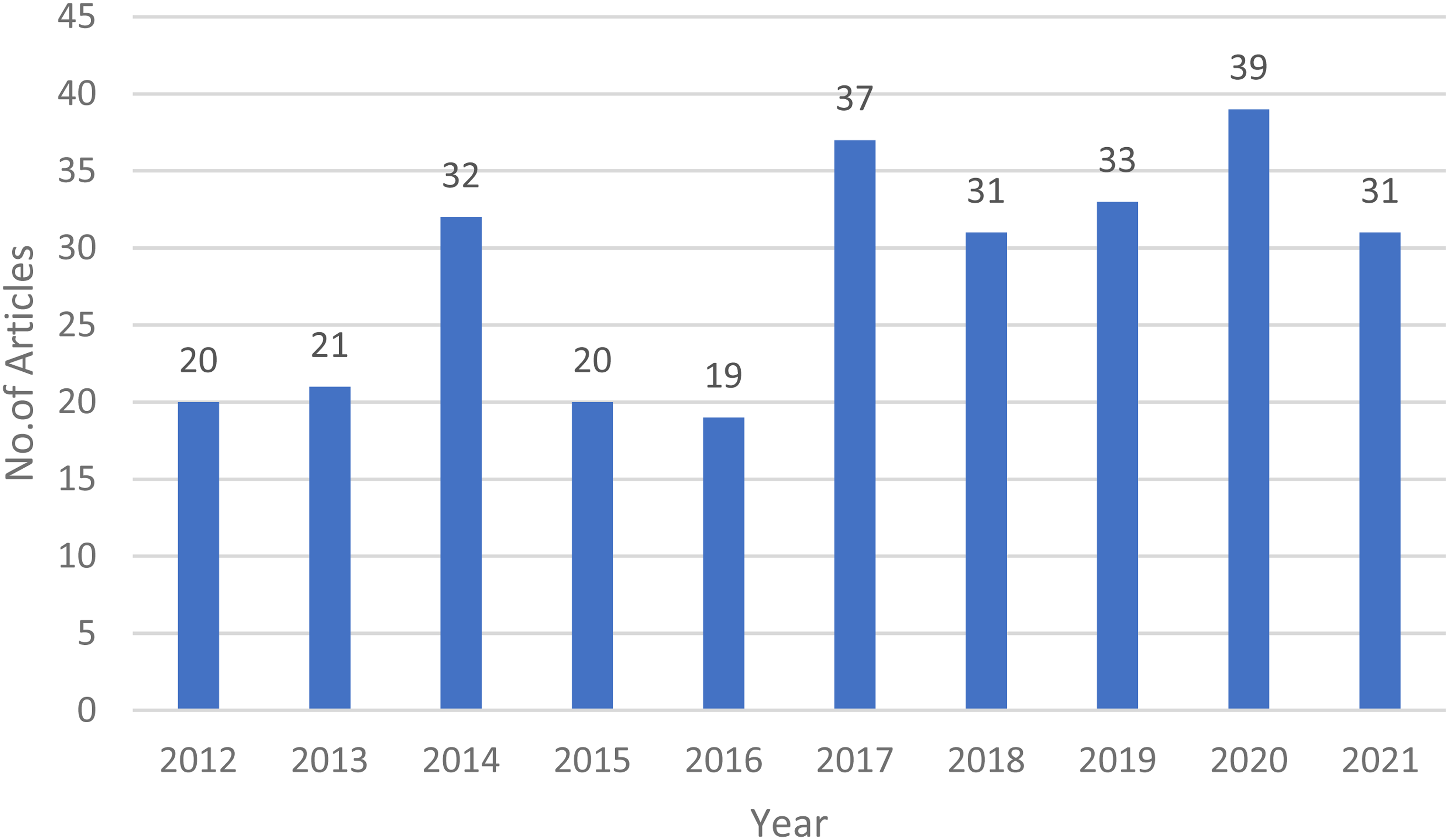
Annual scientific production.
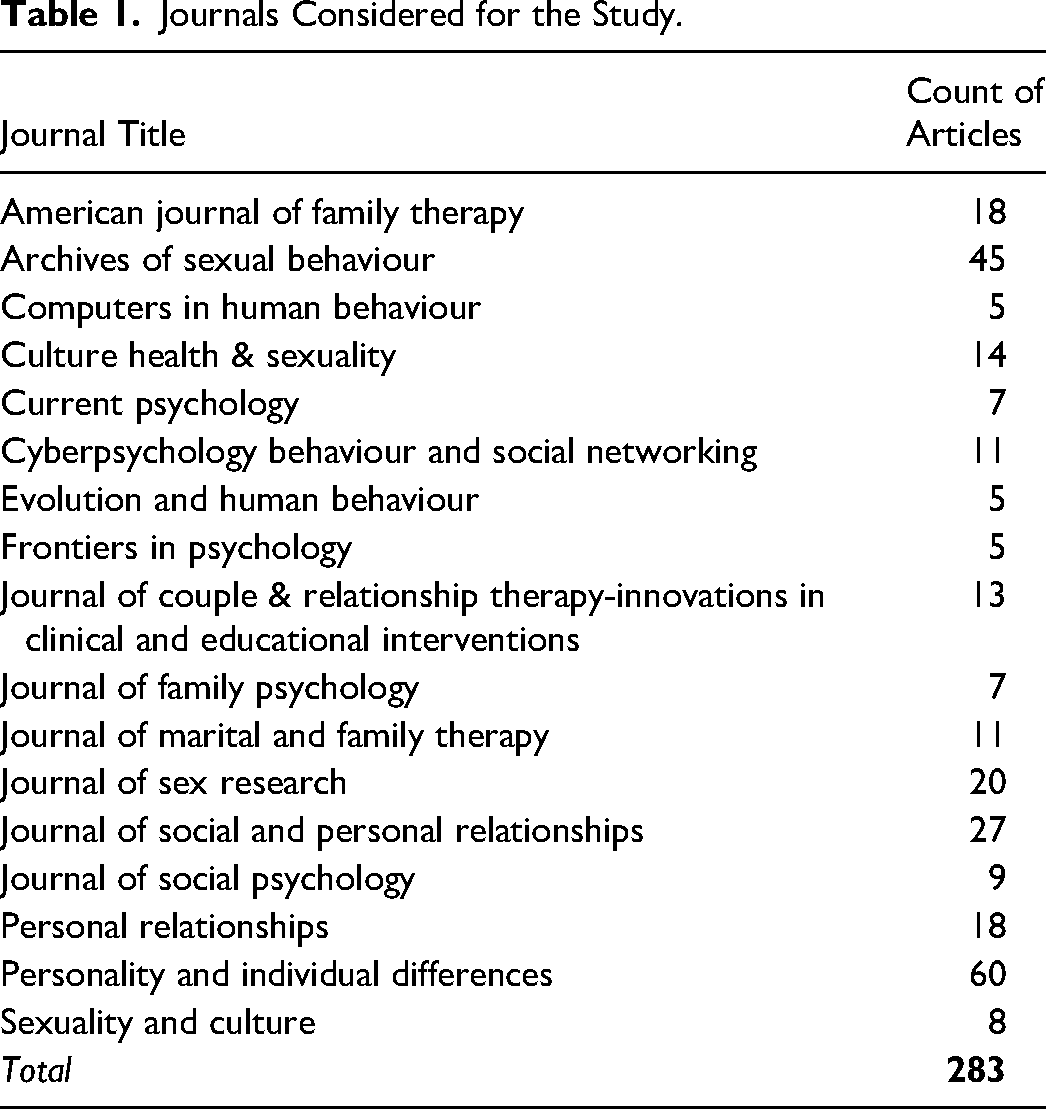
The literature produced is articles from 17 top journals in this field. The highest number of articles comes from two journals, that is, Personality and individual differences and Archives of sexual behaviour (Table 1).
Journals Considered for the Study.
Regarding the conceptual structure of the study, thematic maps were used in Bibilioshiny. A word co-occurrence network analysis is created to understand what main topics and trends exist in this field of study. In a thematic map, there are four different categories or quadrants such as Motor themes, niche themes, high density themes and emerging or declining themes. In this analysis, the authors have used the Keyword Plus to retrieve data. Keyword Plus are the keywords that are associated with Thomson Reuters editorial experts, and these are auto generated. These additional keywords overlook the keywords that are given by the authors of that research article. Also, the authors considered two time periods, that is, pre-covid (years 2012–2018) and post covid (years 2019–2021). The two periods where considered to understand the difference in the themes pre-covid and post covid. In the first time split (2012–2018), the attractiveness is a niche theme that means that they are characterised by low centrality and high density. The basic themes remain as sex differences and satisfaction in the marital relationships in the first time split. In the second time split (2019–2021), it is evident that the research papers focusing on extramarital relationships or infidelity the niche themes are intimacy among couples, depression, behaviour, and mental health. These isolated themes can be the focus of research in the coming years (Figures 3 and 4).
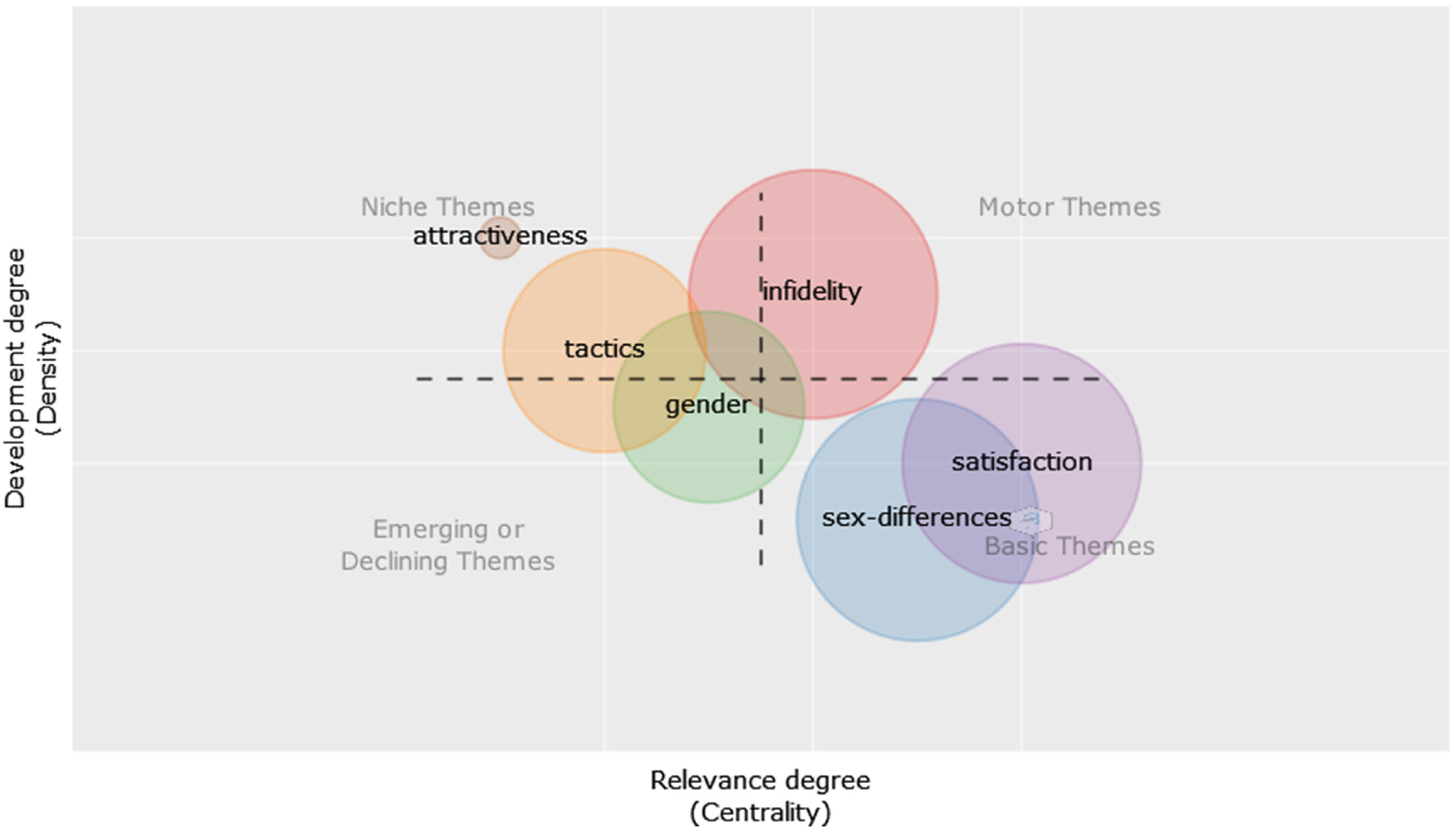
Thematic evolution for the period 2012–2018.
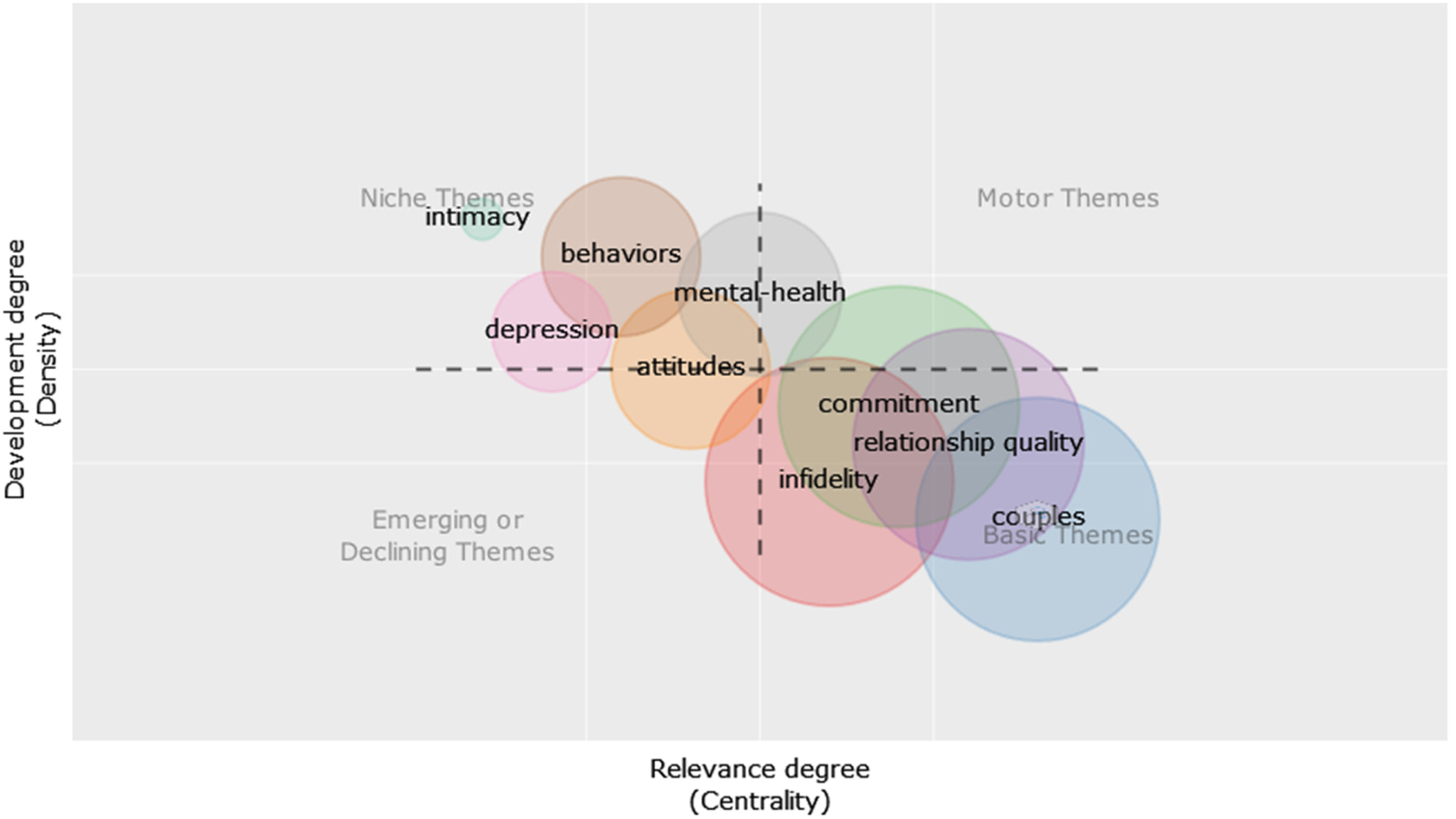
Thematic evolution for the period 2019–2021.
To understand several terms associated with extramarital affairs and infidelity, the authors used co-word analysis (Figure 5) that will produce a network of the major concepts and issues related to it. Infidelity along with concepts of sex difference, personality, and jealousy was the concepts studied very commonly. Jealousy was one common term that studies related to extramarital affair. Scholars have also studied about various perceptions of infidelity in various communities. As this issue is also considered during family therapy, strategies and tactics are also discussed in the research articles.
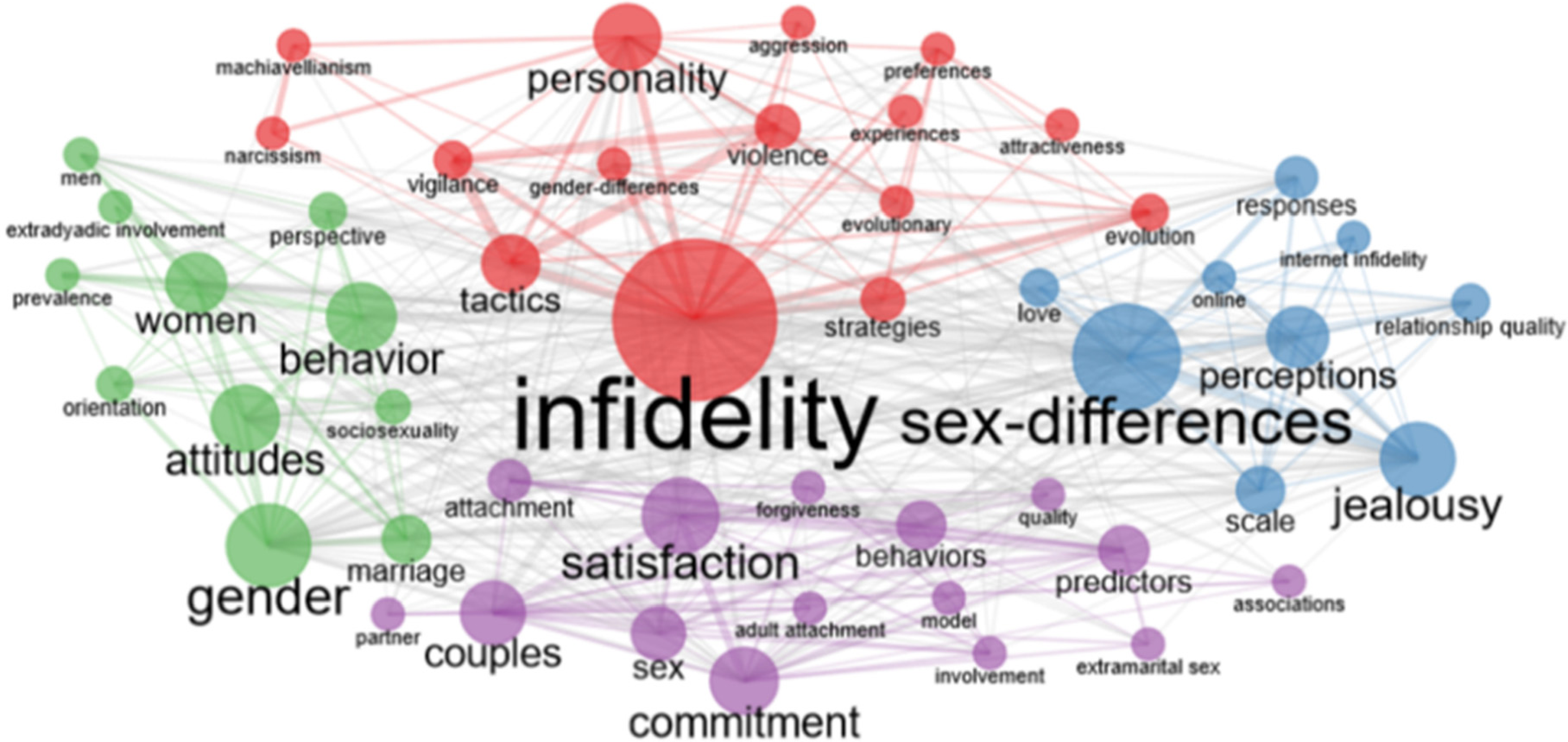
Most recurring issues.
Figure 6 gives a network analysis of the countries that has collaborated to do research on the area of extramarital affairs and infidelity. The maximum research collaboration comes from USA with various countries and also the collaboration of UK with Portal. We can also see that not many countries especially, India has collaborated to work on the research related to extramarital affairs.
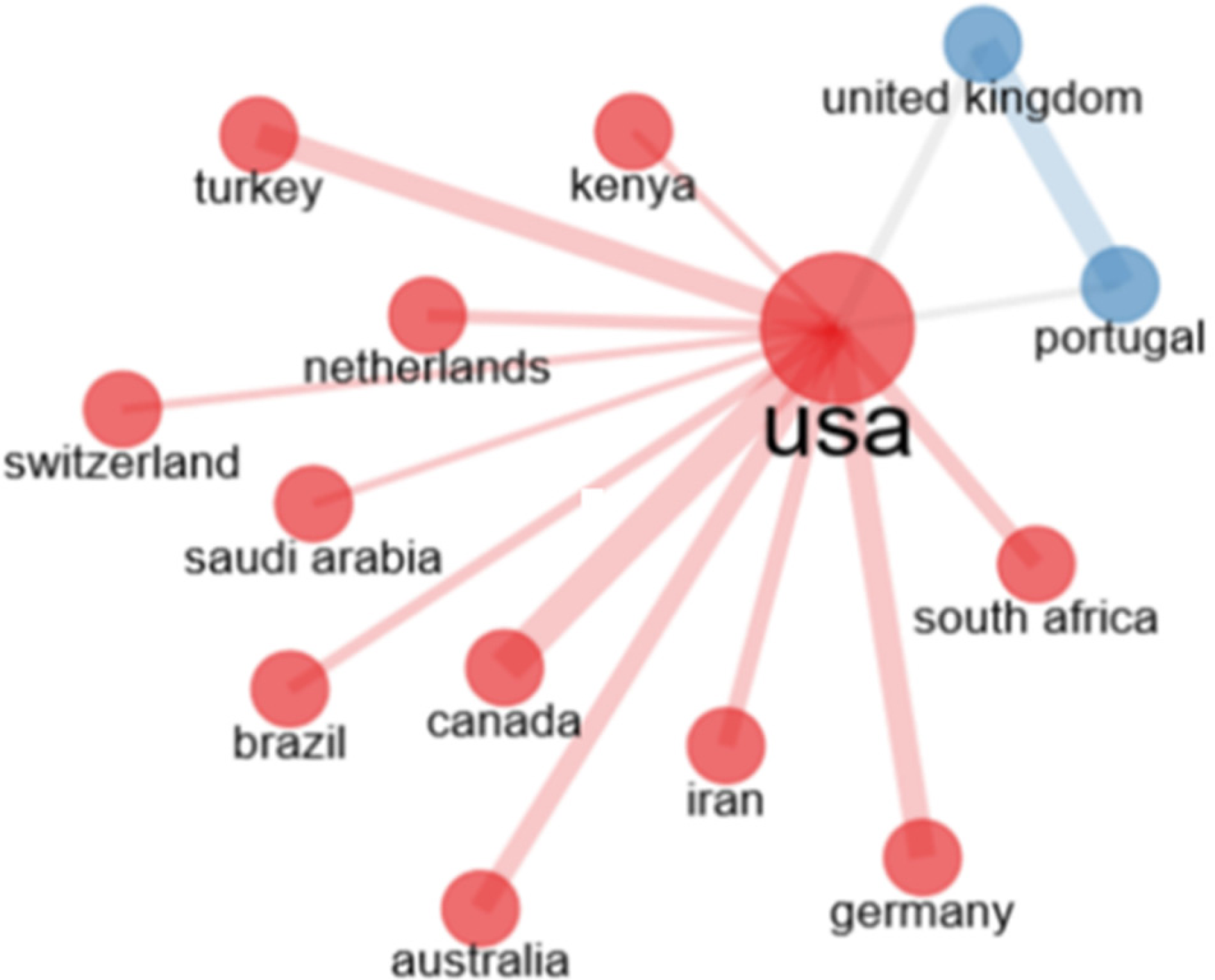
Country collaboration network.
Conclusion
Extramarital relationship or infidelity is common in the modern world. But still, it is a phenomenon that is stigmatised, and it is a matter of shame when society gets to know. Researchers are also finding reasons to why the couples indulge in such extradyadic behaviours. Society and culture also influence their behaviour a lot. These intense and emotional extradyadic behaviours are not formed instant, but it takes time to grow. It becomes difficult for couple to deal with these emotions when they have children at home as they might overhear the conversations. Dealing with this family issue in a pandemic can add extreme anxiety to the couples as well as the family members. Work from home was a boon to many families especially children to have their parents with them. In families where they get to know about the extradyadic relationships, it might break their trust and privacy. As in any family relationship, communication is the key to handle these situations (Timm & Blow, 2018). Gordon and Mitchell (2020) recommend that emotional regulation for an affair recovery is crucial. If the situation is not handled well it can result in severe health issues such as increased hypertension, memory loss, and difficult to concentrate. While couples work from home, they should find creative ways to create a space for social interactions. Organisations through the help of their Human Resource department are finding ways to improve their mental and emotional health to mindfulness programme (Pattnaik & Jena, 2021; Roemer et al., 2021). There is still a gap for these studies in India, as individuals do not openly talk about these relationships. Further studies should include the work-from-home situations and perspectives of organisations playing a role in the employees’ well-being and include the social circle of employees to keep them emotionally fit.
Footnotes
Declaration of Conflicting Interests
The author(s) declared no potential conflicts of interest with respect to the research, authorship, and/or publication of this article.
Funding
The author(s) received no financial support for the research, authorship, and/or publication of this article
