



Abstract
The Indian soldiers guard the border regions located at extreme elevations in cold, often snow-covered conditions. Protecting their feet from life-threatening cold injuries is a primary objective as well as a matter of national security. As a solution, a new cold-condition “snow boot” design based on ergonomic principles was developed indigenously. The present study was conducted to assess the efficacy of the newly developed snow boot through the application of both objective and subjective tools. The new snow boot was as effective as an existing imported boot. Users preferred the new design and appreciated the boot’s relative lightweight.
The classifications of mountain elevation in terms of altitude are as follows: sea level (0–500 m), low (>500–2,000 m), moderate (>2,000–3,000 m), high (>3,000–5,500 m), and extreme altitude (>5,500 m; Bärtsch & Saltin, 2008). India shares high-altitude (HA) border areas with the neighboring countries both west and east of the Himalayas. At any one time, approximately 200,000 Indian soldiers are deployed at various sectors along the region to patrol the HA borders. The Indian Army maintains combat-ready troops even at extreme elevations (6,000 m). The Siachen Glacier region located in the eastern Karakoram range of the Himalaya includes strategically important units deployed at altitudes ranging between 3,600 and 6,000 m. Soldiers here endure constant exposure to life-threatening physical conditions such as exposure to subzero temperatures that sometimes drop to as low as −60 °C, windchill, hypoxia, ultraviolet radiation, as well as uneven snow-covered terrain and the inherent possibility of avalanche native to the terrain. Accordingly, soldier performance is negatively affected compared with that for similar tasks at sea level. Causal factors such as cerebral hypoxia, loss of appetite, weight loss, and the effects of isolation have been noted (Cymerman & Rock, 1994; Friedl & Grate, 2019; Marriott & Carlson, 1996; Ramachandran, 2012; Wasse et al., 2012). Despite these extreme conditions, soldiers must stay vigilant and mobile to perform their critical duties. Added to the environmental burden is the considerable weight of the equipment each deployed soldier must carry (e.g., rations, weapons, ammunition, winter gear, etc.). As a result, soldiers’ feet transfer a significant load to the surface over which they traverse. Here, footwear plays a critical role in maintaining proper balance and stability on snow-covered surfaces where slips, trips, and falls are frequent occurrences (Chang et al., 2016; Chiou et al., 1996). Hence, fit and thermal protection must be afforded by the footwear to provide acceptable protection and comfort. Due to the myriad performance requirements for this environment, the snow boots themselves are typically heavier than other military boots. In general, snow boot use is comparatively challenging both physically and mentally, and it is clearly the case that a less-than-optimal interaction among the human (soldiers)–environment (HA)–equipment (snow boot) combination represents a potential overall performance decrement for the soldiers.
Presently, soldiers use an expensive and heavy, imported, two-component snow boot consisting of an inner and an outer boot. Although the existing boot thermal protection seems adequate, soldiers report that excessive weight poses a major difficulty in lifting their feet. In turn, this results in postural instability and poor grip on the snow-covered terrain. Previous studies showed that with the increased weight of the footwear, the physiological cost to the wearer also increased resulting in undue fatigue and performance limitations (Howard & Oakley, 1984; Jones et al., 1986; Martin, 1984). As a remedy, an ergonomic intervention was pursued toward alleviating the identified problems inherent with the heavy boots. Accordingly, a lightweight snow boot was designed indigenously and developed based on ergonomic principles.
Most previous snow boot research conducted slip resistance property evaluations under simulated conditions (Bagheri et al., 2019; Hsu et al., 2016). However, performance assessment of the snow boots on natural, operationally representative terrain is ultimately needed for successful development. Till date, no study has been conducted on the assessment of military snow boots in the natural extreme environment. Thus, the present study is the first of its kind to assess a newly developed indigenous snow boot design for extreme elevations involving both objective and subjective measures.
Method
For experimental purposes, the new snow boot and imported boot were named “New Design” and “Legacy Boot,” respectively (Figure 1A and B). The New Design boot was developed utilizing the Zachariah et al.’s (2001) anthropometric database and includes a cost-effective single-component lightweight construction (a lower hard shell with an upper waterproof leather weighing 2.2 kg for a Size 8 sample). The Legacy Boot is a two-component, heavier construction (hard outer boot and soft inner boot weighing 3 kg for a Size 8 sample). Both boots include a pivoting ankle support and provide secure fastening. If desired, the Legacy Boot user can take off the outer boot and walk wearing only the inner boot. This can be considered a beneficial design feature of this boot, but the separate components contribute to the total weight of the boot. Compared with the inner boot, the outer boot is a heavier structure and includes a hard rubber shell and rubber outsole. On the other hand, the single-component New Design represents potentially important ergonomic benefits as a result of its lightweight and quicker don and doff properties. The New Design boot includes a zipper at the medial aspect of the boot for quick and easy don and doff.
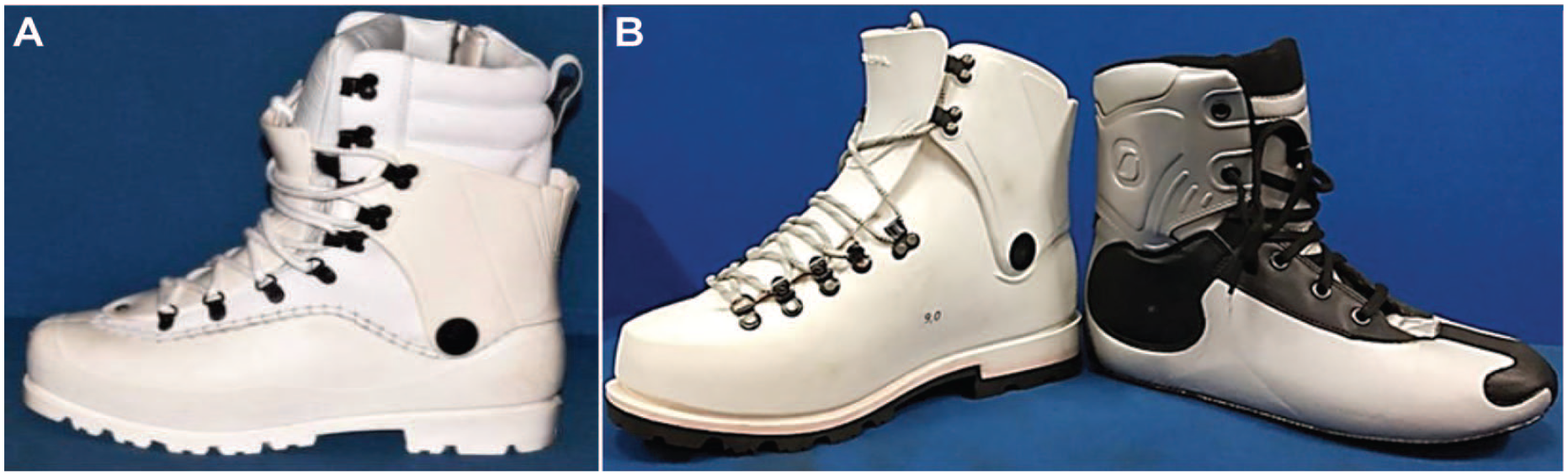
(A) New Design and (B) Legacy Boot.
A total of 25 soldiers volunteered to participate in the study reflected by the following demographics: age = 27.11 ± 2.03 years, height = 175.78 ± 3.10 cm, and weight = 65.80 ± 4.13 kg. The participants were thoroughly briefed regarding the purpose of the study, and they completed an informed consent procedure prior to participation. The study protocol was approved by the institutional ethics committee. Of the 25 participants, 20 were issued New Design boots, while the remaining five used the Legacy Boot. All the issued boots were properly sized for each participant. Internal boot temperature measures were collected for 12 New Design participants, while infrared (IR)-based thermography measures were collected for 17 participants. All 20 New Design participants completed a subjective feedback questionnaire. Measures for Legacy Boot participants included only inner boot temperature monitoring (Figure 2). Data collections were done at Khardung La (5,602 m), Siachen (3,810 m), and Chang La (5,384 m). All three locations were accessed by road (Figure 3).
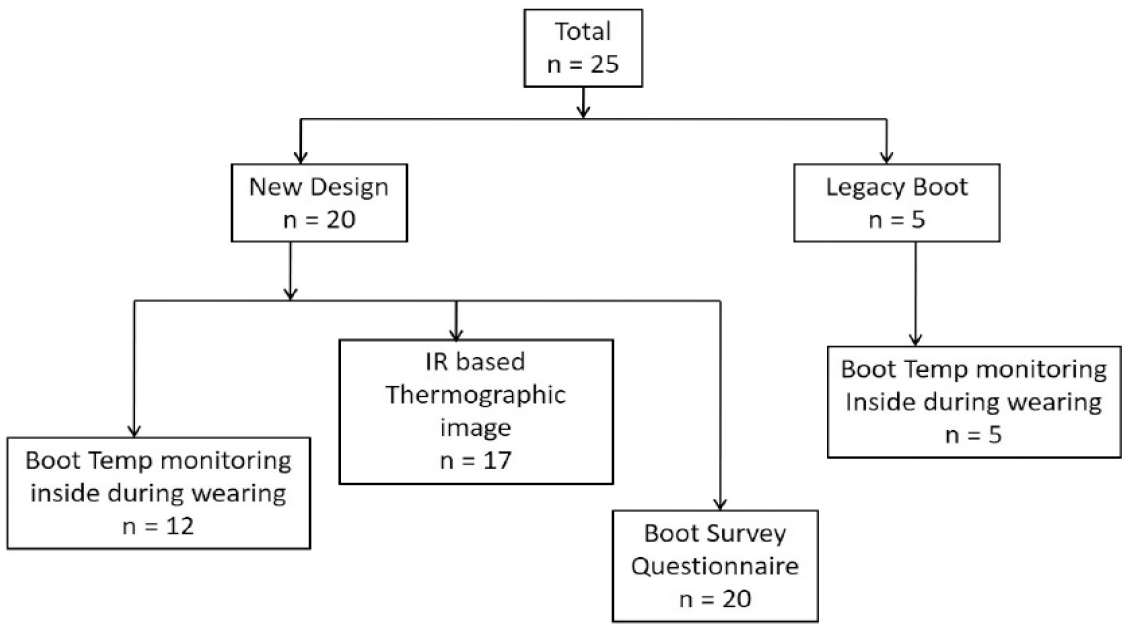
Recruitment of the participants for various assessments.
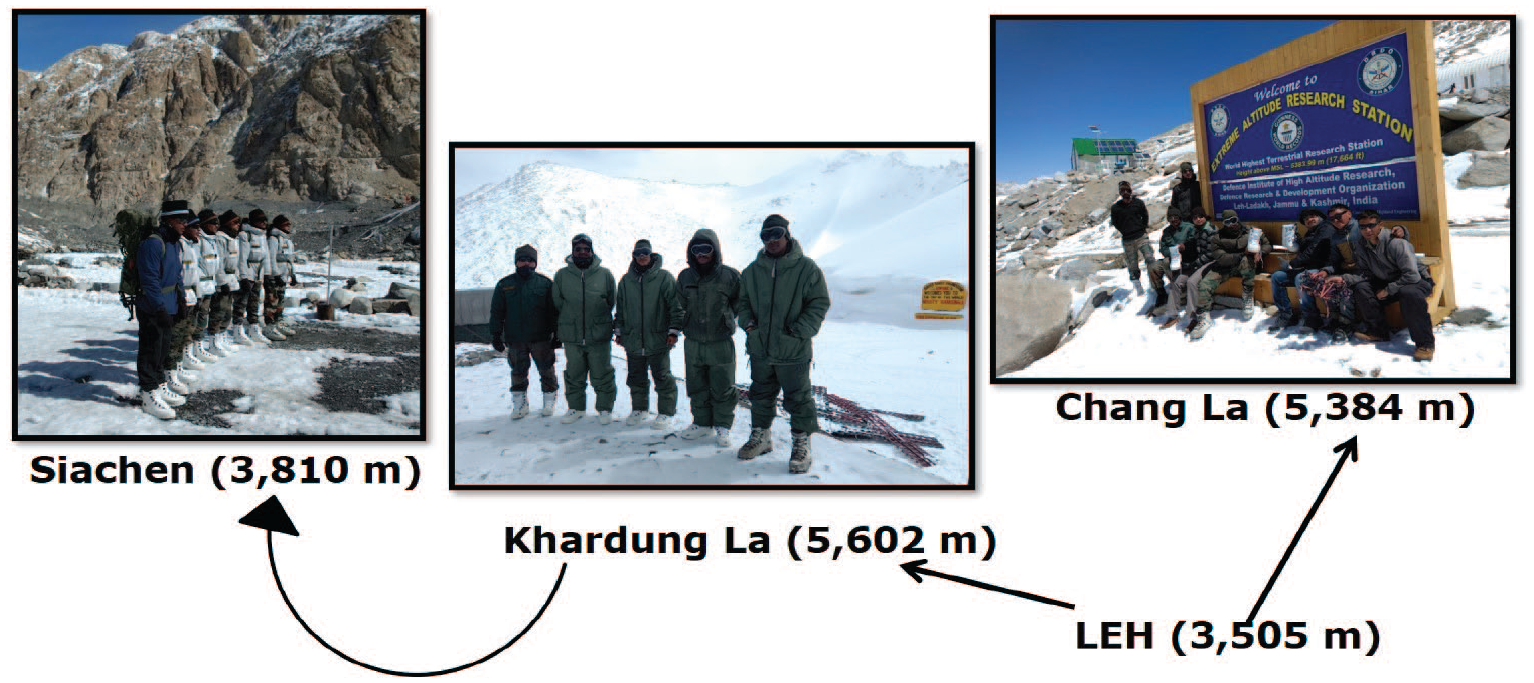
Schematic representation of different study locations.
Temperature sensors were placed inside the boots at the toe area while donning to monitor the thermal environment internal to the boot. The participants were instructed to carry out their normal activities, while data monitoring was done over a period of approximately 24 hours. Ambient temperature measures were also recorded. Thermographic images of the feet and outer surface of the boot were captured using an IR camera following the completion of the wear study. Images of the bare feet were captured as soon as possible after the boots were doffed to minimize cold temperature exposure. Subjective feedback questionnaire input was collected after the wear period was completed.
Results
The New Design boot was found to be as effective as the imported Legacy Boot for providing sufficient thermal comfort over a period of 24 hours (Figure 4).
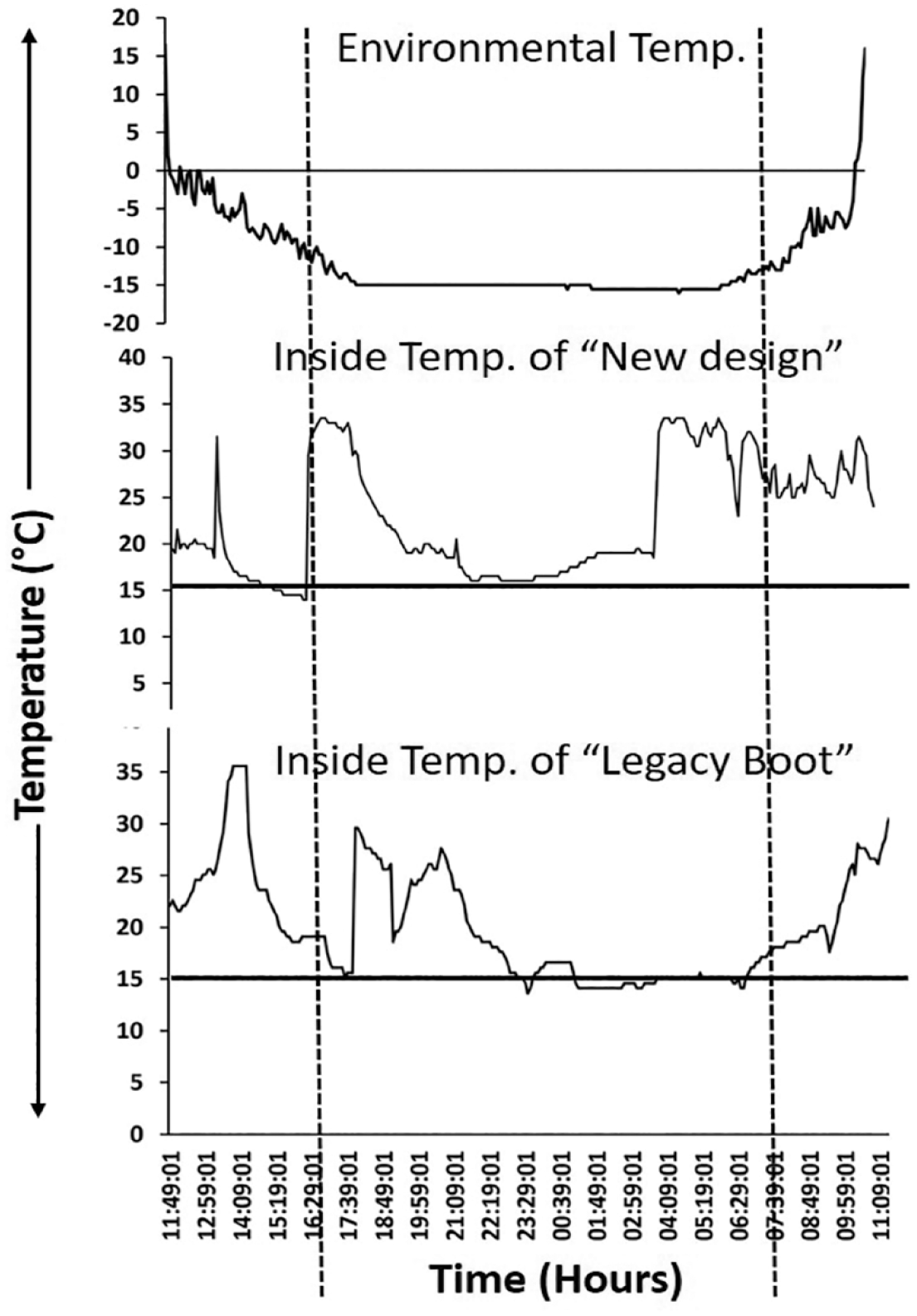
Thermal comfort assessment of the snow boots at Khardung La peak (5,602 m).
The internal temperature in both the boot types was approximately +15 °C during a maximum ambient temperature drop of −15 °C. Therefore, an effective temperature delta of 30 °C was maintained under subzero conditions. The thermographic images of four participants (Figure 5) further support the internal temperature findings. Figure 5 includes two thermal lines (i.e., Line 1 and Line 2 as visible in the thermographic plates) drawn at the toe regions on the boot surface and the foot of the wearer. The red and blue triangles on the lines represent maximum and minimum temperatures, respectively. The images are also embedded with the maximum, minimum, and average values of Lines 1 and 2. The specific line values are replicated at the bottom of the figure in a table form. The table represents the average temperatures of Line 1 and Line 2 of both shod and barefoot conditions. The last column of the embedded table also represents effective temperature gradients from the outer boot surface to the toes. The thermographic image analysis revealed that average temperature values of individual participants ranged from −1.8 °C to −6.1 °C at the outer surface of the boot to +11.55 °C to +25.1 °C at the toe regions. Thus, the effective temperature delta varied from 13.35 °C to 31.2 °C throughout the New Design boot.
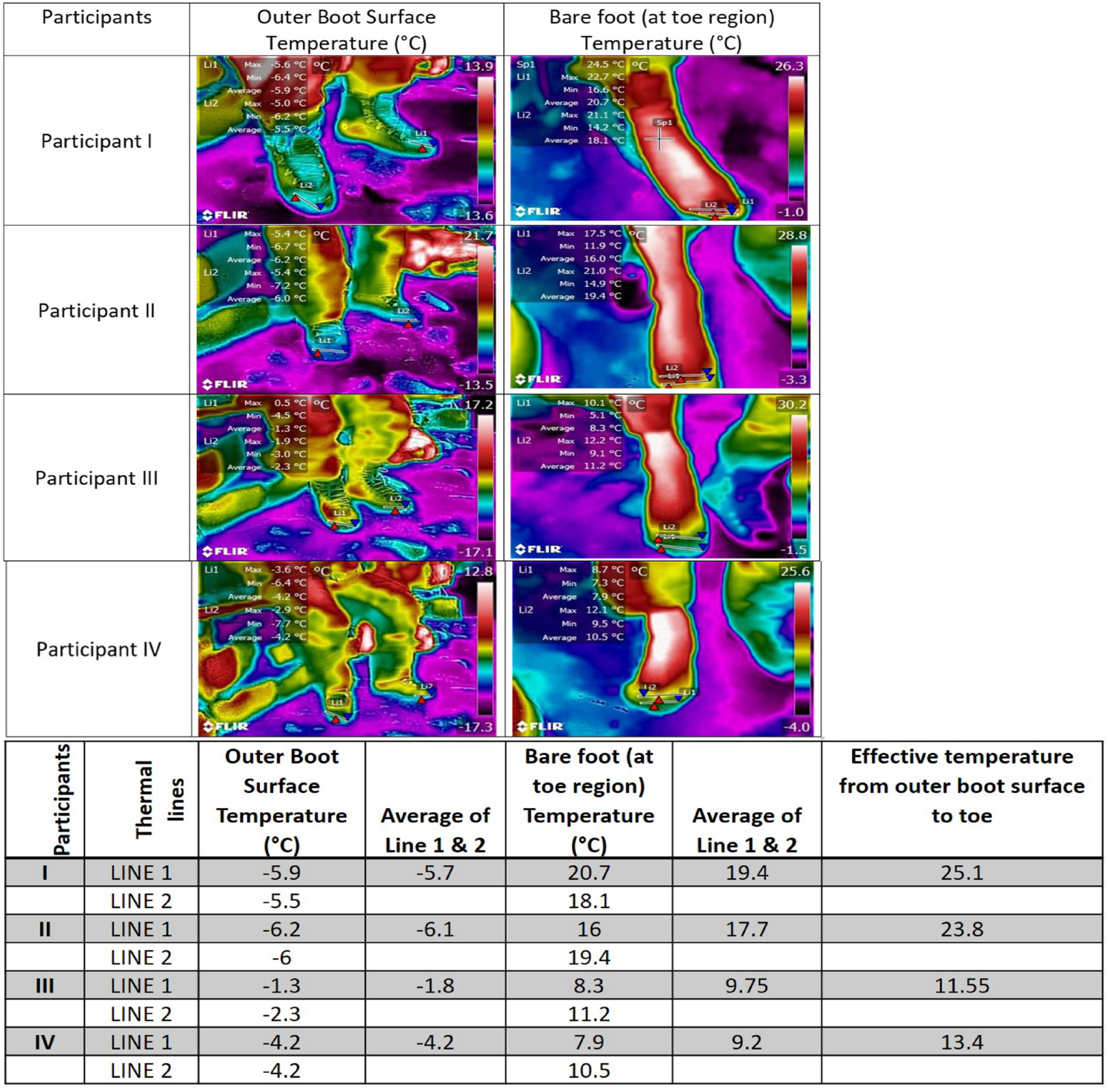
Infrared-based thermographic assessment of the New Design boot. Assessment was conducted during the daytime between 0930 and 1400 hours at Khardung La peak (5,602 m).
Table 1 outlines the subjective feedback categories and participants’ response proportions. Of note, 100% of the participants reported no pain or discomfort in their feet or ankles, while no leg pain was reported by 88% of the participants. Only 24% of participants reported a slip or fall, and 60% reported that the boot provided adequate traction. Insole quality was reported as “good” by 52% of participants, while there were no reports that the quality was “bad.” Regarding overall boot comfort, weight, and flexibility of the boot, 52% reported “very comfortable,” 52% reported “moderately light,” and 60% reported “moderately flexible.”
Percentage of Total Number of Participants Who Reported a Particular Category of Multiple Options for Questions 1 to 8 of Boot Survey Questionnaire
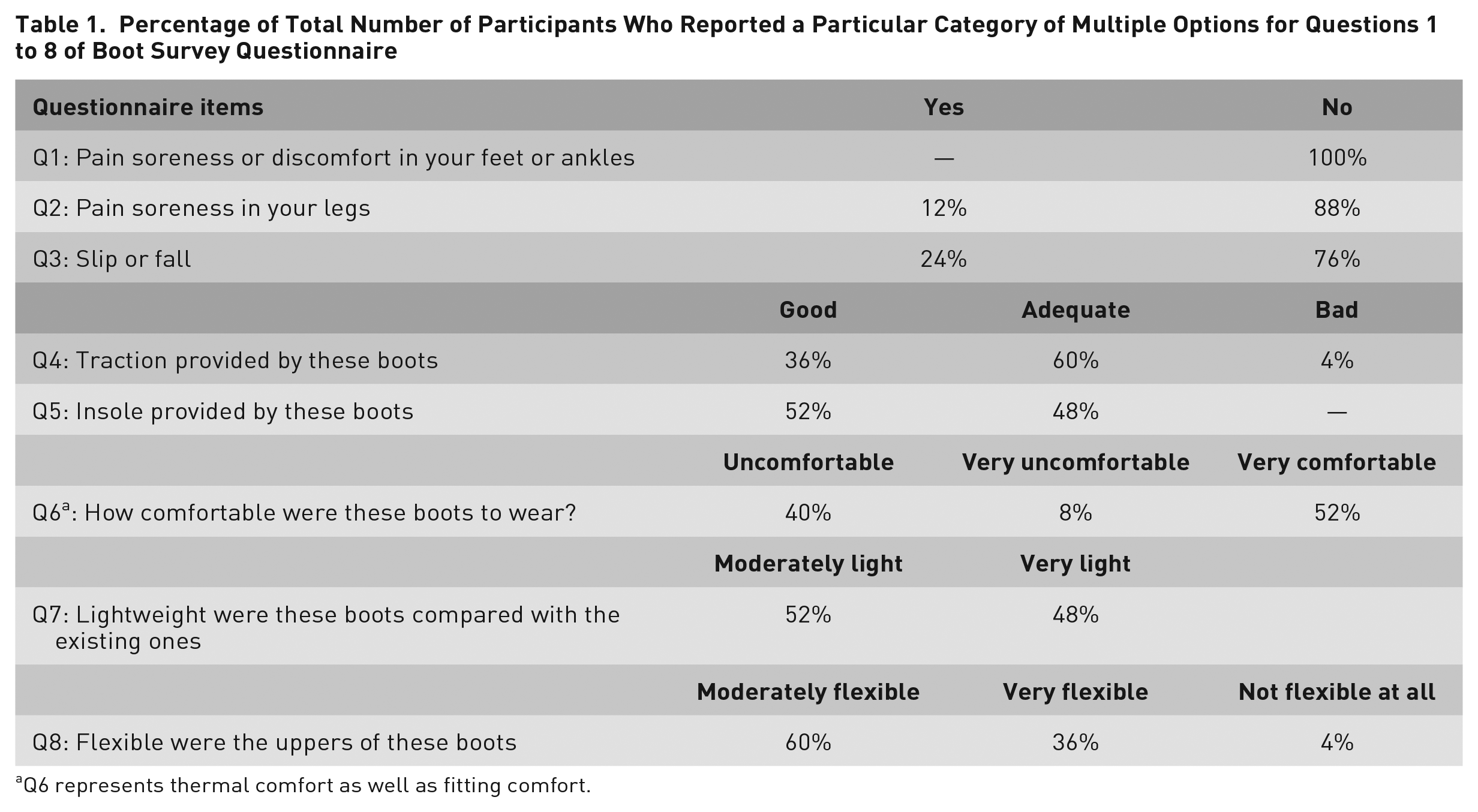
Q6 represents thermal comfort as well as fitting comfort.
Discussion
Previous research suggests that extreme environment footwear design, especially for cold, snow-covered, and extreme elevation conditions, is among the toughest challenge to be undertaken within the footwear research and development domain (Bannova, 2014; Hancock & Hart, 2002; Li et al., 2015; Newman & Lathan, 1999; Reid, 2017). Mobility and human performance are affected by multifaceted factors such as footwear (sole) properties, underfoot surface characteristics, footwear (sole)/surface interface, human gait biomechanics, human physiological and psychological aspects, and extrinsic factors such as the environment (Gao & Abeysekera, 2004). Accordingly, the application of ergonomic principles is likely the best approach toward realizing optimum solutions. Evaluation of potential solutions under real-world operational conditions is of paramount importance for determining the effectiveness of, and confidence in, those solutions. As a process, this increases the probability of successful prototype development culminating in enhanced users’ satisfaction and acceptability.
The present study showed that the New Design boot met users’ requirements and represented significant advantages compared with the Legacy Boot design. Questionnaire-based feedback regarding experience with the New Design boot also afforded practical evaluation by being directly representative of the actual user population performing in the actual operational environment (Table 1). Furthermore, an indigenous design approach was deemed beneficial toward achieving cost-effectiveness, better fit, and targeted consideration of the application conditions of interest.
Data acquisition using objective techniques under extreme conditions may pose critical challenges to the researchers and participants, but the results of this study showed the value of both the objective and subjective measures with regard to their agreement. Of course, including the actual user community lends practical validity to subjective feedback, but subjective approaches are greatly enhanced when corresponding objective measures recorded under operational conditions are available as complementary information.
Although a certain level of success was achieved with the New Design boot, it must be kept in mind that designing for extreme and hostile environments is always dynamic in nature, characterized by frequent changes in terms of need and user requirements. Therefore, future studies may be planned involving larger sample sizes as well as the addition of physiological measures.
Limitations
For the purposes of data collection, many planned tasks were not completed due to the harsh environmental factors faced at the study locations. Likewise, some logistical challenges resulted in less-than-ideal sample sizes for the study. For example, the internal thermal measures for the New Design boot were completed only for 12 of the 20 participants who used the boot. Also, for the Legacy Boot level, a comparatively small sample size (n = 5) was used. As a consequence, the data were not subjected to statistical analysis. To assess the impact of the weight of the boot on the users’ metabolic responses, it was desired that the changes in oxygen consumption, heart rate, respiratory frequency, and so on be recorded. Due to the face protection and heavy winter clothing required by the extreme cold, the use of the required monitoring equipment was not successful. Adjustments will be made to include these measures in future evaluations.
Footnotes
All the authors of the article give a grand salute to the officers and the soldiers for their sacrifice, bravery, and patriotism for the country in safeguarding the border locations and protecting civilian lives from potential threats. The authors extend their whole-hearted thanks to all the participants for their unconditional support and gratitude to all the officers of concerned field locations in understanding the need for the study and providing the possible logistics support. The authors are thankful to Dr. Bhuvnesh Kumar, Director (Retd.), Defence Institute of Physiology & Allied Sciences, Defence Research & Development Organisation, India, for his unconditional support and supervision throughout the study. The authors also acknowledge funding from the Defence Research & Development Organisation, India.
 .
.