




Abstract
The selection of sustainable facade materials is critical for achieving a sustainable built environment. Multi-criteria decision-making approaches can be used to determine the best alternative among the others considered in selecting sustainable facade materials. Fermatean Fuzzy Sets (FFSs) can represent the uncertainty in this selection and expand the parameter domain of this uncertainty. This study proposes an integrated analytical model based on the Interval-Valued Fermatean Fuzzy Analytic Hierarchy Process (IVFF-AHP) and Fermatean Fuzzy Weighted Aggregated Sum Product Assessment (FF-WASPAS) to address the uncertainty and complexity in this selection process. The model evaluates facade materials against environmental, financial, social, and technical criteria, comprising 13 sub-criteria. IVFF-AHP is utilized to calculate the weights of these criteria, with Environmental Criteria receiving the highest weight (32.9%), followed by Technical (30.7%) and Social (19.6%) criteria. FF-WASPAS is employed to rank four facade material options, with Wood-Plastic Composite (WPC) identified as the most sustainable material, followed by Aggregated Natural Stone, Aluminium Composite Panels, and Concrete Cladding. The results highlight the approach's capability to provide objective and robust rankings, aiding decision-makers in identifying the most sustainable option. The outcomes underscore the model's novelty in integrating Fermatean fuzzy logic with multi-criteria decision-making techniques, offering enhanced flexibility in uncertainty representation and contributing to the advancement of sustainable construction practices through a more informed and structured decision-making process.
Keywords
Introduction
Sustainability is a universal goal tied to the United Nations’ 17 Sustainable Development Goals (SDGs), aiming to end poverty, preserve the environment, and ensure peace and prosperity for all (Egiluz et al., 2021). Sustainable construction involves building and renovating structures in a functional, aesthetically pleasing, and environmentally responsible manner (Venkatesan et al., 2023). Construction and demolition generate significant waste; hence, sustainability should be integrated into every stage of these processes. Technological advancements in the construction industry pave the way for sustainable cities and communities. Facade design significantly impacts buildings’ energy efficiency and occupant comfort (Moghtadernejad et al., 2019b). Material selection for facades is crucial for sustainable construction due to the environmental impact of building materials. Prioritizing sustainability principles in facade material selection is essential for creating a sustainable built environment. Strategies to optimize material usage for sustainable material selection are predicted to significantly reduce global greenhouse gas emissions from residential buildings by 2060 (Pauliuk et al., 2021). Multi-criteria decision-making methods can streamline material selection by providing systematic evaluations of different factors (Sandanayake et al., 2020). The unique characteristics of the multi-attribute decision-making problem of selecting sustainable facade materials, compared to other multi-attribute decision-making problems, include the specific focus on sustainability and environmental impact throughout the life cycle of the materials. That involves considering environmental, financial, social, and technical criteria and sub-factors such as energy and natural source consumption, life cycle cost, aesthetics, and ease of construction. Additionally, the literature review identified specific sub-criteria within each category of particular importance, such as recyclability, waste generation potential, and durability, highlighting the unique emphasis on sustainable and environmentally conscious decision-making. Furthermore, the study found that the primary criterion for evaluating sustainable facade materials is environmental criteria, emphasizing the increasing significance of environmental considerations in contemporary architectural practices.
The complexity of building facade systems, comprising various components of different materials, poses challenges in evaluating different options. While mathematical assessments with specific criteria can compare materials, combining multiple materials complicates the evaluation process. Moreover, there is a need for more publications providing numerical data on facade material properties for comparison. Fuzzy Set Theory can help convert linguistic data into comparable elements. Fuzzy AHP is often used in the literature to perform this transformation. For comparing alternatives, the WASPAS method efficiently combines simple additive weighting and weighted product methods. In this study, the selection process for sustainable facade materials involves the consideration of 13 sub-criteria under the headings of environmental, financial, social, and technical criteria, which are categorised under four main criteria. The Fermatean Fuzzy Analytic Hierarchy Process (FF-AHP) and weighted aggregated sum product assessment (WASPAS) methods are used to determine the importance weights of the selection criteria for sustainable facade materials and to rank the alternatives. An integrated fuzzy approach is used to create a model that facilitates sustainable facade material selection in a construction project. In addition, the method can help decision-makers make more informed and sustainable decisions by comprehensively and systematically considering the multiple dimensions of sustainability. For this purpose, the IVFF-AHP and FF-WASPAS approaches are used to determine and rank facade materials selected in an actual construction project based on sustainability factors.
This study aims to assist decision-makers in selecting sustainable facade materials by addressing the multifaceted dimensions of sustainability, including environmental, financial, social, and technical criteria. Facade materials significantly influence a building's energy efficiency, environmental impact, and occupant comfort, making their sustainable selection a critical factor in achieving long-term sustainability goals. The research seeks to respond to the growing demand for enhanced performance in the construction industry by developing a robust and systematic decision-making framework. Specifically, it investigates how integrating Fermatean fuzzy sets with the Analytic Hierarchy Process (AHP) can improve the evaluation and ranking of facade materials under uncertainty. The hypothesis underpinning this research is that interval-valued Fermatean fuzzy sets (IVFFSs) can handle uncertainty better than classical methods and produce more realistic results in the selection of facade materials. By employing the IVFF-AHP and FF-WASPAS methodologies, the study addresses key research inquiries: (1) How can the weights of sustainability criteria be effectively determined in the context of facade material selection? (2) How can the proposed model ensure a systematic and objective evaluation of material alternatives? This work builds on the foundation established by Senapati and Yager (2020), who introduced Fermatean fuzzy sets as an innovative approach to managing uncertainty in multi-criteria decision-making and extends their application to the domain of sustainable construction practices. Fermatean fuzzy sets are an extension of intuitionistic fuzzy sets that allow for a broader range of membership and non-membership degree assignments. Fermatean fuzzy sets are also the extension of Pythagorean fuzzy sets, and the ultimate extension is Q-runk orthopair fuzzy sets. The most commonly used fuzzy sets in the literature on 3rd-degree membership and non-membership are the Fermatean fuzzy sets. That is why FFS is preferred in this paper. The Fermatean Fuzzy WASPAS (FF-WASPAS) method introduced by Keshavarz-Ghorabaee et al. (2020), on the other hand, combines Fermatean Fuzzy Sets with Weighted Aggregate Product Evaluation (WASPAS) methods and uses Fermatean fuzzy sets to capture the uncertainty associated with evaluation judgments. In this study, Interval-Valued Fermatean Fuzzy Numbers (IVFFNs) are employed due to their unique capability to handle higher degrees of uncertainty and indeterminacy compared to intuitionistic and Pythagorean fuzzy sets. This choice is particularly important in the context of sustainable facade material selection, where decision-making involves subjective expert opinions and imprecise criteria. IVFFNs provide a broader range of membership and non-membership assignments, allowing for greater flexibility and accuracy in capturing uncertain information. This makes them especially suitable for complex multi-criteria decision-making problems, ensuring that the methodology reflects the nuances and complexities of real-world evaluations.
The contributions of this study are as follows:
It is suggested that the uncertain information obtained from the decision-makers with the decision-making approach applied using IVFF-AHP and FF-WASPAS should be used to solve the multi-criteria decision-making problem. The proposed approach for selecting sustainable facade materials was evaluated through a case study.
The rest of this study is structured as follows: The second section provides background information on this topic. Here, multi-criteria selection problems in the construction industry and the research techniques used in these problems are included. The third section deals with sustainable facade material selection criteria based on the literature. The fourth section provides preliminary information on the Fermatean Fuzzy Process. In the fifth section, the methodology used in this study is summarised. The sixth section is on the application of the mentioned methods. The seventh section comprises the sensitivity and comparative analyses. Finally, in the last section, the research is discussed and concluded.
This section examines the past and current status of multi-criteria decision-making problems used in the construction sector, reviews previous research and literature, and highlights existing knowledge gaps. Doing this will pave the way for the presented research and methodology of the subsequent chapters.
The construction industry is becoming more interested in using multiple criteria decision-making (MCDM) methods because of the continuous improvement in technology and the increasing demand for better performance from building systems and components. As a result, engineers in the construction industry are increasingly adopting systematic decision-making procedures to achieve optimal design performance, moving away from traditional design methods that rely mostly on experience (Moghtadernejad et al., 2019a; Si et al., 2016; Wong & Li, 2008). Multiple MCDM methods are available to designers, including single and hybrid approaches. However, only a few are currently used by researchers in the construction and building technology fields. Despite the differences in details, MCDM methods generally involve using various aggregation rules for criteria to compare alternatives. Recent advancements have expanded the applicability of MCDM methods beyond the construction sector. For instance, Kousar et al. (2025) analyzed multi-criteria decision-making for smog mitigation, evaluating health, economic, and ecological impacts, demonstrating the adaptability of MCDM methods to environmental challenges. Similarly, Biswas et al. (2025) proposed a fuzzy AHP-TOPSIS framework for sustainable highway restaurant site selection, highlighting the relevance of MCDM methods in sustainability-focused evaluations. Furthermore, Jusufbašić (2023) reviewed MCDM methods for handling equipment selection in logistics, providing valuable insights into their versatility and efficiency in various operational contexts. These studies illustrate the growing importance of MCDM methods across diverse fields, underlining their relevance in solving complex decision-making problems.
AHP is a prevalent MCDM method that has been used for various problems. In the field of architecture, AHP has been used in evaluating students’ architectural designs (Harputlugil, 2018), considering selected economic, social, cultural, and historical-architectural factors while determining how to use historic buildings (Ribera et al., 2020) in the identification of crucial decision-making factors to make an analytic comparison of selected passive house construction typologies (Kuzman et al., 2013), and in the technical and financial evaluation of a few building and construction options for an energy-efficient structure (Tomczak & Kinash, 2016). In addition, AHP and COPRAS were used to analyse three types of shells in an energy-efficient building: masonry, logs, and timber frames (Motuziene et al., 2016). Project managers use the TOPSIS approach to optimize slip times in construction projects (Heravi & Seresht, 2018), compare success factors in lean construction processes (Dehdasht et al., 2020), and evaluate methods used in bridge construction (Jia et al., 2018). Among these, Tavakkoli-Moghaddam et al. (2015) introduced an interval-valued hesitant fuzzy TOPSIS method to determine criteria weights. This approach stands out for its flexibility in handling uncertainty and hesitancy in group decision-making scenarios, making it particularly relevant for complex decision problems. Its application to the construction sector highlights its capability to address prevalent uncertainties and support systematic evaluations. Similarly, Hashemizadeh and Ju (2019) prioritized projects using AHP and TOPSIS in project portfolio selection, demonstrating the adaptability and robustness of fuzzy methods in various construction-related contexts. Hashemizadeh and Ju (2019) prioritised projects using AHP and TOPSIS in project portfolio selection for construction projects. ANP (Analytic Network Process) was used in the selection of secondary uses for the historic building (Chen et al., 2019) and facility planning (Jin et al., 2018). AHP, COPRAS, TOPSIS, and WASPAS have been used together in a multi-criteria analysis of insolation improvements in a local building (Šiožinyte & Antuchevičiene, 2013).
AHP, TOPSIS, and WASPAS were used together to select the best technological combination for the energy system of a building, taking both ecological and economic factors into account (Medineckiene & Dziugaite-Tumeniene, 2014). Krishankumar et al. (2022) conducted a study using an integrated decision approach with generalised fuzzy knowledge for the feasible material selection of zero- and low-carbon construction. The study with the COPRAS technique reveals the ranking of zero- and low-carbon construction materials regarding various attributes along with generalised fuzzy information (GFI) ranking. Erdoğan et al. used AHP to select alternatives for sustainable construction management and evaluated them through a case study (Erdogan et al., 2019). Mohammadnazari and Ghannadpour (2018) used the best-worst method (BWM) to select the best hospital in accordance with sustainability criteria in hospital construction and the TOPSIS method to rank these choices. Marzouk and Abdelakder (2020) used a hybrid model to select sustainable construction alternatives. Fuzzy set theory was used to control uncertainty, and alternatives were selected using TOPSIS. Shojaei and Bolvardizadeh used AHP and TOPSIS to select a sustainable construction project supplier (Shojaei & bolvardizadeh, 2020).
The Analytic Hierarchy Process (AHP) has been identified as the most preferred method for multi-criteria decision analysis in architecture in several studies (Ogrodnik, 2019), and TOPSIS, WASPAS, and COPRAS are also commonly used. It can be used on its own or combined with other methods, such as a hybrid approach, to assist designers in evaluating qualitative information or structuring design preferences.
On the other hand, the WASPAS method is considered one of the most efficient MCDM methods. It has been applied to various real-world engineering and managerial problems (Keshavarz-Ghorabaee et al., 2020). This method integrates two basic MCDM models, the weighted product model (WPM) and the weighted sum model (WSM), using a combination parameter typically set to 0.5 (Keshavarz-Ghorabaee et al., 2020). Integrating these models leads to more reliable ranks in solving MCDM problems, which has led to many studies using this method to take advantage of its benefits. Studying the literature shows that AHP and WASPAS are the most suitable MCDM methods for sustainable material selection in buildings, as they are used in many environments and solve many problems.
Material Selection Criteria
After a comprehensive literature review, four main criteria and 13 sub-criteria for the evaluation of sustainable facade materials are specified. Brief descriptions of these main and sub-criteria are given below.
Environmental Criteria (EC)
Energy and natural source consumption: The aim is to select and produce energy-efficient facade claddings to avoid wasting energy (Moghtadernejad et al., 2021). The choice of construction material directly affects the energy efficiency and sustainability of a building (Chen et al., 2019).
Waste generation potential: Waste management during construction includes construction material and live labour waste, which can be reduced by the on-site decomposition of waste into organic and inorganic waste (Bhyan et al., 2023). Additionally, reducing the toxicity of building materials is part of the ‘greening’ process, and avoiding the use of materials that release pollutants is one of the principles of eco-efficient construction (Pacheco-Torgal, 2012).
Recyclability: It expresses the recycling and reuse features of the material (Meng & Dong, 2021).
Repairability: It refers to the ease of maintenance of the material in the process of keeping it as it was (Meng & Dong, 2021).
Financial Criteria (FC)
Life cycle cost: Costs related to the total life cycle, initial investment, maintenance, disposal, etc., should be considered to provide the designer of the building with information on the return on investment (Moghtadernejad et al., 2019a).
Material cost: This defines the cost of purchasing the material. It is considered an important factor in sustainable facade designs because it directly impacts the construction and operating costs of structures (Gilani et al., 2022).
Maintenance cost: The maintenance cost is related to the financial viability of the building (Wong & Li, 2008).
Social Criteria (SC)
Aesthetic: Since this factor requires subjective data, it is based on the opinions of experts, designers, or stakeholders (Moghtadernejad et al., 2019a).
Human health and safety: It refers to the ability of the material to withstand environmental conditions while providing health and safety for users (Meng & Dong, 2021).
Compatibility with ecology: It refers to the use of highly local materials and materials suitable for the climate (Meng & Dong, 2021).
Technical Criteria (TC)
Weight: Lightweight systems are preferred during the construction, maintenance, and decommission phases (Moghtadernejad et al., 2021).
Ease of construction: For this factor, the labour time and cost for the installation of each material are taken
into account (Moghtadernejad et al., 2021). This factor includes speed of buildability (Meng & Dong, 2021).
Durability (Fire, Earthquake, Decay, Corrosion, Thermal): It should be evaluated according to the strength classifications of the relevant regulations.
In summary, the criteria outlined in this section provide a comprehensive framework for evaluating sustainable facade materials, addressing environmental, financial, social, and technical dimensions. Among these, the social criteria—such as “Human Health and Safety,” “Aesthetics,” and “Compatibility with Ecology"—are particularly significant as they directly impact societal well-being and align with sustainable development goals. These criteria emphasize the importance of creating built environments that prioritize user health, ecological harmony, and cultural relevance. Highlighting their role through case examples or quantifiable impacts would further illustrate their critical contribution to sustainable facade material selection. By integrating all four main criteria and their sub-dimensions, this framework ensures a holistic approach to decision-making, balancing functionality, sustainability, and societal benefits.
Preliminaries on Fermatean Fuzzy Sets
Fermatean fuzzy sets (FFSs) are supersets of Intuitionistic fuzzy sets (IFSs) (Atanassov, 1986) and Pythagorean fuzzy sets (PFSs) (Yager, 2014), as they are a type of fuzzy set with the constraint that the sum of the cubes of membership and non-membership degrees should not be more than one. The FFSs offer a wide range of applications. For instance, intuitionistic fuzzy Dombi aggregation operators have been foundational in multi-criteria decision-making (Seikh & Mandal, 2021), and their advancement into interval-valued Fermatean fuzzy Dombi aggregation operators has enabled broader applications, such as bio-medical waste management (Seikh & Mandal, 2023). The FFS concept is based on IFSs and PFSs. However, FFSs use a new definition that is more flexible than IFSs and PFSs in processing uncertain information (Senapati & Yager, 2020). In this study, FFSs are used due to their flexibility.
Three components are used in the definitions of FFSs (Keshavarz-Ghorabaee et al., 2020). These are the degree of membership (α), the degree of non-membership (β), and the degree of indeterminacy (π).
The purpose of Fermatean Fuzzy Sets is to provide the opportunity to assign membership and non-membership degrees on a larger surface. The surface area, which is first-order in intuitionistic fuzzy sets and second-order in Pythagorean fuzzy sets, becomes a third-order surface area in fermatean fuzzy sets. For example, in intuitionistic fuzzy sets, “today is a rainy day” can become a member of the set with (0.75, 0.10), while in fermatean fuzzy sets, “today is a rainy day” can become a member of the set with (0.95, 0.50). Thus, the expert can be more flexible in assigning degrees of membership and non-membership. Another example may be given related to a facade material. The aluminium composite panel meets the criteria of energy and natural source consumption with an interval-valued fermatean fuzzy set of ([0.7, 0.8], [0.2, 0.3]). Here, the expert has the same flexibility in assigning membership and non-membership degrees.
FFSs are defined in Definition 1.
(Senapati & Yager, 2020)
Let X be a universe of discourse. A Fermatean fuzzy set Ƒ?> in X is an object having the form

For any FFS Ƒ?> and x ∈ X,

In the interest of simplicity, we shall mention the symbol Ƒ?>= (α F, β F) for the FFS Ƒ?>= {
For simplicity, we consider the Fermatean fuzzy numbers (FFNs) to be the components of the FFS.
Let Ƒ?> = (




Let Ƒ?> = (


Let Ƒ?>1 = ( score (Ƒ?>1) < score (Ƒ?>2), then Ƒ?>1 < Ƒ?>2 score (Ƒ?>1) > score (Ƒ?>2), then Ƒ?>1 > Ƒ?>2 score (Ƒ?>1) = score (Ƒ?>2), then Ƒ?>1
(Senapati & Yager, 2020)
The complement of an FFS = (

Let Ƒ?>1 = (

Let Ƒ?>
i
= (

In Definition 6 the score function of an FFS was defined. Suppose that

The mathematical operations and processes of IVFFSs are described here (Jeevaraj, 2021).
Interval-Valued Fermatean Fuzzy Sets (IVFFSs): Let X be a fixed set. An IVFFSs




For every


Let




Let

Let

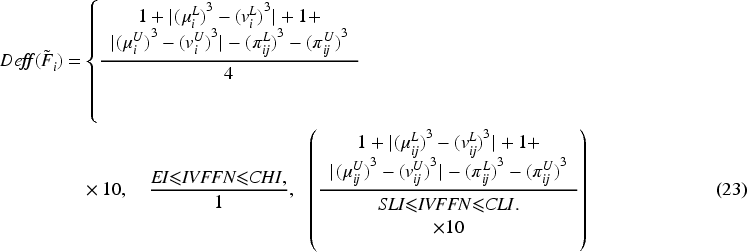
Defuzzification of
The research methodology employed in this study comprises six primary steps, as depicted in Figure 1 and elaborated in the subsequent subsections.
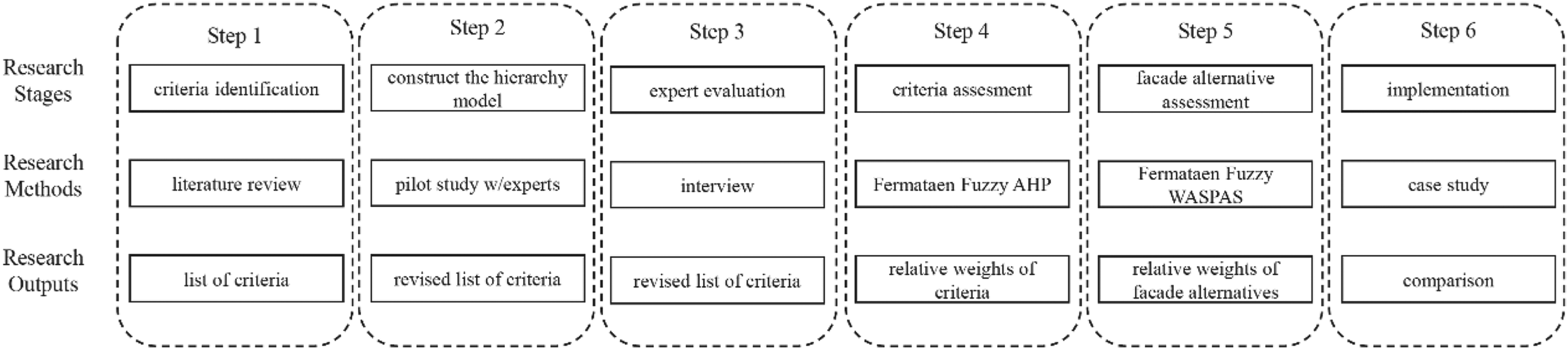
Research flow of study.
AHP cannot be used alone in cases of uncertainty. Fuzzy versions of AHP have been developed by several researchers, such as Intuitionistic Fuzzy AHP (Xu & Liao, 2014), Picture Fuzzy AHP (Kutlu Gündoğdu et al., 2021), and Spherical Fuzzy AHP (Kutlu Gündoğdu & Kahraman, 2020). AHP is one of the most commonly used multi-criteria decision-making methods (MCDM) proposed by Saaty (1987). AHP enables the decision-maker to create his decision-making mechanism instead of forcing a method to decide. Despite the advantages offered by fuzzy AHP, selecting the appropriate version based on the problem at hand is crucial, as different variations have different strengths and weaknesses. For this reason, the IVFF-AHP approach is recommended in this study.
While newer methods such as Best Worst Method (BWM), Level-Based Weight Assessment (LBWA), Full Consistency Method (FUCOM), and Double-Input-Based Ranking (DIBR) have been developed to determine the criteria weights, AHP was chosen for this study due to its intuitive hierarchical structure and widespread applicability. AHP's ability to incorporate subjective judgments and its compatibility with fuzzy extensions, such as the Interval-Valued Fermatean Fuzzy AHP (IVFF-AHP), make it particularly suitable for addressing the uncertainty and complexity inherent in sustainable facade material selection. However, the limitations of AHP, such as higher cognitive effort and potential inconsistencies in judgment matrices, are acknowledged, and fuzzy extensions are employed to mitigate these challenges.
In various uncertain contexts, multiple multi-criteria decision-making models have recently been proposed. The weighted aggregated sum product assessment (WASPAS) model was developed and presented by Zavadskas et al. (Rudnik et al., 2021) and is now widely used in many realistic situations. It combines the weighted sum model (WSM) and weighted product model (WPM); in this way, a more reliable and accurate ranking is obtained. Also, Keshavarz-Ghorabaee et al. (2020) state that the method has several advantages over traditional decision-making methods, such as that it handles uncertainty more flexibly and robustly and allows the decision maker to include his preferences and priorities with the WASPAS method. The WASPAS model has been expanded in several fuzzy contexts to deal with unclear information about MCDM problems.
FFSs and WASPAS are combined in the FF WASPAS approach. The WASPAS approach is expanded using the definitions and operators of Fermatean fuzzy sets (Keshavarz-Ghorabaee et al., 2020), which are discussed in Section 4. It involves assigning weights to each criterion and then calculating an aggregated score for each alternative based on the weighted criteria.
The FF-WASPAS method used in this study is based on the proposed model by Keshavarz-Ghorabaee et al. in 2018 (Keshavarz-Ghorabaee et al., 2020). In this methodology, IVFF-AHP, developed by Alkan and Kahraman (2023), and SVFF-WASPAS, developed by Keshavarz-Ghorabaee et al. (2020), are used. Hence, two different scales, including the same linguistic terms, are presented in the methodology. One is a single-valued fermatean fuzzy linguistic scale, whereas the other is an interval-valued fermatean fuzzy linguistic scale. Using interval-valued fermatean fuzzy scales in Keshavarz-Ghorabaee et al. (2020) requires the development of a new IVFF-WASPAS method. That will be our next goal to accomplish.
The framework for using Fermatean fuzzy WASPAS (adapted from Keshavarz-Ghorabaee et al., 2020).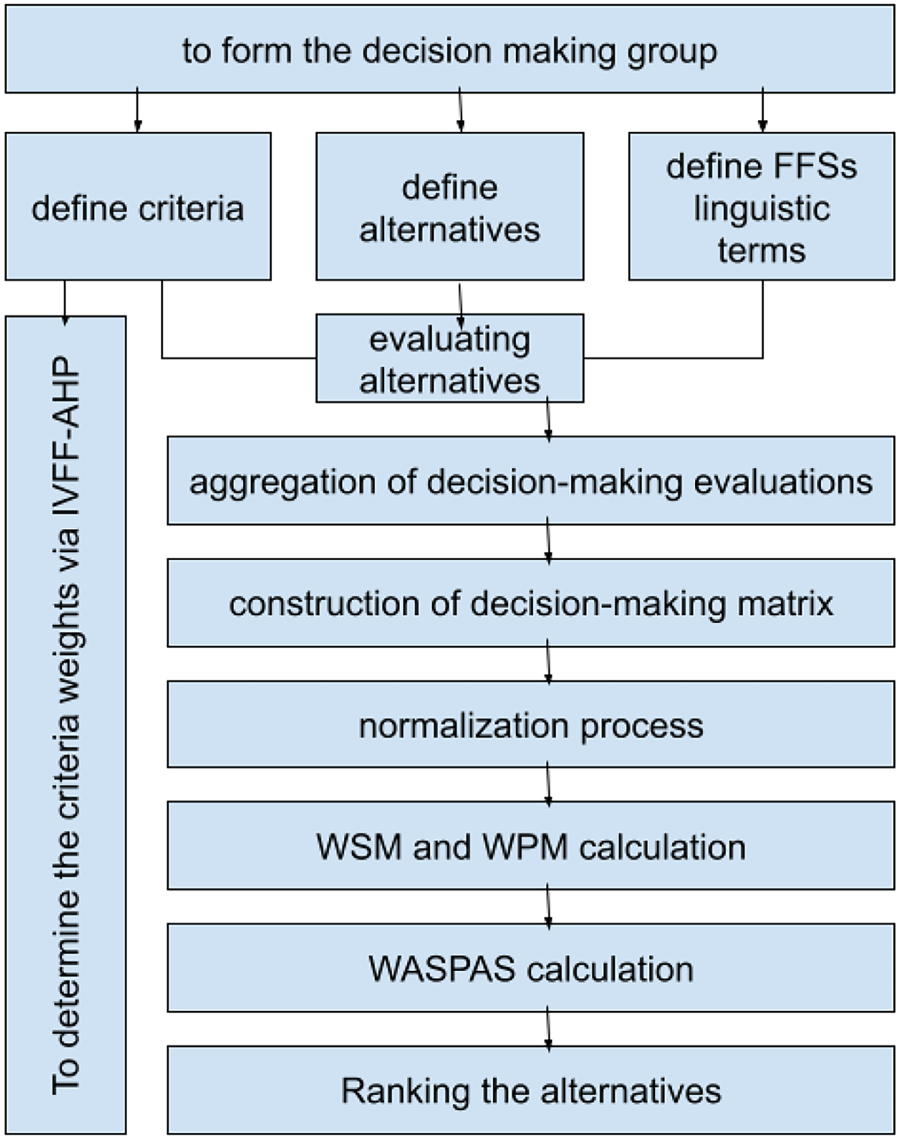
The framework depicted in Figure 2 consists of various parts. Their proposed approach is presented below in a step-by-step manner. The only difference between the proposed approach and this study is that the former uses the Simple Multi-Attribute Rating Technique (SMART) to weigh the criteria, and the latter uses IVFF-AHP. In order to make it easier to use the suggested approach, FF-WASPAS, according to Keshavarz-Ghorabaee et al. (2020), is presented systematically, broken down into the following steps:
Determine objective, decision criteria, and alternatives for the given problem. The set









Lingiustic Terms and IVFFs Values.
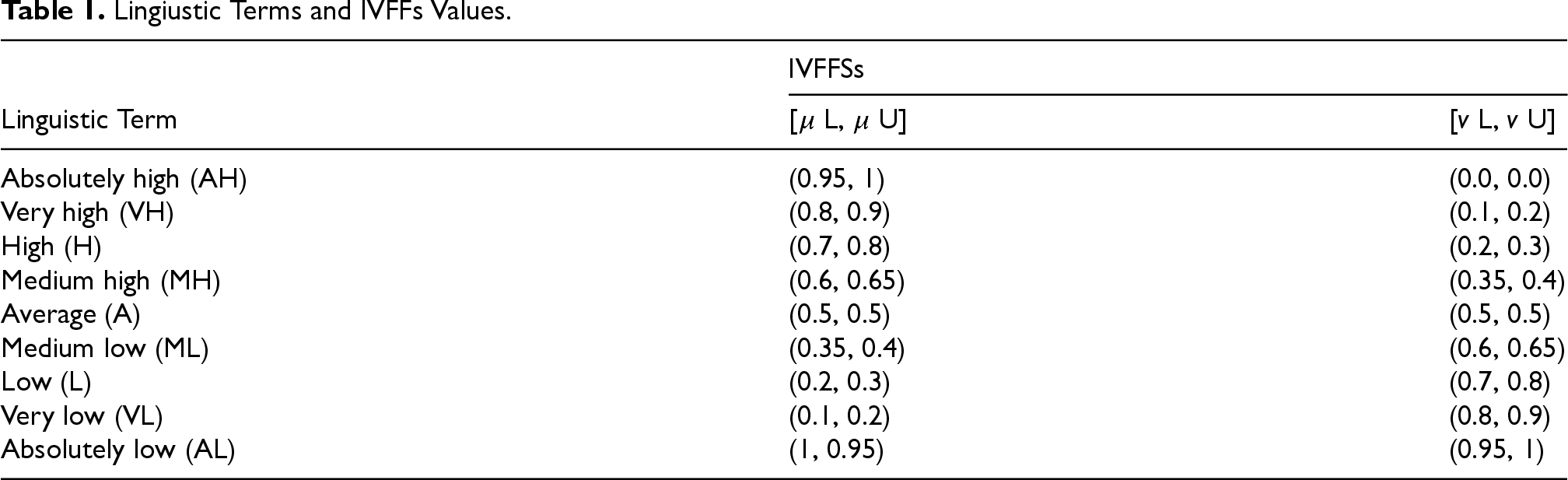
Custom-developed Linguistic Scale for Evaluating and Weighting Alternatives in the FF-WASPAS Method.
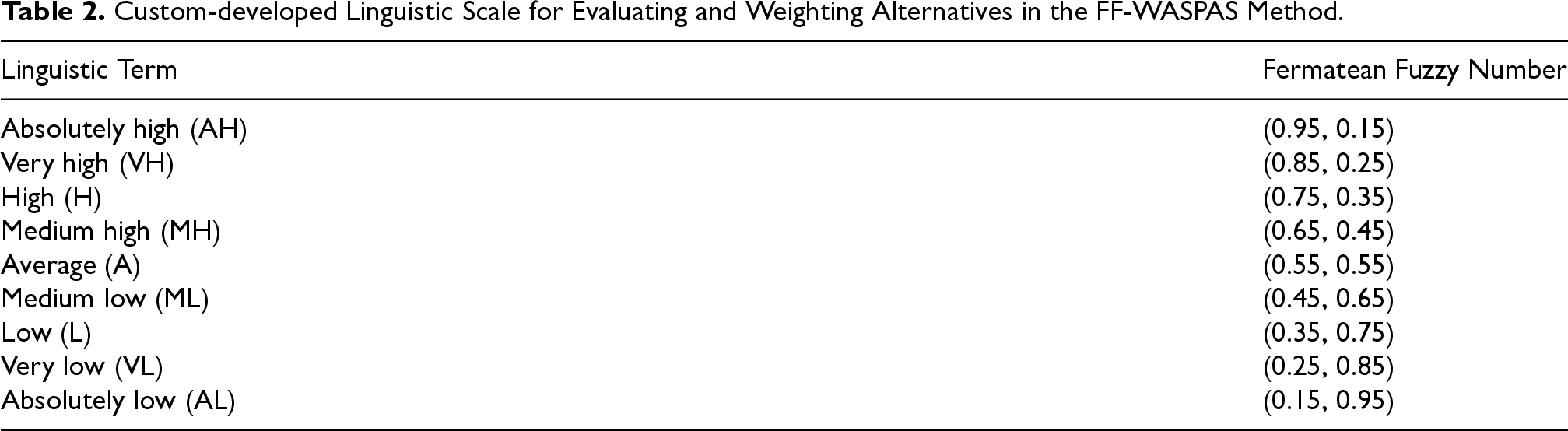
Aggregate the evaluations made by decision-makers using an aggregation operator defined in Eq. (11). Utilising this equation and assuming equal weights 




The problem addressed in this section is the selection of sustainable facade materials for buildings. The aim is to provide a comprehensive and objective evaluation of different factors involved in the selection process by considering 13 sub-criteria under the headings of environmental, financial, social, and technical criteria, which are determined by four main criteria. The selection process is based on the principles of sustainability and aims to reduce the environmental impact associated with building materials throughout their life cycle.
To determine the weights of the selection criteria for sustainable facade materials, rank the alternatives, and select the best alternative, the IVFF-AHP and FF-WASPAS methods are used. These methods are integrated into a model that facilitates sustainable facade material selection in a construction project.
The solution proposed in this section involves using the IVFF-AHP and FF-WASPAS methods to evaluate the different factors involved in the selection of sustainable facade materials. The IVFF-AHP approach is used to measure the economic, environmental, social, and technical sustainability performance of the facade materials. The method integrates IVFFSs and the AHP method, allowing for a broader range of membership and non-membership degree assignments.
The FF-WASPAS method combines FFSs with Weighted Aggregate Product Evaluation (WASPAS) methods and uses FFSs to capture the uncertainty associated with evaluation judgments. For criteria weighting, IVFF-AHP is used, and the score of each alternative is calculated using the FF-WASPAS method. Application steps for IVFF-AHP and FF-WASPAS are provided in this chapter.
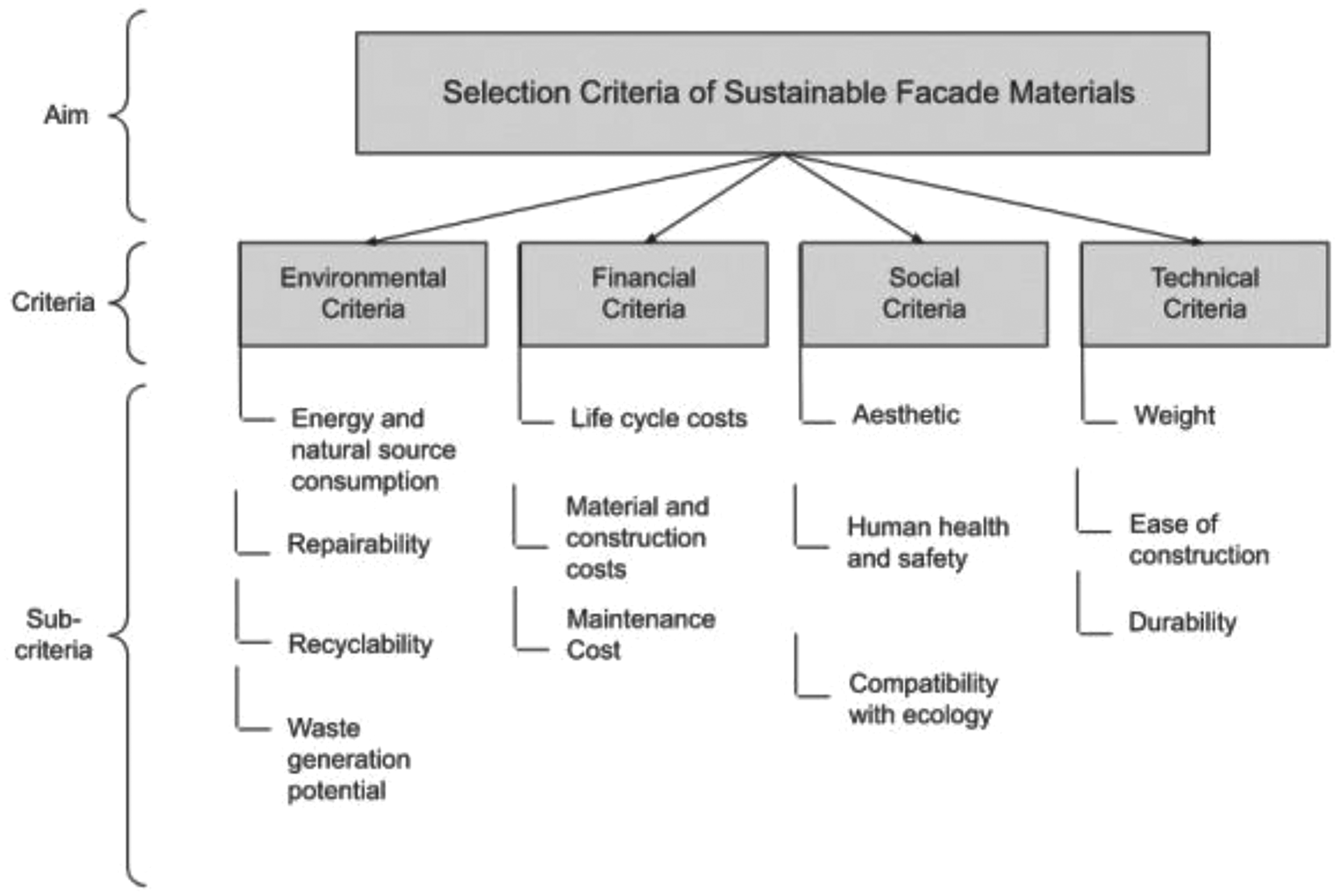
Selection criteria of sustainable facade materials.
A set of selection criteria has been established to determine the most sustainable facade material. These criteria take into account various main factors such as environmental criteria, financial criteria, social criteria, technical criteria, and sub-factors such as energy and natural source consumption, life cycle cost, aesthetics, and ease of construction.
After defining the selection criteria, the next step is to create a practical list of potential facade materials. In this case, the materials category is wall cladding. Four alternatives that meet the criteria to ensure a comprehensive evaluation have been identified. The first alternative is the Aluminium Composite Panel (A1), known for its lightweight and durability. The second alternative is the Aggregated Natural Stone (A2), which offers a natural and aesthetically pleasing appearance. The third alternative is the Wood-Plastic Composite (WPC) (A3), which combines the properties of wood and plastic for enhanced durability and sustainability. Finally, the fourth alternative is Concrete Cladding (A4), a widely used material known for its strength and longevity. All alternatives have an Environmental Product Declaration, which provides valuable information about the environmental impact of the materials, allowing for a more informed decision-making process.
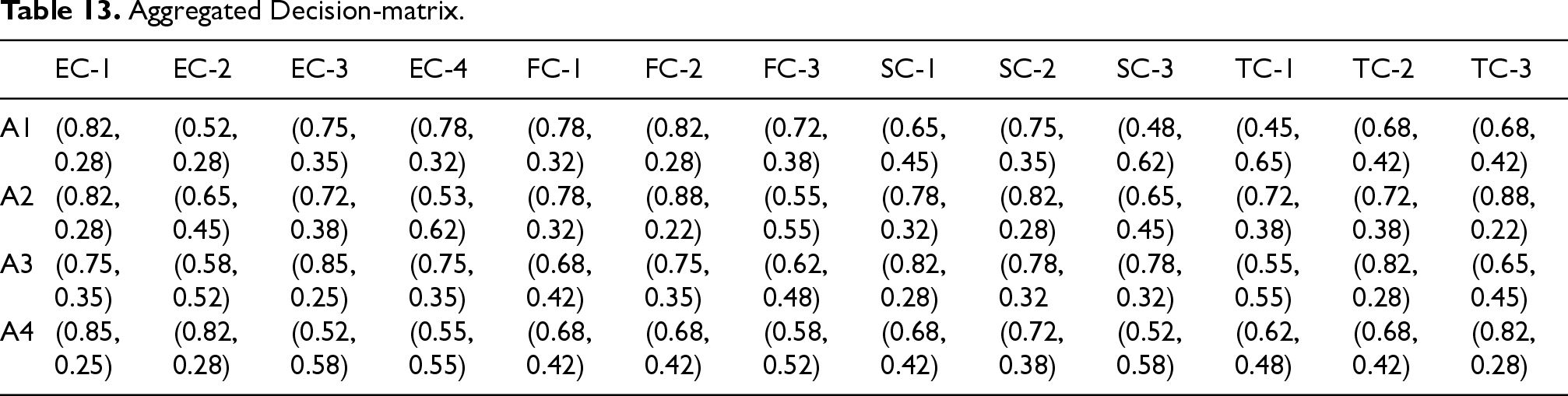
Each of the four alternatives will be thoroughly evaluated according to the defined selection criteria. The experts will assign scores to each material based on various factors such as environmental impact, durability, cost-effectiveness, and aesthetic appeal. These scores will then be utilised to create a decision matrix, enabling a direct and comparative analysis of the alternative materials. Ultimately, the material with the highest score will be considered the most sustainable option and recommended for use on the facade.
The three experts have the profiles and proficiency levels given in Table 3. In this context, the weights of the decision-makers will be considered equal because they have the same level of experience. Experts participating in the pilot study of this research stated that they worked on material selection or sustainability in their careers and were interested in these applications.
Profiles and Competence Levels of Experts.

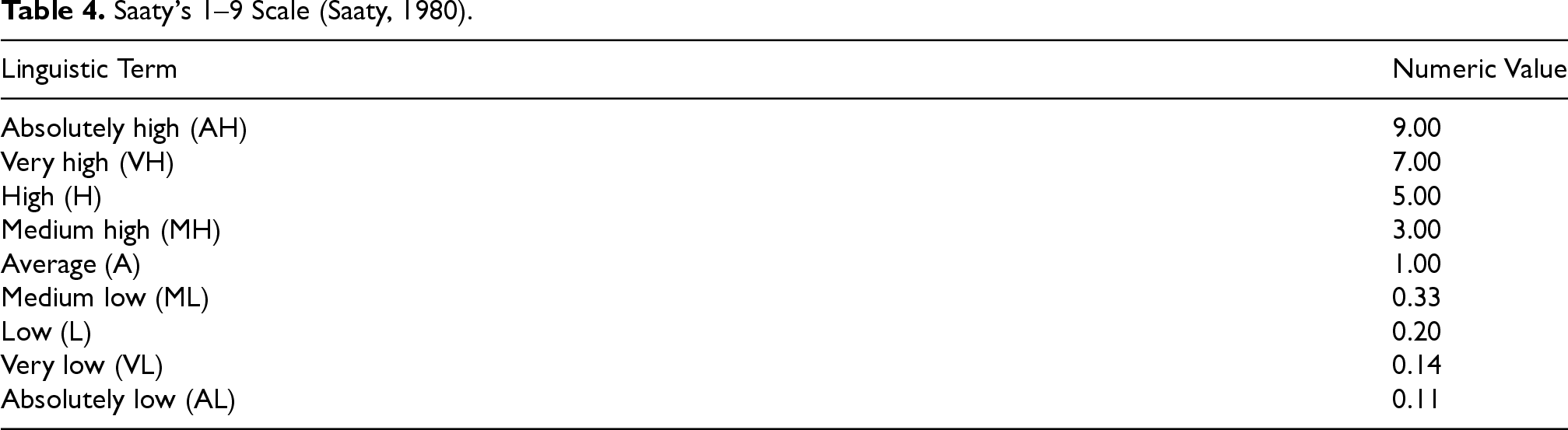
After expert judgments are collected, the pairwise comparison matrices are constructed, and their consistency is checked using the scale given in Table 4.
Saaty's 1–9 Scale (Saaty, 1980).
Pairwise Comparison Matrices of Three Decision Makers.

Aggregated Pairwise Comparison Matrix.

Differences Matrix.

Interval Multiplicative Matrix.

Indeterminacy Degrees.

Matrix of Unnormalized Weights.

Priority and Overall Weights of Criteria.

Evaluations of the Alternatives by Each DM.
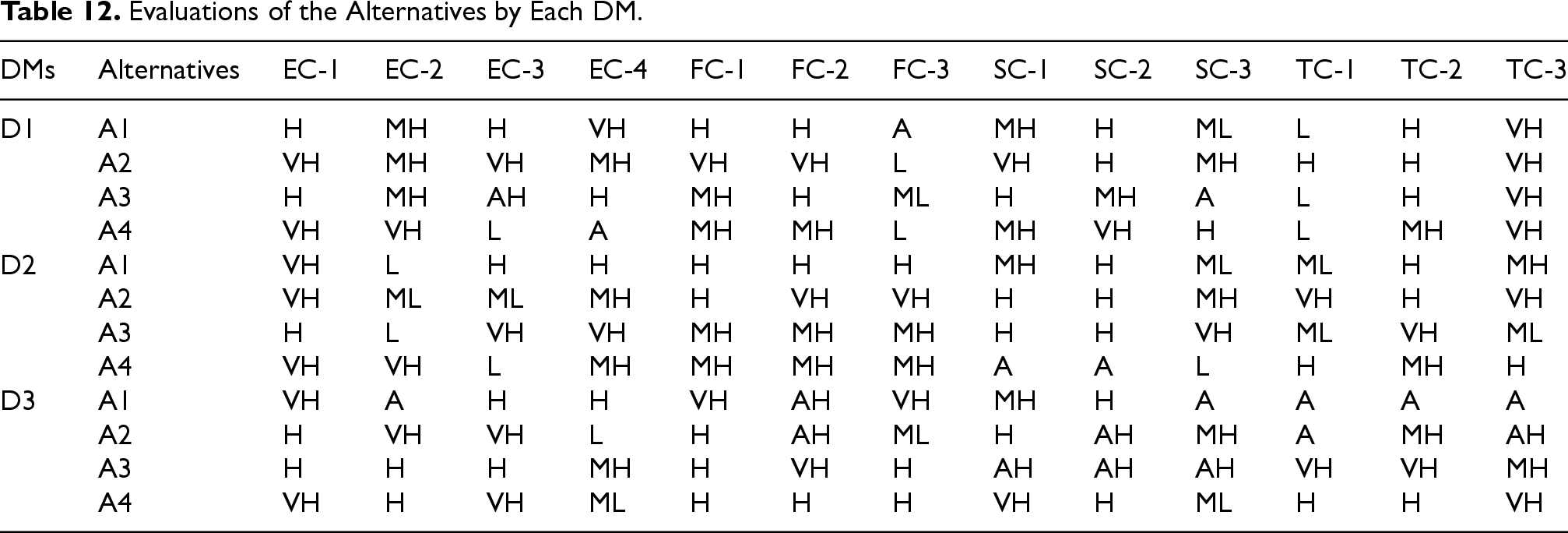
Aggregated Decision-matrix.
Normalized Decision-matrix.
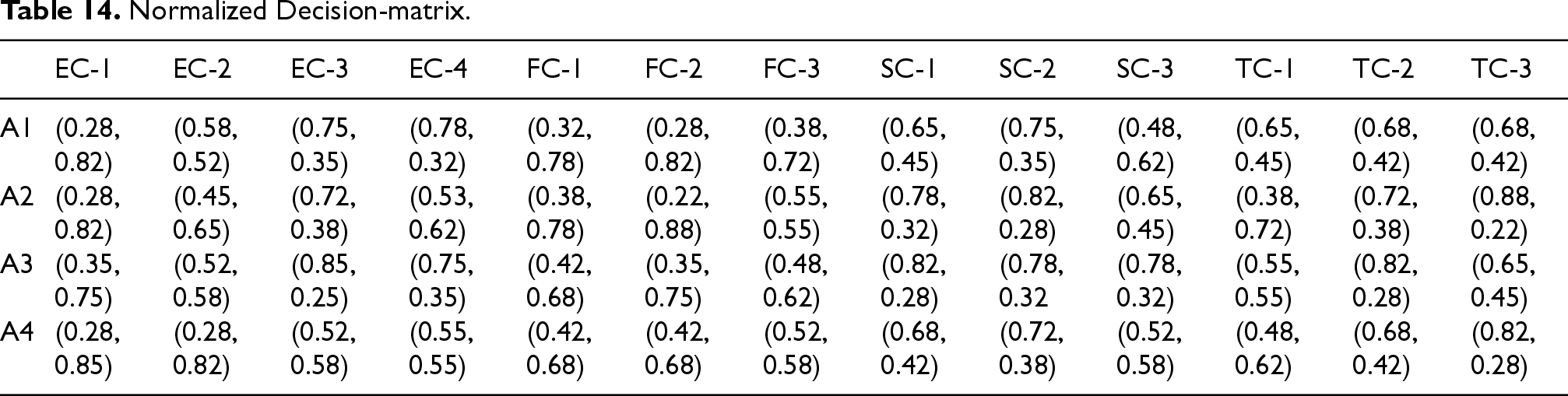
Below is the explanation of how the Qs value for the first alternative was determined. The normalized matrix values for the first alternative in the first criteria (0.28, 0.82) and the weight of the first criteria are as follows:
First, the following operation was performed for the X value: X = (1-(1-(0.28)3)wj)1/3 For the Y value, the following operation was performed: Y = 0.82 × Xwj
To find the first Qs value of the first alternative, the sum of the cubes of the X values for each criterion was calculated, and the cube of the product of the X values for each criterion was subtracted from this sum. Finally, the exponent of the resulting value was taken. The resulting value was found to be 0.67.
The Y values for each criterion were multiplied to find the second Qs value of the first alternative. The resulting value was found to be 0.49.
The WSM, WPM, and WASPAS values and their rankings can be found in Table 15.
Measures of FF-WASPAS and Final Ranks.

According to Table 15, the best alternative is the option called A3. A3 is followed by A2, A1, and A4, respectively. Sensitivity analysis is needed to check the accuracy of these alternatives.
Within the Environmental Criteria, two specific sub-criteria emerged as particularly crucial: Recyclability (EC-3) and Waste Generation Potential (EC-4). These findings emphasize the importance of materials that can be recycled and have low waste generation potential, aligning with the principles of sustainability. On the other hand, repairability (EC-2) was identified as the least significant criterion, suggesting that it may be an area where further research and development are needed to enhance sustainable practices.
Life Cycle Costs (FC-1) emerged as the most critical factor when considering the Financial Criteria. This result indicates that minimising the long-term costs associated with the facade materials is a crucial consideration in sustainable decision-making processes. Conversely, Material and Construction Costs (FC-2) were deemed to be the least significant criterion, implying that upfront costs have a relatively lower impact on sustainable material selection.
Regarding the Social Criteria. Human Health and Safety (SC-2) was determined to be the most important consideration. This result highlights the growing emphasis on occupant well-being and safety in sustainable building design. In contrast, Aesthetics (SC-1) was identified as the least important criterion, suggesting that aesthetic considerations may have a lower priority in the selection of sustainable facade materials.
Durability (TC-3) emerged as the most significant factor among the Technical Criteria. This finding underscores the importance of selecting materials that can withstand various environmental conditions and maintain their performance over an extended period of time. Conversely, Ease of Construction (TC-2) was deemed to be the least important technical criterion, suggesting other factors, such as durability and performance, take precedence over ease of installation.
In addition to the comprehensive evaluation and comparison of criteria, the study also identified four alternative facade materials that meet the defined criteria. These alternatives include Aluminium Composite Panel (A1), Aggregated Natural Stone (A2), Wood-Plastic Composite (WPC) (A3), and Concrete Cladding (A4). Each alternative has distinct characteristics and advantages that contribute to its sustainability performance.
To determine the most sustainable alternative among these options. The experts assigned scores to each material based on various factors such as environmental impact, durability, cost-effectiveness, and aesthetic appeal. The results indicated that Wood-Plastic Composite (WPC) (A3) received the highest score, followed by Aggregated Natural Stone (A2), Aluminium Composite Panel (A1), and Concrete cladding (A4), respectively.
Sensitivity analysis was performed to examine the prioritization of sustainable facade material alternatives under potential changes in sub-criteria weights. Thirteen distinct sets of criteria weights were generated, as shown in Table 16. In each set, the weight of one criterion was increased by 30%, while the weights of the remaining criteria were proportionally decreased to maintain the total sum of 1. The recalculated scores of the alternatives for each set are presented in Table 17, while Table 18 shows the rankings of the alternatives for all sets. The results indicate that no changes were observed in the rankings across all sets. Alternative A3 consistently ranked as the best option, followed by A2, A1, and A4. This finding demonstrates that the methodology is robust and reliable, with the criteria weights having minimal impact on the final rankings. The consistency in results highlights the strength of the proposed IVFF-AHP and FF-WASPAS approach in handling uncertainty and complexity in sustainable facade material selection.
Weights of Criteria for Sensitivity Analysis.
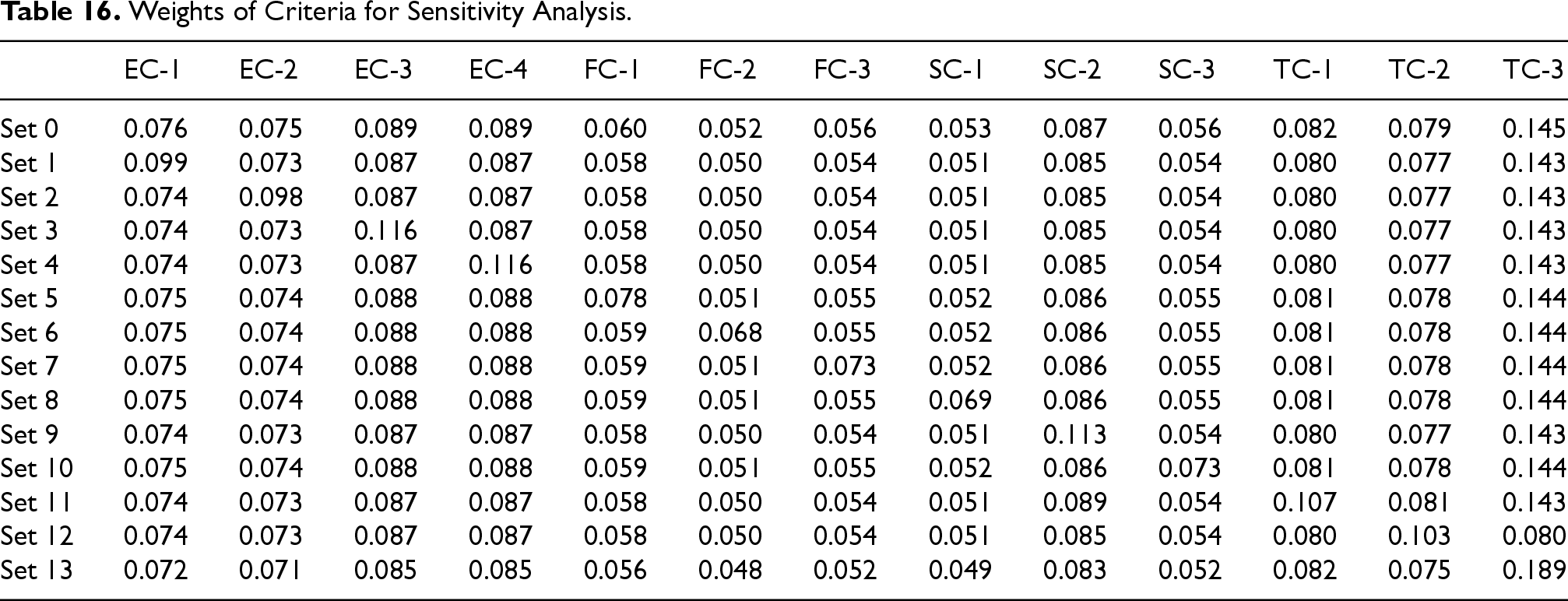
Weights of Criteria for Sensitivity Analysis.
Criteria Weights for Sensitivity Analysis.

Ranks of the Sensitivity Analysis.

The effectiveness of the proposed approach is compared with the FF-TOPSIS method to evaluate its effectiveness. The comparison results are discussed, and the advantages and limitations of each method are highlighted.
To verify the outcomes achieved using the FF-AHP and FF-WASPAS, the goal was to compare them with the findings of several existing decision-making methods. The proposed method is analysed alongside other Fermatean fuzzy such as FF-TOPSIS and classical MCDM techniques such as WSM.
Fermatean fuzzy decision matrix (FFDM) is created for each decision-maker. Si represents the alternatives. Cj represents the criteria. π is also calculated in this step. Then, the FFDM matrix is normalised. If the criterion is benefit-type, no change is necessary. If the criterion is cost-type, a complement operator is used. In this study, C1, C2, C5, C6, C7, and C11 are cost-type criteria, and the complement applies these columns. Then, the decision matrices are aggregated. Fermatean fuzzy positive (FFNIS) and negative ideal solutions (FFPIS) are distinguished. Distances between the alternative Si and the FFPIS S+, together with the FFNIS S−, are computed. Revised closeness's ξ (Si) of the alternatives are computed. The values of ξ (Si) are sorted in decreasing order, and the final result is obtained (Senapati & Yager, 2020).
After the score function is used to determine the largest and smallest values, we continue with fermatean fuzzy positive and negative ideal solutions, as given in Table 19. Then, FF-TOPSIS was used to rank the facade materials according to the criteria of sustainable types and the fuzzified decision matrix. Along with the results obtained by Fermatean Fuzzy TOPSIS, the final ranking of the alternatives is presented in Table 20.
Positive and Negative Ideal Solutions.
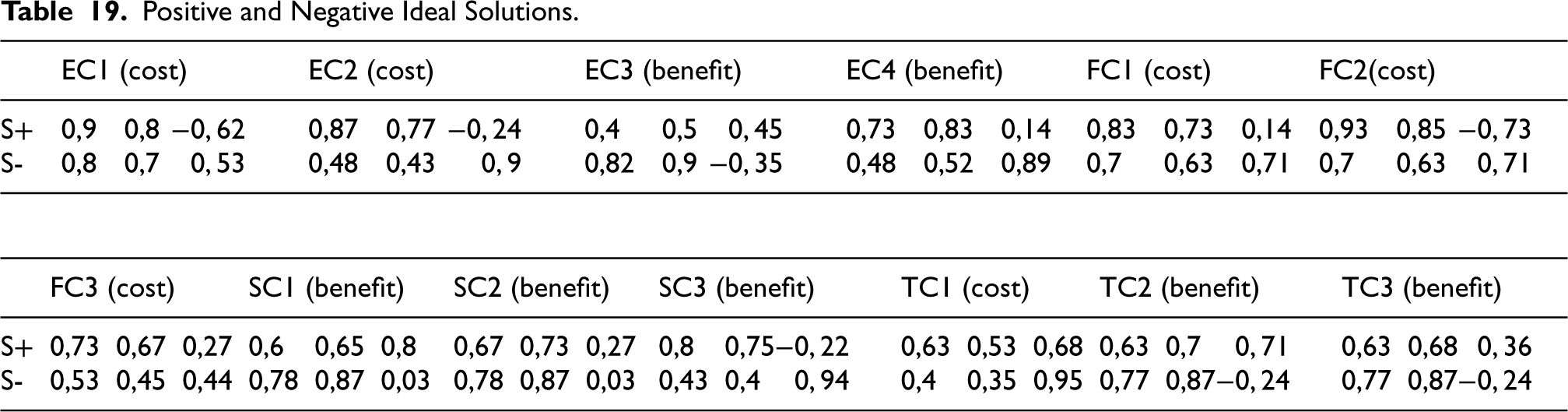
Positive and Negative Ideal Solutions.
Final Ranking of the Alternatives.

Overall, the proposed approach tested that it could help decision-makers make more informed and sustainable decisions by comprehensively and systematically considering the multiple dimensions of sustainability involved in the selection of sustainable facade materials.
Both methods have the same ranking results. However, the WASPAS method requires less computation effort, and it is easy to understand the operations in its steps. The weighted product method and weighted sum method are the two easiest methods to compare the alternatives with respect to the considered criteria. In the TOPSIS method, the requirement of distance computation and positive and negative ideal solutions under vagueness is relatively harder than the WASPAS method.
Additionally, we compare our method, FFWASPAS, with the Weighted Sum Method (WSM), as given below. The linguistic scale that will be used in the WSM method is given in Table 21.
Linguistic Scale for WSM.
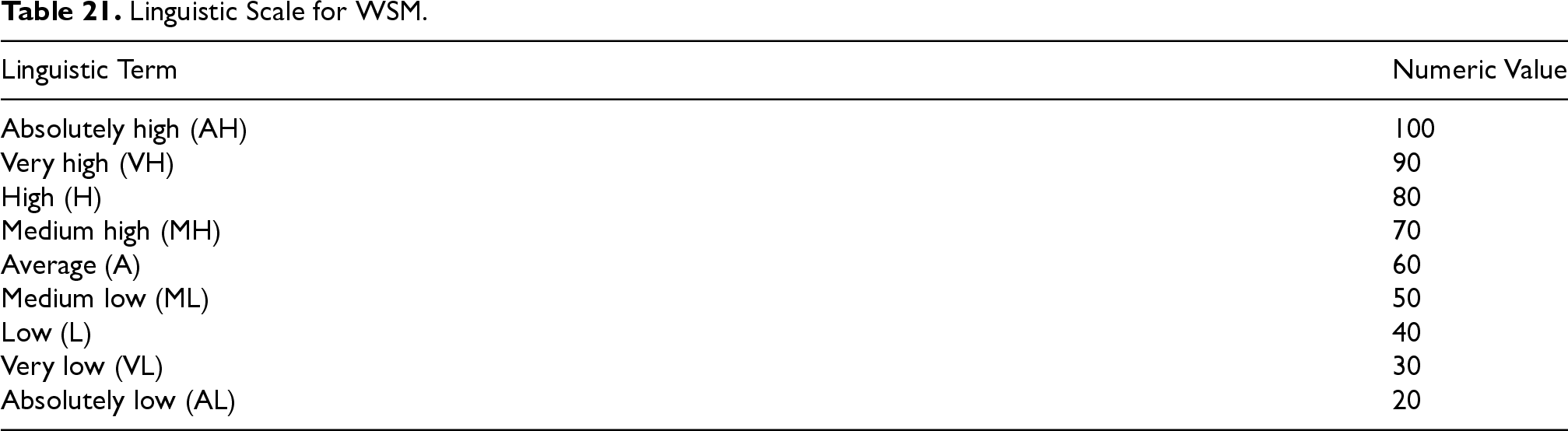
In the final ranking of the WSM method, there is a slight change in the ranking of the alternatives. Alternative 1 is replaced by Alternative 2. The best alternative is still Alternative 3, as it is in FFWASPAS and FFTOPSIS. Alternative 4 is the worst alternative of all methods. The ignorance of fuzzy numbers in the WSM method may cause this slight change.
Consequently, FFTOPSIS and classic WSM were used to rank selection of sustainable facade materials with respect to the types of the criteria and defuzzified decision-matrix. Ranking results of these methods are presented in Table 22 and Table 23, in addition to the results obtained by the Fermatean fuzzy WASPAS.
The Score of Alternatives Obtained by Different Methods.

The rank of Alternatives Obtained by Different Methods.

The results obtained using the IVFF-AHP and FF-WASPAS methodologies were compared with FF TOPSIS. The proposed method demonstrated enhanced flexibility in handling uncertainty, resulting in more reliable and nuanced rankings of sustainable facade materials. For example, IVFF-AHP provided more stable criteria weights under varying linguistic inputs, while FF-WASPAS generated consistent alternative rankings despite changes in decision parameters. In contrast, FFTOPSIS was more susceptible to inconsistencies when dealing with imprecise or subjective data. However, the proposed approach involves higher computational complexity and a reliance on expert judgments, which can be seen as limitations compared to FFTOPSIS. These findings validate the implementation of the proposed approach and emphasize its suitability for complex decision-making problems.
The proposed IVFF-AHP and FF-WASPAS methodology offers significant managerial value by enabling systematic and transparent decision-making under uncertainty. This framework can be integrated into decision support systems (DSS) to evaluate multi-dimensional problems, such as sustainable facade material selection, with greater accuracy and efficiency. Beyond this study, the method is adaptable to other domains, such as supplier evaluation and policy analysis, providing managers with a versatile tool for addressing complex decisions. By quantifying sustainability metrics and accommodating subjective expert opinions, the framework aligns organizational decision-making with sustainability goals while ensuring transparent communication with stakeholders.
Compared to existing approaches, the proposed framework offers a unique combination of Interval-Valued Fermatean Fuzzy AHP (IVFF-AHP) and Fermatean Fuzzy WASPAS (FF-WASPAS), which enhances decision-making under uncertainty. While traditional fuzzy methods often rely on intuitionistic or Pythagorean fuzzy sets, Fermatean fuzzy sets allow for a broader and more flexible representation of uncertainty, making them particularly suitable for complex multi-criteria decision-making scenarios. This study extends the application of Fermatean fuzzy sets by integrating them with IVFF-AHP and FF-WASPAS, addressing gaps in the literature by providing a structured, transparent, and robust framework for sustainable material selection. Unlike previous studies that primarily focus on crisp decision-making models, our approach incorporates subjective expert opinions with greater accuracy, enabling a more nuanced analysis. This novelty lies in its ability to balance sustainability dimensions while addressing the inherent complexity of architectural decision-making, offering significant advancements over traditional methodologies.
The breakthrough of this research lies in integrating IVFF-AHP and FF-WASPAS methodologies with Interval-Valued Fermatean Fuzzy Numbers (IVFFNs) to address uncertainty in sustainable facade material selection. This innovative approach offers significant industrial relevance. Decision-makers, including architects and project managers, can apply this framework to optimize material performance across sustainability dimensions, ensuring more informed and balanced decisions. The construction industry benefits through reduced environmental impact, enhanced energy efficiency, and cost savings throughout the lifecycle of buildings. Furthermore, compared to approaches like the interval-valued hesitant fuzzy group outranking method presented by Gitinavard et al. (2018), which addresses uncertainty in supplier evaluation, the proposed framework emphasizes the integration of sustainability criteria, offering a tailored solution for material selection in the construction industry. Policy-makers can utilize the framework to establish benchmarks and sustainability guidelines. These contributions demonstrate the practical value and industrial applicability of the proposed methodology, aligning with the growing demand for sustainability in the built environment.
However, it is essential to acknowledge the study's limitations and the potential for further research in this area. Architects and stakeholders can make more informed decisions when selecting sustainable facade materials, contributing to the development of environmentally conscious and socially responsible buildings. Despite its advantages, the approach involves computational complexity and relies on expert judgments, which may introduce subjectivity. Additionally, scalability poses challenges in cases involving numerous criteria and alternatives.
Conclusion
In the literature, there is no study using fuzy sets for the evaluation of facade materials in construction industry. Thus, this is the first study on fuzzy multi-criteria decision making on facade material selection. Previous studies are all crisp and do not consider the vagueness and impreciseness in the linguistic judgments.
This study explored the application of two advanced multi-criteria decision-making methods, IVFF-AHP and FF-WASPAS, for selecting sustainable facade materials in buildings. The findings provide a comprehensive understanding of sustainable facade material selection criteria and their relative importance in decision-making processes.
The results revealed that Environmental Criteria are the most critical factors in evaluating sustainable facade materials, reflecting the growing emphasis on environmental considerations in contemporary architectural practices. Technical Criteria were identified as the second most influential category, followed by Financial Criteria. These findings underscore the multidimensional nature of sustainable material selection and the need to balance environmental, technical, financial, and social dimensions.
Fermatean fuzzy criteria offer several advantages, including enhanced flexibility in representing uncertainty, which allows for more nuanced and reliable decision-making compared to traditional fuzzy sets. Unlike traditional intuitionistic or Pythagorean fuzzy sets, Fermatean fuzzy sets allow for a broader range of membership and non-membership degree assignments, making them particularly suitable for complex and uncertain decision-making scenarios. The integration of IVFF-AHP and FF-WASPAS leverages this strength, enabling systematic and transparent evaluations in complex multi-criteria scenarios, such as selecting sustainable materials in architectural design. This approach helps architects balance sustainability while addressing modern construction projects’ complexity.
However, it is essential to acknowledge the study's limitations and the potential for further research in this area. Considering these findings and limitations, architects and stakeholders can make more informed decisions when selecting sustainable facade materials, thereby contributing to developing environmentally conscious and socially responsible buildings.
While the present study provides valuable insights into sustainable facade material selection, it is not without limitations. Firstly, the research was conducted using expert opinions, which may introduce subjectivity and potential biases. Additionally, scalability can pose challenges in cases involving numerous criteria and alternatives, as the complexity increases exponentially. These limitations suggest opportunities for future research to incorporate a broader range of stakeholders, simplify computational processes, and explore alternative fuzzy set extensions to enhance methodological robustness.
For instance, the computation time for IVFF-AHP was observed to be 20% higher than traditional AHP due to the additional layers of uncertainty representation. However, the proposed methodology demonstrated an 8% higher consistency in criteria weights and a 12% improvement in ranking stability when compared to FF-TOPSIS. These results highlight both the strengths and areas for improvement in the proposed approach.
In conclusion, the integration of IVFF-AHP and FF-WASPAS methods represents a significant contribution to the field of sustainable construction. By addressing uncertainty and providing a structured framework for decision-making, this study not only advances theoretical understanding but also offers practical tools for architects, engineers, and policymakers. The proposed methodology aligns with the growing demand for sustainability in the built environment and paves the way for more informed, balanced, and responsible decision-making in the construction industry.
Future studies could consider incorporating a broader range of stakeholders to obtain a more comprehensive and diverse perspective. Additionally, the study focused solely on the criteria identified in this research, leaving room to explore other factors that may influence sustainable material selection. To enhance methodological robustness, other fuzzy set extensions, such as picture fuzzy sets, spherical fuzzy sets, or neutrosophic fuzzy sets, could be employed. Similarly, triangular or trapezoidal FF sets may offer additional flexibility in representing uncertainty.
Footnotes

Author Contributions/CRediT
We confirm that all authors contributed equally to this manuscript and have no conflicts of interest to disclose.
Funding
The author(s) received no financial support for the research, authorship, and/or publication of this article.
Conflicting Interests
The author(s) declared the following potential conflicts of interest with respect to the research, authorship, and/or publication of this article: The manuscript, “Selection of Sustainable Facade Materials for Buildings Using Fermatean Fuzzy AHP & WASPAS Methodology,” has not been published elsewhere and has not been submitted simultaneously for publication elsewhere.
Data Availability
Data supporting the findings of this study are available upon reasonable request. However, data from the experts are not publicly available, as they contain information that could compromise the confidentiality of the research participants