




Abstract
Industry 4.0 manufacturing practices are the trends of automation and data exchange, which involve heavy investment to adopt the latest modern technologies for improving the manufacturing process in terms of productivity, efficiency, flexibility, and profitability. In this context, the current study focuses on the key implementation barriers of Industry 4.0 in the automotive industry. An interpretive structural model of the barriers to implement Industry 4.0 in the automotive industry has been proposed to create a hierarchical order of key barriers, find the relationships among them, and create a graphical model of the system. Based on the review of available literature and discussion with experts in the automotive field, thirteen barriers have been identified to frame the model. Further, out of these thirteen, two barriers have been found to be dependent, another two as driving barriers, the remaining nine as linkage barriers, and none as autonomous barriers. Based on the developed model, ‘Great Risk of Obsolescence’ has been found to be the top-level dependent barrier and geographical risk to be the lowest-level independent barrier. A clear comprehension of the interactions between the key barriers can help in deciding priorities and managing the same to have higher efficacy and efficiency in implementing Industry 4.0. Overall, we aim to identify Industry 4.0 barriers in the automotive industry and prioritize them during the implementation of Industry 4.0. The structured model, so designed and developed, is expected to facilitate the understanding of the interdependence of the barriers of the Industry 4.0 manufacturing system amid its implementation.
Introduction
The current automotive manufacturing industry is the evolved version of digitalization and automation (Golovianko et al., 2022). Developing countries are struggling to adapt to the Industrial Revolution 4.0 (Eslami et al., 2023). Large automotive manufacturing companies are readily adopting the Industrial Revolution (Lee et al., 2016). In contrast, small and medium enterprises (SMEs) have not been able to keep up with digitalization in spite of being part of global competition (Ganzarain and Errasti, 2016; Horváth and Szabó, 2019; Sommer, 2015). The cycle of products has been shortened, thus creating a high risk of obsolescence and increasing the pressure to improve while maintaining cost and quality (Czinkota and Ronkainen, 2009), which further prompts automakers to invest in multiple research and development ideas at once (Giffi et al., 2020). Industry 4.0 came into practice to create an advanced customer-oriented product with minimum human interaction. An important aspect that existed with Industrial Revolution 4.0 is the rapid escalation in the globally competitive environment (Chiarini et al., 2020). Industry 4.0 tools and techniques employed in the automotive manufacturing industry are advanced robotics, IoT, 3D printing, and automated production (Papulová et al., 2022). However, these technologies hold the promise of lean and accelerated production through digitalization and automation. The shift towards these technologies creates a large collection of data that needs to be analyzed for deriving data-based decisions. The doors to advanced and new domains have been opened by Industry 4.0, as it is a mixture of cyber-physical space (Jan et al., 2023).
The automotive manufacturing industry can take advantage of Industry 4.0 to unveil new avenues and broaden its horizons with some challenges and constraints. Furthermore, to deal with these challenges and constraints, the automotive manufacturers should be aware of the same so that they can come over. Kamble et al. (2018) reported the lack of clear comprehension of IoT benefits (BTA6) as the first level barrier, followed by the high cost of implementation as the level 2 barrier in the developed ISM model for the adoption of Industry 4.0 in the automotive industry. Görçün et al. (2024) evaluated the strategies for adopting digitalization in the automotive manufacturing industry and reported developing technology-based new business models as the best one of all. Luthra and Mangla (2018) identified 18 challenges to industry 4.0 initiatives for supply chain sustainability in emerging economies and demonstrated the organizational challenges as the most critical ones. Silva et al. (2020) reported the technological requirements as a crucial requirement for adopting Industry 4.0. Orzes et al. (2018) found that the high costs, uncertain return on investment of Industry 4.0, unclear market, and long process of implementation are the major concern for adopting Industry 4.0 in the Small and Medium Sized Enterprises (SMEs).
While the available literature has extensively explored individual barriers within this sector, limited studies have systematically integrated these barriers to furnish a comprehensive understanding of their interdependencies and relative importance. This study offers a novel approach by employing a combination of detailed survey analysis, Interpretive Structural Modeling (ISM), and Cross-impact matrix multiplication applied to classification (MICMAC) to identify and analyze the key obstacles affecting the automotive industry followed by expert-driven validation. The study aims to discover the bottlenecks and the root cause for the implementation of Industry 4.0 in the automotive industry. The objectives of the current study are: • To identify barriers that act as major hindrances towards the execution of Industry 4.0 in the auto-manufacturing industry. • To identify the relationship among the selected barriers. • To analyze the driving and dependency of the barriers that help in clear comprehension for successful implementation with the help of Interpretive Structural Modeling (ISM).
To achieve the objectives mentioned above, a comprehensive literature review on Industry 4.0 implementation barriers in the automotive manufacturing industry has been accomplished initially to identify the barriers, followed by discussing the identified barriers with academic experts to list the 13 key barriers. After that, a questionnaire to rank 13 barriers was distributed to participants, and the weightage of each barrier was determined. After that Structural Self-Interaction Matrix (SSIM) was developed through expert opinion, followed by constructing the initial and final reachability matrix. Further, the barriers were categorized into different levels to develop the ISM Model. At last, MICMAC analysis was utilized to assess the impact by identifying driving power as well as the dependence on barriers. In short, ISM analysis, along with MICMAC analysis, is used as a research methodology to analyze the hierarchy of barriers found in the literature review. The current study makes several significant contributions to the field of automotive manufacturing, including an enhanced understanding of automotive industry challenges, a strategic framework for addressing the challenges, implications for policymakers and industrialists, and guidance for future research.
Identification of barriers to Industry 4.0 implementation
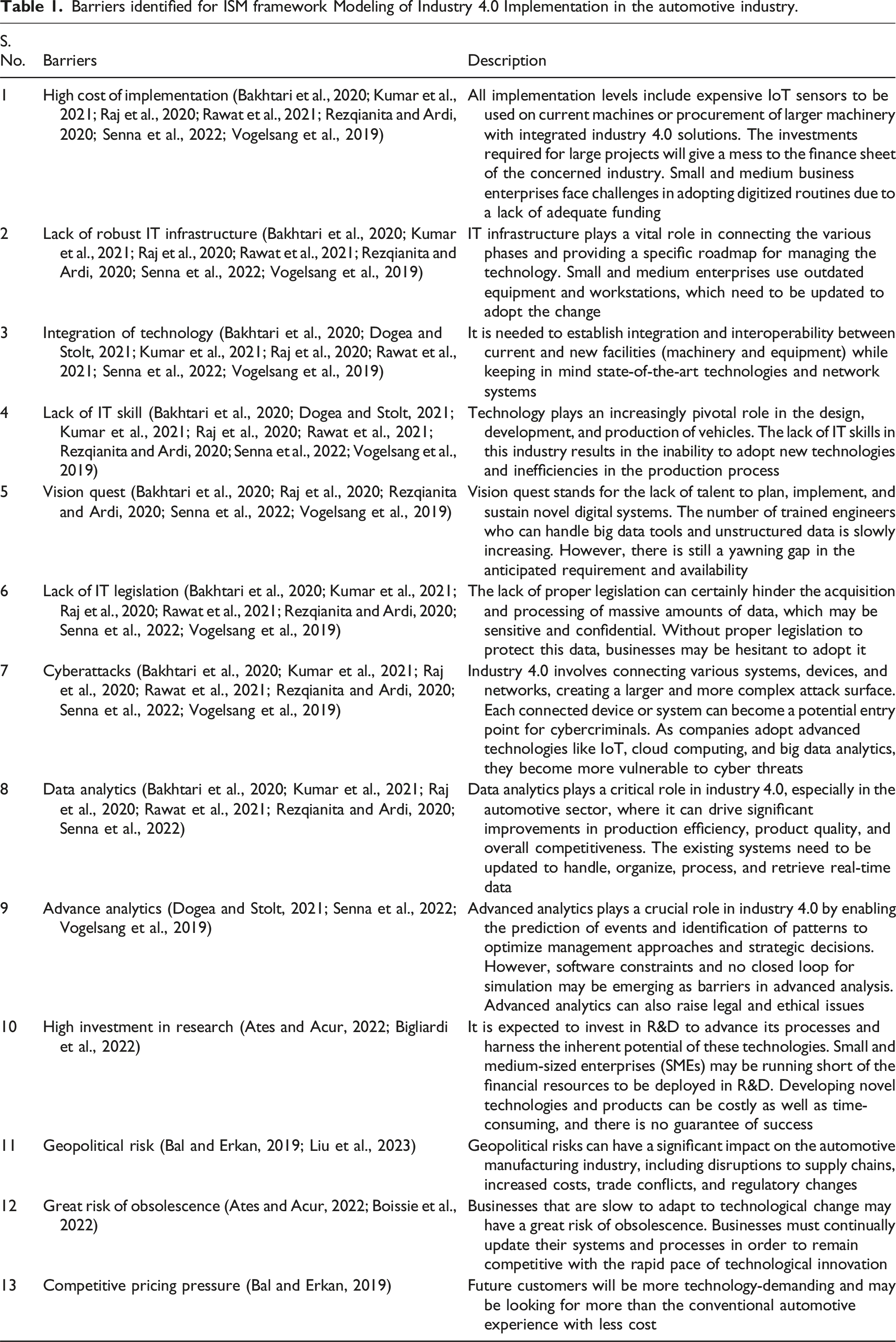
Barriers identified for ISM framework Modeling of Industry 4.0 Implementation in the automotive industry.
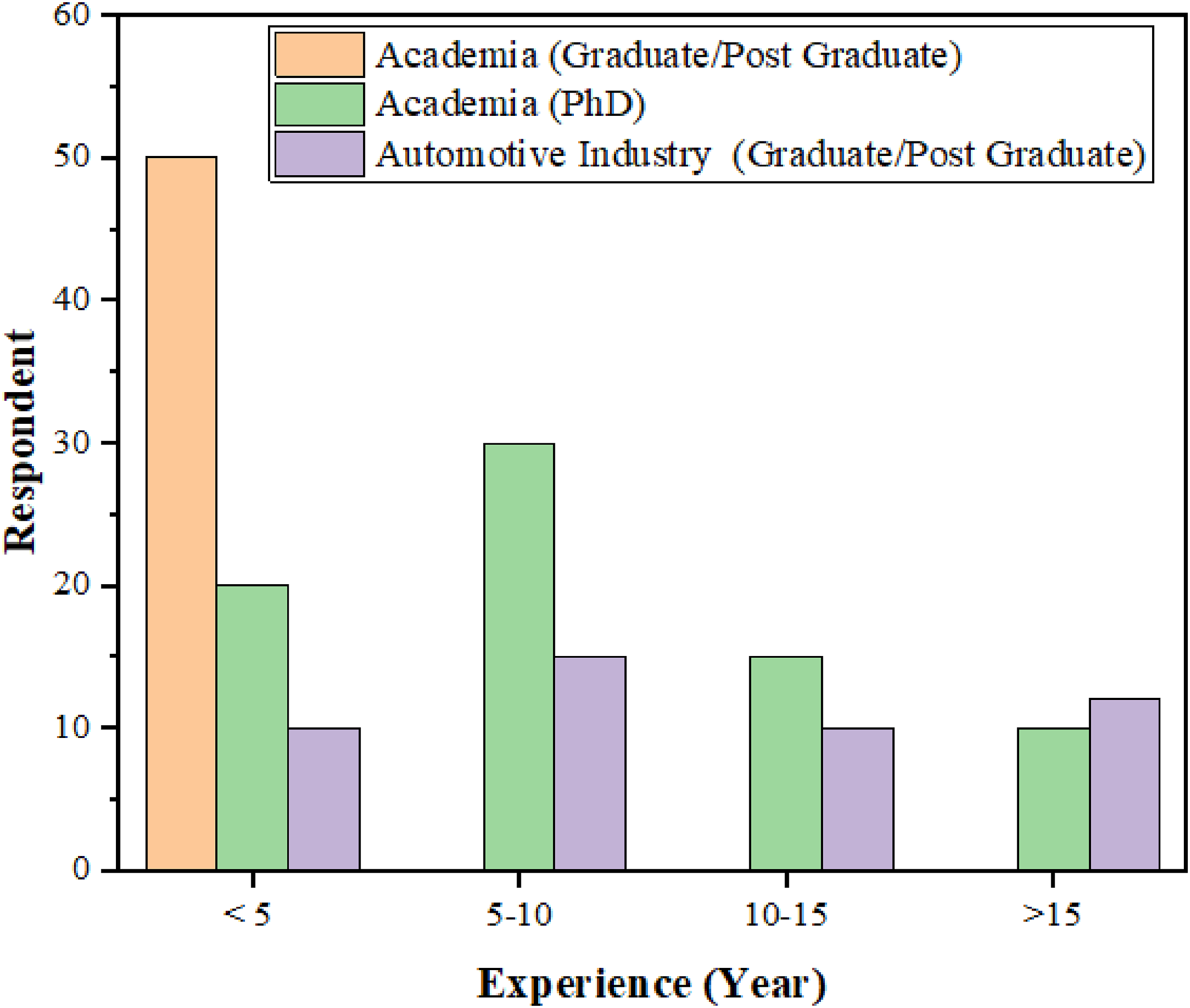
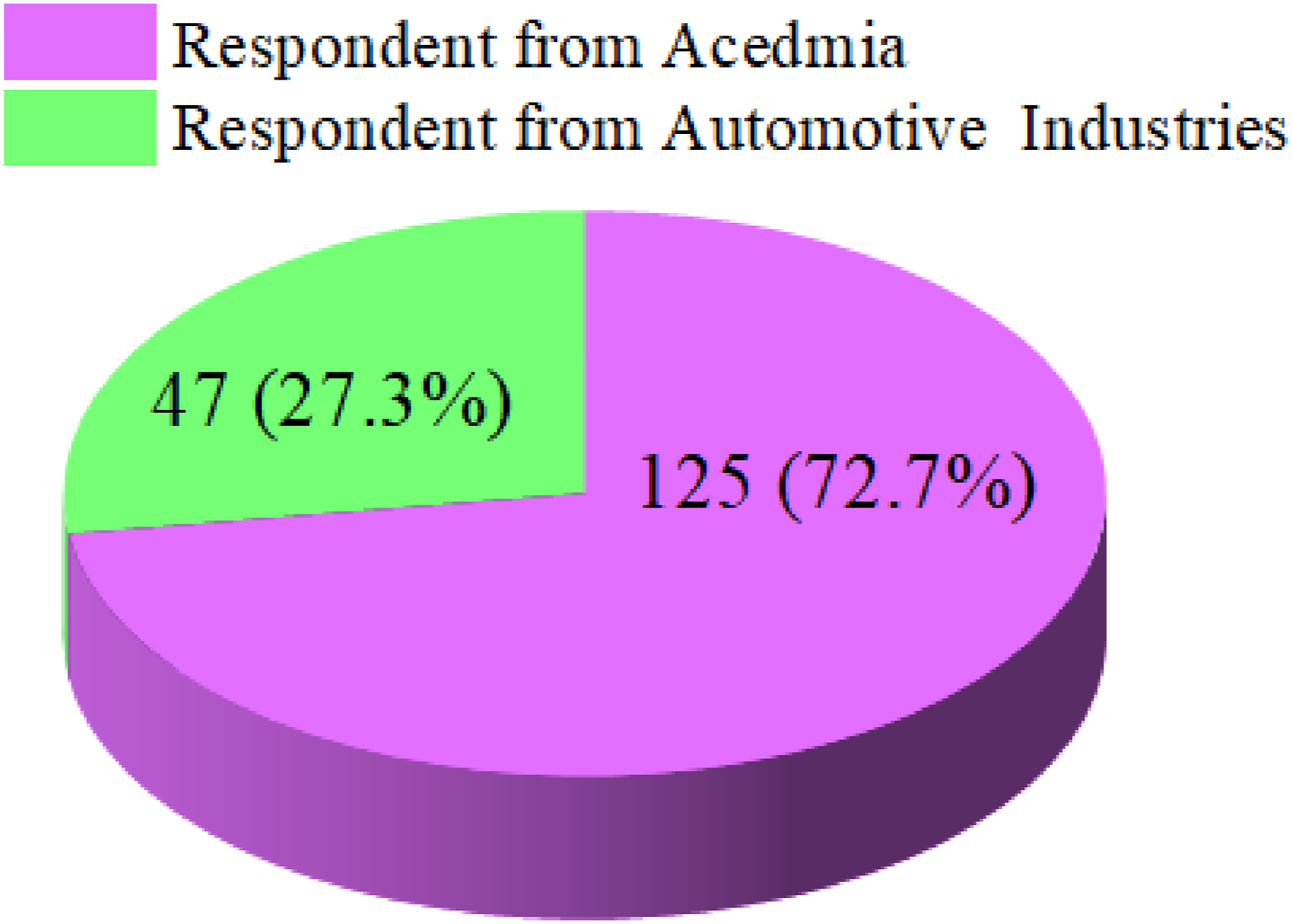
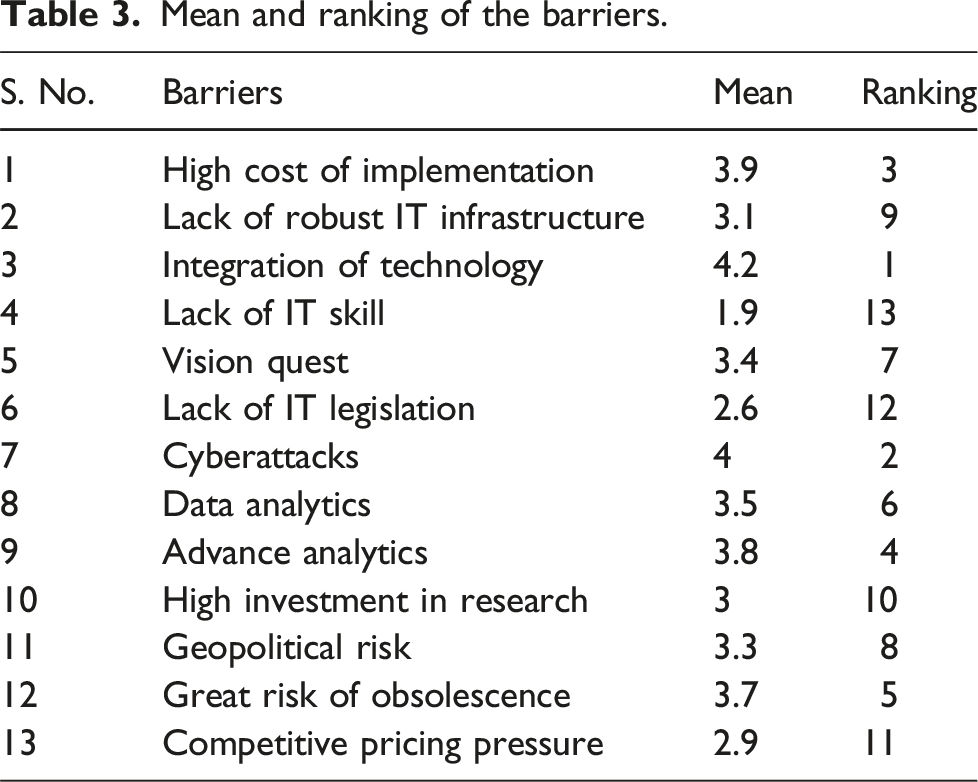
After identifying all the barriers, a questionnaire consisting of 21 questions was prepared to rank the barriers. The study used a Likert scale (1 to 5) to rank the barriers, in which 1 and 5 stand for “least important” and “most important”, respectively. The questionnaire was distributed to 254 participants, both from the academia and automotive industry, and responses were received from 201 participants. A total of 172 responses to questionnaires were reviewed for the current study, while 29 were excluded due to incompleteness. Figure 1 shows the distribution of respondents for the questionnaire-based survey carried out. Table 2 displays the category, academic qualification, and working experience of the respondents considered for the study and the same has been further graphically illustrated in Figure 2. Figure 3 demonstrates the number and the percentage of the respondents from the academia and automotive industry. Judgmental sampling (purposive sampling) has been adopted for the current study as it allows us to focus on individuals who are directly involved in the field of interest and also ensures that the responses are relevant and informed by those with industry experience. Respondents for questionnaire-based survey. Respondents’ category, qualification, and experience. Respondents’ category, qualification, and experience. Respondents from industry and academics considered for the current study.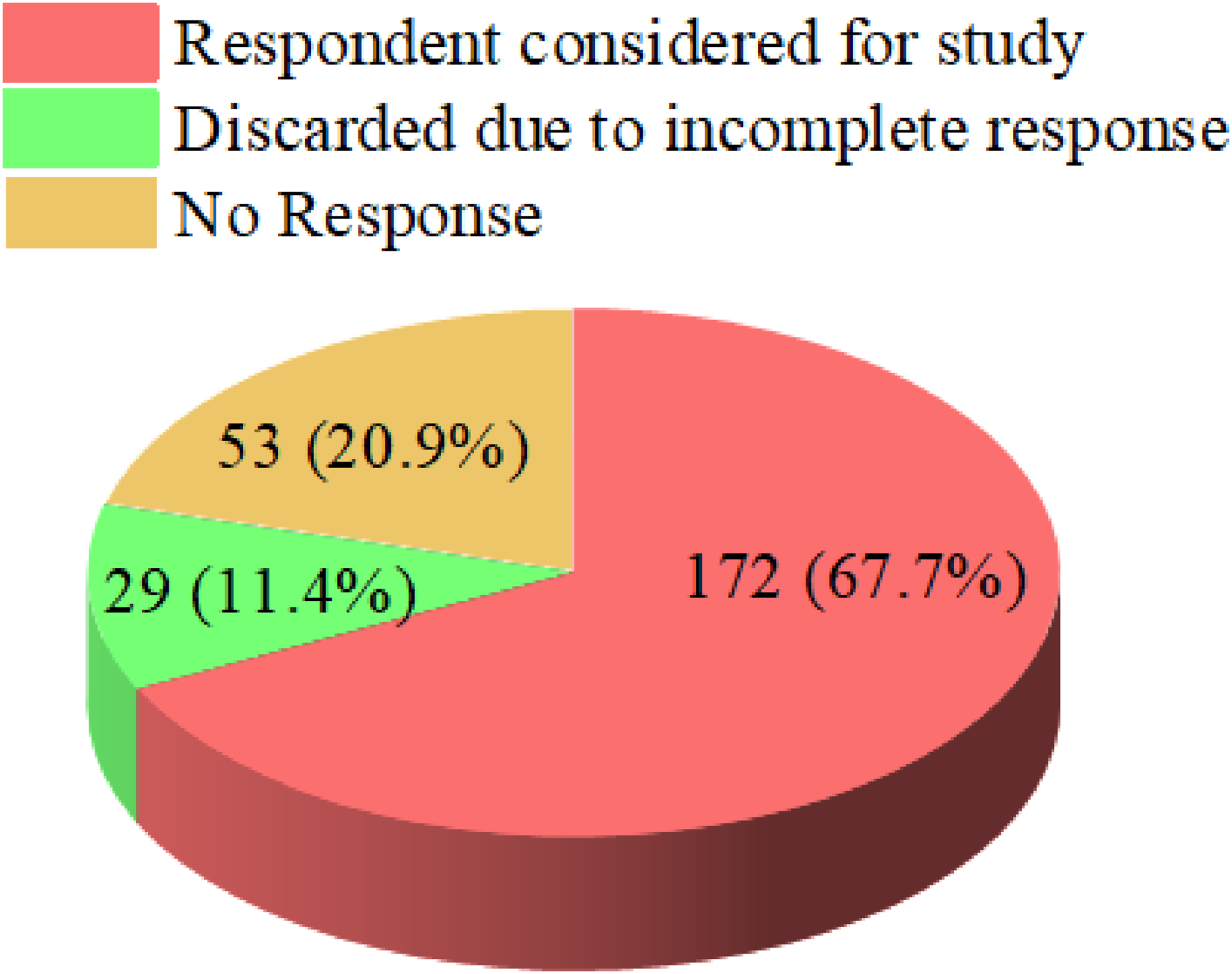

Mean and ranking of the barriers.
Interpretive strxuctural modeling (ISM)
Interpretive Structural Modeling (ISM) is a useful tool for the development of graphical models of complex systems, and it can be particularly helpful in technology assessment. This technique provides a systematic and comprehensive way for groups to integrate their decisions and develop preliminary structural models. However, ISM can also be inflexible, which can disrupt group processes (Watson, 1978). The basic concepts underlying ISM involve breaking down a complex system into its constituent elements and identifying the relationships between the elements (Warfield, 1976). This process helps to develop a hierarchy of elements and relationships, which can then be used to create a graphical representation of the system. The resulting model can be employed to determine the most critical elements in the system, develop scenarios for how the system may evolve with time, and identify potential problems or opportunities (Malone, 1975).
ISM usually involves a process of expert consultation, where a group of experts are asked to identify variables and relationships that are relevant to the problem being analyzed. The expert opinions are then synthesized to produce models, which can be used to explore different scenarios and assess the potential impact of changes in variables (Raj et al., 2008). ISM is often used in fields such as engineering, management, and policy analysis to aid decision-making in complex systems where the relationships between variables are not well understood or are subject to change. In the current study, the elements are the barriers in the automotive manufacturing industry, and ISM was used as it presents the hierarchical relationships and interdependencies among Barriers, which helps to differentiate between the driver and dependent barriers. In the ensuing section, the steps involved in the ISM are explained and practiced to build the resulting diagram and ISM model.
Structural self-interaction matrix (SSIM)
Experts’ opinion is an essential component of the Interpretive Structural Modeling (ISM) approach. The process of creating an ISM model usually involves a team of experts who have knowledge and expertise in the domain being analyzed. In the current research, to discover contextual relationships among the variables, i.e., barriers to Industry 4.0 Implementation in the automotive Manufacturing Industry, eight experts were consulted at the beginning of this research. The experts were selected from the academia as well as from the Automotive Industry. The experts from academia were professors and associate professors with 10 years + teaching experience and a PhD degree. The experts from the automotive industries were production managers, engineers, and executives with 10 years+ experience and have the graduate/postgraduate degrees. The experts were selected based on their specialized knowledge and experience in various aspects of the automotive industry, including fundamental knowledge, production, technology, supply chain, engineering, and market trends. These experts were consulted to identify the relevant barriers and relationships that are important for understanding the system being analyzed.
Structural self-interaction matrix (SSIM) for barriers.
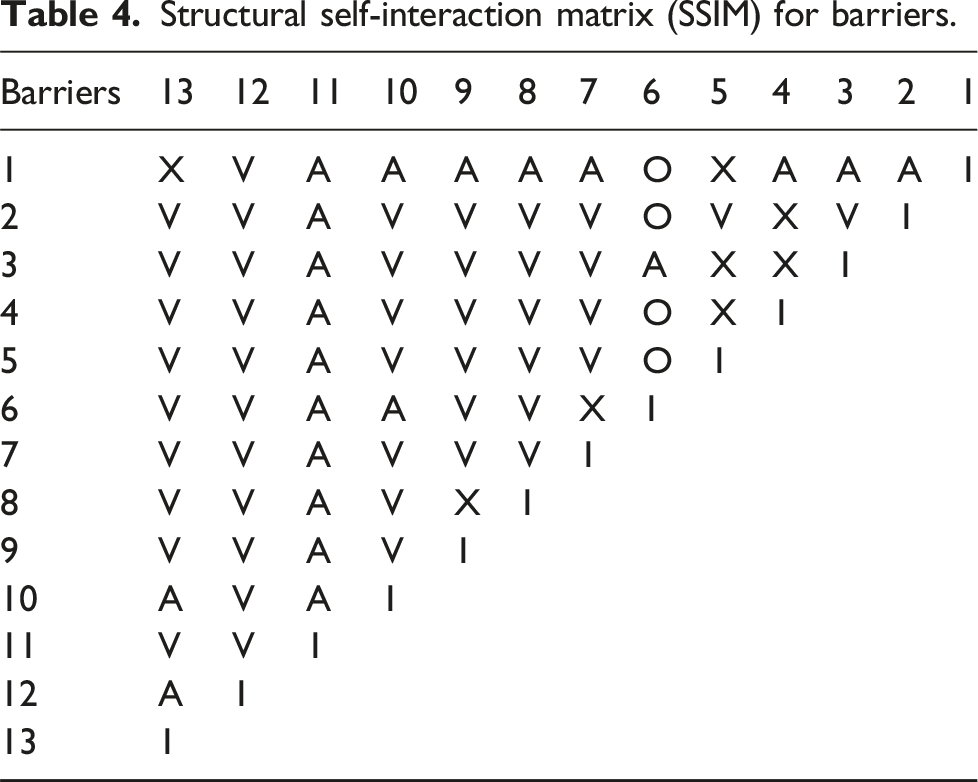
V: Barrier i will affect barrier j;
A: Barrier j will affect barrier i;
X: Barriers i and j will affect each other and
O: Barriers i and j are independent and will not affect each other.
In SSIM, the number from 1 to 13 specify the barrier as high implementation cost (1), lack of robust IT infrastructure (2), integration of technology (3), lack of IT skill (4), vision quest (5), lack of IT legislation (6), cyberattack (7), data analytics (8), advanced analytics (9), high investment in research (10), geopolitical risk (11), great risk of obsolescence (12), competitive pricing pressure (13). Based on SSIM shown in Table 4, the barriers ‘competitive pricing pressure (13)’ and ‘high implementation cost (1)’ will influence each other, and the relationship of X is given in Table 4 for (1) and (13). Then, in the case of the ‘lack of robust IT infrastructure (2)’ and ‘integration of technology (3)’, the ‘integration of technology (3)’ is increased by the ‘lack of IT infrastructure (2)’ so the relationship of V is given the SSIM for (2) and (3). In the same pattern, the relationships for the remaining barriers were also structured and mentioned in the table.
Reachability matrix
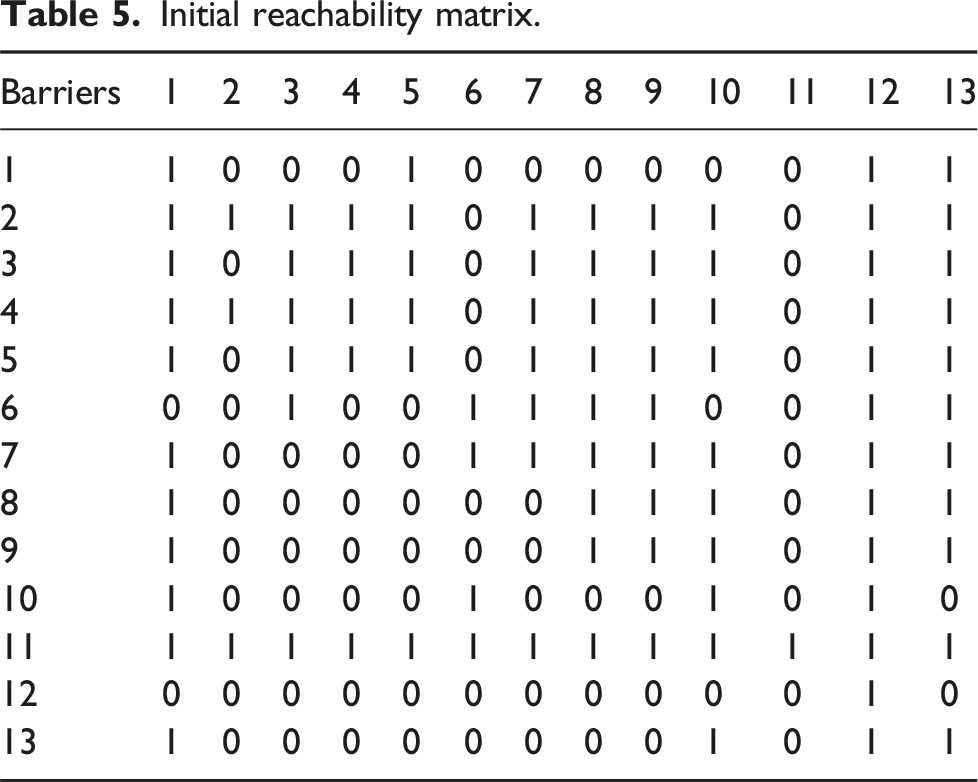
The binary matrix is developed from the self-interaction Matrix (SSIM) by replacing V, A, X, and O with the binary numbers 1 and 0 to get the initial reachability matrix. The following rules were used to develop the initial reachability matrix from SSIM: • If the (i, j) sign in the SSIM was V, then the (i, j) in the reachability matrix was changed to 1, and the (j, i) sign was changed to 0. • If the (i, j) sign in the SSIM was A, then the (i, j) in the reachability matrix was changed to 0, and the (j, i) sign was changed to 1. • If the (i, j) sign in the SSIM was X, then the (i, j) in the reachability matrix was replaced with 1, and the (j, i) sign was also replaced with 1. • If the (i, j) sign in the SSIM was O, then the (i, j) in the reachability matrix was changed to 0, and the (j, i) sign was also changed to 0.
Initial reachability matrix.
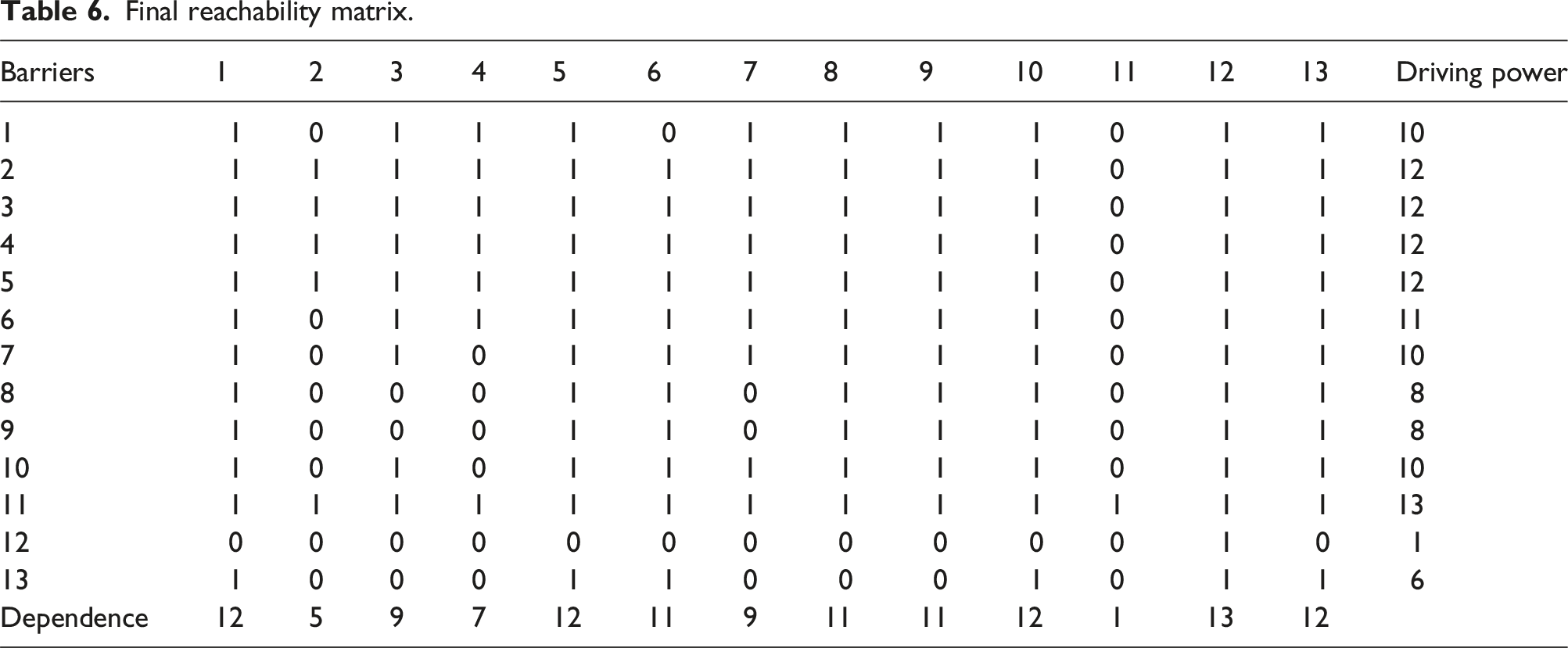
Final reachability matrix.
Level Partitioning
Level partition for barriers.
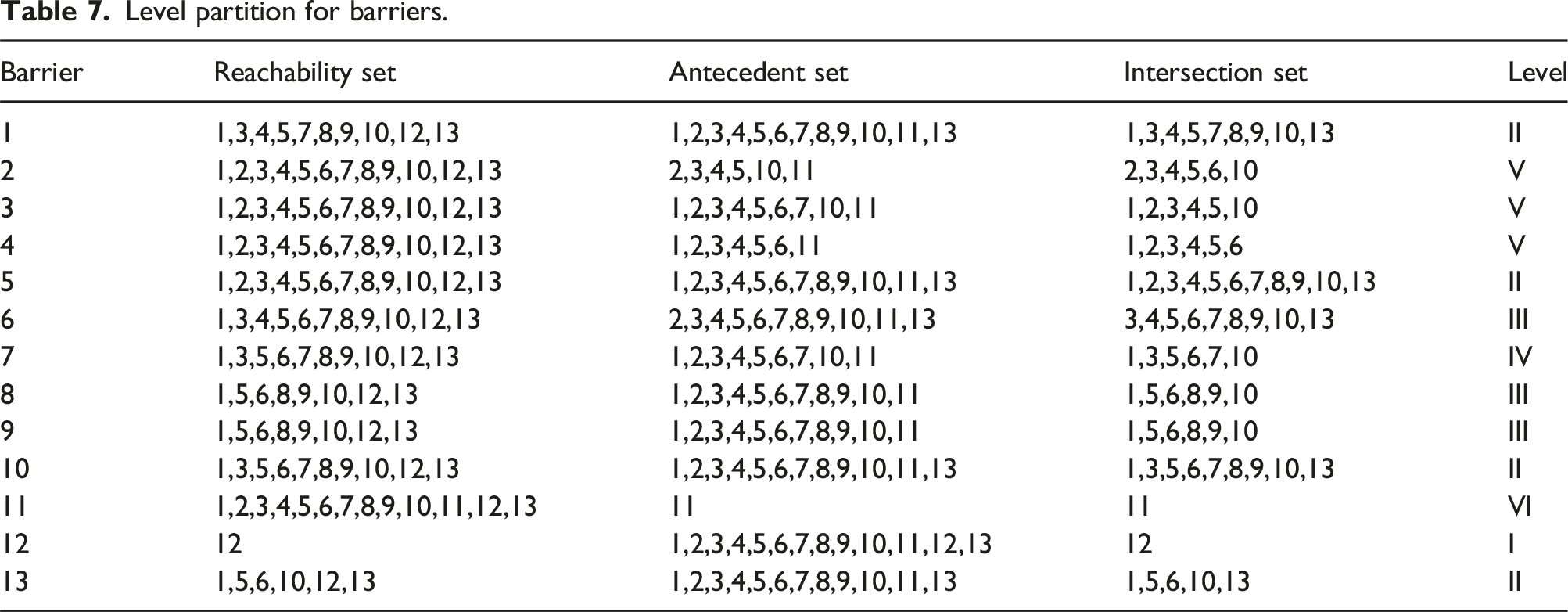
ISM model
The final stage involves deploying the final reachability matrix to construct the structure model. The model was developed after eliminating the transitivity links and changing the node numbers by statements, as depicted in Figure 4. Each arrow linking one barrier (i) to another barrier (j) represents the relationship between the two barriers. When all relationships are drawn, a directed graph or digraph is obtained. The model shows that Geopolitical Risk is the primary barrier as it sits at the bottom of the ISM hierarchy and affects all other barriers. Figure 4 displays the complete ISM model for the barriers faced in implementing Industry 4.0 in the automotive manufacturing industry. Interpretive Structural Model (ISM) depicting the Level of Industry 4.0 implementation barriers in the automotive manufacturing industry.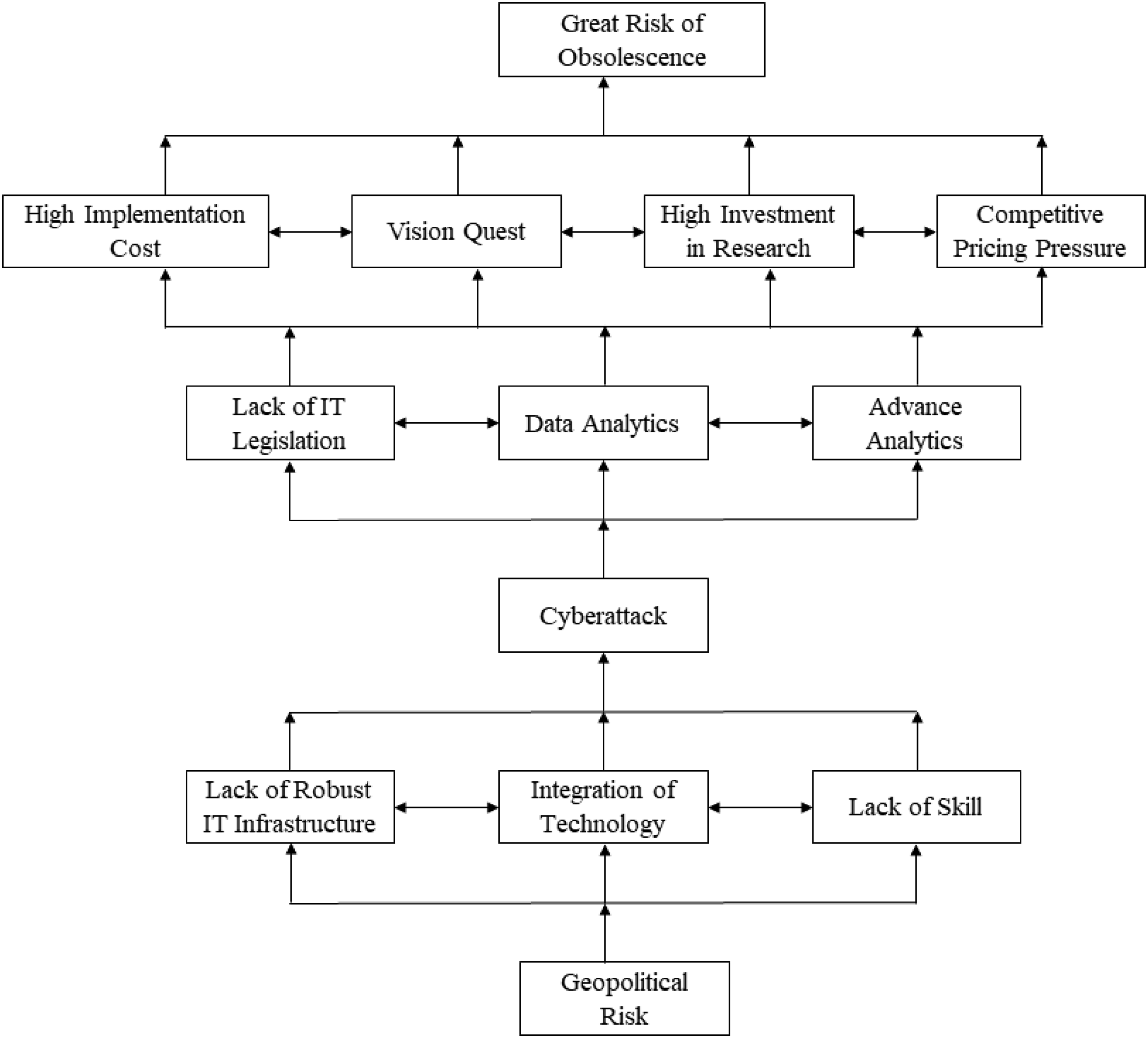
MICMAC analysis
The MICMAC analysis is a useful tool for identifying the key barriers that are required to be focused in order to attain the strategic goals. It also helps in identifying the potential risks and opportunities associated with different barriers. In the current study, MICMAC analysis was considered to complement the ISM by offering a quantitative analysis of the driving power and dependence of each barrier. It further enhances the understanding of the system and helps in prioritizing barriers based on their strategic importance. MICMAC added a quantitative layer, helping to identify which barriers are the most influential and which are merely symptoms of deeper issues. Through this method, barriers were classified into four clusters on the basis of their level of driving and dependence, as illustrated in Figure 5. The very first cluster, referred to as the autonomous cluster, comprises factors with weak driving and weak dependence. It was observed that not even one barrier falls into this category. The second cluster, i.e., the dependent cluster, is made of factors with weak driving power and strong dependence. The barriers 12 and 13 exist in this category. The third cluster, i.e., the linkage cluster, includes factors with strong driving and strong dependence, and barriers 1, 3, 4, 5, 6, 7, 8, 9, and 10 belong to this group. Finally, the fourth cluster, i.e., the driving cluster, consists of barriers with strong driving power but weak dependence, and barriers 2 and 11 pertain to this category. The key challenge, as determined by the MICMAC analysis, is the one that exhibits a strong driving power but weak dependence. In this research, barriers 2 and 11 are recognized as the key barriers, as shown in Figure 5. Driving and dependence diagram of barriers for MICMAC analysis.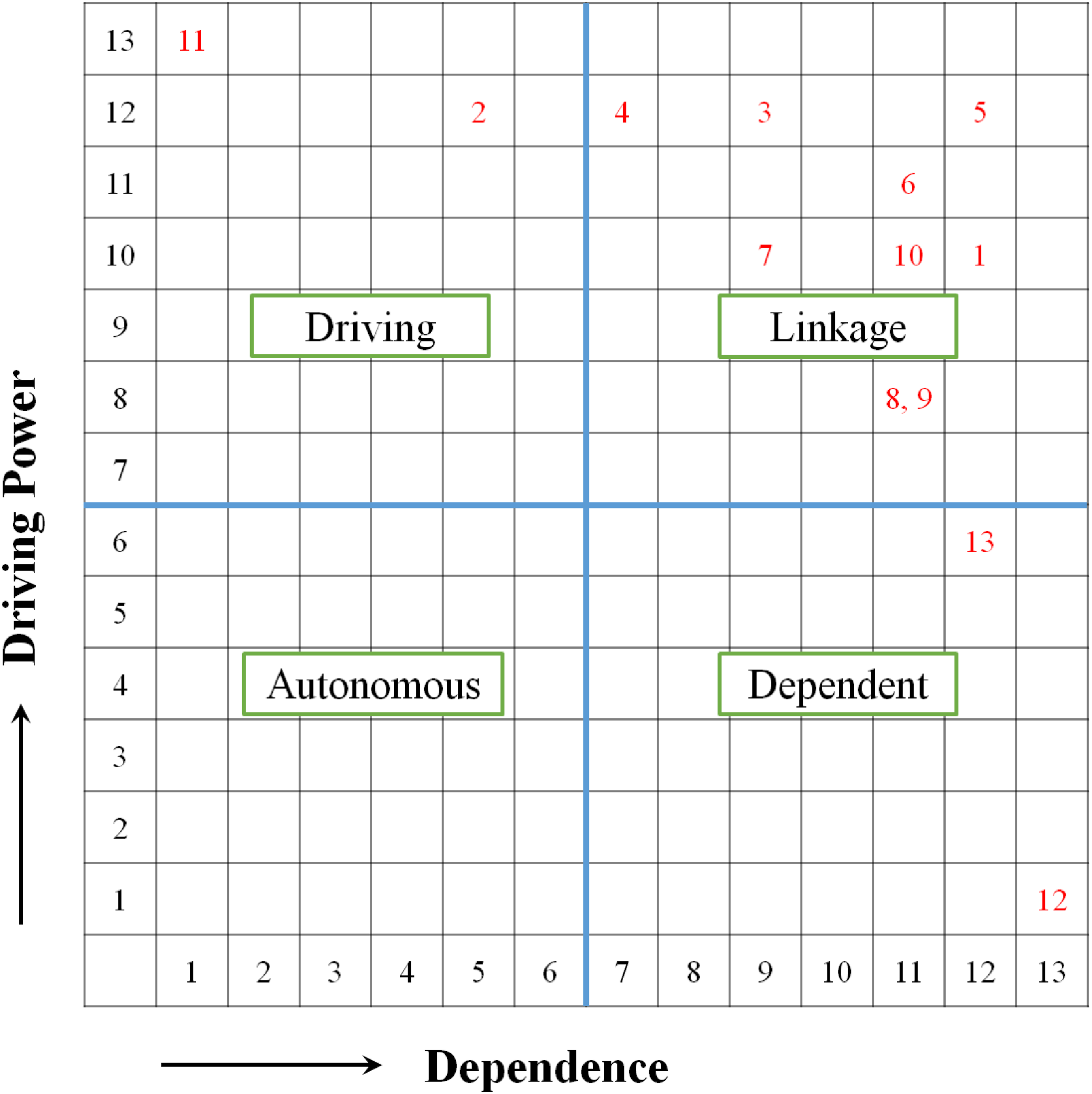
Discussion
The study conducted has brought attention to the significant hurdles faced during the implementation of Industry 4.0 in the manufacturing industry. To better understand the relationship and interaction between these barriers, an ISM model was created and used to analyze them. ISM model consists of six levels of hierarchy, as shown in Figure 4. It is observed from the model that ‘great risk of obsolescence’ occupied the I level in the model, followed by ‘High Implementation cost, Vision Quest, High Investment in Research, Competitive Pricing Pressure’ at the II level. Further, there exist three barriers, i.e., ‘Lack of IT Legislation’, ‘Data Analytics’, and ‘Advance Analytics’ in level III. The IV level is occupied by ‘Cyber-attack’, and the V level is covered by ‘Lack of Robust IT Infrastructure’ and ‘Integration of Technology’, ‘Lack of skill’. Geopolitical Risk is at the root level, i.e., level VI and a most significant barrier to industry 4.0 adoption. To successfully implement Industry 4.0, manufacturing organizations must have adequate funds, IT infrastructure, and integration of technologies with strong networks in their manufacturing environment. This model shows that for Industry 4.0 to adopt the latest technology to enhance productivity, highly skilled manpower and proper training are required for data analytics, cyber security for data hacking, as well as for proper governing all technological things, proper infrastructure, the legality of, political will power is required. Industry 4.0 needs proper coordination and proper alignment between the top, middle, and lower levels within the organization. Nowadays, before investing heavily in any place, geopolitical risk assessment is very important by considering all government political, legal, safety, security, and supporting infrastructure.
The results of the MICMAC analysis, as depicted in Figure 5, showed that the barriers ‘Geopolitical Risk (11)’ and ‘Lack of Robust IT infrastructure (2) were the main drivers and were indicated as the key challenges due to their higher driving power and lower dependence. The barriers ‘Great Risk of Obsolescence (12)’ and ‘Competitive Pricing Pressure (13)’ were labeled as the dependent and low affecting barriers as they had low driving power but high dependence. The remaining barriers [High Cost of Implementation (1), Integration of Technology (3), Lack of IT Skill (4), Vision Quest (5), Lack of IT Legislation (6), Cyber-attack (7), Data Analytics (8), Advance Analytics (9), and High Investment in Research (10)] were labeled as the linking barriers and were unstable as any action taken towards these barriers would affect others and have an impact on them.
Limitations of the study and scope of future work
The structural model developed in current research is based on the opinions of experts from academia and industry. The opinion of experts may have their biases, and the results of the model may show differences in real-world practice. We have considered thirteen barriers and their dependence and independence structure for implementing Industry 4.0 in the automotive industry. Some barriers may be added and/or deleted for implementation in any specific automotive industry. The insights gained through the study pave the way for addressing systematic barriers and offering actionable recommendations that can shape the future trajectory of the automotive industry. Hypothesis testing may be performed to assess the validity of the developed hypothetical model. Structural Equation Modeling (SEM) may also be deployed to gauge the validity of the structural model developed in the current study. Future research can focus on these findings by employing new analytical techniques (Fuzzy logic, Multi-criteria decision-making approach), focusing on emerging trends, and examining the evolving nature of barriers over time.
Conclusions
The adoption of Industry 4.0 technologies in the automotive manufacturing industry will lead to significant improvements in the productivity, efficiency, flexibility, quality, sustainability and profitability of the industry. In order to be competitive in the constantly evolving market, the automotive manufacturing industry must adopt Industry 4.0. However, implementing Industry 4.0 will result in significant transformations in the automotive manufacturing industry, which will present multiple types of barriers. In this study, the Interpretive Structural Modeling (ISM) methodology has been adopted to develop a hierarchical order of key barriers and relationships among them and to create a graphical representation of the developed system. Literature review and subsequent discussions with experts have helped to sort the barriers relevant to Industry 4.0 implementation based on their importance. A questionnaire-based survey has been carried out to rank these identified barriers followed by structural modeling. Thirteen barriers have been identified from the literature and followed by subsequent discussions with the experts. Geopolitical risk has been ranked the most important key barrier as a result of survey analysis, and it was placed as the most important bottom-level factor in the ISM hierarchy. MICMAC analysis has been employed to label the factors, which identified two barriers as dependent, two barriers as drivers, nine barriers as linkage barriers, and none as autonomous barriers. Geopolitical Risk and Lack of Robust IT infrastructure were the key drivers and were registered as the major challenges due to their higher driving power and lower dependence. The current research will help the government, industrialists, new entrepreneurs, managers, and engineers to plan, implement, and invest heavily in Industry 4.0 infrastructure development in the automotive industry. By addressing the barriers identified through the survey and prioritizing them through ISM and MICMAC, as mentioned in the current study, both policymakers and industrialists can take targeted actions to overcome challenges in the automotive manufacturing industry. Policymakers can create an enabling environment through regulatory reforms, technological incentives, and infrastructure investments, while industrialists can focus on technological advancements, supply chain improvements, and strategic collaborations. Together, these efforts can drive industry growth, enhance competitiveness, and contribute to the overall success of the automotive industry.
Footnotes
Declaration of conflicting interests
The author(s) declared no potential conflicts of interest with respect to the research, authorship, and/or publication of this article.
Funding
The author(s) received no financial support for the research, authorship, and/or publication of this article.

Author biographies