



Abstract
Sub-Saharan Africa (SSA) has the worst maternal and newborn health outcomes, especially in rural areas. Men’s antenatal care (ANC) participation is often promoted to improve these outcomes, yet little is known about theories or frameworks guiding research on these issues. This scoping review aimed to identify, categorize, and critically examine theories and frameworks used in research on fatherhood and men’s ANC participation in rural SSA. Following Arksey and O’Malley’s methodology, we included 23 studies from 15 countries that applied a theory or framework and systematically analyzed data. Findings highlighted growing focus on complexities around fatherhood and men’s participation, though gaps in theory, framing, scope, and cultural relevance remain. Most studies emphasized biomedical participation and Western gender frameworks, overlooking African indigenous care practices, epistemologies, and diverse fatherhood experiences. No study used explicitly Afrocentric frameworks. Policy, practice, and research could benefit from Afrocentric and indigenous perspectives to better align with local realities.
Keywords
Sub-Saharan Africa (SSA) has the worst maternal and newborn health outcomes globally, with a maternal mortality ratio of 536 deaths per 100,000 live births and infant mortality rate of 49 deaths per 1,000 live births) (United Nations Inter-Agency Group for Child Mortality Estimation, 2025; United Nations Maternal Mortality Estimation Inter-Agency Group, 2023). The participation of men, fathers, husbands, or male spouses (hereinafter, men’s participation) has been widely recognized for its potential to improve these outcomes (Fletcher et al., 2024; Nkwonta & Messias, 2019). ANC refers to “care” offered by “skilled providers” to support optimal pregnancy and health outcomes (quotes indicate that both these terms hold context-specific meanings, as exemplified by the two cited studies) (Tati, 2018; World Health Organization, 2016). Existing literature indicates that men’s ANC participation remains limited in SSA, particularly in rural settings (Ditekemena et al., 2012; Moyo et al., 2024), although such literature predominantly focuses on formal, biomedical healthcare systems. To inform policy and practice responses, reviews have explored the definitions, experiences, barriers, enablers, facilitators, and interventions related to men’s ANC participation (Galle et al., 2021; Jeong et al., 2023; Moyo et al., 2024; Nambile Cumber et al., 2024). However, none has examined the theories and theoretical and conceptual frameworks (hereinafter, frameworks) that underpin this body of research. This knowledge gap, we argue, is consequential.
Generally, theory means the set of concepts and propositions that explain, describe, or predict phenomena (Abend, 2008). A theoretical framework is the lens applied to a specific study, while a conceptual framework is a roadmap of concepts, variables, and relationships relating to a study (Grant & Osanloo, 2014; Leshem & Trafford, 2007). Theoretical frameworks are based on one or multiple theories, while conceptual frameworks may draw on ideas from one or more theories or from existing research (Grant & Osanloo, 2014; Leshem & Trafford, 2007). Theories—and the frameworks they inform—can range from grand theories (those addressing structural or philosophical questions) (Mouton, 2011), to middle-range theories (tailored to specific fields) (Rehfeld & Terstriep, 2015), to micro-theories (focused on specific behaviors or interactions) (Raub et al., 2011). They may be applied deductively to test hypotheses or developed inductively from empirical data (Waldt, 2021). Even without being formally named, implicit assumptions, ideologies, and prior knowledge often play a theoretical or conceptual role in shaping inquiry (Ritchie et al., 2014). Theory use also varies across research types and designs. Basic research often engages more deeply with theory than applied research, which aims to solve immediate problems (Kumar, 2014). Descriptive, explanatory, and exploratory studies apply theory differently based on their aims (Bryman, 2016). Methodological approaches—qualitative, quantitative, or mixed—define whether theory is used to generate, test, or integrate knowledge (Evans et al., 2011; Waldt, 2021).
Theories and frameworks have different implications for understanding fatherhood and men’s participation in ANC in SSA, including how such knowledge is produced, legitimized, and applied in policy and practice. For example, studies using functionalism (grand theory) or frameworks grounded in this theory often frame men’s ANC participation in terms of broader societal structures, emphasizing the need for systemic reforms (Azuh et al., 2015). Research applying autonomy (micro-theory) or autonomy-based frameworks often focus on individual men’s influences on women’s ANC choices, pointing to a need for interpersonal or behavioural strategies (Ganle et al., 2015). Work utilizing community systems theories (middle-range theories) or frameworks based on such theories often captures the interaction of household, community, and institutional factors, indicating the need for multi-level interventions (Manda-Taylor et al., 2017). Understanding all these orientations can inform the development of context-sensitive interventions, particularly in rural areas where structural constraints and sociocultural norms differ markedly from urban settings (Amoo et al., 2018).
We further argue that theories and frameworks employed in research on fatherhood and men’s ANC participation must reflect context-specific experiences. In SSA, fatherhood is generally conceived as both a biological or legal status and a socioculturally-embedded responsibility involving provision, protection, caregiving, and other roles often understood in deeply relational and communal terms (Nsamenang, 2017). These roles extend beyond the nuclear family to contribute to broader collective goals of nurturing healthy children and resilient communities (Mugumbate & Chereni, 2019). Moreover, ANC practices in many African societies are pluralistic, involving biomedical and African indigenous knowledge and healing systems (Musie et al., 2022; Musiwa, Sinha, et al., 2024). Such pluralism reflects a desire for more holistic health (Ahlberg, 2017; Musiwa, Sinha, et al., 2024), where health is understood as a dynamic balance between multiple dimensions (physical, mental, emotional, spiritual, environmental, social) achieved through collective and contextually grounded practices (Ahlberg, 2017; Tosam, 2022).
Nevertheless, many studies employ externally-developed Eurocentric theories and frameworks that inadequately reflect African worldviews, norms, and health practices (Ahlberg, 2017; McLean, 2020). This raises concerns about theoretical or conceptual misalignment and the risks of culturally-incongruent or ineffective interventions (Chilisa et al., 2017; Powis, 2022). It also obscures the possibility of grounding research and policy in Afrocentric epistemologies and indigenous care systems (Ahlberg, 2017; Tosam, 2022). Targeted, culturally attuned, and theoretically or conceptually sound interventions are urgently needed to enhance fatherhood, men’s ANC participation, and maternal and newborn health outcomes in SSA. A synthesis of theories and frameworks guiding the existing research on these issues can illuminate which ones dominate, identify where gaps exist, and inform tailored interventions to better align with local realities in SSA. While critiques of Western theoretical dominance exist (McLean, 2020; Mfecane, 2020; Powis, 2022), no prior review has systematically mapped this gap in the context of fatherhood and men’s ANC participation in rural SSA.
Accordingly, we aimed to consolidate the scientific literature on the theories and frameworks used in research on fatherhood and men’s ANC participation in rural SSA. A secondary objective was to identify conceptual and cultural limitations in the use of these theories and frameworks. Through this analysis and highlighting key gaps, this review seeks to inform future research, promote culturally resonant policy design, and contribute to improved maternal and child health outcomes in SSA.
Materials and Methods
Design
We conducted this scoping review using the foundational framework developed by Arksey and O’Malley (2005), further refined by others including the Joanna Briggs Institute (Peters et al., 2020). We selected this approach consistent with guidance for scoping reviews, given the breadth and heterogeneity of the literature on our review topic (Arksey & O’Malley, 2005; Peters et al., 2020). This enabled us to synthesize a focused yet comprehensive set of studies. A detailed protocol was developed and published separately (Musiwa, Mavhu, et al., 2024). In preparing this manuscript, we adhered to the PRISMA-ScR checklist (see Supplemental File 1) (Tricco et al., 2018).
Stage 1: Defining the Research Questions
Our review addressed the following questions designed to identify, categorize, and synthesize existing theories and frameworks while critically examining their alignment with local contexts and epistemologies: 1. What theories and frameworks have been used to study fatherhood and men’s participation in ANC in rural SSA? 2. What conceptual and cultural limitations are evident in the theories and frameworks used to study fatherhood and men’s participation in ANC in rural SSA?
Stage 2: Identifying Relevant Studies
Summary of the Key Characteristics of Included Studies
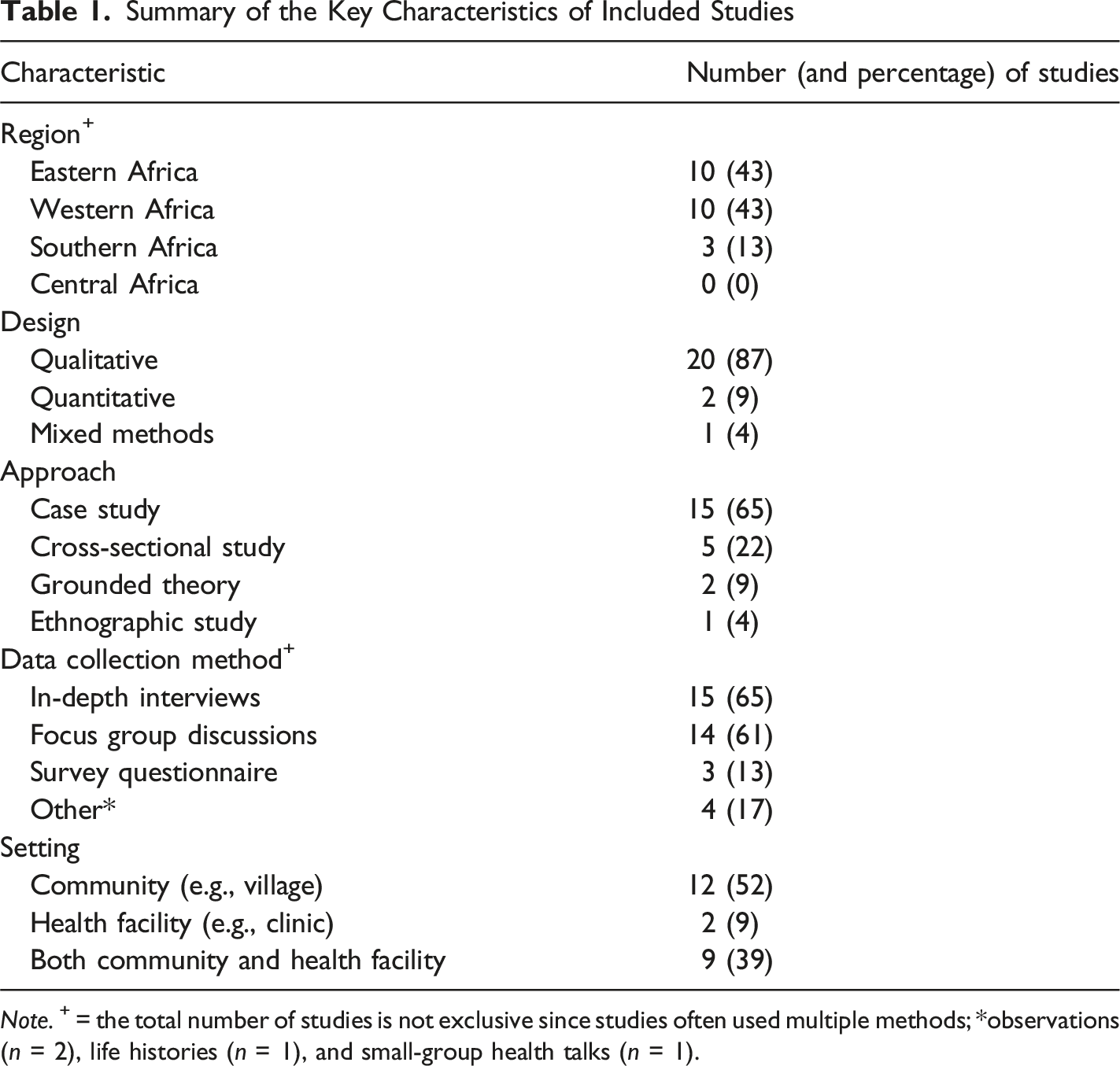
Note. + = the total number of studies is not exclusive since studies often used multiple methods; *observations (n = 2), life histories (n = 1), and small-group health talks (n = 1).
Stage 3: Selecting Studies
Eligibility criteria
We included peer-reviewed articles that: (a) examined fatherhood and men’s participation in ANC in rural SSA; (b) applied at least one specific theory or framework; (c) systematically analyzed primary or secondary data; (d) used a qualitative, quantitative, or mixed methods design; and (e) were published between January 1, 2000, and October 31, 2024. We defined “rural” as areas outside cities or towns, typically marked by open spaces and low population density (Wineman et al., 2020). We selected 2000 as the starting point to reflect the growing global and regional emphasis on men’s participation in maternal and child health during that period (Ditekemena et al., 2012). We excluded all types of literature reviews (systematic, scoping, narrative, meta-analyses, etc.), opinion pieces, theoretical and conceptual articles that lacked systematic analysis of empirical data, and gray literature.
Study Selection Process
We identified relevant studies through title/abstract screening followed by full-text review. To enhance rigour and reduce bias, two reviewers independently screened each article, resolving all conflicts through discussion and consensus. To conduct title/abstract screening, ASM and LM first independently pilot-tested the screening tool on 10 randomly selected articles. Based on the results, the tool was revised before additional reviewers (AN, MSU, NR, NSA, ON, RDD, WM) screened the remaining articles, each paired with ASM as the second reviewer. At the full-text review stage, ASM and LM again tested the screening tool on 10 randomly selected articles from those included after title/abstract screening. Following revisions, AN, ASM, MSU, NR, NSA, ON, RDD, and WM independently reviewed the remaining full texts to determine final inclusion, with ASM serving as the second reviewer for all. The final screening tools are provided in Supplemental File 2.
Stage 4: Charting the Data
The review dataset captured key study characteristics extracted from each included article, including author(s), publication year, country, study setting, study aim, theory or framework, research design, data collection methods, and key findings. The data extraction process began with ASM and LM piloting the data extraction tool on five randomly selected articles, refining the tool based on this test. After finalization, five reviewers (AN, MSU, NR, NSA, RDD) extracted data from the remaining studies. ASM and LM supervised all extractions to maintain consistency and rigor across the data. The final data extraction tool is provided in Supplemental File 2. The key findings extracted from each included article are presented in Supplemental File 3 (tab 2, titled “Extracted Data”).
Stage 5: Collating, Summarizing, and Reporting the Results
Our analytical approach combined inductive and deductive coding in a reflexive thematic analysis process. While informed by Braun and Clarke’s (2019) principles, we did not adhere to a prescriptive framework. Instead, we employed a flexible, reflexive approach suited to the heterogeneity of scoping review data. Drawing on Fereday and Muir-Cochrane (2006), we integrated inductive insights emerging from the data with deductive attention to existing theoretical constructs. We further incorporated elements of mixed-methods synthesis (McCrudden et al., 2021) to support systematic pattern identification across diverse study designs. The important methodological insights provided by Braun and Clarke (2019), Fereday and Muir-Cochrane (2006), and McCrudden et al. (2021) informed our hybrid and integrative analytic approach rather than representing distinct frameworks.
We used descriptive statistics (e.g., counts, percentages) to summarize key study characteristics, presenting the results in tables and narrative form. We thematically coded and analyzed key findings extracted from each article using QDA Miner Lite (Provalis Research, 2025). After reviewing extracted data, two reviewers (ASM, LM) initially coded data from 15 randomly selected articles, developing an initial codebook. This exercise guided five additional reviewers (AN, MSU, NR, NSA, RDD) in analyzing the remaining data. Our iterative and reflexive thematic analysis approach, which included regular reviewer meetings and discussions, enabled us to refine codes and themes—e.g., merging overlapping codes and creating new ones as needed. We then synthesized all analyses to identify patterns, divergences, and gaps in the data, and developed the write-up. All authors contributed to refining the final analysis and manuscript. We did not assess study quality, as this is not necessarily required in scoping reviews (Arksey & O’Malley, 2005; Peters et al., 2020).
Results
Search Outcomes
Our searches yielded 13,865 records. After deduplication, 7665 unique articles remained. At the title/abstract stage, we excluded 6916 articles. Following full-text review of the 851 remaining articles, 23 articles met the inclusion criteria. Full details of our search results and inclusion/exclusion process are depicted in Figure 1. A record of studies reviewed at the full-text stage, along with the reasons for their inclusion or exclusion, is available in tab 1 (“Identified Studies”) of Supplemental File 3. PRISMA flowchart depicting search outcomes
Description of Included Studies
The 23 articles included in this review reported studies conducted in 15 SSA countries and were published between January 1, 2005, and October 31, 2024 (the number of articles exceeds the number of countries because multiple studies covered the same countries). All except one article were published in English. Using the African Union’s regional classification, Eastern and Western Africa had the most studies equally, while Central Africa had none. Ghana contributed the highest number (n = 5), followed by Tanzania (n = 4), Malawi and Nigeria (three studies each), Mozambique and Uganda (two studies each), and The Gambia, Kenya, Sierra Leone, and South Africa (one study apiece). Most studies used qualitative designs and case study approaches and were conducted in community settings. Common data collection methods included in-depth interviews and focus group discussions. Participant ages ranged from 18 to 60 years for men and 15 to 60 years for women. Table 1 provides a summary of key study characteristics. A detailed summary of all included studies, including the theories and frameworks applied, is provided in Supplemental File 4.
Review Findings
We identified eight interrelated themes addressing our review objectives: (1) understanding the issues using different ways of knowing; (2) exploring, explaining, and reframing men’s participation; (3) matching research questions and methods; (4) framing participation through logics of power, care, and structure; (5) connecting the personal and the structural; (6) ambivalence in rethinking fatherhood and masculine care; (7) changing expectations and responsibilities of fatherhood; and (8) reimagining fatherhood through context and care. Themes identified from each study are indicated in Supplemental File 3 (tab 3 labelled “Identified Themes”). The following sections present a synthesis of the findings. For analytical clarity, we present the themes moving from foundational epistemological orientations to interpretive framings and, finally, to reimagined possibilities for understanding fatherhood and men’s ANC participation in rural SSA. This format reflects how knowledge is constructed, what questions are asked, how findings are framed, and what cultural and theoretical futures are imagined.
Theme 1: Understanding the Issues Using Different Ways of Knowing
We begin by exploring how studies in this review approached knowledge production around fatherhood and men’s participation in ANC in rural SSA. The theories and frameworks used in these studies shaped what was studied and how men’s responsibilities and relationships within ANC systems were interpreted. This theme highlights the inductive and deductive logics informing the studies, and how they were grounded in lived experiences or driven by pre-established models.
The theories and frameworks used in the reviewed studies revealed diverse epistemological approaches to understand fatherhood and men’s ANC participation in rural SSA. Some were grounded in lived experiences and community voices while others focused on testing predefined ideas. More specifically, a largely inductive orientation characterized most qualitative studies (Aarnio et al., 2018; Adeleye et al., 2011; Ampim et al., 2022; Audet et al., 2016; Boniphace et al., 2021, 2022; Galle et al., 2019; Ganle & Dery, 2015; Ganle et al., 2015, 2016; Greenspan et al., 2019; Kayongo & Miller, 2019; Lowe et al., 2016; Mabachi et al., 2020; Manda-Taylor et al., 2017; Matseke et al., 2017; Mbweza et al., 2008; McLean, 2020; Morgan et al., 2017; Onyeze-Joe & Godin, 2020). These studies collected qualitative data and emphasized community engagement, allowing themes to emerge from participants’ voices. Grounded theory (Mbweza et al., 2008), ethnography (Ampim et al., 2022; McLean, 2020), and thematic analysis (Boniphace et al., 2022; Ganle & Dery, 2015) prioritized lived experiences and sociocultural complexities.
Deductive designs appeared in studies evaluating specific interventions (Azuh et al., 2015; Galle et al., 2019; Gibore & Gesase, 2021; Kayongo & Miller, 2019; Mabachi et al., 2020; Saah et al., 2019). These applied pre-established theories or frameworks for hypothesis testing. For example, Kayongo and Miller (2019), Saah et al. (2019), and Gibore and Gesase (2021) used the Theory of Planned Behaviour and Health Belief Models to examine links between knowledge, attitudes, risk perceptions, and men’s ANC participation. Azuh et al. (2015) tested how education and patriarchy shaped men’s authority in ANC.
Theme 2: Exploring, Explaining, and Reframing Men’s Participation
Building on the epistemological orientations reported in the previous theme, this theme maps the motivations—from exploratory and explanatory to descriptive and integrative—underpinning the reviewed studies. We highlight how the studies used theories and frameworks to unravel new insights, test causal pathways, or (re)frame understandings of men’s participation in ANC in rural SSA. These motivations structured how the studies defined, problematized, and analyzed participation.
Exploratory approaches dominated within the reviewed studies, especially among qualitative studies aiming to uncover under-researched perspectives and practices (Audet et al., 2016; Galle et al., 2019; Ganle & Dery, 2015; Ganle et al., 2016; Lowe et al., 2016; Matseke et al., 2017; Mbweza et al., 2008; McLean, 2020; Morgan et al., 2017). Such studies typically explored how men interpret and negotiate ANC roles. For example, Boniphace et al. (2021) and Galle et al. (2019) examined multi-level barriers in Tanzania and Mozambique. Others investigated underrepresented perspectives and couple dynamics in Malawi (Mbweza et al., 2008), Sierra Leone (McLean, 2020), and South Africa (Matseke et al., 2017). Several studies were explanatory, using specific theories and frameworks to test relationships associated with fatherhood and men’s ANC participation (Azuh et al., 2015; Ganle et al., 2015; Greenspan et al., 2019; Kayongo & Miller, 2019; Manda-Taylor et al., 2017; Saah et al., 2019). For instance, Kayongo and Miller (2019) used the theory of planned behavior to study behaviour change from health communication. Ganle et al. (2015) used autonomy theory to explore links between decision-making, women’s autonomy, and ANC access in Ghana.
A few descriptive studies, mostly surveys, mapped men’s participation in ANC (Aarnio et al., 2018; Gibore & Gesase, 2021). Aarnio et al. (2018), for example, used Bourdieu’s social field theory to describe men’s roles and barriers in ANC in Malawi. Gibore and Gesase (2021) adapted Andersen and Newman’s Behavioral Model to describe men’s knowledge, attitudes, and barriers in Tanzania. Some studies used integrative approaches to rethink or provide more in-depth understandings (Adeleye et al., 2011; Ampim et al., 2022; Boniphace et al., 2021, 2022; Mabachi et al., 2020; Onyeze-Joe & Godin, 2020). For instance, Onyeze-Joe and Godin (2020) applied social support theory to examine first-time fathers’ ANC experiences and needs in Nigeria. Ampim et al. (2022) used a (un)doing gender framework to explore men’s domestic roles during pregnancy and shifting gender relations in Ghana.
Ultimately, these different approaches highlight how researchers made sense of and sometimes shifted understandings of fatherhood and men’s participation in ANC in rural SSA.
Theme 3: Matching Research Questions and Methods
The methodological implications of the research motivations reported in the preceding theme become evident in how studies in this review (mis)aligned their designs with their selected theories or frameworks. This theme synthesizes the types of methods used and examines how effectively they captured the different dynamics related to fatherhood and men’s ANC participation in rural SSA.
Qualitative designs predominated, using interviews, focus groups, ethnographic observations, and grounded theory to gather in-depth data (Aarnio et al., 2018; Ampim et al., 2022; Audet et al., 2016; Boniphace et al., 2021, 2022; Galle et al., 2019; Ganle & Dery, 2015; Ganle et al., 2016; Greenspan et al., 2019; Lowe et al., 2016; Mabachi et al., 2020; Manda-Taylor et al., 2017; Matseke et al., 2017; Mbweza et al., 2008; McLean, 2020; Morgan et al., 2017; Onyeze-Joe & Godin, 2020; Saah et al., 2019). These methods were appropriate for exploring sociocultural meanings and social dynamics of fatherhood and men’s ANC participation in rural SSA. Some studies applied quantitative designs to test variables or relationships guided by their selected frameworks (Azuh et al., 2015; Gibore & Gesase, 2021; Kayongo & Miller, 2019). Kayongo and Miller (2019), for example, used the theory of planned behaviour to analyze attitudes, norms, and intentions in Uganda. Gibore and Gesase (2021) used Andersen and Newman’s model to examine factors influencing men’s ANC participation in Tanzania.
A few studies used mixed methods, combining qualitative and quantitative approaches to better understand fatherhood and men’s ANC participation (Adeleye et al., 2011; Ganle et al., 2015). For instance, Ganle et al. (2015), guided by an autonomy framework, used qualitative methods within a mixed design to explore decision-making and power dynamics in ANC in Ghana. Adeleye et al. (2011) used surveys and focus groups aligned with their culturally grounded communication framework to explore connections between communication and local messaging and men’s ANC participation in Nigeria.
Most studies demonstrated a good fit between their selected theories or frameworks, research questions, and methods. However, some quantitative studies lacked depth in interpreting emotional and relational aspects of fatherhood and men’s ANC participation (Azuh et al., 2015; Gibore & Gesase, 2021; Kayongo & Miller, 2019). For example, Kayongo and Miller’s (2019) use of the theory of planned behaviour emphasized rational decision-making, neglecting emotional dimensions in Uganda. Similarly, Azuh et al.’s (2015) combination of structural functionalist and feminist frameworks with quantitative methods offered limited analysis of men’s caregiving and emotional support roles in Nigeria.
Theme 4: Framing Participation Through Logics of Power, Care, and Structure
Having established how the studies included in this review were constructed, we now turn to how they conceptualized men’s participation in ANC. This theme outlines the diverse theories and frameworks—including relational, systems, behavioural, cultural, structural, and gender-based—that shaped how the studies defined and analyzed men’s ANC participation across rural SSA.
The theories and frameworks used in the included studies revealed competing and overlapping conceptions of participation as power negotiation sites, expressions of care and support, and practices and behaviours embedded within institutional and structural systems. More specifically, relational and gender-based theories and frameworks were most commonly applied, including gender relations theory (Galle et al., 2019; Lowe et al., 2016), gender order theory (Adeleye et al., 2011), gender analysis framework (Morgan et al., 2017), autonomy (Ganle et al., 2015), and intra-household bargaining (Lowe et al., 2016), emphasizing power asymmetries and negotiated fatherhood. Other studies applied social support approaches (Mabachi et al., 2020; Matseke et al., 2017; McLean, 2020; Onyeze-Joe & Godin, 2020), gender equity and instrumental approaches (Ganle & Dery, 2015; Ganle et al., 2016), and Bourdieu’s social field theory (Aarnio et al., 2018) to explore support roles, legitimacy, and power. Two studies in Sierra Leone and Ghana employed masculinities theory (McLean, 2020) and (un)doing gender framework (Ampim et al., 2022), respectively, to examine how caring practices intersect with dominant gender norms.
Several studies used systems approaches—socio-ecological (Audet et al., 2016; Boniphace et al., 2021, 2022; Kayongo & Miller, 2019), community systems (Manda-Taylor et al., 2017), institutional (Ganle et al., 2015; Morgan et al., 2017), social determinants of health (Ganle & Dery, 2015), and the three delays model (Greenspan et al., 2019). These frameworks situated men’s participation within multilevel contexts shaped by stigma, health policies, institutional norms, patriarchy, and gendered labour. Few studies used behavioural frameworks, including Andersen and Newman’s model (Gibore & Gesase, 2021), Theory of Planned Behavior (Matseke et al., 2017), Health Belief and Utilization Models (Saah et al., 2019), and the situated Information, Motivation, and Behavioral (sIMB) theory (Audet et al., 2016). These studies generally conceptualized men’s participation in ANC as influenced by attitudes, norms, perceived control, and perceived susceptibility.
Two studies applied culturally grounded frameworks to examine how gendered scripts and norms shape men’s participation in ANC (Adeleye et al., 2011; Mbweza et al., 2008). One employed grounded theory to explore marital decision-making through gender-based and non-gender-based scripts in Malawi (Mbweza et al., 2008). The other used a communication framework integrating local gender roles and participatory messaging in Nigeria (Adeleye et al., 2011). One study conducted in Nigeria applied structural functionalism and liberal feminism to examine how gender roles shape men’s ANC participation (Azuh et al., 2015). It highlighted how fatherhood and participation reflect societal structures of patriarchy, male dominance, and decision-making authority, positioning men as providers and women as dependent care recipients.
Theme 5: Connecting the Personal and the Structural
The theories and frameworks employed in the reviewed studies often sought to bridge individual behaviour with broader sociocultural, institutional, and policy structures. This theme examines how the studies connected men’s personal experiences of participation in ANC to societal power relations, healthcare systems, and collective gender norms, demonstrating the tensions between personal choices and the wider systems that shape those choices.
Most studies used middle-range theories or frameworks to connect empirical evidence with conceptual understanding, offering context-sensitive yet generalizable insights. For example, ecological theories or frameworks linked social interactions, gendered behaviors, and stigma to men’s ANC participation in Tanzania (Boniphace et al., 2021, 2022). They also connected broader gender theories to local barriers and norms (Audet et al., 2016), and to institutional practices shaping men’s ANC participation in Mozambique (Galle et al., 2019; Greenspan et al., 2019). Greenspan et al. (2019) applied the three delays conceptual model to examine men’s roles in delaying or enhancing ANC access in Tanzania. Last but not least, Saah et al. (2019) used health belief and utilization models to analyze men’s involvement in birth care in Ghana.
Only one study applied highly abstract theories or frameworks: Azuh et al. (2015) used structural functionalism and liberal feminism to examine broader societal structures and ideologies, rather than localized behaviors, related to fatherhood and men’s ANC participation in Ghana. Three studies used integrated approaches: Aarnio et al. (2018) used Bourdieu’s social field theory to link broad social participation and health behaviors to local ANC practices in Malawi. McLean (2020) combined masculinities theory and critical analysis to examine “men’s participation” and introduce “male care” in Sierra Leone. Ampim et al. (2022) applied a (un)doing gender framework to explore men’s domestic roles during pregnancy in Ghana.
Theme 6: Ambivalence in Rethinking Fatherhood and Masculine Care
From the connections presented in the preceding theme, we identified ambivalence as another critical theme: while men are increasingly being invited into ANC spaces, their participation remains contested. This theme explores how studies in this review, guided by the theories or frameworks they applied, grappled with masculinity, power, support, and control, often portraying fatherhood as a site of negotiation between tradition and change. The studies used five groups of conflicting and overlapping concepts and constructs in examining fatherhood and men’s participation in ANC in rural SSA: masculinity, gender norms, and power; support roles; cultural scripts; women’s autonomy; and barriers and facilitators. These concepts and constructs captured men’s actions and the meanings, constraints, and risks associated with their involvement in pregnancy, demonstrating that fatherhood and men’s ANC participation in rural settings across SSA are complex, socially-negotiated issues.
Most of the studies clustered their concepts or constructs around masculinity, gender norms, and power, often defining masculinity through male dominance, control, relational power, and gendered labour roles (Adeleye et al., 2011; Ampim et al., 2022; Audet et al., 2016; Azuh et al., 2015; Boniphace et al., 2021, 2022; Galle et al., 2019; Ganle et al., 2015; Manda-Taylor et al., 2017; McLean, 2020; Morgan et al., 2017). A few studies challenged these norms, emphasizing “care masculinity” (Ampim et al., 2022) and “invisible support” (McLean, 2020) through emotional labor and quiet presence. Many focused on men’s support roles in ANC such as provision, protection, decision-making, advising, and companionship (Aarnio et al., 2018; Adeleye et al., 2011; Ampim et al., 2022; Audet et al., 2016; Azuh et al., 2015; Boniphace et al., 2021, 2022; Ganle & Dery, 2015; Ganle et al., 2015, 2016; Greenspan et al., 2019; Lowe et al., 2016; Mabachi et al., 2020; Manda-Taylor et al., 2017; Matseke et al., 2017; Mbweza et al., 2008; McLean, 2020; Morgan et al., 2017; Onyeze-Joe & Godin, 2020). These roles were often linked to patriarchal norms and resource control (Aarnio et al., 2018; Audet et al., 2016; Azuh et al., 2015; Ganle & Dery, 2015; Ganle et al., 2015, 2016; Greenspan et al., 2019; Lowe et al., 2016; Morgan et al., 2017), though some studies noted that reframing men’s roles as protectors or providers increased their acceptability in ANC spaces (Aarnio et al., 2018; Adeleye et al., 2011).
Several studies applied relational concepts or constructs such as spousal communication, shared decision-making, and negotiation, framing fatherhood as experiences shaped by household dynamics, cooperation, and health messaging (Adeleye et al., 2011; Mabachi et al., 2020; Manda-Taylor et al., 2017; Matseke et al., 2017; Mbweza et al., 2008; McLean, 2020). Some studies used autonomy as a theoretical or conceptual construct, emphasizing the need to protect women’s autonomy and comfort amid growing men’s participation in ANC (Azuh et al., 2015; Ganle & Dery, 2015; Ganle et al., 2015, 2016; Lowe et al., 2016; Morgan et al., 2017). Others encouraged reframing men’s involvement as collaborative when rooted in shared decision-making (Adeleye et al., 2011; Mbweza et al., 2008).
Across studies, concepts and constructs also focused on participation barriers and facilitators. These included traditional, social, cultural, and gender norms (Aarnio et al., 2018; Adeleye et al., 2011; Audet et al., 2016; Azuh et al., 2015; Boniphace et al., 2021, 2022; Galle et al., 2019; Ganle & Dery, 2015; Ganle et al., 2016; Gibore & Gesase, 2021; Greenspan et al., 2019; Kayongo & Miller, 2019; Lowe et al., 2016; Manda-Taylor et al., 2017; Matseke et al., 2017; McLean, 2020; Morgan et al., 2017), power relations (Aarnio et al., 2018; Ganle et al., 2016; Greenspan et al., 2019; Kayongo & Miller, 2019), knowledge, attitudes, and perceptions (Aarnio et al., 2018; Gibore & Gesase, 2021; Greenspan et al., 2019; Kayongo & Miller, 2019; Matseke et al., 2017; Saah et al., 2019), women’s autonomy and resistance (Azuh et al., 2015; Ganle & Dery, 2015; Ganle et al., 2015, 2016; Lowe et al., 2016; Morgan et al., 2017), and structural or systemic factors (Audet et al., 2016; Ganle & Dery, 2015; Gibore & Gesase, 2021; Greenspan et al., 2019; Morgan et al., 2017). For example, stigma was a common construct influencing fatherhood and men’s ANC participation, shaped by cultural, traditional, and gender norms (Adeleye et al., 2011; Audet et al., 2016; Boniphace et al., 2021, 2022; Ganle & Dery, 2015; Gibore & Gesase, 2021; Kayongo & Miller, 2019; Matseke et al., 2017; McLean, 2020; Morgan et al., 2017). It manifested through public ridicule, emasculation anxiety, and peer policing of men in traditionally female roles.
A shared assumption across many studies was that men’s participation is socially constructed, context-dependent, and not inherently beneficial. Several studies explicitly cautioned against viewing men’s presence in ANC and maternal and child health as universally positive (Ganle & Dery, 2015; Ganle et al., 2015, 2016; McLean, 2020), instead emphasizing potential for disempowerment and surveillance of women.
Theme 7: Changing Expectations and Responsibilities of Fatherhood
Building on the ambivalence reported in the previous theme, the present theme synthesizes how expectations of men’s ANC responsibilities are shifting across rural SSA. The theories and frameworks used in the reviewed studies defined fatherhood and men’s participation in ANC across four domains: practical support, emotional support, physical presence, and caregiving. These conceptualizations reflected the evolving expectations and responsibilities of men during pregnancy, highlighting the complexities of fatherhood and the cultural and relational shifts that shape them in rural SSA.
Across nearly all the reviewed studies, men’s responsibilities in ANC centered on practical support, such as providing financial and material resources for pregnant women to access ANC. Many focused on men’s shared or dominant decision-making, shaped by sociocultural norms and negotiated power relations in pregnancy and reproductive health (Aarnio et al., 2018; Adeleye et al., 2011; Azuh et al., 2015; Galle et al., 2019; Ganle & Dery, 2015; Ganle et al., 2015; Gibore & Gesase, 2021; Greenspan et al., 2019; Kayongo & Miller, 2019; Lowe et al., 2016; Mabachi et al., 2020; Manda-Taylor et al., 2017; Mbweza et al., 2008; McLean, 2020; Morgan et al., 2017; Onyeze-Joe & Godin, 2020; Saah et al., 2019). Practical support often reflected patriarchy and men’s control over resources (Aarnio et al., 2018; Azuh et al., 2015; Ganle & Dery, 2015; Ganle et al., 2015, 2016; Kayongo & Miller, 2019; Lowe et al., 2016; Morgan et al., 2017), though some studies noted shifts toward collaborative decision-making (Ampim et al., 2022; Manda-Taylor et al., 2017; Mbweza et al., 2008).
Some studies examined men’s emotional support roles, including providing information and advice during pregnancy (Mabachi et al., 2020; Matseke et al., 2017; McLean, 2020; Onyeze-Joe & Godin, 2020; Saah et al., 2019). These roles featured prominently in studies of new or expectant fathers’ experiences (Mabachi et al., 2020; McLean, 2020; Onyeze-Joe & Godin, 2020). A few studies highlighted practical caregiving as part of fatherhood and men’s ANC participation in rural SSA, though with varying perspectives. One linked caregiving to protective domestic roles (Ampim et al., 2022), another emphasized authority in emergencies (Aarnio et al., 2018). Three examined men’s presence during ANC and delivery as involvement (Boniphace et al., 2021; McLean, 2020; Saah et al., 2019), though one of them (McLean, 2020) cautioned against using presence as the main indicator of participation.
Many studies identified factors influencing men’s participation in ANC and maternal health, often framed as barriers or facilitators. These included cultural, traditional, and gender norms (Aarnio et al., 2018; Adeleye et al., 2011; Audet et al., 2016; Azuh et al., 2015; Boniphace et al., 2021, 2022; Galle et al., 2019; Ganle & Dery, 2015; Ganle et al., 2016; Gibore & Gesase, 2021; Greenspan et al., 2019; Kayongo & Miller, 2019; Lowe et al., 2016; Manda-Taylor et al., 2017; Matseke et al., 2017; McLean, 2020; Morgan et al., 2017), power relations (Aarnio et al., 2018; Ganle et al., 2016; Greenspan et al., 2019; Kayongo & Miller, 2019), and knowledge, attitudes, and perceptions (Aarnio et al., 2018; Gibore & Gesase, 2021; Greenspan et al., 2019; Kayongo & Miller, 2019; Matseke et al., 2017; Saah et al., 2019). Other factors included women’s resistance to men’s involvement (Azuh et al., 2015; Ganle & Dery, 2015; Ganle et al., 2015, 2016; Lowe et al., 2016; Morgan et al., 2017), and policy, institutional, systemic, and structural influences (Audet et al., 2016; Ganle & Dery, 2015; Gibore & Gesase, 2021; Greenspan et al., 2019; Morgan et al., 2017). Autonomy-focused studies stressed balancing men’s involvement with women’s autonomy (Ganle et al., 2015, 2016), while communication studies emphasized culturally resonant messaging and community engagement (Adeleye et al., 2011; Mbweza et al., 2008).
Theme 8: Reimagining Fatherhood Through Context and Care
Our final theme moves from description to possibility, highlighting how some studies disrupted dominant framings of men’s participation and proposed more inclusive, relational, and context sensitive approaches to fatherhood. This theme underlines the importance of grounding future research in Afrocentric and indigenous epistemologies that centre care, community, and cultural relevance.
Collectively, the studies in this review challenge dominant, often monolithic conceptions of fatherhood and men’s participation in ANC in rural SSA. Many portrayed fatherhood as dynamic, culturally-mediated, and context-dependent rather than static or universal (Adeleye et al., 2011; Ampim et al., 2022; Audet et al., 2016; Ganle & Dery, 2015; Mbweza et al., 2008). Many others conceptualized fatherhood as a care practice shaped by sociocultural norms, policy, institutional gatekeeping, symbolic constraints, stigma, and household bargaining (Aarnio et al., 2018; Ampim et al., 2022; Boniphace et al., 2021, 2022; Gibore & Gesase, 2021; Greenspan et al., 2019; Manda-Taylor et al., 2017; McLean, 2020; Saah et al., 2019). They revealed that fatherhood is a complex, evolving, and negotiated social identity. While men’s presence and financial provision roles dominated, relational and emotional aspects were recognized as key experiences in fatherhood and ANC participation (Adeleye et al., 2011; Mabachi et al., 2020; Manda-Taylor et al., 2017; Matseke et al., 2017; Mbweza et al., 2008; McLean, 2020; Onyeze-Joe & Godin, 2020; Saah et al., 2019). Some studies challenged binary male dominance/female submission depictions, demonstrating how fatherhood and men’s ANC participation can benefit from shared decision-making and communal collaboration (Ganle et al., 2015, 2016; Mbweza et al., 2008).
Additionally, the reviewed studies advanced reimagined fatherhood by advocating for inclusive, context-specific, and equity-focused approaches to engaging men in ANC (Galle et al., 2019; Ganle & Dery, 2015; McLean, 2020). They called for strategies addressing cultural, policy, and institutional barriers while promoting shared responsibilities (Adeleye et al., 2011; Ampim et al., 2022; Mbweza et al., 2008; McLean, 2020). Rather than uncritically promoting men’s presence, they urged examining how men’s involvement affects women’s agency (Ganle et al., 2015, 2016). They further highlighted education, employment, and sociocultural scripts as key to culturally sensitive intervention design (Adeleye et al., 2011; Mbweza et al., 2008; McLean, 2020).
Discussion
This review mapped the theories and frameworks used in existing research on fatherhood and men’s participation in ANC in rural SSA. Our review findings reveal a growing scholarly interest in theorizing fatherhood and men’s ANC participation in rural SSA. They highlight significant conceptual and cultural limitations too within this body of work. We discuss these findings below.
This review highlights a growing redefinition of fatherhood and men’s ANC participation in rural SSA beyond instrumental roles like decision-making, financial provision, or authority. Many studies highlight fatherhood and men’s participation in ANC as emotional labor, invisible support, or protective domesticity (Ampim et al., 2022; McLean, 2020), and emphasize spousal communication, shared responsibility, and relational learning (Mbweza et al., 2008; Onyeze-Joe & Godin, 2020). These perspectives challenge conventional biomedical and policy framings that measure men’s ANC participation through presence at ANC appointments or birth or financial provision alone. The diversity of focus areas in ANC reflects varied paternal responsibilities across settings and life stages (Aarnio et al., 2018; Mabachi et al., 2020; Saah et al., 2019). Yet, this variability is often missing in ANC policies and programs, which often rely on narrow or idealized biomedical views of fatherhood and participation.
This review highlights that fatherhood and men’s ANC participation in rural SSA are rooted in local cultural scripts and gender norms, ranging from male dominance and female submission in patrilineal or less-educated contexts to mutual respect and shared decision-making among more educated or formally employed men (Azuh et al., 2015; Ganle & Dery, 2015; Manda-Taylor et al., 2017; Mbweza et al., 2008; Onyeze-Joe & Godin, 2020). While men’s roles as household heads and decision-makers are culturally sanctioned, some couples negotiate shared responsibilities through non-gender-based scripts (Adeleye et al., 2011; Ampim et al., 2022; Mbweza et al., 2008). This fluidity challenges binary portrayals of male dominance versus female submission, emphasizing potential for adaptive, constructive male engagement.
The findings highlight the need to critically engage with masculinity and gender relations. While some interventions promote men’s participation in ANC, studies warn it is not always positive (Ganle et al., 2016; McLean, 2020). In patriarchal households, men’s presence in ANC spaces may reinforce control and undermine women’s autonomy (Ganle et al., 2015; Morgan et al., 2017). Inclusion strategies must consider who defines involvement, whose interests are served, and when participation is transformative or extractive. Furthermore, some studies highlight the fragility and tension in men’s responsibilities amid changing gender norms. Many men fear stigma, ridicule, or emasculation when supporting partners in ANC (Boniphace et al., 2021, 2022). Meanwhile, women’s ambivalence or resistance to increased men’s participation is also noted, as such participation may undermine women’s comfort, agency, or social relationships (Ganle et al., 2015, 2016). All these findings caution against assuming involvement is easy or always beneficial.
A recurring theme is persistent barriers to men’s ANC participation. Men often view ANC clinics as “women’s spaces,” fearing ridicule or sanctions (Audet et al., 2016; Boniphace et al., 2022; Matseke et al., 2017). Institutional practices and provider attitudes reinforce men’s exclusion in those spaces (Galle et al., 2019; Ganle & Dery, 2015; Gibore & Gesase, 2021). Structural vulnerabilities like lack of targeted health education, poverty, and labour migration further limit male support in ANC (Adeleye et al., 2011; Audet et al., 2016; Saah et al., 2019). Traditional roles frame men as providers or protectors, restricting engagement to financial or logistical support, not emotional or caregiving roles (Aarnio et al., 2018; Boniphace et al., 2021; McLean, 2020).
Mid-range and applied theories and frameworks, such as gender relations, social support, ecological, and behavioral models, enhance conceptual rigor. Studies using grand or critical theories or frameworks (e.g., Bourdieu’s social field, masculinity theory) deepen understanding of men’s ANC participation within broader power structures and symbolic systems (Aarnio et al., 2018; McLean, 2020). Yet, the review highlights methodological imbalances: qualitative studies capture lived experiences and relational dynamics; quantitative research reduces involvement to behaviours without exploring motivations or emotions. Few studies use longitudinal, participatory, or intersectional methods, limiting understanding about changes over time or men’s diverse identities (e.g., young, unmarried, polygamous fathers).
Despite their insights, we observe two critical gaps in the reviewed studies’ conceptualizations of fatherhood and men’s participation in ANC across rural SSA. First, no study uses Afrocentric or postcolonial theories or frameworks, missing opportunities to capture African fatherhood concepts. Most studies use Western biomedical and gender theories or frameworks, with little if any engagement with Afrocentric indigenous epistemologies, spiritual traditions, and relational caregiving norms (Boyette et al., 2018; Tosam, 2022). Gender-focused studies (Adeleye et al., 2011; Ampim et al., 2022; Galle et al., 2019; Ganle & Dery, 2015; Ganle et al., 2015, 2016; Lowe et al., 2016; McLean, 2020; Morgan et al., 2017) emphasize Western norms over Afrocentric kinship systems. Even critical (McLean, 2020) and culturally grounded studies (Adeleye et al., 2011; Mbweza et al., 2008) frame norms through biomedical goals, lacking explicit African epistemologies and failing to challenge colonial legacies. Second, no study explicitly addresses African indigenous care practices integral to rural SSA, such as traditional midwifery or cultural birth practices. Culturally-framed studies (Adeleye et al., 2011; Mbweza et al., 2008) partially engage local concepts. Most studies privilege biomedical or clinic-based ANC interventions, missing culturally rooted and inclusive experiences of fatherhood and men’s ANC participation in rural SSA.
While scoping reviews are intended to map existing evidence rather than generate new theoretical interpretations, our findings point to important gaps that warrant deeper conceptual engagement. Emerging scholarship on men and masculinities increasingly draws on Afrocentric approaches such as Ubuntu (Tarkang et al., 2018), Afro-feminism (Muraina & Ajímátanraẹjẹ, 2023; Tamale, 2020), indigenous knowledge systems (Mfecane, 2020), and culturally grounded relational frameworks (Young et al., 2025). While their focus on pregnancy and ANC is still developing, these frameworks show how African, culturally rooted worldviews can reframe men’s participation beyond narrow biomedical and individualist models. Building on this shift, we extend this scoping review in related work (under review elsewhere) by applying Ubuntu and social capital frameworks to develop Afrocentric conceptualizations of fatherhood and men’s ANC participation in rural SSA. This work highlights how men contribute through moral responsibilities, relational networks, and plural care systems, often beyond formal health settings. Taken together, these insights underscore the need for future research and policy to move beyond imported frameworks and more fully engage contextually grounded, Afrocentric perspectives in understanding and supporting men’s involvement in ANC.
Implications for Policy, Practice, and Research
To center Afrocentric views of fatherhood and men’s ANC participation, we recommend that policy and practice interventions integrate African indigenous ANC systems like traditional midwifery. Such efforts should extend beyond clinics to include spiritual, relational, and communal caregiving (Boyette et al., 2018; Tosam, 2022). Involving community elders, traditional midwives, and local knowledge holders among other interest holders is critical to reflect culturally grounded fathering roles.
In clinical settings, we recommend that men’s ANC participation move beyond inclusion metrics to foster equitable, relational, and emotionally supportive engagement. Furthermore, efforts are needed to support individual behavior change and system-level transformation by training providers, redesigning clinics, and embedding gender equity in ANC services. It is important to acknowledge men’s vulnerabilities, anxieties, and aspirations around fatherhood, and recognize ANC as a potential site of masculine transformation.
We recommend policies and practices to harness local definitions of fatherhood and family roles, using participatory approaches to increase men’s involvement without threatening social norms. Meaningful involvement should prioritize women’s agency, safety, and comfort. As some studies in this review cautioned, not all participation by men empowers women (Ganle et al., 2015, 2016). Thus, engagement strategies should address relational dynamics, cultural complexity, and societal power asymmetries.
Regarding research, we call on future studies to apply explicitly Afrocentric, postcolonial, and indigenous theories and frameworks, such as Afro-communitarianism (Metz, 2016) and Afro-feminism (Tamale, 2020), to better capture the sociocultural specificity of fatherhood and men’s ANC participation in rural SSA. These approaches often resist biomedical and colonial epistemologies, validate men’s diverse roles, and support culturally-meaningful, inclusive, and effective interventions. We also recommend participatory, longitudinal, and intersectional analyses that provide more insights into changes in men’s roles and responsibilities in ANC across time and contexts. Men’s emotional experiences, paternal attachment, and symbolic dimensions of fatherhood have received limited attention as well in the existing literature in rural SSA. These issues could benefit from more in-depth theorization, framing, and analysis particularly using qualitative and mixed-methods designs.
Strengths and Limitations
This scoping review has notable strengths. To our knowledge, it is the first to systematically map and critically synthesize theories and frameworks used to study fatherhood and men’s ANC participation in rural SSA. It draws on a comprehensive and systematically developed search strategy, applied across multiple databases and complemented by manual searches, to capture a wide range of peer-reviewed literature. Our clear inclusion and exclusion criteria, transparent screening process, and structured data extraction enhanced the rigour and reproducibility of the review. The integration of both descriptive and critical synthesis allowed the review to go beyond merely cataloguing the identified theories and frameworks, offering insights into their applicability, limitations, and adaptation potential in rural SSA. The multidisciplinary team’s expertise in maternal and child health, gender, African philosophical perspectives—including Ubuntu—and research methodology strengthened the depth and cultural resonance of the analysis. Importantly, the findings offer actionable guidance for researchers, practitioners, and policymakers seeking to design culturally-rooted interventions and advance theory-driven approaches to improving men’s ANC participation in rural SSA and beyond.
Despite its contributions, this review has its limitations. Although we searched 10 electronic databases and included diverse peer-reviewed literature, we may have missed relevant insights from gray literature. We applied a comprehensive and systematic search strategy, but we may have missed other relevant studies due to inconsistent indexing and terminology. The reviewed studies do not reflect the rich diversity of cultures, languages, religions, and norms in rural SSA, limiting the generalizability of our findings. In synthesizing key themes, patterns, and trends across studies, we may have lost some contextual nuances. We encourage readers to consult the original studies for more details on specific contexts. The diversity of theories, frameworks, and study designs limited direct comparison across studies, and thus our synthesis reflects the available literature rather than an exhaustive account of all possible approaches. Finally, we did not conduct a quality assessment of the included studies. While this is not a standard requirement for scoping reviews (Arksey & O’Malley, 2005; Peters et al., 2020), it remains a limitation.
Conclusion
In this scoping review, we synthesized the existing scientific literature on the theories and frameworks used in research on fatherhood and men’s participation in ANC in rural SSA. Our findings highlight increasing focus on understanding the complexities and nuances of these issues in specific contexts in the region, but also reveal critical gaps in theory, framing, scope, and cultural relevance. Most studies emphasize biomedical ANC participation and Western gender frameworks, overlooking African indigenous care practices, Afrocentric epistemologies, and diverse fatherhood experiences. Emotional, relational, and structural aspects are inconsistently addressed, with women’s ambivalent perspectives underexplored. No study used explicitly Afrocentric or postcolonial frameworks, limiting cultural resonance. Future research and policy should prioritize locally-rooted theories and frameworks, such as Afro-communitarianism and Afro-feminism, that reflect African worldviews, kinship systems, and engage men across African indigenous and biomedical ANC systems.
Supplemental Material
Supplemental Material - Theories and Frameworks Used in Research on Fatherhood and Men’s Antenatal Care Participation in Rural Sub-Saharan Africa: A Scoping Review
Supplemental Material for Theories and Frameworks Used in Research on Fatherhood and Men’s Antenatal Care Participation in Rural Sub-Saharan Africa: A Scoping Review by Anthony Shuko Musiwa, Webster Mavhu, Owen Nyamwanza, Agatha Nyambi, Maya Stevens-Uninsky, Nadia Rehman, Naharin Sultana Anni, Roseline Dzekem Dine, Rachel Couban and Lawrence Mbuagbaw in The Journal of Men’s Studies.
Supplemental Material
Supplemental Material - Theories and Frameworks Used in Research on Fatherhood and Men’s Antenatal Care Participation in Rural Sub-Saharan Africa: A Scoping Review
Supplemental Material for Theories and Frameworks Used in Research on Fatherhood and Men’s Antenatal Care Participation in Rural Sub-Saharan Africa: A Scoping Review by Anthony Shuko Musiwa, Webster Mavhu, Owen Nyamwanza, Agatha Nyambi, Maya Stevens-Uninsky, Nadia Rehman, Naharin Sultana Anni, Roseline Dzekem Dine, Rachel Couban and Lawrence Mbuagbaw in The Journal of Men’s Studies.
Supplemental Material
Supplemental Material - Theories and Frameworks Used in Research on Fatherhood and Men’s Antenatal Care Participation in Rural Sub-Saharan Africa: A Scoping Review
Supplemental Material for Theories and Frameworks Used in Research on Fatherhood and Men’s Antenatal Care Participation in Rural Sub-Saharan Africa: A Scoping Review by Anthony Shuko Musiwa, Webster Mavhu, Owen Nyamwanza, Agatha Nyambi, Maya Stevens-Uninsky, Nadia Rehman, Naharin Sultana Anni, Roseline Dzekem Dine, Rachel Couban and Lawrence Mbuagbaw in The Journal of Men’s Studies.
Supplemental Material
Supplemental Material - Theories and Frameworks Used in Research on Fatherhood and Men’s Antenatal Care Participation in Rural Sub-Saharan Africa: A Scoping Review
Supplemental Material for Theories and Frameworks Used in Research on Fatherhood and Men’s Antenatal Care Participation in Rural Sub-Saharan Africa: A Scoping Review by Anthony Shuko Musiwa, Webster Mavhu, Owen Nyamwanza, Agatha Nyambi, Maya Stevens-Uninsky, Nadia Rehman, Naharin Sultana Anni, Roseline Dzekem Dine, Rachel Couban and Lawrence Mbuagbaw in The Journal of Men’s Studies.
Supplemental Material
Supplemental Material - Theories and Frameworks Used in Research on Fatherhood and Men’s Antenatal Care Participation in Rural Sub-Saharan Africa: A Scoping Review
Supplemental Material for Theories and Frameworks Used in Research on Fatherhood and Men’s Antenatal Care Participation in Rural Sub-Saharan Africa: A Scoping Review by Anthony Shuko Musiwa, Webster Mavhu, Owen Nyamwanza, Agatha Nyambi, Maya Stevens-Uninsky, Nadia Rehman, Naharin Sultana Anni, Roseline Dzekem Dine, Rachel Couban and Lawrence Mbuagbaw in The Journal of Men’s Studies.
Footnotes
Acknowledgements
The authors are grateful to the anonymous reviewers for their insightful feedback.

Ethical Considerations
Ethical approval was not required for this scoping review, as all data analyzed were obtained from previously published sources, and no new data were collected.
Funding
The authors disclosed receipt of the following financial support for the research, authorship, and/or publication of this article: This work was supported by a Banting Postdoctoral Fellowship (no. BPF-186523) from the Social Sciences and Humanities Research Council of Canada (SSHRC) (awarded to ASM) and McMaster University’s Strategic Excellence and Equity in Recruitment and Retention (STEER/R) Program (awarded to LM). Both SSHRC and McMaster had no role at all in the conceptualization, design, and implementation of the review, and in the decision to publish.
Declaration of Conflicting Interests
The authors declared no potential conflicts of interest with respect to the research, authorship, and/or publication of this article.
Data Availability Statement
No original data were collected for this scoping review. All data analyzed were extracted from previously published articles and are provided as supplementary files.
Supplemental Material
Supplemental material for this article is available online.
Author Biographies
References
Supplementary Material
Please find the following supplemental material available below.
For Open Access articles published under a Creative Commons License, all supplemental material carries the same license as the article it is associated with.
For non-Open Access articles published, all supplemental material carries a non-exclusive license, and permission requests for re-use of supplemental material or any part of supplemental material shall be sent directly to the copyright owner as specified in the copyright notice associated with the article.
