



Abstract
Our paper examines how scholarly research on transnational migration has addressed gender identities, focusing specifically on the construction of masculinities among transnational migrant men in Canada. While research on transnational female migrants acknowledges their heterogeneous experiences of gender, research on transnational male migrants often presumes that their experiences of gender are largely homogenous. To fill this gap in the literature, our paper presents a scoping review of peer-reviewed research that explores how transnational migration both unmakes and remakes migrant men’s gender identities in the Canadian context. Our study concludes that there is a need for more scholarship relating to transnational migrant men in Canada, particularly that which examines how masculinities are produced by and productive of changing social locations, cultural positionalities, patterns of inequality, and hierarchies of power and privilege.
Introduction
Transnational migration refers to the movement of people across international borders who intend to establish long-term residency or citizenship in a new country. It involves maintaining a dynamic relationship with the native country, often through continued participation in its social, cultural, economic, and political activities, while also integrating into the new country (Hearn & Howson, 2009; Schiller & Fouron, 1999). Transnational migration has increased considerably over recent years, prompting scholars to pay more attention to how it introduces people to new cultures while also leading them to rethink their identities (Bell & Pustułka, 2017; Piper, 2006). Gender is intimately bound up with this rethinking, given the critical role it plays in identity formation and development (Baluja, 2003; Broughton, 2008; Datta et al., 2009; Farahani, 2012; Gardner, 2009).
In their analysis of the existing scholarship on transnational migration and gender, Datta et al. (2009) show that research on female migrants has considered the heterogeneity of their lives and highlighted the intersectionality of their identities. Research on male migrants, however, has tended to assume that they are a monolithic group whose gendered experiences are largely homogenous. This is a flawed assumption insofar as transnational migrant men bring various “cultural contexts, audiences and perspectives, and multiple constructions of” masculinities with them, many of which change over time and across space (Charsley & Wray, 2015, p. 409). It is, therefore, essential to understand transnational migration as a dynamic social process that both unmakes and remakes men’s gendered identities (Batnitzky et al., 2009).
Existing studies tend to examine either transnational migration or masculinities (Charsley, 2005; Datta et al., 2009), but rarely both. More specifically, transnational migrant men tend to be overstudied as “normative migrants” but understudied as gendered beings (Wojnicka & Nowicka, 2022). This is especially true of the scholarship pertaining to the Canadian context, where scant attention is paid to the gender identities of migrant men. The dearth of research on male migrants in Canada is surprising given that the country’s considerable—and, indeed, celebrated—cultural diversity is primarily the result of migration. For example, the 2021 Canadian census documented 8,361,505 immigrant people (Statistics Canada, 2022), representing a 10.9% increase since the 2016 Census, which documented 7,540,830 foreign-born individuals (Statistics Canada, 2017). Despite this increase, however, there is a lack of research on how migrating to Canada shapes and is shaped by the construction of masculinities among migrant men (Pease & Crossley, 2005). This lack of research is likely due to the fact that Canada’s transnational diasporas have emerged more recently than those of countries such as the United States and the United Kingdom. Changes to federal immigration policy in the 1960s, which included the introduction of a universal point-based system used to assess potential migrants to Canada, expanded immigration from Europe, Asia, Latin America, the Caribbean, and Africa (Ahmed, 2006; Nazneen, 2000; Rahman, 2018; Subhan, 2007).
Populist rhetoric in host countries often exploits both individual and collective anxieties around migration (Askola, 2019; Duina & Carson, 2020; Wojnicka & Pustułka, 2017). In doing so, it represents migrant men as a dual threat: on the one hand, they are depicted as economic competitors stealing jobs from native workers; and, on the other, they are depicted as cultural disruptors who threaten gender equality in the host country. This dual representation of migrant men as competitors and disruptors not only fails to account for but also obfuscates the complex interplay of factors shaping their masculinities. Our study seeks to challenge populist rhetoric by contributing to the scholarship on how transnational migrant men in Canada actively negotiate and renegotiate their masculinities.
The first of its kind, our scoping review of the peer-reviewed research on transnational migrant masculinities in Canada strives not only to identify the gaps in the field but also to lay the foundation for future studies. The paper begins with an overview of the relevant scholarship on migration as well as the critical scholarship on men and masculinities, given the ongoing dialogue between them. It then presents an analysis of the existing migration research characterized by sociocultural perspectives on masculinities in the Canadian context. In doing so, the paper identifies four interconnected themes that shed light on how transnational migrant men’s masculinities are constituted at different stages of the migration process, including intersectionality and identity, health and sexuality, labour and the workplace, and fatherhood and familial relations. The paper concludes that transnational migration scholarship in Canada requires a sharper focus on the fluidity of masculinities and how they are both produced by and productive of changing social locations, cultural positionalities, patterns of inequality, and hierarchies of power and privilege.
Background
Over the course of the 1990s, critical approaches to the study of men and masculinities became more widespread. These approaches assume that masculinities are constituted in and through their relationship to femininity, changing constantly across space and time (Gorman-Murray & Hopkins, 2014). For Connell (2005), one of the earliest and most influential proponents of critical approaches to men, masculinities must be understood as not only relational but also processual; that is, they are accomplished through the individual and collective processes that define and, in many ways, determine men’s gendered practices. Masculinities are, as Connell puts it, “a place in gender relations, the practices through which men and women engage that place in gender, and the effects of these practices in bodily experiences, personality, and culture” (p. 71).
Given her emphasis on gendered practices, Connell (2005, p. 76) contends that masculinities take many forms. These forms are hierarchically organized and can, according to her, be described as “hegemonic,” “complicit,” “marginalized,” and “subordinated.” As its name suggests, hegemonic masculinities are the most socially ascendant, and the men associated with them are seen to wield power not only over women but also over less powerful men (Connell & Messerschmidt, 2005). That said, Connell (2005) clarifies that hegemonic masculinities are not a set of fixed traits; instead, different masculinities are hegemonic in different contexts and shape gender identities and relations in different ways.
Connell (2005) was the first to conceptualize masculinities as both relational and processual, providing other scholars with the theoretical tools for understanding masculinities as multiple in nature. Her model of multiple masculinities allowed scholars to conceive of men as a heterogeneous rather than a homogeneous group, as well as to understand why some men benefit more than others from hierarchies of power and privilege. Connell’s model was also the first to try to grasp how gender, particularly in relation to men, intersects with sexuality, race, and class (Beasley, 2008; Connell, 2005; Hibbins & Pease, 2009), anticipating what would later come to be known as intersectionality (Collins, 2019; Crenshaw, 1991). Her work is now the most widely cited work on masculinities, replacing male sex role theory (Carrigan et al., 1985) and other monolithic theories based on “biological, essentialist, normative, and semiotic” approaches to men (Connell, 2005, pp. 68–71).
Connell’s work gave rise to an explosion of scholarship on men and masculinities. Among the more noteworthy contributions is Demetriou’s (2001) concept of the “hegemonic masculine bloc,” which, according to him, allows hegemonic masculinities to transform themselves by absorbing and assimilating what appear to be more progressive masculinities. Similarly, Bridges and Pascoe’s (2014) work examines “hybrid masculinity,” which is characterized by the simultaneous adoption of some aspects of traditional masculinities and the rejection of others. Other concepts that seek to understand contemporary transformations of masculinities include ornamental masculinities (Atkinson, 2011; Faludi, 2000); soft-boiled masculinities (Heath, 2003); personalized masculinities (Swain, 2006); flexible masculinities (Batnitzky et al., 2009); cool masculinities (Jackson & Dempster, 2009); chameleon masculinities (Ward, 2015); caring masculinities (Elliott, 2016); and saturated masculinities (Mercer, 2017). While all these concepts have their uses, the most influential, albeit contentious, one to emerge since Connell forged her theory of hegemonic masculinities is Anderson’s (2010) inclusive masculinities. Anderson’s concept broke new ground in the critical study of masculinities insofar as it focuses not on men’s power and privilege but rather on their increasingly fluid—or what he calls “hetero-feminine”—performances of gender.
New developments in the critical study of men demonstrate that the construction of masculinities is always already in flux, and transnational migration makes it even more so. Indeed, migrant men’s constructions of masculinities are complicated insofar as they are informed by the gender norms and relations characteristic of both the native country and the host country (Charsley, 2005; Charsley & Wray, 2015; Osella & Osella, 2000; Wojnicka & Pustułka, 2017; Ye, 2014). Complicating matters even more is the fact that migrant men’s post-migration socioeconomic status tends to be lower in the host country than it was in the native country (Maternowska et al., 2014). Recent trends in critical studies of men thus reveal the dynamic nature of masculinities and the diverse processes through which it is constructed, as well as how it is made more complex by transnational migration and the precarity with which it is often associated.
Context
In the 1970s and early 1980s, transnational migration scholarship tended to take a gender-blind approach to migrant men, ignoring how their experiences of migration relate to their constructions of masculinities (Charsley & Wray, 2015; Girma, 2017). Men were invisible as gendered beings, as the literature focused mainly on the economic realities of transnational male migrants in a neoliberal context (Hoang & Yeoh, 2011). As a result, the scholarship often took men’s gender identities for granted by treating them as though they were uncomplicated and unchanging (Kofman, 1999; Pande, 2017; Urdea, 2020; Wojnicka & Nowicka, 2022). What is more, its emphasis on men’s power and privilege tended to pre-empt deeper considerations of their lived realities and the gendered vulnerabilities that often characterize them (Charsley & Wray, 2015; Kilkey et al., 2014; Kimmel & Messner, 2010; Sinatti, 2014).
The early migration literature pertained mainly to men and their roles as providers in both their native and host countries. Women were either altogether absent in the literature or were portrayed as passive followers of migrant men (Carling, 2005; Datta et al., 2009; Gallo & Scrinzi, 2016; Girma, 2017; Hibbins & Pease, 2009; Huijsmans, 2014; Nawyn, 2010). In the 1990s, however, feminist scholars began to reject gender-blind approaches to migration (Huijsmans, 2014). Drawing on critical studies of men and masculinities, these scholars paid close attention to hegemonic masculinities and how they were experienced, understood, and performed by migrant men (Ahmad, 2016; Birger & Peled, 2022; Fresnoza-Flot, 2022; Hibbins & Pease, 2009; Nawyn, 2010; Pessar & Mahler, 2003; Walton-Roberts & Pratt, 2005). Their attention to hegemonic masculinities proved persuasive to many migration scholars interested in the intricate interplay of gender and power, occupying an essential place in their work from the mid-1990s onwards (Hopkins & Noble, 2009).
Since the early 2000s, migration scholarship has begun to focus on how migrant men construct their masculinities. Of particular interest to scholars has been the effect of patriarchal ideologies on both men’s experiences of migration and those of women (Charsley, 2005; Hibbins & Pease, 2009; Montes, 2013; Ye, 2014). Gradually, however, they have started to explore transnational migrant men’s intersectional identities to better understand how they are negotiated and renegotiated in the diaspora (Birger & Peled, 2022; Charsley & Liversage, 2015; Donaldson et al., 2009; Haywood & Mac an Ghaill, 2003). These explorations have made men’s lives more intelligible in the scholarship on transnational migration by broadening the scope of enquiry beyond their power and privilege while demonstrating how their gendered experiences are both intricate and indeterminate (Huizinga & van Hoven, 2021).
Lupton (2000) asserts that the process through which masculinities are constituted and reconstituted become most apparent when they are challenged, providing scholars with an effective way to study it in an in-depth manner. Given that transnational migration often challenges migrant men’s attitudes towards and experiences of masculinities, it is a useful starting point for better understanding the consolidation of new masculinities or the reconsolidation of existing ones. Indeed, in the post-migration context, migrant men’s native masculinities—along with their education, expertise, career, and community standing—are often devalued. Similarly, prevailing social, cultural, economic, and political differences between the host land and homeland, as well as often imperceptible forms of racism, sexism, and classism, adversely affect the gendered experiences of migrant men (Johnson et al., 2019; Oliffe et al., 2007; Wong & Poon, 2019).
More recently, transnational migration scholarship has begun to focus on the complexity of migrant masculinities, emphasizing how they are constructed, experienced, and performed over the course of the migration process (Ahmad, 2008; Ahmad, 2016; Pease & Crossley, 2005; Wojnicka & Nowicka, 2022; Ye, 2014). In fact, since the late 2010s, this scholarship has expanded to encompass second and third-generation migrant men, expatriate men, and men’s relationships to diasporic communities, offering a more nuanced understanding of diverse migrant experiences (Wojnicka, 2023). That said, more scholarly work needs to be done to gain a deeper appreciation of how masculinities shape and are shaped by the transnational migration process (Ahmad, 2008; Pease & Crossley, 2005). This work needs to more carefully consider the socioeconomic realities and geopolitical stakes bound up with migrant men’s gender identities in both the private and public spheres (Broughton, 2008; Cerchiaro, 2021; Gallo & Scrinzi, 2016; Khosravi, 2009). Our scoping review aims to fill this gap by providing an exhaustive account of the admittedly limited number of studies that consider male migrants in the Canadian context while also making recommendations for how these considerations might be further developed. In other words, it strives to understand how the existing research on transnational migration in the Canadian context makes sense of the construction of masculinities and how it relates to the lived experiences of men who migrate across borders.
Methods
Arksey and O'Malley (2005) define scoping reviews as mapping exercises that demonstrate how a specific topic has been studied in a scholarly field rather than in-depth analyses of the studies themselves. The main purpose of a scoping review is to provide a bird’s-eye view of a research area to not only identify how it makes use of key concepts and sources of evidence but also to pinpoint its most noteworthy gaps by methodically retrieving, selecting, and synthesizing the scholarship associated with it (Colquhoun et al., 2014; Daudt et al., 2013; Lockwood, 2020; Peters et al., 2015). Scoping reviews are characterized by a rigorous methodology so as to generate replicable results and ensure reliable findings (Mays et al., 2004). Informed by the work of Arksey and O'Malley (2005), Daudt et al. (2013), and Levac et al. (2010), our methodological approach included five stages: (1) identifying the research question; (2) discerning relevant studies; (3) selecting relevant studies; (4) charting the data; and (5) compiling, summarizing, and reporting the results. Using a PRISMA-ScR (Preferred Reporting Items for Systematic Reviews and Meta-Analyses extension for Scoping Reviews), we discerned relevant studies in the manner presented below (Figure 1). The PRISMA-ScR was developed according to the guidelines established by the EQUATOR (Enhancing the Quality and Transparency of Health Research) network (Tricco et al., 2018). Article selection process.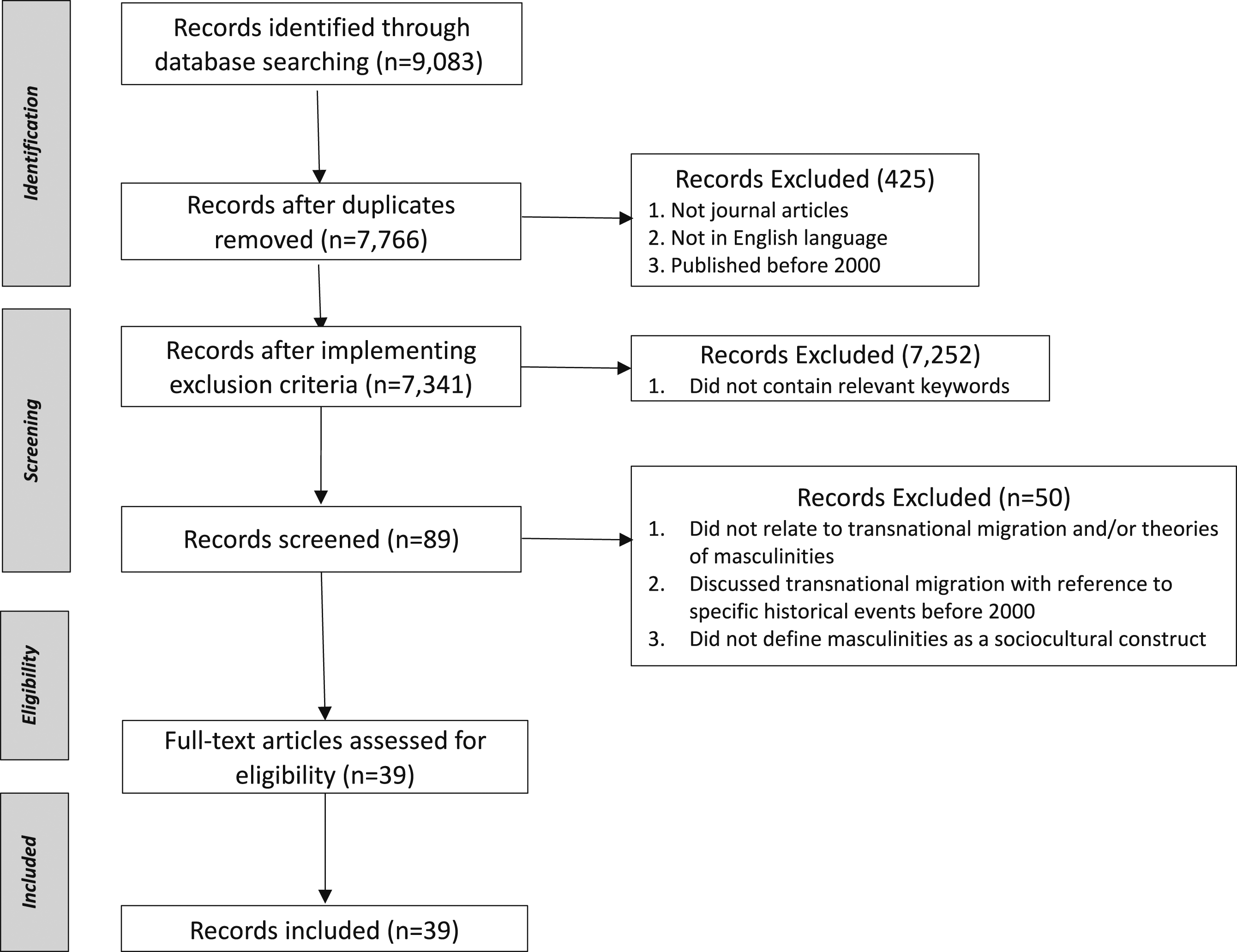
Stage 1: Identifying the Research Questions
The first stage in Arksey and O’Malley’s (2005) framework involves identifying the study’s main research question. Ours is as follows: What is the state of the existing research on the lived experiences of transnational migrant men in Canada from a sociocultural perspective? To answer our question, we formulated a number of specific research objectives: first, to conduct a systematic search of all peer-reviewed studies on transnational migrant men in Canada that incorporate or imply critical theories of masculinities; second, to provide an overview of the operational aspects of these studies as they relate to methodology, analytical approaches, and target group; third, to identify key themes in the literature that pertain to the relationship between men’s transnational migration to Canada and their masculinities; fourth, to spot the gaps in the existing literature where sociocultural perspectives on transnational migrant men in Canada are concerned.
Stage 2: Identifying Relevant Studies
The studies for the scoping review were retrieved by means of a rigorous search of academic scholarship on masculinities and transnational migration in Canada in ten targeted academic databases: Academic Search Complete, Gender Studies Database, LGBTQ+ Source, Political Science Complete, PsycNET, Psychology and Behavioral Sciences Collection, Race Relations Abstracts, Scopus, SocINDEX, and Web of Science. While Google Scholar is widely used by researchers, we decided against using it due to a large number of reference returns that do not meet our threshold for scholarly research (i.e., non-peer-reviewed studies such as graduate student theses) and its often-unwieldy number of duplicate references. The search was confined to the period of January 2000 to December 2023, allowing us to consider a wide range of relevant studies within a manageable timeframe. We completed our search of the databases using a combination of search terms (men OR male OR man OR mascul* OR boy OR manlin* OR maleness) AND (migra* or immigra* or emigra* or refugee or asylum seeker) AND (Canada or Canadian*). Individual search stratagems were formulated for each database using truncated search terms and Boolean operators to arrive at a more extensive set of results. The results were then saved and processed using the referencing software Zotero.
The initial search yielded 9083 references, including books, book chapters, journal publications, theses, and newspaper articles. After removing the duplicates using Zotero, 7766 references were retained. We then reviewed them using our inclusion criteria, which required that all references included in the sample be: (1) published in peer-reviewed journals; (2) published between January 2000 to December 2023; (3) published only in the English language. These inclusion criteria narrowed down the references to 7341. As this study focuses on examining peer-reviewed research, other journal publications such as editorials, book reviews, article reviews, brief reports, error corrections, letters to the editors, or reader reactions were excluded from the final list of entries.
Stage 3: Study Selection
Over the course of the third stage of the scoping review, the articles (n = 7341) were screened using Zotero based on the presence of at least one keyword from each of the three groups of keywords in either the title, abstract, or keywords sections. Group 1 keywords included men OR male OR man OR mascul* OR boy OR manlin* OR maleness. Group 2 keywords included migra* or immigra* or emigra* or refugee or asylum seeker. Group 3 keywords included Canada* or Canadian*. When the abstracts were not available in Zotero, we went back to the journal articles themselves to find the keywords. This screening process yielded 89 references. The remaining 7252 references were excluded for not containing keywords from one or more of the keyword groups.
The 84 articles that made it through the first round of screening were then assessed based on three specific exclusion criteria: (1) articles that did not relate to transnational migration and/or sociocultural perspectives on masculinities; (2) articles that discussed transnational migration with reference to historical events before 2000; and (3) articles that did not define masculinities as a sociocultural construct. Each article’s method and discussion sections were assessed according to these exclusion criteria, which narrowed the number of references to 39. The other 50 references were eliminated for meeting one or more exclusion criteria. The authors conducted the screening processes separately to determine the inclusion/exclusion of each study. Their determinations were then cross-validated by the other researcher. Differing determinations were discussed in order to reach a consensus.
Stage 4: Charting the Data
The data extraction process in a scoping review is referred to as charting the results (Rosenberg & Yates, 2010). The charting process generates a descriptive summary of the scholarly literature in question that corresponds with the aims and research questions of the scoping study (Archibald et al., 2016). During this fourth stage of the review, the significant features of the data obtained from the in-depth reading of the articles were charted as advised by Arksey and O'Malley (2005), Daudt et al. (2013), and Levac et al. (2010). This charting process includes the title of the article, author(s), year of publication, the aim of the study, target group, methodology, and main findings. The migrants’ geographical points of departure, places of residence in Canada, and sex, along with study design, data collection methods, and journal discipline, are discussed in the cross-tabulations table.
Stage 5: Collating, Summarizing, and Reporting the Results
During the fifth stage of the scoping review, both authors did an in-depth reading of the remaining 39 articles to examine how they addressed issues relating to transnational migration and masculinities in Canada. The authors used a theme-driven, pattern-based analysis to categorize and report on the significant features of the data systematically (Braun & Clarke, 2013). The in-depth reading of the articles revealed four separate but related key themes: intersectionality and identity, health and sexuality, labour and the workplace, and fatherhood and familial relations. The authors then coded the 39 journal articles individually into the four themes based on the primary focus of their analysis. Coding discrepancies were discussed by the authors and resolved through consensus.
Findings
Key Features of the Study Sample
Our findings (Chart 1) show that there were no publications on the topic of transnational migrant masculinities in Canada in nine of the 24 years we considered (i.e., 2000–2005, 2011, 2016, 2021). They also show that, while there were publications on this topic in the other 15 years we considered, they do not follow a linear trajectory. For example, 2019 saw the highest number of publications on men and migration in the Canadian context (n = 7, 18.9%), followed by 2015 (n = 5, 13.5%). Journal publication trends from January 2000 to December 2023.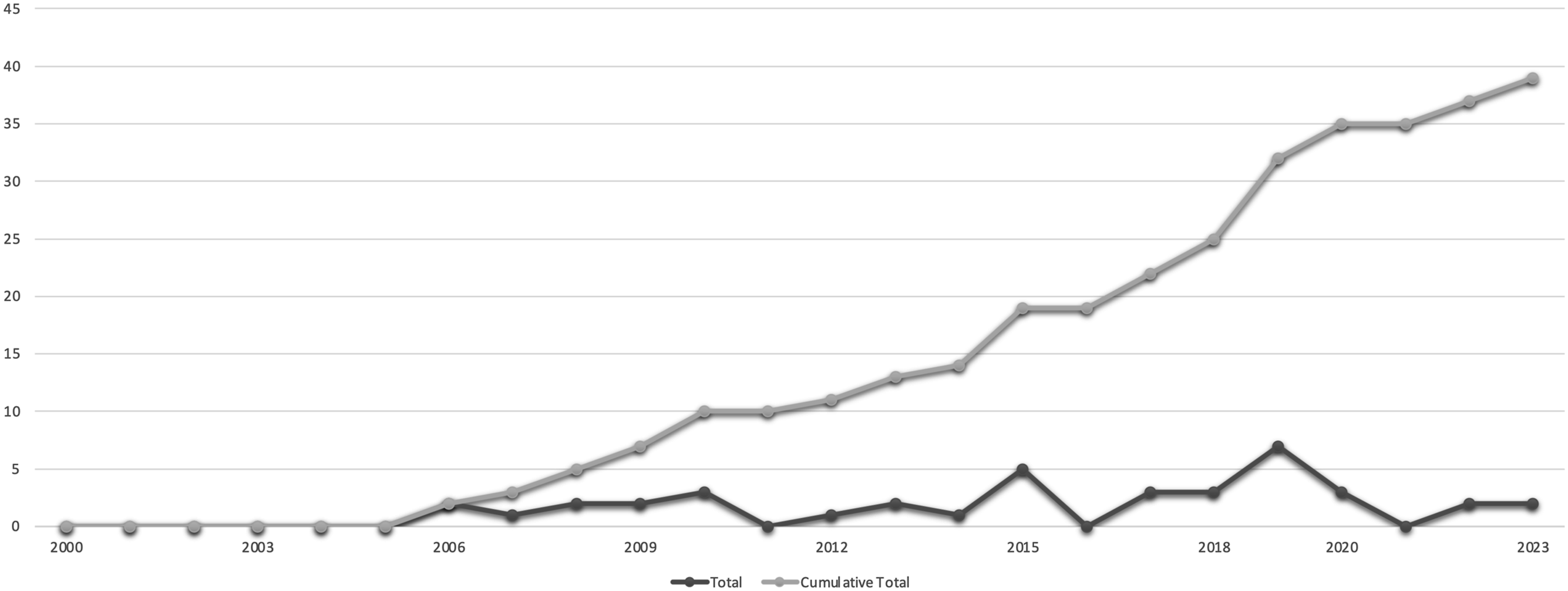
Studies of Migrants’ Geographical Points of Departure versus Place of Residence.
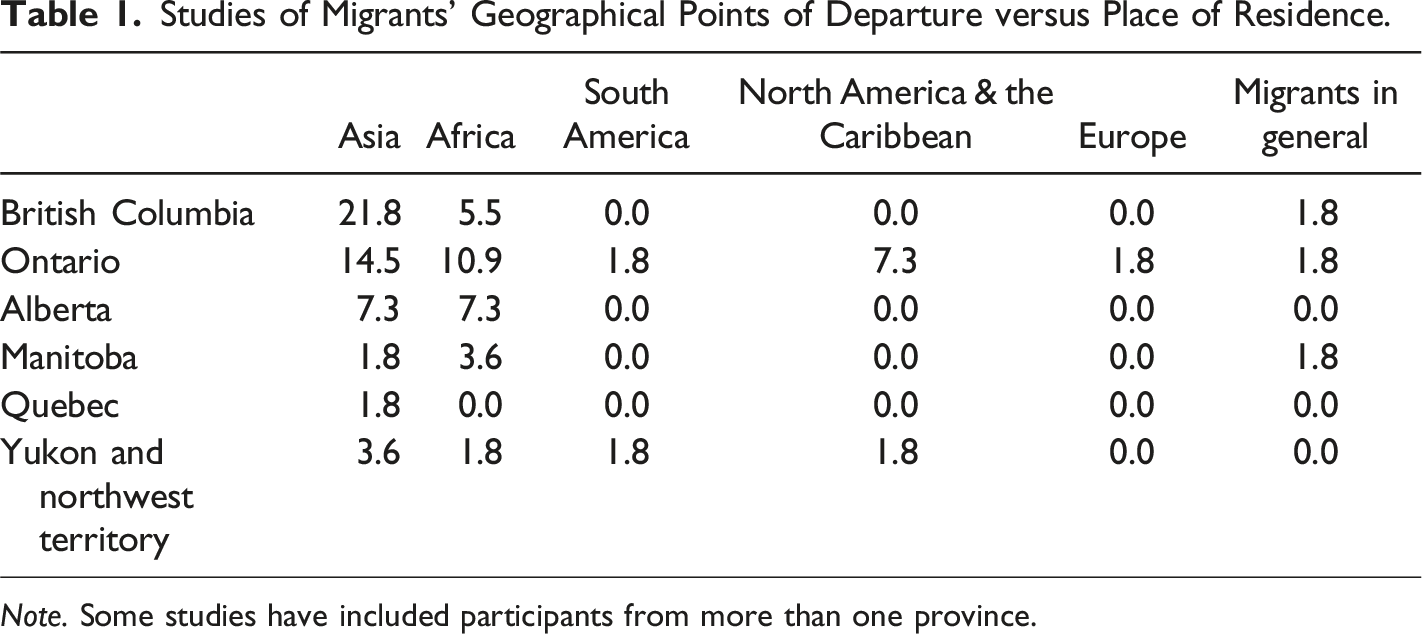
Note. Some studies have included participants from more than one province.
Cross-Tabulations of Results.
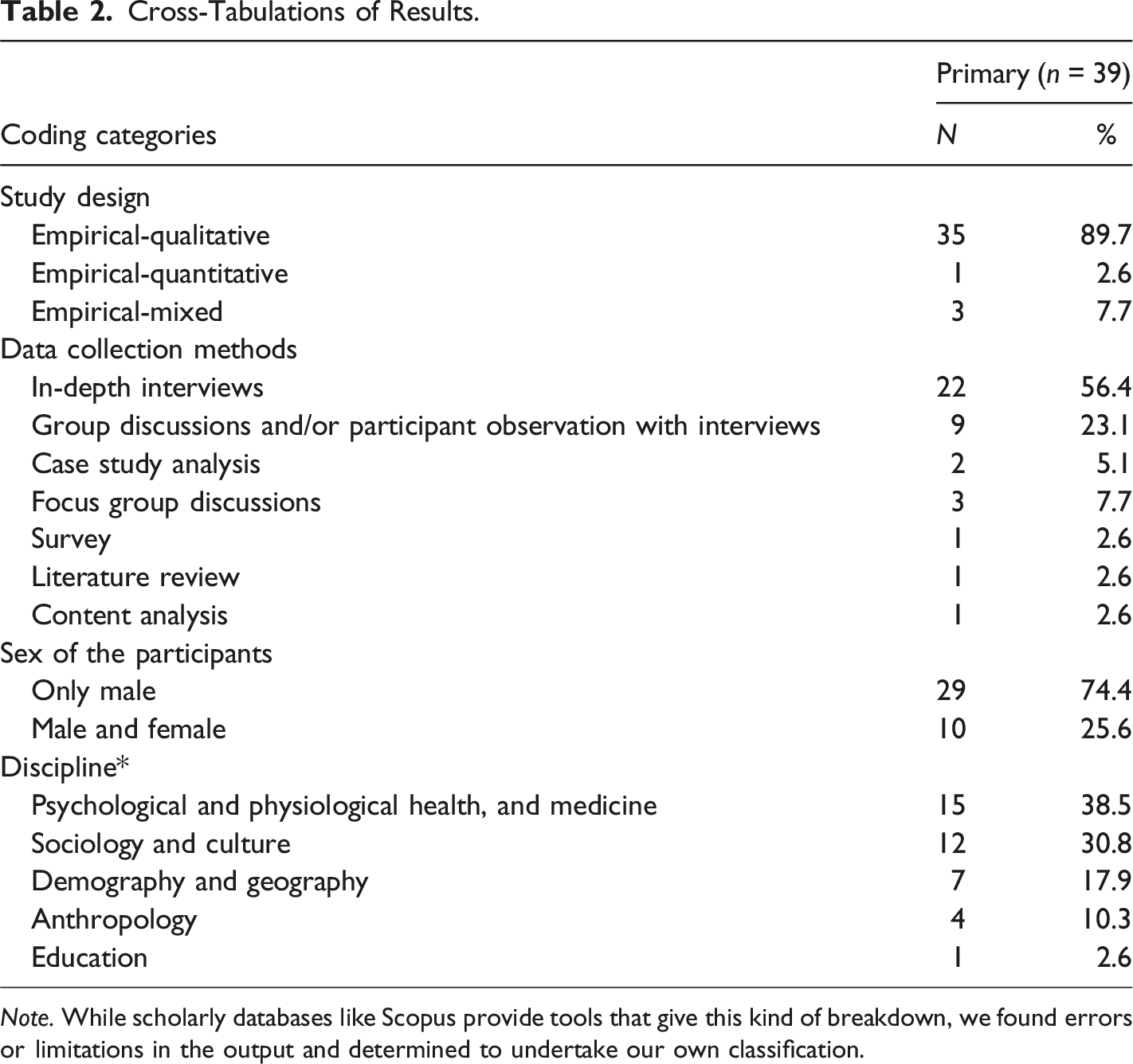
Note. While scholarly databases like Scopus provide tools that give this kind of breakdown, we found errors or limitations in the output and determined to undertake our own classification.
In terms of the analytic approaches used in the studies we reviewed, three-fourths (n = 30, 76.9%) focused on migrant men’s lived experiences and were characterized by methodologies including thematic analysis (n = 12, 30.8%), narrative analysis (n = 8, 20.5%), ethnographic analysis (n = 6, 15.4%), grounded theory (n = 3, 7.7%), and phenomenological analysis (n = 1, 2.6%). The remaining fourth of the studies used descriptive analysis (n = 7, 17.9%) and statistical analysis (n = 2, 5.1%). In addition, more than half the studies (n = 22, 56.4%) used Connell’s work on hegemonic masculinities, which was sometimes combined with intersectional approaches that explored masculinities outside the Western context (e.g., Black, African, Asian, or transnational masculinities). That said, most of the studies that used Connell’s work did not do so in an in-depth manner, often ignoring related concepts such as multiple masculinities and the patriarchal dividend (Connell, 2005). Only seven studies (e.g. Frost, 2010; Millington et al., 2008; Myzelev, 2019; Oliffe et al., 2009; Oliffe et al., 2010; Pereira, 2014; Thomas, 2020) used these or other related concepts to make sense of how masculinities intersect with transnational migrant men’s identities in the Canadian context. Apart from that of Connell, the work of well-known scholars such as Michael Kimmel, Mike Donaldson, and Richard Howson was also used in the migrant masculinities scholarship. Interestingly, almost one-fifth of the papers (n = 7, 17.9%) did not refer to any specific concepts pertaining to masculinities.
Almost three-quarters of the studies in our sample focused solely on male participants (n = 29, 74.4%), while the rest focused on both male and female participants (n = 10, 25.6%). Given that men and masculinities were the focus of the studies in our sample, the scholarship tended to work within the sex/gender binary of male/female and man/woman. Only two studies (5.1%) included participants who did not identify with the sex/gender binary. The study populations were evenly spread across a variety of age groups, though only a fourth of them (n = 9, 23.1%) included adolescent boys and young men aged between 15 to 25 years. None of the studies included adolescent girls and young women. Our data also shows that slightly more than one-third of the journal articles under review were written from the disciplinary perspectives of health and medicine (n = 15, 38.5%), followed by sociology and culture (n = 12, 30.8%) and demography and geography (n = 7, 17.9%).
Key Themes in the Study Sample
Our thematic analysis of the 39 studies in our sample revealed four separate but related themes pertaining to how the masculinities of migrant men in Canada are negotiated and renegotiated at different points in the migration process. These themes include intersectionality and identity, health and sexuality, labour and the workplace, and fatherhood and familial relations. While twenty-three articles (59.0%) focused on one of the four themes, the remaining sixteen articles (41.0%) included discussions of more than one of these themes simultaneously. We summarize the themes below to provide an overarching view of the scholarship on transnational migrant masculinities.
Intersectionality and Identity
Our thematic analysis revealed that almost three-fifths (n = 24, 61.5%) of the studies we reviewed were characterized by intersectional approaches to identity. Intersectionality is an analytical tool that reveals the intricate interplay of social relations (Davis, 2008), highlighting how intersecting systems—such as racism and classism—co-constitute individual identities and co-create experiences of inequality (Vaiou, 2018). Collins and Bilge (2016) identify six key areas of intersectional analysis: social inequality, power relations, relationality, social context, complexity, and social justice. Emphasizing the importance of adequate contextualization, they recommend that scholars focus on how power relations intersect in ways that are historically and politically specific. The studies we reviewed discussed a variety of social locations affecting the lived experiences of transnational migrant men in Canada, including culture/ethnicity, gender/masculinities, age/generations, sexuality/relationships. That said, some of these locations, such as disability, were absent from the studies.
The studies we reviewed show that intersectionality influences identity formation and development in the context of men’s post-migration masculinities, often affecting their native beliefs, their life experiences, and their relationship to life in Canada (e.g. Grabska & Fanjoy, 2015; Ho & Wong, 2006; Kato, 2015; Kaur, 2023; Morrow et al., 2019). Millington et al. (2008) examined the impact of tensions between Canadian gender norms and those of a migrant’s native country on men, particularly young adult men and boys. They focused on how these tensions contribute to experiences of racial and ethnic profiling, often concealed by the country’s multicultural rhetoric. Similarly, Kato (2015) explored Japanese cultural beliefs that emphasize the need for men to protect the country by staying in their homeland. She examined how these beliefs clash with those of Canada, which construe leaving the homeland and exploring what lies beyond it as a masculine trait.
Studies also show that second-generation migrant men are more likely to idealize the values and practices of native Canadians, particularly as they are represented by the popular media. First-generation migrants, however, are less prone to idealization of this nature due to having stronger connections with their native countries (Creese, 2013, 2015; Wei, 2017). In addition, boys and young adult men may oppose both the native masculinities of their fathers and the Canadian masculinities that surround them in their new country, leading them to create new protest masculinities (Frost, 2010; Wong & Poon, 2019). For example, Kaur (2023) shows that while there is an expectation that Punjabi men in Canada will embody the rural masculinities associated with landownership in Punjab, they often adopt alternative approaches to doing so when faced with difficulties in attaining this ideal or when they lack the inclination to try to attain it due to their unwillingness to return home. However, some may also distance themselves from their Canadian peers and the masculinities associated with them to adhere to the cultural mores native to their ancestral countries (Pereira, 2014; Wilson-Forsberg et al., 2020). Hilario et al. (2019) argue that recognizing post-migration suffering and highlighting the importance of compassion is helpful in alleviating the marginalization experienced by these young immigrant men.
Both the precarity and uncertainty brought about by migration often adversely affect the lives of migrant men. Their social landscapes shrink due to cultural, educational, employment, and language-related barriers, all of which have adverse effects on their masculinities (Okeke-Ihejirika & Salami, 2018; Wei, 2017). Similarly, forces such as racism, sexism, and classism, although they may not always be readily apparent, have a significant impact on the experiences of transnational migrants in areas such as education, employment, and competition among men (Johnson et al., 2019; Wong & Poon, 2019). Migrant men can also feel humiliated by their wives for failing to live up to the social norms of their native countries, reinforcing their negative self-evaluations and depleting their gendered sense of self (Affleck et al., 2018). Indeed, to play the role of provider, migrant men must sometimes work in occupational sectors dominated by women (e.g., care workers, nurses, and domestic helpers), which creates cognitive dissonance on the level of their gender identities (Storm & Lowndes, 2019) while also making them feel as though they do not measure up to Canadian heterosexual white hegemonic masculinities (Nyaga & Torres, 2017). The research suggests that by stripping them of their masculine privilege, the Canadian context often feminizes and infantilizes transnational migrant men (Davis, 2006), impacting their relationships with those seen to embody Canadian heterosexual white hegemonic masculinities (Johnson et al., 2019). That said, a few of the studies in our sample concluded that many transnational migrant men adhere to traditional gender norms that emphasize men’s power over women and other men (Myzelev, 2019). Some do so to avoid violence from other men, while others do so to avoid the feminization and infantilization that can result from the challenges of migration (Morrow et al., 2019).
Labour and the Workplace
The second recurring theme in our sample relates to labour and the workplace (n = 14, 35.9%). Transnational migrant men face many challenges, including the gendered segregation of work, decreased occupational status and prestige, and less emotional connection with other workers (Hilario et al., 2019; Shan, 2012). Shan (2012) adds that masculine notions of competition and individuality in Canadian engineering job culture encourage emotional repression and are indirectly supported by a capitalist culture that controls workers’ lives.
The migrant men in the studies we reviewed emphasized the importance of being a good breadwinner and the central role that it plays where masculinities are concerned (Hilario et al., 2019; Myzelev, 2019; Nyaga & Torres, 2017; Okeke-Ihejirika & Salami, 2018; Thomas, 2020; Wei, 2017). However, their lack of Canadian credentials, work experience, and language skills combined with gendered and racialized forms of discrimination in the labour market can force these men into menial jobs and part-time work. Not only do they feel they have failed as providers, but the post-migration economic precarity with which they often contend affects their integration into Canadian culture (Johnson et al., 2019; Okeke-Ihejirika & Salami, 2018; Wei, 2017). That said, transnational migrant men usually find a way to cope with the stress caused by working in feminized or occupationally precarious sectors. When they can, migrant male workers perform tasks within these sectors that require physical strength, are often better paid, and have better career prospects (Storm & Lowndes, 2019; Walton-Roberts, 2019).
Many migrant men enter care work professions dominated by women before they can access workplaces more often associated with hegemonic masculinities (Nyaga & Torres, 2017). Since, in Canada, care work is seen as feminine in nature, migrant men face significant barriers to entering care work sectors not only because they are men but also because many migrant masculinities are perceived as patriarchal and potentially violent by many Canadians (Storm & Lowndes, 2019). To enter these sectors, according to Thomas (2020), many migrant men adapt by adopting new gender identities characterized by more conventionally feminine traits while dismissing what is often seen as the degrading features of the job. The importance of work in the lives of migrant men is also underscored by Pereira (2014), whose study on Portuguese diasporic communities with lower income levels shows that migrant men, especially young migrant men, prefer work over education. He found that they often draw a negative connection between academic achievement and masculinities and, as a result, distance themselves from their Canadian peers while also adhering to their native values by working hard to immerse themselves in Canadian society (Wilson-Forsberg et al., 2020).
Health and Sexuality
More than two-fifths (n = 16, 41.0%) of the studies in the sample show how differences in roles, relationships, ideals, and identities among transnational migrant men are constructed by and through their cultural and spiritual traditions. The studies also focus on how these traditions influence how transnational migrant men understand physical activity, health-related behaviours, and sexual practices (Oliffe et al., 2007, 2009, 2010). More specifically, these studies demonstrate that while the health-related behaviours of migrant men are often similar to those of Canadian men (Oliffe et al., 2007, 2010), the former can also deviate from the latter depending on personal belief systems (Oliffe et al., 2009).
Some studies show that, once they reach their new country, migrant men often have to take on increased domestic responsibilities, including childcare, while also experiencing diminished social networks of friends and colleagues. The combination of these factors can have a damaging effect on their mental health, leading to depression, anxiety, alcoholism, and restlessness that negatively impacts their families and the people around them (Affleck et al., 2018; Kruth et al., 2023; Mao & Bottorff, 2017; Mao et al., 2015). Morrow et al. (2019) and Hilario et al. (2019) show that, when provided a space for discussion, migrant men reflect on their mental health concerns and acknowledge how their construction of hegemonic masculinities gets in the way of them pursuing help for both mental and physical health issues. They also address the importance of empathy and resisting norms of masculinities that make emotional expression taboo.
Men’s precarious post-migration realities, such as their lack of mastery of a new language, the undervaluation of their human capital, their absent social networks, and the ethnic and racial discrimination to which they are often subjected, limit their life options. These realities can increase their risk of migrant men—especially young migrant men—engaging in harmful activities like substance and alcohol abuse, unsafe sexual practices, unhealthy dietary practices, and street violence (Wong & Poon, 2019). In many cases, migration is bound up with young men’s ideas of sexual conquest, masculinized consumption, and leisure. Such attitudes encourage interracial sexual activities in Canada while also favouring sexual relationships among those who travel back to their home countries (Frohlick et al., 2018; Wei, 2017). Thomas (2020) finds that transnational migrant men, who are often believed to be hyper-masculine and hyper-sexual, are policed by authorities (e.g., bosses, supervisors, etc.) in both their native countries and in Canada, especially if their residency status is temporary in nature.
Fatherhood and Familial Relations
Almost a quarter (n = 9, 23.1%) of the studies suggest that transnational migrant men in Canada experience considerable change in their relationships with their family members, especially their wives and children. Okeke-Ihejirika and Salami (2018) argue that transnational migrant men have the potential to play an essential role as agents of change in terms of helping their families integrate into Canadian society. However, as Waters (2010) shows, existing scholarship on migrant masculinities focuses mainly on the transnational journeys of individual men who leave their families behind. The familial transformations that migrant men undergo thus require more probing research to achieve a better understanding of their lived experiences in the Canadian context.
Many of the articles reflect on how what appears to be gender equality in Canada affects the relationship dynamics between transnational migrant men and their family members. Focusing on African and Caribbean masculinities, Okeke-Ihejirika and Salami (2018) and Thomas (2020) show how women’s often elevated socioeconomic status in Canada conflicts with migrant men’s understanding of gender roles and, by extension, their deeply held beliefs that they should be the head of their household. Not being able to be the head of their household, along with their lack of control over their children’s socialization and overall development, creates a strained relationship between migrant men and their family members (Este, 2013). For example, Affleck et al.’s (2018) study on Sri Lankan masculinities in Canada shows how the loss of their familial authority, along with fewer community ties and responsibilities of the sort they had in the native country, negatively impact Sri Lankan men’s gender identities. Similarly, Nyaga and Torres’s (2017) study of Filipino transnational migrant men in Canada shows that they are expected to financially support both their nuclear and extended families. However, when they fail to do so, and their wives become the breadwinners of their families, it creates antipathy between transnational migrant men and their family members. Wei (2017) also shows how Chinese men become engaged in extramarital sexual relationships in transnational migration scenarios, impacting their conjugal relationships. That said, Mao et al. (2015) demonstrate that increased childcare obligations and family duties can be positive for migrant men, as it can encourage them to reduce negative health-related behaviours like tobacco use.
Discussion
The main objective of this scoping review was to provide a comprehensive study of peer-reviewed publications that analyze transnational migrant men and masculinities in Canada from a sociocultural perspective. In other words, the overarching aim of the paper was to scope the peer-reviewed research that employs a social constructionist approach that may or may not be situated in critical scholarship on men and masculinities. An original contribution to the existing literature, our study yielded some noteworthy findings.
To start, the existing literature that addresses the gendered realities of Black, Asian, and refugee men that are often absent in the mainstream literature on migration. What is more, it explores the relationship between masculinities and migration in intersectional terms, emphasizing how transnational migrant men’s experiences are both similar and different depending on their race, ethnicity, religion, health, sexuality, workplace, and family life. The literature also shows how migrant men must adapt to new roles, such as that of caregiver and nurturer, and negotiate new realities relating to mental health, physical health, and sexuality.
Most of the studies we reviewed focus on a number of key characteristics associated with masculinities, such as breadwinning, economic mobility, and household authority. These studies show how socioeconomic changes in the post-migration context affect men physically and mentally as many of them enter occupational sectors associated with women’s work, some become financially dependent on their wives, and others lose control over their families due to Canada’s culture of gender equality. Some also suffer humiliation as a result of not being able to fulfil the normative gender requirements of their native countries in the new countries they call home.
The research on transnational migrant masculinities in Canada over the last 24 years does, however, have some substantial limitations. The first is the scarcity of existing studies, as our in-depth search of the literature produced only 39 results. The gaps in the research on migrant masculinities in Canada are significant, demonstrating the importance of further inquiry into what is an increasingly pressing geopolitical phenomenon.
The second limitation is that the study populations profiled in the existing literature are almost all from economically disadvantaged countries in the global south, resulting in a partial perspective of south-north migration that is often characterized by recurring themes such as the devaluation of human capital, labour-related exploitation in capitalist societies, and cultural differences between societies in the global north and the global south. There is, in other words, a distinct need to expand the field of study so that it is more amenable to different research objects, questions, and approaches.
The third limitation is that while recent research on migrant masculinities explores how men reconstruct their identities after facing a loss of status, it tends not to adopt a more far-reaching life course perspective. As a result, the complexities of aging as they relate to migrant masculinities are often not attended to (Markussen, 2020). The experiences of young, highly skilled male migrants collaborating with industry leaders within a globalized neoliberal marketplace (Stahl & Zhao, 2023) are, therefore, absent in the existing literature.
The fourth limitation is that much of the literature examines gender in binary terms from a heteronormative perspective. More specifically, it tends to represent transnational male migrants as though their masculinities are straightforwardly aligned with dominant stereotypes of what it means to be a man while also focusing mainly on their roles as fathers, husbands, and sons. Only a couple of studies by Creese (2015) and Wei (2017) included respondents who identified as homosexual or bisexual.
The study itself has several limitations. First, it does not assess the quality of the scholarship in the sample or identify its most high-impact papers. Additionally, it only includes English language studies found in ten specific academic databases over a 24-year period. As a result, our inclusion criteria might have omitted some of the relevant literature that is currently available. To broaden the scope and obtain a more diverse set of results covering a wider range of topics, future reviews of research on transnational migrant masculinities should consider expanding the evidentiary field to include grey literature, non-English publications, and literature addressing trends in north-south migration.
Conclusion
Masculinities are configured and reconfigured through the migration process due to the sociocultural variations and intersectional nuances that characterize the construction of gender in both host and native countries (Charsley, 2005; Osella & Osella, 2000; Ye, 2014). On the one hand, this process creates new opportunities that allow men to perform their masculinities in a more flexible manner. On the other hand, however, it poses a challenge to their deeply held beliefs about gender, creating a sense of disorientation and frequently reinforcing their perceived otherness (Yeoh & Ramdas, 2014).
Our scoping review mapped 24 years of research on transnational migration and masculinities in the Canadian context. We found that the research increased over the 24-year period we mapped and that most of it relates to intersectionality and identity. In addition, we found that the majority of the existing research suggests that transnational migrant men in Canada often struggle to prove their masculinities as they deal with unsettling—and often unwanted—new realities, not to mention challenges to their perceptions of masculinities and gender identities.
While transnational migration affects the construction of masculinities in both native and host countries—giving rise to contextually flexible, fluid, and fractured versions—the research we reviewed indicates that masculine ideas that characterize the former still seem to be the benchmark for most men, even when they live in the latter (Connell, 2005; Donaldson & Howson, 2009; Kukreja, 2021; Urdea, 2020). Transnational migration scholarship must, therefore, deepen its understanding of how migrant men’s masculinities both change and stay the same across time and space. Doing so will allow scholars to more fully appreciate men’s distinct social locations while emphasizing how these shape and are shaped by existing relations of power.
Footnotes
Declaration of Conflicting Interests
The author(s) declared no potential conflicts of interest with respect to the research, authorship, and/or publication of this article.
Funding
The author(s) received no financial support for the research, authorship, and/or publication of this article.
