




Abstract
This article explores how the design and delivery of programs challenging gendered norms amongst men and boys can support attitude and behaviour change through more conscious and deliberate engagement with program content. Sixty-seven past participants of programs delivered by five Australian organisations completed an online survey based on their experiences. The Elaboration Likelihood Model (ELM) was used to explore participants' perspectives regarding motivation and ability to elaborate on program content, evidence of elaboration occurring, and experiences of attitude and behaviour change post-program. Program strengths included highlighting the personal relevance of program content, eliminating distractions and message comprehensibility. Opportunities for improvement included increasing message repetition and the number of message sources. Evidence of elaboration was present across all program types, including single-session programs, and included reflections on social and emotional learnings. The findings demonstrate how program design and delivery can support processing program material at a deeper and more conscious level, including when dealing with resource and time constraints.
Meaningful engagement of men and boys is critical to transforming the social and gender norms that reinforce gender inequality (Glinski et al., 2018; McCook, 2022). Fundamental to this is supporting men and boys to see themselves as part of the processes that enact sustainable, transformative change whilst retaining the foundational feminist principles of gender equality (Greig & Flood, 2020; Keddie, 2021). Central to this work is challenging the problematic, yet still dominant, masculine norms that toughness, emotional control and anger are desirable. At the same time, forms of vulnerability such as sadness, anxiety and fear are seen as weaknesses that should be suppressed (Rice et al., 2018). Adherence to such norms has been linked to poor help-seeking and skill deficits concerning emotional regulation, which can lead to the use of violence and aggression and risk-taking behaviours (Heilman et al., 2017; Irvine et al., 2018).
Although gender inequality continues to affect women disproportionately, the effects on, and engagement of, men and boys is a necessary focus to achieve gender equality at all levels of society (Glinski et al., 2018). The growing number of programs aimed at disrupting problematic gendered norms with men and boys, and the accompanying body of literature, demonstrate considerable variance in program design and delivery. Additionally, there remains a limited number of published program evaluations, particularly those measuring ongoing, post-program outcomes, resulting in a gap in understanding about what does and does not work and what is needed to ensure effects continue after program completion. In looking at several existing Australian programs working with men and boys, this article looks at how aspects of program design and delivery can increase participant engagement with program content, leading to more sustained attitude and behaviour change in relation to gendered norms.
Approaches to Working with Men and Boys
Approaches to working with men and boys include community mobilisation, advocacy, workplace and organisational development, research, policy reform, and, most prominently, education (Glinski et al., 2018; Stewart et al., 2021). Education-based interventions can be used to address a variety of issues, including gender equality (Kågesten & Chandra-Mouli, 2020; Stewart et al., 2021), prevention of violence against women (Casey et al., 2018; Jewkes et al., 2015), sexual and reproductive health (Dworkin et al., 2013; Ruane-McAteer et al., 2019), and mental health and wellbeing (Gwyther et al., 2019; Levy et al., 2020). A common aim exists across such programs despite variations in focus – to challenge the attitudes and behaviour of men and boys concerning restrictive masculine and gendered norms. These interventions use education and participatory learning, also called active learning, to raise awareness and understanding by unpacking and challenging such norms and promoting healthier versions or expressions of masculinity (Heilman et al., 2017; Jewkes et al., 2015; Stewart et al., 2022).
Achieving Attitude and Behaviour Change
The assumption that education will result in attitude and behaviour change is implicit in these interventions despite research consistently showing this relationship to be complex and non-linear and that change is not a guaranteed outcome (Carrington et al., 2014; Jewkes et al., 2015; Sultan et al., 2020). In the broader behaviour change literature, addressing social-psychological factors, such as attitudes and norms, is established as one of the necessary components for sustained behavioural change, with active learning one of the strategies used to enhance the transition between information provision and changes in attitude and behaviour (Darnton, 2008; Marteau et al., 2002). Active learning uses participatory instead of passive learning techniques and is popular in interventions working with men and boys (Stewart et al., 2021, 2022).
The literature on program evaluations that measure impact, including those that use education and active learning, is limited. As outlined by Greig and Flood’s (2020) review of the evidence base, existing evaluations tend to focus on individual and relational impacts in the immediate aftermath of the program, with longitudinal impact data and looking at broader program impact being relatively scarce (see also Ralph et al., 2020). Accordingly, it is challenging to establish program impact in terms of sustained changes to attitudes and behaviour in men and boys participating in programs addressing the various drivers of gender inequality (Greig & Flood, 2020; Stewart et al., 2021). However, when considering the underlying assumption that education will result in attitude and behaviour change, examining program design and delivery is another way to support the transition between the information provided and achieving shifts in participant attitudes and behaviour (Darnton, 2008). It is important to note that the authors do not consider this approach as a replacement for evaluation; however, it does provide an additional, relatively low-cost avenue to strengthen program impact.
Here dual-processing theories can be of use as they examine how we process information and how this can be manipulated to create longer-term attitude change through participant engagement (Darnton, 2008). One such theory is Petty and Cacioppo’s (1986) Elaboration Likelihood Model (ELM). The ELM posits that attitudes changed through a central (deliberative processing) route are more likely to show longevity, are a greater predictor of behaviour change and are more resistant to a return to pre-intervention attitudes and counter-arguments. The counterpoint is the peripheral (unconscious) route, or shortcut, mental processing. The peripheral route constitutes less conscious and more automatic processing, whilst the central route involves effortful deliberation and engagement with the information presented. The balance between the routes is determined by the individual’s motivation and ability to process the information, the critical factors needed for information deliberation and processing via the central route.
This study explores how program design and delivery can support participant engagement and, thus, attitude and behaviour change, focusing on programs seeking to disrupt problematic masculine and gendered norms. It does so by exploring the various program design and delivery approaches, including variations in settings, program length and target audiences, found in Australia. This study purposely captures a variety of program types to appropriately reflect the emerging and heterogeneous Australian landscape concerning the engagement of men and boys in these programs. This broader scope is also pertinent when considering the lack of evaluative evidence regarding impact across program types. The study explores how various program design and delivery approaches support program participants to elaborate on program content. After providing a brief literature review on the ELM, we explore participant reflections on program content and experiences post-program. The focus on program participants’ motivation and ability to elaborate on the information provided in the program allows for the identification of aspects of program design and delivery that support participant engagement and provides a framework through which practitioners, policymakers and funders can view current and future program design.
The Elaboration Likelihood Model
Petty and Cacioppo’s (1986) ELM focuses on the effects of persuasive information and the factors that are supportive of or act as barriers to information processing, and the strength of the attitude that forms as a result of this process (Cook et al., 2004). The broad applicability of the ELM has seen it utilised to assess attitude formation across several different contexts, including consumer behaviours (Sher & Lee, 2009), marketing and advertising (Chang et al., 2015), environmental issues (Steg, 2005), sustainability behaviours (Manca & Fornara, 2019; Manca et al., 2020), rape prevention (Foubert & McEwen, 1998; Gilbert et al., 1991), and men’s gender role attitudes (Brooks-Harris et al., 1996).
The ELM provides a framework to consider how information processing is supported and depends on a person’s motivation and ability to do so. According to Petty and Cacioppo (1986), motivation is what “propels and guides” (p. 218) information processing and is influenced by the level of personal relevance of the message being presented. This study will explore several factors that support an individual’s motivation to elaborate on the information, including personal relevance, personal responsibility and the number of message sources. These factors speak to one’s intention to process the information (see Figure 1). In addition, effort (trying, as opposed to intending, to process the information) is also necessary to increase the likelihood of elaboration. There are parallels between effort and the previously discussed assumptions that increased awareness will lead to attitude or behaviour change. Schematic depiction of factors affecting the likelihood of elaboration (adapted from Petty & Cacioppo, 1986, p. 219).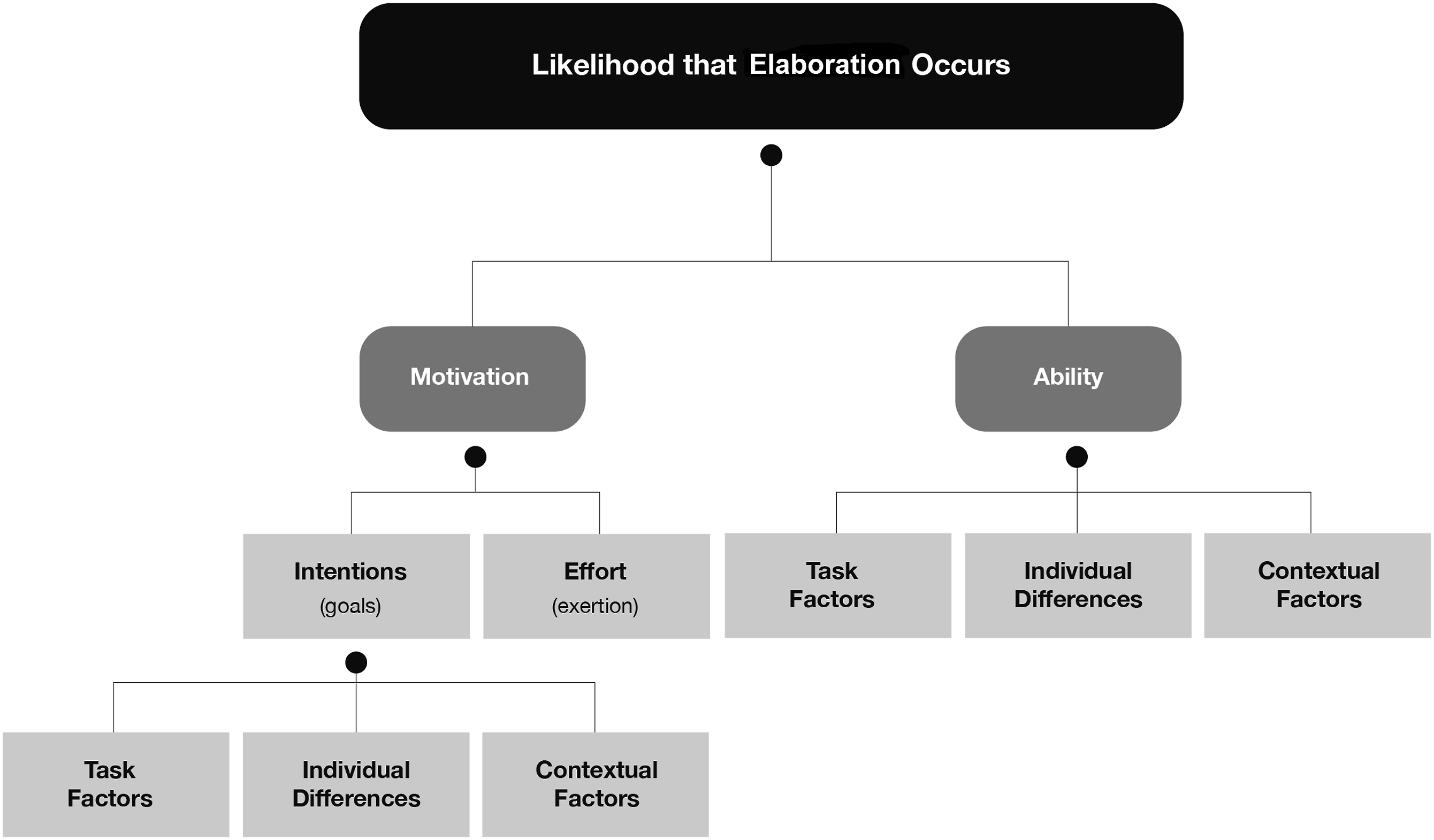
In addition to being motivated, individuals also need to have the ability to process the information and elaborate on it. Factors influencing one’s ability to elaborate on information include distractions, message repetition and message complexity/comprehensibility (Petty & Cacioppo, 1986). These factors affecting motivation and ability can be categorised as task or contextual or fall to individual differences (as depicted in Figure 1).
In the presence of motivation and ability, message elaboration generates an emotional response (either positive or negative), leading to attitude formation. Processing via the central route creates more robust and durable attitudes that are predictive of behaviour (Manca et al., 2020), a frequently desired outcome of programs targeting gender stereotypes and norms. In reality, however, changes in behaviour are rarely measured and are thus difficult to establish, meaning there is little evidence as to whether current program design and delivery support ongoing behaviour change (Stewart et al., 2021). Impact evaluation data is crucial yet requires long-term engagement with participants, which can sit outside program resource capabilities or the scope of participation (Glinski et al., 2018). The ELM provides a helpful tool for considering how program design and delivery supports participants to engage in central route processing. Additionally, identifying characteristics and strategies that support an individual’s motivation and ability to elaborate on the information provided will strengthen program design to ensure the greatest chance of behaviour change and increase the longevity of attitude change.
One of the foundational elements of ELM is that the greater the personal relevance of the information provided, the greater the likelihood it will be elaborated on (Manca et al., 2020; Petty & Cacioppo, 1986). This element aligns strongly with the foundational factor of personal relevance mentioned at the start of this article when working with men and boys concerning gender equality (Greig & Flood, 2020). When seeking to challenge outdated and rigid stereotypes and norms relating to gender and masculinity, more deliberate and considered processing of the information shared in programs working with men and boys would, in theory, increase the chances of sustained attitude and behaviour change. The ELM provides a practical, cost-effective tool to adapt program design and delivery to support participants in elaborating on the information provided.
Aims
This exploratory study looks at how program design and delivery can support attitude and behaviour change through participant engagement, looking at programs seeking to disrupt problematic masculine and gendered norms. In particular, the aspects of programs perceived to impact participants' motivation and ability. The study uses the ELM to identify strengths and gaps in supporting participant engagement in current program design and delivery. The ELM supports the need to create personal relevance for men and boys in pursuing gender equality and the elimination of the negative consequences experienced, disproportionally by women but also by men, that gender inequality allows. It is a helpful tool, given it focuses on processing information and attitude formation, which, as discussed, is the foundation of educational interventions working with men and boys in this space. The focus of the ELM on information processing also allows for the concurrent exploration of the heterogeneous approach to programs currently being utilised in Australia, allowing for the identification of common strengths and gaps in the differing program’s design and delivery. This article will highlight how attitudes and behaviour change can occur through these programs by answering the following questions: 1. Do the programs included in this study support participants' motivation and ability to elaborate on the information presented? 2. Did participants elaborate on program content? 3. Have participants experienced changes in their attitudes or behaviour since completing a program?
Methodology
Data collection for this study formed part of a larger project in which multiple organisations were approached based on the criterion that they deliver gender-focused programs to men or boys (University ethics approval – 26913). The sessions delivered had to use education and active learning, and the theme of masculinity and gendered stereotypes or norms was either the specific focus or featured as a topic within the program. The research team’s personal and professional networks were used to contact organisations. See Stewart et al. (2022) for further details of the larger project.
The onset of the global pandemic and extensive lockdowns in Australia across 2020-2021 saw the majority of organisations working in this space shift from primarily in-person delivery to online formats and, for some, the temporary cessation of delivery. As a result, only half (n = 5) of the organisations participating in the broader project referenced above (n = 10, see Stewart et al., 2022) agreed to distribute an anonymous online survey to collect qualitative data from previous program participants (details below). To accommodate this, we expanded the eligibility criteria to include participants who had undertaken programs across 2019 and 2020. A potential advantage of extending the eligibility criteria to include 2019 programs was that it allowed participants who had undertaken a program in 2019 more time (since program completion) to elaborate on program content. The disadvantage, however, was the resulting time lag between program participation and survey completion (up to 2 years) amongst respondents, with potential impacts on recruitment and the accuracy of participants' memories.
Survey distribution occurred between December 2020 and April 2021 via participating organisations’ communication channels, such as newsletters and social media accounts, to reach as many alums as possible. The survey contained a link to the Explanatory Statement, and participants were required to indicate they were over 18 years old or had parental consent if not.
Of the 113 survey responses received, 46 were excluded due to insufficient data (i.e., answered logistic questions only), and the remaining 67 were included in the analysis. Sixty-two participants completed the entire survey, and the remaining five completed between 45% and 82% and were included because the qualitative responses were relevant to the questions explored in this study. Again, the ongoing impacts of the global pandemic and rolling lockdowns in Australia likely impacted the number of survey responses received: disruptions to work, study, social interactions and connection, and the heavy toll on many people’s mental health were widespread during this period. Additionally, to minimise the resource demand on participating organisations during this time, the survey distribution methods prevent the ability to provide an approximate total pool of eligible participants.
The anonymous online survey was designed to obtain a comprehensive picture of participants' experiences using multiple-choice and open-answer questions. Participants answered questions about program logistics, content comprehension, prior knowledge of program content, experiences during and after the program, including who they had discussed the program with (if anyone), and changes in attitude and behaviour they had observed in themselves and others. In total, there were 27 closed-answer questions and 21 optional follow-up questions. A full copy of the survey is available from the authors upon request. Upon completion, participants could opt-in to the draw to win one of five $50 AUD gift vouchers.
Organisation and Survey Respondents
Survey responses were anonymous, and gender data was not collected; however, based on the recruitment criteria for organisations and the fact that all programs were targeted at male-only cohorts, it is reasonable to assume that most, if not all, respondents identified as male. Respondents' age ranged from 12 to 83 years (M = 28.64, Me = 16). Most respondents were 18 years or younger (n = 41, 61%), the remaining were 19 years or older (n = 25, 37%), and one did not provide their age. The survey asked for the year of attendance, of which 17 (25%) indicated they completed a program in 2019, 42 (63%) in 2020 and eight (12%) stated they had attended programs in both years. The majority of respondents indicated they had participated in the program in a face-to-face setting (n = 54, 81%), with a small number attending online (n = 5, 7%) or a combination of both (n = 8, 12%).
Organisation and Delivery Characteristics (n = 5).
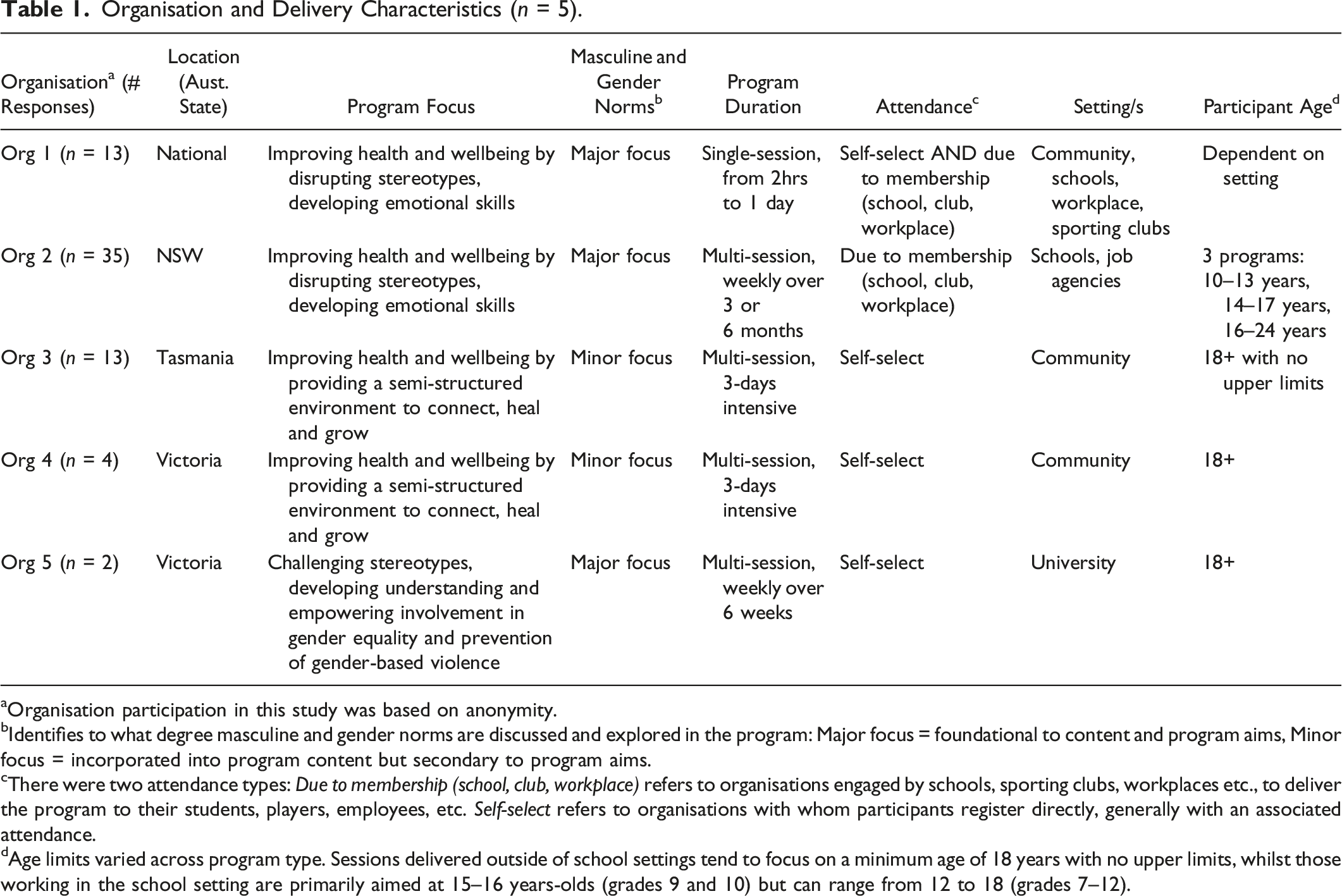
aOrganisation participation in this study was based on anonymity.
bIdentifies to what degree masculine and gender norms are discussed and explored in the program: Major focus = foundational to content and program aims, Minor focus = incorporated into program content but secondary to program aims.
cThere were two attendance types: Due to membership (school, club, workplace) refers to organisations engaged by schools, sporting clubs, workplaces etc., to deliver the program to their students, players, employees, etc. Self-select refers to organisations with whom participants register directly, generally with an associated attendance.
dAge limits varied across program type. Sessions delivered outside of school settings tend to focus on a minimum age of 18 years with no upper limits, whilst those working in the school setting are primarily aimed at 15–16 years-olds (grades 9 and 10) but can range from 12 to 18 (grades 7–12).
Analysis
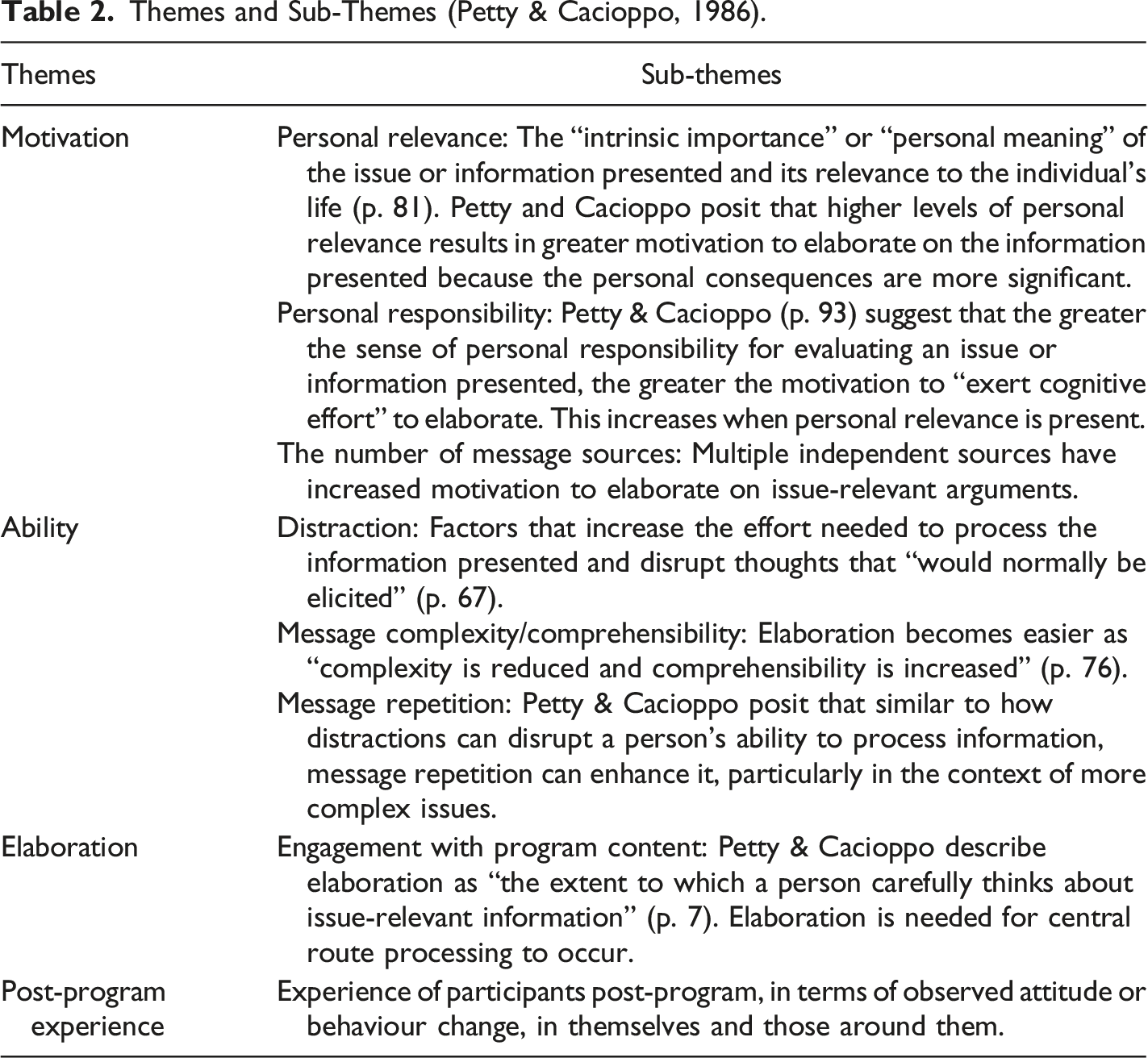
Themes and Sub-Themes (Petty & Cacioppo, 1986).
Findings
As per Table 2, six sub-themes were explored within the overall themes of Motivation and Ability. Based on a series of reflective questions in the survey designed to address research questions two and three, two additional themes, Elaboration and Post-program Experience, were included that capture participants' reflections on the program content and any ongoing impact they observed since participating.
One of the study’s key findings was that all five program types were represented across the four main themes and underlying six sub-themes (discussed in detail below). This finding is particularly pertinent considering the current heterogeneity of programs working with men and boys in Australia. It also speaks to the usefulness of applying the factors of ELM discussed in this paper to increase the impact regardless of program design and delivery.
Quotations representing participant voices have been used to describe each theme 1 (Corden & Sainsbury, 2006). The authors have attempted to ensure overall representation of participant voices across all themes from all five program types. In pursuing this representation, the most relevant quotes for each theme have been selected, which may result in an uneven representation of programs within themes, but not across them as a whole.
Theme 1 - Participants’ Motivation to Elaborate on Program Content
Personal Relevance
The majority of respondents, across all five programs, reported finding the program content relevant to them personally (n = 62, 93%), as well as the “people you care about” (n = 56, 84%) and the community and society more broadly (n = 55, 82%). Elaborations by participants included feeling safe, fostering a sense of connection, feeling “seen” by other men, and how the session helped broaden their understanding of how to “be a man”. As one participant (19, 2019, multi-session program, 3–6 months) put it, “each session had relevance to me or someone I knew, so I found it really easy to contribute [to] it [in] a small or bigger way.”
Twenty-eight respondents (42%) indicated they participated of their own volition, either as repeat attendees, via recommendation, or because they had heard about it via family, friends, colleagues and social media. The majority, however (n = 35, 52%), did the program because it was organised by their school, sports club, workplace, or a similar formal institution. Despite attendance not being self-instigated, these participants still reflected on the programs favourably, with one young man (14, 2020, multi-session program, 3–6 months) stating, “[my] year advisor basically forced me to do it even though I didn’t want to, but I ended up having lots of fun”. Although ‘having fun’ does not translate to relevance, further exploration of his survey responses revealed that across the duration of the program and with the support of the facilitators, he was able to see the program’s relevance to his life and those around him. Reflecting on what he took away from the program, he wrote, “they were very nice and patient about the learning side of XX, and they helped me understand everything”, and that he felt he had become more “respectful and considerate” since doing the program.
Personal Responsibility
As Petty and Cacioppo (1986) identified, the presence of personal relevance supports a greater sense of personal responsibility. The survey design limited a more detailed exploration of the participants’ sense of responsibility (see the limitations and future research section below). However, 84% of respondents (n = 56) across all five programs reported discussing the program with those in their lives (discussed further under Theme 4). This could be interpreted as a demonstration of respect for the content and a desire, or potentially a sense of responsibility, to share that. However, definitive conclusions cannot be drawn due to data collection limitations.
For some participants, the sense of responsibility to engage with the session and exert cognitive effort related to the personal investment they had made to attend the program. As one participant (36, 2020, multi-session program, 3-days intensive) highlighted, “I tried to be fully committed to the weekend and get the most out of the experience.” In addition to the time they were committing was the financial outlay made by those who participated in an opt-in program. These people had to cover the cost personally, as opposed to those attending a program organised by a formal institution they are a member of, such as a school or sporting club, as highlighted by these participants. A sentiment expressed by this participant (83, 2019 & 2020, multi-session program, 3-days intensive), “having paid a considerable amount of money to fly from WA to Tasmania to attend, there was no way I would miss any relevant issues presented.”
As outlined in Table 2, there is a link between personal relevance and personal responsibility. An increase in motivation to elaborate on session information and a sense of personal responsibility was evidenced by one participant whose connection with the program content saw him become a repeat attendee before then taking on the responsibility of connecting within his community, I have now done a couple of these sessions and learnt something new in each session. I have now also organised sessions to be held at my local club as we have had young men commit suicide lately. We need to offer a means to understand why, to all men and boys, there is a better way. (60, 2020, single-session program, 2 hours)
Number of Message Sources
Although the majority of respondents indicated they had no prior knowledge of the program content when asked to reflect if they had “heard or read about the topics covered in the session/program elsewhere”, 38 (57%) answered yes, and 28 (42%) answered no, with one respondent not providing an answer. Of those who had, nine indicated they had done so before the program/session, four after the program/session, with the majority (n = 25, 37%) indicating that it was both. Those who answered yes provided further details on where they had sourced information. This included general life experience, from family and friends, formal structures such as school or sporting clubs, other programs aimed at men and boys (e.g., men’s groups), and self-motivated sources such as articles, podcasts, and social media.
Theme 2 – Participants’ Ability to Elaborate on Program Content
Distractions
The survey asked specifically about distractions that may have impacted participants' ability to concentrate. External factors, including stress from things like conflict in personal relationships or friendship groups, competing school or work priorities, and logistical factors such as heatwaves and discomfort from sitting for extended periods, were identified by participants. Tiredness was the most frequently identified factor impacting concentration, including tiredness due to program session lengths and timing. Some participants noted the drawbacks of sessions running at night (after work or school), and others highlighted the benefits of timing (earlier in the day).
Additionally, the intensity of the program, particularly those run over a 3-days weekend, was identified as impacting participants' ability to maintain concentration and balance this with processing emotions as they arose. As highlighted by this participant (72, 2019 & 2020, multi-session program, 3-days intensive), “sessions can be very emotional and arouse strong personal feelings which over the long weekend leads to a feeling of being drained.”
For several participants, however, the benefits outweighed the effort involved, indicating their motivation to engage. As highlighted by these participant quotes: Although it went fairly late into the school day, I felt very locked in and engaged to the lesson as did my peers. (n/p, 2020, single-session program, half a day) Some days I just felt tired, but I was always excited for the program, so it made me come to school on a day I would normally stay home. (17, 2019, multi-session program, 3–6 months)
Participants noted the skill of the facilitators in combating distractions or waning group attention, praising their ability to connect with participants and draw their attention back to the program. As one participant (15, 2019, multi-session program, 3–6 months) described, “I was feeling fine during each session, and if I had a rough day, I would feel better talking with the mentors.”
Although differences between online and face-to-face delivery were not explored in this study, when explicitly asked about distractions, one participant (20, 2020, multi-session program, 6 weeks) reflected, “It was via zoom, so it was easy to get distracted and open up another tab on the computer. The sessions felt quite long also, so sometimes I would tune out a bit.”
Message Complexity and Comprehensibility
The majority of respondents reported having no prior knowledge of the program content (n = 42, 63%), with 88% (n = 59) across all five program approaches saying they understood >80% of the content delivered. The majority of respondents (n = 58, 87%) reported not having any difficulties understanding the information presented. 17 respondents expanded on their answers, indicating the session content was “easy”, “straightforward” and “clear”. A number specified it was “well-communicated”, and several identified the facilitators' importance in clear communication and clarification. The following quotes capture these sentiments: The way the mentors described made everything a lot easier to understand than previous talks about the same subject matter. (16, 2020, multi-session program, 3–6 months) Everything was explained, and if it wasn’t clear and someone needed some further explanation, it was provided. (38, 2019, multi-session program, 3-day intensive)
The remaining nine respondents who identified experiencing difficulty in understanding the content appeared to focus on specific topics, such as sexuality and gender, as exemplified by one participant (15, 2020, multi-session program, 3–6 months), “I found that when we learnt about different genders and LGBTAI+, I was very confused about that, but I understand now.”
One respondent noted they found the sessions very stressful, identifying this to be related to their self-identification as a “long-term mental health sufferer”, with another identifying personal hearing difficulties as a challenge to understanding session content.
Message Repetition
Forty survey respondents (70%) indicated they had attended multi-session programs delivered over multiple weeks. Sixteen participants (24%) attended programs run over three consecutive days (a weekend), and the remaining 11 respondents (16%) attended one-off sessions, which ranged from a few hours to half a day. It was noted that the brevity of one-off sessions detracted from participants' ability to retain the information presented to them long-term, as demonstrated in this response, “it was great in the moment, but [I] can’t really remember. [I’m] not sure about taking things away for the long term” (25, 2019, single-session program, 2 hours).
As per Table 1, program duration varied across the five organisations included in this study. Only two have programs delivered over multiple weeks, a delivery style that allows for cumulative message repetition. Two of the remaining three organisations deliver multiple sessions over three consecutive days, allowing for intensive message repetition.
Theme 3 - Participants’ Elaboration on Program Content
When asked about the main things they took away from attending the programs, participants cited the knowledge they had gained about drugs and alcohol, sexuality, consent, mental health, risk-taking, what it means to be a man and how to be a “better man”. In addition to knowledge, participants referenced social and emotional learnings and skills, focusing on respect for self and others. Key lessons focused on self-awareness and awareness of others, including empathy for other perspectives and life experiences, the realisation that they are “not alone” in how they feel and think or in their fears and insecurities, and the importance of friendship support networks in terms of opening up, asking for help and checking in on friends even when they don’t ask for help. The following quotes demonstrate these reflections across a variety of program types and participant ages: How to be more respectful towards others and towards myself and how to look after myself properly. (14, 2020, multi-session program, 3–6 months) Greater capacity for asking for help, talking about the struggles of daily life and how to deal with these things. (58, 2019 & 2020, multi-session program, 3-days intensive) Always check in with your mates and ask if they're ok. And that as [a] young adult/man, it’s ok to be able to talk about your feelings or express deep emotions without fear of being judged or put down. (18, 2019, single-session program, 2 hours)
Most participants across all five programs (n = 56, 84%) indicated they had thought about the program since doing it. Reflections concentrated on the impact of the session, with multiple respondents stating they would like to do it again or would highly recommend it to others. Responses focused on continued reflection on the lessons learned (outlined above) and an improved sense of self-awareness and self-confidence, as demonstrated in the following quotes: I really enjoyed it. I've explained it to a few of my friends and family and have opened up good conversations. I think that the program has empowered me with skills that can help me with those conversations. (20, 2020, multi-session program, 6 weeks) [I’ve] reflected on the positive experience, and [it] helps me be more open and connected in life generally. (53, 2020, single-session program, 3-days intensive) I have stopped and thought about the consequences of my future actions. (16, 2020, multi-session program, 3–6 months)
Several participants also reflected on the general benefits of doing a program like this and the need for it to be more widely available and accessible: I would like all men and boys to be exposed to this model of being a man. (72, 2019 & 2020, multi-session program, 3-days intensive) Wishing I could go back to it. That it should be in every school from a young, impressionable age. (38, 2019, multi-session program, 3-days intensive)
Theme 4 - Experiences of Changed Attitudes and Behaviour Post-Program
Eighty-four percent of participants (n = 56) across all five programs reported that they had spoken to someone about the program since doing it. This included friends (in particular those they had done the session with), family (parents, partners, siblings, kids), colleagues, teachers, care workers, counsellors, and even in some cases, strangers. Things discussed include program content, what they took away from it and how much they enjoyed it. Some participants went beyond just sharing their experience and indicated their desire to “spread the word” and encourage the men in their lives to do the program, and some even specified how they have incorporated what they learnt into everyday interactions: I love to talk about the link between sexist jokes and violence. It’s so easy to brush a ‘joke’ under the rug or accuse someone of being precious if they get offended; however, these jokes can become the bedrock of an unhealthy culture that leads to violence. (20, 2020, multi-session program, 6 weeks)
Reactions to these conversations were predominantly positive, with participants describing them as happy, supportive, engaged, and interested. Some reported mixed responses, including hesitation, nervousness, believing it to be “hippy trippy”, and peers being dismissive. Several participants talked about how these conversations led to more conversations and changes in their lives: My wife was appreciative of my candid discussion about discovering a better way to relate, and subsequent discussions have significantly improved our relationship. We are better able to express our needs, concerns and issues and are closer than ever. (73, 2019, multi-session program, 3-days intensive)
Fifty-six participants (84%) across all five programs reported that they had used something they had learnt since doing the program, in line with the previous two themes. This included making better choices in regards to consumption of alcohol and porn, treatment of others, anger management, becoming more self-aware, respectful and supportive of others, and feeling better equipped to communicate with the people in their lives and to listen to others.
The majority responded in the affirmative when asked if they had noticed any changes in themselves (n = 53, 79%) and, to a lesser extent, in others (n = 33, 49%) since doing the program. Those who reported changes since doing the program talked about improved self-confidence and acceptance, having greater understanding and knowledge, being more respectful and equitable, seeing shifts in their attitudes towards women and consent, and being more open about feelings and showing vulnerability. One participant (21, 2020, single-session program, 2 hours) reflected on no longer feeling out of place within the group he’d completed the program with and that there had been a shift around the former “pack mentality” with others realising the toxic nature of their behaviour. Another participant (19, 2019, multi-session program, 3–6 months) noted a decline in “locker room” talk since doing the program, and personally feeling calmer and finding it easier to deal with pressure.
Respondents who did not experience change felt that attending the program affirmed the type of man they already considered themselves to be or indicated that the program length (i.e., single-session programs) prevented them from experiencing longer-term change.
Discussion
In this study, we explored how programs that seek to unpack masculine and gender norms support their participants to engage with program content deliberately and consciously. Engagement from participants was evident across all program delivery types and against the majority of factors identified to support motivation and ability in the ELM. Furthermore, participant reflections demonstrated deliberate elaboration around knowledge and social and emotional skills up to 2 years post-participation. Evident strengths in program design and delivery in the programs considered in this study included fostering personal relevance of the program content, eliminating and navigating distractions that affect participants’ ability to concentrate, ensuring message comprehensibility through clear, accessible content, and creating an environment in which participants felt comfortable to ask questions and seek clarification. Aspects that could be further enhanced to support content elaboration included the number of message sources, message repetition and timing of program sessions. Additionally, generating a sense of personal responsibility to engage with program content was identified as an area requiring further exploration. The findings of this study support the application of the ELM in program design and delivery as a means of maximising engagement and elaboration on content, as highlighted by participants’ self-reflective reports on attitude and behaviour change.
Ways Programs Support Participant’s Motivation and Ability to Elaborate
As captured in this study, program design and delivery support participants’ motivation and ability to engage with program content. The authors acknowledge the limitations the study sample places on assessing change at scale; however, this study aims to demonstrate how change can occur and the program design and delivery elements that support this. Identifying these factors allows programs to replicate elements associated with success.
Regarding motivation, most participants (over 80%) indicated a strong sense of personal relevance in relation to the program content, not only for themselves but also for the people in their lives and society more broadly. Petty and Cacioppo (1986) discuss the strength of attitude formation when based on self-generated arguments, particularly concerning direct experience, as opposed to indirect exposure (e.g., messages from others). In the context of the programs explored in this study, there is a strong focus on developing a sense of community and shared experience among the participant groups, which lends itself to the development of self-generated arguments within the group (see also Stewart et al., 2021). In addition to supporting participants to engage more deliberately with the program content, fostering personal connection has been identified as foundational to engaging men and boys in gender equality efforts (Greig & Flood, 2020).
Parallel to personal relevance is personal responsibility, with Petty and Cacioppo (1986) identifying the presence of the former as being supportive of the latter. Indeed, participant reflections support this notion. This included their ability to make connections between the program content and those in their lives and society more broadly, that the majority went on to discuss what they had learnt with loved ones and were able to reflect on the emotional and social learning that the programs fostered. The current study design did not allow participants' sense of responsibility to engage with program content to be unpacked further, particularly in relation to the influence of the group dynamics and is an area for further exploration.
From participants' perspectives, facilitators are skilled at circumnavigating distractions, with facilitators, in particular, playing a pivotal role in capturing and maintaining participants' attention. A recent study by Stewart et al. (2022) made similar observations when exploring strategies used by facilitators to engage men and boys in their programs. Stewart et al. (2022) found facilitators were seen as critical to participant engagement, from both the facilitator and program participants' perspectives, in creating the right environment for these sessions to be delivered and connecting with the men and boys in the room (see also Beel et al., 2020). Participants did note the timing of sessions, in terms of the time of day it is delivered, as well as session length, could negatively affect concentration. These logistics can be challenging to control, particularly for sessions delivered outside traditional settings such as schools or workplaces. Still, it is something to consider when scheduling programs.
Another strength of programs captured in this study was message comprehensibility. This was evident in participants' reflections on what they learnt, their comprehension of program content, and the depth of elaboration they demonstrated. Also noted was when faced with challenging topics, the facilitators again played a critical role in supporting participants. In line with the existing literature, this included providing an environment in which they felt comfortable asking questions and providing the support needed for individuals to overcome complexity (see Beel et al., 2020; Stewart et al., 2022).
Opportunities for Improvement
In addition to taking into consideration delivery logistics such as the timing of sessions (length and time of day), there are ways that programs could strengthen participants' motivation and ability to engage in deliberate and conscious information processing. In particular, when considering the number of message sources and message repetition. The literature shows that providing participants with the opportunity to engage at length with program content allows them the space to develop a personal connection (Stewart et al., 2021). This could be through the delivery of multiple sessions in ongoing programs, something the literature consistently calls for (Barker et al., 2007; Stewart et al., 2021, 2022), but only two of the five organisations featured in this study currently deliver. Another approach is to work across multiple levels of participants' lives, which has been shown to support attitude and behaviour change in participants, including programs working with men and boys (Stewart et al., 2021). An example would be a school that engages parents, teachers, and students, ensuring messaging and modelling continuity across critical aspects of the boys’/students’ lives.
Participant Elaboration and Program Impact
One of this study’s key findings is that participants' elaboration was evident across all program types, including single-session programs. Although the literature indicates that multi-session programs are more effective in enacting change (Barker et al., 2007; Stewart et al., 2021), the reality is they are not always feasible. The findings of this study demonstrate the potential use of the ELM as a tool to strengthen program design and delivery to maximise participant engagement, regardless of the number of sessions. It also identifies several ways these programs have the potential to help men from their early teens to their retirement years, with those at the latter end reflecting on the need for programs such as these to start at a young age. Over 80% of participants surveyed in this study indicated they had thought about, talked about, and used the information they learnt in the sessions since doing it and had seen a change in themselves and, to a lesser extent, others. Participants not only reflected on what they learnt from a knowledge perspective but also, without prompting, referenced social and emotional learning in their responses, indicating improvements in their self-awareness, confidence and empathy for others. It is important, however, to bear in mind the self-report nature of the survey data and the presence of reporting bias, such as social desirability. The reliance on self-report data has been identified as a significant critique of evaluations of these types of programs (Greig & Flood, 2020; Stewart et al., 2021) and is applicable in the context of this study also.
Although this study did not look at program content, organisational eligibility required masculinity and gendered stereotypes or norms to be either the specific focus or featured as a topic within the program. As such, these programs can be seen to support gender equality through multiple avenues, including (but not limited to) addressing the known drivers of gender-based violence (Our Watch et al., 2015) and supporting the mental health and wellbeing of men and boys (Gwyther et al., 2019). In saying this, valid concerns raised by feminist scholars regarding the diversion of resources away from efforts that support women and girls must continue to be heeded, and caution must be taken regarding the perpetuation of gender binaries and hierarchies that working with single-sex cohorts presents (Keddie, 2021; McCook, 2022). However, the elaboration observed in this sample, whilst non-representative, speaks to the value of these programs in supporting social and emotional learning and engaging men in transforming social and gender norms that reinforce gender inequality (Glinski et al., 2018). This research supports the need for ongoing investment in research, evaluation and funding to increase the efficacy of and access to these programs.
Limitations and Future Research
Limitations of the study include the use of convenience sampling, which led to a small sample size and inequality in distribution across participating organisations and program types. The unequal distribution across participating organisations can be in part attributed to the opt-in nature of the survey, with a high response rate from Organisation 2 (see Table 1) resulting in a disproportionate representation of program participants under the age of 18. This was despite three of the five organisations catering to adults 18 years and older. Whilst the self-selected sample of 67 respondents cannot be considered representative, the purpose of the research was to explore how change can occur using ELM as a framework rather than whether these programs work more generally. The use of self-reported data must also be considered when interpreting the study’s findings. Most participants attended programs organised on their behalf, and whilst they attended voluntarily, they did not self-select into the program as they did in this study. The biased nature of the opt-in sample needs to be recognised, although incentives to participate were offered to overcome this. As does the absence of insights from those who chose not to participate and the possibility this was due to negative or dissatisfactory experiences. Future research could overcome this by using a randomised selection of program participants. This approach could also be used to control for the length of time between program completion and data collection, something which was not controlled for in this study and could have influenced participant reflections (positively or negatively) and their motivation to participate in the study.
Further research is needed to explore how programs foster participants' sense of responsibility to challenge gender power dynamics and norms, not just for their benefit but also for the broader issue of gender equality. Personal responsibility in this cohort tended to reflect the amount of personal investment the participant had contributed (e.g., time or money). Future research would benefit from exploring personal responsibility and how various intersecting factors, such as gender and sexual identity, culture, race, religion and so on, impact participants' motivation and ability to engage with program content and how programs support this in different groups of men. This is an area that would benefit from greater exploration in practice and research.
Conclusion
This study examined the use of program design and delivery to support participant engagement and elaboration on program content. Doing so demonstrates how change can occur in participants' attitudes and behaviour through programs that disrupt and challenge masculine and gendered norms. The programs examined showed support for participants' motivation and ability to elaborate on the information presented, regardless of program length. The use of ELM highlights how these strategies of engagement support participants in processing program material at a deeper and more conscious level and serve as an effective tool for strengthening program design and delivery. This is pertinent for current programs, particularly in the face of time and resource constraints and the development of future programs working with men and boys.
Footnotes
Author Note
Rebecca Stewart is currently a Research Fellow at the Monash Gender and Family Violence Prevention Centre. At the time the research was conducted and orginal manuscript was written however, she was a doctoral candidate at the Monash Sustainable Development Institute.
Declaration of Conflicting Interests
The author(s) declared no potential conflicts of interest with respect to the research, authorship, and/or publication of this article.
Funding
The author(s) disclosed receipt of the following financial support for the research, authorship, and/or publication of this article: This research received financial support from Australian Government; RTP Scholarship and VicHealth; GRIP Industry Partnership Scholarship.
