



Abstract
The participation of men is critical to preventing domestic violence, however, there is still little understanding of the capacities and supports that men need for well-being and healthy relationships. A men’s survey was designed to explore and identify the capacities and resources required by a diverse population of Canadian men. Data was collected on-line and through trained community-based research assistants. Over 2,000 men from 20 ethno-cultural groups responded, and multiple challenges and enablers were identified. Responses from Indigenous and African Canadian men highlight the need for an intersectional lens in understanding men’s well-being and violence prevention.
Keywords
Violence against women (VAW) and girls is a persistent global concern (World Health Organization [WHO], 2013, 2021). While the participation or engagement of men is critical to preventing and ending violence against women and other forms of interpersonal violence (Fabiano et al., 2003; Kaufman, 2001; Murphy, 2010), there is insufficient understanding of the services, supports, and capacities that men need to engage in more nurturing relationships and experience a greater sense of well-being. This lack of knowledge contributes to the barriers that men face in accessing appropriate and effective programming. It also creates a design challenge when developing services and supports to address the diverse and intersectional realities that men experience.
Additional research is required to bridge the knowledge gap between domestic violence prevention research and men’s well-being as a violence prevention marker. In response, our research team explored the capacities and resources required by a diverse population of men in the western Canadian province of Alberta, through a men’s survey (MS) that was collectively designed by 71 stakeholders (52 men and 19 women) representing community, human services agencies, and academic sectors. The objective of the study was to gather men’s insights on well-being and healthy relationships. As well, this primary prevention research sought to explore support and service needs; catalyze dialogue and action within community, agency and policy spheres; and, build the capacity of culturally and linguistically diverse community researchers through training and leadership development. The survey was distributed to self-identified men over the age of eighteen residing in the Canadian province of Alberta with a total population of over 4 million.
Literature
In Canada and around the globe, men commit the majority of violent crime (75%), including sexual assaults, physical assaults with a weapon, and homicides (Savage, 2019; Sinha, 2013; Ursel et al., 2008; WHO, 2013, 2016). Men in Canada are responsible for a vast majority of serious intimate partner violence in Canada causing injury, loss of work, and greater impacts including loss of life (Conroy et al., 2019). Responding to this pervasive social issue, “Men Roles and Masculinities in the Perspective of a Culture of Peace,” organized by the United Nations Educational Scientific and Cultural Organization consortium in 1997, signaled an increasing interest in the potential for men’s increased roles in violence prevention (Kaufman, 2001). During this same time period, the 1994 Cairo Program of Action and the Beijing Platform for Action (United Nations [UN], 1995) underscored this emerging focus. Notably, involving men in the prevention of violence and promotion of gender equity were among the key Millennium Development Goals ([MDG] UN, 2010), which underlined the links between these issues in the areas of education access, the distribution of wealth, and political representation (UN, 2010). While the United Nations MDG Report (2015) demonstrated that some progress has been made in the areas of girls’ education and maternal and child health, there is no specific evidence that men have adopted further roles in preventing or ending violence.
Researchers and prevention advocates emphasize that in addition to girls and women, violence and rigid gender/sexuality stereotypes and expectations can also have negative consequences for men and boys, as they do for everyone on the gender spectrum (Kaufman, 2001; Lorenzetti et al., 2017). This is well articulated by Minerson et al. (2011), who discuss the cost of patriarchy for men, including “men’s violence against other men, economic insecurity, the pressures to provide and protect . . . the negative impacts of crime, war and the emotional and psychological cost of masculinity” (p. 13). Porter (2010), following Kivel (1998), offered the metaphor of the “man box,” for its restrictive nature and emphasized that intergenerational teachings and role-modeling (e.g., father/son) continue to pass down rigid masculinity “scripts” to the next generations. Upholding these untenable ideals has been linked to risk-taking behaviors that can decrease physical and mental health, men’s self-care, and help-seeking activities (Katz, 1995; Northern Health, 2011). Further, the costs of gender non-conformity are well articulated by research focused on sexual stigma and homo/bi/transphobic violence (Murphy, 2010; Poon, 2011; Skelton, 1997; Tomsen & Mason, 2001). This is well-stated as “the common threads uniting violence against women, gays, lesbians, and trans folks” (Murphy, 2010, p. 103)
Kaufman’s (1987) Triad of Men’s Violence contended that patriarchy works in tandem with structurally approved male privilege, social norms, legislative, and historical approval for men’s violence, as well as childhood exposure to male violence in the home. This is a widespread concern globally and in Canada specifically. Reporting on a comunity-based nationally representative health survey (N = 23,395), Afifi et al. (2014) found that 34% of men indicated they had been victims of abuse in childhood and then showed a further link to suicide ideation and attempts. Further, studies on intergenerational violence, and in particular child abuse or neglect by fathers or male guardians show an elevated risk for effected boys’ to enact violence in later-life interpersonal relationships (Herrenkohl et al., 2008; Miles-Doan, 1998; Osofsky, 2000; Smith & Farrington, 2004). While there is an abundance of research on the association between child maltreatment and the experiences of interpersonal violence later in life, there is an absence of models that centralize men’s well-being and the promotion of healthy relationships as a violence prevention measure. In addition, an absence of theorizing on the multiple impacts of oppression (e.g., racism, colonization) on men’s well-being and their ability to form healthy and nurturing interpersonal relationships is an important omission in most violence prevention literature (Carillo & Tello, 2008). Although a number of prevention initiatives have emerged over the last 25 years that focus on shifting masculinity norms and promoting gender equity (Fabiano et al., 2003; Kaufman, 2001), further program evaluation is needed (Flood, 2010; Minerson et al., 2011) especially for initiatives involving ethno-culturally diverse men.
In Canada, Indigenous women, men, two-spirit people, children, and whole communities experience increased violence as a result of colonization, ongoing violent assertion of white supremacy and the related issues of intergenerational trauma, economic disadvantage, health disparity, high rates of depression, suicide, substance misuse, and male violence; these are compounding factors that define the scope of intimate partner violence within Indigenous communities (Bopp et al., 2003; Longclaws et al., 1994; Proulx & Perrault, 2000). Early research by Brownridge (2008, 2010) underscored the overrepresentation of both Indigenous women and men as victims/survivors of domestic violence, suggesting that further research was needed to uncover the multi-faceted impact of colonization as a substantial risk for domestic violence. Most recently, the climate of structural colonial violence in Canada was systematically documented by the recent inquiry into missing and murdered Indigenous women, girls and two-spirit people (National Inquiry into Missing and Murdered Indigenous Women and Girls, 2019).
While distinct from experiences of Indigenous men, Black men in Canada experience the intersecting oppressions of anti-Black racism and economic, social and political disadvantage, grounded in historical oppression (James et al., 2010). Further, for African-born Canadians and other racialized migrants who are forced to resettle due to political or state violence, systemic discrimination in their adopted country can compound trauma from home country experiences (Lorenzetti & Este, 2010; Maynard, 2017). The pervasive structural disadvantage faced by Indigenous and African-Canadian men and the leadership of members of these communities in men’s grassroots organizing prompted the team’s decision to focus on these two populations for this analysis. We explore the enablers and barriers related to these groups of men’s well-being and healthy relationships, as well as the supports and programs that they identified as necessary aspects of services for men. Members of the community have encouraged further exploration of the experiences of South Asian, Latino, and GBTQ2SIA+ male identified individuals which is beyond the scope of this article.
Theoretical Framework
The study was guided by a theoretical framework that included intersectionality and anti-oppressive theory/practice. Intersectionality, advanced by Crenshaw (1989), discusses the impact or confluence of race, class and gender on identity; the researchers were informed by the understanding that colonization, race, class, gender, sexual identity, and other socially constructed categories can act as barriers to well-being and healthy, positive relationships (Bopp et al., 2003; Brownridge, 2003, 2008; Ristock & Timbang, 2005). Further, The MS was conceptualized as an anti-oppressive practice towards preventing violence and promoting positive and healthy relationships. Anti-oppressive theory/practice (AOT/P) focuses on strategies to minimize power differences in society and secure the rights to which all people are entitled (Dalrymple & Burke, 2006; Dominelli, 2002; Dumbrill & Yee, 2018). An objective of AOT/P is to promote social justice, which was conceptualized by the research team as situating healthy relationships without violence as a key aspect of community well-being and social justice, defined as “all members of a society hav[ing] the same basic rights, protections, opportunities, obligations, and social benefits. Social justice entails advocacy to confront discrimination, oppression, and institutional inequities” (Barker, 2003, pp. 404–405). This framework was a relevant grounding for the study as it was situated within an understanding of structural violence (Farmer, 2004) wherein “multiple levels (micro to macro), types (direct, indirect), and actors (individual, institutional) [are] involved in producing violence against marginalized and oppressed communities” (Lorenzetti et al., 2017, p. 175).
The authors of this article represent a diverse team of community/agency/academic researchers from various ethno-cultural, gender, and linguistic backgrounds. We identify as anticolonial/antiracist and feminist activists, researchers, and community organizers from Indigenous, Black, and various settler contexts, with some among us having or currently working in the women’s shelters, sexual assault center movements, Indigenous-led organizations and centers to support immigrant and refugee women and men’s violence prevention initiatives in Canada, the Philippines and Guyana. The diversity of our leadership team was a strength that influenced the design, implementation and knowledge-exchange associated with this research.
Methodology
A community-based participatory action research (CBR/PAR) methodology was used for this study. CBR “recognizes the diverse manifestations of oppression, and. . . an effective way to resist them require[s] a social justice approach to practice that recognizes the dynamic interplay of group work, research, and community change” (Jacobson & Rugeley, 2007, p. 22). PAR focuses on participation, knowledge development, people’s empowerment, and social justice as key aspects of a research process (Fals Borda & Anisur Rahman, 1991; Reason & Bradbury, 2008). Men’s Action Network Calgary (MAN-C), a grassroots community group, initiated the project as a means of reaching out to a large population of men to gain insights on well-being and healthy relationships.
The decision to develop a men’s “needs survey” (Berkowitz, 1996) led the group to recruit, through a snowball technique (Patton, 2002), a team of eighteen co-researchers for the project. Based on the CBR/PAR method, the research team emerged from pockets of conversations occurring across the western Canadian province of Alberta to increase men’s involvement in violence prevention activities and from emerging community initiatives focused on self-development and well-being for men and boys. Co-researchers included community leaders, academics and representatives from various stakeholder groups and organizations involved in violence prevention work with men. Once established, the leadership team led the design of the survey, which was developed and finalized through three focus groups that involved the input of 71 stakeholders (52 men and 19 women). A shared and diffuse leadership model was enacted based on a consensus decision-making model developed by members of one of the grassroots organizing groups. Shared leadership enabled stakeholder groups to run their own focus groups with diverse communities of men in order to build the survey questions. Academic team members were reflexive on their use of power and worked to support the community process while ensuring that ethics protocols were followed. The survey was conceived as a needs assessment and was not tested for validity and reliability.
The team adapted Petersen and Alexander’s (2001) six-stage needs assessment protocol, which included a planning phase, strategy development, data identification, and selection of broad research questions, and the implementation and analysis of the needs survey through consensus decision making. Program and policy development and resource allocation, associated with Petersen and Alexander’s (2001) steps five and six, are ongoing and addressed further in the discussion. A needs survey method was beneficial in reaching a large number of Alberta men and male-identified persons within a brief time period at a limited cost. A structured questionnaire containing 23 quantitative and qualitative questions was prepared to collect information related to personal well-being, healthy relationships and violence prevention (see Supplemental Appendix 1 for Survey Tool).
Many scales have been developed and validated to measure men’s attitudes toward masculinity (Thompson & Bennett, 2015). The Gender Equitable Men Scale (GEMS) is widely adopted and was selected for the International Men and Gender Equality Survey (IMAGES). The aim of the scale is to provide information on prevailing gender norms which influence men and women’s behaviors and provide a scale to evaluate gender equity program outcomes (Pulerwitz & Barker, 2008). As a point of comparison, the Men’s Survey aligned with this goal to provide a focus on men’s roles in violence prevention with a focus on increasing men’s well-being. Drawing from an action research perspective, the Men’s Survey acts as a point of engagement with survey respondents to elicit men’s thoughts about their own well-being, barriers to their well-being and ways they that do and can engage in preventing violence against women. Men were asked to rate a number of variables that enhanced or limited well-being and healthy relationships and identify healthy-relationships skills. Variables listed in the survey were identified through the pre-survey focus groups and in consultation with the literature. Qualitative questions focused on help-seeking behaviors, views of masculinity and perceived roles in violence prevention.
The survey was administered during a 3-month period to men 18+ and used purposive, convenience, and snowball sampling methods (Patton, 2002). Data were collected both online using SurveyMonkey and in-person by 51 community-based researchers (35 men and 16 women) from more than 20 ethno-cultural backgrounds. The following five methods were used to collect data: (a) survey link was shared through various social media platforms (including Facebook and Twitter); (b) mainstream media (one radio and one television interview); (c) a recruitment notice was sent through personal and organizational emails of co-researchers and related organizations; (d) in-person recruitment and survey completion occurred at community events including cultural and faith establishments; and (e) a website that was established to host the survey link and provide information about the survey. Word-of-mouth and community networks associated with the 51 community-based researchers were key strengths that promoted involvement from such a large and diverse respondent group.
A key purpose of including community-based researchers in this study was to reach out to respondents from diverse communities such as Indigenous men, diverse ethno-cultural men, young men, sexually diverse men, and men with diverse abilities. Community-based researchers were members of the selected communities and existing networks from which the sampling strategy was implemented. For example, community-based researchers gathered responses at a Cambodian temple, Indigenous cultural events, Spanish-speaking church congregations and human rights events. Relationships of trust and earlier community-building efforts created the foundation from which to gather community-based researchers as well as participants. Such an undertaking would not have been possible without the community embeddedness of the leadership team.
Research assistants were trained prior to the data collection through five training sessions comprised of seven modules and additional on-the-ground support. The training included an overview of the research objectives and intent, a grounding in community-based research, survey research, ethical codes of conduct and data collection. The survey script and protocols were shared during the training sessions with opportunities to role-play the recruitment process and discuss the project implementation. The initial full-day training session was recorded to serve as a continuous learning tool for community members engaged in the work. For in-person data collection, surveys were completed on hard-copies or iPads.
The Survey Leadership Team, under the direction of a data manager, collaborated to analyze and interpret survey responses. The SurveyMonkey platform was used to filter, compare, and produce outputs of aggregated quantitative data. Additional data processing was done in SPSS by the data manager. The output from SPSS was compiled into usable tables and figures using Microsoft Excel and Word. While 2,425 individual surveys were submitted, over 200 were removed due to errors, because they did not fit with the participant inclusion criteria or because their submissions were substantially incomplete (less than three questions answered). The final number of surveys included in the analysis was 2,214.
In addition to the analysis of quantitative data, the initial coding of qualitative information was done in Excel, and then aggregated and shared with teams consisting of community, agency, and academic leads that worked together to code and analyze responses to specific survey questions. The teams were tasked with thematic analysis to manually review, analyze, and code responses. Corbin and Strauss’ (1990) analysis method of open, axial, and selective coding was employed. Broad or open codes were created from the analysis. The second step of selective coding emerged when the coded data were analyzed concomitantly by two co-researchers. The preliminary themes and supporting quotes were then shared with the data manager and research lead to enhance the trustworthiness of the process (Lincoln & Guba, 1985).
As our community work was both focused on and co-led by Indigenous and immigrant men, including the data manager and research mentor who are of African heritage, we analyzed responses from two broad and diverse ethno-cultural groups. The selected communities were men who identified as Indigenous (within Turtle Island/ Canada) and men who were born in Africa. Throughout the study we use the term African-Canadian for the respondent group, all of whom were born in Africa and currently living in Canada. This community-specific data was used to support and further enable our grassroots work with men and families from these communities and also highlight issues related to intersectionality in our study.
The purpose of our survey was to initiate a needed conversation regarding well-being in violence prevention, therefore we selected to focus our analysis and discussion on frequencies, descriptive statistics and key themes. As our study was exploratory and our sampling method was community-led (snowball, convivence, word-of-mouth), we chose not to create comparisons and generalizations about and between the respondent groups.
The key findings from the survey were translated into a presentation that was shared through thirteen consultations with over 350 stakeholders in the two main cities of the province where the data were collected. This verification process further validated the results and was also a congruent practice of CBR/PAR, wherein knowledge-exchange is embedded within the research process (Bargal, 2008).
Results
Background Characteristics of the Respondents
A total of 2,214 men from 42 different cities and towns of the province responded to the MS. Of these, the majority (72%) were born in Canada; more than one of four (28%) were immigrants (first generation Canadians); a total of 87 (4%) respondents were Indigenous, 153 (7%) were African-Canadians who were born in Africa (See Figure 1). Considering the proportion of Indigenous people (5%) and immigrants (22%) living in Canada (Statistics Canada, 2017), the survey managed to reach a similar proportion of respective men. The majority of respondents (91%) stated that they were either heterosexual or straight. One out of 10 reported one or more disabilities and 21% stated that they had a mental health concern. The most frequently reported mental health concerns were depression, anxiety, and trauma or post-traumatic stress disorder (PTSD).
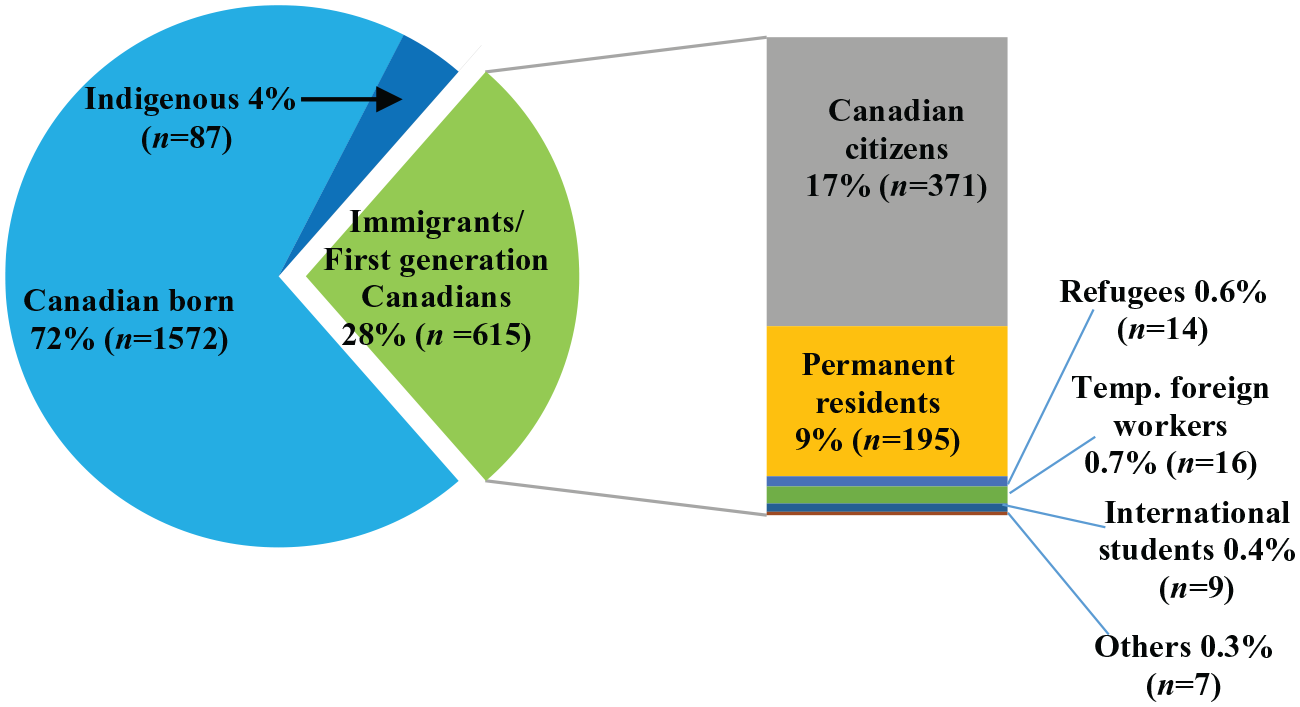
Indigenous and settler status.
Financial Well-Being
A small majority of the overall respondents (53%) reported that they earned sufficient funds to meet their expenses and also put money towards their savings. About 25% stated that their earnings were just sufficient enough to pay their bills, more than 15% struggled to make their ends meet, and more than 2% could not meet their basic needs. Among Indigenous respondents, slightly more than one-third (36%) stated that they earned enough to save while 18% had sufficient income to pay their bills. Approximately one third struggled (28%) or could not (7%) pay their bills. Of the Canadian men who were African-born, a quarter (25%), stated that they were able to save, and 31% had only enough for bills. One-third (33%) stated that they struggled to pay their living expenses and 5% could not pay their expenses.
Enablers for Well-Being and Healthy Interpersonal Relationships
Respondents were asked to identify five key factors that promoted well-being and healthy relationships as well as the skills needed for their maintenance. More than 70% of men (74%) considered family and financial stability (71%) as the two most important factors that enabled well-being and healthy relationships. The other top well-being factors were friends (53%), a good job (48%), and having stable and appropriate housing (44%).
Indigenous men
When asked about enablers for well-being and healthy relationships, a majority of Indigenous men reported family (66%), financial stability (58%), and stable and secure housing (57%) as some of the key factors. Other identified enablers included friends (48%) spirituality (45%), a good job (43%), being treated fairly (41%), and having someone to trust (41%).
African-Canadian men
Canadian men who had immigrated from Africa reported that family (77%) and a good job (67%) were most important, followed by spirituality (60%), friends (51%), and financial stability (50%). Both meaningful goals and being treated fairly by others were selected with the same frequency (42.5%).
Skills for Well-Being and Healthy Interpersonal Relationships
When asked to identify five personal skills needed to form healthy relationships, the top three factors of the large participant group were trust (70%), listening (68%), and patience (58%). Additional answers included being able to express your feelings (48%), being flexible to adapt to changes (47%), self-acceptance (42%), and understanding and caring about other people’s feelings (41%).
Indigenous men
A majority of the men (83%) reported that trust was the most important personal skill needed to form healthy relationships followed by listening (64%), understanding and caring about other people’s feelings (59%) and patience (58%). Almost half (49%) also noted that an ability to express one’s feelings and self-acceptance (45.8%) were necessary.
African-Canadian men
Trust (80%), listening (80%), and patience (77%) were most frequently reported by this respondent group. Other frequently noted skills were understanding and caring about other people’s feelings (46%) and being able to express their feelings (44%).
Barriers to Well-Being and Healthy Interpersonal Relationships
Financial challenges (62%) were viewed as a major obstacle to achieving well-being and healthy relationships; a substantial number also reported family conflict (53%), addiction (44%) and an unsatisfactory job (43%) as barriers. Of note, traumatic or past negative experiences were barriers (41%), while financial and family factors were identified as both key barriers and enablers to well-being.
Indigenous men
Indigenous men identified addictions (58%), family conflict (57%), financial challenges (55%), and trauma or past negative experiences (52%). These were followed closely by insecure housing/homelessness (49%) and discrimination (46%) as additional key concerns.
African-Canadian men
Financial challenges (61%) and discrimination (59%) were reported as prominent barriers. These were followed by family conflict/relationship problems (48%). Insufficient work, training, or qualifications (47%) and, relatedly, a lack of recognition of education, training, or qualifications (46%) were also frequently reported.
Supports for Well-Being and Healthy Interpersonal Relationships
Almost all (96%) respondents reported that men need support and services for well-being and healthy relationships. Surprisingly, 76% of respondents did not know where to go or whom to approach for assistance. In addition, almost one-third stated that society’s “masculinity expectations” deterred them from accessing services.
When asked about the type of support men would use, the majority (66%) stated they would seek peer support, followed by professional counseling (54%), healthy male role-models (46%); and workshops focused on skill-building (41%). Of interest, no one support strategy factored highly, even by an arbitrary standard of 70% or above, which requires further discussion. Statements below, shared by respondents, do provide examples of the reasons why men identified these support mechanisms.
Peer support
Men identified peers as a critical source of support; this was described by one respondent as “a place where I can feel comfortable talking among friends.” This sentiment was echoed by a survey participant who voiced the importance of receiving support from both family members and peers, reflected by this statement: “My first place to look for support would always be my family and friends so anything else would need to provide services that I could not get there.”
Counseling
Professional counseling was deemed by many as a support that they would use. One participant described this as, “counselling where we can talk about our personal issue(s) with confidentiality.” Another individual revealed his preference for men’s counseling, “I would prefer going to a counseling men’s group.”
Healthy role models
The presence of positive role models was identified as another key element that would help men develop healthy relationships in their lives. As remarked by one respondent, “men need to be shown that it is ok to express fear and sadness to other men. We need leaders willing to role model that behavior. Honest expressions of vulnerability are true actions of courage.”
Financial mentoring
The need for financial mentoring was a frequently identified priority. One participant described this as, “a place that can help in financial support when we need help.” Closely related was the comment put forth by another individual, “a place where men can get support about issues men face regarding employment.”
Multiple supports
The multiple responses provided by participants suggest that respondents viewed services and supports for men as diverse and multifaceted. Many noted that more than one type of support is needed towards developing or enhancing well-being and healthy relationships. Having a “safe and secure place” specifically for men such as “community based programs,” where they “can share their concerns on different topics” was highlighted, with some stating that they “can learn from each other” and “break isolation.”
Roles in Violence Prevention
In addition to well-being and healthy relationships, respondents were asked, “What actions can you take, if any, to contribute to men’s well-being, and healthy relationships without violence or abuse?” Almost half (45%) agreed that they could contribute towards the prevention of violence. About 44% were unsure if they could contribute and 11% did not think that they had a role to play.
Of those who responded affirmatively to the need for men’s involvement in violence prevention, approximately 15% commented that supports could include the use of spiritual services like church or yoga and professional resources such as counseling. Another 13% recommended discussing issues related to healthy relationships and violence in various forums. Recommendations included healthy communication, healthy relationships, and role modeling to youth and peers in community gathering spaces such as faith establishments and social and recreation centers. Examples were identified, such as talking about men’s vulnerabilities, speaking against homophobia, and actively speaking out as engaged bystanders. About 19% expressed that sharing and talking about relationships as well as not using or condoning violence were important strategies. Taking a stand against violence, speaking out, reporting to the police and sharing violence prevention messages with the media were examples provided. Some respondents were already involved in men’s activities to involve men in supporting relevant activities like “Daughters day” and “Gay Pride Parade.” Men who did not identify a role for themselves in preventing violence were not asked to explain the reason for their response. This is an area for future research.
Limitations
The MS was designed as a community-created needs assessment and is therefore not representative of men within the province where it was administered, nor can it be generalized to larger populations of men. At the same time, the survey design was pilot tested through focus groups and consultations with 52 men and 19 women prior to the data collection. The insights from over 2,000 men, while not generalizable, can be used as a foundation for further research, program development, and community-based activities.
While numerous efforts were extended to include the perspectives of Indigenous men, immigrants/first-generation Canadians, Black, racialized, transgender, gender diverse and non-binary, all-abilities, young, and senior men, the results may not incorporate the views and experiences of many individuals and communities of men. Snowball sampling and community-based research, while an appropriate approach for a community survey, is reflected in the limitation of respondent demographics. A lack of funding and human resources during the brief survey recruitment period prevented most of the language-specific surveys from being implemented, aside from the Spanish survey. Further, coordination and implementation of such a broad and bold community research project became untenable at times, as interest from the public, organizations, government representatives, and the media overwhelmed the limited capacity of the team, which relied on thousands of volunteer hours.
The study purpose and sampling method were designed to outreach into the community in order to begin a needed conversation, which is reflected in the descriptive nature of our analysis and discussion. Further study on specific well-being enablers, barriers, and respondent demographics as well as experiences with or use of violence would strengthen further studies of this nature.
Discussion and Recommendations
The MS was designed and implemented as a violence primary prevention assessment for men that obtained perspectives on the skills, services, and supports needed to promote and maintain well-being and healthy relationships. Administered during a 3-month period within a Canadian province of over 4 million, the survey gathered responses from a diverse group of men. The results from the study dispel a common myth that men do not or will not seek supports. Instead, for this group of respondents, a majority viewed services and supports as important platforms to promote mental wellness and interpersonal relationships, although most did not know where to turn for help. This general view was re-affirmed in community dialogues held by local agencies in two major cities that used the MS findings to catalyze discussion and verify the results. Over 300 community leaders and service providers were asked to respond to the key findings from the survey. This process underscored a need to improve outreach and service access for men.
Further revealing was that one-third of the MS respondents would not seek help because of societal expectations related to mainstream masculinity norms. This finding reinforces prior literature indicating that social conditioning can affect men’s ability or willingness to seek support and assistance for interpersonal issues. The White Ribbon Campaign, a violence prevention organization that focuses on men, notes that help-seeking barriers are among the “emotional and psychological cost of masculinity” (Minerson et al., 2011, p. 13). Rigid masculinity expectations have been documented in the literature as obstacles to help-seeking (Barker et al., 2007; Bowering, 2011) and healthy emotional development and expression, as “social and emotional intelligence” (Gottman, 1998) is not encouraged or prioritized. Therefore, it becomes essential to create environments among men that support, prioritize, and promote empathy, compassion, critical thinking, inquiry, and social connectedness as priority actions (Siegel, 2013).
Financial challenges were identified as the predominant barrier to men’s well-being and healthy relationships, with obtaining successful employment as another key factor. For Indigenous and African-Canadian men, financial challenges were heightened. This finding is supported by literature that associates financial stress and under-employment with racism for both Indigenous and racialized workers (Block & Galabuzi, 2011), and for immigrants, the absence of recognition for foreign education credentials from professions controlled by professional associations (Guerrero & Rothstein, 2012; Guo, 2009; Lorenzetti et al., 2014a).
Further, African-Canadian respondents indicated that discrimination was a key barrier to their well-being, a point that resonated strongly with a large study by James et al. (2010) focused on Canada’s Black community (N = 900) in Calgary, Toronto, and Halifax. A substantial number of respondents, 43%, stated that their race significantly impacted their everyday lives, and an additional 28% commented that there was some impact. This study emphasized that negative experiences resulting from racialization can have a direct bearing on the health and well-being of individuals and whole communities (James et al., 2010).
Overall, respondents emphasized that financial stability, a good job, and appropriate housing were key factors that contribute to personal well-being and healthy relationships. This affirms that financial well-being is a key determinant of mental health, heralding the need for structural changes to remove existing barriers. This finding resonates with existing literature which draws the links between structural disadvantage, characterized by poverty and economic distress, and a heightened risk for domestic violence (Benson et al., 2003; Carillo & Tello, 2008; Herrenkohl et al., 2008). For survey respondents, accessible, affordable, and appropriate housing was a key priority. Affordable and appropriate housing is a human right and requires the commitment of all levels of government to treat this as a priority (Walsh et al., 2016). The observation that family and financial circumstances reversed positions as top enablers and barriers may suggest an order of prioritization of interventions depending on the perspective of services whether they are geared towards enhancing wellbeing or removal of barriers.
Survey findings further revealed that over one in five men respondents struggled with mental health concerns, and 41% reported past negative or traumatic experiences corresponding with Canadian statistics which indicate that 20% of Canadians identify a mental health challenge (Smetanin et al., 2011). Key reported challenges included depression, trauma, and PTSD. The results suggest a need to further engage men in conversations at the community level that focus on mental health, vulnerabilities and resilience, and stigma associated with these issues. Recommended approaches identified through the MS include addressing and preventing trauma through mental health supports for men and families, improved access to services, and primary prevention strategies focused on decreasing child maltreatment/trauma and shifting rigid gender norms. Existing research on the preventive potential attributed to positive fathering and other male role models and decreasing child maltreatment is highlighted in violence prevention literature (Barker & Verani, 2008; Foumbi & Lovich, 1997; Shapiro et al., 2011).
The need for support and funding for community-based programming, and culturally and locality-appropriate collaborations that reach-out to men within their existing social environments was emphasized by both survey respondents and through the numerous community consultations that occurred as part of knowledge dissemination activities. A number of men expressed interest in the idea of a space or “hub” where men could go for help/support/advice with stressors and challenges. When asked, some also stated that they would be interested in a place for men to access services and supports—primarily using an informal and community-based approach. Men’s hubs can act as both supportive peer-spaces and entry-points to more formalized services. For example, the “Men’s Sheds” model contains a “distinct community development philosophy and are thus identified in both policies as an ideal location to address social isolation and positively impact the health and wellbeing of males who attend” (Cordier & Wilson, 2014, p. 483). Men’s Sheds have the additional advantage of being an accessible space for marginalized and diverse populations. Creative engagement and multilingual and community-based supports and mentors are beneficial to men from a diversity of backgrounds. The innovative development of a men’s wellness hub could be investigated for desirability, necessity, and viability.
Underscored throughout this survey was the role and capacity of faith and places of worship to engage men in building healthy relationships, with some men commenting that faith-based supports are valuable in promoting well-being. The role of traditional beliefs and Indigenous worldviews for Indigenous men were noted and align with these practice roles in healing and trauma recovery, including from traumas associated with colonization and Canada’s documented cultural genocide (Hill, 2009; Truth & Reconciliation Commission of Canada, 2015). While faith establishments can reinforce negative messaging for women to endure relationships with domestic violence, faith and family can also be an incredibly supportive force in healing from violence in relationships. Policies should be used and directed at improving the coordination and referral systems between faith communities and non-profit agencies and supporting multidirectional training and capacity-building opportunities (Wells et al., 2013). Supporting community leaders and faith leaders in building their capacities as role models, peer supporters and mentors is critical and responds to men’s indication that peer mentorship or role-modeling are preferred methods of social support.
While men who responded to the survey emphasized that support from family and friends promoted a sense of well-being, family conflict, relationship problems, substance misuse, discrimination and negative or traumatic past experiences were key barriers. An intersectional and anti-oppressive lens is needed by legislators and policymakers to understand the impact of discriminatory factors such as racism, poverty, trauma and addictions, on well-being (e.g., James et al., 2010). In addition, service provider organizations should examine the intersectional realities of men in their respective communities, including historical and present-day experiences related to colonization, racialized economic markets (Block & Galabuzi, 2011) and racist criminal justice systems which exist within Western contexts (Alexander, 2010). In order to prevent violence and enhance well-being and healthy relationships, more work is needed to improve outreach and service access for men. Broadening the scope of services for men and boys is imperative, with a focus on creative outreach and education. Community-based, peer-based and informal organizations and networks should enable the delivery of such supports. Responses from the MS underscore that partners and families also require support through community-based service delivery nestled within “natural” community environments.
As elucidated in this research, changing unhealthy relationship dynamics necessitates shifting social norms wherein respect, trust and safety in relationships are not reliant on rigid and pre-defined gender constructs. ‘Looking at and beyond gender’ is essential to include an intersectional analysis of power, dominance, and oppression. Currently, societal influences on gender maintain an “interactional process of crafting gender identities that are then presumed to reflect and naturally derive from biology” (Schilt & Westbrook, 2009, p. 442). “Doing gender,” as West and Zimmerman (1987), contend, is a process which re/enforces expectations related to a false gender/sexuality binary, which is primarily socialized through family and extended networks (Lorenzetti et al., 2014b; Yapko, 1997); media, education systems, peers, teachers, ethno-cultural, and faith institutions are among other mechanisms of this social conditioning. Boys quickly learn to act and perform in socially acceptable ways and tend to compare themselves against a scripted and untenable masculinity “imaginaries” which value control, power, strength, and invincibility (Addis & Mahalik, 2003; Kaufman, 2001); these pressures play out throughout the lives of boys and men. It should raise alarm that common or popular rhetoric on “what it means to be a man” persists as unidimensional, and continues to have harmful, and in some cases, devastating effects on men’s well-being and that of women, people who identify outside the gender binary, and are transgender or genderqueer. The implications for children and next-generations, discussed in this article, demonstrate the multi-generational, and some could say, enduring effects of these pervasive gender myths.
The MS was an initial exploration of the needs, perspectives and strengths of men with regards to well-being, healthy relationships and the prevention of violence. The learning from this study provides insights towards primary prevention efforts focused on intersectional oppression, the interconnection between mental health and systemic disadvantage and the need to promote healthier and flexible gender identities. Additional community-based research is required to further explore and address the intersectional realities that can transform community conversations and initiatives from merely preventing domestic violence to infusing well-being and healthy equity-based relationships within homes and communities. Further, the utility of community-designed and implemented research approaches, successful in this study in connecting with diverse groups of men, highlights the effectiveness of collective and participatory inquiry.
The survey process and its completion had various positive impacts which continue to evolve over time. A group of community, organizational, and academic members from the leadership team formed a provincial group, The Alberta Men’s Network, committed to applying the learnings from the MS. This work included designing a feminist, anti-colonial, and anti-racist framework to foster healthy and non-violent relationships. Men’s Talks, Healing Circles and ethno-specific leadership groups were convened in English, Spanish, and Pashto to involve men and people of all genders in the work of building healthy and equitable relationships and communities. Centering the need identified through the survey to engage men in nurturing roles that promote both equity and well-being, an annual community event, “Honoring Fathers and Daughters” was initiated by a member from South Asian background. Well-received and beneficial to men and families across cultures, this event meets the dual objective of promoting positive father involvement and uplifting the value of girl children in a world where a preference for boys remains. While the work is ongoing, perhaps only scratching the surface of what is possible and needed, the men’s survey continues to be a source of knowledge used to inform programs, services, and community work—underscoring the power of diverse community leadership in addressing community issues and concerns.
Supplemental Material
sj-docx-1-men-10.1177_10608265211018817 – Supplemental material for A Men’s Survey: Exploring Well-Being, Healthy Relationships and Violence Prevention
Supplemental material, sj-docx-1-men-10.1177_10608265211018817 for A Men’s Survey: Exploring Well-Being, Healthy Relationships and Violence Prevention by Liza Lorenzetti, Vic Lantion, David C. Este, Percy Murwisi, Jeff Halvorsen, Tatiana Oshchepkova, Hemlata Sadhwani, Fanny Oliphant, Adrian Wolfleg and Michael Hoyt in The Journal of Men’s Studies
Footnotes
Acknowledgements
The research team would like to first acknowledge the life work of Dr. Victorino Lantion. The research project would not have been possible without support from Alberta Father Involvement Initiative, Association of Alberta Sexual Assault Services, Calgary Immigrant Women’s Association (CIWA), Calgary Sexual Health Centre, City of Edmonton, Community Members, Edmonton/Evergreen Family Violence Committee, Ethno-Cultural Council of Calgary (ECCC – now Action Dignity), MEN Edmonton (ME), Men’s Action Network Calgary (MANC), Norwood Family Center, REACH, and University of Calgary, Faculty of Social Work.
Declaration of Conflicting Interests
The author(s) declared no potential conflicts of interest with respect to the research, authorship, and/or publication of this article.
Funding
The author(s) disclosed receipt of the following financial support for the research, authorship, and/or publication of this article: Funding for this research was provided by the Alberta Human Rights and Multiculturalism Grant Program, The Calgary Foundation, and the United Way of Calgary and Area.
Supplemental Material
Supplemental material for this article is available online.
References
Supplementary Material
Please find the following supplemental material available below.
For Open Access articles published under a Creative Commons License, all supplemental material carries the same license as the article it is associated with.
For non-Open Access articles published, all supplemental material carries a non-exclusive license, and permission requests for re-use of supplemental material or any part of supplemental material shall be sent directly to the copyright owner as specified in the copyright notice associated with the article.
