




Abstract
The rapid proliferation of social networking sites (SNSs) has transformed the way people now socialize and communicate. SNSs have been recognized to contribute to body image (BI) dissatisfaction and disordered eating behavior (EB). Few qualitative studies have explored this issue in men. The aim of the current study was to investigate male SNS use and possible impacts on BI and EB. One-to-one semi-structured interviews were conducted with eight men in the United Kingdom. Interviews aimed to examine men’s views on the potential impact of SNSs on BI and EB. Data were thematically analyzed. Findings suggested that SNSs may be a useful nutrition idea tool and motivational platform for men to improve their diet and exercise uptake. However, results also indicated that SNS use may contribute to BI dissatisfaction and increased risk of disorder. Future research may identify risk factors of SNS use, male BI concerns, and eating pathology across the lifespan.
The past 10 years have seen digital media rapidly evolving along with the pervasiveness of user-generated online communication platforms known as social networking sites (SNSs) or social media (SM; boyd & Ellison, 2007; Tiggemann & Slater, 2013). Instagram, Twitter, and Pinterest are now the most popular SNSs with young adults (YAs; Duggan et al., 2015). Analysis on SM use in the United States suggests that YouTube and Facebook are the most widely used platforms among adults; however, for those aged 18 to 24, Snapchat (62%) and Instagram (67%) are the most popular (Clement, 2020). The latest figures indicate that the average time spent on SM is 136 min per day, for ages 16 to 64 (Clement, 2020).
Previous research has highlighted both positive and negative associations between SNS usage, body image (BI), and eating behavior (EB) (Holland & Tiggemann, 2016; Perloff, 2014). Although SM is a relatively new phenomenon, research has started to explore the link between SNS usage and EB (Holland & Tiggemann, 2016). A recent Australian systematic review of 20 studies determined an overall association between SNS use, BI, and disordered eating (Holland & Tiggemann, 2016). Other studies have reported an association between total SNS usage, BI, and EB. Sidani et al. (2016), in a U.S. study of 1,765 YAs, found that the highest users were most likely to have eating concerns, with no significant difference between gender and SM use and eating concerns.
BI is a multidimensional construct that reflects how an individual perceives their body (Hargreaves & Tiggemann, 2006). BI dissatisfaction is a common issue among YAs and has significantly been associated with disordered EB, particularly among adolescent girls (Craike et al., 2016; Thompson et al., 1999).
Eating behavior is a broad term, which encompasses individual decisions about what to eat, when, and amount to eat (Emilien & Hollis, 2017). Eating disorders (ED) are psychological disorders characterized by severe disturbances in EB which negatively affects an individual’s physical or mental health (American Psychiatric Association, 2013). In recent years, the prevalence of muscle dysmorphia (MD), a type of body dysmorphic disorder predominantly seen in males and characterized by a preoccupation with attaining muscularity (Pope et al., 1993), has increased (Thompson, 2017).
As the SM environment evolves, growing interest has emerged of trends that appear to perpetuate disordered eating and negative BI. Previous literature has largely explored Facebook use and BI (Haferkamp & Krämer, 2011; Seidman & Miller, 2013; Thompson & Lougheed, 2012). There is now an increased focus on newer SNSs, such as Instagram, and how it affects users’ psychological and physical health (Easton et al., 2018). SNS influences BI and EB in a number of different ways; Mabe et al. (2014) reported that total time usage influences BI and EB, with greater usage leading to more negative feelings, whereas Holland and Tiggemann (2016) found that the more engaged and active the user is with SNS, for example, by posting photos, the greater the negative effect. Maladaptive Facebook use (the tendency to engage in online social comparisons which create negative social evaluations) has also been associated with negative EB in YAs (Smith et al., 2013).
Other studies have asserted the significance of purpose of SNS use in assessing its impact on BI and EB. Some studies have associated Facebook use with improved social well-being (Chang & Hsu, 2016) and a reduction in loneliness, which is linked to disordered EB (Levine, 2012). Walker et al. (2015) found that Facebook intensity (use and number of friends) was associated with a reduction in disordered EB. This is likely due to participants using Facebook for relational purposes, which has been associated with increased emotional connection with friends and family (Burke & Kraut, 2014). Nevertheless, Walker and colleagues (2015) still reported an association between online physical appearance comparison and disordered EB. Although causation could not be determined in this study and generalizability was limited, it is plausible that some individuals may use SM to build relationships and reap social benefits, whereas for others, maladaptive SM use may be damaging (Smith et al., 2013).
SM endorsement of dysfunctional eating is further supported by the recent pro-muscularity trend, such as the “#cheat meal” phenomenon (Pila et al., 2017). Although pro-thinness and pro-fitness trends are largely followed by women, the #cheatmeal campaign is predominantly male-focused (Pila et al., 2017). Through thematic content analysis of a sample of 600 #cheatmeal tags, Pila et al. (2017) reported that images predominantly displayed excessively large quantities of food, of which more than 55% was estimated to qualify as a binge episode. The study also reported that more than 60% of photos of individuals with these tags displayed highly muscular bodies. Although this study is based on Instagram images which may not necessarily equate to real-life consumption by an individual (Pila et al., 2017), this study is significant in highlighting the proliferation of men engaging in potentially unhealthy dietary trends promoted through SM.
The trend of #fitspiration is designed to motivate individuals to exercise and eat healthily (Holland & Tiggemann, 2017). This Instagram phenomenon indicates a movement away from the pro-thinness trend “thinspiration” which promoted the excessively lean appearance ideal of women (Arseniev-Koehler et al., 2016; Boepple & Thompson, 2016). Holland and Tiggemann (2017) explored the fitspiration trend in their Australian study of 101 women, who posted fitspiration images compared with a control group. The study indicated an association between fitspiration posting and drive for thinness, bulimia, drive for muscularity, and compulsive exercise (Holland & Tiggemann, 2017). A study on male and female university students in the United Kingdom found that SM posts on #Fitspiration on Instagram resulted in both positive (motivation and knowledge) and negative (feeling guilty about food choices) experiences (Easton et al., 2018), thus highlighting SM’s ability to rationalize disordered eating and overexercise in campaigns which allegedly promote “healthiness” (Holland & Tiggemann, 2017).
EDs and MD in men have been associated with participation in sport or a profession where having muscular physique is beneficial (Mitchell et al., 2016; Tod et al., 2016) and recent studies have recognized an association between physically active men, SNS usage, BI, and disordered EB (Pila et al., 2017). EDs, although rare in the general population, are the third most common chronic illness in adolescent females (Yeo & Hughes, 2011). U.K. hospital admissions from 2012 to 2013, from the ED charity, BEAT (2015), estimated that there were more than 725,000 people with an ED in the United Kingdom, approximately 90% of whom were female. EDs are often characterized by exercise dependency and abnormal behavior, such as avoiding eating with others or consuming meals very slowly (National Health Service, 2018). However, male EDs are often underdiagnosed, overlooked, and misunderstood (Strother et al., 2012; Thompson, 2017). Furthermore, male stigma around EDs and BI issues has marginalized their diagnosis and treatment in men (Strother et al., 2012). Yet, their prevalence is dramatically increasing, with 10% to 25% of cases of ED now seen to be men (Hughes et al., 2016).
A key distinction in the literature is the notion that men’s BI aspirations differ in nature from women’s, mainly through men’s predominant desire for the ideal V-shaped physique (Furnham et al., 2002). This is supported by the “drive for muscularity” (DM), coined by McCreary and Sasse (2000), which defines men’s desire for muscle mass. Conversely, women tend to have a greater aspiration for slimness, often termed as a “drive for thinness” (DT; McCreary & Sasse, 2000). Edwards et al. (2014) found that gender was most consistently related to DM, with males reporting higher DM than females. Daniel and Bridges (2010), in their survey of 244 college-aged men, established that pressure to conform to socially constructed ideas through media internalization was the strongest predictor of DM. However, BI is a complex construct and not all men have a drive for muscularity, for example, wider sociocultural factors that influence body dissatisfaction, such as masculinity and socialized gender roles, must also be considered (Blashill, 2011). Fox and Rooney (2015) highlight the significance of intrinsic factors, such as personality in influencing SM use and body satisfaction, with traits such as narcissism being correlated with greater SM use.
Holland and Tiggemann (2016) contested that gender was not a moderating factor in the impact of SNSs on BI in their systematic review. However, many studies disagree, postulating that higher levels of BI concern in women is underscored by embedded societal pressure and traditional gender roles (Seidman & Miller, 2013). Seidman and Miller (2013) in their gender comparison of SNS profiles suggested that the physical appearance of female’s profile attracted more attention than males, with information such as occupation seen as having greater importance in male profiles. Facebook “use” can lead to greater body consciousness and body shame in women (Manago et al., 2015). Thompson and Lougheed (2012) indicated that Facebook pictures were more likely to cause negative self-image and stress in female participants than males. Nevertheless, Knauss et al. (2007) found that the strongest predictors of body dissatisfaction were different for girls and boys, reported as media internalization and pressure from peers, respectively. As SNSs enable high exposure to idealized images, women are perhaps more vulnerable to body dissatisfaction due to greater risk of internalization of these ideals. However, the growing prevalence of EDs (Hughes et al., 2016) and MD in men (Phillipou & Castle, 2015) indicates SM is driving greater BI concerns in men, yet the research on the impact of SNS on males is scant.
The purpose of the current study was to address the gaps in current research by undertaking an explorative investigation of how and why SM might influence the BI of physically active men and shape their EB. The study objectives were twofold: first, to investigate how SNS use may influence the perceived BI of male participants and, second, to understand how perception of BI of participants may affect EB.
Method
Design
The study took a qualitative approach of inquiry through investigating participant’s feelings and behavior (Swift & Tischler, 2010). The potentially sensitive nature of the topics under investigation meant the use of one-to-one interviews was most appropriate (Gill et al., 2008). Semi-structured interviews were utilized to provide sufficient structure yet flexibility to delve into interesting responses (Corbin & Strauss, 2008).
Participants
Ethical approval was obtained from the University of Chester. The proposed sample size was six to 12 participants, typically the range in which theoretical saturation is obtained (Guest et al., 2006); eight subjects participated as theoretical saturation was met at this point. Purposive sampling at a local gym was used to recruit participants who met the inclusion criteria; male, aged 21 to 30, physically active (undertook at least 150 min of physical activity [PA] per week), regular SNS user, body mass index (BMI) above 18.5 kg/m2, and healthy status (no medical condition). To date, research examining the influence of SNSs on males’ BI and EB has been largely centered on adolescent boys (de Vries et al., 2016; Marengo et al., 2018; Rousseau et al., 2017); thus, the current study focused on a less studied population group: young men aged between 21 and 30, who have made the transition from late adolescence to early adulthood. Exclusion criteria were as follows: diagnosed ED or history of ED, BMI less than 18.5 kg/m2, current medical condition or taking prescribed or nonprescribed medication. Participants were screened for criteria through completion of a Participant Health and Social Media Use Questionnaire which was developed for this study (this is available as Supplemental Material). The questionnaire asked for demographic information (e.g., age, height, weight, relationship status, occupation) and information relating to participants’ SNS activity, including which platforms they used and how much time they spent on each platform.
Procedure
The researcher conducted a pilot interview and eight semi-structured interviews. Following the pilot interview, some minor amendments to the wording and order of interview questions were made. Following the pilot interview, participants were asked to start by discussing their SM use rather than focus on how they feel it affects them. All participants consented to take part in the study, with interviews conducted in a quiet location to ensure participants felt comfortable and free to express their views. Interviews lasted approximately 30 min were audio recorded and transcribed verbatim. Key notes were taken by the researcher. The researcher followed an interview schedule to provide consistency; eight identical questions were asked covering SNS use and its possible impact on BI, EB, and PA. Open-ended questions were used to reduce risk of leading questions and minimize bias (Choi & Pak, 2005). Responses were followed with clarifying and exploratory questions, if necessary, such as “what does that mean to you?” This progressive and open questioning style enabled the development of in-depth data, essential for qualitative research (Doody & Noonan, 2013). The interview concluded with time for participant questions and to check for any missing data which may have biased results (Choi & Pak, 2005); notes of key findings were shared with the participant post interview to increase credibility and validity of data (Creswell & Miller, 2000); accounts were confirmed as accurate by participants with no changes made to responses.
Data Analysis
Thematic analysis was used to identify, analyze, and interpret consistent patterns in the data based on Braun and Clarke’s (2006) six phases of analysis. This process involved identifying common words and phrases (codes), analyzing these codes and reporting recurring concepts that emerged (themes) within the data (Braun & Clarke, 2006). This method was selected as a widely established and accessible technique for analyzing descriptive qualitative data (Clarke & Braun, 2017). The detailed coding approach and systematic method, which encompassed a two-stage review process, heightened the quality and validity of results (Clarke & Braun, 2017). The analysis was led by K.H., an undergraduate dietetics student, with supervision and additional analysis by O.F. and U.A.K., both who are experienced qualitative researchers. K.H. read the transcripts several times to gain a sense of familiarity of the data. Transcripts were then reread and coded sentence-by-sentence and common recurring codes were identified and mapped into potential themes and subthemes. Themes and subthemes were then reviewed and adjusted in accordance with the original data where constant comparison with the original transcripts was conducted to check that the themes were grounded in the data and not biased by the researchers. K.H. and O.F. reviewed the themes that emerged independently and then met to review, refine, organize, and relabel the themes and subthemes. There was some discrepancy between the researchers (K.H. and O.F) on themes and subthemes. For example, K.H. identified community belonging and personal agency as two individual themes; however, O.F. did not feel that the data supported each, to be categorized into separate themes. To address the coding discrepancies, the third researcher (U.A.K.) independently reviewed the transcripts and themes, after which the team reconvened to establish and agree upon a final set of themes and subthemes.
Results
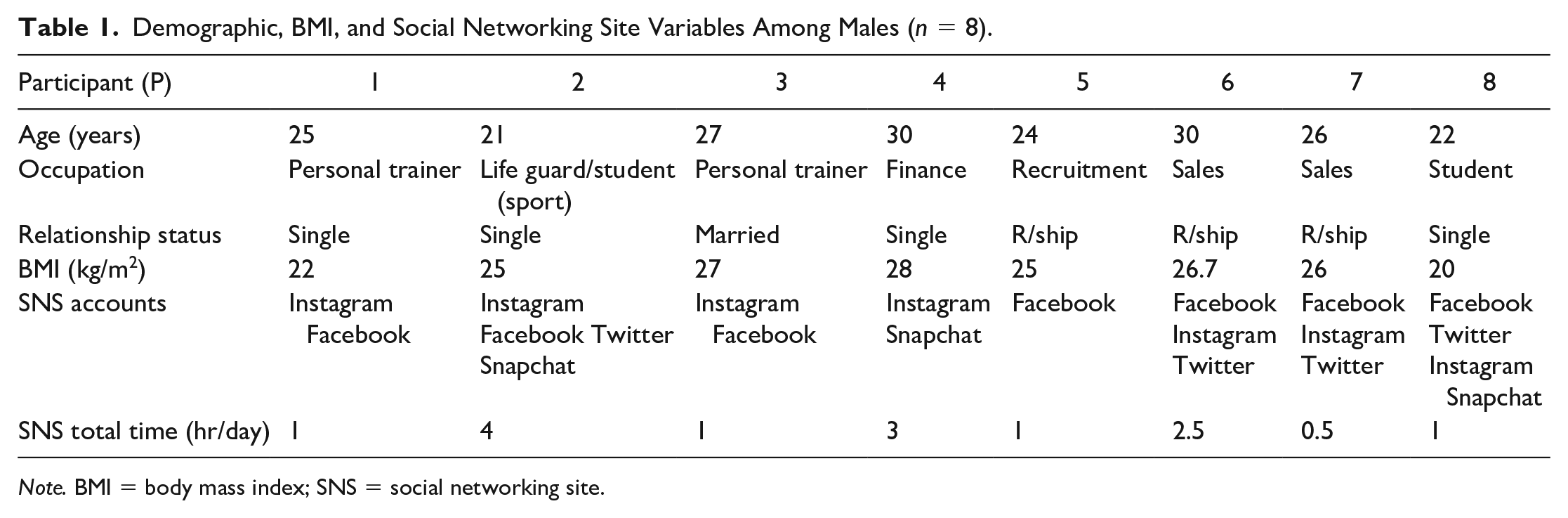
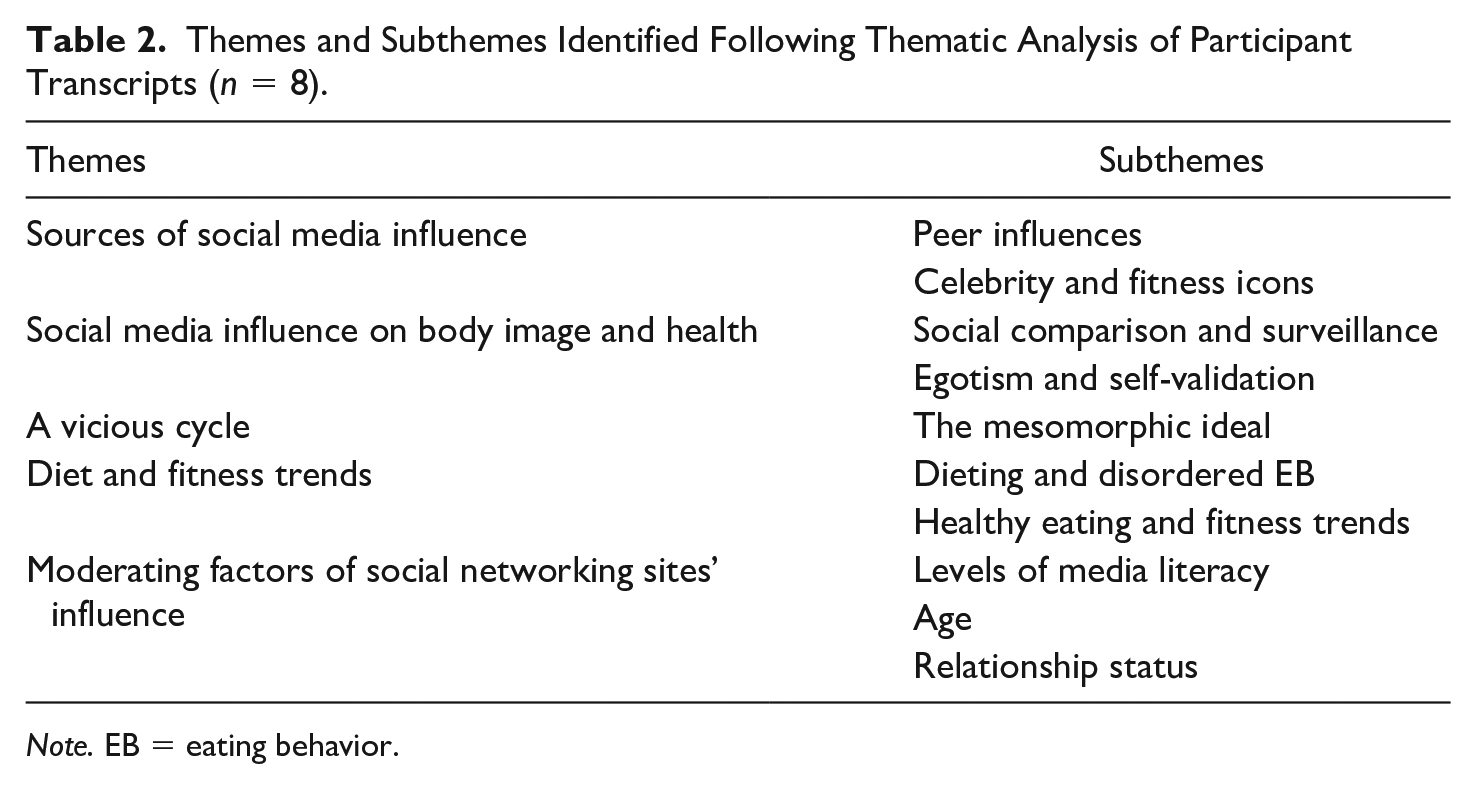
The focus of the analyses was to discover males’ experiences of SNS usage and its impact on BI and EB. Eight men between the ages 21 and 30 participated in the study, where Table 1 delineates the sample characteristics. Overall, SNS use ranged from 0.5 to 4 hr per day. All participants owned an Instagram account except P5. Six participants had a BMI ≥25 kg/m2. A total of five themes (and 10 subthemes), including (a) sources of SM influence, (b) SM influence on BI and health, (c) a vicious cycle, (d) diet and fitness trends, and (e) moderating factors of SNS influence, were constructed. Themes and associated subthemes are shown in Table 2.
Demographic, BMI, and Social Networking Site Variables Among Males (n = 8).
Note. BMI = body mass index; SNS = social networking site.
Themes and Subthemes Identified Following Thematic Analysis of Participant Transcripts (n = 8).
Note. EB = eating behavior.
Sources of SM Influence
According to the men in this study, Instagram is the most popular SM platform, with many expressing that Facebook has become or is becoming obsolete. The sociocultural influence of peers, celebrities, and bodybuilder/fitness models on SNSs emerged as clear subthemes.
Peer influences
Pressure from peers on SNS rapidly emerged as a negative source of influence on BI and EB across all interviews with the men included in this study. Some participants stated that they felt as though they were in “competition” with their peers, whereas others expressed that virtual peer surveillance has a negative influence on self-perception, BI, and EB. However, the three eldest men included in this study declared that their self-confidence has improved with age and that they compare themselves, to a lesser extent than before, to their peers: It almost feels like you’re in competition with other people, if you see your friend doing it, you know, running certain times then you go for it yourself. Seeing people do this makes me think well actually I should be there doing it . . . and in terms of my friends I mean they kind of just go by what we see and that’s where they want to be. They’re constantly comparing themselves.
Celebrity and fitness icons
Well-known celebrities, particularly, famous bodybuilders and fitness icons, were most frequently listed by the men as negative sources of SNS influence. Although one participant acknowledged that celebrities could be useful for fashion inspiration, all of the other men felt that celebrities had a negative impact on BI. While all men recognized that celebrity appearance was unrealistic and unobtainable, only five admitted that self-comparison with idealized celebrities was a common habit of theirs. When asked about their reasons for engaging in such self-comparisons, one participant stated that sex appeal was central in obtaining the “image that every guy kind of wants”: There’s recently come out a new era of body building. Aesthetic body building is basically aiming to be a lot trimmer, more physically appealing to the opposite sex, or that’s how we perceive it almost . . . We’re just looking to look really good. I think it’s because sub-consciously you want to try and look like the people you see. Even if you don’t probably admit it! [Laughs].
SM Influence on BI and Health
Social comparison, egotism/self-validation, and community belonging emerged as three key ways through which SM impacted BI perceptions among the participants in this study. The men in this study expressed that SM usage can have both a positive and a negative impact on BI and health. Interestingly, the men who classified themselves as regular active SM users generally framed SM as a negative influence. Words such as “pressure” and “demotivating” were used more frequently by these men. Participants, who described themselves as more passive SM users, were more positive in their perception of SM influence. Type of SM use (active vs. passive) therefore appeared to play a role in men’s depictions of SM and its impact on BI and health.
Social comparison and surveillance
Seeing what other users and “friends are doing” seemed to be the primary purpose behind why the participants in this study used SNS. Two participants also admitted that SNS usage stemmed from “boredom” or a “fear of missing out” socially. Irrespective of the reason behind SM usage, six participants articulated that SNS usage results in self-comparison tendencies and a strive for perfection, which negatively impacts BI and overall health: I think seeing body-builders for example posting images of their body . . . and showing their proud of something can also inspire you to do the same . . . to think oh yeah, yeah I want to look like you that kind of thing . . . I want to have that pride that you clearly have. So I think that’s a good thing. Um, I also think it’s a negative thing because people are constantly comparing themselves to people. I think it’s a shame. I think you should always be happy with yourself.
Egotism and self-validation
All participants conveyed that posting on SM often represented egotism and an attempt to gain praise from peers. This was mainly discussed in a negative manner, with participants accusing users of “showing-off” and seeking an “ego-boost” from their peers. Although the men were quick to criticize those who posted for egotistical reasons each of them, apart from one participant, admitted posting for appearance validation. Further to this, two men, in particular, highlighted the positive motivation SNS validation provided: So people leave comments and stuff, especially if you got a good time, you know it just gives you that extra buzz about it. So I would say it’s a massive influence in terms of encouraging you to continue.
Although SNS validation provided comfort to some, others declared that such praise could have a negative impact on health, with some “going too far” following encouragement from peers: But because of the positive reinforcement I just carried on, just carried on. I thought oh it’s obviously working and um . . . but then I was getting comments in real life like . . . what’s up with you, why are you looking so skinny?
A Vicious Cycle
The mesomorphic ideal
All participants commented on the proliferation of images on SM displaying an idealized muscular physique. This theme provoked the most emotionally charged responses, with six participants expressing particular frustration at the unrealistic and unobtainable nature of these images. Such images were perceived as having a negative influence on how men in general view themselves. Two participants, however, did not comment on a desire to attain the mesomorphic ideal and, interestingly, were the only two participants who stated that they were in a relationship. These participants also seemed to show less overall interest in BI and were more critical of SM. For example, one of the two men criticized SM and dating apps in making it acceptable that “appearance is more important than personality”: Even when you try and rationalize it and say well actually I sit down at a desk all day, I work 9-5, I’m not a PT by trade, I’m not a professional athlete, it’s more difficult for me to look that way than them . . . even with that logic level applied to it, it can still drive you crazy.
Diet and Fitness Trends
SNSs were seen as important in enabling participants to follow popular diet and fitness trends, which were mainly focused on short-term weight loss and muscle gain. These trends seemingly had both positive and negative implications on participants. Five participants spoke of past experiences of disordered EB, whereas others believed that SNSs had improved their current diet through proliferation of healthy eating and exercise content on SM.
Dieting and disordered EB
The men expressed that they routinely self-monitored their appearance and weight, due to the influence of SM content. Five participants, who were personal trainers or who were competing at a high level in sport, recounted having followed a diet seen on SM. These participants admitted to binge-eating habits to rapidly gain muscle mass, which they termed as “bulking.” Notably, these same five participants also shared past experiences of distorted self-perceptions and disordered EB, both of which were influenced by SNS use. Age also played a role among these five participants, as they related negative BI and EB experiences back to their late teens or early 20s. Responses were consistent in that knowledge and life experience had enabled them to overcome these episodes. Participants who shared negative past BI and EB experiences did not seek out any professional support at the time: I literally ate a tin of tuna and some salad or chicken and some peppers. They were my two meals that I ate for a good six to eight months. Yeah so I lost a dramatic amount of weight to the point where people were telling me your face is sunken, you look thin. I didn’t feel particularly unhealthy but I probably was . . . .um . . . and that was probably about around the time I started using Instagram. I never went to see anyone to get help about it (significant weight loss).
Healthy eating and fitness trends
An interesting finding was participants’ motivation to adhere to a healthy diet. The sample commented positively on the use of SNSs for easy and accessible recipe and work-out ideas. Participants reported on an increase in fitness and nutrition content on SM and a greater wider societal focus on health. Participants stated that SNS use had helped them to establish improvements in dietary habits and exercise regimes: From a personal view I am eating much healthier now, through ideas like that and you know quick and easy recipes that you see on-line.
Participants also appeared to have a perception of food groups, which they categorized as either “good” or “bad.” Four participants admitted that they demonized “junk” and endorsed “clean” food as a result of SM content. Notably, however, it was reported that “clean” eating dietary trends could lead to negative food-related behaviors, such as excessive dietary restriction: I think um it can be a bit unrealistic sometimes though. Um . . . like . . . you see people just eating chicken, rice, veg that kind of thing. Which is good that’s fair enough but if you’re just having that that’s taking away some of the things that your body does actually need so um I think it does have a bit kind of a negative affect again.
Moderating Factors of SNS Influence
Media literacy/knowledge, personal agency, age, and relationship status emerged as key moderating factors of SM influence, all of which will be discussed as subthemes in the following sections.
Levels of media literacy
The sample demonstrated that they were, somewhat, media literate, through their acknowledgments that edited/filtered images on SM did not represent real life. Professional knowledge also created a level of skepticism of SM content among the men interviewed. Acknowledgments of celebrities/bodybuilders’ use of anabolic steroids and unhealthy dietary/exercise practices were also expressed by the men. In addition, participants expressed that one could protect themselves from viewing SM images that illicit negative feelings and behaviors by following public figures that makes one feel good about oneself: You’ve always got a celebrity that pops up showing the latest diet and this is how you get into shape in six weeks when most of them are cheating and are on some sort of gear to get them into that shape. People on social media don’t always look that way . . . um . . . a lot of it is photo shopped or they’ve dehydrated themselves to look a certain way and that’s unrealistic that they always look that good. I suppose if you choose not to follow them people then you’ve not got that pressure.
Age
Age as a moderating factor was multifaceted and contradictory. Participants alluded to being more impressionable to media messages and naïve in adolescence. The men mentioned that age and greater professional knowledge and experience had made them “wiser to certain goals and targets you can and can’t reach.” Three also expressed that age had crucially enabled them to overcome past experiences of disordered EB, whereas others announced that, since adolescence (when SM did not exist), they have/had felt an increased pressure to conform to specific BIs due to a greater requirement to find a partner and meet career goals: When you’re younger you’re quite naive in thinking you can achieve these kind of goals often unrealistic in the scheme of things. So I think men as we get older, not older but progress into our twenties, I think body image becomes a little bit more important, something that you know, take note of and obviously um . . . is reflected in your social media use and how you know, you use social media.
Relationship status
The men in this study who deemed themselves as single in status expressed a greater pressure to conform to the mesomorphic ideal. Relationship status also appeared to influence level of SM usage; the two men with the highest SM usage were single compared with the lowest SM users, who were in a relationship. Six men expressed that SNSs are used by single men to seek romantic relations, whereas the two men in relationships declared that they had no major BI concerns and were generally more critical of media and societal focus on appearance throughout the interviews: People aren’t going to find me attractive if I don’t look the way I’m told is beautiful . . . I think sexual attraction is a huge driver in most of what we do. I think if you’re maybe a bit younger, maybe single and out on the town and stuff, um, you kind of want to look your best all the time . . . they’re probably taking pictures of themselves on a night-out and they’re trying to impress somebody . . .
Discussion
Given the paucity of U.K. studies exploring associations between SNS use, BI, and EB of men, the current study aimed to address this research gap. Overall, results from this study revealed that men considered SM to be an important positive source of ideas and motivation, however, also believed that SM could enhance current levels of or lead to body dissatisfaction.
Findings revealed that men in this study engaged with SNSs to make comparisons and compete with their peers. This finding is supported by social comparison theory, which contests that individuals make cognitive judgments about their own attributes compared with similar others on a particular attribute/range of attributes (Festinger, 1954). This theory differentiates two types of social comparisons: upward and downward comparisons. Upward social comparisons occur when individuals compare themselves with someone whom they believe to be better off than themselves, and downward social comparisons occur when individuals compare themselves with someone whom they believe to be worse off than themselves. Upward comparisons, in particular, have been associated with body dissatisfaction (Fardouly et al., 2017). Notably, prior research has revealed that intensity of Instagram use in adolescents is related to self-esteem, in instances where self-worth is dependent on approval from others (Stapleton et al., 2017). Knauss and colleagues (2007) have also reported that pressure from peers is the greatest predictor of body dissatisfaction for adolescent males. With respect to peer competition, Hendrickse and colleagues (2017) reported a positive relationship between intrasexual competition and appearance-related comparisons on Instagram, among a sample of college women. This study, however, contributes to the aforementioned studies, which have been conducted with either a sample of adolescent males or adult women, by highlighting that adult men also tend to compare themselves and compete with peers via SNSs.
Consistent with social comparison theory and hegemonic masculinity, participants in this study upwardly compared themselves with and attempted to attain the physique of celebrity/fitness icons seen on SM, as a measure of self-validation (Connell & Wood, 2005; Festinger, 1954; Furnham et al., 2002). Given this finding, in tandem with previous work, underscores the dominant forms of masculinity that men are exposed to continues to be controlled by transnational corporations operating in global markets, in the case of this study, SM platforms such as Facebook and Instagram. Although masculinities are constantly subject to change, as a result of generational differences in gender attitudes and practices, structural changes in the gender order itself, and changes in the social structures with which the gender order is linked (Connell, 2005), it is clear that the growth of global markets and new electronic communication technologies, as well as the rising importance of multinational corporations, are powerful social forces and are affecting the way in which young men view their bodies. Furthermore, according to the men in this study, internalization of such iconic physiques arouse feelings of body dissatisfaction, a finding which corroborates existing research. Ho and colleagues (2016) reported that SNS affiliations with celebrities are associated with adolescent body dissatisfaction and higher risk of eating pathology, whereas Aruguetem and colleagues (2014) revealed that men who worship celebrities are more likely to display symptoms of an ED and are more likely to enjoy being sexualized. Both of these studies, however, employed a quantitative approach in their research design and were conducted in Singapore and the United States; rather, the current study examined how and why SM influences BI among physically active men in the United Kingdom, from their own unique perspectives. Further results of the current study highlighted that men’s adherence to masculine norms and DM is also linked to their desire to appear attractive to their opposite sex peers. Extending the findings of Gattario and colleagues’ (2015) study, which reported that conformity to masculine norms is related to DM, leanness, and fitness in Swedish, American, Australian, and British men, our findings demonstrate that appearing attractive to opposite sex peers also plays a role. Our finding, in addition to the findings of the aforementioned cross-national study (Gattario et al., 2015), perhaps suggests that masculine conformity is focused on aesthetic attractiveness rather than on physical functional performance. Further research should explore the extent to which men foster masculine ideals for aesthetic versus functional purposes.
Additional findings revealed that the men in this study perceive SNS use to be “good and bad.” Some men reported that SNS use provides a motivation to improve BI, whereas others perceived that it can lead to negative and unrealistic comparisons. This is consistent with recent cross-sectional research (Xiaojing, 2017), which has stipulated that social comparison is a key moderator of SM use and body dissatisfaction among YAs in China. Our research, however, extends the findings of the latter quantitative study, by demonstrating that young men living in the United Kingdom also feel, through verbal declarations, that social comparison negatively influences body satisfaction. Moreover, men who expressed more active engagement with SM usage in the current study seemed to experience greater levels of BI dissatisfaction. This is consistent with U.S. studies which have supported a relationship between higher SNS usage and greater body dissatisfaction (Mabe et al., 2014) and even lower life satisfaction (Kross et al., 2013). Furthermore, active SM use, such as photo posting, has also been associated with increased BI disturbances (Holland & Tiggemann, 2016; Meier & Gray, 2014). Although these studies are limited by adolescent samples, they clearly link SNS use to BI satisfaction in males.
Self-validation was linked to SNS use in the current study. In line with Greenfield’s (2009) theory of social change and human development, which stipulates that cultural changes have promoted a greater societal focus on self, the men in this study appeared to seek validation on how they looked (“selfies”) through SNS usage. This finding arguably explains participants’ motive for SNS use, regardless of potential negative effects on BI. Furthermore, some of the men reported how SM validation had led to personal experiences of disordered eating. Although consistent with previous quantitative research among adolescents that has positively associated higher SNS usage to dieting (Tiggemann & Slater, 2013) and disordered EB (Mabe et al., 2014), this is the first study to the best of our knowledge that has revealed personal accounts of men’s experiences of disordered eating and SNS usage in the United Kingdom. Indeed, quantitative research within a U.K. context has revealed a correlation between negative Facebook comments and higher risk of disordered eating attitudes and weight concerns among university students (Hummel & Smith, 2015). However, the current study and prior literature now clearly highlight that SNS use may lead to disturbed EB, in both qualitative and quantitative research.
Participants’ desire to obtain a muscular physique in this study, which consequently was reported to give rise to BI dissatisfaction, is supported by previous literature. Researchers have highlighted the significance of media internalization in promoting the mesomorphic ideal (Morrison et al., 2003) and in predicting a DM among men (Cramblitt & Pritchard, 2013; Daniel & Bridges, 2010). Notably, previous studies have associated viewing idealized images with body dissatisfaction (Galioto & Crowther, 2013; Hargreaves & Tiggemann, 2009) and with negative eating pathology (Holland & Tiggemann, 2016). Past studies have also related higher drives for muscularity with greater levels of depression, poor self-esteem (McCreary & Sasse, 2000), and increased body dissatisfaction (Furnham & Levitas, 2012). This may explain why the majority of participants in the current research study, whom declared a strong interest in body fitness and seemingly a high DM, displayed greater BI dissatisfaction than participants who expressed that they were less appearance orientated. Although many of the studies to date have been conducted with adolescents living in the United States, the current study indicates that SNSs are pervasive in promoting male gender ideals, which may lead to body dissatisfaction and potential eating pathology in adult men.
Men in the current study showed an interest in dieting, with many having followed a diet seen on SM, which for some had contributed to disordered EB. This finding is echoed by recent literature, which asserts that appearance concern and dieting are rising in men (Murray et al., 2016). Worryingly, these trends have been associated with disturbed EB, as seen by the pro-muscularity phenomenon, which promotes excessive muscle gain (Murray et al., 2016). Therefore, the current study challenges past research which asserts that men are less concerned than women about BI and dieting trends (Gough, 2009), given that SNS use, in this study, reportedly gave rise to BI and dieting concerns in men.
Participants’ desire to adhere to healthy eating in our study corroborates the recent societal “healthism” phenomenon (Missbach et al., 2017). SM is seemingly powerful in its ability to proliferate food trends, through its ability to instantaneously share appetizing images of food, often called food porn (Spence et al., 2016), which in turn may shape EB (König et al., 2017). Although the “healthism” trend may generally be perceived as positive, many stipulate that trends such as “fitspiration” encourage disordered eating and compulsive exercise (Holland & Tiggemann, 2017). For instance, the “clean” diet has been associated with masculinity and adherence to an ascetic lifestyle in marshal artists (Spencer, 2014).
Findings from this research also suggest that the men under study had limited levels of media literacy which partly served to reduce experiences of BI dissatisfaction. While most of the men highlighted their ability to disregard SM content that does not represent real life or positively contribute to their self-image; it is important to note that most of them still seemed particularly susceptible to the appearance pressures and diet trends on SM and shared the negative consequences they endured as a result of this. Unlike the current study, however, prior studies have reported that a more critical perception of media images is associated with reduced levels of thin-ideal internalization, upward social comparison, and body dissatisfaction among women (Holmqvist & Frisén, 2012; McLean et al., 2016a, 2016b). The current study, which was conducted with men, perhaps suggests that men are not as media literate and equipped as women are to actively disregard BI ideals presented to them on SM. Further quantitative research should investigate the extent to which levels of media literacy influence BI dissatisfaction across both men and women in the United Kingdom and internationally.
Findings from the current study suggest that although SNSs could be empowering, their use, at times, leads to an increased awareness of BI ideals. The sample of men in this study reported being aware of the negative repercussions associated with SNS use, yet they were still drawn to its engagement. This is consistent with Perloff’s (2014) model, which asserts that the novel features of SM, compared with traditional media, such as greater user interactivity and self-disclosure, reinforce use, which can lead to BI concerns. Although participants reported being in control of their SM use, its “addictive” nature and negative impact on BI suggest otherwise.
Participants in the current study considered themselves to have been more naïve and vulnerable to media messages in adolescence. Some reported that older age and greater life experience had enabled them to overcome any experiences of previous disordered EB, whereas others expressed that pressure on BI had heightened since adolescence. Few studies to date have compared BI concerns between adolescent men and men in their 20s. To our knowledge, only one study examining BI dissatisfaction across the lifespan found that adolescent men predominantly focus on increasing muscle mass, compared with adult men who display a greater desire to lose weight and improve muscle tone (McCabe & Ricciardelli, 2004). However, this review is limited by a younger sample age (18–21 years) and may not be applicable to the age group in the current study. Further research investigating longitudinal trends on the impact of SM usage and BI among young men is warranted.
The finding that single participants, in the current study, felt greater pressure to conform to the masculine ideal is echoed by the literature, which asserts that men feel a requirement to meet appearance standards to be sexually or romantically successful (Aubrey & Taylor, 2009). Furthermore, the finding that single men in this study used SNSs to initiate romantic connections is supported by recent studies highlighting the role of SNSs in enabling information seeking on potential partners, such as browsing pictures and status updates (Fox et al., 2013; Van Ouytsel et al., 2016). Specifically, Fox and Warber (2014) reported that SNSs enable a more informal communication platform and a less risky way to instigate communication with opposite sex peers. With appearance orientation and self-esteem being recognized as BI vulnerability factors (Perloff, 2014), single men are perhaps more susceptible to problematic (dependant) SNS use, which has been associated with BI and EB concerns (Santarossa & Woodruff, 2017). Although a number of studies have supported a link between SNS usage and romantic connections, questions remain on how such platforms instill feelings of body dissatisfaction, in instances where romantic attraction is a core motivating factor for SNS usage among men. Further research is warranted on this issue, as it is important to appreciate the ways in which SM can influence perceptions of BI and BI disturbance among men seeking romantic potential, via SNSs.
Limitations and Future Research Directions
The key benefit of this qualitative study was the ability to explore in more depth the lived experiences and feelings of men in an understudied age group. However, limitations of the study must be noted. First, the researcher was female; whether this made male participants more reticent to openly discuss a gendered topic is unknown. As BI remains a sensitive and feminized subject, it is possible that responses may have been driven by self-presentational concerns, rather than genuine expression (Hargreaves & Tiggemann, 2006). However, Grogan and Richards (2002) reported that men felt less threatened discussing BI in interviews with a female facilitator.
Sociodemographic data such as education, sexuality, and ethnicity were absent from this study and may have been insightful moderating factors. Ultimately, as BI and EB are complex phenomena, it was impossible to account for all confounding variables that may have influenced results beyond SNS use. A future study may assess how susceptibility characteristics and other socioeconomic factors affect SNS use and BI concerns in YA men. Also the participant’s sexual orientation should also be explored as research has indicated that gay men have lower body satisfaction in comparison with heterosexual men (Basabas et al., 2019). Finally, as age appeared to be a significant moderating factor, future research may explore SNS use, BI, and EB of men across the lifespan, along with internal and modifiable risk factors. Increasing understanding of risk factors that are most prevalent in men of different ages may improve the efficacy of targeted prevention strategies.
Conclusion
This study explored the influence of SNS use on BI and EB of men in young adulthood. Results from this study reveal that men are not immune from BI concerns and eating pathology. Notably, the age group of men explored, particularly single men in their early 20s, may be particularly vulnerable to problematic SNS engagement and heightened BI concerns, due to the increased societal pressures these men seemingly face. These findings, as well as the heavy online presence and reliance of YAs on SM, may provide a basis from which targeted prevention strategies for maladaptive SNS use, BI concerns, disordered EB, and other maladaptive behavior may develop. Graduate employees and higher education establishments could, in particular, play a preventive role. The provision of media literacy training in such establishments, for example, could educate respective audiences about the purposes of messages on SM, which could subsequently serve to increase skepticism at both individual and organizational levels and possibly reduce the effects of SM messages among YA men and women. Furthermore, media literacy training could be used to address the media-related aspect of body dissatisfaction, by teaching graduate employees and those attending higher education establishments how to develop and adopt critical and analytical skills, while reviewing SM content.
Furthermore, many participants’ problematic experiences of dieting, proliferated by SNSs, appear to rationalize unhealthy EB. It is clear that SM can cause harm. There is arguably the need for government intervention and much tighter regulation of SNS. Restriction of advertisements that promote extreme dieting and overexercising and campaigns emphasizing the creation of new social norms may be a vital step in reducing BI and eating disturbances in men. Campaigns that aim to create new social norms have have been employed on the issue of binge drinking, for example, with communications suggesting that binge drinking is much less common than students assumed. These campaigns have been somewhat successful in curtailing binge drinking and reducing peer endorsement of alcohol use in the past (Godbold & Pfau, 2000). With respect to BI and SM usage, communications which suggest that muscularity is not a universally shared ideal and that a growing number of men are rejecting this belief might equip men to become more resilient toward and succumb less to the social pressures of attaining an ultra-lean and muscular body ideal.
It is evident from the current study that SNSs represent platforms where lessons are learned, attitudes are formed, and BI concerns are cultivated among YA men. As such, further research is needed to illuminate the processes and effects of SM on young men so that additional insights into the subtle and striking effects that new media exert on BI perceptions can be offered, while also generating strategies to help men to adopt healthier attitudes toward their bodies and subsequent behaviors.
Supplemental Material
Supplementary_Material_Paper_JoMHS – Supplemental material for An Exploration into the Impact of Social Networking Site (SNS) Use on Body Image and Eating Behavior of Physically Active Men
Supplemental material, Supplementary_Material_Paper_JoMHS for An Exploration into the Impact of Social Networking Site (SNS) Use on Body Image and Eating Behavior of Physically Active Men by Orla Flannery, Kerrie Harris and Ursula Anne Kenny in The Journal of Men’s Studies
Footnotes
Declaration of Conflicting Interests
The author(s) declared no potential conflicts of interest with respect to the research, authorship, and/or publication of this article.
Funding
The author(s) received no financial support for the research, authorship, and/or publication of this article.
Ethical Approval
Ethical approval was obtained from the University of Chester Ethics Committee. All participants consented for their data to be used.

Supplemental Material
Supplemental material for this article is available online.
Author Biographies
References
Supplementary Material
Please find the following supplemental material available below.
For Open Access articles published under a Creative Commons License, all supplemental material carries the same license as the article it is associated with.
For non-Open Access articles published, all supplemental material carries a non-exclusive license, and permission requests for re-use of supplemental material or any part of supplemental material shall be sent directly to the copyright owner as specified in the copyright notice associated with the article.
