




Abstract
Background
School nurses globally face increasing professional pressures due to the growing complexity of children's and adolescents’ health needs. This makes effective working within the school health team critical.
Aim
To explore school nurses’ reflections on working within the school health team.
Methods
Thirty-three school nurses from four school health teams in England participated in restorative reflective supervision sessions. Observational data and field notes from four separate sessions were analyzed using qualitative content analysis.
Results
Three themes were identified: (a) collaboration and engagement with schools and multidisciplinary teams; (b) external perceptions of the school nurse role, professional identity, and boundaries; and (c) workload, emotional demands, and support needs.
Conclusion
School nurses are facing sustained pressure, with growing caseload complexity, emotional strain, and limited recognition of their role. Restorative reflective sessions can act as a protective factor against burnout by giving school nurses the opportunity to share experiences, process emotional strain, and sustain their capacity for compassionate care. The findings underscore the need for systemic investment in school nursing, through clearer role definition, professional visibility, emotional support, and opportunities for career development.
Background
The increasing complexity of children's health needs has placed growing pressure on school health professionals globally. School nurses have reported a deterioration in student health during the COVID-19 pandemic (Bekaert et al., 2023), along with a lack of time, resources, and leadership support - particularly in its aftermath - to deliver preventative care, early intervention, and health-promotion activities (Tanner et al., 2025).
School nurses play an essential role within professional teams, bridging healthcare and education to enhance student well-being and academic success (de Buhr et al., 2020; Johnson, 2017). Their responsibilities encompass health promotion, chronic disease management, and mental health support, as well as coordinating care across multiple stakeholders (Kruzliakova et al., 2021; McIntosh, 2021). By collaborating with teachers, parents, and other healthcare providers, school nurses ensure that students receive comprehensive, coordinated care tailored to their needs (de Buhr et al., 2020). This interprofessional approach not only addresses immediate health concerns but also fosters a supportive environment that promotes learning and development (Johnson, 2017; Kruzliakova et al., 2021). Research highlights that school nurses’ involvement in professional teams strengthens communication, advocacy, and holistic care delivery, enhancing both the physical and emotional well-being of students (Kruzliakova et al., 2021; McIntosh, 2021).
In response to growing emotional strain within the healthcare workforce, the United Kingdom's (UK) National Health Service (NHS) has highlighted the importance of restorative supervision. Restorative supervision differs from clinical or safeguarding supervision, which focuses on case-specific reflection and learning (Butterworth, 2022). Restorative supervision provides a structured space for nurses to discuss both positive and challenging workplace experiences, prioritizing the practitioner rather than the clinical case. By supporting reflection on emotions and responses, restorative supervision helps nurses manage stress, anxiety, and burnout associated with complex or emotionally demanding caseloads, fostering resilience and self-awareness (Scanlan & Hart, 2024).
Highlighted in the UK government response to the Francis Report as a means to support a compassionate NHS (Francis, 2013), restorative supervision has since been applied in safeguarding (Wallbank & Wonnacott, 2015) and hospice care during the pandemic (Latchford, 2021). Evidence shows it can improve compassion satisfaction, reduce burnout and stress by up to 40%, and support staff retention (Wallbank & Woods, 2012). However, research specific to school nursing remains limited, and reflective practices may have only modest impact if not embedded within supportive organizational structures (Bowers, 2025; Gómez-Urquiza et al., 2023), highlighting the need for further study in community nursing contexts. Burnout, characterized by emotional exhaustion, reduced personal accomplishment, and depersonalization, has been linked to high caseloads and emotionally demanding work in nursing; participation in restorative supervision provides a structured space to process these pressures, reducing stress and mitigating the risk of burnout (Scanlan & Hart, 2024; Wallbank & Woods, 2012).
In response to a lack of restorative supervision frameworks and in collaboration with school nurses, we developed Pause and Reflect: a restorative reflective supervision model and resource designed to support staff emotional processing and promote system-level insight (Bekaert, 2025). This article specifically presents an analysis of group discussions held during the pilot implementation of the resource, offering insight into school nurses’ reflections on their roles within the school health team. The framework integrates restorative support with structured reflection, providing a safe and consistent process that helps practitioners move from expressing emotions to developing critical insights and forming action plans. The Pause and Reflect sessions draw on principles of restorative supervision (Wallbank & Woods, 2012), which emphasizes supporting practitioners to reflect on their own contribution, capacity, and decision-making in complex situations. By focusing on the professional rather than the case alone, restorative supervision helps practitioners identify their own learning needs and develop strategies for managing challenging caseloads. The Pause and Reflect model then moves into Gibbs’ (1988) six-stage reflective cycle, emphasizing both emotional processing (what happened and how it felt) and practical problem-solving (what needs to change and how to achieve it). This dual focus strengthens resilience, builds professional confidence, and contributes to safer, more compassionate care. Goals arising from the process are designed to be SMART (specific, measurable, achievable, relevant, time-bound) (Doran, 1981), with an emphasis on systemic improvements to support workforce sustainability. The purpose of this study was to explore school nurses’ reflections on working within the school health team during the pilot implementation of a restorative supervision model.
Methods
A qualitative descriptive design was used (Doyle et al., 2019). Ethical approval was obtained prior to data collection (Oxford Brookes University 04/34 241779), and written informed consent was obtained from all participants.
Sampling and Recruitment
Purposive sampling was used in this study (Campbell et al., 2020). Four school health teams from different regions of England, representing northern, central, urban and rural areas, were recruited following an open invitation issued at the 2023 School and Public Health Nurses Association (SAPHNA) national conference. The first four teams to express interest were included.
Participants
A total of 33 female staff members working in school nursing services participated. The group included 19 qualified Specialist Community Public Health Nurses (SCPHNs), two SCPHN students, seven registered nurses without SCPHN qualification, and five support workers.
Data Collection
Each team participated in a 3-hr Pause and Reflect restorative reflective supervision session during June–August 2024. The specific detail of the Pause and Reflect restorative reflective supervision model process is described elsewhere (Bekaert, 2025). In brief, the resource is designed for facilitation by a staff member trained in group supervision, over 1 day or a series of sessions (four possible sessions: working with children, working with the multidisciplinary team, working in school nursing teams, redeployment). Definitions are presented in Box 1.
Defintions
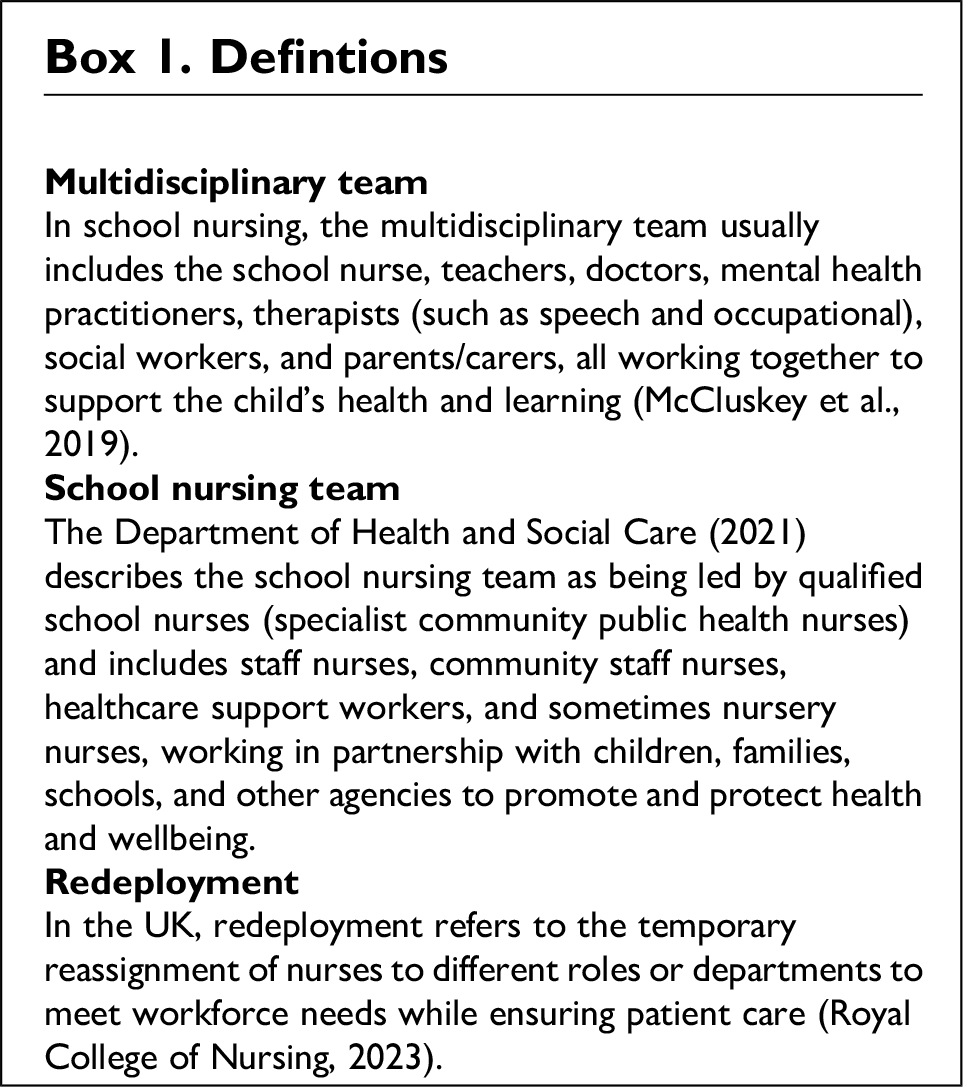
The resource recommends at least 1 hr for each section, plus time for explanation of process and setting of ground rules. Quotes and vignettes from school nurses drawn from a qualitative study in the immediate aftermath of the COVID-19 pandemic were used as a springboard for guided discussion and reflection (Bekaert et al., 2023). The facilitator validates experiences and feelings shared, then guides toward realistic action plans that focus on improving working practice at a systemic level.
All sessions were conducted in person in healthcare or community-based venues with which the participants were familiar. Sessions were scheduled outside of regular working hours or protected within the working day. No managers or external observers were present in order to promote a safe, confidential, and open discussion environment.
The second author, a senior SCPHN with supervisory experience, facilitated the sessions. The first author, a registered children's nurse and researcher, took structured field notes on flip chart paper visible to participants. As the session were workshops, with pair and group work in places, sessions were not recorded. Both are female and known to the school nursing community in the UK. The same two facilitators led all four sessions. A process summary follows in Figure 1.
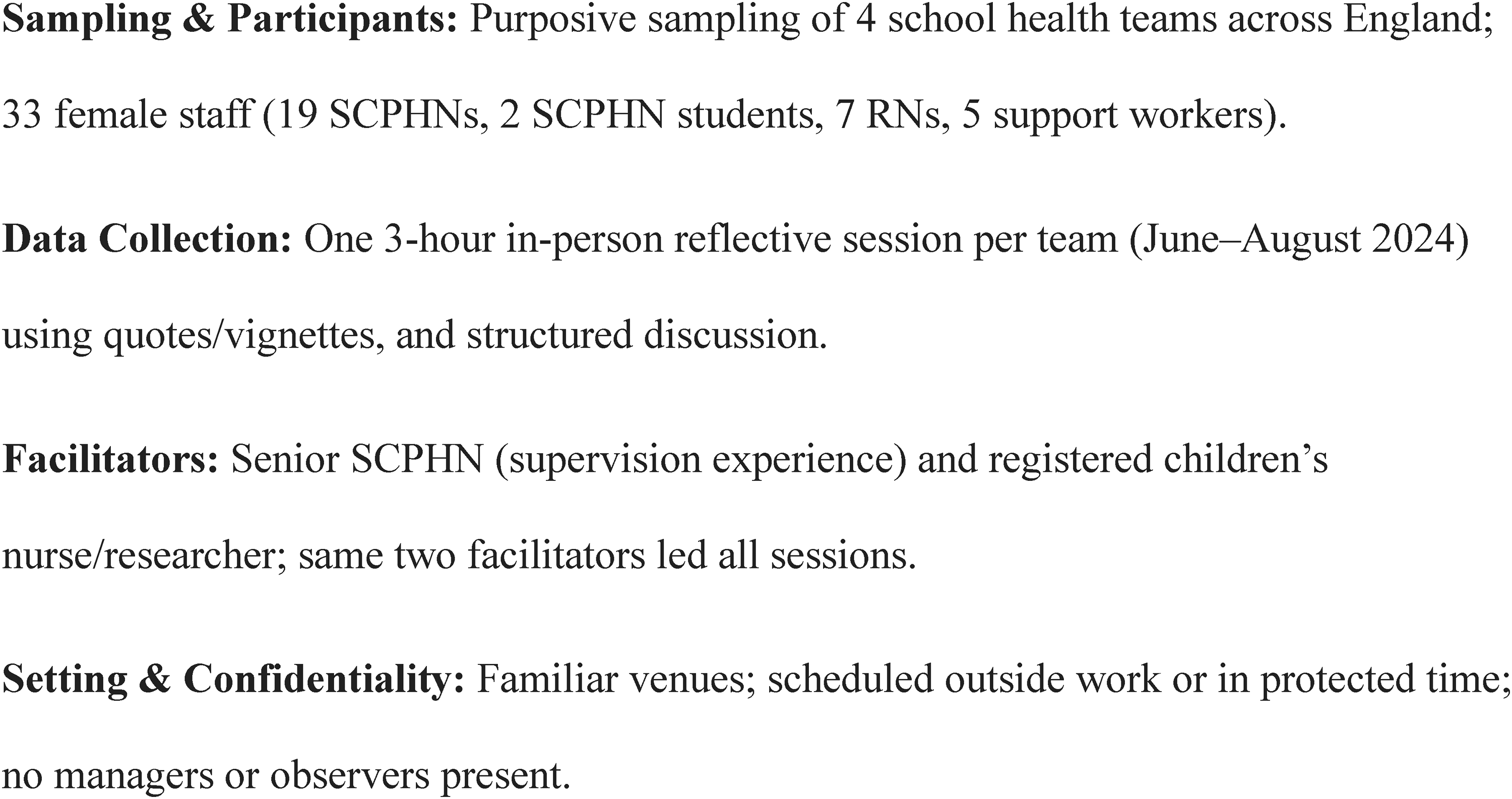
Methods summary.
Data Analysis
The flip-chart notes and field notes were analyzed using qualitative content analysis (Graneheim and Lundman, 2004; Lindgren et al., 2020). The analysis begins with identifying meaning units—sections of text that relate to the study's aim. The first author initially identified and condensed meaning units. The coding process was conducted in collaboration with the second author, and codes were compared, discussed, and revised jointly. Codes were grouped into subthemes and then into broader themes to identify patterns and variations in the data. Through continued discussion with the fifth author, themes from across the three discussion areas were developed. The analysis was discussed by all five authors until a consensus was obtained. This iterative and collaborative approach supported credibility and ensured analytical depth. Quotes are attributed to team (T1, T2, T3, T4) due to mode of collection, and to protect confidentiality of the group and individuals within the group.
Results
Three themes were identified that provided insights into working within the school health teams: (a) collaboration and engagement with schools and multidisciplinary teams; (b) external perceptions of the school nurse role, professional identity, and boundaries; and (c) workload, emotional demands, and support needs.
Collaboration and Engagement With Schools and Multidisciplinary Teams
Many challenges were discussed in relation to working with schools and other professionals in the multi-disciplinary teams, with value and visibility being two prominent issues. While many participants felt that external recognition of the role and value of school nurses increased during the acute phase of the COVID pandemic, one nurse pointed out how this had not been enduring. As meetings have returned to being predominantly in-person, school nurses are not able to attend as many, reducing their visibility within the larger multi-disciplinary teams. Some spoke of how relationships with social care had improved during COVID where everyone pulled together in response to increased safeguarding concerns and issues during the lockdown periods; however, other participants felt that this was reverting to pre-COVID-19 pandemic hierarchies: On the whole we have good relationships with social workers since Covid, but it is slipping back…. We are always last to know if a meeting has been cancelled; they would never change a meeting date on account of whether the school nurse can attend as they do with other professionals. (T2)
While they were still invited to safeguarding meetings, participants indicated that this seemed to be a tick-box exercise and their input was not valued—with health being viewed as low on the list of concerns. The school nurses consistently voiced the tension between their knowledge of the value of the school nursing team role and the lack of understanding by other professionals: “We know our value but there are low expectations of the school nursing service. Once we start talking with other disciplines, they realise what we do” (T3).
Some participants reported that they had strong relationships with their schools before COVID, but felt that this had since declined. This was initially as schools did not want school nursing services onsite during the COVID-19 pandemic, but was then perpetuated by increased and persisting health challenges, leading to the service becoming reactive rather than proactive, and needing to work in a targeted rather than universal manner: “The service is supposed to be preventive, or early intervention - the families we work with are SO past that! There is a big mismatch between what the job could be and what it is” (T2). In addition, some felt that changes in commissioning arrangements (which came into being during and sustained since the COVID-19 pandemic) have also led to a breakdown in relationships with schools.
External Perceptions of the School Nurse Role, Professional Identity, and Boundaries
The public and professional understanding of the school nurse and school nursing team roles was consistently discussed across all the participating teams. Lack of respect for nurses in general was raised, and misconceptions about the school nursing role, more specifically. The lack of understanding of the school nursing role was multi-layered. School professionals often incorrectly used the “nurse” title for colleagues performing health-related duties; for example, calling the first aider “school nurse.” Managers were cited too as having a poor understanding of the school nurse role, attributed by some participants to the fact that many managers overseeing school nursing teams do not themselves have school nursing experience. Furthermore, administrative staff “forget” about school nursing in marketing information, and commissioners introduce “new” initiatives, not realizing this is already part of the school nurse role. This can sometimes lead to central aspects of the school nurse role being commissioned to other agencies, for example in one area a Healthy Schools Service had been set up separate from school nursing, and therefore the school nursing team are not allowed to carry out health promotion work.
This lack of wider knowledge of the school nurse role and remit led to discussions of rebranding and how to assert the school nurses’ value within schools and the broader healthcare system. Some teams had gone from civilian dress into clinical uniform during COVID and have continued with this since. These teams spoke of observing a positive effect of being in uniform on children as they are easily recognizable as nurses: “Children open up more to you; you get confused with a social worker if you are not in uniform” (T4). Overall, being in uniform seemed to confer increased visibility and credibility, though it was recognized that uniform can also be a trigger, e.g., for children who may have had negative experiences in hospital, and uniform tended not to be worn when working with teens who were reported to prefer a more partnership rather than authoritarian approach. Personal benefits to wearing a uniform were noted. Uniform was metaphorically referred to as “armour” (T1), giving a feeling of protection in a battle zone. Some participants reported that it feels good to get home and get changed out of uniform, so that there is a clear separation between work and home.
There was much discussion about lack of professional boundaries for school nursing, where school nurses are left holding cases where specialist services are clearly boundaried, and operating finite caseloads. These role boundaries were specifically discussed within the team when being asked to take on roles that were usually for specialist practitioners or nurses on a higher grade, or where there were discrepancies between what is expected of the school nurse team and other teams. For example, a higher grade nurse from the safeguarding team doing the same as a lower grade nurse from the school nursing team on the duty-line [a designated phone that staff monitor during specified periods to respond to queries, concerns, or urgent issues]. There was some resistance with the observation that “just because you can, doesn’t mean you should” (T4), and that being more boundaried was necessary as a protective measure to prevent overwhelm and burnout, as well as practicing beyond their expertise or qualification. However, one participant likened their day to day to a “hamster wheel of managing” (T2), where there was no space or energy to resist inappropriate task or case allocation.
Workload, Emotional Demands, and Support Needs
The school nursing teams spoke of rising referral numbers, overwhelming caseloads, the subsequent reduction in time for health promotion, and changes in the types of issues being seen in the service—with increases in emotional health issues, neurodiversity, and sleep related issues. Participants described how, due to the increase in such issues, specialist services are overwhelmed and that school nurses have to support the young person until they can access specialist support. The dissonance between what the job is and what they wanted it to be created frustration and dissatisfaction: Previously I would have said that school nursing was my ‘dream job’ – there was diversity, involvement in Personal Social and Health Education, working with troubled kids, I was out and about. Now there is a loss of freedom, we are not working with public health issues, we are not able to use our own professional judgement or be creative. (T4)
The school nurse's role in safeguarding and child protection provoked considerable debate in relation to workload, particularly where school nurses were required to represent health regardless of whether they were involved in a case, and in relation to the impact of rising social work thresholds on the complexity of cases managed by school nurses. The toll of handling traumatic cases, particularly with regard to challenging child protection work, was a concern. The need for safe spaces for reflection and debriefing was raised by participants: “The team feels they have not been listened to when they have voiced the need for support” (T2).
Those who discussed redeployment during the COVID-19 pandemic described emotional strain, professional tension, negatives and positives regarding team dynamics, and poor organizational handling. Participants described a range of emotions linked with being redeployed: anxiety around COVID generally, as well as being required to work in unfamiliar practices and, in some cases, high risk areas. For some, the experience was extremely traumatic, and it was clear that this was not a resolved issue. There was frustration, anger, and resentment toward the NHS for what were seen as unreasonable demands placed on them professionally, the lack of physical and emotional protection, and feelings of betrayal and bitterness over how the situation was handled. There was no choice over whether and where they were redeployed, which left staff feeling disempowered, with some highlighting that they felt ill-prepared and minimal training was offered in relation to the area to which they were being redeployed. On the other hand, some recalled positive experiences of redeployment: “I was part of a completely new swabbing team, specifically created, we had a right laugh” (T3). Furthermore, some spoke of the new skills they learned while redeployed and expressed frustration that these could not be carried forward in their school nursing roles: There was also some upskilling, for example some of us learned phlebotomy skills, but now we are not allowed to use these skills even though it would be beneficial to the children and young people with whom we work. Such a waste (T3).
On the whole, morale was low and there were mixed feelings about job satisfaction. There was discussion about the lack of career progression in school nursing unless you wanted to go down the people management route, and a feeling that the specialist qualification offers little added benefit professionally. One participant summarized this by saying: “Frankly, school nursing is career suicide” (T2). Nevertheless, there were still innovative ideas for practice, mostly around health promotion activities, as well as a desire to develop specialisms for specific groups of children: “It would be really good to explore specialisms like working with travellers etc” (T2). These aspirations highlight the strong commitment and creativity within the profession, offering a valuable foundation for future development.
Discussion
The reflections shared by school nurses during the Pause and Reflect restorative reflective sessions aligned with the restorative supervision model, as participants not only discussed the challenges they faced within their teams but also considered their own role, decision-making, and approaches to complex situations. Many nurses identified areas for personal development and strategies to enhance their professional effectiveness, demonstrating how the sessions supported growth in self-awareness and capacity to manage complex caseloads, consistent with Wallbank & Woods’ (2012) framework; and the extended model of restorative reflective supervision (Bekaert, 2025).
The analysis of the session discussions highlights the dynamic role of the school nurse and school nursing teams, yet they are underutilized in relation to their preventive and early intervention skill set, and often poorly integrated due to systemic factors, the impacts of which are then likely to be felt by the children they support. Participants described rising emotional and professional demands, blurred role boundaries, and reduced visibility in school settings and multi-professional teams. International research supports these experiences, noting that school nurses face heavy workloads, complex responsibilities, and risk of burnout due to the emotionally demanding and largely independent nature of their roles (Levitt et al., 2014; Maughan & Adams, 2011). Studies also highlight challenges related to unclear role boundaries and variable professional recognition across settings, underscoring the need for greater clarity of role within multi-professional teams (Levitt et al., 2014; Maughan & Adams, 2011). Child protection demands were notable and this is echoed nationally in a recent UK-wide survey (Bekaert and Sutton, 2024), where many school nurses reported spending more than half of their time managing child protection and child-in-need cases, limiting their capacity to provide early intervention and health promotion.
The findings of the present study indicate that while collaboration may have improved temporarily during the COVID-19 pandemic, this was not sustained. Misconceptions about the school nurse role also remain widespread, affecting interprofessional respect and service delivery. The school nurses in this study were frustrated by the lack of understanding of their role by managers without school nursing experience leading to a lack of advocacy for and defence of the school nurse role at a strategic level. Oversight of school nursing teams by leaders with direct school-nursing experience is crucial, as they are better placed to understand the day-to-day realities of the role, provide credible professional support, and advocate for teams in multidisciplinary contexts. School nurses often feel stretched between expectations and available resources, a tension more readily recognized by managers with clinical insight (Hoekstra et al., 2016). UK guidance highlights that public health nursing workforce support and advocacy are strengthened when leaders share the team's clinical background (Department of Health and Social Care, 2023; Local Government Association, 2022). Ensuring school nurses are managed by those with school-nursing expertise therefore promotes meaningful contextual support.
An unexpected finding was the expressed wish for more flexible use of clinical uniforms within school health services. Due to heightened infection-control risks, uniform policies often become stricter during or after infectious disease outbreaks, with greater emphasis on staff wearing uniform consistently and ensuring safe laundering practices. This was the case during the COVID-19 pandemic (Loveday et al., 2021; NHS England, 2020). Uniforms also contribute to professional visibility and credibility, signaling legitimacy and help students, staff, and parents to identify the nurse as a health professional (NHS England, 2020; Zamanzadeh et al., 2024). However, evidence suggests that clothing can affect young people's ease with the health professional: children and adolescents may find traditional uniforms intimidating or distancing, which can reduce rapport and openness (Chase et al., 2016; Méndez et al., 2005). Visual cues such as uniform therefore influence perceptions of authority versus approachability. For this reason, some school nursing teams preferred flexibility, adopting uniform in contexts where credibility and visibility are essential, but opting for non-uniform or softer identification (e.g., branded hoodies) when working directly with adolescents in health education or counseling, to reduce barriers and promote engagement (Chase et al., 2016). Crutzen and Adam (2022) highlight the broader psychological and symbolic significance of professional clothing. They describe this as “enclothed cognition” (p62); the idea that what we wear not only shapes how others perceive us, but also how we perceive ourselves. For school nurses, visible and recognizable attire may serve to clarify professional roles, strengthen identity, and enhance credibility within multidisciplinary teams and school communities. This finding is a good example of the restorative reflective supervision model in action—a potential solution arising from the supervised group. Future research could usefully explore student and staff perceptions of the school nurse role before and after the introduction of uniform policies, to better understand how attire influences recognition, accessibility, and professional visibility within school settings.
To conclude, the restorative supervision sessions facilitated the translation of school nurses’ concerns into concrete, achievable action plans, demonstrating the integration of reflective practice with service improvement. Concerns raised during the sessions, such as role clarity, workload management, visibility, and emotional support, were translated into pragmatic, time-bound goals collaboratively developed by each team. The guided discussions facilitated a self-directed journey, moving participants from articulating challenges to co-creating specific, measurable, achievable, relevant, and time-bound (SMART) action plans. This approach not only enabled participants to address immediate operational and well-being needs (e.g., National Child Measurement Programme follow-up protocols, peer support time, role communication) but also reinforced agency and reflective practice, demonstrating how restorative supervision can integrate reflective processes leading to concrete improvements in clinical practice.
Strengths and Limitations
This study involved 33 school nurses across four teams in England. The use of structured reflective sessions provided rich, practice-based insights. Although member checking was not formally carried out, preliminary findings were presented at the 2024 SAPHNA national conference. Attendees affirmed that the themes reflected their professional experiences, supporting trustworthiness. Discussions were not audio-recorded; all data consisted of real-time field notes taken by the facilitator and documented on flip chart paper visible to all participants throughout the session. This approach allowed participants to immediately review, clarify, or challenge what was being recorded, enhancing transparency and trust. However, this method may have limited the depth and nuance of the data. Some perspectives or phrasing may have been missed if not captured in the notes. While this format supported open dialogue and participant validation during the session, it may have constrained the interpretive richness typically available through recorded and transcribed data.
Implications for School Nurses
School nurses need to be supported to develop robust multidisciplinary communication pathways that facilitate collaboration and promote their inclusion in decision-making. Raising awareness, visibility, and the perceived value of the role among school staff, other health professionals, and commissioners/policy makers is essential. Sustainable caseload management strategies, alongside access to emotional and peer support, such as restorative reflective supervision as described here, are critical for maintaining staff well-being and school nursing service quality. Flexible use of uniform and enhanced recognition within multidisciplinary teams may further strengthen visibility and collaboration. Strategic investment in emotional support, clear role definition, and career progression opportunities are vital to building and sustaining a confident, resilient school nursing workforce.
Future Research
Further research should examine how clearer role definition affects interprofessional collaboration and service integration and model the impact of staffing levels on the delivery of early intervention and health promotion. The role of “enclothed cognition” in school nursing warrants study to explore how clothing shapes identity, visibility, and accessibility. Work is also needed to understand how the collaboration gains seen during the COVID-19 pandemic can be sustained and to develop strategies that strengthen staff emotional resilience and prevent burnout. Finally, incorporating children's perspectives could inform more responsive and effective service models.
Conclusion
School nurses are facing sustained pressures, including increasing caseloads with more complex physical, mental health, and safeguarding needs. These demands, combined with the emotional strain of managing sensitive issues and the limited recognition and resources afforded to the role, reduce the time and capacity available for preventative work and for building trusting relationships with young people. Together, these pressures compromise the ability of school nurses to deliver care that is both timely and holistic. Our findings suggest that the Pause and Reflect restorative reflective sessions can act as a protective factor against burnout by giving school nurses the opportunity to share experiences, process emotional strain, and sustain their capacity for compassionate care.The findings also underscore the need for systemic investment in school nursing; through clearer role definition, professional visibility, emotional support, and opportunities for career development.
Footnotes

Author contribution(s)
Funding
The authors disclosed receipt of the following financial support for the research, authorship, and/or publication of this article: This work was supported by Oxford Brookes University (grant number 241779).
Declaration of Conflicting Interests
The authors declared no potential conflicts of interest with respect to the research, authorship, and/or publication of this article.