




Abstract
Education is associated with improved health outcomes. However, fewer non-Hispanic Black Americans earn high school diplomas, baccalaureate, or advanced degrees than White Americans, placing them at higher risk for poor health outcomes. Racial disparities in education have been linked to social injustice and structural racism. Through the Framework for the 21st Century School Nursing PracticeTM, school nurses can impact academic success and college readiness for Black youth. An integrative review of the literature was conducted to describe programs to promote college readiness for Black high school students and evaluate school nurse involvement. Findings of the eighteen unique studies included in this review were: programs included mostly female participants, and most yielded improvements in students' non-cognitive skills (i.e. sense of belonging/confidence) and college knowledge. None of the programs included school nurse involvement. School nurses can advocate for anti-racist college readiness programs with intentional, asset-based approaches to position youth for success in college.
Keywords
Introduction
The United States has seen an overall improvement in health outcomes over the past three decades. However, in almost all race-sex groups these gains have largely been reserved for the most educated (Sasson, 2016; Sasson & Hayward, 2019; Zajacova & Lawrence, 2018). Education is one of several social determinants of health (SDOH) which collectively contribute up to 80% of disparities in health outcomes among Black Americans (National Association of School Nurses [NASN], (National Association of School Nurses, 2017). Academic success in high school and college readiness are strong predictors of academic success and college degree attainment (Kitsantas et al., 2008). School nurses are uniquely positioned to address health equity through promoting academic success and college readiness for Black youth.
Education, Health, and Race
In 2019, only 87.2% of non-Hispanic Black Americans over the age of 25 earned at least a high school diploma, compared to 93.3% non-Hispanic White Americans (U S Department of Health & Human Services Office of Minority Health, 2021). In addition, only 22.6% of non-Hispanic Black Americans earned a baccalaureate degree or higher, and 8.6% earned a graduate or advanced professional degree as compared to 36.9% of non-Hispanic White Americans who earned a baccalaureate degree and 14.3% who earned a graduate or advanced professional degree (U S Department of Health & Human Services Office of Minority Health, 2021). In a 2018 meta-analysis of 89 manuscripts, increased education was associated with a reduced risk of obesity, smoking, and hypertension (Hamad et al., 2018). Most recently, SDOH, systemic racism, and access to care have contributed to the disproportionate number of COVID-19 related deaths in Black Americans (Centers for Disease Control and Prevention (CDC), 2020). In fact, the 2020 projected life expectancies for Black Americans were 77.0 years while life expectancies for non-Hispanic White Americans were 80.6 years (U S Department of Health & Human Services Office of Minority Health, 2021). Black Americans also experience higher rates of chronic illnesses such as heart disease, stroke, and cancer than White Americans (U S Department of Health & Human Services Office of Minority Health, 2021).
The disparities in academic success and health are not only based on race but also on gender. The National Center for Education Statistics (National Center for Education Statistics, 2019) reports that 64% of Black Americans that earn a bachelor’s degree are female. While more than half of Black males without a high school degree are either unemployed or incarcerated (Congressional Budget Office, 2016). For Black men, incarceration has been linked to several negative physical and mental effects on health after release from prison (Wildeman & Wang, 2017). Additionally, emerging literature points to the negative health implications of imprisonment on the female partners and children of incarcerated men (Wildeman & Wang, 2017). The number of Black youths that have been incarcerated is impacted by several policies, often called the School to Prison Pipeline, that disproportionately affects students of color (Aronowitz et al., 2021). For example, the Safe Streets Act funded school-based law enforcement officers but led to decreased availability of funds for wellness programs as well as the No Child Left Behind (NCLB) act of 2002 (Aronowitz et al., 2021). The NCLB act incentivized teachers to focus their instructional time on teaching content to pass standardized examinations while decreasing the amount of time they spent counseling students such as those that exhibit disruptive behavior. A recent review of the literature which described the role of school nurses to disrupt the School to Prison Pipeline called on school nurses to advocate for the interruption of the school to prison cycle. The authors challenged school nurses to advocate for increased funding for wellness programs and schoolwide programs to educate about the role of structural racism in the U.S. school system (Aronowitz et al., 2021).
Structural Racism
Racial disparities in educational and health outcomes have been linked to health inequities related to social justice such as structural racism (National Academies of Sciences, Engineering, & Medicine, 2021). Structural racism includes policies and laws which oppress racial and ethnic minority groups while providing advantages to dominant racial groups (National Academies of Sciences, Engineering, & Medicine, 2021). In addition to structural racism, Black youth are also impacted by interpersonal racism in the form of racial discrimination. Racial discrimination can be explicit (intentional threats or harassment) or implicit, called racial microaggressions (unintentional insults, slights, or invalidations) and can compound stress and poor health outcomes (Sue et al., 2019). In fact, repeated exposure to explicit and implicit racial discrimination has been characterized as a chronic state of “racial battle fatigue,” which can produce an adverse impact on behaviors over time (Smith et al., 2011). A growing body of work has examined racial socialization as a protective factor against racial battle fatigue (McHale et al., 2006; Seaton et al., 2018). Racial socialization refers to specific explicit and implicit messages used to build racial identity and racial pride, as well as share knowledge of what it means to be a member of the minoritized Black race. These messages can highlight positive cultural beliefs, values, expectations, achievements, traditions, and behaviors to prepare youth to respond to racial discrimination in society and counteract the negative effects of societal stereotypes (Jones & Neblett, 2016; Smalls, 2009) The literature on racial socialization suggests that asset-based conversations about Black culture can engender an anti-racist, positive racial identity (Neblett Jr. et al., 2012). Asset-based conversations equip youth with relevant strategies and coping skills to negotiate societal challenges (Neblett Jr. et al., 2012).
The Role of the School Nurse
Schools have a substantive impact on the future wellbeing of students’ health and educational outcomes (Kolbe, 2019). Schools are instrumental in establishing a framework of future health behaviors by incorporating physical activity instruction as well as health and physical education. A critical and established threat to high school success is school absenteeism (Allen et al., 2018). School nurses are licensed professionals working in public and private school settings to promote individual and population health (Willgerodt et al., 2018). Currently, there are an estimated 95,776 full-time equivalent school nurses of which 98.4% are female, 86.9% White, 4.8% Black/ African American, and 4% Hispanic/Latina (Willgerodt et al., 2018). The gender, racial, and ethnic diversity of school nurses is in stark contrast to the U.S. demographics of 50.8% female, 60.1% White, 18.5% Hispanic/ Latino, 13.4% Black/ African American (U.S. Census Bureau, n.d.). School nurses employ both primary and secondary prevention interventions which improve school absenteeism and high school graduation rates. For example, school nurses positively impact student attendance rates and academic success by promoting student wellness through immunization, obesity prevention, substance abuse assessment, tobacco control, asthma education, physical and emotional health, and staffing school-based health centers (Council on School Health, 2016).
The NASN developed the Framework for 21st Century School Nursing PracticeTM (hereafter referred to as ‘the Framework’) to guide school nurses using five key principles: Standards of Practice, Care Coordination, Leadership, Quality Improvement, and Community/ Public Health (National Association of School Nurses, 2017; Figure 1). Through operationalizing the Framework, school nurses can impact college readiness. Under the key principle of Care Coordination, school nurses use case management to support students who are at risk of negative outcomes and remove barriers to academic success (Gray et al., 2020). Additionally, within the key principle of Care Coordination, school nurses are called to promote student empowerment and facilitate transition planning, both of which may contribute to college readiness (National Association of School Nurses, 2017). Two of the five key principles in the Framework, Leadership and Community/ Public Health, direct school nurses to serve as catalysts for programs that address SDOH such as educational attainment through advocacy, health promotion, and disease prevention (National Association of School Nurses, 2017). Through their practice of these key principles, school nurses are poised to improve general school readiness, health, and academic outcomes for diverse student populations (Fleming, 2011).
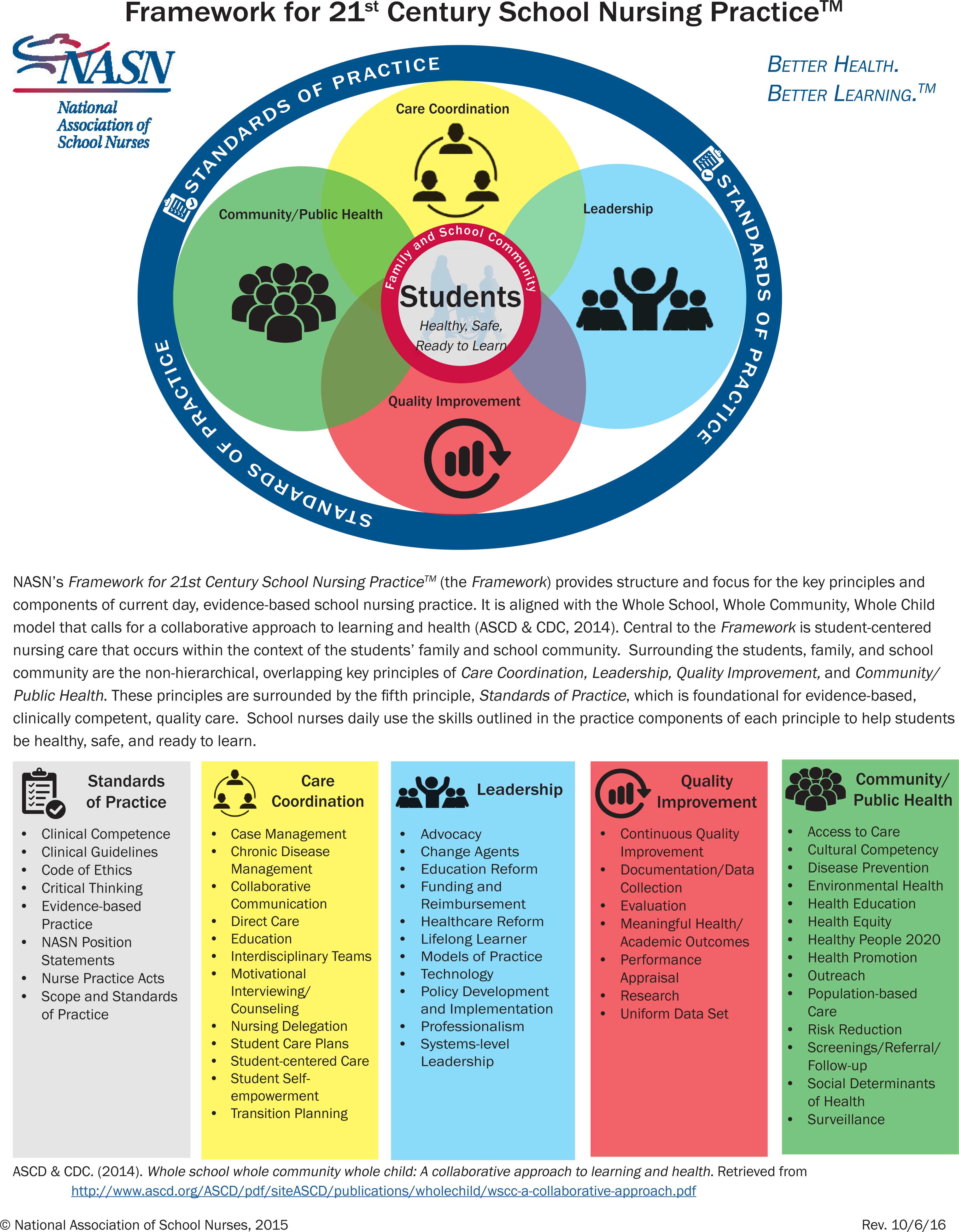
Framework for 21st Century School Nursing PracticeTM.
College Readiness
College readiness is the ability of a student to enroll and be successful in an institution of higher learning (Conley, 2012). College readiness is comprised of four key components in high school: content knowledge (i.e., knowledge of literary techniques in English), academic skills (i.e., writing, and analytic thinking), non-cognitive skills (i.e., self-monitoring, time management and self-control) and college knowledge (college norms/ culture, college admissions, and financial aid processes) (Roderick et al., 2009). Through these components, schools create a “college-going culture” that increases overall college readiness. Some college readiness indicators include study skills, time management, awareness of one’s performance, persistence, interpersonal skills, and the ability to utilize study groups (Conley, 2012). In addition, preparation for navigating the application process, financial aid, and the adjustment to the college culture (Conley, 2007; Conley, 2012).
Racial and gender disparities in academic success for Black youth are a public health concern that should be addressed to reduce education-related health disparities. In alignment with the Framework’s key principles of Leadership, Community/ Public Health, and Care Coordination, school nurses should advocate for college readiness programs and educate the school community about the role of structural racism as it relates to college readiness. A recent call for school nurses to dismantle factors, structural or systematic, that negatively impact equity highlights the importance of exploring the role of the school nurse in promoting college readiness for Black high school students (Willgerodt et al., 2021). While the positive impact of school nurses on student health and academic outcomes is established, little is known about school nurses’ impact on and involvement in college readiness for Black youth. The purposes of this integrative review of the literature are to describe existing programs that promote college readiness for Black high school students and evaluate school nurse involvement.
Methods
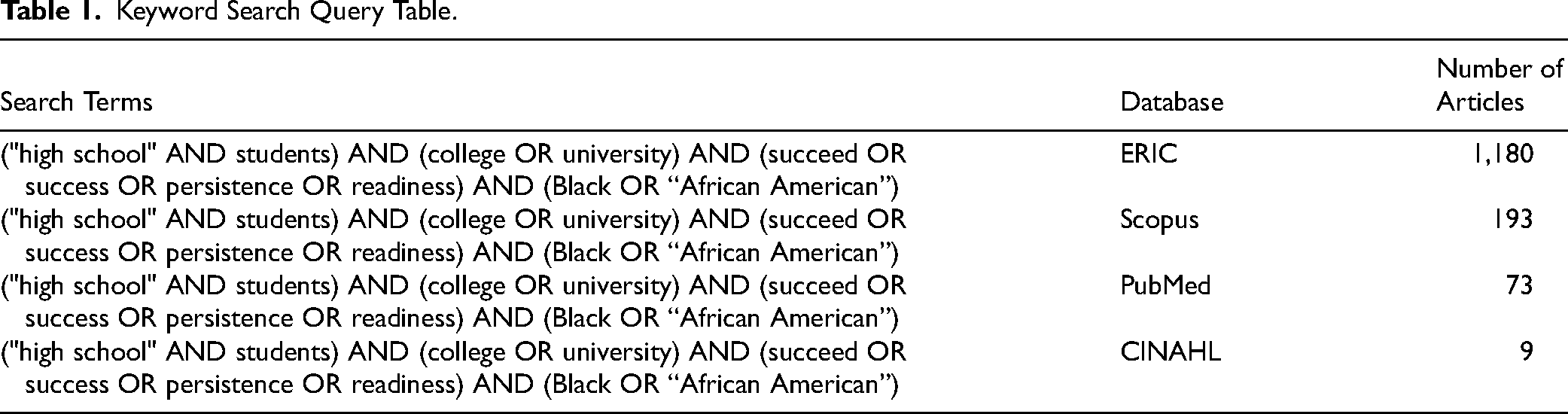
Our integrative review followed established guidelines for integrative reviews of the literature (Whittemore & Knafl, 2005) as well as the Preferred Reporting Items for Systematic Review and Meta-Analyses (Moher et al., 2009). A search strategy was developed with the assistance of a librarian with extensive experience conducting integrative reviews. The authors then searched four databases; ERIC, Scopus, PubMed, and CINAHL for studies published from 2001 to 2021. Although program components can be adjusted to fit the needs of the populations of interest, the starting date of 2001 was selected to identify contemporary interventions which incorporate updated progress in technology and generational perspectives. The databases and search criteria are described in Table 1.
Keyword Search Query Table.
Study Selection and Data Extraction
This search was limited to English language and peer-reviewed journals. In addition, articles were included if: (a) they were published after 2001, (b) the primary population was high school-aged students, (c) included at least 20% Black or African American youth, and (d) included mentorship, leadership, or other programs with an end goal of college readiness. Studies were excluded if there was insufficient detail of the program components, did not report student outcomes, or the focus of the intervention was high school graduation only with no mention of college readiness. Each author was assigned one database to input the search criteria and upload the resulting articles. Duplicates were automatically removed when imported into the reviewing software Covidence (Veritas Health Innovation). Each author was then responsible for reviewing the title and abstract of each article to determine if the article was relevant, based on the inclusion criteria. Once this was completed the full articles were read and a consensus was reached for the articles to be included in the review. The following information was extracted from the selected studies: (a) authors, year published, (b) sample size, race, grade, gender, (c) title of article, (d) purpose of program, (d) program name and components, (e) school nurse involvement, (f) incorporation of antiracism or racial socialization strategies, and (g) program outcomes.
Results
The database search yielded 1,455 articles. Review of titles and abstracts, elimination of duplicates, and ineligible studies resulted in 276 full-text articles. As described in Figure 2, 258 additional articles were removed after full-text review resulting in 18 unique studies. After full-text review, one article was added that provided a detailed description of the program components of one of the 18 unique studies. A total of 18 unique studies reported in the 19 articles were included in this review. As shown in Table 2, most studies were conducted with only high school students (n = 15), and the remaining studies included a combination of both high school and middle school students, however, the primary population was high school students (n = 3). Sample sizes ranged from 6 (Adams et al., 2014) to over 1000 students (Gibbs Grey, 2018). All articles retrieved focused on Black students, but 10 articles also included Latino, Caucasian, Asian, American Indian, or biracial identifying students. Three of the 18 studies included in this review were gender specific. Forbes and Klevan (2018) included 20 males and Trawick et al. (2020) included 11 male students while Adams et al. (2014) included 6 female students. Nine of the remaining 15 studies reported gender and had an average sample size of 115 with 65% female participants. Three of the 18 articles reported on findings from GEAR-UP program (Gibbs Grey, 2018; Sianjina & Phillips, 2014; Yampolskaya et al., 2006) Most programs (n = 12) offered a summer enrichment experience. Programming also occurred during school hours (n = 9); after-school (n = 9); and Saturdays (n = 5). Programming was led by personnel from a variety of organizations including universities (n = 8); church (n = 1); community college (n = 1); hospital (n = 1) and other community-based organizations. None of the programs were led by or included school nurses. Five of the 18 studies incorporated antiracism or racial socialization strategies. These five studies included Gibbs Grey (2018), Hargrave (2015), and Vega et al. (2015) who included Critical Race Theory as an antiracism framework while Forbes and Klevan (2018) and Havlik et al. (2020) included racial pride as a racial socialization strategy.
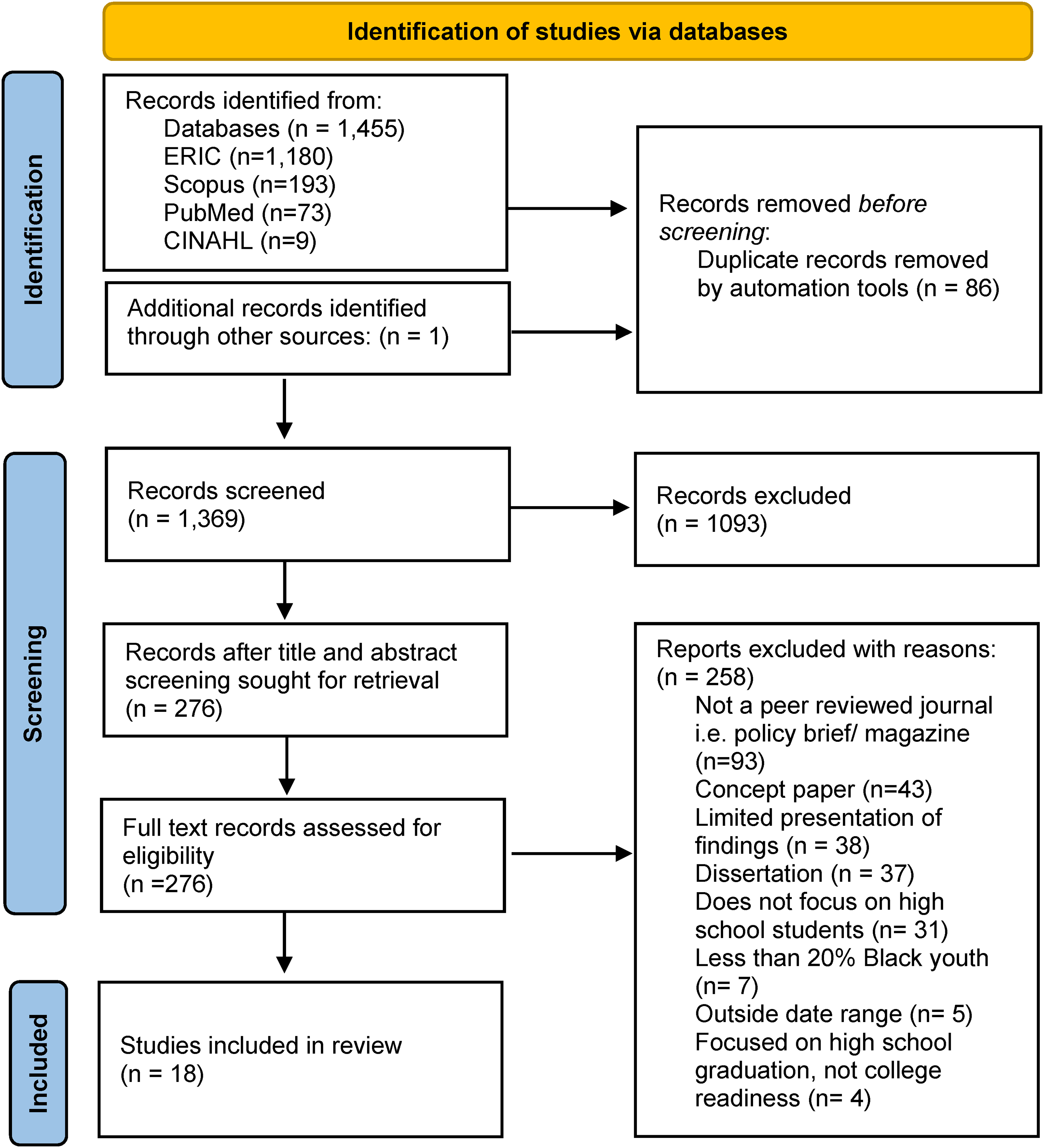
Preferred reporting items for systematic review and metaanalyses flow diagram. Moher et al. (2009).
Summary of the Literature Review.
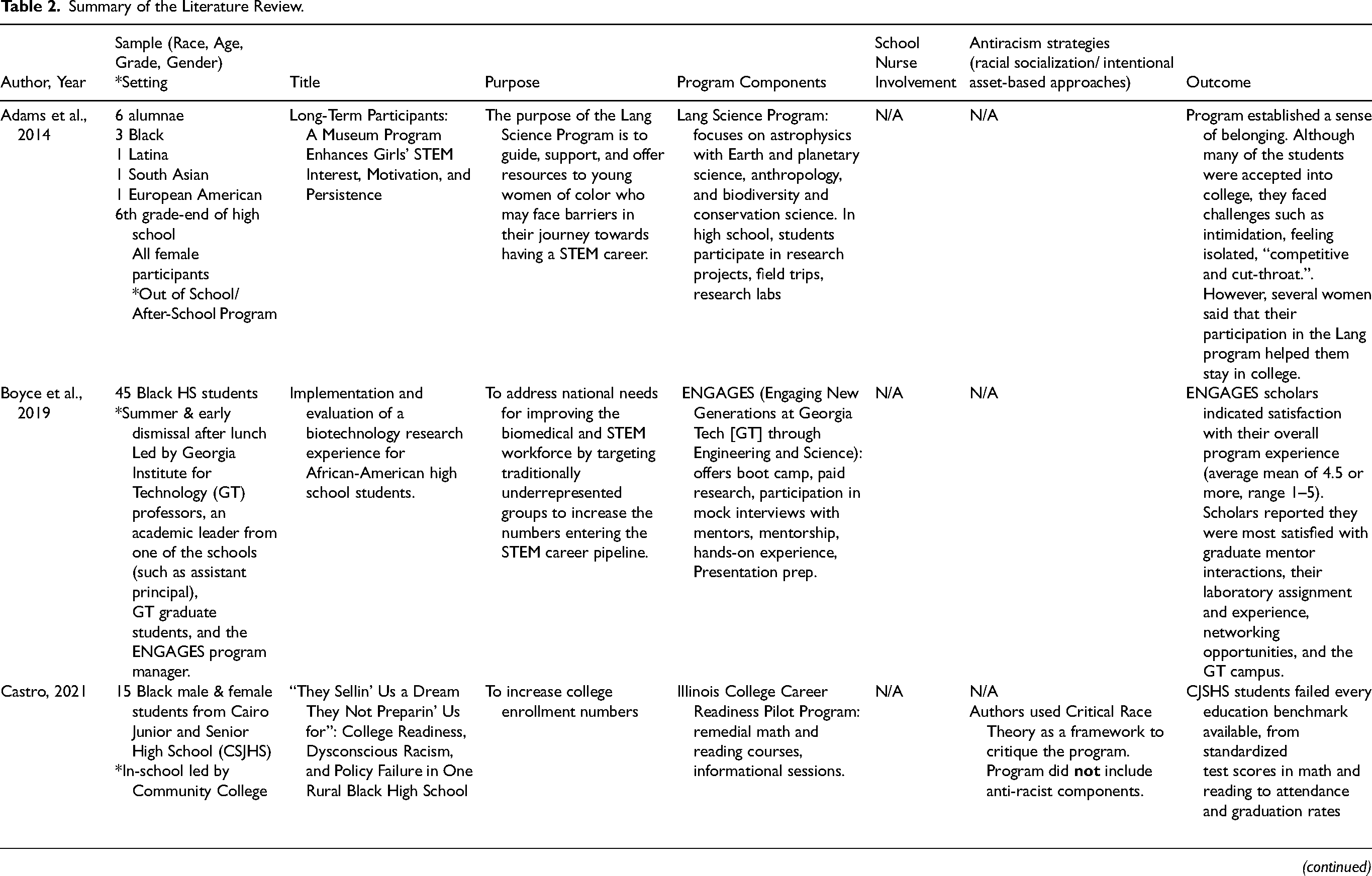
Most of the programs offered content on careers in science/health/medicine (n = 8); other program components included student scholarship or small stipend (n = 4); content on financial literacy (n = 4) and ACT /SAT preparation (n = 3). All but one study (Castro, 2021) reported positive outcomes. Studies reported improved student belonging/belief/self-efficacy/motivation/confidence (n = 7), increased college acceptance rates (n = 6), increased high school graduation rates (n = 6), improved academic performance (n = 3), participants chose careers in STEM (n = 2), participant satisfaction with the program (n = 2), and improved ACT/ SAT scores (n = 1).
Discussion
The purpose of this integrative review of the literature was to describe existing programs that promote college readiness for Black high school students and to evaluate school nurse involvement in such programs. This integrative review identified that, to date, a greater percentage of females than males participated in the studies, when the gender of participants was reported. Most high school students in the studies included in this review were female. The underrepresentation of Black males in these college readiness programs is similar to the lack of Black males that graduate college which increases their risk of unemployment or incarceration (Congressional Budget Office, 2016). Although there were no school nurses involved in the studies included in this review, and therefore no demographic information provided, the national demographic statistics of school nurses points to the underrepresentation of both male and Black school nurses. Having school nurses that are representative of the populations they serve is vital to providing culturally relevant care and reducing health disparities (National Academies of Sciences, Engineering, & Medicine, 2021). In the absence of school nurses that are representative of the gender, racial, and ethnic diversity of the communities they serve, school nurses must take care to practice key tenets of cultural humility. These tenets include, but are not limited to, relinquishing their role as expert and embracing openness, self-awareness, self-reflection, and shared power structures (National Academies of Sciences, Engineering, & Medicine, 2021).
The one study included in this review that did not report positive outcomes (Castro, 2021) postulated that the program operated from a deficit-based framework in which the students were blamed for low performance. Alternatively, Castro (2021) suggested college readiness programs with Black youth should have an asset-based approach in which the impact of systemic racism and racial discrimination are incorporated into the intervention. The concepts of anti-racism and racial socialization were incorporated in five of the studies included in this review and align with college readiness improvements in non-cognitive skills and ability. Concepts of anti-racism and racial socialization can support a sense of belonging and confidence. Asset-based, anti-racist communications serve to relay to youth that (a) their experiences are validated, (b) they are valued as a person, (c) Black culture is associated with positive affirmations, and (d) they have support and encouragement from others (Sue et al., 2019). Further, asset-based, anti-racist communications are postulated to increase youth’s self-efficacy while also equipping them with skills and strategies to better respond to explicit and implicit racial life experiences (Sue et al., 2019).
Implications
To address gaps in academic success and education-related disparities in health, school nurses should be intentional about advocacy efforts that include Black high school males to counter the School to Prison Pipeline and the low representation of Black males that graduate college. School nurses should also advocate for college readiness programs that include an asset-based approach, and an emphasis on non-cognitive skills and ability. Program components that address non-cognitive skills should include antiracism frameworks and racial socialization which operate from an asset-based framework. Based on the Framework, school nurses are well versed in both advocacy-based leadership and cultural competency, making them well-suited to lead these efforts.
Evidence suggests that a “college-going culture” and a sense of college worthiness are important factors in college readiness (Convertino & Graboski-Bauer, 2018). To create a “college-going culture” school staff, including nurses, share their high expectations for students and outwardly demonstrate their belief that their students will be successful. They do not question whether students should attend college; rather they discuss how to prepare for post-secondary success in a variety of settings including traditionally four-year programs, community colleges, and certificate programs. Due to the close connections, school nurses have with students and the community, they are in a unique position to promote a college-going culture and college worthiness through regular daily interactions. Additionally, school climate including safety, availability of extracurricular opportunities and community building is beginning to be explored as a catalyst for college readiness. A recent review suggests that overall school climate may contribute to a college-going culture (Knight & Duncheon, 2020). School nurses positively impact school climate through a variety of activities that increase student feelings of belonging, discourage bullying, create welcoming spaces for diverse students and build community (Best et al., 2018; Garbers et al., 2018; Medina et al., 2019; Williams et al., 2018). This positive school climate can contribute to a college-going culture and the non-cognitive skills needed for college readiness (Conley, 2007; Conley, 2012).
School nurses improve student health and academic outcomes (Johnson, 2017; Yoder, 2020). While school nurses may not have the capacity to lead college readiness efforts, their expertise and position in the community can be leveraged to support academic success and college readiness for Black high school students. School nurses interact with and understand the entire school community, making them uniquely positioned to advocate for programs that meet the specific needs of the school community to facilitate student engagement, college readiness, and overall academic success (National Association of School Nurses, 2017). In partnership with key stakeholders, school nurses have the expertise to assess the components and outcomes of established college readiness programs to determine the appropriateness of use in their school communities. As public health nurses, school nurses develop deep ties with the school community (Cygan et al., 2020). For example, in a recent article Duff and Poole (2004) describe a school nurse partnership with a community-based organization, Healthy Learners, to provide comprehensive healthcare services such as vision, dental, mental health counseling, and transportation. In this program the school nurse facilitated the school/community-based organization partnership and served as the contact person for the student, parent, and Healthy Learners organization to address any barriers to access to care. Similarly, school nurses can leverage their robust relationships with the school stakeholders to partner with community-based organizations that provide college readiness programs and resources. While school nurses have the skills and expertise to contribute to college readiness for Black high school students, they remain an untapped resource in this area.
Limitations
There were several limitations to this review. First, no randomized control trials were included in this review. The studies included various designs including descriptive, cross-sectional and qualitative; incorporating a variety of methodologies can contribute to a lack of rigor, inaccuracy, and bias (Whittemore & Knafl, 2005). Future studies should test the effectiveness of the interventions with larger sample sizes compared to controls. Second, while some studies were excluded if they did not provide details of program components, there was variability in the level of detail in program outcomes, for example, that could be abstracted from some of the interventions included in this review. Future studies should consider tracking standard measures of college readiness such as the four components described by Roderick et al. (2009). Reporting of standard measures would improve the ability to determine the success across programs. Third, the review was targeted at Black high school students, thus the findings should not be generalized to other groups.
Conclusion
Education-related disparities in health outcomes are a public health concern. College readiness programs that include academic knowledge and skills, expose youth to college culture, norms and values as well as provide essential time management skills, can position youth for success in college. School nurses are uniquely positioned to increase college readiness through daily interactions with students and efforts to improve the school climate. School nurses can also leverage their impact on school absenteeism, and utilize their skills related to Leadership, Community/ Public Health, and Care Coordination to advocate for college readiness programs within their schools. Although the findings of this review showed the lack of school nurses’ involvement in college readiness programs, the general success of the programs included in the review is promising. There is an important and unique opportunity for school nurses to advocate for community partnerships and funding sources that provide college readiness programs to Black high school students. These programs should operate from an asset-based framework in which racial identity and culture are celebrated. School nurses should be aware of the disproportionate number of Black males that attend college and ensure they are included in programs tailored to their experiences.
Footnotes
Declaration of Conflicting Interests
The author(s) declared no potential conflicts of interest with respect to the research, authorship, and/or publication of this article.
Funding
The author(s) disclosed receipt of the following financial support for the research, authorship, and/or publication of this article: This work was supported by the Bill and Melinda Gates Foundation for Building Equitable Pathways, Center for Community Health Equity DePaul University and Rush University. We thank Maria J. Ferrera, Ph.D., LCSW for the thoughtful conversation and review of this work before submission.

Supplemental Material
Supplemental material for this article is available online.