




Abstract
Previous research shows that lesbian, gay, bisexual, transgender, queer/questioning, and other (LGBTQ+) students can experience substantial emotional- and health-related issues at school, but research into LGBTQ+ students’ experiences of school nursing is limited. This qualitative study describes the experiences of Finnish LGBTQ+ students engaging with junior high school nurses. Data were collected from 35 LGBTQ+ students using an online survey tool comprising of a set of open-ended questions. Two interconnecting themes were identified following thematic analysis: (1) junior high school nurse engagement: a mixed or unsatisfactory experience and (2) LGBTQ+ students’ needs for diversity-affirming junior high school nursing. Findings show that LGBQT+ students felt junior high school nurse engagement was often unsupportive with issues around their sexuality and gender identity. LGBTQ+ students expressed the need for diversity-affirming information and support in school settings. Further research from school nurses’ perspective is needed to increase understanding of this topic.
Keywords
School nurses are key professionals in promoting and maintaining the physical and emotional health of students (Finnish Institute for Health and Welfare, 2019; National Association of School Nurses, 2018). There is evidence that students from the lesbian, gay, bisexual, transgender, queer or questioning, and other (LGBTQ+) community can experience significant health problems related to their sexual orientation or gender identity (Kosciw et al., 2017; Wilson & Cariola, 2019). These problems can encompass mental health issues related to stigma, concerns over body image, and self-esteem to emotional issues related to matters of sexuality and gender identity (Berzonsky, 2011; Boskey, 2014). The school environment should serve as a safe place where LGBTQ+ students can seek help and support—particularly from school health professionals (Cicero & Wesp, 2017; Reynolds, 2011). However, there is a lack of research around how LGBTQ+ students experience their engagement with school nurses and what thoughts they have on the type of things they require from school nurses—in addition no study of this type has ever been undertaken in Scandinavia. This study is designed to address this gap and identify some key issues for improving school nursing practice related to the health of LGBTQ+ students.
Background
Adolescence can be a challenging time for students who identify as LGBTQ+; many of them experience stress, discrimination, stigmatization, or bullying because of their sexual orientation or gender identity (Huebner et al., 2015; Kosciw et al., 2017; Meyer, 2003). These stressors cause LGBTQ+ students more depression, anxiety, and suicidal behavior than their peers (Russell & Fish, 2016). This can also cause problems around self-image, self-esteem, and confidence (Bussey, 2011; Dillon et al., 2011; Gullotta et al., 2000). Furthermore, adolescence sees young people at a stage in their life when their sexual identity is still developing—and thoughts and feelings about gender dysphoria may also come to the fore (Berzonsky, 2011). This process—which may involve complex emotional matters about how young people see themselves and the stress that realizing they are a minority in society can be substantial—be that either as a result of sexual orientation or gender dysphoria (Patterson, 2008; Stewart et al., 2019). Dealing with LGBTQ+ issues comes at a time when young people are concerned with their school work, family life, but also friendship and romantic relationship issues. As such, there is quite a potential for health-related issues within this group of students (Boskey, 2014).
For healthy development, LGBTQ+ students can benefit from protective and safe resources in their lives. The school environment can, and should, have a positive impact on LGBTQ+ students’ well-being when policies and practices support a positive climate in the school setting. A positive school climate can create feelings of safety, achievement, and positive mental health for LGBTQ+ students, and it can be enhanced by the presence and visibility of information about sexual orientations and gender identities for all students (Russell & Fish, 2016). Furthermore, school personnel including school nurses are ideally placed to support the development, health, and well-being of LGBTQ+ students. Previous research focusing on health professionals in primary care has shown that adolescents who identify as LGBTQ+ value professionals as sources of support and information in matters of sexual orientation, gender identity, and sexual health (Hoffman et al., 2009; Rose & Friedman, 2013; Snyder et al., 2016). However, there is limited research on the experiences of LGBTQ+ students in relation to school nursing.
LGBTQ+ Students and School Nursing
Research evidence about LGBTQ+ students in the school nursing context is limited (Arbeit et al., 2016; Rasberry et al., 2015; Rose & Friedman, 2017). This evidence indicates that school nurses still lack knowledge about LGBTQ+ students’ sexual orientations (Arbeit et al., 2016; Rose & Friedman, 2017), they make heterosexual assumptions of LGBTQ+ students (Arbeit et al., 2016), and many school nurses have judgmental attitudes toward LGBTQ+ students (Arbeit et al., 2016; Rasberry et al., 2015). However, no studies have focused on the needs of LGBTQ+ students in junior high school nursing.
School Nursing in Finnish Junior High Schools
The term “junior high school” refers to the period between 13 and 15 years of age in the life of Finnish students. Finnish basic education consists of nine grades between the ages of 7 and 15 (Eyridice, 2017–2018), and junior high school comprises Grades 7–9. School nursing is part of Finnish student welfare services, and school nursing works in cooperation with other school personnel to promote students’ health and well-being (Finnish National Agency for Education, 2014). For example, school nurses participate in health education in the context of students’ health and the development of sexuality and identity (Finnish National Agency for Education, 2014) during health checkups, and when they offer counseling at the school nurse’s office. School nurses’ work tasks can be divided into individual and community aspects including promoting the health of students; monitoring students’ development, growth, and health; and ensuring the safety and health of school communities. School nurses work as health promotion professionals in Finnish schools and work closely with the school physician (Finnish Institute for Health and Welfare, 2019; Ministry of Social Affairs and Health and the Association of Finnish Local and Regional Authorities, 2004). In junior high schools, school nurses meet all students during health checkup appointments—during these meetings, they discuss the issues of physical development, sexuality, and sexual health with students (Mäki et al., 2014). However, as described above, despite this being a substantial school health–related topic, there is a dearth of research into LGBTQ+ students’ experiences of engaging with school nurses—a deficit this study is designed to address.
Method
Design
The research question guiding this study is: “What are the experiences and views of Finnish junior high school LGBTQ+ students in relation to school nursing?” To answer this question, a qualitative descriptive design (Holloway & Galvin, 2016) using an online survey tool consisting of open questions seeking free text responses was employed. The ethics committee of the University of Turku granted an ethical permission before the data collection (27/2015).
Survey Design and Data Collection
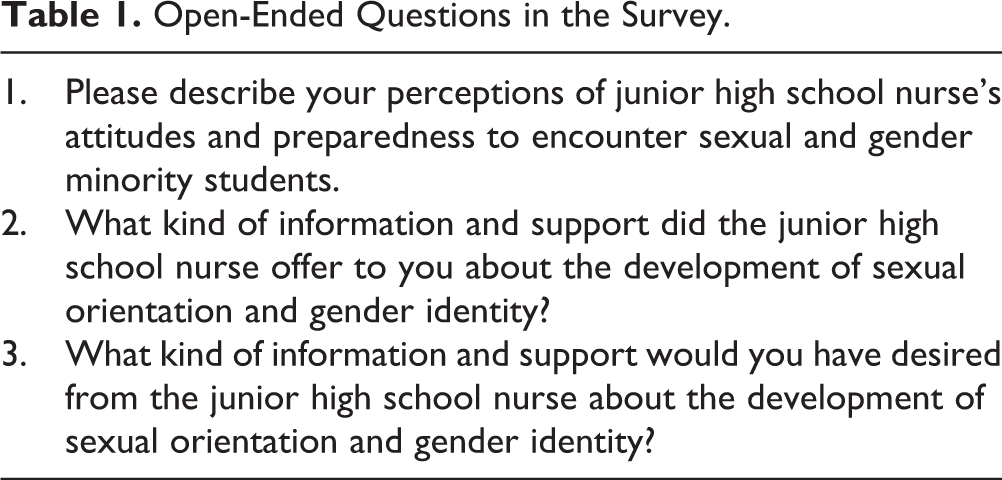
An online survey tool was designed to reach LGBTQ+ students around Finland without restricting participation to a certain time and place and enable anonymous participation for a vulnerable group (Ahern, 2005). The survey questions were generated based on the research question, previous literature, and were designed to allow full descriptions of participants’ experiences and thoughts about the topic (Turner, 2010). The survey consisted of demographic questions and three open-ended questions that asked for free text written answers from participants. To collect demographic data, we asked participants’ age (16–19 years), gender identity (girl/boy/other), and their identity as LGBTQ+ (lesbian/gay/bisexual/transgender/queer/asexual/nonbinary/other LGBTQ+). The open-ended questions are shown in Table 1. Data were collected between September and November 2015.
Open-Ended Questions in the Survey.
Ethical Considerations
According to the guidelines of the Finnish National Board on Research Integrity (TENK, 2019), young people aged 16 years of age can make an informed choice and informed consent in research participation. Thus, parental consent was not requested in this study. The ethical permission granted for this study allowed data collection from young people between 16 and 19 years of age given to the mutual understanding with TENK guidelines. Ethical permission was not given for under 16 years—although participants were asked questions that required them to think retrospectively. It was recognized that it would not be possible to completely prevent a participant under 16 years of age completing the survey—but mitigation against this included clear information about the age range of the study and the collection of demographic data—including participant age. Electronic informed consent was obtained prior to the survey being completed. Assurances of confidentiality were given.
Sampling
Finnish LGBTQ+ students were the target population in this study. Two sampling strategies were applied. First, a purposive sampling was used to reach participants with specific characteristics (LGBTQ+ identities), who could contribute information to the study (Polit & Beck, 2013). This was employed by publicizing the study and providing a URL link in the LGBTI rights nongovernmental organization (NGO) in Finland Seta’s (n.d.) social media outputs and their newsletter. The social media groups of Seta have 23,000 followers; the newsletter was both published on Seta’s webpage, and emailed to over 500 people (E. Alatalo, personal communication, April 26, 2019). In addition to purposive sampling, snowball sampling was used to reach additional participants by encouraging participants to publicize the survey to their peers—a technique that is particularly useful when researching hard-to-reach populations (Goodman, 1961, 2011). In total, n = 35 participants completed the online survey.
Study Participants
Eligibility criteria for participants were self-identification as LGBTQ+, age 16–19 years, having had prior experiences with junior high school nursing, Finnish or Swedish as mother tongue, and a voluntary participation. The study focused on LGBTQ+ students to enhance their presentation as a minority group in research (Griffith et al., 2017). We asked about junior high school experiences retrospectively to minimize possible distress to participants.
Data Analysis
Data were analyzed with inductive thematic analysis. Inductive thematic analysis was chosen to create a description about a phenomenon which has rarely been studied, and no existing theoretical framework was found to be suitable for analysis (Braun & Clarke, 2006). The thematic analysis aimed to gain an understanding of a phenomenon related to LGBTQ+ students’ life (Vaismoradi et al., 2013). The six stages of the thematic analysis process described by Braun and Clarke (2006) were followed; the process is outlined in Table 2.
Thematic Analysis Process Based on Braun and Clarke (2006).

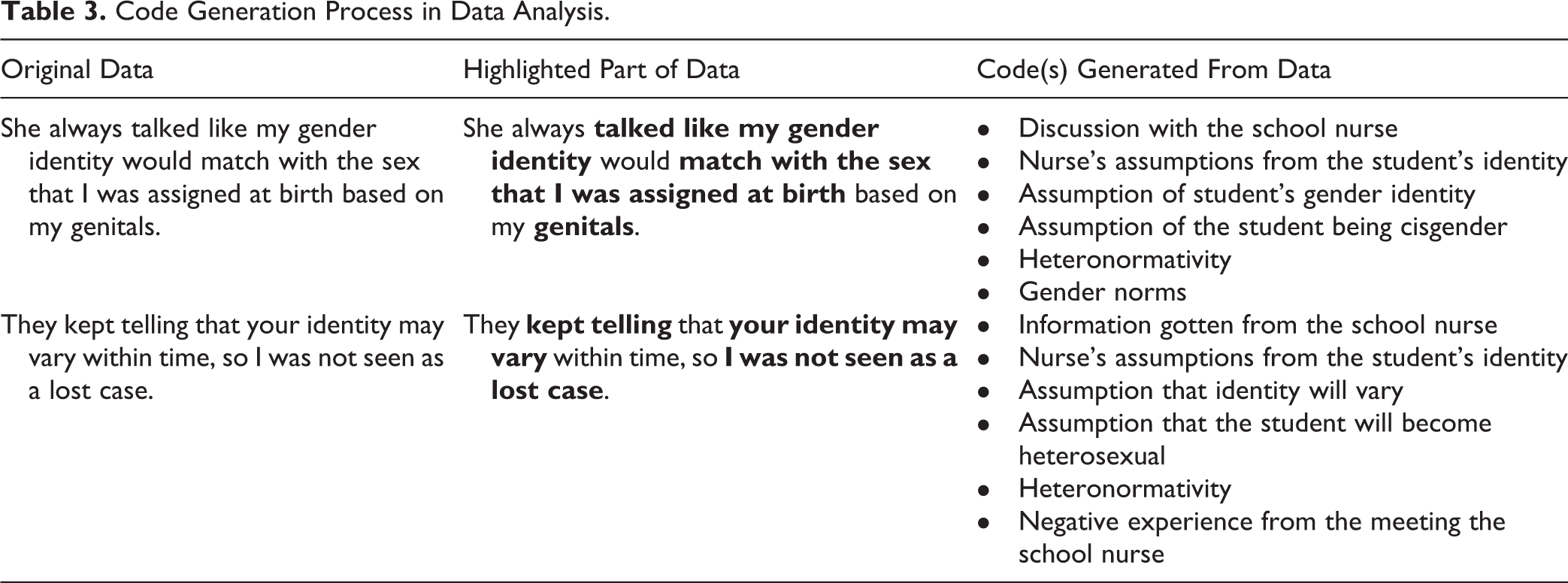
To ensure rigor, peer review was conducted during data analysis (Morse, 2015). First, the corresponding author (M.L.) did the data familiarization, code generation, and search of initial themes. Then initial themes and framework were reviewed by two authors (M.L., S.S.), and the final themes were identified through consensus among all authors (see Table 3). In addition, detailed records of early coding and themes were retained to ensure confirmability. In data analysis, pseudonyms were given to the participants to individualize their replies in the results.
Code Generation Process in Data Analysis.
Results
There were 35 participants completing the survey. Participants’ gender identities were not described in binary terms as girl or boy: 42% (n = 15) of all participants chose other as their gender identity. Other gender identity enabled to write a description about it, and the participants described their gender identity with terms such as genderfluid, nonbinary, and transmasculine. Participants could choose one or several LGBTQ+ identities: Almost half of the participants (49%, n = 17) preferred to describe themselves diversely. Nonbinary as a gender identity outside the girl/boy binary was the most frequently chosen LGBTQ+ identity (n = 12). Participants who chose other LGBTQ+ (n = 8) identity were able to write their own descriptions, and they described themselves with terms such as pansexual and panromantic demisexual (see Table 4).
Participant Demographics.
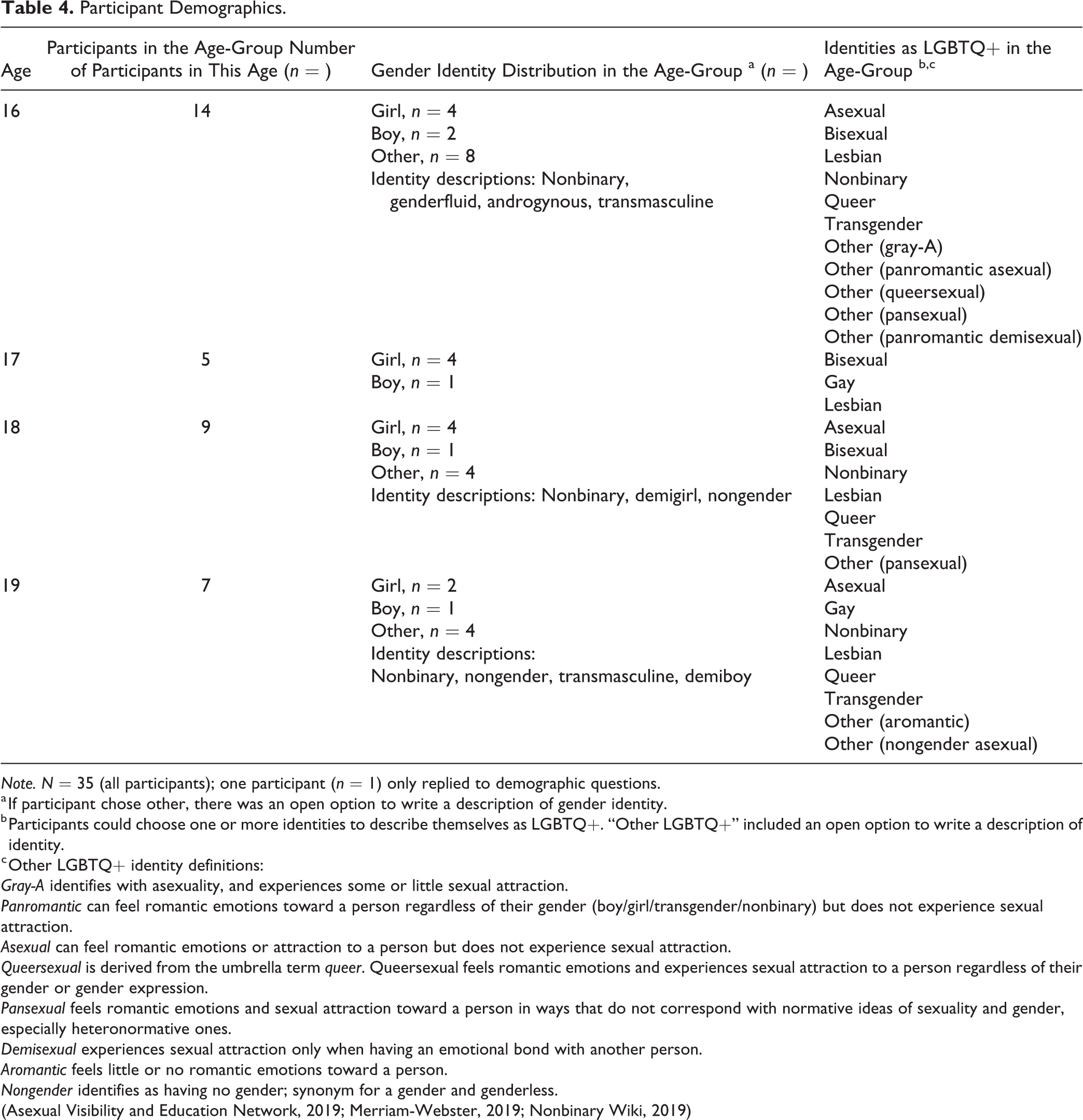
Note. N = 35 (all participants); one participant (n = 1) only replied to demographic questions.
a If participant chose other, there was an open option to write a description of gender identity.
b Participants could choose one or more identities to describe themselves as LGBTQ+. “Other LGBTQ+” included an open option to write a description of identity.
c Other LGBTQ+ identity definitions:
Gray-A identifies with asexuality, and experiences some or little sexual attraction.
Panromantic can feel romantic emotions toward a person regardless of their gender (boy/girl/transgender/nonbinary) but does not experience sexual attraction.
Asexual can feel romantic emotions or attraction to a person but does not experience sexual attraction.
Queersexual is derived from the umbrella term queer. Queersexual feels romantic emotions and experiences sexual attraction to a person regardless of their gender or gender expression.
Pansexual feels romantic emotions and sexual attraction toward a person in ways that do not correspond with normative ideas of sexuality and gender, especially heteronormative ones.
Demisexual experiences sexual attraction only when having an emotional bond with another person.
Aromantic feels little or no romantic emotions toward a person.
Nongender identifies as having no gender; synonym for a gender and genderless.
LGBTQ+ students described junior high school nursing in the context of their sexuality and gender identity from multiple perspectives. From data analysis, two interconnected main themes were discovered. The first theme, “Junior high school nurse engagement; a mixed or unsatisfactory experience,” focuses on LGBTQ+ students’ views on their engagement with school nurses and their beliefs about the preparedness of the school nurses to support them. It shows how these experiences left many students feeling unsupported in issues they were experiencing around their sexuality and gender. The second main theme, “LGBTQ+ students’ needs for diversity-affirming junior high school nursing,” focuses on the support and information needs of the LGBTQ+ students in junior high school. This theme includes how students felt that sexual and gender diversity needs to be better recognized in schools and that more sexuality and gender-related information was needed in school nursing (see Figure 1).
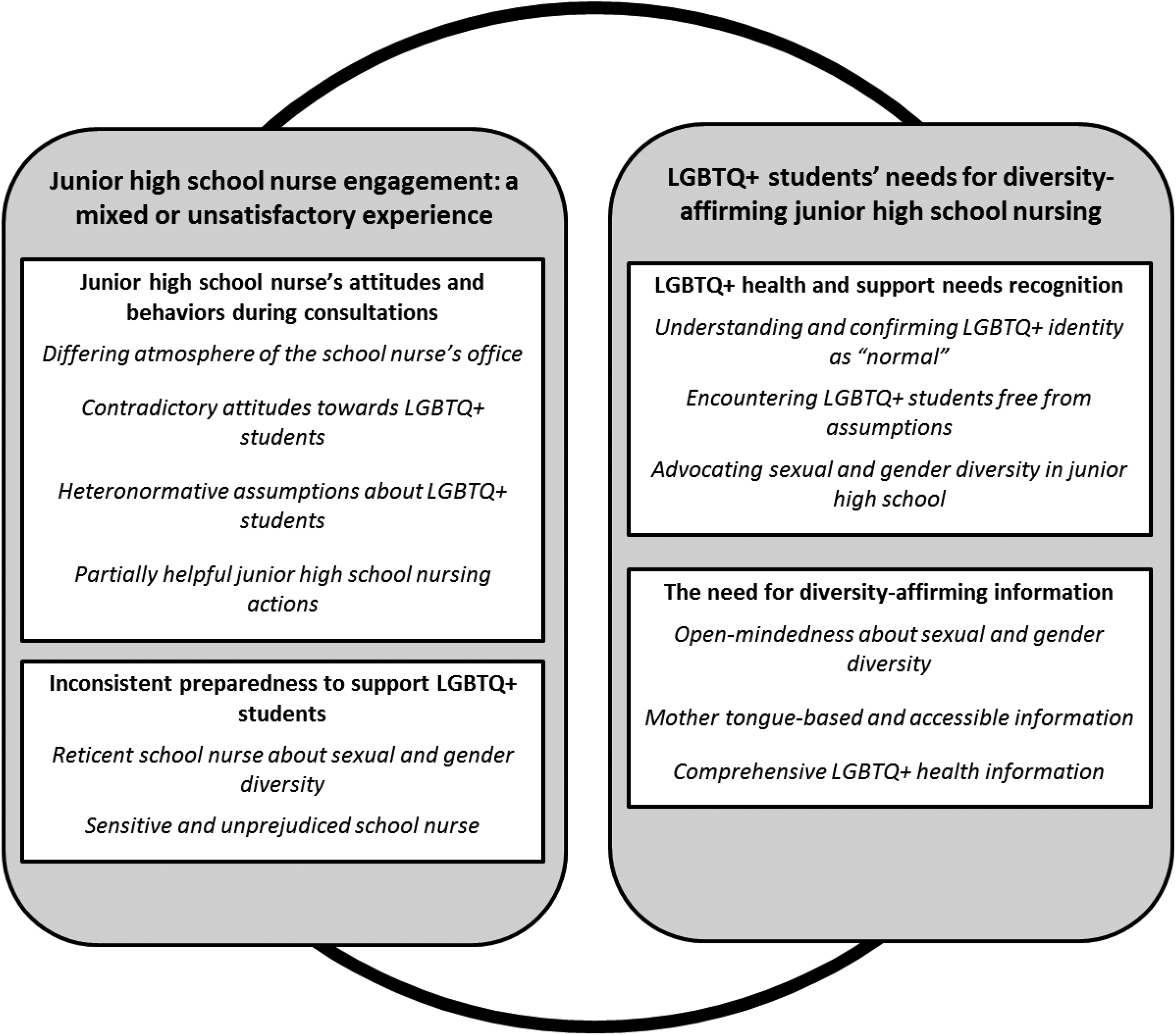
Lesbian, gay, bisexual, transgender, queer/questioning, and other students’ experiences of junior high school nursing.
Main Theme 1—Junior High School Nurse Engagement: A Mixed or Unsatisfactory Experience
LGBTQ+ students’ experiences of junior high school nursing were often unsatisfactory. These experiences were drawn from the students’ own experiences of consulting with school nurses about sexuality or gender-related issues. There were two subthemes within this main theme—all connected with student experience of connecting with the school nurses.
Subtheme 1: Junior High School Nurses’ Attitudes and Behaviors During Consultations
When LGBTQ+ students visited the junior high school nurse’s office, they sometimes felt that the school nurses were open-minded, but at times school nurses showed confusion when LGBTQ+ students disclosed their identity. […] the school nurse asked, out of embarrassment, if I had thought about my sexual orientation, and I replied “yes.” She gave a laugh and changed the topic. (Aale, 19 years old) I just got a “diagnosis” of being sick because of my gender identity and sexual orientation, and the school nurse recommended talking to a psychologist so that “the problem” could be fixed. (Sointu, 16 years old)
LGBTQ+ students frequently experienced junior high school nurses having heteronormative assumptions about them. Their sexual orientation was assumed to be heterosexual, sexuality was discussed solely from that perspective, and physical development was taught from a girl/boy binary perspective in junior high school nursing: In health checkups, everyone was always heteronormative, and I was not brave enough to correct the school nurse’s assumption. (Eelia, 16 years old) She [junior high school nurse] supported me and she ensured that there was at least one person on my side among the school personnel. (Jooa, 17 years old)
Subtheme 2: Inconsistent Preparedness to Support LGBTQ+ Students
LGBTQ+ students’ experiences of junior high school nurses’ preparedness to support them were inconsistent. The preparedness of junior high school nurses was often described as low, and they were described as reticent about sexual and gender diversity. Discussion about sexual and gender diversity was rare, and especially topics of safe sex with a same-sex partner or gender diversity were nonexistent: […] we did not discuss being trans or nonbinary at all. (Viima, 16 years old)
Despite many negative experiences, a minority of students described their school nurse as sensitive and unprejudiced. These junior high school nurses were progressive, and they accepted LGBTQ+ students regardless of their knowledge levels about sexual and gender diversity: The junior high school nurse took it well when I told her I’m transgender. She was fair and admitted she does not know so much about it [transgender], she listened to me, and she did not claim her assumptions to be correct. (Devi, 18 years old)
Main Theme 2—LGBTQ+ Students’ Needs for Diversity-Affirming Junior High School Nursing
LGBTQ+ students often felt excluded from discussions about sexuality and gender and that junior high school nurses did not offer them support and information that was beneficial for their identity development and health. Therefore, LGBTQ+ students described support and information needs which highlighted diversity-affirmation. This main theme is comprised of two related subthemes.
Subtheme 1: LGBTQ+ Health and Support Needs Recognition
For LGBTQ+ students, junior high school was a period of understanding and reflecting on their own identity, sexual orientation, and gender identity. The identity reflection appeared in in three ways: (1) Sexual orientation and gender identity issues were not current for LGBTQ+ students, (2) LGBTQ+ students were reflecting on their identity, (3) LGBTQ+ students identified as an LGBTQ+ person: I never felt myself as a girl/woman even though I had female anatomy […] I didn’t want to define my own gender […] (Nova, 18 years old) [Support the participant would like to get] […] I am not the only one who feels like this […] I am normal, and it is common to think about these things at this age. (Ilta, 19 years old) I would have wished that the junior high school nurse had at least talked about “partner” […] she could have used gender-neutral terms when talking about me […] because she can’t know someone’s gender identity. (Miska, 16 years old) Everyone could be taught about sexual and gender minorities, because many don’t understand anything at all about them. It could maybe decrease bullying and prejudice. (Paiste, 16 years old)
Subtheme 2: The Need for Diversity-Affirming Information
Information related to sexual and gender diversity was an important part of junior high school nursing for LGBTQ+ students’ identities, health, and well-being. LGBTQ+ students stated that the information junior high school nurses offer needs primarily to base on open-mindedness about students’ diversity. LGBTQ+ students desired that junior high school nurses talk openly about sexual orientations, gender diversity, and the existence of LGBTQ+ people in Finnish society: I wish that […] there would be more discussion about different sexual orientations and gender identities […]. (Ariel, 16 years old) I have found […] information about gender identity issues from the internet, and most of it was in English. […] All adolescents do not necessarily have such good skills in English that they could find enough information. (Viima, 16 years old) […] the office could have leaflets that you could put quickly into your bag […] (Lei, 18 years old) I would have liked to hear about protection in sex with women maybe a few years earlier. (Kajo, 18 years old) In junior high school, I was not aware of […] other gender identities and it would have been nice to get information about them, […]. (Ruska, 19 years old)
Discussion
Our study yielded an understanding of Finnish LGBTQ+ students’ experiences of junior high school nursing, the needs they required from school nurses, and their views on the school nursing support they experienced. Our findings illustrated new insights about LGBTQ+ students in the 21st century, who are reconstructing the conventional definitions of sexuality and gender (Bosse & Chiodo, 2016; Paasonen & Spišák, 2018). Furthermore, our study shows that although some junior high school nurses were valued as supportive professionals, information sources, and diversity advocates in junior high school—many others did not provide suitable and appropriate care for LGBTQ + students.
In our study, LGBTQ+ students identified themselves diversely: 40% of students reported their gender identity beyond girl/boy binary, and nearly half (49%) of the LGBTQ+ students chose to describe themselves as LGBTQ+ with several identities. This shows how understanding of sexuality and gender may have moved beyond conventional sexual orientation and gender identity categories: LGBTQ+ students rather see identities as fluid descriptions of their present selves without categorizing themselves too strictly (Paasonen & Spišák, 2018). The presence of gender minority students in our study is also novel since gender minorities are often underrepresented in school health studies (Laiti et al., 2019). This diversity may challenge the discussions about the development of sexuality and gender in school nursing practice since sexual orientation and gender identity may be more complex (Bosse & Chiodo, 2016; Paasonen & Spišák, 2018). In future school nursing, sexuality and gender of students could be considered as fluid, nuanced concepts (Bosse & Chiodo, 2016), which shape over time and culture, and reflect each student’s unique growth.
LGBTQ+ students’ information needs in junior high school nursing highlighted diversity-affirmation. To be able to offer diversity-affirming information, school nurses need to encounter LGBTQ+ students without making assumptions about them; this would give space for open discussion about sexuality and gender, and signal LGBTQ+ identities are considered as normal. LGBTQ+ students need comprehensive information from junior high school nurses about sexuality and gender. Gender diversity was especially important for participants in this study, and it was often identified as a missing topic in school nursing and school. LGBTQ+ students’ emphasis of the importance of gender diversity was novel in school nursing research, and it demonstrates possible changes in defining gender identity among 21st-century adolescents. These changes need more research in the field of nursing and health care to create an updated understanding about adolescence and adolescents’ needs from health professionals.
Engagement with junior high school nurses was often a mixed or unsatisfactory experience to LGBTQ+ students: School nurses’ attitudes were confused or even negative toward them, nurses had heterosexual preconceptions about them, and these findings were similar to previous studies of school nursing practice (Arbeit et al., 2016; Rasberry et al., 2015). This demonstrates how there are still the need to ensure inclusive and equal school nursing services for LGBTQ+ students, and these issues need to be considered when developing school nursing practices globally. Furthermore, our study demonstrated that if LGBTQ+ students were unsure about junior high school nurses’ attitudes toward their sexual orientation or gender identity, they did not disclose it, or health issues related to these identities. This finding highlights the importance of health professionals’ open-minded and accepting attitudes in creating a safe and confidential relationship with patients, especially with adolescents (Carlisle et al., 2006; Hoopes et al., 2017) and minority groups (Hausmann et al., 2011; Morris et al., 2016). Thus, junior high school nurses’ need reflect on the way they create a welcoming and nonjudgmental environment for students, as well as their professional skills and knowledge about sexuality and gender.
In addition to being open-minded, confidential professionals and providers of information, junior high school nurses were sometimes seen as advocates of sexual and gender diversity. This was an interesting finding, and it indicates that LGBTQ+ students think advocating school nurses can affect in creating a safe school environment for LGBTQ+ students. Literature supports this finding (Cicero & Wesp, 2017; Kosciw et al., 2017), and ensuring safety in schools is defined as school nurses’ professional responsibility (Finnish National Agency for Education, 2014). Furthermore, ensuring a safe school is a significant way of reducing LGBTQ+ students’ experiences of bullying, discrimination, and harassment at school (Kosciw et al., 2017). Therefore, it is crucial that junior high school nurses provide open support for LGBTQ+ students and take active roles in ensuring a safe and inclusive school environment.
Limitations
Our study included some limitations. As data were collected anonymously, the researcher could not contact participants to ask any further information or confirm the actual age of participants. Anonymous data collection was an ethical decision to protect participants’ privacy, and it may have encouraged LGBTQ+ students to participate. The generalizability of the findings (Morse, 2015) could have been increased if nonrespondents (e.g., students questioning their sexuality or gender) had been reached to participate. However, the study was publicized through an NGO, which reaches substantial number of LGBTQ+ people in Finland, and this can be a strength in data collection and getting a thick description the phenomenon (Morse, 2015) in LGBTQ+ students’ lives.
Implications for School Nursing and Future Research
We suggest three areas of development in school nursing based on the findings in this study. First, school nurses need more education about sexual and gender diversity, LGBTQ+ identities, sexual health of this group, and gender diversity. Education needs to be available both graduated school nurses and students to increase understanding of diversity in adolescent sexuality and gender and to create school nursing accepting and supportive for all students. Second, to be able to create safe and confidential relationships with LGBTQ+ students, school nurses would benefit from training for improving their skills to care LGBTQ+ students. Training would include dimensions of sensitive and inclusive engagement and creating an open discussion atmosphere about sexuality and gender in school nurse’s office. Third, policies and practice guidelines for school nursing need to be updated to cover wider aspects of sexuality and gender to recognize diversity in adolescence. Then school nursing can offer access to health information and service, which promotes every student’s health and development (United Nations Convention on the Rights of the Child, 1989).
Further research is needed from junior high school nurses’ perspective, since this study focused on LGBTQ+ students. Research focusing on junior high school nurses’ perceptions about sexual and gender diversity would increase the evidence base about LGBQT+ students as school nursing patients and sexuality and gender in the school nursing context. School nursing practice could then be developed to become more inclusive for LGBTQ+ students.
Conclusions
Many LGBTQ+ students’ experiences of junior high school nursing varied, and LGBTQ+ students’ negative experiences left them feeling that school nurses could not be relied upon for support and advice. Where students did receive supportive care, they felt valued and accepted within the school community. Diversity-affirming information and support in school nursing was significant for their health and well-being, and junior high school nurses can play a significant role in promoting both inclusive and safe school environment for LGBTQ+ students. Further research is needed from junior high school nurses’ perceptions to create comprehensive evidence about sexual and gender diversity in the school nursing context.
Footnotes
Author Contributions
Minna Laiti, Heidi Parisod, and Salla Salanterä were involved in the conception or design of the manuscript. The manuscript was drafted by Minna Laiti and Mark Hayter. All authors contributed to the acquisition as well as analysis of data, critical revisions, gave final approval, and agreed to be accountable for all aspects of work ensuring integrity and accuracy.
Declaration of Conflicting Interests
The author(s) declared that there is no conflicts of interest with respect to the research, authorship, and/or publication of this article.
Funding
The author(s) received no financial support for the research, authorship, and/or publication of this article.
