



Abstract
Understanding the organization of complex living systems such as holobionts requires a complementary, pluralistic framework in which the individual-centred perspective of the Enactive Approach (EA), the collective, relational focus of Sympoiesis, and the biological evidence provided by Eco-Evo-Devo can collaborate fruitfully. This paper argues that the individual-centred agency of the EA and the collective focus of Sympoiesis are complementary. The EA provides a robust model of individual agency but overlooks broader ecological networks. Sympoiesis effectively describes distributed, multi-species systems, such as holobionts, but lacks an account of individual agency. We propose a synthetic and dialectical framework – Entangled Agencies – that integrates both perspectives through a tripartite structure: individual agency (S1), collective sympoietic dynamics (S2), and the constitutive ‘in-between’ of their interactive dialectics (S3). Grounded in evidence from Eco-Evo-Devo and enactive operational models, we describe life and cognition as emerging from the ongoing tension between individual autonomy and collective interdependence. This dialectical synthesis moves beyond a mere sum of parts, providing a richer, multiscale understanding of agency and the organization of life and cognition.
Introduction
The Enactive Approach (EA) was born in the nineties as a research program offering an alternative to cognitivism (Varela et al., 2016), 1 which has been the most influential form of cognitive science to date (Knyazev, 2023). The EA’s criticisms of cognitivism focused on the idea that cognition involves linear computational processes that occur almost exclusively in the human brain, which was seen as problematic from an empirical perspective (Clark, 1997). New models based on dynamical systems enabled a different understanding of cognition (van Gelder, 1997). On this basis, for the EA, as for many other enactive and ecological perspectives, cognition is a continuous process that unfolds through evolving interactions within the brain-body-environment system (Baggs & Chemero, 2018).
In this context, the EA has defined cognition as sense-making (Thompson, 2007), a process through which an Autonomous and Adaptive System (AAS) enacts the environment as a domain of possibilities for purposeful action (Di Paolo & Thompson, 2014). From this perspective, all living organisms are considered AASs. Metabolic exchanges aimed at biological self-preservation are among the most basic forms of sense-making (Thompson, 2007). However, as organisms’ interactions with the environment grow more complex, sense-making manifests in activities we usually call cognition – such as object perception (Di Paolo, 2016b), skilled action (Di Paolo et al., 2017), or social interactions (De Jaegher & Di Paolo, 2007). Many forms of sense-making also involve activities that extend beyond fulfilling basic biological needs, such as when dogs play with frisbees or humans engage in conversation (Di Paolo et al., 2018).
The EA initially focused on defining the nature of individual living bodies as autonomous and adaptive, as well as on the relationship between individuals in isolation and the environment (Weber & Varela, 2002). It was only later that they developed models of interactions between multiple agents and the environment (De Jaegher, 2018). However, the EA has never truly offered a comprehensive account of the socio-material structures necessary for understanding human cognition within socio-ecological systems (McGann, 2014a, 2014, 2020). For all these reasons, the EA has faced criticism for being mainly individualistic and for overlooking ecological relations (Cummins & De Jesus, 2016; Heras-Escribano et al., 2013; Sepúlveda-Pedro, 2024).
Unlike the EA, ecological approaches focus on the environmental structures that support human cognition (Chemero, 2009; Heft, 2001; Heras-Escribano, 2019; Rietveld & Kiverstein, 2014). Theories of affordances and behaviour settings have established a foundation for viewing cognition as an ecological process (Barker, 1968; Gibson, 2015). Approaches that emphasize ecological relations have sparked debates and tensions with the EA (Di Paolo, 2016a; Heft, 2020; Varela et al., 2016). Some authors believe that the differences between the EA and ecological approaches are simply a matter of perspective, and that the two approaches can be complementary (Crippen, 2020; Gastelum, 2020; James, 2020; Sepúlveda-Pedro, 2020). Others are more sceptical, such as the theory of sympoiesis (henceforth called Sympoiesis), 2 which is now applied to cognitive science and argues that the EA is doomed to an insurmountable form of individualism.
Sympoiesis describes systems with heterogeneous composition, distributed control, and changeable boundaries, in which parts are causally interconnected across various levels of organization and timescales (Dempster, 2000, 2007; Gilbert, 2024; Haraway, 2016). In a discussion within cognitive science, Dengsø and Kirchhoff (2023) have recently proposed Sympoiesis as a general framework for describing living and cognitive systems, challenging the individual-centred view of the EA. Sympoiesis finds empirical support in biological studies associated with relational perspectives in evolutionary biology, such as the Extended Evolutionary Synthesis (Lala et al., 2024; Laland et al., 2015; Müller, 2007), and particularly in one of its primary subtending theoretical constructs: Eco-Evo-Devo (Abouheif et al., 2013; Gilbert & Epel, 2015; Gilbert et al., 2015). Sympoietic systems, such as holobionts, are currently widely discussed in both evolutionary biology and the philosophy of biology (e.g. Kohl, 2025a; Kutschera, 2018; Skillings, 2016). A holobiont is a complex living system that performs its biological functions across multiple timescales, thanks to the symbiotic association of organisms from various species within a systemic unity, usually organized within a larger individual body that serves as a host (Guerrero et al., 2013).
Sympoiesis is a suitable theory of living systems; however, it is not without its flaws. While Sympoiesis can explain the ecological makeup and developmental changes of living systems as collective systems, this theory overlooks the role of organisms as individual agents in the organization and development of sympoietic systems. In this regard, and in response to Dengsø and Kirchhoff’s (2023) stance, criticisms by Corris (2023) and Feiten (2023) argue that Sympoiesis lacks an account of agency as a feature of the dynamics that help distinguish living from non-living systems. Additionally, accounts like Sympoiesis, focused on the collective level of inter-agent systems, do not adequately explain how the dialectical tensions arising from the interaction between individual and collective levels of organization influence the constitution and ongoing transformation of living and cognitive systems across different timescales (Brancazio, 2023).
The shortcomings of the EA and Sympoiesis seem complementary. While the EA might lack a comprehensive account of ecological relations, an ecological theory like Sympoiesis does not adequately account for individual agents within widely distributed ecological webs. Consequently, in this paper, we propose a complementary perspective that combines the EA and Sympoiesis, emphasizing the importance of including an account of individual's agency, such as that offered by the enactive theory of minimal agency (henceforth, Enactive Agency; Barandiaran et al., 2009), in descriptions of sympoietic systems.
Our arguments in this paper are organized as follows: we begin by briefly introducing the core concepts of the EA and Enactive Agency, then we proceed to the characterization of Sympoiesis and its application to the description of holobionts. We examine the main criticisms made by Sympoiesis advocates against the classical autopoiesis theory, which underpins Enactive Agency, and clarify why many of these criticisms do not apply to Enactive Agency, as it addresses many issues inherent to Autopoiesis. However, to better understand the ecological embedding of agents, as described by the EA, within broader ecological networks, we explore two additional descriptions of the EA involving the entanglement of multiple levels of autonomy and participatory sense-making. We then revisit the case of holobionts, emphasizing the need for an account of the dialectical interactions between individual and collective levels of organization, illustrating why descriptions of individual’s agency are essential for understanding sympoietic systems such as holobionts, and clarifying the nature of the intermediate stage in the dialectical interaction between these levels. We conclude in the final section by showing how Eco-Evo-Devo not only supports sympoiesis and interactive dialectics but also elucidates individual biological agency as a key aspect of living systems. We compare Biological Agency with Enactive Agency and explore the implications of establishing bridges for collaboration between the EA and Eco-Evo-Devo, given their shared perspective yet different explanatory frameworks.
The Enactive Approach and the Individual-Centred Agency of Living Organisms
The Enactive Approach (EA) is a theory of cognition that, among other things, outlines the minimal organizational requirements for a system to be considered living and cognitive. It uses these criteria to develop a theory of minimal agency (Enactive Agency), supported by operational models based on dynamical systems theory. In this section, we first explore the core concepts of the EA and then review how enactivists build on this foundation to develop Enactive Agency.
Cognition as Sense-Making
The EA rejects two fundamental assumptions of traditional forms of cognitive science, such as cognitivism: (C1) Cognition is the computational processing of information in the human brain (Haugeland, 1978). (C2) The environment is a neutral-value domain from which we derive information to create abstract mental constructs (i.e. mental representations) essential for interacting with it and producing meaningful conscious experiences (Marr, 1982).
Although these two theses were initially helpful in developing the first scientific models of cognition, they proved problematic in explaining phenomena such as mobile robots’ interactions with the environment or the nature of cognitive development in human infants (Brooks, 1991; Dreyfus, 1972; Thelen et al., 1987). One of the many alternatives that emerged against cognitivism in the nineties was the EA (Varela et al., 2016), which, contrary to (C1) and (C2), now tells us that: (E1) Cognition is sense-making (Thompson, 2004). (E2) The environment is a meaningful, organism-specific domain of possibilities for purposeful actions or Umwelt (Thompson, 2007).
These statements are not widely accepted. Some people see in them dangerous metaphysical implications, such as an apparent form of idealism (De Jesus, 2018) or an internalist view of cognition (Wheeler, 2010). Supporters of the EA have addressed these criticisms extensively (Barandiaran, 2017; Di Paolo, 2009; Thompson & Stapleton, 2009), but some controversies remain. We will later examine the criticisms made by the supporters of Sympoiesis; in this section, we simply unpack the core concepts of the EA, considering its relevance as a productive research programme in cognitive science that has provided theoretical and operational frameworks for innovative scientific research in fields such as neuroscience (Berkovich-Ohana et al., 2020), artificial intelligence (Beer, 2020), artificial life (Steels & Brooks, 2018), and psychiatry (de Haan, 2020), among others.
From an organizational perspective, living and cognitive systems are Autonomous and Adaptive Systems (AAS; Di Paolo & Thompson, 2014). Autonomy is a key concept in the EA, used to explain how living and cognitive systems maintain their identity while remaining dynamically coupled with their environments. It entails two interdependent features: operational closure and precariousness. 3
Operational closure refers to a particular kind of organization of processes in which every process within a system both enables and is enabled by at least one other process in that same system; for example, the functional interdependence of vital organs. In this sense, an autonomous system is said to self-individuate when it sustains its own organization through its activity and, in this way, distinguishes itself from its surroundings (Di Paolo, 2018). Precariousness captures the inherent fragility of this self-sustaining organization. In living systems, it is expressed in three forms: (1) systemic precariousness, the need to compensate for perturbations that constantly threaten the system’s viability; (2) processual precariousness, the condition whereby their constituent processes cannot persist in isolation but depend on the continued operation of the system as a whole; and (3) thermodynamic precariousness, the dependence, for the maintenance of their organization, on continuous flows of matter and energy that must be actively secured (Beer & Di Paolo, 2023).
Adaptivity is the capacity of an autonomous system to regulate its internal states and behaviour to remain viable, under the assumption that the system is robust enough to endure a range of perturbations and structural changes that may challenge its autonomy but are not yet fatal (Di Paolo, 2005). It is exhibited, for instance, when we dive underwater and swim back up to the surface to get the oxygen we need to survive. This capacity involves a sensitivity to the system’s vital variables (e.g. core body temperature, blood glucose and oxygen levels, blood pressure, etc.) moving out of their optimal ranges, as well as the ability to act in ways that improve its own situation. Crucially, it also requires that an autonomous system be able to recognize the possibilities for action offered by the environment to sustain its autonomy. Indeed, sense-making involves precisely this recognition, which entails enacting a domain of possibilities for action.
Sense-making in the biological domain occurs when AASs enact or bring forth environmental aspects that are relevant to their self-preservation, for example, when bacteria orient toward chemical compounds that satisfy their metabolic needs (Thompson, 2007). For the sake of simplicity, we can refer to these relevant aspects of the environment as affordances since they appear as possibilities for the purposeful actions of AASs (Chemero, 2009). 4 The domain of relevant affordances for an organism can also be described as an Umwelt (Thompson, 2007), a term introduced initially by Von Uexküll (1934) in ethology to refer to the organism’s relative space of interaction with the environment (Baggs & Chemero, 2019). From the EA standpoint, affordances cannot be either pregiven in the environment independently of the organism, nor do they arise spontaneously; rather, they concretize as a potential for action, showing up in action (Di Paolo, 2023), that is, in the actual relation between concrete organisms and environments.
Metabolism constitutes the most basic form of sense-making, as organisms perceive and exploit aspects of their environment necessary to sustain their biological functions (Thompson, 2007). Metabolism constitutes a universal form of sense-making across all life forms (Thompson, 2022). However, sense-making as an activity founded on the purposeful actions of organisms operates across different dimensions of interaction with the environment, notably sensorimotor and social interactions (Di Paolo et al., 2017, 2018), which we more commonly recognize as cognition (Barandiaran, 2017). We must be aware at this point that despite describing bacteria as isolated individual organisms in direct relation to their environment, Thompson, citing works like Margulis and Sagan’s (1986), believed that all organisms are embedded in broader ecological networks. He stated, for example, that “Bacteria are hardly isolated self-makers. On the contrary, they never live as isolated individuals in nature; instead, they form microbial communities or associations” (Thompson, 2007, p. 119). The models of life proposed by the EA scarcely address the ecological embeddedness of individual organisms. They, however, offer other tools to consider when studying other forms of sense-making, which we will later discuss.
In summary, the EA views cognition as a dynamic process (sense-making) that depends on the concrete history of interactions between organisms and their environment. Organisms cannot be understood apart from their immersion in the environment, nor can the environment be understood without the active presence of organisms within it (Di Paolo, 2018). Although organisms and environment are dynamically interdependent, this does not mean they play identical roles in their interactions (Di Paolo, 2023). Only organisms actively modify themselves and their surroundings for self-centred purposes (Barandiaran et al., 2009). This capacity of organisms is a central aspect of agency – an idea explored next.
Enactive Agency
Enactive Agency is built on the AAS account and provides a framework for developing operational models of agential systems, drawing on tools from dynamical systems theory. It identifies three minimal requirements for a system to qualify as an agent: self-individuation, interactional asymmetry, and normativity (Barandiaran et al., 2009), which we unpack next.
Self-Individuation
Individuation can be understood as an observer-dependent process: from an external point of view, one may identify the boundaries and properties that define an individual within a larger context. In such cases, the criteria are often arbitrary, reflecting the observer’s interests and goals. However, regardless of the criteria an external observer may use to individuate a system, autonomous systems individuate themselves through the operation of an interdependent (operationally closed) network of processes that sustain them as organizational units distinct from their surroundings. Thus, autonomy entails self-individuation, a necessary, though not sufficient, condition for a system to exhibit agency according to the EA (Barandiaran et al., 2009).
From a dynamical systems perspective, self-organizing systems such as flames or tornadoes can be said to self-individuate, maintaining a particular order (spatiotemporal metastable relations among their constituent parts) that persists as long as environmental conditions permit (J. A. S. Kelso, 1995). However, such self-individuating systems cannot be regarded as agents, since they lack the capacity to regulate their interactions with the environment to prolong the persistence of their characteristic order, as living organisms do.
Interactional Asymmetry
A further condition for agency is Interactional Asymmetry, which refers to AAS’s capacity to actively modulate the constraints of its coupling with the environment (Barandiaran et al., 2009). In operational terms, determining whether organisms exhibit interactional asymmetry can be challenging, as environmental factors often influence their dynamics – for example, when waves push swimmers in specific directions. However, interactional asymmetry does not necessarily require organisms to modify their surroundings actively. It is sufficient that they benefit from environmental dynamics, as when birds take advantage of air streams. Nor does it require that organisms always succeed in altering their interactions with the environment. It is enough that they can do so at least occasionally (Di Paolo et al., 2017).
However, not every asymmetric modulation of a system’s coupling qualifies as a form of agency. Interactional asymmetry must be guided by self-preservation norms for a system to be considered agential (Barandiaran et al., 2009). For instance, a person with Parkinson’s disease may experience erratic movements that alter the constraints of her coupling with the environment. However, these movements cannot be regarded as expressions of her agency, since they are not directed toward preserving her autonomy–– whether biological, sensorimotor, or social. Thus, interactional asymmetry, as a condition for agency, must be oriented towards the satisfaction of a norm of viability for an autonomous system (Di Paolo et al., 2017, 2018).
Normativity
One way to understand normativity in this context is to compare the behaviour of organisms, which act in accordance with their intrinsic norms, with that of non-living systems governed by the laws of physics. Any dynamical system is influenced by external variables and internal constraints that result from its past activity (van Gelder, 1997). This description applies equally to the streams of wind and heat on Jupiter that sustain its red spot and to the self-organization of neural activity (J. A. S. Kelso, 1995). However, as AASs, living organisms also regulate their behaviour to meet self-preservation norms (Thompson & Stapleton, 2009).
For instance, a fish out of water actively tries to return to the water to survive, rather than passively waiting to die. The laws of thermodynamics can explain why the fish dies, but they cannot alone account for why it attempts to avoid death (but see Jeffery et al., 2019). A plausible explanation is that returning to the water is the behaviour that best contributes to the fish’s survival, in accordance with its intrinsic norm of self-preservation (Moss & Nicholson, 2012). That said, norms of self-preservation pertain not only to matters of life and death but also admit degrees of fulfilment (Di Paolo & Thompson, 2014), as adaptivity “entails the capacity to improve living conditions or avoid or address threats to viability” (Di Paolo et al., 2017, p. 122).
In sum, Enactive Agency involves self-individuation, interactional asymmetry, and normativity; agency can only be ascribed when all three conditions are met. For the EA, living and cognitive systems are agents in this sense. However, as we discuss in the next section, this view of the EA has been challenged as inadequate because it is seen as individualistic.
Sympoiesis: Challenging the Individual-Centred View of the Enactive Approach
For the EA, cognition is a process that involves the brain, the body, and the environment. As such, this stance aligns with ecological research programs in the cognitive sciences (Baggs & Chemero, 2018), though these tend to emphasize the environmental aspects of the relationships between agents (i.e. organisms) and environments (Chemero, 2009; Heft, 2024; Heras-Escribano, 2019; Rietveld et al., 2018). This section focuses on one of these programs: Sympoiesis, as elaborated by Dengsø and Kirchhoff (2023). We first present this proposal and then highlight its potential explanatory value for the study of holobionts. Finally, we discuss the challenges Sympoiesis poses for the EA, given the latter’s individual-centred perspective.
The Sympoietic View
The word ‘sympoiesis’ means ‘making or becoming together’ (Haraway, 2016), highlighting the collective, relational, and often multispecies nature of biological systems (Dempster, 2000, 2007), undergoing ontogenetic and phylogenetic development (Gilbert, 2024). Dempster (2000) first employed this term to describe the systemic organization of ecosystems, characterized not by clear boundaries, but by the relationships among their multiple components. Grounded in studies from evolutionary biology, such as Margulis, 1991) work on symbiotic relations, Dempster (2007) and later Haraway (2016) hypothesized that sympoiesis also defines ‘organisms’ per se (see also Gilbert, 2024). Dengsø and Kirchhoff (2023) have recently introduced this concept to discussions within cognitive science.
For Dengsø and Kirchhoff (2023), systems that minimally perform biological and cognitive functions are not individual organisms, but rather coupled organism-environment systems that are interdependent and self-maintaining. Self-maintenance here refers to the differentiation of entropy levels that a living system must uphold to remain open to further changes. 5 Dengsø (2024) views entropy as relational: living systems preserve themselves by maintaining an asymmetry between low-entropy internally and high-entropy externally. Unlike a cooling cup of tea, biological functions enable organisms to prevent a decrease in body temperature temporarily. The process of self-maintenance does not require physical boundaries; instead, to maintain entropic asymmetry, organisms can incorporate new processes into their sympoietic organization. Therefore, the boundaries between organisms and environments are contingent and secondary. A remarkable example of this is the establishment of new symbiotic relationships to support the survival of organisms. We explore this phenomenon more closely in the case of holobionts in the following subsection.
Holobionts as Sympoietic Systems: The Biological Evidence
Sympoiesis is significantly supported by works related to the EES (Extended Evolutionary Synthesis), which basically proposes that organisms, and not genes, should be considered the central ‘units’ of all evolutionary processes, and that reciprocal causality between organisms and environments should substitute linear assumptions of cause and effect relationships between biological entities (Lala et al., 2024; Laland et al., 2015). 6 The EES holds that epigenetic variations matter for development and evolution since they influence gene expression without altering the underlying DNA structure. 7 Within the EES, epigenetics (Jablonka, 2017) aligns with a view of ‘inclusive inheritance’ that also makes room for other supra-genetic ‘channels of inheritance’ (e.g. behavioural; symbolic; see also Jablonka & Lamb, 2014). The addition of information from studies of plasticity (developmental or ontogenetic, as well as morphological, among other types; for a foundational reference, see West-Eberhard, 2003), and core Eco-Evo-Devo evidence and concepts (primarily ‘developmental bias’), completes the list of empirical research fields and theoretical contributions that constitute the EES (Laland et al., 2015). 8
From the EES viewpoint, organisms are interconnected through symbiotic relationships across various timescales in complex multispecies assemblages. As defined by the important early work of Margulis, 1991, 2013), symbiosis is a relationship between two or more organisms in which at least one benefits. Works in the EES camp explicitly acknowledge this contribution (e.g. Gilbert et al., 2015) in the context of reconstructions of the Eco-Evo-Devo rationale. In a section entitled “Built by symbionts”, Lala et al. (2024, p. 67) have been explicit on the significant importance of processes involving symbiosis across many branches of the Tree of Life, and about the implications of these phenomena for biological evolutionary theory: All multicellular organisms are hosts to symbionts, including internal bacteria, algae, protists, fungi, and viruses. It has been estimated that more than half the cells in a mammalian body are those of symbionts. However, symbionts are not just residents—they are workers. Signals from symbionts can be critical for normal development of the host. For instance, approximately one third of the metabolites in human blood are derived from bacteria, and in mice, such microbially derived compounds (from the pregnant mother’s gut microbiome) are crucial for normal brain and pancreas development. The bacteria in the newborn gut are critical in the organogenesis of the gut capillaries and lymphoid tissues of several vertebrates, while the metamorphoses of many invertebrates from larval to adult stages also depends on symbionts.
Lala et al. (2024) also mention the remarkable, well-studied case of bi-species symbiotic entanglement established between the bacterium Vibrio fischeri, which has luminescent properties, and the squid Euprymna scolopes, expressed as a process of niche construction of V. fischeri “by scaffolding the development of the squid” (p. 67). Other notable Eco-Evo-Devo systems in which complex relationships exist among plasticity, niche construction, and symbiosis include species of the genus Onthophagus (horned beetles; see Rohner et al., 2024).
At the phylogenetic scale, (Margulis, 1991) defined symbiogenesis as the process by which new species arise from the merging of different organisms through symbiotic relationships. Symbiogenesis extends beyond cooperation between organisms, encompassing the progressive integration of genetic material and cellular structures between organisms over evolutionary time (Guerrero et al., 2013). Margulis posited that specific organelles within eukaryotic cells, particularly mitochondria and chloroplasts, originated as free-living prokaryotes that formed a symbiotic relationship with ancestral eukaryotic cells (Gilbert et al., 2012). Over time, these prokaryotes integrated into the host cell, ultimately losing their independence. In this symbiotic relationship, the absorbed prokaryotes benefit their host; for instance, mitochondria enable host cells to utilize a broader range of substrates for energy production, facilitating more efficient metabolism. As the symbiotic relationship evolved, it is hypothesized that much of the genetic material of the absorbed prokaryotes was transferred to the host cell’s nucleus (Guerrero et al., 2013). Genetic integration is a hallmark of eukaryotic evolution, leading to a more complex cellular structure. The identification of symbiotic dependencies among organisms has led to the concept of holobionts in biology as functional, developmental, and evolutionary units (Guerrero et al., 2013; Rosenberg & Zilber‐Rosenberg, 2011; see also Kohl, 2025b; Skillings, 2016; Kutschera, 2018).
A holobiont is defined as a biological unit that comprises a host organism and all its associated symbiotic microbes (symbionts). This concept transcends viewing organisms as individual entities and acknowledges the crucial role of microbial communities in biological processes (Suárez & Stencel, 2020). The holobiont is deemed a functional unit because the combined activities of the host and its microbiota generate properties and capabilities that neither could achieve alone. The entire system also evolves and responds to selection pressures as a single entity. Nevertheless, the relationship between hosts and symbionts is dynamic, changing in response to environmental conditions (Guerrero et al., 2013). Building on EES accounts of symbionts (e.g. Lala et al., 2024; see above), the human body exemplifies a holobiont, as it harbours millions of microorganisms, including vast gut and skin microbiomes that contribute to human digestion, metabolism, and immune system function.
Holobionts constitute, therefore, prime examples of sympoietic systems (Dengsø & Kirchhoff, 2023; Haraway, 2016). They illustrate the entanglement of various organisms required to perform different biological functions. The control of biological processes is distributed across interactive networks that transcend the boundaries of hosts and symbionts. As their symbiotic dependencies can change over time, holobionts’ boundaries are plastic and adaptable (Suárez & Stencel, 2020).
Biological evidence and models of far-from-equilibrium systems further support Sympoiesis and demonstrate that any account of life centred on individual organisms is misleading. In this context, Dengsø and Kirchhoff (2023), like Dempster and Haraway, argue that Sympoiesis conflicts with the classical theory of autopoiesis, which describes organisms as self-producing entities. Since this theory is one of the foundations of the EA, we examine the most significant criticisms of this theory in the next section and discuss whether they also apply to Enactive Agency.
Autopoiesis and the Challenges to the Enactive Approach
Sympoiesis opposes any individualistic conception of life (Dempster, 2000, 2007; Dengsø & Kirchhoff, 2023; Haraway, 2016), such as the classical theory of autopoiesis (hereafter Autopoiesis) 9 . Autopoiesis is a theory of biological organization that defines organisms as self-producing and self-distinguishing systems (Maturana & Varela, 1980). The paradigmatic example of autopoiesis is the cell, which actively constructs, repairs, and sustains its boundary – the membrane within which the processes involved in this activity occur. Such a conception of life is in stark contrast to Sympoiesis.
Many people refer to the EA as autopoietic enactivism because Autopoiesis is one of its primary roots (Hutto & Myin, 2013; Ward et al., 2017). However, prominent figures in the EA reject this label, as it fosters the misconception that this approach carries many of the problems associated with Autopoiesis (Barandiaran, 2017). This misunderstanding is exemplified by Dengsø and Kirchhoff (2023), who interpret the EA as adopting Autopoiesis but introducing some additional concepts (e.g. adaptivity). This interpretation leads them to conclude that the EA assumes two problematic aspects of individuality: pre-formed individuality and centralized control (CC).
For Dengsø and Kirchhoff (2023), the EA presupposes the existence of organisms as preformed individualities, whose interactions with the environment are considered to occur only after the identity has been established. In Autopoiesis, the environment serves as a source of perturbations that can alter the structure of autopoietic systems while preserving their overall organization. Without perturbations, an autopoietic system would, in principle, maintain its structure (Thompson, 2022). This phenomenon is called structural coupling (Maturana & Varela, 1980). However, such a perspective could imply that the autopoietic system and the environment are separate units that relate through linear causation processes, allowing for decoupling (Wheeler, 2010). Under this assumption, an autopoietic system can be reasonably conceived as a preformed individuality. However, this is not what the EA assumes, since, for it, organisms and their environment are co-defined in a continuous process of mutual constitution and transformation (Thompson, 2007).
The individuality of an autonomous system was initially defined by the concept of organizational closure, which Varela et al. (2025) used to describe the systemic unity of autopoietic systems. Originally derived from mathematics, this concept refers to a formal relation among a system’s components (Varela & Goguen, 1978). The EA later adopted the term operational closure to emphasize that this closure is not merely formal; it relies on the actual occurrence of processes that sustain the system’s autonomy (Di Paolo & Thompson, 2014). The EA also highlights that the organizational boundaries of an AAS are neither pre-given nor permanently established; self-individuation is an ongoing achievement involving concrete actions and mutual transformation with the environment (Di Paolo, 2018).
Drawing on Simondon’s (2005) ontology of development, Di Paolo (2020) explicitly notes that the EA views organisms as ongoing self-individuation processes, which always have preconditions that precede and transcend the formation of the self-individuating system and its development. The EA thus aligns with a process ontology (Di Paolo, 2023), in which there are no solid objects but only processes continually entangled with other processes that nonetheless exhibit moments of stability at specific scales of observation (Whitehead, 1978). From this viewpoint, there is no fixed individual system or definite unity; there are only self-individuating systems embedded in broader networks of processes to which those systems belong. 10 Therefore, the boundaries of organisms are not fixed or static; they change continuously, even if extended periods of metastability make them seem static.
Furthermore, organisms, as AASs, are posited in the EA as constantly engaging in processes of mutual dependence and transformation with the environment. As Di Paolo (2023, p.181) states: Sympoiesis is at play in all forms of collective individuation, but is particularly obvious in cases of symbiosis where codependent autonomous entities mutually produce each other. In human cases, making-with is the unceasing historical activity of communities, non-human agencies, and active environments.
These remarks aim to emphasize that self-individuation involves an ongoing process of co-creation arising from continuous, historical interactions with the surrounding world. Constitutive involvements generate new concrete possibilities, defined by the horizon of each specific situation. With every engagement with our environment and other agents, we bring forth a world. This phenomenon can occur, for example, through historical and social changes, the spread of technologies, or niche-construction processes (Di Paolo, 2023).
A second significant critique of Autopoiesis concerns centralized control (CC). According to Dempster (2007), Autopoiesis conceives organisms as individuals with material and organizational boundaries. As mentioned above, cells construct membranes to separate themselves from their surroundings, and these membranes are often cited as examples of the boundaries established by autopoietic systems. Nevertheless, Autopoiesis refers to the organization of living systems, not their material realization (Dengsø & Kirchhoff, 2023). The EA also provides an organizational theory of biological and cognitive systems, describing them as autonomous, without requiring material boundaries (Di Paolo, 2018; Thompson, 2007). A system’s organizational boundaries are defined by the operational closure of its constituent processes. If observable material boundaries emerge from organisms’ activity, this is a contingent matter rather than a defining feature of their individuality (Di Paolo & Thompson, 2014). So, the self-individuation processes of organisms, oriented to sustain their autonomy, do not entail material boundaries.
It is nonetheless true that individual organisms are organizationally bounded. Here, the question of CC is relevant because critics of Autopoiesis claim that autopoietic systems sustain this type of organization (Dengsø & Kirchhoff, 2023). CC contrasts with the distributed control (DC) characteristic of sympoietic systems, in which causal influences underlying their constitution and transformative development are distributed across a complex entanglement of biotic and abiotic processes.
From the enactive perspective, adaptivity can be understood as the alteration of constraints that change the interactions among dynamic processes within the AAS or between the AAS and the environment, thereby transforming the behaviour of the system or the organizational dynamics of the organism-environment system as a whole (Di Paolo, 2009). That means adaptivity involves dynamic changes that cut across the organizational boundaries of organisms, i.e., their autonomy. Nonetheless, CC could still be a fair critique of Enactive Agency insofar as it entails individual-centred control, understood as the system’s ability to regulate its dynamics or its interactions with other systems (e.g. the environment).
Individual-centred control involves regulation arising from processes within the topology of operational closure. In contrast, in the DC envisioned by Sympoiesis, regulation can also occur outside of that closure. Thus, even though adaptivity involves the potential for mutual transformation in the organism-environment system, it is the individual who regulate their interactions with the environment adaptively for their self-centred purposes (Dengsø & Kirchhoff, 2023). However, as we argue in the next section, CC, which describes individual-centred control, does not prevent Enactive Agency from explaining how individuals can always be part of broader ecological networks in which the DC of sympoietic systems can occur.
Entangled Agencies: A Situated View of Individual-Centred Agencies
From the beginning, the EA has regarded the interconnectedness of autonomous systems within wider dynamic networks at multiple levels of organization (e.g., Varela et al., 2025). As we have seen, in the biological realm, Thompson (2007) discusses explicitly how organisms are embedded within larger ecological webs that shape life processes. However, the EA has yet to develop a thorough account of the entanglement across different levels of biological organization. In contrast, this idea is much more thoroughly explored in explanations of sensorimotor and social interactions, which we will examine in the next two subsections. In the third subsection, we explore the implications of this entanglement for our understanding of holobionts as sympoietic systems.
The Multilevel Autonomy and the Lability of Sensorimotor Interactions
For the EA, organisms regulate themselves and their interactions with the environment not only for biological purposes but also for sensorimotor tasks. In this dimension, adaptivity is primarily oriented towards preserving a sensorimotor identity, which involves the entanglement of different levels of sensorimotor autonomous organization, from sensorimotor schemes to habits and regional identities, all of which are formed throughout development (Di Paolo et al., 2017; Ramírez-Vizcaya, 2025).
Sensorimotor schemes involve coordinating bodily and environmental support structures. For example, when we practice crawl swimming, the muscles, bones, and nerves in our legs work together with our brain and other parts of the body, including the perceptual, proprioceptive, and interoceptive systems, in a specific way to respond to the support and resistance of the water when kicking. The coordination of all these elements in our leg movements forms a sensorimotor scheme that already creates mutual dependence among the components and processes involved (Di Paolo et al., 2014), organizationally akin to that found in living, autonomous systems for biological self-maintenance. For swimming, however, the kicking scheme needs to coordinate with other schemes, such as the one that allows our arms to move for stroking and enables effective propulsion and stability in our body movement in the water. Our kicking and stroking are coordinated with our breath and body position to form a sensorimotor habit – that is, crawl swimming – once we do so regularly enough, and the habit tends to sustain itself. At this level, we find a higher degree of autonomous organization, with a relationship of mutual dependence among the different sensorimotor schemes that constitute the habit. The autonomy of habits goes along with the characteristics of adaptivity and normativity, because, in the habit, interactions with the environment are regulated to maintain its autonomous organization (Di Paolo et al., 2017). At a higher level of organization, the entire sensorimotor activity of swimming involves the synergistic coordination of multiple habits, such as the set of interconnected habits for going to the piscine and swimming, for example, showering before and after swimming, wearing a swimsuit, etc. We can go even further and establish mutual support for activities that form a regional sensorimotor identity (Ramírez-Vizcaya, 2025; see also Varela, 1999a), like avoiding eating at least 3 hours before swimming or taking the subway to reach the pool.
Schemes, activities, and regional identities exhibit both synchronic and diachronic interdependencies across different levels of organization. Thus, we observe the intertwining of autonomous systems at various levels, akin to the organization of multiple organisms within a sympoietic whole. In one sense, control is already distributed, as the organization of sensorimotor interaction involves different autonomous systems coordinating at various levels. However, we can reasonably argue that sensorimotor autonomy does not necessarily imply agency (Froese & Taguchi, 2019); this remains an ongoing debate that stays beyond the scope of our discussions (Kiverstein et al., 2022). We lean towards a conservative interpretation of the EA literature, which suggests that the only genuine agents are living organisms – subjects that adaptively regulate sensorimotor interactions for their own purposes (Di Paolo et al., 2018). Nonetheless, it is more accurate to state that the only inter-agent organization and distributed control are described by the EA notion of participatory sense-making, which we will examine more closely in the next subsection.
Participatory Sense-Making and the Dialectics of Cognition
Participatory sense-making refers to a spectrum of interactive phenomena in which coordination between two or more AASs modulates their individual sense-making activity (De Jaegher & Di Paolo, 2007). Depending on the degree of participation, such modulation may range from a subtle change in how one of the interactors perceives and acts in a situation to more profound transformations, as when two AASs coordinate their activity to engage in an interaction with the environment that was previously unavailable to either individual alone and could not be achieved without their mutual engagement. In such situations, a new layer of affordances emerges for the participants as an interacting whole (Fuchs & De Jaegher, 2009; see also Abramova & Slors, 2015). At the other end of this spectrum, two or more AASs can interact to the point of constituting a new, emergent, and collective autonomous system (Di Paolo et al., 2018).
The high-level autonomy of a coordinated social system emerges when operational closure is established between the activities of two or more participants. However, participatory systems are inherently precarious, as any disruption in coordination may compromise their viability (Di Paolo et al., 2018). A clear example is partner dancing, where the miscoordination of one participant can cause the interaction to collapse (van Alphen, 2014). To maintain both social coordination and each participant’s individual autonomy, all participants must continuously adjust their dynamics (De Jaegher & Di Paolo, 2007). Such a condition may generate tensions between the autonomous system’s inclination to preserve its autonomy and the collective system’s. These tensions are managed adaptively (Di Paolo et al., 2018). Adaptive regulation can occur individually, as each participant modulates their own dynamics to sustain social coordination, or through co-regulation, where participants jointly adjust the coordination dynamics. Consider the same dance scenario in which one partner pulls the other, prompting the latter to adapt their movements to sustain the interaction. Regulation, in this context, encompasses the activities of both partners. It is therefore co-regulation (Di Paolo et al., 2018).
Participatory sense-making is the prime example of distributed regulation that extends beyond an agent’s boundaries. However, a collective system, seen from this point of view, does not merely describe the synergy of systems collaborating to sustain a new level of organization, as accounts that view social systems as the coordination of their members (e.g. Sympoiesis) do (see also Richardson & Chemero, 2014). In the case of participatory sense-making, participants retain their autonomy and exercise adaptive regulations in the interaction. Thus, each individual is not just one component of the social system, as a water molecule is part of a whirlpool. From the EA, an agent becomes part of a social system while exercising their self-centred purposiveness. It is precisely for this reason that conflicts and dissonances can arise in inter-agent interactions (Di Paolo et al., 2018). Similarly, Kyselo (2014) expresses this tension in human self-individuation through her notion of the ‘socially enacted autonomy of the individual’: Individual autonomy is a self-other generated network of precariously organized interpersonal processes whose systemic identity emerges as a result of a continuous engagement in social interactions and relations that can be qualified as moving in two opposed directions, toward emancipation from others (distinction) and toward openness to them (participation) (Kyselo, 2014, p. 10)
This is interesting because we can draw parallels between Kyselo’s tension between distinction and participation, on the one hand, and the previously mentioned tension between individual and collective autonomy, on the other. Therefore, while Sympoiesis focuses solely on coordinating collective systems for self-maintenance, it overlooks the constitutive conflicts among individuals within these systems and between individuals and the collective level of organization. The point here is not to privilege either the individual or the collective levels, but to highlight a dynamic that emerges in interactions at different levels of organization, which is crucial for fully understanding the nature of sympoietic systems. Let us return to the case of holobionts to see why an account of this dynamic is necessary.
Holobionts: Beyond Individuality and Collectivity
We have already seen how holobionts exemplify the complex dynamics of sympoietic systems. Here, we will explore how they also reveal the limitations of the sympoietic view previoulsy discussed. There are many potential examples of holobionts; for our purposes, the case of individualized bodies of various metazoan species – acting as hosts to millions of bacterial cells from different evolutionary lineages that not only support the host’s metabolic functions but also influence their ontogenetic trajectories – is a suitable example.
While a symbiont can benefit a host, it can also be harmful, for example, when its population exceeds levels suitable for the host’s metabolic functions (Bronstein, 2015). Similarly, the host’s behaviour can both support and undermine its microbiota (Suárez & Stencel, 2020), as seen in cases of antibiotic overuse. The relationships among the various organisms that make up a holobiont are complex and go beyond simply maintaining the sympoietic system in asymmetric entropy, as Dengsø and Kirchhoff (2023) affirm, even if the holobiont must sustain such asymmetry to keep the sympoietic processes ongoing. We must also consider the self-maintaining teleology of individual organisms to understand biological phenomena (Deacon, 2011).
Sympoietic organization and development are not only about harmonious synergies among organisms, which can be accurately explained by statistical models of thermodynamics and by computational and dynamic systems focused on the behaviour of collective systems (e.g. Reynolds, 1987; Richardson & Chemero, 2014). Conflicts also arise from discrepancies in the self-centred developmental trajectories of the host and its symbionts within a holobiont. Many of these conflicts can arise because organisms actively shape their interactions with the environment to survive as individual agents.
For instance, according to Gilbert and Tauber (2016), within the Eco-Evo-Devo framework, the immune system functions as a discriminator that differentiates between the self and non-self of the holobiont. Namely, the immune system acts as a sympoietic system capable of reshaping its own boundaries by ‘deciding’ which microbes are part of the holobiont’s normal metabolic functions and which microbes are perceived as threats, prompting the organism to respond by rejecting and eliminating them (Gilbert & Tauber, 2016). The process of building a new symbiotic relation that could be positive (mutualistic), neutral (commensal), or negative (parasitic) for the host is a ‘dialectical’ process of mutual transformation among the activity of the host, the new symbiont, and the whole holobiont (host plus symbionts). By dialectics, in the context of evolutionary biology, Gilbert and Tauber (2016) follow Levins and Lewontin (1985): …parts and wholes evolve in consequence of their relationship, and the relationship, itself, evolves…that one thing cannot exist without the other and that one acquires its properties from its relation to the other, that the properties of both evolve as a consequence of their interpenetration. (Levins & Lewontin, 1985, p. 3, as quoted by Gilbert & Tauber, 2016)
According to Levins and Lewontin, there is an interpenetration or interdependence between the activity of organisms in their relation with the environment and, in the case of a holobiont, in the relationship between host and symbionts, just as Sympoiesis affirms. Dialectics, however, involves conflicts between two opposing elements, establishing, for instance, a “negative correlation” (Levins & Lewontin, 1985, p. 145), such as the self-no-self relation between the holobiont and a new symbiont. When the new symbiont becomes part of the holobiont, we can assume that the opposition has disappeared, for example, by establishing a “positive correlation” (Levins & Lewontin, 1985, p. 146), and that the holobiont now forms a new synergetic whole. This suggests the overcoming of the tensions between the two previous opposites.
However, the dialectical perspective of the EA (Di Paolo et al., 2018), which builds on Simondon’s (2005), suggests that after resolutions, the tensions between the components of a self-individuating system and between this system and its environment do not necessarily disappear but instead evolve into a new set of tensions. These new tensions create the potential for further development of the self-individuating system, that is, its ongoing growth (Di Paolo, 2020). When considering holobionts, it is important to note that one source of the remaining tensions after integrating individual organisms into a collective whole (the holobiont) is their continuous self-maintenance activity as separate entities. This can explain why symbiotic relationships might become unbalanced again, leading to new developmental paths that generate new tensions, which then serve as opportunities for further change. The same occurs in ecosystems (Suárez & Stencel, 2020), which are also sympoietic (Dempster, 2007; Gilbert, 2024).
Therefore, drawing the synergetic aspects of collective systems tells us just one aspect of sympoietic systems. They might rightly describe the developmental trajectories, but they do not explain all the underlying causes of these trajectories. We cannot really understand the constitution and transformation of holobionts without considering the dialectical tensions – the conflicts – that made them possible. Therefore, we hold that a definition of agency, such as the enactive one, is necessary to understand sympoietic systems, because changes in sympoietic boundaries depend on the dialectics among the individual organisms that sustain the sympoietic organization, as well as between the sympoietic system and the environment. Consequently, not only does the collective level matter for understanding sympoietic systems, but also the organization of the individual organisms involved in sympoiesis.
We must, however, be aware that neither the individual nor the collective level alone is enough to understand sympoietic systems not even both together. It is crucial to understand the dialectical interaction – the in-between – that links the two levels, as the formation and transformation of individuals and the collective system rely on it. For this reason, we suggest that to understand holobionts as sympoietic systems more thoroughly, we need to examine three aspects of their organization. (S1) The internal dynamics of the individuals, or agents; (S2) the collective dynamics of the sympoietic system; and (S3) the in-between or the interactive dialectics between individual and collective levels of organization.
We will further clarify what (S3) the in-between means in the following section.
The Dialectics of Life and Cognition
Enactive Agency concentrates on describing how individuals are organized. Sympoiesis, on the other hand, explains the nature of collective, heterogeneous systems like holobionts. However, to fully grasp the dynamics of sympoietic systems, it is important to examine the interactional space between individual and collective levels of organization. This third dimension is not the link between two pre-existing domains, but it co-creates the very field in which both exist. In this section, building on Francisco Varela’s dialectical perspective, we clarify what the in-between dimension involves from Tim Ingold’s point of view and explore the practical role of this dimension, as discussed by Nick Brancazio.
Not One, Not Two
Since the very beginning, the EA has embraced a dialectical stance (Di Paolo, 2018). Varela (1976), for example, argued that we often face oppositions in our epistemological frameworks, such as mind-body, subject-object, and self-other, which need to be reconciled through a new level of analysis that neither denies the tensions between these aspects nor ignores their interdependence and complementarity. In this light, it is misguided to think that the EA describes individual agency as something separate from other individuals or the wider world. Nevertheless, the EA does not seek to eliminate opposites, as if suggesting that the organism and environment are one and the same system. Instead, the dialectics of the EA highlight the complementarity of two opposites while recognizing an insurmountable difference between them, as captured in the now-famous phrase of Varela (1976), ‘not one, not two.’
This phrase suggests that we cannot understand our object of study as either a unity or a collectivity, but as something in between, negatively described as neither this nor that. However, science does not handle negativity well, since anything that cannot be recognized as a distinct phenomenon cannot be empirically studied. That is why, beyond any ontological debate, which falls outside our interests in this paper, if we want to examine the not one, not two domain, we need to give it a positive meaning and create a framework that supports and can be studied scientifically. We will do this by transforming Varela’s negative statement into a positive description of an in-between – a phenomenon described by Ingold (2015) – which we can further operationalize by drawing on Brancazio’s argument to give interactions an ontological status.
In-Between
Ingold (2015) describes the in-between as what exists before any distinctions we can make, such as the separation between subject and object. We might refer to something in the space between subject and object as a bridge or as a connection between two pregiven entities. However, for Ingold, the in-between is not a relation between two pre-existing parts but the preconditions that allow us to speak about those two separate entities. In other words, the in-between is not like a conjunction or the synthesis of two parts, but instead what makes the difference between them.
This description aligns with Varela's perspective, as it does not describe a unity, or the relation between units, but the very source of their identity (e.g., self-individuation), which only makes sense in the distinction against something else (e.g., self-other). This means the in-between is not the crossing point between two pre-existing entities but the emergent trajectory where the parts, the whole, and the in-between are given 'simultaneously'. Such a description might seem like philosophical speculation and certainly deserves a deep ontological discussion. However, we leave this discussion for future work, focusing instead on its relevance to our scientific understanding of sympoiesis. 11
The Ontology of Interaction
Brancazio (2023), building on Longino (2020), advocates ontologizing interactions to understand better the relationship between individual biological agents and their embeddedness in collective groups. These groups might consist of other living agents or simply physical processes of active matter. She critiques the methodological individualism present in many of the EA’s theoretical and operational frameworks. Nonetheless, she also recognizes that the concept of participatory sense-making is a promising idea rooted in operational practice, highlighting the importance of interaction between individual and collective levels of organization.
Focusing on inter-agent interactions, which rely on the tensions between individual and collective levels of organization, Brancazio (2023) highlights operational models that help identify what we, following Ingold, call the in-between. First, she recognizes that participatory sense-making is not just a concept, but a framework grounded in dynamical systems theory and experimental research work (Auvray et al., 2009; Di Paolo et al., 2008; Di Paolo & De Jaegher, 2012). She also views Haken-Kelso-Bunz (HKB) models as valuable tools for understanding the constraints that collective levels of organization impose on individual behaviours, functioning as order parameters and forming a mutual dependence with the individual level of organization (Haken et al., 1985; J. Kelso, 2001). The core of Brancazio’s claims is to examine how the constraints from the internal dynamics of agents and the emergent constraints of the collective system can preserve or transform both individuals and the structures of a collective system. Brancazio, following Kelso (2001), states that we can understand the connection between the individual and collective levels by considering the different timescales of their behaviour: the faster timescale is the individual, and the slower, the collective. This idea is already present in Varela’s (1996, 1999b) neurophenomenological models of time consciousness and supported later by other authors in the enactive and ecological traditions (Chemero, 2009; Gastelum, 2020).
Nevertheless, Brancazio does not endorse Enactive Agency, but we do, because this theory provides valuable insights into the nature of individual organisms as agents. We have already concluded that Enactive Agency focuses on the organization of individuals. However, it does not exclude these individuals’ openness to the collective behaviour of systems they are always part of. Enactive Agency simply describes a particular kind of system that is different from other systems because of its normatively guided adaptive behaviour. Brancazio (2023, p. 221) defines an agent as “an individual who is the causal source of asymmetry in differentiating itself from and acting towards its environment”. This definition of agency is similar to the enactive one but misses one crucial element: the self-maintenance normativity or teleology of organisms. An individual that distinguishes itself through its interactions with the environment is a self-individuating system. As it stands, the causal source of the asymmetry in self-differentiation processes resides in interactional asymmetry. However, a self-preservation-oriented normativity is missing, and, as we have seen, in Enactive Agency, all three requirements must be present for a system to be truly regarded as an agent.
One explanatory advantage of Enactive Agency is that it helps us differentiate between living and non-living systems. For the EA, while many non-living systems can exhibit one or two of the three requirements for agency, only living organisms show all three. Therefore, while Brancazio’s proposal helps see, in more operational terms, the in-between needed to understand sympoietic systems, it lacks a proper account of agency, which leads us back to the discussion of agency. 12
While we have argued that examining the interactional dialectics between parts and the whole is necessary for an account of sympoiesis, we have not yet explained why an account of individuals, such as that of the EA, is essential for sympoiesis. It is not sufficient to define agents as any other kind of active matter systems; we also need to determine if there is a specific feature that makes us view living organisms as agential systems distinct from other types of systems. We will address this question by revisiting Eco-Evo-Devo.
The EA Meets Eco-Evo-Devo
As discussed earlier, Eco-Evo-Devo, one of the pillars of the EES, focuses on explaining the symbiotic relationships that organisms of multiple species build across different timescales. Some authors within this branch of biology have now been very explicit in declaring sympoiesis as one central characteristic of life processes (Gilbert, 2024). We have also seen, from the same perspective, that a dialectics of life is needed to understand the development of holobionts (Gilbert & Tauber, 2016). Here, we examine the Agential View of Eco-Evo-Devo (Nadolski & Moczek, 2023; Sultan et al., 2022; Walsh & Rupik, 2023), which, in addition to sympoiesis and dialectics, recognizes the features of agency in individual organisms as necessary for explaining many critical biological processes, without which their scientific study would be incomplete. Later, we will explore the similarities between the conception of Biological Agency and Enactive Agency, which will help us support our hypothesis that an account of individual agency is needed to understand sympoiesis. We conclude by examining the challenges of further cooperation between the Eco-Evo-Devo and the EA research programmes.
Biological Agency
Within the Eco-Evo-Devo research community, Moczek has collaborated with Sonia Sultan and the philosopher of biology Denis Walsh on a project studying Biological Agency. This approach, sometimes called The Agential View or the agential perspective of Eco-Evo-Devo, describes biological agential systems through five key features, which we outline below based on Sultan et al.'s (2022) work.
Maintenance of Functional Stability
Organisms maintain stable functions in response to changing environmental conditions to sustain their viability. Nevertheless, organisms demonstrate robustness to persist and possess the capacity to adapt to environmental conditions through various flexible strategies (see also Walsh, 2015).
Adaptive Dynamics
An agential system can modulate its behaviour, alter its morphology (developmental plasticity), or manipulate the environment (niche construction) to achieve its objectives while remaining a viable, self-maintaining system.
Goal-Directedness
The functions of an agential system are not blind mechanisms; instead, they are oriented towards satisfying a ‘self-centred’ purpose (or teleology; Walsh, 2015): maintaining functional stability (see also Nadolski & Moczek, 2023). To acknowledge that such goal-directedness exists in a system’s behaviour, we can examine the adaptive responses or transformations that the system can induce in its configuration or interactions with other systems to fulfil its purpose. 13
Context Sensitivity
Organisms, as agents, do not respond mechanically or blindly to environmental conditions, nor do they behave or develop according to a predetermined blueprint. Instead, agents are attuned to the positive or negative characteristics of their surroundings to maintain themselves. Thus, agents have an experience of their environment (see also Walsh, 2015). 14
Affordance Responsiveness
The environment is not merely an external source of pressures for an organism’s survival; instead, it consists of a collection of affordances (see also Walsh, 2013, 2015). An affordance is not simply a property of the environment; it is an emergent, relational quality arising from the interaction between the organism and its environment (see also Nadolski & Moczek, 2023). From this perspective, the Agential View holds that the environment is not uniform across organisms. The viscosity of water, for instance, offers distinctly different possibilities for locomotion for paramecia, harbour porpoises, and humans (Walsh, 2013). Such differences are significant because agent-affordance relationships shape varied trajectories of behaviour, development, and evolution.
These features of agency aim to provide a valuable scientific framework to address the three explanatory gaps of the SET (Standard Evolutionary Theory): (1) phenotypic variation without genotypic variation, (2) missing aspects of extra-genetic heritability, and (3) the novelty of traits (Sultan et al., 2022). Let’s briefly review these gaps and why the Agential View can overcome them:
Phenotypic Variation Without Genotypic Variation
The simplistic genotype-phenotype mapping assumed in the SET is imprecise. Numerous instances exist where we can observe phenotypic variation without detecting changes in the genotype. The Agential View shifts the focus from genes alone to the dynamic interactions between genes and the environment, mediated by the organism’s response mechanisms. The context-dependent flexibility of gene expression, together with the roles of epigenetic mechanisms and developmental plasticity, explains a larger number of cases of phenotypic variation.
Extra-Genetic Heritability
Inheritance patterns cannot be fully explained by shared genes alone. The ‘missing heritability’ problem highlights the presence of heritable information that is not directly encoded in DNA. The Agential View, which acknowledges that inheritance extends beyond genes, allows for consideration of extra-genetic inheritance mechanisms such as cytoplasmic inheritance (e.g. maternal effects, microbiome transmission) and epigenetic inheritance (e.g. DNA methylation, histone modification). This could partially account for the missing heritability.
The Origins of New Traits
Standard evolutionary mechanisms, such as natural selection and mutation, cannot fully account for the emergence of novel complex traits that do not involve alterations in DNA sequences. The agential perspective addresses this issue by emphasizing the role of developmental processes (modularity, plasticity, and robustness) in the creation of new traits. The constructive nature of development, in which each stage builds on previous ones, permits the emergence of complexity even with relatively minor genetic changes.
Although the explanatory power of Biological Agency is still questioned (DiFrisco & Gawne, 2025), it is a non-speculative, explanatory-focused account of individual-centred agency that offers a viable alternative to the SET in evolutionary biology (Walsh & Rupik, 2023). This view of Eco-Evo-Devo encompasses all three elements we stated above as required for the full explanation of the organization of sympoietic systems.
As noted earlier, Eco-Evo-Devo supports sympoiesis; from the same perspective, studying the dialectics between different levels of organization is also essential for understanding the development of the immune system. Now, we have seen how the Agential View, based on the same principles, adds the need for an account of individual organisms’ agency to address explanatory gaps within the SET framework. Therefore, collectivity, interactional dialectics, and individual-centred agency are all important for understanding biological phenomena from this perspective. It remains to explore how the Agential View aligns with and differs from the EA, and to consider the potential for collaboration among these two scientific areas.
Enactive and Biological Agency: A New Dialectics
Convergences between Enactive Agency and Biological Agency
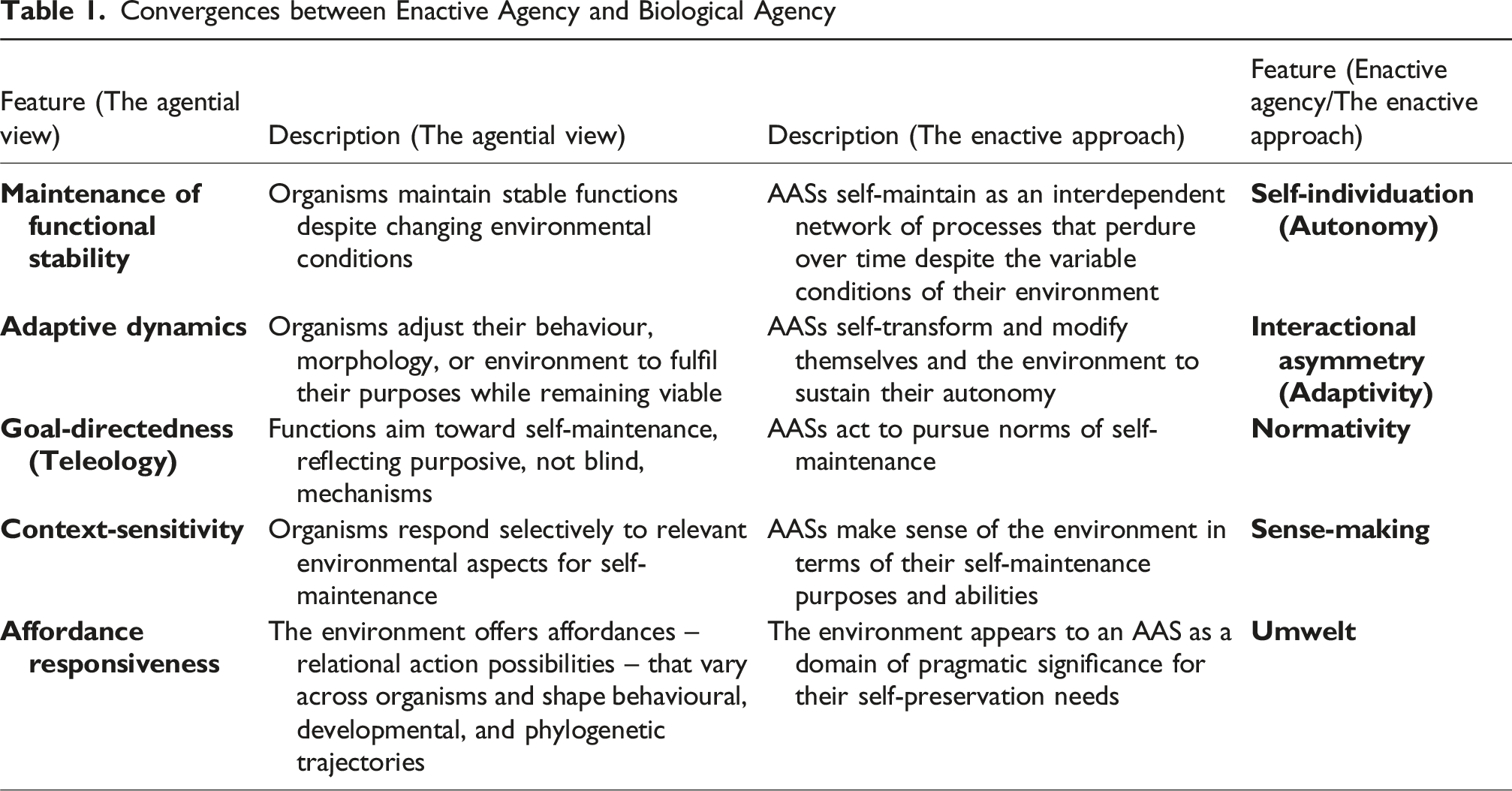
Despite the convergences between these two approaches, we cannot assume they share the same conception of life and of organisms, nor the same explanatory agenda. Both approaches are sympathetic to an ontology of process view (cf. Di Paolo, 2023; Walsh, 2018). Both approaches defy the idea that there is the same environment for any organism, being more sympathetic to a relational co-constitution of the meaningful world (Thompson, 2007; Walsh, 2015). Discussions of the metaphysical status of the world (as a subject-independent reality) or of science as a mere human construction rather than an account of an independent reality fall far beyond the scope of our interests in this paper. Still, we must consider these issues in the future when exploring the possibility of building bridges between the two approaches. In the meantime, we close this article by exploring how the EA and Eco-Evo-Devo might be complementary approaches in their very practice of science.
A Twofold Perspective in the Study of Life: The EA and Eco-Evo-Devo
While the EA and the Agential View highlight the importance of considering a self-maintenance teleology for understanding the behaviour of individual organisms, the Agential View focuses on ecological relations in understanding the temporal development of organisms. For this reason, Walsh (2015; see also Nadolski & Moczek, 2023) has argued that affordances are the environment for organisms, not a physical property intrinsic to the environment. While this is also true for the EA, what we could call affordances within the EA – that is, opportunities for action in relation to the constitution of organisms’ autonomy that altogether constitute an Umwelt – are not necessarily something that transcends the constitution of the autonomy of individual organisms (Baggs & Chemero, 2019). That is, there is no evolutionary (or at least transgenerational) perspective of affordances within the EA framework, whereas evolution and inheritance are central to understanding organism-environment relations in Eco-Evo-Devo. Therefore, more than an ecological dimension, it is a transgenerational dimension that is truly lacking in the EA framework. This missing aspect of the EA, as entailed by Eco-Evo-Devo, is nonetheless an opportunity for collaboration. Still, this collaboration has its own challenges, and we need to consider them to think about the convergences between the EA and Eco-Evo-Devo.
To collaborate across two different theoretical approaches in practice, we do not need to find coherence between their assumptions, but rather between what they can contribute to a scientific understanding of a phenomenon such as biological systems and functions. From a pluralist perspective, differences can be productive in practice, allowing us to explore multiple viewpoints without reducing one to the other (Dupré, 2012; Kellert et al., 2006). The Agential View is already part of the EES’s plural domain (Fábregas-Tejeda & Vergara-Silva, 2018), and in some way, the EA too (McGann, 2020; see also Gallagher, 2010).
The EA and Eco-Evo-Devo can mutually benefit by addressing their respective blind spots without becoming part of a single set of beliefs and explanations. Eco-Evo-Devo offers more detailed descriptions of the mechanisms behind agents’ involvement in sympoietic systems. These contributions expand upon the EA’s abstract proposals. Di Paolo et al. (2018) argue that the abstract ideas of the EA need to engage more closely with specific fields of research to be refined. Conversely, the EA provides more detailed accounts of agent organization and inter-agent dynamics (e.g. participatory sense-making) than the Agential View, thereby offering theoretical and operational models that help connect agency and sympoiesis in the Eco-Evo-Devo framework.
It is true that many works of evo-devo and of the EES in general, for example, the explanation of epigenetic processes such as methylation (Jablonka, 2017) or Lac Operon (Liu et al., 2024), remain quite reductionist in their explanations, and that the EA, as a successor to second-order cybernetics (Clarke & Hansen, 2009), offers a more ‘emergentist’ framework (Thompson, 2007). From a pluralistic perspective, however, we see this difference as complementary, with each examining different levels of explanation. While reductionist frameworks help understand the functioning of specific mechanisms linking biological to chemical processes, the organizational and dynamic perspectives of the EA, ecological models, and Eco-Evo-Devo can illuminate how these processes intertwine with ecological embeddedness (see, e.g. Crippen, 2020). Philosophers of science and philosophers of biology already adopt such a pluralistic perspective, and more recently, Mossio (2023) and Bich (2025) have already explored the possibility of combining mechanistic and organizational accounts of life by considering the new mechanicism that incorporates more holistic principles of explanation (e.g. Bechtel & Bich, 2024; see also Mossio, 2023). This kind of proposal represents a promising route worth exploring for establishing collaborative links.
Conclusions
Based on biological research, Sympoiesis has become a strong theory of living systems that any approach seeking to provide an organizational account of life must consider. The EA is such an account and should be viewed as compatible with Sympoiesis to avoid being seen as a misleading explanation of biological systems, which is a key aspect of the EA accounts of cognition.
Following many others in the enactivist field, we have argued that the EA does not encompass all the issues of other individual-centred views of biological systems, such as Autopoiesis. Enactive Agency does not oppose Sympoiesis; instead, it aligns with its principles while maintaining the importance of individual-centred agency. However, we have more explicitly demonstrated that the enactive accounts of multilevel sensorimotor autonomy and participatory sense-making are two viable ways to frame the complex relationship between individual and collective organization in sympoietic systems. We have also argued that Sympoiesis and Enactive Agency are not only non-contradictory, but also complementary.
Based on the same biological evidence that supports sympoiesis, we have shown the relevance of considering not only the collective level of organization of sympoietic systems and the individual level of individual organisms, but also the interactive dialectics between the two levels. We have therefore traced a path for understanding these interactive dialectics from Varela’s enactive dialectics to Brancazio’s operational-based ontology of interactions.
Unlike Brancazio (2023), however, we argue that an account similar to Enactive Agency is essential for understanding individual organisms, as they exhibit features that no other physical system does. We support this claim by citing the Agential View of Eco-Evo-Devo, which shows why organism-centred agency is an explanatorily relevant hypothesis in evolutionary biology. This provides a first step in considering the EA and Eco-Evo-Devo as research programmes that could benefit from collaboration. We have nonetheless explored some of the challenges involved in their cooperation. Yet, more detailed and specific casework remains necessary to support the proposal to integrate the EA and Eco-Evo-Devo, demonstrating their effective collaboration in scientific practice.
Footnotes
Acknowledgements
FV-S’ laboratory receives financial and logistical support from Instituto de Biología, UNAM. JLH-O is grateful for the laboratory’s support. We all want to thank the 4E and cognitive technologies group part of the project PAPIIT -IA400524 “Interculturality in scientific and technological practices: configurations of behaviour and rationalities” at UNAM for discussing many of the topics that served as the seed for this work.
ORCID iDs

Funding
SRV was supported by UNAM, Postdoctoral Fellowships Program at UNAM, Fellow of the Institute for Philosophical Research advised by Prof. Olga Elizabeth Hansberg Torres. Open access publication fees were covered by UNAM and the project PAPIIT -IA400524 “Interculturality in scientific and technological practices: configurations of behaviour and rationalities” at UNAM. SRV, FV-S and MG-V were supported by the National System of Researchers (SNII) of the Ministry of Science, Humanities, Technology, and Innovation (SECIHTI) in Mexico.
Declaration of Conflicting Interests
The authors declared no potential conflicts of interest with respect to the research, authorship, and/or publication of this article.
Notes
Author Biographies