




Abstract
Industrial robots are increasingly integrated into manufacturing workspaces, leading to significant changes in work design and altering workers’ framing of work and technology. Even without anthropomorphic design or autonomous features, employees may treat industrial robots as more than mere tools, attributing human-like qualities to them. Yet, prior research typically considers technology either as a tool or as an occasion for altering work relationships between humans, overlooking how relationships with technology itself are crafted. Drawing on 133 interviews across multiple organizations—including robot users, robot producers, and solution providers, we show that mind perceptions (attributions of agency and experience to industrial robots) catalyze relational job crafting with robots. We identify four co-evolving practices—crafting responsibilities, crafting hierarchies, crafting collaboration, and crafting emotional connection—that help workers regain control and regulate daily stress levels, thereby linking relational crafting to both performance and well-being outcomes. Our study extends relational job crafting theory by theorizing mind perceptions as the trigger of human-robot relationality and shifts attention from agentic/anthropomorphic design of technologies to workers’ perceptions of these technologies as core drivers of human-robot-interaction and technology adoption in organizations.
Keywords
Introduction
A machine is a machine. I would not say it is a human … [but] it helps us and is good for us—it is a companion. Well… I don’t know if it is a colleague. I don’t even know how to classify it (Worker #67). Everybody uses names for their robots. This robot is called Bobby. The next one is Matilda. (Operator #81)
In many organizations around the world, industrial robots 1 are increasingly integrated into workspaces where they produce goods or services alongside humans (International Federation of Robotics, 2024), which leads not only to significant changes in work design but also prompts workers to reframe how they think about their work and adapt to working with technology (Murray et al., 2021). Previous research shows that sophisticated technologies are often perceived as “co-workers” (Sauppé & Mutlu, 2015), “colleagues” (Einola et al., 2024), or “teammates” (Dell’Acqua et al., 2025), with attributions varying by both the technology and the perceiver (e.g., Einola & Khoreva, 2023). However, as the opening quotes from our qualitative work illustrate, even industrial robots—despite lacking anthropomorphic design features—are treated as more than mere tools: workers ascribe teammate-like qualities to them (Epley et al., 2007). This highlights an important and underexplored phenomenon: relationality with technology can emerge even without intentional design for collaborative work or emotional connection, including industrial robots that would not qualify as autonomous agents or counterparts (Anthony et al., 2023; O'Neill et al., 2022). Indeed, research on mind perceptions (Gray et al., 2007; Gray & Wegner, 2012) suggests that living and non-living entities can be attributed some level of agentic qualities, such as the ability to think or act intentionally and the capacity to experience emotions. Yet, we continue to have a limited understanding of how such mind perceptions shape the way humans craft their work—in particular, the relational aspects of their work with technologies (Vanneste & Puranam, 2024; Yam et al., 2024). We suggest that the concept of relational job crafting (Wrzesniewski & Dutton, 2001) provides a helpful theoretical lens to better understand how people enact mind perceptions (Gray et al., 2007) to shape their work relations with robots.
Defined as “the physical and cognitive changes individuals make in the task or relational boundaries of their work” (Wrzesniewski & Dutton, 2001, p. 179), job crafting (of which relational crafting is one component) has been identified as a powerful tool for employees to proactively and informally shape their work design (Parker, Tims, & Sonnentag, 2025; Petrou et al., 2018). Notably, management scholars have recognized that people use technology to craft and alter their jobs, for example, to improve their collaborations with others (Bruning & Campion, 2018; Handke et al., 2025), align their work demands with their interests (Berg et al., 2013), extend their work roles within teams (Korica & Molloy, 2010; Sergeeva et al., 2020), or alter their role boundaries at work (Barrett et al., 2012). However, previous research has viewed technology either as a tool to craft their jobs (Handke et al., 2025) or as an occasion to alter their relations with other humans (Barrett et al., 2012). As a result, there has been little attention to employees’ perceptions of technologies as agentic entities and the crafting practices involved in adapting to their new work design that includes new technology. This oversight is significant because people work increasingly in human–robot ensembles (Murray et al., 2021) and tend to attribute agency to complex technologies such as robots, even in the absence of intentionally designed functionalities that mimic human visuals or behaviors (Banks, 2019; Gray et al., 2007). In such contexts, the perception of robots as having agentic qualities may not only cause emotional reactions to technology (Dell’Acqua et al., 2025; Einola et al., 2024), but it also potentially influences how workers craft relational aspects of their job with technology in unexpected ways (Vanneste & Puranam, 2024). Therefore, our study is guided by the research question: why and how do humans engage in relational job crafting with industrial robots?
To answer this question, we conducted a qualitative study based on 133 interviews, field visits, and informal observations with employees working with robots in manufacturing companies, their managers, and representatives from robot manufacturers and robotic solution providers in Europe. The European manufacturing industry—currently the second-largest market for industrial robotics in the world—provides a compelling context to investigate how people, guided by mind perceptions of robots, craft their work amid technological change. Moreover, this context allows us to focus on manufacturing workers—with relatively little discretion in shaping their work processes—and on industrial robots, both overlooked in management research despite the exponential growth of industrial robots globally (International Federation of Robotics, 2024). Unlike traditional machinery, robots exhibit agentic 2 properties (Murray et al., 2021): they can act independently and perform complex operations, such as moving objects at varying angles, which supports both task autonomy and interaction. We found industrial robots a particularly interesting type of technology to study relational job crafting because, as we discovered during our fieldwork, even though their design does not include any humanoid morphology (Sauppé & Mutlu, 2015) or autonomous agency (O’Neill et al., 2022), their agentic features make them likely to be perceived as more than just tools.
Our study makes three contributions to the literature on relational job crafting and mind perceptions. First, we extend relational job crafting theory by incorporating mind perceptions—the attribution of agentic and emotional capacity to nonhumans—as a new essential catalyst of job crafting in the context of automating technologies. By introducing a framework of relational crafting with robots, we show that workers reshape not only how they think about their jobs and themselves, but also how they relate to the technology they work with—by crafting responsibilities, hierarchy, collaboration, and emotional connections with industrial robots. Second, we suggest that relational job crafting with technology enables performance benefits in human–non-human ensembles that have previously been primarily attributed to the design of robotic devices and predefined human–robot team characteristics (Wolf & Stock-Homburg, 2023). Third, our research shows that relational crafting explains how workers cope with strong affective responses—such as frustration during recurrent technological failure—and re-establish control, thereby managing their daily stress levels. This surprising research finding is important because it enriches both the mind perception and job crafting literatures by highlighting the role of relational crafting as a self-regulatory mechanism, thus expanding the outcomes of human–robot ensembles beyond efficiency goals. Finally, we propose job crafting as a practical route to pursue the human-centric approach in new technology adoption as it prioritizes the mutual interests of employees and organizations and places the well-being of humans at the core of production processes (Breque et al., 2021; Parker, Ballard, et al., 2025). Beyond safeguarding employees’ physical health and safety, this approach recognizes employee involvement in redesigning workplaces, and helps realize positive effects for both workers and organizations (Grant & Parker, 2009; Parker et al., 2017). Thus, relational job crafting with technology can provide a conceptual framework for studying a human-centric future of work in the context of new technology adoption.
Theoretical Background
How Individuals Craft Their Jobs with Technology
Despite long-standing scholarly interest in how work design relates to the use of technology (Parker & Grote, 2022), we continue to have insufficient knowledge of how workers engage in job crafting as they incorporate new technology into their core tasks. Handke et al. (2025) documented various ways in which people use technology as a tool for job crafting to acquire more resources or mitigate work demands (e.g., to handle work tasks outside of work or to increase pressure by cc’ing others). Other existing studies offer illustrative examples of similar ways to proactively adopt new technology at work to achieve work efficiency or work–life balance. For instance, workers proactively adopt new technology to facilitate their work processes (Bruning & Campion, 2018), achieve more flexibility at work with their work schedules (Sturges, 2012), or add new tasks to make their job more enjoyable (Berg et al., 2013). In this research stream, technology is assumed as a static tool that can be proactively adopted to facilitate task changes and add resources to achieve the desired work conditions (Parker, Tims, & Sonnentag, 2025). However, although job crafting research helps explain how people use technology to reshape their interactions at work (Wrzesniewski & Dutton, 2001), it has largely been exclusively reserved for human-human settings and does not address how people may actively craft interactions with technology itself.
The established literature on job crafting, and more particularly on relational job crafting, provides foundational and helpful insights. Employees may engage in job crafting by modifying the scope, number, or content of their job tasks; by reframing the way they think about their jobs; or by altering the nature or intensity of interactions at work (Tims & Bakker, 2010; Wrzesniewski & Dutton, 2001; Zhang & Parker, 2019). There is compelling evidence that job crafting leads to beneficial outcomes for organizations and individuals as it increases positive job attitudes, well-being, and work efficiency (Lazazzara et al., 2019; Parker et al., 2017; Rudolph et al., 2017). Previous research showed that relational job crafting, which explains how people proactively redefine their “relational boundaries of their work” (Wrzesniewski & Dutton, 2001, p. 179), can be focused on expanding social networks; promoting or preventing social interactions; and improving collaborations or developing closer relationships (Bindl et al., 2019; Kaltiainen et al., 2024; Rofcanin et al., 2019). For instance, Kaltiainen et al. (2024) identified that relational job crafting includes both crafting relationships (i.e., improving informal relationships by showing friendliness) and crafting collaborations (i.e., improving instrumental collaborations by adopting new practices) at work. While improving relational aspects at work is typically associated with important social and organizational benefits, such as personal energy (Doden et al., 2024), work performance (Rofcanin et al., 2019), motivation (Batova, 2018), and commitment (Noesgaard & Jørgensen, 2024), the role of technology as a key factor in shaping relational crafting has received almost no research attention.
Sociomateriality is critical in understanding relational job crafting because research grounded in sociomateriality conceptualizes technology not as a static tool but as integral to the reciprocal influences between the material and the social (Faraj & Pachidi, 2021; Orlikowski & Scott, 2008). Technologies can become “instruments for the regulation of social relationships” (Curchod et al., 2020, p. 5) and are adapted and enacted in different ways. Early work by Orlikowski (2008) examining the installation of the same software in different organizations demonstrated how people made sense of and enacted the same technology in different ways across different organizational settings. Further elaborating this view, later studies showed not only that workers respond differently to technological constraints or affordances but also that they can use, perceive, and interpret technology in ways that shape significant transformations in work structures and social relationships (e.g., Barrett et al., 2012; Beane & Orlikowski, 2015; Orlikowski, 2007; Sergeeva et al., 2020). Moreover, these studies suggest that job crafting at the individual level underlies the technological change. For instance, Barbour et al. (2018) showed how the implementation of data analytics platforms prompted workers to expand their task scope and social networks at work, while a new dispensing robot in a pharmacy triggered employees to eventually alter their relationships and occupational roles, leading to profound changes in relationships between occupational groups (Barrett et al., 2012). In a similar vein, research in surgical settings found that the introduction of surgical robots led to different occupational groups reestablishing relationships between professionals that bolstered coordination and collaboration (Lindberg et al., 2017; Sergeeva et al., 2020). Across these studies, technology serves as an occasion to reconfigure work relations (Barley, 1996), such as redistributing tasks, shifting accountability, and enabling new forms of collaboration among people.
Altogether, research to date suggests that not only is technology proactively adopted to regulate work relationships but also that technological change can be leveraged as an opportunity to transform work relationships and collaboration (Barrett et al., 2012). Importantly, these shifts are driven less by the inherent properties of the technology than by how it is used, perceived, and integrated into the social space (Leonardi, 2012; Orlikowski, 2010). However, the ways in which the adoption of technology impacts relational job crafting have so far received insufficient research attention.
Several studies suggest the potential for perceiving and treating technology as an agentic entity in work relationships. For instance, Nyberg (2009) demonstrated how call center employees facing an angry customer would strategically make the technology itself accountable for a technical incident, shifting both responsibility and customer irritation away from themselves. In another study in automated trading, Seyfert (2018) reported that financial traders developed affective relationships with their trading algorithms, which enhanced their work engagement and proved to be crucial for operational performance. This research, although scarce, suggests that people not only alter the ways they relate, collaborate, and coordinate with other human colleagues, but also actively involve technology into the social dynamics of their workplace. This observation implies that mind perceptions are crucial aspects of technology use and opens up a new approach to exploring relational crafting with technology.
Mind Perceptions as a Trigger to Relational Job Crafting with Technology
By taking a human-centric approach to technology, there are important insights to be gained regarding the concept of mind perception. Both humans and non-humans (e.g., animals, tools) can be perceived as having a certain degree of agency (perceived ability to think and act) and experience (perceived ability to experience both positive and negative emotions) (Gray et al., 2007; Gray & Wegner, 2012; Yam et al., 2024). For example, adult humans are perceived as having a high degree of both agency and experience, while other entities are viewed as falling at various intervals between these two dimensions, with robots typically being perceived as low in experience and moderate in agency (Gray et al., 2007).
Importantly, mind perception research has identified that the inference of mental capacities—experience and agency—of non-human entities can vary among individuals and may depend on the context and the qualities of the target entities themselves. Notably, certain design features of technology, such as humanlike morphology, can increase the likelihood of an object being perceived as having more advanced agency or experiential capacity (Sauppé & Mutlu, 2015). However, based on mind perception research, people may still perceive objects as having varying levels of agency and experience irrespective of their inherent characteristics (Epley et al., 2007; Gray et al., 2007), so that even objects without any human-like qualities—such as industrial robots—can be seen as having the ability to think or feel. Although design characteristics (e.g., humanlikeness) can amplify agentic perceptions, they can also vary across different users and contexts of use (Banks, 2019; Einola & Khoreva, 2023; Ljungblad et al., 2012; Sauppé & Mutlu, 2015). Such findings imply that neither agency nor experience is an inherent quality of tools, but rather a function of human attribution (Einola et al., 2024). Therefore, if individuals perceive objects as having mental capacity, in what ways might this shape their interactions with industrial robots at work and their engagement in relational job crafting with them?
The perceived agency of technology affects how people think about technology and relate to it (Einola & Khoreva, 2023; Gray & Wegner, 2012; Sauppé & Mutlu, 2015). For instance, when entities are perceived as agentic, they are associated with the capacity to make decisions, which means they can be made responsible for their actions, whereas experience can be linked to an entity’s rights and privileges (Gray et al., 2007; Yam et al., 2024). For instance, a recent study by Einola et al. (2024) demonstrated that an anthropomorphized AI (ro)bot fueled emotional responses and conflicts among employees, including anger and frustration about the new work relations that now included a non-human “colleague” (see also Goštautaitė et al., 2024; Yam et al., 2024). Indeed, research in this area shows that when technologies are perceived as agentic or feeling, people respond with social behaviors usually reserved for humans, including previously exclusive human concepts like trust (Hancock et al., 2011; Vanneste & Puranam, 2024), accountability (Bigman et al., 2019), forgiveness (Yam et al., 2021), and moral judgement (Banks, 2019). Conceptual work suggests that treating technology as a social actor or counterpart (Anthony et al., 2023) and enabling social constructs may be effective in complex human–technology interactions and can help people to successfully adopt new technology in organizations (Makarius et al., 2020; Parker & Grote, 2022). And yet, even though mind perception literature offers a lens through which to examine technologies as a social phenomenon in cases of significant changes in job design, it has thus far rarely been applied in empirical research to understand how employees enact mind perceptions in developing their collaboration with the newly introduced robots, as well as how they achieve performance benefits through this collaboration. For example, in a recent study on service robots, customers were more likely to forgive robot failures if they perceived that robots could have feelings (Yam et al., 2021). Yet only a handful of empirical studies have examined this idea in organizational settings, mostly in the context of anthropomorphic designs (Sauppé & Mutlu, 2015; Yam et al., 2021). Moreover, it remains unclear how mind-perception processes operate in contexts that lack anthropomorphic cues, such as industrial robotics. Altogether, there is a dearth of organizational field studies examining how perceptions of technological agency and experience affect employee engagement with technology, particularly in terms of relational job crafting.
Taken together, the existing research has shown the importance of relational crafting for the successful adoption of technology in organizations; viewing technology as either a tool or as an occasion that triggers altering work relationships; identity building; and collaboration between human colleagues at work. And yet, across a range of technologies studied in the past with varying degrees of agentic potential (e.g., from software in Sturges, 2012, to surgical robots in Sergeeva et al., 2020), the extant studies have not addressed how people craft their jobs depending on the perceived agency or experience of technology, overlooking the human tendency to attribute minds to technologies (Einola et al., 2024; Epley et al., 2007; Gray et al., 2007). We address this shortcoming in the existing literature by incorporating insights from the literature of mind perception and investigating how humans engage in relational job crafting with industrial robots.
Methods
To investigate how humans engage in relational job crafting with industrial robots, we conducted 133 interviews between 2018 and 2025 across multiple organizations in Europe. Data for this study were collected as part of a larger research project examining the effects of emerging technologies on work design and employees’ attitudes and adaptive behaviors. One article has been published using a subset of these data, investigating worker reactions to imperfect robots (Goštautaitė et al., 2024). The present study develops a distinct, theoretically guided focus on how mind perceptions trigger relational job crafting with industrial robots.
In the manufacturing industry, industrial robots are introduced to reduce physical strain for employees and to take over such tasks as lifting, cutting, and assembling heavy materials (e.g., in furniture manufacturing). In addition, they are often used in the assembly of micro-components, improving efficiency by relieving employees of tasks that require intense concentration, precise and repetitive hand and finger movements, or long hours of sitting in a stationary position (e.g., the electronics industry). All the industrial robots in our sample required operating and supervisory control by humans. Many workers who had previously performed manual tasks were upskilled and reassigned to operate robots and control their work; that is, they started working in the newly introduced role of robot operator or other assisting roles aimed at ensuring smooth robot operation. Thus, the context of technological change in the manufacturing industry provides us with the opportunity to investigate relational job crafting practices as they were developing.
Fieldwork and Research Participants
We employed a grounded theory approach (Charmaz, 2014), designing iterative data collection stages interspersed with interim analysis rounds that guided our further data collection and analysis efforts. Based on our emerging theoretical insights, we continually engaged with informants and refined our interview guides to help us develop the emerging categories (Charmaz, 2014), while also incorporating our further theory explorations to guide our research progress (Locke, 2001).
Our fieldwork consisted of three major phases: we first interviewed robotics specialists from several companies in order to gain a contextual understanding; we then conducted fieldwork in two large manufacturing companies where we enquired about day-to-day human–robot practices; finally, we additionally engaged with robotics experts from different organizations in order to refine our contextual understanding and provide more depth to our findings. We explain the phases and the development of research instruments in more detail in Appendix 1.
Number of Interviews by Proximity to Robots, Job Role, and Company Type
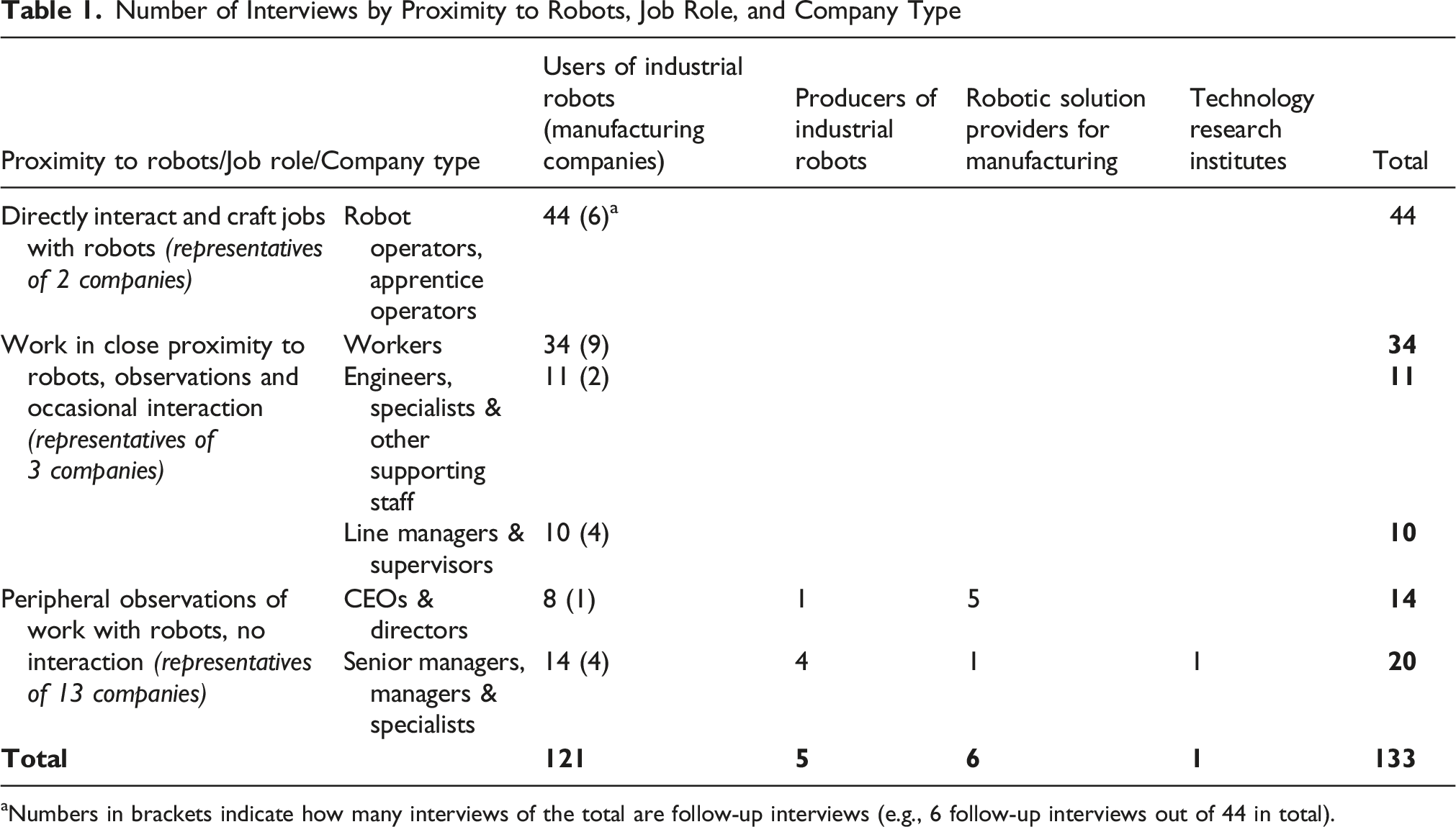
aNumbers in brackets indicate how many interviews of the total are follow-up interviews (e.g., 6 follow-up interviews out of 44 in total).
Number of Interviews by Company, Type, Size, Location, and Time of Data Collection
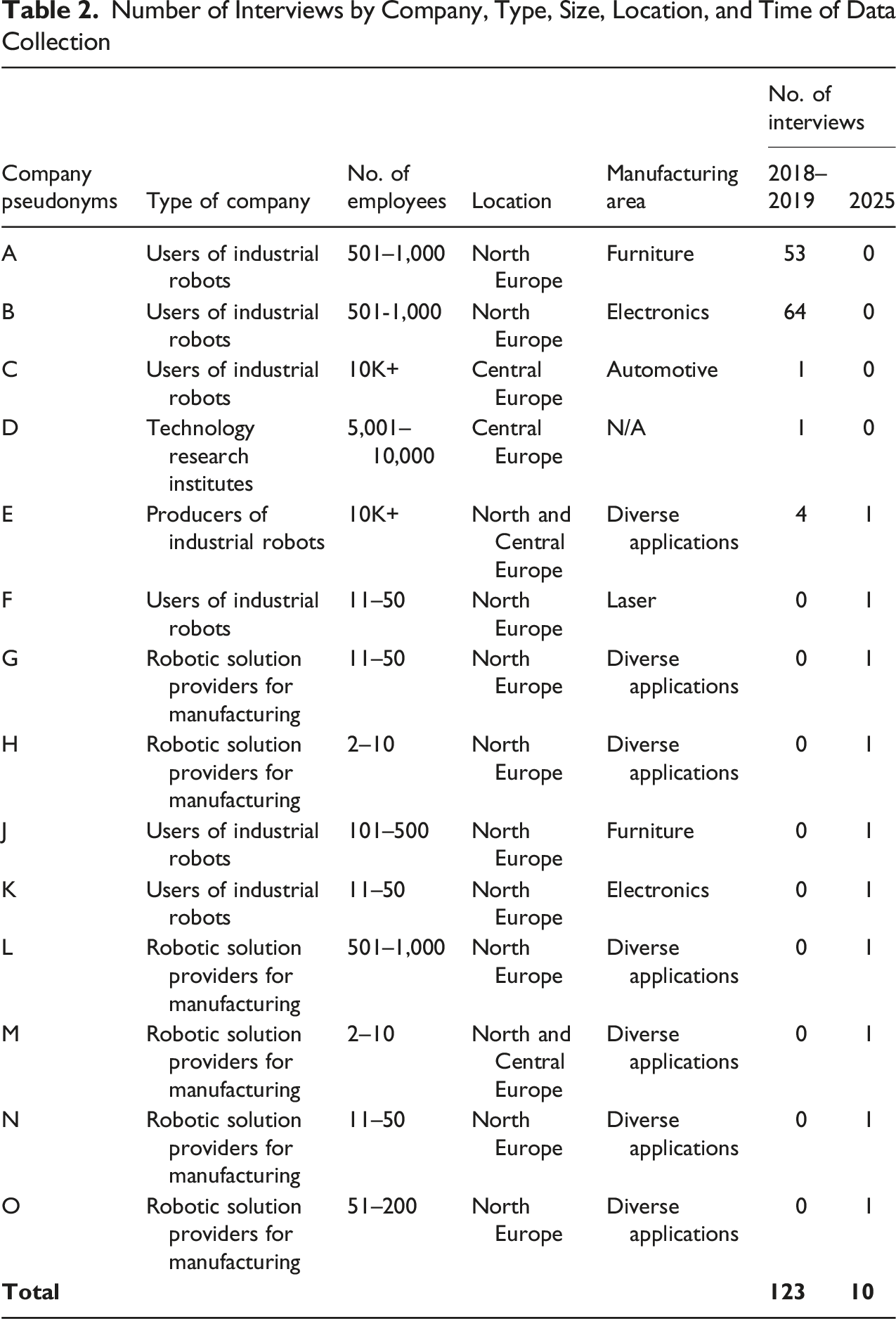
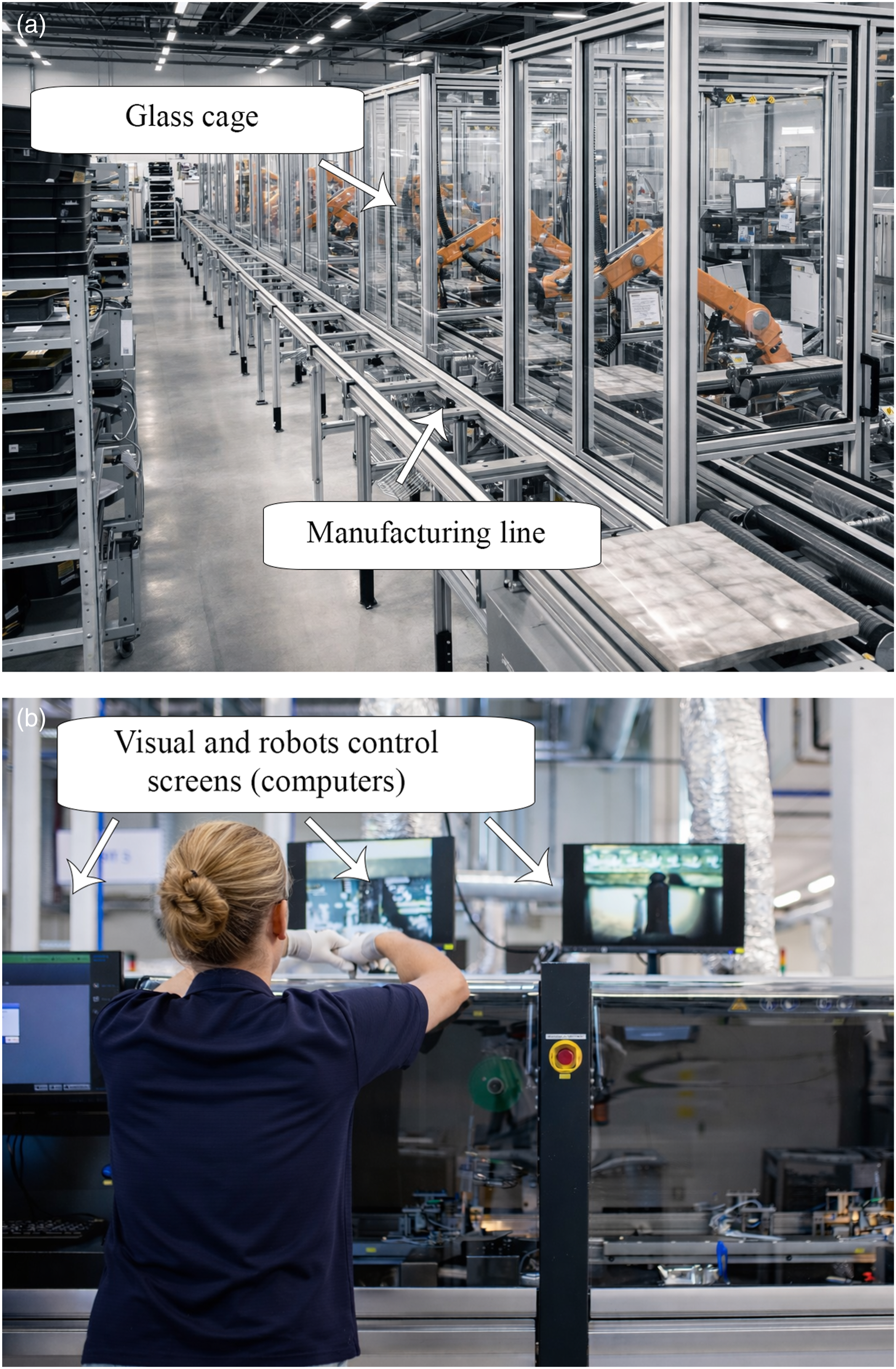
The robots used in the manufacturing companies where we conducted interviews are commonly used types of industrial robots, and include arm-like rotating devices, such as the articulated, SCARA, and Cartesian robots that are preprogrammed to complete a wide range of tasks and adjust their actions by digitally sensing their environment with robotic “eyes” (vision sensors) (Helgo, 2024). Some of these robots have an artificial intelligence (AI) component (e.g., visual quality control robots). Most of the robots are in safety cages—physical boundaries made of wire, glass panels, or electronic fences to ensure human safety. In both companies, the robots are integrated into manufacturing lines—a series of interconnected machines: robots, transporters, and multi-generational machines (see Figures 1(a, b) and 2(a, b) for illustrations of robotic lines). The manufacturing companies and service providers that we interviewed in addition to the robot users work with similar types of robots, as well as AI or collaborative robots.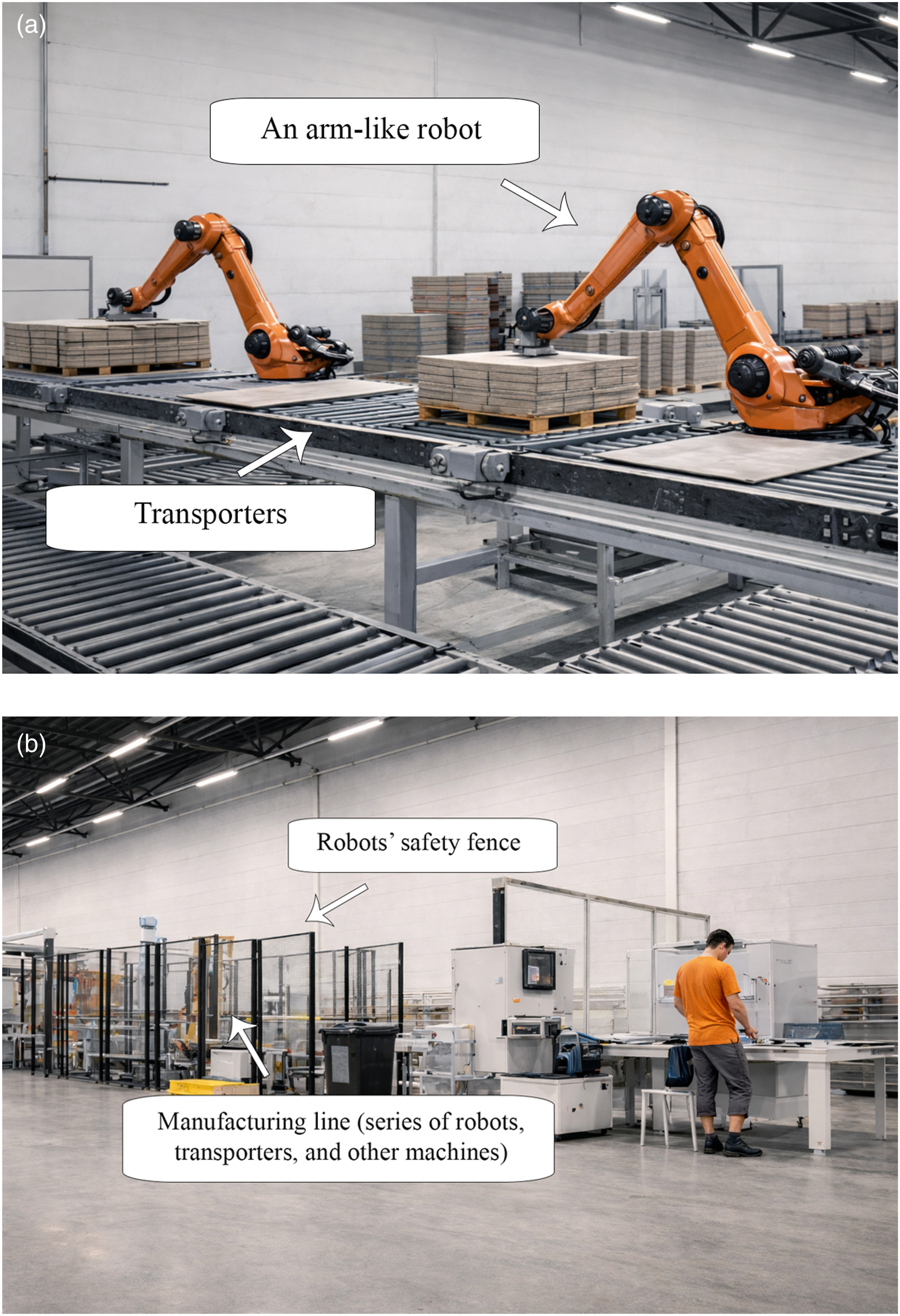
We provide more information on the individual characteristics of each research participant in Appendix 2.
Data Analysis Process
All 133 interviews were audio- or video-recorded with the permission of the research participants and were fully transcribed. The interviews were conducted in a total of four languages, and all the interviews were transcribed and analyzed in the original language, with parallel English translations added where necessary. The project team members who coded the data were proficient in English and at least one other language used in the interviews. Three authors were involved in the data coding efforts. One research assistant supported by reviewing and cleaning the transcripts, as well as preparing data segments for analysis, under the supervision of the main researchers. We utilized MaxQDA 24 to facilitate coding and analysis.
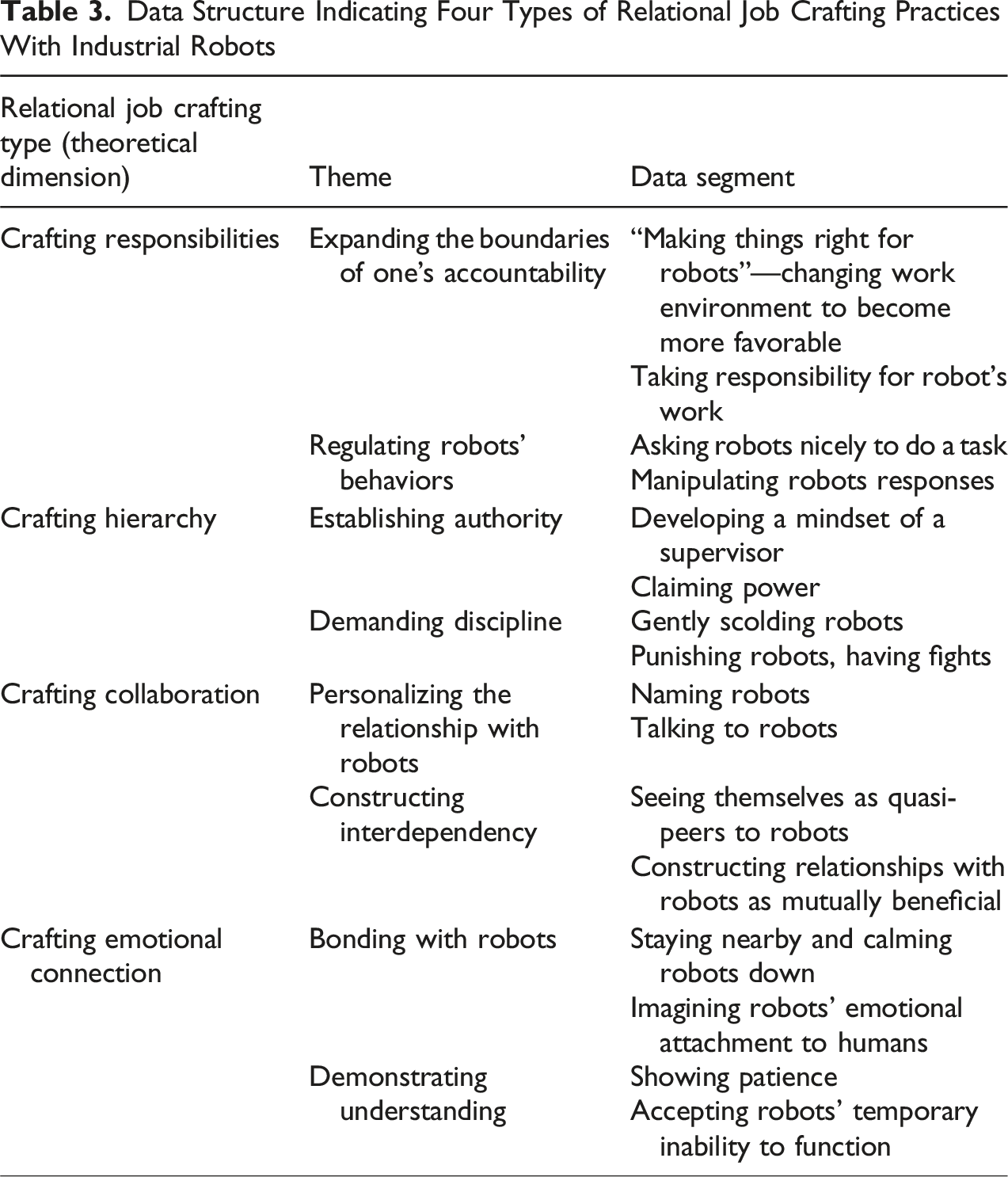
Data Structure Indicating Four Types of Relational Job Crafting Practices With Industrial Robots
Lastly, while explicitly recognizing industrial robots as machines, the employees saw them as more than just new tools. In interviews, they frequently related to the robots as a new kind of colleague, co-worker, counterpart, companion, or “half human” interchangeably. Therefore, when further presenting our findings, we chose one of those—“co-worker”—as the primary term to indicate our research participants’ relational attribution with robots.
Findings
Our inductive analysis revealed that the workers 7 actively engaged in relational job crafting with the industrial robots as opposed to relying on predefined workflow instructions and characteristics of the technology. Further on, we discuss four identified types of relational job crafting—crafting responsibilities, hierarchies, collaboration, and emotional connection (see Table 3)—and how employees’ perceptions of robots’ capacity to act, think, or feel are intertwined with their relational job crafting practices, helping them to improve efficiency and regulate daily stress. Through analytical work, we identify a mechanism through which mind perceptions cue relational job crafting practices, which we observed to underlie improved performance and workers’ perceived control over the work process and reduced stress.
Crafting Responsibilities
Crafting responsibilities with industrial robots refers to a job crafting strategy that workers use to actively question and reshape the boundaries of their responsibility and control. The workers perceived and treated the robots as their new co-workers: having a type of agency that is different from that of humans, yet, as if they were still capable of thinking, planning, acting, and experiencing in their own unique ways. At the same time, the formal job instructions (job descriptions and user manuals) only partially helped to define human roles in relation to robots. Thus, while trying to clarify how to accomplish work in their changed roles more efficiently, workers engaged in proactively modifying the boundaries of their accountability and regulating the robots’ behaviors.
Expanding the Boundaries of One’s Accountability
While the job instructions restricted the freedom to modify the standard workflow, our findings reveal that the workers still initiated bottom-up changes that extended beyond the formal role requirements. Seeking greater control of work processes, the workers crafted the collaboration by experimenting with and adjusting the work environment to make it more favorable for the robots. This, in turn, resulted in expanding the boundaries of their responsibilities at work beyond their individual task completion. For example, part of the robot operator’s responsibilities included preparing materials to feed into the robots according to technical specifications, which also assumed that the robots were capable of dealing with the materials in standard ways. When you manage [robots], you have a responsibility to set the settings. If you set something incorrectly, something will go wrong; something may be damaged, many things can happen. (Operator #11)
However, it took multiple trials and errors to negotiate a “proper” role setup. Based on the perception of limited capability of robots to flexibly adjust their movements, workers actively attempted to “make things right” for the robots, their new co-workers, and ensure that they could effectively perform tasks together: Figuring out how to arrange the individual parts into a set so that the robot can perform its job best—that’s where the operator comes in. You know that [the robot] will do it. You just have to make sure that […] the robot’s brain doesn’t get twisted, and you don’t have to go to reprogram him so that he can continue working. (Operator 2)
Furthermore, the workers also changed their understanding of personal accountability at work. At the beginning of the introduction of robots to their workplace, the workers treated the robots as independent agents capable of acting on their own and wanted to hold the robots accountable for mistakes and workflow interruptions. However, this mindset proved unproductive, hindering their abilities to meet efficiency goals and creating a high-stress environment. As such, in order to achieve the goals, the workers altered the boundaries of perceived responsibility that now included responsibilities for the robots’ actions: First of all, I have to say that when I work with robots, I am … the responsible [person]. (Maintenance worker #46) [I am responsible] for the final product. I mean, for real […] I am responsible for uploading the right programming, checking if the robot does its work, and loading suitable components into the robot. So yeah, this is the most important, I guess. (Operator #112)
Taking matters into their own hands helped them regain a sense of control. Therefore, the employees crafted their jobs by accounting for their personal actions and the robots’ actions and the final output of their collaborative work, similarly to how human-only teams craft their overall responsibilities as a team.
Regulating Robots’ Behaviors
The workers tried shaping the robots’ responses in several ways in which they acted as if they were both the supervisors and the caretakers of the robots. Our interviewees said they tried to exhibit an empathetic approach towards the robots by calming them down and asking the robots “nicely and with empathy” to do their work. This also included trying “not to get into arguments” with the robots, and making them respond by operating smoothly: We try not to get into an argument with the robots because then they produce defective parts. Robots can sometimes compress materials too hard and sometimes throw materials out of place—all of which causes a lot of trouble for people standing at the end of the manufacturing line. We try to talk to them [the robots], and we try to soothe them. (Operator #13)
The workers saw this as a way to escape a stressful workplace atmosphere and seemed to superstitiously believe that a positive approach is what helps them to encourage the robots to collaborate in accomplishing their production goals. When explaining how it is possible to manage robots’ “moods,” the interviewees also frequently related to the robots as “a child” or “a pet.” This points to the perceived asymmetry of human and robot roles, and workers crafting perceived ability to manipulate their own and their new type of co-worker’s
8
—the robot’s—emotional states in order to adapt to the complexity that the robot brought into their workplace. I try not to react to him [the robot] that much, except when he is completely out of bounds [research participant laughs]... I don’t get too worked up. (Worker #95) We [employees] communicate with a robot as we would with a pet […] sometimes we pat him, “good, good,” we say, “please do what’s needed now”. (Engineer #60)
Interestingly, we observed the use of similar metaphors not only by employees that are working in close proximity to robots, but also by their managers who are not directly interacting with robots: “It is like your child, I say [to workers]” (Head of department #61). Yet, this form of relational crafting was not equally feasible to all workers, and the willingness to take responsibility for their own and robots roles differed among individuals: “some people find it difficult; they are afraid… they don’t want to take responsibility” (Operator #11). In such cases, workers would normally not continue working with robots, but get reassigned back to manual or older machinery work positions.
Crafting Hierarchy
Many interviewees told us about how intensely they tried to understand the robots’ work: they actively studied the principles of robot functioning and the ways in which they could “manage” the robots in the most efficient way. Workers who saw themselves as successfully engaged in work with robots treated hierarchical relationships as an inseparable part of their work and ability to control the workflow. In crafting jobs by establishing authority over the robots, they relied on the perception of robots as having agency; whereas in demanding discipline, the workers relied on the capacity of the robots to have feelings.
Establishing Authority over Robots
The workers thought of a robot operator job as a new type of job that is more senior than their previous positions as manufactory workers, and the majority of them identified themselves as “robot supervisors” or “managers.” They saw themselves as having power over the robots’ work, and thus crafted their new roles as hierarchically higher in comparison to their previous jobs, also in comparison to the roles of robots: Of course, you switch on the robot, you tell them “go and do your work, and place that component [in the right place].” “You [robot] hurry up, do this and that,” and you yourself walk around and watch how“ [the robot] does the work.” You are in a [job] position where you do not perform the work, but supervise [the robot]. (Head of sales, Director #132)
In interviews, we frequently heard workers compare their new working practices with robots to their previous work in human-only teams. In the same vein, the workers thought of themselves and the robots as replicating their and their manager’s relationship, which was a significant change from what they used to think of themselves as manual workers: Previously, we needed to supervise a person so that they didn’t get physically hurt working on the manufacturing line. And [now we] need to supervise the robots so they can keep working. (Operator #5) Before, you did everything yourself, manually, and now you have to look after the robot. (Operator #2)
Both the robot operators and their managers noted that actively shaping a hierarchical relationship with the robots was crucial for an efficient workflow. Navigating new work roles alongside robots, the workers gradually realized—and grew more confident—that switching robots on; setting them up; launching operations; and resolving errors and material jams in the production line granted them control over the workflow. If I start [the robot] correctly, I will have less work; if there is something wrong, something gets stuck, then I search and investigate so that it’s the machine that works for me and not me who works for the machine. (Operator #38)
What made production run smoothly also made the workers feel more competent. As one operator put it, they felt “like a wizard who manages the machine” (Operator #80). Thus, the workers proactively reclaimed it in their day-to-day practice, as they were willing to maintain this power and authority to keep the robots running smoothly and prevent disruptions.
Demanding Discipline
Drawing on the analogy of motivated human coworkers’ behaviors, the employees held similar expectations towards the robots. In the research interviews, they spoke of technology as if it were capable of responding emotionally, as well as keeping or losing interest. Using actual language, or inner speech, the workers expressed their emotions and interacted with robots that became “lazy” (Engineer #89) or “distracted” (Operator #105) and “did not listen” (Operator #18), that is, they stopped functioning or produced faulty materials. They demanded discipline by gently scolding the robots to “get back to work” (Apprentice operator #2) and “do quicker” (Director #132). Interestingly, seeing robots as less senior actors with an expectation of their emotional response was common not only among workers but also among managerial employees: I say, what if a child doesn’t listen to you? Then you gently scold them, sometimes pat them. Treat it very nicely, and it will listen to you; it’ll be fine. (Head of department #61) …and the workers speak [to the robots]. Sometimes, if something goes wrong, they scold them. But [they do it] in such a funny way, it looks like they are mocking them [saying to the robots] “what did you do? Waste materials?” […] “What do you not like?” (Manager #129)
In other instances, the workers felt despair but also the power to punish the robots for malfunctioning, what they saw as defiant behaviors—“acting like a cranky kid” (Apprentice operator #2). The workers confessed of incidents from their own interactions with the robots or reported seeing their coworkers occasionally expressing their frustration and despair by name-calling, swearing at the robots, talking to the robots in a raised voice, or even physically hitting the robots: There are times when I say, “Oh, you damn snake, will you stop squeaking or not?” Well, that’s how I do it. Others talk [to robots] even more [than me]. (Operator #72) I do not normally talk to robots. Only when they go wrong, then I argue with the robot. (Operator #85)
The examples demonstrate the social expectations that the workers held for the robots and the use of disciplining measures, trying to make the robots improve their performance. Even though demanding discipline from the robots as if they were capable of relating and responding to the disciplining measures did not help fix the issues directly, it helped the workers frame themselves as a more senior team member in the human–robot ensemble.
Crafting Collaboration
Crafting collaboration with robots refers to relational job crafting practices that describe how people reframe their roles as interdependent collaborators working towards a shared goal and holding shared responsibility for the outcome. Crafting collaboration between humans and robots implies an agentic perception of robots and the capacity to contribute to shared department goals. As part of the crafting practices, employees personalized the relationship with robots and constructed an approach to human–robot work as interdependent.
Personalizing the Relationship with Robots
Through our interviews and site visits, we noticed that despite being acutely aware of robots being “just a piece of metal” (e.g., Worker #19, Training coordinator #22, Apprentice operator #23), many employees and managers believed it was common sense and practical to adopt sociolike approaches to robots. The robots, like any other machines, were incapable of mimicking or reciprocating personalized interactions, yet the employees felt a need to maintain personalized ways of approaching them and enable a sense of human–robot relationship and collaboration.
Thus, in an analogy to humans, employees related to the robotic “newcomers” as individual agents with their unique characteristics that they fostered. Among these features were their names, assigned by people based on how they imagined the robot’s character or based on their manufacturing names. The discussions of these names also served as one of the most vivid moments of the interviews: …later a new relationship develops, they even give robots names: “Today we worked well with Viktor”. (Director #124) That machine, it has a name—Rudolph. We [give a name because we] just need to know which machine we are talking about. (Operator #31)
Giving names to the robots was more than simply a practical way to identify and distinguish between different machines; it was also a way of thinking of the robots as a part of a working network—a department or some smaller team. As one of the employees explained to us, the installation of a new robot is like a “new name” appearing on their employee list, the same as if a new human team member had joined: “One day a new name appeared in the team. It was one of the robots—he’s called Pac-Man” (Engineer #60).
Some workers not only used the given names of the robots in their daily communication with each other but also addressed the robots directly. Communicating with the robots resembled their social interactions with human co-workers and gave them a sense of a smoother workflow, despite the robots not being programmed to recognize their voice. [As if telling a secret] The workers who work there [pointing to two robot operators] they always talk with their robots. They chat with them, and then, especially if a robot stops working, they talk with him again in a different way [angrier]. It’s hard to believe, but when they do it, that robot starts working again! (Worker #67)
By crafting personal relationships with the robots, the workers cognitively shaped the interactions with the robots as social and expanded their relational boundaries at work to include the robots as coworkers. Addressing the robots personally, as if the robots could appreciate and act on the address, was part of building an effective hybrid human–robot team, facilitating both goal achievement and human well-being at work.
Constructing Interdependency
At first, the workers were frustrated by the tight dependency on the robots’ operations. However, over time, they altered their approach and turned from fearful to a more collaborative mindset of working with robots: When I work with a robot, I am simply a worker… who is an operator … and we work together. He [the robot] is dependent on us, and we [workers] are dependent on him. (Worker #35) When you are working with robots, you are part of a team. There is no one without the other. Somebody has to manage the robot, and the robot must manage a person a little bit. (Training Manager #27)
Framing the robots as mutually dependent and being part of their social circle helped the workers not only comprehend their productivity goals as more reachable but also themselves as more capable actors in the manufacturing process. By relying on the robots as their new co-workers, the employees felt they were more likely to achieve the desired production speed, precision, and product quality, which translated into increased income. I’m a person, and I can do more [when working with robots] than I could without a robot. And there’s much higher quality. I realize that I could do the work robots do, but it wouldn’t be the same quality or quantity. (Engineer #60)
Furthermore, the employees saw the complementarity of relationships between humans and robots as establishing a better “working mood.” When a person offers help, so does a robot, and this, in the minds of workers, ensured a smoother working process: I help him [the robot]. I don’t manage him, and he doesn’t manage me. He works—I help him. So you can’t say that I am his slave, no, and you can’t say that he works for me. My task is to help the robot, look after him, and supply materials on time. (Worker #63) They are a part of the team, so to speak, the machines, the robots. […] It really helps the worker and the factory when they encounter challenges in production. Certainly, it will be something like a member of the team, these machines. (Manager #130)
Considering the robots as members of a team was partially contingent on the perceived value they brought at a given moment: It depends [on how a robot “behaves”]. You can earn more money with a robot, so it is a colleague. Yet, it is a dummy tool when it does not listen to me. (Engineer #60)
The performance bonus for achieving better results with robots was a significant factor for motivating the workers’ engagement in building a team with robots. Yet, even when the robots were not helpful and acted as “dummy tools” (Worker #43), they were still described through the lens of agency—the ability and willingness to act as a “dummy.”
Crafting Emotional Connection
Crafting emotional connection with robots refers to a form of relational job crafting practice by which humans construct affective ties between humans and robots. Similar to the responsibility and hierarchy crafting dimensions, emotional connection crafting practices involve attributing feelings and emotional commitments to robots. Yet, the purpose behind crafting emotional connection is not to clarify roles to get work done, but to shape affective relationships and reduce stress by establishing a more positive emotional connection. We found that crafting the connections—bonding with robots and demonstrating forgiveness—were instrumental in achieving enjoyable work routines with robots: alleviating cognitive and emotional demands on the shop floor, as well as giving employees a sense of getting along with robots, thus staying in control of their work outputs.
Bonding with Robots
Albeit objectively being designed to operate with minimal variance in their performance, the robots were viewed as capable of experiencing a variety of different attitudes towards work and changing moods. Such unpredictability made the robots feel more like subjects to which humans can relate: It is like with a dog: When the dog is in a good mood, he plays with you; however, if something happens to him—he bites you. (Apprentice operator #23) A robot is not a living creature. It can be predicted as far as it was preprogrammed. Yet, it can get unpredictable sometimes [same as people do] and knock you out [injure a person]. (Maintenance worker #46)
The workers sought to understand when the robots “changed their moods” in order to exert greater control over the workflow. When the robots broke down, the employees felt concerned but also were proud to have an established connection with them--one that enabled them to “calm them down” and restore normal functioning: When their Robert [robot] falls ill, they feel the same panic they would if a human colleague phoned in sick. (Director #125) When it’s the mother (that’s me) who comes closer—then everything goes back to normal again. (Operator #68)
The employees projected emotions onto the robots, and attributed part of their work efficiency and success to their unique connection with individual robots. Despite condemning robots as insensitive machines, “the iron stays the iron” (Worker #83), the workers perceived the robots to be working with some of them more efficiently than with others, and attributed that to a special emotional bond and attachment between the people and the robots. Maybe it sounds funny what I am going to say here. There is some kind of relationship between us. For example, I stand for half an hour and see how everything is going perfectly. And then, I just go and return from a break, and see the line has stopped, and my colleagues are pulling out a pack that got stuck… those machines, those robots—they love me! Or, sometimes, when I am off sick, my colleagues call me—come back, please! Those machines will not listen to us… (Operator #6) It is never boring with Bobby [a robot’s name]. […] I sometimes even dress up for him. (Operator #82)
The intricate connection with the robots appeared to boost the workers’ energy levels and confidence in daily human–robot interaction.
Demonstrating Understanding
In the companies we studied, downtime was associated with reduced financial incentives for the workers. As such, the robots’ malfunctioning and work interruptions were a significant source of stress and frustration, particularly because they clashed with the initial high expectations of robots as perfect, expensive, and high-status machines, intended to replace human (manual) work and outdated equipment. However, our interviewees expressed their capacity to exhibit patience for occasional “bad behaviors” by robots, too: There are days when, as if on purpose, there are a lot of mistakes, and it seems as if the robot acts like a person who came to work after he had too little sleep and is out of sorts. But I’ve found ways to still get along with him. (Operator #4)
In an analogy of feeling sympathy for a sick co-worker, the employees also felt understanding towards the robots that were temporarily out of service. By showing patience and forgiveness for the robots, the employees regulated their negative emotions and crafted more stable relationships with the robots. It is the same everywhere. A person gets sick; a robot also gets sick. So, we work manually and sometimes replace him until [a person or a robot] gets better. (Operator #44) Robots’ work stabilizes everything, as well as the working mood. … robotic lines are more efficient and many more [things have changed]. … I cannot even imagine a situation in which the robots would disappear, and people would come back working [without robots]; it would be very strange because robots grew roots in our team. (Worker #3)
Crafting connection with the robots fostered the employees’ trust in the production processes, and allowed them to enjoy their routines. This crafting process helped the employees balance the demands of meeting daily efficiency goals with the regulation of cognitive and emotional load in human–robot interactions.
Taken together, our analysis identified a common path with mind perceptions facilitating workers to engage in relational job crafting, which eventually translated into beneficial process outcomes or psychological outcomes. In the next section, we will reflect on these findings, discuss theoretical contributions, and outline their practical implications.
Discussion
Organization theory, to date, has failed to keep up with workplace changes where industrial robots are increasingly integrated with human work. In our study, we investigated the dynamics of change over time in manufacturing sites where industrial robots were introduced to streamline production. In answering our research question concerning how humans engage in relational job crafting with industrial robots, we build on job crafting theory (Bindl et al., 2019; Bruning & Campion, 2018; Wrzesniewski & Dutton, 2001; Zhang & Parker, 2019) to offer new insights into the development of work processes driven by humans’ mind perception of robots, and their ways of developing relationships with these sophisticated machines. Interestingly, we found that workers attributed industrial robots with both agency and human-like feelings that underpinned relational job crafting practices. Our study shows that relationality with technology can emerge even in the absence of intentional design for collaboration or emotion, and that it influences different relational job crafting practices with involved technologies.
We introduce a framework (see Figure 3) of relational job crafting with robots consisting of crafting responsibilities, crafting hierarchies, crafting collaboration, and crafting emotional connection—practices that are analytically distinct but gradually co-evolve as employees continue to work with non-humanlike robots. Through these practices, evolving simultaneously and strengthening each other, human workers can navigate situations of work redesign (Parker, Tims, & Sonnentag, 2025), building increasingly tight interdependence between humans and industrial robots with no apparent human qualities. Our findings suggest that this ongoing relational job crafting process can help employees balance the shop floor demands of meeting daily efficiency goals with their cognitive and emotional need to find ways of working together with industrial robots. Framework of relational job crafting with robots including four types of relational job crafting with robots and associated mind perceptions of robots’ agency and ability to experience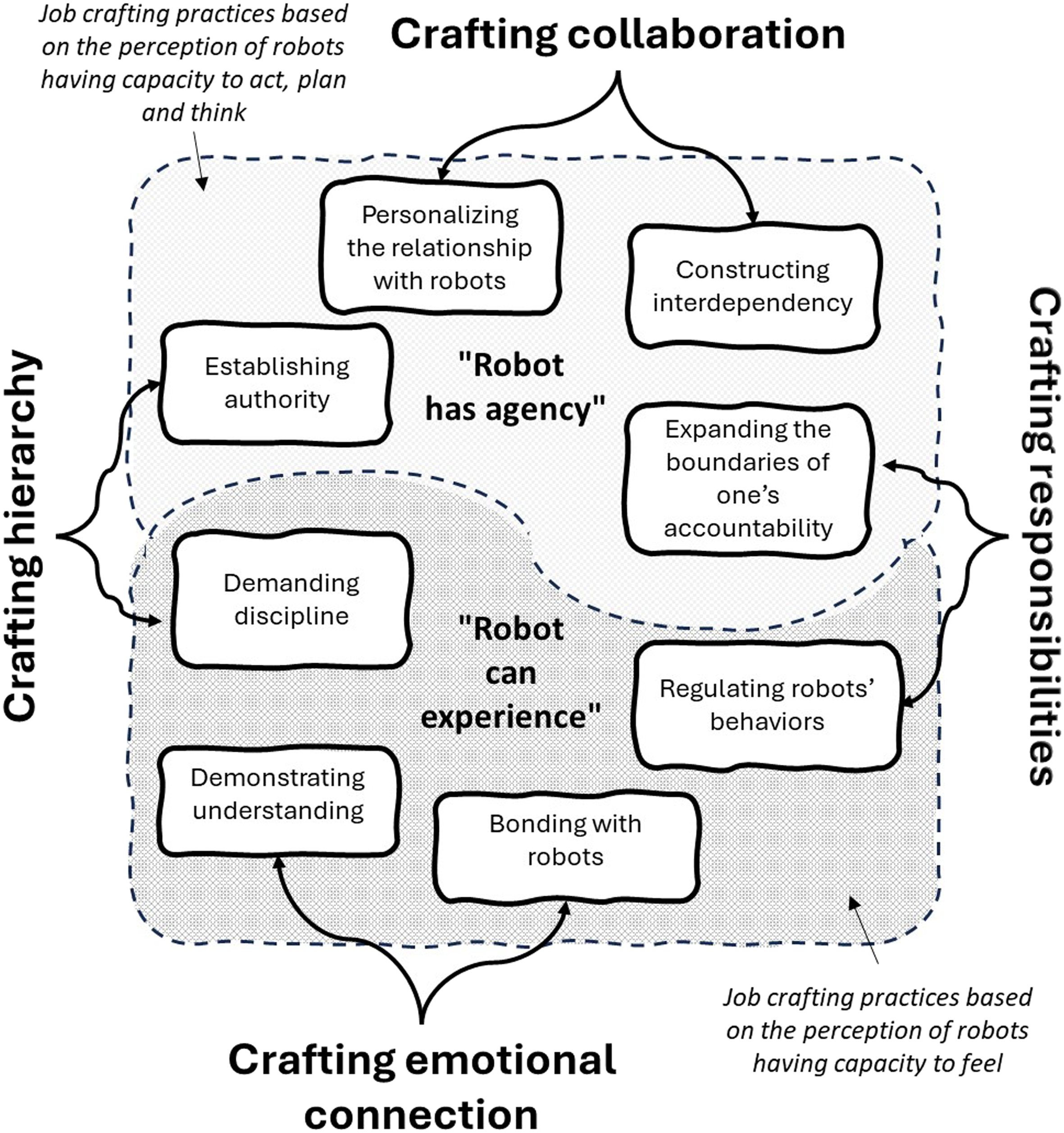
More specifically, we make three contributions to the literature, which we discuss below.
The Role of Mind Perceptions in Relational Job Crafting with Technology
First, we extend the relational job crafting literature by showing how mind perceptions—attributions of agency (i.e., ability to act and decide) and experience (i.e., ability to feel and respond) to robots—trigger and facilitate relational job crafting, which includes them as “co-workers”. While previous research on how employees adapt to their work with technology has conceptualized technology as either a tool adopted for job crafting (Berg et al., 2013; Bruning & Campion, 2018; Handke et al., 2025; Sturges, 2012) or as an occasion for transforming collaboration and coordination among human colleagues (Barrett et al., 2012; Curchod et al., 2020; Sergeeva et al., 2020), they have treated technology as a passive, non-agentic entity that enables changes in various relational aspects of work with humans. In contrast, our study challenges this assumption by introducing mind perceptions (Gray et al., 2007; Vanneste & Puranam, 2024) as a vital catalyst of relational job crafting with technology. In line with recent research on anthropomorphizing technology (Einola et al., 2024), we observed that even though the industrial robots in question did not have any human-like appearance, employees attributed them with many human-like qualities (e.g., motivation, intentions, feelings) and treated them as members of their departments. Moving beyond the current literature, we show how—based on their mind perceptions of robots as able to think and feel—humans can craft the relational aspects of their work with industrial robots in various ways, from shaping the boundaries of their own responsibility in comparison to robots to establishing emotional bonding with robots. By showing how perceptions of robots as agentic and emotional “co-workers” shape relational job crafting practices, we extend the existing theory on job crafting with technology and point to new directions for understanding how individuals cognitively and relationally adapt to emerging technologies at work.
Moreover, our study advances prior research on work-related human–robot-interaction (Einola et al., 2024; Seyfert, 2018) by moving beyond showing anthropomorphic behaviors as a single undifferentiated tendency. Based on the literature of mind perception (Gray et al., 2007; Yam et al., 2024), we differentiate between agency and experience and showcase how humans can relate differentially to relational job crafting practices that ultimately generate beneficial outcomes in human–robot ensembles. Our study showed how perceiving robots as agentic (i.e., able to act and decide) was closely intertwined with workplace activities where humans crafted collaborations with the industrial robots, for example, by constructing interdependency, while perceiving them as capable of experiencing emotions was associated with crafting emotional connection. This more nuanced account of relational job crafting practices allowed us to improve conceptualizations of how mind attributions matter in the development of human–robot ensembles, even when robots hold little resemblance to humans. Our findings also raise new intriguing questions for future research, such as how relational job crafting can help to meet salient relational needs in human–robot ensembles (e.g., need for accountability, social connectivity) that optimize human–robot performance.
Job Crafting as a Mechanism Driving Human–Nonhuman Ensembles’ Performance
Our second contribution is in advancing the job crafting literature by highlighting job crafting with technology as a distinct driving mechanism related to achieving enhanced performance-related outcomes of human–robot ensembles in real-world settings. Existing research on job crafting behaviors points to the general potential for job crafting to improve employee performance during organizational change (Petrou et al., 2018). However, while a handful of studies have shown that humans can actively shape the influence of technology on their work (Barrett et al., 2012; Beane & Orlikowski, 2015; Sergeeva et al., 2020) and attribute agency to technology for their benefits (Nyberg, 2009; Seyfert, 2018), the field remains dominated by an assumption that the performance-related outcomes of a human–robot ensemble are tightly coupled with the predefined characteristics of a robotic device or human–robot ensemble (Vanneste & Puranam, 2024; Wolf & Stock-Homburg, 2023). Most of these studies rely on investigations of human–robot ensembles created for research purposes in a laboratory. In contrast, organizational settings are characterized by situations where the roles and relationships with agentic non-human “co-workers” are worked out on a daily basis. As a result, job crafting can be a critical bottom-up approach to job redesign that facilitates ongoing adjustments that align with personal performance goals. This is particularly relevant in pay-for-performance settings, where the combined human–robot output is critical for employees. As increasingly sophisticated technology takes over many routine tasks, employees can determine optimal combinations of collaboration in human–robot ensembles that align with higher efficiency requirements. Thus, our findings suggest that the process of relational job crafting with robots is a critical mechanism in improving efficiency of human–non-human ensembles at both personal and team levels.
Using Relational Job Crafting with Technology for Self-Regulation
Finally, our study contributes to the job crafting literature by positioning relational crafting with technology as a self-regulatory mechanism (Bruning & Campion, 2018) that improves people’s ability to regulate their own emotional well-being at work. The extant literature demonstrates that when technologies intended to replace human labor (both manual and cognitive) perform below expectations or introduce new constraints, employees often respond with intensely negative emotional responses, such as anger or frustration, particularly when the target technology is perceived as agentic (Einola et al., 2024; Goštautaitė et al., 2024; Yam et al., 2024). Yet, research to date fails to explain how such responses are managed at work to sustain performance in human and non-human ensembles. We advance this perspective by showing how relational job crafting with robots as triggered by human mind perceptions of robots can serve as a self-regulatory mechanism that helps people regulate their emotional reactions and well-being at work. Specifically, our study shows how workers can engage in relational crafting to regulate their own well-being, such as managing reoccurring frustration during technological incidents. For example, our findings illustrate how seeing robots as able to be “tired” is conducive to higher trust and patience, particularly in the context of technological breakdowns and interruptions, much more than viewing robots as “powerful slaves”. Moreover, by highlighting the instrumental value of crafting relational aspects with technology for improving well-being at work, our study paves the way for new research into how people can balance relational aspects with their non-human “co-workers” to move beyond efficiency goals in human–robot ensembles.
Practical Implications, Limitations and Future Research
Our study has important practical implications. Consistent with calls to jointly optimize social and technological aspects of work to achieve meaningful work designs (Parker, Ballard, et al., 2025), our research indicates that relational job crafting can simultaneously promote mental well-being and facilitate technology adoption in the workplace. Companies should legitimize and support job crafting during technological transitions, for example, through reflective practices and targeted interventions, so employees can reframe how they perceive and relate to new technologies. In this sense, our study resonates with the main principle of the human-centric approach that balances employee and organizational interests amid technological change (Breque et al., 2021), helping employees manage uncertainty, cope with stress, contribute to their mental health, and meet performance targets.
While our study offers new theoretical and empirical insights into how employees craft their roles and relationships with robots, it also has several limitations and opens avenues for future research. First, a key limitation concerns the type of technology examined. We focused on industrial robots as agentic technologies that, in line with Murray et al.’s (2021) classification, can be understood as “arresting technologies” and “automating technologies.”. These robots are not collaborative in the technical sense and do not qualify as fully autonomous teammates, as defined by O’Neill et al. (2022). While workers in our study often perceived these robots as agentic, such perceptions were socially constructed and not grounded in the robots’ actual level of autonomy. Future research should examine how relational job crafting unfolds with collaborative robots and AI-driven systems—contexts where such crafting may be even more pronounced. A focused agenda could ask, for example: how do perceived agency versus perceived experience differentially trigger specific forms of relational job crafting; which design features (e.g., human-like morphology or autonomous features) increase or reduce such crafting; and what role system feedback plays in linking mind perceptions to relational job crafting in AI/cobot settings.
Second, we did not investigate how job crafting might differ across industries, product types, or robot design, nor across organizational size. Based on our interviews with robotic experts and developers, we assume that job crafting may be more intense in smaller firms with fewer robots, where employees need to compensate for limited automation and engage more directly with varied, less standardized tasks. Similarly, companies producing non-standard or custom products may offer workers greater latitude to adapt their roles around robots, whereas highly standardized production lines may constrain crafting. Moreover, our findings suggest that job crafting intensity varies over time. Workers with longer experience working with robots—especially those who had used similar technologies in previous jobs—engaged in less intense crafting than those encountering robotization for the first time. Future comparative research across industries and company types could shed light on how technological context, experience with robotics, and organizational scale influence job crafting among workers.
Third, job crafting requires a certain degree of job autonomy (Parker, Tims, & Sonnentag, 2025) and thus may be not equally feasible in all work environments. In our study, the employees had at least some degree of latitude in how they engaged with robots, which may be different in settings characterized by rigid workflows, safety constraints, or critical managerial attitudes.
Finally, although relational crafting emerged as an important mechanism allowing stress regulation and promoting well-being, we caution that such behaviors may offer short-term emotional relief, but may not always be functional in the long term. For example, repeatedly forgiving a robot for performance issues may prevent employees from reporting problems or contributing to system improvements. Future research could investigate how workers’ well-being can be prioritized without sacrificing efficiency and performance goals.
Conclusion
This study advances our understanding of job crafting with technology beyond the view of technology as simply a tool, by showing how humans can engage in relational job crafting with technology. Even when technology holds very few anthropomorphic cues, such as industrial robots, we show how it can be socially constructed as possessing agency or experiencing emotions. We suggest that relational job crafting practices is a critical process in today’s industrial context where robots can contribute to improved efficiency and also support the emotional well-being of human workers. We hope our study stimulates further research on how human–technology relations shape the evolving nature of work.
Supplemental Material
Supplemental Material - “Matilda is Lazy Today”: How Mind Perceptions Trigger Relational Job Crafting With Industrial Robots
Supplemental Material for “Matilda is Lazy Today”: How Mind Perceptions Trigger Relational Job Crafting With Industrial Robots by Bernadeta Goštautaitė, Irina Liubertė, Trish Reay, Ilona Bučiūnienė, Mantas Danielius Blaževičius, António Moniz in Group & Organization Management
Footnotes

Funding
The authors disclosed receipt of the following financial support for the research, authorship, and/or publication of this article: This project has received funding from European Social Fund (project No 09.3.3-LMT-K-712-01-0156) under grant agreement with the Research Council of Lithuania (LMTLT).
Declaration of Conflicting Interests
The authors declared no potential conflicts of interest with respect to the research, authorship, and/or publication of this article.
Data Availability Statement
The datasets generated and analyzed during the current study were collected in accordance with qualitative research standards where participants engaged in interviews based on assurances of anonymity. To support transparency, the study’s analytic materials (codes, themes, and additional anonymized quotes) are provided in Appendix 3.
Supplemental Material
Supplemental material for this article is available online.