




Abstract
The increased datafication of work has given rise to gamified work environments emphasizing competitive elements as a basis for constant social comparison. Drawing on social comparison theory, we investigate whether and how gamification fuels feelings of envy and perceptions of being envied through different forms of competition. We report two studies: the first (Study 1) surveyed journalists in a Nordic media organization whose work is continuously tracked and ranked using audience analytics. Findings show that gamification elements—such as leaderboards and real-time performance metrics—are positively associated with envying others among journalists through coworker competition, increasing envy among journalists. The second study (Study 2), conducted with a broader sample of employees, replicates these results and further demonstrates that status competition mediates the link between gamification and envy. Additionally, awareness of gamification elements amplifies feelings of being envied, suggesting that employees may be caught between enviously comparing themselves to high-performing colleagues and worrying about becoming envied targets themselves whenever they successfully participate in workplace gamification. A potential mitigating factor is metric quality, demonstrating that this moderates the effect of gamification on competition. When employees perceive performance metrics as fair, accurate, and relevant, the positive association between gamification and coworker competition weakens. These findings advance gamification, social comparison, and datafication theory by highlighting the emotional and relational costs associated with gamified systems. Our results highlight the importance of designing high-quality performance metrics, clarifying competition structures, and considering team-based and individual comparisons to mitigate unintended negative consequences, particularly envy, of gamified work environments.
The increasing reliance on data, analytics, and metrics has reshaped contemporary organizational environments, influencing work processes, interactions, and performance evaluations (Flensburg & Lomborg, 2023; Schafheitle et al., 2020; Treem et al., 2023; Zuboff, 2019). As digital systems generate and capture trace data from employees’ actions (Leonardi & Treem, 2020), work practices become more transparent and subject to analysis and managerial interventions. This heightened visibility facilitates social comparison, particularly through metrics and rankings, affecting the social dynamics of the workplace (Duffy et al., 2021). Specifically, in this context, gamification, i.e., the application of game-like elements in non-game settings, has been introduced to enhance employee engagement and motivation (Deterding et al., 2011). However, by making workers and their outputs visible in rankings and leaderboards, gamified systems may reinforce a zero-sum perception of success and intensify social comparison. This, in turn, can heighten sensitivity to disparities in resources, assignments, and career opportunities, potentially fostering feelings of envy and competition in digital work environments (Tai et al., 2012).
Through the explication of competitions for resources, attention, recognition, assignments, and promotions, situations that may invariably trigger feelings of envy have become rampant (Tai et al., 2012). Envy is defined as “an unpleasant and often painful blend of feelings characterized by inferiority, hostility, and resentment caused by a comparison with a person or group of persons who possess something we desire” (Smith & Kim, 2007, p. 49). The dominant view about envy in the workplace is that, while endemic to the human condition, they are generally associated with negative individual, collective, and organizational outcomes (Smith & Kim, 2007). For instance, envious employees dedicate more cognitive attention to envied targets (Hill et al., 2011), are willing to sacrifice their own resources to remove others’ competitive advantage (Zizzo & Oswald, 2001), find pleasure in envied targets’ misfortune (van Dijk et al., 2006), and may deflect from future cooperation (Wobker, 2015).
In this study, we use a social comparison lens (Festinger, 1954) to examine whether and how gamification elements in the workplace fuel feelings of envy. Gamification elements leverage competition to spur individual engagement and performance through leaderboards, rankings, and badges. These elements are rooted in a drive to outperform peers, often triggering upward social comparisons among employees, as described by social comparison theory (Festinger, 1954). While such comparisons can drive innovation, learning, and productivity, they also risk engendering negative emotions such as envy, stress, and resentment, especially when it triggers competition that appears unattainable or uneven (Garcia et al., 2013). As gamification often entails competitive elements, winning and losing, unfavorable contrastive comparisons become more prominent, too, giving rise to adverse effects such as envy (Duffy et al., 2021; Sapegina & Weibel, 2017).
The problem is that in these datafied work environments, workers often have no choice but to “play.” In that sense, the words of Sterling and Labianca (2015) have never rung more true: “Hearing about others’ performance and achievements is almost inescapable” (p. 300). As data about work activities is continuously available, aggregated, curated, compared, and put on display, the visibility of one’s work behaviors has become more pervasive (Leonardi & Treem, 2020). Thus, gamification is often inevitable for workers as it is deeply ingrained in the work environment, providing employees with a sense of being constantly inundated with social comparison information, even when they are not actively seeking it out (Sterling & Labianca, 2015). These mechanisms remind us of the work by Zuboff (1985, 2019), outlining how digital systems reshape managerial control and workplace interactions by allowing organizations to monitor, leverage, and monetize employee data (Zuboff, 2019). Using a social comparison lens, we highlight that different social pressures may make workers feel compelled to participate. For instance, workers may be motivated to signal their commitment (Cristea & Leonardi, 2019) or because the alternative, invisibility, fuels a fear of exile (Hafermalz, 2021). In other words, gamification can lead to a situation where the concern of being forgotten or left out overpowers the urge to resist control-enabling systems, thus coercing employees to play along (Jämsen et al., 2025). Given this contemporary organizational reality, this study aims to examine how gamified work environments may amplify social comparison, highlighting competitive mechanisms that are associated with employee envy.
This study aims to contribute to theory and research on gamification, datafication, and social comparison in three main ways. First, we nuance how gamification may trigger envy through social comparison by differentiating between status competition and coworker competition. We demonstrate how these distinct social comparison pathways explain how gamified elements translate into envy and perceptions of being envied. Second, we identify the quality of the metrics underlying these gamification elements as a key moderating factor. Specifically, we will demonstrate that the implications of gamification depend on the quality of the data that sustain it. Third, by integrating insights from goal-setting and feedback theory with social comparison theory, we conceptualize gamification as a form of datafication that transforms private, episodic feedback into continuous, publicly visible performance comparison. These contributions are important because they show that gamification’s effects depend on the kind of competition it promotes and the reliability of the data behind it. Recognizing these dynamics helps explain why gamified systems can either enhance motivation or, under certain conditions, fuel resentment and envy rooted in social comparison.
Theory
The datafication of work enabled the widespread use of metrics and analytics, positioning gamification as a central and pervasive managerial approach in the digital workplace. Unlike traditional games, which primarily emphasize entertainment, gamification in work settings aims to improve employee motivation, productivity, and engagement through structured mechanisms and metrics, such as points, badges, leaderboards, and other game mechanics (Flatla et al., 2011; Kapp, 2012). Gamification blends extrinsic and intrinsic motivators to elicit sustained behavioral engagement and organizational commitment (Cardador et al., 2017). Gamification’s efficacy is tied to both informational and affective pathways: it provides real-time feedback and performance transparency, enabling goal-directed behaviors, while also enhancing task enjoyment (Cardador et al., 2017).
Hence, gamification elements such as points, leaderboards, and badges are deeply rooted in classic goal-setting (Locke & Latham, 1990, 2002) and feedback theories (Kluger & DeNisi, 1996), which emphasize the motivational power of specific, measurable goals and performance feedback. From this perspective, gamification can be understood as a technologically mediated extension of these principles, providing continuous, data-driven feedback and goal progress indicators. However, unlike traditional goal-setting interventions, contemporary gamification approaches embed these mechanisms in a social, public, and often competitive context, thereby intertwining goal feedback with social comparison processes. This convergence suggests that gamification not only motivates through goal clarity and feedback but also intensifies interpersonal comparison dynamics that can lead to social implications such as envy.
Recent studies have suggested gamification in the workplace may improve tacit knowledge sharing and reduce cyberloafing, highlighting the potential for gamification systems to motivate positive employee behavior and decrease negative behaviors (Nivedhitha et al., 2025). However, gamification can also yield unintended social dynamics (Rapp et al., 2019) due to its reliance on performance visibility. Indeed, gamification may foster an environment conducive to intense social comparisons among peers (Huschens et al., 2019). Research indicates that such comparisons may induce negative competitive pressures, heightening stress and dissatisfaction (Hammedi et al., 2021). Indeed, despite the potential of and interest in gamified systems, studies have started documenting gamification “failures” where users engage in maladaptive behaviors (Tseng et al., 2024) or even sabotage and intentionally hinder the job performance of others to ensure a “win” (Algashami et al., 2017). Across different fields, scholars have utilized theories on competitiveness and social comparison to highlight the motivation potential of gamified systems, typically focusing on user engagement, such as in online and informal learning (Amo et al., 2020; Leung et al., 2022), health-app use (Zhang et al., 2023), information disclosure in digital services (Trang & Weiger, 2019), and online social games (Esteves et al., 2021).
The widespread application of gamification elements further fuels the notion that competition is an inescapable reality of our working lives (Swab & Johnson, 2019). Gamification may help organizations utilize competition and pit employees against each other for limited resources and career outcomes, hoping this will drive the motivation needed to excel in job performance (Swab & Johnson, 2019). However, as Kohn (1992, 1993) noted, healthy competition may be a contradictio in terminis with largely punitive effects. Indeed, Sterling and Labianca (2015) found that employees embedded in dense comparison networks may experience benign and malicious envy and engage in deviant behaviors when they are compared unfavorably to others.
These dynamics in gamified work contexts can be explained using social comparison theory (Festinger, 1954). The theory suggests that “people evaluate their opinions and abilities by comparison respectively with the opinions and abilities of others” (Festinger, 1954, p. 118). Social comparison is a natural aspect of human (Festinger, 1954) organizational life, driven by an individual’s tendency to understand their status relative to the achievements of others (Sterling & Labianca, 2015). Such comparison may become more prominent when success is highly valued and appreciated (Esteves et al., 2021). As such, social comparison becomes salient in competitive environments such as gamified workplaces, where performance metrics, leaderboards, and reward systems make comparative evaluations explicit and visible. Classic social comparison theory suggests that individuals prefer upward comparisons—evaluating themselves against those who perform better—because such comparisons can serve self-improvement motives (Gerber et al., 2018).
However, when upward comparisons reveal significant discrepancies in performance, they can elicit contrast effects that lead to negative self-evaluations and emotional reactions such as envy (Buunk & Gibbons, 2007). The competitive structure of gamification intensifies these dynamics by constantly reinforcing social comparison cues, particularly when rewards and recognition are contingent on relative standing. Meta-analytic evidence indicates that individuals under threat—such as those perceiving themselves as losing in a competitive system—are prone to heightened social comparison sensitivity, increasing the likelihood of contrast-based reactions that erode motivation and satisfaction (Gerber et al., 2018). This aligns with the broader research on downward comparison theory, which suggests that individuals attempt to cope with such threats by either denigrating higher performers or seeking downward targets to restore self-esteem (Buunk & Gibbons, 2007). Consequently, gamification can foster an environment where employees continuously evaluate their standing relative to peers or relative to absolute rankings, increasing the risk of negative affective states such as envy.
Workplace envy is a particularly likely consequence when people perceive their comparison to others as less favorable (Kim & Glomb, 2014; Sterling & Labianca, 2015). This may arise from gamification because implementing playful elements that make work more engaging also increases a competitive spirit by incentivizing employees to achieve higher scores or rankings, or to complete challenges (Silic et al., 2020; Torresan & Hinterhuber, 2023). This gives rise to lateral or upward comparisons that may fuel feelings of envy. Vecchio (2005) demonstrated that when rewards were competitively based, this was positively related to feeling envied by others, as well as feeling envy toward others.
Hence, guided by research on social comparison and competitiveness, we argue that gamification triggers perceptions of competition, which may lead to feelings of envy through upward social comparison (Amo et al., 2020). Broadly, perceptions of a competitive climate refer to how employees perceive that organizational resources and rewards are contingent on favorable comparisons of their performance relative to that of their peers (Jones et al., 2017). In highly competitive organizations, work environments are shaped by structured competition among coworkers for status and recognition (Oubrich et al., 2021). The social comparison lens brings two types of competition into our gaze – competition for status and competitive coworkers. Broadly, status competition refers to “implicit or explicit ranking or ordering of position or standing within the organization” (Jones et al., 2017, p. 394). Typically, such rankings imply that individuals obtain status or prestige when they obtain better standings than others (Fletcher & Nusbaum, 2010).
On the other hand, the presence of competitive coworkers results in a work environment where workers seek to outperform one another, even without formal competitive reward systems (Fletcher & Nusbaum, 2010; Jones et al., 2017). Hence, competition inspired by coworkers (Fletcher & Nusbaum, 2010) implies that employees have to cope with their coworkers’ competitive intentions and behavior “regardless of the reward systems that are in place” (Fletcher & Nusbaum, 2010, p. 108). Hence, unlike status competition, which focuses on achieving recognition and prestige within the organization, coworker competition is rooted in interpersonal comparisons and the motivation to excel relative to immediate colleagues. Both dimensions of competitive work environments – competition for status and competition inspired by coworkers – (Fletcher & Nusbaum, 2010; Jones et al., 2017; Oubrich et al., 2021) are expected to explain how gamification elements in organizations may trigger feelings of envy among employees. Hence, we hypothesize:
Awareness of gamification elements is positively related to status competition, which, in turn, is positively related to feelings of envy.
Awareness of gamification elements is positively related to coworker competition, which, in turn, is positively related to feelings of envy.
Methods
Study 1: Gamification and Envying Others
Sample and Procedures
Data were collected at a media organization in the Nordics. Respondents worked in different journalistic roles. The journalistic context is interesting as the use of (audience) analytics provides a unique context for studying the implications of analytics about work. At this particular organization analytics about journalists and their outputs were continuously displayed on big screens in the newsroom and readily accessible to all journalists via mobile applications on their laptops and smartphones. Typical information included real-time click and readership data of online news articles by journalists and click-through rates on links and headlines. The rankings of most and least read articles by journalists were shown in a table format with up and down arrows to denote whose articles were attracting more or less attention than others. Respondents were, on average, 45 years old (SD = 10.68). Half of the respondents identified as female (50.4%). They indicated working 38 hr per week (SD = 3.76). The average organizational tenure was 16 years (SD = 13.17).
Measures
Measurement Items and Factor Loadings
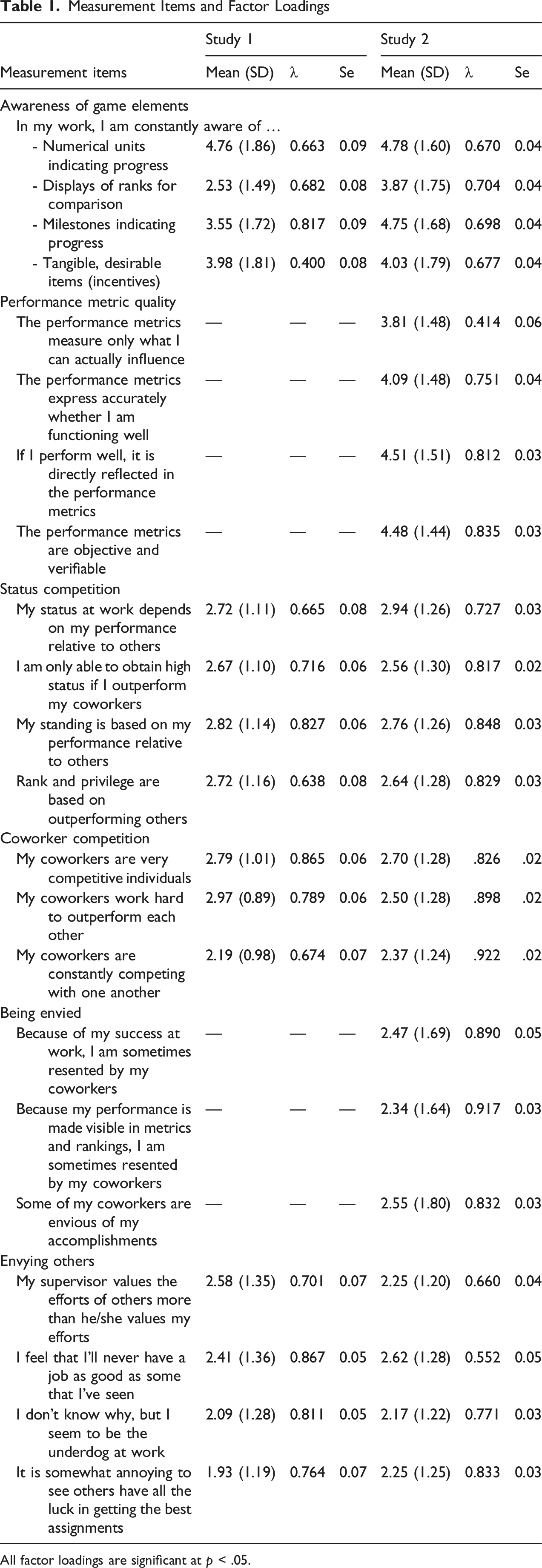
All factor loadings are significant at p < .05.
Gamification Elements
We measured awareness of gamification elements by developing four items based on Wang and colleagues’ (2020) discussion of gamified performance metrics. Respondents were asked: “In my work, I am constantly aware of …” followed by four items about numerical indications of progress, displays of ranks, milestones, and incentives.
Status Competition
Status competition refers to employees’ efforts to attain or maintain a higher rank, prestige, or social standing within an organization, often through outperforming peers in ways that contribute to recognition, influence, or exclusive opportunities. Fletcher and Nusbaum (2010) describe status competition as a process where individuals seek to achieve superior recognition relative to their colleagues, often measured by rank, job titles, resource allocation, or symbolic markers of prestige such as office space or exclusive projects. We used the four-item dimension of Status competition from the Competitive Work Environment Scale developed by Fletcher and Nusbaum (2010).
Coworker Competition
Coworker competition refers to the drive among employees to outperform their colleagues in tasks, performance, or other work-related metrics, often independent of formal rewards or hierarchical advancements. This type of competition is influenced by the presence of competitive peers and can emerge in environments where individuals strive to demonstrate superiority in skills, productivity, or contributions without necessarily seeking tangible incentives such as promotions or bonuses (Fletcher & Nusbaum, 2010). We measured coworker competition using three items of the short version of the Competitive Work Environment Scale (Fletcher & Nusbaum, 2010) recommended by Swab and Johnson (2019).
Envy
Feeling envious was measured using four items from Vecchio (2005). Feeling envious involves perceiving coworkers as performing better when one views themselves as competing with them (Ng, 2017).
Results
Measurement Model
Correlations and Reliabilities Study 1 and Study 2
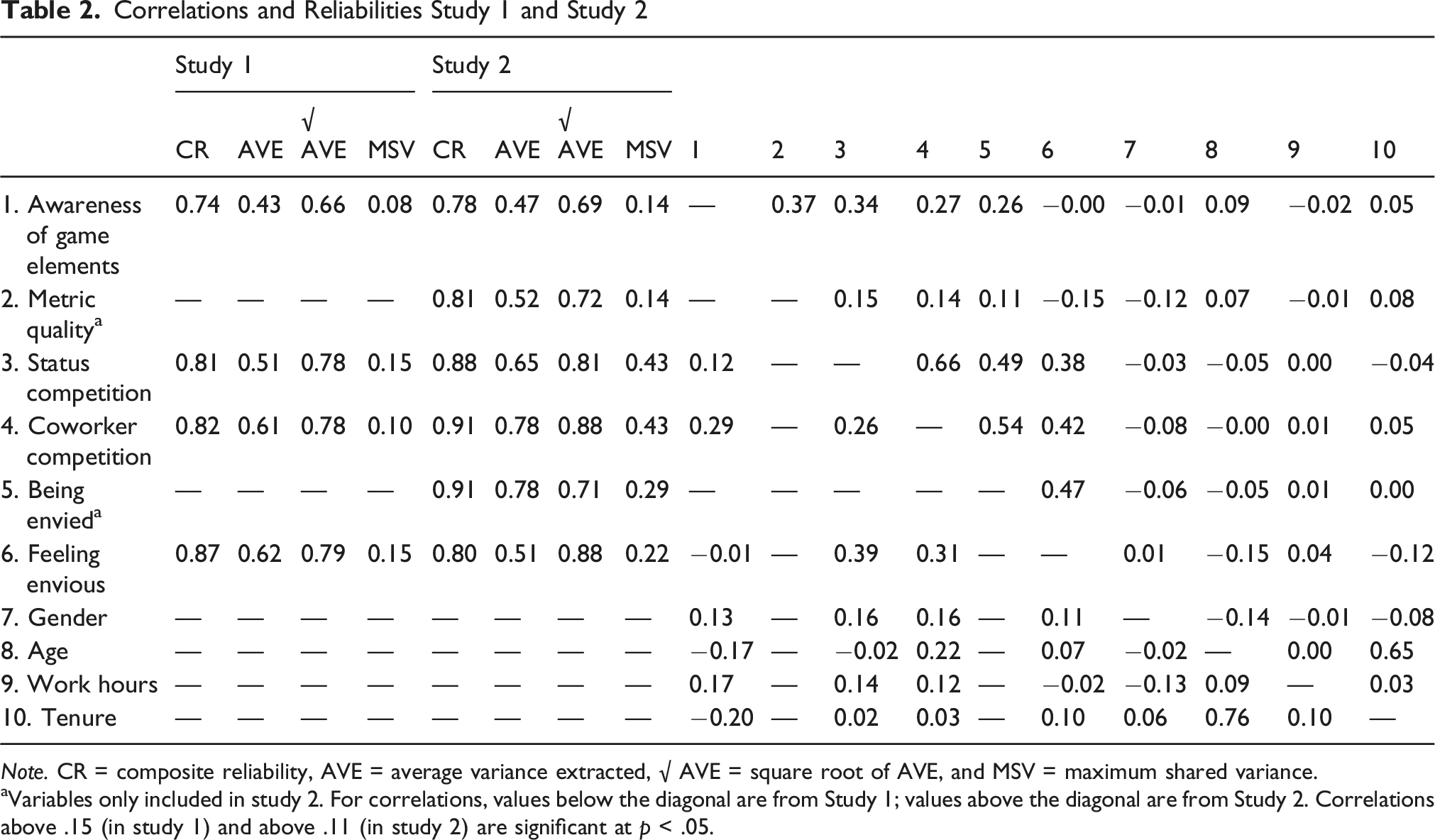
Note. CR = composite reliability, AVE = average variance extracted, √ AVE = square root of AVE, and MSV = maximum shared variance.
aVariables only included in study 2. For correlations, values below the diagonal are from Study 1; values above the diagonal are from Study 2. Correlations above .15 (in study 1) and above .11 (in study 2) are significant at p < .05.
Monotrait-Heterotrait Ratios
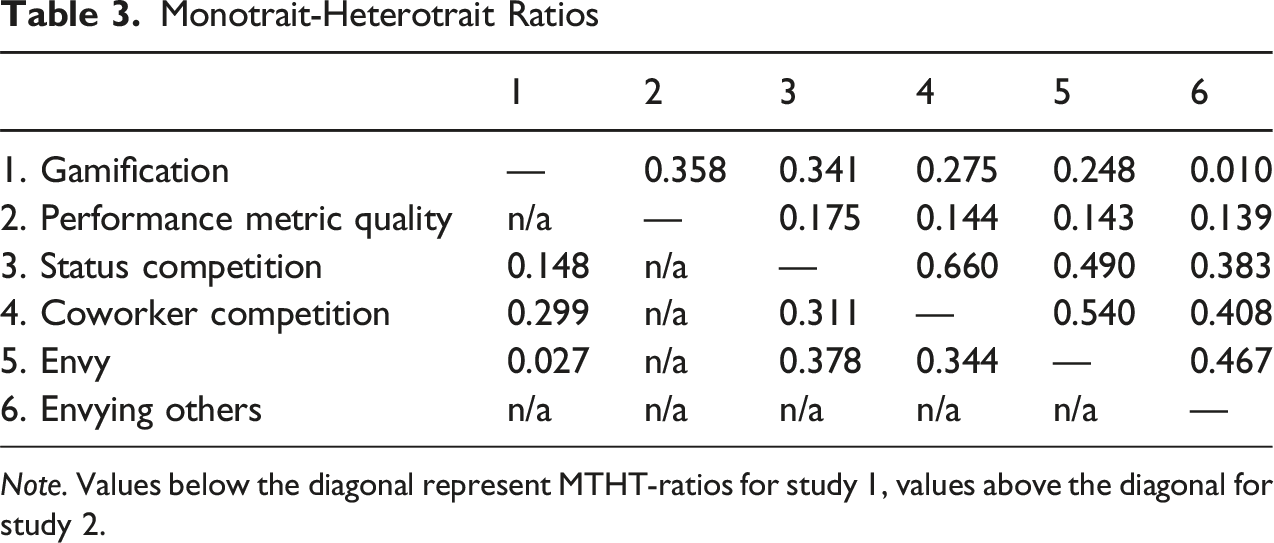
Note. Values below the diagonal represent MTHT-ratios for study 1, values above the diagonal for study 2.
Structural Model
The structural model (see Figure 1) fitted the data adequately: χ2(df) = 127.99 (85); TLI = 0.92; CFI = 0.94; SRMR = 0.06 and RMSEA = 0.07. The first hypothesis reflects the assumption that awareness of gamification elements is positively related to feelings of envy through status competition (i.e., an indirect effect; Preacher & Hayes, 2004). The results indicated that awareness of gamification elements was not significantly associated with status competition (B = 0.068 [−0.071; 0.218], p = .317). Status competition was positively related to feelings of envy (B = 0.417 [0.158; 0.721], p < .001). However, the indirect relationship of gamification elements on feelings of envy through status competition failed to reach significance (B = 0.028 [−0.025; 0.108], p = .217). Hence, hypothesis 1 is not supported. Regression models study 1 and study 2. Note. Factors in dashed boxes were added in study 2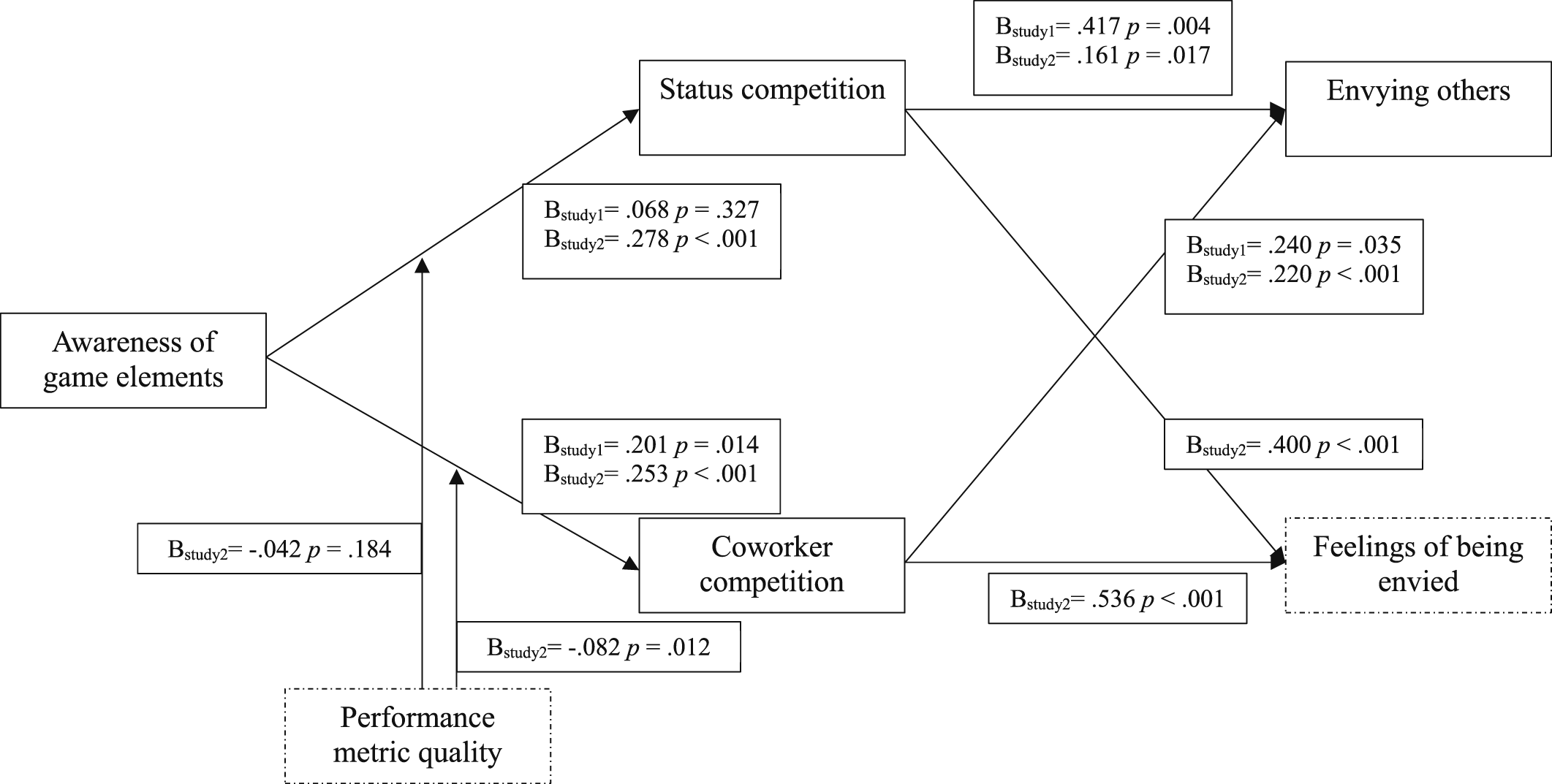
Hypothesis 2 posits that gamification elements are indirectly related to feelings of envy through coworker competition. The results suggest that gamification elements positively correlate with coworker competition (B = 0.201 [0.026; 0.404], p = .024). In turn, coworker competition is positively associated with feelings of envy (B = 0.240 [0.027; 0.510], p = .048). As a result, the indirect relationship between awareness of gamification elements and feelings of envy through coworker competition is positive and significant (B = 0.048 [0.002; 0.161], p = .042). These findings support the reasoning reflected in Hypothesis 2.
Discussion
While the study does not confirm that competition for status carries the relationship between gamification elements and feelings of envy (H1), competition aimed at attaining status or prestige is positively associated with envy. The results offer support for Hypothesis 2. Employees’ awareness of various gamification elements within this media organization was positively associated with coworker-inspired competition. This environment of competitiveness, in turn, is positively related to feelings of envy. Overall, the findings of this study provide preliminary support for potentially adverse implications of gamification elements based on social comparison theory. The findings highlight that informational pathways represented by access to more visible, comparable, and immediate feedback may heighten employees’ tendency to constantly compare their performance to others, leading to feelings of envy. Hence, these findings point to a potential downside in embedding data and metrics in gamified systems to motivate and engage employees. Putting performance metrics on continuous display fuels workers’ tendency to compare their performance to others, such that upward comparisons may heighten a sense of competitiveness and envious feelings.
Study 2: The Importance of Metric Quality and Being Envied
Study 1 provided preliminary support for the idea that gamification elements heighten a sense of competitiveness by making performance more transparent and metrics about work more widely available. In study 2, we expanded our focus to examine whether the findings of our study would hold beyond the specific organizational context. In addition to replication, we examined two refinements to our model. First, we shift our focus to include that individuals in these competitive environments may also become envied targets themselves (Tai et al., 2012). Indeed, in competitive environments, individuals are just as likely to become the target of coworker envy as they are to have feelings of envy vis-á-vis others (Vecchio, 2005). Feeling envy toward others is a fundamentally different emotional experience than being the subject of others’ envy (Vecchio, 2005). Based on social comparison theory, Tai and colleagues (2012) suggested that workers may be sensitive to becoming the target of a threatening upward comparison. Individuals who are successful in competitive environments may become subject to unfavorable interpretations by others when they are perceived as more successful or superior to others. Hence, individuals in competitive environments may interpret gamification elements as environmental cues that give rise to the feeling of becoming an envied target (Exline & Lobel, 1999). Hence, we hypothesize:
Awareness of gamification elements is positively related to status competition, which, in turn, is positively associated with feelings of being envied.
Awareness of gamification elements is positively related to coworker competition, which, in turn, is positively associated with feelings of being envied.
Second, while awareness of gamification elements informs interpretations of the work environment, the exact implications may depend on the quality of the metrics used in these gamification approaches (Groen et al., 2017). Research on the downsides of gamification has cautioned organizations about implementing gamified services, as harmful effects may result from poor design and implementation (Hammedi et al., 2021). In addition, Ranganathan and Benson (2020) suggested that gamification in simple work may raise productivity, because simple quantification and metrics adequately capture the work that needs to be done. However, gamification may be demotivating for more complex work, especially when quantification cannot adequately capture the work being done – e.g., accurately reflect work activity and performance. Other studies have highlighted the importance of ensuring that gamification elements are closely linked to the tasks and work that needs to be completed (i.e., workers can influence the game element), that objectives are clear (e.g., accurate reflections), and feedback is provided in a timely manner (e.g., verifiable progress) (Perryer et al., 2016). Overall, these studies suggest that the implications of gamification elements may depend on the quality of the metrics embedded in the game elements. Hence, we seek to examine the following hypotheses:
The relationship between awareness of gamification elements and status competition is moderated by perceived metric quality, such that higher quality reduces the positive impact of awareness on status competition.
The relationship between awareness of gamification elements and coworker competition is moderated by perceived metric quality, such that higher quality reduces the positive impact of awareness on coworker competition.
Methods
Sample and Procedures
Data were collected from 397 employees across Europe using Prolific. Employees worked in various organizations and industries such as Information and Communication (15.6%), Education (9.1%), Professional, Scientific, and Technical Activities (8.8%) and Manufacturing (8.6%). The average age of respondents was 31.33 years (SD = 8.84), and slightly more than half identified as male (54.4%). By far, the majority held an academic degree (69.8%) and currently worked full-time (76.6%). Others worked part-time (16.6%) or indicated other vocational activities. The average organizational tenure was 4.17 years (SD = 4.67), and respondents worked 39.53 hr per week (SD = 40.57).
Measures
As indicated in Table 1, the measurement items for gamification elements, status competition, coworker competition, and envy, were identical to those used in Study 1.
Perceived Metric Quality
Metric quality was assessed using items that measure the extent to which employees perceived that performance metrics were sensitive to relevant aspects of their work. We used four items to measure quality, representing a mixture of precision, accuracy, sensitivity, and verifiability reflected in performance metrics (Groen et al., 2017).
Feeling Envied
The feeling of being envied by others was measured using three items developed by Vecchio (2005). Participants were asked to indicate whether the declarative statements that focused on being envied by coworkers were very inaccurate or very accurate on a seven-point scale.
Results
Measurement Model
The confirmatory factor analysis showed good model fit: χ2(df) = 278.30 (174); TLI = 0.97; CFI = 0.98; SRMR = 0.06 and RMSEA = 0.04. The model demonstrated good reliability for all constructs with composite reliabilities ranging between 0.73 and 0.91. Furthermore, MTHT ratios indicate good discriminant validity as these values ranged between 0.01 and 0.66. Finally, all factor loadings were significant and sizable. Hence, we moved to the next step of the analysis.
Structural Model
The structural model fitted the data well: χ2(df) = 304.27 (175); TLI = 0.97; CFI = 0.97; SRMR = 0.06 and RMSEA = 0.04. First, we examine the relationship between awareness of gamification elements and envy toward colleagues through status competition (H1) and coworker competition (H2). The results demonstrate that awareness of gamification elements is positively associated with status competition (B = 0.275 [0.153; 0.419], p = .001) and with coworker competition (B = 0.258 [0.105; 0.413], p = .001). In addition, the findings demonstrate positive associations between status competition and feelings of envy (B = 0.159 [0.008; 0.307], p = .036) and coworker competition and feelings of envy (B = 0.221 [0.103; 0.373], p = .001). As a result, the hypothesized indirect relationships between gamification elements and envy through status competition (B = 0.057 [0.021; 0.122], p = .001) and coworker competition (B = 0.044 [0.005; 0.097], p = .021) are both significant. Hence, while Study 1 could not confirm H1, these findings provide support for Hypotheses 1 and 2.
In addition, this study extends our inquiry to perceptions of being the target of coworker envy. Hypotheses 3 and 4 reflect the notion that awareness of gamification elements gives rise to status competition and coworker competition, heightening an individual’s perception of becoming a target of others’ envy. The results indicate that status competition (B = 0.224 [0.098; 0.386], p = .001) and coworker competition (B = 0.376 [0.220; 0.512], p = .001) are both positively and significantly associated with feelings of being envied by others. Since we already established that awareness of gamification elements is positively and significantly associated with status and coworker competition, the following indirect relationships were established: through status competition (B = 0.138 [0.053; 0.263], p = .001) and coworker competition (B = 0.110 [0.35; 211], p = .001). Hence, Hypotheses 3 and 4 were also both supported.
Finally, we examined whether performance metric quality would moderate the relationship between awareness of gamification elements and competition. First, we note that the findings indicate that there was no direct significant relationship between performance metric quality and status competition (B = 0.059 [−0.127; 0.232], p = .532) or coworker competition (B = 0.048 [−0.160; 0.287], p = .600). Hypothesis 5 reflects the notion that metric quality moderates the impact of gamification elements on status competition. The results do not confirm this assumption, as the interaction effect is non-significant (B = −0.042 [−0.104; 0.020], p = .184). Hence, Hypothesis 5 was not supported.
Finally, Hypothesis 6 assumed that metric quality would moderate the relationship between gamification elements and coworker competition. The findings suggest that metric quality moderates this relationship (B = −0.082 [−0.145; −0.018], p = .012), whereby the relationship between gamification elements and coworker competition is weaker when metric quality is higher. Specifically, upon closer inspection of the Johnson-Neyman significance region for the interaction effect, the relationship between awareness of gamification elements and coworker competition stops being significant when metric quality exceeds standardized values of 0.98 (or 5.20 in raw values). Figure 2 demonstrates the negative slope awareness of gamification elements on coworker competition at increasing values of metric quality. Johnson-Neyman plot of interaction between awareness of gamification elements and metric quality on coworker competition. Note. The solid line indicates the slope of awareness of gamification elements (X-axis) on coworker competition (Y-axis) at different values of metric quality. Dashed lines represent the 95% confidence interval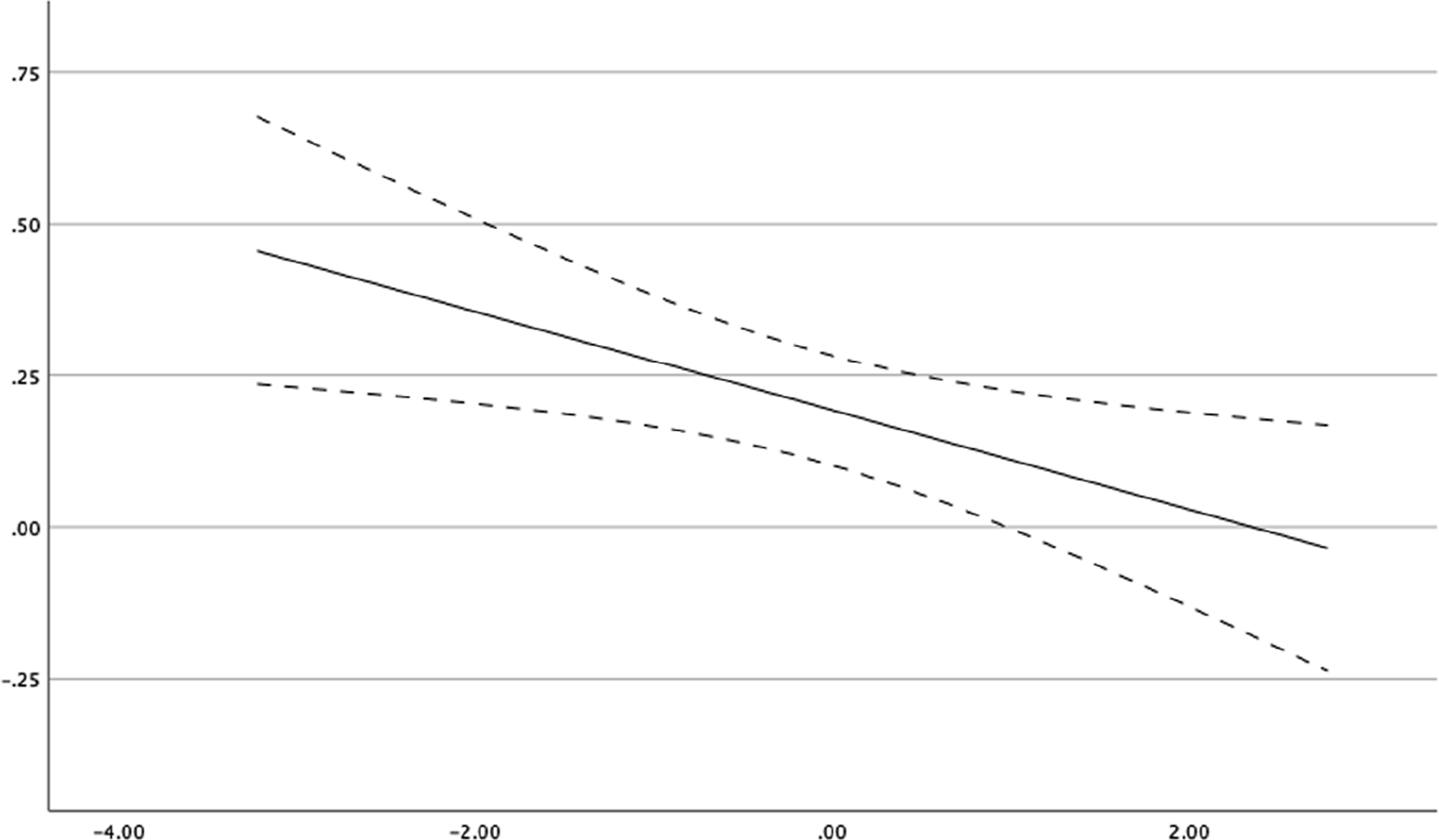
Discussion
The findings of Study 2 confirm the assumption that awareness of gamification is positively associated with coworker competition. Furthermore, contrary to Study 1, the findings based on the second sample suggest that this also holds for status competition. Perhaps the unique organizational context in Study 1 highlighted coworker competition relative to status competition. In journalism, the institutionalization of audience metrics (Dodds et al., 2023; Jämsen et al., 2025; Petre, 2021) has gamified performance evaluation (Ferrer-Conill, 2017, 2018), fostering coworker competition as journalists compare their metrics directly with peers rather than competing solely for status. This distinction is further shaped by journalism’s enduring tension between commercial logics and professional values (Tandoc, 2015), reinforcing internal competition rather than a pursuit of individual status. In contrast, Study 2, spanning multiple organizations and industries, reflected a more generalized perception where gamification elements may emphasize both status and coworker competition.
Future research could explore how and under what circumstances status competition matters. In addition, Study 2 provided strong evidence that awareness of gamification may also increase feelings of becoming the target of others’ envy through both types of competition. This is important because it highlights how social comparison based on data analytics may introduce a complex dynamic for individuals where upward comparison may lead to feelings of envy toward others. At the same time, relatively higher performance would also expose individuals to becoming the targets of envy in the eyes of others. Finally, the findings highlighted that the performance metric quality moderates the relationship between awareness of gamification elements and coworker competition but not status competition. Arguably, the quality of performance metrics is more important to workers when they view that their peers are focused strongly on competition (i.e., coworker competition) instead of an individual’s desire to improve their ranking or status (i.e., status competition.
General Discussion
Theoretical Implications
Taken together, the findings clarify that the effects of gamification depend on the kind of competition it promotes and the quality of the data that sustain it. By distinguishing between status and coworker competition, identifying metric quality as a key boundary condition, and linking goal-setting theory with social comparison theory, this study extends understanding of how datafication transforms feedback from a private motivational tool into a public mechanism of social evaluation.
Specifically, we suggest that how performance and metrics about individual workers are made visible and put on display fuels a competitive dynamic leading to workplace envy. Various studies have demonstrated the motivational benefits of gamification (Deterding et al., 2011; Flatla et al., 2011; Kapp, 2012), with literature review studies concluding that gamification yields predominantly positive effects and results, depending on the gamified context and quality of users (Hamari et al., 2014). Our findings emphasize a less optimistic outlook on gamification, demonstrating how it shapes competition and leads to workplace envy (Duffy et al., 2021; Tai et al., 2012). Indeed, our findings suggest that gamification fosters social comparison by heightening feelings of (some types of) competitiveness and (some types of) envy.
Previous studies have speculated on the role of performance transparency in shaping workplace behaviors (Leonardi & Treem, 2020), and the ways digital systems give rise to new forms of organizational control (Kellogg et al., 2020; Zuboff, 1985). In addition, research discussed how gamified environments might create persistent and unavoidable comparison pressures (Sterling & Labianca, 2015). This also aligns with research showing that digital systems create dense comparison networks, making it difficult for employees to disengage from competitive pressures (Hafermalz, 2021; Jämsen et al., 2025). This is supported by the findings that in both studies, gamification correlated positively with coworker competition, and for study 2, also with status competition.
Importantly, we distinguish between status competition and coworker competition (Fletcher & Nusbaum, 2010). While prior research has broadly examined competition in gamified environments (Swab & Johnson, 2019), our study clarifies some of the distinct pathways through which gamification influences envy. The distinction between status-driven and coworker-driven competition provides a more nuanced framework for understanding how gamification elements affect worker experiences. Specifically, gamification may lead workers to view that their status is based on their relative performance to others (i.e., status competition). As such, gamification may play into our inherent human nature to compare and evaluate ourselves in relation to others (Festinger, 1954). Specifically, gamification may also inform perceptions about the competitiveness of others in the organization (Fletcher & Nusbaum, 2010). Ultimately, both views on competition are susceptible to social comparison and will likely lead to zero-sum construal. We highlight that these dynamics are not exclusive to specific industries – e.g., journalism – but hold across various industries (Study 2).
Our findings extend insights from classic goal-setting and feedback theories (e.g., Locke & Latham, 2002) by illustrating how the datafication and gamification of work reshapes feedback processes themselves. Whereas traditional feedback models emphasize periodic, individualized information to guide self-regulation and improvement, gamified systems provide real-time, algorithmically generated feedback that is often made publicly visible through leaderboards or shared performance dashboards. In this sense, datafication makes feedback continuous, while gamification renders it visible and comparative, together creating a feedback mechanism that places individual performance in continuous public display and ongoing comparison.
The findings also indicate that gamification has emotional ramifications beyond generating excitement for users, which has been identified as a dominant benefit of gamification in previous research (Hammedi et al., 2021). We highlight that employees experience envy based on the performance data made visible through gamification elements. Research has highlighted how datafication can inform perceptions of the self by representing individuals and their work processes (Aaltonen & Stelmaszak, 2024; Armstrong et al., 2023; Faraj et al., 2018). Our findings indicate that performance metrics do not merely reflect individual achievements in gamified work environments. Instead, they become socially constructed because an individual’s data is interpreted in relation to others’ metrics, placing personal performance in a broader organizational or social context. This leads workers to envy others who seem more favorably represented in this data while also feeling more likely to be envied by others in the organization. As such, workers may find themselves between a rock and a hard place in gamified work settings. If they compare unfavorably, they may envy others, but when they succeed, they risk becoming the perceived target of others’ envy. Ultimately, the envy resulting from competitive environments may result in disengagement among workers, for instance, evidenced in workplace ostracism (Henle et al., 2023).
Finally, the results indicate that the quality of metrics embedded in these gamified systems matters. That is, metric quality may dampen the positive relationship between gamification and coworker competition. Hence, our findings extend previous work that suggested that the effectiveness of gamification depends on implementation quality (Groen et al., 2017; Hammedi et al., 2021) and adds that the quality of the data and metrics that are collected, fed into the system, and displayed need to be considered too. Hence, theoretically, it would make sense to consider how gamified elements are presented (Hamari et al., 2014). For instance, building on playful job design research (Scharp et al., 2023), the distinction between ludic or agnostic gamification elements may be important. Ludic play focuses on initiatives that use humor and fantasy and focus on entertainment and fun. Whereas agnostic play is more focused on micro-objectives, progression levels, and focus on challenges and competition (Scharp et al., 2023). In other words, ludic gamification would be about designing fun, agnostic gamification would be designing competition (Liu et al., 2023). Arguably, these forms of gamification map onto contrastive and assimilative comparison processes. This is important as contrastive comparison is more likely to be associated with feelings of envy and resentment, while assimilative comparison could lead to inspiration, admiration, and optimism (Sapegina & Weibel, 2017). Hence, we hope that our findings spark further research in gamification in organizations, particularly to enhance understanding of different forms of gamification, competition, and envy, and the importance of the meaning and quality of the data feeding into these systems.
Practical Implications
The findings of this study have several important practical implications. As organizations increasingly rely on data-driven performance metrics, managers and other organizational members need to be wary of the ways in which gamification elements may shape workplace dynamics in unintended ways. First, the findings demonstrate that gamification elements in the workplace may increase competitiveness, which could lead to feelings of envy. While competition and envy may be great motivators of human behavior, both aspects have strong side effects, including threats to individual self-esteem (Tai et al., 2012), frustration and hostility toward others (Vecchio, 2005), and interpersonal deviance (den Nieuwenboer et al., 2023). One possible solution to remedy such problems could be to emphasize collective or team-level metrics in addition to individual performance metrics. Relying solely on collective incentive systems may be ineffective in ensuring individual engagement, as research on Total Quality Management (TQM) initiatives identified several problems with such approaches, including free-riding behaviors (Yu & Park, 2024). Hence, finding a balanced approach linking collective and individual game elements could help organizations foster a sense of collective achievement, countering the zero-sum rivalries, while avoiding common problems with exclusively collective incentive systems. Hence, by structuring gamified performance measures around shared and individual goals and rewards, organizations can reduce the intensity of competitive pressures that lead to adverse effects associated with social comparison and envy.
Second, this study demonstrates that positive metric quality can help mitigate some of the negative implications of gamification. When employees perceive performance metrics as objective, verifiable, accurate, and something they can influence, the positive effect on coworker competition becomes smaller. As such, organizations should ensure that gamification systems rely on well-designed, job-relevant, and transparent performance indicators this may help employees focus on the ways gamification elements may enhance their job performance and achievements, rather than a mere source of social comparison. This can be achieved through clear communication about how metrics are determined and displayed. Allowing employees to have input in shaping performance evaluation criteria, and providing opportunities for feedback and adjustments, might be ways to improve gamification systems (as Zuboff, 1985 suggested in the earlier context of automation and organizational worker monitoring).
Finally, at a broader level, this study highlights how gamification elements can create social pressures in organizations. Weaving gamification elements into organizational structures and work processes fosters control structures that are hard or impossible to avoid for employees. This leads to pressures to comply, for instance, to avoid being sidelined. These pressures persist even when gamified systems are not seen as beneficial for the motivation or engagement of individual workers. Several steps can be taken to mitigate such pressures, either through opt-in or flexible participation models or by at least ensuring that the consequences or implications of rankings and leaderboards are made explicit. For instance, if direct rewards or promotions are not contingent on relative scoring compared to peers, this may mitigate some pressures. However, it should be noted this most likely also limits the motivation potential of gamified systems. Hence, by designing systems that promote healthy competition, ensuring fair and transparent metrics, and reducing coercive participation, organizations can leverage gamification to motivate and engage their members while mitigating its unintended negative consequences.
Limitations and Future Research
This study comes with several limitations that need to be considered. First, the two studies presented are both cross-sectional. This limits our ability to draw any strong conclusions related to the directionality or causality of the relationships. Neither do these designs capture temporal dynamics. Arguably, as gamified work environments provide frequent feedback and opportunities to improve or decline one’s relative standing, longitudinal analytical approaches would be required to develop a deeper understanding of the implications of gamification. For instance, today’s winners may be tomorrow’s losers, depending on how someone is represented for a prolonged time. Being able to measure these changes over time will help develop a better understanding of individual experiences in a gamified work environment. Being at the bottom of the ladder in new article rankings in the newsroom for two weeks straight may have increasingly negative implications as the situation endures. However, alternating between a top position on the ladder and one that is lower may make workers more comfortable with their competitive environments as the competition for status and with colleagues does not seem unattainable – that is, they can win. Diary studies could investigate these dynamics in more depth.
A second limitation is that the measurement instrument does not provide information about the ways in which gamification elements were presented. Awareness of gamification elements can be taken as an important cue that fuels perceptions of competitiveness by mixing work and play. However, in line with research suggesting that how gamification is implemented matters (Groen et al., 2017; Hammedi et al., 2021), future research may want to examine gamification with greater nuance. For instance, one could distinguish to what extent ludic gamification elements versus agonistic gamification elements are used. This could lead to different interpretations as ludic gamification (playful) may trigger less social comparison than agnostic gamification (competitive). Hence, future studies may explore how different approaches to gamification may help to create a more balanced approach. For instance, the interdependence of ludic and agnostic gamification elements may give rise to “coopetition”— the simultaneous presence of competition and collaboration (Bengtsson & Kock, 2014) – by offering both playful (ludic) and competitive (agnostic) elements.
Furthermore, our emphasis has been on feelings of envy and being envied, highlighting upward comparison. Future studies could explore a broader range of outcomes associated with gamification and competition. For instance, social comparison theory would provide a useful framework to study negative implications such as performance pressure (Dodds et al., 2023), or perceived unfairness. But also, neutral implications, such as self-insight or self-assessment, and positive implications, such as admiration, respect, or self-improvement. The findings also invite deeper examination of envy in gamified and datafied workplaces. While we conceptualized envy and being envied, recent research also explored the implications of envy, suggesting that envy might not always be bad (Battle & Diab, 2024). Specifically, research distinguished between benign and malicious forms of envy (Battle & Diab, 2024; Lange & Crusius, 2015). Benign envy can foster self-improvement and engagement, whereas malicious envy can prompt withdrawal, resentment, or turnover intentions. These distinctions are highly relevant for gamified contexts, which often blend competition and cooperation through visible feedback loops (Jämsen et al., 2025). Hence, future research could investigate when and under what conditions gamification-induced competition evokes malicious versus benign envy, perhaps depending on perceptions of deservingness (van de Ven et al., 2012) or control potential (Battle & Diab, 2024). Such work could advance theory by linking gamification to the emotional regulation processes that determine whether social comparison becomes motivating or corrosive.
Finally, while this study examined metric quality as a key moderator, future research could extend this work by exploring other individual and situational factors that shape employees’ experiences with gamification. Characteristics such as well-being, professional identity, or digital nativity may influence whether employees interpret gamified feedback as empowering or coercive. Although age did not show a significant relationship with our main variables, future research could examine whether digital natives may respond differently to highly gamified contexts. Individuals who have grown up immersed in digital environments may be more habituated to constant visibility, ranking, and comparison through metrics. Furthermore, building on emerging distinctions between benign and malicious envy, future studies could examine how these emotional responses manifest in organizationally relevant outcomes, such as turnover intentions, withdrawal, or helping behaviors. Such research would deepen understanding of when gamification fosters productive engagement and when it risks undermining collaboration and retention.
Footnotes
Acknowledgments
The manuscript has benefitted from the comments and feedback provided by Professor Ronald Rice.

Funding
The authors disclosed receipt of the following financial support for the research, authorship, and/or publication of this article: This research was supported by a grant from the Research Council of Finland: 356143.
Declaration of Conflicting Interests
The authors declared no potential conflicts of interest with respect to the research, authorship, and/or publication of this article.