




Abstract
The growing and unmet demand for coding skills is becoming critical in a world that is ever-more driven by digital technologies, embedded algorithms and artificial intelligence systems. However, sustainability of the profession is threatened because of the failure to attract and retain women developers, which has been an ongoing and corrosive problem for decades and remains unresolved. While many previous studies attribute ‘toxic’ workplace cultures in the software development industry, as a major contributing factor, few examine their root causes and almost none offer practical solutions. To address this lack of both knowledge and effective response, we propose a novel approach building on psychoanalytical Transactional Analysis (TA) theory that is little used in the field of management and organisation studies. TA theory provides a framework using common and simplified language to better understand why communications in the workplace fail, and how occupying incompatible ego states might lead to ‘negative’, ‘problematic’ and, in the worst cases, ‘toxic’ behaviours and workplaces. We propose a TA-based model (OCTAPos) that helps explain how crossed communications at work can result in a lack of acceptance of women in the workplace and attrition among female software developers and the resultant dearth of diverse coders. We further propose a theoretically informed HRM Structured TA Response (STAR) to help increase self-awareness, emotional intelligence, empathy and mutual understanding, with the ultimate aim of positively impacting prevailing attitudes, behaviours and organisational culture to achieve more inclusive and sustainable recruitment and retention in the longer term.
Keywords
Introduction
The demand for coding skills in G20 countries is becoming critical in a world increasingly driven by digital technologies affecting all facets of everyday life. Technology accounts for 25% of STEM 1 roles and, by 2030, 85% of jobs that do not currently exist, will derive from new technologies (Aoki, 2022). Yet less than one fifth (14%–17%) of the technology workforce is female (Little, 2020). There are deep-rooted and serious implications for society of this absence, exclusion and attrition. Software development (SD) 2 has been dominated by ‘innovative’ men for decades (e.g., Gates, Wozniacki, Jobs). This dominance continues in the digital age (Zuckerberg, Musk, Bezos), thereby consolidating the male stranglehold on the field. Sanders and Ashcraft (2019, p. 325), expose the reality of limited organisational diversity thus: ‘By and large, women are not participating in technology innovation roles, but rather in the roles that support others who are engaging in leading-edge technology design and development … it is rare to find a woman … leading any significant technical development effort’.
The ‘meaningful participation’ of women in technological design and development is vital to secure workplace diversity and, more importantly, to influence the type of technology that is developed (Adam et al., 2004; Ashcraft & Breitzman, 2012; Klawe et al., 2009; Sanders & Ashcraft, 2019; Wajcman, 1991).
Educators, industry and government have sought to address this issue through numerous initiatives. 3 Interventions include: changes in curricula; scholarships and grants for women; targeted advertising campaigns; and diversity and inclusion policies (WISE, 2020). Wynn (2019) argues that strategies to improve organisational cultures for women, for example, unconscious bias training and mentorship programmes, are at best ineffective and at worst exacerbate bias. Remedying the ‘gender deficit’ problem through socialisation (of women) processes, equal opportunities (for women) policies and exhorting women to ‘Lean In’ (Sandberg, 2013) (to masculine culture) are inherently problematic (Wajcman, 2010) and do not ‘overcome structural hurdles’ (O’Mara, 2022). Dame Wendy Hall, a lifelong advocate for more diversity in computer science and Artificial Intelligence (AI) (Lovegrove & Hall, 1987, 1991) admitted to being ‘fed up talking about this all the time’ and said the lack of progress must be fixed as an imperative (Bennet, 2021).
In short, we currently face the situation Hall and Lovegrove (1987) first predicted decades ago: a computer science/AI field starved of women’s skills and perspectives; fewer formally trained women and role models; generations of managers and decision-makers made up solely of men; women being unlikely to achieve high-ranking status; and a fundamental lack of influence on the male-dominated direction of research and critical decision-making in organizations, government and on advisory committees.
The persistent hegemonic masculine culture in the technology sector (Wajcman, 1991) which, at its worst, is described as a ‘toxic bro culture’ (Little, 2020), that condones misogyny (Tassabehji et al., 2021) and that women find intolerable in the longer term – is resulting in a woman-shaped leaky pipeline. Of the already too few women in SD, half are likely to quit before they are 35 compared to 20% in other professions and more than half are likely to leave the sector by mid-career (Accenture, 2020; Singh, 2023). Importantly, if we exclude gender from the statistics, there is not a high turnover of SD personnel generally and the technology industry has a comparatively low employee burnout rate, exceeded significantly in the hospitality and healthcare professions (Statista, 2019).
As such, the main purpose in this paper is to present an approach to workplace relations and relationships that could be useful and beneficial within management studies. Our primary location and case is the field of software development described, and the specific workplace relations that might account for the absence and attrition amongst women from this traditionally and persistently male-dominated field. Analysing interpersonal exchanges and repeating behaviours that cause tensions and breakdowns in relations can help colleagues to avoid or react positively and effectively when, as a result of such behaviours, the workplace becomes uncomfortable, unpleasant and, in the more extreme cases, intolerable.
We start by briefly discussing contexts in which Transactional Analysis (TA) can be deployed as an approach for investigating interpersonal relations and communication between members of groups, teams and in some cases whole organisations, to reveal, address and hopefully repair relationships at work. Transaction Analysis is a tried and tested psychoanalytical theory and method of therapy, that is primarily conducted in clinical settings for example, in the context of improving marital relationships, therapies for psychological disorders (such as PTSD/anxiety) and ‘problematic’ child behaviours (Vos & van Rijn, 2022). What is lacking is an application of TA in the field of management and organisational studies. This paper proposes an approach that takes TA out of a clinical setting and off the therapy couch, focusing on its application by individuals, teams and managers to better understand individual and group communications and behaviours at work. Our combined OCTAPos diagnostic and STAR response process focuses on building skills to observe and diagnose harmful behaviours, and understand the consequences of these behaviours on the organisation’s culture, effective management, performance and ultimate sustainability. The purpose of TA in the organisation and management studies context is to reinforce or (if corrective action is required) transform workplace relationships and communications to achieve more empathetic, supportive and sustainable human relations at work.
Sustainable HRM Through Diversity & Inclusion
In recent decades, the HRM profession has changed focus from the wants and needs of employers to those of employees and society by: reintroducing “the ‘human element’ into the rhetoric of HRM” (De Prins et al., 2020) and reducing/removing the psychological, physical, social and work-related harms to employees in the workplace (De Prins et al., 2020; Kramar, 2014), which Griep et al. (2023) rightly say had been neglected for too long.
A lack of diversity is discriminatory, unfair and ‘hinders the advancement of individuals, teams, organizations, and society as a whole’ (Phipps & Prieto, 2021; Syed, 2019). Studies have shown how increased diversity improves organisational performance (Herring, 2009, 2017) and how gender diversity improves innovation, decision-making and problem-solving (Page, 2007; Ritter-Hayashi et al., 2019). In the context of our software development case, by creating more diverse and inclusive workplaces, an estimated 3 million women could be working in technology by 2030 (Accenture, 2020). Organisations in male-dominated professions regularly fail to retain women because of systemic societal (macro) disadvantages (Eagly & Carli, 2007). At the organisational (meso) level, diversity, equality and inclusivity (DEI) policies are often ineffectual because they invariably focus on ‘measurable’ goals and position discrimination as a matter of individual prejudice (commonly addressed through bias awareness training) rather than addressing the entrenched structural issues and practices, which reinforces those structural inequalities and power relations (Sharp et al., 2011). Research highlighting toxic organisational culture tends to focus on patterns of individual resistance, evidencing an array of adaptation and coping strategies (usually by women) to fit in with their environment (Hardey, 2019; Li, 2021). Interventions and policy recommendations for family-friendly workplaces and changes in organisational culture to promote the presence of women in higher positions (Servon & Visser, 2011), imply the need for additional support and differential treatment for women simply because they are women (Eagly & Carli, 2007; O’Mara, 2022; Singh, 2023).
The exhortation for women to ‘lean in’ famously promoted by Meta’s Sheryl Sandberg (2013), one of the highest profile women in the tech world, embraces the idea that ‘remedial work’ needs (and is expected) to be done by women when they occupy the male dominated workspaces (Ford & Harding, 2010). As such, women have to ‘define and redefine, construct and reconstruct their gender identities’ sometimes downplaying their gender identity and blending in as ‘one of the boys’ or as an honorary man (Ford & Harding, 2010). The ‘lean in’ approach focuses on individuals rather than embedded structural inequalities, implying that if women do not succeed in a male-dominated world they either have not tried hard enough (to be assertive, confident, ‘male’) or lack sufficient ambition (the ‘ambition gap’). As Ford and Harding (2010) argue, if women and men continue to be told, in various subtle ways, that they are respectively inadequate/superior, then the imbalance of power between men and women in organizations will continue, albeit differently, despite institutional DEI policies and training.
From this review of the relevant previous work in this area, it is clear that much more research is needed to understand how to create sustainable, inclusive and comfortable workplaces for a diverse spectrum of people. To do this, we present Transaction Analysis as a means to investigate interactions and in doing so, reveal the origins and nature of communication problems and breakdowns. Such detailed analysis can help to diagnose (why) underlying causes of friction and its negative effects and thence offer positive and reparative action (how). We develop a framework comprising a diagnostic tool (OCTAPos) used to demonstrate relation and relationship problems as they occur in the workplace and an intervention (STAR) process that can be used to improve and maintain good relations at work between colleagues to create a mutually respectful, inclusive and sustainable workplace. We will be focusing primarily at the individual (micro-) and organisational (meso-) levels and leaving the macro level for others. Though necessary and urgent, such structural and systemic changes lie beyond the scope of this paper.
Toxic Cultures & Workplaces
Toxic work environments are a widespread social problem involving millions of workers worldwide, and have been long held to negatively impact the effectiveness of the organisation, the mental and physical health of individuals (Casic et al., 2023; Chamberlain & Hodson, 2010) and, in a healthcare setting, have even led to misadministration of medication and patient mortality (Holloway & Kusy, 2010). Toxic culture (borne of behaviour) is particularly prevalent in the tech sector and especially critical for creating sustainable HRM in a profession that is growing exponentially and with it the need for a diverse mix of talented and productive employees. Indeed, ‘Innovative’ tech companies such as Tesla, Space X, Nvidia and Netflix are experiencing higher attrition rates than their more ‘staid’ competitors, such as Ford, Warner Brothers and Boeing because of workplace behaviours and culture (Sull et al., 2022).
Interpersonal relationships are central to organisations and when negative and problematic behaviours occur repeatedly and unchecked, they become embedded, and can be termed ‘toxic’ (Kahn & Rouse, 2021). Toxic conditions in organisations often result from destructive leaders demeaning, marginalising, blaming, ostracising and generally disenfranchising others, even more so where the leaders head the organisations that then reflect their toxic styles of leadership (Kahn & Rouse, 2021). The majority of employees who end up leaving their organisations because of toxic work environments would have remained in their roles had the organisations taken steps to make the company culture fairer and more inclusive for all people on grounds of age, race, and gender and more positive and respectful to all (Casic et al., 2023; Scot et al., 2017; Sull et al., 2022). As such, corporate culture is considered to be a “more reliable predictor” of rates of employee attrition than remuneration and benefits, and that toxic culture is ten times more likely to contribute to attrition than salary (Sull et al., 2022).
Understanding Toxicity
Categorising Toxic Workplace Behaviours.
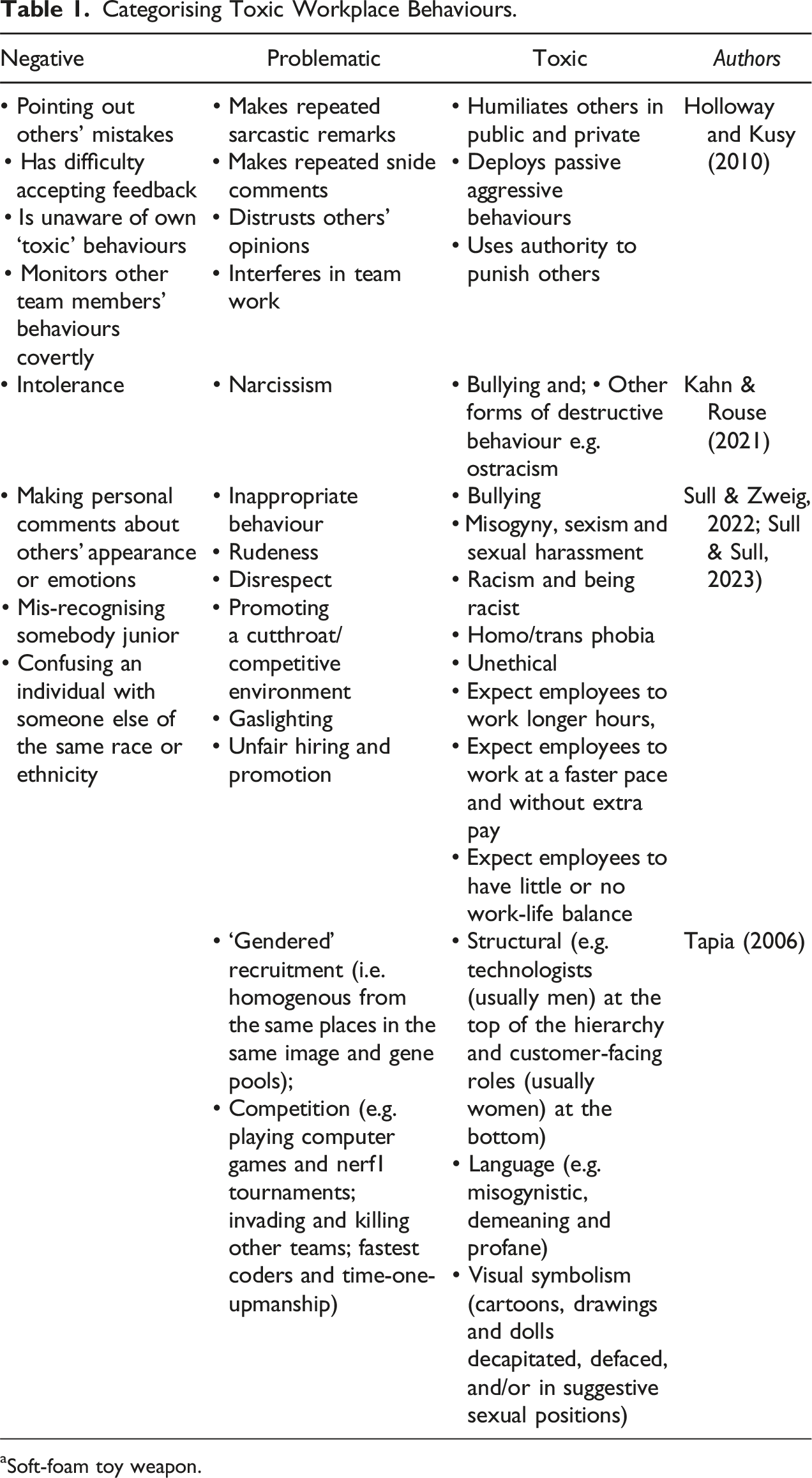
aSoft-foam toy weapon.
Toxic culture is a ‘cancer that disproportionately affects women’ but one that Sull and Sull (2023) say that organisations can treat relatively quickly and effectively if they choose to do so. However, this requires systematic and sustained commitment from top executives, managers and corporate boards to commit to the necessary change. It is therefore necessary to create a comprehensive set of strategies and processes that unequivocally start to incorporate sustainable leadership and management at all organisational levels.
Addressing Toxic Behaviours in the Workplace
Initiatives to address cultural degradation at organisational, team and individual levels are numerous and complex and taking a whole-systems approach is necessary but admittedly not easy. Repairing a culture means repairing the relationships between people and building respectful workplaces, by rooting out disrespectful behaviour, which is a corrosive component of toxicity (Casic et al., 2023). There is an urgent need for a healthy work culture that is inclusive, considerate and hostility-free where each employee feels valued, safe and appreciated (McKee, 2008). It is at this individual level and in these ways that we believe a Transactional Analysis ‘diagnosis and response’ approach (see below) can help and be a force for good.
In most large organizations, distinctive microcultures coexist within the same company, often across business units, functions, geographies, or acquired companies. Individual leaders can also (inadvertently or deliberately), create subcultures within their extended team (Sull & Sull, 2022). Whatever their origin, microcultures can diverge from the broader corporate culture, which means that even the best cultures can contain pockets of cultural toxicity (Sull et al., 2022). Nevertheless, leaders can achieve rapid gains by measuring microcultures throughout their organizations and take targeted action to improve these subcultures (Sull & Sull, 2022). Such situations and relations are of course the context in which organisational communication takes place. The next section will briefly situate our study and proposals in that academic domain.
Organisational Communication: Impact on Workplace Culture and Behaviour
Organisational communication explores the impact of the organisational context on communication processes and how individuals interpret and give meaning to messages and how messages might be changed or distorted when exchanged through formal and informal networks (Louhiala-Salminen, 2009). Thus, the role of internal communication is fundamental in shaping organisational culture (Men & Yue, 2019). Understanding organisational communication is critical for addressing toxic (behaviour in) workplaces where individuals suffer ‘destructive communication’, emotional abuse, bullying and social ostracism that ‘erodes organisational health and damages employee well-being’ (Lutgen-Sandvik & Tracy, 2012). Negative communication, for example verbal aggressiveness in the workplace can impact the team, the quality of relationships at work, the emotional culture and workplace behaviours generally. Emotional culture, that is how employees feel about their organisation, is central for a wide range of individual and team outcomes (O’Neill et al., 2023). An increasing number of studies have recently linked emotional culture to ‘internal communication practice’ and, specifically, to how a positive emotional culture in the workplace nurtures ‘favourable employee attitudes, and communication behaviour’ and organisational effectiveness (Men & Yue, 2019). This would suggest that a TA approach of the sort we propose would prove effective and beneficial.
Organisational Communication and Workplace Culture
In the context of workplaces where toxic behaviours are evident, many researchers tend to focus on the symptoms that is individual behaviour, characteristics or traits rather than the root cause of the ‘disease’ itself that is organisational culture, climate and demands (Smith & Fredricks-Lowman, 2020). Organisational culture has a critical effect on employee behaviour and may ultimately promote or discourage toxic behaviours and destructive leadership styles within an organisation. Using a framework to diagnose organisational culture can improve administrators’ and HRM practitioners’ decision-making skills when managing conflicts (Smith & Fredricks-Lowman, 2020). A communication approach to understanding the complexity of toxic workplaces, highlights the macro- meso- and micro-elements of communication where macro-level discourses (cultural, societal values and beliefs) are buttressed by meso-level organisational policies and practices and fashioned or resisted through micro-level interactions or talk.
At the micro-level, where negative and problematic behaviours occur and where we envisage TA being introduced most effectively, it is manifested through forms of communications such as public shaming and constant criticism, abusive and offensive language, spreading rumours and angry outbursts of shouting. But these forms of communication in and of themselves are not necessarily harmful. Rather, it is the atmosphere in which this type of communication takes places and the degree of repetitiveness that creates problems. The problem then, resides in the prevalence, frequency, ‘intensity, persistence and power distance between targets and perpetrators’ (Lutgen-Sandvik & Tracy, 2012).
Inevitably, destructive communication erodes organisational health and negatively impacts employee well-being. Lutgen-Sandvik and Tracy (2012) argue that through a process of communication and ‘intersubjective sense-making’, talking with friends, families and co-workers; targets of hostile workplace behaviours and bullying become increasingly aware that they are being mistreated. This process fixes a label to their treatment (bullying) that is then reinforced through further conversations, reading and research on the phenomenon they are facing. Once so convinced, they face the challenge of how to make sense of, and respond to, the problem. It is before this stage that interventions need to be made to address and de-escalate the (bullying) problem. Toxic workplaces are replete with destructive conflicts. Strategies for dealing with toxic behaviour need to focus on individual and unit level techniques for increasing understanding of how to manage interpersonal conflicts in the workplace (Smith & Fredricks-Lowman, 2020). However, the existing proposals for employees to identify different conflict styles (for instance Thomas & Killman (1977) and Blake & Mouton (1964) cited in Smith & Fredricks-Lowman, 2020) are difficult to implement and rarely effective. For any inter-personal conflict to be resolved successfully, the problems need to be discussed and solutions found through collaboration involving both parties coming to a mutually agreeable resolution that incorporates both their perspectives over time (Vivar, 2006). But unfortunately, Vivar does not explain how this can be done.
Organisational Communication and Workplace Behaviour
Ostracism in the workplace is another manifestation of toxic behaviour/practice, but Henle et al. (2022) offer a valuable perspective on how this behaviour might arise in groups Workplace ostracism occurs when, for various reasons, the ostraciser feels the need for ‘ego-protection and enhanced self-worth’; they may feel the need to shield themselves from harm, mistreatment and relationships that threaten their self-esteem. Or, they may fear being unfavourably compared to their co-workers in terms of competence, performance and/or ethical behaviour (Henle et al., 2022). They identify a ‘psychological pain’ and threat to well-being when a group’s identity is at risk from violation of its ethos and norm by a ‘deviant’ member. Ultimately this leads to the problem member being ostracised in order to strengthen in-group solidarity, co-operation and performance. Ostracising occurs as a combination of differing individual interests, relationships with ostracisees, and the organizational context (Henle et al., 2022). These authors conclude that ostracism can be curtailed by creating an environment that promotes respectful interpersonal interactions but, like Visar above, they don’t provide practical recommendations of how this might be achieved. This lack of actual proposals for a method to create positive change is a recurrent gap and theme in previous research and our hope is that the response/action process we describe, in conjunction with the diagnostic OCTAPOS model we have developed, makes an important contribution in offering a realistic model for an effective response via remedial interventions.
A Proposed Response: A Psychoanalytical Approach
We propose a psychoanalytical Transactional Analysis (TA) approach based on Berne (1964) and Harris (1973) as a way to uncover the psychology that informs the relationship structures in the workplace and the related emotions between co-workers (Molesworth et al., 2018). While there is a relatively large body of literature related to TA from both practitioners and scholars published mainly in the specialist Transactional Analysis Journal, the majority of these publications cite studies from clinical/therapy, social work and educational settings (e.g., Hall, 2019; Vos & van Rijn, 2021).
The application of TA in organisational settings is still very much in its infancy, but there is growing interest in how it can be used to help us understand relationships at work
We contribute to diversity and inclusion research by making a case to deploy TA to help everyone in the organisation, be they HR staff arranging recruitment and development or group leaders and managers and colleagues experiencing deteriorating working relationships. The purpose is to uncover and respond to the ways in which unexamined (primarily, though not exclusively, linguistic) behaviour that we may not recognise as hostile or problematic is in fact the root cause of many inter-relational problems in the workplaces of software developers. The next section summarises the key components of psychoanalytical Transactional Analysis theory as it will be applied in this paper. We then present exemplars from a typical workplace setting where misunderstandings, crossed communications, mis-perceptions and gameplaying result in the breakdown of working relationships. TA-related terms will be introduced and used along the way to inform and demonstrate the proposed model.
Transactional Analysis: A Tool for Theorising Workplace Relationships
Relations and relationships at work resemble relationships outside work in many respects and at least insofar as all individuals have characters, personalities and identities. Berne’s Transactional Analysis (TA) provides a ‘comprehensive framework for understanding behaviour and interaction’ that covers (i) the theory of personality, (ii) the theory of communication, and (iii) games analysis (gameplaying 4 ) (Harris, 1973). TA can be effective in improving workplace communication between employees to reduce conflict and promote co-operation (Hall, 2019). Also, it is argued, individuals who understand TA are better placed and more able to understand, empathise and work productively with colleagues to bring about a positive work environment, reduce workplace conflict and develop ‘an ethical organizational culture’ (Davidson & Mountain, 2011; Hall, 2019).
TA Theory of Personality and Ego States
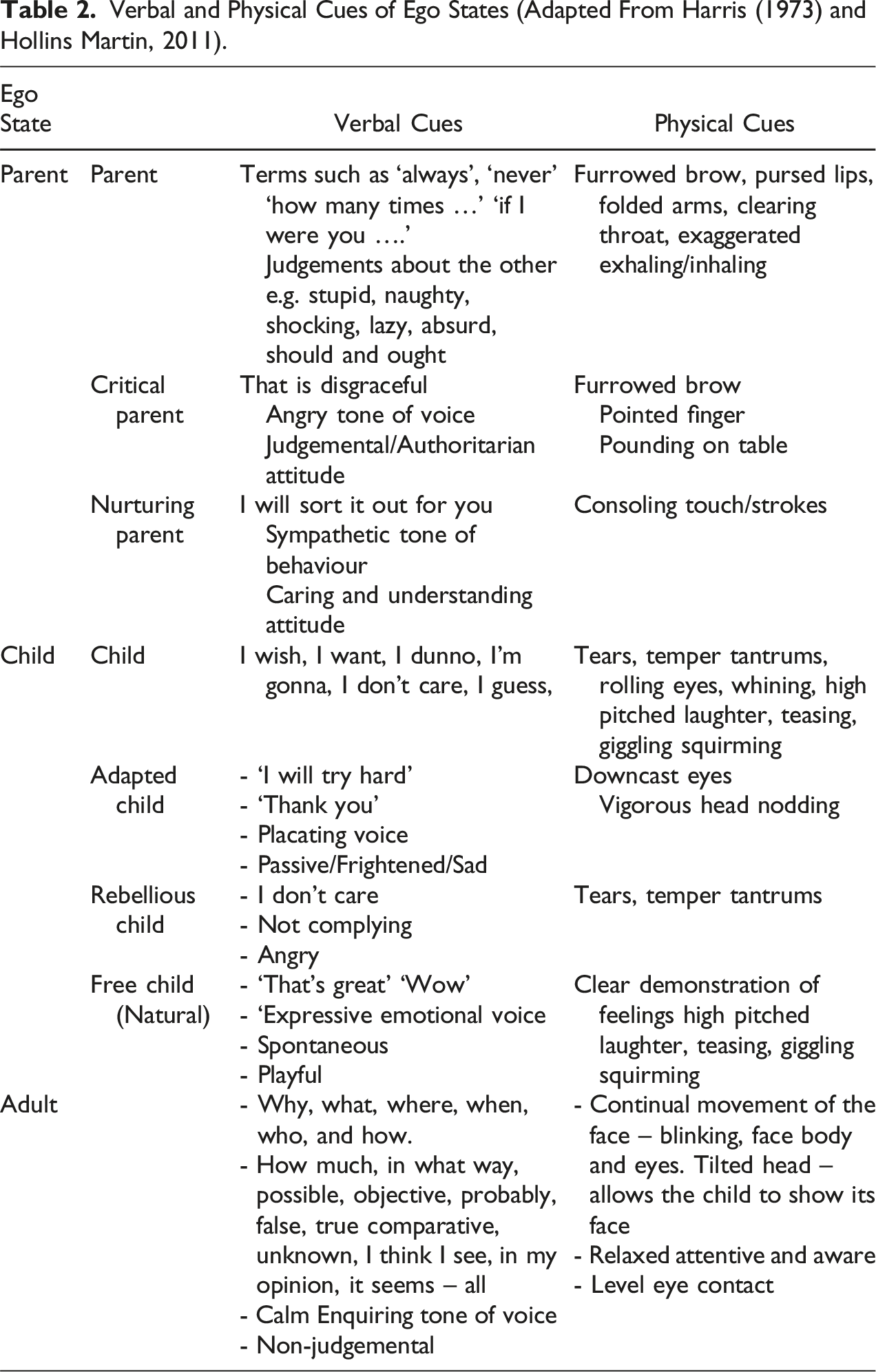
Transactional Analysis connects and explains people’s behaviour and interactions with others by positing three key ego states: parent (P), adult (A), and child (C). The “parent” ego state (the taught concept) is based on behaviours and attitudes learned largely from past authority figures such as parents or teachers. The “child” ego state (the felt concept) is based on emotions and experiences from childhood, while the “adult” ego state (the learned concept) represents rational thinking and decision-making based in the ‘here and now’ but based on lifelong learning (Berne, 1961, 1964). These three ego states (Parent-Adult-Child) are the basic blocks but within each state there are nuances and subdivisions with shades and ‘substates’ (e.g., critical/nurturing parent; adapted/free/rebellious child etc.) (see Table 1). The adult is the position and state to be aimed at/maintained and the parent and child are, in a sense, deviations from the adult ‘steady state’ and as such have destabilising effects.
TA Theory of Communication
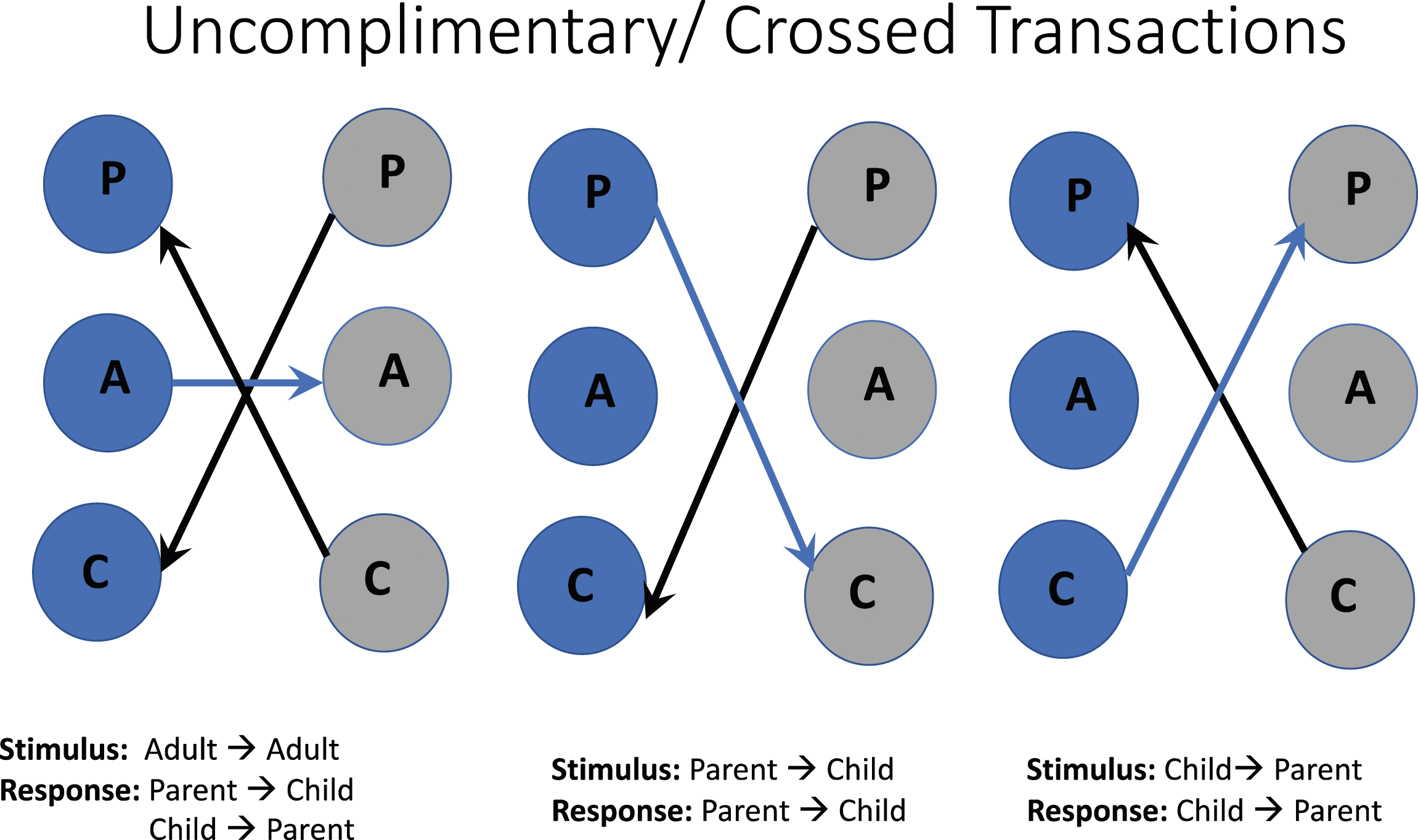
Eric Berne (1961) starts by explaining how all conversations and interpersonal communication begins with an opening remark followed by a reaction. He refers to these respectively as the ‘stimulus’ and the ‘response’ and together they comprise identifiable and analysable “transactions”. Each stimulus or response arises from one of the three ego states and transactions are of three primary sorts: complementary; crossed and; ulterior. The ego states and the various transactions are illustrated in Figures 1 and 2 below. Complementary transactions (adapted from Harris, 1973). Crossed transactions (adapted from Harris, 1973).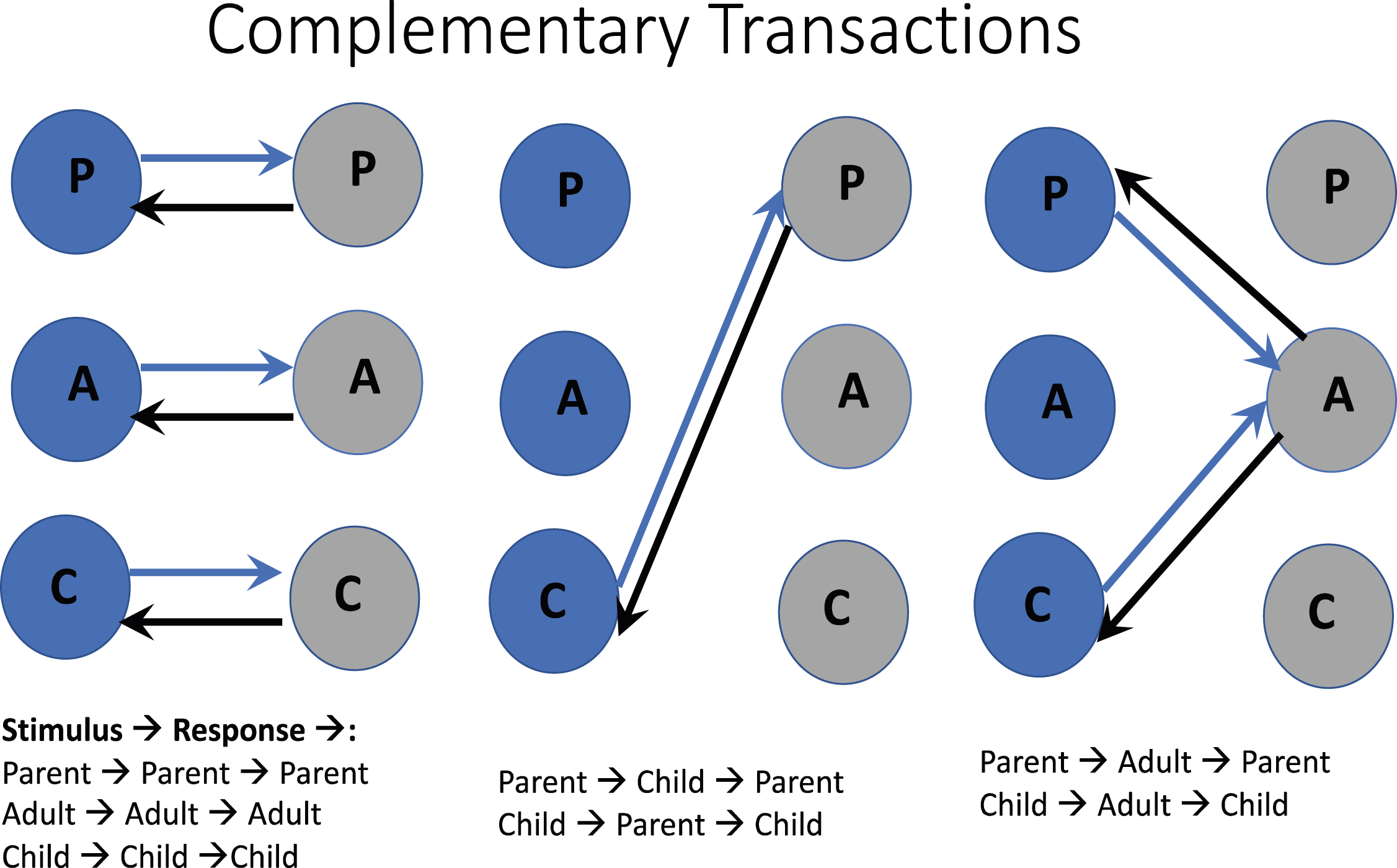
In Figure 1, we see how complementary transactions involve stimuluses and responses that either match or align. These transactions include, for example, “parent-to-child” or “adult-to-adult” interactions. In such exchanges: ‘the transaction is complementary and can go on indefinitely’ (Harris, 1973, p. 67). This is because each person in the transaction accepts and ‘plays’ their part or role comfortably and unproblematically.
Crossed or non-complementary transactions on the other hand are problematic and occur when stimulus and response ‘cross’. In Figure 2 below, the responses are incompatible with the stimuluses. For example, if, by the way their opening remark is phrased, person A adopts ‘child’ and in doing so, ‘invites’ person B to take ‘parent’ but B instead also takes ‘child’ and offers person A ‘parent’, there is a crossed transaction and a communication breakdown. The breakdown has occurred because both parties sought to occupy the child ego state and to place the other in the parent ego state and both parties rejected the offered ‘parent’ position. In Figure 2 below, blue lines indicate stimuluses and black lines indicate responses.
Ulterior transactions (see Figure 3 below) are more problematic still because, as the phrase implies, they conceal an unstated and hidden message or agenda. The outcome of ulterior transactions is determined at the psychological (covert) rather than the social (overt) level. Ulterior transactions (adapted from Harris, 1973).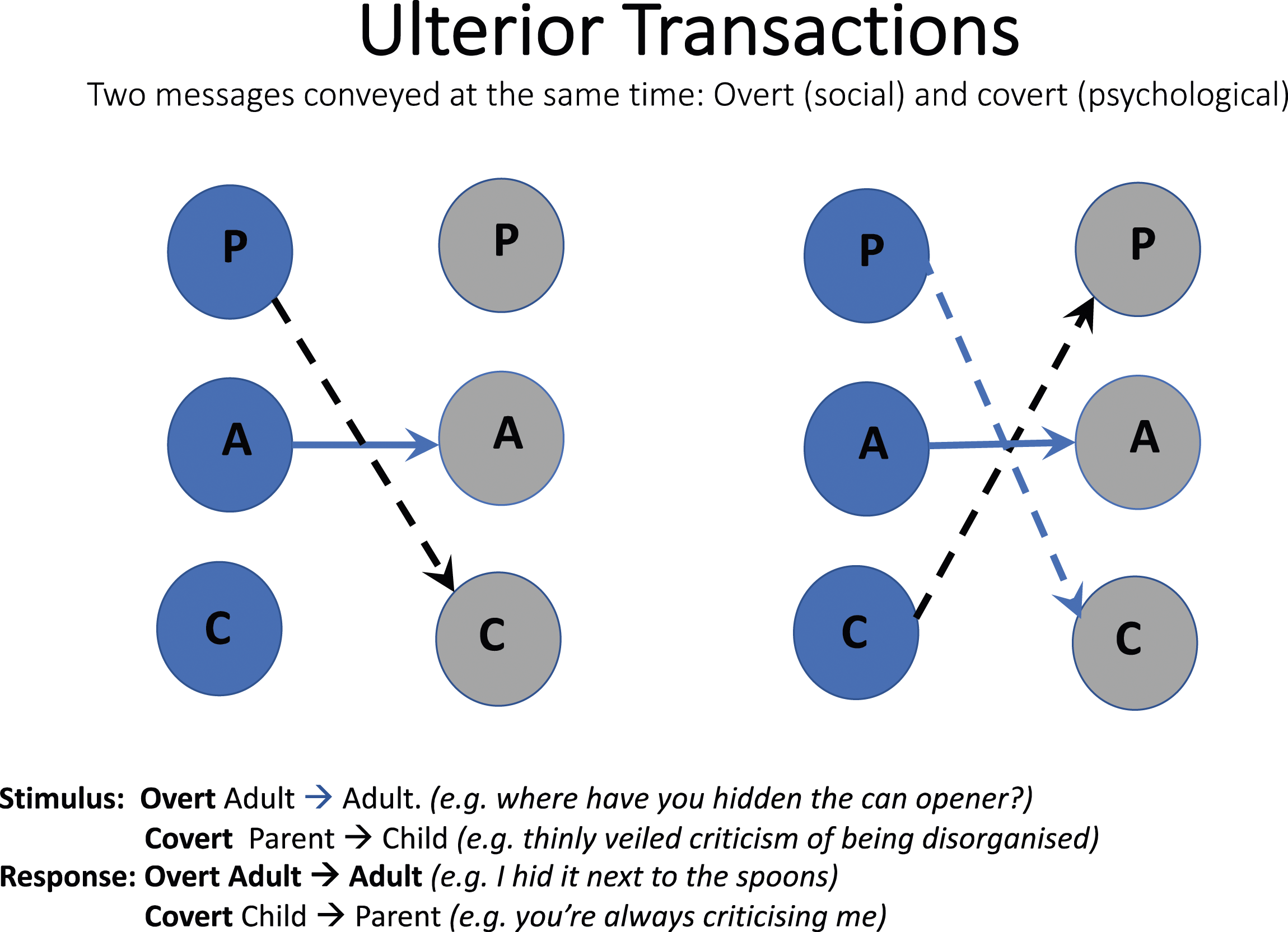
Such cases are more difficult to identify and can be masked in behaviours and hidden feelings (positive or negative) that can lead to problematic communications and (to individuals in long term relationships) familiar and, albeit unsaid and unconsciously, well known (to the participants) psychological ‘gameplaying’. The idea is that there is a cloaked malevolent motive in the individual’s communication that will ultimately have deleterious or negative consequences over time (for instance, rates of attrition, or insufferable behaviours leading to an intolerable workplace).
Verbal and Physical Cues of Ego States (Adapted From Harris (1973) and Hollins Martin, 2011).
TA Theory of Gameplaying
Gameplaying in TA refers to a repetitive pattern of negative communication comprising a series of stimuluses and responses that individuals use to achieve certain psychological benefits or advantages over one another. Often, the gameplayers are not themselves aware of the underlying motivations or their causa link to future bad consequences (Harris, 1973) and ‘seeing’ them is the job of the analyst (Harris, 1973). Games are typically characterised by a stimulus/response interaction series (illustrated in Figure 4), called ‘the script’. Game playing processes and participants.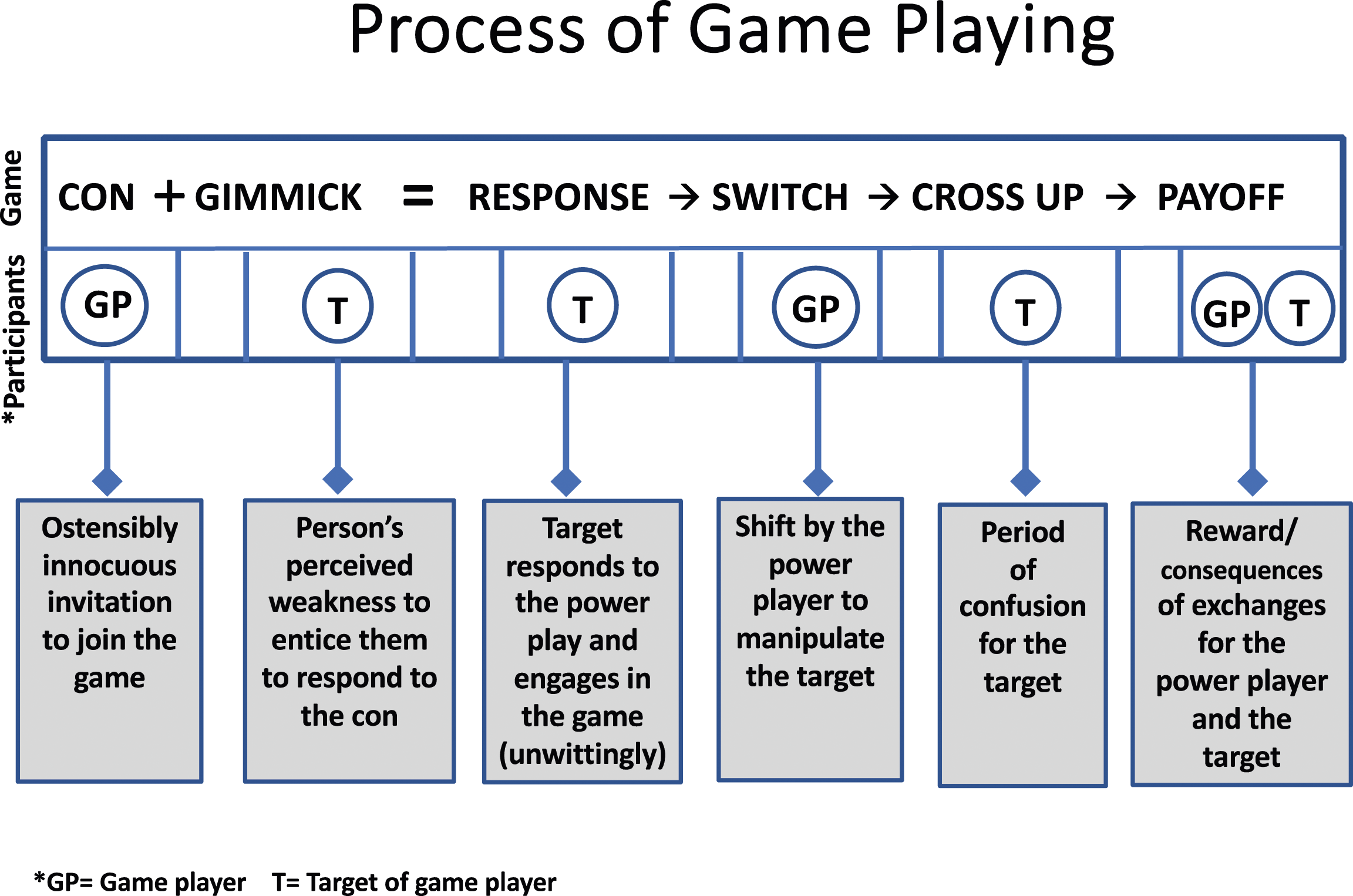
In what follows, the terminology may bring card games such as Contract Bridge or Poker to mind and such analogies/metaphors are arguably appropriate to the everyday politics of organisational life, especially in problematic or toxic workplaces. Though such games are played for ‘fun’ they involve deceit and ‘sleight of hand’ as part of the strategy. Gameplaying in TA has such elements but, in this context, the ‘gameplaying’ is anything but fun and thus the analogy is qualified.
There are effectively five elements or ‘moves’ in a ‘game’ and the process involves two people. Berne calls these the “Power Player” and the “Target” but this implies too strongly boss and worker and it is often peer to peer so we will use simply “Gameplayer (GP)” and “Target (T)”. The first move is made by GP and is called the “Con”. The con is a stimulus to prompt a response - effectively an invitation to join the game. The specific form of the Con in any game is referred to as the “Gimmick” and the Gimmick could be phrased as a question or a comment on someone’s work for example. Move two is made by T who will respond to the Gimmick in some way (anticipated consciously or not) by GP. Move three is made by GP in performing what’s called the “Switch”. The Switch in some way refines or redefines the question, comment etc.
Receipt of the Switch constitutes step four in the game, whereby T experiences what’s called the “Cross-Up” through which they find themselves somewhat confused and in something of a cul-de-sac or no-win situation that has subtly taken them unawares. This resulting situation, that is the fifth and final move, which may be quite different from what was expected from the seemingly innocent opening Con/Gimmick, is what is referred to as the “Payoff” which captures the situation for GP and T respectively. The whole process is shown in Figure 4 below.
Gameplaying precludes authentic (Adult) communication. However, TA theory argues that by becoming aware of their own behaviour vis-à-vis scripts and payoffs, individuals can learn to recognize and break free from unhealthy patterns of behaviour.
Transactional Analysis in Practice: Developing the OCTAPos Model
Adapting Harris’ (1973) TA theory, we have developed a new framework we call the Organisational Culture Transactional Analysis Positioning (OCTAPos) model (illustrated in Figure 5) by which organisations could interpret the information resulting from applying TA tools to diagnose the psychological health of their workplace relations (See Figure 5 below). The different workplace ‘states’ in the boxes may imply a linear downward progression from positive to toxic. In fact the four states are more akin to Tuckman’s seminal work regarding ‘stages’ of group/team formation (Tuckman, 1965). Tuckman is clear that stages are often sequential but groups can return to previous situations or even miss stages altogether. We take a similar position regarding workplace conditions. Organisational culture transactional analysis positioning (OCTAPos) model.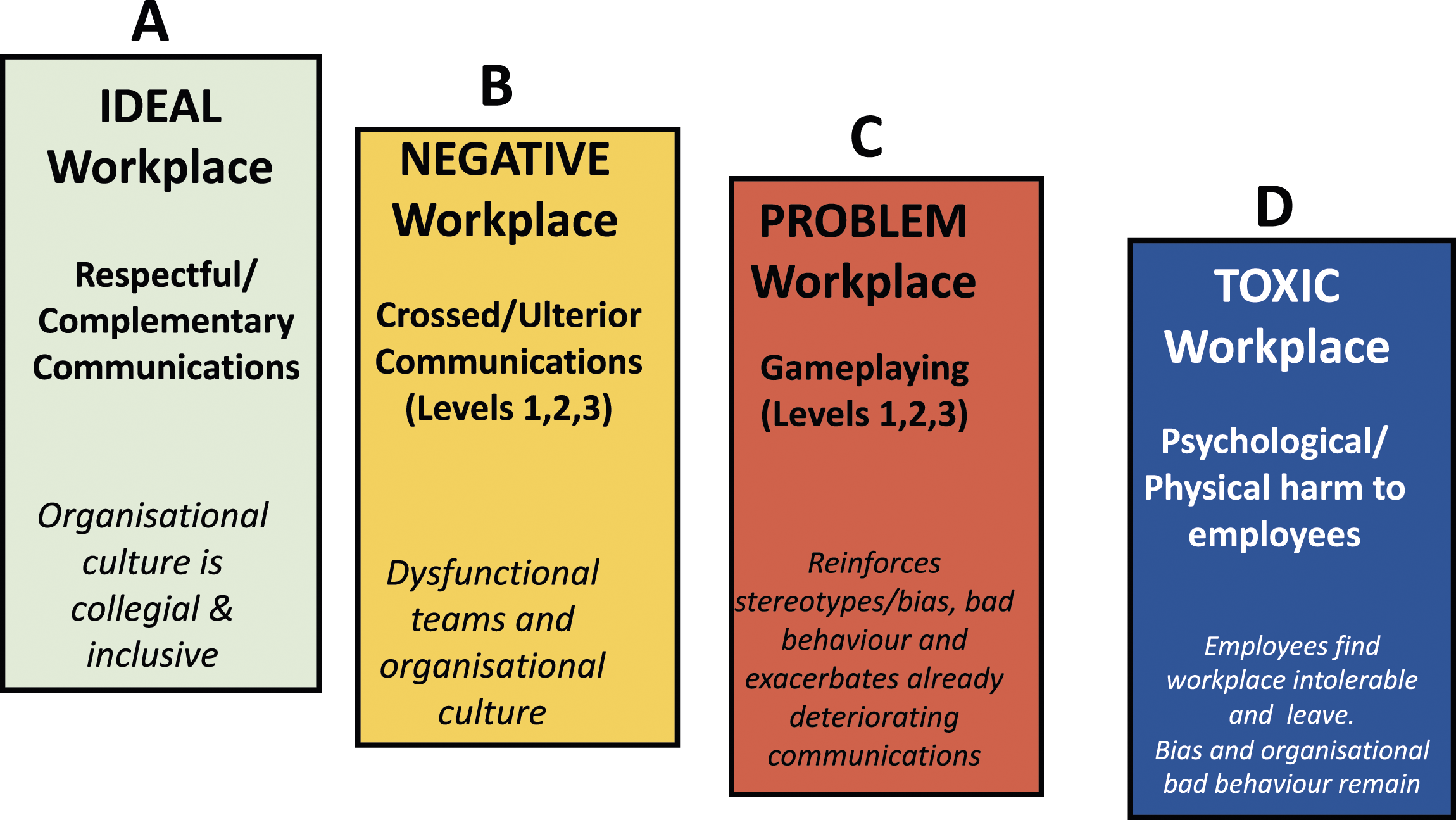
Organisations should aim for/maintain the
If the exit is early enough, the psychological and physical harm to the other (woman) may be recoverable, but staying too long in a
Applying the OCTAPoS Model as a Diagnostic Tool
We will now operationalise the OCTAPoS model using envisioned vignettes to illustrate its potential application to a workplace setting. For this purpose, we draw on the vast body of TA research and practice using Open AI’s ChatGPT (3.5) (see Appendix 1) to help us assemble vignettes that could reasonably be considered illustrative of TA-based crossed communications and gameplaying exchanges. These were further edited by the authors for clarity and coherence. The vignette stories show how exchanges can be analysed through the lens of Transactional Analysis using the OCTAPos model to gain insights into typical organisational communication in action. We further identify opportunities for improving communication and resolving conflict in the future and offer a way for implementing sustainable and inclusive HRM practices through a Structured TA Response (STAR) approach (detailed below).
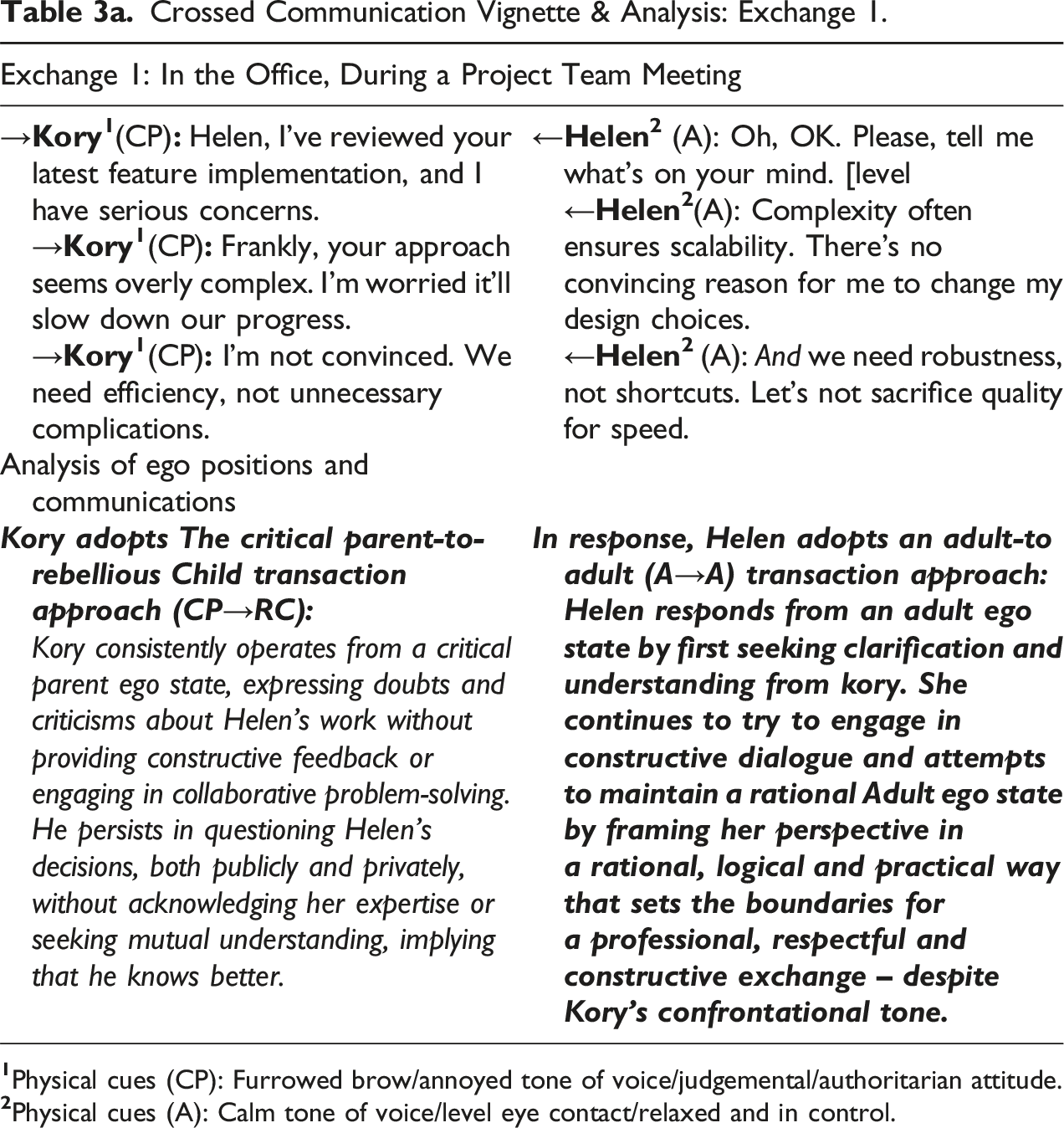
Vignette: Crossed Communication/Ulterior Communication Between Kory-Helen
Crossed Communication Vignette & Analysis: Exchange 1.
Crossed Communication Vignette & Analysis: Exchange 2.
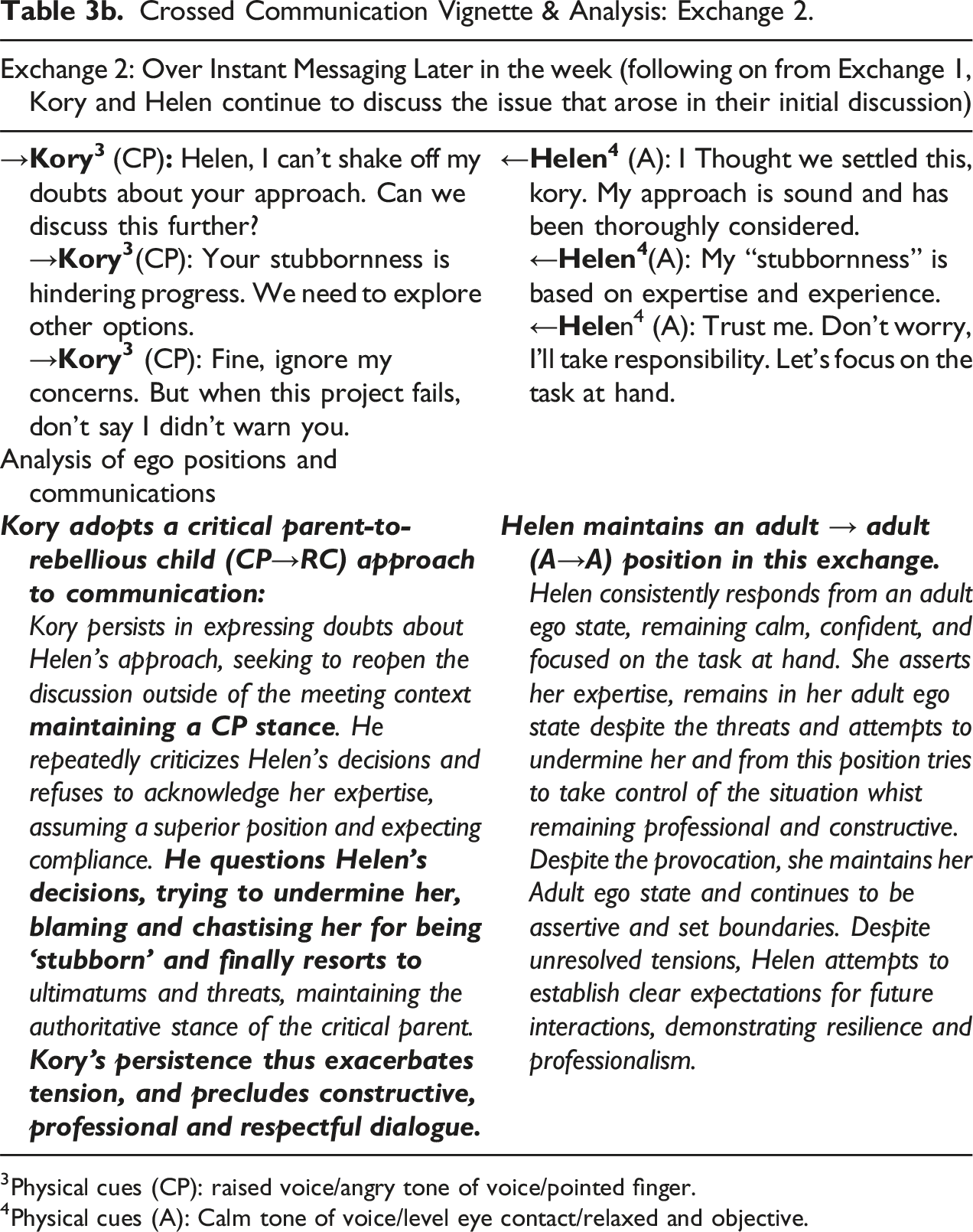
3Physical cues (CP): raised voice/angry tone of voice/pointed finger.
4Physical cues (A): Calm tone of voice/level eye contact/relaxed and objective.
Crossed Communication Vignette & Analysis: Exchange 3.
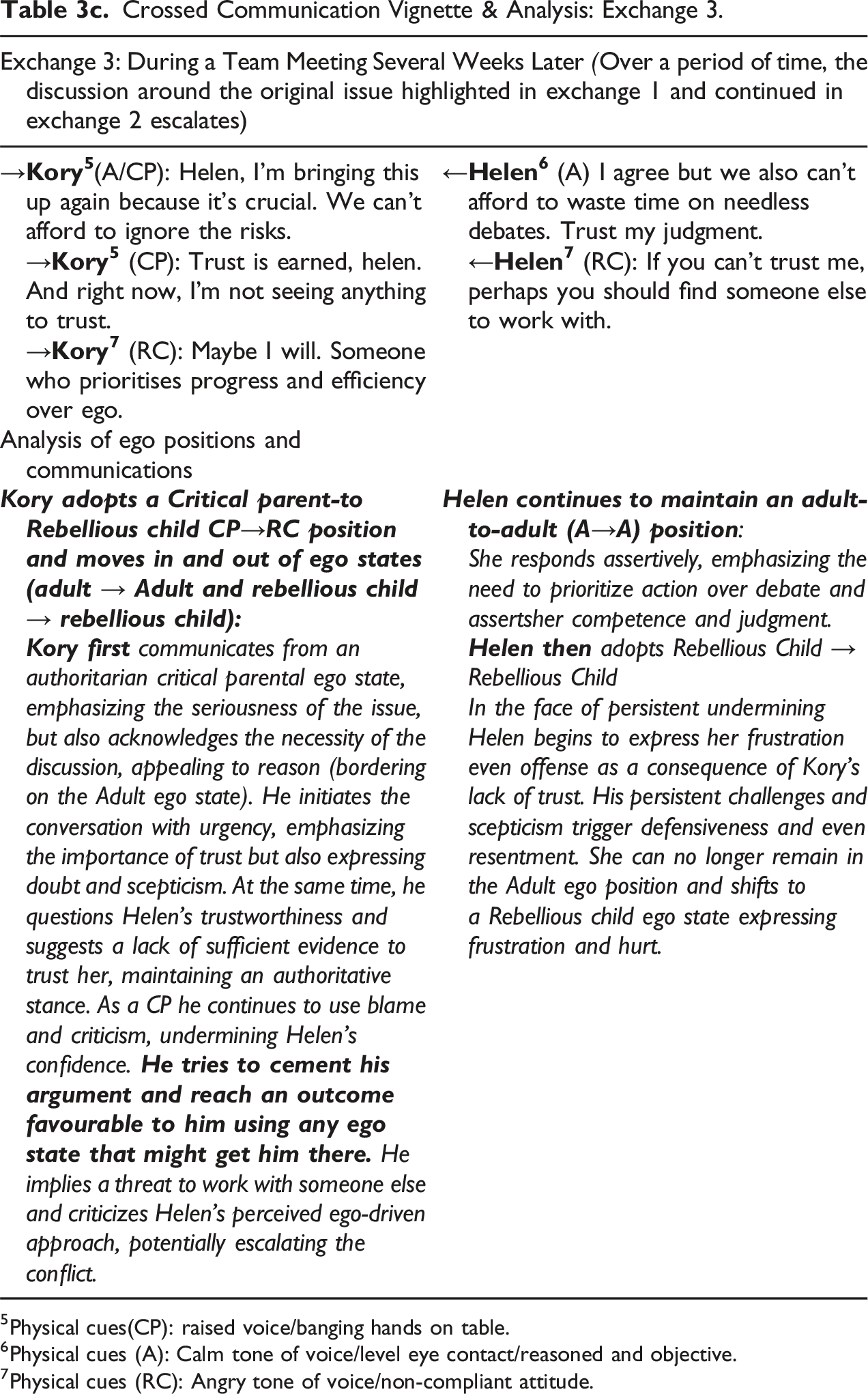
5Physical cues(CP): raised voice/banging hands on table.
6Physical cues (A): Calm tone of voice/level eye contact/reasoned and objective.
7Physical cues (RC): Angry tone of voice/non-compliant attitude.
Crossed Communication Vignette & Analysis: Exchange 4.
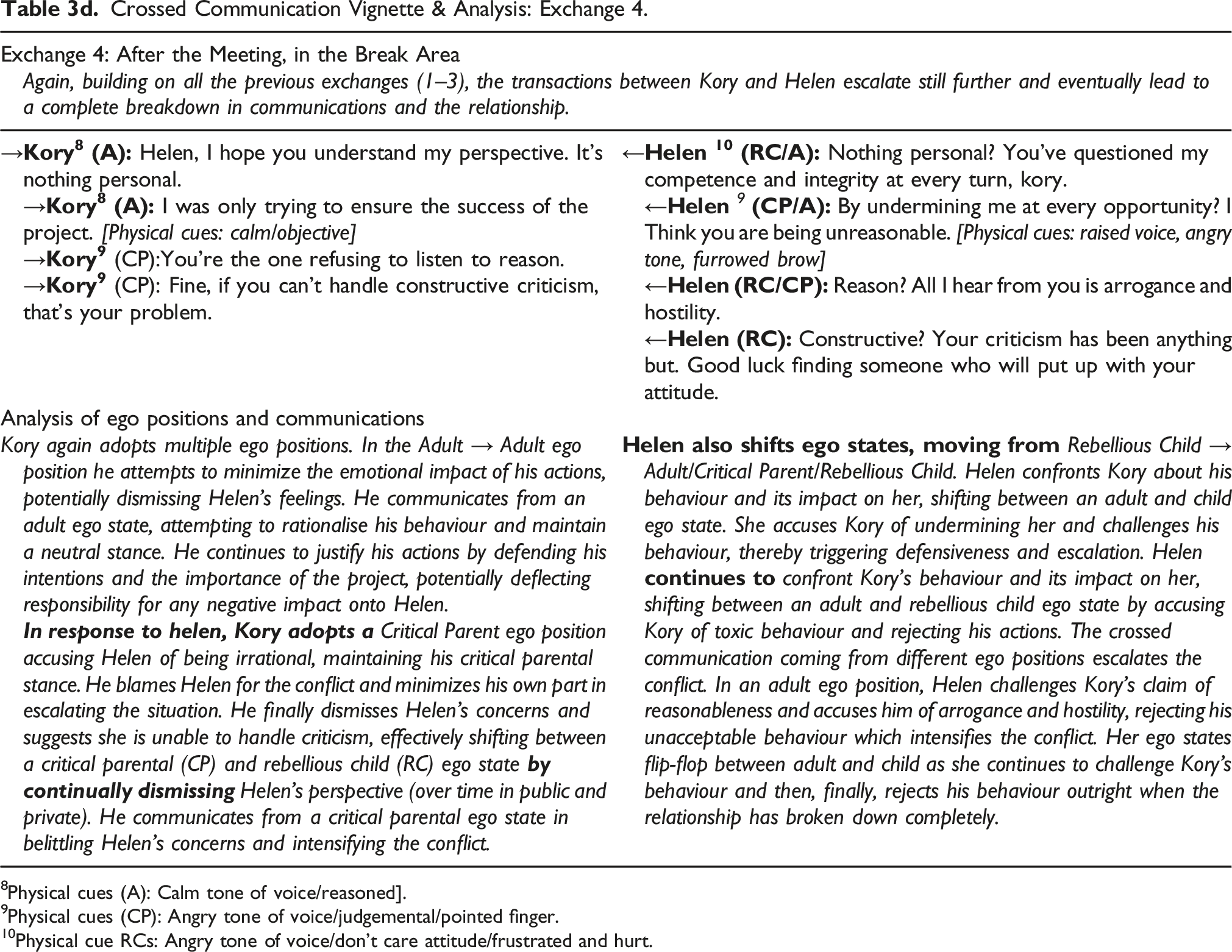
8Physical cues (A): Calm tone of voice/reasoned].
9Physical cues (CP): Angry tone of voice/judgemental/pointed finger.
10Physical cue RCs: Angry tone of voice/don’t care attitude/frustrated and hurt.
Mismatched Transactional Modes
The interaction began with a stimulus from Kory qua ‘Critical Parent’ to Helen qua Rebellious Child. Kory expecting Helen to respond subserviently. However, Helen adopted an Adult ego-state, seeking a rational discussion to another Adult (Kory). Kory however, continued in Critical Parent to Rebellious Child ego position adopting an increasingly authoritative and critical tone as the interactions progressed. Eventually, faced with continued questioning of her competence, Helen abandons Adult to Adult and dynamically adopts an Adult to Critical Parent and Rebellious Child in response to Kory.
Our first order analysis shows that both Kory and Helen demonstrate different ego positions and contribute to crossed and ulterior communication patterns in their interactions. This analysis underlines how the parties are not on the same wavelength, and forewarns the analyst at least, that the consequences of not resolving them are escalation and exacerbation of tensions leading to more conflict, which further complicates communication dynamics in the workplace placing them in the domain of the ‘Negative Workplace’ (Figure 5, Box B) in the OCTAPos model.
To add to the STAR flow chart of crossed communication (helen-kory vignette).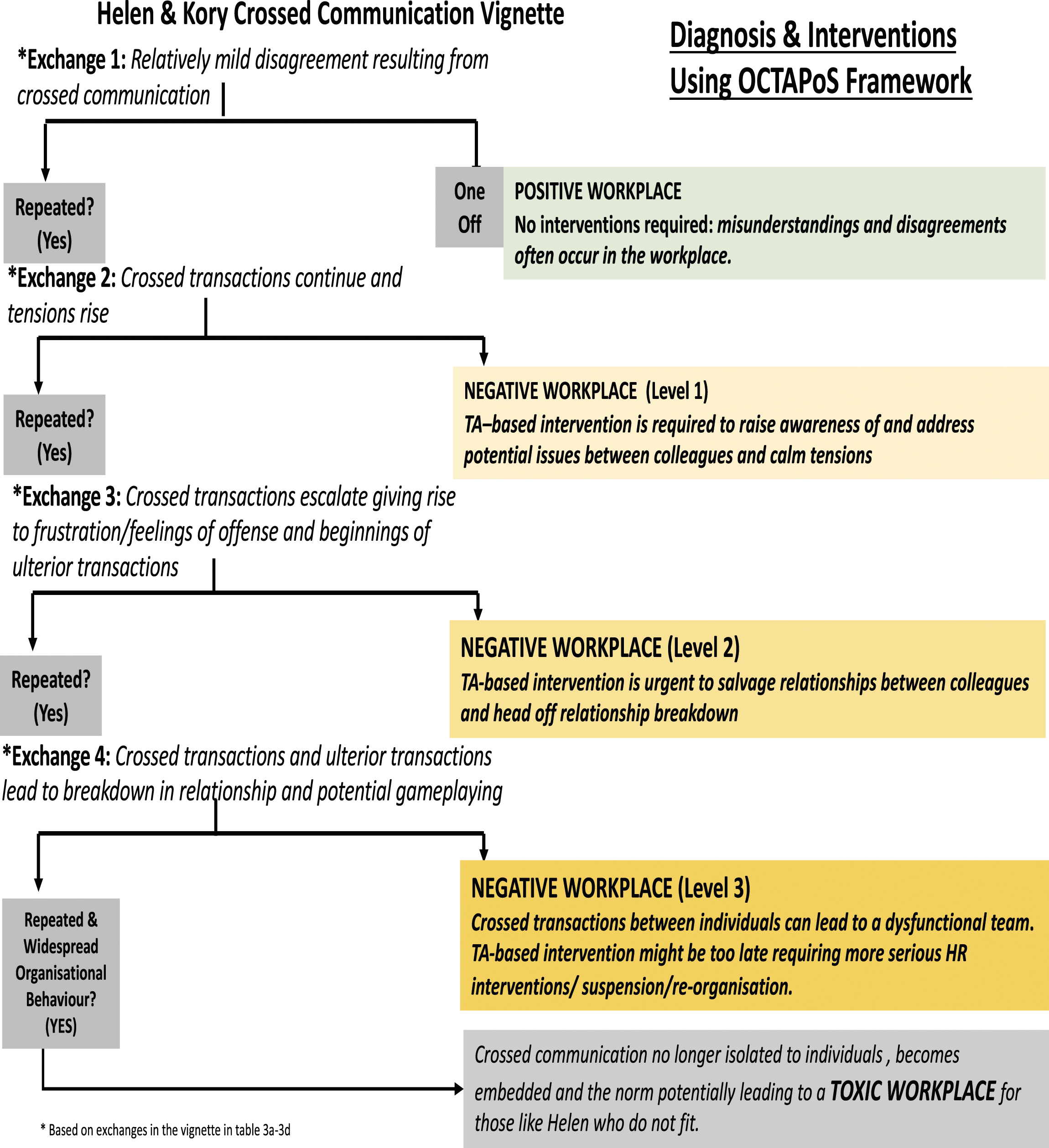
Overall, seen through the lens of Transactional Analysis, this example illustrates how crossed communication can occur when transactional modes are misaligned and the rational and emotional aspects of a conversation are not both fully appreciated or understood. If crossed communication between colleagues at work persists over time, a downward spiral begins such that what started as differences in communication styles and perspectives mutates into personal animosity and hostility leading to a Negative Workplace. The process is broadly as follows: Continuous conflict between colleagues affects and infects the entire team dynamics; other team members feel uncomfortable and demotivated; colleagues begin to engage in apportioning blame and making personal criticisms; trust and collaboration among team members diminishes, leading to worsening relations and communications for both the individuals involved and the overall team dynamics.
Intervention is needed to avoid a ‘Negative workplace’ becoming ‘Problematic’ or, worse, ‘Toxic’. Open communication and conflict resolution strategies are essential to address and mitigate the impact of crossed communication in the workplace. Our response model prescribes open discussions between the individual colleagues, using training in TA theory to better understand each other’s perspectives and learn how to communicate more constructively. We turn now to OCTAPos box
Vignette: Gameplaying Between Alan-Jaz
Alan-Jaz Game-Playing Vignette & Analysis.
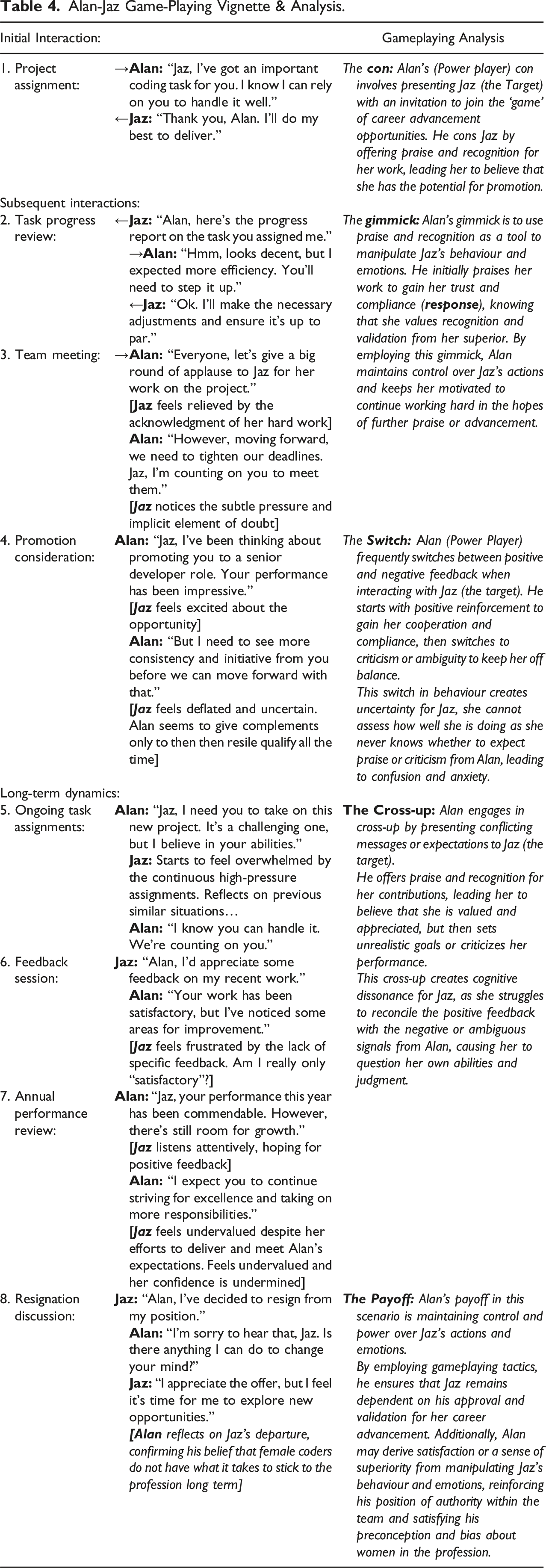
Berne (1964) identifies and describes a thesaurus of 35 different games with names like “I’m only trying t help you” and “why don’t you yes but”. In the Alan-Jaz gameplaying vignette we presents what we call the ‘Push-me Pull-you’ Game with an embedded, overt/covert ulterior motive used to reinforce Alan’s belief that whilst (some) women might be good, none are good enough and simply cannot code as well as Alan and those that resemble and mirror him. This scenario illustrates gameplaying in the workplace and the ‘Problematic Workplace’ setting in which it resides (see Box C in the OCTAPos model in Figure 5).
To explain our diagnosis of gameplaying behaviour and establish potential response actions required, we again propose (for HRM practice) and use (here) a Structured, Transactional Analysis Response (STAR) flow diagram to depict the gameplaying process over time in our vignette (see Figure 7). As before, at each stage of the series of interactions between Alan and Jaz, we query whether the pattern of communication is repeated and ask whether and how the stimuluses and responses (the script) match the five elements of the gameplaying process (Harris, 1973). We also add TA-informed responses and potential response action points that would serve to uncover and identify the gameplaying between colleagues (Alan and Jaz) that they themselves might very well be unaware of both consciously and unconsciously. STAR flow chart of gameplaying (Alan-Jaz).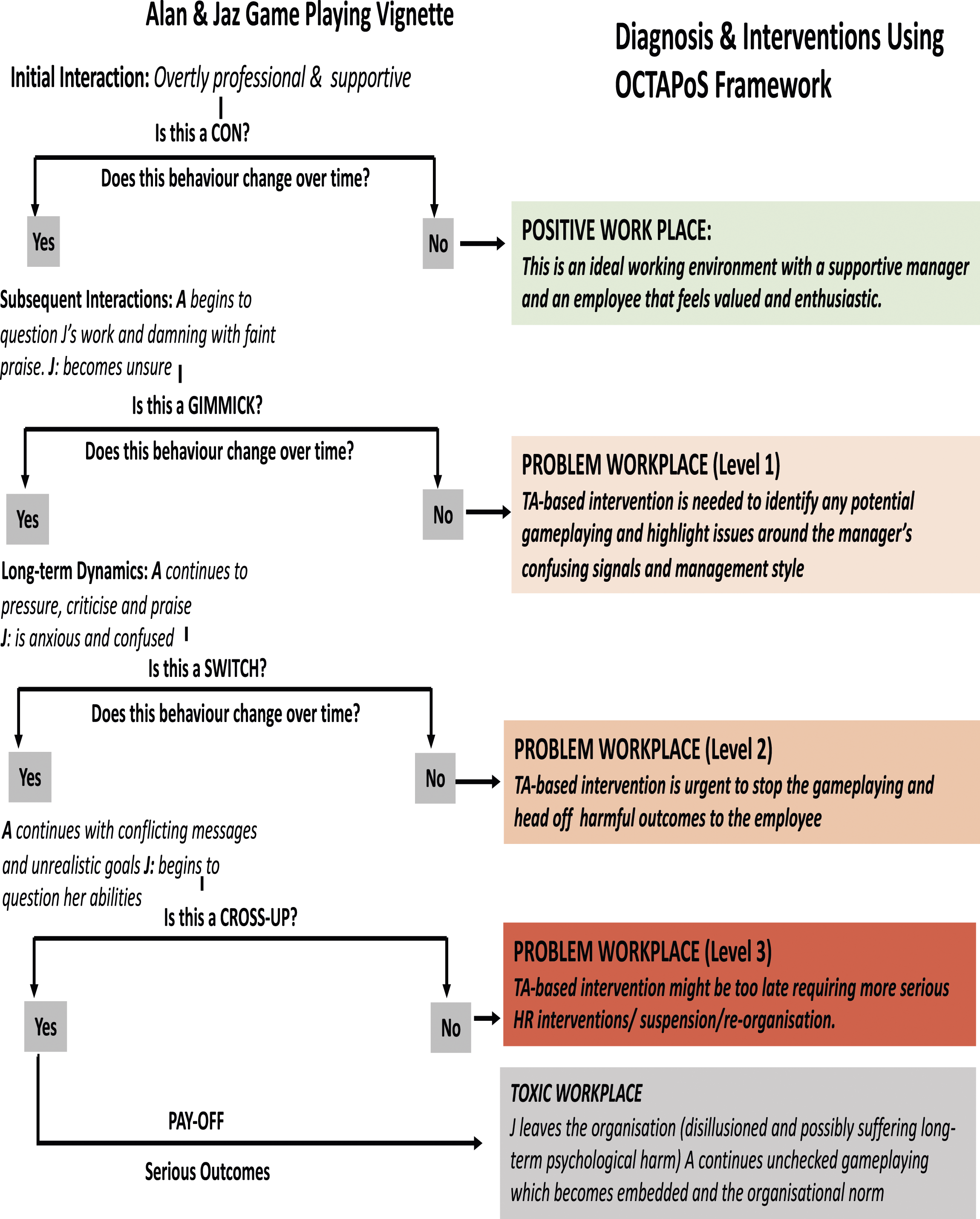
This scenario illustrated how gameplaying in the workplace can lead to manipulation, frustration, and ultimately, a toxic work environment that is intolerable to those that do not fit in. Alan’s gameplaying tactics demonstrate how, for example, a male colleague and especially one with power and influence can control and undermine female others to maintain and reinforce his belief that female coders lack the aptitude required for software development. Such behaviours, repeated again and again with people that do not fit in with (or fit within) the software development culture, erode trust, morale, and productivity, leading ultimately to problematic outcomes (attrition) but also serve to validate and nurture the toxic culture that excludes ‘others’ from the profession.
Summary, Recommendations and Future Work
In this paper, we have presented credible arguments based in psychoanalytic theory to account for workplace communication breakdowns and conflicts. We have developed a theoretically informed communications-based diagnostic (OCTAPos) model and response (STAR) framework to address the shortcomings of previous diversity and inclusion research. We presented (and recommend) a practical way forward, using TA to enhance sustainable employability for organisations in this sector and others. Implementing TA as a learning device rather than as therapy or a confessional will illuminate, but also seek to eliminate, problematic relational dynamics in the workplace and deliver the changes that many have called for (but not provided), to improve respectful interpersonal interactions and guard against ostracism and unethical behaviours (Henle et al., 2022).
Our proposed TA-based approach could provide individual employees, HR practitioners and team leaders with the skills, tools and language to better understand communications styles, motivation and behaviours at work to reduce miscommunication and avoid creating negative, problematic and toxic environments. They also allow individuals, teams and organisations to operationalise diversity, equity and inclusivity (DEI) policies that have a real-life impact and potential for positive change beyond simply ticking the appropriate DEI boxes. In the following section we recommend briefly how our TA approach would work at the micro (individual/team), and meso (organisational) levels.
Combining an OCTAPos Diagnostic Tool and a STAR Process Approach
At the
At the
Organisations can also use the OCTAPos model to audit and evaluate their current status and track their progress through biennial audits, taking targeted action to head-off early signs of problematic patterns of behaviour and communication where necessary.
Through the lens of Transaction Analysis Theory using a combination of our theoretically derived OCTAPoS model and STAR response framework we have demonstrated its practical application, by applying it to the vignettes of crossed and ulterior transactions and gameplaying to diagnose
There are several opportunities to build on this paper. One direction is a quantitative approach to develop a psychometric tool, based on the OCTAPos model, to measure, assess and validate the constituent parts and levels of
Conclusions & Implications
For ethical, economic and sustainability reasons, toxic and discriminatory workplaces that exclude ‘others’ are to be avoided. In terms of ethics, implicit bias and discrimination against women (and others) and in favour of men (of a certain type) is wrong. In terms of economics, in the context of software development, products and services are developed and constructed predominantly and almost exclusively (97%) by men, thereby excluding 50% of the population which is neither fair nor sensible business. As for sustainability, toxic workplaces not only deter and exclude large swathes of excellent, enthusiastic and dynamic people, but they can be harmful to individuals, teams and the wider organisation. Practitioners, policy-makers and academics have understood and theorised the absence of women in software development as problematic in many different ways, but invariably they have focused their attention on women or on men or on gender but without offering effective or impactful solutions. Here we present a relatively novel explanation for the absence of women in the profession by focusing instead on relational dynamics between people in the software development workplace using Transactional Analysis theory.
Our paper contributes to the diversity, inclusion and sustainable HRM literature by demonstrating the relational dynamics that lead to negative outcomes and accusations of toxic workplaces. By taking a psychoanalytic theory (TA) approach, we aim to re-introduce the ‘human element’ into HRM, by focusing on human relationships at work and addressing what has often been neglected in the field (De Prins et al., 2020; Griep et al., 2023). We believe our TA-based theoretic approach offers one way of helping reduce, and potentially remove, the psychological, physical, social and work-related harms to employees in the workplace. But admittedly, this needs to be tested and validated in future work.
We contribute to organisational communication literature by theorising the potential impact of the ‘dark-side’ of workplace communication on organisational culture from a psychoanalytical perspective. Using our TA-based theoretical model and framework, we demonstrate how communications at work can be better understood and improved to avoid conflict between individuals and toxification of workplaces. By providing insights into the nature of transactional exchanges, ego positions, and gameplaying as potential causes and consequences of breakdowns in workplace relationships, we offer a more nuanced and in-depth understanding of what might lead to negative, problematic and intolerable toxic organisational cultures. Our proposed TA diagnostic model and response framework (OCTAPos/STAR) offers a blueprint for a sustainable way forward for organisations and our recommendations for training and learning programmes provide individuals, teams, managers and organisations with pro-active tools to help break the vicious cycle of unrelenting and harmful gameplaying at work.
Footnotes
Declaration of Conflicting Interests
The author(s) declared no potential conflicts of interest with respect to the research, authorship, and/or publication of this article.
Funding
The author(s) received no financial support for the research, authorship, and/or publication of this article.
Associate Editor: René Schalk and Joannes Kraak
