




Abstract
While many aspects of the leader–follower relationship have been studied, we know very little about the role of leader–follower distance in relationships and organizations. In particular, we propose to go beyond the current definition and examine distance as malleable and enacted by leaders. We explore this as acts of “doing distance” via two studies. In the first, we utilized the Critical Incident Technique to collect events of enacted distance from 97 managers working in diverse sectors and organizations. Drawing on the qualitative findings, we develop a conceptual model of the context, goals, and behavioral practices of enacted distance. In the second study (N = 543), we tested the proposed model using an experimental manipulation to examine the role of identity processes and levels (individual, relational, and collective) in leaders’ doing distance. We identify specific managerial practices of doing distance and their related antecedents in terms of individuals’ experiences and relationships, and discuss implications for theory and practice regarding distance in leader–follower relationships.
Keywords
Introduction
Sarah (pseudo name) has been working as a bank branch manager for many years. When asked about her approach to managing relationships with her employees, she opined, “there is always this dilemma of how close or distant to be [to employees]… It’s something that managers are occupied with throughout their careers…You are always thinking if this [behavior] isn’t too close, if not too [distant].” This quote highlights distance as an important aspect of leader–follower relationships, and more than that, suggests that leaders see themselves as having some control over their distance. Distance in leader–follower relationships can have significant consequences for leaders, followers, and organizations. Being unaware of how their own actions effect distance and the implications for themselves and others can undermine leaders’ effectiveness, relationships with others, and even organizational outcomes. The present research defines distance as a managerial practice enacted by leaders and examines the goals behind leaders’ choice to create high (vs. low) distance from followers. Thus, it offers a first illustration of this phenomenon, setting a foundation to better understand its effects on individuals and organizations.
Managing relationships with followers has always been one of the main tasks of leaders in organizations (e.g., Fletcher, 2007; Uhl-Bien, 2011). Leaders can manage these relationships in various ways, such as by focusing on individual consideration (Arnold et al., 2016), affecting followers’ emotions (Connelly & Gooty, 2015), appealing to their motivations (Kark & Van Dijk, 2019), or behaving authentically (Leroy et al., 2015). Another way leaders can manage their relationships with followers is through enacting distance. While distance is suggested to play a pivotal role in leadership processes, we know very little about it (Collinson, 2005).
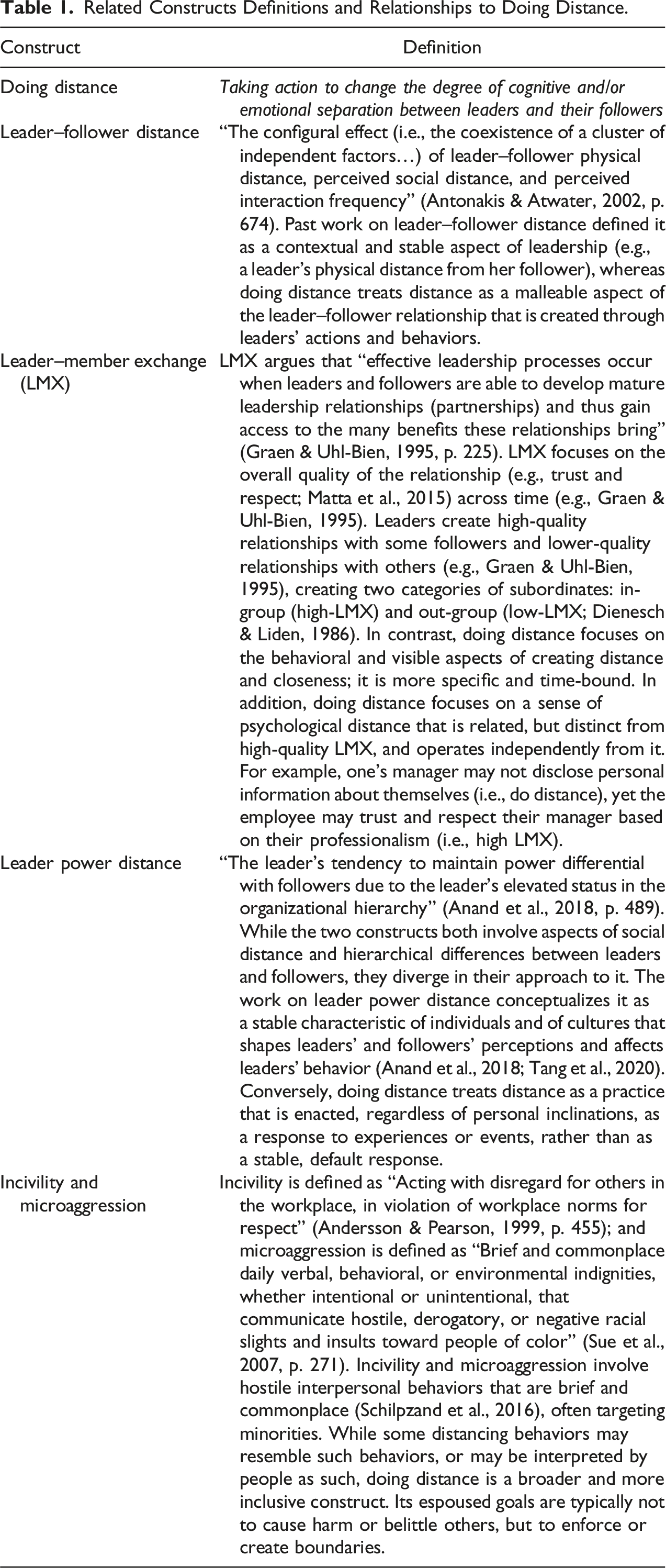
Distance has been defined as a configural effect of three dimensions: physical distance, perceived social distance (the perceived differences in leaders’ and followers’ status, authority, and power), and perceived interaction frequency (Antonakis & Atwater, 2002). These dimensions reflect relatively stable elements of the organizational context, such as formal hierarchy or geographical distance, that are external to the leadership relationship. A potential aspect of leader–follower relationships, that has received little attention in the literature, involves a more subjective experience of distance—psychological distance, which we define as the degree of cognitive and/or emotional separation between leaders and their followers. In the present work, we focus on this type of distance and the active process of shaping and enacting psychological distance from followers, which we name “doing distance.”
It is not only leaders who are concerned with questions of distance; followers too are concerned, as research and popular media alike offer ample advice for employees, such as what to do when your boss is “shutting you out” (Kislik, 2018) or how to respond to one’s boss “befriending” them on Facebook (Peluchette et al., 2013). Thus, understanding the effects of enacted distance is particularly important, as doing distance can have significant implications for followers. Leader–follower relationships are inherently characterized by an asymmetry of power, making leaders’ actions especially significant for their followers. This asymmetry leads to followers’ dependence on leaders (Magee & Smith, 2013), making them more likely to be attentive to leader behaviors (Fiske, 1993) and attuned to behaviors that create high (or low) distance. This increased sensitivity can shape employees’ interpretation of leaders’ actions, which may not capture the leader’s actual intent. Such perceptions can undermine not only the employee’s relationship with their leader but also their performance and attachment to the organization. Further, heightened power asymmetry created through increased distance (Magee & Smith, 2013) can have detrimental effects on followers, such as increased distress (Anicich et al., 2021) and decreased willingness to help others (Foulk et al., 2020). Thus, leaders’ doing distance can have significant implications for employees’ well-being and behaviors. To prevent harm to followers and to the relationship, it is important that leaders consider and consciously enact appropriate distance.
While doing distance can have important implications for leaders and followers, we know very little about it and its antecedents. Although some instructive work examining leaders’ distance by Napier and Ferris (1993) and Antonakis and Atwater (2002)—and more general work on psychological distance (Construal Level Theory; e.g., Wiesenfeld et al., 2017)—provides a great foundation for understanding leader–follower distance, we have limited theory and empirical work to help managers understand and effectively manage their distance.
The present research, then, focuses on the psychological distance between leaders and followers. Our goal is to explore the enactment of distance as a managerial practice aimed at achieving important outcomes in the organization and offer a novel conceptualization of “doing distance.” More specifically, first, we seek to understand how leaders enact distance in their daily interactions by exploring the behaviors through which leaders create a sense of high versus low distance. Second, we seek to understand why leaders enact distance, that is, we explore leaders’ goals for creating distance and the experiences that trigger these goals. We do not focus on a specific leadership style (e.g., leader–member exchange [LMX], transformational), rather we propose that the motivations and processes involved in leaders’ doing distance may play a role across different leadership styles. Moreover, our goal is not to offer a new leadership construct, but to propose and explore a potential process underlying leaders’ behavioral choices that may create high LMX or transform followers. Specifically, based on the results of our first study (described later), we focus on how identity experiences—threat and validation—can affect leaders’ doing of distance and closeness. This work can help leaders better understand, and therefore manage, desired distance in their relationships with followers. Moreover, this research contributes to our understanding of the inner processes that shape leaders’ behavior and relationships with followers, specifically contributing to the understanding of how leaders’ identity experience shapes their subsequent behavior (e.g., Epitropaki et al., 2017), thus making significant contributions to the leadership and identity literatures.
“Doing Distance” in Leader–Follower Relationships
Research on high-quality and close relationships in general (Baumeister & Leary, 1995; Reis et al., 2000), and particularly those in the workplace (e.g., Dutton & Heaphy, 2003; Kark, 2011), shows the importance of relationships to individuals’ sense of meaning in life, happiness, self-esteem, well-being, growth, and health. Research on relationships at work has focused on identifying the stages of development of relationships (Schinoff et al., 2020), dimensions underlying and shaping relationships, such as interpersonal similarity (e.g., Pillemer & Rothbard, 2018), and the role of context in shaping relationships (Ferris et al., 2009).
Relationship-oriented behaviors have been a part of leadership research for decades. The definition of leadership itself involves the existence of a relationship with followers, as it often involves two-way influence (Uhl-Bien, 2011). From early research defining leadership behaviors as work-oriented versus people-oriented (Stogdill & Coons, 1957), to more recent work focusing on relational leadership (Fletcher, 2007), the leadership literature has emphasized the importance of relationships for leaders, followers, and organizations (e.g., Dutton, 2003) and its positive consequences (e.g., Hackney et al., 2018). We propose that doing distance is a specific form of managing leader–follower relationships that is a facet of leaders’ sensegiving (e.g., Maitlis & Christianson, 2014; Weick, 1995) and meaning making efforts (e.g., Smircich & Morgan, 1982), communicating messages about the leader, followers, and their relationship.
Past research on leader–follower distance has viewed it as a contextual and stable aspect that affects leadership behavior (Liden & Antonakis, 2009), perceptions of leaders (Shamir, 1995; Yagil, 1998), leader–follower relationships (Torres & Bligh, 2012), follower psychological states (e.g., efficacy; Cole et al., 2009; Story et al., 2013), performance (Bonet & Salvador, 2017), and effectiveness (Porter & McLaughlin, 2006). Distance was also examined as a moderator of the effect of transformational leadership on outcomes, showing some mixed effects, such that greater distance was found to be associated with both negative (e.g., decreased performance; Howell & Hall-Merenda, 1999) and positive outcomes (e.g., increased collective efficacy beliefs; Cole et al., 2009).
We argue that leader–follower distance is not only a contextual element of relationships (e.g., Ferris et al., 2009) but that leaders can change certain aspects of their distance to achieve various goals. This idea is suggested in Antonakis and Atwater’s (2002) definition of perceived social distance, in that leaders can “maximize their status and power differentials” (p. 674). However, no work to our knowledge has examined distance as an element of leadership that is constructed and/or altered—that is, enacted—by leaders themselves as a managerial practice. Thus, we focus on how leaders enact distance, as indicated by, for example, perceived accessibility, immediacy, openness, and formality in the leader–follower relationship.
While the idea that leaders can shape their distance from followers has not been explicitly conceptualized nor directly empirically tested, hints supporting it can be found in the literature. As examples, Folger and Skarlicki (1998) found that when managers felt that layoffs resulted from their mismanagement, they spent less time with an employee when firing them (thereby distancing themselves), suggesting a desire to escape an uncomfortable interpersonal situation. Unsworth, Kragt, and Johnston-Billings (2018) found that newly promoted managers, who had pre-existing friendships with their former colleagues/current subordinates, had trouble managing the conflict between their two roles—“manager” and “friend.” To resolve these conflicts, managers reshaped their relationships with their subordinates, with some maintaining the existing closeness (e.g., using their friendship to motivate their employees), whereas others created distance by either separating their friendship from work or ending it altogether. These studies provide some evidence that leaders shape and change their distance from followers to achieve different goals; however, there is much that remains unclear about this practice of managing relationships, such as the type of behaviors used to enact high versus low distance as well as the goals behind each.
Related Constructs Definitions and Relationships to Doing Distance.
A Preview of the Role of Identity
Because our analysis of the qualitative data in Study 1, described below, indicated that identity played a large role in understanding why leaders do distance, we briefly preview the construct of identity here. Identity involves the meanings one attaches to oneself (Gecas, 1982) and has been associated with a variety of phenomena in organizations (Ashforth et al., 2008; Lee et al., 2015), including leadership (DeRue & Ashford, 2010; Miscenko et al., 2017). Generally, individuals prefer identities that are positive or self-enhancing (e.g., Vignoles, 2011). They thus seek to have their identities validated or affirmed by important others (e.g., their manager, peers, and clients; Ashforth & Schinoff, 2016; Choi & Hogg, 2020) and to avoid real or perceived threats to their identity (Bataille & Vough, 2022; Petriglieri, 2011). Of relevance to the present studies, managers similarly tend to seek a positive identity of themselves as competent leaders (DeRue & Ashford, 2010; Miscenko et al., 2017). 1 Research on identity work—the process of engaging in activities to “create, present and sustain personal identities” (Snow & Anderson, 1987, p. 1348)—found that managers engage in identity work to secure a sense of self that would give them a sense of competence, respect, and self-esteem (Sveningsson & Larsson, 2006).
Individuals tend to think of their identity across three levels of self: personal, relational, and collective (Brewer & Gardner, 1996; Brickson, 2000). The personal self refers to the individual level of the self-concept, mainly focused on one’s self-interest; the relational self is derived from one’s relationships and roles vis-a-vis others, mainly focused on one’s role responsibilities and responsiveness to others’ needs; and the collective self draws on one’s connection to a group, mainly focused on the collective and one’s obligation to the group’s welfare (Brewer & Gardner, 1996). Because leadership involves both leaders and followers who are “engaged in a process of interpersonal and mutual influence that is ultimately embedded within some collective…it is necessary to integrate across these three levels to fully capture the process of constructing a leadership identity” (DeRue & Ashford, 2010, p. 629). Managers may thus be primed at work to think of themselves as individuals who are leaders, as embedded in leader–follower relationships (dyadic or small group relationships rooted in roles), and as members of one or more groups (e.g., fellow leaders, the organization). The reason this matters, as we will see, is that a sense that one’s leader identity was threatened appeared to prime one’s personal self, whereas a sense that one’s leader identity was validated appeared to prime one’s relational self, and both seem to affect one’s goals for doing distance.
The Present Studies
Given the above, the aim of the present work is three-fold: (1) to offer a novel theoretical conceptualization of leader–follower distance as an enacted set of behaviors, exploring the construct of doing distance; (2) to explore the practices leaders use to enact high versus low distance; and (3) to understand leaders’ goals for the use of distance. Further, whereas past work focused on leader–follower distance mainly in the context of transformational and charismatic leadership (Collinson, 2005), we look at leaders’ distance more generally, beyond specific leadership styles. To achieve these aims, we conducted two studies. Study 1 was a qualitative investigation of leaders’ experiences of doing distance, whereas Study 2 employed an experimental design to test the model that emerged from Study 1. Thus, Study 1 provides a real-life illustration of the phenomenon, contributing to the external validity of our research, whereas Study 2 provides a controlled examination of the model to more firmly establish causality, such that each method’s advantages compensate for the shortcoming of the other (Dipboye, 1990).
Study 1
Research Strategy
Due to the scarcity of research on leader–follower distance and the nascent state of theory development in the field, we used a qualitative methodology, drawing insights from participants’ own stories and responses to build theory (Edmondson & McManus, 2007). Specifically, we used the Critical Incident Technique (CIT; Flanagan, 1954). CIT has been used in organizational research for over 60 years and is recognized as an effective method for exploration and theory development (Butterfield et al., 2005). Critical incidents are observable events that allow for inferences and predictions about the experiences of the individual (Flanagan, 1954). As such, CIT resembles semi-structured interviews, as individuals are asked to interpret events that they perceive to be significant, while enabling researchers to infer broader patterns (Hughes, 2007). While critical incidents can be collected in various ways, we employed written reports for two reasons. First, written reports allowed us to collect rich and broad data from a larger sample and allowed participants to recall an event and reflect on it in a thoughtful and deliberate manner (Koerner, 2014). Second, because managers wrote about rather than discussed their experiences with an interviewer, they may have been less affected by social desirability, thus limiting interactional biases (Koerner, 2014). We recognize, however, that the absence of direct interaction with managers limited our ability to further probe themes they raised.
Data Collection and Sample
To attain data of both depth and breadth, we sampled a large number of managers working in various organizations and sectors. We recruited 97 managers (52 men, 45 women; ages between 32 and 63, M = 44.6, SD = 2.9), who were completing a master’s degree in Business Administration or Public Policy at two universities or worked as school principals in Israel. Most managers worked in the public sector (76 managers), followed by private (11 managers) and non-profit sectors (10 managers). Managers were mainly in the executive (42 managers) and middle management ranks (47 managers), and seven were in junior positions (one participant did not provide job details). Managers’ job tenure averaged 8.1 years (SD = 8.5), and they supervised an average of 25.3 (SD = 33.5) direct and 57.1 (SD = 110.0) indirect subordinates.
After reading about the goal of the study, half of the managers (n = 49) were asked to describe an incident in which they enacted high distance from employees (doing distance) and the other half (n = 48) an incident in which they enacted low distance (doing closeness). 2 After giving the full uninterrupted narrative of their incident, they were asked more specifically to describe their goals and behavior (see supplemental material). 3 Managers wrote the incidents and they were analyzed in Hebrew. For purposes of publication, the first author translated the relevant quotes into English. These translations were proofed by an editor and the authors.
Data Analysis
Following grounded theory procedures, we used an iterative process of open coding, axial coding, and theoretical comparisons (Corbin & Strauss, 2008). We conducted the analysis in five steps. First, the first two authors read the incidents together, forming initial first-order codes. Second, the first author carefully read the incident descriptions (first as a whole and then each question separately), further developing the codes. We used in-vivo terminology (Corbin & Strauss, 2008) as well as our own definitions to name the first-order codes. Third, two research assistants independently classified the incidents according to the codes. They then met and discussed any differences in coding until agreement was reached. This classification was then compared with that generated by the first author, and any disagreements were discussed and resolved. Fourth, we re-examined the codes, clarifying and aggregating them into more inclusive second-order themes. For example, “emphasizing leader’s and followers’ different roles” and “minimizing followers’ authority and discretion” were aggregated into “shaping hierarchical differences between leaders and followers.” Fifth, in tandem with the literature, we considered the broader meaning of the data, aggregating the second-order themes into dimensions (Gioia et al., 2013). For example, we labelled incidents of doing distance that were connected to identity construction as “manager-oriented goal.” See Figure 1 for the complete data structure. Data structure of qualitative data in study 1.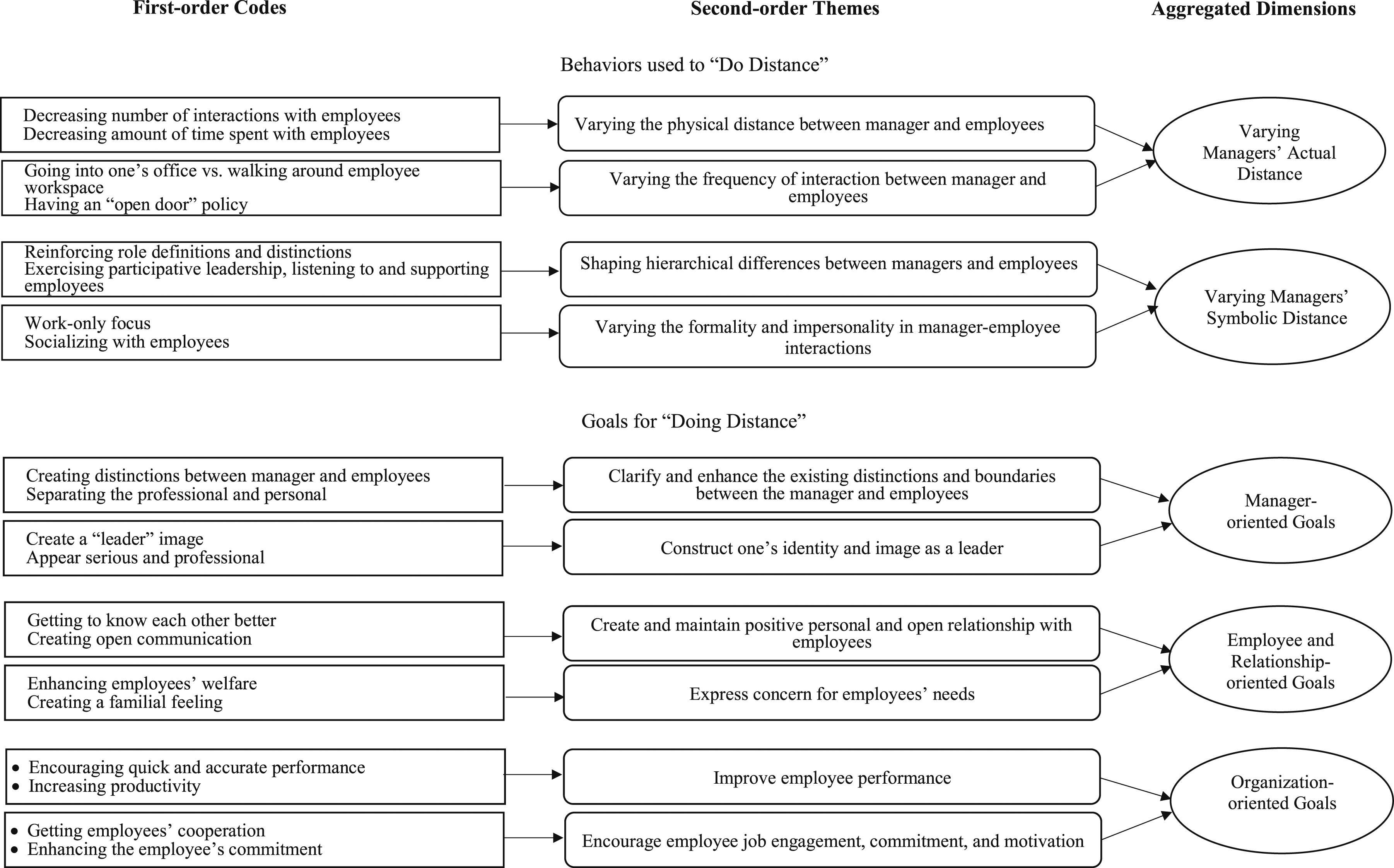
Findings
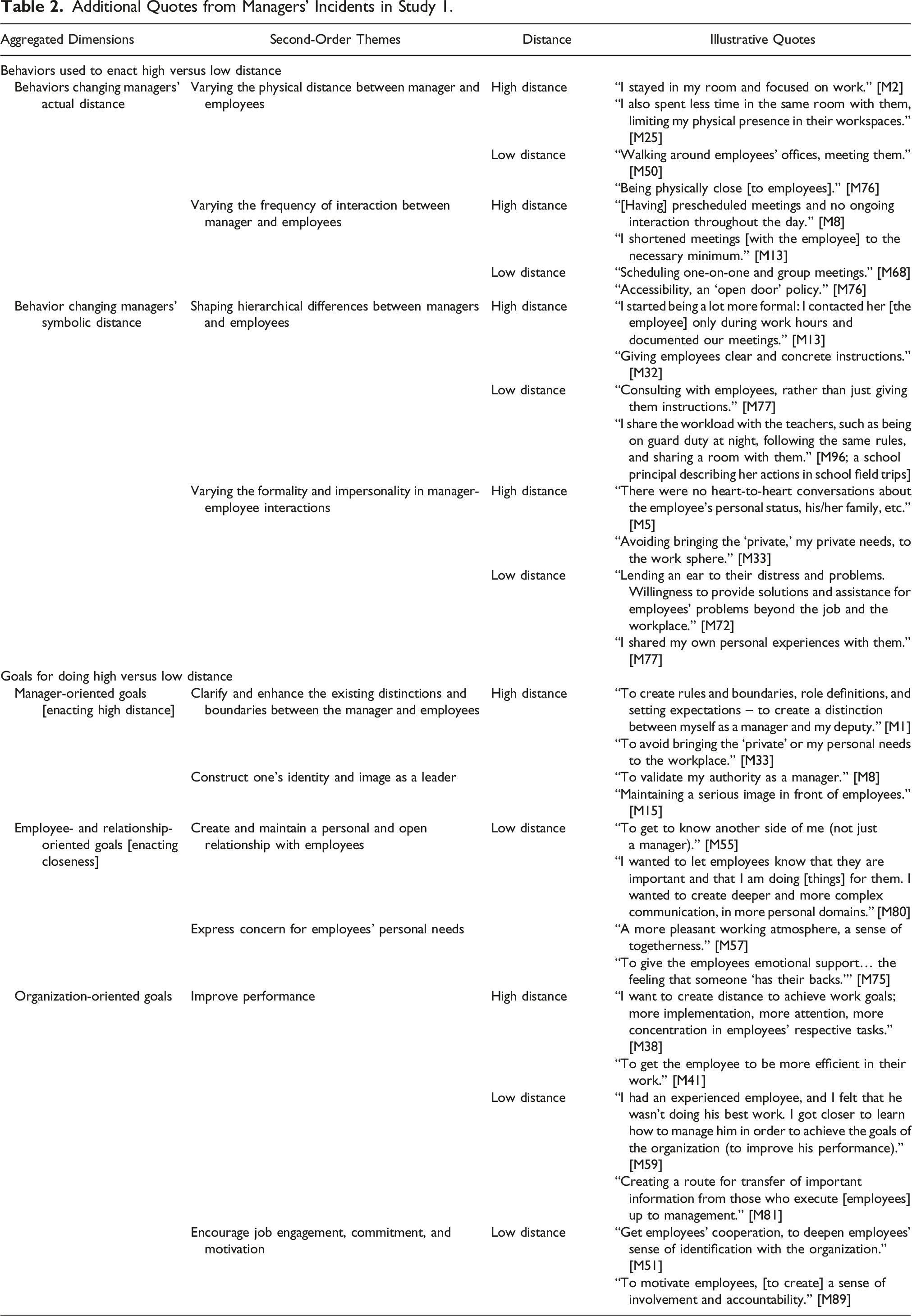
Additional Quotes from Managers’ Incidents in Study 1.
Enactment of Distance Versus Closeness: The Doing of Leader–Follower Distance
Our analysis revealed four second-order themes reflecting how managers “do” distance. We then aggregated these themes into two broad dimensions of doing distance—behaviors changing: (1) managers’ actual distance and (2) managers’ symbolic (or perceived) distance.
Behaviors Changing Leaders’ Actual Distance
As a part of managers’ efforts to do distance, they changed their actual distance by varying their physical distance and the frequency of their interactions with employees. Specifically, managers spent less time around employees, thereby creating higher physical distance and less frequent interactions. For example, one manager described, “I spent less time in the same room with them, limiting my physical presence in their workspaces,” and also noted that she “talked with employees less, shortened conversations and interactions” [M25]. 4 Another added, “I entered my office. Usually I walk around employees’ rooms, and only go to my office for meetings or administrative work” [M7].
When they enacted closeness, managers spent more time with employees, thereby creating less physical distance and more opportunities for interaction. For example, a school principal described, “I greeted every teacher [employee] with a smile in the morning, I am in the teachers’ lounge at the beginning of the workday and during breaks… allowing an ‘open door’ policy” [M97], and “[I] walk around their offices on a regular basis” [M60]. Often, managers created more formal opportunities for interaction, such as “gather[ing] them together once a week for staff meetings” [M56] and initiating “an ‘open house day’ when employees can schedule one-on-one meetings [with the manager]” [M81].
Behaviors Changing Leaders’ Symbolic or Perceived Distance
This dimension relates to behaviors that do not affect the actual amount of contact leaders have with their followers, but rather its nature. Two broad types of behaviors emerged as relevant to enacting symbolic leader–follower distance: shaping hierarchical differences and varying the formality and impersonality in interactions. Both themes reflect behaviors that make use of the organizational hierarchy and individuals’ roles by emphasizing and relying on it when doing distance, while blurring and undermining it when doing closeness. When doing distance, managers emphasized the hierarchy and existing roles and power relations and shaped their interactions with employees as professional and work-focused. For example, one manager described a conversation with her deputy: “As a part of the annual evaluation, [I] created rules and boundaries, defined roles and expectations; these were used to create a distinction between myself as a manager and my deputy” [M1]; and another wrote, “I give employees tasks aimed at reducing their excessive discretion [on work-related matters], I behave in a manner that communicates ‘I am the boss’” [M22]. Others described using one-way communication with their employees such as “[Giving] clear and concrete instructions” [M32] and “I did not ask to hear her [employee] opinion on the main issues in the case [that they were working on]” [M14].
Managers further underscored hierarchical differences by interacting in a formal manner, avoiding developing social relationships, and restricting their interactions to work-related content. For example, “I started being a lot more formal: I contacted her [the employee] only during work hours and documented our meetings” [M13]; “I did not have ‘small talks’ with him [the employee], our conversations were strictly professional” [M34]; and “I chose to minimize social outings with my employees and to minimize personal sharing” [M18].
Conversely, managers who were doing closeness acted in ways that defied the existing hierarchy and roles, initiated and participated in informal conversations, and socialized with employees during and after working hours. For example, “Treating employees as equals. Not to communicate that ‘I am the manager, and you are the employee’” [M76] and “Asking employees to contribute ideas, [holding] a respectful group discussion… and… implementing some of employees’ ideas” [M66], and even inviting “criticism and emphasiz[ing] the importance of their feedback” [M85]. These managers described listening to their employees—“Letting employees talk and share” [M78] and “Showing an interest in the employee’s feelings” [M70]. When doing closeness, they also socially engaged with employees, such as “I had lunch with them…we went out together after work” [M83], organizing a vacation for employees and their families [M87], and engaging in “Small-talk, expressing interest in their families, and initiating conversations that can be described as gossip” [M54]. Some managers chose to do closeness by being open with employees: “During training I was not afraid to share my thoughts and feelings” [M65].
Goals for Doing High Versus Low Distance
To understand the role of enacted distance in leader–follower relationships, we examined the goals underlying managers’ behavior. Through iterating between the themes that emerged from the data and the literature on identity (e.g., Brewer & Gardner, 1996), we mapped the themes onto three goals: manager-oriented; employee- and relationship-oriented; and organization-oriented. When leaders enacted distance, their accounts included themes related to manager-oriented (self) and organization-oriented goals. Conversely, when leaders enacted closeness, their goals were employee- and relationship-oriented and organization-oriented.
Manager-Oriented Goals
Managers’ accounts revealed that they enacted distance to achieve self-oriented goals, with two themes emerging. First, managers described doing distance to clarify and enhance the existing distinctions and boundaries between the manager and employees. Managers enacted distance “To clarify [to employees] their place and role (they sometimes forget it)” [M22], “Separate work and personal life” [M37], and “Disconnect personal relationships and professional matters” [M6]. These examples reflect managers’ need for setting boundaries with employees, but also appeared as a particularly important need in certain situations—such as when discipline was threatened: “When I started my current job, there was a group of secretaries who refused to perform their job, and it was necessary to replace some of them and change the way they worked… [Creating] distance was aimed to send a message that ‘we [manager and employees] are not friends here, everyone here must do their job.’” [M17]
The second theme that emerged involved managers’ goal to construct their identity and image as a leader. In their accounts, managers expressed a need to construct a leadership identity and image (to themselves and others), and be perceived as professional, authoritative, and powerful. This was evident both as a general need and in specific events. For example, “Communicate greater professionalism and less sociability” [M40] and “For me, distance from employees is essential to activate my full authority” [M5]. Managers described events in which they would distance themselves to construct a specific identity or image. This was especially evident in certain circumstances such as role transitions: “After being promoted [from inside the team], I wanted to create a barrier between me and my employees… [I did this] to transition from a familiar role for me and them to the next role” [M36]. And: “It was my first year as a manager, after being promoted from within the organization. The issue [of creating distance] was significant and salient. There was a teacher with whom I had a close relationship [as colleagues]. As I transitioned to management, I needed to keep the distance – at least at school, for two reasons: 1: maintaining an objective appearance in front of the staff; 2: to make professional decisions related to her, regardless of what she wanted.” [M48]
Employee- and Relationship-Oriented Goals
Managers doing closeness described goals focused on others—their employees and their needs—and their relationships with them. These two aspects reflect the interpersonal and other’s benefit orientation of the relational self-concept (Brewer & Gardner, 1996) and were thus combined under one category. Two main themes emerged. First, managers aimed to create and maintain positive personal and open relationships with their employees—and to be caring and empathic leaders. For example, “The goal is to get to know the employees on a personal level and not just on work issues” [M64] and “I wanted to [create] a closer relationship with employees, and an informal atmosphere. To allow myself to open up to them and for them to see me as someone to whom they can turn openly” [M84].
Managers also created closeness because they were concerned for employees’ personal needs and aimed to improve employees’ welfare as individuals and as employees. For example, one school principal described, “In situations in which teachers [employees] leave classes frustrated because students were undisciplined and were not listening, my goal is to give [the employee] a sense of confidence…to work together to identify the problem and find solutions” [M92]. Another principal echoed similar goals by creating closeness as a means to “[create] a sense of worth” [M97]. Managers also aimed to extend the sense of caring beyond the dyadic relationship to create a caring environment in their units. Managers described aiming to “exchange experiences and create a friendly environment that will continue at work” [M77]. Some went beyond the sense of “togetherness” and aimed to create a familial feeling: “[So that employees] feel that they belong. Feeling like a family” [M86].
Organization-Oriented Goals
In both incidents of doing distance and doing closeness, managers described goals related to the organization. Two themes emerged in this dimension—doing distance as a means to improve performance (for both doing distance and closeness) and increase engagement (only for doing closeness). Managers did distance to improve performance in terms of employees’ productivity and accuracy, and to induce a sense of urgency regarding the tasks at hand. For example, “I want to create distance to achieve work goals, more implementation, more attention, more concentration in employees’ respective tasks” [M38] and “Getting employees to carefully complete an important task, to solve complicated tasks effectively, to motivate them and to decrease complacency” [M22]. One manager described giving her secretary “a task that required time and I needed to make it clear to her how it should be done. In this situation, I wanted to create some distance, so she would perform the task quickly and per my instructions” [M2].
When managers were doing closeness, they also aimed to improve performance, stating that “Work will be more efficient and thorough” [M72]; however, they described additional performance goals such as “Brainstorming, creativity, create a new product” [M68]. Doing closeness was also used by managers to encourage job engagement, commitment, and motivation. For example, “So that people will want to come to [work] and contribute beyond what is required” [M95]. Decreasing distance was particularly important to managers in situations when there were special circumstances, such as “Events that require special effort from employees under time constraints, or when the task itself is difficult. In these cases, I think a manager must be close. Closeness encourages employees” [M60] and “Recruiting them to work after regular business hours, or to overcome a crisis in the organization” [M66].
Discussion: A model of “doing distance”
Study 1 revealed that managers do distance and closeness to attain different goals and achieve these through behaviors that shape their actual and symbolic distance from employees. First, we found that the behaviors managers employ to do distance and closeness align with some of the types of distance previously described as more stable elements of the leader–follower relationship, such as physical distance and hierarchical differences (e.g., Antonakis & Atwater, 2002; Napier & Ferris, 1993). While typologies of distance largely treat these elements as determined by organizational factors, our data suggest that leaders can deliberately shape them to enact distance. Additionally, the behaviors described by the managers echo those outlined in many leadership theories. For example, managers described “expressing attentiveness and interest in their employees” (M72), suggesting transformational leadership (Avolio et al., 1999), or “Asking employees to contribute ideas” (M66), reflecting empowering leadership (e.g., Srivastava et al., 2006). This suggests a link between enacting distance and existing work on leadership, which can help us understand the processes underlying managers’ leadership behaviors.
Second, we found that managers were motivated by different goals when they enacted distance versus closeness. The data revealed that enacting distance was mainly associated with a focus on the self (demonstrated by manager-oriented goals); conversely, enacting closeness was mainly associated with an other-orientation (demonstrated by employee- and relationship-oriented goals). We build upon these findings and the literature to propose a conceptual model, summarized in Figure 2, which outlines the motivations and psychological processes underlying the doing of distance and closeness. A model of “Doing Distance”: When, why, and how.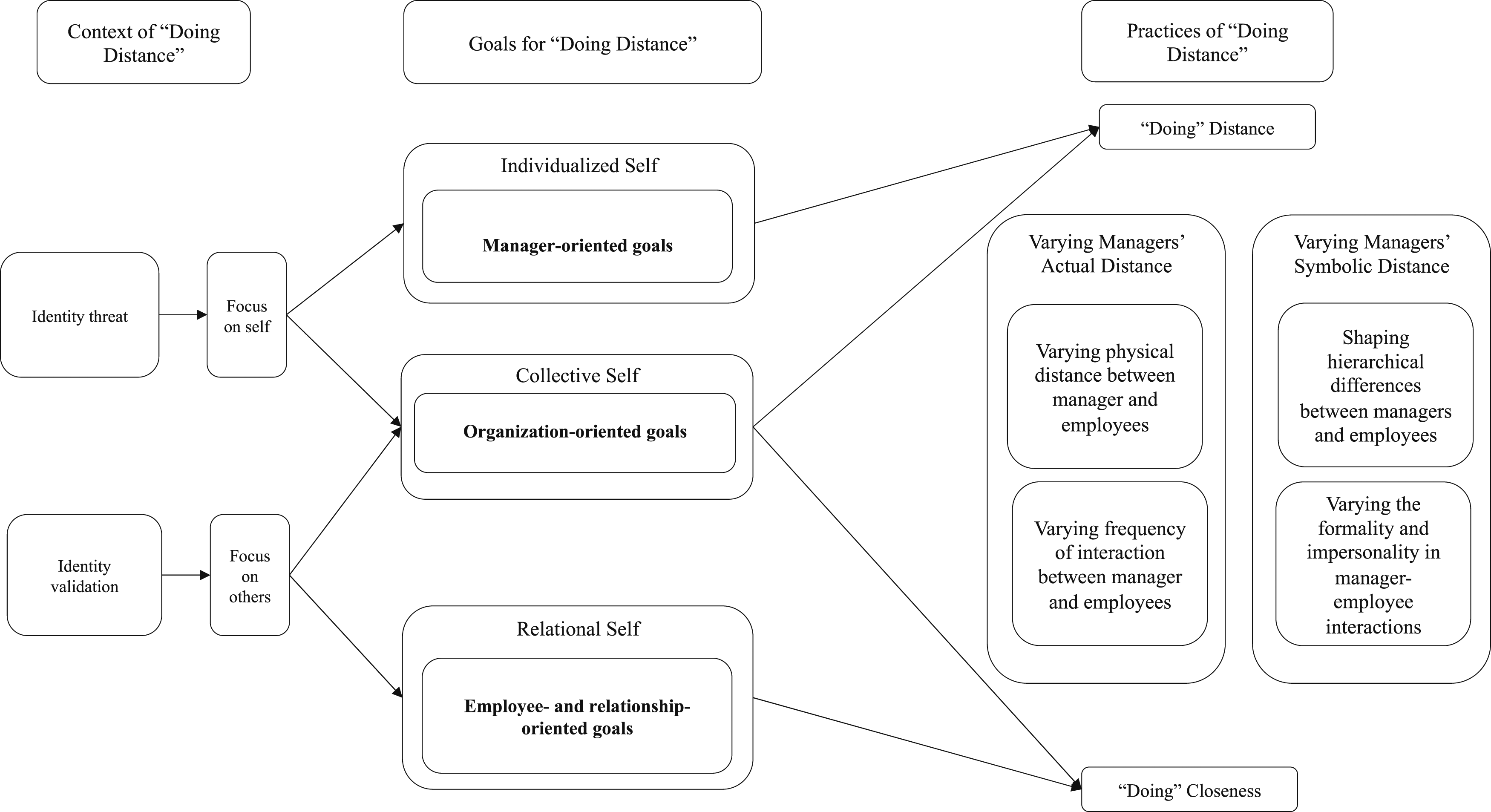
Our reading of the incidents led us to articulate the backdrop of doing distance and closeness as involving identity experiences—specifically, identity threat and validation. Identity threat, defined as “experiences appraised as indicating potential harm to the value, meaning, or enactment of an identity” (Petriglieri, 2011, p. 644), is descriptive of the incidents recalled by managers as targeting distancing behaviors. Doing distance was associated with either actual events (e.g., being promoted to management [M36], employees disobeying instructions or guidelines [M47], working in an environment that enforces closeness to one’s subordinates [M18]), or with leaders’ internal concerns of potential harm to their identity (M14). We propose that in such situations, which leaders perceive as disconfirming their leader identity (cf. Ashforth & Schinoff, 2016) or limiting their ability to enact their identity (Petriglieri, 2011), they experience identity threat. Identity threat focuses the manager on their sense of the individualized self, eliciting a self-protection motive (Sedikides, 2012). Leaders become more self-focused and aim to bolster the threatened identity and “restore order” to their relationship with employees. This focus on their individual selves (Brewer & Gardner, 1996; Brickson, 2000) motivates them to set self-oriented goals and reduce the threat (Lazarus & Folkman, 1984) by enacting distance. Doing distance may serve both to alleviate their experience of threat (e.g., Sedikides, 2012) and to reclaim their identity more publicly—in the eyes of employees (DeRue & Ashford, 2010). Thus, we propose that experiences of identity threat focused leaders on their personal self, thereby motivating them to act in their self-interest (Brewer & Gardner, 1996), as expressed by the setting of manager-oriented goals (i.e., clarifying and enhancing existing boundaries and constructing one’s managerial identity). These goals in turn led them to enact high distance.
Conversely, situations in which managers were doing closeness suggested a pre-existing validation of their identity as an efficacious leader, enabling them to focus on employees and their relationships with them. Identity validation occurs “when a person’s sense of who they are is confirmed, typically by external sources of information” (Choi & Hogg, 2020, p. 126). Relevant incidents involved events such as a manager who felt that his employee was not reaching his full potential, and so he asked the employee how he might engage with him more productively (M59), or a manager who decided to open up to a team of managers he was leading as part of a professional course (M65). This other-orientation—specifically, an employee-focus—appears to reflect one of the basic elements of leadership (i.e., creating positive relationships at work; Fletcher, 2007), as well as managers’ own desire to have positive and close relationships with the people with whom they work (Kark, 2011). Past work has demonstrated that a relational orientation is often associated with powerlessness (e.g., Copeland, 1994), suggesting that when leaders demonstrate relational behavior, they may risk being seen as having less power or authority (Fletcher, 2007). Therefore, managers may enact closeness when they feel they are relatively immune to such risks, confident in their authority. We thus argue that leaders enact closeness when they experience their leadership identity as granted/validated by their followers (DeRue & Ashford, 2010). In these situations, they are more influenced by social motives than by self-oriented motives; thus, their relational self is more salient than their individualized self (Brewer & Gardner, 1996). This allows managers’ need for interpersonal closeness, or the need to belong (Baumeister & Leary, 1995), to motivate their behavior (e.g., Lapierre et al., 2012). Thus, we propose that when a leader’s identity is validated, their relational self becomes more salient and they are motivated to benefit others (Brewer & Gardner, 1996), set employee- and relationship-focused goals (i.e., create a personal relationship and express concern for employees’ needs), and as a result enact closeness.
In sum, Study 1’s findings led us to conceptualize doing distance as derived from identity experiences, arguing that leaders’ individualized self was connected to the enactment of distance and their relational self to that of closeness. But what about the collective level of self (Brewer & Gardner, 1996; Brickson, 2000)? Generally, the individual, relational, and collective levels are nested such that one may complement and cue another (Ashforth et al., 2011). A leader’s identity is associated with their role as a leader and with the collective of which they are a part (Parry, 1998). Thus, managers’ collective identity appears to be centered around organization-related goals—performance and motivation—reflecting managers’ role in the organization. Our data suggest that both enacted distance and closeness were elicited by managers’ collective selves, leading them to focus on the organization and set goals aimed at advancing its mission and aims. For example, one manager described doing distance to get employees to perform an important task quickly and accurately (M2), while another manager chose to create closeness to solve problems the team was facing in their work (M53). Just as identity threat may encourage a focus on “me as a manager” (individual self), so it may encourage a focus on “my role as a contributor to the organization” (collective self). Conversely, experiencing a validation of one’s leader identity relaxes one’s concern with proving oneself, enabling one to focus on connecting with others and do closeness for the benefit of the employee, the relationship, and the organization. Thus, it appears that both identity threat and validation affect managers’ setting of organization-oriented goals. Therefore, we hypothesize that:
When managers experience a threat to their leader identity, they are more likely to “do distance,” and this relationship will be explained by an increased preference for setting self-oriented goals and organization-oriented goals, and a decreased preference for setting employee- and relationship-oriented goals.
When managers experience validation of their leader identity, they are more likely to “do closeness,” and this relationship will be explained by an increased preference for setting employee- and relationship-oriented goals as well as organization-oriented goals, and a decreased preference for setting self-oriented goals. Study 1 provides an important illustration of how managers enact distance versus closeness as an everyday practice, highlighting the role of identity threat and validation as motivations for leaders’ behaviors. However, because identity emerged from our qualitative data rather than being the a priori focus, we have little direct evidence for this potential relationship. Therefore, we conducted an experimental study, manipulating identity threat and validation to establish the role of identity in doing distance more directly.
Study 2
Our goal in Study 2 was to experimentally manipulate identity threat and validation to examine their effect on managers’ goals and distancing preferences, testing the mediation hypotheses that emerged from Study 1. To that end, we examined three scenarios that manipulated identity threat and identity validation, using an online sample of managers.
Method
Participants
We recruited 543 participants (57% female; ages range from 18 to 76, M = 38.1, SD = 10.6) from English-speaking countries (USA, Canada, UK, Republic of Ireland, Australia, and New Zealand), who held management positions at work. Participants were recruited via an online panel (Prolific Academic) and screened to include managers only.
Procedure and Measures
Participants were presented with a brief description of an event involving a manager and their employees and were asked to imagine themselves as the manager in the scenario. To examine our model across different situations, we created three scenarios: the first described an employee challenging (vs. accepting and implementing) a method of work developed by the manager; the second, an employee undermining (vs. deferring to) the manager’s authority in daily interactions; and the third, a challenge (vs. reinforcement) of the manager by their boss following a conversation with an unsatisfied (vs. satisfied) employee. Each scenario included three conditions targeting the manager’s identity experience: (1) identity threat; (2) identity validation; and (3) a control version that only provides details of the event. To eliminate contamination, we used a between-participant design such that each participant was exposed to only one of the nine versions (e.g., a manager whose employee is challenging their work method thereby threatening their identity; for full scenarios, see supplemental material). The scenarios were developed based on incidents collected in a separate study examining leader–follower distance and were pretested to ensure that perceived threat was higher for the identity threat conditions than for the validation and control conditions (see Supplemental Material).
After participants read the scenario, they completed three measures (for full scales, see supplemental material), which were developed for this study based on the literature and findings from Study 1. First, they completed six items measuring perceived threat to their identity (vs. validation) in this situation, such as: “I would wonder if my self-perception of being a good manager is accurate” and “I would feel validated in my identity as a competent manager” (reversed) (𝛼 = .90).
Then, participants were asked to indicate the degree to which they are likely to pursue three types of goals (based on the specific themes that emerged from Study 1): manager-oriented; employee- and relationship-oriented; and organization-oriented. Manager-oriented goals included five items, for example: “reinforce my authority as a manager” and “clarify the boundaries between me and my employee” (𝛼 = .86). Employee- and relationship-oriented goals included five items, such as: “create more openness in my relationship with my employee” and “empower my employee” (𝛼 = .77). Organization-oriented goals included four items, such as: “encourage commitment to the task” and “motivate exceptional task performance” (𝛼 = .72).
To measure our dependent variable—likelihood of doing distance—we created a list of 27 behaviors based on 3 types of behaviors identified in Study 1: decreasing the frequency of interaction and physical distance, emphasizing hierarchical differences between manager and employees, and interacting on a professional and impersonal basis. We recruited a separate sample of 361 participants (52% female; ages range from 18 to 69, M = 38.8, SD = 10.6) to pretest the scenarios used in Study 2 and refine and validate our measure of doing distance through Exploratory Factor Analysis (EFA) and Confirmatory Factor Analysis (CFA). Following several iterations of EFA (for full details, see supplemental material), several items were removed (yielding 21 items), and the remaining items were organized into 3 factors corresponding with the 3 distancing behaviors. 5
We then conducted CFA using the data collected in Study 2. An initial CFA did not produce acceptable fit indices, and so further revision of the items was conducted. Three items were removed in this stage, with two additional items removed during the revision process of the manuscript (for full details, see supplemental material). This improved the model fit indices: 𝜒 2 (101) = 472, p < .001; CFI = .87, TLI = .84, RMSEA = .08, SRMR = .07. While these indices do not quite meet the traditional thresholds, they are sufficiently promising in this initial investigation of doing distance to provide a preliminary sense of whether our hypotheses are sound. We recognize that future research should continue the development of this scale.
Therefore, our final measure of distancing behaviors included 15 items organized into 3 factors: (1) decreasing the frequency of interaction and physical distance (3 items), for example: “Enter my office and close the door, making myself less approachable” and “Decrease the frequency of my conversations with my employee” (𝛼 = .62); (2) emphasizing the organizational hierarchy (7 items, reversed), for example: “Display understanding of my employees’ needs” and “Include my employee in decision making in the unit” (𝛼 = .83); and (3) interacting on a professional and impersonal basis (6 items), for example: “Focus my conversations with my employee on work-related matters only” and “Minimize or avoid social outings with employees” (𝛼 = .82).
Findings
Prior to beginning the main analyses, we conducted a manipulation test to ensure that the experimental conditions had the expected effect on identity threat and validation across the three scenarios. As expected, we found a significant difference between the conditions (F(2,534) = 97.57, p < .001, 𝜂2p = .27), such that participants reported greater threat in the identity threat (M = 3.13, SD = .89) versus the identity validation (M = 2.07, SD = .70; p < .001) and control conditions (M = 2.37, SD = .64; p < .001; see supplemental material).
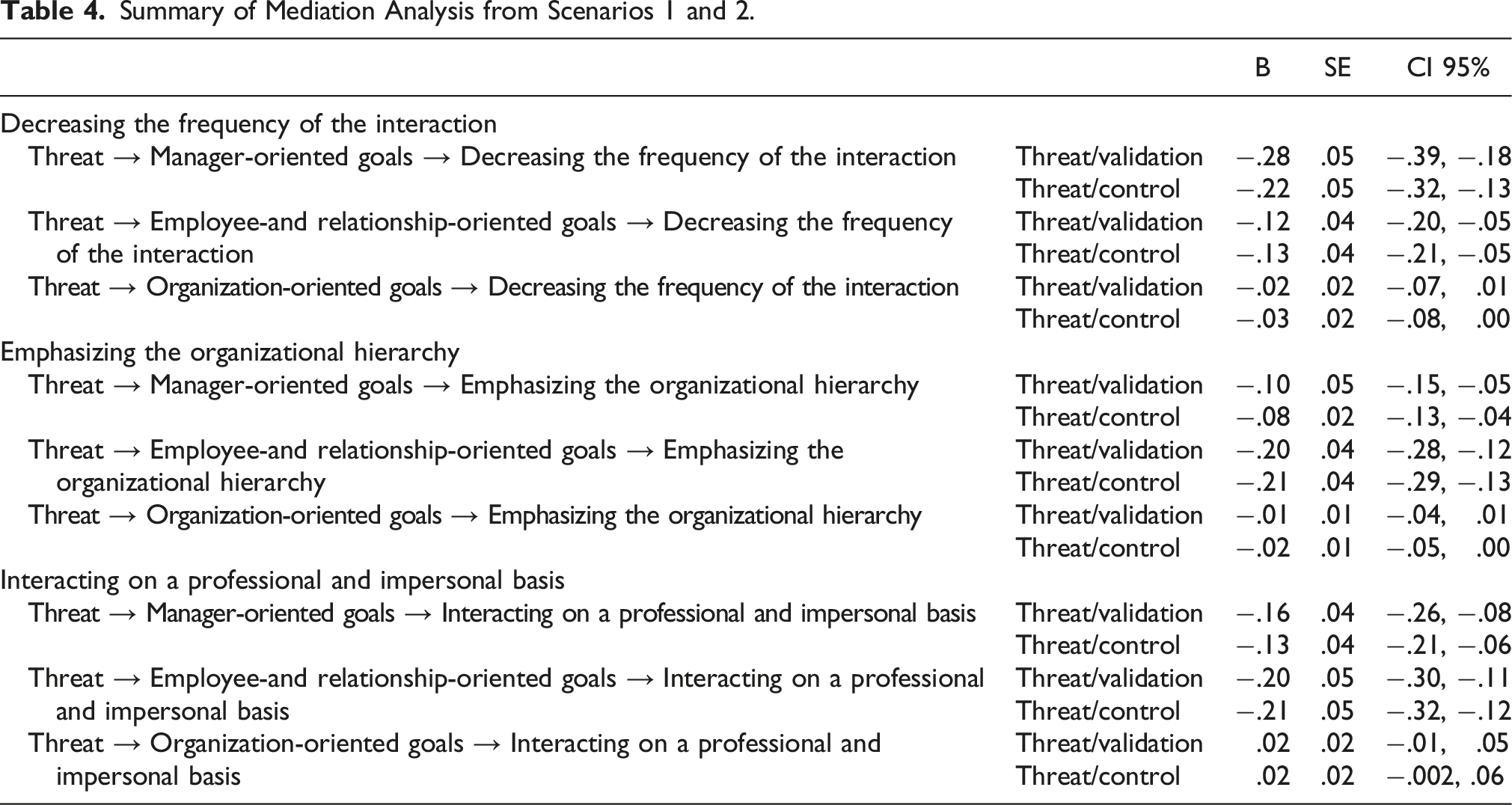
To test our model, we conducted mediation analyses using Hayes’ (2013) PROCESS macro for each scenario separately (model 4; bootstrapping 5000 iterations, 95% CI). For each scenario, we conducted three analyses—one for each type of distancing behavior as the dependent variable (Y; decreasing the frequency of interaction and physical distance, emphasizing the organizational hierarchy, and interacting on a professional and impersonal basis). Each analysis included threat condition as the independent variable (X; threat, validation, control) and all three types of goals as mediators (M; manager-oriented, employee- and relationship-oriented, organization-oriented). We examined the effects of threat on preference for doing distance by comparing the identity threat to the identity validation condition (D1) and the identity threat to the control condition (D2). This analysis yielded highly similar results for scenarios 1 (challenging work method) and 2 (undermining the manager); however, scenario 3 (challenge by boss) differed from them. For the sake of simplicity, we present here the results of analyses for scenarios 1 and 2 together (but not scenario 3) and discuss how they differ from scenario 3 (see supplemental material for full results).
Summary of Coefficients, Total, and Direct Effects from Scenarios 1 and 2.
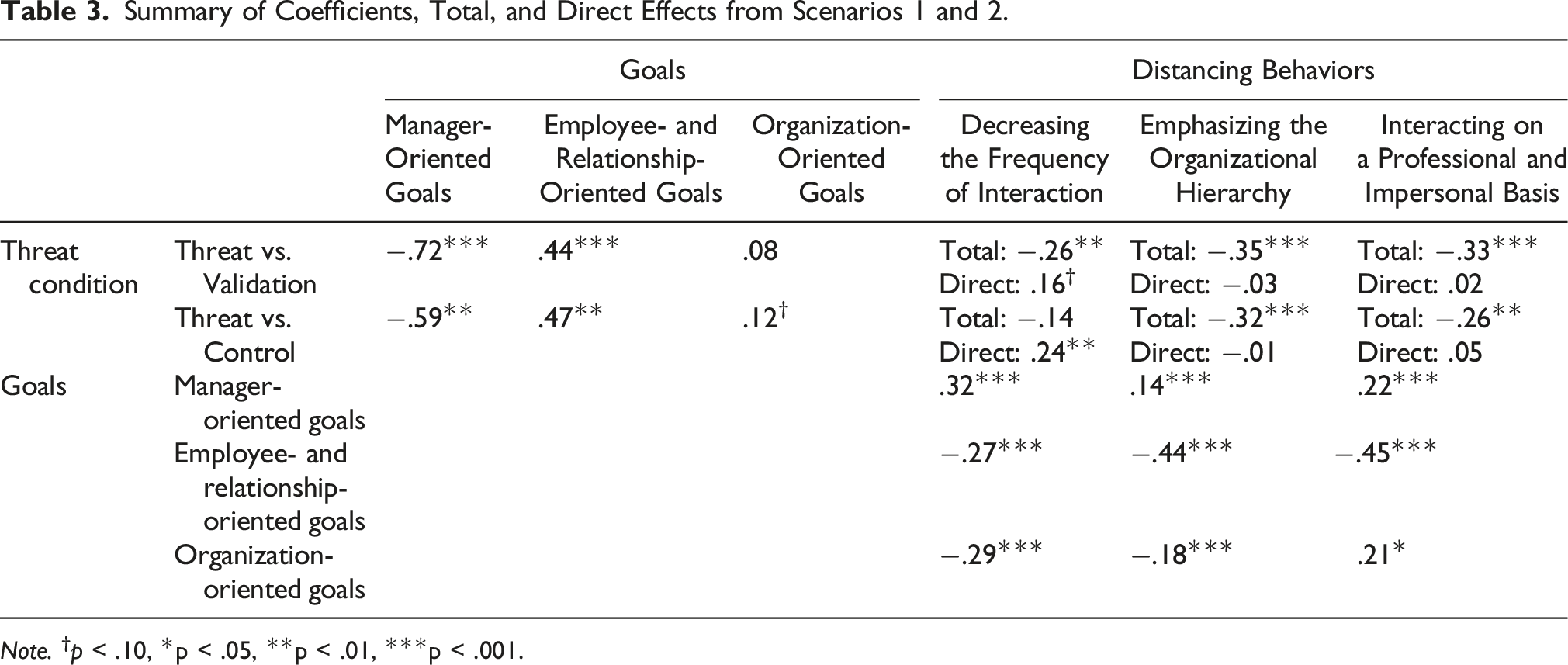
Note. †p < .10, *p < .05, **p < .01, ***p < .001.
Summary of Mediation Analysis from Scenarios 1 and 2.
Discussion
The goal of Study 2 was to experimentally test the model that emerged from the critical incidents in Study 1 by manipulating identity threat versus validation and measuring goals and behavior preferences. The results provide partial support for our model and hypotheses. In Scenarios 1 and 2, the effect of identity threat on distancing behaviors was explained by the type of goals managers are likely to pursue, such that when they are threatened, they are more willing to pursue manager-oriented goals and less willing to pursue employee- and relationship-oriented goals, leading them to do distance. In contrast, when managers are validated, they are more willing to pursue employee- and relationship-oriented goals and less willing to pursue manager-oriented goals, leading them to do closeness. While our model and the findings of Study 1 suggested that organization-oriented goals are relevant when experiencing threat and when experiencing validation, Study 2 revealed that threat and validation per se did not affect organization-oriented goals, nor did such goals mediate the effect of threat on doing distance. This might be due to the hypotheticality of the scenarios. With the broader organizational context missing, participants may have focused on the individualized and relational aspects of the self rather than on the collective aspect. The effect of identity threat (vs. validation) on managers’ collective selves remains an open question requiring additional future research.
While Scenarios 1 and 2 yielded similar results, Scenario 3 failed to support our hypotheses. Scenario 3 involved a dissatisfied employee complaining to the manager’s (participant’s) boss. The boss’s response was intended to create threat to the participant’s identity as a manager, as their employee did not accept their feedback and challenged their authority. However, it appears that we may have created a second source of threat, emerging from the manager’s boss, as the threat condition involved the boss reviewing the manager’s decisions. It is possible that participants perceived that as posing a threat, rather than the employee’s actions. If so, the threat may not have translated into goals and actions directed at the employee. While this finding points to a possible methodological issue, it also suggests a likely boundary condition to the effect of identity threat on doing distance: rather than having a generalized effect, a threat to one’s identity may direct attention to the specific source of the threat. Future research should examine the effects of various sources of threat on distancing behavior.
Finally, while Study 2 demonstrated in a controlled manner the effect of threat and validation on doing distance, it is not without its limitations. Specifically, the use of hypothetical vignettes can reduce its external validity (Aguinis & Bradley, 2014), as it puts participants in a constructed situation and asks for predictions of behaviors. However, Study 1 captured managers’ actual work experiences, suggesting that Study 2’s scenarios and constructs have external validity. While each study has limitations, including both a qualitative and experimental design adds confidence in the robustness of the studied phenomenon (Dipboye, 1990).
General Discussion
Doing distance is a common practice in managers’ everyday interactions with their employees and can have significant implications for employees’ (and managers’) job performance and well-being. Our intent was to decipher the role of this daily, prevalent, largely unnoticed, and not systematically explored, micro-activity. We sought to understand how leaders enact high versus low distance and what psychological processes underlie these behaviors. Together, the two studies revealed that leaders do distance as a managerial practice in their everyday interactions with employees. Going beyond past work, we demonstrate that distance is not merely a stable element of the organizational context, dictated by physical distance or hierarchy, but is rather a dynamic and malleable aspect of leader–follower relationships. Interestingly, leaders used these elements of context (e.g., hierarchy, physical location) to create a sense of distance or closeness by actively changing them in various ways. This finding is particularly relevant nowadays: in a world that has gone through the COVID-19 pandemic, physical distance has become far more prevalent and leaders’ ability to modify specific aspects of distance to increase either distance or closeness is invaluable. Thus, understanding the ways that leaders can actively change aspects of their distance from followers is crucial as leaders build their managerial toolbox in a post-pandemic world.
Our findings also shed some light on the process underlying doing distance (vs. closeness). The data suggest that doing distance and closeness are driven by managers’ experience of identity threat and identity validation, underscoring the role of managers’ identity motives. At the same time, employees may experience distancing behaviors as disrespectful, blunt, and even aggressive—although this was not an espoused goal of managers in Study 1—thus viewing them as marks of managers’ incivility (Schilpzand et al., 2016). Such tensions between employees’ needs and managers’ needs as individuals and professionals can be quite consequential, as they can have detrimental effects on relationships and performance. While more work is required, this research points to the importance of identity in shaping leaders’ doing of distance and closeness and offers a preliminary outline of the process through which these experiences shape leaders’ goals and subsequent actions.
Theoretical Contributions
The present work offers three significant theoretical contributions. First, it is the first to explore and demonstrate enacted distance versus closeness as a significant element of the leader–follower relationship. It goes beyond what we know of leadership and distance to propose a novel conceptualization of leader–follower distance, focusing on the role of deliberately creating distance. The concept of enacted distance versus closeness, which has been absent from previous theory and research, emerged as an important managerial practice used by leaders to shape their identities, relationships, and performance. Thus, this work makes a unique contribution to the literature on leadership in general and to the literature on leadership and distance in particular. We demonstrate that distance is an important component of leadership that influences leaders, followers, and their relationship. It is thus important to consider enacted distance when examining leadership processes and outcomes. Additionally, our work adds to research on LMX and other relational leadership theories by examining some of the psychological processes underlying leaders’ interpersonal behavior, thus providing a new relational perspective.
Second, leadership identity is a fast-growing subfield (for a review, see Epitropaki et al., 2017). While much attention has been dedicated to the effects of leaders on followers’ view of themselves, little work has focused on leaders’ identity, particularly at the interpersonal level (Epitropaki et al., 2017; Lapierre et al., 2012). Our research contributes to this stream by examining the role of leader identity in doing distance. Additionally, this work contributes to the nascent research on identity threat (e.g., Bataille & Vough, 2022; Brown & Coupland, 2015) and on the dynamics of claiming and granting leader identities (e.g., DeRue & Ashford, 2010). Specifically, our research demonstrates how managers react to situations in which they perceive that their leadership may (identity validation) or may not (identity threat) be granted by followers, prompting closeness and distance to claim a desired form of leadership. This allows a deeper and more nuanced understanding of the dynamics of leadership claiming and the behavioral ways in which managers sustain their managerial position and authority.
Finally, this work also adds to the literature on relationships at work and particularly their connection to leadership. We examined enacted distance through the eyes of managers, exploring their goals in shaping their relationships with employees. While prior research shows the importance of high-quality relationships and intimacy (Reis et al., 2000), and specifically in the workplace (e.g., Dutton & Heaphy, 2003; Kark, 2011; Schinoff et al., 2020), the present study suggests that leaders’ motivations are complex. Although leaders may prefer some degree of closeness with followers, actual daily events and the ways leaders experience them can trigger leaders to shape differing degrees of distance in diverse situations. This work adds to our understanding of leader–follower relationships and begins to shed light on overlooked aspects of the role of enacted distance.
Limitations and Future Research Directions
Notwithstanding the aforementioned contributions, this research has some limitations. First, we focused on events in which leaders changed their initial distance from followers to attain certain goals. We did not examine how leaders’ baseline distance affected followers (e.g., a leader who was never friendly with her employees or one that routinely shares personal details). Future research should explore how baseline levels of distance interact with changes of distance to affect relationships and performance. In addition, one’s pre-existing physical or hierarchical distance may also affect followers’ reactions to enacted distance. For example, if a high-level executive (vs. a direct supervisor) enacts closeness, it may affect followers differently. Future research should examine the simultaneous effects of hierarchical and enacted distance.
Second, our data include incidents in which leaders enacted either distance or closeness, thus providing data on leaders’ behavior at a specific point in time. However, we speculate that doing distance is dynamic, as leaders change their distance in different situations to achieve different goals. While this notion was not directly examined in this research, managers’ descriptions in Study 1 provide some evidence of such dynamism. For example, while M43 described distancing himself from his employees, once he achieved his goal, he was able “to relax” and decrease his distance. It is possible that leaders can do distance and closeness in both short- and long-term time frames, such as changing their distance throughout the day in response to various events, or over time (e.g., being distant when beginning their managerial role and then becoming closer as time passes). Future research (particularly field research), should examine how managers at different hierarchical levels use distance dynamically to manage relationships, particularly in cases when various interpersonal and professional issues arise. Research can also examine how managers model preferred distance, perhaps even shaping a climate of distance.
Third, while managers play a significant role in shaping distance, followers also influence leadership processes. Followers may have individual preferences for a certain degree of distance and thus may themselves enact distance or closeness. Future research should consider followers’ enacted distance and the ongoing negotiation between leaders and followers for a mutually acceptable amount of distance.
Finally, countries (and organizations) share cultural values, among them—power distance (Tang et al., 2020), which can affect individuals’ preference for and reactions to doing distance. While the countries included in this research were Western ones, there are differences in the preference for power distance between Israel (low) and the origin countries of participants in Study 2, supporting the generalizability of our findings. Nonetheless, future research should further examine the role of culture in doing distance.
Practical Implications
The present research also has important consequences for practitioners. It shows that the enactment of distance is an aspect of managers’ experiences at work and can be useful in two main ways. First, while managers use distance as a managerial tool, they may do so instinctively or impulsively, without clear knowledge of their goals or the variety of behaviors that facilitate distance and the resulting consequences. This can potentially undermine their goals and lead to undesired outcomes, such as harming leader–follower relationships. By better understanding the motivational processes underlying their preference for distance, managers can consciously reflect on this behavior and perhaps use other means to reaffirm threatened identities. More generally, understanding that distance can be shaped offers a tool for managers, enabling them to change their behavior and thus their relationships with employees.
Second, the conceptualization of distance as enacted, along with the specific behaviors documented in Study 1 and the when/why/how of enactment depicted in Figure 2, provides information that can be used to train managers in negotiating an optimal level of distance. Following our earlier discussion of future research implications, the term “negotiating” conveys that both managers and employees likely have preferred levels of distance and that this baseline may vary as circumstances warrant, suggesting the need for ongoing adjustments to this level.
In closing, distance appears to play an important role in leader–follower relationships, specifically distance created actively by leaders. This work offers some insight on how and why managers “do” distance, highlighting how these actions are related to leadership identity and to perceptions of threat or validation. Further, we show the potential implications of doing distance, highlighting the importance of this under-studied phenomenon, offering a starting point for future research to consider.
Supplemental Material
Supplemental Material - “Doing Distance”: The Role of Managers’ Enactment of Psychological Distance in Leader–Follower Relationships
Supplemental Material for “Doing Distance”: The Role of Managers’ Enactment of Psychological Distance in Leader–Follower Relationships by Moran Anisman-Razin, Ronit Kark, and Blake E. Ashforth in Group & Organization Management
Footnotes
Author’s Note
Study 1 was undertaken as a part of the first author’s doctoral dissertation conducted at the Department of Psychology, Bar Ilan University, and supervised by the second author.
Acknowledgments
We are grateful to the Associate editor, Christopher Woodrow, for his consistently helpful editorial guidance and the anonymous reviewers for their constructive comments throughout the review process. We would also like to thank Sim Sitkin and Beth Schinoff for their thoughtful comments on an earlier version of the manuscript.
Declaration of Conflicting Interests
The author(s) declared no potential conflicts of interest with respect to the research, authorship, and/or publication of this article.
Funding
The author(s) received no financial support for the research, authorship, and/or publication of this article.
Associate Editor: Christopher Woodrow

Supplemental Material
Supplemental material for this article is available online.
Notes
Author Biographies
References
Supplementary Material
Please find the following supplemental material available below.
For Open Access articles published under a Creative Commons License, all supplemental material carries the same license as the article it is associated with.
For non-Open Access articles published, all supplemental material carries a non-exclusive license, and permission requests for re-use of supplemental material or any part of supplemental material shall be sent directly to the copyright owner as specified in the copyright notice associated with the article.
