



Abstract
Drawing from the theory of met expectations, this study aims to create new knowledge on the antecedents of follower trust in leaders in the context of high-reliability organizations. We hypothesize that highly self-controlled leaders instill more trust than leaders with less self-control, as the former tend to meet follower expectations. This work combines data from a field survey (N = 256) and a multi-wave field study (N = 106), using samples of professional firefighters to support our hypotheses that met follower expectations mediate the relationship between leader trait self-control and follower trust in the leader. Our research highlights the importance of met expectations in high-reliability contexts and demonstrates the value of leader trait self-control in building trustful relationships.
Introduction
While interpersonal trust is necessary for nearly any organization’s functioning, it is indispensable to the safety and performance of high-performance organizations (HROs), such as fire brigades, hospitals, and the military (Burtscher et al., 2018). These organizations operate virtually error-free for long periods in highly complex, unpredictable, and dangerous contexts (Baker et al., 2006; Vogus et al., 2014). Research has demonstrated that followers’ trust in their leaders enhances the safety and performance of HROs, maximizing follower cooperation (Sweeney et al., 2009) and reducing follower stress (Collins & Jacobs, 2002; Madera & Smith, 2009). Therefore, it is unsurprising that researchers and practitioners alike have attempted to identify factors that promote follower trust in HROs (Lapidot et al., 2007; Sweeney, 2010).
A potentially meaningful but currently unexamined antecedent of interpersonal trust in high-reliability organizations is the leader’s trait self-control. This is an element of general self-regulation in which people exert control over responses to achieve goals and conform to standards when facing stressful situations (Finkenauer et al., 2015; Tangney et al., 2004). Over the past decade, there has been an ongoing debate about the costs and benefits of self-control (Baumeister & Alquist, 2009; Block, 2002; Letzring et al., 2005; Röseler et al., 2021; Zabelina et al., 2007; Zuo et al., 2020). Previous research has typically considered non–high-reliability research contexts and samples (e.g., Righetti & Finkenauer, 2011) and yielded mixed results (Baumeister & Alquist, 2009). Some scholars have argued that individuals’ self-control is associated with a greater degree of personality consistency (Block, 2002; Zabelina et al., 2007), predictability (van Steenbergen et al., 2014), and displays of normative behavior (DeBono et al., 2011). Individuals behaving in a highly self-controlled manner are perceived as more calm, consistent, and reliable than those with low self-control (Baumeister et al., 2006; Zabelina et al., 2007). However, other scholars have argued that individuals’ self-control is associated with a less rich affective life because they experience less emotional and bodily states (Zabelina et al., 2007) and “hidden” relationship costs (Zuo et al., 2020). For example, Koval et al. (2015) found that highly self-controlled individuals bear a greater burden from the reliance of their partners, which may decrease their relationship satisfaction. Moreover, individuals behaving in a highly self-controlled manner are perceived as less spontaneous, less exciting, and more restricted than those with low self-control (Block, 2002; Letzring et al., 2005; Zabelina et al., 2007). Because HROs operate in uncertain circumstances where the consequences of failure are extreme (Geier, 2016), it is entirely plausible that, under high-reliability conditions, the potential costs and benefits may differ from those in non–high-reliability contexts. Thus, this study aims to elucidate how leader trait self-control is an antecedent to follower trust in this context.
Moreover, to better understand why self-control creates positive or negative effects when working in high-reliability contexts, we seek to determine underlying mechanisms that explain the relationship between leader trait self-control and follower trust. One theoretical framework particularly useful in explaining this link is the theory of met expectations (Porter & Steers, 1973), which explains that meeting followers’ expectations produces more positive attitudes and behaviors toward leaders in the workplace (Padgett et al., 2005). Based on this theory, this article examines the mediating role of met expectations––a key determinant in trusting a leader (Dirks & Ferrin, 2002)—in the relationship between leader trait self-control and follower trust in high-reliability contexts.
Our research offers several theoretical and practical contributions. First, we answer a call in the self-control literature to address when self-control is likely to have positive or negative effects (Röseler et al., 2021). In doing so, we advance the ongoing debate regarding the costs and benefits of self-control (Block, 2002; Letzring et al., 2005; Zabelina et al., 2007; Zuo et al., 2020) by investigating leader trait self-control in the context of HROs. Our findings shed light on the relevance of trait self-control for leaders by demonstrating that, under high-reliability conditions, trait self-control enhances follower trust in the leader. Second, by demonstrating the critical role of leader trait self-control in high-reliability contexts, we respond to a call in the leadership literature to provide further evidence on effective leadership in HROs (Eberly et al., 2017; Hannah et al., 2009, 2010; Martínez-Córcoles, 2018; Yun et al., 2005). Third, we construct a new framework to integrate fragmented research on met expectations, self-control, and leadership to move forward the trust literature by demonstrating an underlying mechanism of the relationship between self-control and trust (Righetti & Finkenauer, 2011). We test our model (see Figure 1) in the specific context of HRO research: firefighting operations (e.g., emergency rescue, fire suppression; Baumann et al., 2011; Burtscher et al., 2018). Visual depiction of the proposed research model.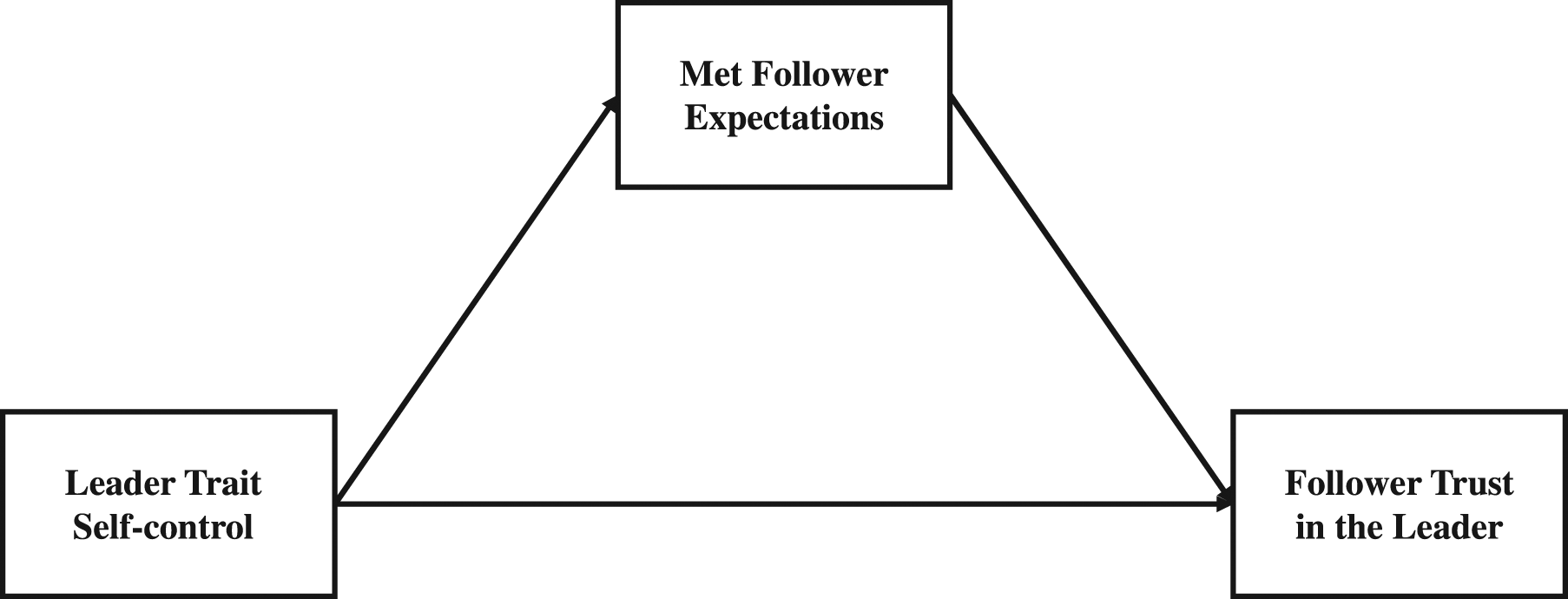
Background and Hypotheses Development
Leader Trait Self-Control and Follower Trust
Trust in a leader is a follower’s psychological state of willingness to accept vulnerability based on positive expectations toward the leader’s behaviors (Schoorman et al., 2007). Trust enables followers to be confident that the leader can provide a secure environment (Colquitt et al., 2011; Sweeney, 2010), is benevolent, and can attend to their needs (Burke et al., 2007; McAllister, 1995; De Zilwa, 2016; Zhang & Zhou, 2014). As followers’ performance and safety depend on the leader’s behaviors, feeling safe is essential for building and maintaining trustful relationships in high-reliability contexts (Klein et al., 2006). To determine safety in a leader-follower relationship, followers search for trust indicators, signaling that a leader acts beneficially toward them and can perform appropriate behaviors, even when the situation is stressful or dangerous (Buyukcan-Tetik et al., 2015). Research has suggested that the factor followers look for in leaders to determine trust is self-control (Righetti & Finkenauer, 2011).
Trait self-control is a person’s ability to regulate and alter spontaneous impulses to act according to situational requirements across various domains and contexts (Tagney et al., 2004; Sosik et al., 2019; Yam et al., 2016). Individuals differ in their dispositional capacity to exert self-control. Across different times and situations, some individuals are more effective at altering internal states and forgoing unwanted thoughts and emotions (Baumeister et al., 2006; Muraven & Baumeister, 2000). The ability to exhibit self-control appears to be stable across the lifespan, predicting a broad range of desirable outcomes (Gailliot et al., 2012). People high in self-control are more empathic toward others and less aggressive than those with low self-control (Tangney et al., 2004), are more reliable and better able to keep promises (Finkel & Campbell, 2001; Peetz & Kammrath, 2011), and are more likely to accomplish their goals (Duckworth et al., 2016).
This study examines the link between leader trait self-control and follower trust in a high-reliability context using implicit leadership theory (ILT; Calder, 1977; Epitropaki & Martin, 2004, 2005; Kenney et al., 1994; Lord & Maher, 1991; Lord et al., 1986)). According to Lord (1985), followers possess a particular prototype of leaders’ abilities. Followers compare the abilities displayed by a given leader with those in their leader prototype (Lord et al., 1984). When leaders more closely match the prototype expectations, they are perceived as more effective and ideal (Shondrick et al., 2010). Drawing on ILT, we argue that leader trait self-control is a prototypical leadership ability that enhances follower trust within high-reliability contexts. In this respect, research has shown that in a high-reliability context, followers prefer to be with a leader who is determined, effective (Eberly et al., 2017; Waldman et al., 2001), and in control (Gladstein and Reily, 1985; Isenberg, 1981), partly because in environments requiring high reliability, individuals usually seek to reestablish a sense of control and mastery (Lazarus, 1966). Given that self-controlled leaders are equipped to enhance followers’ sense of control and mastery (Sosik et al., 2019), these leaders can help followers to work effectively in high-reliability settings such as emergencies (Donner et al., 2017). Hence, leader trait self-control should positively relate to follower trust.
Recent empirical evidence has started to support the relationship between leader trait self-control and follower trust in the leader. Outside organizational settings, the positive relationship between high trait self-control and interpersonal trust has been demonstrated (e.g., Buyukcan-Tetik et al., 2015; Righetti & Finkenauer, 2011; Shea et al., 2013). For example, in a combined laboratory and field study, highly self-controlled individuals were more likely to be perceived as less risky and more trustworthy than individuals with low self-control (Righetti & Finkenauer, 2011). Similarly, Buyukcan-Tetik et al.’s (2015) study on parent–child interactions demonstrated that perceptions of someone’s self-control help infer whether a person is trustworthy. Therefore, we propose that this evidence extends to leadership in high-reliability contexts. Based on the above rationale and evidence, we hypothesize the following:
Leader trait self-control positively relates to follower trust in the leader in high-reliability contexts.
Met Follower Expectations as a Mediator
Drawing on the theory of met expectations (Porter & Steers, 1973), we posit that leader trait self-control positively relates to follower trust in the leader by helping to meet followers’ expectations. A met expectation is defined as the “discrepancy between what a person encounters on the job in the way of positive and negative experiences and what he expected to encounter” (Porter & Steers, 1973, p. 152). Followers who join a high-reliability organization likely have several expectations about their job or organization (e.g., workload, leadership, and culture; Irving & Meyer, 1994; Irving & Montes, 2009; Wanous et al., 1992). These expectations emanate from several possible sources (e.g., social standards, previous work experience, and friends’ references from similar jobs; Kim et al., 2019). Followers develop their perceptions of how their expectations are met through experiences within their jobs and organizations (Bottger, 1990; Gkorezis and Kastritsi, 2017). When followers’ experiences are similar to their initial expectations, their expectations are met (Padgett et al., 2005; Porter & Steers, 1973). In contrast, when followers’ actual experiences differ from their expectations, they are likely to experience a state of unmet expectations (Porter & Steers, 1973). Prior work has shown that a match between employees’ expectations and experiences increases job satisfaction and organizational commitment (Bottger, 1990; Kim et al., 2019; Wanous et al., 2002).
Drawing on ILT (Calder, 1977; Epitropaki & Martin, 2004, 2005; Kenney et al., 1994), we argue that leader trait self-control matches follower prototype expectations in high-reliability contexts because it fulfills functions critical to followers’ needs in this context (Zaccaro et al., 2001). As several scholars have pointed out (Morgeson, 2005; Myers, 2005), high-reliability context such as firefighting operations are hazardous, unpredictable, and demand a quick response. To meet followers’ expectations in this context, leaders must engage in behaviors that reflect adequate emotional reactions (Teng et al., 2009) and effective problem-solving (De Lucio et al., 2000; Weick, 1988). In contrast, leaders lacking self-control are unlikely to be seen as constructively responding to high-reliability settings (Weick, 1988, 1993), which likely results in followers’ expectations toward their leaders being unmet. Thus, we hypothesize that leaders displaying high self-control in settings requiring high reliability meet follower expectations more than leaders with low levels of self-control. Accordingly, we predict the following:
Leader trait self-control positively relates to followers’ met expectations in high-reliability contexts. Met expectations are positively associated with follower trust in the leader (Dirks & Ferrin, 2002; Kenney et al., 1994; McKnight et al., 1998; Whitener et al., 1998, 1993). Followers hold expectations regarding what a leader should or should not do within their organization (Marginson & Bui, 2009; Wong & Giessner, 2018). Previous research has suggested that followers develop strong positive emotions toward leaders under conditions of met expectations, fostering significant trust (Mayer et al., 1995). When expectations are met, followers believe their leaders will remain true to their word, contributing to building and maintaining trust (Robinson, 1996; Sweeney et al., 2009). In contrast, when a leader’s behavior does not fulfill followers’ expectations, followers will likely expend time and energy monitoring the leader’s behavior, compromising the development of trust (Golembiewski et al., 1976; Sweeney, 2010). Consequently, we predict that leader trait self-control positively relates to follower trust through meeting follower expectations. Accordingly, we predict the following:
Met follower expectations mediate the positive relationship between leader trait self-control and follower trust in the leader in high-reliability contexts.
Research Overview
Following recommendations for corroborating our results’ robustness (Wright & Sweeney, 2016), we tested our proposed mediation model using a multi-study design. In a pilot study, we tested the scale reliabilities and correlations (student sample; see Appendix). We also used our experimental pilot study data to test the basic direct effect specified in H1. We then conducted two field studies to reduce common method bias (Podsakoff et al., 2012) and enhance external validity. In Study 1, we replicated and extended the results from the pilot study to field setting of HROs. We gathered cross-sectional data from a sample of 256 professional firefighters to test the hypotheses in a high-reliability context. In Study 2, using a multi-wave research design, we collected temporally lagged data from a sample of 106 professional firefighters. We also ruled out an alternative explanation for our results (i.e., leader competence). Together, the studies enabled us to test the hypotheses across different samples, proving greater confidence in the validity of our results.
Study 1: Cross-Sectional Field Study
Method
Sample
The participants were employees of firefighting departments in Germany recruited via professional firefighting conferences, newsletters, word of mouth, and blogs. The multiple recruitment methods hindered the calculation of an exact response rate. However, 544 individuals showed interest in participating by clicking on the link to the online survey. Among them, 256 individuals (47%) then completed the survey. The sample consisted of 218 men (85%) and 37 women (15%). The firefighters were an average of 36 years of age (SD = 12.40) with 18 years of work experience in firefighting response (SD = 11.65). Participation was voluntary and confidential.
A particular sample size was required to obtain a statistical power sufficient to accurately estimate the hypothesized effects (Scherbaum & Ferreter, 2009). We argued that the large effect of our pilot study (see Appendix) should translate into a medium effect in the field. Hence, we calculated an a priori G*Power analysis (version 3.1; Faul et al., 2009) with five predictors (two predictors in the model and three demographic characteristics as control variables). This study required a minimum sample of 65 participants to allow for a sufficient statistical power of 99% (Fritz & MacKinnon, 2007) to detect a medium effect size of .35 with a 5% probability of error. Thus, the sample size of 256 was acceptable for this study.
Research Design
Building on prior research using the critical incident technique (Aquino et al., 2006; Wang et al., 2018), we asked participants to consider their last 6 months as a firefighter. They recalled the most recent incident during which they experienced a firefighting operation and indicated how their leader responded.
Measures
Unless otherwise stated, all measures were based on a seven-point Likert scale (1 = strongly disagree, 7 = strongly agree). German versions of the study instruments were developed using standardized back-translation techniques (Brislin, 1986; Hambleton et al., 2005; McKay et al., 1996). All study instruments were translated into German by a professional bilingual translator, then the German measures were back-translated into English by another bilingual, professional translator. After that, we compared the back-translated versions with the original English versions for discrepancies, which were iteratively removed in further back-translations by the translators until the versions were semantically identical (Hagger et al., 2021).
Leader Trait Self-Control
A 14-item measure from Tangney et al.’s (2004) self-control scale was used in Study 1. Sample items included “My team leader never allows himself/herself to lose control” and “My team leader gets carried away by his/her feelings” (1 = totally disagree; 7 = totally agree). The Cronbach’s alpha was .94. Notably, Study 1 used a different instrument to measure leader trait self-control than the pilot study (a nine-item scale based on the big five inventory [BFI-2; Soto & John, 2017]). This approach helped to show that the conceptually similar scales of self-control provided equivalent empirical results (Hallikainen & Laukkanen, 2021; Van Berkel & Crandall, 2018).
Met Follower Expectations
A three-item measure from Wellman et al. (2016) was used for met follower expectations. The items were as follows: “Given this leader’s formal position and level of authority, his/her actions were ‘reasonable,’ ‘appropriate,’ and ‘made sense.’” The Cronbach’s alpha was .94.
Follower Trust in the Leader
To assess follower trust in the leader, we used the same three-item trust scale (Giessner & Van Knippenberg, 2008) as the pilot study. The items were as follows: “I trust this leader absolutely”; “I think this leader does the right things”; and “I think this leader is trustworthy.” The Cronbach’s alpha was .95.
Control Variables
We controlled for the firefighters’ gender, age, and job tenure to avoid potential confounding influences on the mediation analysis because these factors can play an essential role in influencing trust (Nichols et al., 2009). Age and job tenure were indicated in years, and gender was classified into two coded categories (1 = male, 2 = female). The findings remained similar to the supported hypotheses when including and excluding these controls from the analysis.
Data Analysis Strategy
We analyzed our data in several steps. First, we assessed whether leader trait self-control, met follower expectations, and follower trust in the leader were empirically distinct (Conway & Lance, 2010) and performed a confirmatory factor analysis (CFA) using R software. Second, we investigated the presence of common method variance by adding an unmeasured latent factor to our measurement model (Podsakoff et al., 2003). Third, we used an ordinary least squares regression analysis to test H1 and H2. Fourth, we tested the mediating effect of met follower expectations (H3) using PROCESS in SPSS (Model 4, Hayes, 2012). As recommended (Hayes & Preacher, 2014), we used 5000 bootstraps and a confidence interval of 95% to estimate the respective effects.
Results and Discussion
Confirmatory Factor Analysis
We assessed model fit with criteria for small samples with values above 0.90 for the comparative fit index (CFI) and Tucker–Lewis-Index (TLI) and below 0.09 for the standardized root mean square residual (SRMR) considered adequate.(Browne & Cudeck, 1989; Hu & Bentler, 1999; Ritzenhófer et al., 2017). The analysis of the three-factor measurement model revealed an acceptable fit to the data (χ2 (df) = 558.18 (167), p < .001, SRMR = .06, CFI = .91, TLI = .90). In addition, the presence of common method variance was examined by testing a model where we added a latent common method factor to the three-factor model (CMV model; Martinescu et al., 2021; Vantilborgh et al., 2016). The fit of the CMV model was not significantly better than the fit of the three-factor model (Δχ2 (0) = 108.83, p > .01). This analysis implied that common method variance was not substantively influenced the validity of the factor structure.
Hypotheses Testing
Descriptive statistics and correlations (Study 1).
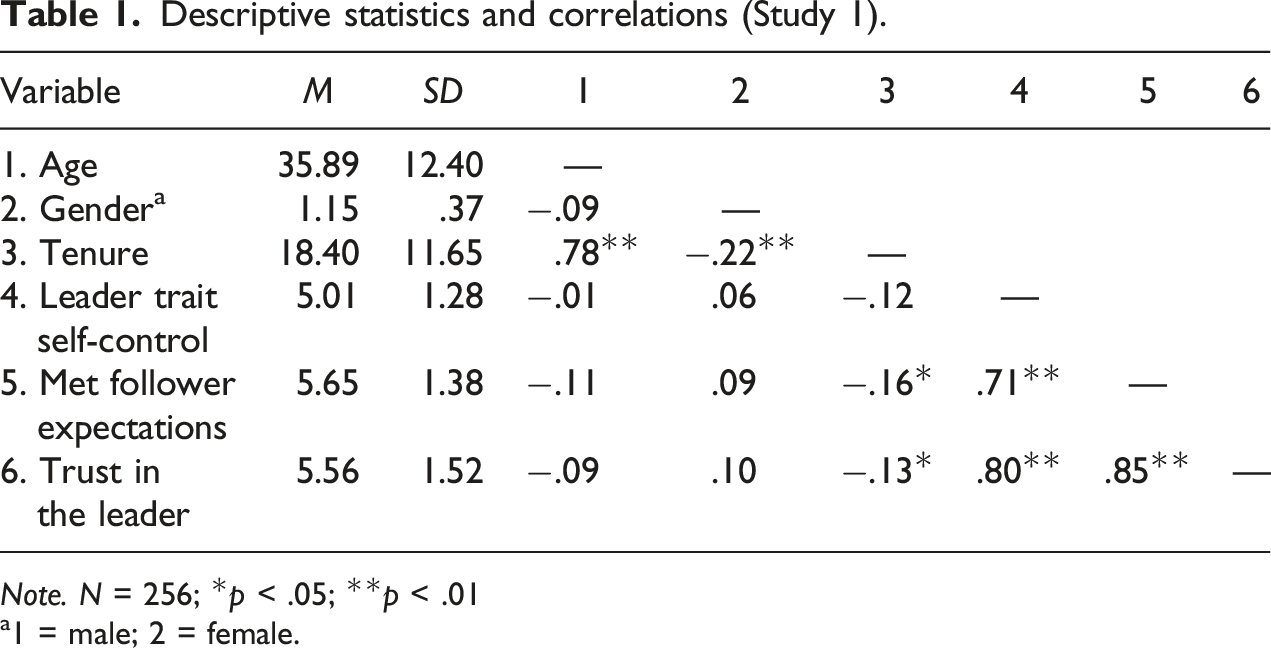
Note. N = 256; *p < .05; **p < .01
a1 = male; 2 = female.
Effects of leader trait self-control on met follower expectations and trust in the leader (Study 1).
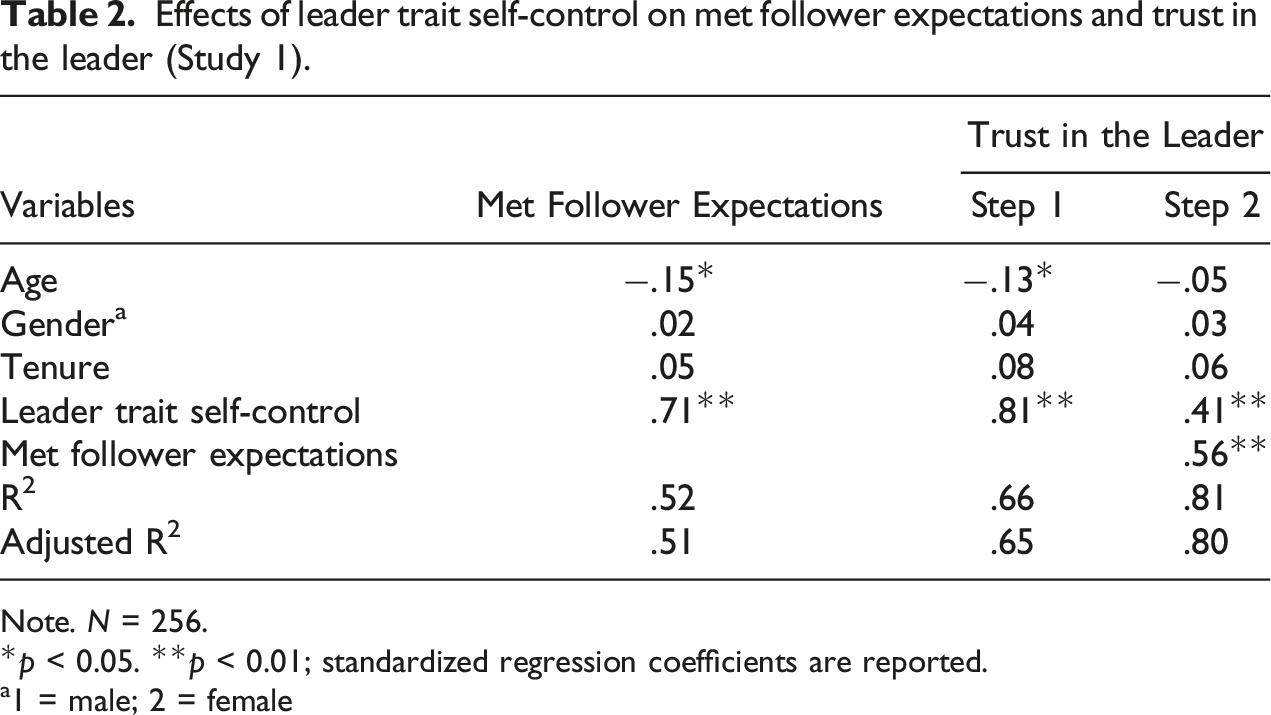
Note. N = 256.
*p < 0.05. **p < 0.01; standardized regression coefficients are reported.
a1 = male; 2 = female
Discussion
We conducted Study 1 to validate the findings from the pilot study using a field study among professional firefighters. Supporting our first hypothesis, we obtained corroborative evidence that leader trait self-control is positively related to follower trust in high-reliability contexts. In addition, our results suggested that leader trait self-control positively relates to follower trust by meeting follower expectations.
Study 2: Multi-Wave Field Study
In Study 1, we used a cross-sectional study design, which has the limitation that participants rate all survey items simultaneously, raising concerns about common method variance (Conway & Lance, 2010). Thus, the purpose of Study 2 was to validate the results from Study 1 using a different study design. In Study 2, using a multi-wave longitudinal research design, we assessed our survey items at different time points to account for common method variance (Podsakoff et al., 2012). Furthermore, to ensure that the relation between our study variables was not attributable to alternative processes, such as leader competence (Mayer et al., 1995; Schoorman et al., 2016; Shao, 2019), we also performed our main analyses controlling for leader competence.
Method
Participants
The sample consisted of professional firefighters from several fire departments in an eastern German city. From a total of 432 firefighters, 280 participated in the first wave (T1), 177 firefighters participated in the second wave (T2), and 136 firefighters finished all three survey waves (T3). The data of 30 firefighters were removed because these participants did not accurately remember the leader to whom they reported in the previous wave(s). Among the 106 firefighters in our final sample, 54% were men, and 42% had obtained an undergraduate degree or above. The average age was 35 years (SD = 10.54), with an average of 17 years of work experience in firefighting response (SD = 10.99).
As in Study 1, we used the G*Power analysis tool (version 3.1; Faul et al., 2009) to determine the required sample size and achieve sufficient statistical power for producing meaningful results (Scherbaum & Ferreter, 2009). We calculated an a priori power analysis with six predictors (two predictors and four control variables). As in Study 1, we found that this study required a minimum sample of 65 participants to reach a statistical power of 99% for detecting a medium effect size of .35 with a 5% probability of error. Hence, our sample size of 106 participants in Study 2 was adequate for this study.
Procedure
To test our hypotheses, we conducted a multi-wave field study. Firefighters were asked to complete web-based surveys during three time points to minimize the potential for common method bias (Conway & Lance, 2010; Podsakoff et al., 2012). The data was collected between January and April 2021. Participation was voluntary and confidential. As in Study 1, we employed the critical incident technique to capture leaders’ roles in relevant high-reliability contexts. At T1, we asked participants to complete a short online questionnaire with demographic questions and the leader trait self-control scale. As traits are relatively stable, we measured self-control only once at the beginning of the study (Righetti & Finkenauer, 2011). At T2, approximately one week after T1, participants were asked to consider their last six months as firefighters. Following this, they were asked to recall the most recent incident during which they experienced a firefighting operation, indicating how their leader responded to it. After describing the incident of a high-reliability situation, followers completed measures of leader competence and met follower expectations. At T3, approximately 1 week after T2, followers rated their trust in the leader. In this wave, the respondents were advised to repeat the incident they described at T2, assessing how their unit leader (the same as in T2) responded to the incident to ensure that the same incident was being considered.
Research Context
To further understand respondents’ high-reliability contexts, we asked participants to describe the firefighting operation to which they responded (for similar procedures, see Bacharach & Bamberger, 2007; Monnier et al., 2002). Respondents described the following four categories for firefighting operations: fire operations (e.g., building fire, car fire; 61.3%), technical support (e.g., road accident; 32.1%), hazardous materials operations (3.8%), and water operation (2.8%). 1 The firefighting operations occurred an average of four months before the survey (SD = 1.89) and took an average of four hours (SD = 3.86). We also asked participants to rate the intensity of the firefighting operations in terms of their perceived unpredictability, danger, and stress on a five-point Likert scale (1 = not at all, 5 = extreme). The firefighting operations were, on average, perceived as moderately unpredictable (M = 3.07, SD = 1.04), dangerous (M = 3.03, SD = 1.03), and stressful (M = 3.31, SD = 1.03).
Measures
As in the previous study, unless otherwise stated, all measures were based on a seven-point Likert scale (1 = strongly disagree, 7 = strongly agree).
Leader Trait Self-Control
Leader trait self-control was assessed using the 14-item scale developed by Tangney et al. (2004) as in Study 1. The Cronbach’s alpha was .91.
Met Follower Expectations
For met follower expectations, we used the same three items by Wellman et al. (2016) used in Study 1. To capture specific follower expectations regarding leader behavior, we added one item: “Given this leader’s formal position and level of authority, his/her self-control met my expectations.” The Cronbach’s alpha was .94.
Follower Trust in the Leader
We measured follower trust in the leader using the same three-item trust scale as in Study 1, developed by Giessner and Van Knippenberg (2008). The Cronbach’s alpha was .95.
Control Variables
As in Study 1, we controlled for gender, age, and job tenure. Age and job tenure were indicated in years, and gender was classified into two categories (1 = male, 2 = female). In addition, we controlled for perceived leader competence because it relates to follower trust in the leader (Mayer et al., 1995; Schoorman et al., 2016; Shao, 2019). We used a five-item scale developed by Mayer and Davis (1999). A sample item is “The leader is very capable of performing his/her job” (α = 0.97). We changed the referent from “my manager” to “the leader” to reflect the firefighter’s perspective and remain consistent regarding term usage. The findings supported the hypotheses when including and excluding these controls from the analysis.
Results and Discussion
Confirmatory Factor Analysis
The analysis of the three-factor measurement model revealed an acceptable fit in regard to some of the fit indices (x2 (df) = 436.46 (186), p < .001; SRMR = .07; CFI = .87; TLI = .85). As CFI and TLI were somewhat low, we followed previous studies (Byrne, 2001; Keeping & Levy, 2000; Pundt, 2015; Salanova et al., 2005) and inspected the suggested modification indices. Error correlations were suggested between three items of the leader trait self-control scale: “My team leader is impulsive”, “My team leader gets carried away by his/her feelings”; and “My team leader loses his/her temper too easily.” As these three items were negatively worded, they likely included covariates (Tomas et al., 2013). Hence, in the revised three-factor model, these three items were allowed to correlate, but error correlations were not allowed (Byrne, 2001). The analysis showed an adequate fit to the data (x2 (df) = 348.23 (183), p < .001; CFI = .91; SRMR = .06; TLI = .90).
Hypotheses Testing
Descriptive statistics and intercorrelations among study variables (Study 2).
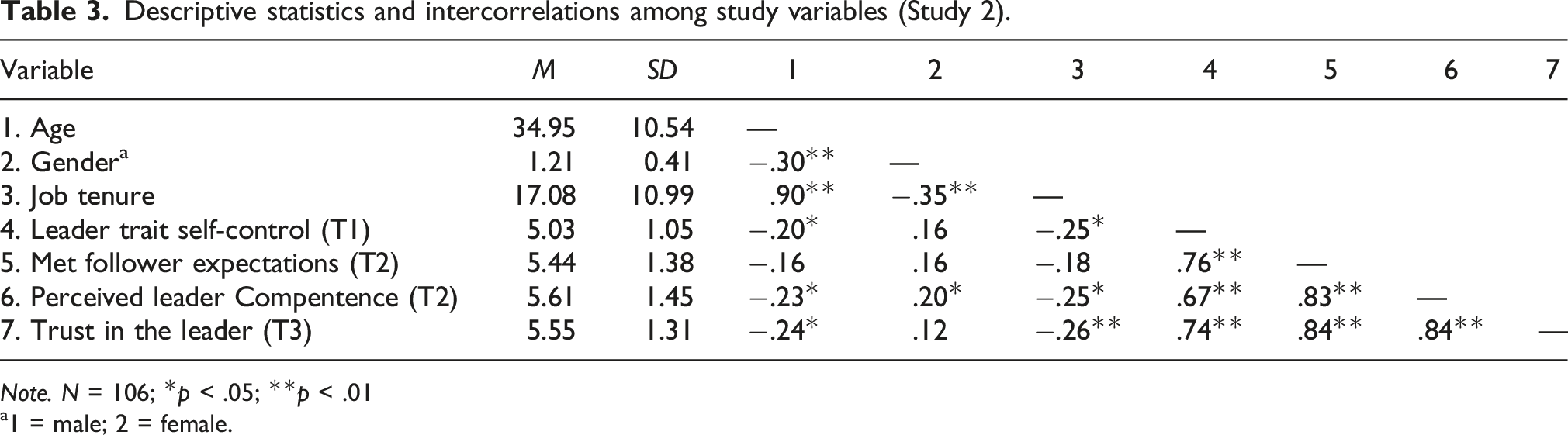
Note. N = 106; *p < .05; **p < .01
a1 = male; 2 = female.
Summary of regression results (Study 2).
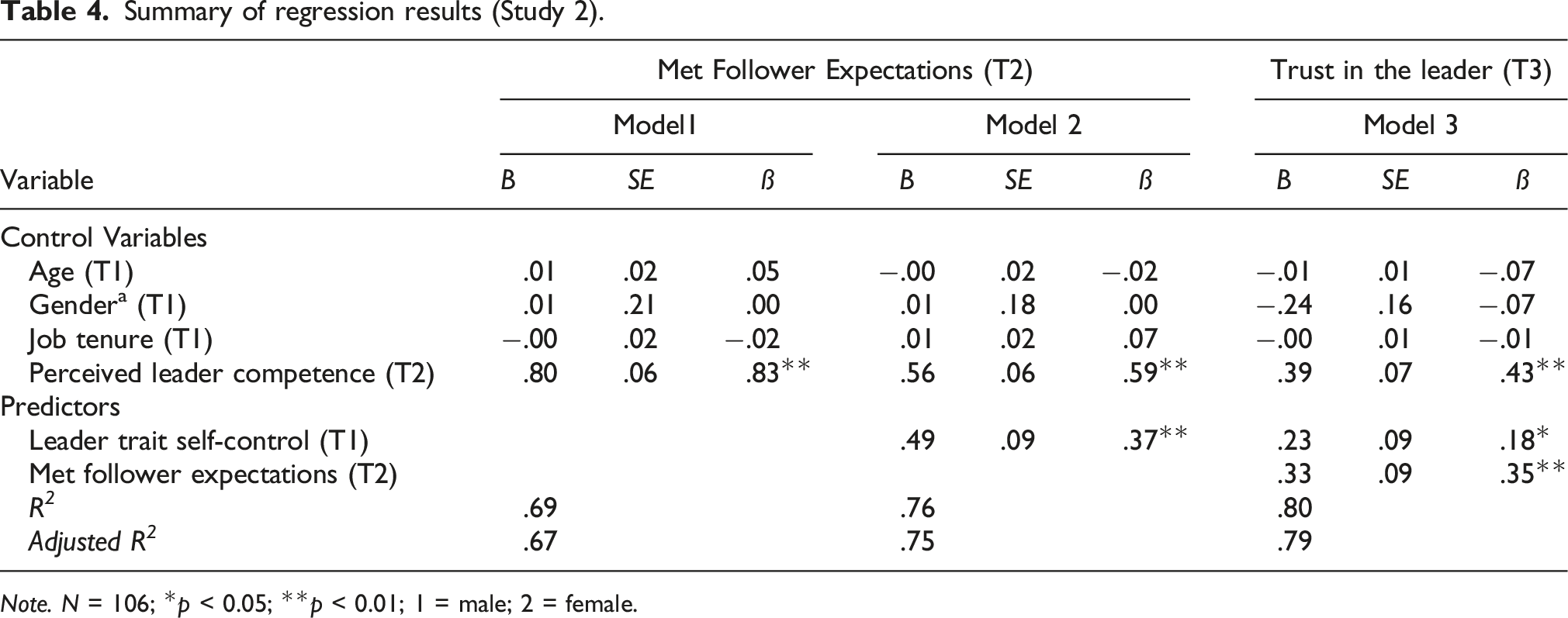
Note. N = 106; *p < 0.05; **p < 0.01; 1 = male; 2 = female.
Discussion
Study 2 provided additional support for our hypothesized research model. We found a mediating role of met follower expectations in the relationship between leader trait self-control and follower trust in a high-reliability context. These associations held when controlling for leader competence. The multi-wave field design employed in Study 2 also allowed us to address the limitations of the previous study. However, Study 1 assessed the study variables at one time point, likely raising correlations between the scales, Study 2 used a multi-wave study to minimize common method bias. Hence, the findings for Study 2 further suggested the replicability and robustness of our proposed research model.
General Discussion
We examined whether and through what mechanism leader trait self-control relates to follower trust in high-reliability contexts. As hypothesized, our two-study approach found that leader trait self-control enhances follower trust in the leader. Drawing on the theory of met expectations (Porter & Steers, 1973), we found that met follower expectations is an important mediator in this relationship. Thus, we determined the following: (1) followers expect self-control in their leader in a high-reliability context; and (2) when leaders are self-controlled, it positively relates to trust in the leader due to meeting follower expectations.
Theoretical Implications
Our study provides several theoretical contributions to the literature. First, our findings advance the ongoing debate about the costs and benefits of self-control (Block, 2002; Letzring et al., 2005; Röseler et al., 2021; Zabelina et al., 2007; Zuo et al., 2020). Prior work has shown inconsistencies regarding the costs and benefits of self-control (Baumeister & Alquist, 2009). However, by drawing on the met expectations theory (Porter & Steers, 1973), we clearly show the beneficial effects of self-control in a high-reliability context, demonstrating the relevance of trait self-control for leaders’ building follower trust by meeting their expectations. To resolve possible inconsistencies regarding the consequences of self-control, we establish these effects in a high-reliability context and further bolstered other authors’ findings on the relevance of self-control. The few existing studies have found that, although self-control is associated with multiple positive outcomes, the effects of self-control depend on context (Zuo et al., 2020). For instance, Lösch and Rentzsch (2018) and Röseler et al. (2021) found that people prefer partners with high self-control during duty situations (e.g., doing homework). However, in social situations (e.g., leisure time), people with low levels of self-control were preferred. By focusing on a high-reliability setting, we contribute to understanding contexts in which self-control is effective.
Second, our study contributes to the leadership literature by advancing understanding of the key components of leading effectively in HROs. By examining the effects of leader trait self-control on follower trust in high-reliability contexts, we respond to the call for further evidence regarding effective leadership in high-reliability contexts (Eberly et al., 2017; Hannah et al., 2009, 2010; Martínez-Córcoles, 2018; Yun et al., 2005). While researchers have already shown that the source of error-free operations is a culture of reliability (Vogus et al., 2014; Weick & Sutcliffe, 2001), our findings add to this literature by clarifying that leadership plays a pivotal role. We also find that leaders in high-reliability contexts must maintain self-control to enable a highly reliable performance. Our findings imply that a leader’s capability to regulate impulses and cognition is critically important in settings where it is necessary to avoid severe failures.
Third, we construct a new framework to integrate fragmented research on met expectations, self-control, and leadership to advances research on trust by elucidating met expectation processes underlying the self-control-trust relationship. By expanding Righetti and Finkenauer’s (2011) hypothesis that trait self-control promotes individual trust, we show that met follower expectations represent a meaningful underlying mechanism that links leader trait self-control and follower trust. In particular, met follower expectations have a significant mediating effect on follower trust, even when controlling for perceived leader competence (as an alternative explanation). These findings empirically support Porter and Steers’ (1973) met expectations theory, which proposes that a match between follower expectations and subsequent experiences leads to desirable work outcomes. Our findings also indicate that met expectation processes significantly impact leader-follower relationships in high-reliability settings. In addition, our findings corroborate ILT (Epitropaki & Martin, 2004; 2005; Lord, 1985), which argue that followers hold cognitive schemas of effective leaders who are considered worthy of influence. Thus, this study empirically examines the central tenet of met expectations theory and clarifies, based on ILTs, that followers expect self-control from their leaders in a high-reliability context. When these expectations are met, it translates into beneficial outcomes.
Limitations and Future Research
This study has limitations, highlighting certain avenues for future research. First, because we test our model in a single context of HRO research, our study may have limited generalizability (O’Neill & Rothbard, 2017). Nevertheless, our study builds on prior work demonstrating similarities in theoretically relevant dimensions of high-reliability occupations (Burtscher et al., 2018).
Second, although the context of a firefighting operation is typical in HRO research (Colquitt et al., 2011; Hannah et al., 2009), the predictability of operations changes from one HRO to another (Baker et al., 2006). While firefighting units frequently work in unpredictable (unstable) operations where timing is critical (Bigley & Roberts, 2001), other HROs may face situations with relatively more predictable (stable) operating conditions (Vogus et al., 2014). For example, the work of nuclear power facilities is often tightly controlled and highly regulated with standardized settings (Martínez-Córcoles et al., 2012), characterized by low volatility and strong safety rules and procedures (Martínez-Córcoles, 2018). Thus, future research may focus on examining leadership and, specifically, leader trait self-control in the predictable (stable) operating conditions of HROs, such as nuclear power facilities and the aviation industry (Krenz & Burtscher, 2021).
Third, the number of reports of extreme events, such as war violence, natural disasters, terrorist attacks, and pandemics, has increased in recent years (Hällgren et al., 2018), illustrating the uncertainty prevalent in many of today’s business landscapes (Holenweger et al., 2017). In this respect, prior work has suggested that nearly all organizations may face a certain level of unpredictability (instability) at some point, either by design (e.g., a merger) or change (e.g., a pandemic; DuBrin, 2013; Eberly et al., 2017). Consequently, we encourage future research to investigate leader characteristics in these organizations that may potentially work in high-reliability contexts (Hannah et al., 2009; Hannah and Parry, 2014).Consequently, we encourage future research to investigate leader characteristics in these organizations that may potentially work in high-reliability contexts.
Fourth, another limitation of this research is the imbalanced gender ratio across the studies. Indeed, we have significantly more men (85%) than women in Study 1, while the opposite is true in our pilot study (18% men). However, Study 2 is more balanced in gender, including a relatively equal number of participating male (54%) and female firefighters. While the sample of Study 1 is representative of the firefighting population, which is often male-dominated (O’Neill & Rothbard, 2017; Wu et al., 2019), Study 2 and the pilot study do not represent the actual gender ratio in the fire service population (Park & Hahn, 2014). Thus, questions of generalizability arise concerning Study 2 and the pilot study. However, the results are consistent across the studies, offsetting the limitations. Future studies should account for gender ratio imbalances in HRO research.
Fifth, in Study 1, we collect data from the same source at one time point, raising concerns about common method variance (Conway & Lance, 2010; Podsakoff et al., 2012). Therefore, we measure our variables at multiple time points and account for common method variance in our analyses. Our findings supported the measurement of our constructs and the low likelihood that common method variance was a concern in the present research (Gibson et al., 2007). Moreover, while separating the measurement of our variables in Study 2 increases confidence regarding temporal ordering, this study’s correlational design does not allow for a controlled test of our full mediation model (Mai et al., 2021). Thus, future research should conduct laboratory-based experiments that manipulate leader trait self-control and met follower expectations concurrently to establish causality.
Sixth, the current research represents a first step in understanding why leader trait self-control promotes follower trust in high-reliability contexts. While this study assesses only one mediator that accounts for this relationship, other underlying mechanisms such as behavioral integrity or self-monitoring may exist. For example, research has shown that leaders with higher levels of behavioral integrity meet positive expectations among followers (e.g., Shao 2019). Furthermore, research into self-monitoring has found an interplay of leaders’ ability for self-control and self-monitoring (Bonanno & Burton, 2013; McCullough & Willoughby, 2009; Snyder, 1974; Zhao et al., 2019). In this vein, leader self-monitoring and leader behavioral integrity should be integrated in future research.
Practical Implications
The current study has practical implications. First, our findings may help HROs in selecting and training leaders. In particular, our findings suggest that HROs should select leaders based on their self-control capabilities. Leaders with high self-control enhance follower trust in high-reliability contexts, so organizations need to consider candidates’ ability to exert self-control systematically. Therefore, assessment centers, structured interviews, simulations, and exercises during the selection process may act as useful selection methods for this purpose (Dayan et al., 2002; Heimann et al., 2020).
Moreover, since interpersonal trust is necessary for HROs to function effectively (Colquitt et al., 2011), we encourage HROs to include methods that ensure the successful use of leader trait self-control in their leadership development training (for an overview of German firefighter leadership training, see Schulte & Thielsch, 2019). Based on our findings, trainers and human resource managers should pay increased attention to leader self-control. Given that self-control can be enhanced through practice (Baumeister et al., 1998, 2006), organizations should offer programs to help enhance leader self-control, involving, for example, the ability to regulate emotions through reflection and self-awareness (Finkenauer et al., 2005, 2015). These training programs should also stress the importance of clarifying followers’ expectations for appropriate leadership.
Finally, our study provides a better understanding of leader self-control and can be used to guide HROs who desire to strengthen their culture of reliability. In light of our findings, HROs should stress the importance of leader self-control, meeting follower expectations, and fostering follower trust in the leader. The relevance of these findings becomes apparent, considering that follower trust is a critical predictor of safety and performance in high-reliability occupations (Burtscher et al., 2018).
Conclusion
Interpersonal trust is important to achieving and maintaining safety and performance in the context of HROs. Based on two complementary studies, we have developed a theory and provided evidence that leader trait self-control promotes follower trust in high-reliability contexts. Thus, we illuminate the importance of met follower expectations as a mechanism underlying this relationship. We hope that our findings spark additional research on the potential of self-control for building trustful relationships and improving the selection and training practices of leaders in HROs by considering self-control as a vital antecedent of trust.
Footnotes
Declaration of Conflicting Interests
The author(s) declared no potential conflicts of interest with respect to the research, authorship, and/or publication of this article.
Funding
The author(s) received no financial support for the research, authorship, and/or publication of this article.

Note
Associate Editor: Yannick Griep