




Abstract
Consumers often purchase access to a digital service by paying an upfront fee, and then consume the service over a period of time. In this article, we examine the implications of such temporal separation of purchase and consumption on a user’s consumption choices and on the firm’s optimal demand management strategy. Relying on behavioral economics and consumer behavior literature, we develop a formal microfounded model of a user’s decision calculus, and use it to derive the implied demand function and thus analyze the firm’s optimal decisions. In contrast to the classical recommendation to pursue admission control through higher prices as a means to manage demand for the digital service, we find that when mental accounting bias is a key driver of consumer choices, it might be optimal for a firm to pursue consumption control through lower prices. These results are robust when quality is endogenized, capacity is constrained, subscription duration is finite, and in the presence of a two-part tariff. We translate our findings into a conceptual framework for digital service management that characterizes the optimal demand management strategy along two key dimensions: the strength of the consumer bias and the cost of servicing demand. When these factors are significant, firms need to employ a combination of admission control and consumption control so as to manage congestion and maintain profitability.
Keywords
Introduction
Digital services such as artificial intelligence (AI) chatbots, cloud computing platforms, SaaS tools, and streaming media are increasingly sold through prepaid subscriptions—consumers pay an upfront access fee and then decide how much of the service to consume over time. 1 This temporal separation between payment and consumption creates a behavioral dynamic that standard pricing theory overlooks: the act of paying a higher upfront fee creates a larger mental account deficit, which in turn motivates greater consumption as users seek to “get their money’s worth.” For firms whose marginal cost of serving each unit of demand is nontrivial—as is clearly the case in compute-intensive AI and cloud services—this means that raising the subscription price to manage congestion can paradoxically worsen it (IronMountain, 2023). The conventional wisdom of admission control (charge more to admit fewer users) can thus backfire, and a strategy of consumption control (charge less to shrink each user’s mental account deficit) may be optimal instead. This paper develops the formal foundations of that trade-off, characterizes the conditions under which each strategy dominates, and translates the findings into actionable guidance for digital service managers.
Recent observations in digital services and SaaS consumption underscore this phenomenon. For instance, when OpenAI raised the price of its ChatGPT subscription, or when AWS increased its rates, something counterintuitive occurred: higher prices did not curb usage—they inflated it (Satija, 2025). AWS users scrambled to consume their precommitted cloud spend before the billing period ended, while ChatGPT subscribers explored more features and increased their usage significantly. These examples illustrate the core mechanism we study and motivate our central research question.
Similar usage-inflating effects appear in traditional services. For example, Erat and Bhaskaran (2012) find that a higher access fee might promote consumption even at the cost of purchasing additional complementary services. Similarly, the more recent the payment of the access fee, the more likely the consumer is to use the service (Gourville and Soman, 1998). Warehouse clubs such as Costco rely on membership-based access fees that encourage members, once they have paid for entry, to spend more of their annual budget within the club. In an all-you-can-eat pizza buffet, Just and Wansink (2011) found that customers who paid full price for an all-you-can-eat pizza buffet consumed significantly more pizza compared to those who received the meal for free. In all such settings, a growing body of evidence suggests that higher access prices can induce higher consumption of the same service, creating a systematic consumption bias with first-order implications for firms’ capacity management and pricing decisions.
Such patterns of overconsumption are particularly acute in modern digital services where marginal costs are no longer negligible, as in compute-intensive AI, cloud infrastructure, and thus calling for a re-examination of firms’ pricing and demand management strategies. In these environments, the purchase decision secures access over time, but the economically critical choice for consumers is how much of the service to consume after payment.
For firms, these consumption biases transform standard access-pricing decisions into a joint problem of pricing and capacity management under biased demand. In early digital information goods—such as basic content or streaming—marginal servicing costs were close to zero, allowing firms to treat consumption management as secondary and prioritize user acquisition. By contrast, in modern services with high or capacity-dependent marginal costs, raising the subscription fee can simultaneously reduce the number of subscribers and increase per-subscriber usage, with ambiguous implications for total load and cost. This trade-off is stark in AI and cloud services, where marginal costs per query or compute job are substantial—frontier AI models can cost orders of magnitude more per task than their predecessors, yet access is typically sold via flat-rate plans that obscure this heterogeneity. 2 Cloud providers face analogous pressures, increasingly layering usage-based charges onto fixed access fees to curb overconsumption.
The recurring pattern across these services is that higher access prices can be associated with higher conditional consumption, a phenomenon that can be interpreted through the lens of mental accounting (Prelec and Loewenstein, 1998; Thaler, 1985). Research in behavioral economics shows that individuals maintain mental accounts for expenditures and benefits, and that these accounts influence subsequent choices. When a consumer pays an upfront fee for access to a service, a mental account deficit is created; the consumer then seeks to “close” this deficit by consuming enough of the service to perceive sufficient value from the purchase. The higher the upfront price, the larger the perceived deficit and, correspondingly, the stronger the incentive to consume more, even when further usage entails high marginal costs for the provider. In subscription settings, this mental-accounting phenomenon interacts with the temporal decoupling of purchase and consumption: once the fee is paid, the marginal out-of-pocket cost of additional usage is perceived as zero, even though each unit may be costly for the firm. This decoupling can cause consumption patterns to deviate substantially from standard rational models that equate marginal benefit and marginal cost in each period, as seen in the previous example where unlimited mobile data users increased their cellular consumption and reduced reliance on cheaper Wi-Fi. 3
We develop a formal model of subscription-based digital services in which consumers’ mental accounting links access price to subsequent consumption intensity. The model is tailored to settings where purchase and consumption are temporally separated, and where services are accessed over multiple periods under prepaid subscriptions. Building on the behavioral literature on mental accounting and sunk costs, the analysis formalizes how the mental “book value” created at purchase shapes dynamic consumption choices and yields implied demand and consumption functions suitable for operational analysis.
The article makes three key contributions: First, building on the behavioral economics and consumer behavior literature, we characterize the effect of a consumer’s mental accounts on their dynamic consumption choices and develop a formal microfounded model of a consumer’s decision calculus suited for digital service settings where there is a temporal separation between purchase and consumption. This formal model is then solved to derive tractable (implied) demand and consumption functions. Second, analytical modeling of the consumer’s consumption choices allows us to identify a novel trade-off that is important for the digital service provider. Consistent with the recommendation from the extant literature, charging a high access price for a service reduces the total number of consumers who purchase the service. However, the same higher price also induces these consumers to consume more of the service, thereby increasing the overall requirements of the system. So, when this bias is high, an increase in the access price to reduce the size of the user base may have the unintentional effect of worsening the congestion problem. Finally, the analysis identifies the optimal pricing strategy for the firm, that is, when should firms engage in admission control by charging higher prices, and when should they control consumption by lowering the price. Specifically, when the consumer bias is low, an increase in the cost of satisfying demand makes it optimal for the firm to follow the classical recommendation and pursue admission control. However, when the bias is high, a similar increase in the cost of fulfilling demand requires the firm to engage in consumption control by lowering the access price for the service.
We also extend our study of a firm’s optimal pricing by considering a two-part tariff structure, wherein customers are charged both an access fee and a per-unit consumption fee. While pure access fee pricing is optimal in our model in the absence of bias, we find that an increase in bias, coupled with rising service costs, can render two-part tariff pricing the optimal choice. Notably, the total fee paid by consumers may increase or decrease with bias, depending on the average number of units consumed. These findings highlight the role of consumer bias in determining the effectiveness of two-part tariff pricing of digital services. We also demonstrate the robustness of our main findings under varying operational conditions. Specifically, our results hold whether the firm faces strict capacity constraints (such as in AI settings where high-end GPUs are a limited resource), or operates in a more flexible environment where additional bandwidth or computing resources can be scaled up more easily, as is typical for streaming providers.
The rest of the paper is organized as follows. We review the relevant literature and develop a formal model of consumers’ multiperiod consumption choices in Sections 2 and 3. Subsequently, Section 4 turns to embedding our consumer model into the firm’s optimization problem and examines the optimal pricing strategies for a monopolist firm. Additional model extensions aimed at examining the robustness of our results and the limits of our theorized consumer bias are offered in Section 5. Finally, Section 6 concludes with a discussion of managerial implications.
Review of related literature
The current study is positioned at the intersection of two streams of literature: (i) the revenue management literature in Operations Management (OM) and Information Systems (IS) that examines strategies that firms employ to shape demand, including congestion and usage pricing, so as to effectively manage finite resources (see, e.g., Bitran and Caldentey, 2003; Gupta et al., 2002), and (ii) the mental accounting literature that examines consumer reactions to pricing (see, e.g., Soman, 2004). Without attempting to offer comprehensive reviews of either, we shall only briefly review some of the main models and insights from these streams with emphasis on clarifying how our work bridges and complements them.
The OM literature on revenue management, by and large, argues for the use of price as a lever to manage capacity utilization (Talluri and Van Ryzin, 2006). Indeed, higher prices are axiomatically assumed to reduce demand (for instance, see Chan et al., 2004: for a review of capacity/inventory and pricing decisions), and hence considered to be an effective mechanism to limit the usage and thus the congestion costs of a service system. As illustrated by Van Mieghem (2000), the resulting lower congestion may also translate to higher consumer perceived quality. These pricing strategies, typically referred to as admission control, have also been the emphasis of the queuing theory paradigm. Early research in this area has established that admission fees are a necessary tool to prevent overcongestion (Dewan and Mendelson, 1990; Edelson and Hilderbrand, 1975; Mendelson, 1985; Naor, 1969), and subsequent research has shown that in the presence of customer heterogeneity, optimal strategies may involve compensating customers for waiting, sometimes improving both profit and social welfare (Afeche, 2013; Chen et al., 2009; Ha, 1998; Hassin and Haviv, 2003).
The IS literature examining congestion has explored a variety of mechanisms, such as the design of pricing plans in distributed computing, and their role in shaping demand, and has elaborated on how these strategies may alter the incentives for infrastructure investments. Using analytical models and simulation, Gupta et al. (2011) emphasize the importance of marginal cost on the choice between flat-fee or congestion pricing to achieve socially optimal network capacity. When the marginal cost of capacity provisioning is high and ensuring a high quality of service is important, Du et al. (2008) demonstrate the benefits of cooperative allocation and surplus sharing among competing service providers.
Researchers have also explored the signaling effects of congestion and the impact that it has on consumer behavior. Anand et al. (2011) examine a customer-intensive service in which quality perception is increasing in the service time, and show that it might be optimal for a firm to slow down further when the demand for its service increases. Relying on observations from on-demand platforms like Uber and Lyft, Cachon et al. (2017) show that surge pricing to manage capacity can lead to both better capacity utilization and social welfare. Additionally, when customer valuations for service are uncertain, an increase in their delay sensitivity can increase the service fee and reduce the wage rate for independent agents (Taylor, 2018). Under some conditions, the platform might find it optimal to engage in surge pricing even when supply exceeds demand because credible communication through such pricing can lead to more efficient redistribution of agents (Guda and Subramanian, 2019). A smaller stream of literature has also examined optimal service design and quality provisioning (Bellos and Kavadias, 2021).
While most of the early research considered the case of pay-per-use pricing, the recent popularity of prepaid subscription-based services, where consumers prepay for a service and then consume it over an extended time, has started attracting greater attention from operations management researchers. Interestingly, several theoretical models have concluded that subscription pricing, despite its inability to control congestion, might still be the optimal strategy for a firm (Cachon and Feldman, 2011; Randhawa and Kumar, 2008; Wu et al., 2024). Using a combination of theory and experiments, Leider and Sahin (2014) show that mistaken beliefs about the value distribution can at times lead to overconsumption and overpayment by subscribers. Still, there also exist models that have identified conditions under which subscription plans are socially beneficial and lead to win–win situations for firms and consumers alike (see, for instance, Bhargava and Gangwar, 2016; Sundararajan, 2004; Wang et al., 2019). Related streams of research study the capacity and other infrastructure-related investment decisions from the lens of managing multiproduct resources (Kahlen et al., 2024; Kouvelis and Tian, 2014), alignment of cross-side effects across digital and physical infrastructures (Joglekar et al., 2022), consumer heterogeneity (Dennis et al., 2012), operational and managerial flexibility (Aral et al., 2023; Ritchken and Wu, 2021), and limited information on resources needed for production (Anand et al., 2023).
Beyond the theoretical research cited earlier that has focused on normative suggestions, other studies have empirically or experimentally examined how prepaying for a service changes consumers’ actual consumption behavior. Research on how price and sunk cost affect consumption in both traditional and digital settings can be categorized into two broad mechanisms—motivational drivers and mental accounting—both of which are directly relevant to our setting. Motivational theories originate with seminal research by Arkes and Blumer (1985) on the “psychology of sunk cost,” which demonstrates that higher nonrefundable payments lead to greater continuation of inferior options, interpreted as attempts to avoid waste and justify past choices. Specifically, they find that subjects who bought discounted season tickets attended fewer performances compared to those who bought full-price tickets. Several other empirical studies have also documented systematic deviations from “rationality” in consumer behavior when consumers prepay for products or services (Almenberg and Dreber, 2011; Huang et al., 2018; Just and Wansink, 2011).
Mental-accounting approaches, building on Thaler (1985) and Prelec and Loewenstein (1998), argue that consumers keep quasi-separate “accounts” for expenditures and outcomes and aim to bring each account closer to balance. Prepayments and flat fees create salient accounts that consumers try to amortize, leading to higher usage early in billing cycles and underweighting of opportunity costs (Thaler, 1985). Work on “payment depreciation” (Gourville and Soman, 1998) shows that consumption spikes after fees are charged and declines as payments recede in memory, suggesting that usage is tied to the salience of prior payments rather than marginal benefits. Okada (2001) extends mental accounting to durable-goods replacement, showing that a mental “book value” for existing products discourages early replacement and that trade-ins reduce perceived waste and facilitate switching. Integrative reviews in economic psychology argue that mental accounts provide the representational structure, while waste aversion and self-justification determine how strongly sunk costs influence behavior. Erat and Bhaskaran (2012) similarly find that a higher access fee can promote consumption of complementary add-ons; however, their focus is on monetizing add-ons via razor-blade or niche pricing, whereas our setting centers on admission versus consumption control as tools for managing service costs.
Digital contexts provide especially clear demonstrations of pricing–consumption links. Mobile-data experiments by Joe-Wong et al. (2015) reveal that pricing structures such as caps and time-dependent pricing reshape not only total usage but also its temporal distribution: larger, higher-priced data bundles are associated with higher average usage, and off-peak discounts induce users to expand consumption during “cheap” or already-paid-for intervals. Chen et al. (2017) similarly show that the size and cost of mobile data plans anchor perceived “normal” usage and encourage consumption toward the cap. In the AWS marketplace, organizations struggled to utilize their spending commitments to AWS, and this led the organizations to attempt to increase their use of AWS in other areas of the organization that they may not be fully prepared to use, suggesting an over consumption to justify the upfront price commitment (IronMountain, 2023).
Beyond the mental accounting of “cost”, prior literature has also examined how the mental account deficit might arise in service settings from the implicit cost of waiting (Maister, 1984). While some early research has found that past time investments (compared to past investments of money) do not alter future choices (see, for instance, Soman, 2001), others have found that if waiting times are not too high, then longer waiting times could lead to more consumption (Ülkü et al., 2020).
Our paper examines digital service settings and builds on the literature reviewed above, and posits that the extent of consumption of a service by an individual would be positively correlated with the price that they pay to access that service. Complementing the existing work in revenue management and capacity planning, we identify factors unique to prepaid service settings that impact a consumer’s consumption choices to build an analytical model of how mental accounting deficits affect consumption of prepaid services. Subsequently, we explore the implications of the proposed mental accounting bias on a firm’s optimal pricing and demand management strategy. Thus, our study provides a comprehensive characterization of a firm’s strategic options to address demand management challenges in the presence of consumer bias.
A microfounded model of dynamic consumption decisions
In this section, we begin by building a multiperiod model that addresses consumers’ purchase and consumption decisions. The primary objective of this exercise is to develop a conceptual model of decision-making that explicitly incorporates and describes the influence of mental accounting bias on consumption choices. Once the model is formalized, we will analyze the implied utility functions of consumers to derive the effects of price, usage, and consumer valuation on the observed consumption patterns for services.
Consider consumers who pay a fixed upfront price (hereafter referred to as access fee) to purchase the service and access it. Subsequent to their purchase, they receive access to the service and engage in consumption over a period of time. To depict a consumer’s multiple consumption opportunities postpurchase, we consider a discrete time multiperiod model in which consumers engage in probabilistic consumption in every period. Specifically, a consumer who has purchased the service has to choose between three possibilities in every period (
We formalize this consumer decision process in the three-state discrete Markov chain represented in Figure 1. As shown in the figure, a consumer could be in any one of three states
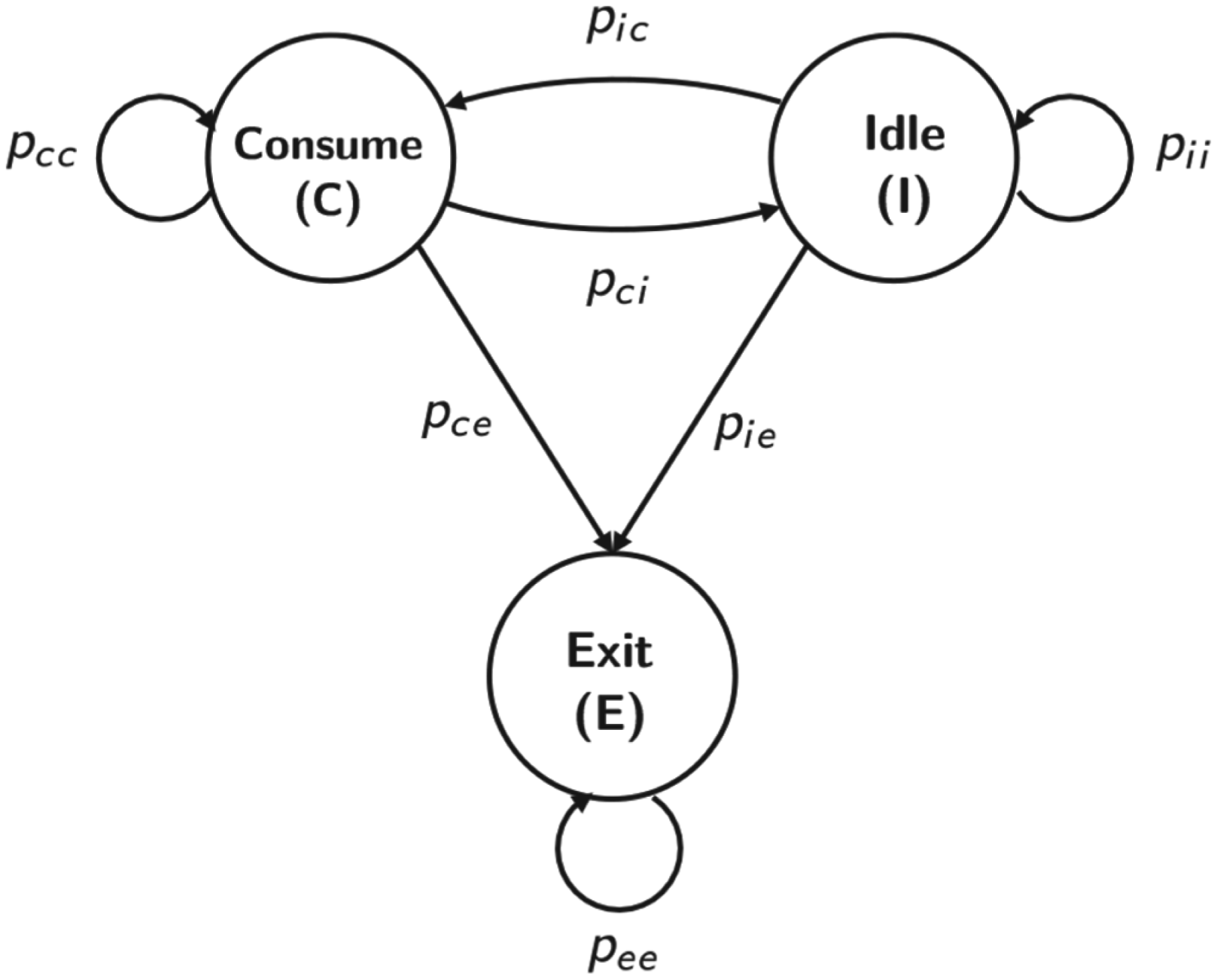
Consumer consumption process.
Turning to microfounding the transition probabilities between the different states, we borrow from choice models (see, for instance, McFadden, 1973), and conceptualize that the probability of a unit consumption in any period is dependent on the utility that the user derives from the service in comparison to the utility of any outside option. Specifically, let
Under this interpretation, the odds of consuming a unit of service compared to the outside option are given by the ratio of the utility from consuming a single unit to the utility from the outside option. That is, the probability of consuming a single unit of the service in any given period is given by
We shall assume that a consumer, conditional on not consuming, exits the market with probability
Note that a richer model may assume that the probability of exit/consumption conditional on not having consumed in the previous period is different from the probability of exit/consumption when conditioned on having consumed in the previous period. We chose not to pursue such a specification for two reasons: first, this more complex model does not yield mathematically tractable results, and second, such a model would need to make additional ad hoc assumptions as to why and how the consumption history may affect a consumer’s choices. Moreover, as long as we assume that it is merely the features/attributes of the current set of alternatives (consume vs. idle vs. exit) that affect the consumer’s choices, the probability of exiting the market should be expected to be independent of the past behavior of the consumer (i.e., their current state).
Having represented the consumption process of an individual consumer, we now examine the expected number of units consumed by the consumer. The lemma below characterizes this.
While deciding to purchase access to the service, the expected number of units a consumer of type

All proofs are provided in Appendix A in the online E-companion.
The analysis above characterizes the consumer’s anticipated consumption of service, that is, when a consumer considers whether to purchase a service or not, what their belief regarding the expected number of units that they would consume postpurchase would be. Not surprisingly, the usage is increasing in the quality of the service, as well as the valuation of an individual consumer. What we are most interested in, however, is how the consumer’s multiperiod consumption patterns are affected after they have purchased the service, that is, how the actual consumption is impacted by the mental account deficit created due to the prepayment for the service (Thaler, 1985).
To formalize the role of mental accounting deficits on the consumption choices, we borrow from that literature. Consistent with the mental accounting literature (Prelec and Loewenstein, 1998), we assume that our consumers incur a disutility from holding their mental account in deficit. To formalize this relationship and to derive a tractable mathematical model, we assume that a consumer incurs a disutility

After having purchased access to the service, the expected number of units that a consumer
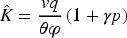
As may be noted from Lemmas 1 and 2, the consumer model proposed above—
In the next section, we shall build on the consumer model and examine the implications of the mental account deficit on the firm-level demand management decisions.
The consumer model offered in Section 3 parsimoniously captures the key aspects of the proposed bias. In this section, we build on the consumer model, roll up the consumer demand to obtain the implied demand function, and turn to examining the prescriptive question of optimal demand management decisions.
Consider a firm that sells a service of quality
We should note a key behavioral assumption made above: prior to paying the price and purchasing the service, the consumers are unaware of their bias and hence do not account for it when arriving at their prepurchase prediction of future consumption (i.e.,
It is important to clarify that the no-learning assumption operates along a specific dimension: it concerns consumers’ beliefs about how much they will use the service, not about the value they derive from using it. The latter form of learning, where a consumer updates one’s assessment of service quality or fit can be easily incorporated into the model without altering the main results. The former, however, is substantially harder to justify as a learning outcome, for two reasons. First, even experienced subscribers face stochastic consumption needs that vary period to period, making it genuinely difficult to disentangle bias-driven overconsumption from natural usage variability. The idiosyncratic noise in consumption makes it hard for consumers to observe, isolate, and correct their own bias. Second, and more importantly, a growing body of behavioral evidence suggests that when learning is psychologically motivated, it often reinforces rather than corrects existing biases; confirmatory reasoning and motivated cognition can lead consumers to interpret mixed evidence in ways that are consistent with their prior beliefs (Epley and Gilovich, 2016). This asymmetry between the two types of learning, where value-learning is straightforward but bias-correction is not, provides the behavioral grounding for maintaining the no-learning assumption in our model, while acknowledging that its relaxation remains a productive direction for future research.
The expected number of units that a consumer anticipates that they will consume along with the utility per consumption episode determines the total utility that they derive from the service. So, their decision to purchase the service hinges on whether the anticipated total utility from consumption exceeds the access fee. For the sake of parsimony, we shall assume that consumers do not discount their future utility, and thus each unit of consumption, now or in the future, yields the same utility (namely,
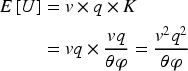
Having characterized the potential consumer’s belief about their expected utility, and the anticipated and actual expected number of units that they consume, we may now derive the demand function faced by the firm. As mentioned earlier, consumers whose valuation for service quality is
The total number of consumers who purchase the service is given by
The expected total consumption from all the users who purchased the service is given by
The total number of consumers who purchase the service is decreasing in the access fee There exists a threshold,


Proposition 1 fully characterizes the aggregate demand and consumption as a function of the access fee
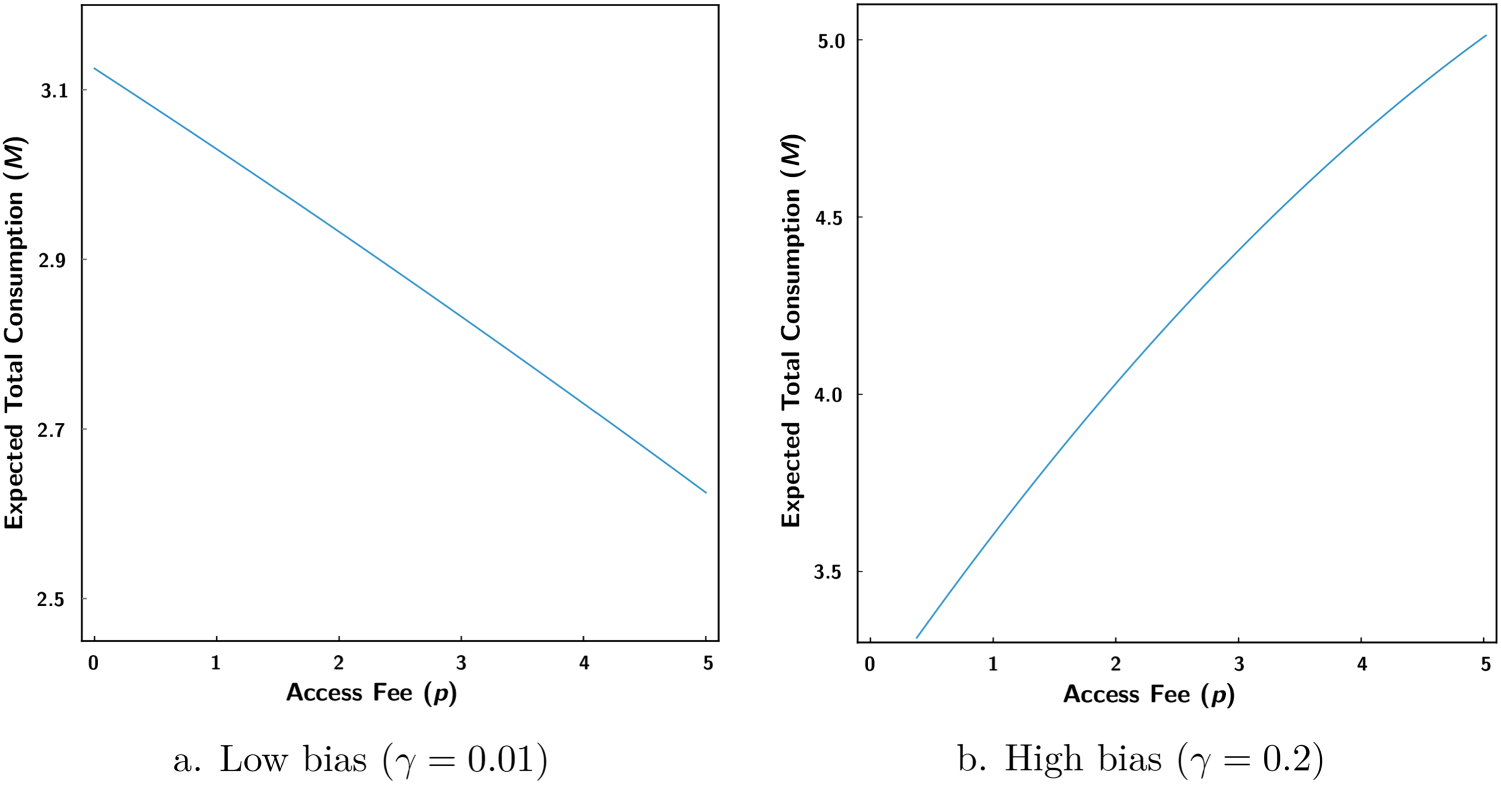
Impact of access fee on expected total consumption (
The model offered above, as it was aggregated from individual consumer-level choices, was by necessity stylized and required several parametric assumptions to maintain tractability. Still, in Appendix B (in the online E-companion), an analysis that starts off with a significantly more general aggregate demand model, yields similar conclusions and validates the robustness of the results of our stylized model.
Having developed the aggregate demand and consumption functions (Proposition 1) starting from the consumer’s choice in Lemmas 1 and 2, we now turn our attention to modeling the firm’s cost structure, and its profit-maximizing decisions. Offering a service with higher service quality is costly for the firm, and thus the marginal cost of providing each unit of service is assumed to be increasing in quality; specifically, we assume that the marginal cost of service is given by
The firm’s net profit under the aggregate demand and consumption functions derived above is given by
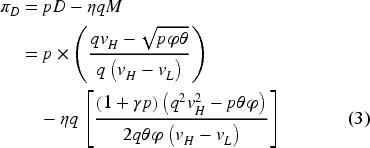
As the service quality is assumed to be exogenous in this section, we may without loss of generality set
There exists a threshold When Finally,
Proposition 2 provides conditions under which it is optimal for a firm to offer its service to customers. As one would expect, the consumer bias increases the overall cost incurred by the firm. This higher cost of servicing demand can erode the profitability of the firm to such an extent that they cease to offer the service to its customers when the service cost is sufficiently high. Moreover, as the consumption bias increases, this becomes even more likely. A numerical illustration of the proposition is provided in Figure 3.
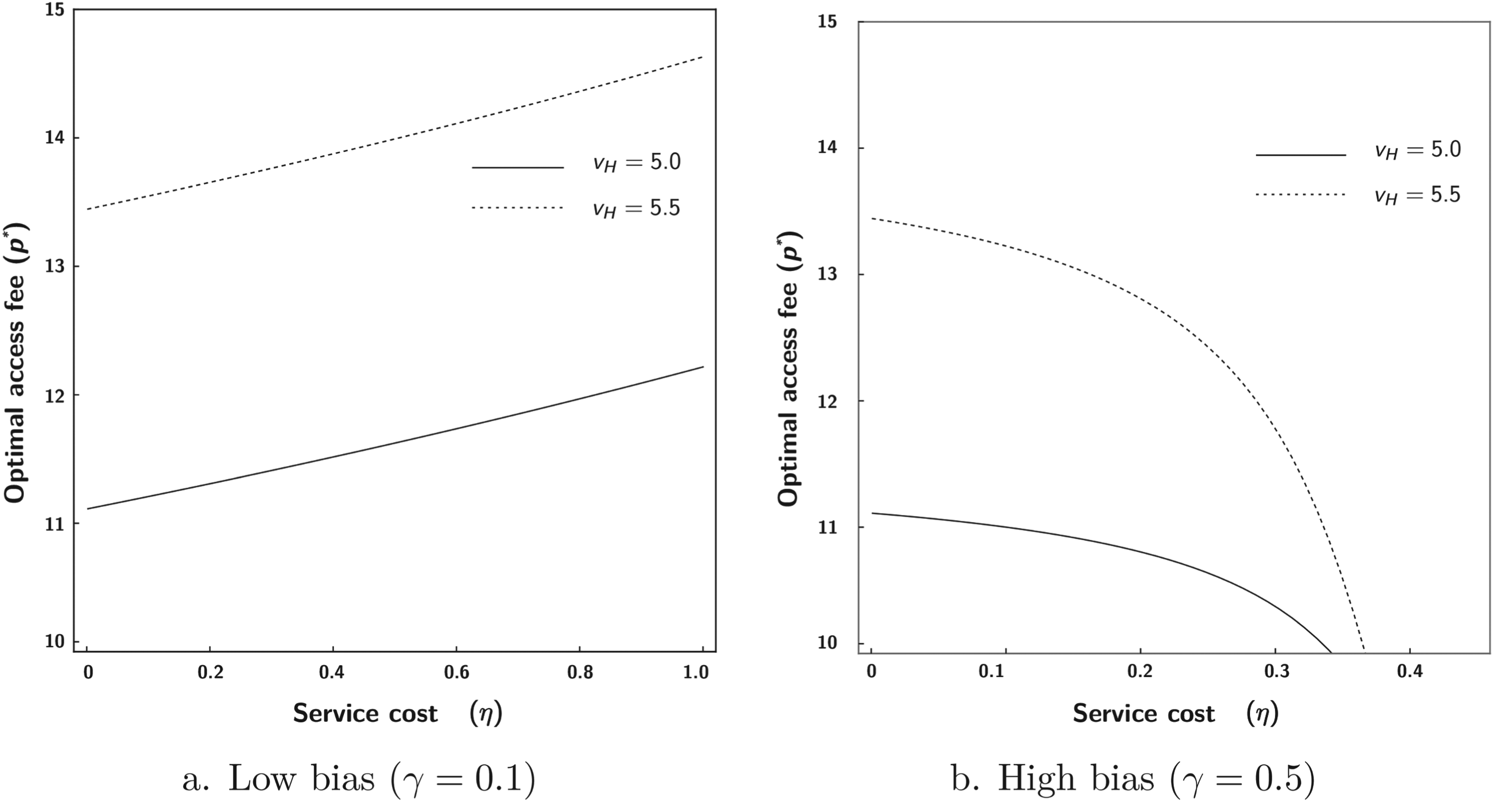
Impact of service cost and consumption bias on optimal access fee (
When it is profitable for the firm to offer the service, the optimal strategy of the firm is dictated by its desire to manage the demand while also trying to deal with the impact of mental accounting bias on its profits and costs. The firm seeks to achieve these objectives by adjusting its access fee. When the bias is low (
To understand this result, it is worth noting that a change in access fee has two opposing effects, as illustrated in Proposition 1, the relative strengths of which determine the optimal strategy of the firm. The first is the admission control effect, which causes a higher access fee to reduce the number of consumers who purchase the service. If this were the only factor, which would happen if consumers exhibit no consumption bias
However, unique to our model, this same higher access fee also induces greater consumption from each customer. The firm incurs a cost for every unit that is consumed, but gains revenue only once per customer through the access fee. Consequently, if the cost of servicing demand increases, simply increasing the access fee (especially when bias is high) also encourages greater consumption by its customers, and proves counterproductive. The magnitude of this effect depends on the strength of consumption bias which amplifies the cost of the number of units consumed by an individual consumer. Together, these factors induce the firm to reduce the access fee and control the consumption of its service rather than increase the fee and pursue admission control. We term the strategy of increasing access fee to limit the number of users as admission control, and the strategy of decreasing access fee to limit the consumption per user as consumption control.
As illustrated in Figure 3(a), when the consumption bias is low, the admission control effect is the dominant driver, and the optimal access fee is increasing in
As expected, an increase in the willingness to pay for a unit of service increases the overall demand for the firm’s service, and this enables the firm to charge higher prices for its service. However, the difference is less significant when the bias is high, particularly when the service cost is also high. As shown in Figure 3(b), when the service cost is high, an increase in
The optimal strategy of the firm is characterized in Figure 4. As illustrated in the figure, when
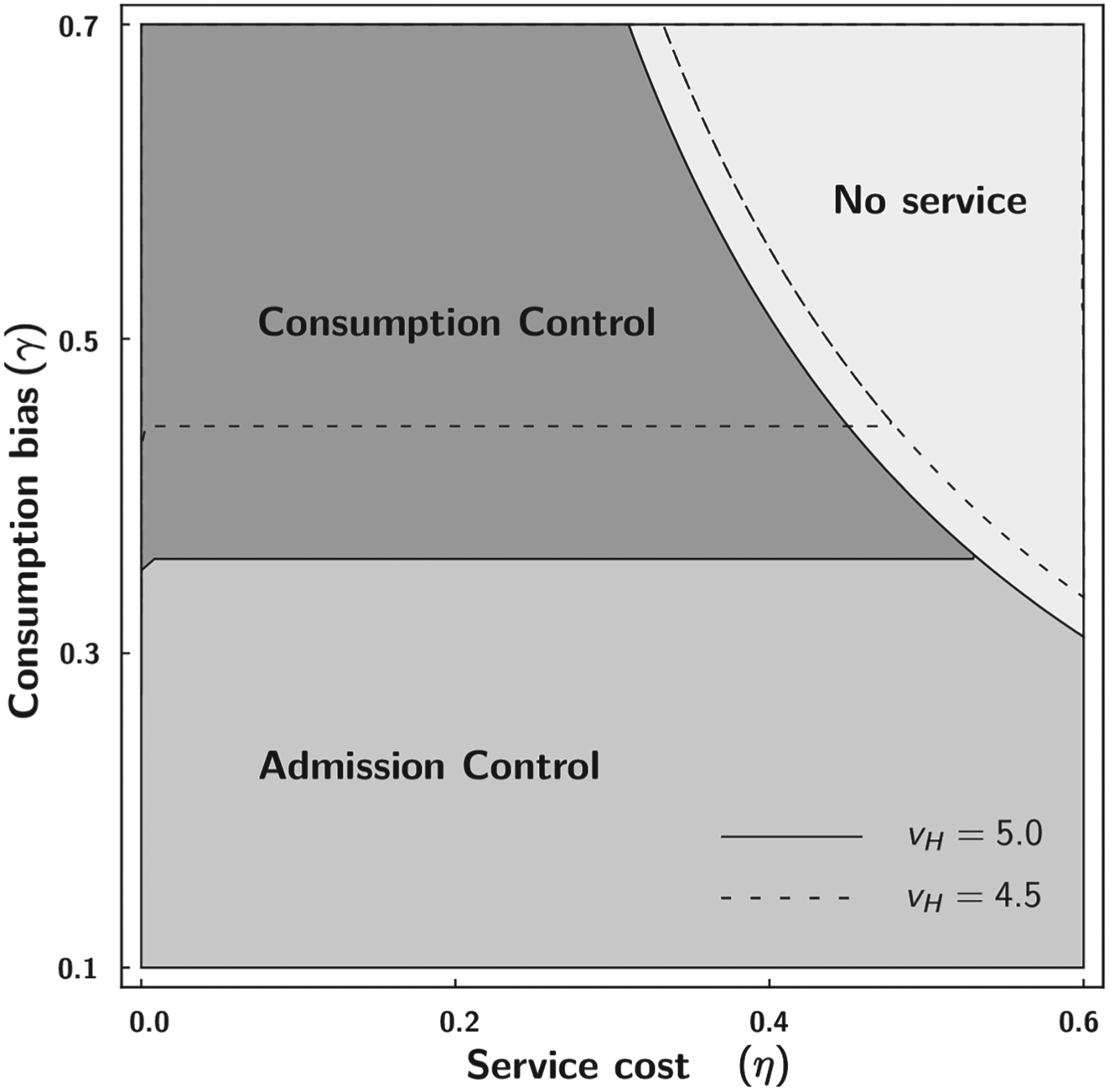
Impact of service cost and consumption bias on optimal pricing (
It is also worth noting that when
So far, we implicitly assumed that the firm has no capacity constraints, since the marginal cost of servicing demand was assumed to be always
The model offered in Section 4 parsimoniously captures the key pricing and quality decisions of a monopolist service provider faced with customers who exhibit mental account deficit-driven consumption. In this section, we enhance the setting in four distinct ways. First, we consider the scenario where firms can implement a pricing model where consumers can pay-per-use for the service. Second, we stress test a pair of simplifying assumptions made in the base case, namely that the subscription lasts forever and that customers do not “arrive” after the first period, and demonstrate that our main conclusions remain valid even when these assumptions are violated. 13 Third, we consider a setting in which the firm might have capacity constraints while providing the service to its customers. Finally, we consider a case in which the firm is able to adjust its service quality through additional investments, in addition to being able to set the access fee for the service.
Impact of pay-per-use pricing
We assumed in the base model that the firm offers the service for a single upfront fixed fee, allowing the customers to consume any number of units without incurring additional fees. Our base model illustrated the perils of such a strategy, where the access fee can influence the consumption and consequently require the firm to lower the access fee as a means of consumption control. A natural alternative, at least in some situations, is to use a two-part tariff structure where in addition to the access fee, the firm can also use a per-use fee to control consumption. Note that a two-part tariff, depending on the type of product or service, might be prone to the taxi-meter effect where consumers feel the sting of every unit used, leading to rushed, less enjoyable usage (like rushing to end a metered car ride). This might be more applicable to digital services such as streaming platforms.
In this section, we consider a context where two-part tariffs are feasible to understand how the presence and strength of the identified consumer bias affect the pricing strategies. Specifically, suppose the firm can charge, in addition to the fixed access fee
Thus, the effective utility that the consumer derives from consuming a single unit (for the first unit) is given by
After having purchased access to the service, the expected number of units that a consumer

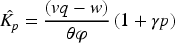
The lemma above characterizes total consumption and explains how the presence of a usage fee impacts overall consumption. Unsurprisingly, introducing a usage fee suppresses service consumption, as consumers will only use the product if their valuation sufficiently exceeds the fee. Specifically, the reduced utility lowers the likelihood of a consumer choosing to consume a unit in a given period, making the outside option more attractive. As a result, overall consumption decreases.
Next, we analyze how this shift in individual consumer behavior affects both the overall demand for the service and the total number of units consumed by all consumers.
The total number of consumers who purchase the service is given by
The expected total consumption from all the users who purchased the service is given by
The total number of consumers and expected total consumption are decreasing in the pay-per-use fee


The first part of the proposition confirms our belief that the usage fee reduces the number of consumers purchasing the service. In general, consumers anticipate lower overall consumption, and this expectation leads to a decline in the number of buyers. In other words, only consumers with a sufficiently high valuation (compared to those in Section 4) will choose to purchase the service, ultimately resulting in lower overall demand. Additionally, since each of these consumers also consumes fewer units, the firm’s total service consumption decreases. Furthermore, as the pay-per-use fee rises, the utility derived from each unit declines, amplifying these effects and further reducing both demand and consumption.
Given the consumption as derived above, we can now calculate the profits of the firm. The firm’s net profit under the aggregate demand and consumption functions derived above is given by
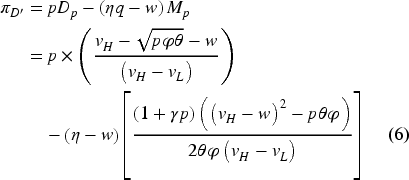
When There exists a threshold on When
First, in the absence of bias, there is no incentive for the firm to charge pay-per-use fees. Consumers can accurately anticipate their usage, and any externalities associated with their consumption are fully accounted for in the initial access fee. As a result, there is no need to impose an additional fee for using the service. This continues to be the case even when bias is relatively low. Since pay-per-use pricing reduces overall demand and consumption, the firm prioritizes expanding its market share when bias is minimal. In this scenario, the additional consumption triggered by lower usage fees is not significant enough to justify charging a separate usage fee. However, the firm finds it optimal to increase the access fee as a means to manage the effects of congestion (as illustrated in Figures 5 and 6).
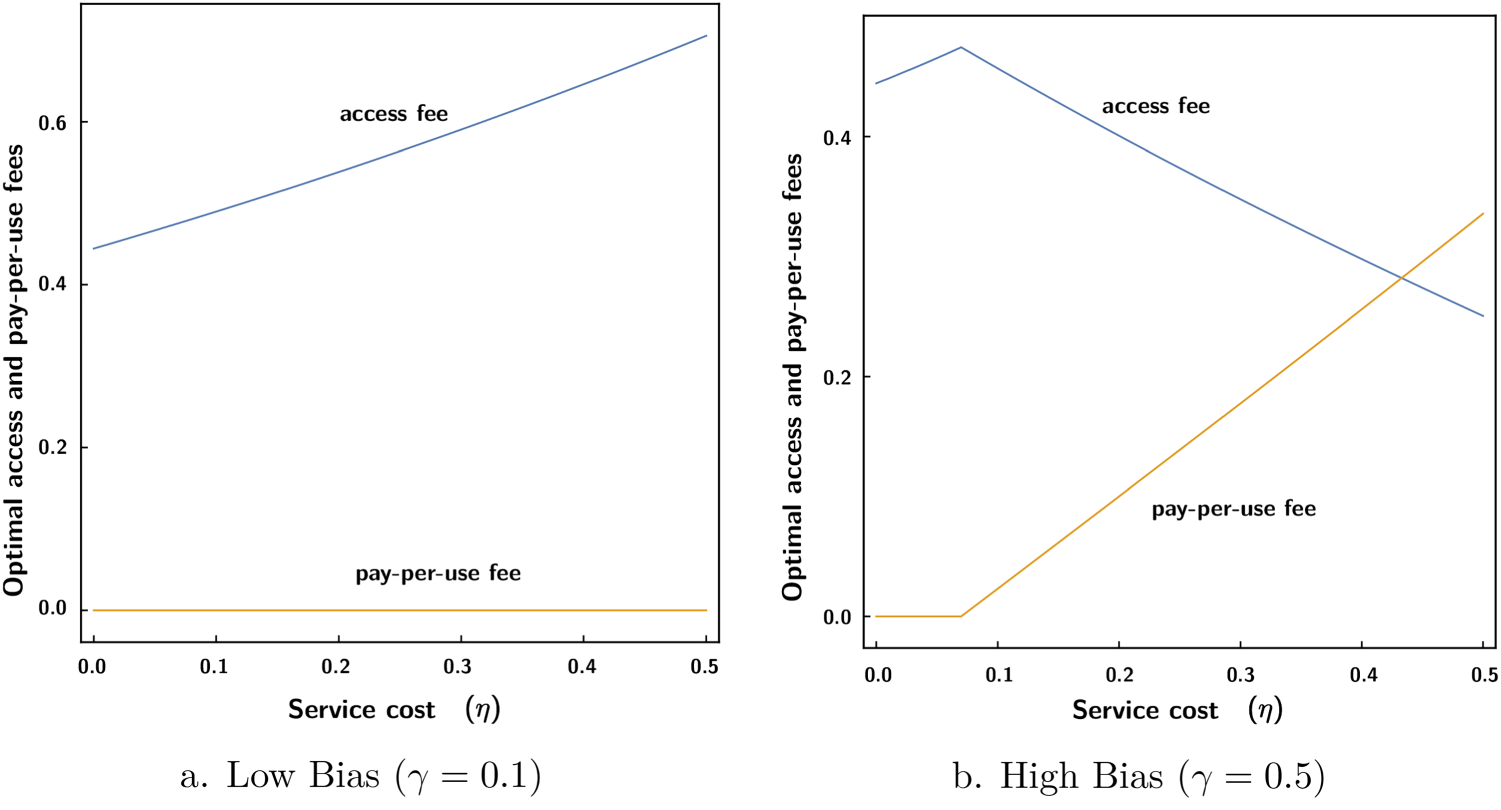
Impact of two-part tariffs (
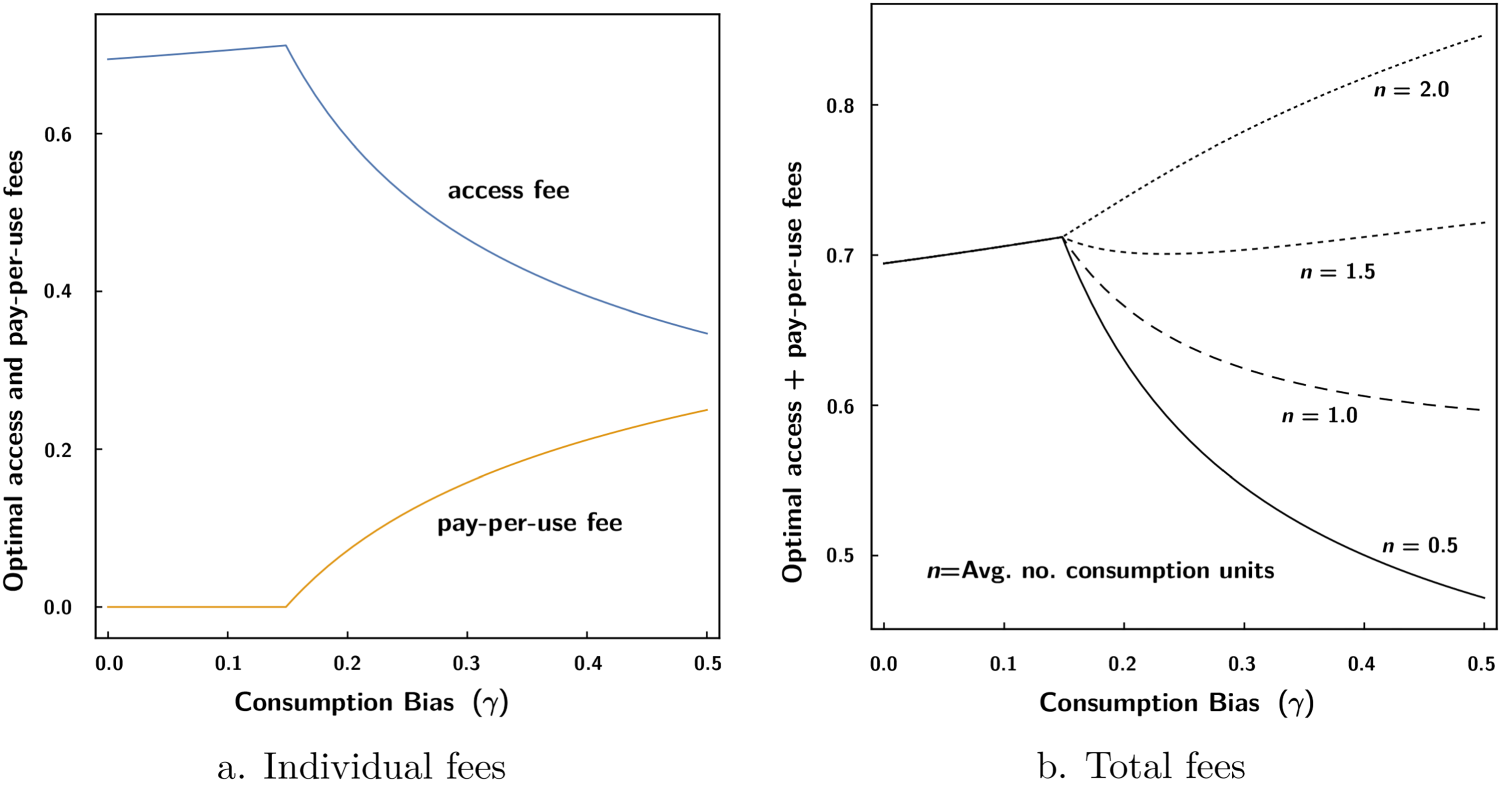
Impact of two-part tariffs (
However, as bias increases, its overall impact on consumption drives the firm’s cost of servicing demand to prohibitively high levels. In response, the firm adopts a two-pronged approach to managing the heightened consumption induced by consumer bias. First, the firm finds it optimal to reduce the access fee, similar to the strategy proposed in Section 4, as a way to regulate consumption rather than restrict access. Additionally, it introduces a usage fee, which serves as a deterrent to excessive consumption. Together, the combination of access and usage fees enables the firm to effectively manage the impact of bias on its overall service requirements (Figure 6(a)). It is worth noting that unlike the access fee, the optimal pay-per-use fee is increasing in the bias when
The impact of usage fees on a firm’s ability to manage consumption can be further illustrated by examining the total fees paid by consumers (Figure 6(b)). In particular, we analyze the total fees as a function of the average number of units a consumer uses. Our analysis reveals that for consumers with lower average consumption, an increase in consumption bias leads to a reduction in their total fees. Conversely, for consumers who, on average, consume more units, total fees increase as consumption bias rises. In other words, the combination of access and usage fees serves as an effective mechanism for price discrimination, especially in the presence of consumption bias.
Finally, what are the strategic implications of a firm’s ability to introduce usage fees? When should firms adopt a two-part tariff pricing model, and when should they continue with a pure access fee? We illustrate these in Figure 7.
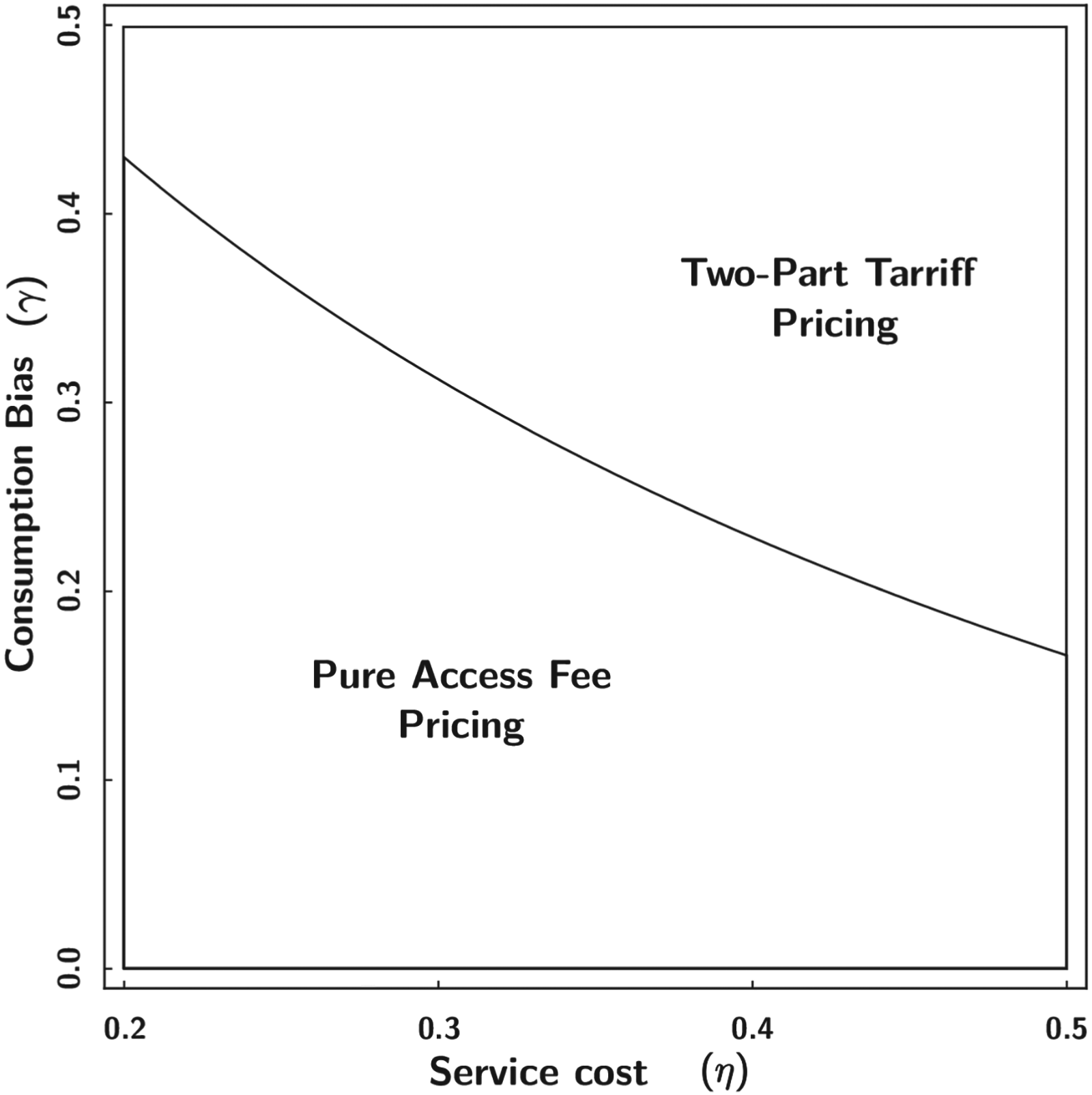
Optimal strategy under pay-per-use pricing.
In particular, a two-part tariff pricing model is optimal when consumption bias is high or when the cost of serving demand is substantial. However, when either of these factors is low, the firm prefers a pure access fee model to avoid the dampening effect of usage fees on overall demand.
Recall that the base model we considered earlier made a critical simplifying assumption, namely that the one-time payment allows the consumer to use the service as long as they wish; that is, the subscription period is infinite. Consistent with this, we also assumed that all the customers are present in the system at the beginning, and no additional customers arrive or leave the system after the first period. These assumptions, while (approximately) true for some services which have long subscription periods, such as annual subscription for some coding integrated development environments, are less true in other settings where the consumers also have to frequently renew their subscriptions. The current extension concerns itself with critically examining these assumptions.
To explicitly model the subscription period, suppose we first divide time into distinct periods (weeks, months, etc.). Let a subscription last for exactly two periods. To avoid initial period artifacts, we shall assume that at the beginning of the time period, half the consumers who have purchased the subscription have already been consuming it for exactly one period, and the other half have had their subscription expiring (since they have been consuming for the previous two periods). Note that the question of renewing the subscription arises only for this half of the consumers whose subscription has expired.
Similar in spirit to the base model, we shall assume that when a person obtains utility
As in the base model, after the purchase decision, the consumers’ effective utility per-unit consumption is given by two terms—first reflecting the objective utility, and the second reflecting the reduction in mental account deficit; that is, the effective utility per unit of consumption in the immediate next period after purchasing the subscription



The above implies that when the firm sets a price
As the form of the overall consumption and demand has not changed (compared to the base model), the firm’s maximization problem (of maximizing their long-term average profits) remains unchanged relative to the base model. Consequently, we may assert that the main insights derived—namely, the relevance of consumption and admission control and contingencies which make them optimal—remain unchanged even in this more complex extension.
We assume that the subscription price
Impact of capacity constraints
Our conceptualization of service cost in the base model assumed that the firm incurs a constant marginal cost
The profit, in this modified model, may be written down as
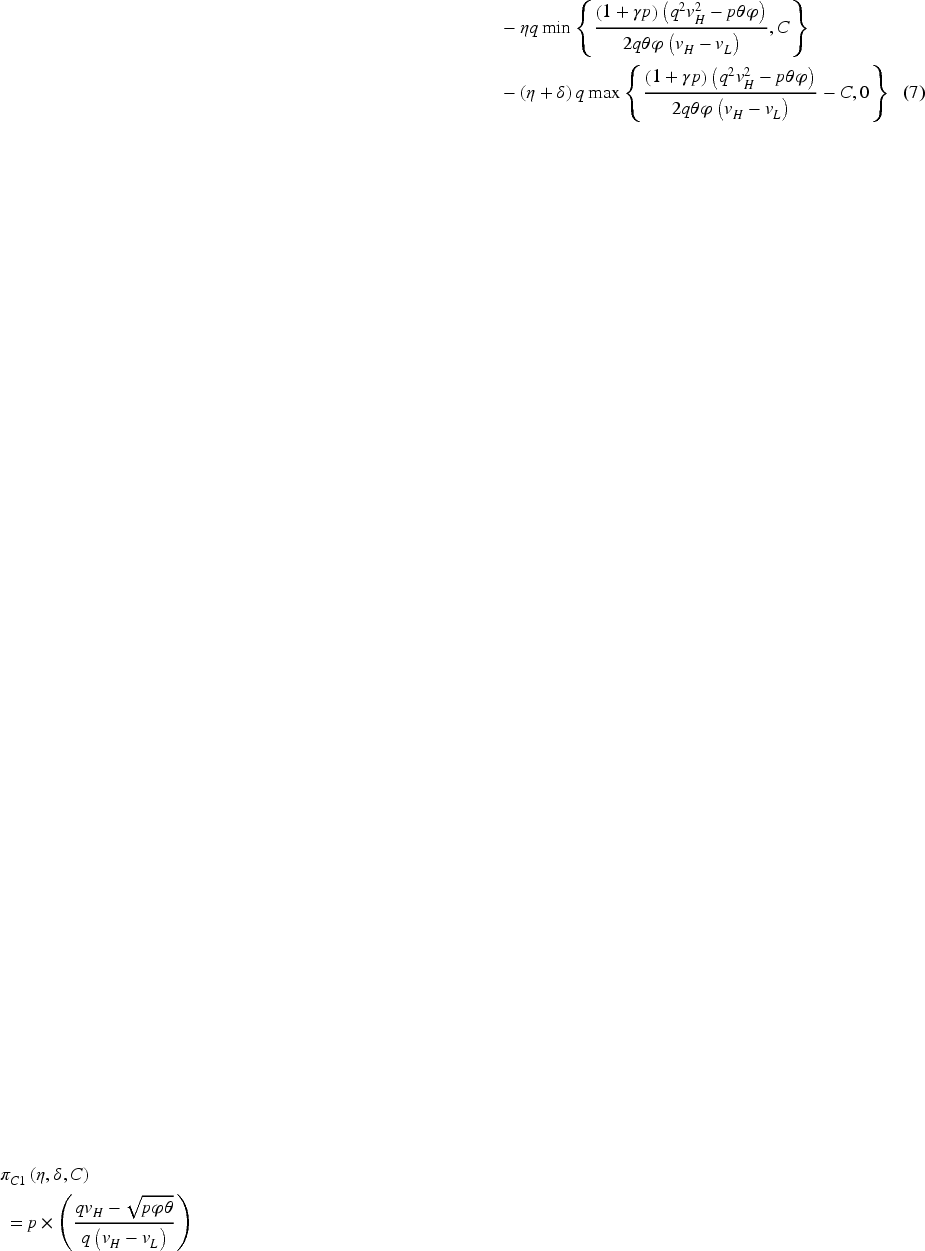
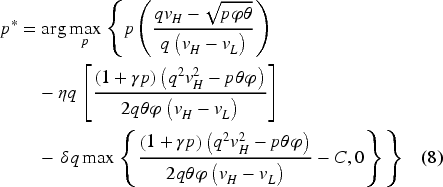
There exist thresholds
Proposition 4 confirms that the basic trade-off continues to exist even when capacity constraints drive up a service provider’s costs of fulfilling the demand. Indeed, whether the firm should pursue admission control or consumption control is dictated by the strength of the consumer bias. If the bias is small, the firm should pursue admission control when the cost of violating the capacity constraint is higher (Figure 8(a)). In contrast, consumption control becomes optimal for a similar increase in cost premium if the bias is large (Figure 8(b)). Specifically, as the cost premium increases, the firm’s primary concern becomes reducing the overall consumption to avoid the higher cost of fulfilling demand, and it is accomplished by reducing the size of the mental accounting deficits incurred by consumers. The effect of the outside options that are available to consumers on the optimal strategy of the service provider is also similar.
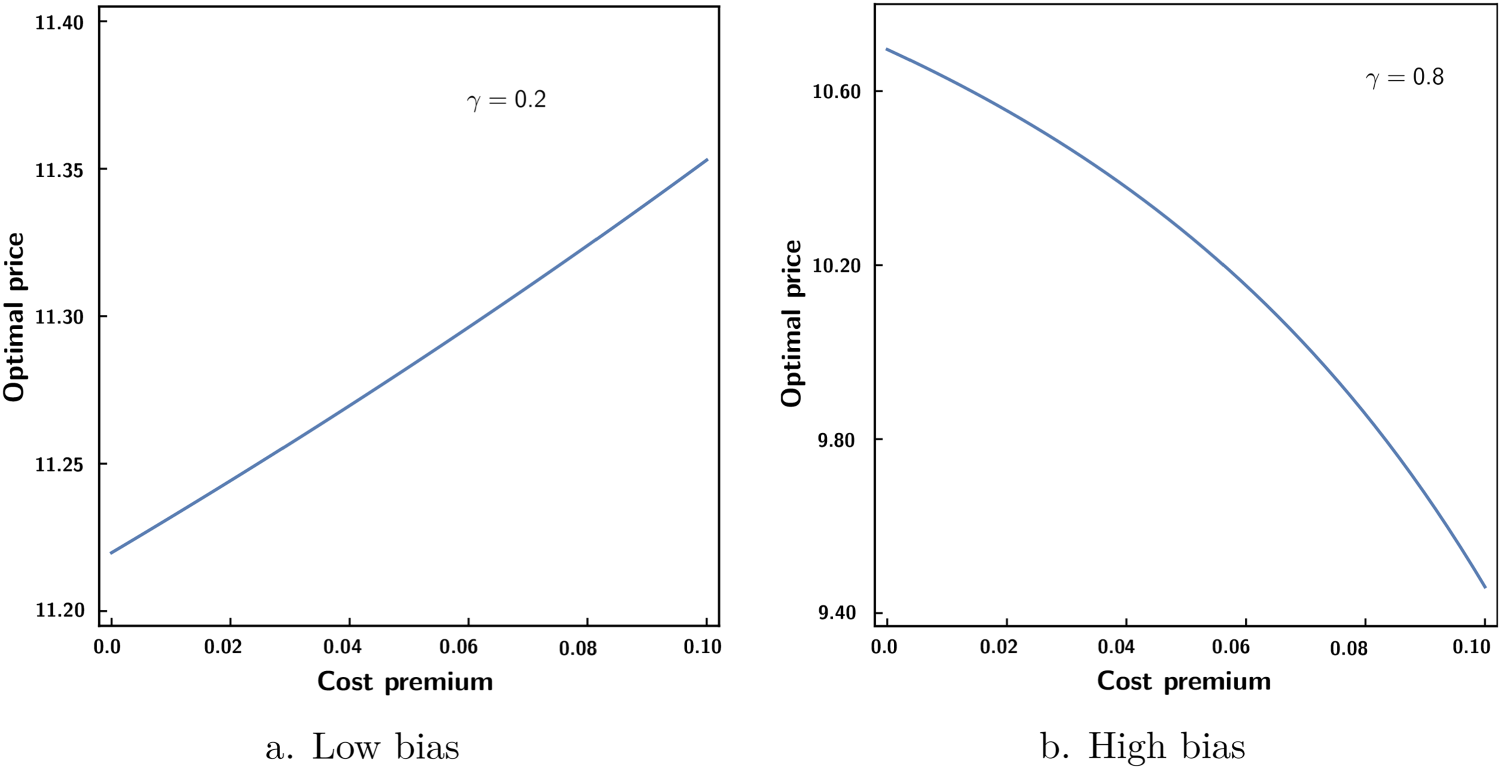
Impact of cost premium (
Equally relevant is the case where the capacity constraints faced by the service provider are even more severe, in that they may not have the ability to ever violate this capacity constraint. To examine this case of hard capacity constraint, let us assume that
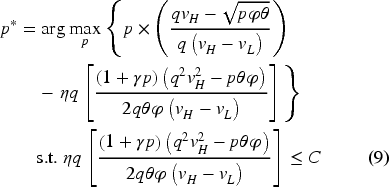
There exist thresholds
Proposition 5 confirms the importance of incorporating consumer bias into a firm’s pricing strategy even when the firm faces hard capacity constraints. When a consumer’s demand is close to the firm’s capacity constraints, the firm may need to respond to consumer bias in two distinct ways. When consumers exhibit low consumption bias, an increase in the availability of capacity, or the easing of the capacity constraint, allows the firm to reduce its price (and admit more people). That is, the firm is no longer compelled to use admission control to manage demand or congestion. Instead, by reducing the price, the firm can effectively utilize the additional capacity and expand its customer base.
In contrast, when consumer bias is high, the firm’s incentives and responses are different. In this scenario, the firm’s primary concern is to manage consumption and they do that by moving to a lower price. As a result, as the capacity constraints ease, the firm can choose to increase the price as a way to improve its margins. While this can increase the consumption for each of the consumers who purchase the service, the availability of the additional capacity makes it less of a concern. These two results, in conjunction, show that the key insights related to the effect of consumer bias on a firm’s pricing strategy continue to be relevant even when a firm faces capacity constraints.
These results are summarized in Figure 9 which illustrates the optimal prices as a function of the available capacity. As may be noted, when
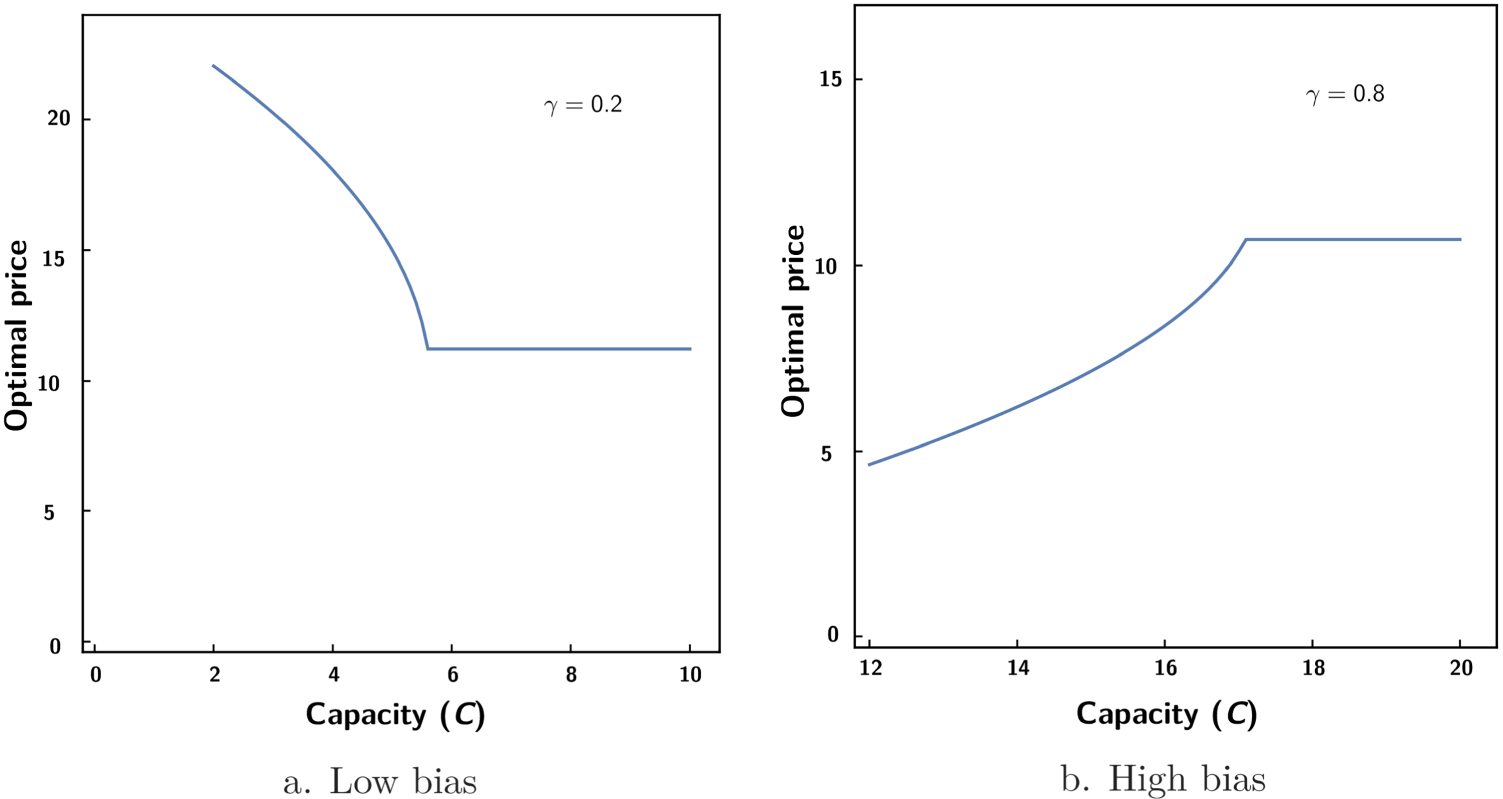
Optimal prices under capacity constraints (
Determining the optimal strategy of the firm for general capacity levels can be complicated. Instead, we conduct a numerical investigation to determine regions where the firm’s optimal pricing strategy changes from admission control to consumption control. The results from this numerical investigation are presented in Figure 10. As expected, when the mental accounting bias is sufficiently high, the firm is motivated to pursue consumption control. However, when capacity constraints become really tight, the firm might also be required to reduce the overall admission rates, as it does not have the flexibility to exceed its capacity limitations.
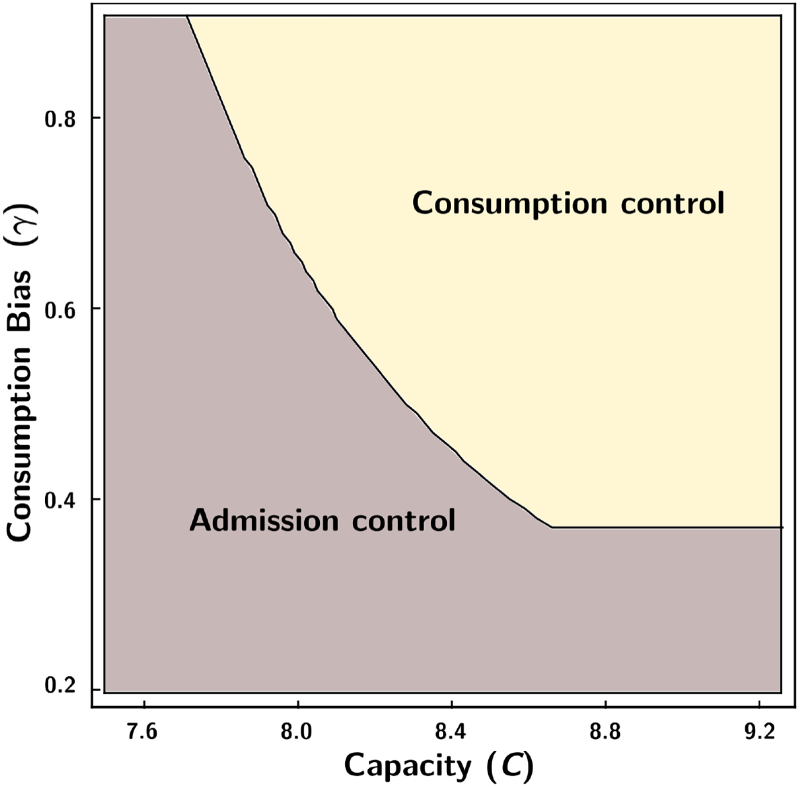
Strategy under capacity constraints
In this subsection, we extend our base model by assuming that the firm is able to adjust its service quality
There exist thresholds on
If If If
Proposition 6 shows that the optimal strategy of the firm depends on the mental accounting bias as well as its service costs. When the bias is low
The more interesting case occurs when the consumption bias is very high
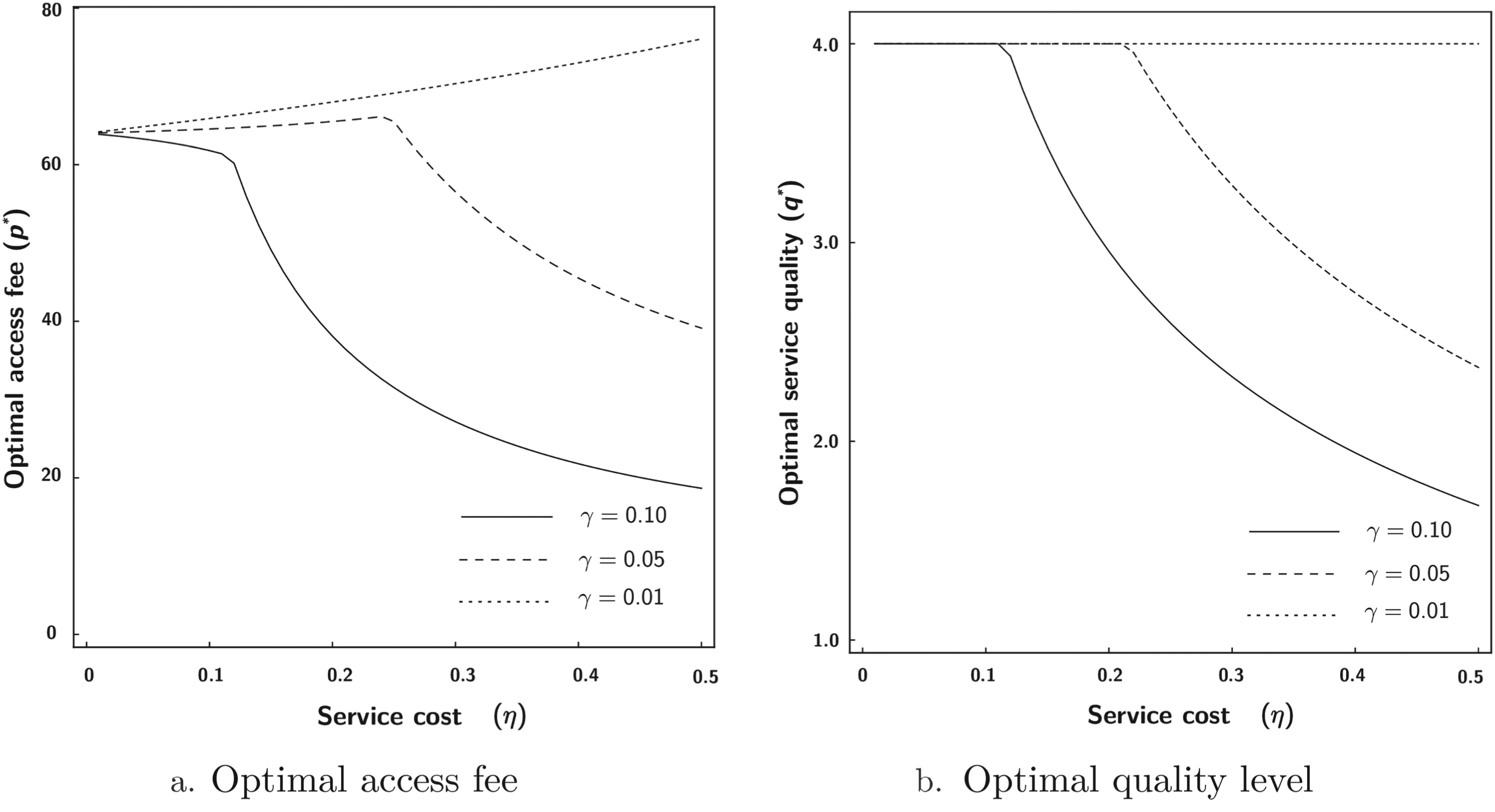
Impact of service cost and consumption bias on optimal access fee (
The optimal strategy of the firm balances these different objectives, and is numerically characterized in Figure 12. As depicted in the numerical analysis, when
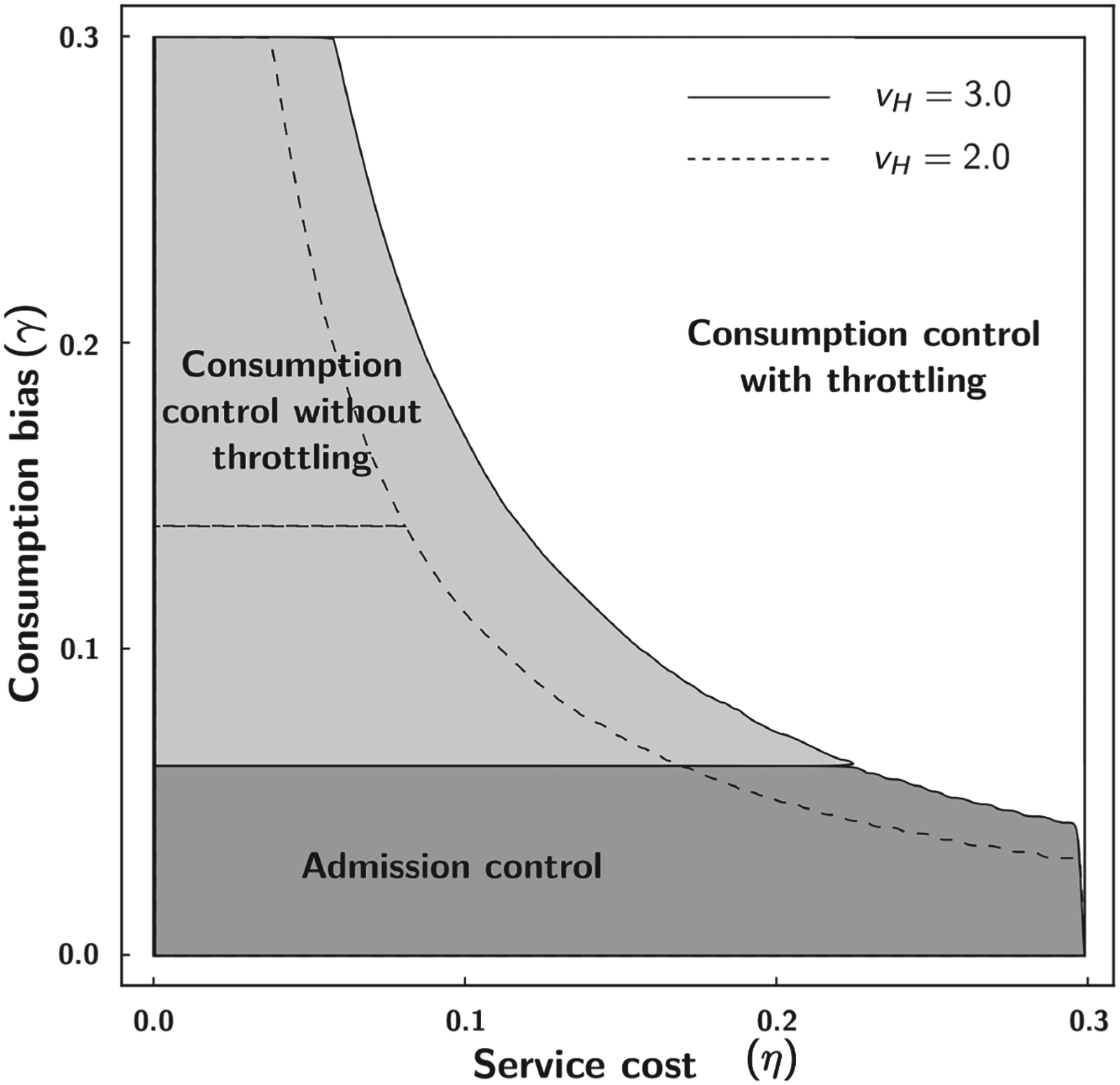
Optimal strategy under quality provisioning (
Finally, as depicted in Figure 12, the distribution of consumers also plays an important role in the firm’s optimal strategy. As the range of valuations for the consumer increases (higher
Firms that sell digital services to consumers face several operational challenges. First, because the production and consumption of services happen at the same time, firms have fewer operational levers to address demand surges. Second, capacity adjustments, being costly in the short term, typically cannot be made during the fulfillment stage, making the firms subject to high operational costs during periods of high demand. In this paper, we argue that the access and admission control solution that is often suggested in past literature have some significant drawbacks, especially in contexts where the service provider has nonnegligible marginal costs of providing the service, and where consumers prepay for the service, resulting in a temporal separation between the purchase and the consumption of the service.
Building on the behavioral economics and consumer behavior literature, we first conceptualize the effect of a consumer’s mental accounts on their dynamic consumption choices. Specifically, we propose that the mental account deficit that a consumer incurs in purchasing the service drives her consumption behavior, with a greater deficit triggering a greater consumption. Based on this conceptualization, we then build a formal microfounded model of the consumer’s decision calculus.
Formal analysis of the consumer model helps clarify the impact of the mental accounting bias on a firm’s optimal demand management strategies. In settings where the cost of servicing demand is high, prior theoretical and managerial literature recommends an admission control policy whereby the firm manages access to service by increasing the access fee. In contrast, our analysis, which explicitly considers the impact of the consumer bias, finds that it might be optimal for a firm to decrease its access fee in such settings. This difference in the firm’s optimal strategy occurs because of two interrelated yet opposing effects of price on the demand for the firm’s services. While the higher access fee reduces the number of consumers who purchase the service, the incentive to derive higher value from their purchase as a result of the bias also increases the overall consumption of the service. In fact, when the bias is high, an increase in the access fee increases the overall demand for the service rather than decreasing it, thereby making the demand management challenges worse. Thus, the optimal strategy shifts from admission control to consumption control, where the firm lowers the price, thereby reduces each consumer’s mental account deficit, and thus reduces their usage of the service.
These results are robust to settings where the firm faces capacity constraints or when the firm retains the flexibility to adjust the quality of service. Indeed, when a firm faces hard capacity constraints, it is crucial to implement a pricing strategy that aligns the overall consumption with the available capacity, and this increases the value of consumption control as a strategic approach. Additionally, when the firm can adjust service quality, this flexibility should be integrated with its pricing strategy. Specifically, when the consumer bias is low, the firm’s optimal strategy is admission control. As the bias increases, the optimal strategy shifts to consumption control. With a further increase in bias, the optimal strategy involves a combination of consumption control via lower access fees and admission control by lowering the service quality.
Demand management for prepaid and subscription services
Our findings also provide guidelines that can help managers think through the implications of a firm’s pricing and quality provisioning choices (Figure 13) for prepaid digital services. These results can be organized along two key dimensions: First, a supply-side parameter which captures the nature of the digital service and its operating environment, that is, whether the marginal cost of servicing demand is high versus low, or whether the firm faces a relatively hard (inflexible) capacity constraint where demand in excess of capacity is operationally costly, or relatively cheap to satisfy. We refer to this variable as operational strain cost (corresponding to the service cost parameter
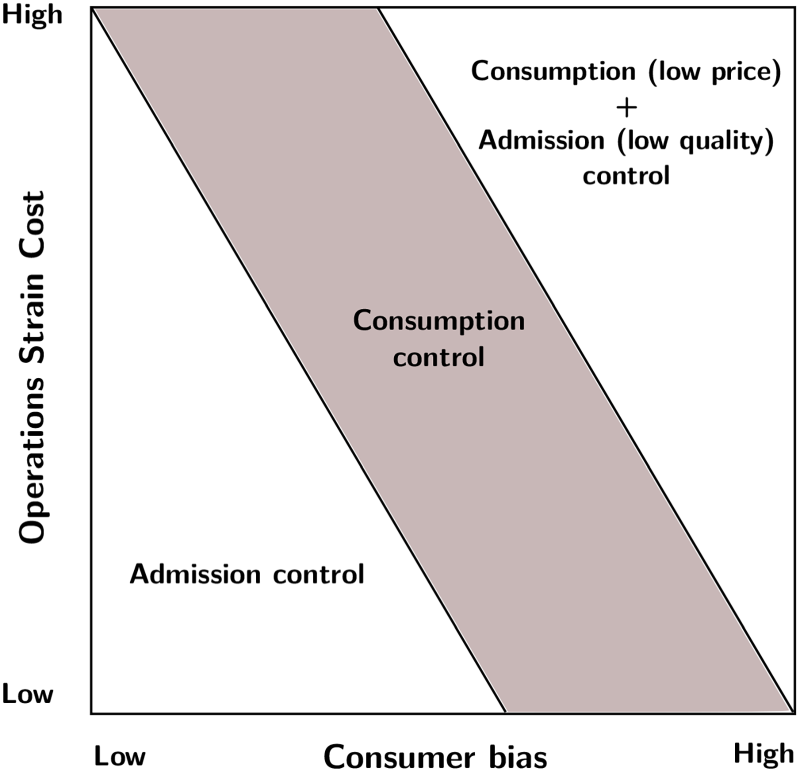
Demand management for prepaid and subscription services.
These findings offer actionable insights for digital service providers, particularly those operating in sectors where the operational strain cost is high and where consumers exhibit pronounced behavioral biases in consumption. Examples of such industries might include cloud computing and AI-as-a-service (AIaaS), where capacity provisioning and computing costs are substantial and demand patterns are highly volatile. In these environments, traditional demand management strategies (like access-based subscription pricing, which functions purely as an admission control mechanism) may prove inadequate. Such approaches overlook the temporal separation between purchase and consumption and result in systematic consumer mispredictions of future usage, leading to operational inefficiencies and increased cost burdens for service providers.
To address these challenges, we recommend that firms adopt a more nuanced approach that integrates behavioral insights with flexible pricing structures. Specifically, we propose a three-pronged approach centered on a hybrid pricing model that decouples access from consumption. First, firms should use access fees to segment and screen users based on anticipated demand. Second, usage-based fees can be employed to shape and manage consumption behavior more effectively. Third, dynamic quality modulation can be leveraged as a nonprice lever to complement pricing strategies during peak demand periods.
One practical application for this approach might be for cloud service providers such as AWS or Microsoft Azure, who could implement usage-calibrated subscription tiers that combine lower upfront access fees with escalating usage charges for high-consumption users. Internal usage data can help identify threshold points at which marginal costs begin to rise, enabling more efficient and cost-reflective tier design. Similarly, during periods of high GPU demand for AI inference tasks, providers could selectively adjust performance parameters, such as latency or resolution, for lower-tier users while maintaining premium service levels for higher-paying customers. These strategies preserve overall service quality while encouraging incentive-aligned self-selection among consumers. And taken together, they offer a path forward for firms to better align pricing mechanisms with both behavioral consumption patterns and operational cost structures, enhancing both profitability and consumer surplus.
While our study identifies a novel factor that is important to be considered while managing services, it also comes with a few limitations. Although we have examined the implications of several factors in our analytical model and its extensions, experimental studies examining these factors could provide further insights to practitioners. Future work may incorporate other moderating effects (e.g., satiation effect) on the effect of consumption bias on firm decisions. Researchers may also extend our work by investigating whether consumers learn the correct lesson from experience and manage to debias themselves. The impact of alternative revenue models such as pure pay-per-use is also worth investigating. A possible extension of our model could focus on products and services where price may serve as a signal for quality. Further, while the strength of bias parameter in our model encompasses mechanisms such as sunk-cost fallacy, mental accounting, and loss aversion, and our model is agnostic to the exact psychological mechanism, empiricists may estimate which mechanisms drive the price–consumption relationship in different service contexts. Another possible extension involving formal characterization of dynamic renewal pricing, wherein the firm adjusts the subscription price across renewal cycles, would complement the finite-duration extension offered in Section 5.2 and further enrich our understanding of optimal pricing in settings with recurring mental account deficits.
As with any formal model, we have presented a stylized depiction of the consumer’s decision-making process, including assumed functional forms like the quadratic disutility of mental accounts deficit. In Appendix B (in the online E-companion), we relax some of these assumptions and show that the results hold even when more general aggregate demand and consumption models are considered. However, relaxing other assumptions, such as the idea that consumers lack foresight regarding how their biases might affect future consumption decisions, is more challenging. So, how these purchase decisions might be affected if consumers can predict their potential future regret (Wong and Kwong, 2007) remains an open question, since such foresight might either reduce their willingness to purchase so as to avoid ex-post regret, or increase their likelihood since they anticipate larger future utility because of increased consumption.
Finally, our model assumed that the focal service provider is a monopolist. In an initial exploratory extension, we investigated the robustness of our findings in the presence of competing services (see Appendix D in the online E-companion). While the main results/intuition remain unchanged, the model also revealed that a firm’s optimal pricing strategy depends not just on its own consumers’ bias, but also the consumption bias for its rival’s service. In addition, the existence of possibly heterogeneous consumer bias appears to present an opportunity to segment and divide the consumers between competing service providers. We hope future studies can explore some of these and other unanswered questions.
Supplemental Material
sj-pdf-1-pao-10.1177_10591478261454768 - Supplemental material for Pay more, use more: Consumer bias and demand management for digital services
Supplemental material, sj-pdf-1-pao-10.1177_10591478261454768 for Pay more, use more: Consumer bias and demand management for digital services by Sreekumar Bhaskaran, Sanjiv Erat and Rajiv Mukherjee in Production and Operations Management
Footnotes
Funding
The authors received no financial support for the research, authorship, and/or publication of this article.

Declaration of conflicting interests
The authors declared no potential conflicts of interest with respect to the research, authorship, and/or publication of this article.
Notes
How to cite this article
Bhaskaran S, Erat S and Mukherjee R (2026) Pay more, use more: Consumer bias and demand management for digital services Production and Operations Management x(x): 1–22.
References
Supplementary Material
Please find the following supplemental material available below.
For Open Access articles published under a Creative Commons License, all supplemental material carries the same license as the article it is associated with.
For non-Open Access articles published, all supplemental material carries a non-exclusive license, and permission requests for re-use of supplemental material or any part of supplemental material shall be sent directly to the copyright owner as specified in the copyright notice associated with the article.
