



Abstract
As consumer demand for transparency and accountability in product sourcing grows, traceability-enabled technologies are increasingly adopted across supply chains. This paper explores the diverse impacts of traceability on product quality and supply chain welfare, particularly on pricing and responsibility sharing among stakeholders. We develop a multi-agent game-theoretic model to investigate how effective traceability systems are in enhancing product quality and supply chain members’ welfare. We find that traceability operates as a double-edged sword: it does not always improve quality or benefit all parties, and its effectiveness depends critically on how pricing power and responsibility for quality failures are allocated between the buyer and suppliers. Under buyer pricing, traceability raises quality and benefits the buyer when quality improvement is cost-efficient, whereas it benefits suppliers when quality improvement is costly. Under supplier pricing, traceability always benefits suppliers, but it improves quality only when responsibility is exogenously set or when quality improvement is cost-efficient, and it benefits the buyer only when responsibility is endogenously chosen or when quality improvement is cost-efficient. These findings provide important managerial implications for practitioners and offer guidance for policymakers and firms in designing traceability systems that enhance product quality and overall supply chain welfare.
Introduction
Supply chain traceability is essential for modern businesses, driven by consumer demand for transparency, regulatory requirements, and sustainability goals. It involves tracking and verifying a product’s history and location throughout its supply chain journey. As consumers seek higher quality and transparency in sourcing and production, businesses must implement effective traceability systems. A 2018 Pistoia Alliance survey found that 60% of professionals in pharmaceuticals and life sciences were exploring blockchain technology for traceability. Retailers like Taobao, JD.com, Gome, and Walmart are testing blockchain applications. However, implementing these systems poses challenges, particularly regarding cost-sharing and responsibilities among stakeholders, which can affect product quality and overall supply chain welfare.
The interplay between pricing and responsibility sharing is crucial for the success of traceability initiatives, impacting both product quality and supply chain welfare. Pricing mechanisms can affect stakeholders’ incentives to invest in quality assurance and traceability. Higher prices may be justified by improved quality but can face resistance from downstream retailers if deemed excessive. Conversely, low pricing strategies might discourage suppliers from maintaining quality standards, jeopardizing overall supply chain welfare. Additionally, how responsibility is shared among supply chain participants complicates this dynamic. The distribution of responsibility significantly influences the effectiveness of traceability efforts and the perceived quality of the final product. This study aims to provide a comprehensive framework to understand these dynamics, contributing to supply chain management literature and offering practical insights for practitioners seeking to enhance product quality and welfare in an increasingly complex market landscape.
Our approach and contributions
This paper explores the complex relationships between pricing strategies, responsibility-sharing mechanisms, and traceability outcomes in supply chains. It addresses a crucial gap in understanding how economic incentives influence the effectiveness of traceability systems. 1 We consider a supply chain scenario involving one buyer who procures a product from multiple competing suppliers, each of whom determines the product’s quality level—defined as the probability of the product not being defective. A supplier offering higher quality products can capture a larger market share, but incurs penalty costs if a product fails in the field. We model the strategic interactions between the buyer and suppliers as a multi-person Stackelberg game. In this framework, the buyer first decides whether to adopt a traceability-enabled technology and how to allocate penalty costs. Next, wholesale prices are established, followed by suppliers independently and simultaneously determining their quality levels. We analyze two pricing frameworks: one where the buyer sets wholesale prices, typical in procurement scenarios, and another where suppliers set prices, common in resale or platform economies.
Traceability enables the buyer to identify the original suppliers of defective products, allowing for accurate penalty cost allocation. A penalty allocation mechanism defines accountability for all firms both vertically and horizontally. Vertically, the downstream buyer incurs a fixed percentage of the penalty—referred to as the buyer responsibility—which can be either predetermined or determined through negotiation. Horizontally, the remaining penalty costs are allocated among upstream suppliers based on the availability of traceability. We focus on two specific mechanisms: one that incorporates traceability and another that does not, both of which are optimal within a broader class of mechanisms.
Using game-theoretic analysis, we first characterize equilibrium outcomes, which are then used to examine the implications of traceability on product quality and supply chain member welfare. Interestingly, we find that traceability may result in lower product quality and is thus worse for the buyer. To understand this counterintuitive result, we decompose the impact of improved product quality on a supplier’s incentives into three parts: the profit-margin effect (PME), the market-share effect (MSE), and the externality effect (EE). First, for a supplier’s existing market share, the PME affects the supplier’s profit margin (i.e., higher product quality implies higher marginal production cost) but also reduces the penalty costs originating from the supplier’s products. Second, the MSE increases a supplier’s market share due to higher quality. Third, the EE alters a supplier’s incentives because of the externality on penalty costs, such that other suppliers’ market shares are reduced by substitution (i.e., the supplier’s market share is increased by improved quality). Both MSE and EE increase with quality improvement, while the net impact of PME is ambiguous, as it depends on whether increased production costs or reduced penalty costs dominate.
For the PME, improved quality benefits (i.e., reduces penalty costs) only the supplier in the presence of traceability, but the benefit is shared among all suppliers in the absence of traceability. For the MSE, a supplier’s profit margin is reduced as the supplier undertakes the full penalty cost arising from its own defects under traceability. For the EE, the reduced penalty cost from competitors’ defects benefits the supplier when traceability is absent, and has no impact when traceability is present. Thus, compared with the absence of traceability, suppliers are more incentivized by the PME but less incentivized by both the MSE and EE in terms of improving product quality under traceability. Whether traceability results in higher product quality depends on the relative strength of these three effects. The MSE and EE are both positively correlated with the demand sensitivity to a quality increase. When the demand or market share is highly (less) sensitive to a quality increase, the MSE and EE dominate (are dominated by) the PME, and therefore suppliers are less (more) incentivized to improve quality under traceability.
We first examine the impact of traceability with exogenously set vertical accountability. From a quality perspective, traceability consistently improves product quality under supplier pricing, but its effects can vary under buyer pricing, depending on model parameters. Under supplier pricing, traceability allows suppliers to charge higher prices for higher quality. However, under buyer pricing, traceability may enhance or diminish product quality depending on whether the cost of quality improvement is low or high, or if the penalty cost is high or low. Specifically, when the cost of improving quality is low or the penalty cost is high, traceability tends to improve quality due to higher equilibrium quality and lower demand elasticity. Conversely, when quality improvement costs are high or penalty costs are low, traceability may reduce quality. Economically, traceability can either benefit or harm both buyers and suppliers. Under supplier pricing, suppliers always benefit from traceability due to increased wholesale prices and quality levels, which creates opposing effects for the buyer—who favors traceability only when quality improvements are cost-effective. Under buyer pricing, traceability can benefit both parties under certain conditions, but it may also favor one party while disadvantaging the other.
We then investigate the implications of traceability when vertical accountability is endogenously set by the buyer. Under such circumstances, regardless of pricing authority, the buyer always fully extracts suppliers’ profit by sharing zero responsibility under traceability, while co-sharing a positive responsibility without traceability to ensure suppliers’ participation. Moreover, the first-best quality is always attained with traceability, thus benefiting the downstream buyer. However, from a quality perspective, adopting traceability may reduce product quality when prices are selected by the upstream suppliers. We further validate our findings by exploring more general settings, including asymmetric suppliers, alternative sharing mechanisms, costly adoption of traceability, full-range recall without traceability, and quality-sensitive market demand. Our findings suggest that adopting traceability should be approached with caution, especially when a downstream firm has limited decision-making power, to avoid the counterintuitive consequence of undermining quality due to conflicts of interest among supply chain members, and incentive-aligned mechanisms should be designed carefully to encourage all parties to adopt traceability.
Literature review
This paper contributes to the growing literature on the operational impact of supply chain transparency enabled by tracking technologies like blockchain (see, e.g., Babich and Hilary, 2020; Sodhi and Tang, 2019, for a comprehensive review). Notably, Pun et al. (2021) found that blockchain can be more effective than pricing strategies in eliminating postpurchase regret and enhancing social welfare. Chod et al. (2020) demonstrated that signaling a firm’s quality to lenders through inventory transactions on blockchain is more efficient than through loan requests. Kraft et al. (2020) explored how supply chain visibility affects consumers’ perceptions of a company’s social responsibility. Kalkanci and Plambeck (2020) examined the implications of transparency by disclosing supplier lists and violations of social and environmental standards, while Beer et al. (2021) investigated the effects of transparency on procurement amid peer influences, considering both observable and unobservable information. Iyengar et al. (2024) analyzed the conditions under which a manufacturer, setting purchase prices for multiple suppliers, would benefit from adopting blockchain to diversify supply risk and alleviate information asymmetry for consumers. Experimental research by Ying et al. (2025) showed that blockchain-based track and trace significantly boosts purchase rates. Dong et al. (2023b) found that blockchain-enabled cross-tier direct financing outperforms delegated financing, resulting in a win–win–win scenario in deep-tier supply chains. Keskin et al. (2024, 2025) investigated the role of blockchain technology in reducing food waste and enhancing firms’ profits. Conversely, improved transparency was found to negatively impact efficiency in crowdfunding markets under conditions of fundamental and strategic uncertainty (Nan et al., 2024), as well as in supply chains facing systemic disruptions (Tang et al., 2025).
Dong et al. (2023a) examined the value of traceability in a three-tier food supply chain with multiple homogeneous tier-2 suppliers each supplying
Our work differs from the above papers in the following ways. First, we incorporate two levels of endogeneity, namely, the demand is endogenously allocated to each supplier based on product quality and accountability for the penalty cost resulting from defective products may also be set endogenously between upstream and downstream firms. Second, we consider two pricing schemes in which the wholesale price can be selected by either the buyer or the suppliers, both of which are widely used in practice. Third, we consider two common settings for the scale of penalty cost, associated either solely with defective products, reflecting the practice of product returns in the semiconductor industry, or with all products, defective or not, mirroring full-range recall in the food and pharmaceutical industry. This is the first paper that examines the implications of traceability combined with the above important and relevant features.
Our paper contributes to the extensive quality management literature, particularly in the context of supply chains with multiple suppliers and/or buyers. For instance, Rui and Lai (2015) explored the effectiveness of product inspection and deferred payment mechanisms to deter product adulteration. Plambeck and Taylor (2015), Caro et al. (2018), and Fang and Cho (2020) investigated the buyer’s adoption of either an ex-ante supplier certification program or an ex-post auditing process to manage suppliers’ social and environmental responsibilities. This work is also closely related to procurement and sourcing literature involving competitive suppliers. Our model of supplier competition aligns with the attraction model, where multiple firms vie for market share, with market attraction reflecting factors such as effort, service quality, capacity, and pricing strategies (see, e.g., Benjaafar et al., 2007; Bernstein and Federgruen, 2004; Federgruen and Yang, 2009a, 2009b, 2014). Mahajan and van Ryzin (2001) demonstrated that the attraction model can emerge as an equilibrium in a Markovian consumer choice process. Unlike previous studies that assume all products or services from suppliers are of high quality, we consider a supply chain with competing suppliers facing external failures, where penalty costs arise from defective products that fail to meet customer expectations. Our objective is to examine how traceability impacts product quality and the welfare of supply chain stakeholders.
Outline. The remainder of this paper is organized as follows. Section 2 introduces our model. Under buyer pricing, Section 3 analyzes the equilibrium and the implications of traceability under both exogenous and endogenous responsibility sharing, while Section 4 examines the case under supplier pricing. Section 5 concludes with a brief discussion of future research directions. All proofs and various model extensions are provided in the online E-Companion.
The base model
Consider a supply chain with a buyer (e.g., a procurement agent or retailer) who sources the same product from
Demand allocation
A key feature of our model is the endogenous relationship among each supplier’s demand, qualities, and wholesale prices. Specifically, the market share for supplier

Our demand allocation model is consistent with the well-known Luce model, also referred to as the attraction model or the multinomial logit (MNL) model. This allocation model can naturally arise in situations involving moral hazard, where a supplier’s true performance (e.g., quality or service) is unobservable (see Anderson et al., 1992; Federgruen and Yang, 2009a; Li and Webster, 2024; Wang, 2021). For instance, when a supplier’s observed performance is modeled as an unbiased estimator of its actual (unobserved) action, that is observed performance = actual action + random noise, Liang and Atkins (2021) demonstrated that the optimal demand allocation among suppliers takes the form of an attraction model, where a supplier’s attractiveness is linked to their performance.
We assume that total market demand for the focal product is constant and normalized to one for simplicity. This is reasonable, particularly when the focal product represents a small share of total sales in a market of similar products, making its quality impact on overall demand negligible. This assumption aligns with Federgruen and Yang (2009a), which posits that aggregate sales in an industry are generally constant, particularly in scenarios where the downstream retailer holds a monopoly. We will later relax this assumption to explore a scenario where total market demand increases with quality, and show that our main results on the effects of traceability on quality and supply chain members’ welfare continue to hold (see Section EC.1.14 in the online E-Companion). For our analysis, if all suppliers offer products at the lowest quality level
We consider two authorities in setting wholesale prices: the buyer and the suppliers. These pricing schemes are common in practice; the buyer’s approach is typical in procurement, while the suppliers’ method is prevalent in reselling or platform economies. When suppliers set prices, they simultaneously determine the wholesale price and quality level. When the buyer sets wholesale prices, the buyer can reward higher-quality suppliers by either paying a higher price or allocating more business volume. These two mechanisms—pricing and business volume—are essentially equivalent in motivating suppliers (Li et al., 2013). Following the multi-sourcing literature (e.g., Benjaafar et al., 2007; Cachon and Zhang, 2007), we assume the buyer pays a uniform per-unit wholesale price, denoted as
Penalty cost sharing mechanism
Product failures typically result in consumer complaints or returns, leading to penalty expenses, denoted by
With product traceability
When a traceability-enabled technology is adopted by the supply chain, the buyer can track and trace the origin of each defective product and therefore can identify the supplier who provided a faulty product without ambiguity. Thus, in this case, the buyer could punish the supplier based on its own faulty products, that is, the supplier alone is responsible for penalty costs caused by its own faulty output. We call this mechanism the target sharing rule (“TSR”), whereby the penalty cost allocated to supplier

Without adopting traceability-enabling technologies, the buyer cannot trace which supplier is responsible for a defective product, and therefore it is impossible to punish a specific supplier for its own faulty products. We consider a group-sharing mechanism called the equal sharing rule (“ESR”), which allocates the penalty cost, based on the total number of faulty products, equally to all suppliers. This is certainly reasonable because all suppliers are symmetric and a symmetric equilibrium behavior is expected. Thus, the penalty cost allocated to supplier
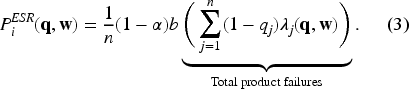
We adopt a general penalty cost-sharing mechanism with no explicit assumptions between the penalty fee and retail price per unit. This includes the penalty allocation studied in the literature (see Cui et al., 2023; Dong et al., 2023a) as a special case, 5 whereby suppliers earn nothing and the buyer may even incur a loss from faulty products. We will show the impact of this flexibility in allocating penalty cost between upstream and downstream on the implications of traceability. Our objective in this paper is to examine the roles of product traceability, via the distribution of responsibility for penalty expenses among all members of a supply chain, on product quality and the welfare of supply chain members.
The sequence of events is depicted in Figure 1. First, the buyer decides whether to adopt traceability technologies to track the origin of defective products and selects a penalty cost-sharing mechanism based on the suppliers’ revealed qualities and market shares. Next, wholesale prices are set, and suppliers simultaneously choose their quality levels, after which the buyer procures items from them accordingly. Finally, products are sold to end customers, and the penalty costs for defective products—such as compensation for customer returns—are incurred and allocated to suppliers based on the chosen sharing mechanism. In this process, all parties in the supply chain act rationally: suppliers aim to maximize profits, while the buyer seeks to minimize costs.
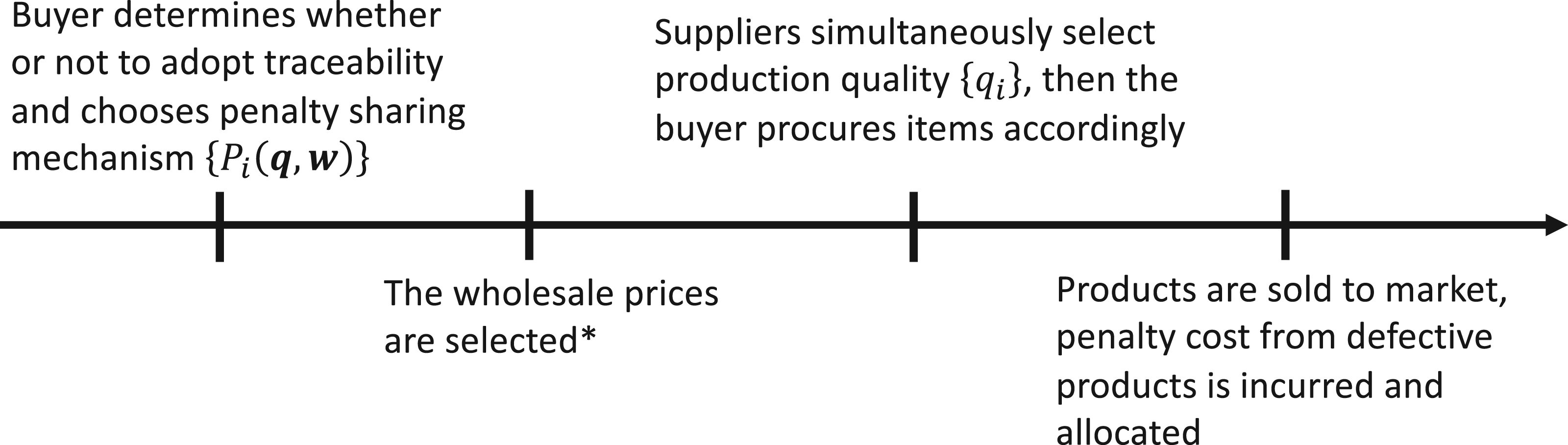
Sequence of events. Note. *The wholesale prices may be set by either the buyer or the suppliers in different settings.
We next derive the objective function for each supply chain member. First, recall that
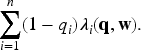
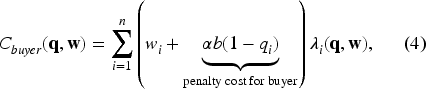
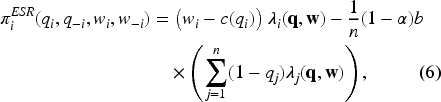
On the other hand, suppliers’ expected profits depend on the mechanism used to share penalty costs. Recall that

Once the penalty-sharing mechanism is determined, we can substitute (2) and (3) into (5) to calculate the profits of each supplier

In the above decentralized system, both buyer and suppliers are independent decision-makers who optimize their own objectives. Conversely, in the centralized system used as a benchmark, all quality decisions are made by a single decision-maker who aims to minimize the total system-wide cost. The centralized solution is referred to as the first-best solution and the system-wide cost can thus be written as:


We conclude this section with a discussion of our model assumptions. Our base model assumes that only defective products incur penalty costs (e.g., product return costs), a common practice in industries like retail and semiconductors. However, in sectors such as food and pharmaceuticals, defective products may lead to extensive recalls that include nondefective items (Cui et al., 2023; Dong et al., 2023a). We address these scenarios with full-range recalls in Section EC.1.13 in the online E-Companion. Second, our base model examines two sharing mechanisms: one with traceability and one without, which are demonstrated to be optimal within a general class of mechanisms, as detailed in Section EC.1.12. In practice, a common group-sharing mechanism without traceability allocates total penalty costs based on suppliers’ market shares. However, as shown in Section EC.1.8, this approach is inferior to the ESR, resulting in lower product quality at equilibrium. Additionally, the equal-share rule has been found to be more suitable than the market-share rule in certain contexts. Furthermore, while our base model in Section 3.2.1 assumes exogenous buyer responsibility and pricing, we extend the analysis to include endogenously determined buyer responsibility in Section 3.3 and supplier pricing in Section 4. Finally, we enhance the robustness of our findings by relaxing assumptions in the base model to include the costs associated with adopting traceability and accounting for asymmetric suppliers with varying production costs. Details are provided in Section EC.1.
This section considers a setting where the wholesale price is set by the buyer, which reflects the most common procurement practice. We will characterize the equilibrium fully, and then employ the characterization to examine the impact of traceability on the welfare of both the buyer and suppliers. We solve the Stackelberg game for each sharing mechanism backward by first characterizing the equilibrium quality under a given wholesale price, and then finding the optimal wholesale price that minimizes the buyer’s procurement cost.
Quality competition under fixed wholesale price
Under a given mechanism for sharing penalty cost and wholesale price, suppliers make their quality decisions independently and simultaneously, aiming to maximize their own profits. This



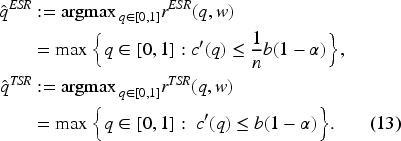
Under each mechanism
To ensure a non-negative profit, based on (11) and (12), it is essential that the wholesale prices should satisfy
This subsection analyzes the equilibrium behavior of suppliers in quality competition under ESR, as described by the following proposition.
Equilibrium without Traceability under Fixed Wholesale Price
For the quality competition game under the ESR, there exists a unique symmetric Nash equilibrium

All technical proofs are relegated to Section EC.2 in the online E-Companion. To gain managerial insights into the equilibrium characterization, we decompose the incentives of a supplier in quality improvement into three parts:
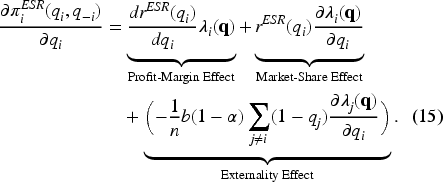
In general, we cannot exclude the existence of asymmetric equilibria under the ESR. We show in Theorem EC.1-6 of Section EC.1.17 in the online E-Companion that all Nash equilibria must be symmetric for
The equilibrium quality
The business becomes more profitable with a higher wholesale price, and therefore each supplier has a greater incentive to acquire a higher market share by increasing its quality, so the product quality at equilibrium increases with the wholesale price. It is also reasonable that the equilibrium quality decreases with
Equilibrium with traceability
This subsection characterizes the equilibrium of quality competition under TSR, as outlined in the following proposition.
Equilibrium with Traceability under Fixed Wholesale Price
For the quality competition game under the TSR, there exists a unique Nash equilibrium,

The intuition behind the equilibrium characterization under the TSR is analogous to that for the ESR in Proposition 1, with the only exception being that there is no EE under the TSR mechanism as illustrated in the following equation:

The product quality
Unlike the case without traceability, there is no externality of penalty cost sharing under traceability. Two effects come into play as the buyer’s responsibility increases. The gross profit margin of the existing market share from quality improvement decreases, that is,
Implications of traceability
Before proceeding to characterize the optimal wholesale price, we next examine the impacts of traceability on the incentives of suppliers to improve product quality, as listed in Table 1. Compared with the ESR without traceability, as illustrated in the last row, suppliers are more incentivized by the PME but less incentivized by both MSE and EE to improve product quality under the TSR. For the PME, the benefit (reduced penalty cost) of quality improvement is shared solely by the supplier with traceability but only partially shared without traceability. For the MSE, the increased market share associated with an improved quality leads to extra penalty costs that are borne solely by the supplier with traceability but shared among all suppliers without traceability. For the EE, the reduced market shares from other suppliers benefit a supplier under the ESR while it has no impact on the supplier under the TSR. Whether traceability results in higher product quality depends on the interplay of these three effects.
Incentives of suppliers to improve quality: marginal effects.
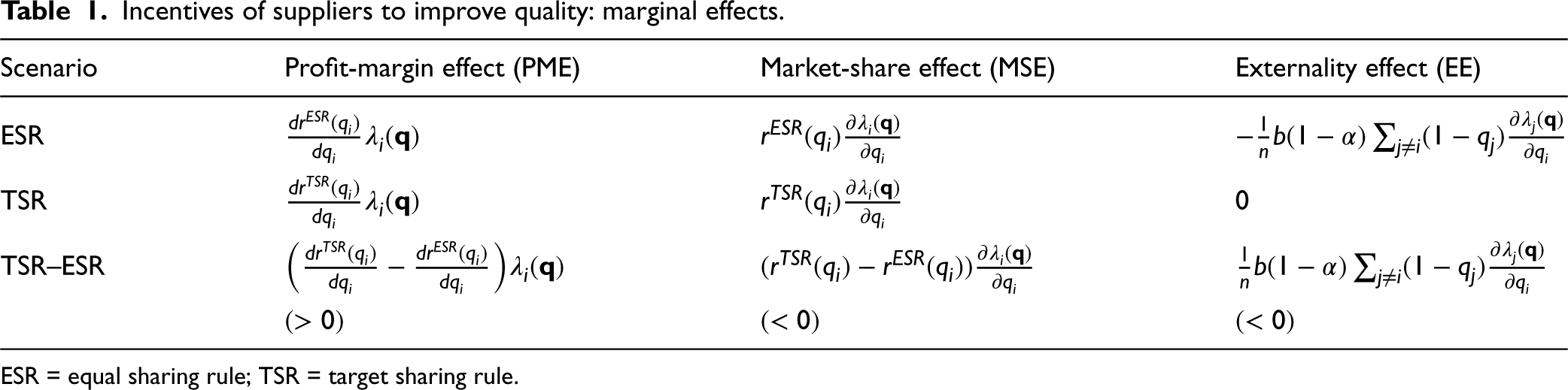
Incentives of suppliers to improve quality: marginal effects.
ESR = equal sharing rule; TSR = target sharing rule.
Note that the MSE and EE are both proportional to the sensitivity of market share to an increase in quality. When the market share is highly sensitive to a quality increase, the combined effect of the MSE and the EE dominates the PME. Therefore, the TSR provides less incentive for quality improvement than the ESR, and hence the product quality at equilibrium under the TSR will be less than that under the ESR. This is precisely the case when the wholesale price is low, which induces low quality. Thus, the market share is sensitive to an increase with quality because of the concavity of
Now, we are ready to fully characterize the endogenous wholesale price under each mechanism. For analytical tractability, in the rest of this paper, we will confine ourselves to the following market attraction and cost functions,
Equilibrium Quality and Price under Buyer Pricing
Under the ESR, the optimal quality at equilibrium is given by
Under the TSR, the optimal quality at equilibrium is given by
The optimal wholesale price is
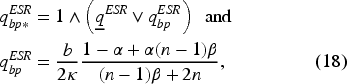
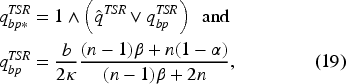
We derive the above theorem by first establishing the equilibrium quality and then finding the corresponding wholesale prices. This is because, according to Propositions 1 and 3, the equilibrium quality is monotonic in the wholesale price. The equilibrium quality under both mechanisms is given by the global optimal level that minimizes the buyer’s cost when it is within the lower and upper bounds, or one of these two bounds otherwise when it is outside the bounds. In the next section, we will present a sufficient condition when the global optimal level is within these two bounds and examine the implications of traceability on the welfare of the buyer and suppliers.
We next turn our attention to the impacts of traceability on the welfare of both buyer and suppliers. Recall that the equilibrium quality can be either the global optimal level or the bounds under each mechanism. To derive analytical results for the preference of the buyer and suppliers for traceability, we will focus on the interior solution when the global optimal quality level is within the bounds. Specifically, we impose two assumptions. First, the quality improvement cost
We are now ready to present the impacts of traceability on the equilibrium quality and welfare of supply chain members in the next theorem when both equilibria are interior solutions.
Implications of Traceability under Buyer Pricing
Traceability would: (a) reduce product quality if and only if
The above theorem reveals the implications of traceability on the product quality and profit of supply chain members, as illustrated in Figure 2. From the perspective of product quality, traceability may either improve or lower the quality. If the cost of quality improvement is sufficiently low to ensure a positive profit for the supplier, traceability invariably improves quality. However, it is observed that traceability can potentially degrade product quality, particularly when the cost of quality improvement is high, as a result of the minimum quality requirement (i.e.,
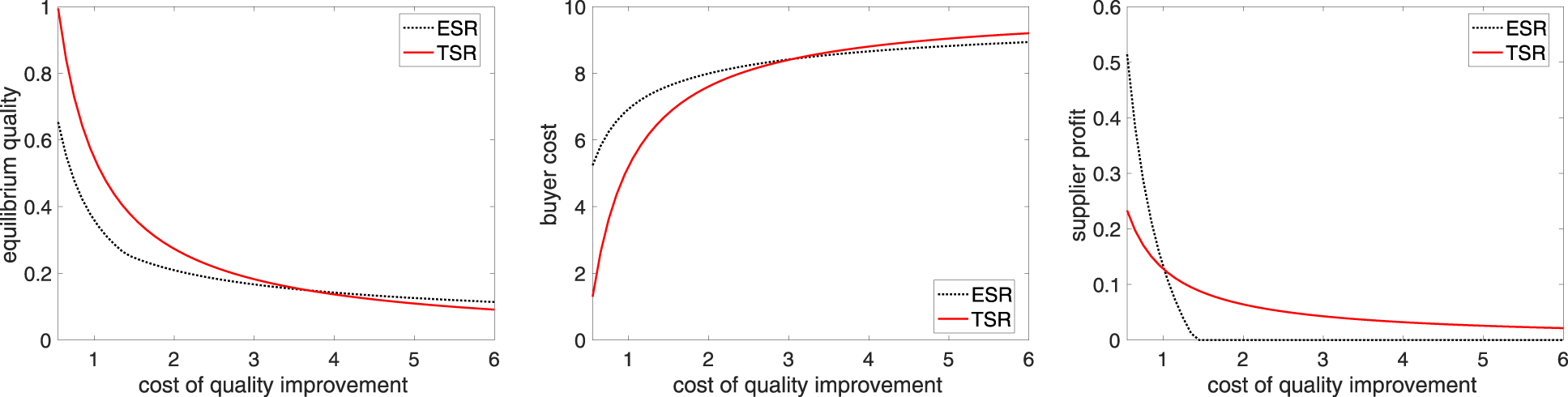
Implications of traceability on product quality and welfare under buyer pricing. Note.
From the buyer’s perspective, traceability affects the buyer’s cost through two effects: the pricing effect and the quality effect. First, traceability changes the wholesale price, in particular, the changed wholesale price under a given quality level (i.e.,
From the suppliers’ perspective, the impacts of traceability can similarly be decomposed into the above pricing and quality effects. As discussed above, when the cost of improving quality is large, traceability increases the wholesale price, benefiting the suppliers, and reduces product quality, which imposes two opposing effects on the suppliers. With a lower product quality, the penalty costs are increased, thus hurting the suppliers, but the production costs decrease because of lower quality that benefits the suppliers. Whether traceability benefits the suppliers depends on the relative dominance of the above two effects. We observe that the pricing effect is dominated by the quality effect such that traceability benefits suppliers when the cost of improving quality is large. We summarize the impact of traceability on suppliers’ and buyer’s preferences through pricing and quality effects in Table EC.1-2, which is relegated to Section EC.1 in the online E-Companion.
One important implication of Theorem 2 is that suppliers and the buyer may have a conflict of interest over the adoption of traceability. That is, traceability may have opposite implications for the welfare of the buyer and suppliers, for example, traceability benefits the buyer but harms the suppliers when the cost of improving quality is small. We show in the following corollary that there is a potential incentive-aligned region in which both the buyer and suppliers have the same preference for the adoption of traceability.
Traceability benefits both the buyer and suppliers when the cost of quality improvement satisfies
The above result shows that traceability can foster a “win–win” scenario for all supply chain members. We establish this result by showing that the thresholds always preserve the order
We conclude this subsection with a discussion. First, we show in Section EC.1.3 in the online E-Companion that our findings can be extended to boundary solutions. Specifically, traceability benefits both the buyer and suppliers only when the cost of quality improvement is moderate; otherwise, it may lead to misaligned outcomes that benefit one party while harming the other. Second, we note that all conditions regarding the preferences of supply chain members can be equivalently expressed through the unit penalty cost (see Remark EC.1-2). This equivalence arises from the monotonic relationship between equilibrium quality in (18) and (19) and penalty cost. As the penalty cost for defective products increases, suppliers enhance product quality to reduce the likelihood of failure. Consequently, similar to the previously discussed pricing and quality effects of traceability, it becomes more attractive to the buyer under heavy penalties but less favorable for suppliers. Additionally, we examine the role of traceability in achieving coordination and demonstrate that adopting traceability can prevent the buyer from over-investing in quality. Further details are provided in Section EC.1.16.
In practice, when a product defect incident occurs, retailers like Honda and Nissan often choose to take necessary remedial actions and absorb part of the compensation themselves to protect consumer interests and maintain brand reputation, rather than fully transferring all losses to upstream suppliers. Details are discussed in endnote 4 and Section EC.1.2 in the online E-Companion. Next, we extend our analysis to scenarios where the buyer selects both wholesale prices and the responsibility allocation. We demonstrate that the buyer can share a portion of the suppliers’ costs by strategically absorbing part of the penalty, thereby reducing its own expenditures through lower wholesale prices.
Quality competition under optimal wholesale price and buyer responsibility
In this subsection, we examine the scenario where the buyer sets wholesale prices and its responsibility
We begin by investigating the decentralized system to identify suitable control parameters
Attainability of First-Best Quality
The supply chain can always be coordinated with traceability, whereas it can be coordinated without traceability only when 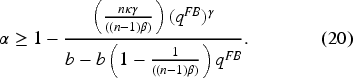
As shown by Theorem 3, the first-best product quality can always be achieved with traceability, but it can only be achieved when the buyer responsibility is not too small without traceability. As the buyer responsibility increases, the degree of externality between suppliers under a group mechanism diminishes. This is consistent with the previous work by Balachandran and Radhakrishnan (2005) who showed that the first-best outcome can be obtained if the supplier takes no responsibility for the buyer’s defects. Figure EC.3-6 in the online E-Companion illustrates the coordinated wholesale price and the buyer’s optimized wholesale price under each sharing mechanism. For both mechanisms, we find that the optimal wholesale price is always lower than the coordinated wholesale price. Recall that the product quality increases with the wholesale price (see Propositions 2 and 4), and therefore decentralization leads to under-investment in product quality. The inefficiency induced by decentralization is in the same spirit as the well-known double marginalization effect. Interestingly, such inefficiency disappears in the presence of traceability, when the buyer can optimize the wholesale price and the buyer responsibility jointly as shown in Theorem 4.
Next, we examine the implications of traceability when the buyer sets the wholesale price and its responsibility jointly. A reduction in the buyer’s responsibility impacts the buyer in opposed ways. On the one hand, referred to as the responsibility-sharing effect, it benefits the buyer since the buyer’s burden for penalty cost is reduced. At the same time, a higher product quality is induced because suppliers bear an increased proportion of the penalty cost (see also Propositions 2 and 4 and Figure EC.1-4 in the online E-Companion), which we call the quality effect. On the other hand, referred to as the pricing effect, the buyer is willing to pay a higher wholesale price to compensate suppliers’ increased responsibility for the penalty cost, as illustrated in the upper panel of Figure EC.1-4. As only the last effect incentivizes the buyer to share responsibility, while the first two exert an opposite force, the buyer, when setting its responsibility and the wholesale price optimally, must trade off among these three effects of responsibility. A detailed discussion is relegated to Section EC.1.2.
Recall that 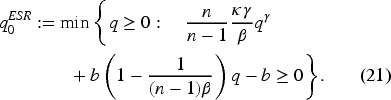
Under the endogenously set wholesale pricing and responsibility, the buyer responsibility and equilibrium quality are given by:
Interestingly, Theorem 4 shows that traceability is beneficial to the supply chain when the buyer has the authority to make joint decision on the wholesale price and the buyer responsibility, that the first-best quality is always achieved. This occurs when the buyer transfers the entire responsibility for penalty expenses to suppliers. Under the ESR, however, the first-best quality is only sometimes achieved because of negative externalities in the allocation of penalty expenses. To achieve the first-best quality, the buyer co-shares the responsibility for the penalty expenses with suppliers. When the first-best quality is not achieved under the ESR, suppliers under-invest in the quality and the buyer does not share any responsibility for penalty expenses.
Our theoretical results align with practices observed in many traceable supply chains, where traceability is coupled with contractual or legal cost-shifting mechanisms that transfer losses to the faulty supplier. For instance, Costco’s supplier terms state that the vendor must promptly reimburse Costco for all costs related to recalls, including customer refunds and the net landed cost of unsold merchandise. Similarly, Cardinal Health’s pharmaceutical distribution agreement links lot-level barcode traceability with a rule holding the client solely responsible for product recalls and requiring reimbursement for recall-related service costs. In a case of premature spoilage involving bird’s nest drinks, the arbitrator ruled that distributor Eastland Food could hold supplier Thainest liable for disposal costs and associated expenses for 10,309 cases of Thainest products, including storage, sampling, promotional costs, and attorneys’ fees.
Implications of Traceability under Endogenous Pricing and Buyer Responsibility
When the buyer sets the wholesale price and responsibility jointly, traceability improves product quality and reduces the buyer’s cost if and only if the cost of quality improvement satisfies
When does the ESR lead to supply chain inefficiency? The above corollary provides a sufficient and necessary condition under which inefficiency happens without traceability. Specifically, we show that not adopting traceability leads to inefficiency and under-investment when the cost of quality improvement is sufficiently low, as illustrated in Figure 3(a). By comparison with Theorem 2 under an exogenous responsibility, when the buyer sets the responsibility for the penalty, the buyer fully extracts suppliers’ profit under both mechanisms, and is thus better-off with traceability due to the attainability of the first-best quality. We observe from the numerical experiments that traceability could save as much as 12% of the buyer’s cost.
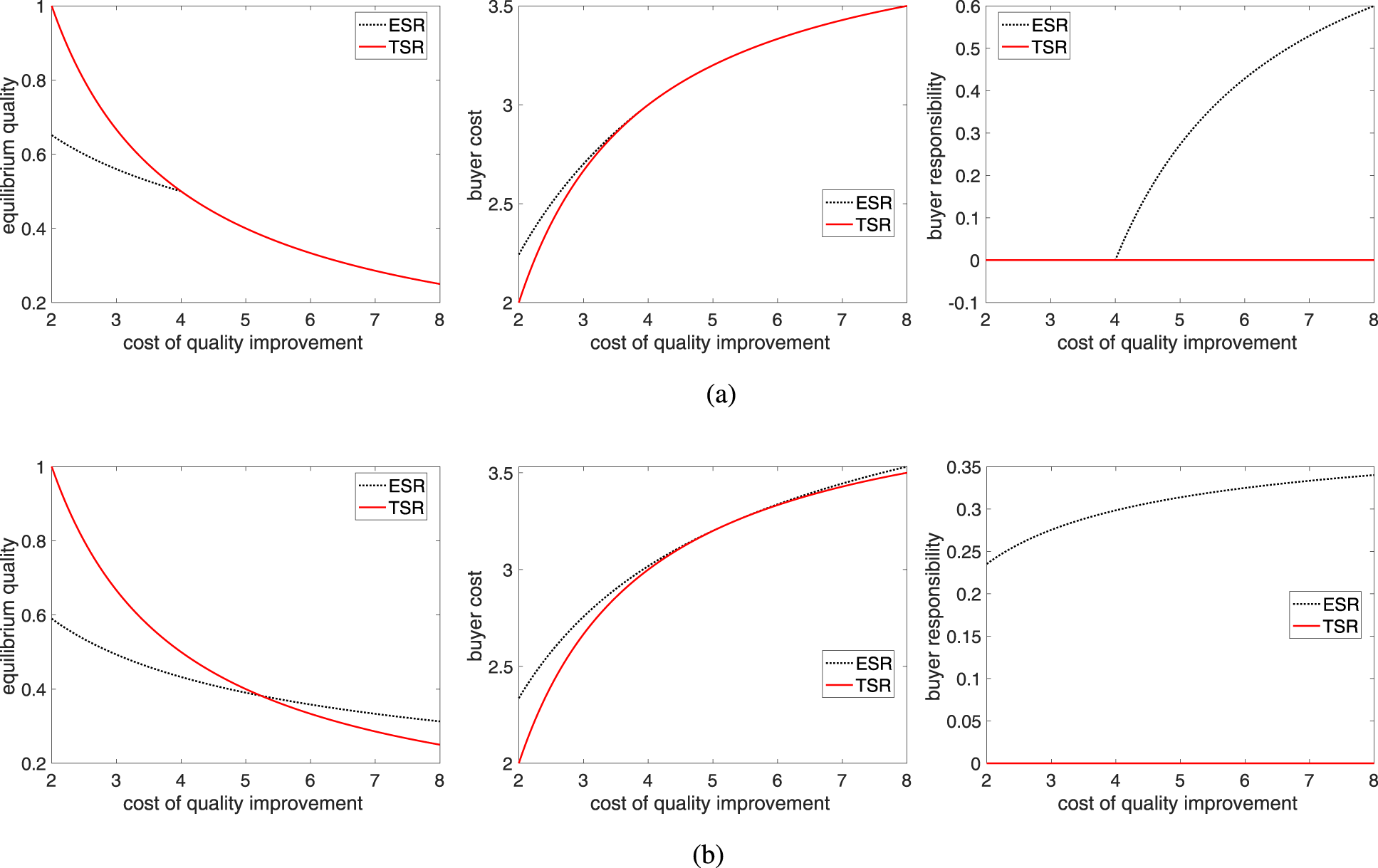
Implications of traceability under endogenous responsibility: (a) buyer vs. (b) supplier pricing. Note.
In industries like high-end seafood retail, where products are valuable and a few large producers dominate, suppliers wield significant bargaining power. For instance, in the U.S. packaged tuna market, branded suppliers establish their own prices for retailers (Kim et al., 2023). Additionally, small fishing firms may form cooperatives to negotiate collectively, enhancing their bargaining position (Campling, 2012). Quality failures, such as bacterial contamination, can lead to compensation claims, returns, and reputational damage for retailers. However, tracing defective products back to responsible producers is challenging due to persistent traceability gaps in tuna supply chains. To address consumer complaints, many retailers implement billing policies for recalls and returns. For example, Kroger’s Standard Vendor Agreement requires suppliers to pay a 12% handling fee for product consolidation and freight to the Clackamas Reclamation Center. To enhance food safety and risk accountability, traceability initiatives are being adopted by fish canning suppliers like Bumble Bee, fish suppliers like John West, and retailers such as Walmart.
In line with these practices, this section explores the implications of traceability in a pricing model where suppliers set wholesale prices. As with buyer pricing, we assume throughout this section that the cost of quality improvement
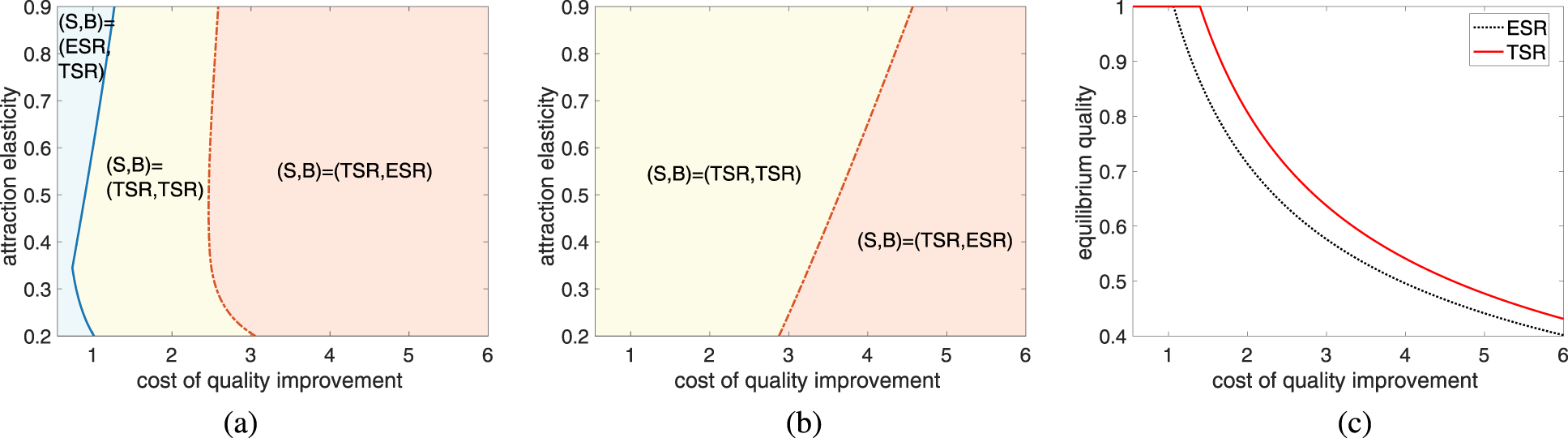
Implications of traceability: buyer pricing vs. supplier pricing: (a) buyer pricing, (b) supplier pricing, and (c) quality under supplier pricing. Note.
The sequence of events under supplier pricing, depicted in Figure 1 in Section 2, is identical to that under buyer pricing, except that wholesale prices and product qualities are now determined simultaneously by each supplier. Unlike buyer pricing, suppliers can set different wholesale prices. We will examine how this shift in pricing power influences the implications of traceability, specifically how traceability affects equilibrium product quality and the welfare of supply chain members under supplier pricing.
Using a similar approach as in the previous section, we derive the equilibrium for the price and quality competition game among suppliers, as outlined in the following theorem.
Equilibrium under Supplier Pricing
Under supplier pricing, the symmetric Nash equilibrium for each mechanism
We derive the theorem in three steps. First, we demonstrate that the sequential equilibrium, where each supplier first sets the wholesale price and then simultaneously decides on quality, is equivalent to the joint equilibrium in which suppliers simultaneously select both wholesale prices and qualities. We establish this by showing that the Hessian matrix of each supplier’s profit with respect to its own wholesale price and quality is negative semidefinite, indicating that the profit function is jointly concave in these variables. Consequently, any equilibrium from the sequential game also qualifies as an equilibrium in the joint pricing and quality game, and vice versa. Second, we characterize the symmetric equilibrium of the joint wholesale price and product quality by solving the first-order conditions (FOC) for each supplier’s quality and wholesale price, resulting in the two quadratic functions specified in EC.2-13 and EC.2-14 in the online E-Companion. Finally, we prove the uniqueness of the symmetric equilibrium by showing that the quadratic equations derived from the FOC with respect to quality have only one non-negative root, ensuring the uniqueness of solutions. It is important to note that while the equilibrium wholesale price under supplier pricing is uniform across suppliers, we must account for the possibility that each supplier offers different wholesale prices, making the characterization of equilibrium under supplier pricing more complex than under buyer pricing.
Next, we analyze the effects of traceability on the equilibrium quality and welfare of supply chain members under supplier pricing, summarizing the results in the following theorem.
Implications of Traceability under Supplier Pricing
Under supplier pricing, traceability would: (a) enhance product quality, (b) benefit the suppliers, and (c) either benefit or harm the buyer depending on whether
The above theorem indicates that the effects of traceability under supplier pricing are largely consistent with those under buyer pricing. From a quality perspective, traceability consistently enhances product quality, even when we relax the requirements on
To demonstrate the robustness of our results, we relax the conditions on
Endogenous buyer responsibility
In this section, we extend our analysis to a setting where the buyer determines responsibility, followed by suppliers selecting wholesale prices and product qualities. We first characterize the equilibrium of this Stackelberg game in the following theorem.
Equilibrium under Endogenous Buyer Responsibility and Supplier Pricing
The equilibrium under supplier pricing with endogenous buyer responsibility is given by:

where
The theorem is based on the equilibrium characterization in Theorem 5 with an exogenous responsibility level. We demonstrate that the condition on quality improvement costs ensures the buyer’s cost is monotonically related to responsibility, leading the buyer to select the minimum responsibility that fully extracts suppliers’ profits in both mechanisms.
Next, we examine the effects of traceability on quality and stakeholders in the following corollary.
Traceability under Supplier Pricing with Endogenous Responsibility
Under supplier pricing with endogenous responsibility, traceability would: (a) harm product quality if and only if
Our analysis reveals a controversial finding: while traceability consistently benefits the buyer, it may negatively impact product quality when the buyer determines penalty responsibility and suppliers set wholesale prices. This contrasts sharply with Theorem 6, which shows that traceability enhances product quality under exogenous responsibility.
The discrepancy arises because, under endogenous responsibility, traceability enables buyers to impose the full penalty for each defective product on the accountable supplier. Each supplier’s profit is determined by its profit margin multiplied by its market share. The quality level a supplier chooses to maximize its profit margin aligns with the first-best quality that achieves coordination. The implications of traceability under supplier pricing mirror those in Theorem 4 under buyer pricing: adopting traceability enhances operational efficiency and achieves the first-best quality level. Suppliers compete for market share by lowering wholesale prices, driving equilibrium profits to zero. In the absence of traceability, negative externalities arise, as each supplier must absorb part of the penalties from competitors’ defects. Consequently, to ensure supplier participation, the buyer must share some penalty costs. This shared responsibility creates inefficiencies similar to double marginalization, causing equilibrium quality to deviate from the optimal level.
When the cost of improving quality is low, suppliers set low wholesale prices while maintaining high quality. This makes competition for market share highly sensitive to wholesale price changes, leading to aggressive price cuts and under-investment in quality. Conversely, when the cost of quality improvement is high, equilibrium wholesale prices rise, quality declines, and competition intensifies along the quality dimension, incentivizing suppliers to over-invest in quality.
Our results align with the findings on exogenous responsibility, highlighting that pricing authority significantly influences the implications of traceability. From a quality perspective, the efficiency of quality improvement and the party responsible for setting prices are crucial. Specifically, under endogenous responsibility, traceability does not harm quality only when the downstream firm sets wholesale prices; it can reduce quality if upstream firms determine prices. Therefore, firms should be cautious when adopting traceability, especially if the downstream firm has limited decision-making power over either wholesale prices or responsibility allocation, as this may undermine the effectiveness of traceability in enhancing quality and lead to a counterintuitive decline in product quality. Economically, when the buyer dictates responsibility allocation, upstream firms are fully extracted with zero profit, regardless of pricing power and traceability, and traceability leads to first-best quality, benefiting the downstream firm. Establishing a fair framework for distributing responsibility within a supply chain is essential for enhancing product quality and overall welfare.
Discussion and concluding remarks
Recent technological advancements, particularly in blockchain, have revolutionized the ability to track and trace the origins of faulty products that do not meet customer expectations economically. The adoption of these technologies enables supply chain members to record information in a transparent, verifiable, and traceable manner. In this paper, we develop a game-theoretic framework to examine the interplay among traceability, pricing, product quality, and the welfare of supply chains composed of multiple competing suppliers.
Our findings indicate that while traceability has the potential to enhance product quality, it can paradoxically have adverse effects on buyers, suppliers, and product quality itself. Initially, we explore the impacts of traceability under an exogenous buyer responsibility, characterized by a fixed vertical allocation between suppliers and the buyer, in both buyer pricing and supplier pricing scenarios. Under buyer pricing (where the buyer sets the wholesale price), we discover that traceability improves product quality and benefits the buyer only when the quality improvement is cost-efficient. Conversely, suppliers benefit from traceability primarily when the costs associated with improving quality are high. This presents a critical managerial implication: buyers must carefully assess the cost-efficiency of quality improvements before investing in traceability, as miscalculations could lead to diminished returns. Additionally, we identify market conditions under which traceability can create a win–win scenario, benefiting both buyers and suppliers. In the context of supplier pricing (where each supplier sets its wholesale price), traceability consistently enhances product quality and supplier profits. However, the buyer realizes benefits only when quality improvements are cost-efficient, leading to the conclusion that both parties must align their quality improvement strategies to maximize overall supply chain welfare.
We then extend our analysis to a scenario where the buyer determines buyer responsibility endogenously. Our results indicate that a buyer can extract all profits, leaving suppliers with zero profit, by strategically setting the vertical accountability between them. This finding underscores the importance of negotiation and collaborative strategies in buyer–supplier relationships. Under buyer pricing, traceability positively impacts quality and buyer welfare only when quality improvement is cost-efficient. In contrast, under supplier pricing, traceability consistently benefits the buyer, but enhances quality only when it is cost-efficient. Table 2 summarizes the roles of traceability in various settings depending on how prices and buyer responsibility are determined. Focusing on the first column with exogenous buyer responsibility, we find that dominant firms that set prices generally have stronger incentives to adopt traceability. This is evident in industries like food retail, where large retailers often design and enforce traceability schemes themselves. For instance, following the 2018 Escherichia coli outbreak linked to romaine lettuce, Walmart and Sam’s Club issued an open letter to all suppliers of fresh leafy greens, requiring them to use IBM’s Food Trust blockchain system for farm-to-store traceability. This action, reported as a mandate for suppliers, demonstrates how a dominant buyer in the fresh produce sector can initiate and enforce traceability throughout its upstream supply chain, rather than waiting for suppliers to take the initiative.
Implications of traceability: summary.
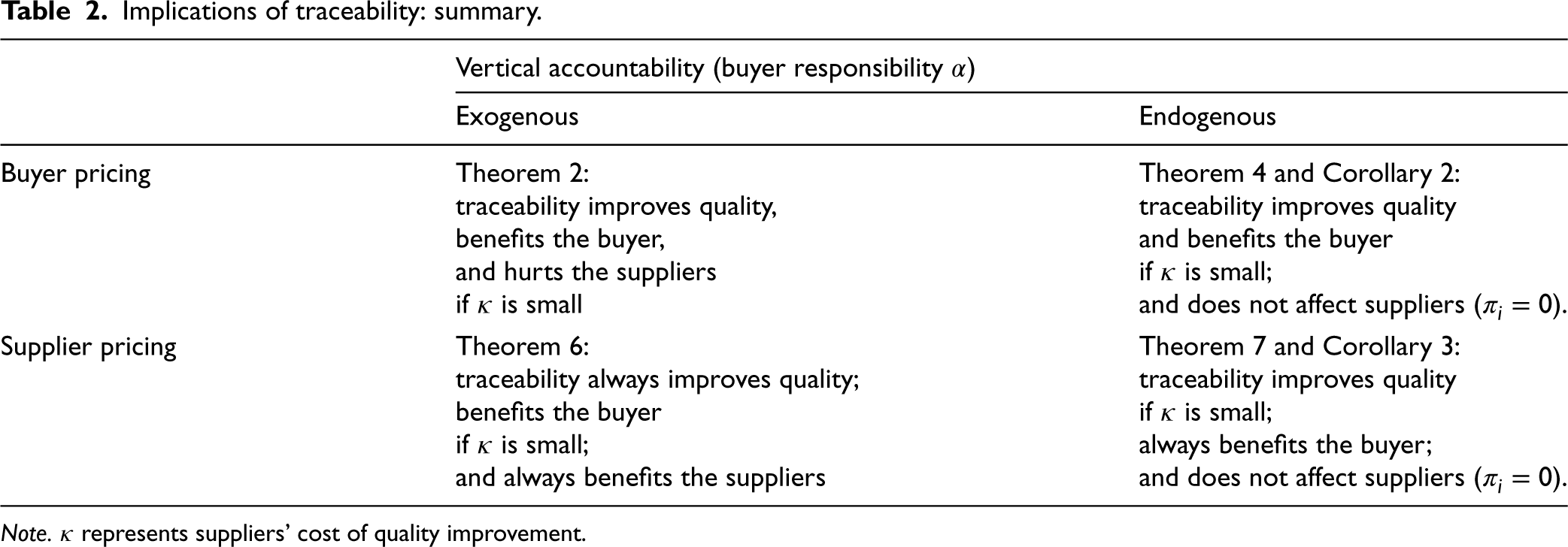
Note.
In contrast, traceability is often initiated by suppliers in high-value seafood supply chains where they hold more pricing power. For example, Sustunable, which supplies private label canned tuna to over 15 European supermarket chains, has launched the “throat to boat” plan to provide traceability for its retailers and consumers in Europe. Similarly, Austral Fisheries has collaborated with WWF and BCG Digital Ventures to implement blockchain-based traceability for its Glacier 51 Patagonian toothfish through the OpenSC platform. Additionally, Sea Quest Fiji coordinates with WWF’s blockchain in the Pacific tuna longline fishery, utilizing RFID tags and QR codes to trace tuna from bait to plate. These cases highlight the distinction between buyer-driven markets, such as Walmart’s fresh produce, and supplier-driven markets, like tuna and other high-end seafood, regarding who is more incentivized to initiate traceability.
Interestingly, we find that traceability can benefit all supply chain members even when it harms product quality. Specifically, we identify a welfare-quality misalignment region where both the buyer and suppliers favor traceability despite its negative impact on quality, with further details provided in Section EC.1.4 in the online E-Companion. To validate the robustness of our findings, we further explore broader contexts, including asymmetric suppliers with heterogeneous quality improvement costs, alternative sharing mechanisms, complete recalls without traceability, costs associated with adopting traceability, variations in supplier base size, minimum buyer responsibility requirements, quality-based costs per failure, and quality-sensitive market demand. Details are available in Section EC.1 of the online E-Companion.
Our research provides important managerial insights for key stakeholders in supply chains regarding the adoption and design of traceability systems. For buyers, our findings emphasize the need to consider cost efficiency for suppliers in quality improvement, the authority of pricing decisions, and responsibility-sharing mechanisms to assess the effectiveness of enhanced traceability. For suppliers, it is crucial to understand their cost structures and the competitive landscape, including who sets prices and how responsibility is allocated across different tiers. Suppliers that are efficient in quality improvement can benefit significantly from traceability. From the consumer perspective, the findings indicate that traceability can enhance product quality, provided that associated costs are effectively managed, thereby increasing consumer surplus. Thus, the interplay of traceability, pricing, and quality creates a complex landscape for all stakeholders in the supply chain, necessitating strategic collaboration and informed decision-making to optimize outcomes.
Our results apply to various types of costs related to product faults. For example, penalty costs, such as warranty expenses and consumer compensation, represent just one aspect of the costs arising from product failures. A significant cost is the damage to reputation and public image, primarily affecting the buyer and not shareable with suppliers. This adds to the buyer’s cost function but does not alter the main managerial insights of this paper. An important research question emerges: how might the insights from this study differ under conditions of asymmetric information among supply chain members? The costs associated with improving product quality may be private information, unavailable for other parties. Extending our analysis to these scenarios typically involves mechanism design, which we leave for future research.
Supplemental Material
sj-pdf-1-pao-10.1177_10591478261443754 - Supplemental material for Navigating traceability: How pricing and responsibility sharing impact quality and welfare
Supplemental material, sj-pdf-1-pao-10.1177_10591478261443754 for Navigating traceability: How pricing and responsibility sharing impact quality and welfare by Lijian Lu, Ruxian Wang and Xinyi Zhou in Production and Operations Management
Footnotes
Acknowledgments
We thank Nitindra Joglekar (department editor), the senior editor, and three anonymous reviewers for their constructive feedback. We also acknowledge helpful discussions with Fangruo Chen, Ying-Ju Chen, Ming Hu, Song Lin, Mengze Shi, Gabriel Weintraub, and Hanqin Zhang. L. Lu received financial support from the Hong Kong Research Grants Council [16502423 and 16502324] and HKUST Li & Fung Supply Chain Institute [LFSCI26BM03]. The authors are alphabetically ordered and contributed equally to this paper.

Funding
The authors received no financial support for the research, authorship, and/or publication of this article.
Declaration of conflicting interests
The authors declared no potential conflicts of interest with respect to the research, authorship, and/or publication of this article.
Notes
How to cite this article
Lu L, Wang R and Zhou X (2026) Navigating Traceability: How Pricing and Responsibility Sharing Impact Quality and Welfare. Production and Operations Management XX(XX) 1–19.
References
Supplementary Material
Please find the following supplemental material available below.
For Open Access articles published under a Creative Commons License, all supplemental material carries the same license as the article it is associated with.
For non-Open Access articles published, all supplemental material carries a non-exclusive license, and permission requests for re-use of supplemental material or any part of supplemental material shall be sent directly to the copyright owner as specified in the copyright notice associated with the article.
