



Abstract
Temporary economic shocks in local employment ecosystems, events that create temporary alternate employment opportunities for workers, tend to create operational challenges for firms. We investigate two dimensions of these challenges faced by firms that engage workers performing low-skilled tasks in the agricultural industry. We seek to understand (i) which workers leave during these shocks, and (ii) whether workers who choose to stay exhibit any change in their productivity. Both of these answers ultimately determine the resilience of firms during the shocks. We present data from a natural experiment in an agricultural company. The data are for two farms, where workers performed the same task but used two different protocols that differ in cognitive load, the mental effort required to manage and coordinate tasks, at two levels: higher and lower. Our findings indicate that, at an aggregate level, shocks in the labor ecosystem increase the strain on farming companies by increasing worker turnover rates. However, during the shock period, the workers who remained with the focal firm demonstrated increased productivity. In a post hoc analysis, we examine whether worker performance before a shock (as measured by pre-shock productivity) impacts turnover and productivity during shock periods. We find that workers following the lower cognitive load protocol were more likely to leave during the shock if their productivity was low. In contrast, workers following the higher cognitive load protocol were equally likely to leave at all productivity levels. Similarly, for the lower cognitive load protocol, the productivity change during shock was proportional to a worker's original productivity. In contrast, workers following the higher cognitive load protocol increased their productivity by the same amount across all levels of pre-shock productivity. These findings highlight the differential impacts of cognitive engagement and workload on worker retention and productivity in low-skill production settings. Our results suggest that work design strategies that keep workers cognitively engaged at work are crucial for mitigating the negative effects of labor shocks and improving organizational resilence.
Few farmers are spared from the crisis. The General Manager of one of Pennsylvania's largest mushroom farms claims that “labor is our biggest Achilles heel… without our workers, we’re nothing; we’re out of business” (New American Economy, 2017).
Introduction
The labor shortage in the North American agriculture industry is a growing concern. A recent study finds that more than 60% of agriculture farms in the US have experienced a worker shortage (Ifft et al., 2023). This shortage has led to cost pressure on farms’ operations in the form of increased wages. The average wage of hired labor on US farms is estimated to be $18.55 per hour for January 2023 (Chapman and Pittman, 2023), a 5% annual increase from 2022 (Castillo and Simnitt, 2023). This average hourly rate is more than 2.5 times the federal minimum wage ($7.25 per hour), reflecting the challenges farms face in ensuring a constant and consistent labor supply. Even with technological advancements to reduce labor requirements, labor management remains challenging for farms (Gupta et al., 2023; Liu et al., 2020; Singhal, 2001). This issue is further exacerbated by an aging workforce and fewer new workers joining this profession (Castillo and Simnitt, 2023). Moreover, worker availability affects farm activities beyond just higher costs: It can result in production inefficiencies due to harvesting delays (Liang et al., 2021). For instance, in 2011, Georgia's fruit and vegetable growers estimated a cost of $140 million due to crop losses caused by labor shortages (Gunders, 2012). Significant losses in the mushroom industry have occurred due to worker shortages that prevented crops from being harvested (New American Economy, 2017).
The shortage of agricultural workers becomes more acute during temporary periods of economic shock in the local labor market. We define temporal economic shocks as events (or a duration of time) that provide alternate competing employment opportunities to workers. In agriculture, firms compete with other local employment opportunities for workers engaged in low-skill tasks. By low-skilled tasks, we imply tasks (jobs) that do not require certifications or formal schooling as a barrier to entry into the workforce (Federal Regulations, CFR 404.1568). Agricultural tasks such as manual harvesting or applying pesticides fall under this category, as opposed to, say, accountants who need formal training and certifications before starting practice. This lack of specialization means that agricultural workers may find it easy to leave their original employer and join employment in other industry sectors that require low-skilled workers while paying better wages in the short term. Surveys of agriculture harvesters find many had worked in different types of low-skilled occupations, such as “restaurants, childcare, factories,” and “landscaping or construction” (Sexsmith et al., 2024). Prior evidence using firm-level data shows that shocks such as a new construction project or a temporary demand at a local warehouse (both of which tend to offer higher wages even though the duration of the opportunity is uncertain) can provide low-skilled employment opportunities to agricultural workers, which can impact the operational performance of agriculture firms (Ray et al., 2023). However, there is scarce understanding of the impact of these shocks on a more granular level, such as on the individual worker.
In this paper, we seek to understand how workers performing low-skilled tasks respond to temporary economic shocks in their local employment ecosystems. Specifically, we investigate: Who leaves? Do workers who choose to stay exhibit any changes in their productivity? Such shocks have two distinct characteristics: (i) they systematically create a monetary incentive for workers to switch employment; and (ii) this temporary incentive persists for a finite but uncertain duration. While the first characteristic can encourage workers to switch employment, the second can deter workers from doing so. The net or differential impact of these two characteristics is unclear. Furthermore, are there specific factors that impact these behaviors? We study these issues in this paper.
More formally, our primary research questions are:
RQ1. In an unskilled workforce context, what is the impact of shocks on worker turnover?
RQ2. Do workers who choose to stay change their productivity?
These questions are important for managers in order to understand how their firm may be impacted when a temporary alternate opportunity is available to its workers. Employee turnover can lead to human capacity shortages within a firm. In settings where workers perform jobs in teams, the turnover and the productivity of workers who leave can impact the team dynamics of the workers left at the firm. Ultimately, all these issues determine a firm's resilience in the face of temporary economic shocks.
To explore these research questions, we partnered with a mid-sized agriculture firm located in North America. The focal firm is one of the world's largest mushroom producers, with annual revenue exceeding $100 million. Workers at the firm cultivate, harvest, and pack mushrooms sold at many major retailers in North America. This work is labor-intensive and tends to be relatively low-skilled. In 2020, the industry experienced a shock in the form of the stimulus provided by the US government in response to coronavirus disease-2019 (COVID-19). In our study, this government stimulus acts as the economic shock, generating an alternative revenue opportunity for workers with an uncertain duration. This posed a unique situation for agricultural workers, who were employed in an industry classified as essential and, therefore, remained operational. On the one hand, the government provided a stimulus enabling low-skilled workers at the firm to receive a comparable income without leaving their home for a limited, but uncertain, period of time; on the other hand, there was increased external uncertainty impacting these workers about future employment prospects if they chose to leave their employment with the focal firm to avail the stimulus payment. The firm provided weekly harvesting data for 39 weeks at two of its privately owned farms, covering 207 distinct workers employed in mushroom harvesting. During the observed weeks, the firm experienced a shock due to the stimulus. Therefore, the natural experimental duration of 39 weeks encompasses 22 weeks of pre-shock and 17 weeks of shock, during which the stimulus was provided. Using these data, we investigate how economic shocks in local labor markets impact worker turnover and productivity in the agricultural setting. To this end, we develop competing hypotheses to examine the resultant effects and then test them using the data.
Our analysis shows the following results. In response to RQ1, we find that economic shocks negatively impact farming companies by increasing turnover, that is, workers leave when presented with even temporarily beneficial alternative opportunities. Post hoc analysis provides further insights into who leaves. Specifically, we find that the cognitive nature of the task plays a moderating role in determining which strata of employees leave. In our context, cognitive load refers to the mental effort workers need to manage and coordinate tasks during the harvesting process (we provide formal definitions and metrics from the prior literature in Section 4.3.2).
The two farms we studied differed in their operations. One farm used a Harvest Everything protocol in which workers moved through a mushroom growing room and harvested all mushrooms in a bed in a single round through the room. This protocol requires a worker to exert a lower cognitive load (LCL). In contrast, the second farm used a Grazing protocol in which workers go through the room several times. In each of these rounds, they visually identify mature (large) mushrooms and only harvest these, leaving the remaining mushrooms to continue growing and be picked in subsequent rounds (Li et al., 2025). Harvesting mushrooms using the grazing method requires a higher cognitive load (HCL) because of the mushrooms’ typical rapid growth rate of 3.68% per hour, allowing them to more than double their biomass in less than one day (Straatsma et al., 2013). The rapid growth implies that workers must make critical decisions on whether to harvest now or wait for the next harvesting round. The timing is crucial because harvesting too early may yield smaller mushrooms, while waiting too long results in overmature mushrooms of lower quality. The need to balance these factors requires careful observation and precise timing to ensure optimal yield. Effectively, harvesters need to mentally make the tradeoff for each mushroom: leave the mushroom in bed for a few more hours and potentially harvest it at a larger size, but also take the risk that the mushroom might overmature and lose value during this time window. Due to the need to make this tradeoff during harvesting, this protocol requires harvesters to be more engaged and exert an HCL. In a secondary analysis reported in Section 4.3.2, we used a survey to validate the assumption that the two work protocols represented distinct levels of cognitive load.
Our analysis shows that in the LCL context, during an economic shock, the least productive workers are more likely to leave the firm than the most productive workers. However, in an HCL context, all workers are equally likely to stay or leave, irrespective of the previous productivity level. Previous research on cognitive load is ambiguous in its findings on worker performance (e.g., Avgerinos and Gokpinar, 2018; Işık et al., 2022). Empirical data show that under certain conditions, an HCL can improve (or deteriorate) performance in specialized healthcare settings (Avgerinos and Gokpinar, 2018). In contrast, analytical models show a negative relationship between cognitive load and performance. This mixed evidence in high-skilled environments notwithstanding, the role of cognitive load in low-skilled environments has remained understudied, perhaps with the implicit assumption that cognitive load is immaterial for such jobs. Our data from an agricultural environment show that even in a low-skilled work environment, cognitive load can have significant implications for both workers and employers.
In response to RQ2, we find that workers who choose to stay, on average, display higher productivity. However, cognitive factors again play a role in determining the extent to which productivity increases. Workers operating in an LCL environment increased their productivity during the shock that was in proportion to their pre-shock productivity. For example, worker A with pre-shock productivity of 120 lbs/h increased their productivity by a higher amount, say by 10 lbs/h, as compared to worker B who had a pre-shock productivity of 90 lbs/h (and increased their productivity only by 5 lbs/h). In contrast, workers in an HCL environment reacted differently. These workers were likely to increase their productivity during the shock by the same amount, regardless of their pre-shock productivity levels; for example, both workers A and B increased their productivity by 7 lbs/h. As such, this research identifies cognitive load as a crucial determinant of how low-skilled workers may respond to shocks, including switching employment and adjusting their productivity. We also discuss the implications of these differential results for agricultural firms and other industries employing low-skilled workers. This study adds a new perspective to the conventional view that effective work design and team management are not a concern in low-skilled contexts. We find that the cognitive demands of even seemingly simple tasks are a crucial and overlooked factor in a firm's resilience to shocks. Our results indicate that by purposefully designing work to increase cognitive engagement, managers can create more stable teams and achieve more predictable productivity, ultimately enhancing their resilience.
To summarize, the theoretical contributions of the paper are to establish: (i) that temporary economic shocks have a clear impact on employee turnover and productivity; (ii) these impacts are different based on the cognitive load required at work, establishing a connection between workplace design and employee retention and productivity; and (iii) showing that a firm's resilience during temporary economic shocks is determined in part by workplace design as it pertains to cognitive load of work. The rest of the paper is organized as follows. In Section 2, we discuss relevant literature and our contributions. In Section 3, we develop competing hypotheses to examine the impact of shocks on worker turnover and productivity. Section 4 presents contextual details and the data. Section 5 presents the results of hypothesis testing and post hoc analysis on the impact of cognitive load on worker performance. Finally, in Section 6, we provide a discussion of our results and an outline of the practical implications.
Literature Review
Our research focus is related to three streams of literature: operations management literature on agriculture, people-centric operations, and productivity.
Operations Management Issues in Agriculture
An emerging body of literature investigates agriculture-related operational and supply chain issues. This research examines various contexts, including the impact of governmental policies, digital agriculture, sustainable farming practices, labor management, and strategies to improve productivity. Gupta et al. (2023) provide a comprehensive review of this research using a six-bucket typology, along with challenges and fruitful avenues for further work in each dimension. Of this typology, our work belongs to the dimension of “operational efficiency in farming” (Gupta et al., 2023: 1579). They note that workforce management (as it pertains to recruiting and retaining unskilled workers) and worker productivity critically impact an agriculture firm's operational efficiency and, hence, the ability to compete in the marketplace. However, agriculture firms continue to face pressure on recruitment and retention because “…the availability of labor in this sector is often affected by the demand for shared labor in other sectors…” (Gupta et al., 2023: 1589, italics added), and only 5.1% of the studies utilize data-driven insights on managing these issues. Our research aims to address this gap by employing a data-driven approach to assess the impact of shocks on the workforce market in agricultural firms. Our results show a direct connection between these shocks and firm performance and productivity in the agriculture domain. We also highlight the importance of workplace (harvesting protocol) design, an issue that has received relatively less attention in the research literature on agriculture operations.
People-Centric Operations
Our focus on agricultural workers is also related to the emerging field of people-centric operations, which considers the importance of human behavior and interactions within ecosystems, taking into account their preferences and incentives. Research in this context examines how human capabilities influence performance, how human workers respond to opportunities or risks, how motivation for rewards drives behavior, and how individuals’ actions impact overall system performance (Boudreau et al., 2003). Contexts are important when examining the individual's behavior in different operational responsibilities (Bendoly et al., 2010; Roth and Menor, 2003). Hopp et al. (2009) review various factors that impact the behavior of a white-collar professional, outlining how it affects team and organizational goals. Inventory managers reduce order levels as they approach the end of the budget cycle, exhibiting short-sightedness to budget cycles (Becker-Peth et al., 2020). In the restaurant context, hosts assign more work to servers with high-speed skills or a higher workload, resulting in inequitable table assignments for the waiting staff (Tan and Staats, 2020). Moreover, individual idiosyncrasies also impact work quality. For instance, in high-contact service industries, work satisfaction is positively correlated with the quality of service provided to consumers (Yee et al., 2008). Our research contributes to this stream of research by documenting the contextual factors (i.e., worker productivity) that impact agricultural workers’ responses to shocks in the work ecosystem. Our post hoc analysis reveals the importance of the work's cognitive load, which in turn determines how workers interact with their work environment mentally and physically, on workers’ retention and performance.
Worker Productivity
To improve operational efficiency, firms focus on improving productivity. Prior research has sought to understand the heterogeneity in worker productivity, systematic ways to improve productivity, and the consequences of variations in worker productivity. Different factors influence worker productivity. Workers tend to have different productivity levels for the same job due to innate abilities, training, experience, etc. Worker personality and demographics can also determine system productivity (De Lombaert et al., 2023; Juran and Schruben, 2004). Firms can use systematic organizational mechanisms to influence productivity. For instance, feedback to workers can impact their productivity (Zhang et al., 2022). Worker wages are also an important determinant of productivity. Highly productive workers prefer firms with performance-based pay structures over fixed wages (Cadsby et al., 2007; Eriksson and Villeval, 2008). Aligning the task with the payment schema and an individual's regulatory focus can improve worker productivity (deVries et al., 2016). Individual workers’ productivity can determine their satisfaction and propensity to leave: Relative pay comparisons can result in low-productivity workers feeling dissatisfied and leaving, increasing turnover (Card et al., 2012). While some articles report a U-shaped relationship between job performance and turnover rates, suggesting that both top and bottom performers are more prone to leaving employment compared to those with average performance, the evidence remains mixed (e.g., Jackofsky, 1984; Jackofsky et al., 1986; Salamin and Hom, 2005; Trevor et al., 1997). Among other factors, these results vary due to contextual differences, specifically geographical locations and the professions of the workers represented in the data.
A separate stream of research looks at the impact of cognitive load on productivity. A higher cognitive workload is sometimes associated with cognitive overload (Young et al., 2014). For example, frequent task switching has been shown to increase cognitive load, resulting in diminished worker performance (Işık et al., 2022). Meanwhile, in healthcare settings, an increase in cognitive load related to a primary task can have a positive effect when an additional task is performed concurrently with the primary task, rather than sequentially (Avgerinos and Gokpinar, 2018). Our work expands this stream of research by investigating how the context of differing cognitive loads impacts workers’ responses to temporal employment shocks. As such, we move beyond observing a worker's response to an increase in cognitive load to investigating how the workplace design of a low-skilled task, such as mushroom picking in the agricultural sector, can benefit from a work design that considers cognitive load.
We make two contributions to this body of research on productivity by explaining how it impacts workers’ decisions to leave an employer during a shock and their productivity after the shock, should they choose to stay. Prior literature is scant on these dimensions. Jackofsky (1984) and Jackofsky et al. (1986), among others, show a U-shaped relationship between productivity and turnover. However, this evidence is for professions where highly trained or invested workers have sticky employment prospects and change employers within the same industry, for example, accountants who leave for a competitor or truck owner-operators who switch their transportation contractor. In contrast, our focal population of low-skilled workers quite often moves to employers in other sectors (e.g., from agriculture to construction or landscaping); indeed, we find that this relationship does not generally hold for low-skilled workers. Instead, the cognitive load of work is essential in determining how productivity impacts employee turnover. It is also an important, yet previously undocumented, factor in determining how workers’ productivity changes after a shock. Prior literature also refers to the notion of cognitive engagement, showing that engrossed workers should be able to complete the tasks thoroughly (Kahn, 1990; Rothbard, 2001). In our setting, an HCL implies more mental effort to stay focused; otherwise, the picking will not be correct. Therefore, for our context, cognitive load and cognitive engagement are aligned, and we use them together in our exposition.
We also note two other areas of study that we elaborate on in later sections at appropriate places. The first area is the literature on cognitive load, which is studied in the domains of education, psychology, and work design (see, e.g., Paas et al., 2003; Paas and van Merriënboer, 1994; Sweller, 1988; Sweller et al., 2011). As described in Section 4.3.2, we utilize constructs from this literature to classify two harvesting protocols as having HCL or LCL. The second related body of literature is on natural experiments. While natural experiments offer an opportunity to collect field data in natural settings, they often lack the ability to impose controls for data collection (Gao and Li, 2022). As described in Section 4.1, our research closely follows these traditions, as seen, for example, in Parker et al. (2016), who also study an agricultural context using a natural experiment.
Hypotheses Development
Temporary economic shocks in local employment ecosystems are sudden and unexpected events that alter the status quo and affect various stakeholders in the market, including workers and employers, who are two fundamental elements in the production process. We focus on a specific subset of ecosystem shocks: temporary, exogenous disturbances that meaningfully alter workers’ outside employment or income opportunities while leaving the underlying production technology and product market largely unchanged. Prior work shows that such shocks, often created through policy or short-term labor-market fluctuations, can shift the relative attractiveness of remaining with a focal employer versus pursuing alternative options, typically for a finite but uncertain period (Chetty, 2008; Farber and Valetta, 2015; Lalive, 2007). This class includes time-limited government income programs, such as temporary unemployment insurance extensions or stimulus payments (Johnson et al., 2006; Parker et al., 2013), as well as temporary wage booms in nearby sectors (e.g., seasonal construction surges) or short-term expansions in regional warehousing and logistics employment. The COVID-19-related stimulus in our study is an instance of this general class of temporary labor-market shocks. Our theorization speaks most directly to these economically grounded changes in outside options, rather than to broader systemic disruptions involving demand or supply collapse, technological upheaval, or large-scale institutional change.
We next describe how these shocks can positively and negatively impact firms’ and workers’ behavior, followed by the development of hypotheses in the next two subsections. The organizational response to shocks can be different depending on the industry (Kuppuswamy and Villalonga, 2015; Li et al., 2019). For example, organizational awareness, motivation, and capabilities are positively associated with the organization's agile inventory response strategy (Udenio et al., 2018). Retailers with higher service levels increase investment in inventory, while those with low service levels decrease inventory investments to manage demand shocks (Kesavan and Kushwaha, 2014). Firms sometimes also systematically adjust the wages of skilled employees, which in turn impacts the workers’ turnover intentions (Moscarini, 2005). As such, this evidence shows that firms may choose varying approaches based on contextual details when addressing a shock to ensure labor requirements for smooth operations.
In this context, we specifically examine the agricultural workers’ (i) turnover and (ii) productivity behavior in response to a shock. Specifically, shocks can create an opportunity for workers to leave for more lucrative employment, creating a negative consequence for the firm. Simultaneously, these shocks can be uncertain, creating uncertainty for the duration of lucrative outside opportunities for workers. This can mitigate or reverse their inclination to leave and may further impact their productivity when they stay. While worker turnover is negatively impacted by the perceived organizational support and organizational commitment (Cho et al., 2009), an economic shock can threaten an employee's perception of work stability. Uncertainty—volatility of a disturbance that cannot be predicted with certainty—is a critical stressor for humans (Jurado et al., 2015). Individuals have an inherent psychological need for stability. This also transfers to the work environment, as individuals tend to be averse to taking steps that will increase uncertainty in their professional lives.
Alternatively, workers may respond to a shock by changing their output level. While turnover may be a drastic and explicit step, workers’ productivity at work, consciously or unconsciously, may be affected by a shock in the local labor ecosystem. Labor productivity is defined as the output of a worker per unit time. Long-term productivity improvements in workers are primarily driven by human capital development (Acemoglu and Wolitzky, 2011; Black and Lynch, 1996; Datta et al., 2005), capital investments, and technological progress (Dong, 2021; Schmenner and Swink, 1998). In contrast, worker productivity in the short term may vary based on factors such as motivation (Michaelson, 2005; Zhang et al., 2020), engagement and satisfaction (Petty et al., 1984), or idle capacity (Tan and Netessine, 2014), among others. A consistent schedule positively impacts worker productivity (Lu et al., 2022). However, shocks also require new scheduling if turnover increases. Therefore, an economic shock impacts short-term productivity as workers react to changes in the market.
In summary, economic shocks can create opportunities and challenges in the labor market. The existing conditions may impact worker turnover, and their productivity may be affected if the workers decide to stay. In the next section, we develop juxtaposing hypotheses, contrasting two outcomes for the impact of economic shocks on worker turnover and labor productivity. While we do not explicitly state this, at all places in the subsequent discussion, our contextual focus is on low-skilled workers, and our empirical focus is on agriculture, which is an archetype of industries that employ low-skilled workers in large numbers.
Impact on Unskilled Labor Turnover and Worker Productivity due to Market Opportunities Created by Shocks
In the unskilled labor market, a shock can introduce new employment opportunities, resulting in more options for workers within the same market (Andersson et al., 2005). Low-skilled workers command low wages (as compared to highly skilled workers) and are less likely to relocate over large distances (Davis and Dingel, 2019; Manning and Petrongolo, 2017). The shocks we consider are those that provide new temporary alternative job options to these workers within their local area. This can encourage workers to switch jobs, resulting in increased turnover at their original employer. Moreover, shocks result in firms needing to invest in human capital and recruit from the same target pool of workers in the region (Coles and Mortensen, 2016). This further increases the rate of worker turnover.
Wage opportunities are a crucial consideration for workers performing low-skilled work when deciding on potential job changes. For these workers, who often subsist paycheck to paycheck with little to no savings, the option of increased pay can alleviate the financial pressures they face. Typically, the cause-agents of shocks—new firms offering alternative employment opportunities—tend to offer wages higher than those locally prevalent to attract employees. Prior evidence suggests that new employment opportunities during shocks increase average wages at the local county levels (Jones and Zipperer, 2018; Kim, 2019). This impact has also been observed in specific industries, such as the trucking industry (Phares and Balthrop, 2022).
Analogous to the agriculture sector, workers classified as unskilled or low-skilled in North America may be more prone to turnover when new comparative wage opportunities arise. Low pay in the industry is a motivation to look for other job opportunities. Industry-specific studies also suggest that wages can be a source of challenge for the agricultural industry in maintaining a steady workforce (Bampasidou and Salassi, 2019). Thus, economic shocks providing alternative employment opportunities can increase turnover. Hence, we propose:
Hypothesis 1a. An economic shock increases worker turnover.
Alternatively, workers may react to the economic shock by changing their level of productivity at their current employer instead of switching jobs. Typically, high productivity in low-skilled work, such as harvesting, results from working faster, which is physically taxing. New employment opportunities result in increased uncertainty in the availability of alternative labor for organizations to maintain their current labor force. Given workers’ knowledge of the situation, this can translate to lower productivity as they knowingly or unconsciously exploit the employer's dilemma (Cahuc et al., 2006).
Furthermore, in the agricultural sector, the labor shortage is acute (Hertz and Zahniser, 2013). Indeed, this shortage has been persistent over the past three decades (Castillo and Simnitt, 2023). Workers are aware of the organization's needs and, therefore, wield a certain level of power within the organization. During an economic shock, workers may be intensely aware of their strong position, and they may react by reducing their level of productivity (and working at a physically more relaxed pace), understanding that their employer will find it difficult to replace them if their employment is discontinued. Therefore,
Hypothesis 2a. An economic shock decreases worker productivity.
Impact on Unskilled Labor Turnover and Worker Productivity due to Market Uncertainty Created by Shocks
A temporary shock may also create reasons for workers not to leave their workplace. While some workers may be tempted to switch employers to avail themselves of the temporary opportunity in the local labor market for higher wages, the uncertainty in the duration of this opportunity can be a strong deterrent. Especially in the low-skilled sector, workers tend to have small savings, which creates a strong need for continuous employment. A low-skilled worker who switches employers to benefit in the short term is undertaking a risk that they may be unable to find subsequent employment immediately after the new opportunity (that created the shock, e.g., construction) has run its course. Not finding immediate employment can have severe economic consequences for low-skilled workers, which can be difficult to recover from, even when they were unemployed for a brief period. These workers may not be welcomed back by their original employer because the employer might feel that they are prone to switching jobs. For this reason, employees who may have been planning to leave to join another employer (who did not contribute to the shock) may choose not to leave during the period of shock.
Now consider workers who left to take advantage of the opportunity during the market shock. When they can return to their original employer at the end of the shock duration, these workers may be at a disadvantage. Wages are likely to increase with longer tenure in an organization (Burdett and Coles, 2003; Topel, 1991), and switching jobs, even if they return later, may restart a worker's tenure at the firm. Overall, all these factors will discourage workers from leaving, and hence,
Hypothesis 1b. An economic shock decreases worker turnover.
When shocks create environmental uncertainty, workers may perceive their current employment as more secure relative to uncertain external opportunities. This perception can lead to increased effort and productivity among those who choose to stay. While there is no prior documentation of this effect during shocks, during a sustained recession, employee productivity increases as workers tend to work harder (Lazear et al., 2016). Similarly, in the US, higher levels of unemployment resulted in increased worker productivity growth (Rebitzer, 1987). Additionally, during times of heightened external competition for labor, management may increase its focus on monitoring and supporting workers, which can further motivate employees to exert greater effort. Based on this reasoning, we propose:
Hypothesis 2b. An economic shock increases worker productivity.
We next describe the context of our natural experiment, which provided data to test the hypotheses.
Industry Context, Cognitive Load, Data Timeline
Overview of the Natural Experiment
Our research design aligns with prior literature. While our primary focus is on the shock created by the economic stimulus, the source of the shock was COVID-19, which was a multifaceted event. Prior academic research has also looked at shocks with similarly complex features. For example, Parker et al. (2016) investigate how information technology (IT) impacts farmers’ choices for markets to sell their produce. In the setting they studied, a state in India shut off all texting features on cell phones for a period of two weeks following a national religious dispute. This religious dispute was considered a significant threat to the country. The imposed IT disruption was meant (by the government) to avoid coordination between groups of people to engage in destructive activities. During this period, farmers lacked information on produce prices in local markets, and the general economic and social atmosphere was rife with perceived risks to physical and mental well-being. Nevertheless, they still needed to sell their produce to earn a livelihood. Their decisions during this time, when compared with those made before the disruption, provided researchers with an opportunity to understand the value of IT in farmers’ decision-making within the agricultural context.
For us, the uncertainty created by the COVID-19 pandemic in the agricultural labor domain serves as the backdrop for our natural experiment. By March 2020, stay-at-home orders and widespread shutdowns in the USA due to COVID-19 had a significant impact on many industries. In response, the US government introduced the CARES Act. “The CARES Act established Federal Pandemic Unemployment Compensation (FPUC), which provided a supplement of $600 per week from April–July for everyone receiving unemployment benefits, on top of any amount already allotted by regular state unemployment insurance” (Ganong et al., 2022: 6). This initial plan was in place for 17 weeks from April 4, 2020 to July 25, 2020, and was meant to provide relief to all workers laid off during these initial weeks of the pandemic in the USA, as alternative means of employment were scarce. The stimulus's eventual duration (with extensions) was widely believed to depend on the course of the pandemic. This stimulus provided a fixed weekly monetary amount to workers who were let go by their employer. This was partly necessitated by the government-mandated closure of many nonessential businesses. While it was supposed to help workers who lost their jobs, it also incentivized workers (with wages comparable to or lower than the fixed stimulus payment) to file for unemployment benefits and quit their current jobs rather than being laid off. 1 This implies that all workers were naturally exposed to the same context: a pre-shock period (the control period) and a shock period (the treatment period).
For our context, the stimulus package created a shock for our focal firm. This stimulus directly altered workers’ opportunity costs and introduced short-term uncertainty about the duration of this alternative income source. At the firm, weekly wages depend on individual worker productivity, creating heterogeneity in earnings at the time of the shock. The CARES Act unemployment supplement temporarily increased the value of staying home relative to participating in the low-wage agricultural labor market, giving workers the option to discontinue their employment and receive higher compensation from the stimulus instead. Consistent with the scope defined above, we conceptualize this supplement as an ecosystem shock because it changed workers’ wage and income alternatives while the production technology, product demand, and essential-worker status of the setting remained stable. This allows us to focus on the economic mechanism through which the shock operated, that is, shifts in outside options, without attributing our theoretical claims to the broader social, health, or psychological dimensions of the COVID-19 crisis. As such, this setting provides an instance of a temporary outside-option shock in an otherwise stable production environment.
Therefore, the stimulus created a shock with alternative (mimicked by stimulus) opportunities for agricultural workers (Hypotheses 1a and 1b). At the same time, the shock also created uncertainty for workers who may have been considering leaving (Hypotheses 2a and 2b). The duration of the stimulus payment was uncertain, although it was clear that it would not continue indefinitely (details are described in Section 4.2). Furthermore, there was no certainty that workers would be rehired by the focal firm once the stimulus ended. Because all workers in the study were employed by the same agricultural company and compensated according to the same pay structure, pandemic-related factors such as health concerns likely affected them in a similar manner. This shared context helps reduce the likelihood that observed differences in behavior were driven by firm-specific conditions.
Industry Context and Role of Manual Labor
Our collaborating agricultural firm in this study is one of the largest producers of mushrooms in North America. It produces fresh mushrooms and other derivative products for major retailers and wholesalers throughout North America. The business operates multiple farms for fresh mushrooms. Each farm, on average, employs more than 100 workers. Each farm has several dozen enclosed fields (or, temperature-controlled rooms in the mushroom industry). The firm relies heavily on its workers for the growing and harvesting operations. It has experienced the same agriculture industry-wide labor shortage issues discussed in the introduction (Sexsmith et al., 2024). Mushroom sector labor shortages have persisted for years, with growers sometimes claiming they cannot find people at any wage (New American Economy, 2017). Attempts have been made to mechanize harvesting in the mushroom industry, but “… developing a device to effectively harvest mushrooms was a complex endeavor” (Mulhollem, 2021: 1). The most common room designs in Pennsylvania are less amenable to the addition of mechanical harvesting (Speck, 2018). Losses in the mushroom industry, and at our focal firm, due to labor shortages, remain significant.
The timeline for a mushroom crop has three steps: bed preparation, mycelium growth, and harvesting. Mushrooms are cultivated in climate-controlled growing rooms in multitier beds, as shown in Figure 1. In the first step, which lasts one day per bed, workers prepare the beds by filling them with compost, soil, and other materials. They also mix spawn (vegetative mushroom mycelium grown from spores grown using aseptic techniques), which are similar to seeds for the mushroom crop. Step 2 is the longest step, which can last between six and seven weeks. During the first two weeks, the beds are only periodically checked as part of temperature management; otherwise, they are not actively tended. During this time, the spores in the beds develop a root-like structure called the mycelium. A peat moss casing layer is added, and mushrooms (“fruiting” bodies of this root-like structure) start to appear in the beds, maturing in around 16 days. They tend to grow slowly for a week or so before they begin to mature. Step 3 lasts two to four days and is the revenue-generating step. During this time, mushrooms rapidly grow in size, reaching dimensions at which they can be sold in the market. Teams of workers are assigned to each room, harvesting fresh mushrooms for immediate packaging.
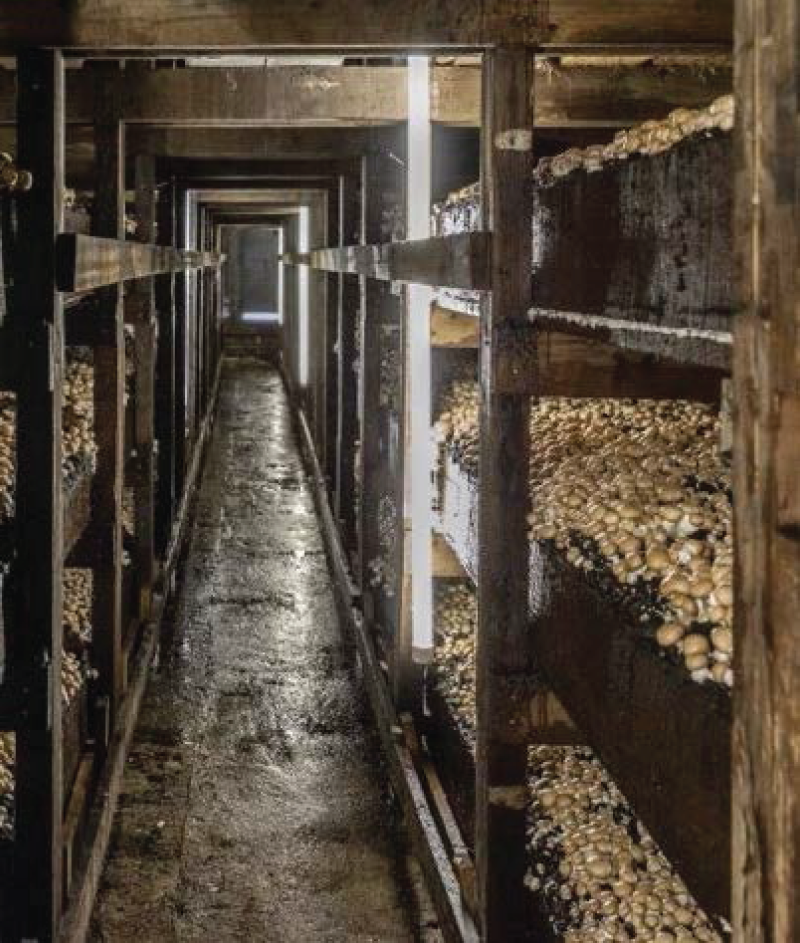
Bed layout of mushroom bed in farms (source: American Mushroom, 2024).
Typically, mushrooms are sold in tills or boxes of specific weights (e.g., 8 oz, 1 lb, 2 lbs, 5 lbs, etc.). Our focal firm also supplies large grocery chains and will put their label on the packaged tills before shipping them to the stores. Workers follow a relatively standard procedure to harvest each mushroom: they hold the mushroom with one hand and cut its stem using a knife in the other hand. Then, they gently place the mushroom in a box that collects the produce. This repeated manual operation is central to the operations of the mushroom farms at the firm.
Two Harvesting Protocols
We used data from two distinct farms that produce the same product (white mushrooms), but each of these two farms uses different harvesting protocols that impose different cognitive loads on workers. These two protocols have been developed in the industry to facilitate efficient harvesting of beds that are in a unique state in Step 3 of the mushroom growth described earlier. At this stage, a bed has different sizes and maturity levels of mushrooms. For this research, we use mushroom sizes as a proxy for maturity. 2 This heterogeneity in maturity levels among mushrooms exists in beds because individual mushrooms appear and start growing at different times during Stage 2 and, therefore, are of different sizes in Stage 3. Ideally, the firm should harvest individual mushrooms at their peak maturity. This is the time when a mushroom is at its largest size before it begins to decay. Mushrooms grow quickly, and a few hours can make a significant difference in size, with the biomass doubling on average every 0.8 days (Straatsma et al., 2013). Harvesting at peak maturity will provide the highest weight for the mushroom. Mushrooms are sold by weight, and the highest weight at harvesting will translate into the highest possible revenue for the firm from individual mushrooms. After the peak maturity, mushrooms decay swiftly in a matter of hours, losing nearly 90% of their value.
The industry commonly employs two harvesting protocols, which are described below.
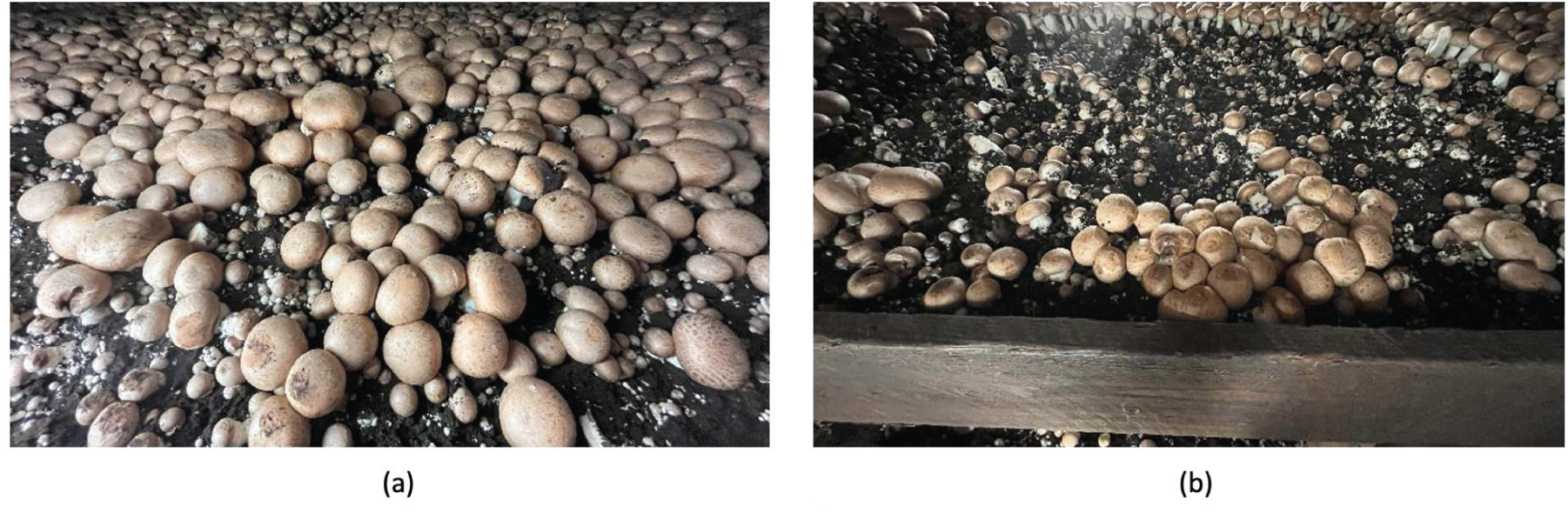
Harvesting all mushrooms with lower cognitive load (LCL): (a) bed before harvest and (b) bed after harvest.
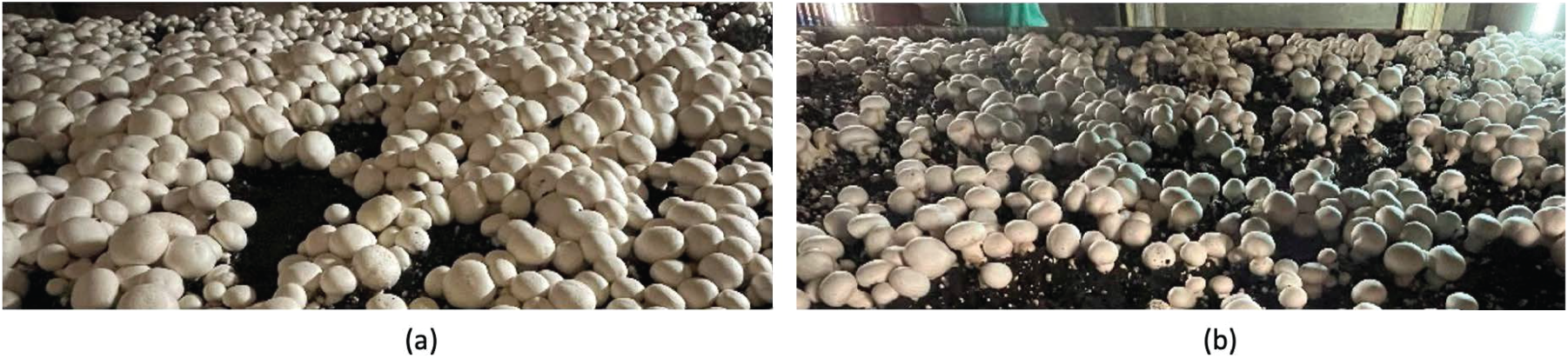
Harvesting specific mushrooms with higher cognitive load (HCL): (a) bed before harvest and (b) bed after harvest.
There are two somewhat similar bodies of literature on cognitive load. The first is in the domains of education and psychology, where cognitive load is defined as the load that performing a particular task imposes on an individual (see, e.g., Paas et al., 2003; Paas and van Merriënboer, 1994; Sweller, 1988; Sweller et al., 2011). This load is determined by task format, task complexity, and other factors related to pedagogy. The second body of literature focuses on work design and seeks to understand how job characteristics, task structure, and complexity, and the design of work influence cognitive load at work (Hackman and Oldham, 1976; Morgeson and Humphrey, 2006). Task complexity is a determinant of cognitive load that appears in both literatures. We used this metric to quantify the relative cognitive load of the two harvesting protocols on harvesters. Prior literature suggests at least two different ways to measure task complexity. Both approaches lead to the same relative ranking of cognitive load for the two harvesting protocols.
The first was originally suggested by March and Simon (1958), who argued that three main qualities describe the complexity of a task: (1) uncertainty in actions, (2) connections between actions and their consequences, and (3) existence and inseparability of subtasks. In the context of harvesting, both the Grazing and Harvest Everything protocols are equivalent in the first and second qualities. However, they differ on the third. Specifically, in the Harvest Everything protocol, workers harvest all mushrooms that can be sold in the marketplace. In contrast, the Grazing protocol introduces an additional intertemporal consideration: the harvester must assess, for each mushroom, whether it will grow significantly by the next round or begin to rot. If the mushroom is likely to rot, it should be harvested immediately; otherwise, it should be left for the next round. While the manual process of harvesting each mushroom—hold, cut, and place—remains the same, the cognitive burden is higher. Mentally, workers need to first visually inspect the bed in front of them and then mentally mark the locations of the mushrooms they plan to harvest. While many mature mushrooms stand out as natural candidates for harvesting in a specific round and many immature mushrooms should be left in bed, for the mushrooms with intermediate sizes, the harvesters need to decide whether to harvest them in that round or let them stay in bed but with the risk that the mushroom might mature and then deteriorate before the beginning of the next harvesting round. Essentially, the harvesting tasks across multiple rounds are not separable in the Grazing protocol, resulting in an HCL on the harvester. This criteria-based analysis suggests that the Grazing protocol has an HCL and the Harvest Everything protocol has an LCL.
The second approach was suggested by Morgeson and Humphrey (2006), who recommended using a primary data collection survey instrument to understand the relative complexities of tasks across different protocols. Their survey is specifically designed for studying workplaces and work arrangements, making it appropriate for our context. We used a specific question from this instrument that was relevant to our setting and collected responses from 30 harvesters with experience in both protocols. These data also confirm that the Grazing protocol is more complex compared to the Harvest Everything protocol.
To validate that our definition of cognitive load aligns with workers’ perceptions, we surveyed 30 farmworkers who had extensive experience in both protocols. The survey, translated and back-translated between English and Spanish by native speakers, was administered orally in Spanish by a supervisor to ensure comprehension despite varying literacy levels. Workers rated the statement, “During the harvesting process at Farm [Grazing/ Harvest Everything], I only have to perform one task or activity at a time,” on a 7-point Likert scale. A paired samples t-test showed that workers perceived Harvest Everything farm's tasks (M = 4.17, SD = 2.20) as significantly simpler than the Grazing farm's tasks (M = 3.50, SD = 2.00), t(29) = 2.07, p = 0.024, one-tailed, supporting that the Harvest Everything farm has an LCL.
To summarize, in the Harvest Everything protocol, workers have a relatively LCL: they perform the same movements on all items (mushrooms) in front of them. In contrast, in Grazing, workers have a relatively HCL because this protocol requires workers to be more cognitively engaged and pay greater attention to the size and eligibility for harvesting.
Data Description and Metrics
We received weekly harvesting productivity data (in pounds per hour) for individual workers over a 39-week period at two agricultural farms within the firm. These weeks spanned from November 2019 to June 2020. Of these 39 weeks, 22 weeks correspond to the pre-shock period (November 2019 to March 2020) and 17 weeks to the shock period (March 2020 to June 2020). In our analysis, we excluded observations from 21 newly hired workers who were in training during our observation period. They were still in the learning phase of harvesting and categorized as learners by the organization. We retained observations about workers who worked at least 10 weeks during the pre-shock period to allow for a comparison of behavior between the pre-shock and the shock period for each individual. Hence, we only considered data on workers who had been with the firm during the pre-shock time frame. Overall, the data comprised observations from more than 200 workers, covering more than 35,000 workdays. Because all workers in both farms perform the same harvesting task under identical pay, production technology, and working conditions, observable heterogeneity across individuals is minimal. This structural uniformity limits the extent to which time-invariant worker characteristics could drive workers’ exit decisions or bias our within-worker productivity estimates.
Our first dependent variable to test Hypothesis 1 is “worker turnover.” Worker turnover is a categorical, binary variable, where 1 indicates a worker was present during a week and 0 indicates they were absent. Our second dependent variable to test Hypothesis 2 is “productivity.” Worker productivity is based on the daily average hourly weight (in pounds per hour) harvested by each employee. In a robustness check (Section 5.2.3), we also assessed different measures of missed work to confirm our primary findings on worker turnover. Our key independent variable is “shock.” It is a categorical, binary variable: 1 corresponds to the 17 weeks that the CARES Act was in place, while the 22 weeks pre-shock are coded as 0. We included certain control variables: Given the distinct harvesting and compensation approaches, we included “farm”: 1 corresponds to the LCL farm and 0 to the HCL farm. We also included “gender” as a control variable (1 for male, 0 for female), as previous research has shown that perceptions of risk and, hence, potential shocks differ based on gender (Dohmen and Falk, 2011; Filippin and Crosetto, 2016). Approximately 60% of the workers are male (125 out of 216 workers across both farms).
Descriptive Statistics
We begin by examining the descriptive statistics presented in Table 1, which shows the turnover rates and worker productivity before and during the shock for the combined farms and each farm individually. The turnover rate (% of missed work) increased after the shock across all groups. For both farms, the turnover rate increased from 0.008 (0.8%) to 0.186 (18.6%). Similarly, the LCL farm saw an increase in turnover from 0.005 (0.5%) to 0.115 (11.5%), and the HCL farm experienced an increase from 0.008 (0.8%) to 0.200 (20.0%). The results indicate a trend of increased worker productivity during the shock period. For both farms, the average productivity increased from 88.46 lbs/h pre-shock to 94.87 lbs/h during the shock. This positive trend is also evident when examining individual farms, with the LCL farm showing an increase from 101.01 lbs/h to 109.66 lbs/h and the HCL farm showing an increase from 84.19 lbs/h to 89.69 lbs/h.
Descriptive statistics: worker productivity and turnover rate by farm and time period.
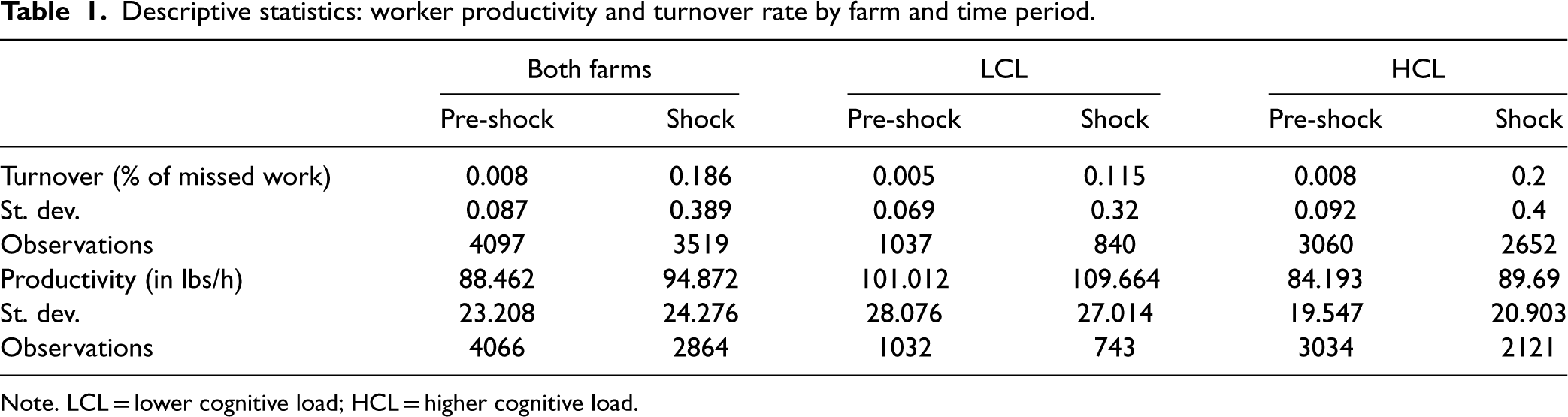
Descriptive statistics: worker productivity and turnover rate by farm and time period.
Note. LCL = lower cognitive load; HCL = higher cognitive load.
Next, we test the main effect using a two-sample t-test with unequal variances. The results, presented in Table 2, show statistically significant differences between the pre-shock and shock period for both worker productivity and worker turnover rates. We find a significant negative impact on worker retention across both farms, as well as a significant positive impact of the shock on worker productivity.
Two-sample t-test for worker productivity and turnover rates.
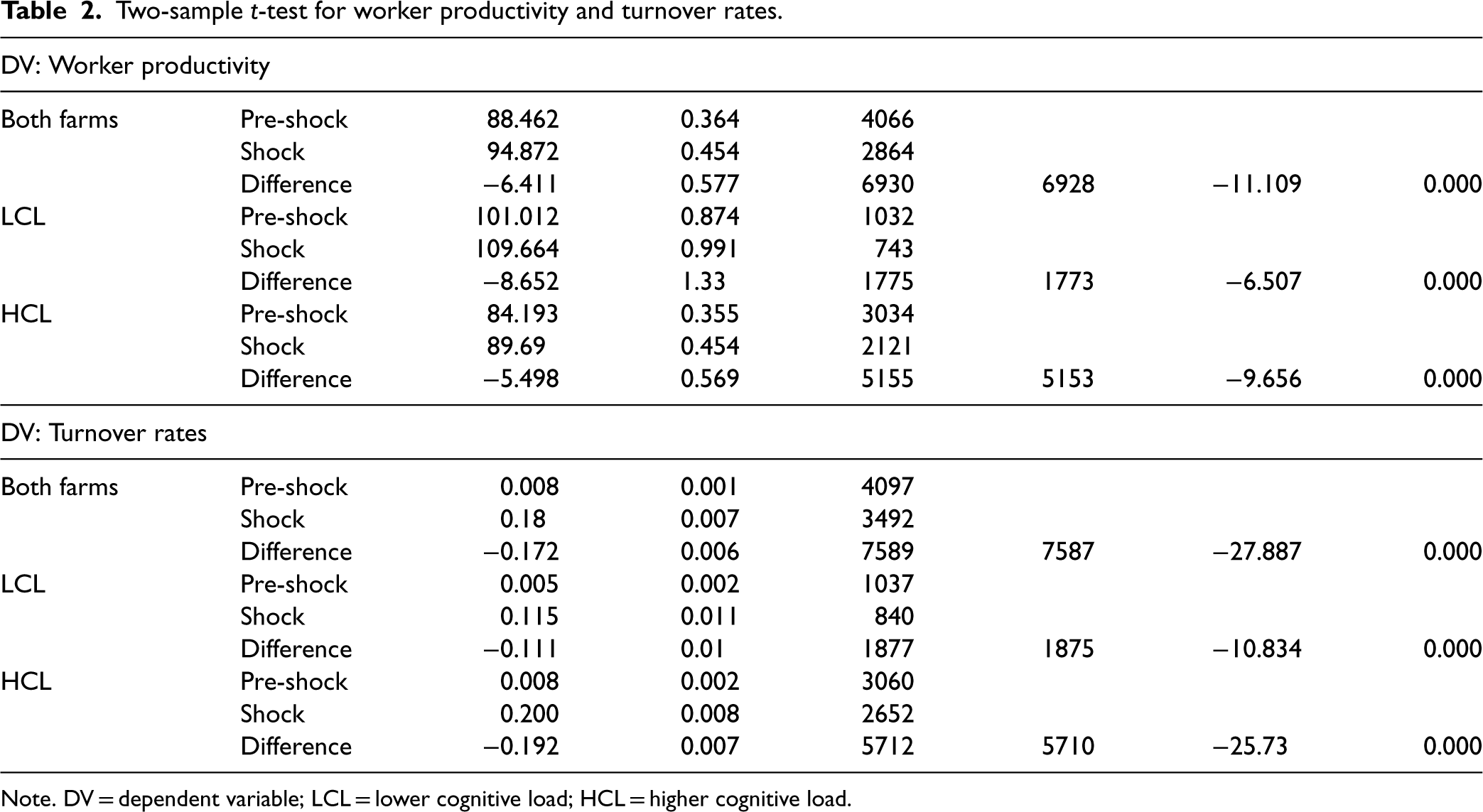
Two-sample t-test for worker productivity and turnover rates.
Note. DV = dependent variable; LCL = lower cognitive load; HCL = higher cognitive load.
To address potential omitted variable bias, we employed fixed-effects models that control for time-invariant worker characteristics and shared factors such as COVID-19-related health concerns. These models isolate time-variant factors, such as alternative wage opportunities, enabling a more rigorous analysis of the observed behavioral responses. Hypothesis 1 examines the impact of a shock on worker turnover. Given the binary nature of the dependent variable (worker turnover) and the panel structure of the data, we employed the following logistic regression model, controlling for individual and time effects (Allison, 2009). Specifically, we estimated the following equation:

Table 3 presents the results of the analysis. Model 1 pools the data across the two farms. Model 2 incorporates a fixed effect for farms. Models 3 and 4 split the data into LCL and HCL Farm data, respectively. Across Models 1 through 4, we observe that the shock has a significant and positive effect on worker turnover. Specifically, in Model 1, the shock has a significant effect (β1 = 4.463, standard error [SE] = 0.221; p < .01) while controlling for gender (β2 = −0.201, SE = 0.368; p > .05). In Model 2, the added control for farm indicates that the results are valid for both farms. Models 3 and 4 split the sample by farm: We observe that the findings are consistent: we find support for Hypothesis 1a, and, consequently, fail to support Hypothesis 1b.
Shock on worker turnover [DV: worker turnover (binary)].
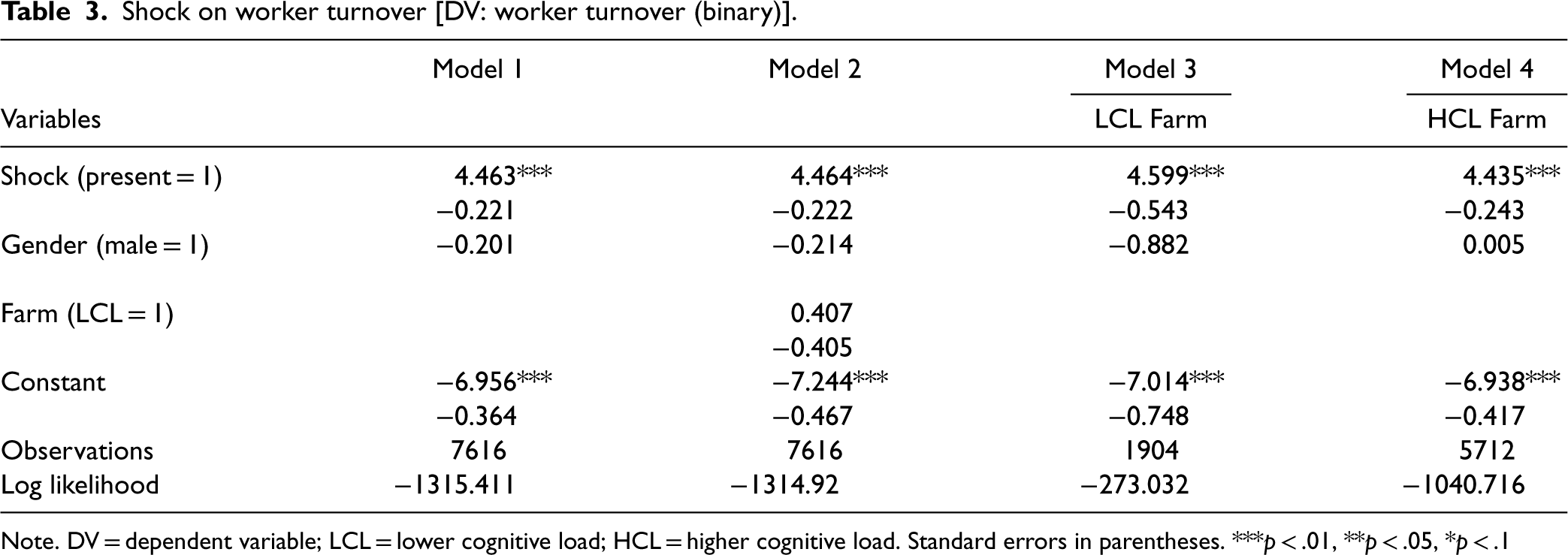
Note. DV = dependent variable; LCL = lower cognitive load; HCL = higher cognitive load. Standard errors in parentheses. ***p < .01, **p < .05, *p < .1
Hypotheses 2a and 2b examine the impact of a shock on worker productivity. We use the following generalized least squares regression model for the panel data while controlling for time (week) and individual (worker) fixed effects:
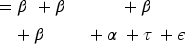
The results in Table 4 show a positive and significant effect of the shock on worker productivity. Table 2 is structured analogously to Table 1: Model I displays the relationship between shock and worker productivity, while controlling for gender. We observe that the shock increased productivity (β1 = 5.789, SE = 0.241; p < .01). In Model II, we add a control for the two farms and find that this result continues to hold. In Models III and IV, we look at the split sample. The magnitude of the effect of the shock is more pronounced on the LCL (Model III: β1 = 7.664, SE = 0.581, p < .01) than in the HCL farm (Model IV: β1 = 5.127, SE = 0.253, p < .01); however, both are positive and statistically significant. Hence, we fail to find support for Hypothesis 2a, but we do find support for Hypothesis 2b.
Shock on worker productivity [DV: worker productivity (lbs/h)].
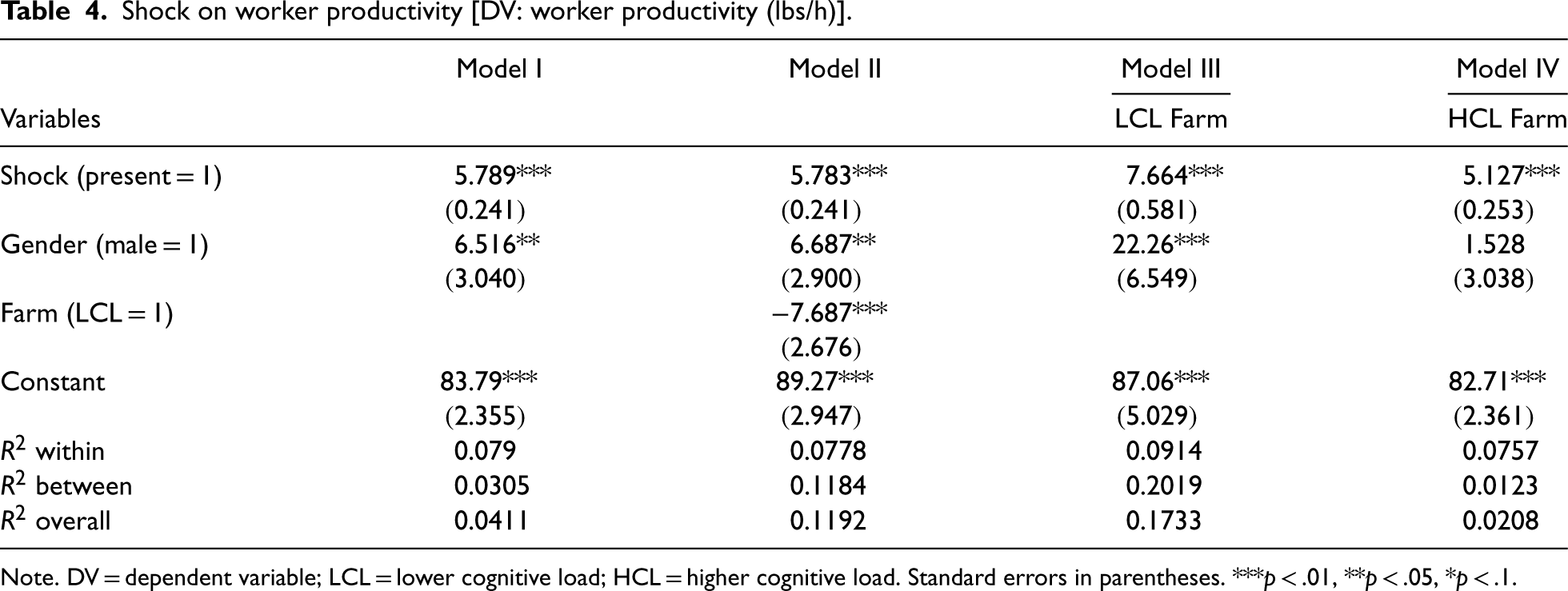
Note. DV = dependent variable; LCL = lower cognitive load; HCL = higher cognitive load. Standard errors in parentheses. ***p < .01, **p < .05, *p < .1.
Controlling for gender, we find that in the complete data, male workers had a higher output rate (Model I: β2 = 6.516, SE = 3.040; p < .05). We also note some other effects for completeness. When looking at the effect of gender by farm in Models III and IV, we observe that male workers are more productive in the LCL harvesting setting (β2 = 22.26, SE = 6.549; p < .01), while gender does not seem to have a statistically significant effect in HCL harvesting (β2 = 1.528, SE = 3.038; p > .05). This result suggests that workplace design with an emphasis on cognitive engagement may mitigate gender-based performance differences. We leave further studies in this direction for future research. Moreover, the robustness of our findings across both farms supports the generalizability of the results, suggesting that the observed effects are not farm-specific but rather indicative of broader worker responses to the shock.
So far, our results show that the labor shock increased turnover and productivity. We next seek to understand the factors underlying these results. As described earlier in the summary statistics of data, workers’ productivity was heterogeneous; that is, the weight of mushrooms harvested per hour varied from one worker to another. A second factor was the systematic difference in the harvesting protocols followed at the two farms, with Farm 1 employing a protocol that required an LCL and Farm 2 using a protocol with an HCL. In the post hoc analysis that follows, we aim to understand how worker heterogeneity and cognitive load factors contribute to these outcomes. Furthermore, we examined the relationship between worker productivity and turnover, hypothesizing a curvilinear effect (Sturman et al., 2012). We expected that for low-productivity workers, turnover would increase because workers might perceive the shock's financial incentives as an opportunity to seek better job prospects. However, the higher productive workers have a better payoff and choose to stay in the incentive system; consequently, they may have gained job satisfaction (Cadsby et al., 2007; Eriksson and Villeval, 2008), leading to a reduction in turnover. Beyond a certain threshold, however, we anticipated that higher levels of productivity could lead to diminishing returns on effort, which would, in turn, increase turnover again.
Does Pre-Shock Productivity Impact Who Leaves?
We first explore: Who is more likely to leave? Our dataset provided us with a unique opportunity to examine the turnover of workers performing unskilled tasks by analyzing their past productivity—an indicator of their work performance and compensation. For this analysis, we first determined the average pre-shock productivity of each worker and used it as an explanatory variable for individual workers who left during the shock. We explored both linear models and more complex curvilinear models that tend to capture behavioral factors for employee retention (see, e.g., Sturman et al., 2012). We report the results of the following curvilinear model in which we examine the impact of the squared term of this average pre-shock productivity. We ran the models for the LCL and HCL farms separately.
The quadratic effect of pre-shock productivity levels on worker turnover by farm:
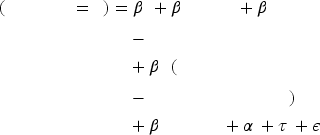
The results are displayed in Table 5. In Model I for the LCL farm, we find a downward sloping (curvilinear) relationship between worker productivity levels and turnover, indicating that the least productive workers are more likely to leave their current employer, while the workers in the mid and high-range productivity are more likely to stay with their current employer (Model I: β2 = −0.214, SE = 0.086; p < .05 & β3 = 0.0008, SE = 0.000; p < .05). Figure 4(a) presents this relationship. This curvilinear relationship demonstrates practical significance when viewed across a realistic range of worker productivity. The 90% confidence interval of an employee with a pre-shock average productivity of 60 lbs/h does not overlap with the confidence interval at a productivity level of 120 lbs/h, suggesting that the curvilinear relationship is both mathematically and practically significant.
Curvilinear effect of pre-shock average productivity on worker turnover and productivity.
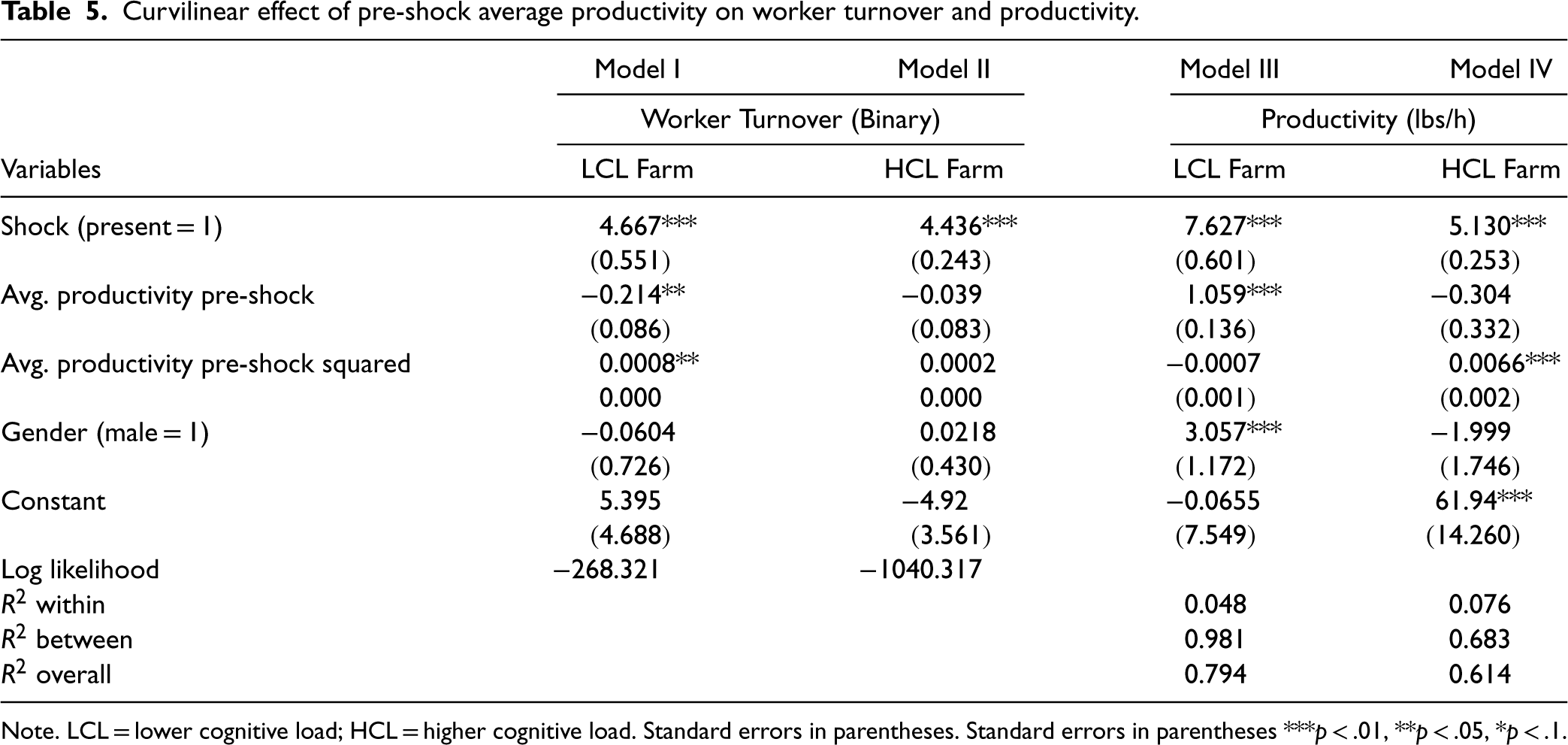
Note. LCL = lower cognitive load; HCL = higher cognitive load. Standard errors in parentheses. Standard errors in parentheses ***p < .01, **p < .05, *p < .1.
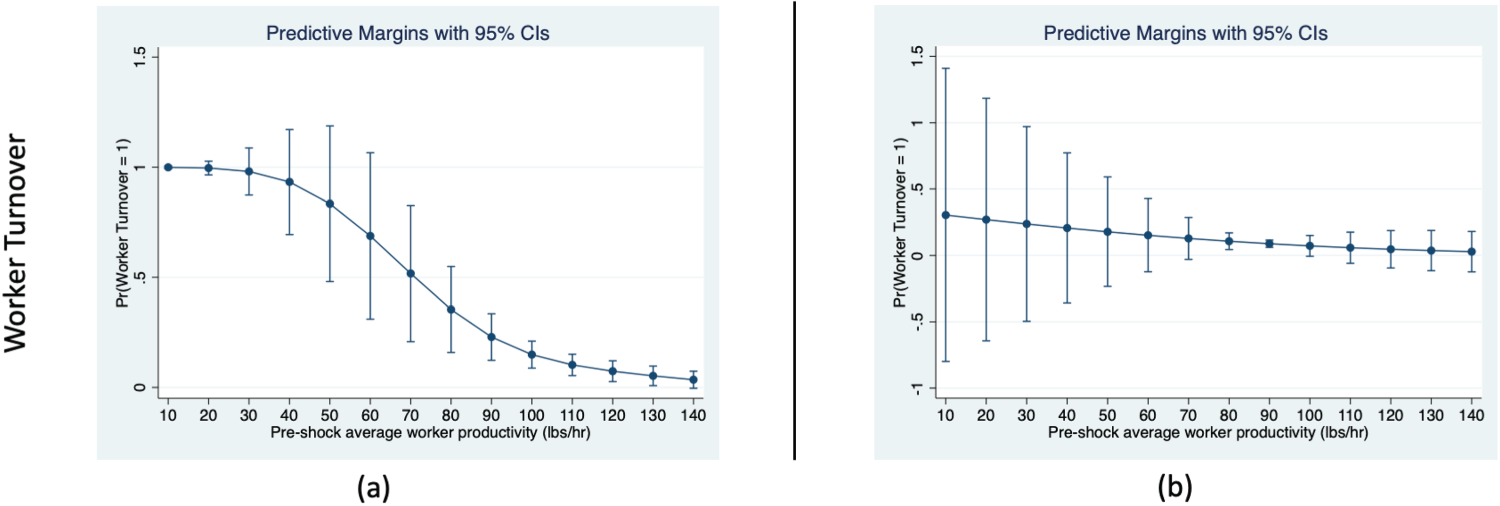
Relationship between pre-shock average productivity levels and turnover: (a) for LCL protocol and (b) for HCL protocol.
However, for the HCL farm, demonstrated in Model II, this relationship is not present (Model II: β2 = −0.039, SE = 0.083; p > .1 → n.s. & β3 = 0.0002, SE = 0.000; p > .1→ n.s.), demonstrating that workers on this farm are equally likely to leave their current employment, irrespective of their pre-shock productivity level. We also observe this result in Figure 4(b), in which the 95% confidence intervals at any two pre-shock average productivity levels (say, 60 and 120 lbs/h as before) significantly overlap.
These findings suggest that, in our context, the cognitive load of the task influences worker turnover intentions. HCL workers are equally likely to leave irrespective of performance levels, while LCL workers have a decreasing tendency to leave as their productivity increases.
Next, we investigate: Of the workers who stayed during a shock, who changed their productivity level more? To this end, we ran the following model that regresses post-shock average productivity on curvilinear specifications of the pre-shock average worker productivity. We again ran separate models for each farm.
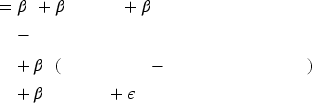
Examining Model III for the LCL workers, we only find a linear effect. Therefore, for these workers, as the average productivity in the pre-shock period increases, so does the productivity of the worker in general (Model III: β2 = 1.059, SE = 0.136; p < .01), while the squared term is insignificant (β3 = −.0007, SE = 0.001; p > .1). Figure 5(a) depicts the marginal effect curve as a straight relationship. This suggests that, overall, in a cognitively engaging environment for low-skilled workers, those who perform well tend to do even better during a shock. The results are more nuanced for the HCL farm. The results for Model IV show a significant quadratic, upward-sloping effect; however, with an insignificant direct effect. Figure 5(b) shows that overall, the effect is not of practical significance as the confidence intervals at various pre-sock productivity levels at least partially overlap for the complete range of data.
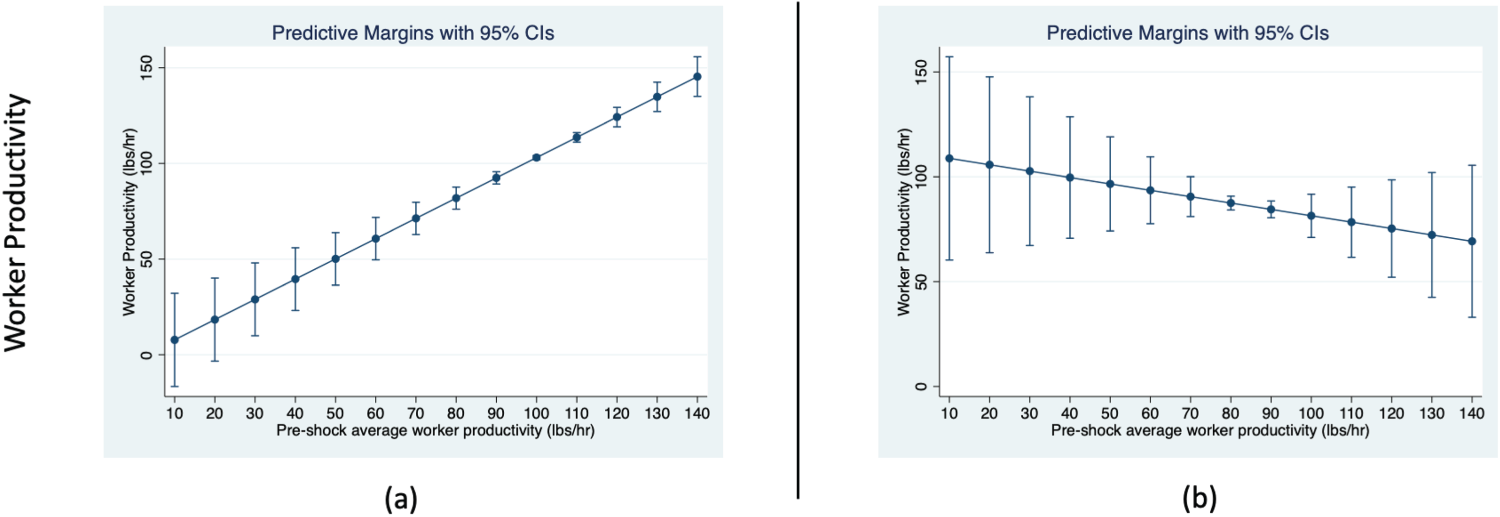
Relationship between pre-shock average productivity levels and worker productivity: (a) for LCL protocol and (b) for HCL protocol.
These findings again highlight the importance of cognitive engagement and the load induced by work: in our context, the productivity of HCL workers did not change systematically after the shock, relative to their original productivity. In contrast, LCL workers increased their productivity in proportion to their pre-shock productivity. We revisit these findings in more detail in the discussion section.
We conducted several robustness checks to verify the consistency of our findings, by re-running the analysis using: (i) alternate missed-work specifications, (ii) classification of productivity groups instead of treating productivity as a continuous variable, (iii) moderating role of productivity on worker turnover, (iv) tests for differential pre-shock productivity trends between stayers and leavers, and (v) wage comparison between the wages offered at the farm and the economic stimulus. Our results are consistently the same. First, we assessed different measures of missed work. Instead of looking only at whether an employee missed work in a particular week, we re-estimate our model using three additional dependent variables: missing at least three consecutive weeks during the shock period, missing at least 10 consecutive weeks during the shock period, and missing all weeks of work during the shock. The results are consistent with those reported in this paper (see E-Companion).
Second, we examined whether our results vary by pre-shock worker productivity. To achieve this, we calculate each worker's average productivity in the pre-shock period, rank the workers in descending order, and categorize them into three groups: below average (the lowest third), average (the middle third), and above average (the highest third). For each group, we conduct two analyses: (1) comparing the average percentage of missed work during the pre-shock and shock periods, and (2) comparing productivity across the two periods. Since both analyses yield directionally similar results, we report only the first for brevity. Table 6 and Figures 6(a) and 6(b) summarize the results, which indicate that missed work increases across all productivity groups, although the pattern varies by farm type. At the LCL farm, turnover is most pronounced among low-productivity workers and declines with higher productivity, whereas at the HCL farm, increases are more evenly distributed across the groups. Third, we examined whether productivity moderates worker turnover and found significant marginal effects for both farms across both dependent variable specifications. These results, which are reported in the E-Companion, are directionally consistent with and reinforce the findings discussed above.
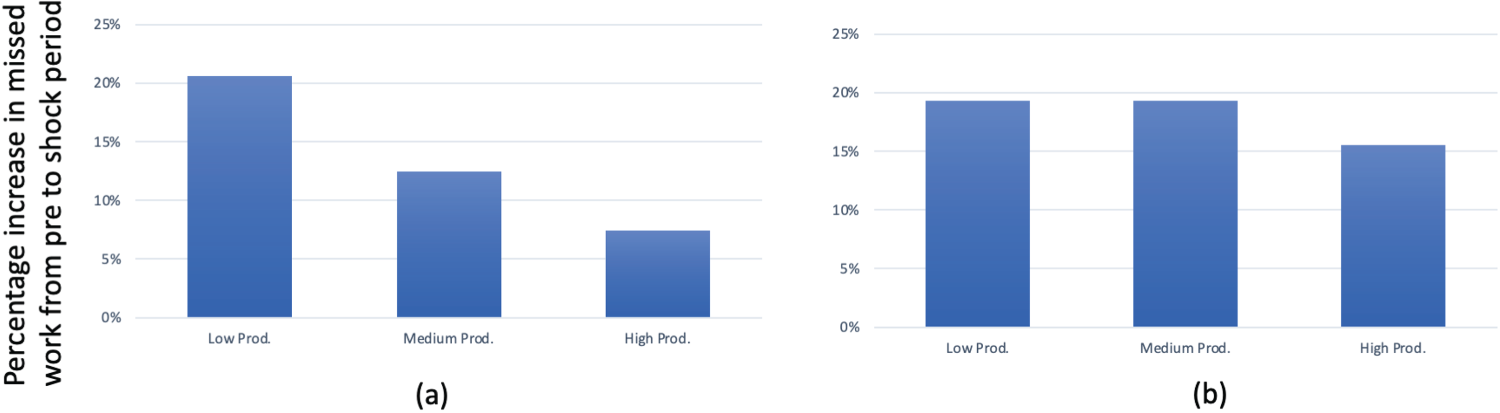
Difference between pre-shock and shock in missed work for the three productivity levels by farm: (a) for LCL protocol and (b) for HCL protocol.
Missed work for the pre- and shock period by a worker productivity group.
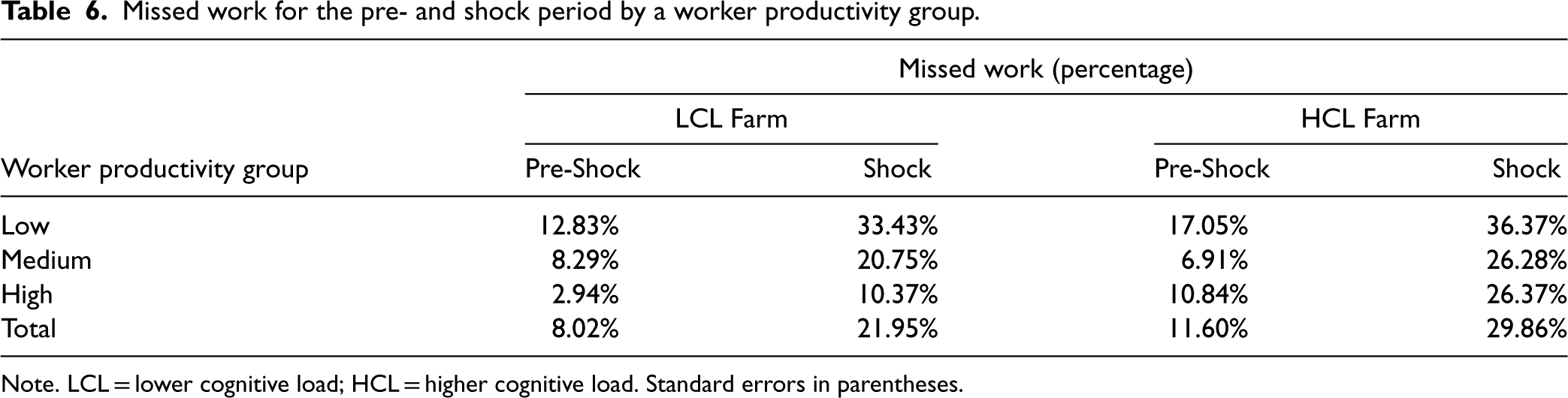
Note. LCL = lower cognitive load; HCL = higher cognitive load. Standard errors in parentheses.
Fourth, to assess whether selective attrition could bias our productivity estimates, we examine whether workers who stayed and left were already on different productivity trajectories prior to the shock. Our fixed-effects specification identifies productivity changes within individuals, removing all time-invariant differences across workers, including baseline productivity levels. There still remains the possibility that stayers and leavers exhibited systematically different productivity trends before the shock. To rule out this possibility, we estimate a model (using pre-shock data) that includes a time trend, an indicator for eventual leavers, and an interaction term (Time × Leaver). In the results, the interaction term is not statistically significant, indicating no evidence of differential pre-shock productivity trends between the two groups. This mitigates concerns that our productivity results are primarily driven by nonrandom attrition. The results are reported in the E-Companion.
Finally, to examine whether workers’ pre-shock productivity levels may have influenced their decision to stay or leave during the shock (i.e., potential reverse causality), we compared wages across productivity categories to assess the incentives provided by the stimulus. Table 7 provides an overview of the percentage average of workers’ wages for the three different productivity categories. Pay is derived based on a base pay and a performance-based component. Given confidentiality concerns, we used the average pay pre-shock on the HCL farm as our reference: it is set at 100%. All other observations are relative to this average pay on the HCL farm. Workers in both the LCL and the HCL farms pre-shock earned less than the other categories (95.83% and 79.17%, respectively, compared to the reference category). Based on the base and performance-based pay, the workers in the HCL harvesting farm generally earned less than those on the LCL harvesting farm, potentially providing an explanation for the difference in findings in the post hoc analysis. Overall, all workers would have received a higher payout by leaving during the CARES Act than by staying in their jobs. However, this discrepancy was most pronounced for the least productive workers.
Comparison of average wages of the workers by productivity levels in percent (reference category average pay HCL pre-shock).

Summary
Our research posed two questions. Our first research question (RQ1) focuses on worker turnover: we observe a rise in worker turnover during periods of shock. At least some workers used the alternative, higher source of revenue available to them by switching out of their employment situation. This implies greater costs for the employer, either by hiring and training new employees or, in times of competition for workers, by paying higher wages. Ultimately, these costs are passed on to the general public and are a primary reason for increasing food prices (Cardoso, 1981; Simnitt and Martin, 2022). In our post hoc analysis, a worker's pre-shock productivity was found to have a curvilinear impact on turnover only in the LCL protocol, with no significant effect observed in the HCL protocol. RQ2 investigates worker productivity: we find that worker productivity increases during shocks. Specifically, examining different levels of worker productivity, our results indicate that all worker groups increase productivity in response to the shock. However, the cognitive loads of the two protocols exhibited different trends. In the HCL protocol, the increase in productivity was constant; in the LCL protocol, the rise in productivity was in proportion to the original productivity. Furthermore, we find that the shock positively affects worker productivity (RQ2). Those employees who continued to be employed in our focal firm increased their hourly output, to some extent countering the effect of the increased worker turnover. This phenomenon may be explained by the differences in perspective between workers who stayed and those who left. Given the overall high unemployment rates during these initial weeks of the pandemic, workers who continued at their place of employment valued the stability of their paychecks beyond the initial shock. To make themselves indispensable to their employer, workers increased their productivity.
Resilience Implications for Employers
Our findings have implications for work design, especially regarding cognitive load and engagement. Purposeful differences in the protocol of harvesting operations can create environments with HCL and LCL, as was the case at the two farms we studied. Overall, the detrimental impact of a shock on an employer is less acute when workers function in an environment with a relatively HCL and engagement. We next decompose this benefit of HCL and engagement into two dimensions. For both dimensions, we focus especially on the effects on employers’ ability to manage task assignments for individual workers and the compositions and task assignments of worker teams during shocks, as observed at our focal firm.
First, worker turnover during shock is more manageable for employers under the HCL work protocol. A temporal shock to the labor market in the LCL context resulted in uneven turnover rates among workers (as a function of their productivity) (see Figures 4 and 6 and Table 4). This unevenness creates challenges in reassigning work to employees. This issue is particularly challenging in settings such as agricultural work, where workers are grouped into teams for tasks or scheduled shifts, as some teams are severely depleted while others may remain nearly intact. Reassigning workers to create well-balanced teams is particularly difficult in these situations. Our focal firm experienced this challenge in the farm that used the LCL harvesting protocol. In contrast, for the HCL farm, worker turnover is of a consistent magnitude across all worker productivity levels. This uniformity is managerially easier to manage as teams are more likely to remain of comparable strengths. As such, these findings indicate that the HCL work environment resulted in a more consistent and stable employment environment with workers across all productivity levels equally engaged in their positions. Consequently, a HCL work environment is more likely to make an employer resilient to unanticipated temporal shocks.
Second, employers experience more predictable changes in productivity under the HCL work protocol. While there is indeed a change in employee productivity for both HCL and LCL protocols, this increase is consistent irrespective of the worker's pre-shock productivity level in the HCL protocol (see Figure 5). In team settings, this means that multiple worker teams, comparable in terms of their work assignments (i.e., tasks they can handle within a shift) and productivity, continue to be comparable in these attributes during the shock under the HCL protocol. Any changes that the employer must make in the assigned work (e.g., beds to harvest by each team at our focal firm) are uniform for all teams. In contrast, in the lower cognitive work protocol, teams that were originally comparable may now become dissimilar in terms of the work quantity, for example, the number of beds that can be assigned to them during a shock. Rebalancing and reassigning work for these teams is now more challenging. Consequently, an HCL work environment can reduce the effort an employer must exert in managing teams during shocks. In work environments that emphasize individual work assignments, managers would also need to rebalance work assignments more extensively in lower cognitive work environments due to uneven changes in performance.
These results suggest that, instead of viewing cognitive load solely as a burden, organizations can harness its potential to enhance worker engagement and, ultimately, improve overall performance outcomes. As we discuss next, this phenomenon has largely remained unnoticed for low-skilled jobs.
Importance of Cognitive Engagement in Low-Skilled Jobs
Our results highlight the importance of cognitive demands even in low-skilled tasks, challenging the traditional view that cognitive load is primarily associated with white-collar jobs. Typically, cognitive load is associated with professions that involve substantial mental effort, decision-making, and learning, which are more prevalent in white-collar roles (Hopp et al., 2009). In contrast, unskilled jobs are often perceived as less cognitively demanding and more physically demanding, with an emphasis on tasks that require minimal formal qualifications. However, this perspective may overlook the cognitive aspects involved in certain low-skilled occupations. For instance, warehouse picking—a task often classified as low-skilled—demands a certain level of cognitive engagement that includes understanding inventory placement, navigating through various product locations, and efficiently managing time and resources. Despite the job's classification as low-skilled, workers must process and apply information effectively to perform their tasks efficiently. This distinction has implications for managers and organizational practices. The cognitive demands of low-skilled tasks should not be underestimated, as they significantly impact worker productivity and overall job performance. Recognizing that even physically intensive jobs involve cognitive processes can lead to better management strategies. For example, providing training that enhances workers’ understanding of task-related processes and improving the work environment can increase cognitive load, leading to greater engagement and, in turn, higher productivity. By recognizing that cognitive demands are present across various job categories, managers can implement targeted interventions to enhance worker performance, productivity, and engagement, thereby improving the efficiency of low-skilled work environments. As such, our findings are generalizable and have implications for low-skilled work across different industries. Documenting these effects would be a fruitful area for future research.
Limitations
Our research shows that an HCL can have a differential impact on how workers make decisions regarding their employment and productivity at work during times of temporary economic shocks. The metrics and scales we use to quantify cognitive load (through measuring task complexity) are standard in the literature. While our focus was primarily on understanding the impact of cognitive load on employee retention and productivity in one specific instance of relatively low-skilled jobs, the variation in cognitive load required for jobs is not unique to agriculture and can be found across various sectors, including manufacturing, retail, and service industries. Therefore, while the specific protocols in our study are unique to mushroom farming, the broader findings regarding the relationship between cognitive load, worker turnover, and productivity can be generalized to other settings where workers face tasks that differ in cognitive demands. Nevertheless, more research is needed to determine whether the magnitude of these effects varies by industry or is limited to industries where low-skilled jobs are prevalent, and whether they hold regardless of the skill level required for a job. As such, our research process flow can provide a template for exploring these questions empirically in the future.
There are also broader limitations inherent to natural experiments. Our design relies on a pre/post framework: the pre-shock period serves as the control, and the stimulus period as the treatment. Because the shock was applied broadly, there is no contemporaneous untreated control group, leaving open the possibility that concurrent shocks (e.g., health risks and market disruptions) may confound causal inference (Craig et al., 2017; Meyer, 1995). Additionally, while we observe detailed worker-level productivity, our reliance on firm records without demographic or attitudinal information, such as past work satisfaction, constrains our ability to account for heterogeneity, echoing common challenges in natural experiments and operations management field studies (Gao and Li, 2022). Although our robustness check allowed us to compare workers who stayed with workers who left during the pre-shock period, we cannot fully rule out selective attrition driven by time-varying unobservable variables (e.g., changes in health or family constraints) that may affect both continued employment and productivity. This limitation presents opportunities for future research designs that integrate richer data and complementary methods to investigate worker attrition and productivity.
Our findings are most applicable to settings where production relies on low-skill or semi-skilled labor, workers face alternative income or employment opportunities that can shift rapidly due to policy or short-term labor-market conditions, and the shock alters outside options without changing production technology, demand conditions, or the nature of work. Relevant examples include temporary wage booms in nearby sectors, short-lived government transfer programs, and time-bounded expansions in local employment opportunities that increase the relative attractiveness of exit. Therefore, our findings should not be generalized to shocks whose primary effects operate through channels other than outside options, such as systemic technological disruptions, permanent institutional reforms, sharp demand contractions, or health- and safety-driven crises, as these shocks may reshape work in fundamentally different ways.
Finally, in our setting, it is not possible to obtain credible post-shock data due to the ambiguity surrounding the continuation of the stimulus payment after the initially declared duration of 17 weeks. During this “post-shock” period, it was initially unclear to workers whether a payment would be made and what the payout would be. Eventually, the payout that was decided upon was paid retroactively. However, given that workers during this period did not know whether they would receive payments, their actions during these months were not based on two clear choices (as they were during the shock period). Therefore, including this data in our analysis introduces ambiguity, making it impossible to attribute the observed outcomes during this period with certainty. Future research addressing similar issues would benefit from incorporating credible data from post-shock periods to provide a more comprehensive understanding of the long-term effects of such shocks on worker behavior. Furthermore, our data do not permit us to conduct robustness checks based on propensity score matching due to the absence of credible demographic information, such as age. Future research should test the robustness of our results with such analyses.
Supplemental Material
sj-docx-1-pao-10.1177_10591478261435281 - Supplemental material for The Impact of Ecosystem Shocks on the Operational Performance of Worker-Heavy Systems in the Agricultural Domain: The Role of Cognitive Load
Supplemental material, sj-docx-1-pao-10.1177_10591478261435281 for The Impact of Ecosystem Shocks on the Operational Performance of Worker-Heavy Systems in the Agricultural Domain: The Role of Cognitive Load by Saif Mir, Saurabh Bansal, Dina Ribbink, Phillip S Coles and Zach G Zacharia in Production and Operations Management
Footnotes
Declaration of Conflicting Interests
The authors declared no potential conflicts of interest with respect to the research, authorship, and/or publication of this article.
Funding
The authors received the following financial support for the research, authorship, and/or publication of this article: Phillip Coles and Saurabh Bansal acknowledge the support of the late Nagesh Gavirneni towards this collaboration.

Notes
How to cite this article
Mir S, Bansal S, Ribbink D, Coles PS and Zacharia ZG (2026) The Impact of Ecosystem Shocks on the Operational Performance of Worker-Heavy Systems in the Agricultural Domain: The Role of Cognitive Load. Production and Operations Management XX(XX): 1–21.
References
Supplementary Material
Please find the following supplemental material available below.
For Open Access articles published under a Creative Commons License, all supplemental material carries the same license as the article it is associated with.
For non-Open Access articles published, all supplemental material carries a non-exclusive license, and permission requests for re-use of supplemental material or any part of supplemental material shall be sent directly to the copyright owner as specified in the copyright notice associated with the article.
