



Abstract
Organizations lose billions of dollars due to inadequate customer service. To improve service, and enhance customer satisfaction, frontline employees’ (FLEs) use of relational communication may be key. During online customer service chats, FLEs provide key information and offer solutions, but they also can build customer relationships through conversations. In this article, we establish how relational perceptions get evoked in conversations and what influences they have for the outcomes of customer service interactions. Accordingly, we present an empirical field study that illustrates how FLEs influence customer satisfaction by mirroring or complementing four key themes, in line with relational communication theory: intimate communication, task orientation, assertiveness, and composure. Our results indicate that FLEs should mimic customers’ use of intimate communication and task orientation, complement their assertiveness, and exhibit high levels of composure. Moreover, FLEs should emphasize their task orientation at the conversation's outset, gradually incorporate more intimate communication as it progresses, and adopt assertiveness late in the service chat. These insights, corroborated by four experimental studies, underscore the significance of FLEs’ relational communication. Our findings highlight the value of training FLEs to tailor their word choices adeptly, and leverage the potential benefits of text-monitoring tools, which can help FLEs increase relational perceptions and satisfaction among their customers.
Keywords
Introduction
Organizations lose billions of dollars annually due to poor customer service (Ferguson, 2021; Hyken, 2018). Poor service may be due to inadequate training or quality standards (Heskett et al., 1994), but its outcomes, particularly for customer satisfaction, imply that even well-known businesses might suffer detrimental effects on their reputation or customer loyalty, and ultimately performance. Some well-known firms, such as Frontiers in the Airline Industry and Denny in the restaurant industry, have been cited for being extremely low in the 2025 American Customer Satisfaction Index (www.theacsi.org). Frontier has a score of 65/100, the lowest in airlines, and full-service restaurant Denny has a score of 75/100, the lowest in full-service restaurants. Both firms are likely to suffer and lose money from their low customer satisfaction (Otto et al., 2020), which highlights the need for training and clear operational tactics (Rosenzweig et al., 2025).
As a potential remedy, we propose that when frontline employees (FLEs) engage customers in online service chats by using relational communication strategies, they can set the stage for enhanced customer satisfaction and revenue growth, and improved operational performance. As is well-established in research and practice, satisfied customers offer greater long-term profitability than dissatisfied ones (Anderson et al., 1994; Helgesen, 2006). For example, in their meta-analysis of more than 1.16 million observations, published in 245 articles, Mittal et al. (2023) confirm the positive association of customer satisfaction with both customer-level outcomes (e.g., retention, spending, and word of mouth) and firm-level financial outcomes (e.g., sales, cash flow, stock returns, and Tobin's Q).
Identifying and implementing strategies to enhance performance in live chat interactions represents an essential goal for operations management (Bollapragada and Nair, 2010; Murthy et al., 2008); such strategies, in turn, require targeted training to improve agents’ performance. Technology (and algorithms) can help ensure that frontline employees are well-trained, interact effectively with customers in online service chats, and fine-tune their tone, speaking pace, and vocabulary to personalize the service interactions in order to cultivate more humanized interactions (Chamorro-Premuzic and Ahmetoglu, 2016; Gu et al., 2025). Such efforts promise to enhance customer satisfaction and revenue generation for firms (Arora et al., 2021; Donchak et al., 2022), generate “transparency effects,” and increase FLEs’ accountability for their own communication and behavior (Buell and Norton, 2011; Chen and Jiang, 2019). In contrast, a staggering 76% of customers complain about the impersonal nature of the chats offered by service firms (Arora et al., 2021).
This suggests the need for FLEs to adopt conversational tactics to enhance their service provision and customer satisfaction. We propose relational communication strategies as relevant, and postulate that relationship building results from direct communications between customers and FLEs, which then influences customers’ perceptions of service quality, interaction quality, rapport, and satisfaction (Brady and Cronin, 2001; Joshi, 2009; Mittal et al., 2021). Notably, we assert that customers and FLEs do not establish a relationship first and then chat; they relate through the chat. The relationship-building process depends on the words each party chooses, so FLEs can (and should) choose words that elicit relational perceptions from customers to increase their service satisfaction.
Our reasoning reflects the insights of relational communication theory (Burgoon and Hale, 1987; Rogers and Farace, 1975), which predicts that conversational parties exchange information while signaling their perceptions of each other, based on relational themes (RTs) that are embedded in their messages. These RTs influence important outcomes (e.g., sales; Rafaeli et al., 2017; Soldow and Thomas, 1984). Accordingly, we propose that FLEs’ word choices convey distinct RTs, which then influence customers’ relational perceptions and service satisfaction. The effectiveness of these choices depends on the customer and context, such that they require real-time adaptation (Ma and Dubé, 2011). As conversations unfold, the value of specific RTs also may evolve, so FLEs may need to adjust their language dynamically (Grewal et al., 2022; Marinova et al., 2018; Packard et al., 2024). Based on this reasoning, we seek to answer three research questions, in the context of live service chat interactions: How should FLEs tailor their use of RTs to match specific customers? How should FLEs adjust their use of RTs during the course of the service chat? What relational perceptions are evoked through the use of RTs by FLEs?
Based on prior studies of relational aspects in customer communication, we identify four prevalent RTs in service conversations: intimate communication, task orientation, assertiveness, and composure. We confirm their existence in a managerial survey, then analyze online private chats between FLEs and consumers empirically, using data from a service firm's website (Study 1). This setting offers a unique opportunity to study the implications of word choices, because all the communication is text-based, and both FLEs and customers can construct and revise their messages strategically to select the relational presentation they prefer. Next, to clarify the causal relationships of the RTs with varied, relevant outcomes (i.e., service quality, relationship quality, and customer satisfaction), we conduct four controlled, between-subjects experiments to manipulate FLEs’ and customers’ RTs (i.e., intimate communication, task orientation, assertiveness, and composure) as either high or low (i.e., each experiment has a 2 × 2 design). These experiments corroborate the importance of relational cues, and they specify when it benefits the FLE to match (or mismatch) a customer's RT cues.
With this multi-method approach, we make four main contributions. First, at the operations–marketing interface, our research helps establish that service delivery and relationship building occur simultaneously in frontline interactions. Operations management emphasizes efficiency, accuracy, and resource utilization; marketing prioritizes customer satisfaction, loyalty, and relational quality. Online service chats must embrace both perspectives, in that agents need to solve problems promptly and accurately but also must foster positive customer impressions. Furthermore, FLEs can leverage advanced, chatbot-assisted technologies (Li et al., 2021) that work in tandem with live chat interactions to create more seamless service experiences. Thus, online service chats, which are an increasingly adopted channel for customer engagement, offer a unique context for applying relational communication theory. Unlike phone or in-person interactions, service chats rely exclusively on textual exchanges, which makes the nuances of word choice and relational cues both more visible and consequential.
Second, our extension of relational communication theory to service chats establishes the presence of four RTs: intimate communication, task orientation, assertiveness, and composure. Further, our study provides clear, evidence-based recommendations for how FLEs should time and adapt each relational communication theme throughout the service interaction (Ludwig et al., 2022; Ma and Dubé, 2011; McFarland et al., 2006; Yagil, 2001). We find that FLEs should mimic customers’ use of intimacy and task orientation, complement (rather than mirror) assertiveness, and consistently maintain composure. Positioning relational communication as an organizational capability that can enhance both immediate service outcomes and long-term customer equity, we propose ways for firms to design scalable, efficient, digitally mediated service interactions that are relationally engaging and avoid frustrating, impersonal chats.
Third, in revealing that FLEs can strategically adapt their communication in real time, using relational themes to shape customers’ perceptions, we extend research on conversational dynamics in customer communications (e.g., Grewal et al., 2022; Marinova et al., 2018; Packard et al., 2024). That is, FLEs should adjust their use of RTs as the chat unfolds: They should begin with strong task orientation and composure to build trust and demonstrate competence, then progressively incorporate more intimacy and assertiveness as the conversation develops. This sequence can enhance customer satisfaction while also balancing operational goals of efficiency and relational depth.
Fourth, prior research has established the importance of positive relational perceptions toward employees (Mende et al., 2013; Palmatier et al., 2006). We clarify how such perceptions arise in real-time, in response to FLEs’ use of relational communication cues that align with (or diverge strategically from) customer cues. Using both field data and controlled experiments, we establish that relational quality perceptions emerge from these exchanges and directly shape customer satisfaction. Thus, our findings provide an operational blueprint for training FLEs to enhance operational and financial outcomes. By investing in relational communication training and supportive technologies, firms can elevate customer satisfaction while reducing the hidden costs of disengaged or dissatisfied customers. Managers across industries should view relational communication strategies as tools for improving customer experiences and strengthening operational resilience.
Relational Communication Themes: Theory and Research Questions
Relational communication theory posits that conversational messages convey both informational content and relational meaning (Bateson, 1972; Burgoon and Hale, 1987; Montgomery, 1992). Burgoon and Hale's (1984) relational communication framework provides a comprehensive description of how relational perceptions such as intimacy, composure, and task-orientation (i.e., “the fundamental topic of relational communication”; Burgoon and Hale, 1984: 193) result from communicative features. Humans rely on verbal and non-verbal cues to infer interpersonal dynamics and establish relational perceptions of interaction partners (Burgoon and Saine, 1978; Watzlawick et al., 1967). Although the affordances of verbal and non-verbal cues differ, the relational meaning of specific cues tend to remain stable (Burgoon et al., 2022: 4); saying “I love you” and blowing a kiss serve the same relational function for a message recipient.
In digital service encounters, customers and FLEs engage in dyadic message interpretation and response processes (Herhausen et al., 2023; Packard and Berger, 2021; Singh et al., 2020), during which they address functional problems but also establish interpersonal impressions that can affect the outcomes of the encounter (Soldow and Thomas, 1984; Spiro and Weitz, 1990). From among Burgoon and Hale's (1987) relational communication themes, four seem especially relevant for digital service conversations: intimate (or empathetic) communication, task orientation, assertiveness, and composure. These RTs reappear frequently in an exploratory review of prior literature (Web Appendix A). Furthermore, with a qualitative survey of 13 senior industry executives from varied sectors (Web Appendix B), we asked them to rate the importance of each RT in customer interactions, in terms of their contributions to customer service. These results revealed that composure received the highest average rating (6.50 on a 7-point scale), followed by task orientation (5.83), intimate communication (5.25), and assertiveness (4.25).
As we summarize in Table 1, intimate communication refers to expressions of immediacy, similarity, and receptivity (Burgoon and Hale, 1987), achieved by signaling rapport, empathy, affection, and liking toward a customer. Task orientation instead pertains to the extent to which conversational content remains efficiently focused on communicating about a pertinent topic (Köhler et al., 2011; McFarland et al., 2006). For example, task-oriented FLEs focus on exchanging task-specific information and solutions. Assertiveness manifests in verbal and non-verbal cues that convey dominance, through attempts to influence, regulate, or direct others (Ma and Dubé, 2011; Singh et al., 2020), or formality, by maintaining distance and reserve (Burgoon and Hale, 1987). Finally, composure entails the absence of apprehension, tension, anxiety, or worry (Burgoon and Hale, 1987), in communication characterized by expressions of relaxation and calm rather than tension or arousal (Burgoon et al., 2022; Dion and Notarantonio, 1992). Table 1 outlines the practical relevance of these RTs for online service chats, based on examples and illustrations from prior literature (see Web Appendix A) and our expert interviews (Web Appendix B).
Relational communication themes in service chats.
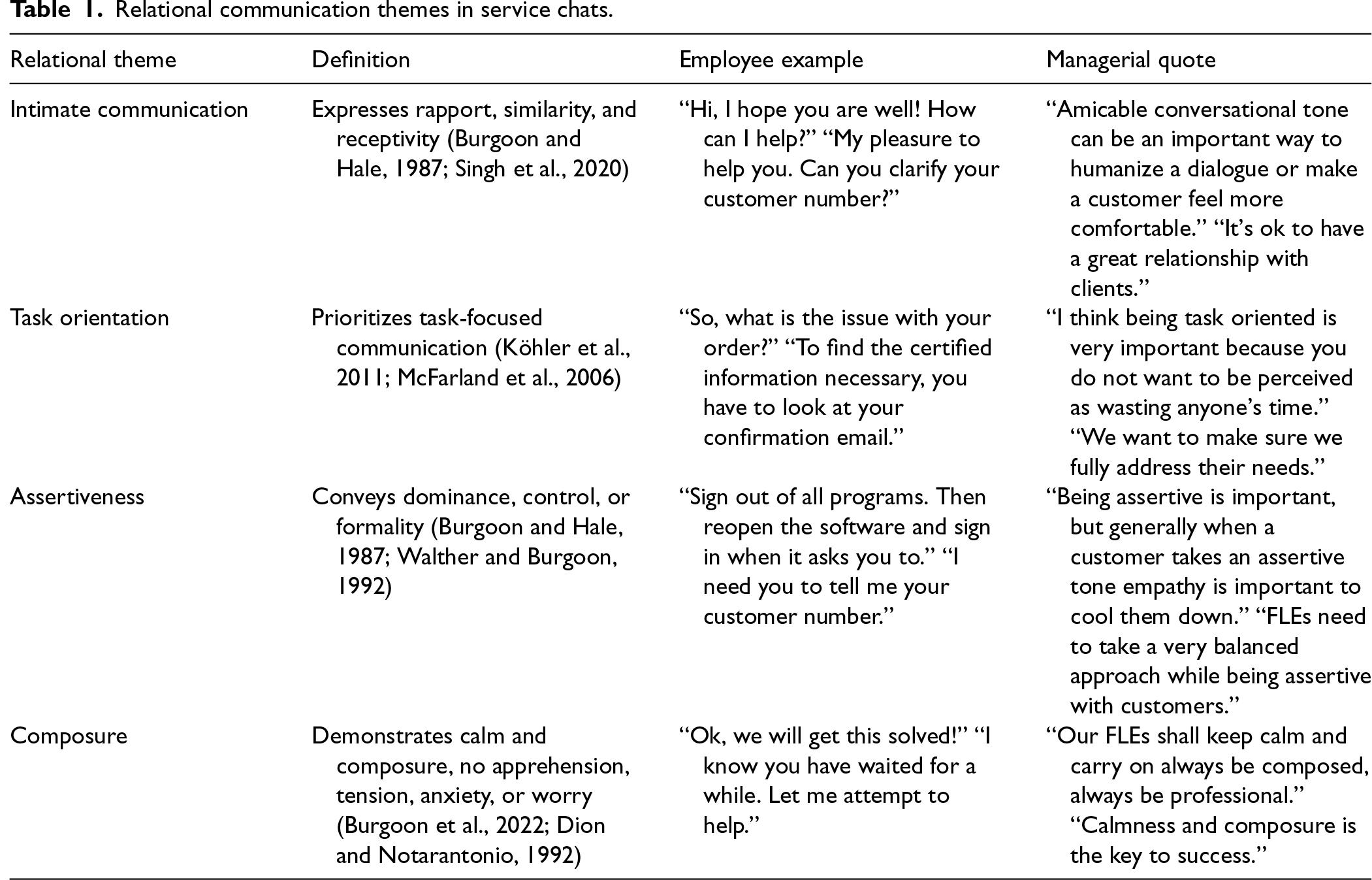
Relational communication themes in service chats.
Although they are distinct, these RTs rarely function in isolation in a conversation. Rather, customers and FLEs use them in tandem during their dynamic interplay, such that the effects on key outcomes are likely complex. As conceptualized in studies of the benefits of communication accommodation and mimicking (Soliz and Giles, 2014) in negotiation (Swaab et al., 2011) and personal selling (Verbeke et al., 2011) settings, mimicking conversational styles could potentially lead to improved communication outcomes (Grewal et al., 2022; Herhausen et al., 2023). In service interactions, when customers express warmth or immediacy, they tend to expect reciprocal responses (Dion and Notarantonio, 1992; Marinova et al., 2018; Singh et al., 2020), whereas if customers emphasize efficiency and task completion, FLEs’ use of intimate communication may be perceived as meandering or unprofessional, and task-focused communication should be more appreciated (Ludwig et al., 2022; McFarland et al., 2006). Therefore, we posit that mimicry in intimate communication and task orientation by FLEs can foster relational alignment and improve customer satisfaction. This prediction underlies our first research question (RQ1): How should FLEs tailor their use of RTs to match specific customers? Specifically, we consider the extent to which mimicking a customer's use of intimate or task-oriented communication might increase customer satisfaction with the service chat.
Not all relational dynamics necessarily benefit from similarity and mimicry though (Watzlawick et al., 1967). Interpersonal role theory and investigations of asymmetrical communication patterns suggest that complementarity may be more effective in some cases (Murstein and Christy, 1976). For example, if both parties attempt to dominate the conversation, it likely leads to frustration or conflict (Ma and Dubé, 2011). An FLE's assertiveness, directions, formal tone, and confident phrasing may be helpful if the customer is uncertain or passive (Singh et al., 2020), which might improve sales processes (Grant, 2013), but it also might reduce customer satisfaction (Yagil, 2001). For Soldow and Thomas (1984), successful sales interactions hinge on the agreement between salespeople and buyers regarding their dominant versus deferent roles. Similarly, FLEs’ composure can help customers regulate their anxiety, particularly if they exhibit distress or urgency (Finch, 2005; Vrij and Fisher, 2020). As prior work shows, service agents’ emotional stability facilitates de-escalation and better outcomes (Herhausen et al., 2023; Wang and Yim, 2019). Thus, customers who display low composure may strongly prefer an FLE who exhibits composure, to balance out their self-perceived anxiety. To investigate these interdependencies, we ask (RQ2): How should FLEs adjust their use of RTs during the entire service chat? That is, we consider the extent to which deviating from the customers’ use of assertive or composed communication can increase customers’ satisfaction with the service chat interaction.
Finally, the effectiveness of each RT may shift over the course of service interactions. Service conversations unfold in stages, often beginning with issue presentation or rapport-building and ending with problem resolution or closure. Drawing from relationship marketing theory (Dwyer et al., 1987; Palmatier et al., 2006), buyer–seller relationship dynamics (Shamsollahi et al., 2021), and models of relationship trajectories (Harmeling et al., 2015; Zhang et al., 2016), we argue that customer satisfaction requires FLEs to adjust their use of RTs dynamically during a service chat. Even in relatively short-lived or computer-mediated chats, communication strategies should evolve (Johnson et al., 2005; Walther and Burgoon, 1992). We propose that trends in the use of the RTs can be depicted as a change in the direction of their use (Palmatier et al., 2013). Initial messages often serve to establish shared understanding or convey concern and availability. In this early stage, task orientation may be particularly effective. Customers typically enter the conversation with some degree of uncertainty or ambiguity, and early displays of competence and responsiveness can build trust and signal the reliability of the FLE (Jap and Anderson, 2007; Miao et al., 2022). Consistent with transactional relationship models, front-loaded task orientation can anchor the interaction in a solution-oriented frame and lead the customer to perceive that their issue is being taken seriously (Zhang et al., 2016). This pattern mirrors early-stage dynamics in buyer–seller relationships, where functional competence often precedes emotional rapport. In contrast, we anticipate a stronger role of intimate communication later in the interaction. Initial friendliness may create warmth, but excessive, early rapport building can seem presumptive and even artificial, especially if not preceded by demonstrated competence (Ludwig et al., 2022). Intimacy cues may be more welcome after trust has been established through task performance (Huang and Wilkinson, 2013; Mohr et al., 1996). As relational norms emerge and the conversation transitions from problem identification to resolution, FLEs can deploy intimacy cues to deepen interpersonal connections and leave a lasting positive impression (Zhang et al., 2016). We predict a similar progression for assertiveness. Initially, balanced and non-assertive language may be preferable, especially given the absence of prior rapport (Walther and Burgoon, 1992). Overly directive or formal communication risks alienating customers who may perceive such behavior as dismissive or controlling (Wang and Yim, 2019). As conversation advances and mutual understanding develops, moderate assertiveness can help reorient the exchange toward resolution. Accordingly, customers may expect the FLE to take initiative, provide definitive guidance, and assert authority to resolve the issue (Singh et al., 2020; Zhou et al., 2004). Therefore, we ask (RQ3): What relational perceptions are evoked through the use of RTs by FLEs, and when during the conversation is it optimal for the FLE to make more extensive use of certain RTs?
For our large-scale field investigation, we obtained a proprietary data set from a U.S. service organization, which shared its private online chats with customers and their corresponding satisfaction ratings. 1 We analyzed 879 online chats between FLEs and customers. The firm's service process is entirely text-based and sequential, relying primarily on chat interactions. Like many online chat systems, in the initial interaction, an AI-enabled chatbot enquires about customers’ service needs and offers standardized solutions. If these options do not address customers’ requests adequately, a front-line employee (FLE) joins the conversation. Each chat session concludes at customers’ discretion, after which they are invited to provide a satisfaction rating. The data set encompasses all interactions involving an FLE for which customers provide satisfaction ratings.
Development and Validation of RT Dictionaries
To assess the uses of the four RTs by both FLEs and customers, we created new text mining dictionaries (Rocklage et al., 2018; Singh et al., 2020). Table 2 lists the step-wise process, and Web Appendix C provides more details. Briefly, Step 1 involved our prior identification of the four RT constructs. Then in Steps 2–5, we used both bottom-up (i.e., highest frequency words and seeded latent Dirichlet analysis [LDA]) and top-down (i.e., previously developed dictionaries) approaches to develop word lists for each construct. In Step 6, two independent research assistants rated each word in the lists according to its indicative strength (+3 to −3) for a specific RT. In Step 7, we assessed construct, discriminant, and predictive validity.
Measurement development of relational themes (RTs) using chat data.
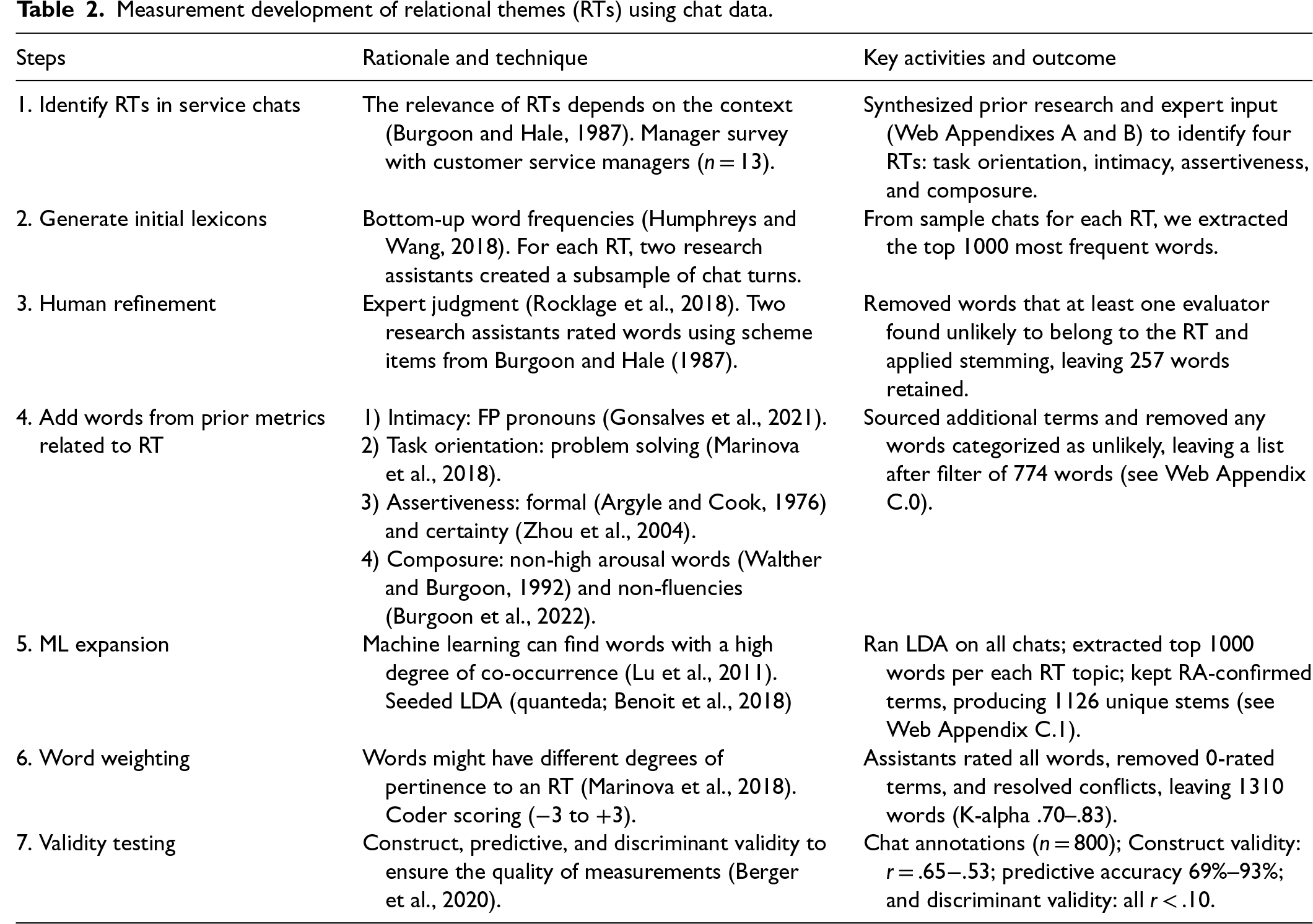
Measurement development of relational themes (RTs) using chat data.
This process resulted in a list of 1310 weighted words; the values, ranging from −3 to +3, denote their association with the respective RTs. Web Appendix C3 presents the top and bottom percentile words for each RT dictionary. In addition to substantiating the validity of our measurement approach in experiments with manipulation checks (see Web Appendix C4), we checked for construct validity (Step 7) by comparing the text-mined scores with two research assistants’ assessments of a subset of 800 service chats. This comparison produces accuracy and correlation metrics (r between .60 and .88), which function as indicators of construct validity. The dictionaries effectively predicted the presence of the RTs, for both customers and FLEs, with accuracy rates ranging from 69% to 93%. The F1 measures between human annotators and our dictionaries, for both customers and FLEs, ranged between .75 and .98, indicating construct validity (Web Appendix C5). None of the RTs exhibited correlations greater than .10 with any other RT, which underscores their discriminant validity.
Dependent variable. With a 5-point customer satisfaction scale for the dependent variable, we gauge the overall success of an online chat (Mittal and Kamakura, 2001) by asking, “Overall, how satisfied have you been with the service interaction?” (1 = very dissatisfied, 5 = very satisfied).
Independent variables. In line with prior text mining research (Berger et al., 2020), we constructed two distinct intensity measures for each relational communication theme j (RTj) in each conversation turn, one for the FLE and one for the customer. Initially, we calculated the relative frequency with which each term associated with a specific RTj was mentioned, then multiplied this relative frequency with the weight assigned to the term according to the development and validation of the RT dictionaries (Web Appendix C). For each chat session, we summed the weighted relative frequencies for all terms associated with the same RTj to derive the overall intimate communication, task-orientation, assertiveness, and composure expressed in the conversation by the FLE and by the customer. By excluding sentences with negation terms, we minimized measurement error. In the model-free analysis, FLEs’ intimate communication (r = .14, p < .001), task orientation (r = .19, p < .001), and composure (r = .12, p < .001) are positively associated with customer satisfaction, but assertiveness does not exhibit any such significant association (r = .01, p = .69).
Capturing mimicry and complementarity. In line with Soldow and Thomas (1984) and Burgoon and Hale (1987), we posit that the outcomes related to each RTj depend on their interdependent uses by both conversation partners. To capture the effects of these interdependencies on customer satisfaction, we adopt the method recommended by Kim et al. (2022) and applied by Ludwig et al. (2022). It uses a response surface approach to analyze customer satisfaction that results from different levels of RTj exhibited by FLEs and customers. To measure communication mimicry and complementarity, we thus use a polynomial model that captures FLEs’ and customers’ communication themes. For the dependent variable, we incorporate the five polynomial terms into an equation. For example, for assertiveness, we consider the FLE's assertiveness (
Trends in the use of RTs during a conversation. We predict that outcomes depend on the rate at which RT use shifts as the conversation progresses. To ascertain these trends in each RTj, we based our calculations on the intensity of RTj in each conversation turn, which we measure with least squares methods (Grewal et al., 2022). After numbering the chat turns sequentially, such that later turns are assigned higher numbers, we conduct regression analyses of the relationship between the intensity of each RTj and the chat turn number,

Controls. Several control variables help ensure the robustness of our findings. We consider the total duration of the chat, measured by the number of turns, because longer conversations might offer more opportunities to establish relational perceptions (Walther, 1996). We also note the length of the conversation with the chatbot, quantified by word count, because protracted interactions without issue resolution can lead to customer frustration (Crolic et al., 2022). To gauge customers’ positivity toward the chatbot, we use positive emotion cues from the LIWC dictionary, which can offer insights into customers’ mood. Furthermore, we consider the time it takes for the FLE to take over the conversation, measured in minutes; extended waiting times can adversely affect customer satisfaction (Pruyn and Smidts, 1998). The length of the FLE's response, quantified as the total word count per online chat, could be influential, in that customers might perceive more extensive responses as more effortful (Berger et al., 2020). We also evaluate the FLE's positivity toward the customer, on the basis of positive emotion cues from the LIWC dictionary, with the prediction that FLE positivity can enhance customer satisfaction. By analyzing linguistic style matches, focusing on function words that signal active listening by the FLE, we can gauge the level of responsiveness to customer concerns (Herhausen et al., 2023). Moreover, we explore nonverbal parts of speech expressed by both FLEs and customers; textual paralanguage cues can be critical indicators of sentiment valence and intensity (Luangrath et al., 2023).
To address potential sources of endogeneity related to strategic FLE behavior and unobserved heterogeneity, we control for learning effects by including the number of days since the chat service launched; FLEs may learn from or be trained using prior online chats. We also incorporate fixed effects for the 29 distinct FLEs who responded to customers’ requests, to account for variations in communication styles and customer satisfaction abilities. To address the potential influence of conversation topics, we identify six latent topics through LDA 2 ; the discussed topics could affect the conversation and, thus, customer satisfaction.
The correlations and descriptive statistics are given in Table 3. In addition to the main findings we present hereafter, we confirm consistent findings in linear regression analyses (Web Appendix D2) and when we test for interactions across trend variables (Web Appendix D3).
Descriptives and correlations in Study 1.
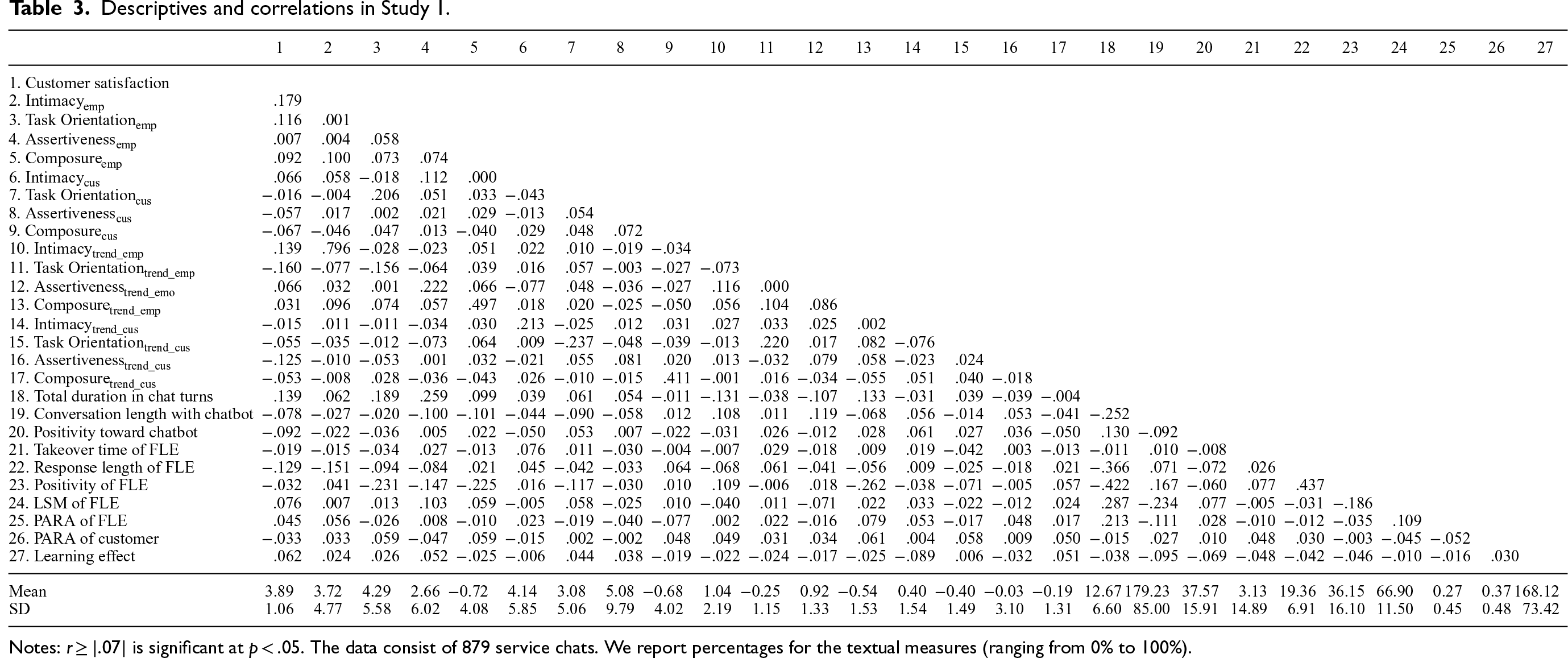
Descriptives and correlations in Study 1.
Notes: r ≥ |.07| is significant at p < .05. The data consist of 879 service chats. We report percentages for the textual measures (ranging from 0% to 100%).
Model-free evidence. The chats reveal frequent rates of usage of all four RTs by FLEs (customers): assertiveness in 99.5% (98.5%) of chats, intimacy in 78.8% (74.4%), composure in 67.0% (37.7%), and task orientation in 65.9% (58.8%) of chats. When FLEs use intimacy (r = .18), task orientation (r = .12), and composure (r = .09), we find positive links with customer satisfaction (all p < .01), but again, the use of assertiveness is not related to customer satisfaction (r = .01, p = .84). On average, online chats between FLEs and customers involved 12.67 turns (SD = 6.61), over the course of which FLEs displayed increased use of intimacy (β = .01) and assertiveness (β = .01), decreased use of composure (β = −.01), and consistent uses of task orientation (β = .00).
Econometric approach. To test the implications of FLEs’ RT use, relative to customers, we run a polynomial regression model:
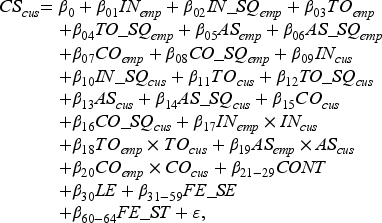
Results. In Table 4, Model 1 provides the results for the control variables; Model 2 indicates the results pertaining to FLEs’ relative uses of each RT, compared with customers’ usage. Web Appendix E presents the response surface coefficients; as shown in Figure 1, we provide the three-dimensional surfaces, which reflect relationships among FLE communication, customer communication, and customer satisfaction. The negative curvatures for intimate communication (b = −.725, p = .02) and task orientation (b = –1.055, p = .04), and the positive curvature for assertiveness (b = .458, p = .02) indicate that complementing a customer's assertiveness and mimicking intimate communication and task orientation increase customer satisfaction. Composure (OR = 1.043, p < .05) has a linear positive effect on customer satisfaction. 3
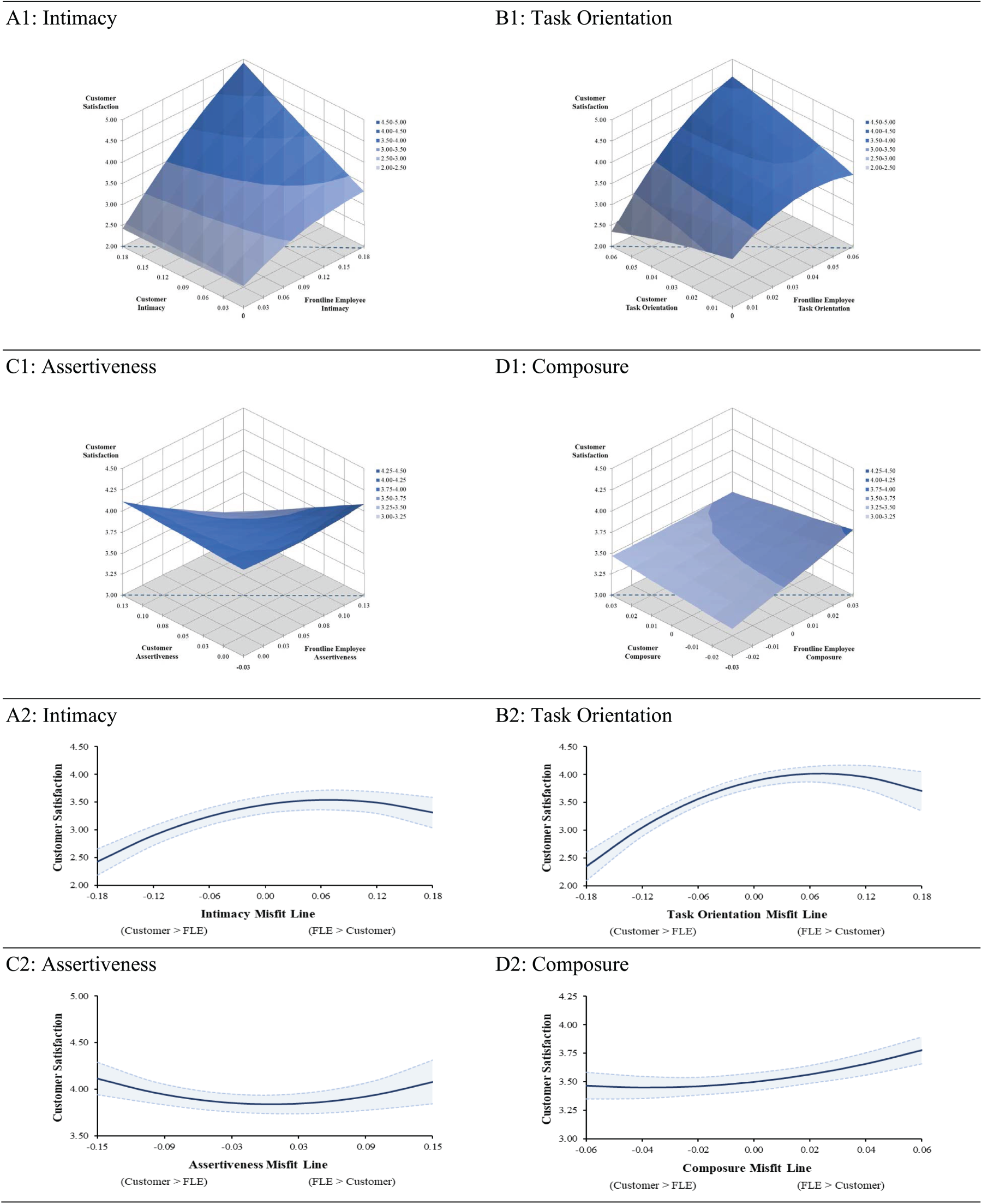
Match and mismatch effects in Study 1. Notes: We display all relational themes (RTs) on measurement scales to indicate the percentage of words for the respective theme, out of all words used. The misfit lines with 95% confidence intervals reflect the coefficients reported in Web Appendix E.
Predicting customer satisfaction in Study 1.
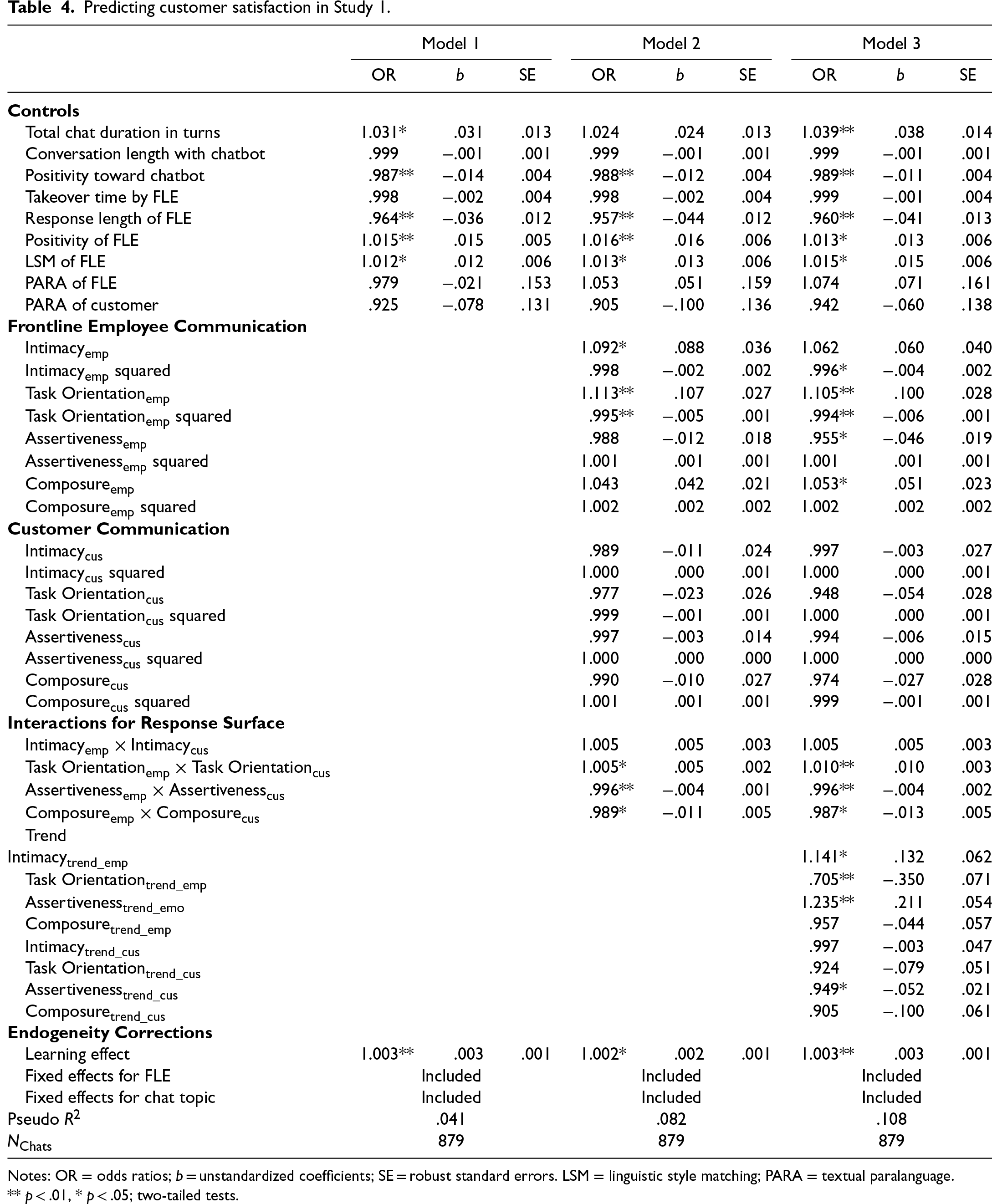
Notes: OR = odds ratios; b = unstandardized coefficients; SE = robust standard errors. LSM = linguistic style matching; PARA = textual paralanguage.
** p < .01, * p < .05; two-tailed tests.
Finally, Model 3 represents the results for the trend variables. The decreasing trend in task orientation (OR = .705, p < .01) and increasing trends in intimate communication (OR = 1.141, p = .04) and assertiveness (OR = 1.235, p < .01) have positive effects on customer satisfaction.
Discussion. With Study 1, we empirically investigate RTs in online chat conversations and find support for our prediction that effective uses of RTs vary with the interaction. As we show, FLEs should mimic intimate communication and task orientation, complementarily deviate in assertiveness, and consistently maintain more composure than customers. Appearing task-oriented early, followed by increased intimate communication and assertiveness, proves beneficial during the conversation too.
Although Study 1 establishes the external validity of our framework, an external data set cannot account for FLEs’ potentially strategic uses of the four RTs. To address this gap and establish internal validity, we conducted a series of complementary experimental studies, using pretested experimental manipulations of each RT construct (Web Appendix F1), in which participants were randomly assigned to one of four between-subjects conditions. They envisioned themselves as customers, displaying either high or low levels of one of the four RTs, and encountered a corresponding FLE with either high or low levels of the same RT. With this approach, we independently manipulate the degree of each RT exhibited from the outset by customers and by the employee during the conversation. Specifically, we manipulate only one focal RT in each experiment, and no service recovery occurs before we measure the key outcomes.
Methodology
For each experiment, we aimed to recruit 500 participants from MTurk, using CloudResearch features (i.e., participants with HIT rates above 90%, involved in at least 500 HITS). The procedure was identical across Studies 2a–2d, featuring a 2 (customer: high, low) × 2 (FLE: high, low) between-subject design (pre-tests of all conditions are reported in Web Appendix F1). All participants read a scenario involving a delayed delivery and imagined being the customer in the ensuing online dialogue with an FLE. The scenario indicated that they (in the customer role) were waiting for a delivery that should have arrived a couple of days ago and that the online tracking system was not working, preventing them from anticipating if or when the package would arrive. They reached out for customer service; the randomly assigned condition then detailed various engagement and chat styles expressed both by the customer and by the FLE throughout the interaction.
For example, in the low FLE intimacy—high customer intimacy condition (Study 2a), the employee jumps “straight into the purpose of the chat” with a “focus solely on keeping the conversation focused on your issues,” while the customer decides “to engage with the employee in a warm and familiar manner.” In the high FLE intimacy—low customer intimacy condition, the employee “engages with you in a familiar manner,” but the customer is “not interested in exchanging names or pleasantries” and wants “to stay focused, not veer off topic.” In none of the scenarios does the issue get resolved; instead, they all conclude with the employee saying they will follow up with the delivery driver for more information. All scenarios are presented in Web Appendix F2 for each experiment in Study 2.
Following the scenarios, participants answered questions about how they would feel as the customer, related to their customer satisfaction and perceptions of both service quality and relational quality. The one-item customer satisfaction measure (Overall, how satisfied have you been with the service interaction?) came from Study 1 (1 = very dissatisfied, 2 = dissatisfied, 3 = neither dissatisfied nor satisfied, 4 = satisfied, and 5 = very satisfied). The service (How would you rate the overall service quality of the employee during the conversation?) and relational quality (How would you rate the overall relational quality of the employee during the conversation?) measures used one-item scales from 1 (not very high) to 10 (very high). We also included some additional outcome items, a basic attention check, and gathered demographic information. Participants who failed the attention check were excluded. All items shown to participants across experiments are included in Web Appendix F3. All additional analyses on non-focal outcomes are detailed in Web Appendix F4.
Results
We present the main effects and interactions for the focal dependent variables for each experiment; Table 5 contains the sample sizes for each condition when we use only the full samples that completed all three focal outcome variables after also passing attention checks. We also include the means and standard deviations for each condition across experiments for all focal dependent variables. See Web Appendix F5 for analyses across focal outcomes run individually and for more contrast information.
Means and standard deviations for all conditions in Study 2.
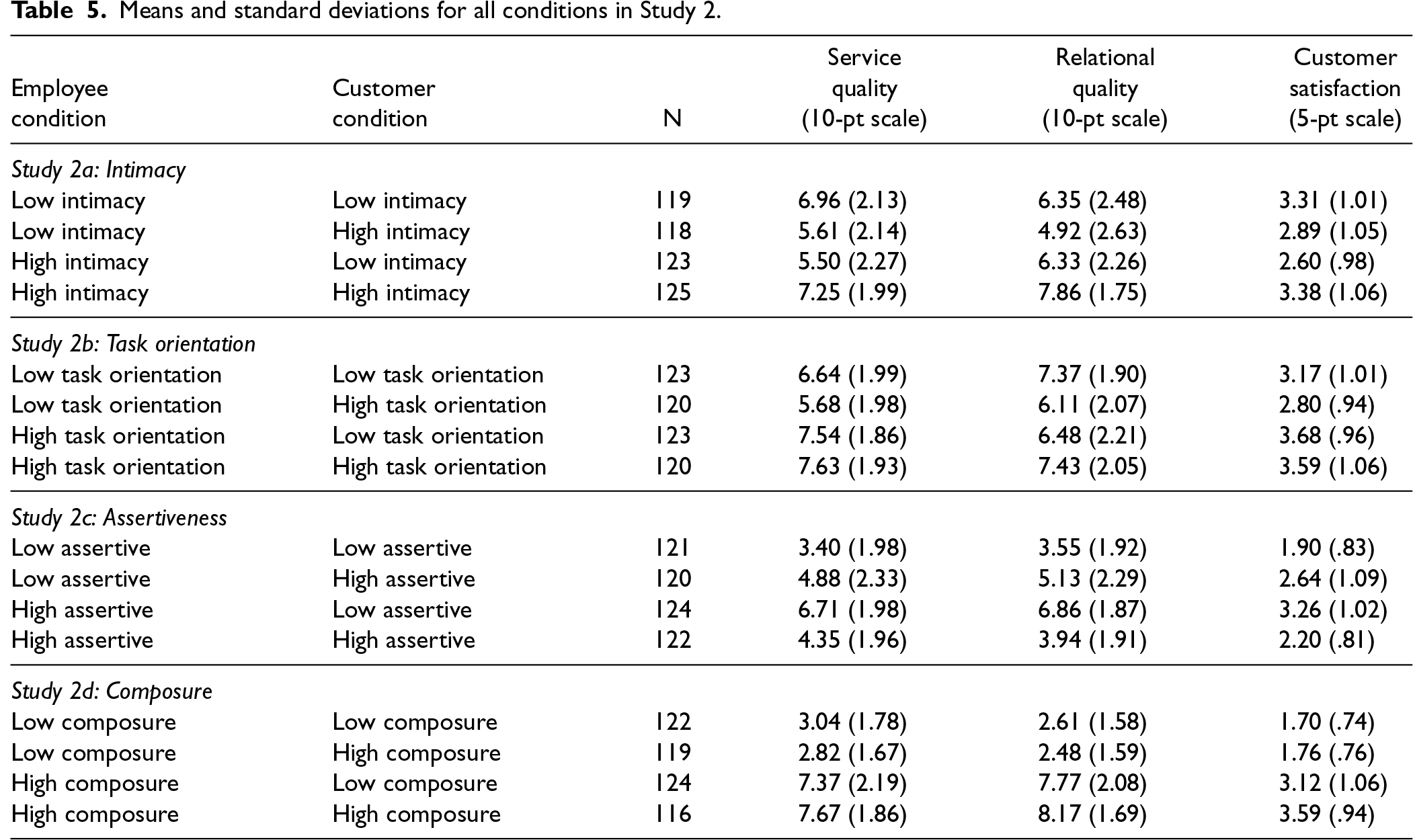
Means and standard deviations for all conditions in Study 2.
Study 2a: Intimate communication. From the initial sample of 495 respondents, 486 passed the attention checks (Mage = 42 years, 43.6% men, 55.1% women, 1.2% other).
4
Analysis of variances (ANOVA) of their responses to the items measuring the focal outcomes, using FLE intimate communication (high = 1, low = −1), customer intimate communication (high = 1, low = −1), and their interaction. Specifically, we see that service quality, F(1, 481) = 63.52, p < .001,
We predicted that FLEs matching intimacy levels to the customers would produce better outcomes. Confirming our predictions, when examining the pairwise comparisons, we found that when both the FLE's and customer's intimate communication matches, it typically produces better outcomes. When both the customer and subsequently, the FLE exhibit high (vs. low) intimate communication, the customer expresses more positive perceptions of service quality, relational quality, and satisfaction (all p < .001). When the customer and FLE both exhibit low intimate communication, there are also positive effects across service quality and customer satisfaction (both p < .002). This pattern is directional when considering relational quality perceptions for customers who are low on intimacy (p = .947).
Study 2b: Task orientation. From the initial sample of 497 respondents, 488 passed attention checks (Mage = 45 years, 46.9% men, 52.3% women, 0.8% other
5
). We ran ANOVAs for the focal outcomes, with FLE task orientation (high = 1, low = −1), customer task orientation (high = 1, low = −1), and their interaction. The interactions are significant for service quality, F(1, 483) = 8.64, p = .003,
We predicted that FLEs matching task orientation levels to the customers would produce better outcomes. Confirming our predictions, when examining the pairwise comparisons, we found that when both the FLE's and customer's task orientation matches, it typically produces better outcomes. When the customer and the FLE both exhibit low task orientation communication (vs. when the customer is high on task orientation communication), there are positive effects across all outcomes, presumably due to the match (all p < .001). However, for customers who were lower in task orientation, relational quality was higher when the employee was also lower on it (i.e., matching again supported, p = .001); matching was not supported for service quality and customer satisfaction (customers had higher evaluations when employees engaged in higher task orientation; both p < .001).
Study 2c: Assertiveness. From the initial pool of 492 participants, 487 passed the attention check and completed the survey along with all focal outcomes (Mage = 43 years, 45.4% men, 52.8% women, 1.8% other). ANOVAs were conducted on the focal outcomes includes FLE assertiveness (high = 1, low = −1), customer assertiveness (high = 1, low = −1), and their interaction. The interaction for service quality, F(1, 483) = 105.19, p < .001,
Examining the pairwise comparisons, we confirm that it is better to be mismatched on assertiveness than matched (unlike the results of Studies 2a and 2b, which supported matched approaches). Specifically, when the customer is high (vs. low) on assertiveness, outcomes are always better when the FLE is low on assertiveness (all p < .05). This is true in the reverse as well, as when the customer is low (vs. high) on assertiveness, it produces better outcomes if the FLE is high on assertiveness (all p < .001).
Study 2d: Composure. From the initial 498 participants, 481 completed the survey and all focal outcomes (Mage = 43 years, 40.5% men, 58.2% women, 1.2% other). We performed ANOVAs based on FLE composure (high = 1, low = −1), customer composure (high = 1, low = −1), and their interaction. In line with our prediction that an employee high (vs. low) on composure is always preferable, regardless of whether that state matches that of the customer, we find positive main effects for FLE composure on all outcomes, F(1, 477) = 712.69, p < .001,
While our prediction focused on the main effect of high (vs. low) FLE composure, we did find a significant interaction effect for customer satisfaction, F(1, 477) = 6.87, p = .009,
Study 2 furthers our investigation of the impact of the four RTs on key customer service and relational perceptions by manipulating FLEs’ and customers’ uses of RTs. The results reaffirm and extend our Study 1 findings. They also demonstrate that FLEs should mimic customers’ task orientation and intimate communication, complementarily diverge in their assertiveness, and maintain high composure throughout the interaction to enhance customer satisfaction and other relational outcomes.
Relational communication themes (RTs)—intimacy, task orientation, assertiveness, and composure—can be powerful determinants of customer satisfaction and other relevant outcomes of online service chats. As we show, when FLEs match customers on intimacy and task orientation, diverge strategically on assertiveness, and consistently maintain composure, they induce stronger customer satisfaction outcomes. Furthermore, the effectiveness of these RTs depends on their sequencing: early task orientation and later emphasis on intimacy and assertiveness improve customer perceptions, while composure must remain constant throughout. Finally, we demonstrate how these cues translate into customers’ perceptions of relational and service quality. Thus, across field data and experimental studies, we (1) delineate four RTs that shape customers’ relational perceptions and satisfaction, (2) evaluate how these RTs should be employed and adjusted in relation to the customer, and (3) determine critical trends within conversations that determine when different themes have the most impact. These findings offer significant theoretical advances, practical implications for operations management, and avenues for further research.
Theoretical Contributions
By investigating relational communication topics in online service chats, we extend relational communication theory to a context in which text-based interaction is the sole vehicle for establishing trust and rapport. Subtle variations in word choice and phrasing thus act as relational signals, with measurable consequences. The sequencing results also highlight the temporal dynamics of relational communication, moving beyond static conceptualizations of relationship building to show how relational depth unfolds in real time. Finally, we show how relational communication can help bridge operations and marketing thought, in that FLEs can and should pursue efficiency and relationship quality goals simultaneously. As our results indicate, online service chats offer a particularly rich domain for efforts to advance service interaction, communication, and customer experience theories.
In relation to service literature, which identifies customers’ clear expectations of their interactions with FLEs and the need to meet these expectations, such as with appropriate FLE responses (Ludwig et al., 2022; Singh et al., 2020), we delineate four RTs that significantly influence customer satisfaction. In turn, we propose a robust framework that details how intimate communication, task orientation, assertiveness, and composure can define customers’ relational experiences. Other researchers can apply similar empirical explorations to customer interactions to extend our understanding of how word choices can drive customer satisfaction and build relationships in diverse contexts (Marinova et al., 2018; Packard and Berger, 2021; Singh et al., 2020). As this study shows, RTs offer broad applicability and adaptability for different tactics for enhancing service communication.
We also identify interdependencies in the uses of RTs by customers and FLEs. Building on prior evidence of the positive outcomes of similar communication styles (Herhausen et al., 2023), we determine that FLEs can increase customer satisfaction by mirroring customers’ uses of intimate communication and task orientation themes. We also address some mixed findings in assertiveness research (Ma and Dubé, 2011; Wang and Yim, 2019; Yagil, 2001) by proposing that FLEs should consistently employ assertiveness in a complementary way. In addition, they should always exhibit composure. Beyond satisfaction, we affirm that FLEs’ mimicry or complementarity of customers’ RTs can influence perceptions of service and relational quality. Collectively, these insights add to research on customer–FLE interactions (Mittal et al., 2021; Moffett et al., 2021) and advocate for efforts to adjust FLE communications strategically to each specific customer.
Finally, for research into conversation trends and sequences (Grewal et al., 2022; Marinova et al., 2018), we add that early exhibitions of task orientation in service chats enhance overall customer satisfaction. To be effective, FLEs should also exhibit relatively greater intimate communication or a more assertive stance later, as the conversation progresses. These insights contribute to a greater understanding of conversational dynamics, and the findings generally align with prior evidence related to conversations used to resolve service complaints (Orsingher et al., 2022).
Operational Implications
Good communication channels between service agents and customers remain essential. Providers invest substantially in them and encourage FLEs to achieve strong customer engagement (McKinsey, 2022). Our research, based on multiple studies and experimental evidence, unravels some pivotal communication strategies that can empower FLEs to evoke positive relational perceptions and enhance customer satisfaction. Operations managers can use this actionable guidance to improve customer service performance. For example, they should develop training programs that emphasize how FLEs can flexibly adapt their relational cues across the interaction, beginning with strong task orientation to resolve issues quickly, then layering intimacy and assertiveness as trust develops, all while maintaining composure. Such a structured approach can help employees avoid the pitfalls of overly impersonal chats or an inconsistent tone. Such benefits are likely to extend to any industries that rely on service chats to ensure customer engagement. Managers, in turn, must recognize that relational communication is not simply a matter of “soft skills” but rather is a strategic capability that can reduce employee churn and increase customer satisfaction. By operationalizing relational communication as a managerial lever, organizations can align frontline execution with broader marketing objectives.
Investments in relational communication training and supportive technologies thus appear likely to deliver significant dividends for customer service operations. By nurturing scalable, high-quality interactions, companies ensure every customer encounter focuses on improving relationships through language. When service agents connect empathetically with customers, it likely refines their tone and potentially increases customer satisfaction by making operations more transparent (Buell and Norton, 2011; Chen and Jiang, 2019).
Strategic uses of RTs: Shaping customer relations. This study identifies four RTs that influence customers’ relational perceptions. Regardless of the conversation topic, FLEs can create an environment conducive to higher customer satisfaction by adeptly deploying these RTs. Importantly, adapting their tactics to customers’ preferences is key. Some customers seek empathy and clear guidance; others prefer a focused, task-oriented conversation, eschewing overt guidance. Successful FLEs tailor their language to mirror customers’ intimate communication and task orientation levels, remain composed, and exercise assertiveness judiciously, especially when customers are assertive. Considering the substantial resources required to monitor FLEs (Dixon et al., 2021), adopting effective relational communication strategies might help service operations reduce oversight costs while also boosting customer satisfaction. Rosenzweig et al. (2025) and Ferguson (2021) estimate that poor customer service costs organizations around $75 billion annually, underscoring the need for operational improvements. Therefore, targeted training on relational communication could enhance employee performance for customer service centers.
Dynamic adaptability: Navigating evolving conversations. Understanding customer interactions as dynamic and evolving is important. Fixed, universal rules are inadequate in the fluid realm of relational communication. Generally, FLEs should initiate conversations with low assertiveness, gradually asserting more control as the dialogue progresses. Similarly, starting with a strong focus on the task at hand and high composure, then gradually infusing emotional empathy and intimate communication into the deepening conversation, enhances customer satisfaction. Continuous training in these adaptive communication strategies is essential to help FLEs dynamically navigate conversations for optimal outcomes.
Leveraging technology: Real-time insights for enhanced engagement. One way to facilitate dynamic, personalized strategies to customer chats might involve giving FLEs greater access to advanced communication technologies, such as automated text-mining tools or generative AI tools that can leverage context-specific algorithms to enable real-time monitoring of nuanced RTs expressed by customers. The tools could recommend tailored communication texts and strategies to the FLEs, over the course of evolving conversations.
Furthermore, though we were unable to study other modalities, we recommend a more holistic approach to communication analysis, to encompass not just text but also voice and video cues (Simonite, 2018). Identifying RTs in other service chat modalities, should they be present, requires further research and validation, but an integrated approach across modalities arguably would empower FLEs to tailor their responses even more effectively. For example, if an automated tool can integrate assessments of customers’ tone of voice with analyses of the words they use, it might be able to gauge other communication elements. Such insights also allow the organization to help FLEs craft nuanced responses.
Limitations and Directions for Further Research
This paper details how RTs influence customer satisfaction, a relevant output in service failure and recovery research (Andreassen, 1999). If a customer problem or complaint gets resolved, the communication style might be secondary. However, Marinova et al. (2018) demonstrate that problem-solving communication and relational language enhance satisfaction, even after accounting for problem resolution. In addition, in some service and operational settings (e.g., airlines), a resolution might not be possible (Airline Customer Advocate, 2022). Yet most customers expect their problems to be addressed, so the use of language strategies that foster positive relational outcomes may be especially important and valuable in such contexts. Future research could further understand the role of how problem resolution may moderate the effectiveness of communication styles.
In addition to complaint resolution outcomes, research could move beyond our focus on customer satisfaction to uncover the potential link between RTs and actual purchase or repurchase behavior. To investigate the tangible impact of RTs on customer actions and loyalty, novel data collection methods likely will be needed to establish robust connections. Although our methodological approach combines field evidence with randomized experiments, potential sources of endogeneity in the field data remain, stemming from unaccounted-for customer characteristics, self-perceptions, or gender matches. Studies that delve into these factors might clarify their influence on the dynamics of customer–FLE interactions.
The word lists we derived to measure RTs are context-specific, tailored to the nuances of the settings we explore. Adapted versions of these lists can incorporate other context-specific terms, prevalent in various domains. Such adaptations are essential to learn how market actors, including customers and firms, present themselves and engage with others. By refining these measurement tools, researchers also can gain deeper insights into customer conversations across diverse contexts and enhance the applicability of our findings.
We focus on textual cues, but auditory cues also have a function when customers interact with FLEs through call centers or in person. Continued research should explore the role of textual, auditory, and non-verbal RTs when FLEs interact with customers. More broadly, exploring multimodal communication and immersive technologies represents a promising research frontier. Face-to-face interactions, virtual reality, and augmented reality each offer their own context-rich environments. Understanding the nuances of advanced technologies in conveying relational messages seems especially important, so we call for further investigations of specific features within these modalities that evoke relational perceptions. Such efforts also might identify innovative platforms that can foster more meaningful customer connections. Despite the need for adaptations to fit various contexts, we are confident that tactical uses of RTs could help reveal intricate webs of relational cues embedded in various modalities for customer conversations, which could thus establish a clearer understanding of customer–firm dynamics in the evolving landscape of communication technologies.
Taken together, our findings highlight online service chats as being both a theoretical frontier and a managerial opportunity. By showing how relational communication themes shape customer satisfaction in text-based interactions, we extend existing theory into a context that seems likely to grow in importance as service delivery becomes increasingly digital. Moreover, we provide managers with a framework for training and supporting FLEs that combines operational efficiency with relational depth, in which customer service chats function as a strategic driver of satisfaction. Continued research can build on our results by exploring how relational strategies evolve with advances in AI-driven chat systems. In turn, scholars and practitioners alike can gain a better understanding of how to make service chats more effective today, as well as how to design the customer service systems of tomorrow.
Supplemental Material
sj-pdf-1-pao-10.1177_10591478261420001 - Supplemental material for How Frontline Employees’ Relational Communication in Online Service Interactions Drives Customer Satisfaction
Supplemental material, sj-pdf-1-pao-10.1177_10591478261420001 for How Frontline Employees’ Relational Communication in Online Service Interactions Drives Customer Satisfaction by Dhruv Grewal, Stephan Ludwig, Dennis Herhausen, Lauren S Grewal, Francisco Villarroel Ordenes, Praveen K Kopalle and Timothy Bohling in Production and Operations Management
Footnotes
Acknowledgments
The authors thank two anonymous reviewers, Senior Editor, and Departmental Editor at Production and Operations Management Journal, and appreciate the feedback provided by Christian Homburg, Jonah Berger, Ann Kronrod, and multiple participants at the 2018 Pre-AMA Organizational Frontline Symposium, and at the 2019 Winter AMA and 2019 ACR conferences. This research was funded by Babson College and Dartmouth College.
Declaration of Conflicting Interests
The authors declared no potential conflicts of interest with respect to the research, authorship, and/or publication of this article.
Funding
The authors received no financial support for the research, authorship, and/or publication of this article.
ORCID iDs

Notes
How to cite this article
Grewal D, Ludwig S, Herhausen D, Grewal LS, Ordenes FV, Kopalle PK and Bohling T (2026) How Frontline Employees’ Relational Communication in Online Service Interactions Drives Customer Satisfaction. Production and Operations Management xx(x): 1–18.
References
Supplementary Material
Please find the following supplemental material available below.
For Open Access articles published under a Creative Commons License, all supplemental material carries the same license as the article it is associated with.
For non-Open Access articles published, all supplemental material carries a non-exclusive license, and permission requests for re-use of supplemental material or any part of supplemental material shall be sent directly to the copyright owner as specified in the copyright notice associated with the article.
