




Abstract
Motivated by the recent rapid growths of freemium services, we study freemium service providers’ dynamic operating policies to maximize their lifetime profits. We adopt a hybrid of the Bass diffusion model and the replicator equation from evolutionary game theory to capture the user base growth, and model the provider’s dynamic decisions as an optimal control problem. We analyze two variants of the freemium business model inspired by two prominent examples, Dropbox and Spotify, which, respectively, adopt the monetization strategies of limiting features and advertising (and its removal). We establish the optimal dynamic operating policies for the Dropbox-inspired ad-free freemium model and the Spotify-inspired ad-supported freemium model and identify their distinctive operational characteristics: the optimal policies as well as the sustainability of the Dropbox model critically depend on the network effect among users, whereas the optimal policies of the Spotify model show that advertising could be a more effective monetization strategy than limiting features. The latter observation is confirmed in a general model allowing both monetization strategies where the optimal policies consistently adopt advertising without limiting features. We then show that the freemium model significantly outperforms the ad-supported free model in weak advertising markets and that offering multiple tiers of premium subscription is unnecessary and confirm our core insights’ robustness under a generalized network effect, customized advertisements, and liquidity constraints. Our study establishes the versatility and value of the freemium model to suit distinct needs of a service in different stages from growth to monetization, and provides guidelines for service providers adopting this business model.
Introduction
Freemium, a portmanteau of free and premium, refers to the business model that allows users to enjoy a product or service’s basic or full features for free, and also offers the option for users to pay for an enhanced experience. The freemium business model was first used in the software industry in the 1980s, but grew explosively into a mainstream business model in the 2000s, largely leveraging the similarly explosive growth of the Internet. The logic of the freemium model is to efficiently grow a user base by offering a basic free experience and then monetize the user base with a premium experience. Although the freemium model can be applied to products as well, it is usually associated with services. In fact, a popular strategy of modern manufacturers is to “servicize” their products, namely selling the products’ functionalities as services rather than selling the products themselves. Therefore, in this article, we focus on freemium services.
A typical freemium service model involves a provider offering free service to its users while attempting to monetize the user base. To provide two representative examples, Dropbox, a cloud storage and sharing service, provides free users with 2 GB of cloud storage space whereas premium subscribers receive 2,000 or more gigabytes of cloud storage space and other perks such as file encryption and recovery (Dropbox, 2022a); and Spotify, a music streaming service, provides free users with unlimited streaming of its entire music library with advertisements whereas premium subscribers can stream music ad-free. Both businesses prove highly successful. Within 4 years after its launch, Dropbox hit the milestone of 100 million users in 2012 (Blacklinko, 2023). Similarly, Spotify, launched in 2008, now serves 551 million monthly active users, with 220 million being premium subscribers (BusinessofApps, 2023). Interestingly, these examples respectively represent the two most important freemium monetization strategies—limiting features and advertising (and its removal). In this article, we focus our study on these two monetization strategies. 1
A freemium service provider faces a myriad of operational decisions such as the free service and included advertisements, the premium subscription price, and the promotion efforts to grow its user base. Furthermore, as a business model depending heavily on growing its user base, the freemium operating characteristics in early stages may differ significantly from late stages, because the provider’s early decisions not only determine its immediate revenue but may also strongly influence the user base’s growth trajectory and thus the future profitability. The complex decisions and their dynamic nature make managing the freemium model highly challenging for the service provider.
To study a freemium service provider’s dynamic operational decision-making throughout its lifetime, we adopt a hybrid of the Bass diffusion model and the replicator equation from evolutionary game theory to capture the user base growth, and model the provider’s dynamic decisions as an optimal control problem. We analyze two variants of the freemium business model inspired by the two prominent examples, Dropbox and Spotify, which, respectively, adopt the monetization strategies of limiting features and advertising (and its removal). We establish the optimal dynamic operating policies for both variants. In both cases, we find that the optimal operating policies exhibit a threshold structure such that the service provider prioritizes growth in early stages and may not immediately introduce premium subscription, and gradually shifts the focus to monetization in later stages after amassing a critical user base.
We also identify the Dropbox- and Spotify-inspired models’ distinctive operational characteristics. The sustainability of the Dropbox-inspired ad-free freemium model relies on a sufficiently important network effect among users, and interestingly, the optimal free service and premium subscription price may be non-monotonic over time. In the Spotify-inspired ad-supported freemium model, we establish that the provider should always offer full free service and include the maximum number of advertisements, establishing that advertising is a more effective monetization strategy than limiting features. We show that the insights from the Dropbox and Spotify models are respectively retained with a generalized network effect and customized advertisements. We then evaluate a general model encompassing the Dropbox and the Spotify models to confirm that advertising (and its removal) is a more effective monetization strategy than limiting features, and recover key results such as that the optimal operating policies exhibit a threshold structure and that the optimal free service and premium subscription price may be non-monotonic with a strong network effect. Finally, we show that the freemium model significantly outperforms the ad-supported free model in weak advertising markets and that offering multiple tiers of premium subscription is unnecessary, and confirm our core insights’ robustness under liquidity constraints.
Our paper shows that freemium service providers should be aware of the growth and monetization trade-off as well as the key features of their services as they may heavily impact the optimal operating policies. The providers should prioritize the advertising monetization strategy if possible, whereas limiting features offers an alternative monetization strategy when advertising is unavailable or unsuitable. Overall, the freemium model excels in the versatility to suit different needs of a service in different stages from growth to monetization. These insights justify the adoption of the freemium business model and provide guidelines for its adopters.
In the rest of this article, we review the related literature in Section 2 before analyzing the Dropbox freemium model in Section 3, the Spotify freemium model in Section 4, and a general freemium model in Section 5. We then perform additional analyses and derive further insights in Section 6 before summarizing the paper in Section 7. All proofs are relegated to the E-Companion.
Related Literature
A business practice related to the freemium model is free trials. The free-trial model traditionally refers to a service being offered free-of-charge for a limited time before users need to pay for continued use; see, for example, Foubert and Gijsbrechts (2016) and Wang and Özkan-Seely (2018). The freemium model is distinguished from the free-trial model by offering base features forever free (some modern free-trial services offer unlimited free trials which makes them essentially freemium services).
There is an extensive literature on the freemium business model, primarily in the Marketing and Information Systems areas. Niculescu and Wu (2011, 2014) study the freemium model in the software industry. Runge et al. (2022) investigate the impact of pricing on a freemium service’s conversion rate and revenue via field experiments. Appel et al. (2020) study the retention and monetization of mobile apps adopting the freemium model. Shi et al. (2019) examine the optimality of the freemium model with product differentiation and network externalities. Ascarza et al. (2021) identify a twofold effect of customer retention in freemium settings through field experiments. Kamada and Öry (2020) compare the freemium versus referral programs in terms of generating customer word-of-mouth. Deng et al. (2023) empirically examine the spillover effects between the free and paid versions of a mobile app. Each of these papers focuses on one or few salient elements of the freemium model, including valuation learning, pricing, word-of-mouth, network effect, customer retention, contracting, and spillover. Our paper is distinguished from these papers with a holistic analysis of the freemium model adopting a general dynamic optimal control framework encompassing all of its key elements. An application of the freemium model in video games is the free-to-play model where all gameplay contents are typically offered for free with no advertisements and the games are monetized through sales of in-game cosmetic items (Lam et al., 2020; Mai and Hu, 2022). This unique monetization strategy is distinct from those considered in this article—limiting features and advertising, and accordingly, the aforementioned papers focus on video game-specific mechanics, including in-game digital goods release timing, matchmaking efficiency, and social comparisons among players. By contrast, this article has broad applicabilities to general freemium services adopting the popular monetization strategies of limiting features and advertising.
Our paper adopts a modified Bass diffusion model to capture the user base growth. The Bass diffusion model is a classic model for innovation adoptions introduced by Bass’s (1969) seminal paper; see Meade and Islam (2006) for a comprehensive review of the innovation adoption literature employing this model (there are also papers employing alternative models for innovation adoptions; see, e.g., Niu et al., 2021; Wang et al., 2021). In the Operations Management literature, the Bass diffusion model has been primarily adopted to study the production and inventory decisions for innovative goods undergoing capacity-constrained Bass diffusion; see, for example, Ho et al. (2002), Kumar and Swaminathan (2003), Shen et al. (2011, 2014), and Hu and Sun (2022). Our work differs from this stream of literature by studying services rather than manufacturing, and consequently focusing on decisions such as pricing and advertising rather than production and inventory.
We adopt the optimal control theory to study an Operations Management problem. Sethi (2019) provides a comprehensive review of the applications of the optimal control theory in management science and economics. Some notable papers that apply the optimal control theory to Operations Management problems include Ha (1997a, 1997b, 2000) (make-to-stock production), Berling and Martínez de Albéniz (2011), Yang et al. (2014), Feng et al. (2014), Feng et al. (2020), Xu et al. (2019), Gong and Chao (2013) (inventory control), Wang et al. (2016), Yuan et al. (2018), Xu et al. (2020), Kim and Xu (2024) (environmental and risk management), and Hu and Sun (2022) (self-replicating production). Our paper expands the Operations Management literature adopting the optimal control theory.
Dropbox Model: Ad-Free Freemium With Network Effect
We first analyze the Dropbox freemium model. Dropbox, a cloud storage and sharing service, provides free users with 2 GB of cloud storage space whereas premium subscribers receive 2 TB of cloud storage space or more and other perks such as file encryption and recovery (Dropbox, 2022b). Notably, Dropbox does not include third-party advertisements (possibly because advertising is incompatible with a cloud-storage service). Another characteristic of Dropbox’s service is the network effect: Dropbox allows cloud-based file sharing between users, and thus Dropbox users derive utilities not only from individual usage but also all active users’ collective usage of the service.
To capture the Dropbox freemium model, we consider a service provider facing a market of a continuum of potential users with a normalized size of 1; that is, the maximum possible size of the user base for the service is 1. Each potential user derives base utility
We allow users to derive utilities from individual usage as well as all active users’ collective usage of the service; that is, the network effect. The usefulness of the Dropbox service depends not only on one’s individual storage space but may also on the size of Dropbox’s active user base and the amount of storage available to free users (because a shared storage involving free users would be limited by the latter’s storage capacity). The network effect has been the subject of study in the Operations Management literature; for example, Shi et al. (2019) and Birge et al. (2021). We denote the relative importance of the network effect in users’ utilities by

(Dropbox model premium subscription)
The proportion of premium users in the Dropbox freemium model is
As explained in Section 1, the logic of the freemium model is to efficiently grow a user base by offering a basic free experience and then monetize the user base with a premium experience. Therefore, we need to model the dynamic growth of user base

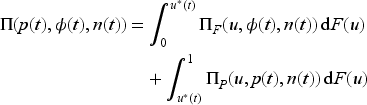
To interpret the user base growth model (1), first note that the provider’s promotion effort converts the
With the user base growth dynamics established, we can now investigate the service provider’s optimal decisions. In particular, we allow the provider to dynamically control the promotion effort

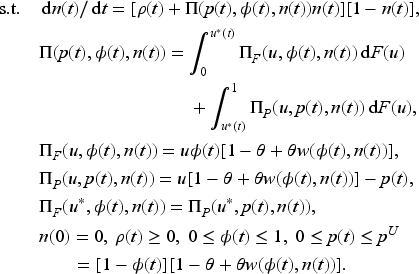
Problem (2) is a continuous-time optimal control problem. Following the standard approach, we apply Pontryagin’s maximum principle for the current-value formulation (Sethi 2019) to (2). Let

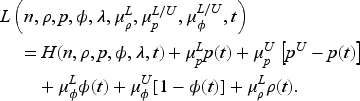
Pontryagin’s maximum principle requires the following conditions for any
First-order condition:
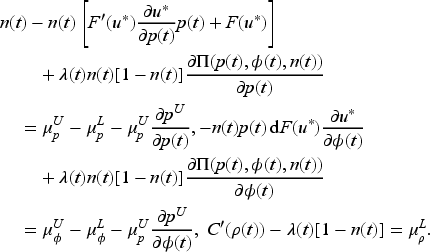

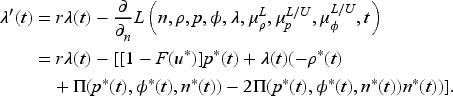

For analytical tractability, from now on, we focus on the case where the users’ base utility
The optimal dynamic operating policies of the Dropbox model satisfy the following:
The promotion effort The provider does not offer premium subscription until a finite threshold time (which can be 0). The free service As
The Dropbox freemium model is sustainable in the long run (
Proposition 1 shows that the service provider’s optimal dynamic decisions can be complex and non-monotonic. The optimal promotion effort should decrease over time as the user base grows and word-of-mouth becomes increasingly crucial in driving user base growth. The introduction of premium subscription has a threshold structure. In early stages of the service, the provider should maximize user base growth, and may offer full service to all users free of charge until after amassing a critical user base, when it starts to limit service to free users and introduce premium subscription. As the service reaches maturity, the free service and premium subscription price converge to myopic revenue-maximizing levels. In particular, Corollary 1 shows that the Dropbox freemium model is only sustainable in the long run with a sufficiently important network effect; otherwise, the freemium model would eventually become a regular subscription model with no free service. This finding provides an important guideline for services that intend to adopt the Dropbox freemium model and monetize users through limiting features: the long-term sustainability of the Dropbox freemium model requires a sufficiently important network effect.
Figure 1 illustrates the optimal operating policies of the Dropbox freemium model for varying importance of the network effect
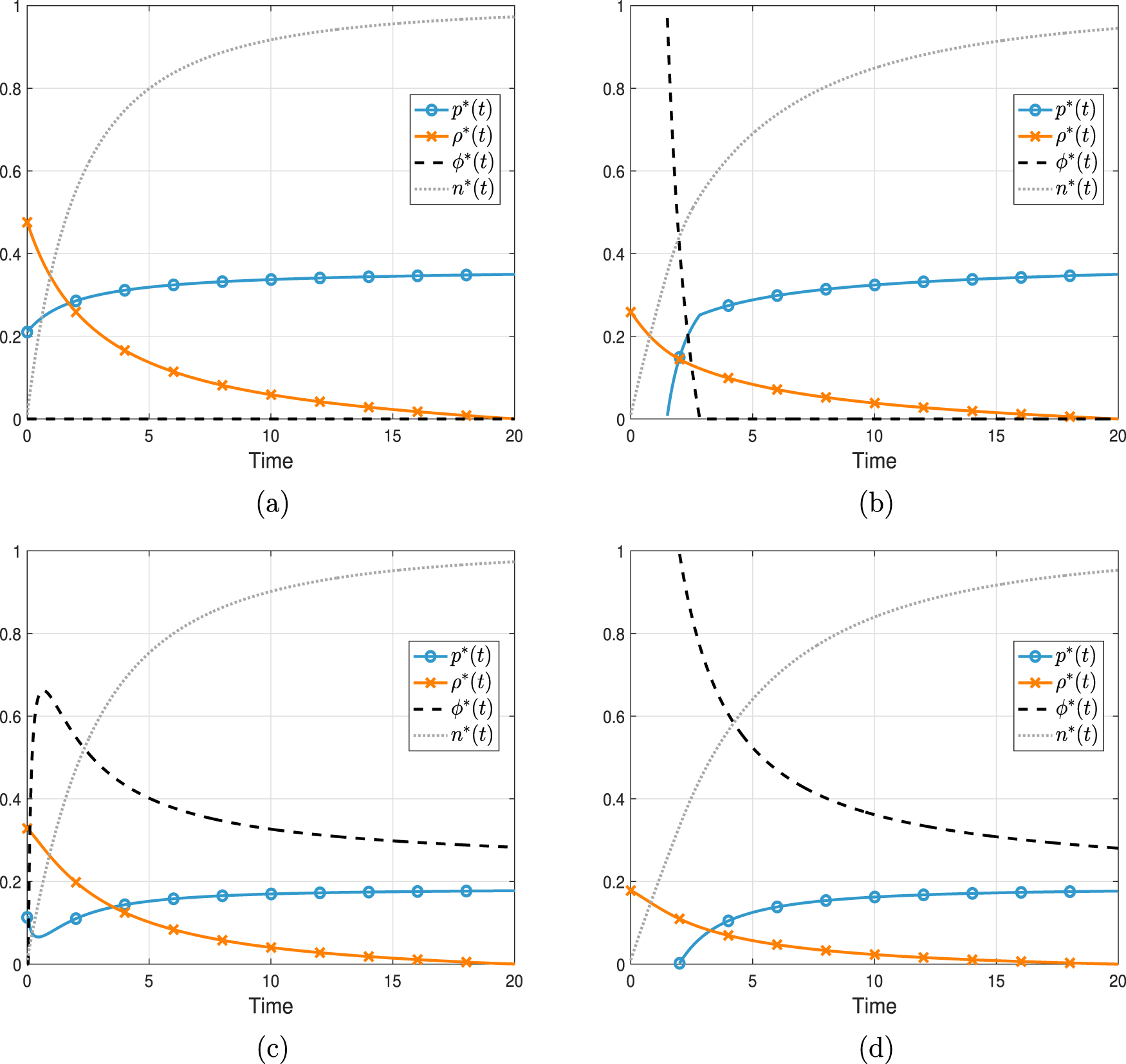
Optimal operating policies of the Dropbox model. (a)
Case (d) is similar to Case (b), but the high network effect importance means that free users provide significant value for premium users. As a result, the provider continues to offer free service even when the user base approaches 1. Perhaps the most interesting one is Case (c), where the optimal premium subscription price
Figure 1 demonstrates how the Dropbox freemium model suits different needs in different stages of the service’s life time. In early stages, the free users generate word-of-mouth to drive user base growth, which can substitute conventional promotion when the latter is costly. In later stages, the freemium model adds value to premium users through the network effect by continuing to attract free users, thus enhancing the limiting-feature monetization strategy. Such versatility is a highlight of the Dropbox freemium business model.
We have thus far adopted the network-effect formulation


There is at most one solution
The Dropbox model is analytically intractable with the generalized network effect. Therefore, we let
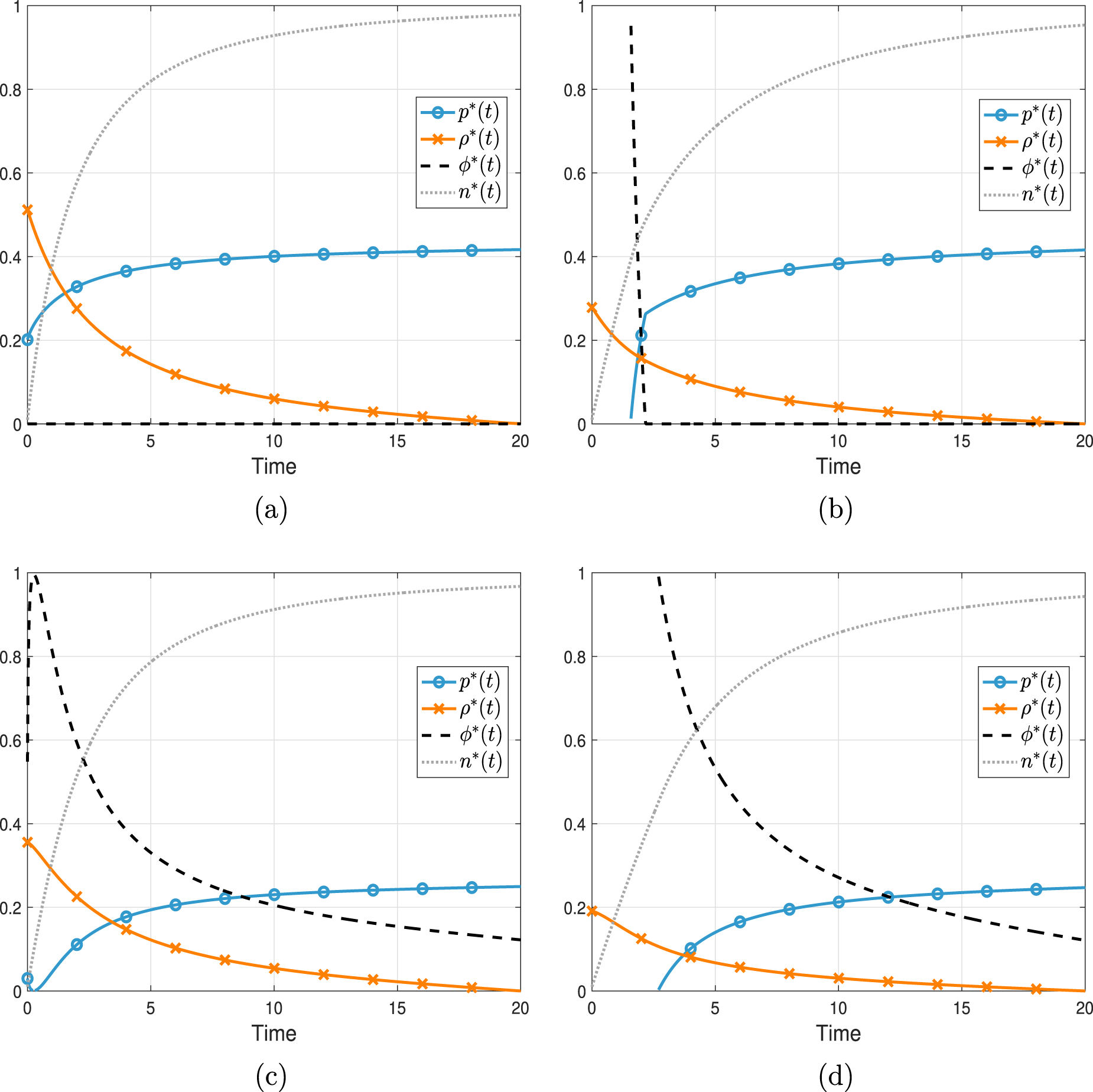
Optimal operating policies of the Dropbox model with generalized network effect. (a)
We next analyze the Spotify freemium model. Spotify, a music streaming service, interlaces third-party advertisements between songs for free users, whereas premium users can enjoy the music ad-free (among other perks; see Spotify 2022). Notably, Spotify’s music streaming service does not exhibit a significant network effect (e.g., a user’s experience is not significantly enhanced by a growing user base). Therefore, Spotify offers a natural contrast with Dropbox by incorporating advertising that is incompatible for the latter as a monetization strategy, while not exhibiting a significant network effect that is important for the latter.
To capture the Spotify freemium model, we modify the Dropbox freemium model of Section 3 as follows. First, reflecting the nature of Spotify, we remove the network effect by setting
We denote the amount of revenue the provider receives from third-party advertisers per advertisement impression (or “eyeball”) by
Although Spotify provides free users with unlimited streaming of its entire music library, limiting free service remains a viable option; therefore, we allow

(Spotify model premium subscription)
The proportion of premium users in the Spotify freemium model is
The rest of the model, including the user base growth dynamics, remains unchanged. Accordingly, the provider’s problem is formulated as follows:

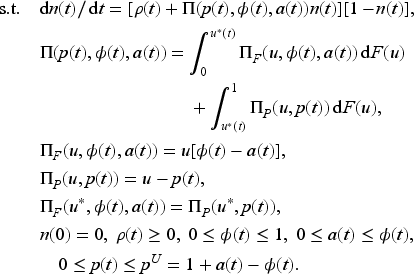
Similar to Problem (2), we apply Pontryagin’s maximum principle for the current-value formulation (Sethi, 2019) to Problem (3). Let

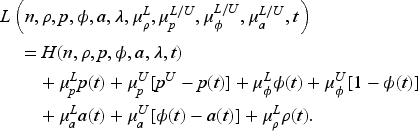
Pontryagin’s maximum principle requires the following conditions for any
First-order condition:

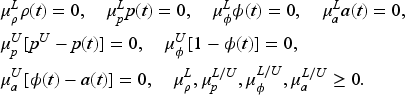
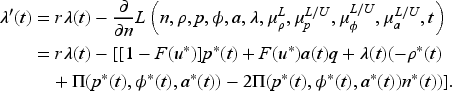

We once again focus on the case of
The optimal dynamic operating policies of the Spotify model satisfy the following:
The promotion effort The provider does not include advertisements or offer premium subscription until a finite threshold time (which can be 0). The provider always offers full free service The premium subscription price
Proposition 2 for the Spotify freemium model replicates several properties of Proposition 1 for the Dropbox freemium model, including the decreasing promotion effort, the threshold for introducing premium subscription, and the convergence to the myopic revenue-maximizing premium subscription price (see Figure 3); by contrast, the Spotify freemium model’s premium subscription price is always increasing as opposed to possibly being non-monotonic in the Dropbox freemium model.
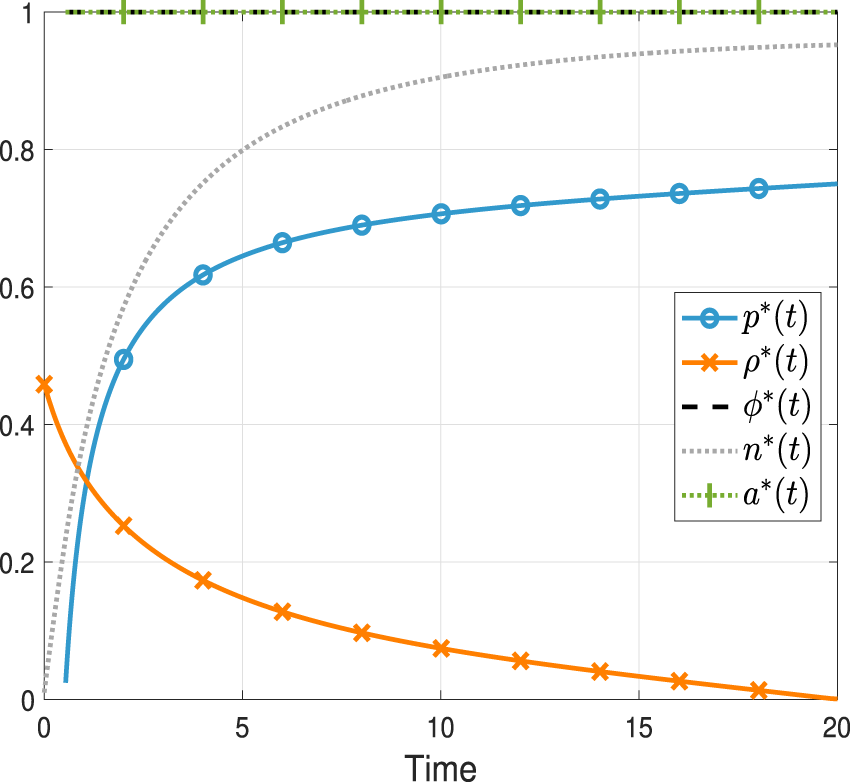
Optimal operating policies of the Spotify model. Notes: This example is generated with
The most crucial new operating characteristic of the Spotify freemium model is that the provider should always offer full free service and always include maximum advertisements for free users after introducing premium subscription. Notably, this finding is consistent with practice: Spotify’s free users indeed have access to its entire music library and regularly complain about “ads after every song” (PiunikaWeb, 2022). To understand this policy, one only needs to understand that more advertisements improve the freemium service provider’s profitability from both free and premium users: free users generate more advertisement impressions (“eyeballs”), and premium users are willing to pay more to remove all advertisements. Therefore, the provider includes maximum advertisements for free users (without driving them away). The finding that the provider always offers full free service and maximum advertisements shows that advertising is a more effective monetization strategy than limiting features for Spotify-like services: advertisements generate revenue from both free and premium users, whereas limiting features only generates revenue from premium users.
Thus far, we have assumed perfectly correlated utility
To do so, in this section, we assume potentially independent user utility from the service and disutility from advertisements, and assume that the provider can discover users’ dis/utility through their consumption patterns and customize their advertisements accordingly; that is, including potentially different amounts of advertisements for different users. In fact, YouTube has recently introduced a new advertisement frequency management strategy that allows the system to adjust the amounts of included advertisements “specifically tailored to video content consumption patterns (Rijo, 2025).” In particular, we assume that four different types of users with respective utilities from the service and disutilities from advertisements


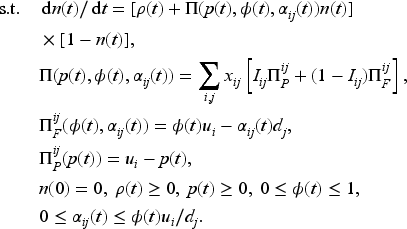
This model is too complex to analyze in general and we resort to numerical experiments. We illustrate an example in Figure 4 where the included advertisements for different types of users are presented separately for clarity.
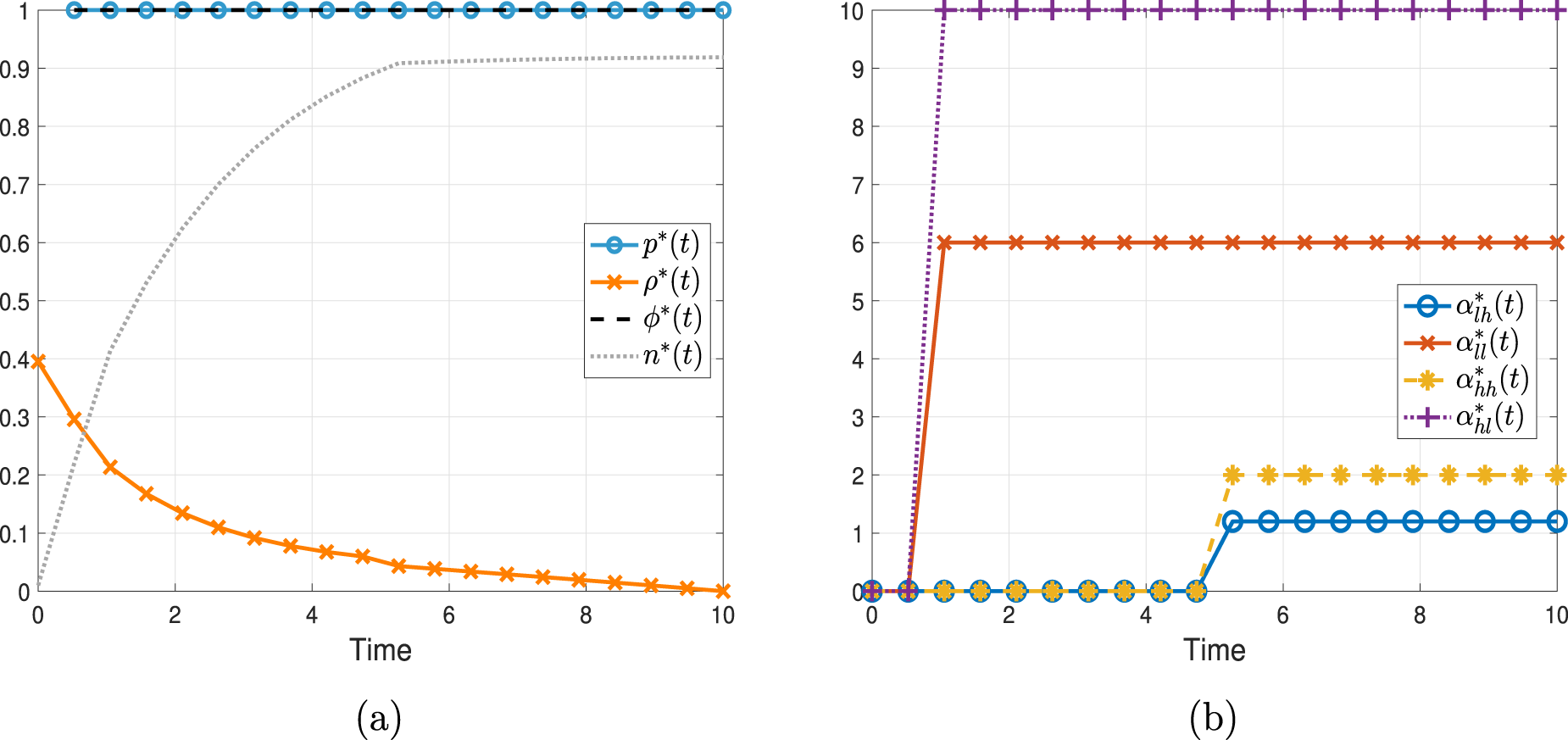
Optimal operating policies of the Spotify model with customized advertisements. Notes: This example is generated with
Comparing Figure 4 with Figure 3, one can see in Figure 4(a) that the structures of the optimal promotion
Figure 4(b) presents the respective optimal levels of included advertisements for type
To summarize, although our Spotify model (3) assumed perfectly correlated user utility from the service and disutility from advertisements which removed the need for customized advertisements, its key findings that the provider always offers full free service and always includes maximum advertisements are found robust in the alternative Spotify model (6) with potentially independent user dis/utility and customized advertisements. The study of the latter model further informs the timing and maximum levels of advertisements for heterogenous users and demonstrates the value of customized advertisements in managing growth and monetization in the freemium business model.
In Sections 3 and 4, we analyzed two models inspired by two representative freemium services—Dropbox and Spotify. Specifically, the cloud-storage service provided by Dropbox is incompatible with advertisements and depends significantly on the network effect to enhance user utility, whereas the music-streaming service of Spotify naturally accommodates advertisements and does not exhibit a significant network effect. Our analysis yielded contrasting insights for these freemium variants. For the Dropbox model, we found that the limiting-feature-based freemium model is only sustainable with a sufficiently important network effect (otherwise, a regular subscription model should be adopted), and the optimal freemium configuration (free service and subscription price) may be non-monotonic over time. For the Spotify model, we found that, with third-party advertising, the service provider should always offer full free service while including maximum advertisements for free users, which suggests that advertising is a more effective monetization strategy than limiting features for Spotify-like services. In both models, the service provider prioritizes growth in early stages and gradually shifts the focus to monetization in later stages, with the freemium model demonstrating versatility in meeting different needs of the service in different stages.
Although the Dropbox and Spotify models well capture their respective inspirations, it is of interest to also investigate a general freemium model encompassing features of the Dropbox and the Spotify models, namely the network effect and advertisements. In fact, whereas Spotify’s core music-streaming service fits our Spotify model well, the company has recently been advocating its networking functions such as playlist sharing and collaboration and “shaping up to be a social network” (Perez, 2024). Therefore, the general freemium model may be a better fit for the future Spotify, and its analysis may answer questions such as whether advertising is generally a more effective monetization strategy than limiting features in the presence of the network effect. By combining Problems (2) and (3), we arrive at the proportion of premium users and the formulation of the general problem:
(General model premium subscription)
The proportion of premium users in the general freemium model is

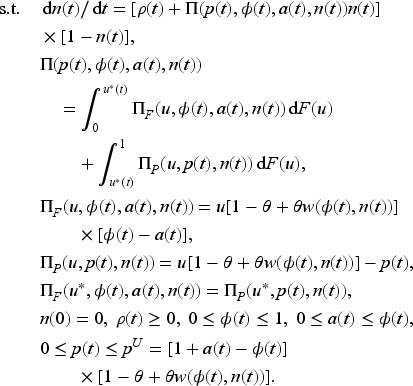
Problem (5) can be analyzed similarly to Problems (2) and (3). We omit Pontryagin’s maximum principle for the general problem for brevity, and summarize the properties that structurally describe the provider’s optimal policies in the following proposition.
The optimal dynamic operating policies of the general model satisfy the following:
The promotion effort The provider does not include advertisements or offer premium subscription until some finite threshold times (which can be 0 and different for advertisements and premium subscription). The provider always offers full free service The premium subscription price
One can immediately see that Proposition 3 is a hybrid of Propositions 1 and 2. This is unsurprising given that Problem (5) is a hybrid of Problems (2) and (3). The most important observation is that the general model behaves like the Spotify model where the provider always offers full free service and maximum advertisements and exclusively adopts the advertising monetization strategy. We formalize this finding in the following corollary.
Advertising is a more effective monetization strategy than limiting features in the general model.
The same intuition from the Spotify model applies: advertising generates revenue from both free and premium users, whereas limiting features only generates revenue from premium users. Therefore, wherever third-party advertising is viable, the providers should fully embrace the advertising monetization strategy without limiting features for free users. On the other hand, for services where third-party advertising is unsuitable, limiting free service features with premium upgrades offers an alternative monetization strategy.
On the other hand, the potentially non-monotonic freemium configuration of the Dropbox model is inherited by the general model. In our discussion following Figure 1, we identified this behavior as a result of the high network effect importance. In Figure 5 which illustrates the optimal operating policies of the general freemium model, one can see that the non-monotonic freemium configuration also occurs with high network effect importance, reaffirming our earlier explanation.
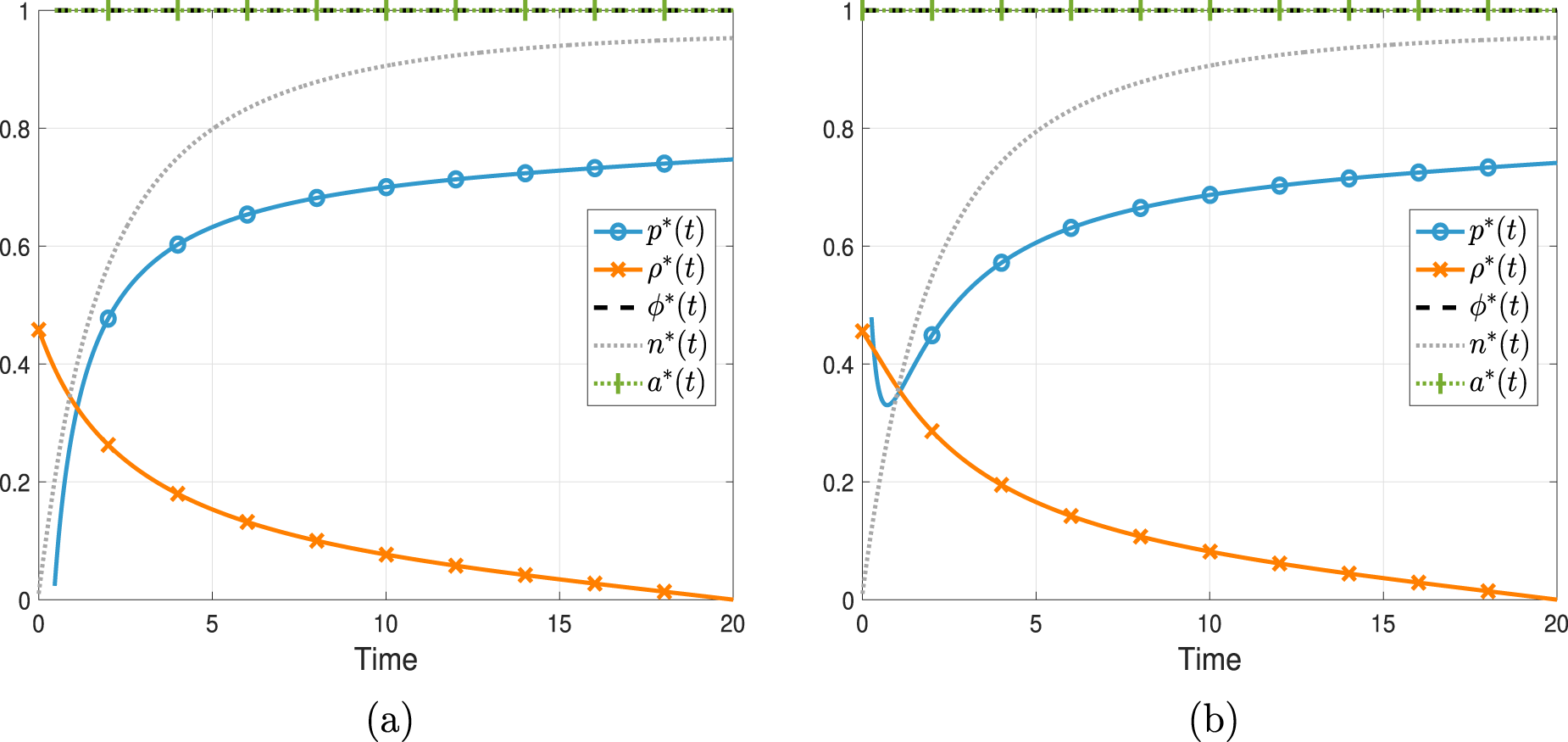
Optimal operating policies of general freemium model. (a)
Figure 5(a) with low network effect importance (
To summarize, we analyze the general freemium model with both a network effect and advertisements, and find that the general model’s optimal policies are a hybrid of those for the Dropbox and Spotify models. Overall, the general optimal policies resemble those for the Spotify model and depend exclusively on advertising for monetization. This finding confirms that advertising is a generally more effective monetization strategy than limiting features. On the other hand, similar to the Dropbox model, the presence of the network effect may cause non-monotonic optimal freemium configurations.
In this section, we perform additional analyses on the freemium models and derive further insights.
Sensitivities
Having investigated the optimal operational policies for three variants of the freemium model, in this section, we perform sensitivity analyses of the optimal total discounted operating profit and time to introduce premium subscription in these model variants. In particular, we present them in contour graphs for varying parameters and derive insights for managing these business models.
Dropbox Freemium Model
For this model, the most crucial parameters are the importance of network effect
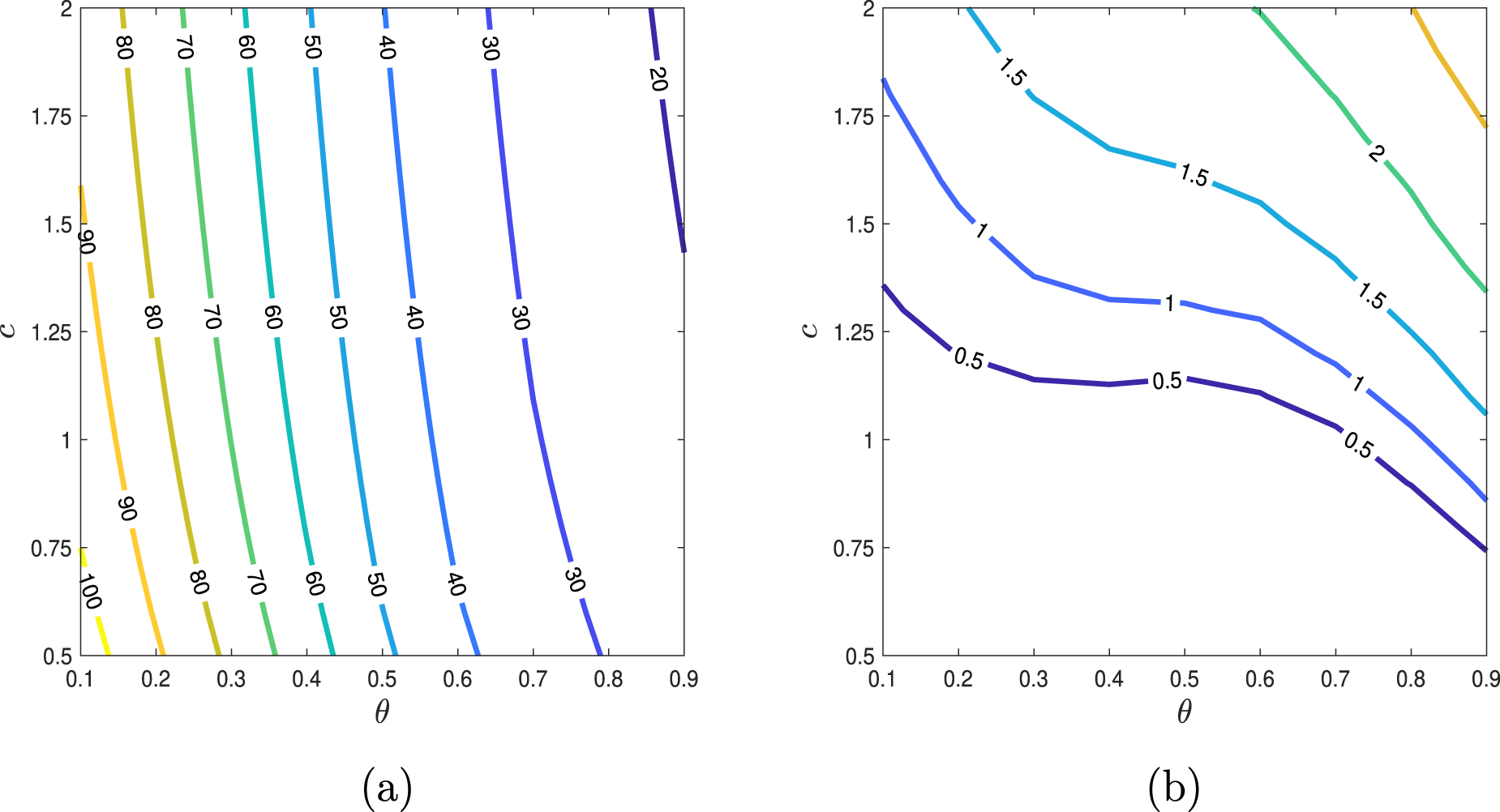
Sensitivities to
For this model, the most crucial parameters are the unit advertising revenue
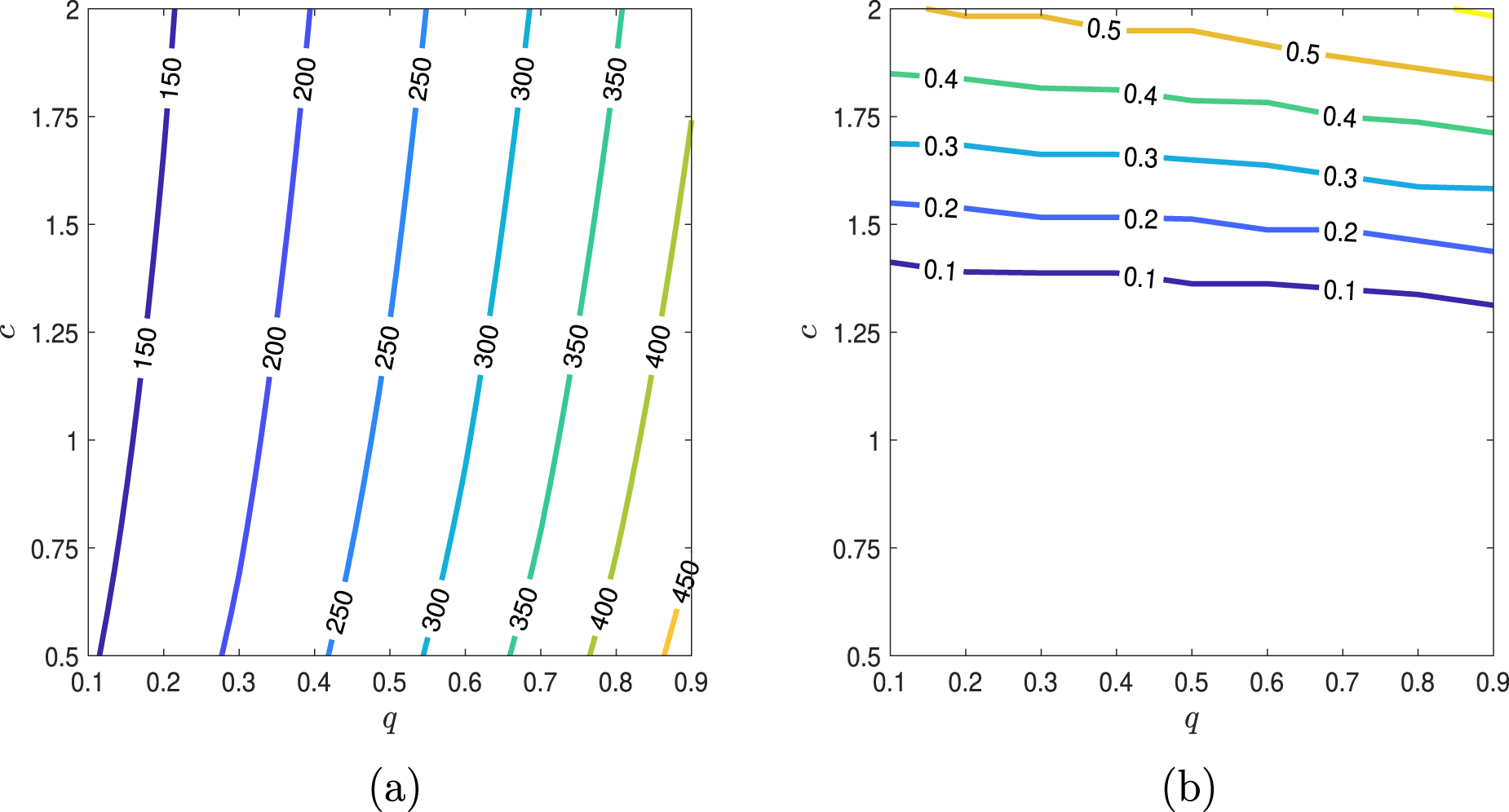
Sensitivities to
For the general freemium model with both a network effect and advertisements, we focus on the importance of the network effect
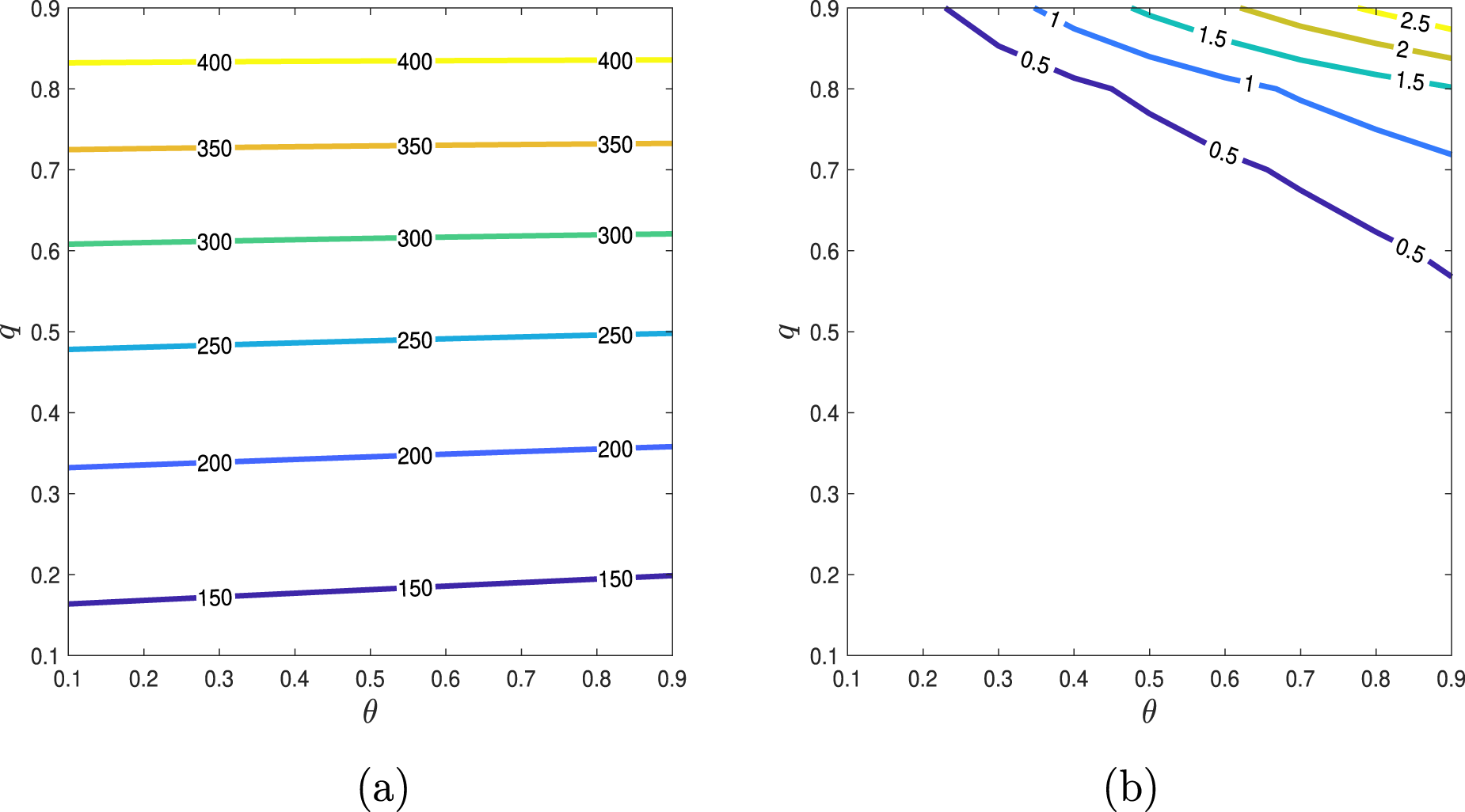
Sensitivities to
A recurring phenomenon in our analysis thus far is that the provider may hold back introducing premium subscription while heavily promoting the service in its early stages to stimulate initial user base growth (Propositions 1–3). Such a strategy imposes pressure on the provider’s early stage cash flow and may not be viable for providers with limited cash reserves or lines of credit. In this section, we use the general model as an example to investigate the impact of liquidity constraints. Specifically, we assume that the provider has an initial cash reserve
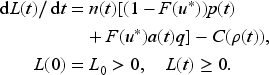
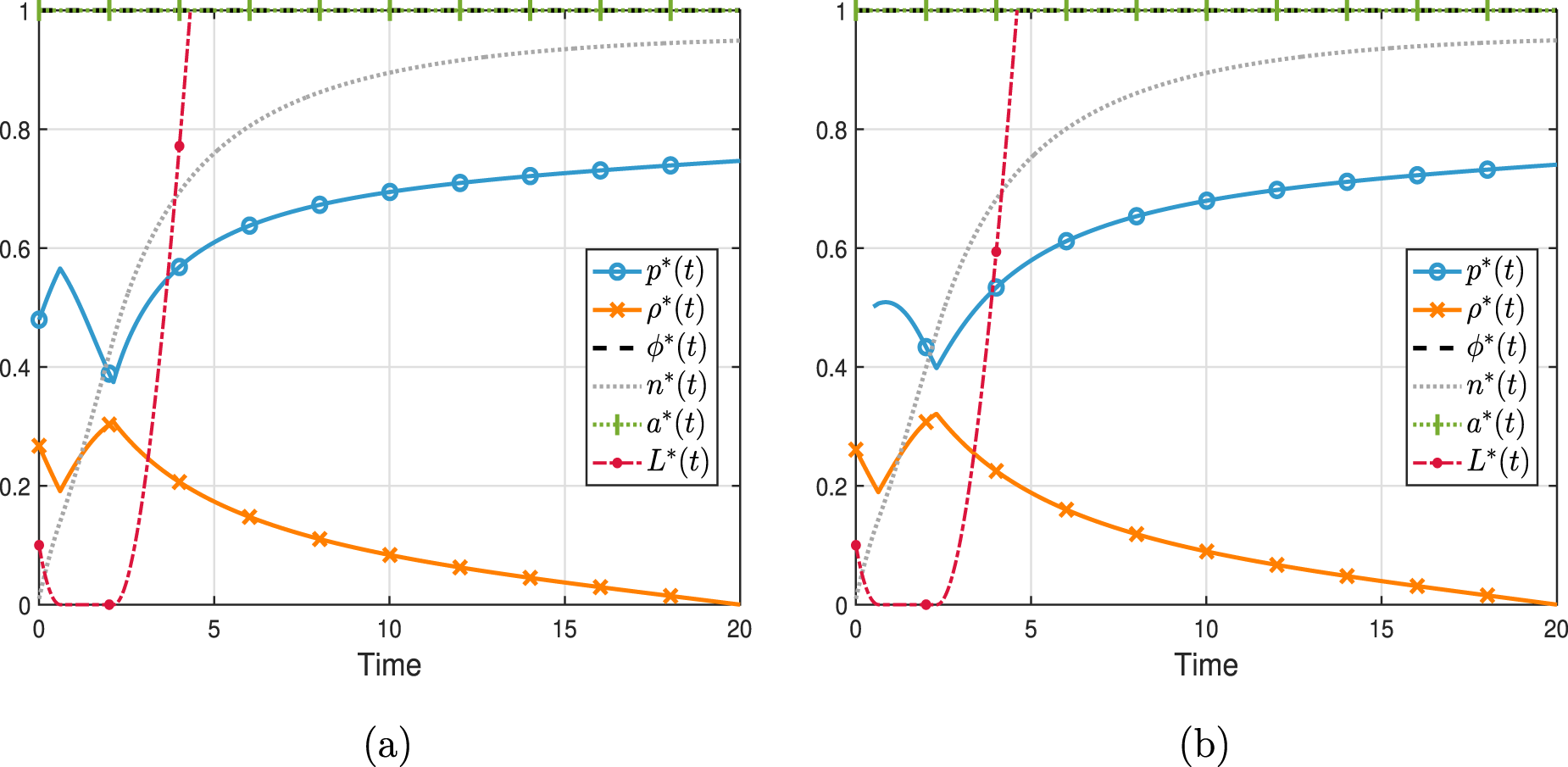
Optimal operating policies of general model with liquidity constraints. (a)
Comparing Figure 9 with Figure 5 reveals the impact of liquidity constraints. With a limited initial cash reserve, the provider is more frugal in early promotion and more aggressive in premium subscription introduction and pricing to reduce cash draining. When the cash reserve is depleted, the provider then balances cost and revenue and sustains the cash level at depletion for some time. Interestingly, the period of depleted cash reserve is marked by increased promotion and free service and reduced premium subscription price. This observation may seem counterintuitive because one’s knee-jerk reaction to a cash shortage may be to increase revenue and reduce cost. However, in a service’s early stages, user base growth is more important than profit. Although the provider can use the revenue generated from premium subscription to promote user base growth, if the promotion effect does not offset the negative impact of premium subscription on user base growth, the provider should instead curb premium subscription, allocate all available resources to promotion and offer free service to stimulate user base growth. Finally, after a critical mass is established, the provider is no longer cash-constrained and switches back to similar policies as shown in Figure 5.
In summary, whereas freemium service providers operating under tight budget constraints may intuitively prioritize revenue generation and cost saving, our finding instead suggests that, even with limited cash reserves in early stages, service providers should still drive user base growth with promotion and free service, and fund the growth with premium subscription if needed.
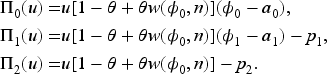
Thus far, we have considered a service provider offering a single premium tier; one may wonder if offering more premium tiers can improve the provider’s profit. In this section, we extend the general model of Section 5 to allow for two premium tiers on top of the free tier: Tier 0 offers
(Multiple-tier premium subscription)
Given
Despite the ability to offer a partial premium tier, we show that the service provider never does so:
(No partial premium tier)
Assuming uniform base utility distribution
Proposition 4 shows that, in this model, the provider may only offer a full premium tier and never a partial premium tier. Incidentally, Spotify only offers one full individual premium subscription (with another student premium subscription and two more family premium subscriptions 2 ). On the other hand, Dropbox does offer two individual and two team premium subscriptions. 3 We note that, in practice, multiple premium tiers may be offered for reasons not captured by this model, such as catering to customers of different budgets.
Ad-Supported Free Model and Value of “mium”
Another popular online service business model is the ad-supported free model, as adopted for example by Facebook, X (formerly Twitter) and TikTok, where the service is free for all and revenue generation is exclusively through advertisements (without paid advertisement removal). Such a model is a special case of the general freemium model (5) without limiting features or premium subscription, namely

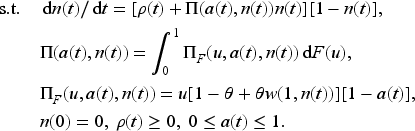
As a special case of the general freemium model, the free model generates less profit than the former. In fact, because the threshold in Proposition 3(ii) for offering a premium subscription is finite, the free model’s profit must be strictly less. The more interesting question is by how much the general freemium model outperforms the free model, namely the value of “mium.” To address this question, we perform extensive numerical experiments comparing the free and the general freemium models’ profits for varying importance of the network effect
General model’s percentage profit improvements upon free model for varying
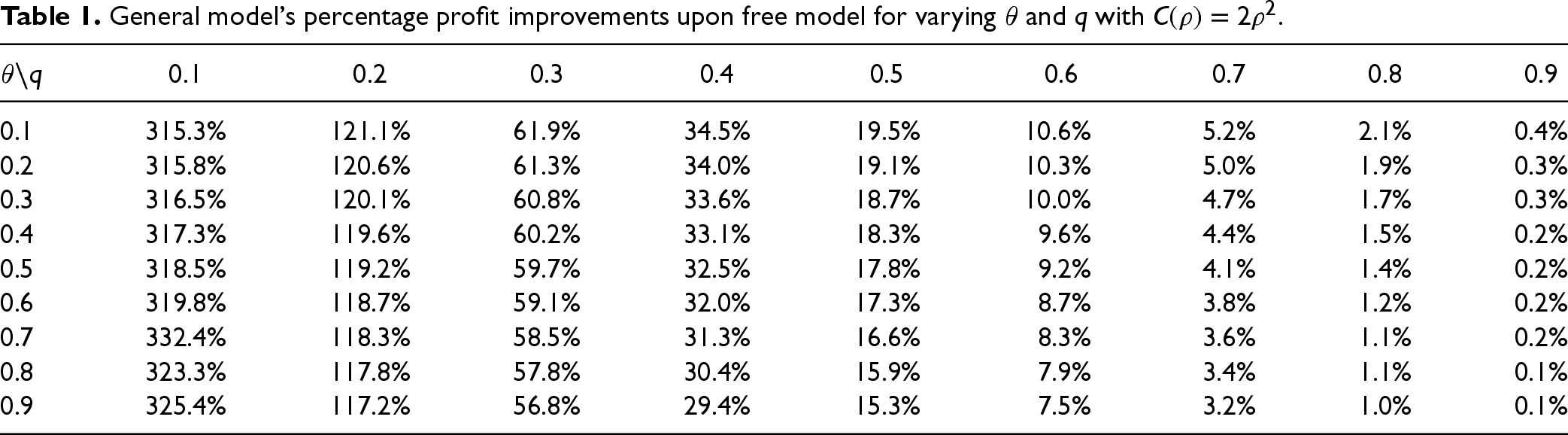
Table 1 exhibits strong patterns. First, the value of “mium” can be highly significant for low advertising revenue, but diminishes when the advertising revenue increases. To understand this observation, note that the freemium model provides two advertisement-related incomes: direct advertising revenues, and advertisement-removal revenue (through premium subscription); the former is also available for the ad-supported free model whereas the latter is the value of “mium.” When the former is lucrative, the latter is relatively less important; whereas when advertising revenues diminish, the value of “mium” becomes increasingly significant. Second, the value of “mium” is relatively insensitive to the importance of the network effect. This is because advertisements and premium subscription both depend on the user base which is similarly impacted by the network effect. Third, the value of “mium” increases in the importance of the network effect
In summary, we find that the general freemium model’s profit improvement upon the free model (the value of “mium”) can be significant when advertisements are not lucrative; otherwise, it is minimal. This suggests that the ad-support free model could perform well in booming economies with strong advertising demands, but when advertising demands diminish during economic downturns, the freemium model with revenue from advertisement removal can substantially outperform the former.
In this article, we study the optimal dynamic operating policies of a freemium service provider throughout its lifetime with a focus on two monetization strategies—limiting features and advertising (and its removal). We adopt a hybrid of the Bass diffusion model and the replicator equation from evolutionary game theory to capture the user base growth, and model the provider’s dynamic decisions as an optimal control problem. We first analyze two variants of the freemium model inspired by two prominent examples, Dropbox and Spotify, which, respectively, adopt the monetization strategies of limiting features and advertising (and its removal). We establish the optimal dynamic operating policies for both variants. In both cases, we find that the service provider prioritizes growth in early stages and may not immediately introduce premium subscription, and shifts the focus to monetization in later stages after amassing a critical user base.
We also identify their distinctive operational characteristics. In the Dropbox-inspired ad-free freemium model with a network effect, the provider limits free service in order to drive premium subscription. We find that the Dropbox model is sustainable only when the network effect is sufficiently strong; otherwise, it will degenerate to a regular subscription model (with no free service) in the long run. Moreover, the optimal premium subscription price and free service critically depend on the network effect. Interestingly, with a strong network effect, the optimal free service and premium subscription price may be non-monotonic: the optimal free service (premium subscription price) may first increase (decrease) to foster word-of-mouth driven growth in early stages of the service and then decrease (increase) as the provider shifts its focus from growth to profitability in later stages. We also confirm that these results are robust with a generalized network effect.
In the Spotify-inspired ad-supported freemium model without a network effect, once premium subscription is introduced, the provider should offer full free service and include maximum advertisements, forgoing the limiting-features monetization strategy. This finding is consistent with practical anecdotes and suggests that advertising (and its removal) is a more effective monetization strategy than limiting features; the reason is that, with the advertising strategy, the freemium service provider can monetize both free users (through advertising) and premium users (through advertising removal). We also confirm that these results are robust with customized advertisements.
We then evaluate a general freemium model encompassing the Dropbox and the Spotify models, and confirm key results such as that the optimal operating policies exhibit a threshold structure, that advertising (and its removal) is a more effective monetization strategy than limiting features, and that with a strong network effect, the optimal free service and premium subscription price may be non-monotonic. Overall, we find all freemium model variants to be quite versatile in suiting distinct needs of a service in different stages from growth to monetization.
We then perform additional analyses and derive further insights. We show that a stronger network effect and more lucrative advertisements both require further postponing the introduction of premium subscription, which may exacerbate the provider’s early stage financial pressure; for which we then show that cash-constrained service providers should still curb premium subscription, allocate all available resources to promotion and offer free service to stimulate user base growth, rather than instinctively cut cost and attempt to generate more revenue. We also show that offering multiple tiers of premium subscription is unnecessary. Finally, we show that the general freemium model’s profit improvements upon the ad-supported free model (the value of “mium”) can be significant when advertisements are not lucrative but is otherwise minimal, suggesting that while the free model could perform well in booming economies with strong advertising demands, the freemium model can be uniquely suitable for service providers during economic downturns. A limitation of our model is that the user utility scales linearly in the amount of offered service. We have numerically observed that all structural results remain unchanged with quadratic utility functions, but leave the rigorous analysis to future work.
To summarize this article’s managerial implications for service providers adopting the freemium business model, they should be aware of the growth and monetization trade-off and appropriately postpone the introduction of premium subscription, and also be mindful of the key features of their services, as the optimal operating policies may drastically differ based on whether the service exhibits a strong network effect or whether including third-party advertisements is feasible. The providers should prioritize the advertising monetization strategy if possible, whereas limiting features offers an alternative monetization strategy when advertising is unavailable or unsuitable. Overall, the freemium model excels in the versatility to suit different needs of a service in different stages of its lifetime: it is highly effective in fostering growth in early stages as well as monetizing the user base in later stages. Additionally, the freemium model may prove especially valuable during economic downturns when direct advertising revenues diminish. These insights justify the adoption of the freemium business model and provide guidelines for its adopters.
Supplemental Material
sj-pdf-1-pao-10.1177_10591478251353052 - Supplemental material for From Growth to Monetization: Managing Freemium Services
Supplemental material, sj-pdf-1-pao-10.1177_10591478251353052 for From Growth to Monetization: Managing Freemium Services by Yunke Mai and Bin Hu in Production and Operations Management
Footnotes
Declaration of Conflicting Interests
The author(s) declared no potential conflicts of interest with respect to the research, authorship, and/or publication of this article.
Funding
The author(s) received no financial support for the research, authorship, and/or publication of this article.

Notes
How to cite this article
Mai Y and Hu B (2026) From Growth to Monetization: Managing Freemium Services. Production and Operations Management 35(2): 704–723.
References
Supplementary Material
Please find the following supplemental material available below.
For Open Access articles published under a Creative Commons License, all supplemental material carries the same license as the article it is associated with.
For non-Open Access articles published, all supplemental material carries a non-exclusive license, and permission requests for re-use of supplemental material or any part of supplemental material shall be sent directly to the copyright owner as specified in the copyright notice associated with the article.
