




Abstract
Federal agencies use reverse auctions to procure cloud infrastructure services offered by major public cloud providers such as Amazon, Google, and Microsoft. Although recent research has examined operational issues in cloud computing, these papers have not analyzed the vendor base design decisions when these cloud capacity instances are procured through the reverse auction mechanism. Therefore, several important research questions are still unaddressed. For example, how should federal clients decide on the number of cloud providers for the multi-cloud strategy? How should clients decide on private cloud capacity investments along with sourcing requirements from multiple cloud providers? We find that the client’s capacity portfolio decision is determined by factors such as vendors’ cost heterogeneity and available capacity. Specifically, we find higher cost heterogeneity leads to a smaller vendor base. Interestingly and somewhat counter-intuitively, we find that higher cost heterogeneity may increase or decrease private cloud investments. We also study the client’s decision on the type of capacity instances to be procured via reverse auctions. We find federal clients should only utilize the on-demand instances mechanism (where capacity is procured after demand realization) to fulfill the cloud computing requirements. We further observe that if vendors experience capacity outages, then the client should upfront reserve capacity instances.
Introduction
Federal agencies such as the US Department of Defense have implemented a multi-cloud strategy (McNeice, 2023). From the perspective of cloud providers such as Microsoft and Google, the award of such a contract is important because the government agencies are one of the largest buyers of cloud computing services. In 2025, the spending on public cloud computing resources by US federal agencies is expected to reach
Problem and Motivation
Public cloud providers such as Microsoft, Amazon, and Google have been selling cloud computing resources to various federal agencies implementing a multi-cloud strategy. For example, US Department of Defense (DoD) has decided to award a multisourcing contract for the Joint Warfighting Cloud Capability project (Mickle, 2021). Such a multi-cloud approach not only reduces dependency on a single cloud vendor but also lowers the overall procurement cost for clients (Manor, 2020). Furthermore, multi-cloud architecture mitigates service outage risks and builds resilience by distributing workloads across diverse cloud providers, ensuring continuous operation even in the event of provider downtime (VMware, 2023).
Federal agencies conduct bidding competition to select the cloud providers for the award of contract (Public Contracting Institute, 2024). Such a mechanism is used because it promotes competition, therefore lowering procurement costs due to fair market price discovery (White House, 2015). Further, auction mechanisms are also implemented because of their transparency, which prevents corruption in such federal procurement settings (Tadelis, 2012).
Clients use multi-cloud integration platforms to enable multi-sourcing among various public cloud providers, seamlessly connecting traditional on-premises infrastructure with cloud environments. This setup offers benefits such as enhanced application performance and greater flexibility for rapid deployment across multiple cloud providers (IBM, 2018). For instance, IBM’s Multicloud Manager serves as an operations management console that integrates public cloud capacity with on-premises infrastructure (see Figure 1). In addition to sourcing capacity from public cloud providers, government agencies often invest in on-premises private cloud infrastructure. For example, the US Department of Navy and Veterans Affairs have adopted a hybrid cloud computing strategy to support mission-critical applications (Sybert, 2022). This approach enables rapid scaling, optimizes on-premises resource utilization, and provides high flexibility.
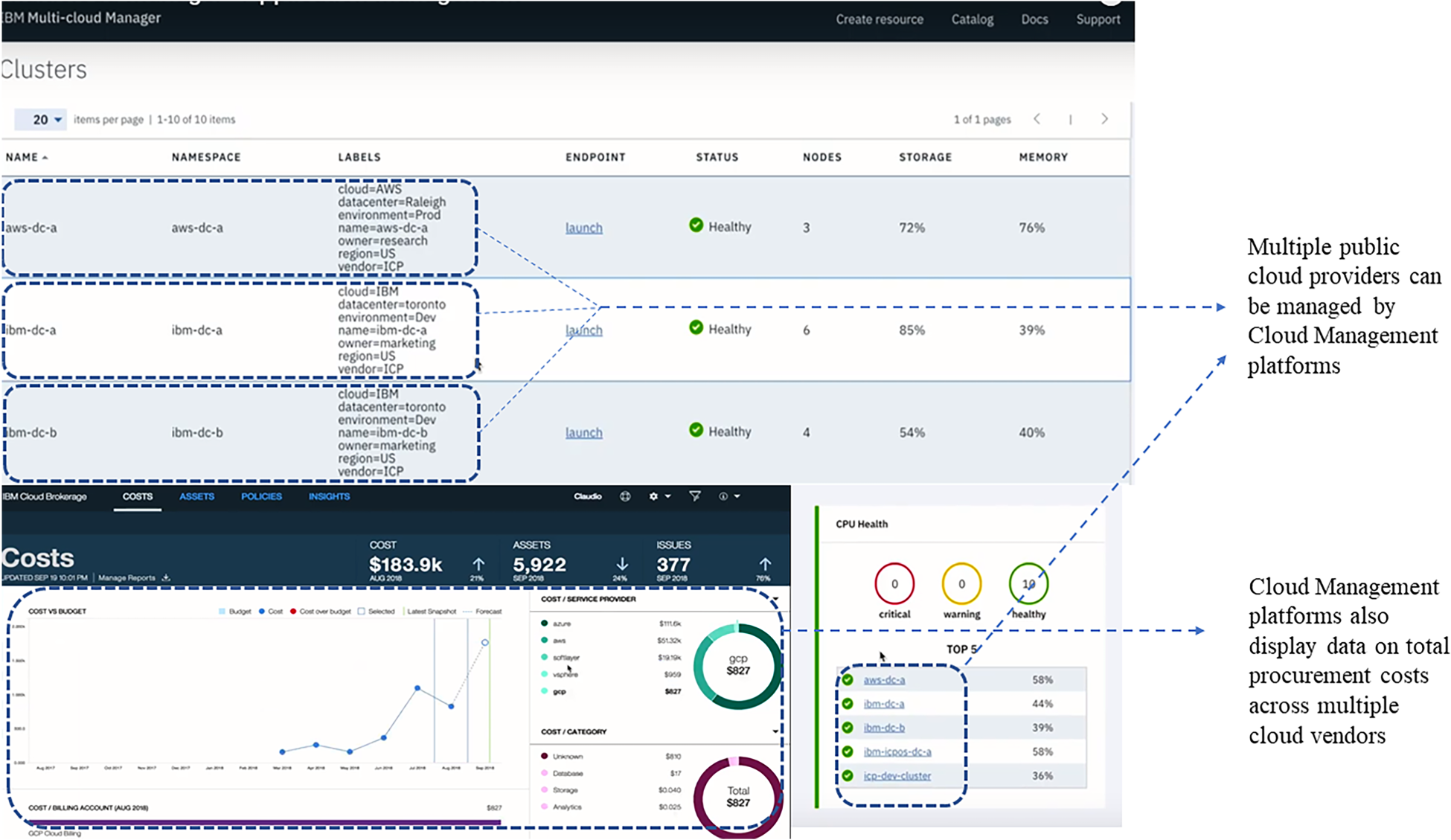
Platforms such as IBM Multi-cloud manager facilitate the implementation of Multi-cloud. Source: De Witte (2022).
Finally, while bidding for such contracts, cloud providers consider the expected client’s requirements (for whom the bid is submitted) and potential demand from alternate clients that may be served by them. The key trade-off for the vendor is whether to bid very low to win the client’s requirements at the expense of bearing a high probability of not being able to fulfill demand from the potential alternate clients. In this paper, we also endogenize such considerations by vendors while estimating their price quotes; which eventually impact the client’s vendor base design and capacity portfolio decisions.
One challenge that the client faces in sourcing cloud capacity is cost asymmetry at the vendor’s end. Such asymmetry stems from the fact that cost-driving factors such as data center maintenance, monitoring, and auditing costs are the vendors’ private information. Moreover, factors such as energy consumption and cooling system operating costs may depend on the geographic location of data centers; and if vendors are located far away, these cost structures are hidden (Feng et al., 2019; Llorente, 2017). Furthermore, differences among vendors in terms of location of data centers, scale, and internal cost-efficiency measures (e.g., automation and resource optimization) contribute to vendor-based cost heterogeneity. Other cost-driving factors, including data center maintenance software, virtualization, system architecture, staffing, and training, are also private information. Earlier literature also documents the presence of cost-related information asymmetry in the IT business environment (Choudhary and Vithayathil, 2013).
Motivated by the above context, we consider a game theoretic scenario with a federal client and multiple public cloud vendors (or cloud providers). First, the client determines the quantum of private cloud capacity investments and the number of public cloud vendors to be selected for sourcing capacity requirements. Then, the client conducts a reverse auction and the vendors submit their price quote. Based on the price quotes, the client announces the winners of the bidding competition and signs an Infrastructure as a Service (IaaS) contract. Moreover, consistent with business practice, we consider different cloud provisioning mechanisms such as: (i) On-demand instances (capacity is procured after the demand realization), (ii) reserved instances (upfront capacity commitments before demand realization), and (iii) combination of both on-demand and reserved instances. Next, we state our key questions along with the summary of the findings.
Typically, in cloud computing business environment, the public cloud vendors are heterogeneous in the cost structure. Therefore, we ask the following research question: How does the cloud vendors’ cost heterogeneity impact the size of the vendor base and the private cloud capacity investments? Our analysis reveals that an increase in cost heterogeneity, always leads to a decrease in the size of vendor base. One would expect that due to fewer vendors selected, high cost heterogeneity should lead to high private cloud capacity investments. Surprisingly, we find that the private cloud capacity investments may increase or decrease with an increase in cost heterogeneity. Typically for relatively mature cloud capacity instances, cost structure does not vary across vendors. Our result indicates that while procuring such cloud instances, federal clients should design a multi-cloud with many providers. We also find that if vendor base heterogeneity for a particular cloud capacity is moderate, the client should invest in a large private cloud.
In practice, clients along with managing private cloud, tend to source public cloud capacity through various mechanisms, namely on-demand, reserved, or a combination of both instances. Therefore, we ask the following question: Which type of instances should the federal client prefer to procure via reverse auction? Our analysis reveals that client should always procure on-demand instances due to lower realized price (achieved in bidding contest) and higher flexibility to procure any number of instances after observing demand. This insight suggests that unlike the posted pricing mechanism, where buyer tends to procure a combination of on-demand and reserved instances, the federal client, while sourcing capacity from cloud vendors selected via bidding competition, should only procure on-demand instances.
As elaborated earlier, the likelihood of cloud capacity outages for the client under a multi-cloud configuration is negligible (VMware, 2023). We also examine a scenario where the client may encounter service failures due to unavailability of capacity. This situation may arise (however, highly unlikely) for capacity instances that are relatively new or highly expensive to service, resulting in lower capacity at the vendors’ end. Our analysis reveals that in the presence of service outages, when the vendor’s capacity is relatively high, the client may procure only reserved instances. However, if the available capacity reduces, the client may prefer to procure both on-demand and reserved instances.
As motivated above, federal agencies need to manage the portfolio of private and public cloud capacity. Therefore, we ask the following research question: Under what conditions the client should implement public, private, and hybrid cloud computing strategies? Our analysis reveals that if the available capacity in the cloud computing market is high due to a large number of cloud providers or due to high capacity at each vendor, then federal cloud computing agencies should switch to pure public cloud computing strategy. Moreover, if the number of vendors is very few or the capacity of each provider is very low, federal agencies should invest in pure private cloud. In the moderate range of available capacity, the federal agencies should implement a hybrid cloud computing strategy. Overall, this indicates that in the long run, as the cloud computing market becomes more mature (and therefore, a larger number of providers are present), we expect the federal agencies to move considerable demand load on public cloud servers.
Earlier operations management literature in the cloud computing domain has explored vendor’s infrastructure management issues in the absence of strategic client operationalizing a multi-cloud setup (Arbabian et al., 2021; Nunez et al., 2021). We further contribute to this existing literature by characterizing the optimal portfolio decision of the federal client in terms of private cloud capacity investments and the number of vendors to implement a multi-cloud strategy. Furthermore, previous literature studying pricing issues by cloud vendors has not considered pricing determined under reverse auctions, which are utilized in federal procurement. (Chen et al., 2019; Saha et al., 2021). In particular, we contribute by examining the impact of vendor-side cost heterogeneity on the optimal multi-cloud strategy, and private cloud capacity investments of the federal client sourcing capacity through reverse auctions.
The rest of this paper is organized as follows. In Section 2, we review the literature, and contrast our contributions with previous research. In Section 3, we describe our analytical model. We characterize the optimal number of vendors and the capacity investment strategy in Section 4. Section 5 describes various managerial insights. In Section 6, we present several model extensions. We finally conclude in Section 7. All proofs are contained in the E-companion to this paper (see Section EC.4).
Literature Review
In this research, we contribute to two streams of literature. The papers on IT sourcing issues are associated with our work as we consider the cloud vendors selection decision by the client. Finally, the second stream of research on the operational issues in cloud computing is also relevant to our research. We review these two streams of literature.
Sourcing Issues in IT Services
We refer readers to the literature review on the interface of information systems and operations management by Kumar et al. (2018), which also presents recent literature on IT outsourcing. Demirezen et al. (2016) and Demirezen et al. (2020) study the performance of various contract structures in an IT outsourcing environment where the client and vendor co-create to produce the final output. Demirezen et al. (2016) contribute by finding conditions under which the vendor’s efforts should be monitored in such co-creation environments. They find that monitoring vendor effort is less crucial when vendor participation costs are low or when output sensitivity to vendor effort is relatively higher than to client effort. Demirezen et al. (2020) find the conditions under which the hybrid of effort-dependent and output-dependent contracts may be beneficial for both parties. The authors find that when the output is highly sensitive to the vendor’s effort, a hybrid payment structure works best for the client, while a purely effort-dependent structure is preferable when sensitivity to effort is low. Bapna et al. (2016) further contribute to the above stream by empirically analyzing the impact of third-party advisors on the payoffs of clients and vendors in IT outsourcing contracts, revealing that the presence of an advisor is associated with higher revenue for vendors and improved contract outcomes for clients, thereby mitigating information asymmetry between the parties involved. Gupta et al. (2023) explore the optimal contract design within agile software development projects when they are outsourced to external vendors. The major finding is that if learning effects and business need change risk are present, optimal pricing can be non-monotonic over time. The above literature is quite different as these studies focus on outsourcing customized IT software services requiring significant value-enhancing efforts by both client and vendor. Unlike them, we contribute by analyzing the procurement of standardized cloud computing infrastructure services via reverse auctions.
A set of papers studies strategic sourcing using the bidding mechanism in IT services procurement. Chaudhury et al. (1995) study bidding by multiple vendors to win the buyer’s single sourcing contract under cost asymmetry. The authors find that buyer should implement a ”carrot and stick” approach: Offering subsidies as incentives to encourage bidders to submit their most competitive bids, while also applying penalties to discourage inflated bids. Unlike them, we study a multi-sourcing setup, where vendors have finite capacity, and the buyer adopts a hybrid cloud computing strategy. Bandyopadhyay et al. (2005) study vendor competition in the sealed-bid reverse auction. Similar to us, they also consider heterogeneity in cost and capacity. The authors show that increased competition enables sellers with lower costs or higher capacities to gain a significant advantage, leading to lower prices for buyers. However, unlike them, we characterize the optimal size of the vendor base and private cloud capacity. Therefore, we contribute to the above research by finding that higher cost heterogeneity reduces the vendor base. However, higher cost heterogeneity may increase or decrease private cloud capacity.
Our work also contributes to papers that analyze strategies by federal agencies while procuring IT infrastructure. Chen et al. (2021a) study a government agency’s decision to share outsourced IT services with another government agency. They find that if the vendor’s technological expertise is high, it is beneficial to share IT services. Huang et al. (2022) study vendor selection (for single sourcing contract) via reverse auctions followed by price renegotiation. They find that the client may set a low initial project scope and later expand the scope along with renegotiation (as this may motivate higher quality investments by the selected vendor). Unlike them, we study the client’s multi-sourcing decision in a multiple-vendor single federal client setup. Therefore, we add to the above discussion in literature by finding new insights on the impact of cost heterogeneity, the number of vendors, and available capacity on the client’s multi-sourcing strategy.
Bhattacharya et al. (2018) study single-sourcing and dual-sourcing in IT services projects. They find that if the assigned task is modular, then dual-sourcing strictly dominates the single-sourcing strategy. Unlike them, we consider a setup specific to federal cloud computing procurement with features like cost heterogeneity, private cloud capacity investments, and reverse auction-based vendor selection. Therefore, we contribute by finding that low-cost heterogeneity or high availability of cloud instances motivates the federal clients to choose multi-sourcing over single-sourcing strategy. We provide a summary in Table EC.2 (in the E-companion) to contrast our work with the most related papers in this stream.
Research in Cloud Computing
There are papers that study operational issues in the Software as a service (SaaS) cloud provisioning model. We refer readers to an excellent review by Li and Kumar (2022), which presents recent work on the SaaS model, and provides some interesting future directions. These papers provide insights on aspects such as market entry decisions, service offering strategies, and strategies to deter the entry of rivals (Feng et al., 2018; Li and Kumar, 2018). Moreover, some papers study competitive dynamics between the on-premises software and SaaS vendors. They provide implications of network effects, SaaS quality improvement rate, security risks, and customization capabilities on the customers’ purchase decisions (Guo and Ma, 2018; Zhang et al., 2020). Choi et al. (2022), in a review paper, provide a brief discussion on the role of cloud-based applications in facilitating disruptive technologies in Industry 4.0. Gangwar and Bhargava (2023) find that offering consumers the option to choose between an access-based and a usage-based pricing model leads to higher demand with minimal revenue reduction compared to a non-linear two-part pricing strategy. Unlike the above paper, our objective is to analyze vendor competition in the IaaS market.
The set of papers studying operational issues in the IaaS market is related to our work. Cheng et al. (2016) in an empirical study examine price differential in spot instances by AWS between US East and US West. They find that latency impacts cloud computing spot pricing dynamics, resulting in persistently higher prices in the US West. Chen et al. (2021b) study different discount schemes for pricing interruptible spot instances. They show that while both uniform and interruption-based discount schemes for preemptible cloud instances can be equivalent from the provider’s perspective, the latter offers fairer pricing for customers, and providers benefit more from it when surplus capacity is moderate and volatile. Unlike these papers, we focus on uninterruptible on-demand and reserved instances procured via reverse auction. This is because the federal client requires uninterruptible service for critical applications like disaster recovery, offensive operations, peace keeping, and preventing terrorist attacks.
The papers that study cloud computing infrastructure management issues (in IaaS market) is also related to our work. Arbabian et al. (2021) study vendor’s capacity expansion decision to satisfy multi-attribute demand. They find that optimizing capacity-expansion policies using two well-chosen cluster types, under certain conditions, can closely match the efficiency of multi-type configurations. Guo et al. (2019) propose algorithms for optimal provisioning of virtual infrastructure resources under flexible cloud service agreements. They show that dynamic optimization models for periodic interventions significantly enhance backup virtual machine provisioning efficiency in fault-tolerant systems, particularly for small, low-availability contracts. Yuan et al. (2018) study the vendor’s optimal allocation of backup resources under service level agreements and find that a well-structured price-penalty schedule allows cloud service providers to balance the costs of backup provisioning with service level compliance. Nunez et al. (2021) study cloud provider’s capacity planning and posted pricing of on-demand and reserved instances, finding that strategically managing capacity and pricing through hybrid service models in IaaS can enhance revenue and service reliability. In their paper, the client’s cloud capacity investments and sourcing strategy are not endogenous (which we consider in our paper). Jain and Hazra (2019) study private cloud capacity investments by buyers procuring cloud instances from a monopolist public cloud provider, finding that high demand variability leads to lower private cloud capacity investments while increasing expected on-demand requirements. Unlike us, the above literature incorporates posted pricing of cloud instances and does not consider vendor base heterogeneity. We contribute to the above theme of papers by characterizing the number of vendors selected by a federal client through reverse auctions in a multi-cloud setup to manage on-demand/reserved capacity requirements.
Finally, the papers closest to our work considers vendor competition in the IaaS market. Chen et al. (2019) in a setup with two competing vendors offering either utilization-based or reservation-based cloud instances, study pricing and customer adoption decision (in a single sourcing setup). They find customer prefers utilization-based instances only when the demand volatility is high. Unlike them, in our paper, we provide new insights on how federal client should decide on the private cloud capacity and the portfolio of vendors to implement a multi-cloud strategy. Saha et al. (2021) consider a multi-cloud of two vendors offering differentiated services (on-demand and spot instances). Their work focuses on the implications of discount-based posted pricing on the buyer’s capacity allocation among both vendors under congestion effects. They find that in the presence of congestion, the relationship between discount and demand for cloud services is complex, as higher discounts can lead to increased demand, which may subsequently result in higher congestion that ultimately lowers demand, impacting the buyer’s procurement decisions in a multi-cloud setup. We further contribute to this emerging literature by characterizing the optimal number of vendors providing similar cloud instances (non-differentiated services) in a multi-cloud setup. Further, unlike Saha et al. (2021), where the second cloud (spot instances) serves as a backup resource, in our setup, capacity is allocated among all vendors selected for the contract. Moreover, unlike them, we consider a reverse auction-based pricing model. Ours is perhaps the first study in the literature to provide insights on federal client’s optimal design of multi-cloud and hybrid cloud computing strategies. We provide a summary in Table EC.3 (in the E-companion) to contrast our work with the most related papers in this stream.
Model Description
In this section, we discuss the model setup and time-line considered in this paper. We consider a setup with a federal client (she) facing uncertain demand (towards a cloud-based application) and
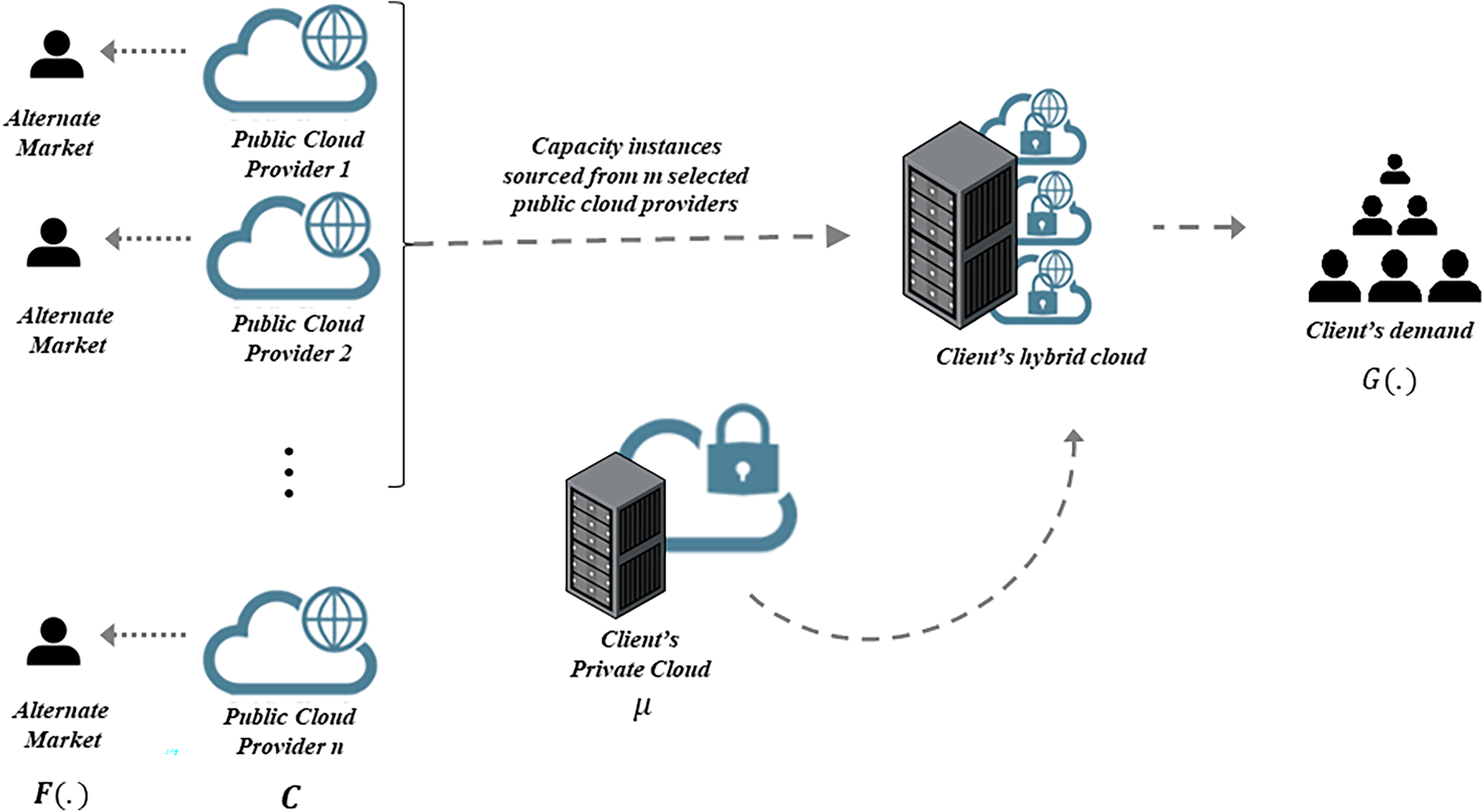
Cloud computing procurement scenario.
We denote the client’s demand by
Private Cloud Capacity Investments
As motivated in Section 1.1, client implements a combination of public and private cloud deployment models. Under this strategy, the client invests in private cloud capacity
Cloud Computing Provisioning Mechanisms
In cloud computing market, there are three commonly used mechanisms via which client sources cloud capacity (Chen et al., 2019). Next, we elaborate on the details on each mechanism:
On-Demand Instances Mechanism: In this mechanism, the client procures capacity instances after the realization of demand (in case realized demand exceeds the private cloud capacity Reserved Instances Mechanism: In this mechanism, the client books cloud capacity instances before demand realization by making upfront payments. We denote the number of instances upfront reserved by Combination of On-Demand and Reserved Instances: In this mechanism, the client may upfront book a certain number of instances (before demand is realized) via the reserved instances mechanism. However, after the realization of demand, if the client sees that her requirement is more than the sum of booked reserved instances and private cloud capacity
Client’s Variable Cost of Operations
The client also incurs a variable cost of in-house operations denoted by
Cloud Provider Selection
The client selects public cloud providers though a bidding competition. We assume that all vendors participating in the bidding competition provide cloud computing infrastructure designed to address all the regulatory and compliance requirements of the federal firms. For example, all federal agency cloud deployments are required to be compliant as per the Federal Risk and Authorization framework (Google, 2024a). Other compliance requirements include the Federal Information Processing Standards (FIPS), Defense Information Systems Impact Level 2 (DISA IL2), National Institute of Standards and Technology (NIST) 800-53, NIST 800-34 - Contingency Planning and NIST 800-171 (Google, 2024b).
In practice, the client while selecting the contract winners through bidding competition, upfront announces the number of bidders who will be awarded the contract (Dasgupta and Spulber, 1989; Wang et al., 2019). Many public procurement tender documents often include the expected number of winners or awards specified by the federal client (Maine, 2020; US DoE, 2003). Therefore, in our model setup, the client a-priori announces the number of public cloud providers
As motivated in Section 1.1, the federal client conducts an online reverse auction to select
Vendor’s Operational Cost Structure
The unit variable cost of operations by the public cloud provider
Vendor’s Alternate Market
Typically, the public cloud vendors after fulfilling the federal client’s requirements offer the remaining/excess capacity to alternate market (AWS Public Sector, 2024). In our model, the alternate market demand faced by the cloud providers is uncertain. We assume that the demand faced by cloud provider
Vendors’ Capacity
The capacity of the public cloud vendor
Generally, in a multi-cloud environment, the likelihood of capacity outages is minimal. This is due to multi-cloud configurations effectively mitigating service outage risks by distributing workloads across multiple providers and implementing failover mechanisms for seamless continuity, thus bolstering resilience. Consequently, in the event of a service disruption with one provider, such as Azure, applications can swiftly be deployed on AWS or other platforms, ensuring accessibility and uninterrupted operation (VMware, 2023). However, in Section 5.3, we relax this assumption and study a model with service outages.
Sequence of Events
In real life practice, the federal agencies first decide the private cloud capacity investments and share their expected requirements in the request for proposal document (MEITY, 2017). Then, the reverse auctions are conducted by government agencies, where vendors quote prices. Finally, the vendors selected for contract after fulfilling client’s requirements, offer the remaining capacity to alternate market (AWS Public Sector, 2024). Therefore, the chronological event time-line is as follows:
Figure EC.1 (in E-companion) pictorially depicts the timeline of the game. We provide the summary of all the notations in Table EC.1 (in E-companion).
Model Analysis
In this section, we characterize vendors’ bidding strategies, client’s multi-cloud strategy, and client’s private cloud capacity decisions under different cloud provisioning mechanisms.
On-Demand Instances Mechanism
In this scenario, the client along with investing in the private cloud capacity, sources on-demand capacity requirements from multiple cloud providers selected through bidding competition. We first solve the vendor firm’s problem and derive the price quote towards the reverse auction mechanism (in Section 4.1.1). Then, we solve the client’s problem and determine the optimal number of public cloud vendors for the award of the contract along with the private cloud capacity investments (in Section 4.1.2).
Public Cloud Vendor’s Price Quote Towards On-Demand Instances
In the reverse auction mechanism, the weakly dominant strategy for public cloud vendor

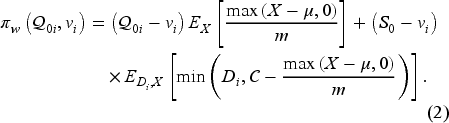
The following are true about the vendor The price quote by the public cloud vendor As As the number of public cloud providers selected by the client for the award of contract increases, the price quote decreases

As the capacity of the cloud provider increases, the probability he will be able to sell entire capacity in the alternate market reduces. Therefore, in Proposition 1(1), we find that as the capacity of the cloud provider increases, the reservation price quote decreases
A few number of vendors selected for award of contract or low available vendor’s capacity leads to high system utilization. Consistent with the previous literature, we also observe that the high system utilization leads to a higher price of capacity (Dewan and Mendelson, 1990; Mendelson, 1985). Moreover, this also represents real-life practice. For example, AWS charges a lower price for cloud computing instances operating at low expected utilization due to lower workloads (Barr, 2015). For the case when demand follows Uniform distribution, we state the price quote in Corollary 1.
If the cloud vendor
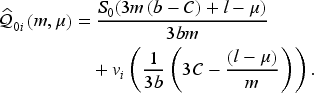
From Corollary 1, we find that if the client’s demand potential
The client determines the private cloud capacity investments and the size of vendor base by solving the following profit maximization problem:
4
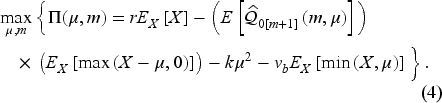

From the client’s perspective, the
Under the on-demand instances mechanism, the optimal private cloud capacity investments by the client is given by

From the expressions stated in Lemma 1, when
We analyze the case where client sources reserved capacity instances from vendors selected via bidding competition. Similar to the analysis in Section 4.1, we first solve the vendors’ problem, and characterize the bidding equilibrium. After that, we analyze the client’s vendor base design and capacity management problem.
Public Cloud Vendor’s Price Quote Towards Reserved Instances
Given the client decides to procure
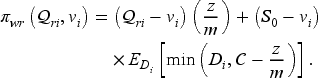

The following are true about the cloud vendor The equilibrium price quote by the cloud vendor As As
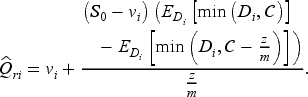
When the client upfront books large amount of capacity
The above insight suggests that under the reserved instance mechanism, if the expected utilization of the cloud vendor is high (due to a lower capacity or higher number of instances booked upfront), he should quote a high price. As mentioned earlier, such pricing behavior is consistent with previous literature (Dewan and Mendelson, 1990; Mendelson, 1985), and has been observed in business practice (Barr, 2015). Next, in Corollary 2, we present the price quote when alternate market demand follows Uniform distribution.
If the cloud provider

From Corollary 2, we find as the market potential of the alternate market
The client determines the private cloud capacity investments and the size of vendor base by solving the following optimization problem:
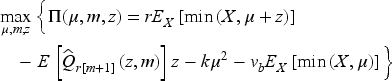
Under the reserved instances mechanism, the optimal private cloud capacity investments by the client is given by
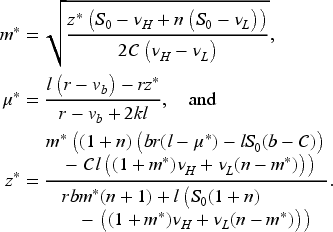
We find when
In this mechanism, client decides to upfront book
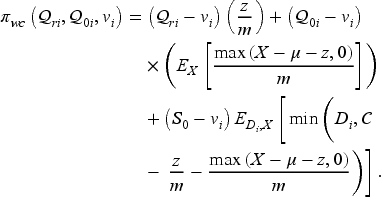
Cloud Vendor’s Price Quote Towards Reserved and On-Demand Requirements
If the cloud provider wins the contract, he allocates

Client’s Problem While Using Both Instances
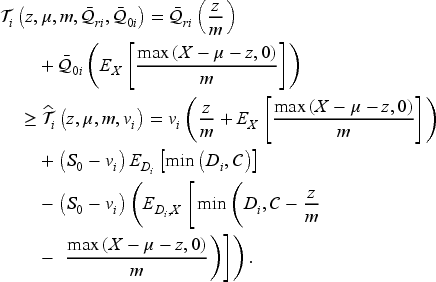
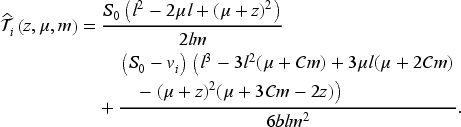
The client’s optimization problem is given by:
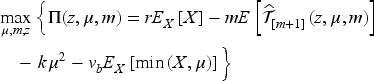
Under the scenario where the client may source both reserved and on-demand instances, it is optimal for the client not to source any reserved capacity instances. Therefore, the client’s optimal private cloud capacity investments and the size of the vendor base are the same as those characterized in Lemma 1.
One may expect when the client’s demand volatility is low, since the demand is quite predictable, she should upfront reserve a large number of cloud instances (Chen et al., 2019). Later, after demand realization, she should source some on-demand instances to manage demand spikes. However, we find that irrespective of demand volatility, the client should never source any reserved instances, and therefore, only source on-demand instances. The reason is when the client upfront reserves a large number of cloud instances, the cloud provider quotes high price (due to high expected utilization) i.e.,
The previous literature considers a posted pricing mechanism, where the upstream cloud provider is the first mover, strategically deciding unit prices (Chen et al., 2019). In response to the price set by the cloud vendor, the client decides the capacity portfolio. However, unlike them, our research focuses on understanding the procurement of cloud instances by federal agencies that employ reverse auction to select multiple cloud vendors. The federal clients upfront announce the capacity portfolio, based on which the competing cloud providers quote the price. Therefore, federal clients are relatively more powerful since they enjoy the first mover advantage and utilize reverse auctions, drastically reducing the price of sourcing on-demand instances. It motivates clients to procure low-priced, highly flexible on-demand instances.
In Section 5.1, we first study how the vendor’s cost heterogeneity impacts the private cloud capacity investments and vendor base decision of the client. Next, in Section 5.2, we compare the firm’s payoff under the private, public, and hybrid cloud. Finally, in Section 5.3, we consider the possibility of service outages due to capacity unavailability in our setup. Even though, as shown in Proposition 3, it is always beneficial for the client to source on-demand instances, we also understand the dynamics under the reserved instances mechanism for the completeness of the analysis in the E-companion to this paper (see Section EC.5).
How Does the Vendors’ Cost Heterogeneity Impact the Sourcing and Capacity Investment Strategy?
As discussed previously, there exists heterogeneity among the cloud vendors in their operational cost structure. Therefore, one of the challenges faced by the federal agencies is how to plan for the private cloud computing infrastructure and the size of vendor base under operational cost heterogeneity. We express the vendor
Under on-demand instances mechanism, the following are true about the impact of vendors’ cost structure on the client’s vendor base and the private cloud investment strategy:
As mean cost increases, the private cloud capacity investment increases There exists a threshold value
From the expression in Proposition 1(1), we could show that the provider’s price quote increases as costs increase
In Proposition 4(2), we find that high heterogeneity
The previous research reveals that factors such as expected demand, security concerns, and technical capabilities impact the client’s private cloud investments (Garrison et al., 2012; Jain and Hazra, 2019). We add to the literature by finding out that the moderate level of vendors’ cost heterogeneity leads to higher private cloud capacity investments. Moreover, we further contribute to the literature by finding out the implications of cost heterogeneity on the client’s multi-cloud strategy.
Overall, based on the above discussion, if IaaS provisioning by public cloud providers becomes mature (and hence, cost heterogeneity lowers), in the long run, we would expect that a larger number of vendors will be selected by the client to implement a multi-cloud strategy. However, suppose cloud instances are not technologically mature (i.e., exhibit high cost heterogeneity). In that case, the client should invest less in the private cloud capacity and shift majority of her business to a few low-cost vendors (discovered via reverse auctions).
As discussed in Section 1.1, the federal agencies invest in private cloud capacity and source cloud capacity from public cloud providers such as Microsoft and Google. Therefore, the client also needs to understand how to decide the portfolio of public and private cloud infrastructure. In this section, we compare the client’s payoff under public, private, and hybrid cloud computing. Due to the higher complexity of the client’s payoff under the hybrid cloud computing strategy, we could only obtain the analytical result on the comparison between public and private cloud computing strategies (we provide the details on the characterization of equilibrium in Sections EC.6 and EC.7 of E-companion). However, later in our numerical studies, we study all the three cloud computing configurations. Next, in Proposition 5, we state the conditions for the client to choose public cloud and private cloud computing strategies.
The following are true about the client’s choice of public and private cloud computing strategies:
If the capacity of the cloud provider If the number of vendors participating in the bidding competition
Due to higher price quotes, when the cloud provider’s capacity is low
Next, we numerically compare the client’s payoff under public, private, and hybrid cloud computing strategies. We observe that if the capacity of the cloud provider is very low, then the client should implement a pure private cloud strategy; however, if the capacity is very high, then the client should implement a pure public cloud strategy. Moreover, in the intermediate range of cloud capacity, the cloud provider should implement a hybrid cloud (see Figure EC.8). We also find a similar impact of the number of public cloud vendors
Next, we study the impact of cost heterogeneity on the client’s choice of cloud computing strategy. We find that if
As elaborated earlier in the discussion of Proposition 4 and Section 2, previous research also tries to understand the firm’s adoption decision of public/private/hybrid cloud (Garrison et al., 2012; Jain and Hazra, 2019). However, these papers do not endogenize vendor selection competition for implementing a multi-cloud strategy. Therefore, we contribute to the above literature by presenting the implications of the degree of competition (captured by the number of participating vendors) on the hybrid cloud computing strategy. We suggest that if the degree of competition is high, then the federal firm should majorly rely on public cloud solutions while devising her capacity portfolio strategy (therefore, invest less in private cloud capacity).
In the main model scenario, we examine the case where cloud providers do not encounter any risk of service outages. Next, we explore a scenario where the cloud providers’ capacity is in the lower range, thereby raising the possibility that the provider may not meet the client’s on-demand requirements. However, if a client reserves a specific number of instances upfront, the cloud provider can fulfill the request, as it can plan for these upfront capacity commitments in advance. We consider the case when cloud vendors’ capacity is low and therefore, there is a possibility that the cloud providers may not fulfill client’s on-demand requirements,
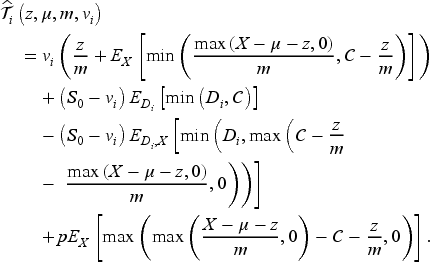
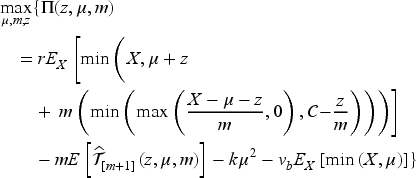
The above observation suggests that when capacity availability issues arise in public cloud infrastructure (i.e., vendors experience capacity outages), clients may choose to rely solely on sourcing reserved instances. However, this preference is contingent upon the capacity being within a higher range (albeit lower than the maximum potential demand of the client). Alternatively, if the vendor’s capacity is exceedingly low, clients may opt to invest in a pure private cloud solution. However, as vendors gradually increase investments in such capacity instances and the capacity falls within a moderate range, clients may consequently adopt a hybrid approach. This involves utilizing both on-demand and reserved instances within the public cloud infrastructure.
We also observe that when the number of cloud vendors is low, the cloud provider tends to invest in a large private cloud, relying less on public cloud infrastructure. However, as the number of available cloud vendors increases, the size of the vendor base also grows. Furthermore, when there is a very large number of available vendors, the client may choose to fulfill its requirements via a pure reserve instances model from a larger vendor base. Note that the impact of the cost heterogeneity parameter observed earlier in Proposition 4 remains robust in this setup as well. For conciseness, we do not repeat the discussion.
Model Extensions
In this section, we modify certain assumptions in the main model to check whether these insights are robust. First, we allow for capacity and demand heterogeneity at the vendor’s end. Second, we consider the case where the alternate market price is impacted by system utilization. Third, we consider the scenario where the private cloud is more secure than the public cloud. Finally, we demonstrate the robustness of our results by considering aspects such as client’s risk aversion and multi-cloud integration cost. We present the details of the characterization of bidding strategy and formulation of payoff functions in Section EC.9 of the E-companion.
Vendors’ Demand and Capacity Heterogeneity
In Section 6.1.1, we consider the case when the vendors are heterogeneous in alternate market demand. The demand heterogeneity is realistic as the alternate clients vary across these cloud service providers. Typically, demand information is private as each vendor better understands his market characteristics. Furthermore, Section 6.1.2 considers the case where the cloud providers’ capacity is heterogeneous and is private information. This is realistic because the public cloud providers generally do not report exact data center capacity information or disclose the precise amount they spend on data centers. Finally, in Section 6.1.3, we consider the case when cloud providers’ capacity is heterogenous and impacts its operational cost structure.
Demand Heterogeneity
In this extension, we consider the vendor
Capacity Heterogeneity
We denote the capacity of public cloud provider by
Vendors’ Capacity Cost Correlation Scenario
The correlation between capacity and operational cost structure is significant in cloud computing infrastructure services. This is majorly due to economies of scale, as cloud providers with larger data centers typically enjoy lower operational costs. In this extension, we examine vendor
Utilization-dependent Alternate Market Pricing
In real-life practice, the price of cloud computing services increases as the system utilization increases (Barr, 2015; Dewan and Mendelson, 1990). Therefore, we consider the scenario where vendor
Highly Secure Private Cloud
One of the concerns about public cloud computing is moving critical/sensitive information to the public cloud provider’s server. The hybrid cloud computing strategy can be seen as a way to mitigate these concerns, and this can be operationalized by processing classified data on a private cloud. All financial data and other classified information that needs to be protected can be stored in the on-site private cloud servers; by this, the firms comply with the Data Protection Act. In our model setting, we endogenize this by incorporating a constraint
Additional Robustness Studies
In our study, apart from the above robustness checks, we also consider several other modifications of the main model setup. We first consider the case when the client is risk averse and therefore, we maximize client’s certainty equivalent to characterize equilibrium vendor base design and capacity investment strategy (see Section EC.9.4.1 in E-companion). We find if client is highly risk averse, then she should build a larger private cloud and source her capacity requirements from fewer cloud vendors. Generally, while working with multiple vendors, the client incurs coordination (or integration) costs. This additional cost structure of implementing a multi-cloud approach, typically includes the cost of network integration between cloud providers, the cost of hosting an application over multiple clouds, and application deployment/ redeployment cost (Nolle, 2019). Therefore, we consider additional integration cost (incurred by client), which is given by
Our main model setup does not account for the variable cost structure that clients may incur when sourcing capacity instances from public cloud providers. To address this, we extended our model to include a unit variable cost
It is also possible that the cost of servicing federal client is different from cost of servicing clients in alternate markets. This may be due to the fact that capacity requirements of the federal clients should conform to various regulatory standards, therefore making it expensive to serve the federal client (Google, 2024b). In this setup, we assume that vendor
In Section 4.3, we find that while deciding the capacity strategy under a combination of on-demand and reserved instances mechanisms, it is optimal for the client not to reserve any capacity instance (
Conclusion
The paper focuses on the design of a multi-cloud strategy for federal clients like the US DoD, who utilize reverse auctions for selecting cloud vendors. Since federal clients, along with sourcing cloud infrastructure from public cloud providers such as AWS and Google, also invest in private cloud capacity, we also try to understand their capacity portfolio decision in this paper. We provide several interesting managerial implications of vendors’ cost heterogeneity, the degree of IaaS market competition (captured by the number of competing vendors), and the cloud provisioning mechanism on the client’s vendor base and capacity management decisions.
Implications for Business Practice
The federal client needs to decide provisioning mechanism that would help them manage demand–supply mismatches while procuring public cloud infrastructure. On one extreme, they may upfront commit capacity requirements to vendors (via reserved instances mechanism), or on another extreme, they may instantaneously procure capacity after demand realization (via on-demand instances mechanism). They may also decide to announce the capacity requirements as a combination of both on-demand and reserved instances. Interestingly, our analysis reveals that procuring public cloud instances via a pure on-demand instances mechanism is optimal for federal clients. This is due to lower bids towards on-demand instances (as vendors expect low system utilization since the client does not upfront book capacity) and higher flexibility of on-demand instances to reduce demand–supply mismatches.
Typically, in a multiple-cloud environment, due to inherent redundancy, service capacity outages are rare events. However, in cases where capacity availability is an issue, this can result in differences in service quality among both kinds of instances. Reserved instances may not experience interruptions, as vendors can plan for them upfront and thus ensure continuous service. Conversely, on-demand instances may face outages due to limited capacity and the uncertain nature of demand. In our analysis, we also allow for such service outages. We observe that in cases of very low vendors’ capacity, the client will transition to a pure private cloud. An increase in cloud capacity motivates the client to utilize both on-demand and reserved instances. However, if the capacity is in a higher range, the client prefers to rely solely on the reserved instances model.
Based on our analysis, federal firms needs to be careful about vendors’ cost heterogeneity. We find that if the cost heterogeneity decreases, then the number of vendors increases. Therefore, we expect that as cloud capacity instances get mature (as they exhibit low cost heterogeneity), the client will select more vendors to implement a multi-cloud strategy. Interestingly, very high or low cost heterogeneity results in low private cloud capacity. If cloud instances are technologically mature, there is an increased shift towards public cloud capacity instances due to lower price quotes of a larger vendor base (as they operate at low utilization). On another extreme, if cloud instance technology is new, the federal client may again primarily rely on public cloud capacity procured from a few low-cost vendors (screened via reverse auctions).
Federal clients tend to operationalize the capacity management strategies like pure private cloud, pure public cloud, or hybrid cloud. Therefore, we also explore the client’s choice of such strategies. Our analysis suggests that if the client procures cloud capacity instances for which the number of competing vendors is very low, they should implement a private cloud computing strategy. However, if the number of vendors is very high, the public cloud computing strategy is preferable for the client. Finally, hybrid cloud computing is an optimal strategy in the intermediate range of the number of vendors.
Theoretical Contributions
Our research adds to the literature on IT outsourcing and cloud computing. The previous research analyzing IT outsourcing decisions by federal agencies does not cover issues on vendor base decision to design multi-cloud strategy, which is the crux of our work (Chen et al., 2021a). The previous cloud computing literature studies vendor competition by SaaS providers (Li and Kumar, 2018, 2022). In contrast, we study vendor competition to offer cloud infrastructure under uncertain demand and finite capacity. The previous literature on the IaaS cloud models examines customers’ selection of cloud provisioning models under posted pricing mechanisms. Chen et al. (2019) show that the client may prefer sourcing reserved instances under predictable demand scenarios. In contrast, in reverse auction-based federal cloud computing procurement, we show sourcing on-demand instances always benefit that client (in absence of service outages). Finally, Saha et al. (2021), in a two-cloud setup, study the client’s capacity allocation among two vendors offering differentiated services (spot and on-demand instances). We further contribute to this emerging discussion by characterizing the size of the vendor base while sourcing non-differentiated services in a multi-cloud setup. In addition, we also provide insights on managing on-premises infrastructure along with implementing a multi-cloud strategy.
Future Research
Our work is not without limitations. Our model assumes that each vendor participates in bidding competition to win the contract from a single federal agency. However, the vendors may participate in multiple bidding competitions to win contracts from several federal agencies. Intuitively, we expect that since the overall demand potential of the federal clients has increased, this may further increase the price of cloud instances. Therefore, the client may increase the private cloud capacity. In addition, due to analytical tractability, we consider a uniform load allocation among all selected vendors. Future research may explore non-uniform allocation and its implications for vendor base design strategy and private cloud capacity investments.
Supplemental Material
sj-pdf-1-pao-10.1177_10591478251326421 - Supplemental material for Procuring Cloud Services: An Economic Analysis of Multi-cloud Strategy
Supplemental material, sj-pdf-1-pao-10.1177_10591478251326421 for Procuring Cloud Services: An Economic Analysis of Multi-cloud Strategy by Tarun Jain, Jishnu Hazra and Ram Gopal in Production and Operations Management
Footnotes
Acknowledgments
We are thankful to the Departmental Editor, the Senior Editor, and the anonymous reviewers for their feedback, which has substantially improved the paper. Tarun Jain and Jishnu Hazra were supported in part by the Indian Institute of Management Bangalore under the IIMB Chair of Excellence.
Declaration of Conflicting Interests
The authors declared no potential conflicts of interest with respect to the research, authorship, and/or publication of this article.
Funding
The authors received no financial support for the research, authorship, and/or publication of this article.

Notes
How to cite this article
Jain T, Hazra J and Gopal R (2025) Procuring Cloud Services: An Economic Analysis of Multi-cloud Strategy. Production and Operations Management 34(9): 2793–2813.
References
Supplementary Material
Please find the following supplemental material available below.
For Open Access articles published under a Creative Commons License, all supplemental material carries the same license as the article it is associated with.
For non-Open Access articles published, all supplemental material carries a non-exclusive license, and permission requests for re-use of supplemental material or any part of supplemental material shall be sent directly to the copyright owner as specified in the copyright notice associated with the article.
