




Abstract
Conflict is common within global supply chains, especially where the buyer and supplier span different cultures. In such settings, formal contracts assume an important role in providing a common language that specifies each party's roles, responsibilities, and liabilities. However, the primacy, use, and interpretation of contracts is subject to the cultural norms of the two parties involved. We adopt a multi-method research design to understand how cultural context affects how suppliers interpret and respond to different contract functions (control vs. coordination) adopted by a buyer firm during conflict episodes. Study 1 involves multiple, in-depth case studies of conflict between three Indian suppliers and six of their international buyers from China, Germany, and the United States. Our findings highlight how the use of contractual control or coordination is interpreted differently depending on the supplier's cultural context. In particular, a mismatch in contract function use and the supplier's culturally derived expectations can lead to strong negative emotions and damage to the relationship. In Study 2, we propose and test a set of hypotheses via a scenario-based experiment of German and Chinese managers. We find support for our hypothesized conditional effects, showing that for suppliers from high-context cultures, the buyer's use of contractual control to address conflict has a significant negative, indirect effect on relationship commitment (via the emotion of anger). We conclude with a discussion of the implications of using contracts to manage conflict in cross-cultural supply chain relationships.
Keywords
Introduction
Conflict is commonplace within buyer–supplier relationships, especially where the two organizations have different national cultures (Gupta and Gupta, 2019; Lumineau et al., 2015). Efforts to address conflict often rely on formal contracts which explicitly state each partner's rights, responsibilities, and liabilities (Cao and Lumineau, 2015; Roehrich et al., 2024). Contracts, however, are not applied within a vacuum. While they exist at the level of the buyer–supplier relationship, contracts are also nested within the cultural context of a society, which affects their primacy, use, and interpretation (Cao et al., 2018; Roehrich et al., 2020). For example, national culture can influence the preference between contracts and relational governance (Poppo et al., 2008), a buyer's preferences for using contractual mechanisms (Handley and Angst, 2015), and the effectiveness of incentive contracts (Lee et al., 2018).
Given the pervasiveness of cross-cultural buyer–supplier relationships within international supply chains, surprisingly little research has examined how conflict is addressed in this context. As such, our study makes two key contributions. First, buyer–supplier relationships and conflict management are dyadic processes that require agreement on the use and interpretation of contracts from both parties (Lumineau et al., 2015). Prior studies typically adopt a buyer-centric view of buyer–supplier conflicts that creates a significant “blind-spot” in our understanding (Lumineau and Oliveira, 2018), particularly when the two parties have different national cultures. We show how supplier behaviors and perceptions change in response to how contracts are used across national cultures—an issue of importance to both managers and scholars in supply chain management. To explore the effects of national culture, we adopt the seminal framework of Hall (1976) who in his study of culture and language, conceptualized “high-context” (HC) and “low-context” (LC) communications. HC communications rely on the physical context or internal values of the person to provide the full meaning, with little information coded in the direct or explicit content of the message (Adair et al., 2016). In short, “words are not taken at face value” (Triandis, 1994: 185). Conversely, in LC communications, the actual transmitted message contains most of the information, and as such precision in how words are used (e.g., in contract clauses) is highly valued. Our study therefore explores when and how cultural context matters within buyer–supplier conflict.
Second, we answer the call of Schepker et al. (2014) and Cao and Lumineau (2015) to move beyond a unidimensional view of contracts. We adopt a functional perspective where the use of contractual control or coordination clauses signals different intentions and promote different attributions, particularly during conflicts (Malhotra and Lumineau, 2011). Contractual control, by defining the legal rights and obligations of the parties, seeks to constrain behavior by limiting one party's ability to extract additional rents from others by failing to perform as agreed (Hoetker and Mellewigt, 2009). Conversely, contractual coordination is the deliberate alignment of partners’ actions to achieve jointly determined goals (Gulati et al., 2012). Our study demonstrates why this more granular perspective of contracts is important to the field's understanding of conflict and of cross-cultural buyer–supplier relationships.
We theorize that cultural context represents an important contingency that affects how the supplier perceives and responds to contract function use. Thus, our study addresses the following research question: How does cultural context influence suppliers’ reactions to a buyer's use of different contract functions to address conflict within cross-cultural buyer–supplier relationships? We adopt a multi-method research design to explore this question. Study 1 comprises multiple, in-depth case studies of three Indian suppliers and six of their international buyers from China, Germany, and the United States. Using the framing of LC and HC cultures (Brett, 2007; Hall, 1976), these buyer–supplier dyads allow us to explore how cultural context affects perceptions of, and reaction to, contract function use during buyer–supplier conflict. Results from Study 1 indicate that while managers from LC cultures, like Germany and the United States, prefer the use of contractual control to manage conflict, managers from HC cultures, like China and India, prefer the use of contractual coordination. Our findings shed light on the implications of different contract functions across cultural contexts. We show that a mismatch between contract function use and cultural preferences can lead to negative emotions and harm to the overall buyer–supplier relationship.
Study 2 utilizes a scenario-based experiment to better understand context culture and suppliers’ reaction to contract use. We collect data from 508 experienced managers drawn from manufacturing industries in China (n = 253) and Germany (n = 255). The results indicate that suppliers exhibit different behavioral reactions to the buyer's use of different contract functions, dependent upon their cultural context. Specifically, we show that in HC cultures, the level of supplier anger is significantly higher in response to the use of contractual control to address conflict compared to contractual coordination. In contrast, in LC cultures the choice of contract functions does not appear to influence the level of supplier anger. Moreover, we identify the presence of a conditional indirect effect, where the use of contractual control clauses leads to a significant reduction in the level of relationship commitment, operating through the emotion of supplier anger. Taken together, our studies demonstrate how different forms of contract function use elicit different emotional and relational responses from suppliers, highlighting the importance of selecting the appropriate contract function use to fit the cultural context.
Theoretical Background
Conflict in Cross-Cultural Buyer–Supplier Relationships
Conflict within buyer–supplier relationships has received considerable attention (Bai et al., 2016; Pulles and Loohuis, 2020). Defined as “frictional events during the interaction process that influences the pattern of a relationship” (Mele, 2011: 1380), conflict may occur when one party perceives the other as interfering with the accomplishment of its objectives (Reve and Stern, 1979), when parties each strive to achieve their own business goals (Bai et al., 2016), or from poorly defined responsibilities and power imbalances (Deutsch, 1969). Early work focused on the causes of conflict, particularly the effects of goal disparity, domain dissensus, and perceptual differences (e.g., Rosenberg and Stern, 1970; Zhou et al., 2007). Power dynamics have also been found to play a major antecedent role to conflict (Zhang and Zhang, 2013). Other studies examined broader issues such as different conflict types and their impact on performance (Jehn and Mannix, 2001), conflict management strategies (Claycomb and Frankwick, 2004), and the role of trust in conflict management (Celuch et al., 2011). Perhaps the closest paper to our study is Pulles and Loohuis (2020) who examined conflict expression and emotion within buyer–supplier relationships. While their multimethod study highlighted how a buyer who conveys disagreements to the supplier in a direct and open manner can positively influence supplier adaptation, they did not address the role of cultural context or contract function use.
Prior work on conflict has typically focused on domestic buyer–supplier relationships (e.g., Bai et al., 2016; Newell and Ellegaard, 2022), or if cross-cultural relationships are examined, cultural context is not explicitly addressed or controlled (e.g., Pulles and Loohuis, 2020). This sparsity of research examining the impact of culture in situations of conflict is a notable omission. Cross-cultural relationships often exhibit high levels of behavioral and environmental uncertainty (Abdi and Aulakh, 2017), opposing objectives (Ribbink and Grimm, 2014), and potential for opportunistic behavior (Gupta and Gupta, 2019). Partners may also have difficulties in accurately evaluating each other's conduct and behavior (e.g., Gray and Massimino, 2014), and exhibit differences in, for example, preferred communication styles (Ribbink and Grimm, 2014), the propensity to deceive or lie (Triandis et al., 2001), the perceived value of trust (Cannon et al., 2010), the effectiveness of governance mechanisms (Jayaraman et al., 2013), and interfirm sources of power (Skowronski et al., 2022). Such differences leave the relationship more susceptible to conflict, as well as making addressing conflict more difficult due to the wide range of perspectives and reduced opportunities for meaningful interactions. These factors all contribute to a lower probability of cross-cultural relationships surviving conflict (Lumineau et al., 2015).
Governing Cross-Cultural Relationships: the Role of Contractual Control and Coordination
The lack of a shared system of understanding and norms in cross-cultural relationships “increases the need for a common formalized language in order to enable the exchange of information” (Gattiker and Goodhue, 2004: 433). This common language often takes the form of formal contracts, manifested in explicit and relatively detailed agreements which, inter alia, specify the roles and obligations of contracting parties (Luo, 2002). Studies examining governance choices across national cultures have typically examined the choice or relative effectiveness of relational versus contractual approaches. Examples include Handley and Angst (2015) who, in their examination of international outsourcing relationships by the US firms, show that the effectiveness of contractual and relational governance in limiting supplier opportunism varied based on the supplier's national culture. Abdi and Aulakh (2017), examining international relationships of large US firms, found that formal institutional frameworks and contractual governance have a complementary relationship, while higher degrees of formal distance undermined the performance gains from formal contracting. Zhou and Poppo (2010) explore the role of legal systems in buyer–supplier exchanges in China showing that when managers perceive that the legal system could protect their firm's interests they tend to use explicit contracts, rather than relational reliability, to safeguard transactions involving risks. As far as we could identify, no studies have examined effects of contractual governance in isolation across national cultures.
In parallel, an emerging stream of work in the contracting domain is moving beyond the conventional unidimensional view of formal contracts and has begun to explore different contract functions (e.g., Roehrich et al., 2020; Schepker et al., 2014; Schilke and Lumineau, 2018). This work examines how contracts can be exercised to fulfill either a control or a coordination function. Contractual control seeks to constrain behavior by limiting one party's ability to extract additional rents from others by failing to perform as agreed (Hoetker and Mellewigt, 2009). In defining the legal rights and obligations of the parties, contractual control helps mitigate appropriation concerns (like hold-up and leakage), manage potential moral hazards (such as free-riding), as well as align incentives for and monitoring of performance (Reuer and Ariño, 2007; Ryall and Sampson, 2009). By contrast, a contract's coordination function is defined as the “deliberate and orderly alignment or adjustment of partners’ actions to achieve jointly determined goals” (Gulati et al., 2012: 12). Examples of contractual coordination include reliance on clauses that specify roles and responsibilities (Ryall and Sampson, 2009), delineate tasks, activities, and objectives to reach a predetermined goal (Mesquita and Brush, 2008), outline formal communication requirements, as well as specify decision-making processes (Schilke and Lumineau, 2018). Making these elements of the relationship explicit fosters information sharing and provides a means by which companies may align their expectations (Argyres et al., 2007; Roehrich et al., 2023).
Formal contracts include a range of clauses and schedules that can fulfill either a control or coordination function in response to specific events or issues (e.g., a late product delivery). Over the duration of a long-term relationship, buyers may utilize both types of contract functions (e.g., Cao and Lumineau, 2015; Schepker et al., 2014), though they tend to select only one set of control or coordination clause(s) to address specific incidents (e.g., Lumineau and Henderson, 2012; Schilke and Lumineau, 2018). For example, in their study of domestic R&D alliances, Schilke and Lumineau (2018) draw out the effects of contracts in relation to control and coordination clauses. The study finds that while contractual control will increase the level of conflict between alliance partners, coordination may decrease such conflict and thus be positive for alliance performance. Their study does not take into consideration a dyad perspective (buyer and supplier) nor the cultural context.
The Effects of Cultural Context on Contracting
Cultural values refer to underlying assumptions, beliefs, and ideals that guide the behaviors, attitudes, and perceptions of individuals within a particular culture or society (Yoo et al., 2011). Various cultural value frameworks have been employed to examine the effect of culture on (inter-) organizational outcomes (e.g., Hofstede, 1985; House et al., 2001; Markus and Kitayama, 2014). As outlined previously, we use the work of Hall (1976) with respect to HC and LC communications. The literature already points to how communication plays a significant role in how conflicts are managed, addressed, and ultimately resolved (Claycomb and Frankwick, 2004; Ellegaard and Andersen, 2015).
Contracts represent an important form of nonverbal communication within buyer–supplier relationships, serving as formalized documents that embody the agreements, terms, obligations, roles, responsibilities, and rights between two parties (Passera et al., 2017). Importantly, cultural differences in LC versus HC communication also affect how parties perceive, interpret, and rely on formal contracts (Velez-Calle et al., 2021). Cultures favoring LC communication prefer the use of explicit rights, obligations, and responsibilities within a contract to avoid misunderstandings (Cardon, 2008; Velez-Calle et al., 2021). In contrast, cultures valuing HC communication prefer implicit terms, interpret the contract more flexibly, and take into account the wider context of the relationship to manage conflicts (Adair et al., 2016). Despite such evidence, extant supply chain management research has not yet examined the role of culturally induced variations in communication style on contracting behavior.
Study 1—Case Study
Research Design
We first conducted a multiple, in-depth case study of six cross-cultural buyer–supplier relationships, comprising three suppliers in India and six of their international buyers in China, Germany, and the USA. Previous cultural studies have identified India and China as HC cultures, while the United States and Germany represent moderately and extremely LC cultures, respectively (Kittler et al., 2011). Further information on each case company is provided in Table 1. The cases we investigated are logical candidates for sampling based on the following key criteria: (i) countries of buyer firms represent major trading partners for India; (ii) key informants were able to identify and describe in detail conflicts in the buyer–supplier relationships, and the use of contracts to address them; (iii) the identified conflicts were task-related and of a similar nature (e.g., late delivery); (iv) all relationships between buyer and supplier were mature, having existed for at least eight years, and reflecting a “commitment relationship stage” of high interdependence (Dwyer et al., 1987); and (v) the parties across the dyads were culturally distinct based on Hall's HC and LC cultural dimensions (Hall, 1976; Ribbink and Grimm, 2014).
Overview of cross-cultural buyer–supplier relationships and conflicts.
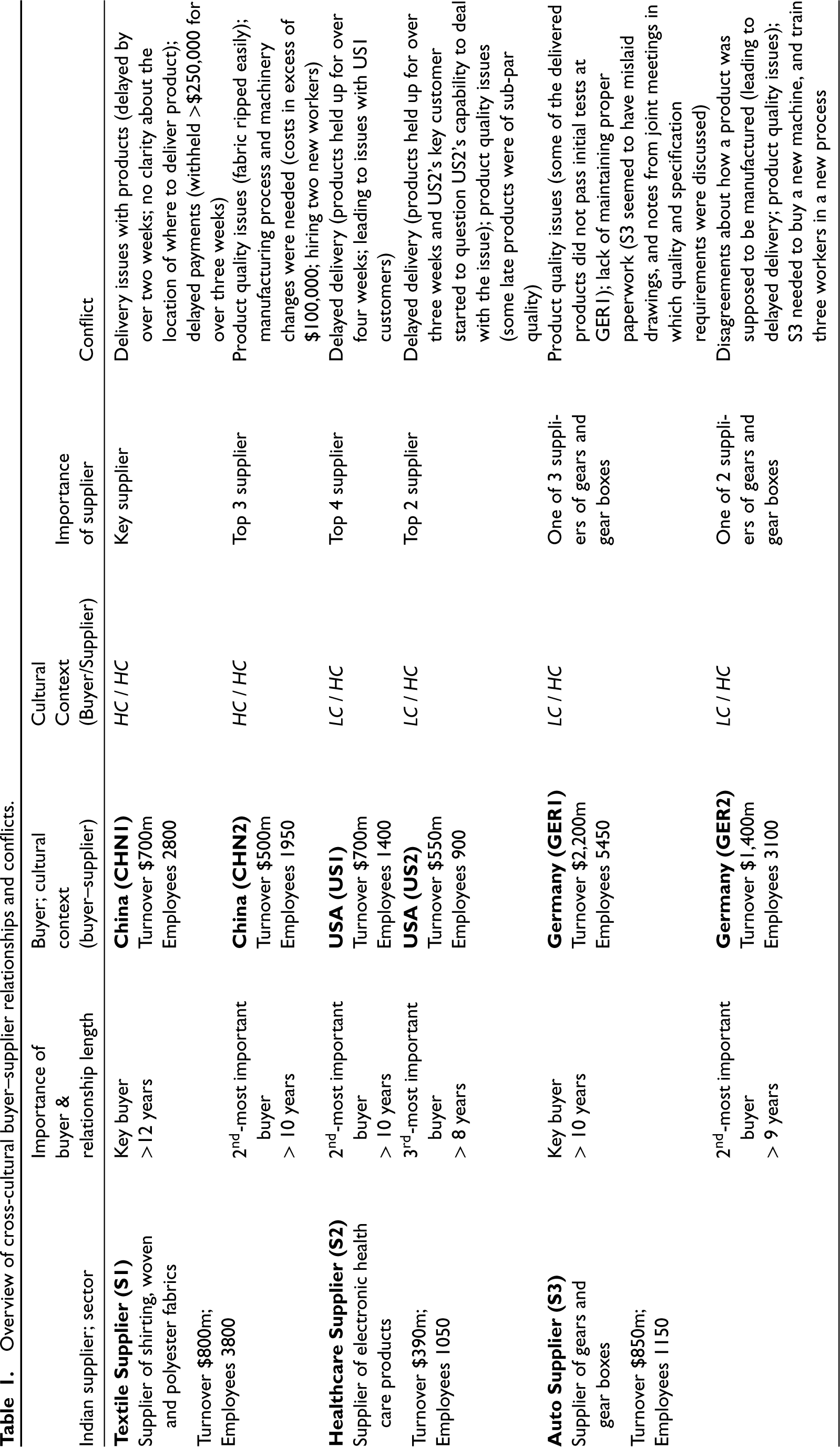
Overview of cross-cultural buyer–supplier relationships and conflicts.
Our fieldwork was conducted in respect of conflicts between buyer and supplier that had concluded within the last twelve months, allowing us to capture rich, diverse data on decisions, perceptions, and expectations around the conflict and contract use (data sources are detailed in Appendix A in the Supplemental Material). First, we conducted semi-structured interviews with senior managers from each Indian supplier. In particular, the Head of Production/Head of Supply Chain and other senior manager were identified as boundary-spanners as they spent “much of their time directly interacting with customers and addressing their often highly variable, complex and distinctive needs [and] they are likely to experience high levels of uncertainty and conflict” (Stamper and Johlke, 2003: 570; Appendix B). This step helped us to familiarize ourselves with the firms, buyer–supplier relationships, product range, and the occurrence of conflicts. We triangulated our interview data with internal company documentation and PowerPoint slides, as well as via industry information from government sources, professional associations, and newspapers. To ensure internal consistency of the data and in-line with prior studies (e.g., Pagell and Wu, 2009), we also conducted site tours.
In the second step, we interviewed key respondents from each of the international buyer firms to learn more about the buyer–supplier relationship of interest, the conflict situation, and how contractual control and coordination was used. Our data collection was supported by an interview protocol (Appendix C), as well as notes taken during interviews to record impressions and contexts. We applied specific criteria and measures to ensure validity and reliability of our case study findings (Gibbert et al., 2008; Appendix D). All interviews were conducted in English (the language in which the buyers and suppliers communicated with each other, and the language used for the contracts). Third, we obtained the contracts for each relationship, which enabled us to confirm that across the cases, contracts were broadly of a similar length, structure, and specificity, including the inclusion of key control and coordination clauses. We also conducted a further nine semi-structured interviews specifically on the use of contracts during the conflicts, which helped us to corroborate and refine emerging findings with informants.
Data collection and analysis processes occurred simultaneously based on how data matched or modified our emerging understanding of the phenomenon (Barratt et al., 2011; Strauss and Corbin, 1990). Findings were initially written up in individual ∼20-page case reports for each of the six relationship dyads. Supported by NVivo, the data analysis was facilitated through codes derived from the literature (Appendix E). For instance, conflicts were characterized as organizational behavior, expressed in ways of oral or written disagreements between firms (Alter, 1990). We also coded the contracts for each relationship to allow us to better understand the contractual control and coordination clauses. For control, sub-clauses were coded as: (i) supplier duty details; (ii) buyer's decision rights; (iii) monitoring; (iv) contingencies and directives; and (v) (dis-)incentives. For coordination, we coded sub-clauses that specified: (i) processes of who does what when (assignment of roles and responsibilities); and (ii) how to interact. We did not consider coding complete until we had reached inter-coder consensus on each construct, and that data saturation had been attained.
Study 1—Results and Hypotheses Development
Our case analyses show that differences in cultural context systematically influence the way contracts are used and interpreted to address conflicts within cross-cultural buyer–supplier relationships. All suppliers in our study were based in India, reflecting a HC culture, while the national culture of the buyer firms varies, with some also in HC (i.e., China) and others in LC national cultures (i.e., Germany and the United States). Each of the relationships examined were mature and of key importance for buyer and suppliers (either the key buyer/supplier or within the top four most important).
Contract use to Address Conflicts in Cross-Cultural Buyer–Supplier Relationships: India–China (HC–HC)
We first selected cross-cultural relationships where all parties were drawn from HC cultures, namely, an Indian textile supplier (S1) and its two Chinese buyers (CHN1, CHN2). Conflict emerged in the relationships due to delivery and quality problems. For CHN1, conflict with S1 arose due to substantially delayed deliveries of key products, which had created tensions with their own downstream customers: “Some of our customers got very nervous as they needed these deliveries. Some even started to threaten to take away business from us” (Head of Supply Chain, CHN1). For CHN2, major product quality issues were discovered during acceptance sampling, where woven polyester fabrics delivered by S1 ripped very easily. This non-conformance challenged CHN2's tight timelines for their own customers, generating tensions up to CEO level between the organizations.
To address these conflicts, all parties exhibited a strong preference to use contracts for coordination purposes rather than to exert contractual control. For example, in relationship S1-CHN2, both parties described how in multiple meetings held to address the conflict they relied upon coordination clauses in the contract to facilitate discussions around roles and responsibility and how information would be shared between the firms. For both Chinese buyers, exerting contractual control to force action or punish the supplier financially via penalties was to be avoided. Instead, all parties professed a joint commitment to making the relationship a success, with a senior manager at the Chinese firm (CHN2) commenting that the supplier’s commitment was “[…] vital and it would have been questioned by all parties if we enforced the contracts by trying to control the supplier.” For instance, referring to the quality failures of S1's textile products, the Head of Production (CHN2) described how they raised the issue with S1, asking them to check and change some of their processes. He stated that S1 “were initially a bit surprised, but we actually referred to some of our information exchange clauses, and we said, we sent you all information about what we need, but we are happy to explain this in more detail if required.” In response, S1, at significant expense of time and cost, recalibrated their machines to accommodate the buyer's request.
These two buyer–supplier relationships (S1-CHN1; S1-CHN2) reflect a match in expectations of both parties around how conflict would be addressed. Using the contract as a guiderail for coordinating the response and exchange of information allowed the level of relational commitment between the parties to be preserved. This is reflective of the nature of the cultural context. In HC cultures, like India and China, a contract represents more of a memorandum of understanding (“an outline of some of the points negotiated”—Head of Supply Chain, CHN1), rather than a binding legal document. Contracts are used through their coordination function to assign roles and responsibilities, and to clarify processes required to address conflicts. This was echoed by the Senior Negotiator (CHN1) who stated that: “Coordination via contracts is really helpful in offering flexibility to respond to issues arising in the relationship such as delivery delays or quality concerns.”
Contract use to Address Conflicts in Cross-Cultural Buyer–Supplier Relationships: India–USA/Germany (HC–LC)
We then explored pairings of relationships reflecting different context cultures, specifically an Indian healthcare supplier (S2) and its buyers in the United States (US1, US2), and an automotive supplier (S3) and its buyers in Germany (GER1, GER2). Within these cross-cultural (HC-LC) relationships, we observed repeated mismatches in how contract use to resolve conflicts was perceived by each party. Such a stance placed buyers from LC cultures at odds with their suppliers from HC cultures.
Both conflicts for S2 revolved around late deliveries of healthcare products. For US1 their products were held up for over four weeks leading to considerable issues for them and some of their key downstream customers. US2 also suffered significant delays leading to “one of our top 3 customers ringing us up multiple times a day demanding an update of where their products were” (Head of Production, US2). Compounding the problem, once the delivery was finally received, various quality issues were apparent in some of the products. We observed repeated mismatches in how the use of contractual clauses to resolve conflicts was interpreted by each party. For instance, Director (Supply Chain) at S2 described the disagreement with their key customer (US1): “Yes, our products were delayed, but we had some issues with some machinery and our workers were not sure how to work it. Some things take some time. We talked over the phone. I tried to talk about our long-term and trusting relationship, while they referred fairly quickly to the contract. “What is in the contract? Whose responsibility is it? What are the penalties in place?” Expressing his frustration, he elaborated: “Their behavior did upset me for a while as I did not understand why they needed to go and use financial penalty clauses from our contract. I am sure we can solve the conflict without trying to punish us.” By contrast, the Senior Buyer at US1 expressed surprise at S2's reaction: “We have a contract and it includes various punishments. They are there to use and to enforce their [S2] responsibilities and duties. I am not really sure what all the fuss is about.” A senior manager at US2 was equally adamant: “I expected them to perform based on the contract. We spelled out when, which items needed to the delivered, and to what quality. The contract was very clear on all this. They [S2] needed to read the contract.”
For S3, conflict with GER1 and GER2 arose due to delayed delivery and poor product quality. For GER1 this stemmed from S3 mislaying key drawings and quality specifications for GER1's products, while for GER2 the parties disagreed about how a product was supposed to be manufactured. In the interviews it was apparent that managers at GER1 and GER2 viewed conflict—particularly task-related conflict arising from non-performance in quality or delivery—as a normal part of international relationships. For them, formal contracts existed to enforce compliance and exert control. For example, the Head of Supply Chain at GRE1 stated: “I pointed out to them [S3] that the contract is very clear; that is why we have spent so much time writing the contract and all the various clauses are in place to deal with solutions to such issues.” The Relationship Manager (GER1) added: “It is often surprising that they [S3] do not want to use the contract as it was intended. Or if they used it, they mainly used it to coordinate some activities and our regular meetings and information exchanges. Contracts were necessary to present an argument in a rational way and to protect ourselves financially.”
In LC cultures, like Germany and the U.S., people are more rule-oriented and stand by the explicit clauses in the contract (Cardon, 2008). For managers within this cultural context, it is more important what the contract says, not how it is said or the environment within which it is said. They prefer to draw on contract terms to highlight responsibilities and penalties. This sentiment was captured by the Head of Production (US2) who stated: “Contracts ensure that you are on the same level playing ground when you are trying to resolve a conflict. For example, we recently had a delayed delivery and products were held up for over three weeks by [S2] and that delivery was very important for one of our key clients. Our client will use the contract we have with them to make sure we pay for any delay. So naturally, I will use penalties and enforce what the contract says with [S2] to pass these costs on to them. This is all very natural.” This was echoed by the Senior Product Manager from GER2: “Ultimately we had to get very firm with them and use the contract. We said that it is all in the contract and that is how we want it or we seek financial redress.”
Match/Mismatch in Contract use on Relationship Commitment: The Role of Emotions
The role of supplier emotions and their relational affect in cross-cultural buyer–supplier relationships was then explored. Where both parties were from HC cultures, the alignment of expectations around the use of contractual coordination facilitated interactions and problem-solving activities, as well as allowing each party to interpret each other's behavior more accurately. By contrast, where a mismatch in contract use occurred—via buyer's exercising contractual control—we saw strong, negative emotions expressed by key decision-makers at the supplier firm, escalating into broader relationship-based conflict and potential harm to the relationship itself. For example, the CEO of S2 expressed the view: “It is always personally disappointing when you have a great relationship like we have with [US1], and then something goes wrong and some sort of conflict occurs. I think that this is natural in business relationships. But I was quite emotional—angry actually—when their CPO came to me and referred to all these financial penalties. This may just destroy the relationship.” Similarly, the Managing Director (S3) lamented: “I did not see any point in using the contract, and all its legalities, to get hit over the head by our buyer. It is really frustrating after such a long time that we know them. Are we not partners in this relationship?” The effects of this mismatch in contract use were also described by the Director of Supply Chain (S2): “I was really disappointed, actually hurt, and you can definitely say that I was angry with them. Why did they need to use the contract, and especially all the penalty clauses? I think that this definitely had a negative impact on our relationship and our commitment to them as a buyer. We are still delivering products to them, but we are now thinking twice whether we should go the extra mile.” Further details and data examples can be found in Appendix F.
Insights from Study 1 and Hypotheses Development
Conflict management is a dynamic process (Pulles and Loohuis, 2020). In adopting this perspective, Study 1 enabled a dyadic perspective on how the use of different contract functions to address conflict unfolded within a sample of cross-cultural buyer–supplier relationships. Our findings suggest that the match or mismatch of cultural contexts between the parties has an important influence on the supplier's reactions to a buyer's usage of either contractual control or coordination. Managers in HC cultures (India and China) focus less strongly on the literal words in the contract, while managers in LC cultures (Germany and USA) view the wording of a contract as fully and accurately conveying meaning. Our case study insights shed light on how these different contract functions are interpreted by key decision-makers at suppliers and provide preliminary evidence of how a (mis-) match can help smooth the path to resolving conflict or introduce broader frictions into the relationship.
Study 1 is, however, subject to some limitations. For instance, while we were able to observe the effect of contractual control or coordination usage by buyers from different cultures, we did not have the opportunity to examine suppliers from different cultural contexts. We also gained insights into suppliers’ perspectives on how the choice of contract function use affected their underlying relationship stance but were unable to explore the causal relationships which determined their reaction. In Study 2, we address these limitations through a scenario-based experiment. The experimental design allows us to undertake a causal examination of the affective and relational effects on suppliers from different cultural contexts when different contractual functions are used in conflict situations.
To further explain our case findings, we draw on Expectancy Violation Theory (EVT) to examine the impact of expectations within inter-organizational contracting (cf. Weber and Mayer, 2011). EVT is a socio-psychological theory of communication that investigates how individuals respond to deviations or violations from situationally informed expectations (Burgoon, 1993; Burgoon and Hale, 1988). Within the contracting literature, EVT has been used to examine the importance of contract frames (Weber and Mayer, 2011), the role of relationship history in negotiations (Thomas et al., 2021), and the interaction between expectations and social comparisons in managers emotions, investments, and trust (Kim and Weber, 2023). Expectations are derived from several sources, including cultural factors such as societal norms and values (Doney et al., 1998; Weber and Wiersema, 2017), consistent with broader studies showing that national culture shapes expectations across a range of decision-making contexts in operations and supply chain management (Donthu and Yoo, 1998; Griffith and Myers, 2005; Hilafu et al., 2024; Joo et al., 2024; Pagell et al., 2005).
Using Hall's (1976) context theory, we suggest that culture will inform expectations on the use of control and coordination clauses in the event of conflict. In LC cultures, society plays a reduced role and imposes less on individuals, making communication more explicit and non-personal (Kim et al., 1998). This generates an expectation that parties use the more formal and direct aspects of the contract (i.e., control clauses). On the other hand, individuals within HC cultures are more interdependent with society and try their best to avoid confrontation, making communication more contextual (Hall, 1976). In such HC cultures, the less formal and more flexible aspects of the contract are preferred (i.e., coordination clauses). As one of our supplier interviewees (from an HC culture) reflected: “It was important to us to use contracts to clarify our and their [partnering organization's] responsibilities. You want to have a very clear idea of who is doing what, what information we need to give them and what information we need from them. […] Coordinating all the various actions and activities in a relationship is important, but I do not see why we would need to enforce any type of behavior” (Head of Supply Chain, CHN1). In sum, our insights from Study 1, together with application of EVT, suggests that suppliers from HC cultures will experience a mismatch of expectations where contractual control clauses are used to address conflict.
EVT predicts that this violation of expectations triggers high-intensity emotions (Weber and Mayer, 2011), such as anger. Anger is a negative emotional state involving “low-level feelings such as irritation or annoyance to high-level feelings such as fury and rage” (Harmon-Jones et al., 2010: 62). Findings from literature on crisis and disruption management (e.g., Bundy et al., 2017; Polyviou et al., 2018), and conflict escalation and resolution (e.g., Van Kleef, 2010; Van Kleef et al., 2008), suggest that anger is a prominent and pervasive emotion in both contexts. We propose that the violation of expectations created by a mismatch between the expected and actual contract function use creates anger as it does not match the supplier's perceptions of their relationship with the buyer. As a senior manager at a supplier puts it: “I do not know what they constantly want from us [S2] in terms of penalizing for late delivery. Being late a few days is really not a big problem. I am irritated, no, I am actually offended, that they [US2] would ask for payment” (Sourcing Manager, S2). This is particularly true of long-term relationships where the development of norms means that suppliers will be particularly sensitive toward perceptions of unexpected and unfair treatment (Liu et al., 2012). Thus, while the use of either contract function is appropriate in the abstract, the misalignment between the supplier's culturally derived expectations and the buyer's choice creates a violation that triggers anger. We capture this match-mismatch relationship between contract function use and supplier anger in the hypothesis, below:
Hypothesis 1. The relationship between contract function use and the level of supplier anger is moderated by the supplier's context culture. Specifically, we hold that, in HC cultures, the level of supplier anger will be significantly higher in response to the use of contractual control compared to contractual coordination.
The final part of our model examines the effect of the supplier's anger on their commitment to the relationship. Anger often promotes an effort to eliminate the violation of expectations (Carver and Harmon-Jones, 2009), driving individuals to restore the desired state or eliminate the source of the anger (Berkowitz and Harmon-Jones, 2004). Recent work, for example, indicates that anger can lead buyers to decide not to retain a supplier after a disruption (Polyviou et al., 2018). Our case study findings are also consistent with such theorizing: “[The buyer] is constantly referring to the contract and pointing out that such and such a payment needs to be paid if something is not 100% correct. This is not just upsetting to me, but infuriating. I thought we have a relationship with them? It needs to cut both ways, and using such formal, contractual language is not right. I, with my wider team, wonder how we should continue our relationship with them. One way we are seriously considering is to build up our commitments to other good buyers” (Managing Director, S3).
Building on the logic of EVT and the results of Study 1, we hypothesize that the expectation violation created by a mismatch in contract function use will lead to higher levels of supplier anger, and in turn, a reduction in their relationship commitment. Specifically, given the observed mismatch between contractual control use and suppliers from HC cultures, we hypothesize the following:
Hypothesis 2. For suppliers in HC cultures, a buyer's use of contractual control to address conflict will have a negative indirect effect on their relationship commitment, operating via the emotion of supplier anger.
Our theoretical model is shown in Figure 1. We now proceed to describe Study 2, our scenario-based experiment. Study 2 allows us a clean examination of the cross-cultural differences in how contract use is interpreted and responded to by suppliers, as well as extend theory by testing a potential pathway by which contract use affects supplier emotions and relationship stance. Such an approach has been widely adopted across many areas of management research (e.g., Abraham and Burbano, 2021; Eckerd et al., 2021; Lonati et al., 2018; Nelson et al., 2020).
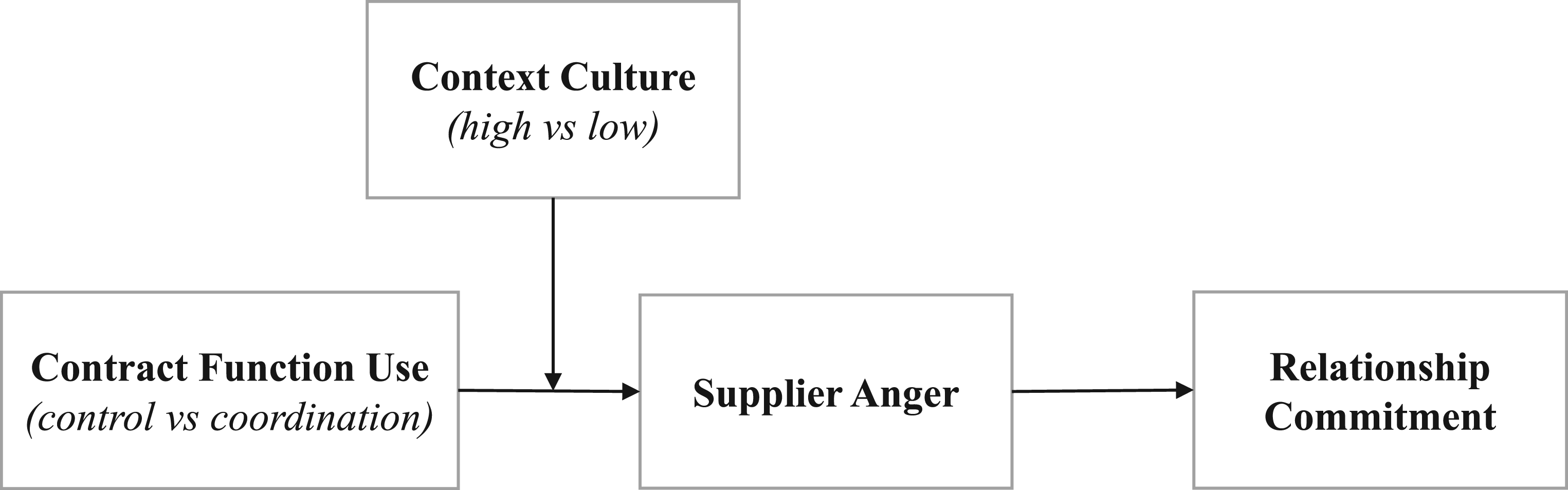
Theoretical model.
Description of the sample.
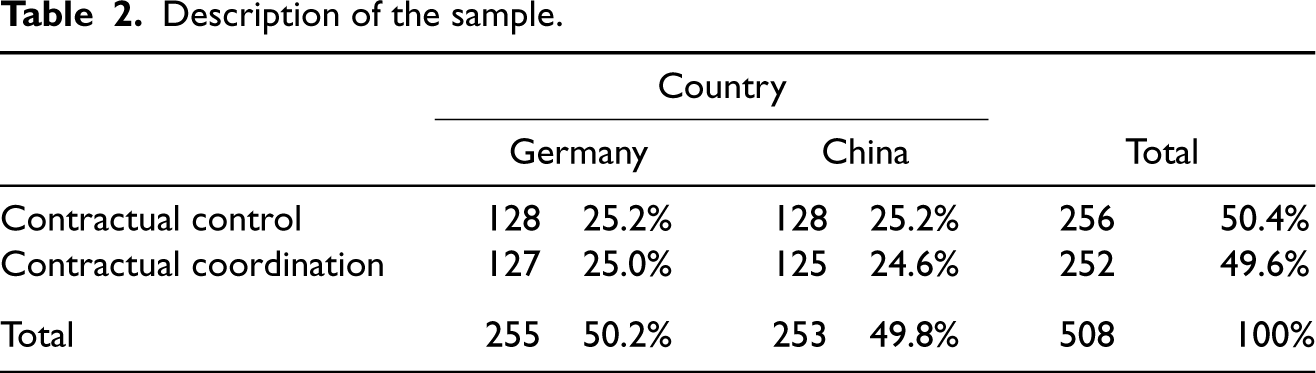
Sample
Our sample consisted of 508 participants working in manufacturing industries in China (n = 253) and Germany (n = 255). Only participants with at least a bachelor's degree and four years of work experience were included in the Qualtrics panel. Responses were halted once the required number of complete responses had been attained. The average age and work experience were 40.54 (SD = 5.41) and 14.23 (SD = 8.20), respectively. Of these, 25% were female. Table 2 displays the breakdown by country (Germany or China) and by treatment group (contractual control or coordination). Each group has ∼125 observations per treatment cell, well above the acceptable recommended sample size for behavioral experimental studies. A number of checks were implemented as part of the experiment including direct query attention checks, demographic filters, speed checks, and a memory recall task which asked participants to select the most appropriate summary of the scenario (Abbey and Meloy, 2017; Eckerd et al., 2021). Participants who failed any of these checks were automatically removed from the experiment and no response was collected.
Experimental Design
Our scenario-based experiment examined the interactive effect of contract function use (control/coordination) and cultural context (high/low) on a supplier's emotional reaction (i.e., anger) and relationship commitment. Each participant received one version of the scenario, resulting in a between-subject design. The scenario was created based on the first-hand experience gained during the case studies (Chen et al., 2016), and careful operationalization of the variables of interest (Rungtusanatham et al., 2011). A back translation process was followed for German and Chinese translations to ensure equivalence of meaning.
All participants received an identical introductory description of their role and company's background, as well as information about the buyer–supplier relationship and the contract. Participants were randomly assigned different manipulations of contract function within the same conflict situation. Appendix G provides a full description of the vignette. Participants were told to assume the role of a senior manager at a supplier of automotive interior products (called Alpha). They were provided with a description of a key buying firm (SPLR), the nature of their long-standing relationship, and an overview of key contractual control and coordination clauses that may be used to address unexpected circumstances. Participants were then presented with an unexpected negative event, namely a shortage of raw materials which resulted in their firm (Alpha) being unable to deliver SPLR's order to the terms of the contract. The vignette described a phone call with the Purchasing Director of SPLR after which the participants were informed of SPLR's choice to use either contractual control or coordination to manage the conflict. Participants were randomly assigned to each of these treatment groups. The precise wording for the manipulation was developed from existing measurement scales of contractual coordination and control (Schilke and Lumineau, 2018), as well as our case study materials. After being informed of SPLR's choice of contract function use, participants were asked to rate their level of anger and intentions on relationship commitment.
Measures
We now discuss the variables of interest and their operationalization. Two dependent variables were examined. Supplier anger was evaluated on a six-item scale, which reflected how intensely participants felt six different mood markers related to anger and hostility (Polyviou et al., 2018; Watson and Clark, 1994). Relationship commitment asked participants to respond on a five-item scale gauging their level of commitment to the buyer (Davis and Mentzer, 2008).
Our independent variables were context culture and contract use. Context culture has been extensively studied, but previous scales have received criticism (e.g., Douglas and Craig, 2006; Hult et al., 2008). We use a scale, validated by Reardon and Miller (2012), which evaluates the extent to which individuals reflect Hall's LC vs. HC values through the explicitness/interpretability of the language. This scale was found to outperform other forms of response scales for assessing cultural context (Reardon and Miller, 2012). Contract function use was manipulated and dummy-coded, with coordination use as our baseline condition (control use = 1).
We also included a number of control variables. Information about each participant was added, including age (Ln, years), gender (1 = female), country of birth (1 = China), work experience (Ln, years), and experience working with inter-organizational relationships (IOR) (ordinal scale). Participant responses may also be shaped by the size of their current organization, so we controlled for the number of employees. Previous literature has also shown that three dimensions of national culture (power distance, uncertainty avoidance, and collectivism) influence inter-firm governance (Cao et al., 2018). We added control variables for all three variables in the analyses, using individual-level scales of Hofstede's cultural values validated by Yoo et al. (2011). Table 3 provides the results of confirmatory factor analysis for all multi-item scales in the model and Table 4 presents descriptive statistics.
Measurement and items.
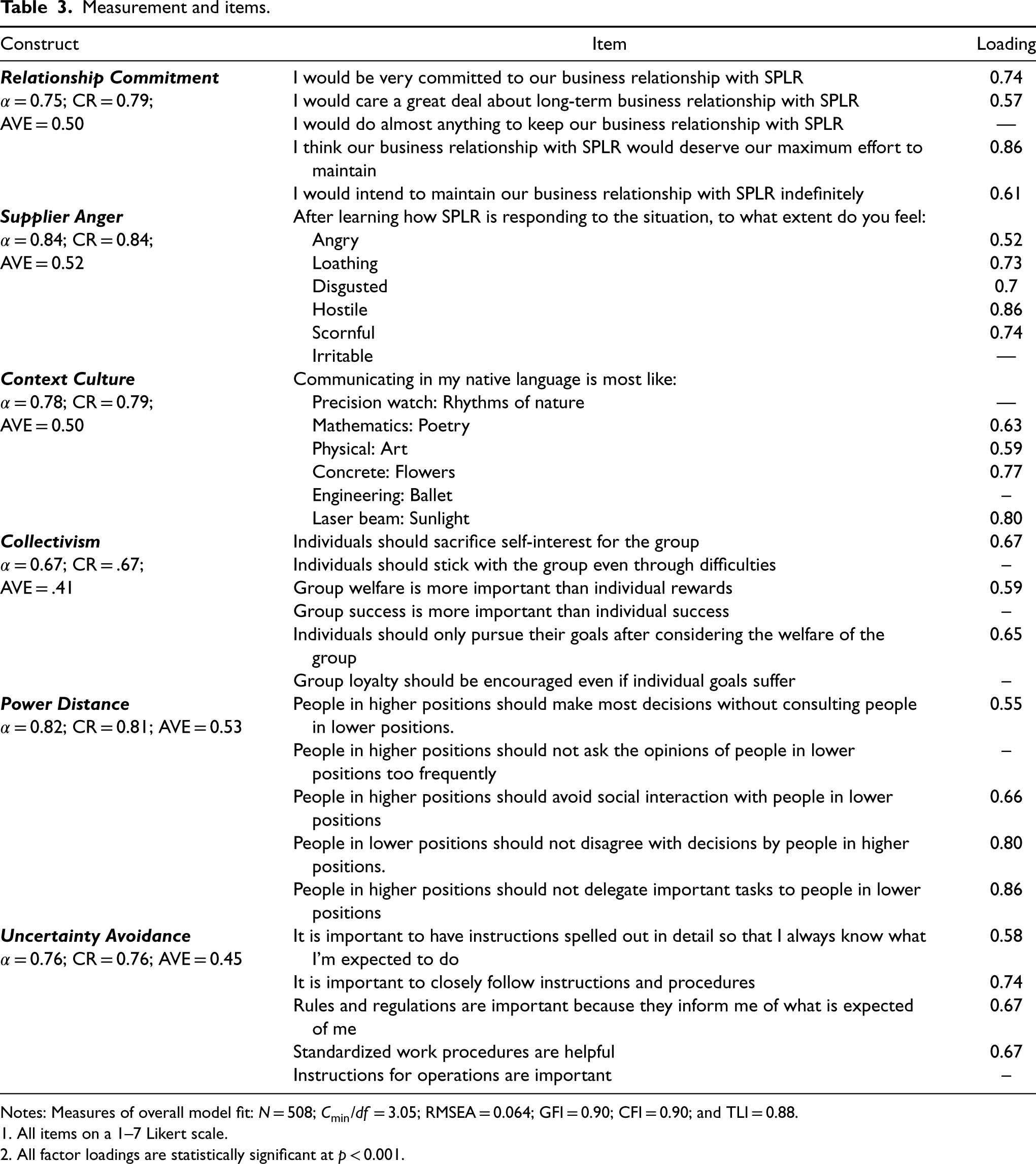
Measurement and items.
Notes: Measures of overall model fit: N = 508; Cmin/df = 3.05; RMSEA = 0.064; GFI = 0.90; CFI = 0.90; and TLI = 0.88.
1. All items on a 1–7 Likert scale.
2. All factor loadings are statistically significant at p < 0.001.
Descriptive statistics.
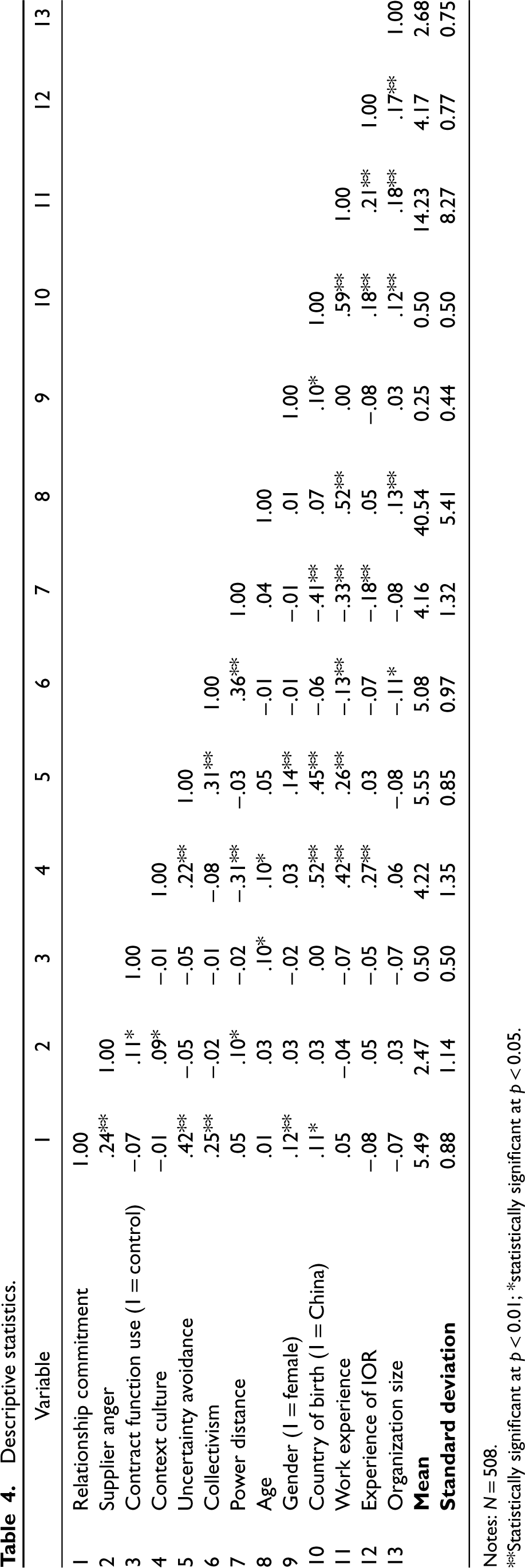
Notes: N = 508.
**Statistically significant at p < 0.01; *statistically significant at p < 0.05.
Measurement invariance testing was also conducted to assess the psychometric equivalence of our constructs across each sample group (China and Germany). This is an important step in ensuring that each group perceives the constructs in the same manner. We followed the general approach establishing different levels of measurement invariance (configural, metric, and scalar invariance) using a multi-group confirmatory factor analysis (CFA) (Steenkamp and Baumgartner, 1998). We find full configural invariance and support for the presence of partial metric invariance and scalar invariance. Many studies do not achieve full measurement invariance across all steps and it has become increasingly common practice to accept partial invariance (Putnick and Bornstein, 2016), particularly in the context of cross-cultural studies where distinctions across groups based on their sociocultural contexts become highly salient (Jeong and Lee, 2019). Overall, we find sufficient support to proceed to the analysis stage. Appendix H provides further detail on our approach to measurement invariance testing.
Finally, scenario-based experiments can be vulnerable to demand effects. However, our between-subjects design, the absence of direct interaction with participants, and the topic of research not being particularly sensitive in nature leads us to consider the risk to be low (Eckerd et al., 2021). Further, based on the recommendation by Lonati et al. (2018), we carefully used manipulation checks, and these were conducted after the main construct of interest (Antonakis, 2017).
To check whether the manipulation of contract function use was successful, we asked participants about the contractual terms applied in their scenario. Our manipulation was successful based on significant differences for contractual coordination (F = 30.28, p < 0.001) and control (F = 16.24, p < 0.001). We also included a three-item measure of realism. After reading the scenario, participants indicated the extent to which they agreed or disagreed that “the situation described in the scenario was realistic” (
Dependent variables’ cell means (SD).
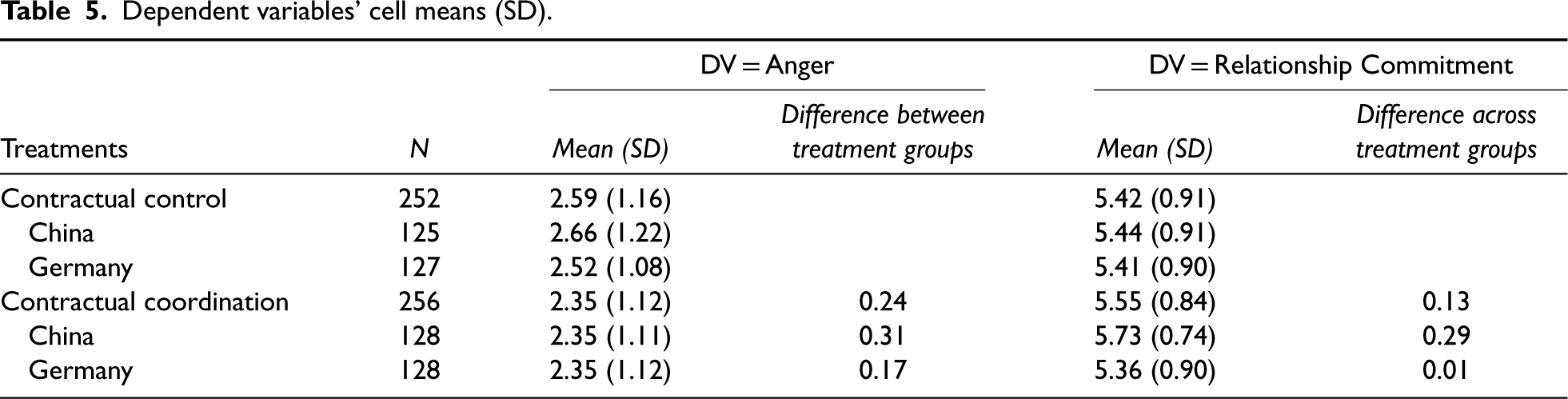
Dependent variables’ cell means (SD).
To test our hypotheses, we conducted a moderated mediation analysis (Calantone et al., 2017) using Hayes’ PROCESS Macro (Model 7) with 95% bias-corrected confidence intervals and 5000 bootstrap subsamples (Hayes, 2013). Table 6 presents the sequential regression results with anger and relationship commitment as dependent variables. All control variables were included in each stage. Of the control variables, age, country of birth (China), and power distance each exhibited significant, positive effects to supplier anger. Greater work experience resulted in reduced levels of supplier anger. Three control variables (gender (female), uncertainty avoidance, and collectivism) also showed significant, positive coefficients to relationship commitment.
Results of regression analyses in predicting supplier anger and relationship commitment.
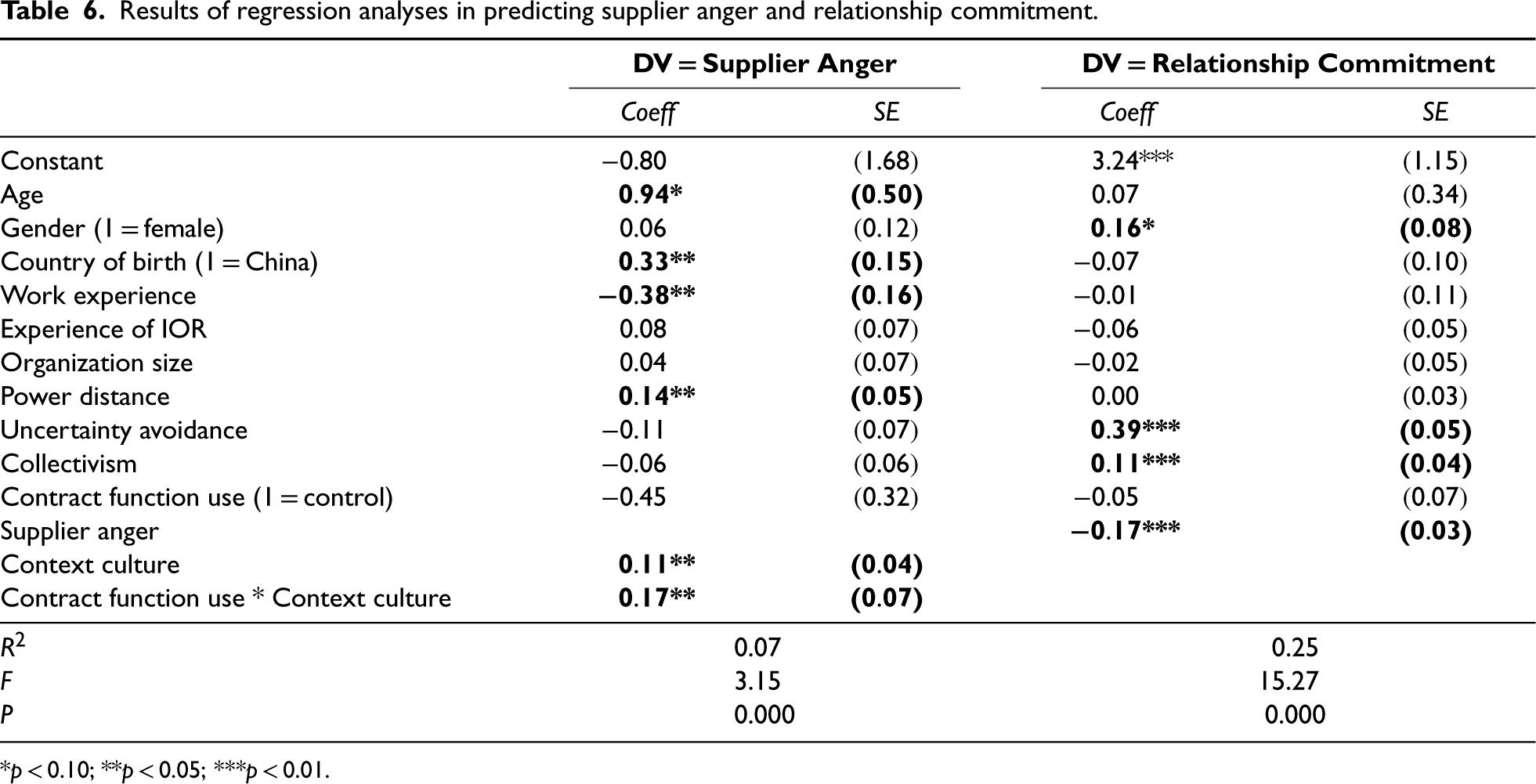
Results of regression analyses in predicting supplier anger and relationship commitment.
*p < 0.10; **p < 0.05; ***p < 0.01.
We find support for Hypothesis 1, that context culture would moderate the effect of contract function use on supplier anger (β = 0.17; p < 0.05). To understand the nature of this interaction across different context cultures, we plot the results (Figure 2) and conduct simple slope testing. As shown in Figure 2, under a HC culture condition, the level of supplier anger was significantly higher with contractual control use compared to contractual coordination (β = 0.50, p < 0.001). For the LC culture condition, the type of contract function use (control or coordination) has no significant association with supplier anger.
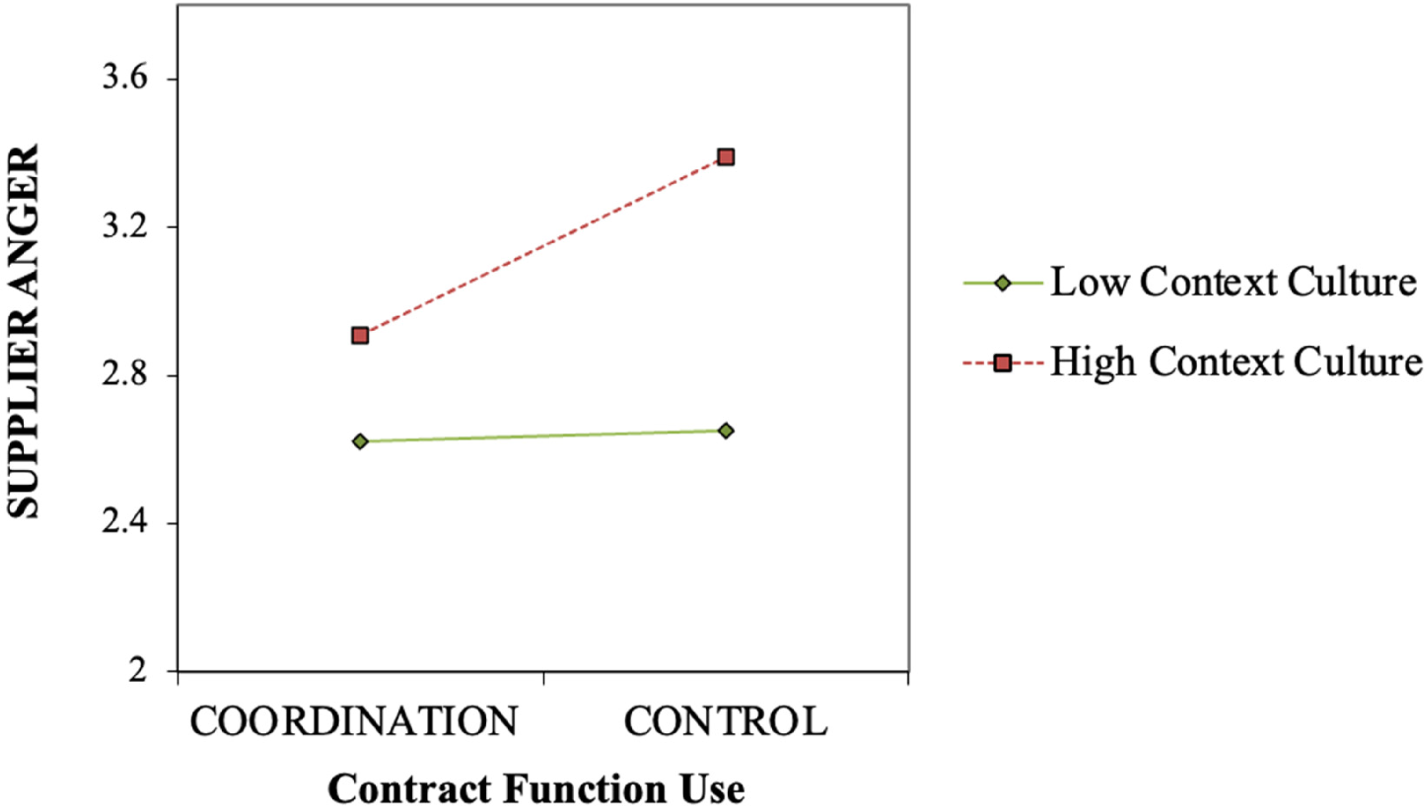
Interactive effect of contract function use and context culture on level of supplier anger.
We run a test of conditional indirect effects in order to account for the effects of context culture, proposed in Hypothesis 2 (see Table 7). A conditional indirect effect is considered statistically significant if the 95% CI does not include zero. The index of moderated mediation is significant (b = −.03; 95% CI = [−0.054; −0.006]), indicating that context culture significantly influences the relationship between contract function use and relationship commitment, mediated by supplier anger. Consistent with Hypothesis 2, we find a significant and negative conditional indirect effect for suppliers from HC cultures. That is, when a buyer firm uses contractual control to address conflict, suppliers from HC cultures significantly reduce their commitment to the relationship, via the negative emotion of supplier anger (b = −0.083; 95% CI = [−0.151; −0.029]). As a post-hoc test, we also examined whether any effects of contractual control use on relationship commitment were present for suppliers from a LC culture. We find no evidence of such indirect effects for this condition (b = 0.001; 95% CI = [−0.041; 0.041]).
Conflict is an expected and common characteristic of buyer–supplier relationships. Yet, despite the prevalence of cross-cultural buyer–supplier relationships within global supply chains, the role of national culture in addressing conflict has been largely ignored. Our paper sought to address this gap by exploring how the application of contract functions affected the supplier's response and commitment to the relationship. We gathered initial insights through multiple case studies of cross-cultural buyer–supplier relationships, and further unpacked the mechanisms by which contract use manifested in different behavioral reactions through a scenario-based experiment.
Conditional indirect effect of contract function use on relationship commitment via supplier anger.
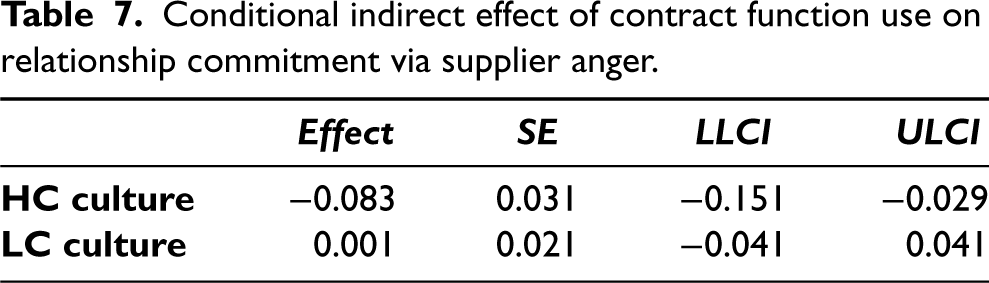
Conditional indirect effect of contract function use on relationship commitment via supplier anger.
Our study offers two important theoretical contributions. First, we respond to the call by Gupta and Gupta (2019) in exploring the effects of national culture differences on supply chain operations. Prior literature has taken a buyer-centric perspective to investigate the impact of culture on supply chain integration (Kull et al., 2019), the use of contractual versus relational governance across cultures (Zhou and Poppo, 2010), and their effectiveness of mitigating opportunism (Handley and Angst, 2015). While extremely valuable to our understanding, unilateral perspectives appear limited given that cross-cultural buyer–supplier contracts involve two parties that could have different cultural contexts. To address this “blind-spot” (Lumineau and Oliveira, 2018), Lee et al. (2018) investigate culturally derived reactions to the use of bonus or penalty clauses within transactional buyer–supplier exchange, showing that culture has a significant impact of the acceptance of penalties, to shirking under conditions of bonuses, and to the efficacy of both clauses. However, to the best of our knowledge, the literature has yet to take an integrated view of how contracts are used and perceived differentially across the dyad as well as across different cultural contexts.
While contracts represent a common language for both parties (Lumineau et al., 2015), we show that their functions are emphasized, or minimized, based on cultural preferences, and these might not match the preferences of the other party. More specifically, our case study research shows that the buyer's choice of contract function is consistent with their cultural context whereby buyers in HC contexts prefer communication to be contextual, while buyers in LC contexts prefer communication to be explicit and non-personal (Hall, 1976; Kim et al., 1998). These findings are consistent with previous research that has found differences in the preferences of buyer's choices of inter-organizational governance (e.g., Zhou and Poppo, 2010). However, our dyadic data allow us to extend and deepen this understanding by showing that suppliers experienced very negative emotions when the buyer utilizes a contract function that violates their culturally derived expectations, a finding that would remain hidden within a unilateral study.
Second, prior work typically conceptualizes governance choices in terms of contractual and relational governance mechanisms (e.g., Cao and Lumineau, 2015; Roehrich et al., 2020). While we did not explicitly examine reliance on relational governance, we conceptually and empirically unpacked how contracts are used via their control or coordination function to address conflict in buyer–supplier relationships. The use of contract functions is nascent within the broader inter-organizational governance literature (Cao and Lumineau, 2015; Roehrich et al., 2020), and has yet to receive conceptual and empirical attention in a context of cross-cultural buyer–supplier relationships. We identify a match between use of contract functions, context culture, and the effect on relationship commitment. Our case study data provide initial evidence that a buyer's decision to adopt a contractual coordination approach to managing conflict aligned with a HC culture of the Indian suppliers. Using the contract as a reference point for roles, responsibilities, and task allocation offers a structure within which the parties could discuss the conflict and seek alternative resolutions. By comparison, the use of contractual control creates a mismatch with the supplier's HC culture. From the supplier's perspective, the buyer's decision is a surprise and violates their expectations, which in turn leads to the expression of anger and harm to the relationship quality.
Our scenario-based experiment deepened our understanding of the impact of different contract functions. Adopting contractual control with suppliers from HC cultures creates a mismatch triggering anger and a decrease in relationship commitment from their suppliers. The findings demonstrate the value of looking at the detailed functions of contracts beyond their mere existence in the contract and exploring their use, and thus answering calls to move beyond a unidimensional view of contract (Cao and Lumineau, 2015; Schepker et al., 2014). Our results also indicate that for suppliers in LC cultures, a buyer will see no significant increase in anger or negative effect on a supplier's relationship commitment, regardless of the contract function (control or coordination).
Managerial Implications
Our study indicates suppliers from different context cultures exhibit distinct preferences for the way in which a contract is used to resolve conflict. Most pertinent are the implications of these differences for relationships in global supply chains where buyer firms from Western LC cultures are partnering with suppliers from predominantly HC cultures. In such settings, the tendency for buyers to exercise contractual control to motivate supplier's compliance may violate the supplier's culturally derived expectations around contract use and generate negative, unintended consequences for the relationship, which go beyond the original task-conflict. Being aware of this cultural dissonance offers the opportunity to enhance cultural intelligence, cultural judgements, and adaptations, increasing the ability to resolve conflict amicably while maintaining the relational commitment of each party (Ang et al., 2007). As a corollary, it is worth noting that our post-hoc testing indicates that buyers from a LC culture working with suppliers also from LC cultures (like many Nordic and Germanic countries) may not suffer the same relational setback when exercising contractual control. While we do not examine whether conflict is ultimately resolved more or less effectively, it is apparent from practice—and from our case studies—that contractual control remains a predominant approach to contract function use.
Limitations and Future Research Directions
Despite the aforementioned contributions, our study has limitations that offer potential avenues for future research. Our paper examined only long-term, dyadic buyer–supplier relationships in relatively stable industries. Future work could explore the boundary conditions of our findings: for example, whether triadic relationships (e.g., between a buyer and two suppliers) display similar dynamics to a dyadic arrangement when manipulating the number of cultures present. Does the presence of a “dominant” culture (i.e., one shared by two out of the three parties) change the usage of either control or coordination mechanisms, or the emotional reaction to contracts? Similarly, we limited our focus to just one outcome of contract use, namely its effect on relationship commitment. Future work could explore whether cultural differences affect not just relationship commitment, but other outcomes like trust, innovation, and social capital. Also, while we did not explore this element in detail, the mode of confrontation may act on emotional reaction to conflict. For example, the impact of direct versus indirect confrontation may prove fruitful for future research (e.g., Brett et al., 2014).
We also encourage future research to consider other countries with different maturity of legal systems to explore the impact of the wider institutional and legal environment on the content and detail of the contract (e.g., Kalkanci et al., 2014), as well as the functional usage during conflict. Further research may also want to consider other issues in buyer–supplier relationships (e.g., informal leakage; poaching of IP rights—Skowronski and Benton, 2018), which may result in legal (court) procedures. Our study leveraged many sources of data including interviews, secondary data, contracts, and experimental data. Longitudinal studies, in particular, could inform the literature on how contracts are initially established and used to address conflict (e.g., Wu and Chen, 2014), as well as whether cross-cultural differences in interpretation of contract use persist over time. Similarly, field experiments or observations of contract meetings could help to shed light on who, at what level (subsidiary, business, and corporate), and in what job role (e.g., engineering, legal, and procurement) use different contract clauses (e.g., Bercovitz and Tyler, 2014) in supply chain decisions. The challenges of managing cross-cultural supply chain relationships are considerable, not just with respect to conflict; for scholars, however, we believe it offers significant opportunity for fruitful further research.
Supplemental Material
sj-docx-1-pao-10.1177_10591478241265481 - Supplemental material for Conflict and Contract Use in Cross-Cultural Buyer–Supplier Relationships: The Role of Cultural Context
Supplemental material, sj-docx-1-pao-10.1177_10591478241265481 for Conflict and Contract Use in Cross-Cultural Buyer–Supplier Relationships: The Role of Cultural Context by Jens K Roehrich, Mehrnoush Sarafan, Brian Squire, Benn Lawson and Meriem Bouazzaoui in Production and Operations Management
Footnotes
Acknowledgments
The authors are very grateful for the insightful guidance provided by the Special Issue Editors and the anonymous review team throughout the revision process. We would also like to thank all research participants and organizations involved in this research study for their support.
Declaration of Conflicting Interests
The authors declared no potential conflicts of interest with respect to the research, authorship, and/or publication of this article.
Funding
The authors disclosed receipt of the following financial support for the research, authorship, and/or publication of this article: This work was supported by the Électricité de France (grant number RE-MN1117).

How to cite this article
Roehrich JK, Sarafan M, Squire B, Lawson B, and Bouazzaoui M (2024) Conflict and Contract Use in Cross-Cultural Buyer–Supplier Relationships: The Role of Cultural Context. Production and Operations Management 34(5): 974–992.
References
Supplementary Material
Please find the following supplemental material available below.
For Open Access articles published under a Creative Commons License, all supplemental material carries the same license as the article it is associated with.
For non-Open Access articles published, all supplemental material carries a non-exclusive license, and permission requests for re-use of supplemental material or any part of supplemental material shall be sent directly to the copyright owner as specified in the copyright notice associated with the article.
