



Abstract
We consider an order fulfillment problem of an omni-channel retailer that ships online orders from its distribution center (DC) and brick-and-mortar stores. Stores use their local information, not observed by the retailer, that can lead them to accept or reject fulfillment requests of items in an online order. We investigate the problem of sequencing requests to stores and inventory rationing decisions at the DC to minimize expected costs under uncertain store acceptance behavior and when items are indistinguishable in terms of shipping. First, under the scenario that stores are used only when the DC has insufficient inventory, we propose a Markov Decision Process formulation and analyze the performance of myopic policies that are preferable because of their interpretability. We show that the performance rate of a myopic approach that orders stores by cost only depends on the number of items in an order, which is small in practice. We also determine conditions for the range of acceptance probabilities for the myopic policy to be optimal for small-sized orders. Using optimality conditions for a special case of the problem, we develop an adaptive variant of the myopic policy, and propose a new degree-based strategy that balances shipping costs and acceptance probabilities. Numerical testing suggests that the best-performing sequencing policy is within 1% of optimality on average. Moreover, using two years of data from a large omni-channel retailer in North America, we observe that adaptive policies, albeit more complex, are beneficial in reducing costs and split deliveries if acceptance rates can be estimated accurately. Second, we determine when the retailer should ship from stores or ration the inventory at the DC. We show that for single-item orders, the optimal policy has a threshold structure, where, remarkably, the highest priority region is also subject to rationing. We then consider the novel multi-unit-single-item rationing problem, and leverage the structure of the single-unit model to develop a heuristic. We numerically establish the efficacy of rationing models and our heuristic.
Keywords
Introduction
Retail operations have significantly evolved in the last two decades with new online services and accompanying changes in shopping habits, a trend that has accelerated during the coronavirus disease 2019 (COVID-19) pandemic. In the first quarter of 2022, e-commerce sales in the United States increased by US $32 billion compared to the previous two years, with many omni-channel systems combining their brick-and-mortar stores with online shopping services (Fu, 2022). Albeit bringing new operational challenges, such combination also offers opportunities to leverage physical presences in designing flexible and resilient systems (Verhoef et al., 2015).
One opportunity is in the synergy of online order fulfillment. Retailers who dedicate warehouses or distribution centers (DCs) to online orders may also use their brick-and-mortar stores for distribution, a logistic process known as ship-from-stores, or SFS (Hand, 2023). SFS is effective when DCs either have insufficient item availability, or are unable to consolidate all order items in a single shipment (i.e., requiring split deliveries), thus adding to packaging costs and customer inconvenience (Hare, 2022). SFS can also save distribution costs, since regional rates may be cheaper than national shipments from DCs (e.g., Blanco, 2021). Moreover, in some cases, DCs may wish to ration inventory for large sales, such as during the holiday season. These advantages of SFS operations are critical for omni-channel retailers to remain competitive in a constantly growing e-commerce landscape (Ishfaq and Bajwa, 2019; Howland, 2014) and have fostered an active research stream in online order fulfillment (Xu et al., 2009; Acimovic and Graves, 2015; Jasin and Sinha, 2015).
Nonetheless, while the retailer has complete knowledge of the inventory information and logistics controls at DCs, the brick-and-mortar store setting is highly uncertain. First, inventory levels are censored because of the natural in-store reallocation of products as they are manipulated, displayed to customers, or even misplaced due to human errors. Second, employee workload can vary significantly by virtue of seasonal sales, special events, and in-store traffic, reducing their capacity to pick items, package them, and ship the parcels to complete the order processing. Finally, store managers may wish to ration inventory for walk-in customers.
In these scenarios, it is common for stores to reject an order fulfillment request due to the workload or lack of inventory, an event that is also known as a pick-up failure (Das et al., 2023; Difrancesco et al., 2021). The rejection rates are often non-negligible; Figure 1 depicts the percentage of rejections (fully or partially) out of approximately 110,000 orders per year based on data provided by a large-scale retailer in North America, which can reach up to 25% during special sale periods such as Thanksgiving. In these high-rejection periods, prioritizing stores only based on costs (e.g., if those stores are located in the same city as the order’s destination address) could result in multiple split deliveries and higher shipping costs than selecting more expensive stores first.
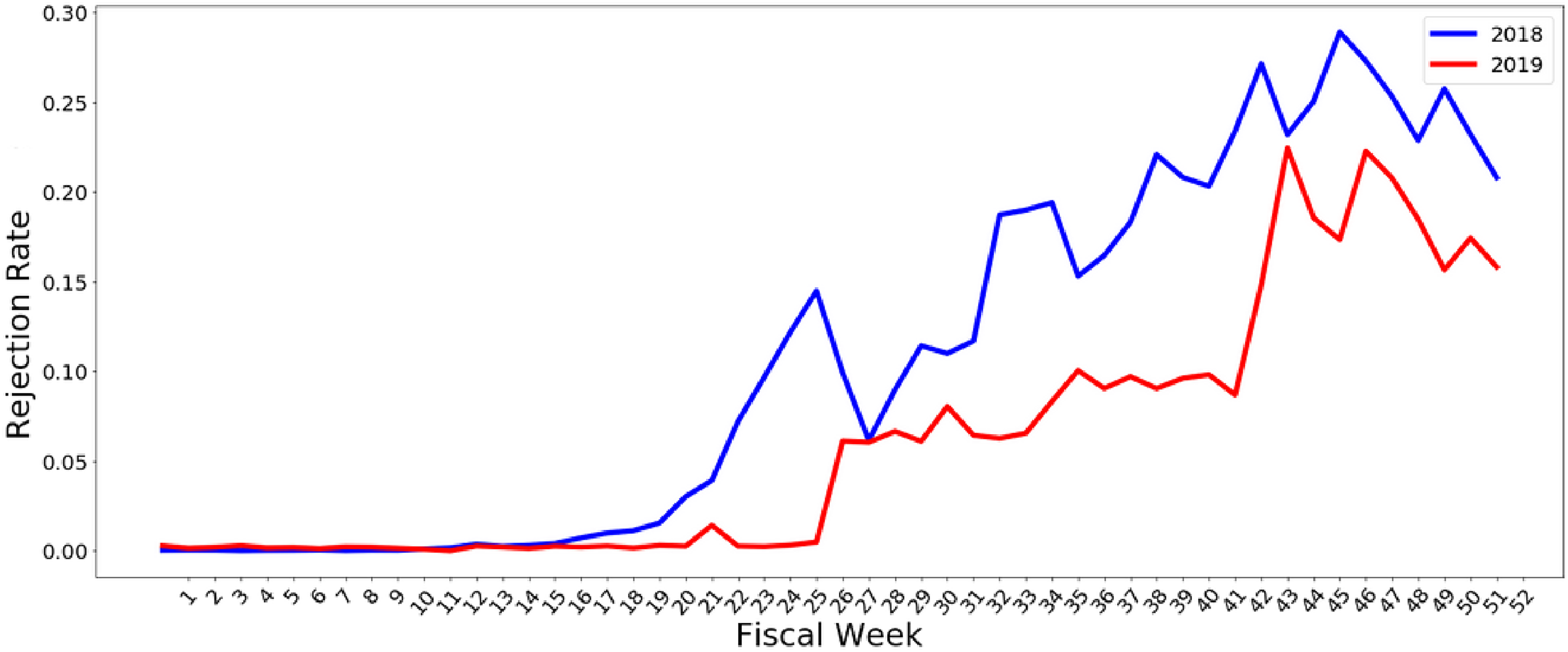
Average rejection rates over all stores (100+) of a partnering retailer.
To address these challenges, we investigate a decentralized online order fulfillment system where there exists a single DC and brick-and-mortar stores can accept or reject orders. Based on inventory levels at the DC, the retailer may choose to sequentially place requests to brick-and-mortar stores to fulfill the order. The store may then use its complete inventory and logistics information to ship the order fully, partially (i.e., shipping only some of the items in this order), or reject the request entirely. If the order is rejected or only partially completed, the retailer places a new request at a different store for the remaining items, choosing stores one at a time until the order is completed. The retailer’s objective is to sequence store requests to minimize shipping costs while accounting for store location, uncertainty in fulfillment request, and split deliveries.
This sequential process, first studied by Das et al. (2023), accounts for the fact that SFS is still often a costly process from a store’s perspective. Specifically, despite improvements in inventory visibility, a store employee must physically check if the items in an order are still available, potentially triggering pick-up failures (Pymnts, 2016). Since thousands of orders may be processed daily, the sequential process ameliorates the SFS workload at each location. Moreover, in a setting where requests are placed to multiple stores simultaneously, stores that frequently accept requests but repeatedly are not picked by the retailer may eventually choose to reject orders more often.
Within this context, we investigate both the problem of sequencing stores and inventory rationing decisions at the DC. First, under the scenario that the DC has insufficient inventory for a given order, we formalize the retailer’s problem of sequencing fulfillment requests from stores. More precisely, the retailer knows the order-specific processing costs from each of the available stores, such as shipping and packaging, as well as store acceptance probabilities from estimates based on past orders. After ruling out stores without inventory for the items (according to retailer’s partial information), the retailer selects stores that minimize total expected shipping costs when the number of items accepted per request is uncertain and items have little differentiation in shipping costs and rejection probabilities. One challenge is the scale of modern systems, as large retailers receive hundreds of orders in short periods. For example, our industry partner reported over 5,000 orders per day on average in 2019, and numbers have grown significantly following COVID-19; we therefore focus on low-complexity policies that emphasize scalability and ease of use.
Specifically, we propose a Markov Decision Process (MDP) based on store-dependent acceptance probabilities and consolidated shipping costs, which is adequate when the number of items in an order is small, as consistent with the online retailer setting (Brightpearl, 2017). We investigate theoretical guarantees and structural properties of distinct myopic policies. In particular, we show the approximation ratio of a cost-based myopic policy depends only on the number of items, while a likelihood-based myopic policy can be arbitrarily poor, even when minimizing split deliveries. We also demonstrate that, for a two-item case, the cost-based myopic policy is surprisingly robust to perturbation in the acceptance probabilities, which is particularly relevant if these probabilities are difficult to estimate. Furthermore, we develop more complex policies that incorporate information from the number of items left to ship at each stage of the sequence. Extensions based on delay costs and item-dependent probabilities are also discussed.
Next, we extend our model to incorporate the DC into the fulfillment operations. Specifically, we develop an inventory rationing model where the retailer decides whether the order should be fulfilled from the inventory of the DC, or through the sequential store fulfillment process. In contrast to traditional inventory rationing systems, the DC may still be required to fulfill an order or incur a lost-sale cost, in case stores reject some or all units of the order. We show that, for single-item orders, the optimal policy has a threshold structure that depends on the store shipping and lost-sales costs. Notably, we demonstrate that even the highest-priority orders (i.e., those with highest shipping cost) are often subject to rationing. Finally, we discuss the novel multi-unit-single-item rationing case. We demonstrate the complexity of this problem and leverage the results from the single-item case to introduce an effective heuristic.
To derive further insights, we assess the sequential fulfillment policies numerically on artificial settings and on a case study provided by a retail partner, who implements the decentralized system based on around 100 brick-and-mortar stores in North America. Our data corresponds to approximately 3.2 million online orders received during 2018 and 2019. On artificial settings inspired by the case study, the analysis for orders with few items suggests the cost-based myopic policy is typically 2%–3.5% above optimal, while more complex (adaptive) variants may reduce the average optimality gaps to under 0.5%. We also evaluate the benefits of single-unit rationing policy compared to the strategy that strictly prioritizes the DC, (i.e., no-rationing), and observe 20%–30% decrease in expected costs, on average. We also demonstrate the effectiveness of our heuristic for the multi-unit-single-item case, where we observe average optimality gaps below 4%.
Our study considers a decentralized system in omni-channel retailing while incorporating store responses to fulfillment requests placed by the retailer. Our main contributions include: (i) Introducing an MDP model for store sequencing that considers uncertainty in fulfillment requests (see (2)); (ii) providing theoretical analysis of low-complexity and interpretable cost-based and likelihood-based myopic policies (Proposition 1–4); (iii) developing an adaptive policy that simultaneously considers the trade-off between shipping costs and acceptance probabilities (Section 5.3); (iv) providing theoretical analysis of inventory rationing for single-items at the DC (Proposition 7 –10) and introducing a practical heuristic for multi-unit-single-item orders (Section 6.3); and (v) demonstrating the impact of our policies using real-data of a large-scale retailer (Section 7.4).
Organization
Section 2 reviews the related literature on online order fulfillment and inventory rationing. Section 3 formalizes the problem and presents optimality-preserving conditions that we leverage in our structural results. Section 4 presents a theoretical performance study of interpretable and low-complexity policies, including cases where they match the optimal policy, and Section 5 investigates alternative nonmyopic policies. Section 6 formalizes the inventory rationing problem at the DC and shows the structure of optimal policies for single-item orders. Finally, Section 7 provides the results of numerical experiments performed on synthetic and real data, and Section 8 articulates future directions. We also discuss extensions with delay costs and item-dependent parameters in Section EC.2 in the online supplement. Proofs are included in Section EC.3.
Related Works
Research in online order fulfillment is prevalent in the operations management literature. Earlier studies have focused on network design problems that locate depot and stores to enhance distribution processes. Alptekinoğlu and Tang (2005) investigated the assignment of orders among different sales locations, evaluating the trade-off between using the depot and stores to satisfy online demand. Bretthauer et al. (2010) proposed a model to determine which of the fulfillment centers should handle e-sales to minimize logistics costs. Liu et al. (2010) proposed a similar model while keeping the delivery network of the in-store demand unchanged. This paper, in turn, addresses the operation perspective of online order allocation, considering a fixed network and the dynamic aspects of assigning stores to orders consecutively.
Dynamic order fulfillment literature aims to take advantage of the time between order placement and fulfillment, period at which new orders may arrive. There are solution methodologies which periodically re-evaluate the real-time order allocation decisions considering the latest order placements (Xu et al., 2009), demonstrating that accumulating online orders and exploiting inventory level information prior to making real-time allocation decisions reduces shipping and holding costs (e.g., Mahar and Wright, 2009; Mahar et al., 2009). In contrast to our setting, the inventory at stores in these works is known and shipping decisions are fully controlled by the retailer.
Another research stream that this work relates to is online fulfillment process logistics. Acimovic and Graves (2015) and Jasin and Sinha (2015) analyzed the benefits of a forward-looking approach by forecasting the future demand and adjusting the allocation of orders to fulfillment centers. In addition to order allocation decisions, Torabi et al. (2015) highlighted savings by considering inventory transshipment between the order fulfillment centers. They emphasized the computational aspects of their solution, developing a mixed-integer programming model based on Benders decomposition. Our formulations, in turn, emphasizes approximation algorithms that are of polynomial complexity and easy-to-interpret by practitioners.
In the stream of omni-channel retailing, various number of operational problems are studied, such as order fulfillment, inventory management, pricing, and assortment optimization. We refer the reader to the excellent book by Gallino and Moreno (2019) for a comprehensive survey of existing methods and challenges. For further details on alternative order fulfillment strategies of an omni-channel retailer, we refer to the survey by Hübner et al. (2022).
SFS operations of an omni-channel retailer are studied in the literature under various settings (e.g., Difrancesco et al., 2021; Bayram and Cesaret, 2021; Guo and Keskin, 2023). Most relevantly, Das et al. (2023) considered a sequential SFS fulfillment process where store requests are placed one at a time, similar to our framework. The authors study systems with multiple single-item orders and focus on acceptance ratios that depend on inventory levels, assessing the value of the sequential process on a numerical study using U.S. retail data. In this paper, we investigate the sequential process of multi-item orders where orders are processed one at a time, analyzing their theoretical and/or numerical performance. We also incorporate the DC and investigate rationing policies that take store accept/reject decisions into account.
Our formulation is also closely related to classical sequential testing (Ünlüyurt, 2004; Segev and Shaposhnik, 2022). Given a set of components, each with a probability of failure and a testing cost, the goal is to define a sequence of components to test to minimize total expected cost. If a single component failure suffices to fail the entire system (i.e., components are in series), the optimal testing procedure is a bang-per-buck policy that sequences the components in nondecreasing order of the cost-to-failure ratios. For general settings, the complexity of an offline (nondynamic) testing sequence is either unknown (Segev and Shaposhnik, 2022) or NP-Hard in the presence of budget constraints (Boothroyd, 1960). In our context, placing a fulfillment request at a store can be perceived as testing a component, where failure probabilities correspond to acceptance decisions. Similarly, we consider probabilities distributed according to Bernoulli variables that are identical and independent per item. The distinction is in the cost structure. More precisely, if a store rejects all items of an order, no shipping is paid; that is, our setting considers state-dependent costs, while the testing cost is constant in both previous applications. We observe that this distinction affects the structure of the optimal policy for orders with multiple items (see Section 4).
Inventory rationing with multiple demand classes is also pervasive within the operations management literature. Typically, demand is partitioned into high- and low-priority classes, and only high-priority classes are served when the inventory levels drop below a threshold level. Current literature focuses on static policies determining a fixed threshold level (e.g., Melchiors et al., 2000; Deshpande et al., 2003), or dynamic policies where threshold levels vary over time (e.g., Fadıloğlu and Bulut, 2010). Rationed demand may either be backlogged (e.g., Liu et al., 2015; Ding et al., 2016), or lost (e.g., Goedhart et al., 2022). The topic is also studied in make-to-stock production systems, introduced by Ha (1997) with M/M/1 for two demand classes. Subsequent work extended the analysis to M/G/1 with multiple demand classes (e.g., Abouee-Mehrizi et al., 2012), and established the optimality of rationing in special settings (e.g. Baron and Kerner, 2016).
We consider dynamic threshold policies, where demand is neither lost or backlogged, but instead directed to stores to be fulfilled. Our theoretical analysis focuses on the single-item case (e.g., Melchiors et al., 2000; Pang et al., 2014) and, in contrast to existing work (e.g., Deshpande et al., 2003; Alfieri et al., 2017), we establish that even the highest-priority demand class may be subject to rationing because of store rejections. We also address rationing decisions under a multi-unit-single-item system, a problem that has not been previously considered to the best of our knowledge.
The Decentralized Order Fulfillment Problem
This section introduces a MDP model in Section 3.1 that captures the sequential nature of the problem and serves as the basis for our structural study and insights. In Section 3.2, we discuss practical aspects of our model and its underlying assumptions.
Problem Description and Formulation
We consider an omni-channel retailer that fulfills online orders arriving from an e-commerce system. Each order is composed of a set of products, their requested quantities, and a single destination address where all product items must be shipped to. Once an order arrives, the retailer has the flexibility to fulfill it either through its DCs or via brick-and-mortar stores located in distinct geographic areas. We restrict our attention to orders that are not processed by the DCs (e.g., due to lack of inventory) and require stores for fulfillment.
Our formulation assumes an online prescriptive setting where decisions are made immediately upon an order arrival, that is, there exists a single order in the system, and store selections are made prior to the next order arrival. The order contains a list of
When an order is received, the retailer observes an estimate of store inventory levels and produces a set of
The acceptance mechanism is store-dependent and assumes items are equivalent in terms of shipping, that is, probabilities only depend on the number of items left in the order. Thus, we model the number of items
A policy in this setting is a function

The relative ordering of policies with respect to their value function remains the same for any penalty function
We wish to find the policy

Consider a setting where
Let
A sample path from a policy
In both cases, the formulation (2) has inherent solution and approximation challenges. In the most general adaptive setting, the state-space size is
We incorporate several choices and assumptions. First, the set of stores
Another important modeling assumption is that shipping costs are independent of the number of items in a package. In practice, shipping costs are likely to increase with the size of a fulfillment. However, our data reveal that mailing rates drive the costs when
Next, the number of accepted items in the proposed model is approximated by a Binomial distribution with parameter
Finally, we focus on the case where the number of items
Analysis of Myopic Policies
In this section, we investigate the theoretical performance of myopic policies based on costs and probabilities. We start in Section 4.1 by demonstrating that ordering stores by cost (from lowest to highest) is optimal for single-item orders. We expand on this analysis in Section 4.2 to show that in the general case, the performance of such a policy only depends on the number of items in the order and not on costs, and we analyze its sensitivity to acceptance rates for two items. Finally, we investigate in Section 4.3 a policy that orders stores by probabilities and minimizes split deliveries.
The No-Splitting/Single-Item Case
The simplest setting for our analysis originates when no splitting is allowed; that is, a store only accepts an order if all

For
Let
Note that the result in Proposition 1 is counter to sequential testing problems where, for single items, we must prioritize stores with the lowest cost-to-failure ratio
For any state
We next analyze the performance of
(Cost-based Myopic Performance)
The cost-based myopic
The performance guarantee in Proposition 2 is of interest because, as highlighted in Section 3, the typical number of items per order in e-retailer systems is small. In other words, the worst-case approximation ratio is still bounded in
One important insight behind the good performance of
(Cost-based Myopic Sensitivity)
Suppose

To illustrate Proposition 3, consider a scenario where
The likelihood-based myopic policy
(Worst-case of likelihood-based policy)
Consider a single-item, two-store instance with

Despite the potentially poor performance in terms of costs, there is an important sustainability element of
(Split Deliveries)
It is also possible to define randomized policies that choose a store uniformly at random from
In this section, we propose two adaptive policies that exploit the system dynamics as in related fulfillment methodologies (Xu et al., 2009). We begin in Section 5.1 by demonstrating a necessary and sufficient condition for optimality of the two-store setting. We leverage this condition in Section 5.2 to propose an adaptive variant of the cost-based myopic which preserves its original approximation ratio. Finally, we propose an adaptive heuristic in Section 5.3 that inspects pairwise store orderings.
Two-store Optimality Conditions and Adaptivity
Consider the setting with
(Two-store Optimality Condition)
If

One consequence of Proposition 5 is the existence of an adaptivity gap when
Consider
The worst-case performance ratio of nonadaptive policies is bounded above by
Improving the Cost-Based Myopic Policy
We use Proposition 5 to design a low-complexity adaptive variant of the myopic policy. The policy prioritizes the two minimum-cost stores, choosing their ordering based on (5). We show theoretically that this enhanced myopic policy weakly dominates the cost-based myopic policy, that is, it can never perform worse, and numerically also outperforms the nonadaptive policies (see Section 7).
Consider any arbitrary state
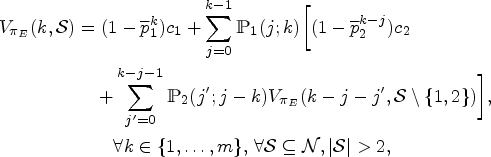
(Enhanced Myopic Performance)
In terms of computational complexity,
Degree-Based Heuristic Policy
The condition (5) may be used to suggest stores that are less likely to be optimal based on how often such a condition is violated, which enables techniques inspired by classical clique methodologies (e.g., Walteros and Buchanan, 2020). While the resulting policy is presented here as a heuristic, we observed it is the best-performing policy numerically (if probabilities are accurately estimated). More specifically, let
(Store Precedence Graph)
Let
The graph

(Non-optimality and Cycles)
Consider Store precedence graph of the example.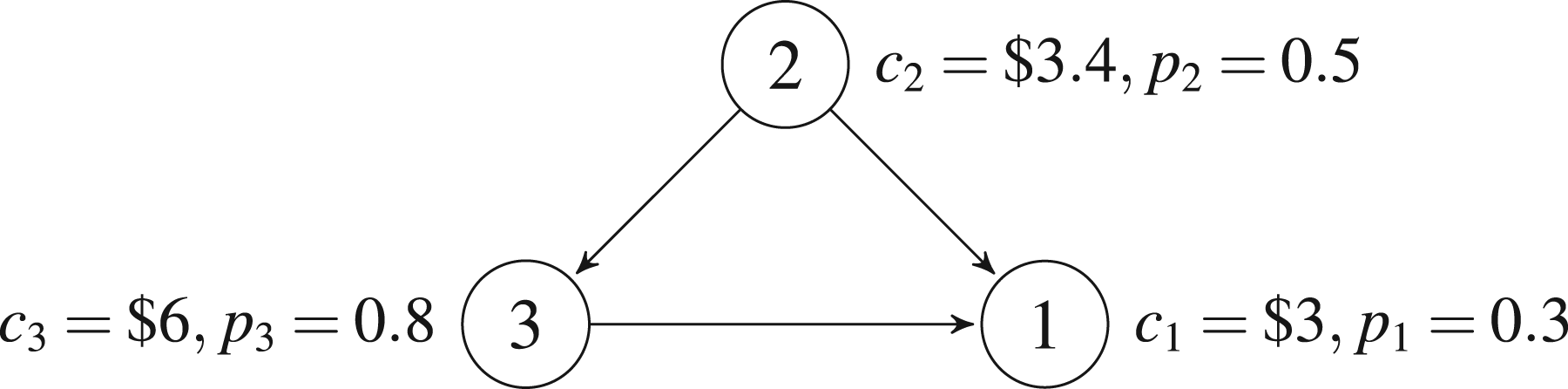
The cost-based myopic policy is such that
Consider the same instance where the shipping cost of store 1 is updated as
Constructing the store precedence graph at a state requires
The discussion so far has focused on cases where fulfillment requests are placed at stores, because the DC was either out-of-stock, or not capable of consolidating all ordered items into a single shipment. In this section, we investigate the more general setting where the DC has sufficient inventory and the retailer must decide whether it should fulfill the order or place requests to stores. Our analysis focuses on inventory rationing policies at the DC for single-item orders, with the goal of determining cost trade-offs between reserving inventory (e.g., for more expensive orders where shipping from stores is prohibitive) and its interplay with the accept/reject process from stores.
We present our rationing model for single-item orders in Section 6.1. Next, in Section 6.2, we demonstrate that the optimal rationing policy follows a threshold structure that is ordered according to the expected store shipping cost
Rationing Model
We assume that, at the beginning of the planning horizon, the retailer observes an inventory level at the DC and sequentially receives a set of single-item online orders during a finite horizon
If fulfilling through stores, we denote by
Let
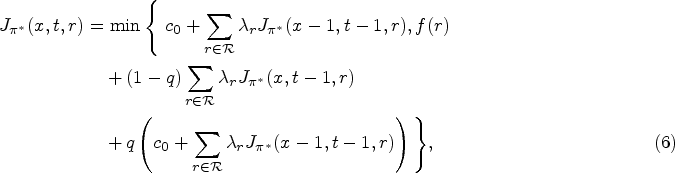


The terminal conditions (7) and (8) represent holding and zero-inventory scenarios, respectively. In other words, if there is inventory left at the store by the end of the period, the retailer pays a holding (or salvage) cost
In this setting, rationing becomes useful when inventory is scarce. More precisely, if the inventory level is sufficiently high, it is always beneficial to ship from the DC due to its lower shipping cost
If

We next derive the structure of the optimal policy
The following two properties hold:

The first property of Proposition 8 states that as there are more periods and demand to satisfy, the shipping cost would increase. Moreover, the shipping cost is also nonincreasing as the inventory level at the DC increases, since the retailer can leverage the lower-shipping option at the DC. The second property, which is crucial to our optimality structure, states that the rate at which expected costs decrease slows down with each additional unit of inventory.
Based on both properties, we show that the optimal policy
At every period

In view of Proposition 9, regions with low and high values of
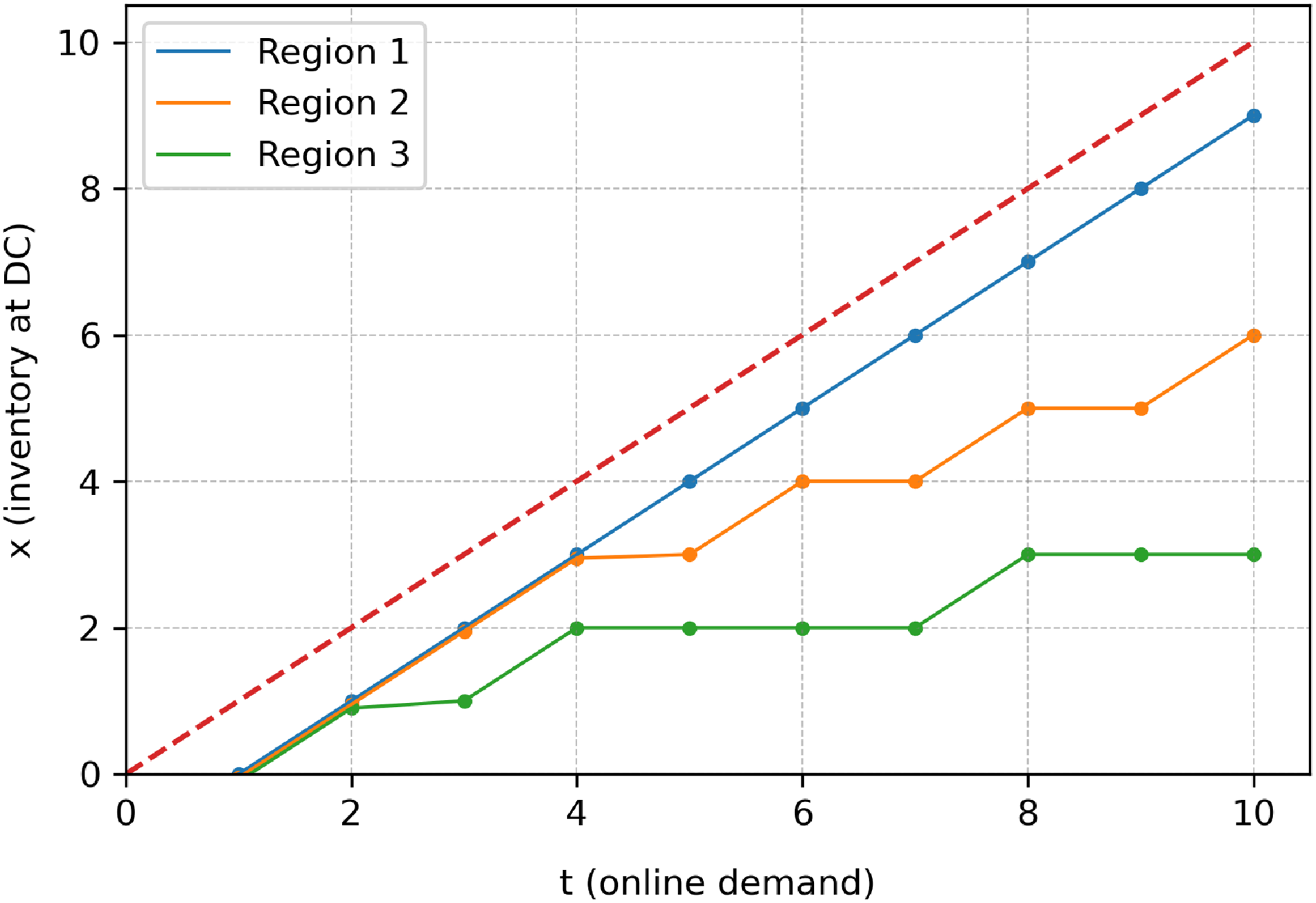
Threshold inventory levels at each time period for different regions.
Let
Figure 3 depicts the threshold values
Strikingly, and in contrast to the rationing literature, where the highest priority class is never subject to rationing at optimality, in our setting, it is common for the highest priority region to be rationed, as seen in Example 6. Intuitively, such rationing may occur because of store rejections: There is a positive probability,
To gain further intuition on the optimal multi-level rationing, we note that the magnitude of
Let If For
Proposition 10 has the following implications. When there is no cost for lost sales (
Here, we extend the rationing model to multi-unit-single-item orders, a problem that has not been previously considered in the literature to the best of our knowledge. In particular, let

Analogously to the single-item case, Proposition 7 can be extended to show that the optimal policy
Consider the following setting where
For
For the state with one more unit inventory,
The lack of submodularity and consequently the optimal rationing not following a threshold level demonstrated in Example 7 implies that optimizing the rationing decisions in the presence of multiunit orders is very challenging. Therefore, we leverage the single-unit insights to introduce a heuristic policy for the multi-unit case. Conceptually, this algorithm treats an order of size
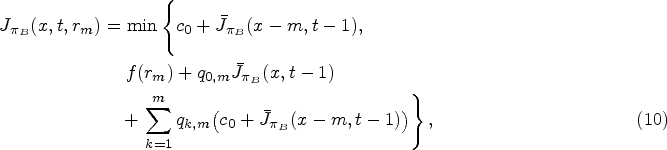
We note that this bundling problem has the same structure as the single-item optimality equation (6), and hence the optimal policy yields a threshold for each
We present a numerical study of the store sequencing and inventory rationing policies considering synthetic and real data. We focus on three policies for store sequencing: the cost-based myopic policy (
Additional results and detailed tables are included in the electronic companion. In particular, we present results for the likelihood based policy (denoted by
Table 1 presents a summary of the policies we investigate. The column “Policy Description” provides the general policy strategy. “Time Compl.” states their computational complexity assuming that the policy is recomputed per order, and considering all possible computations from the initial state until the order is shipped or all stores are exhausted. Finally, “Approx. Ratio” provides the approximation ratio with respect to the optimal value
Summary of policies and their respective theoretical performance.

Summary of policies and their respective theoretical performance.
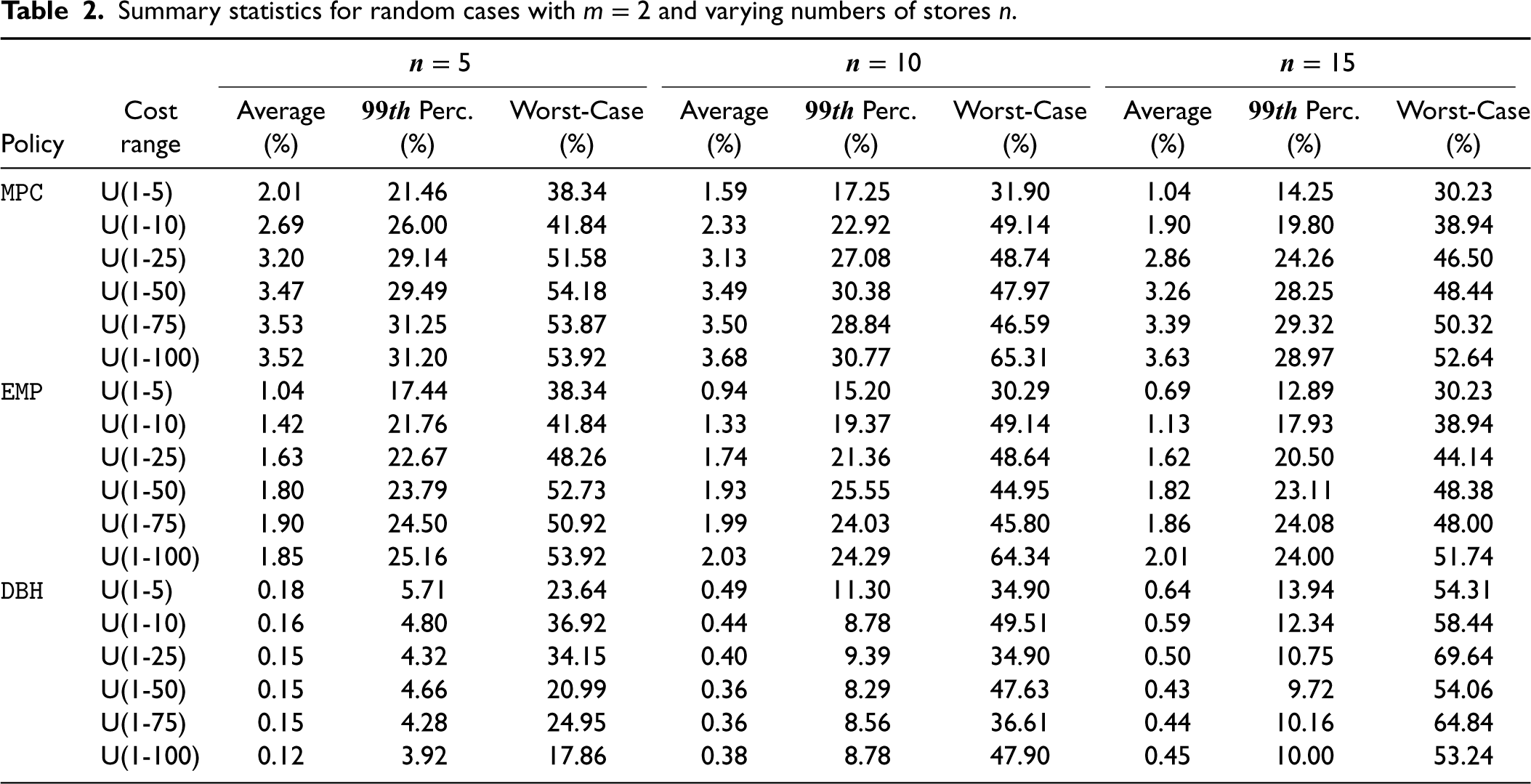
Summary statistics for random cases with
We compare the performance of the three policies in terms of their relative optimality gaps, that is, how far the observed cost is from the optimal. The optimality gap of a policy
Experimental Setup
The shipping cost in each instance is selected uniformly at random from the discrete set
Results
Table 2 and the plots in Figure 4 depict the descriptive statistics and the average optimality gap, respectively, of the three policies for the case
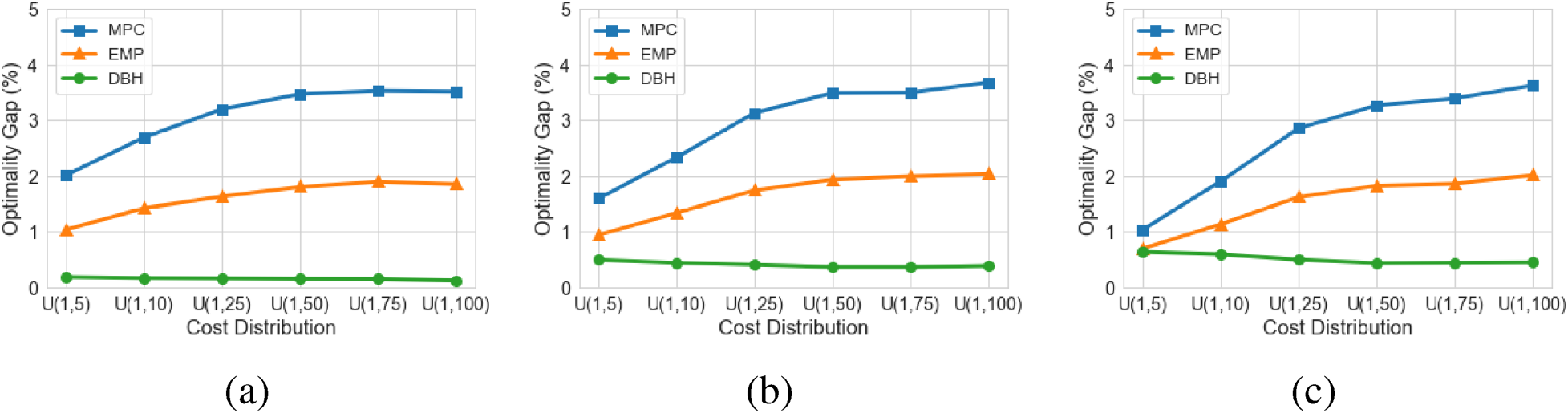
Average optimality gaps for random cases with
Summary statistics for random cases with
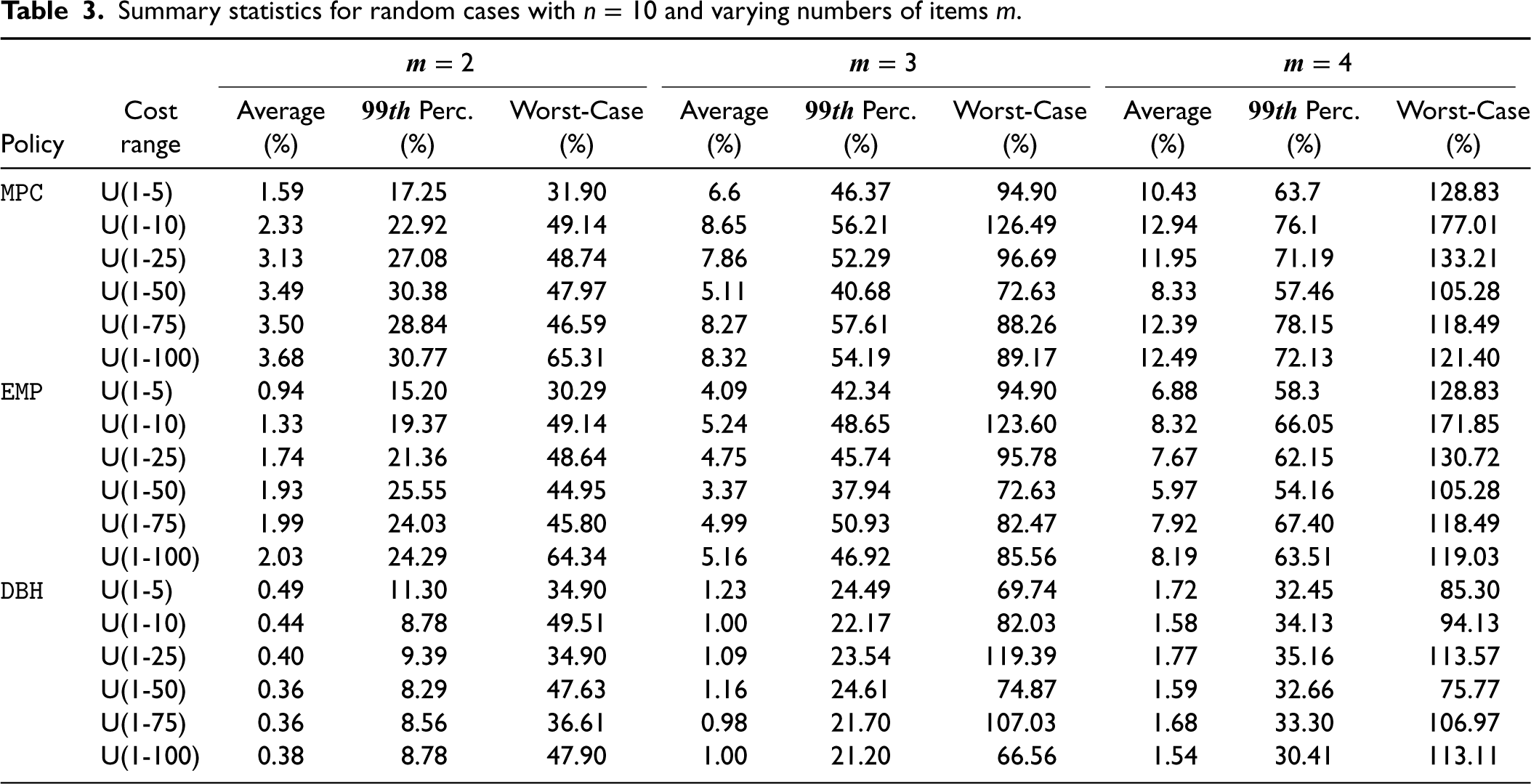
Table 3 and Figure 5 depict similar metrics for a varying number of items
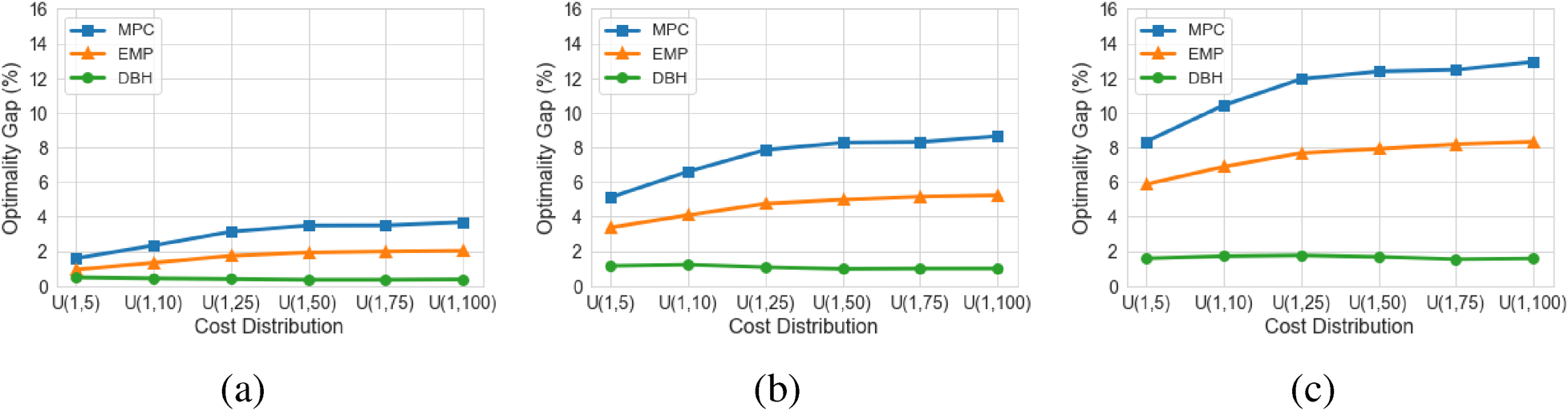
Average optimality gaps for random cases with
Additionally, we evaluate the robustness of our algorithms under conditions involving item-dependent probabilities. The policies are adapted with these probabilities as follows: For
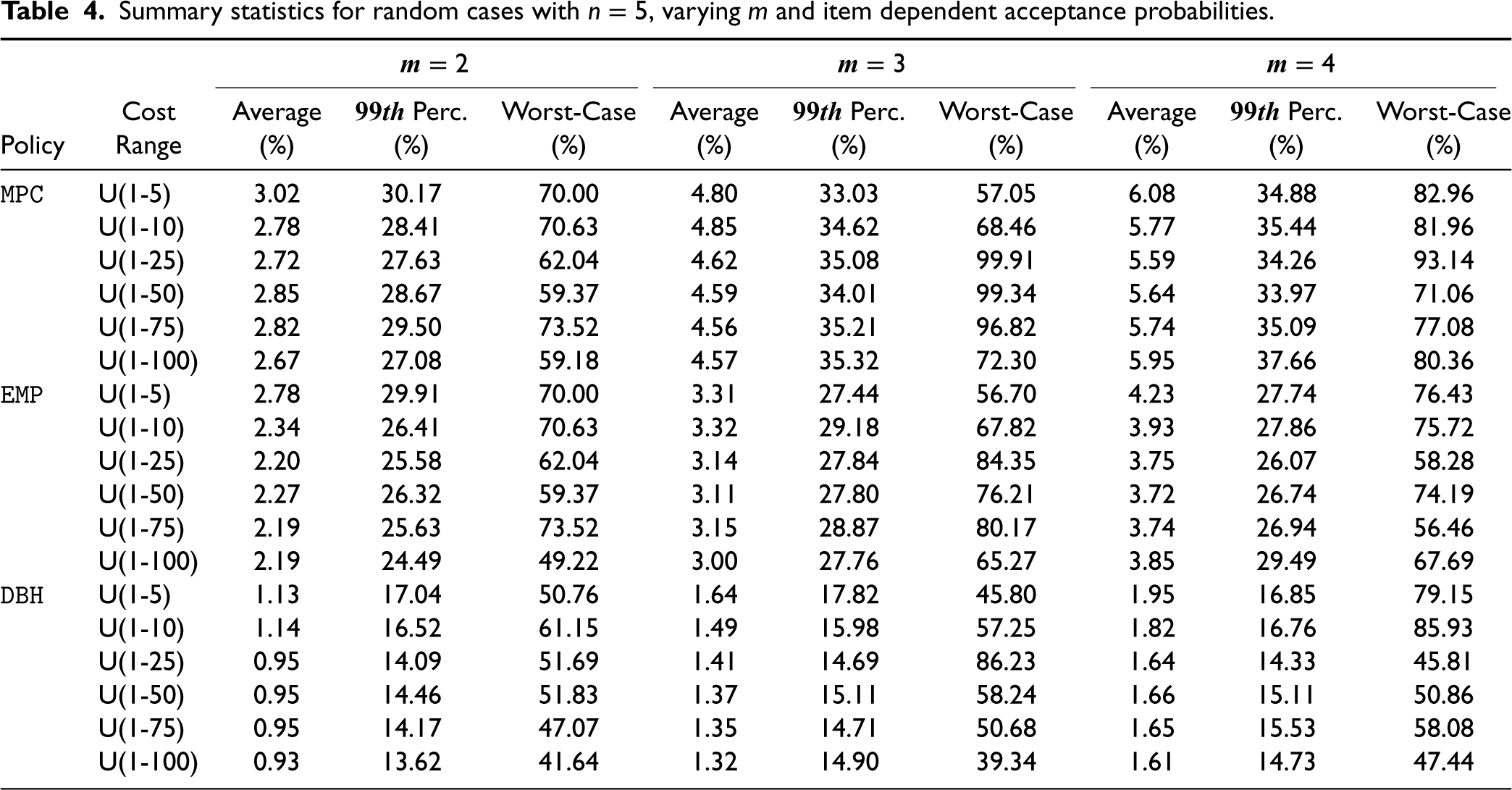
Table 4 and Figure 6 depict the same metrics for distinct number of items
Summary statistics for random cases with
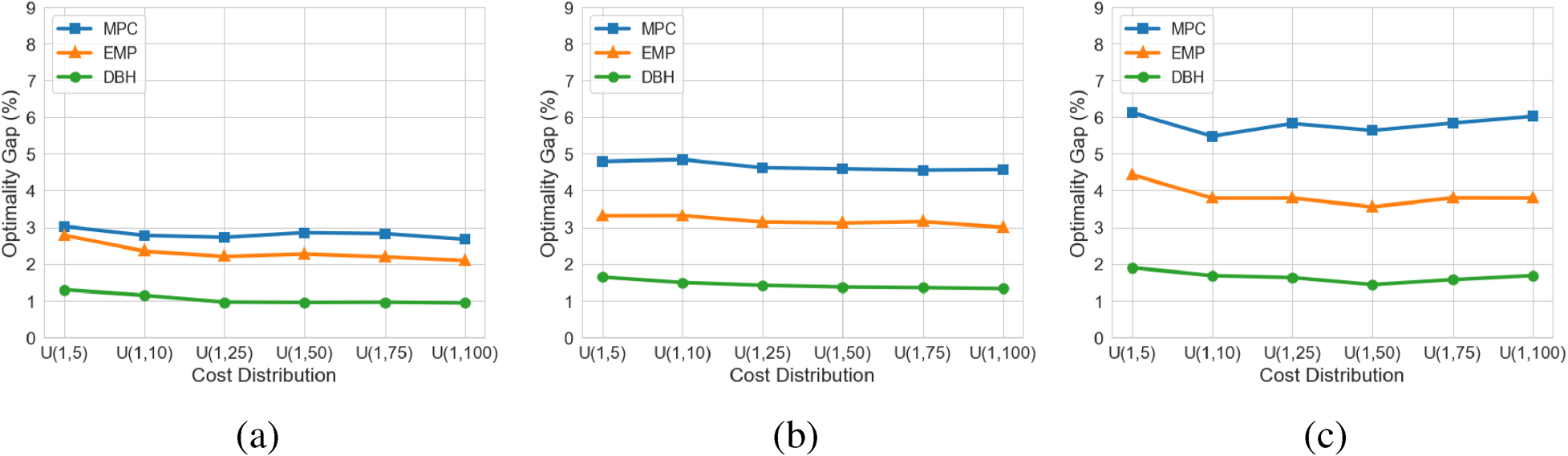
Average optimality gaps for random cases with
The retailer’s network consists of a single DC dedicated to online order fulfillment and approximately 100 brick-and-mortar stores throughout North America. The data includes online order transactions over a two-year span (2018 and 2019). Each order contains a timestamp, estimated shipment times, fulfillment location, quantity, and customer address. Furthermore, each order also contains the full history of acceptance and rejection decisions throughout the system. Finally, we are able to track weekly inventory and sales data on an item level for each store.
We consider only orders shipped from stores (i.e., only partially fulfilled by the DC) and separate them into single and multi-item orders for our analysis. After filtering accordingly, our dataset contains approximately 3.2 million orders; two million single-item orders (one million each year) and 1.2 million multi-item orders (approximately 500,000 in 2018 and 700,000 in 2019). Each multi-item order is composed of 2.8 items, on average, across the two years; 90% of the orders have five or fewer items, and we restrict our analysis to these in this study. The average number of requests each of the 100 stores fulfilled (either fully or partially) is 32,000 per year.
The average rejection rates for such orders in 2018 and 2019 are depicted in Figure 1; note that the figure refers to 52 fiscal weeks. We observe that rejections are rare at the beginning of both years, and there is an upward trend in the latter weeks. In the peak period, which coincides with Black Friday and holiday season, the average rejection rates vary between 20 and 30%. This occurs because of item availability (either due to inconsistent inventory or item displacement), managers keeping the inventory for walk-in customers, or simply lack of personnel to pack and ship the order during these busy periods. In particular, our analysis suggests rejection rates are correlated with exogenous features (e.g., sales periods), but we generally observe little or no correlation with order-specific characteristics, such as inventory levels, item types, or order sizes.
In terms of shipment costs, the retailer’s postal service contract classifies packages as local, regional, and national for cost purposes. If both the store and the destination are in the same city, shipments are classified as local. When both locations are within the same postal region, shipments are regional, and otherwise shipments are national. The percentages of orders of each type for both years are approximately 11%, 58%, and 31%, respectively. According to the data, customers receive their order in multiple packages approximately 44% of the time; this is costly for the company in monetary terms and also in terms of greenhouse gas emissions, and is not desirable for customers.
Simulation Setup
Based on the observations above, we simulate the system on periods where the acceptance rate is relatively low, that is, the last four months of the two years. This corresponds to approximately 1.2 million and 600,000 single and multi-item orders, respectively. The simulation processes one order at a time based on its associated timestamp. The number of items shipped per order and store are chosen randomly based on the binomial trials from our formulation (2), updating inventory based on weekly sales data at each store. The set
In line with our model assumptions and consistent with the exogenous nature of acceptance decisions observed in our data, the acceptance probabilities are fixed per day and per store. To estimate the potential savings of the new policies, we use out-of-sample testing by considering the real empirical probabilities at each store on the previous day. That is, the probability
Results—Single Items
Table 5 assesses
Performance of the current and MPC on single-item orders with rejection decisions.

Performance of the current and MPC on single-item orders with rejection decisions.
Performance of the
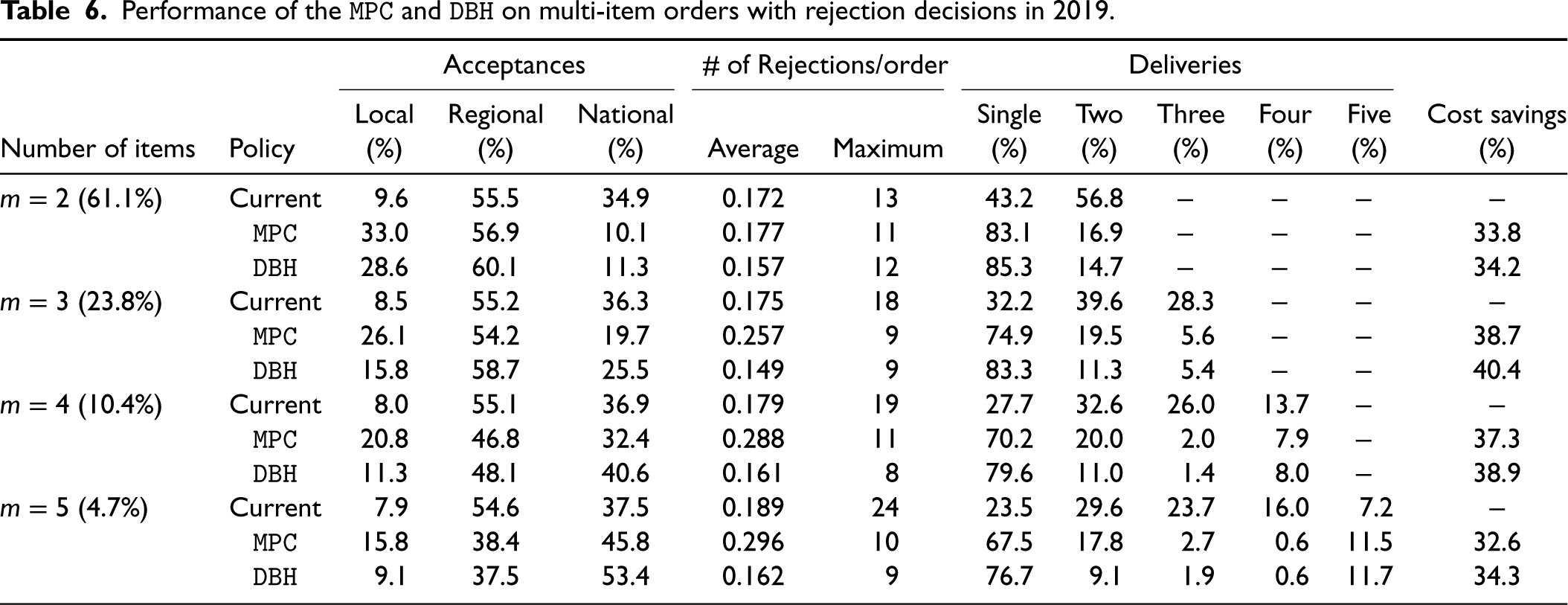
Historically, the percentage of local shipments is only 7.9% in 2018 and 15% in 2019, whereas national shipments constitute over 30% of all shipments in both years.
Table 6 provides the resuls for multi-item orders in 2019 (results for 2018 are added to the electronic companion in Table EC.5 as they are similar). Besides the same metrics as above, we evaluate split delivery rates by calculating the number of shipped packages in percentage (Deliveries). We include “Current” for reference.
The table suggests that
Performance Analysis for Rationing
In order to assess the value of inventory rationing, we first compare the single-unit optimal policy to the strategy where the DC is strictly prioritized over stores due to its lower shipping cost
Experimental Setup
We select shipping costs from stores uniformly at random from the discrete set
For the single-unit experiments, we choose the arrival rate of each region uniformly at random from
For each configuration
Results
Table 7 presents the average cost improvement (in %) of the optimal single-unit rationing model with respect to the DC-only policy (no rationing) for each
Single-unit no-rationing results with varying number of regions
, lost-sales cost
, and demand
.
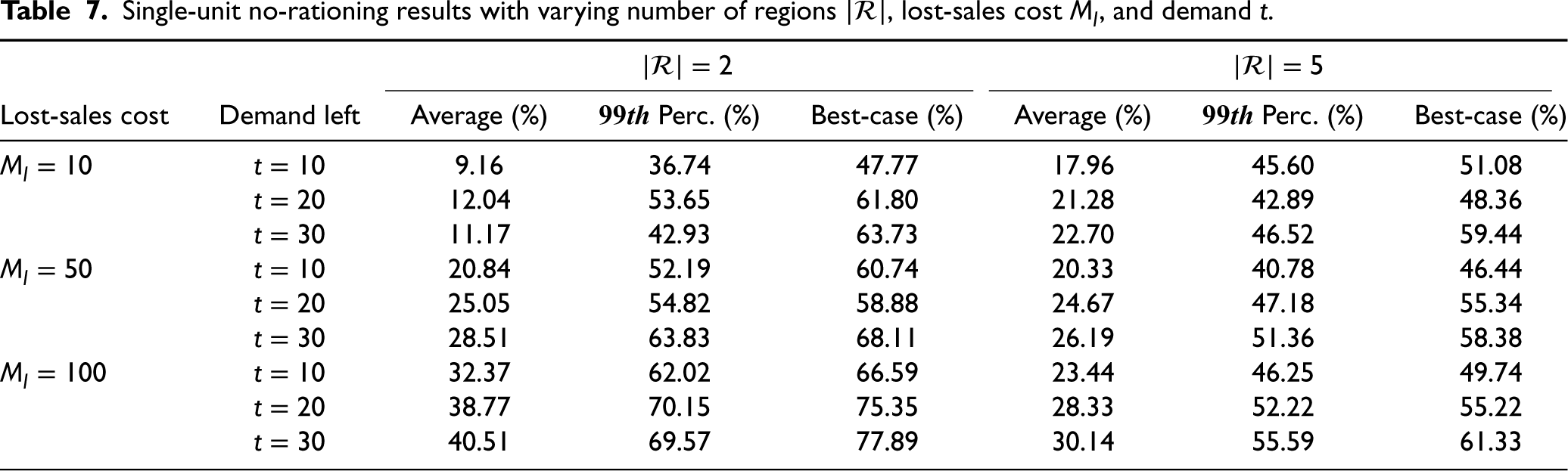
Single-unit no-rationing results with varying number of regions
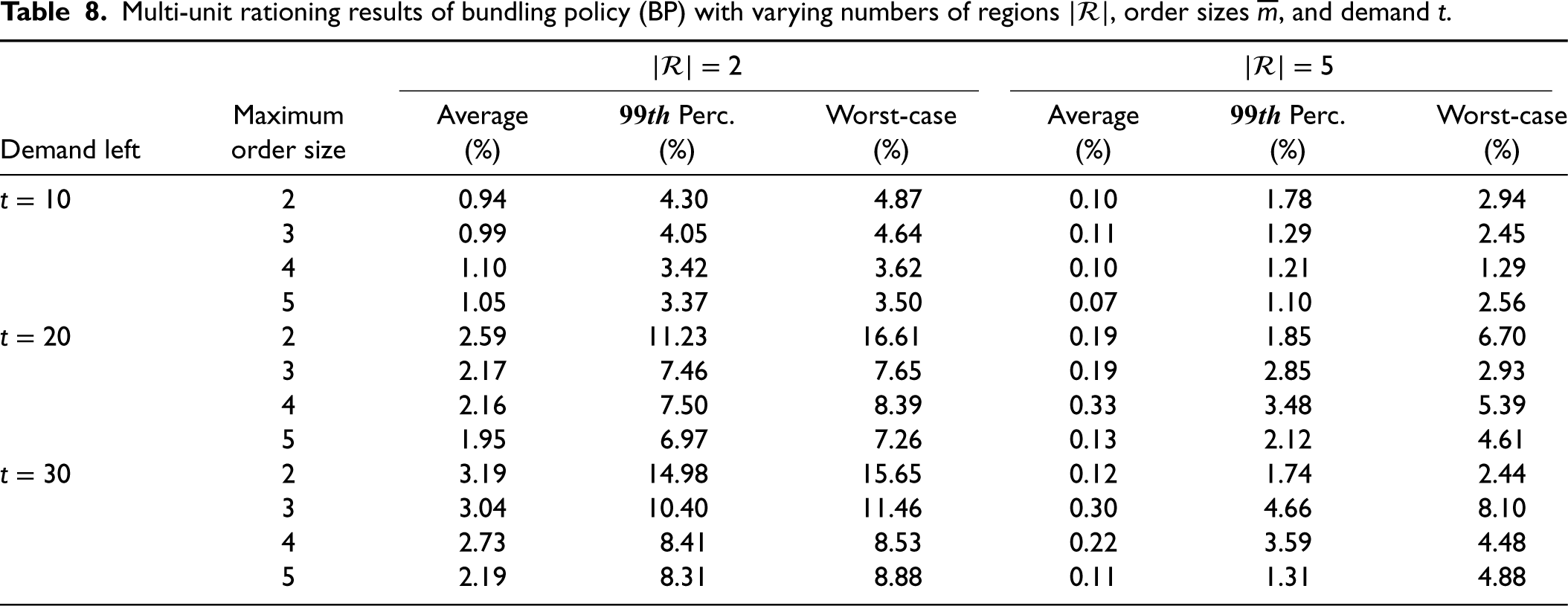
Table 8 presents the performance of
Multi-unit rationing results of bundling policy (BP) with varying numbers of regions
This paper addresses an order fulfillment problem of an omni-channel retailer under a decentralized framework where items are not differentiable. Specifically, when warehouses are unable to fulfill an online order, the retailer leverages its business structure and attempts to ship items through its brick-and-mortar stores. The retailer places requests to stores one at a time, and each stochastically agrees to fully or partially satisfy an order based on censored local information. Decisions must balance the trade-off between stores with lower shipping costs and those having higher acceptance rates to avoid multiple deliveries.
We formulate the problem as a MDP and derive theoretical performances of low-complexity nonadaptive policies, which are of practical interest. More precisely, we show that a myopic policy in terms of cost has an approximation ratio given by the number of items; thus, its worst case performance does not depend on costs or acceptance rates, and is optimal for single-item orders or those where splits are not allowed. We also establish conditions on acceptance probabilities for the myopic policy to be optimal for two-store configurations (e.g., representing local/national choices) and discuss the performance of strategies based only on acceptance ratios or semi-random choices that incorporate fairness. Moreover, we develop two adaptive policies based on a sufficient and necessary condition associated with the optimality of two-store sequences. The first weakly improves the myopic policy and preserves its cost-independent approximation ratio, while the second is a degree-based heuristic on an auxiliary store network. Finally, we investigate natural extensions that incorporate delay costs and discuss settings with item-dependent acceptance ratios.
We then extend the analysis to incorporate the DC into the fulfillment operations, by making inventory rationing decisions. We show for single-item orders, optimal policies have a threshold structure, and even the highest-priority demand class may be subject to rationing. We then show the complexities of settings with multi-unit-single-item orders, and develop a heuristic based on bundling multiple units, which leverages single-item threshold levels.
Finally, we perform a computational study on synthetic and real data provided by a large-scale retailer partner in North America. Analysis of artificial data suggests the cost-based myopic policy is, at most, 2%–3.5% above optimal. Its adaptive variant halves the optimality gap in most configurations, and the degree-based policy is 0.5% from the optimal on average. For the rationing problem, we characterize the optimal threshold rationing structure for the single-item case and demonstrate numerically that these policies can bring 20%–30% cost decrease, on average, compared to the model without any rationing decisions. For the multi-unit-single-item case, we numerically show that the BP reaches optimality gaps of mostly below 1%, on average, and it is quite robust to the variation in order sizes.
We suggest several avenues for future research. In particular, one limitation of our study is that it assumes acceptance probabilities are exogenous and known in advance. In practice, estimating these probabilities may require accurate predictive models which could better inform the store sequencing process. Another area for exploration can be determining policies with approximation guarantees for the multi-unit/item cases that extend our current results, or evaluating policies with item-dependent parameters. It would also be meaningful to investigate alternative systems where requests are placed at multiple stores simultaneously instead of sequential decision making.
Supplemental Material
sj-pdf-1-pao-10.1177_10591478241255066 - Supplemental material for Decentralized Online Order Fulfillment in Omni-Channel Retailers
Supplemental material, sj-pdf-1-pao-10.1177_10591478241255066 for Decentralized Online Order Fulfillment in Omni-Channel Retailers by Opher Baron, Andre A Cire and Sinem K Savaser in Production and Operations Management
Footnotes
Acknowledgment
The authors thank the anonymous senior editor and two anonymous reviewers whose constructive comments and suggestions have considerably improved the paper.
Declaration of Conflicting Interests
The authors declared no potential conflicts of interest with respect to the research, authorship, and/or publication of this article.
Funding
The authors received the following financial support for the research, authorship and/or publication of this article: Opher Baron and Andre A. Cire were supported by a Discovery Grant provided by the Natural Sciences and Engineering Research Council of Canada (NSERC), and Sinem Kinay Savaser was supported by Ontario Graduate Scholarship (OGS).

How to cite this article
Baron O, Cire AA and Savaser SK (2024) Decentralized Online Order Fulfillment in Omni-Channel Retailers. Production and Operations Management 33(8): 1719–1738.
References
Supplementary Material
Please find the following supplemental material available below.
For Open Access articles published under a Creative Commons License, all supplemental material carries the same license as the article it is associated with.
For non-Open Access articles published, all supplemental material carries a non-exclusive license, and permission requests for re-use of supplemental material or any part of supplemental material shall be sent directly to the copyright owner as specified in the copyright notice associated with the article.
