



Abstract
While government regulation or company policy can be used to curtail discrimination at work, it is hard to regulate away negative experiences like microaggression or perceptions of discrimination against minority employees in hiring and promotion. Using data from interviews with minority ethnic staff at a UK university, I present evidence of microaggression and minority employees feeling excluded and posit that perceptions of discriminatory policy engender negative perceptions of the organization. I further show the link between employee engagement and organizational performance and propose that minority employees’ negative experiences and perceptions lower their job and organizational engagement and, eventually, impact organizational performance. I offer a solution in the form of an enterprise-wide continuous improvement program that would directly improve organizational performance by improving business processes and indirectly by improving minority employees’ experience, perceptions, and engagement.
Keywords
Introduction
Discrimination in hiring and promotion is addressed by government regulation and corporate policy. In the UK, the Equality Act 2010 protects individuals from discrimination based on various grounds. 1 However, it is harder to regulate less overt forms of racism, like microaggressions, which are not illegal and can be dismissed as “hypersensitivity” by managers Washington, 2022). Nonetheless, as the burgeoning literature on microaggression shows, there is damage to employees and, consequently, the organization (Alabi, 2015a; Velazquez et al., 2022; Williams et al., 2020; Young et al., 2015).
Negative experiences in the workplace resulting from discrimination based on race, gender, sexuality, age, and other characteristics persist despite the many solutions put forward. While employee sensitivity training can be beneficial (e.g., Kossek et al., 2022), management may view it as disruptive to routine work and discontinue these efforts when organizational priorities shift. Although organizations may train employees to respond to microaggression (Washington, 2022), an environment without these negative incidents would be preferable.
I propose continuous improvement (CI) programs to reduce the negative experiences of minority ethnic employees and, in turn, improve the organization's performance. My focus is on race, and by a CI program, I mean waves of multiple small employee-led projects across the enterprise running in tandem, with each project team having members from multiple departments. The team would define its goals to improve processes and, hence, organizational efficacy. CI would complement existing methods like diversity training, and even if senior managers do not see the need to address race-related issues, they may at least find improving organizational performance an attractive proposition.
I first analyze the data from interviews of ethnic minority employees of a UK university (most of whom are Black of African or Caribbean origin or Asian of Chinese or South Asian origin) 2 regarding their negative racial experiences and perceptions. I use this data to illustrate the concepts of microaggression and perceived job-related discrimination and consider how these experiences result in negative perceptions of the organization and feelings of noninclusion. The experiences lead to minority employees reducing their engagement with their jobs and the organization, eventually impacting organizational performance.
Next, I explore how CI improves organizational performance and employee engagement. I argue that CI—implemented through employee-led multifunctional teams across the enterprise—can affect all links in the chain, from employee experience to organizational performance. I present a conceptual model that integrates these various linkages and concepts to show why and how employee-led CI could improve organizational performance and limit the negative experiences of minority employees. In doing so, I offer organizational performance as a simple answer to the question of why organizations should bother addressing the negative experiences of minority employees.
The remainder of this article proceeds as follows. In Section 2, I review related literature and provide some background on microaggression, CI, and employee engagement. In Section 3, I present a case study of a school at a UK university, and in Section 4, I consider how CI could address the problems raised in that study. Finally, in Section 5, I conclude with the study's practical and theoretical implications.
Background and Literature
In addition to overt and illegal acts of racism, minority ethnic employees can be subject to subtle and not infrequent negative experiences—or microaggressions—that, rather than “gross or crippling,” are “subtle and stunning” (Pierce, 1970). As Sue et al. (2007: 124) point out, “Racial microaggressions are brief and commonplace daily verbal, behavioral, or environmental indignities, whether intentional or unintentional, that communicate hostile, derogatory, or negative racial slights and insults toward people of color.”
While I focus here on race, there are studies on microaggressions related to gender (Basford et al., 2014) and LGBTQ + status (Galupo and Resnick, 2016; Nadal et al., 2016) and toward Chicana and Chicano scholars (Solorzano, 1998) and those with afflictions like multiple sclerosis (Lee et al., 2019) or mental health issues (Barber et al., 2019). There are also studies that focus on individuals in particular professions, such as librarians (Alabi, 2015b). For example, Young et al. (2015) studied microaggressions related to race, gender, age, disability, and sexual orientation among university academics. Indeed, many studies, this included, use the setting of a university to take advantage of their openness to such research. Commercial settings would be more challenging to study.
A Taxonomy of Microaggression
There are different ways to classify microaggressions. Sue et al. (2007) propose these be classified as microinsults, microinvalidations, or microassaults. This work is extended by Williams et al. (2021), who review subsequent qualitative and quantitative studies to offer a taxonomy for purposes of replicability and comparison with similar studies (Table 1).
A taxonomy of microaggressions (Williams et al., 2021).
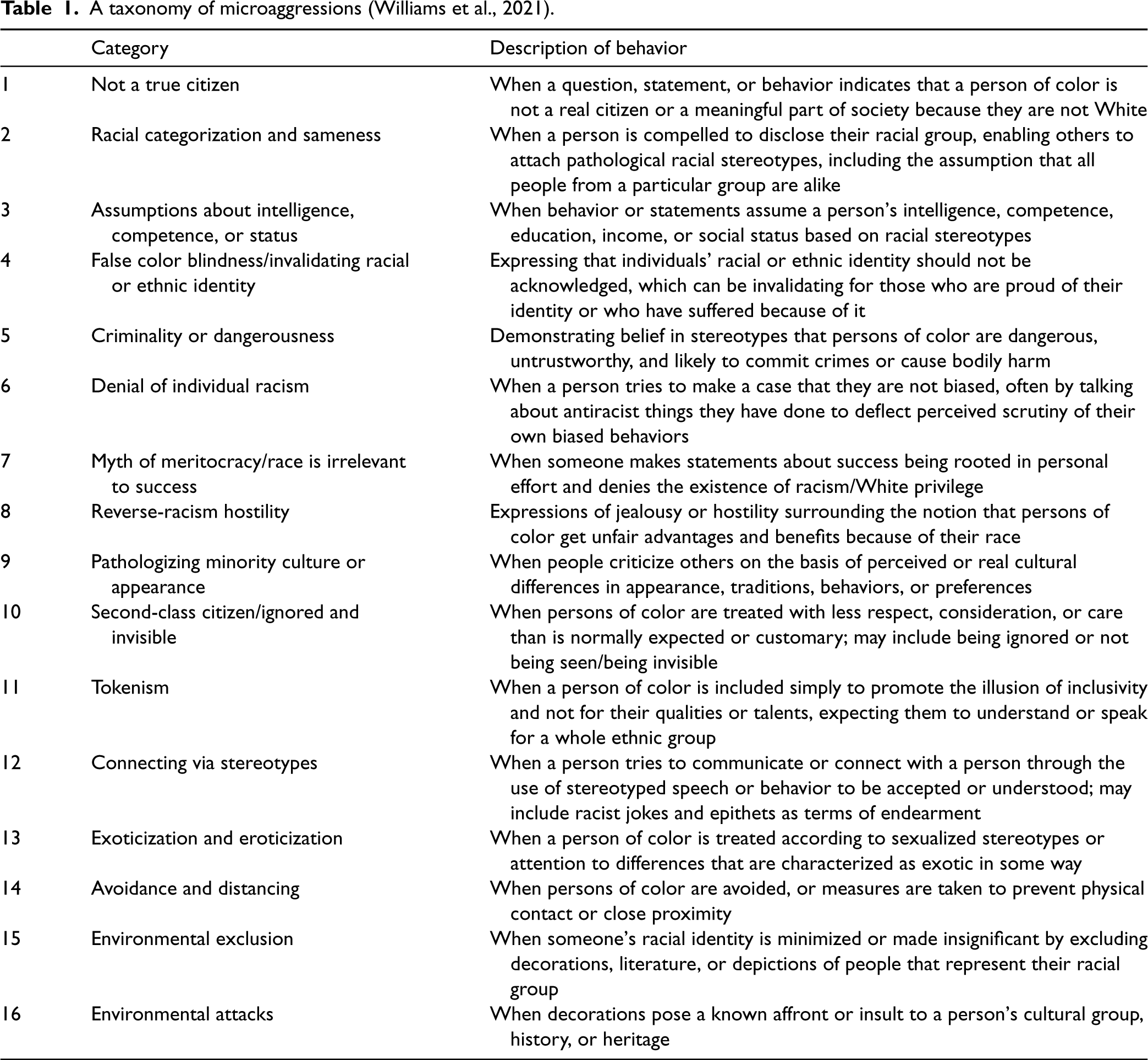
A taxonomy of microaggressions (Williams et al., 2021).
Studies of microaggression, particularly those related to race, have faced criticism in scholarly journals and media as a “pseudo-science” (Nagai, 2017). In this view, the development of a theory of microaggression “is the implementation of a highly politicized agenda and places a social change agenda above objective social science research.” The result, according to these critiques, is “biased interview questions, reliance on narrative and small numbers of respondents, problems of reliability, issues of replicability, and ignoring alternative explanations” (Nagai, 2017). Lilienfeld (2017: 144) cautions researchers to temper their claims on the negative impact of microaggressions and the effectiveness of interventions as “conceptualization of microaggressions has become so sweeping as to invite satire;” the author also notes the lack of precision in the term microaggression. The present study avoids these pitfalls, as I explain below.
Many organizations are already familiar with CI—in the form of quality circles, the lean method, or Lean Six Sigma (LSS)—as a way to improve organizational or business unit performance. Bessant and Caffyn (1997) define CI as “an organization-wide process of focused and sustained incremental innovation, recognizing that most innovative activity is not of the ‘breakthrough’ variety, but incremental in nature.” The following studies provide useful historical perspectives, concepts, and a review of the literature: Bhuiyan and Baghel (2005) for CI, Hines et al. (2004) for the related lean approach, and Singh and Singh (2015) for kaizen, the Japanese equivalent to CI.
My experience with an LSS program motivated me to propose CI as a solution. A decade before the case study presented here, I led the implementation of LSS at the same organization, gaining first-hand experience with CI as multiple waves of enterprise-wide, employee-led process improvement projects. As Master Black Belt, I facilitated 11 projects—each completed in 4 months, six of these in tandem by the first cohort and five by the second cohort, with all participants being nonfaculty staff. The employees organized their teams and selected the processes targeted for improvement: (1) The merchandising ordering process for the school's marketing and promotional activities, (2) the new faculty induction program, (3) the facilities helpdesk process, (4) the process ensuring the smooth running of facilities, and (5) the international students’ letters-request procedure for securing accommodation, opening a bank account, and obtaining a visa. There were direct gains to the organization from these process improvements, and participants gave positive feedback on the more general benefits of the program: “LSS is a structured and clear way of problem reduction and elimination,” “You can gain project management skills and better knowledge of suppliers,” and “LSS has improved communications with other departments.”
Although there are many ways to implement CI, based on my experience, I am advocating multiple waves of many small-team projects running enterprise-wide in tandem over several weeks rather than months. In my proposal, each project team selects its members and a target business process for improvement, with team members thus likely to be from different departments.
Employee Engagement
The study of employee engagement has expanded in recent years with increasing interest from organizations, although gaps in the literature remain (Saks and Gruman, 2014; Sun and Bunchapattanasakda, 2019). Employee engagement is variously understood as “the individual's involvement and satisfaction with as well as enthusiasm for work” (Harter et al., 2002: 269), “an individual employee's cognitive, emotional, and behavioral state directed toward desired organizational outcomes” (Shuck and Wollard, 2010: 103), or “the harnessing of organization members’ selves to their work roles; in engagement, people employ and express themselves physically, cognitively, and emotionally during role performances” (Kahn, 1990:694).
As with other forms of social exchange, worker–employer relationships entail mutual commitments if the parties abide by specific rules (Cropanzano and Mitchell, 2005). Indeed, researchers associated employee engagement with outcomes that are individual (such as job satisfaction, turnover, innovation, individual job performance, and organizational success) and organizational (Jin and McDonald, 2017; Saks, 2006). Employee engagement improves organizational (Sun and Bunchapattanasakda, 2019) and business-unit (Harter et al., 2002) performance. Saks (2006) distinguishes employee engagement with the job and engagement with the organization, both of which positively impact organizational performance. Thus, organizational performance can be improved by increasing employee engagement. The operations management literature has yet to consider the engagement aspect of performance improvement (cf. Smith and Bititci, 2017); I address this here.
Microaggression and Other Negative Racial Experiences at Work: A Case Study
In 2020, there were protests in the UK against racism, including the country's history of colonialism and slavery, following the brutal killing in the US of George Floyd Jr. by Minneapolis police on May 25. In response, the Dean of a school at a UK-based university instituted a five-person panel to study any negative race-related experiences of minority employees in a workforce that included approximately 300 full-time employees. The panel e-mailed 33 minority ethnic employees about its remit to collect information, on the promise of anonymity, in response to a single question about their personal experiences or perceptions of “discrimination” or negative race-related experiences at work. The panel did not include themselves as respondents. Four of the 33 minority employees said they had no such negative experience to report; the other 29 employees agreed to meet for an interview or shared their perceptions and experiences by e-mail.
The individual panel members entered the text of the interviews and e-mail responses into a spreadsheet, divided into 191 statement units, one for each report of a discrete experience or perception of discrimination in the workplace (Alabi, 2015b) and categorized as follows: (1) negative or noninclusive experiences (107 statements), (2) unsatisfactory leadership of the organization or policy implementation (41 statements), and (3) perceptions of discriminatory hiring or promotion (43 statements). The panel eventually submitted a report with recommendations to the Dean, appending the statements collected. My starting point is these 191 statements (“experiences” and “perceptions”), with no identifying data or details on the data-gathering mode employed.
The various concerns expressed in the literature about the limitations of microaggression research do not apply to the data collected in this setting. The panel did not design their effort around microaggression or any other theory, given their specific remit and practical intent. In retrospect, the data-gathering effort inadvertently overcame the empirical criticisms of microaggression studies (e.g., Nagai, 2017) in four ways: (1) The interviewers only asked a single question about the experiences and perceptions of minority ethnic employees. (2) The panel did not ask any leading questions about any specific type of discrimination or microaggression, and four out of 33 respondents did not report any negative experiences. (3) Although the sample of 33 respondents is small, it covers more than half the school's estimated population of minority employees. Moreover, the information obtained is comparable to that reported in other qualitative studies in the literature, suggesting its reliability. (4) Although “the negative reactions of minority individuals [could still be linked] to personal defects of minority individuals or of minority races as a whole” (Lilienfeld, 2017), the interviews only sought to elicit the lived experiences of minority employees.
Microaggression in Practice
I begin by analyzing the 107 negative or noninclusive statements (experiences) using the Williams et al. (2021) microaggression taxonomy, allowing comparison with related research (Table 2). For instance, the reported experiences of staff at this highly diverse UK university are like those of Black students in a “predominantly White” US university (Williams et al., 2020). Microaggression toward minority employees is thus not a figment of their imagination or simply a matter of “hypersensitivity,” a characterization Washington (2022) cautions against; see Table 2.
Reported microaggressions categorized using the taxonomy of Williams et al. (2021).
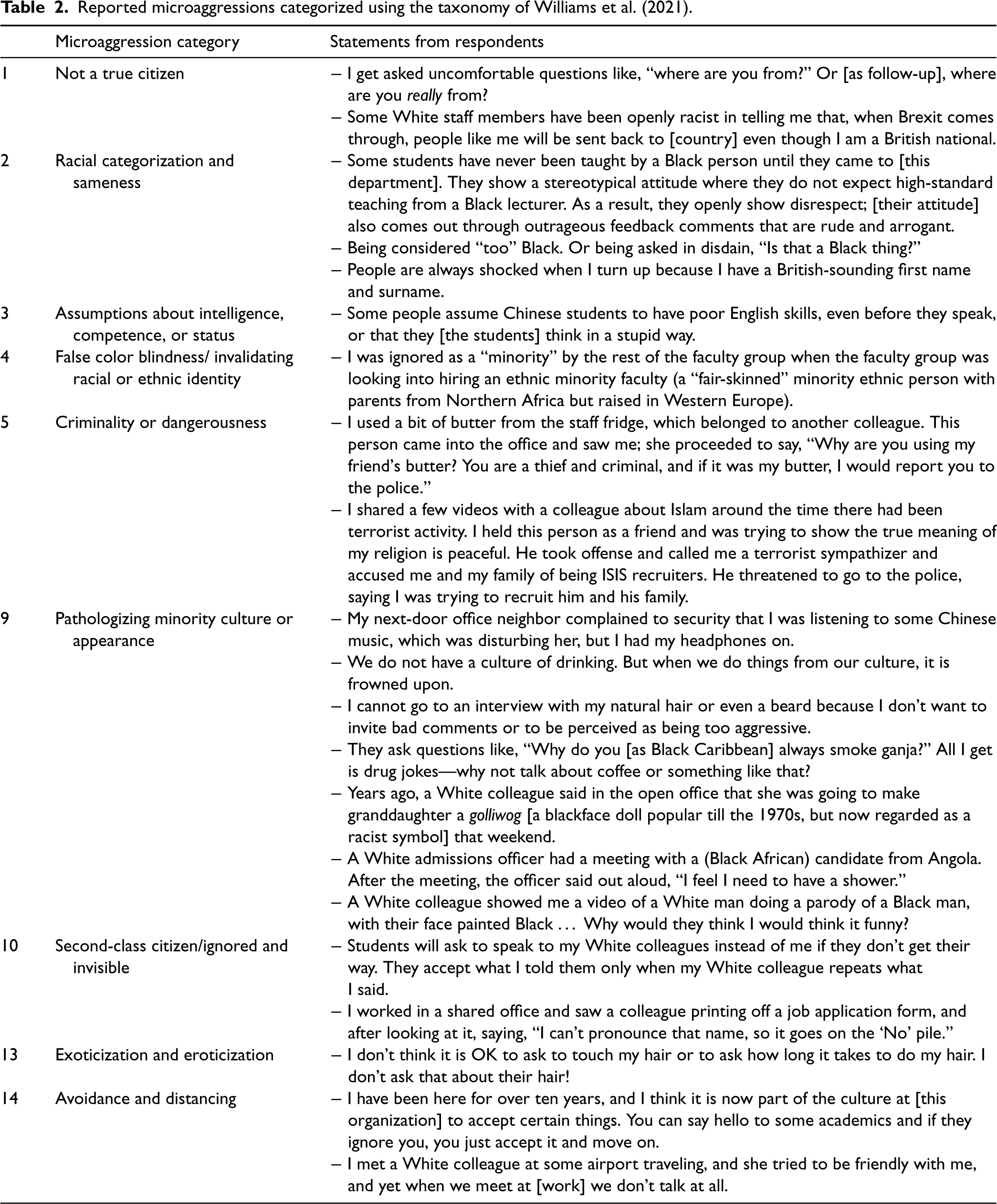
Reported microaggressions categorized using the taxonomy of Williams et al. (2021).
Some experiences—such as the witnessed refusal to evaluate a job application because a person states they are “unable to pronounce” the candidate's name—go well beyond microaggression (and the bounds of the taxonomy). Abuse toward a group of Chinese students (during the early stages of the coronavirus disease 2019 [COVID-19] pandemic) also goes beyond microaggression. Pierce (1970) offers lynching as an example of macroaggressions in the extreme. We must better distinguish between the types of aggression (Lilienfeld, 2017); the taxonomy does this well for microaggressions without overreaching into the territories of macroaggressions like illegal discrimination or blatant racism.
For many respondents, the experiences of microaggression left them feeling that they were not being included, whether organizationally or socially, and, as a result, could not be themselves and felt pressured to fit in with a particular perception of the organization. These respondents felt their existence was left unacknowledged, a feeling well expressed in Ralph Ellison's 1952 novel, The Invisible Man (Table 3).
Feelings of noninclusion.
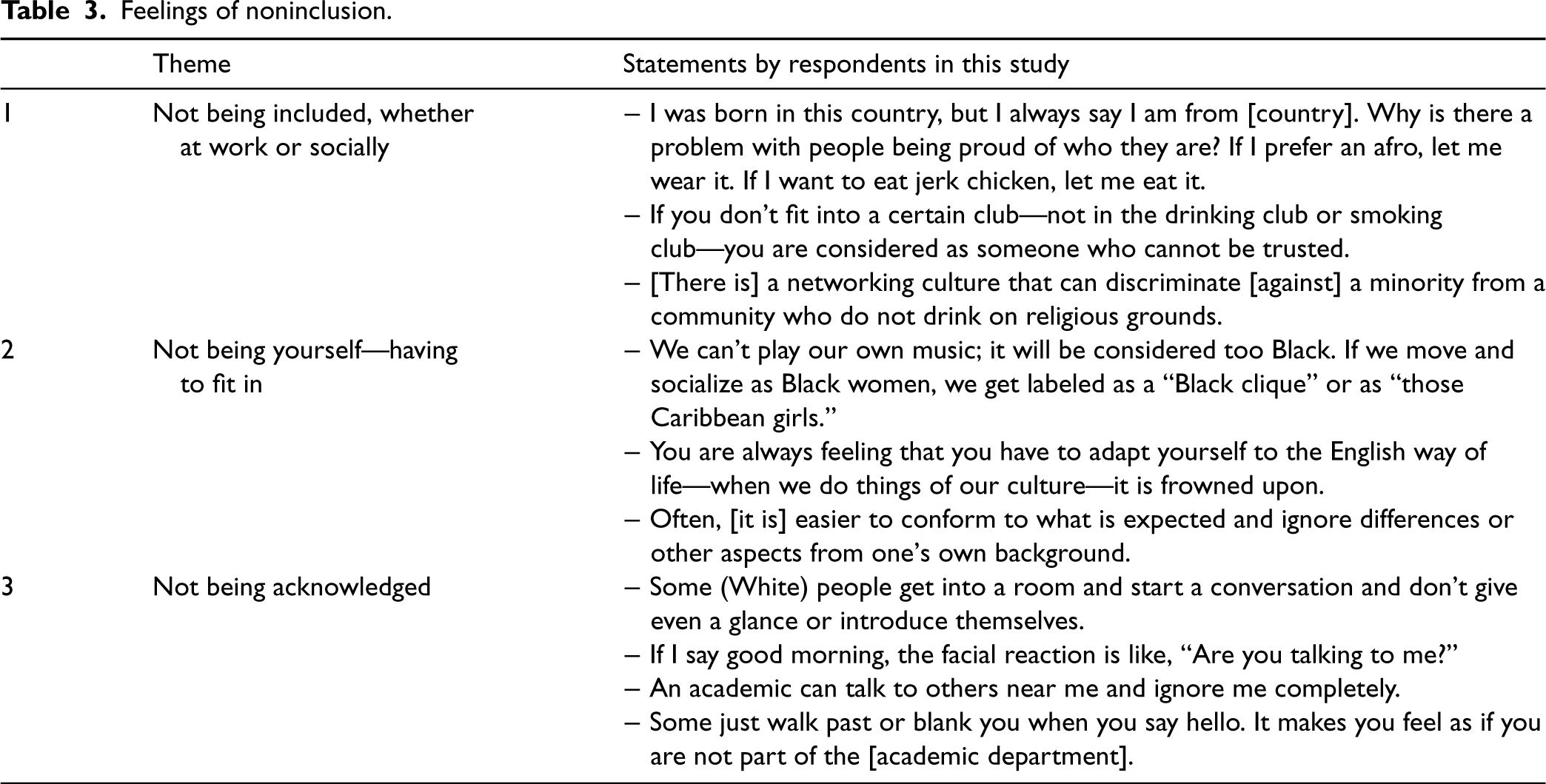
Feelings of noninclusion.
In addition to microaggression, there are matters of supervisors and managers being perceived as not following (or actually not following) antidiscriminatory policies or practicing discrimination in minor ways in day-to-day work, resulting in a negative perception of the organization. I consider both these perceptions.
Despite anti-discrimination laws and organizational policies, perceptions of discrimination in hiring and career progression and policy implementation add to employees’ negative experiences (as seen in 43 statements out of 191); see Table 4. These perceptions need not result from active discrimination. Instead, they could result from the opaqueness of policy execution, the high-handedness of supervisors in not responding to employees (minority or otherwise), or frustrations regarding a lack of career growth. These compound the negative experiences of minority employees, much like microaggression and acts of discrimination.
Perceptions of job-related discrimination.
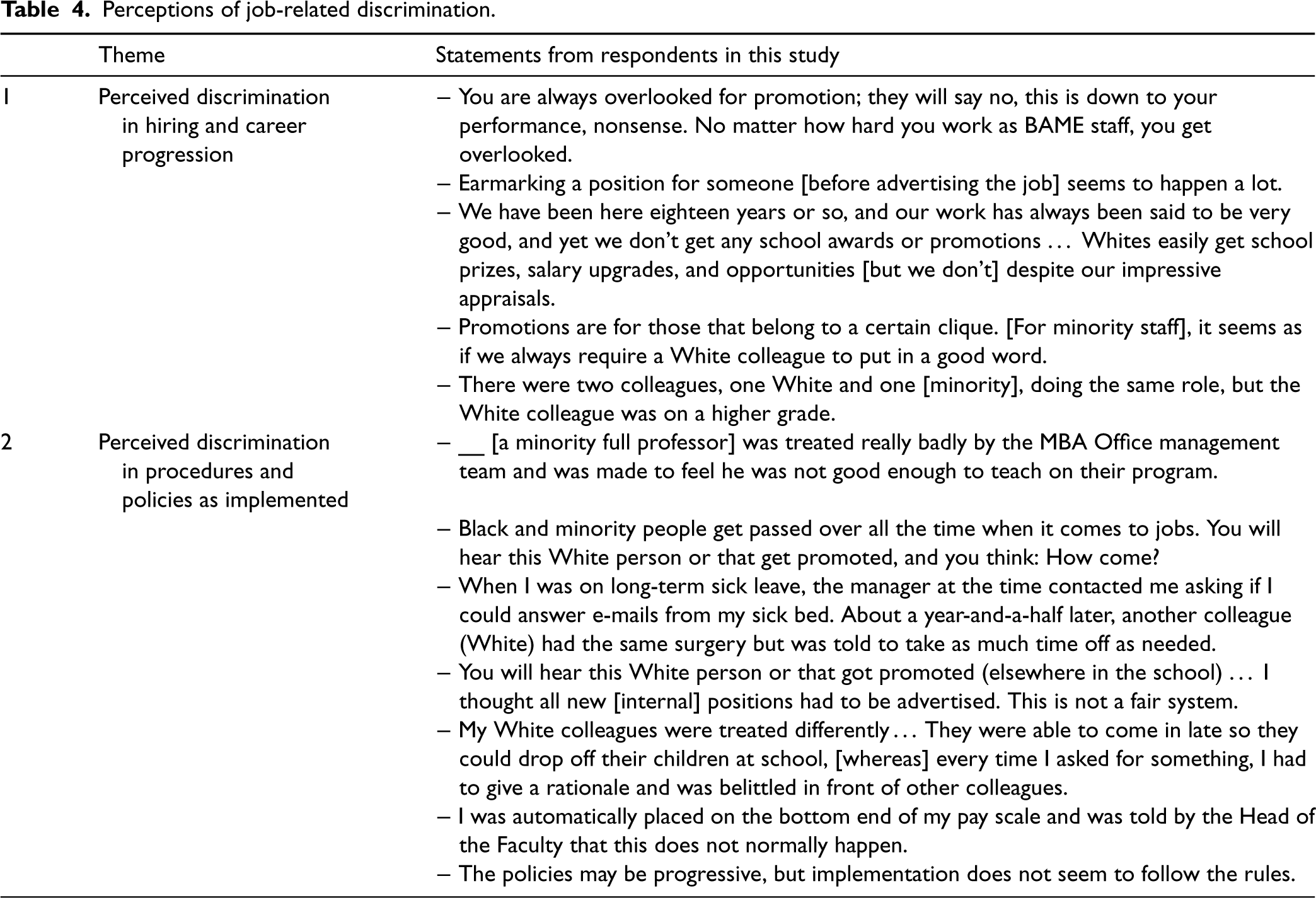
Perceptions of job-related discrimination.
I posit that employee perceptions of job-related discrimination increase negative perceptions of the organization and its culture. For example, many respondents felt the organization practiced discrimination in procedures and policies, with disguised or hidden racial bias and DEI or other “inclusive” policies that existed in name only. They were also critical of senior management as not diverse or engaged in DEI efforts (Table 5).
Negative perceptions of the organization.
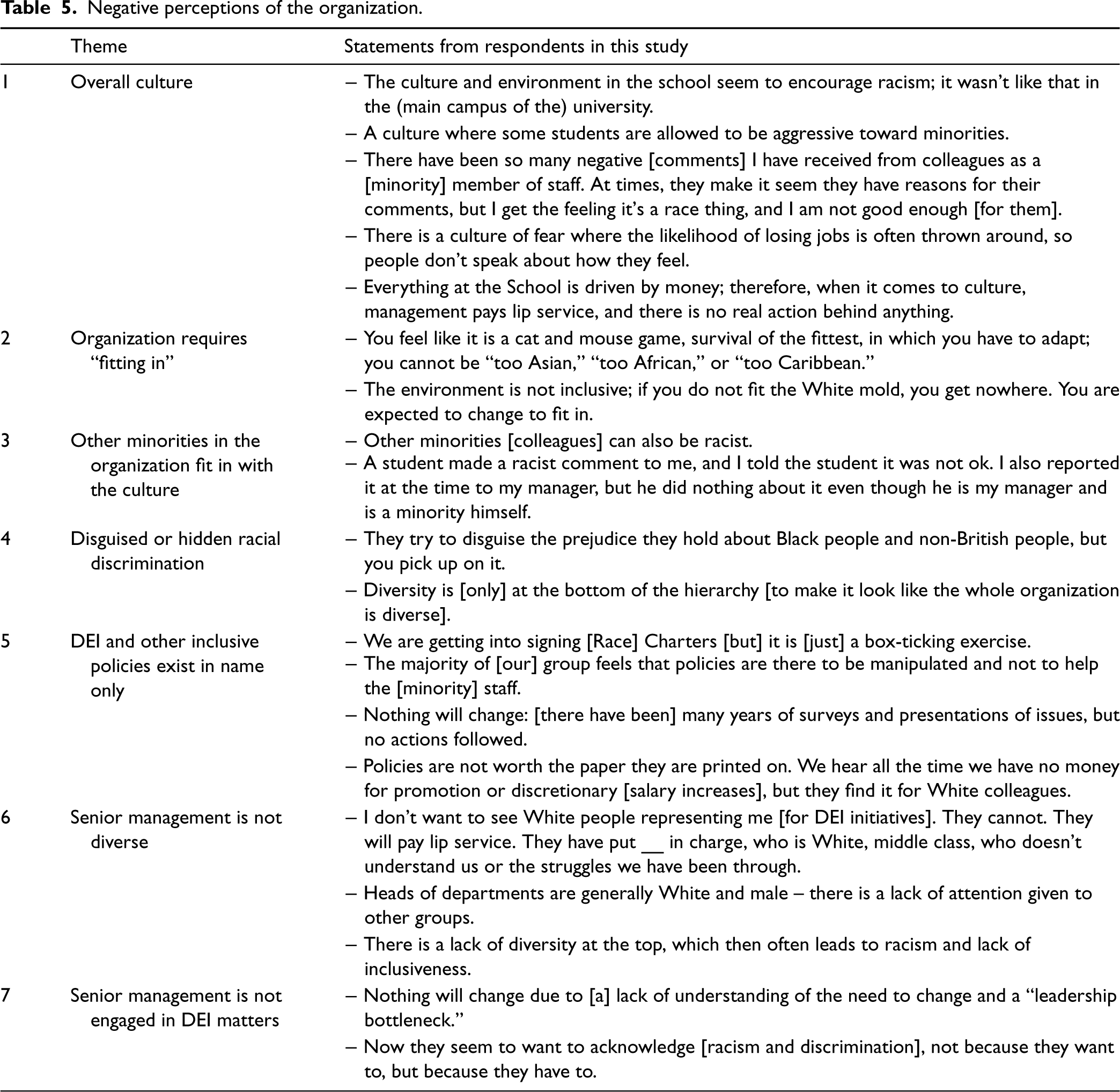
Negative perceptions of the organization.
As I am proposing enterprise-wide CI, I switch tack to consider all employees, majority or minority, in the organization and, specifically, employee engagement and the eventual goal of improved organizational performance. Could the negative perceptions of minority employees lead to their reduced engagement? Although Saks and Gruman (2014) note the difficulties in establishing antecedents of employee engagement, I propose that microaggression and perceived job-related discrimination reduce that engagement.
The interview data provide some evidence of this. Although the interviewers did not ask minority employees for their reactions to experiences and perceptions, some respondents provided these. There appear to be two types of responses: “giving up” on the organization and “fighting back.” Neither implies that the employee is engaged with the organization or their job, using the distinction in Saks (2006). “Fighting” carries a potentially positive connotation; the employee may be ready to work harder and engage more with their job (if not the organization itself) for instrumental reasons (recognition and promotion; Table 6).
Employee reactions.
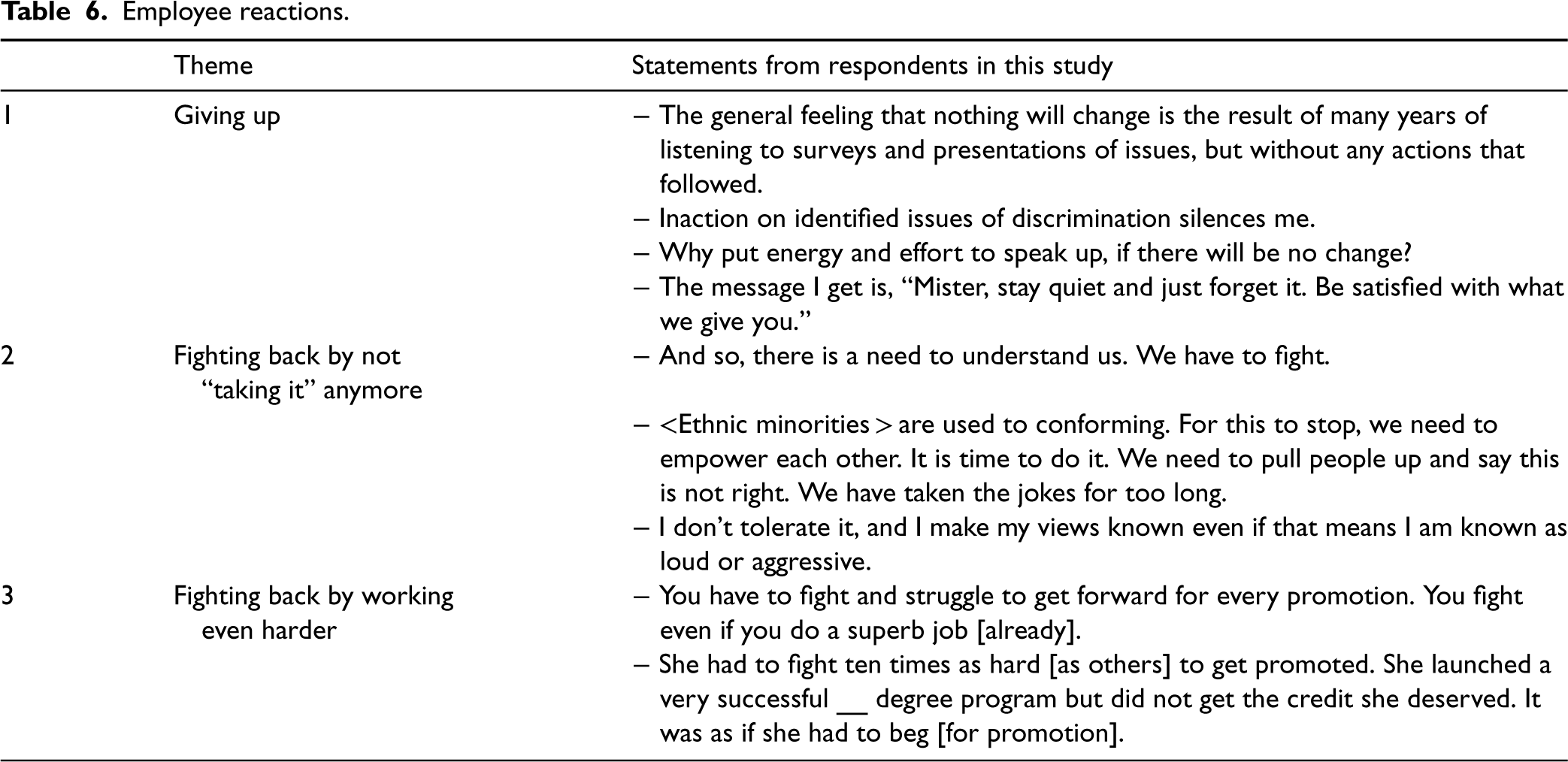
Employee reactions.
I can now posit that (1) negative perceptions of the organization reduce a minority employee's engagement with that organization and (2) feelings of noninclusion reduce the employee's engagement with the job. I offer a joined-up conceptual model linking microaggressions and other negative experiences to organizational performance in Figure 1 below.
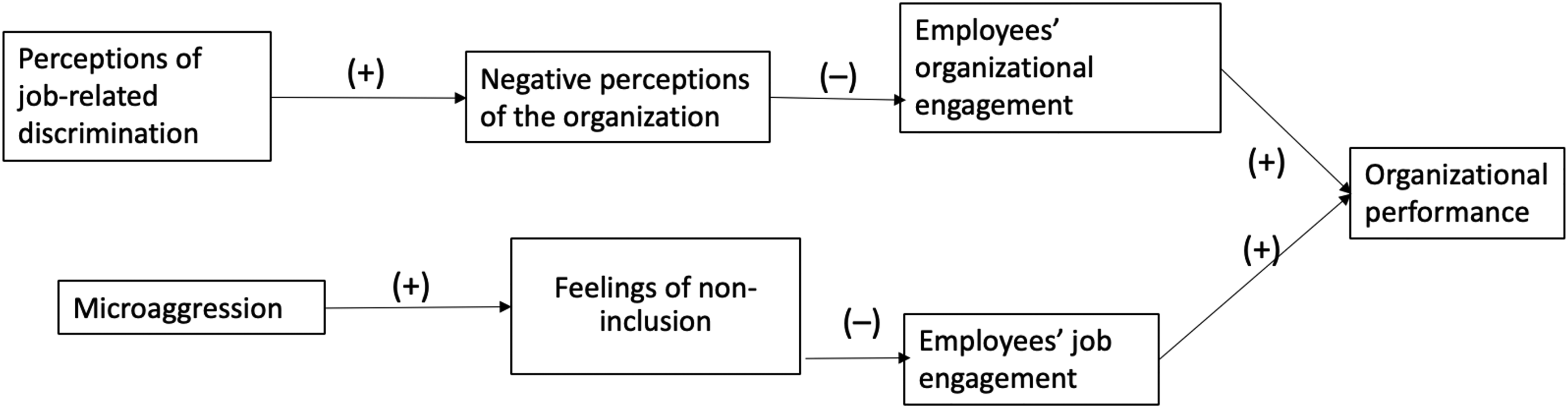
A conceptualization of the impact of microaggression and other negative experiences of minority employees on organizational performance.
Next, I consider the different ways CI could improve both organizational performance—through process improvement—and minority employees’ experiences and perceptions, which eventually impact performance (Figure 1).
Microaggression at Work
Could enterprise-wide, project-based, employee-led CI with team members from different departments help with microaggression? To be sure, incidents such as announcing the making of a golliwog or sharing blackface videos will not disappear just because the organization implements enterprise-wide CI.
As suggested above, there are problems with attitudes and processes (Table 2), which may be improved by working on projects with people from multiple races and encouraging all team members to speak up against microaggressions. Regarding processes, the student-related problems experienced by minority faculty indicate a process failure of student orientation (setting the right expectations and explaining the proper conduct), which can be fixed with CI. Moreover, there would be less reason for conflict if everyone were working toward improving processes, i.e., with a common purpose. Any project is time-bound, and team members would see any unpleasantness during a project as similarly time-bound. Team members being from different departments would allow a shared perspective on processes and enable employees to meet and work outside their functional silos. The support of leadership and visibility encourage people to be on their best behavior. In this regard, I make the following proposition:
CI reduces the incidence of microaggression in the organization.
Enterprise-wide projects could, perversely, encourage the development of even more extensive race-based cliques across the enterprise, but individuals could also extend themselves beyond existing cliques. The overall impact is likely to be positive.
Such feelings can be diminished by being included in a project, especially one in which the top leadership is visible and supportive. Being forced to fit in is an attitudinal problem that can diminish over time with people working in cross-functional teams on multiple CI projects. The projects being employee-led also promote inclusion and improve attitudes. In my LSS experience, teams were self-selected, and the processes for improvement were chosen together. With everyone working toward improving an organizational process, employees, minority or otherwise, can feel included. A coach or project facilitator could help address any feelings of noninclusion by keeping the team focused on project deliverables. I offer the following:
CI reduces feelings of noninclusion.
CI can reduce feelings of non-inclusion directly and indirectly by decreasing microaggression (which is positively linked to feelings of non-inclusion).
Process improvements, including variability reduction, are at the heart of CI. Underlying many perceptions of discrimination is the fact that there is variability in policy implementation in daily processes because supervisors are not following processes uniformly, and the university does not monitor all supervisors and processes. Variable policy implementation on vacation, sick leave, overtime, and internal positions not being announced or only being announced after selecting people (Table 4) results in “defects.” This university also has an issue with salaries that appear inconsistent with published numbers despite a public salary scale like that of other UK universities. CI can target these defects with Six Sigma or LSS. Process improvement could minimize this problem. A practical approach would be for managers to run specific projects to address variability in implementing HR policies. I thus propose the following:
CI reduces perceptions of job-related discrimination.
Minority employees may, as a result of their perceptions of job-related discrimination, have negative views of the organization, mainly regarding failure to follow policy, whether a mere perception or a reality (Table 5). The organization could face legal challenges or face employees quitting. As discussed above, CI in hiring, interviews, promotions, and internal job postings would help. We also need to understand why the implementation of DEI (or other) policies remains nominal and why poor leadership in DEI is pervasive. CI's root-cause analyses can help attenuate these persistent perceptions. As such, I propose the following:
CI reduces negative perceptions of the organization.
Not all solutions require CI—for instance, setting up a DEI office with a minority director does not apparently warrant a CI intervention, but there is a risk that solutions otherwise degenerate into tokenism or report generation without reducing the negative perceptions of the organization.
Participation in an organization-wide CI program, with training and certification (e.g., Green Belt Six Sigma), should help employees feel engaged with the organization. CI is “participative, entailing the involvement and intelligence of the workforce, [and] generating intrinsic psychological and quality of work-life benefits for employees” (Brunet and New, 2003: 1428). Bessant and Caffyn (1997) present a 2 × 2 model of CI of impact versus employee involvement at the organizational level, and Cheser (1998) provides empirical evidence of employees’ internal motivation growing significantly in fewer than six months after the kaizen conversion of jobs in a US manufacturing plant. I therefore propose the following:
CI improves employees’ engagement with (a) their organizations and (b) their jobs.
Organizations could integrate CI into job design, with individuals carrying on CI independently. Instead, I propose CI as an enterprise-wide program with employees working on projects specifically designed to improve organizational performance. The increase in performance would depend on how the organization implements CI, and there may be successes and failures (e.g., Bessant et al., 2001). Nevertheless, there are many stories of organizational success with improved performance related both to cost reduction and new product development. For instance, Bessant and Caffyn (1997) find that 89% of 142 UK firms surveyed reported CI programs improving at least one of the following performance dimensions: productivity increase, quality improvement, and better delivery performance. As such, I propose the following:
CI improves organizational performance.
P5 and P6 apply to virtually any organization and all employees, including minority ones. CI can improve processes and performance companywide. Employee engagement mediates this improvement, whether engagement with the organization or with their job. Combining the propositions, I propose a conceptual model of how CI could improve organizational performance in Figure 2.
The above model serves two purposes: (1) It links the negative experiences of minority employees to organizational performance, thus providing organizations with an economic rationale for DEI efforts; (2) CI can meet multiple objectives in improving the organization's performance and the well-being and engagement of minority employees.
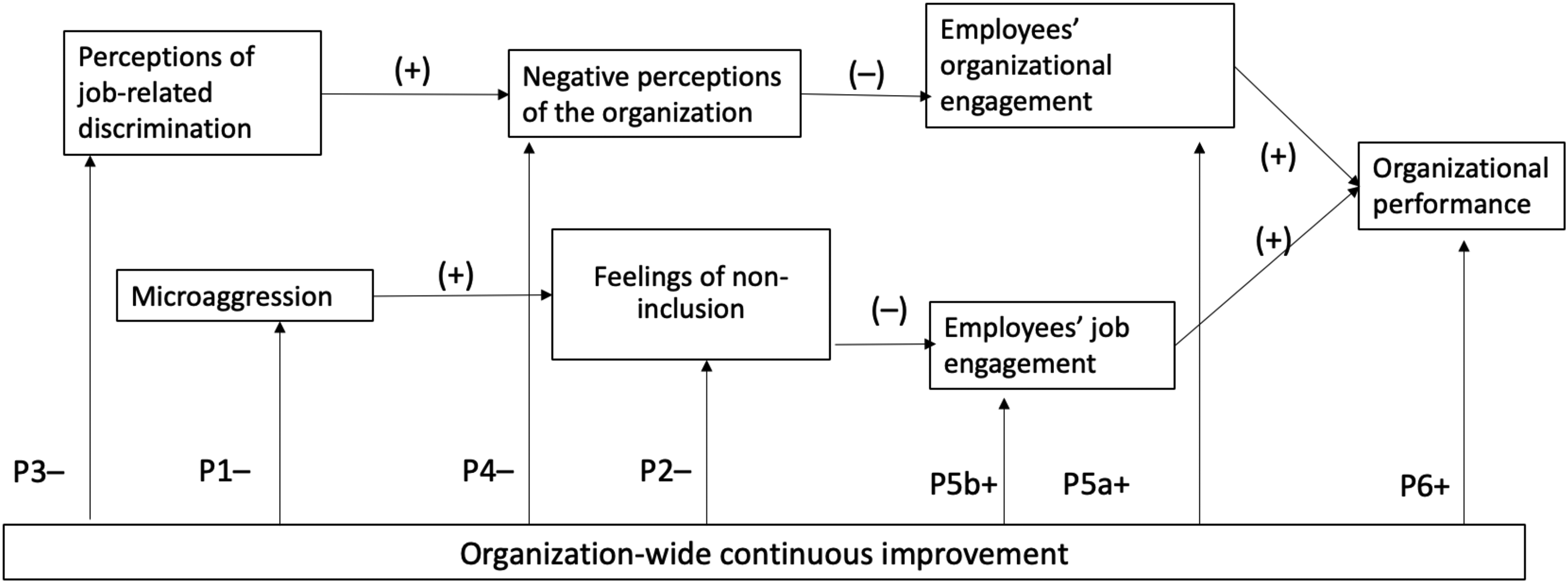
A conceptualization of how continuous improvement (CI) can directly and indirectly improve performance.
I have proposed a conceptual model of how CI can help reduce microaggression and other negative racial experiences in the workplace. I have also noted that organizations should do so to improve their performance. Managers charged with performance improvement should be interested in CI, even if they think racial issues are manifestations of “hypersensitivity” or so-called “woke” behavior. I used data drawn from interviews with minority employees of one school at a UK university to illustrate microaggression and perceptions of job-related discrimination, negative perceptions of the organization, and feelings of non-inclusion. I then linked these concepts to workplace engagement and organizational performance, drawing on the engagement literature. Finally, I explained how CI can affect all links in the chain, proposing a conceptual model that draws together employees’ negative experiences and organizational performance (Figure 2).
Practical Implications
Microaggression and perceived discrimination at work are real and have a detrimental impact on minority employees. Government regulation can only do so much and the literature suggests the following practical DEI measures: (1) explaining microaggression and racist incidents—and their implications—to employees and senior managers, (2) providing a formal support system for people affected by microaggression and perceived discrimination, (3) identifying patterns of noninclusion in workgroups and functions, possibly prioritizing “fit” (e.g., by national or even prior university origin) over the organizational performance, and (4) ensuring transparency in job announcements and explaining the rationale for promotions and salaries.
However, such solutions may be merely cosmetic. First, managers engendering or tolerating race-related problems may also be the ones implementing DEI initiatives. It is thus not clear that the “leader's acknowledgment of microaggression” (Young et al., 2015) is an adequate response in all settings. Second, institutions may see DEI initiatives as regulatory requirements that reduce the likelihood of litigation at the cost of producing more reports and symbolically supporting rather than acting to address pressing social problems in the workplace.
Using CI avoids these problems, ensuring a focus on the organization's performance through a bottom-up approach and cross-cutting functional project teams. CI incorporates “micro” interventions (Sue et al., 2007) simply by having employees work on cross-functional employee-led projects and finding solutions in different teams. Pierce (1970: 279) suggests using a “street therapist … to conduct supportive-relationship treatment” to support minority employees against microaggression and to help change “the institutional processes which work to damage their emotions.” CI can create many “street therapists” in the form of project leaders and colleagues interacting on multiple projects. Even managers who turn a blind eye to microaggression must seek to improve the organization's overall performance, and the business case for enterprise-wide CI should thus appeal. CI in educational institutions can certainly face challenges—see Antony et al. (2018) for implementing LSS at a UK university. My experience is that top leadership support is a fundamental requirement for success.
The CEO of a DEI consulting firm whose offerings include diversity and sensitivity training for corporate clients reviewed a version of this article and offered his support for the approach as help[ing] to reduce micro-aggressions and perceived discrimination and improve employee engagement and organizational performance with a platform that allows employees access to available projects in LSS, CI, etc., and participate in these projects in addition to their day jobs.
Assigning employees to projects can be affected by unconscious bias in decision-making or implicit bias in processes, resulting in even stronger feelings regarding discrimination.
Rewards granted to employees within (or across) projects can also exacerbate perceptions of micro-aggression and discrimination.
Racially diverse employees may misinterpret these projects as an additional inequitable load on them to make them work harder to get access to the same promotional and developmental paths that others get much more easily.
Exclusively staffing these projects with racial minorities or having a disproportionate number of minorities working in these projects can increase perceptions of reverse discrimination on the part of majority constituency employees.
Proper use of CI with many small team-based employee-led projects cutting across functions and involving all, not only minority, employees can avoid these pitfalls.
The conceptualization (Figure 2) offers an organizational context for microaggression that extends beyond employee engagement. I have also offered a larger canvas for enterprise-wide CI than before. Rather than focusing on the negative effect on individual employee mental health, as in the microaggression literature, my focus is on organizational performance. I extend the employee engagement literature by proposing the negative experiences of employees based on race (or other characteristics) as antecedents to engagement. I propose enterprise-wide CI programs as a helpful intervention in both fields. Finally, I bring organizational performance factors from the two streams of literature to the operations management literature and thereby expand the case for CI.
Still, the conceptualization is only a starting point for further research, including testing and comparing the model or its extensions with other constructions. For instance, Young et al. (2015) propose microaggression eventually reduces organizational productivity. I, too, draw a link from microaggressions to engagement to organizational performance (Figure 1), but is an instrumental approach the only one? Is there a case for reducing microaggression and discrimination-lite on grounds other than performance, and if so, how?
Studying why organizations continue to struggle despite well-publicized DEI programs may also be interesting. It may be worthwhile to explore minority employees’ experiences and negative perceptions of the organization through the lens of social exchange theory (Cropanzano and Mitchell, 2005). Prieto et al. (2016) offer a Broken-Windows approach, while Torino et al. (2017) speculate on future directions in their edited compilation. Microaggression research could also be expanded to investigate persistent wage differentials between minority and majority workers (e.g., Lang and Lehmann, 2012). Finally, although I focus on race, my conceptualization could be adapted to consider issues related to age, gender, or sexuality; such efforts will help better understand approaches (like CI) that go beyond performance improvement.
To conclude, my proposal to use CI is in line with Pierce's (1970: 266) exhortation that society does not need “new laws or innovative plans” as much as “interaction which involves majority and minority citizens” to eliminate microaggressions and other negative experiences. Organizations can use CI as proposed to improve their performance and synergistically realize the goals of their DEI initiatives.
Footnotes
Acknowledgment
I am grateful to N. Suri Surinder of CTR factor (ctrfactor.com), a DEI advisory, for his thoughtful feedback and permission to quote him on the potential benefits and pitfalls of the approach presented. The paper took shape due to the untiring support and suggestions of Charles Corbett, Sriram Narayanan, and the anonymous review team. I would also like to thank Christopher S Tang for his comments on improving the paper.
Declaration of Conflicting Interests
The author declared no potential conflicts of interest with respect to the research, authorship, and/or publication of this article.
Funding
The author received no financial support for the research, authorship, and/or publication of this article.

Notes
How to cite this article
Sodhi MS (2025) How to Reduce Microaggression and Other Negative Racial Experiences at Work with Continuous Improvement. Production and Operations Management 34(3): 423–435.