




Abstract
In recent years more attention has been given to the ways in which mixed-sex and same-sex intimate partner violence (IPV) couples report crimes to the police. Specifically, what patterns of repetition, intermittency between contacts with the police, and harm trajectories over time exist, and are there variations between same-sex and mixed-sex dyads? We explore all eligible IPV reported in Sweden over 1,000 days (n = 14,939) and use descriptive statistics to examine differences between different victims and offenders. We code IPV offences within three levels of harm recognized by law and develop a tiered approach to harm quantification that supports the growing evidence that not all IPV harm is the same. Based on official records, IPV usually ends following the first contact with the police, as nine out of ten dyads never call again. Variations across cisgender and sexual identity groups exist: Repeat same-sex IPV is not as common as mixed-sex IPV but is reported more quickly to the police after it had occurred once. In the 1,000-day follow-up period, same-sex dyads do not call the police more than four times and the repeated incidents trends seem to be driven primarily by outliers. Moreover, we find an overall pattern of decreasing time intervals between each additional contact, but no overall pattern of escalating severity over time. However, the overall severity trend it driven by female-victim-male-offender dyads: male offenders are more likely to cause escalation of harm, while two out of five male–male repeat IPV experience escalation in harm. We discuss the theoretical and practical implications of these findings, which overall illustrate the importance of observing IPV in typological terms, rather than as a continuum.
Research on intimate partner violence (IPV) has historically focused on male offenders and female victims with emphasis on the role of gender as a prominent component of popular explanatory abuse theories. Scholars such as Johnson (2008) and more recently Løwenstein et al. (2023) have leaned into gender-based differences as the source of hypotheses. But such hypotheses are typically grounded in historical contextualization of IPV as a male-on-female crime. A more recent body of work has begun paying closer attention to other groups of victims and offenders. Self-reported data from multiple research sites indicate that the prevalence of IPV victimization among heterosexual men can, at times, resemble, the prevalence among heterosexual female victims (Archer, 2000; Nybergh et al., 2013; Rozmann & Ariel, 2018). Non-heterosexual victims experience similar or higher prevalence but more severe forms of IPV and abuse than heterosexual victims (Ibrahim, 2019, p. 8). There are additional maladaptive outcomes for subgroups of non-heterosexual victims because of the unique components of their sexual orientation and their minority status in society, which create abuse multipliers (Badenes-Ribera et al., 2016, p. 284; Callan et al., 2023; Finneran & Stephenson, 2013; Gehring & Vaske, 2017). Specifically, these additional outcome factors include sexual orientation “outing,” homophobia, and higher barriers to support.
One overlooked area globally is nation-level data on the IPV escalation, which states that IPV grows worse over time (see Pagelow, 1981; Walker, 2006). There is no ubiquitous support for the existence of escalation of abuse, with some dyads experiencing escalation, and some that do not (Bland & Ariel, 2020b; Loewenstein et al., 2022; Sherman, 2018). Some IPV victim groups such as indigenous populations suffer disproportionately with harm escalation (Kerr, 2016; Piquero et al., 2006). There may be different trajectories for cisgender and sexual orientation IPV victim groups. For example, does repeated IPV look different for men and women of different sexual identities? Do they share the same intermittency patterns or harm variations over time? At present we lack both empirical evidence and theoretical constructs for these questions. Specifically, there has not yet been a body of research that enables us to examine even the existing dominant theories of IPV escalation in the context of same-sex dyads.
We aim to address these gaps by analysing cases of IPV reported to the Swedish national police between 1 January 2015 and 27 September 2017. We review patterns of victimization while comparing same-gender and mixed-gender IPV. We begin by reviewing the literature on IPV against different victim groups and then focus on IPV research using official records to test the IPV escalation question: Does escalating IPV fluctuate differently across victim groups? We then describe the methods used to analyze the data, followed by a presentation of the results. We conclude with a discussion on the theoretical and practical implications, which calls for more attention to variations across victim groups.
Literature Review
IPV With Heterosexual Male Victims
Historically, research has focused on female victims of IPV but it is possible that men experience it at similar rates of prevalence. Globally, there are wide variations in male-victim IPV prevalence between nations (Coll et al., 2020): some studies suggest higher IPV prevalence against heterosexual female victims compared to heterosexual male victims (see Rozmann & Ariel, 2018); others indicate equal or higher rates of physical IPV among men than women (Sparrow et al., 2020). In the United Kingdom, the Office for National Statistics (2016) reports, based on a national survey, that IPV involving heterosexual male victims occurs at 4.0%, as opposed to 8.2% of IPV involving heterosexual females (Office for National Statistics, 2016). Other national surveys support this finding (Tjaden & Thoennes, 1998), but some survey instruments suggest that rates are closer between the genders or claim higher rates of victimization among males (Archer, 2000; O’Leary et al., 1989; Straus, 1979; see also the review in Rozmann & Ariel, 2018; for an international perspective, see Harvey et al., 2007).
IPV harm is not just a matter of rank ordering. Harm measurement also enables classification and cross-reference to different IPV types. Perhaps the most prominent typology of IPV cases is Johnson's (2008) separation of cases into intimate (formerly patriarchal) terrorism, violent resistance, and situational couple violence. Johnson's theory has evolved since its original conception (see Johnson, 1999) but began as a gender asymmetrical construct. A systematic review of the evidence suggests that women experience about two-thirds of all IPV physical injuries, and about one-third are sustained by men (Archer, 2000). Additional studies have shown that IPV involving female victims is more likely to be injurious than when men are victimized (Cantos et al., 1994; Cascardi et al., 1992; Palmetto et al., 2013). We also know that men engage in domestic homicide more frequently than women (Caman et al., 2017; Graham-Kevan, 2007), and we suspect that these are often acts of despair. Finally, women are more likely to suffer from depression and post-traumatic stress symptoms linked to IPV than men (Cascardi et al., 1999). In short, gender matters.
Evidence on IPV With Nonheterosexual Victims
A relatively extensive body of evidence from the United States shows that IPV among same-sex couples is at least as frequent and severe as violence among heterosexual couples (see Finneran & Stephenson, 2013; Pattavina et al., 2007, p. 375). Chen et al. (2020, p. 110) report results from the National Intimate Partner and Sexual Violence Survey (n = 41,174), concluding that non-heterosexual individuals experience a higher prevalence of IPV compared with heterosexual individuals.
On the other hand, despite commonalities in same-sex and different-sex IPV prevalence rates, research suggests that victims within same-sex couples experience IPV differently and with shifting intensities. Decker et al. (2018, p. 265) have shown that sexual and/or gender minority individuals face additional negative outcomes, such as post-traumatic stress disorder, at varying rates. A number of unique risks factors for IPV victimization and perpetration apply to lesbian, gay, and bisexual individuals, such as “minority stress” risk factors (Edwards et al., 2015, p. 112; see more broadly Meyer, 1995) and “dynamic developmental systems” risk factors (Capaldi et al., 2012; see also Burke & Follingstad, 1999), which make their IPV victimization experience and its aftermath disparate from different-sex dyads. Indeed, victims of same-sex IPV may find themselves at greater risk of these effects. A systematic review of 77 correlational studies on the mental health of transgender and gender non-conforming populations suggests that “depressive symptoms, suicidality, interpersonal trauma exposure, substance use disorders, anxiety, and general distress have been consistently elevated among this group” (Valentine & Shipherd, 2018, p. 24). We can only speculate about the translation of this trend to IPV but based on the US National Longitudinal Study of Adolescent to Adult Health, domestic violence in same-sex relationships can lead to “more depressive symptoms and greater involvement in violent delinquency, with the impact of IPV on violent delinquency being greater for victims of same-sex IPV compared with opposite-sex IPV” (Gehring & Vaske, 2017, p. 3669).
Same-Sex and Nonheterosexual IPV Research Outside the US
IPV research is even sparser when considering evidence outside the United States on IPV, particularly IPV involving a wider range of victims. The incidence of global IPV varies depending on sociocultural factors and the research settings in which the studies have taken place. Finneran and Stephenson (2013) report findings from an internet-based survey in multiple countries (Australia, Brazil, Canada, UK, US, and South Africa) that IPV varies greatly across research sites (physical IPV 5.8%–11.8%; sexual violence 2.5%–4.5%). Based on different samples, Stephenson et al. (2020) state that the prevalence of IPV in male–male relationships in South Africa was approximately 8%, markedly higher than in the US. However, in Canada, Whitehead et al. (2021) used the national Canadian Uniform Crime Reporting data collected from all participating police departments from 2007 to 2011 to suggest that 3% of 346,565 IPV cases reported to the police involved people engaged in same-sex relationships (this is similar to the rate of Canadians who identify as gay or lesbian).
Clearly, the source, location, and definition of IPV and the sexual identity of the victim result in different rates of IPV. Valentine et al. (2017) report that in clinical settings, IPV among transgender, gender non-conforming, and sexual minority individuals is more prevalent than among cisgender women (ranging from 6.6%–12.1% to 2.7%, respectively). This result reinforces the need for scholars and practitioners alike to be more cognizant of the different possible dyad formations within these blanket same-sex and different-sex categories.
IPV Research Using Official Records
While it is widely acknowledged that official crime statistics do not represent the entire gamut of violence (or abuse more broadly), and often underrepresent or overrepresent marginalized populations, it remains the case that the police are the primary social institution prepared to respond to IPV (Bland & Ariel, 2020a, 2020b, 2020c) regardless of the gender or sexual orientation of the victim. Therefore, much more research on IPV is needed that consults official statistics.
Even though it is widely acknowledged that not all IPV is reported to law enforcement (see Bland & Ariel, 2020c for a discussion), police records are also the most reliable, systematic, and largest source of information on the societal response to IPV compared to any other source of information (see Addington, 2020; Hirschel & McCormack, 2021). However, what types of violence are reported to the police, and by whom? What patterns of repetition, intermittency, or escalation exist when observing police data on IPV in general and in different types of dyads?
Data from the United States National Incidence-Based Reporting System (NIBRS) are a case in point. The 2000–2009 data on 2,625,753 cases of IPV in 5,481 jurisdictions across the US suggested that IPV involving heterosexual couples was more likely to result in an arrest, and same-sex couples were more likely to be arrested together (Hirschel & McCormack, 2021). Note, these data were drawn from the period prior to the Obergefell v. Hodges (2016) decision, which ruled that same-sex couples have a fundamental right to marry by both due process and the equal protection clause of the 14th Amendment to the US Constitution. However, more recent NIBRS data indicate similar dual arrest rates across male–male dyads (59% versus 56%; Addington, 2020). More critically, how the police respond to IPV depends on the evolving legal landscape, which affects how the police register, treat, and investigate non-traditional IPV. The US Supreme Court decision to recognize gay and lesbian marriages in Obergefell v. Hodges (2016) led many police departments to apply similar levels of protection from and equal service for victims of non-heterosexual and heterosexual IPV. At least for some police measures, the legal change has led to “more law” for sexual minorities (Black, 2010, p. 3), translating into variations in police records data.
Finally, what presently seems to drive arrest decisions in IPV across the board is specific IPV characteristics, such as the seriousness of the offence (see also Pattavina et al., 2007). However, this factor does not increase the likelihood of arrest in female–female IPV, which may be driven by (mis)perceptions held by police officers regarding the lack of possible physical harm (i.e., seriousness) of female vs. female violence overall (Weiss et al., 2018).
Does IPV Escalate Over Time?
The escalatory IPV hypothesis suggests that, over time, the level of abuse becomes more severe—the assaults become more acute, control becomes more stringent, and the violence becomes more frequent or more harmful (see Pagelow, 1981; Walker, 2006). However, research suggests that the escalation of harm, when it happens, occurs in a subset of dyads, rather than in all IPV dyads. For example, data from six experimental sites in the US exposed to the Spouse Assault Replication Program (SARP) in the 1990s—Atlanta, Charlotte, Colorado Springs, Miami-Dade, Milwaukee, and Omaha—demonstrate a heterogeneous mix of IPV offenders. Variations included those who would potentially escalate the level of harm they cause to their victims and those who escalate and de-escalate the severity of their attacks over the short-term follow-up periods (Piquero et al., 2006). Victim interview data indicate that some offenders display a stable, high-level of aggression, some offenders intensify their violence, other offenders de-escalate their violence, and some offenders sustain low levels of aggression.
More recently, Bland and Ariel (2015, 2020a, 2020b, 2020c) and Barnham et al. (2017), as well as others, have used the Cambridge Crime Harm Index (Sherman et al., 2016) as a measurement instrument. This tool uses the number of days in prison that offenders receive as a proxy for severity to measure whether harm scores increase between calls to the police for service. Overall, none of these studies have offered support for the overall escalatory IPV hypothesis. Even among 76 couples who experienced 80% of all harm reported to the police, Bland and Ariel (2015) have not found evidence of consistency in escalation throughout each subsequent event. These studies suggest that, on average, IPV does not become more acute over time, though we should note that the use of harm indices is limited by the specific nature of each instrument. In the case of the Cambridge Crime Harm Index (Sherman et al., 2016), individual factors are not taken into consideration and the harm metric is indicative of harm against society rather than the individual (see also Loewenstein et al., 2023).
Evidence from outside the UK, which used the same Cambridge Crime Harm Index methodology, is more nuanced. For example, using the same Cambridge Crime Harm Index methodology, Kerr, Whyte, and Strang (2017) examined 62,000 cases of domestic abuse reported to the police between 2009 and 2014 in the Northern Territory in Australia and found that “while there was no evidence of escalation in either frequency or severity of IPV incidents in the White dyads, there was substantial evidence of escalation among Aboriginal offenders with three or more incidents in a 4-year period” (143). Finding escalation in some but not other groups of victims asserts that certain types of dyads experience escalation, even if escalation is not a global phenomenon.
Escalation into IPV Homicide
One paramount concern is whether there is evidence for IPV escalation to domestic homicide. IPV can result in a homicide in rare situations, and in the presence of certain risk factors (Campbell et al., 2003). A measurement for this scenario would be increased contact with the police that ends in a homicide (this is often referred to as the “the writing was on the wall” argument: a critique of the police for their inability to preclude a preventable IPV homicide). However, research does not support this general contention (see the review in Sherman, 2018). The overwhelming majority of domestic homicides occur without any contact with the police, escalatory or otherwise (see Bridger et al., 2017; Button et al., 2017; Chalkley & Strang, 2017; Sherman et al., 1992; Sherman & Strang, 1996; Thornton, 2017).
Research further suggests that certain characteristics are present in lethal but not non-lethal domestic violence, including whether there was a history of non-lethal violence in a relationship, the duration of violence, whether the perpetrator had previously been arrested, threatened to kill the victim, and so forth […] partner violence perpetrators exhibit qualitatively distinct behavioral clusters, some of which overlap with other criminality indices. (McPhedran & Baker, 2012, p. 967)
Collectively, the evidence of non-lethal and lethal domestic abuse strengthens the conclusion reached by Goussinsky and Yassour-Borochowitz (2012) as well others (Dobash et al., 2007) that there are phenomenological differences between domestic homicide and non-lethal domestic abuse in terms of the “emotions that trigger it, the circumstances that led up to it, and the state of mind that characterizes it” (Goussinsky & Yassour-Borochowitz, 2012, p. 553). There are discrete categories of domestic violence rather than a single continuum stretching from “light” to lethal violence (see the review in McPhedran & Baker, 2012, pp. 967–8), which explains the difficulty in predicting domestic homicide using police records. Thus, we can think of two categories—Homicidal IPV vs Non-Homicidal IPV—that generally do not share the same attributes.
Does IPV Escalate Differently for Victims Who Are Not Heterosexual Females?
As more recent and granular analyses of IPV deflate the generalized escalation hypothesis of domestic harm (Sherman, 2018), stipulating instead that there are categories of harm rather than one continuum of severity (McPhedran & Baker, 2012) or different types of batterers (Piquero et al., 2006), we are keen to explore whether the same conclusion can be reached about IPV involving victims other than heterosexual females. Johnson's hypothesis of “intimate terrorism” (2008) was founded on the notion of male-on-female IPV but even though it has been updated (to “intimate partner terrorism”) does the pattern extend to same-sex couples? Johnson contends that escalation is more likely to occur gradually. The preceding review suggests that while IPV involving heterosexual female victims shares similar characteristics with IPV involving all other categories of victims, there remain differences in scope and magnitude. Some have argued that there are similarities between same-sex or mixed-sex victims of domestic violence in terms of possible escalation over time (Island & Letellier, 1991; Renzetti, 1992), but this evidence is scant and relatively antiquated at this stage, given the aforementioned changes in culture, law, and reporting norms. Our analyses are meant to fill this void.
Methods
Settings
Our study takes place in Sweden. According to its National Council for Crime Prevention, one in four persons in Sweden is vulnerable to becoming a victim of any crime, with the rate of victimization for crimes against persons and crimes against property at 9% and 10%, respectively, per year. Seven per cent of the Swedish population are estimated to suffer from domestic violence—with no gender differences regarding the likelihood of victimization (Brå, 2009). Police data indicate that women are abused more than three times as often as men (1.3% and 0.5%, respectively; see Brå, 2014). The Swedish National Council for Crime Prevention further reports that one woman is killed by her partner each month (Brå, 2017). By way of comparison, four women are killed each month by a current or former male spouse in England and Wales (Richards et al., 2008).
According to The National Council for Crime Prevention (Brå, 2014), police-reported domestic violence incidents have increased since the 2000s. However, victim surveys have shown no corresponding increase in the total number of domestic violence incidents in Sweden during the same period. One common interpretation for these mixed trends is the growing willingness of the public to report incidents of domestic violence to the police (Brå, 2009; Office for National Statistics, 2019). Male victims, however, tend to underreport their victimization to the police in comparison to female victims (Brå, 2012b). When looking at hospital records on domestic abuse, the trend follows the victim surveys: there is little variation over time (Brå, 2014). This triangulation suggests that, indeed, the Swedish public reports domestic abuse to the police more frequently than in the past. Another explanation is methodological: the lack of congruence in measurements between the various sources suggest that they are observing different units of analysis, timescales, and types of harm (Ariel & Bland, 2018).
Finally, research in Sweden further indicates the level of repeated victimization to be 50–80% (Brå, 2012). As a point of comparison, in Suffolk (24%) and the Thames Valley (26%) in the UK, the likelihood of repeated contact with the police is lower (Bland & Ariel, 2015; Barnham et al., 2017). Measured as victimization on more than one occasion in the last 12 months, the results suggest that about 0.6% and 0.4% of women and men, respectively, are victimized continuously (Brå, 2014).
Data
Data on 25,021 domestic violence incidents reported to the Swedish police during 1,000 days between 1 January 2015 and 27 September 2017 were analyzed 1 —thus avoiding the effect of COVID-19 (see Nivette et al. 2021). Data were extracted using a standard language query in the Swedish police management system (Rationell Anmälnings Rutin), which included crime classification and features for victim and suspect sex as observed by Swedish Police. The population of cases included all cases tagged by the police as “domestic abuse” incidents (IPV), which includes physical and nonphysical abuse as defined by Swedish Criminal Code. There are too many codes to provide a comprehensive breakdown here of what constitutes physical and non-physical abuse but we characterize these groupings as follows: (1) Physical violence is generally classified as an assault or battery, depending on the severity of the offence. For example, a simple assault may involve physical contact without serious injury, while a more serious offence such as aggravated assault may involve the use of a weapon or cause significant bodily harm. Under Swedish law, physical violence can be prosecuted as a criminal offense even if the victim does not press charges; (2) Non-physical violence, also known as psychological or emotional abuse, can take many forms and may be more difficult to classify than physical violence. In Sweden, non-physical violence may be classified as a form of harassment, stalking, or coercion. Examples of non-physical violence might include threats, verbal abuse, or controlling behavior. See Dagenbrink (2017) for more information.
In 1,683 cases, no victim was registered; and 3,717 cases lacked a suspect. These 5,400 cases without a victim or a suspect were excluded because the applied unit of analysis is a couple (i.e., dyads). In 4,682 of the remaining 19,621 IPV crimes, there was insufficient information on the type of offence to generate a harm level, and these cases were also removed, leaving 14,939 cases for our analytic sample.
The data do not encompass the universe of domestic violence incidents, as not all episodes of domestic abuse events, nor all offenders, are reported to the police (Brady & Nobles, 2017; Nygren et al., 2004). Despite these shortcomings, the data represent the universe of cases handled by law enforcement during these years in Sweden.
Analytical Approach
Our primary interest is observing variations and similarities between same-gender and mixed-gender couples in Sweden, focusing on intermittency and the escalation of harm in-between contacts with the police. We begin by providing descriptive statistics based on these official records (see more broadly in Bland et al., 2022), followed by analysis of intermittency (i.e., the time that elapsed between contacts between the victim and the police) and escalation (i.e., the increased level of injury or harm) over time. These analyses are only possible on cases with more than a single instance of reported IPV.
Analyses are consistently broken down into the four gender combinations recorded by the police (female victim/female offender; female victim/male offender; male victim/female offender; male victim/male offender). No statistics were recorded for victims or offenders who do not subscribe to these inscribed categories.
To assess how harm is distributed across the dyads, and possibly over time, we used a three-tiered system of severity of abuse experienced by victims, as stipulated in the Swedish penal code. The code includes three crime categories in which the relationship between victim and offender is “intimate.” Within each category, several crime codes are linked to different types of abuse, and they are compartmentalized under a three-tier harm grading system. Moving from “low” to “medium” or “high” (Table 1) signifies an intensification of the harm level.
Swedish Criminal Codes for Domestic Abuse Under a Three-Tier System of Harm.
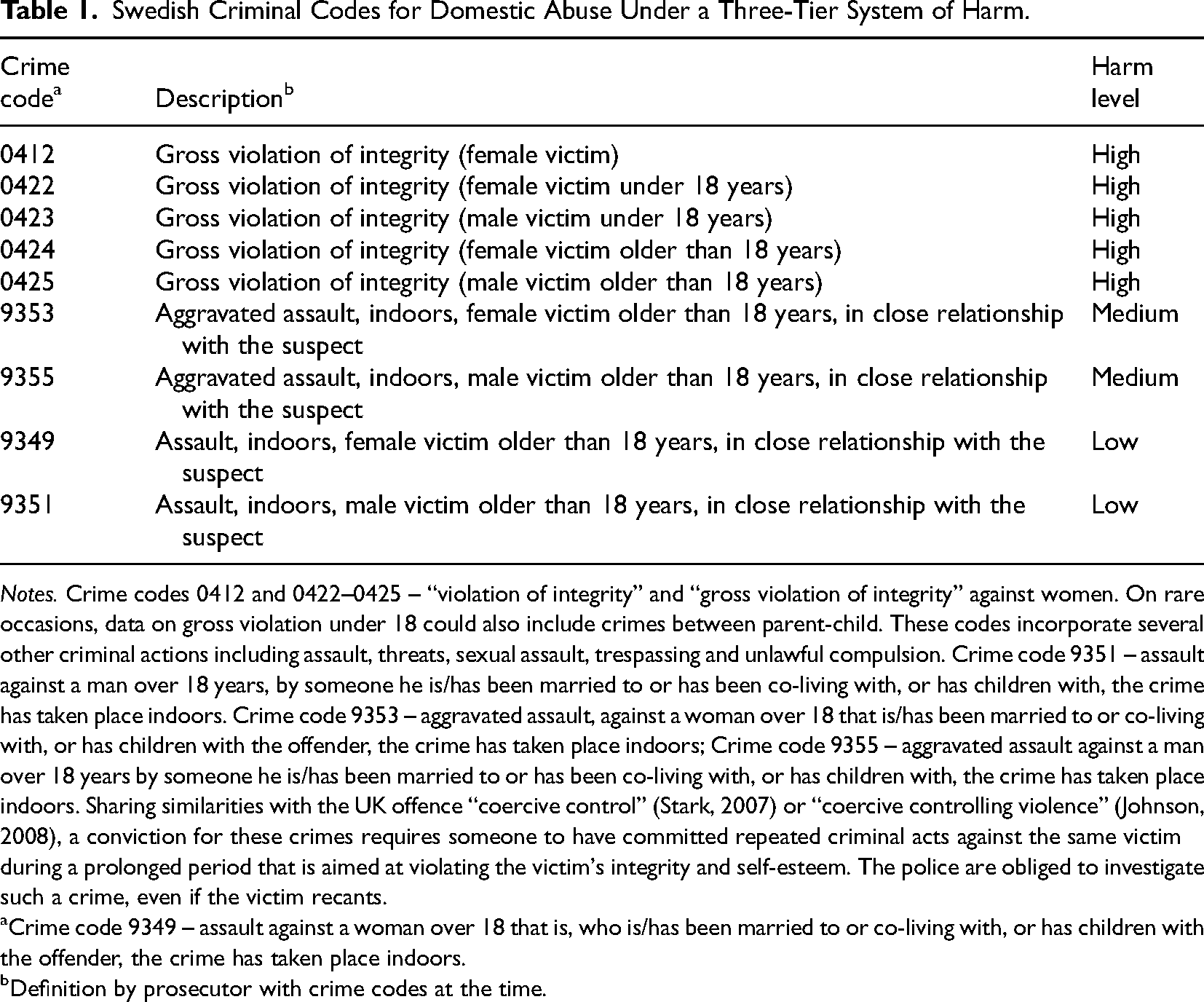
Notes. Crime codes 0412 and 0422–0425 – “violation of integrity” and “gross violation of integrity” against women. On rare occasions, data on gross violation under 18 could also include crimes between parent-child. These codes incorporate several other criminal actions including assault, threats, sexual assault, trespassing and unlawful compulsion. Crime code 9351 – assault against a man over 18 years, by someone he is/has been married to or has been co-living with, or has children with, the crime has taken place indoors. Crime code 9353 – aggravated assault, against a woman over 18 that is/has been married to or co-living with, or has children with the offender, the crime has taken place indoors; Crime code 9355 – aggravated assault against a man over 18 years by someone he is/has been married to or has been co-living with, or has children with, the crime has taken place indoors. Sharing similarities with the UK offence “coercive control” (Stark, 2007) or “coercive controlling violence” (Johnson, 2008), a conviction for these crimes requires someone to have committed repeated criminal acts against the same victim during a prolonged period that is aimed at violating the victim's integrity and self-esteem. The police are obliged to investigate such a crime, even if the victim recants.
Crime code 9349 – assault against a woman over 18 that is, who is/has been married to or co-living with, or has children with the offender, the crime has taken place indoors.
Definition by prosecutor with crime codes at the time.
Findings
Sample Characteristics
Overall Police Contact
We identified a total of 12,697 unique dyads associated with 14,939 crimes that took place during the study period of 1,000 days. Overall, we observed 69% female victim/male offender, 24% male victim/female offender, 4% male–male, and 3% female–female couples reporting domestic abuse to the police.
Victim/Offender Role-Swapping
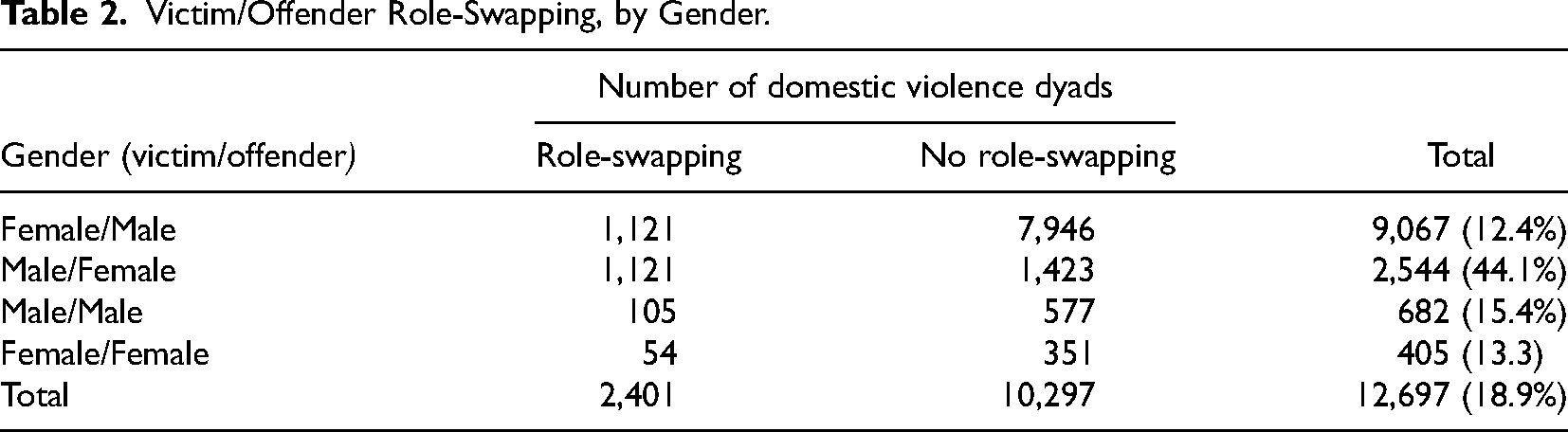
We have identified 2,401 dyads in which both parties have been recorded by the police as both victims and offenders, broken down by dyad combinations (Table 2). The most common overall gender combination is female victim and male offender, but in 19% of dyads, role-swapping between victims and offenders took place. Role-swapping was most common in dyads where the male is a victim of a female offender; in 44% of these dyads, the male victim was also registered as an offender. The second-highest number relates to dyads where both victim and offender are male (15.4%); female victims with either a female or male offender had about the same share (13.3% and 12.3%, respectively).
Victim/Offender Role-Swapping, by Gender.
Serial Offending and Serial Victimization
A total of 174 victims were victimized by more than one offender, but far more female than male victims had more than one abuser (84% versus 16%). On the other hand, 641 offenders had multiple victims, and male offenders comprised the majority of this group (80% versus 20% of the 641 repeat offenders).
Offence Characteristics
Repeat Victimization
As shown in Table 3, approximately 90.2% of dyads had only one contact with the police. The data do not tell us whether the “one-off” calls were due to the termination of the relationship, a lack of trust in ongoing police assistance, or that the abuse stopped following the arrest. Nevertheless, within the group of dyads that contacted the police more than once (n = 1,247), heterosexual females have the highest rate of repeat victimization (11.1%), followed by heterosexual males (8.0%). Females and males in same-sex couples are significantly less likely to be repeat victims of IPV (4.4% and 3.1%, respectively). Importantly, same-sex IPV incidences “die out” faster than different-sex IPV occurrences, with rarely more than two repeats.
Number of Dyads Per Number Of Contacts, by Gender Combination.
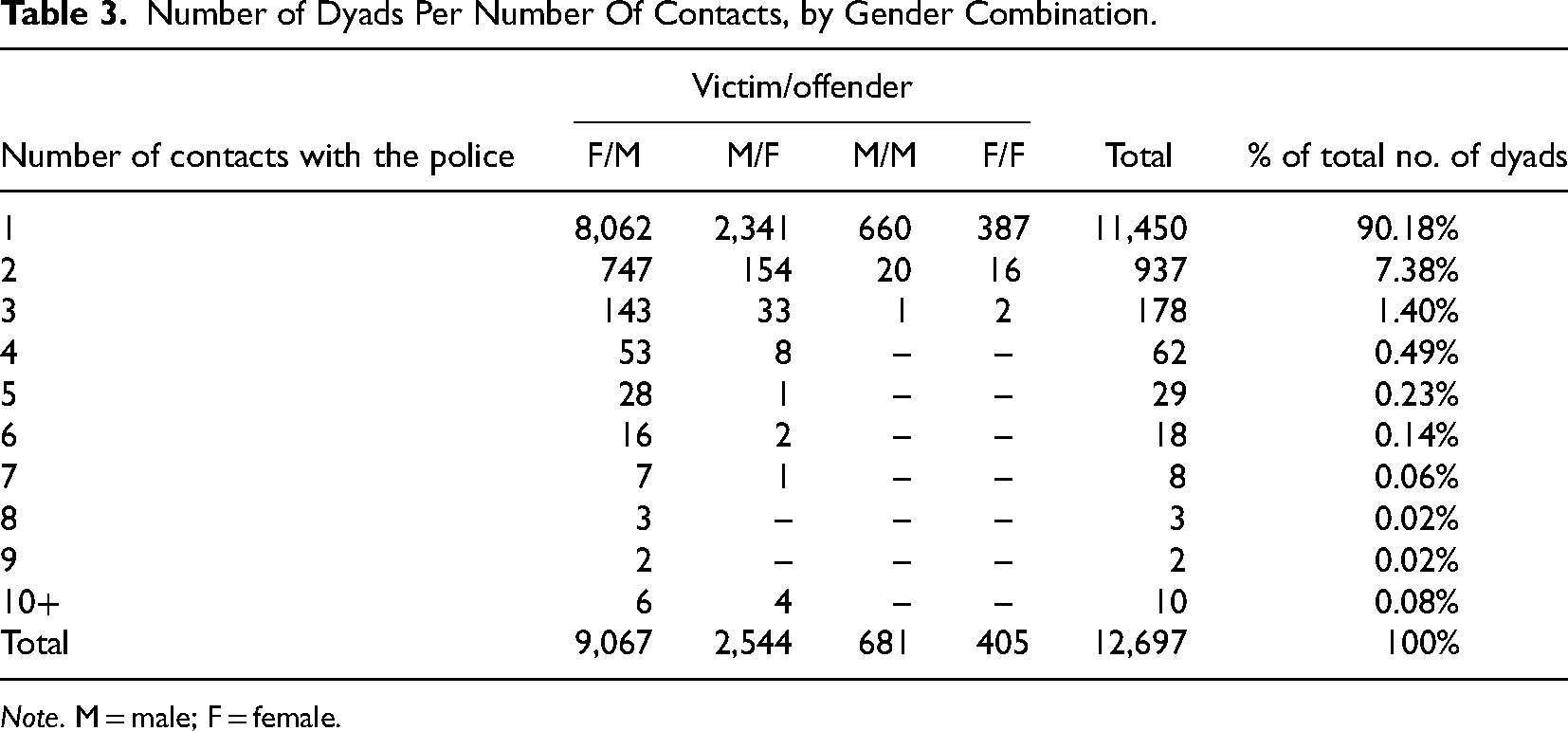
Note. M = male; F = female.
Intermittency
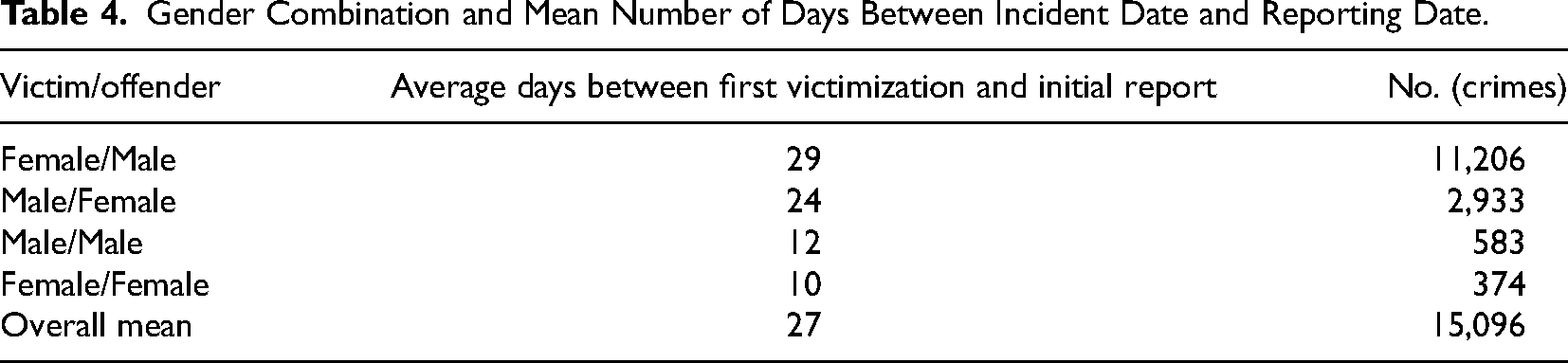
Overall, the mean number of days between contacts (which includes those who have not called the police) from victimization to reporting is usually 27 days, but same-sex couples are likely to call the police faster between the first call for service and second call for service (Table 4).
Gender Combination and Mean Number of Days Between Incident Date and Reporting Date.
Overall, of those who contacted the police more than once, there is a clear pattern of reduced intermittency between contacts with the police, with fewer days between contact as the overall number of calls increases (Figure 1).
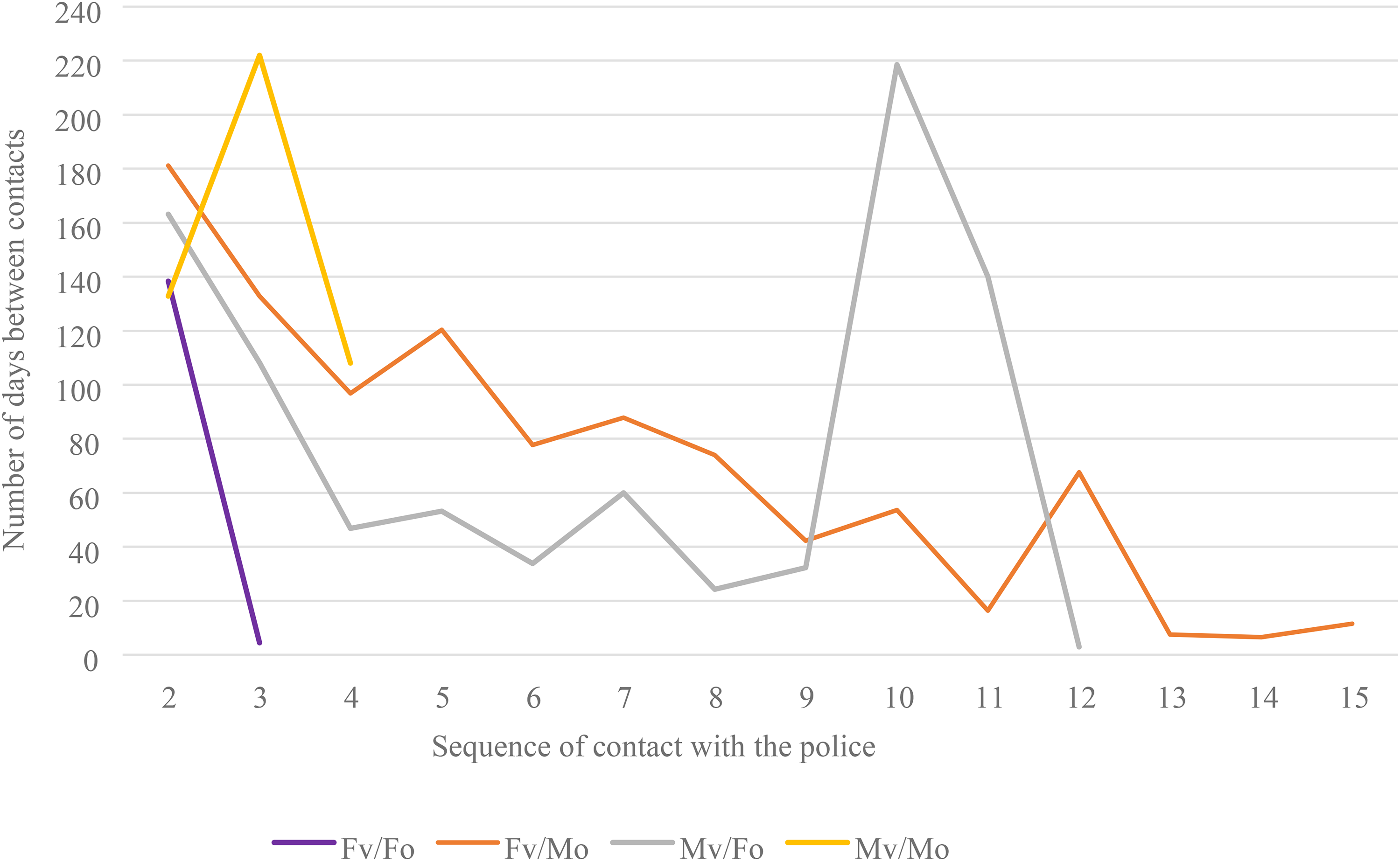
Intermittency of two or more contacts with the police by gender combination. Fv = female victim; Fo = female offender; Mv = male victim; Mo = male offender.
However, intermittency is conditional on gender composition. Same-sex dyads have fewer repeat contacts with the police and more volatility in the mean number of days between contacts, possibly due to small sample size fluctuations (Murray & Mobley, 2009). As shown in Figure 1, female-victim female-offender dyads “die out” after the third call, with an apparent reduction in the number of days between calls to the police from call two to call three; male-victim male-offender dyads “die out” after the fourth contact. In mixed-gender dyads (female-victim with male-offender and male-victim with female-offender), the overall pattern exhibits shorter intermittency over time, but with an increase in the number of days between nine and ten calls, possibly due to outliers.
Harm Classification
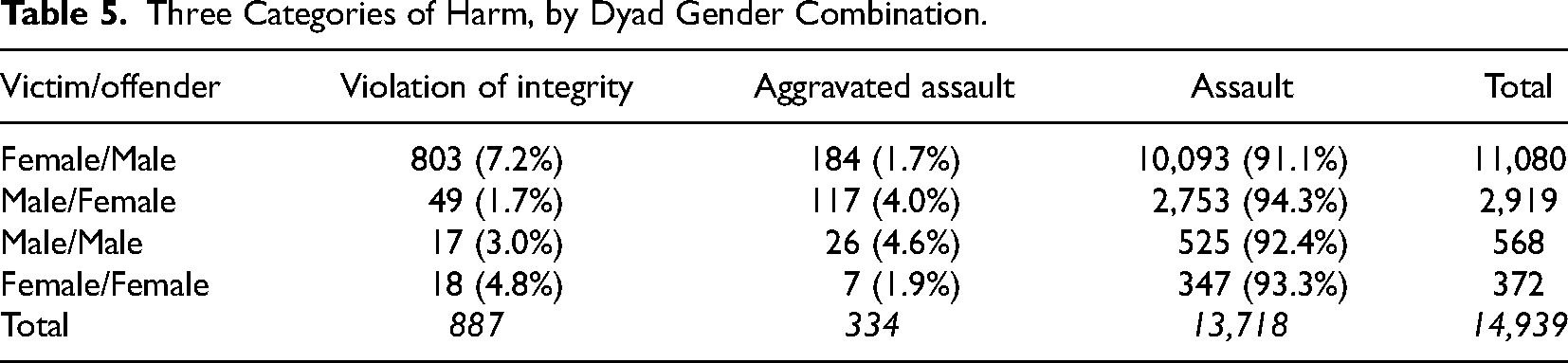
We find that 92.8% of domestic victims were exposed to low-level violence—common assault—and 2.3% to 5.9% suffered medium (aggravated assault) or high-level harm (violation of integrity), respectively (Table 5). Compared to heterosexual males, heterosexual female IPV victims are more likely to be victims of domestic violence in Sweden by a ratio of 3:1, although gender was more balanced for medium level, aggravated assaults. Police records suggest that, consistently, female victims are slightly more likely to suffer in a high-harm category (e.g., violation of integrity), whereas male victims tend to experience medium harm crime categories (aggravated assault).
Three Categories of Harm, by Dyad Gender Combination.
Overall, the first contact determines the harm level. While 90% of high-harm victimizations (violation of integrity and aggravated assault) are reported on the first contact, 86% of all crime was reported during the initial contact with the police. Nevertheless, some repeat victims do escalate between the calls. Table 6 shows the number of reported crime incidents where the following incident reported to the police was in a higher harm category.
Transitions Into a Higher Category of Crime Harm Between Contacts, by Gender Combination.
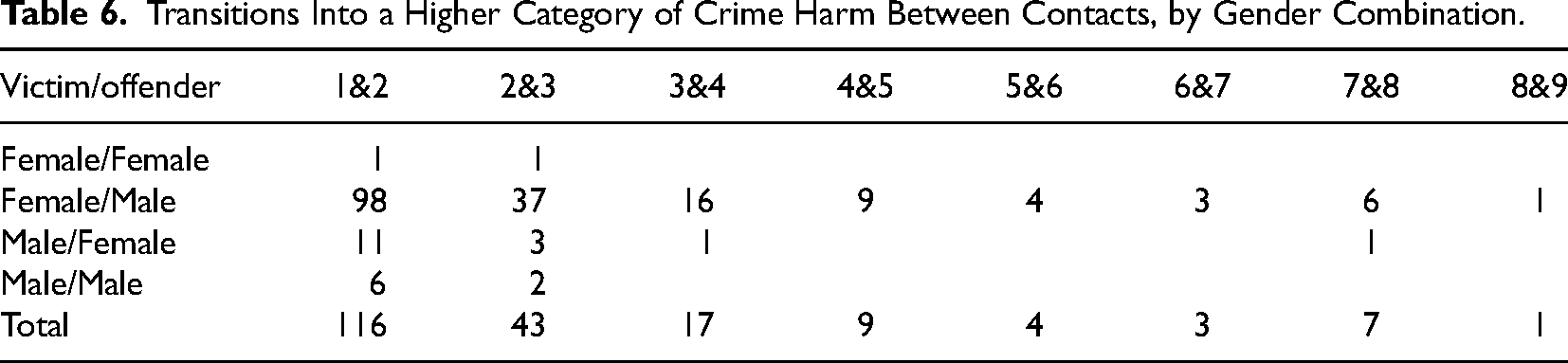
Escalation occurred in 200 out of 1,247 dyads that experienced repeated IPV incidents (16%)—less than 1.58% of all dyads reported one or more IPV offence to the police. Between the first and second crime events, an escalation of harm occurred in 116 of the dyads, representing 1% of all eligible dyads that called the police twice. It is noteworthy that the transition into a higher harm category between the second and third contacts was rarely recorded for the same dyads: only two of the 116 dyads who reported IPV in a higher harm category from event 1 to 2 also reported an escalation from event 2 to 3.
Despite the low incidence of escalation, it is concentrated in female-victim male-offender dyads who were in contact with the police for IPV-related matters (1.92% of these dyads), with female-victim female-offender dyads the lowest (0.49%); 1.18% of male-victim male-offender dyads had almost double the escalatory repeats of male-victim female-offender dyads (1.18% and 0.63%, respectively). However, when observing escalation in dyads who repeatedly called the police, we see that the transition is disproportionally concentrated in male-offender male-victim IPV (38.10%), followed by female-victim male-offender IPV (17.31%). Female-offenders with female victims or male victims were lower (11.11% and 7.88%, respectively).
Discussion
Studies on victims often miss essential variations between the victims and the offenders. This blindness to the wide range of victim categories is a mistake because IPV is not a continuum, and there are recognized variations between groups, individuals, and harm types. Consequently, “lumping” together all individuals who suffered abuse from a partner into one group limits both our understanding of the phenomenon as well as our ability to prevent domestic abuse. We draw this conclusion for IPV, but it carries significance across victimology more broadly (see Ariel & Tankebe, 2018).
Given our attention to “other” victim categories, several new patterns were uncovered that were overlooked in previous IPV harm studies. We discuss these below, pre-empted with an appropriate critique about the improbability of accurately applying our data onto unreported IPV statistics. We cannot estimate the gap between the reported and the unreported IPV without data on the latter or triangulation at the case level. However, our focus was never on IPV but rather reported IPV, which shifts the focus to practical implications: policing IPV.
Repeat Victimization and Intermittency
Nine out of 10 IPV victims in Sweden report a crime to the police but never call again. We do not know whether victims drop out because the police removed the threat; the couple are no longer together and do not experience IPV (note that IPV from ex-partners seems to be more violent); or whether the victim was dissatisfied with the first police response and did not expect help, despite the repeated abuse. More research and prospective follow-ups are required to understand why these single contacts exist, as this global concern remains unresolved.
Despite the rarity of repeated (reported) IPV, the population-level data on IPV crimes in Sweden provide enough information to observe variations between same-sex and different-sex dyads. Repeated IPV occurs at different rates, with female-victims male-offenders and male-victims female-offenders on top (11.1% and 8.0%), followed by female–female and male–male dyads (4.4% and 3.1%). These findings diverge from previous studies, which have found more similar repeat IPV victimization rates between same-sex and different-sex couples. We speculate that there may be cultural, reporting behavior, and socio-legal reasons for these differences. Cross-sectional surveys across societies, with similar and validated instruments, are required to address these issues more robustly.
Notwithstanding variations between study sites about population prevalence, the limited repeated IPV in Sweden, especially in same-sex dyads, presents a methodological and practical consideration: How can we accurately predict three to four same-sex or eight to 11 different-sex dyads out of 100 that would contact the police again in the next 140–180 days after the first reported IPV? As Bland and Ariel (2020) outline, some of these challenges confront statisticians and clinicians alike, but their conclusion is often unsatisfactory: predicting rare events can be done with a low false-positive rate and a high false-negative rate (Barnes & Hyatt, 2012; Berk et al., 2016; Berk & Sorenson, 2020; Sherman, 2013; see also Turner et al., 2019). More research is needed, preferably with multiple layers of data from the police and its partner agencies as well as self-reported data.
Overall, we have found a pattern of reduced time between each contact with the police, over the course of 1,000 days, for all dyads. The same overall pattern has been found in other studies (e.g., Bland & Ariel, 2015) and potentially indicates a pattern of diminishing thresholds for contacting the police once victims have taken the step to report the first crime. However, as Figure 1 indicates, same-sex dyads do not call the police more than four times; female–female IPV no more than three; and the trends seem to be driven primarily by outliers.
On the other hand, the data on different-sex couples provide a richer picture. First, we see the reduced number of days between calls that characterize both female-victim and male-victim dyads. Interestingly, the widest gaps between calls are initially followed by a gradual reduction until both female and male same-sex IPV victims disappear for more prolonged periods: around 10–12 calls to the police within 1,000 days. In both victim groups, these spikes may have to do with outliers or natural fluctuations in a dataset, but these longer intermittency periods around the tenth call are similar to the trends observed by Barnham et al. (2017, p. 133). More research is needed to address this end-tail volatility. Nevertheless, the data suggest that most chronic callers of the police are different-sex couples, who will contact the police every three to four months over (at least) a period of three years. Based on these figures, same-sex couples are unlikely to be subject to repeated IPV, and the low incidence rate does not provide a clear intermittency pattern.
Harm
The official IPV records indicate that more police calls do not translate to more severe harm to the victims. As discussed by Sherman (2018), high-harm and, particularly, homicidal IPV cases are often the one and only offence reported to the police. The same findings were detected in Sweden. We can only speculate about the reasons why the high-harm dyads dissipate from further police contact. One possible reason is that high-harm IPV offenders are likely to be incarcerated for extended periods after causing serious injuries, which would last beyond the study follow-up period. We are not aware of long-term follow-up studies on IPV victims that use official statistics to capture repeat victimization following the release of high-harm IPV offenders.
Based on official records, IPV harm is “terminated” following the first contact with the police. However, for those who have further contact, there is no generalized pattern of escalation between the harm tiers and the time between calls one and two, two and three, and so on (Table 7). Barnham et al. (2017) and Bland and Ariel (2015, p. 2020d) have found similar trends using different analytical approaches. We found that dyads with more than two contacts had almost exclusively reported common assault and not more serious harm levels of IPV, meaning that dyads that repeatedly call the police are usually marked by low-level harm, while the calls based on the greatest level of harm are usually found among the group that called only once. Thus, if there is an overall escalation in IPV, it does not appear in Swedish police records—just like it did not appear in the Thames Valley, Suffolk or Norfolk in the UK, or Australia studies cited above
Summary of Harm Escalation Across IPV Dyads.
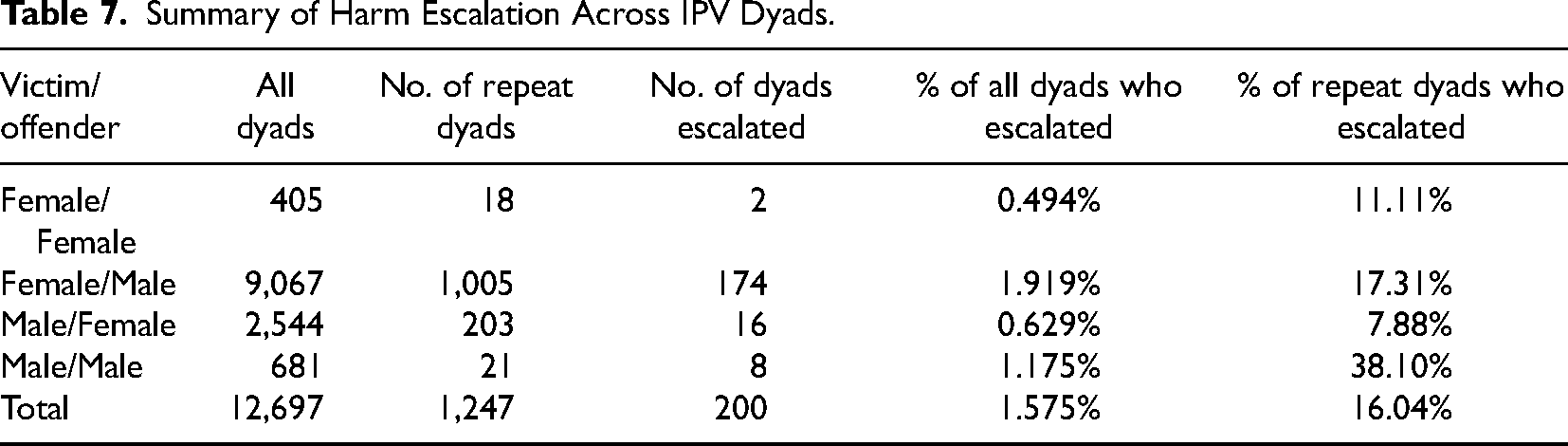
Nevertheless, we do not suggest that IPV harm escalation, based on official statistics, never happens. The data suggest that certain subgroups of victims experience escalation, and in fact, they occur enough that clear patterns emerged between the dyads we observed (Table 6). Recall that Kerr, Whyte and Strang (2017), Piquero et al. (2006) and others, have found that some offenders do intensify their victimization over time. The population-level figures show that 0.5%–1.6% of dyads experience some harm escalation between their first and second calls to the police during the 1,000-day study period.
Overall, male offenders and victim-offender dyads are the most likely to experience an intensification of the abuse. However, when we look closely at those who have called the police more than twice, escalation becomes more common—up to 38% of repeat male–male dyads, and 174 out of the 1,005 female-victim male-offender repeat IPV cases in Sweden experience harm escalation. Therefore, while escalation is rare, it can take place and in certain dyads more than others. Why this happens is another matter. While we might speculate that the role of a male offender in this pattern is consistent with Johnson's (2008) explanation of “intimate” terrorism or aligned with the findings of recent studies of gender scripting and masculinity (Willie, Khondkaryan, Callands, and Kershaw [2018] find that these factors increase the odds of recent physical abuse), this research has not been designed to formally test these hypotheses. Consistency with hypotheses is not confirmation of course, and we recommend that future research in this domain introduces robust hypothesis testing designs to examine these explanatory elements more rigorously.
Finally, when looking at the interaction between gender and IPV harm categories, we see that women are more likely to suffer from violations of integrity (high-harm) offences than men, especially in different-sex relationships (seven in 100 IPV victims). On the other hand, aggravated assault is three times more likely to occur for male IPV victims, particularly in male–male dyads (4.6% out of 568 IPV dyads). In part, these findings provide some support for feminist theories on IPV (see Ali & Naylor, 2013): even in a society that enjoys the highest level of gender equality, such as Sweden, women are still more likely than men (of any sexual orientation) to be subjugated to the most injurious IPV harm and are more likely to be the target of multiple abusers (84% versus 16%). When offenders victimized more than one victim, they were likely to be male (80% versus 20%).
Typology of IPV, not a Continuum of Harm
A typological ordering of IPV is warranted, given the extensive research on bio-psychological differences between offenders and IPV batterers. Yu et al. (2019) have analyzed data in Sweden and have shown that substance abuse disorders, as principal or co-morbidity, have the highest absolute and relative risks associated with perpetrating IPV toward women. Slep et al. (2014) use an ecological model of IPV perpetration at different levels of severity and show how IPV varies across groups of offenders. Holtzworth-Munroe and Stuart (1994) have developed one notable model for subtypes of violent men: it breaks down male batterers as: (1) family only, (2) dysphoric/borderline, and (3) generally violent/antisocial (see also Dixon & Browne, 2003). All of these typologies must be considered in the context of Johnson's typology framework (2008), which is perhaps the most developed in terms of explaining differential patterns of harm and intermittency in IPV. In short, a growing list of rigorous studies show how diverse, heterogenous, and complex IPV harm can be across dyad groups, and we should be more mindful of these nuances. These frameworks extend our ability to understand and diagnose the causes of IPV. As scholars, this is our primary endeavor. As applied criminologists we are also concerned with the implications for practice and policy; in short, how might these new findings on typologies enhance the existing corpus of research to inform strategies for reducing IPV. We turn to this in the next section.
Policy Implications
The primary notion we espouse in view of our findings and the well-established body of research on IPV typologies is that there should be attempts to routinely classify cases by type. While other explanatory frameworks explore typologies of perpetrator (Holtzworth-Munroe & Stuart, 1994) or wider interactions between victim and offender (Johnson, 2008), our findings make a different, perhaps more simplistic dyadic suggestion—that the gender combination of involved parties in IPV cases should play a part in informing a tailored response to the case. Firstly, we consider the more general trends in our findings and how they may inform practice, then we explore the specific differences in response that same-sex couples may require.
The most effective prevention of IPV harm is to avoid the first incident, but this multisystemic answer is beyond the scope of this paper. More immediately, the police can proactively try to identify the 10% of victims who call again and attempt to prevent a second incident. Given advances in machine learning and algorithmic approaches to forecasting rare events, the police might be able to do just that (Berk & Sorenson, 2020). However, it remains to be seen whether a preventative contact by a police officer following the first call would curtail repeat IPV, as was found for “street crime” offenders (e.g., Ariel et al., 2019). The first step is to accurately predict an IPV event with escalating severities.
What we offer, however, is a starting point to consider IPV types and more bespoke interventions. The sexual orientation and gender of the IPV parties produce different repetitiveness, intermittencies, and harm trajectories. Thinking about IPV harm in typological terms rather than a continuum provides avenues for accurate predictions, leading to successful prosecutions in what are generally difficult cases to prosecute. Moreover, the case for establishing typologies is grounded in an extensive body of research but one that focusses on a broad perspective on IPV. Our research enhances this discussion through the quantification of harm and we now describe how existing typologies may be re-examined in the context of these new findings.
First, not any repeat IPV dyad escalates in terms of harm: some are more susceptible to it than others. More than twice as many different-sex dyads experience high rates of high-harm IPV compared to same-sex dyads according to the data we have examined. If this pattern truly extends to the general population (i.e., beyond police records), then it suggests we need to revise our theoretical understanding of IPV causes. In our opinion, it is more likely that these harms are hidden from police view by a range of barriers to reporting. Policies that attempt to verify the existence of, and then break down these barriers are needed. For those same-sex dyads that do report to the police in Sweden, some extra care to manage the relationship between police and involved parties may be required. Our findings show that same-sex dyads are much quicker to report their victimization to the police—on average, 10–12 days versus 24–29 days (although in all groups, most IPV crimes are reported on the same day they have occurred) but most never return with an additional call. Such factors influence prosecution prospects: if the victims wait “too long” before reporting the crime, the police will not be able to document the injuries inflicted on the victim or to secure additional evidence. If this theory holds, then our findings suggest that enhanced criminal justice system outcomes for same-sex dyad IPV may be more achievable and law enforcement performance might be better assessed in differential terms. Nevertheless, the trend of absence of repeat calling is worrisome. This may indicate different trends in the relationship between same-sex involved parties (e.g., separation in higher frequency) or it may indicate that the barriers to reporting remain. The former requires more detailed research to understand as a social phenomenon, while the latter has troubling implications for the efficacy of the law enforcement response and potentially places victims at a greater risk of harm.
Limitations
There is a growing body of literature which suggests that LGBTQ people may not report crimes to the police at the same rate as the general population (Dario et al., 2019; Girardi, 2022; Hodge and Sexton, 2018; Shields, 2021). Extrapolated to Sweden, such a trend would inevitably obscure the population under examination in this study.
Due to the low population base rate, one major limitation is not looking more closely at the fact that not all non-heterosexual IPV cases are created equal, and IPV experiences of non-heterosexual groups may be different in the scope and magnitude of IPV. Our evidence indicates this across multiple measures, and it joins a growing body of recent research that illustrates the importance of considering additional intersectionality combinations. Eaton et al. (2013), reporting on IPV in South Africa, find that bisexual men were more likely to assault than gay men. While mandatory arrest laws increase the likelihood of arrest for all and female–female couples, they do not impact arrests for male–male couples (Durfee & Goodmark, 2020). As the Swedish police records to which we have had access do not disclose sexual orientation beyond the “same-sex” cisgender category, we could not look closer at this granularity.
Our dataset covered less than three years, so there is a chance that the high-harm dyads indeed have been in contact with the police before. Similarly, the limited scope of time means that the sample sizes of smaller cells (e.g., male on male violence) are of low precision. We draw a number of conclusions about same-sex partners in this subsample based on the repeat victimization sample, which is only 10% of the original sample. Male–male couples, for instance, represent only 3% of this subsample, or approximately 41 couples; this is a relatively small number of observations on which to base statistical conclusions, even though these are population level statistics. Replication is needed to address this and our recommendations are that these take place on both a wider timeframe and with additional granularity of location. The dataset was drawn from the national level. Analysis needs to be done at lower geographical levels on victims, offenders, and dyads, including potential patterns for victimization and offending. The police have different information that is both structured and unstructured. Using business intelligence software will allow further analysis of both types of data. Nevertheless, these results support the broad trends identified in other studies—low repeat victimization, no escalation of severity and the escalation of frequency, and increasing conditional probability with each new offence. These facts contribute to further the hypothesis that, first, not all repeat IPV dyads escalate and that, second, not all domestic abuse/intimate partner violence is the same. Consequently, different types of cases require different responses and could therefore form the basis of future strategies to address domestic violence in Sweden and beyond.
Footnotes
Declaration of Conflicting Interests
The authors declared no potential conflicts of interest with respect to the research, authorship, and/or publication of this article.
Funding
The authors received no financial support for the research, authorship, and/or publication of this article.
