




Abstract
Policing institutions throughout the world face a legitimacy crisis. This crisis’ immediacy necessitates the exploration of theories that provide answers regarding effective reforms. The representation theory of policing offers one such answer; it holds that accountability mechanisms are an avenue for public input that increases confidence in police and affords them democratic legitimacy. This article applies and evaluates representation theory by examining one such reform attempt: post-Troubles policing restructuring and its impact on relations between police and the militant nationalist community within West Belfast. It assesses print media coverage of accountability reforms throughout the peace negotiation period and the early years of reform implementation and ultimately affirms the association between police legitimacy and accountability; however, it also suggests that this association is more complex than a simple positive correlation. Rather, legitimacy is correlated with public debate regarding accountability that encompasses both positive and negative evaluations of policing. This indicates that the predominance of police accountability as a subject of public discourse may serve as an essential component of efforts to instill policing with democratic legitimacy. The article presents an original model of representation theory that more accurately reflects the dynamics of legitimacy-building efforts in West Belfast and proposes applications of this advancement to the contemporary, global movement advocating for police reform.
Keywords
Introduction
Central to the legitimacy of democratic regimes is the consent of the governed, the idea that institutional structures reflect the collective will of the people. Absent that consent, governments cannot expect compliance with law or any other forms of recognition of legitimate authority. Policing, as a way in which citizens experience governmental authority tangibly and forcefully, is, therefore, inextricably intertwined with citizens’ perception of the state's legitimacy, or lack thereof. However, policing institutions currently face a global legitimacy crisis. Activists and grassroots organizations, including, notably, the Black Lives Matter movement, have organized for generations against pervasive policing practices steeped in traditions of institutional discrimination and militarized violence. The May 2020 murder of George Floyd in Minneapolis, Minnesota prompted a global outcry that amplified these pre-existing efforts to resist discriminatory and abusive policing practices. The ensuing deterioration of popular consent afforded to policing institutions exacerbated this crisis of legitimacy that had been escalating for generations. The urgency of this crisis necessitates a reconsideration of how governments can restore legitimacy to institutions historically considered partisan, unaccountable, or antithetical to individual liberty and safety. The representation theory of policing offers one response, highlighting the mechanism by which accountability measures provide a form of public input regarding policing practices, thereby bolstering popular consent and the degree of legitimacy afforded to policing institutions (McNulty, 2001).
This article evaluates representation theory by examining one such legitimacy-building effort: post-Troubles police reform and the reconstitution of police-community relations in the predominantly nationalist area of West Belfast. The research focuses on the question of how the concepts of police accountability, popular consent, and legitimacy were related in the public discourse throughout the reform implementation process. It also inquires as to whether and how these conceptual links evolved throughout the time period of interest. Finally, it reflects upon the findings related to the two previous questions through the framework offered by representation theory; it explores the implications of the observed conceptual links for the initial model provided by the theory. In order to explore these questions, I conducted a mixed-methods study with a sequential explanatory design, which blended quantitative and qualitative techniques. The article's conclusions integrate the resulting statistical and narrative findings, presenting a comprehensive understanding of the conceptual links between police accountability, popular consent, and legitimacy, as well as their negations. It explicates the way in which this advanced understanding more accurately represents the application of representation theory to police legitimacy-building efforts in West Belfast. It also discusses the political and practical applications of the theoretical advancement to the contemporary, global police reform movement.
The article ultimately concludes that the findings support the representation theory in that they substantiate the correlation between police accountability and legitimacy in the public discourse. However, the empirical correlational data and qualitative findings also indicate that this association was more complex than a simple positive correlation. Increases in indicators of legitimacy were correlated not only with indicators of accountability, but also with those of non-accountability. Legitimacy afforded to police was, therefore, not just associated with accountability, but also with the contested debate regarding police accountability, which included both positive and negative evaluations of police. Contextualizing the correlation thus adds complexity to the initial theoretical model presented by the representation theory. This updated model illustrates the multifaceted public response to debate regarding police accountability, which encompassed both affirmations of the police's legitimacy and a “backlash” response that emphasized the enduring unacceptability of the police to segments of the community. The model thereby underscores the cruciality of lively, contested debate in nationalist public discourse and suggests that such debate may be an integral part of police legitimacy-building efforts in other, contemporary contexts.
Literature Review and Theoretical Framework
A Brief Political History of Twentieth Century Policing in Northern Ireland
One must contextualize any discussion of twentieth century policing in Northern Ireland (NI) within the paramilitary violence and civil unrest that defined the Troubles and the preceding decades. Beginning with the partition of Ireland in 1922, the UK government took extraordinary measures to quell violence and impose order. It instituted an emergency regime, a legal designation that afforded the pre-Troubles NI police force, the Royal Ulster Constabulary (RUC), extensive powers to stop, detain, and interrogate suspected “terrorists” (Human Rights Watch, 1997, p. 14). Catholic neighborhoods bore the brunt of the police abuse, perpetuating strained, and often violent, relations between the police and Catholic, and particularly nationalist, communities (McNulty, 2001). 1
Beyond the tangible impact of police abuse perpetrated against Catholics, the RUC held immense symbolic significance, as “for Catholics and nationalists, the RUC was to serve as a visible and potent reminder of their exclusion from the state and other social institutions” (Ellison and Smyth, 2000, p. 152–153). While loyalists viewed the RUC as the first line of defense against the Catholic uprising, nationalists saw it as the militarized defender of an illegitimate state. Therefore, policing “became a central plank— both real and symbolic— in the constitutional redesign of the state of Northern Ireland itself” (Gordon, 2008, p. 137).
Consequently, policing reform was central to the peace process, and “establishing the police as an effective and legitimate institution within the new constitutional framework of Northern Ireland post the Good Friday Agreement 1998 [was] a critical ingredient to securing a lasting and sustainable peace” (Gordon, 2008, p. 154). The Belfast/Good Friday Agreement (B/GFA) led to the establishment of an Independent Commission on Policing (ICP), or the “Patten Commission,” tasked with proposing reforms capable of constructing a police force “that [could] enjoy widespread support from, and [be] seen as an integral part of, the community as a whole” (B/GFA, 1998, Chapter 9). The Patten Report made 175 recommendations for radical, structural reform (Gordon, 2008) and the Police Bills of 1998 and 2000 provided for the implementation of these recommendations (Police (Northern Ireland) Bill, 2000).
The Bills restructured and downsized the force, renaming it the Police Service of Northern Ireland (PSNI) and enacted a broad range of additional reforms. The accountability reforms represented an especially radical diversion from normative practices. The Report recognized that the RUC was not accountable; thus, the Bills’ recommendations regarding accountability “flow[ed] from the principle that effective policing can only be based upon consent.” Consent, in turn “must be buttressed by accountability” (Ellison and Smyth, 2000). The Bills replaced the toothless Police Authority with an independent, democratic Police Board, empowered to hold inquiries related to abuse complaints and to discipline officers (Ryan, 2008). They also established the office of the Police Ombudsman, responsible for conducting independent investigations of police abuses, directing disciplinary proceedings, and making recommendations for changes in management; the office is “the most powerful institution of its kind in the world” (Ryan, 2008, p. 95). These structural changes ensured that “the framework of accountability established in Northern Ireland still stands as perhaps the most progressive and extensive model of oversight yet established” (Mulcahy, 2006, p. 193).
Main Concepts and Their Relevance to the Post-Troubles Policing Transition
The main concepts that define this article's approach are “legitimacy,” “popular consent,” and “accountability.” Baldwin defines the first of these, “legitimacy,” as “the degree to which the institution is worthy of support and allegiance” (1987, p. 97). The determination of whether public institutions, and policing institutions in particular, are “worthy of support or allegiance” is often not solely a reflection of those institutions’ perceived efficacy. Rather, in divided societies in which citizens’ views of the state are tied up with questions of identity and allegiance, legitimacy must be distinguished from other measures of effectiveness and performance. In these societies, questions of legitimacy implicate culture, symbolism, and trust. Building legitimacy therefore necessitates a more complex process than solely launching an effort to improve efficacy; it requires the development of popular consent (Mulcahy, 2006).
Goldsmith asserts that the basis of legitimacy, as it relates to democratic institutions, is “popular consent,” or “public trust, or faith in government to do the right thing” (2005, p. 446). Accordingly, “policing by consent has been widely viewed as essential to a democratic form of policing” (2005, p. 452). Accountability is a crucial tool for obtaining and sustaining popular consent in government and in policing specifically; it is, therefore, inextricably intertwined with democratic legitimacy. Uhr, quoted in Goldsmith, defines accountability to include “answerability, ‘the obligation to provide information in response to questions about performance,’ and responsiveness, ‘the general commitment expected of democratic governments to respond to relevant community opinion, even when a government might believe that such opinion is incomplete or flawed’” (2005, p. 447). Additionally, as O’Rawe and Moore (1997) explicate, accountability mechanisms are multi-faceted, for they provide incentives for police to provide the type and quality of services the community expect, and also establish systems for enforcing consequences if the police fail to do so. This dual function “ensures that individuals and groups in society become more than simply the ‘policed’ but have an active role in designing and supporting the policing function” (p. 173).
Baldwin defends the interrelated nature of accountability, popular consent, and legitimacy by articulating the “accountability rationale” for police legitimacy; namely, he asserts that the policing system “derives legitimacy from the assent of the people,” or, in other words, from “popular consent” (1987, p. 97). Thus, accountability promotes democratic legitimacy by “generating informed consent” (Goldsmith, 2005, p. 446). Figure 1 (see below) offers an original, visual representation of the means by which accountability generates popular consent, and thereby bolsters the legitimacy of the policing system.

A linear relation between accountability, popular consent, and legitimacy.
Yet, the interplay between these three concepts is not as simplistic as Figure 1 portrays. While accountability does contribute to popular consent, and thereby builds legitimacy, legitimacy likewise generates popular consent by boosting trust in and support for police. Additionally, legitimacy may incentivize police accountability, as the development of collaborative police-community relations may render officers more amenable to civilian input and may make them more aware of community needs. Therefore, one could also represent the relationship between the three concepts as cyclical, as illustrated in Figure 2 (see below), another original model.
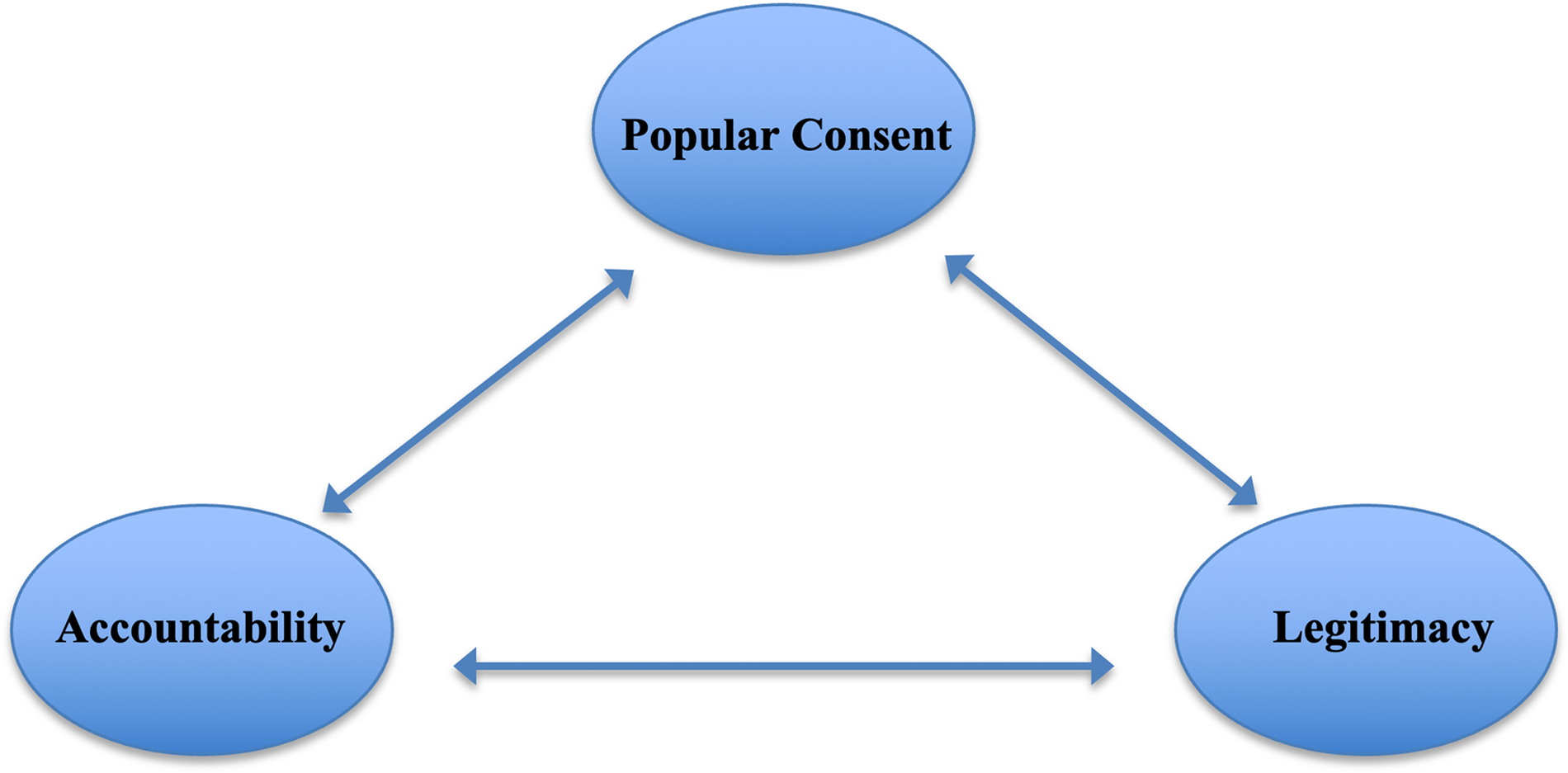
A cyclical relation between accountability, popular consent, and legitimacy.
This article characterizes the relationship between police accountability and legitimacy in transitional NI, with particular attention to the theorized unidirectional, linear relation portrayed in Figure 1. However, given the methodological difficulties of proving causation, in addition to the more complex nature of the theoretical relationship between the two concepts, the article acknowledges the potential bi-directional relationship between accountability and legitimacy, as well as the ways in which popular consent mediates that relationship.
Police Accountability and Legitimacy in Broader Context
The vast literature regarding police accountability and legitimacy demonstrates the global, pervasive nature of police illegitimacy and the necessity of expanding our understanding of the issue and of potential solutions. In the interests of space, this article cannot explore the literature in great detail, but this section will describe it in broad strokes.
The UK literature has identified a “legitimation crisis” that plagues British policing (McLaughlin, 1992). It has affirmed that legitimacy is essential to the operation of a democratic policing model and that accountability can be successful basis of support for police (Baldwin, 1987; Rogers, 2014). It has explored barriers to accountability embedded in existing policing structures (Bailey, 2015; Cooper, 2020); it has also presented numerous proposals for bolstering police legitimacy, which include, among others, utilising civilian arbiters of police misconduct, releasing police misconduct data to the public, internal accountability mechanisms, and a “twin-track approach,” encompassing both community consultative committees and the reconceptualization of policing as a service and the community as its customers (McDaniel, 2021; McLaughlin, 1992).
Similar literature reflects increased interest in police accountability in Oceania and Europe. Hoque et al. (2004) evaluate the Australian public's rising accountability expectations and the impact of the popularization of “new public management ideals” on Australian police accountability reforms; they identify one of the accountability framework's primary purposes as legitimizing the police service to the citizenry. Samkin et al. (2010) employ a case study of New Zealand police to investigate a seldom-studied strategy at the police accountability-legitimacy nexus; they assess the mechanisms by which non-financial annual report disclosures can promote police accountability and repair organizational legitimacy. Zamperini et al. (2017) study instances in which Italian citizens died due to police intervention, and identify the strategies police employed to account for their behavior, namely, excuses, justifications, and apologies. They ultimately conclude that these attempts at accountability fail to adequately serve citizens that demand transparency and accountability, thereby reinforcing the Italian legitimacy crisis. Body-Gendrot (2008) examines police illegitimacy in light of French police unions’ role in perpetuating institutionalized racism. She highlights how entrenched French institutional culture bolsters the national police's unwillingness to embrace accountability measures, such as the community policing model, or to address racialized police violence in any manner.
Studies identifying the dire need to promote the legitimacy and accountability of police are by no means limited to western nations. For instance, Jackson et al. (2014) assert that, in light of the illegitimacy of Pakistani police due to endemic corruption, “an intelligence-based policing system that is staffed by well-trained and well-equipped officers committed to high standards of integrity and accountability seems indispensable” (p. 1084). Jonathan-Zamir and Harpaz (2014) apply the “dialogic approach to legitimacy” to the Israeli context, emphasizing the importance of the interplay between citizens’ perceptions of the police and the police's understanding of their own legitimacy and the source thereof (p. 469–470). Tankebe (2013) recognizes the existential crisis Ghanian police face in light of their waning efficacy. He criticizes their current effort to enhance their legitimacy by conducting extrajudicial killings of suspected violent offenders; he also decries the institutional failures of accountability mechanisms and the lack of political motivation to develop effective independent accountability mechanisms to check police use of deadly force (p. 583, 591–592).
As the breadth of the literature demonstrates, while the contexts vary, the issue of police illegitimacy is pervasive throughout the world. Scholars and practitioners recognize the interrelated nature of police legitimacy and accountability, and highlight the importance of better understanding how these concepts operate in practice and may be manipulated to actualize improved police-community relations.
Police Accountability and Legitimacy in Post-Troubles Northern Ireland
The NI government relied upon successful accountability reforms for reconstructing police-community relations and, broadly, for establishing democratic legitimacy; therefore, one must assess the reforms’ success in reference to this goal. Legal and political science literature assess one aspect of Catholic and nationalist responses to policing reforms: the responses of Catholic and nationalist institutions. The literature establishes that, while the Catholic Church and the Social Democratic and Labour Party (SDLP) endorsed the Patten reforms, Sinn Féin (SF) argued that the newly established PSNI was solely a “disguised RUC” and refused to take its allocated seats on the Police Board (Hearty, 2014, p. 1053). Politicization of the reforms hampered the implementation of accountability measures until 2007, when SF ultimately succumbed to the pressure imposed by the Irish and American governments. SF assumed its seats, enabling the Board to begin functioning (Gordon, 2008). SF's eventual endorsement of the PSNI marked a “new beginning” for policing, which fell short of the Patten Report's goals, yet “represented a fundamental shift in the institutional landscape of policing, one that also impacted on police-community relations in significant ways” (Mulcahy, 2006, p. 187). While these institutional responses shaped Catholic and nationalist public opinion, they are not necessarily representative of Catholic or nationalist public opinion at large.
As Topping asserts, “police accountability, as set within the post-conflict landscape of Northern Ireland, is itself a site of empirical, policy and political contest and cannot be analysed nor understood through the lens of standard police metrics alone” (2016, p. 166). In order to truly understand police-community relations, researchers must not discuss policing “simply in terms of what men and women in blue (or whatever colour) uniforms actually do but rather what they represent in cultural and symbolic terms” (Ellison and Smyth, 2000, p. 151). Accordingly, several scholars have analysed existing survey data to more accurately assess public opinion regarding police legitimacy. Hughes and Donnelly (2003) review the Northern Ireland Social Attitudes Surveys (NISAS), a longitudinal study conducted by the NI government between 1989 and 1999. They found that Catholic trust in governmental institutions grew, while Protestants felt increasingly marginalized by the reforms. However, this data offers no insight into opinion regarding police reform specifically. Additionally, the data collection concluded during the first year of the Patten reforms’ implementation. The NISAS study also contained methodological flaws that problematize findings related to Catholic opinion. Specifically, it treated “Catholics” and “nationalists” as mutually exclusive categories, conflated sentiment regarding the RUC's handling of non-sectarian crime with sentiment regarding the RUC's general acceptability, and overrepresented moderate opinion on controversial issues (Ellison and Smyth, 2000).
Existing literature lacks research regarding police-Catholic relations that surpasses the aforementioned problematic survey data. Indeed, several projects detail the absence of legitimacy afforded to the police by the Catholic community, yet none track the process of reconstructing police-Catholic relations or make recommendations regarding how to remedy the issue further (Mulcahy, 2006). In order to further understand the impact of police accountability reforms on police-Catholic relations, research must move beyond analyses of broad, sporadically collected quantitative data. It must review large quantities of qualitative data that indicate how relations evolved over time. This article aims to do just that, by analysing West Belfast print media archival materials concerning police-Catholic relations throughout the reform negotiation and implementation processes.
This article's approach and methodology build upon the work of Kevin Hearty, who utilizes qualitative discourse analysis to characterize contemporary narratives regarding policing in NI. Hearty's scope is broader than that of this article, as he typically explores republican and/or unionist discourse generally, while this article focuses on discourse within a militant, geographically confined community (Hearty, 2014, 2017, 2018a, 2018b). Hearty also examines a wider range of material, including archives, media coverage, and institutional publications in order to draw conclusions about discourse across larger population categories (Hearty, 2014, p. 1048). In addition, while he sometimes characterizes discourse that took place throughout the reform process, his focus is on historical memory and how it has shaped contemporary discourse regarding policing, rather than on how communities experienced policing in the moment (Hearty, 2018a, p. 129). Nonetheless, this article adopts Hearty's dedication to qualitative content analysis as a means of elucidating trends in policing discourse. It seeks to strengthen academia's understanding of the evolution of policing discourse throughout the reform process by providing an in-depth account of how this occurred in one politically specific, geographically confined community; it also supplements qualitative analyses such as Hearty's with empirical, quantitative data that confirms observed trends. This more robust understanding of transitional policing discourse will provide Hearty and other scholars engaging in research regarding historical memory of policing with more information in which to contextualize modern narratives regarding police.
Theoretical Framework: Applications of Representation Theory
Conflict theory serves as the basis of this article's approach to evaluating the evolution of police-nationalist relations. Conflict theory is not a singular, coherent “system of logically interrelated and empirically tested rules and principles” (Elliot and Hickie, 1971, p. 7). Rather, it is a robust body of theories and concepts that are applicable to the analysis of conflict and peacebuilding processes, compiled by scholars from across a wide range of disciplines since the inception of the Cold War. This amalgam of theories and principles addresses the various facets of conflict and its implications, from theories regarding education and economics in conflict zones, to frameworks that expound upon the natures of violence and peace. For instance, Johan Galtung's seminal 1969 work, “Violence, Peace, and Peace Research,” provides a framework for understanding violence and peace that proves useful for explicating the dynamics of conflict and post-conflict transformation. Galtung defines violence as “the cause of the difference between the potential and the actual, between what could have been and what is” (Galtung, 1969, p. 168). This conception of violence extends beyond solely “direct violence,” defined as the infliction of harm by one actor or group onto another, to include structural violence. Structural violence is characterized by circumstances in which “there may not be any person who directly harms another person in the structure. The violence is built into the structure and shows up as unequal power and consequently as unequal life chances” (Galtung, 1969, p. 171). Two types of peace follow from this bifurcated understanding of violence. “Negative peace” solely necessitates the absence of direct violence; in contrast, “positive peace,” or the absence of structural violence, requires the realization of social equity, political equality, and economic justice, predicated on the just distribution of resources and power (Galtung, 1969).
Galtung's framework for understanding violence and peace enables one to characterize the dynamics of conflict and to demonstrate the necessity of post-conflict structural reform. Zartman explicates that experiences of direct and structural violence engender and perpetuate grievances within oppressed groups; these grievances, in turn, often provoke the outbreak of conflict (2011). Consequently, peacebuilding efforts capable of achieving long-term peace must resolve the grievances and underlying issues that fomented the conflict in order to put an end to violence and achieve a positive peace. In contrast to conflict resolution efforts, which focus on “putting an end to direct violence, without necessarily addressing the underlying conflict causes” (Reimann, 2004, p. 8), “conflict transformation” processes aim to actualize a positive peace, which “involves the building of structures and processes which emphasize economic, social and political justice for all” (Harris, 2008, p. 80). Using the Troubles as a case study, Elliot and Hickie identify the “unfair treatment of Catholic minority” and “trouble on the streets” as two crucial grievances that served as determinants of conflict; both aforementioned grievances implicate policing and police-nationalist relations (1971, p. 131). In order for the post-Troubles conflict transformation process to achieve success, it had to address these grievances, among others, to prevent the continuation of violence and build a state capable of ensuring a positive peace.
This dissertation focuses on policing reform as one element of the post-Troubles conflict transformation process. It explores the degree to which the implementation of police accountability mechanisms helped construct a just policing system that forewent the direct and structural violence of the past, a policing system that Catholic people could trust as a legitimate representation of the state. The theoretical basis of this article engages with the central debate underpinning scholarship on policing, namely, the discrepancy between functionalist and conflict theories of policing. Functionalist theory holds that the police compose a neutral institution that provides society with protection and order. It is predicated on traditional liberal democratic theory, which views the state more broadly as a neutral body that serves the people at-large. In contrast, conflict theory asserts that the police force is a partisan defender of the ruling elite that endeavors to maintain political elites’ grip on power in intrastate conflict, perpetuate structural violence, and protect dominant groups from the subordinate and marginalized, usually with militarized force (Gordon, 2008). This article explicitly rejects the functionalist theory of policing in favor of conflict theory. The divided nature of NI society and the historically privileged position of Protestants within it extended to each group's treatment by governmental institutions. This unequal treatment created a crisis of authority and legitimacy, in which the neutrality of state institutions and the notion that they existed to serve the people at-large was called into question (Gordon, 2008). Consequently, viewing the state and the police force as neutral for the purpose of this research would negate the goal of studying this crisis of legitimacy.
This article also utilizes the representation theory of policing, which holds that oversight mechanisms, and civilian review structures in particular, offer avenues for incorporating public input into institutional policy, ensuring more effective representation of citizens and affording the police democratic legitimacy. Empowering citizens to become active participants in the police reform process by providing their experiences of police conduct contributes to the perception of the police as a democratically accountable institution (McNulty, 2001). The “accountability rationale” elaborates on the mechanism by which accountability bolsters legitimacy; it posits that accountability generates popular consent, which thereby promotes democratic legitimacy (Baldwin, 1987). The original research that follows essentially tests representation theory by characterizing the relationship between the implementation of public accountability structures and levels of legitimacy afforded to the police by the militant nationalist community of West Belfast. The Discussion revisits representation theory in further detail and presents an original, more complex model of the theory's application to public discourse in transitional West Belfast.
Methodology
Newspaper archives constituted the most appropriate data source for addressing the aforementioned research questions. In order to characterize the evolution of opinion throughout the time period of interest, one must draw upon data collected contemporaneously. As contemporary researchers are unable to conduct more complex, less problematic, surveys of Catholic opinion throughout the time period of interest, we must look to sources of data, such as newspaper archives, that provide more continuous data points than biannual surveys do, and thereby constitute a dataset with more specific time gradation.
This article aims to characterize police-nationalist relations throughout the peace process and in the early years of implementation. Therefore, its temporal scope of interest is the period between September 1994 and January 2007. It begins with SF's announcement of a ceasefire on 31 August 1994, which served as a symbol of the inception of peace negotiations. It continues through January 2007, which marked SF's decision to assume its seats on the Police Board and implicitly endorse the PSNI just over six years into the Patten reforms implementation process.
I accessed relevant newspaper archives at The Belfast Central Library Newspaper Archive. Due to the COVID-19 pandemic, I was forced to limit the scope of the data solely to The Andersonstown News. The Andersonstown News is a twice-weekly paper (once weekly prior to November 2000) that focuses on news and other issues relevant to residents of West Belfast. West Belfast is a working-class community that has historically been the most nationalist of Belfast's four districts (Northern Ireland Neighbourhood Information Service, 2019). Accordingly, The Andersonstown News is widely known to employ a nationalist approach - more militant than other Catholic-run newspapers. This article focuses solely on the urban area of West Belfast, allowing me to draw specific conclusions regarding West Belfast residents’ perceptions of police. 2
In March 2020, I selected and photographed all articles within The Andersonstown News, published between September 1994 and January 2007, which mentioned either a mechanism of police accountability, the Patten Report, or the concepts of accountability, legitimacy, or popular consent afforded to the police. After compiling and cleaning the dataset of 594 photos, I conducted a mixed-methods, directed content analysis of the evolution of the paper's coverage of accountability reforms and their implementation. I adopted a deductive category application method of code development; the central concepts of interest shaped my choice of initial coding categories. I developed six “classes” of codes, three of which represented each of the main concepts (accountability, legitimacy, and popular consent), and the other three, their negations. In addition to these six “classes” of codes, I constructed two sub-classes of accountability codes: codes that indicated the community's use of accountability mechanisms, and codes that indicated the community's refusal to utilize accountability mechanisms. A full data dictionary, including all utilized codes, is published in the Appendix.
I chose a month as the unit of observation, as I endeavored to track the frequency of mentions of the main concepts and their negations over time. The number of relevant articles published each week varied greatly. Therefore, measuring the frequency of the codes by month generated more consistent data with fewer null values. In addition, I aggregated the monthly data for each year and generated average monthly frequencies of code classes by year. While less specific than the monthly analysis, these statistics facilitated the creation of graphs that represented broader trends over the time period of interest.
I employed a mixed-methods sequential explanatory design crafted to maximize the robustness of my conclusions. The design consisted of two phases, the first quantitative and the second qualitative (Creswell et al., 2003). The quantitative analysis served as the primary means of identifying statistical trends and correlations between the main concepts; the subsequent qualitative analysis built upon the quantitative findings, examining the print sources in more detail to expound upon the significance of the statistical findings (Ivankova et al., 2006, p. 5). The two stages, therefore, serve complimentary purposes that enhance both the scope and robustness of the study's findings (Ivankova et al., 2006).
The quantitative, statistical component consisted of three rounds of correlation tests performed on monthly data regarding the incidence of the eight classes of codes. The analysis focused on correlation tests, rather than upon multivariate linear regressions, as the research aimed to characterize the conceptual links as portrayed in the newspaper and illustrate the relationships between the main concepts in public discourse, rather than to make assumptions regarding causality. I conducted the correlation tests in R, via Spearman's rank-order correlation method, rather than Pearson's product-moment correlation method. The former is a non-parametric version of the latter and does not rest upon an assumption of normality; as several of the relevant variables are not normally distributed, Spearman's rank-order correlation test constituted the optimal statistical test. The final stage consisted of a qualitative analysis that added complexity to the statistical findings and provided an evidentiary basis for insights regarding factors that drove the statistical findings.
Finally, I assessed and reflected upon the quantitative and qualitative findings to glean insights regarding the evolution of reports about the police. Traditionally, “content analysis sees messages as coded representations of the real world, fixed and knowable” (Bertrand & Hughes, 2005, p. 174), and, indeed, the analysis treats print media as representations of militant nationalist public opinion. However, one must acknowledge that newspapers are not objective platforms; they do not directly represent the world exactly as it exists. Numerous factors, including the economic pressures under which newspapers operate and the political leanings of newspapers’ leadership, among others, shape the quantity and approach of published content. Consequently, this article looks to news, not as a direct reflection of public opinion, but as an indicator of the state of public discourse; public discourse surrounding policing, in turn, serves as an indicator of public opinion. The discussion of results, therefore, frames conclusions in these terms.
Results
The blended quantitative and qualitative methodology yielded a combination of statistical and narrative results, which jointly generated insights regarding the relationships between police accountability, popular consent, and legitimacy in public discourse.
Statistical Analysis
This section outlines the central statistical findings generated by three rounds of Spearman's rank-order correlation tests. The first round of analysis, represented in Table 1, produced correlation coefficients (Spearman's rhos) estimates between the total counts of codes belonging to each of the major classes; each of the six classes of codes corresponds to one of the concepts central to the research questions: accountability, popular consent, and legitimacy, and their negations.
Matrix of Correlations Between All of the Main Concepts (n = 149 Months).
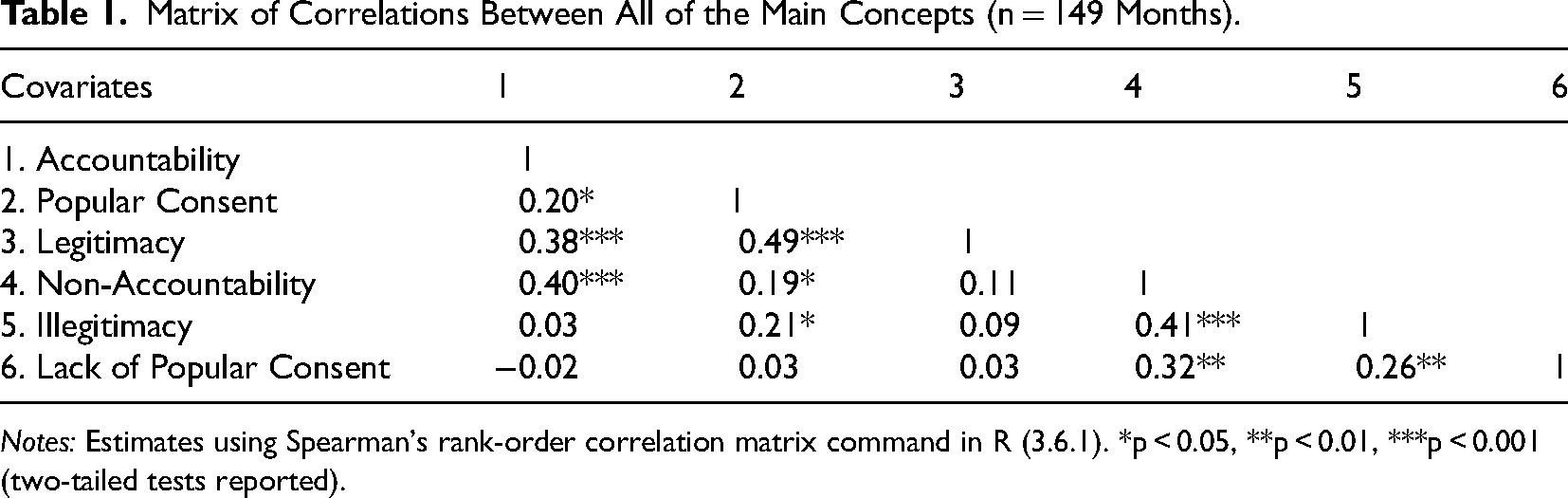
Notes: Estimates using Spearman's rank-order correlation matrix command in R (3.6.1). *p < 0.05, **p < 0.01, ***p < 0.001 (two-tailed tests reported).
The statistical analysis revealed correlations of moderate strength between accountability, popular consent, and legitimacy. Popular consent and legitimacy were the most strongly correlated (ρ = 0.49), followed by the correlation between accountability and legitimacy (ρ = 0.38) and a weaker correlation between accountability and popular consent (ρ = 0.20). The analysis also identified correlations between the negations of the variables. The strongest of the relationships between these variables was that between non-accountability and illegitimacy (ρ = 0.41), followed by the correlation between non-accountability and lack of popular consent (ρ = 0.32) and the correlation between illegitimacy and lack of popular consent (ρ = 0.26). These correlations follow logically from the theoretical models of the concepts’ interrelationships presented above. However, the analysis also established counter-intuitive correlations between variables. For instance, it identified a correlation of moderate strength between accountability and non-accountability (ρ = 0.40). It also revealed weak correlations between popular consent and illegitimacy (ρ = 0.21) and between popular consent and non-accountability (ρ = 0.19).
The next stage of statistical analysis tested for correlations between indicators of community use of accountability mechanisms and all of the main concepts, with the exception of accountability. The analysis did not test for a correlation between community use of accountability mechanisms and accountability because the former variable is a subset of the latter. Therefore, the two variables are not independent of each other, and any correlation coefficient generated would hold minimal explanatory power. The remaining variables are independent of each other, as each had a distinct operational definition and separate set of corresponding data (Table 2).
Correlations Between the Main Concepts and Community Use of Accountability Mechanisms (n = 149 Months).
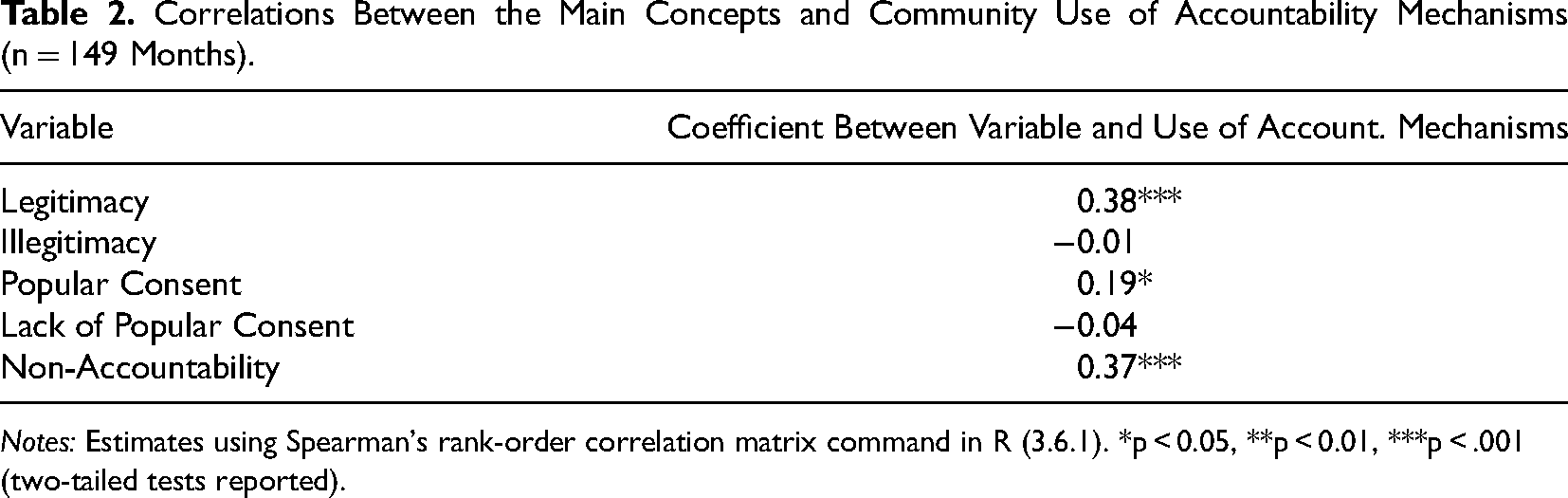
Notes: Estimates using Spearman's rank-order correlation matrix command in R (3.6.1). *p < 0.05, **p < 0.01, ***p < .001 (two-tailed tests reported).
The analysis identified a correlation of moderate strength between community use of accountability mechanisms and legitimacy (ρ = 0.38) and a weaker correlation between community use of accountability mechanisms and popular consent (ρ = 0.19). It also established a correlation of moderate strength between community use of accountability mechanisms and non-accountability (ρ = 0.37). This counter-intuitive correlation mirrored the correlation between accountability and non-accountability (ρ = 0.40), identified in the first round of analysis.
The final round of statistical analysis tested for correlations between indicators of community non-use of accountability mechanisms and the main concepts. This analysis did test for a correlation between non-use of accountability mechanisms and accountability, as the variables are independent of each other (Table 3).
Correlations Between the Main Concepts and Community Non-use of Accountability Mechanisms (n = 149 Months).
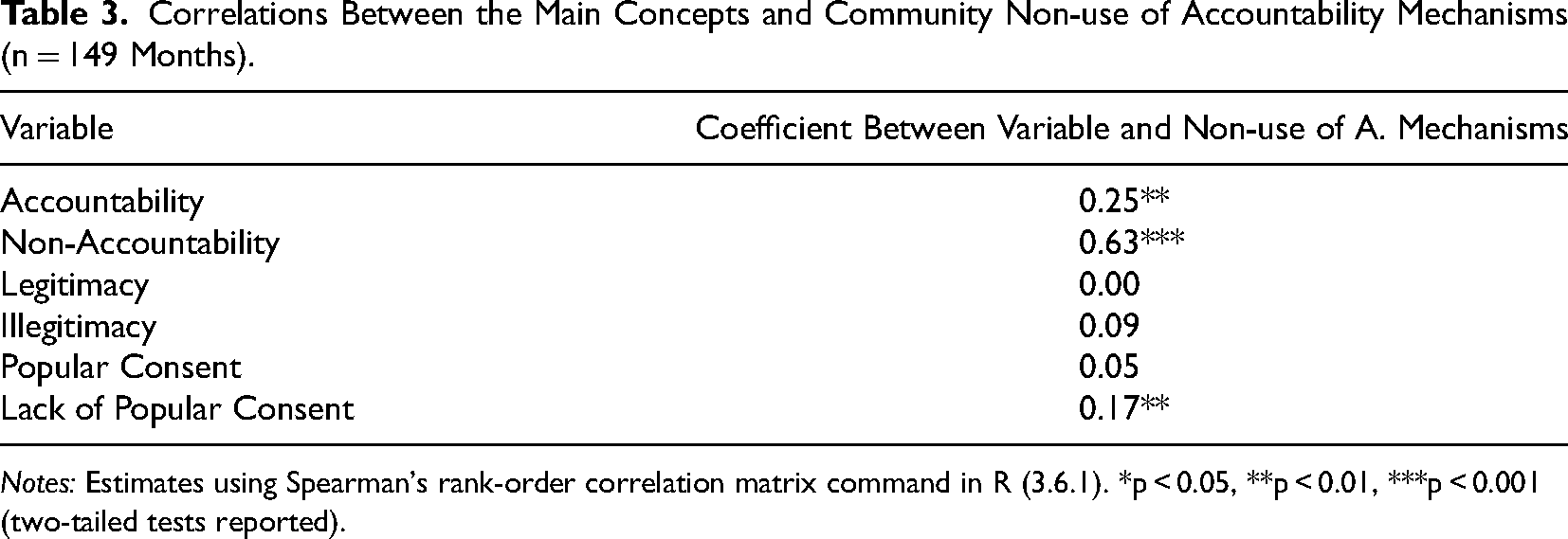
Notes: Estimates using Spearman's rank-order correlation matrix command in R (3.6.1). *p < 0.05, **p < 0.01, ***p < 0.001 (two-tailed tests reported).
The analysis identified a correlation of moderate strength between community non-use of accountability mechanisms and non-accountability (ρ = 0.63). It established a weaker correlation between community non-use of accountability mechanisms and lack of popular consent (ρ = 0.17). It also revealed no correlation of statistical significance between community non-use of accountability mechanisms and illegitimacy. The final correlation was between community non-use of accountability mechanisms and accountability (ρ = 0.25); it resembled the previously identified correlations between accountability and non-accountability (ρ = 0.40) and between community use of accountability mechanisms and non-accountability (ρ = 0.37).
Qualitative Analysis
This section elaborates upon the trends identified above, both clarifying and adding complexity to the quantitative conclusions. Some of the strongest correlations the statistical analysis identified were those between the three main concepts: accountability, popular consent, and legitimacy (Graph 1).
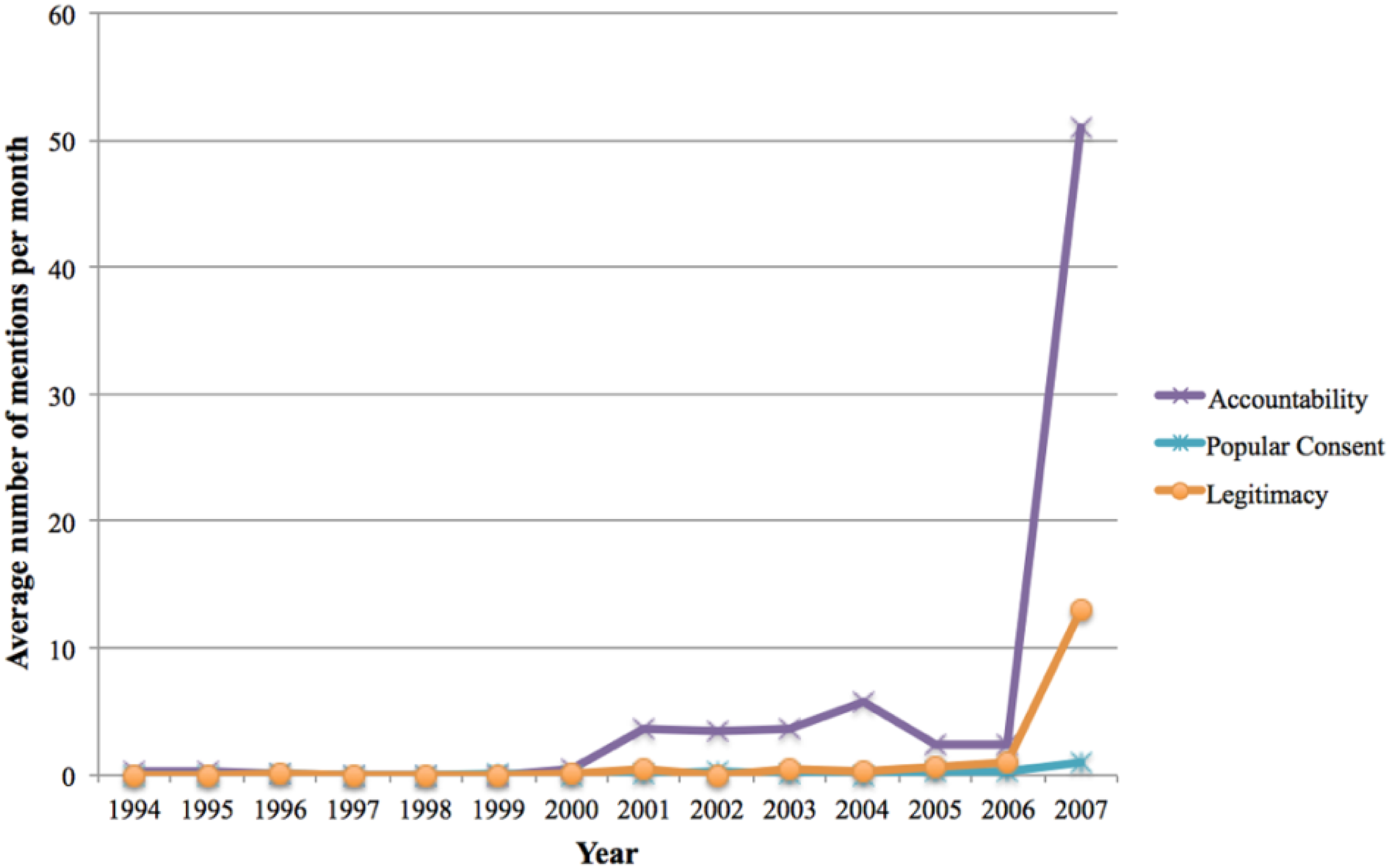
Monthly frequency of accountability, popular consent, and legitimacy codes.
The general trajectories of all three codes resembled each other. Each class of codes exhibited null values at the beginning of the time period and then hovered between zero and five average monthly mentions during the early years of implementation (2000 through 2006). The relatively low incidences of these codes reflected an overall decrease in coverage of the police, as political content shifted to a focus on the peace process more generally. The counts of all three classes then increased dramatically between 2006 and January 2007, when SF joined the policing accountability structures and implicitly endorsed the PSNI, bringing the debate over policing back to the forefront.
As one might intuitively expect, the correlation tests also established correlations of moderate strength between the negations of the main concepts (Graph 2).
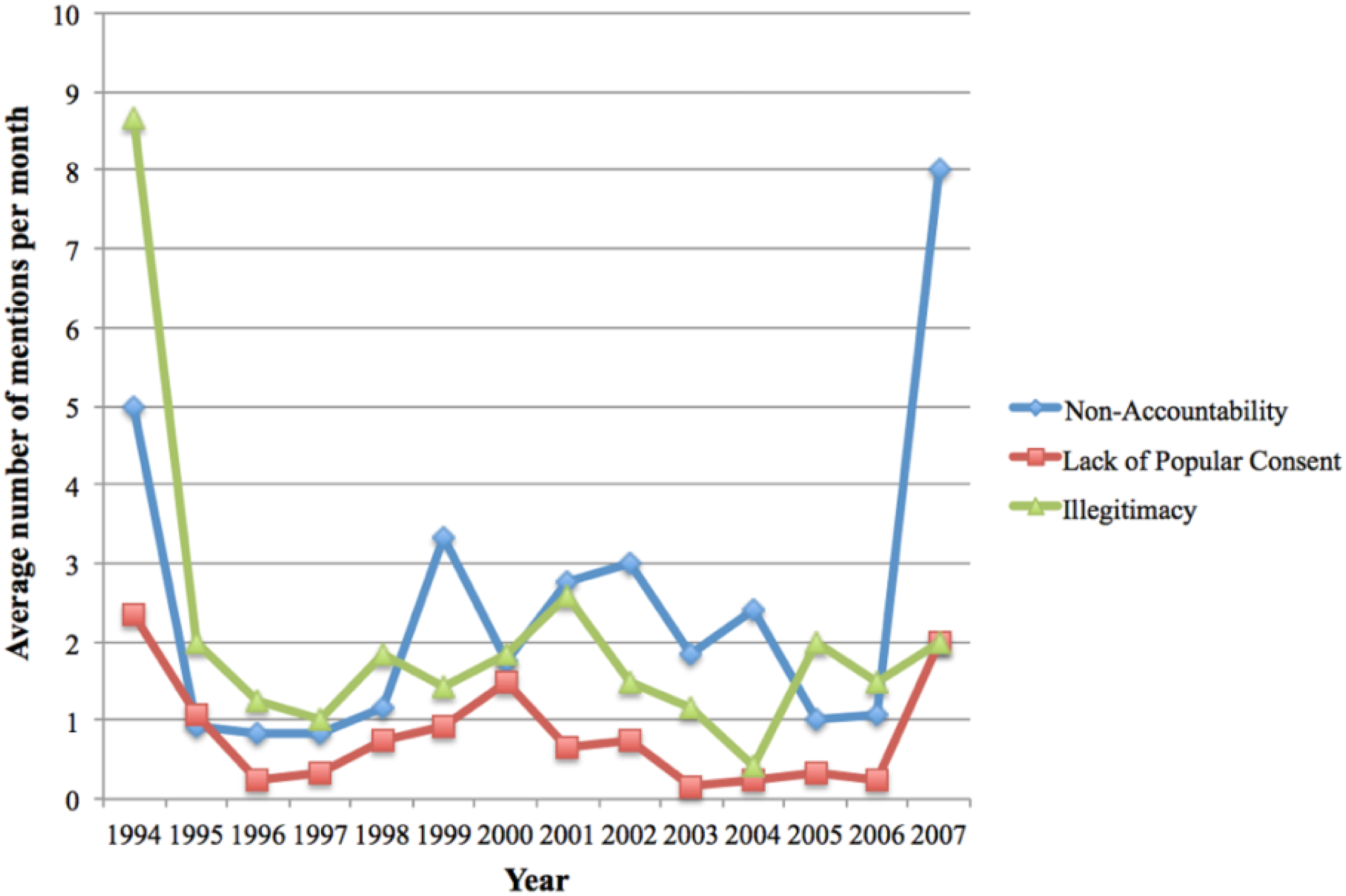
Monthly frequency of non-accountability, lack of popular consent, and illegitimacy codes.
The code classes of all three negated concepts experienced high counts at the beginning of the negotiation process (between September 1994 and 1995), before hovering at lower levels from 1996 to 2006, and increasing dramatically in January 2007 during the debate over SF's decision to assume their seats on the Policing Board. The relatively high rate of non-accountability, lack of popular consent, and illegitimacy codes at the inception of peace negotiations in 1994 stemmed from the large volume of articles that presented the RUC's unacceptability as an unquestionable fact. These articles made remarks such as: “the fact of the matter is that the RUC is an overwhelmingly Protestant paramilitary force with a long record of violence and intimidation, and that fact is not going to go away” (Andersonstown News, 1995). Authors’ portrayal of the “fact” of the RUC's non-accountability and illegitimacy resulted in the construction of an overall image of the police as a corrupt, irredeemable force that necessitated disbandment, rather than reform. This repeated insistence upon the RUC's disbandment negated the possibility of the force's improvement or nationalists’ cooperation with any future reform process. For instance, one particularly descriptive commentator remarked, “the RUC will always be as welcome in nationalist Belfast as a papercut on the eyeball” (Andersonstown News, 1997).
The rates of the negated codes decreased and stabilized throughout the later stages of the negotiation process and early years of reform implementation. These lower levels reflected the general decline in police coverage during the peace process and early years of reform. The subsequent relatively radical uptick in these codes between 2006 and 2007, which mirrored that of the main concepts themselves, is confounding at first glance. Why would the trajectory of non-accountability codes, for instance, resemble that of accountability codes? Indeed, the statistical analysis identified a correlation of moderate strength between accountability and non-accountability (ρ = 0.40), as well as a slightly weaker correlation between community use of accountability mechanisms and non-accountability (ρ = 0.37) (Graph 3).
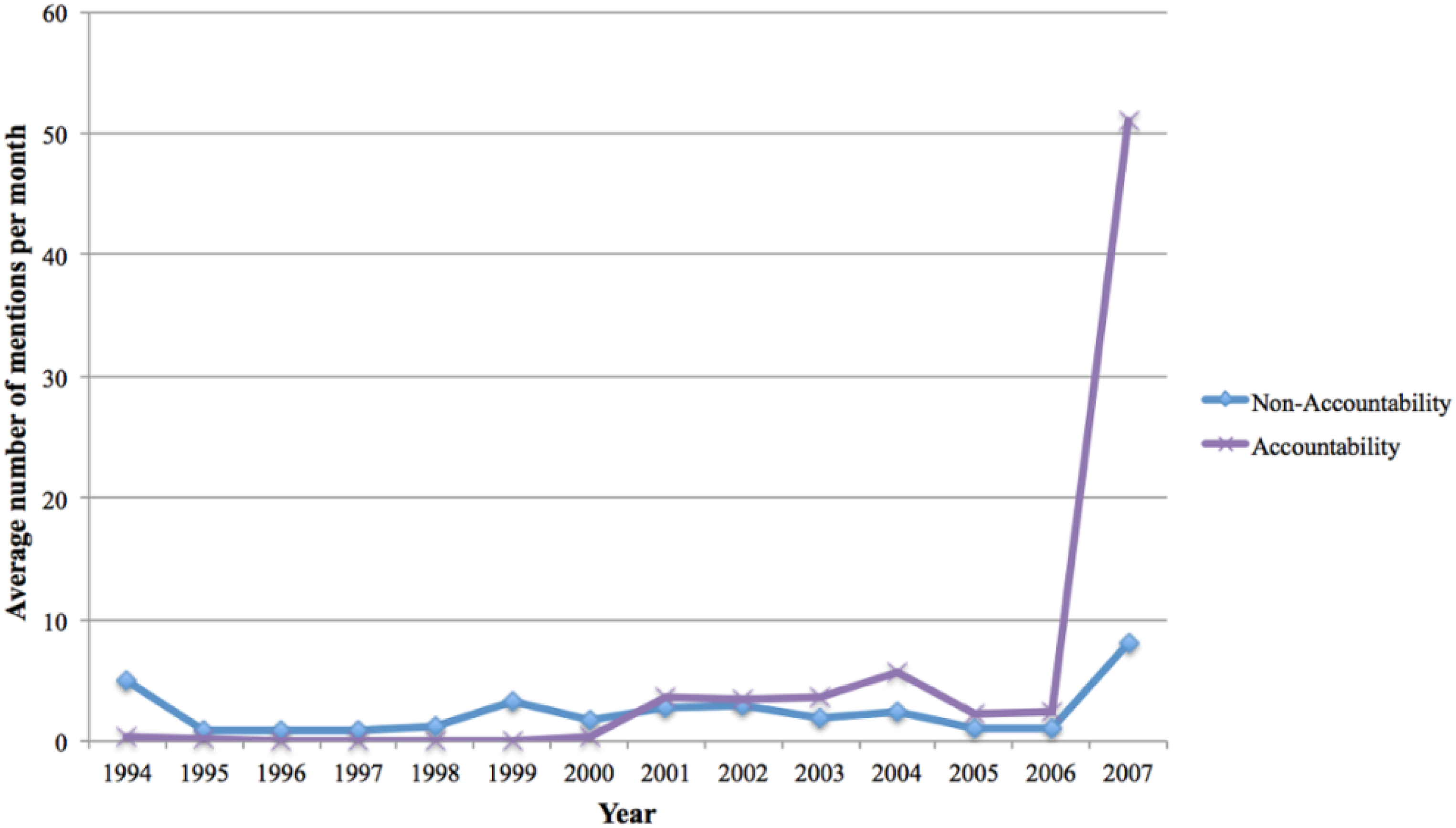
Monthly frequency of accountability and non-accountability codes.
The similarity of the trajectories of accountability and non-accountability codes in the early years of peace negotiations is likely linked to the simplistic, negative portrayal of the RUC. Absent an active debate regarding policing, accountability did not receive much newspaper coverage, resulting in low counts in both classes of codes. A closer look at the frequency of accountability and non-accountability codes supports this hypothesis; in the pre-Police Bills years, the vast majority of months exhibited no mentions of accountability codes, demonstrating the lack of positive coverage regarding the police. Within the non-accountability class of codes in the years preceding reform, the vast majority of mentions were simplistic statements that the police were “not accountable.” Codes that may demonstrate a more complex discussion of police accountability, such as “not answerable,” “not responsive,” and “no oversight,” experienced almost exclusively null values until the beginning of reform implementation in 2000, after which the frequency of the codes, indicative of a more complex debate, increased steadily.
This counter-intuitive joint increase in accountability and non-accountability codes in 2007 is largely a product of articles regarding the public debate over police accountability, which incorporated both accountability and non-accountability codes. Articles covering this debate often framed the issue in general terms, presenting, for instance, the SDLP and SF's divergent opinions regarding the police reforms. These “debate articles” had headlines including “Mixed views on historic move,” “SF debate policing move,” and “Where do you stand on the PSNI and the crucial debate?” (Andersonstown News, 2007a, 2007b, 2007c). These articles recounted a history of the PSNI's failures, yet also SF's decision to ultimately devote itself to cooperation with accountability structures. Likewise, articles authored by lay citizens exhibited various perspectives on the debate. Beginning with the passage of the Police Bill of 2000 and escalating until 2007, the paper published increasing numbers of “mála poist” sections that published citizens’ letters about the police, and about accountability structures in particular. In addition, concurrent articles that covered policing, yet not the SF debate, typically described reports on police misconduct issued by the Ombudsman Office. These articles praised the accountability mechanisms yet decried the lack of the police force's legitimacy and accountability, thereby linking mentions of accountability codes to non-accountability codes.
Discussion
This discussion examines the implications of the correlations characterized in the results section. It integrates the theoretical links between accountability, legitimacy, and popular consent with the empirical correlational data to develop more complex models of the relationships between these concepts and their negations. It then presents a model of the representation theory that more accurately represents the legitimacy-building effort in West Belfast. Lastly, it addresses the implications of this updated model for the contemporary, global police reform movement.
While the data yield pertinent theoretical implications, when considering the findings, readers should note the data's explanatory limitations. The data were drawn from one newspaper, with articles authored by a variety of journalists, politicians, and lay citizens. The newspaper's militant leaning shaped the data, likely rendering it more representative of a more militant nationalist subgroup of West Belfast residents. Therefore, one must not accept the data as a direct representation of public opinion throughout the community. As the most prominent newspaper in the predominantly nationalist area of West Belfast, The Andersonstown News enjoyed a position of political influence on that community and was also influenced by public opinion. Thus, while the data do not directly reflect public opinion, they do reveal the state of public discourse, which, in turn, serves as an indicator of public opinion.
Finally, post-Troubles West Belfast exhibits singular sectarian dynamics and a political history not replicated in any other contemporary context. Therefore, the following discussion of the study's conceptual and theoretical contributions may not accurately reflect other modern police legitimacy-building efforts. Though the conceptual links and advanced theoretical model cannot be directly applied to other contemporary contexts, the findings nonetheless shape our broader understanding of the representation theory of policing in a manner that gleans insights valuable for the global movement for police reform and for future researchers. The final section of the discussion explores the practical and political implications of the findings for the contemporary, global police reform movement; the conclusion proposes avenues for further research, highlighting the need for further application of the theoretical contributions to other cases that exhibit more common political dynamics.
Overview of the Conceptual Links Between Accountability, Popular Consent, and Legitimacy
This section evaluates the theoretical conceptual links between the main concepts and their negations. It presents a more complex model of the representation theory's application to nationalist West Belfast; this model illustrates the article's central theoretical contribution, namely, that contested debate regarding police accountability was associated both with indicators of legitimacy and popular consent and also with a “backlash” response that emphasized the police's continued unacceptability.
Figure 3 (above) is the initial theoretical model based upon the representation theory of policing and Baldwin's “accountability rationale” for police legitimacy (Baldwin, 1987; McNulty, 2001). The “accountability rationale” holds that popular consent moderates the positive causal relationship between accountability and legitimacy (Baldwin, 1987). The correlations of moderate strength between all three concepts support this cyclical model. The correlations do not indicate causality, yet are consistent with the “accountability rationale” and with the assertion that these relationships are bidirectional.
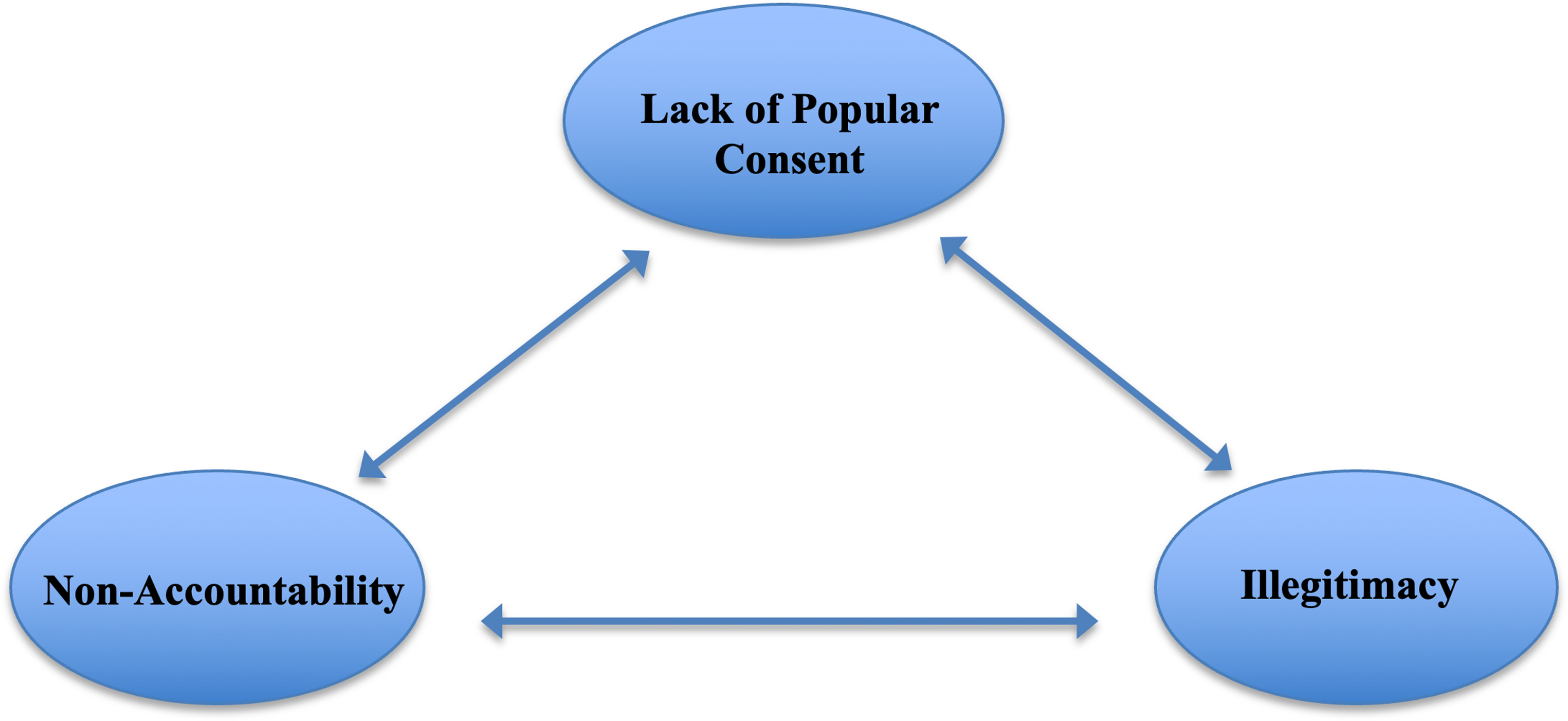
A cyclical relation between accountability, popular consent, and legitimacy.
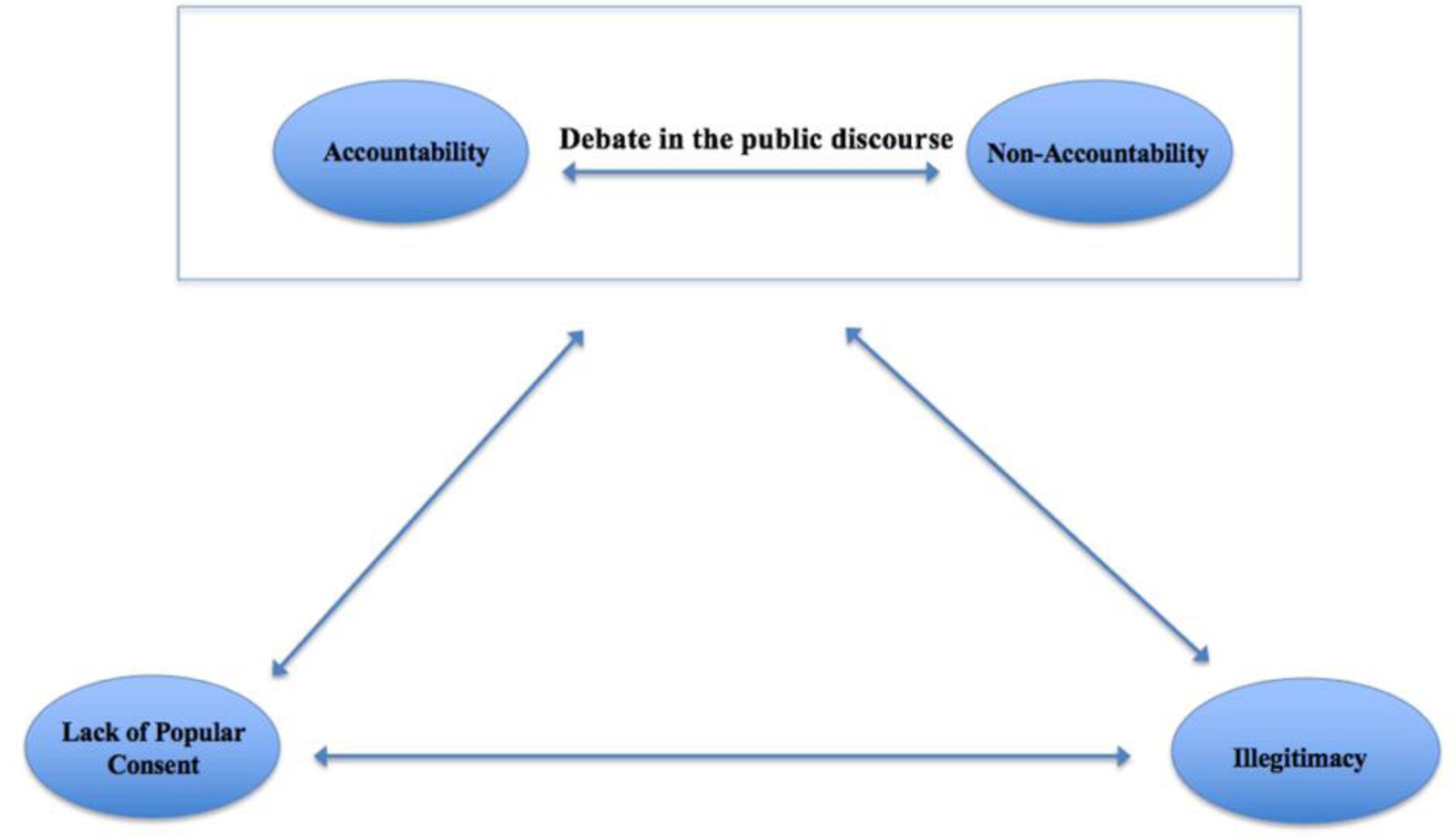
The moderately strong correlations discovered between the negations of the main concepts support the development of an additional model, which mirrors Figure 3.
The correlations do not indicate directionality, yet rationales similar to those regarding the main concepts suggest the bidirectionality of the relationships between the concepts’ negations (Figure 4).
A cyclical relation between non-accountability, lack of popular consent, and illegitimacy.
While the two previous models boast intuitive appeal, the correlation of moderate strength between accountability and non-accountability is initially confounding. However, as explored in the results section, the joint increase in accountability and non-accountability codes in the post-Patten years was chiefly a product of “debate articles” that framed police accountability as an issue of public interest. These “debate articles” presented divergent perspectives on police accountability; in other words, accountability codes begot non-accountability codes, and vice versa. Therefore, the correlation between accountability and non-accountability codes in the post-Patten years indicated that the debate over police accountability was dominant in public discourse. This bidirectional correlation supports the presentation of an additional model, which illustrates the way in which public debate reinforced the bidirectional link between indicators of accountability and non-accountability (Figure 5).
The mutually reinforcing link between accountability and non-accountability.
During the pre-Patten years, counts of accountability codes were mainly null; non-accountability codes were mostly invoked in order to state the RUC's presumed non-accountability. Counts of accountability and non-accountability codes rose with the inception of reform implementation in 2000 and again in 2007 in conjunction with SF's endorsement of the accountability structures. Thus, the joint invocation of accountability and non-accountability codes attested to a shift in the public discourse from an almost universal presumption of the police's non-accountability and illegitimacy to a hotly contested debate regarding accountability and legitimacy.
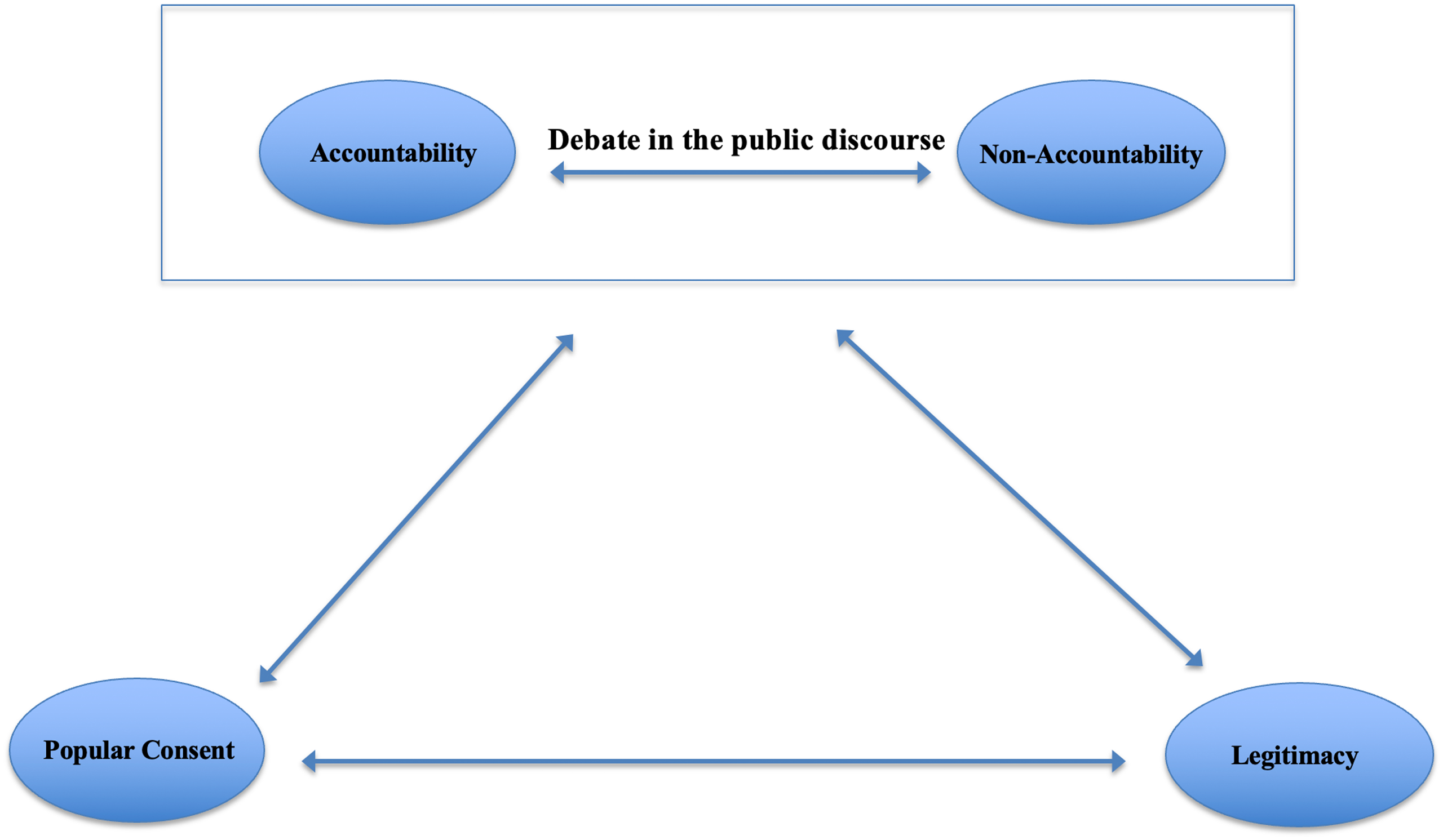
An understanding of the mutually reinforcing nature of accountability and non-accountability in public discourse allows one to complexify the initial cyclical model (Figure 3). Figure 6 (below) is this updated model, which integrates the dynamic of public debate regarding police accountability with the initial model of the relationships between the main concepts.
A cyclical relation between the accountability debate, popular consent, and legitimacy.
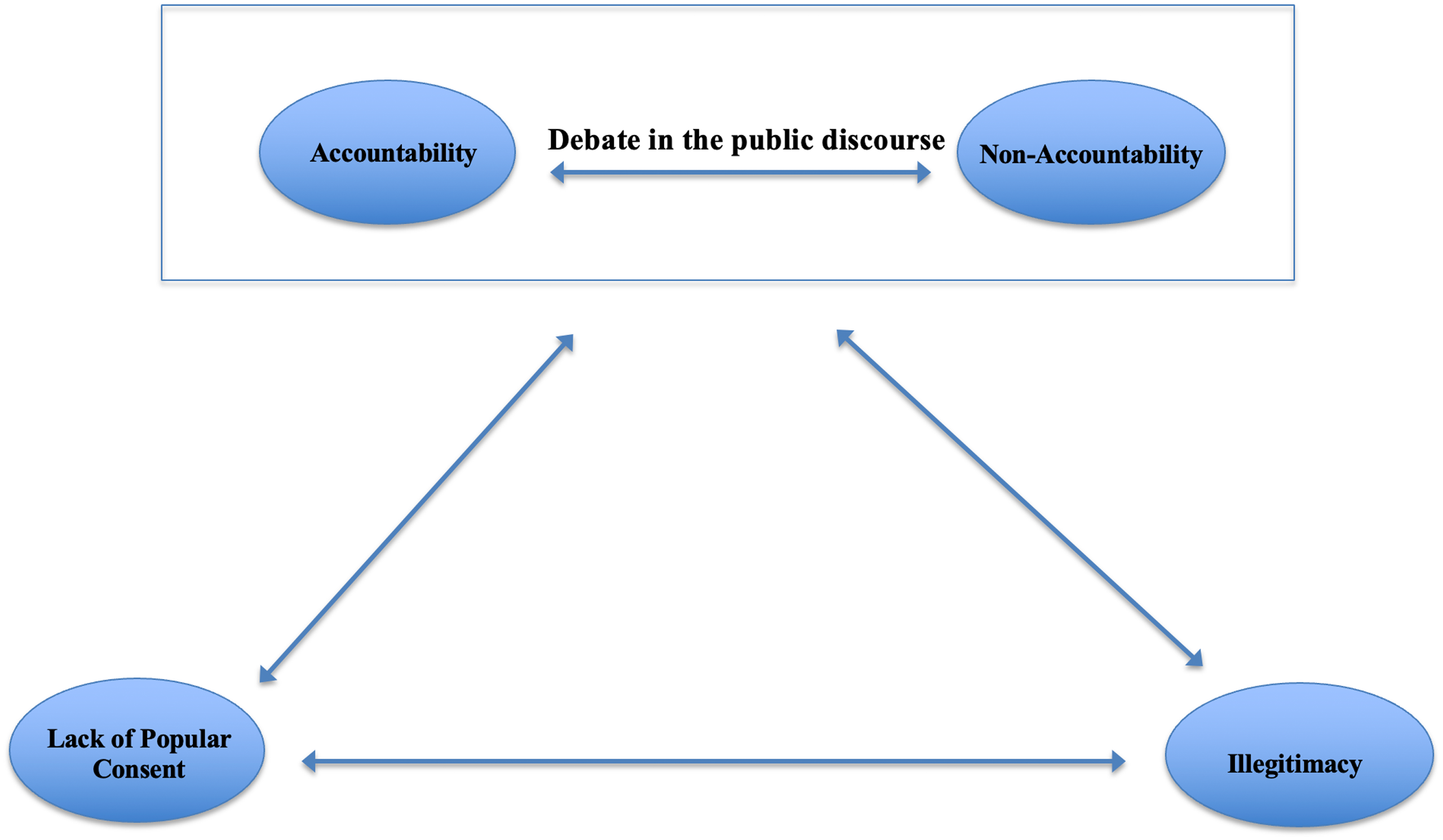
The model of the bidirectional relation between accountability and non-accountability also allows one to develop a more complex model of the relations between the negations of the main concepts (Figure 7).
A cyclical relation between the accountability debate, lack of popular consent, and illegitimacy.
This model similarly supports the notion that the debate over police accountability, rather than solely isolated discussion of the police's non-accountability, was associated with indicators of a lack of popular consent and illegitimacy. The model represents the “backlash” response to increased coverage of police accountability.
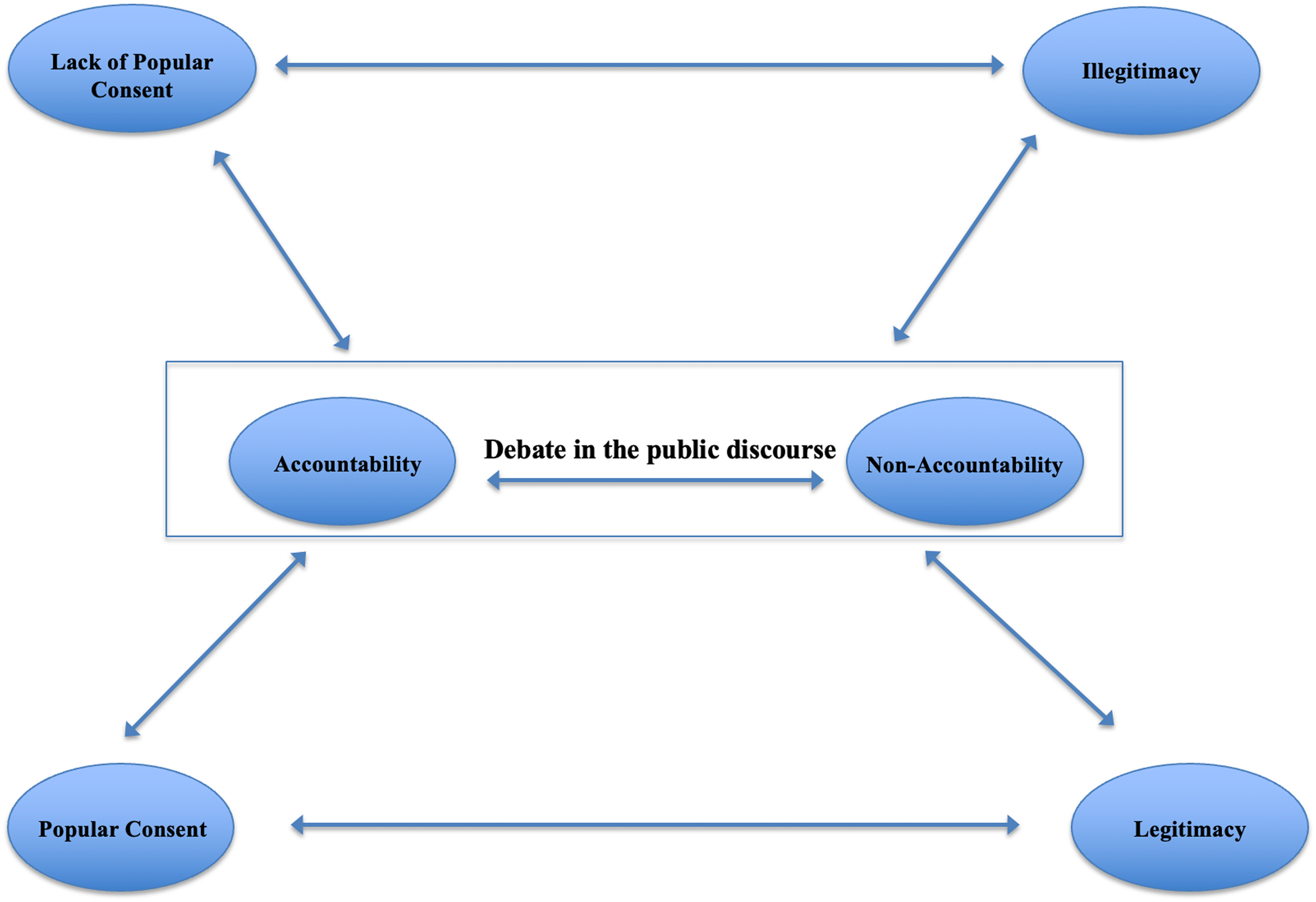
The final, most complex theoretical model, presented below (Figure 8), integrates the previous models, using the public debate regarding police accountability as the central axis. This original model re-evaluates the initial model of the relationships between the central concepts (Figure 3) in light of the article's central theoretical finding, namely, that substantive debate regarding police accountability was associated with both increases in indicators of legitimacy and popular consent and with a “backlash” response.
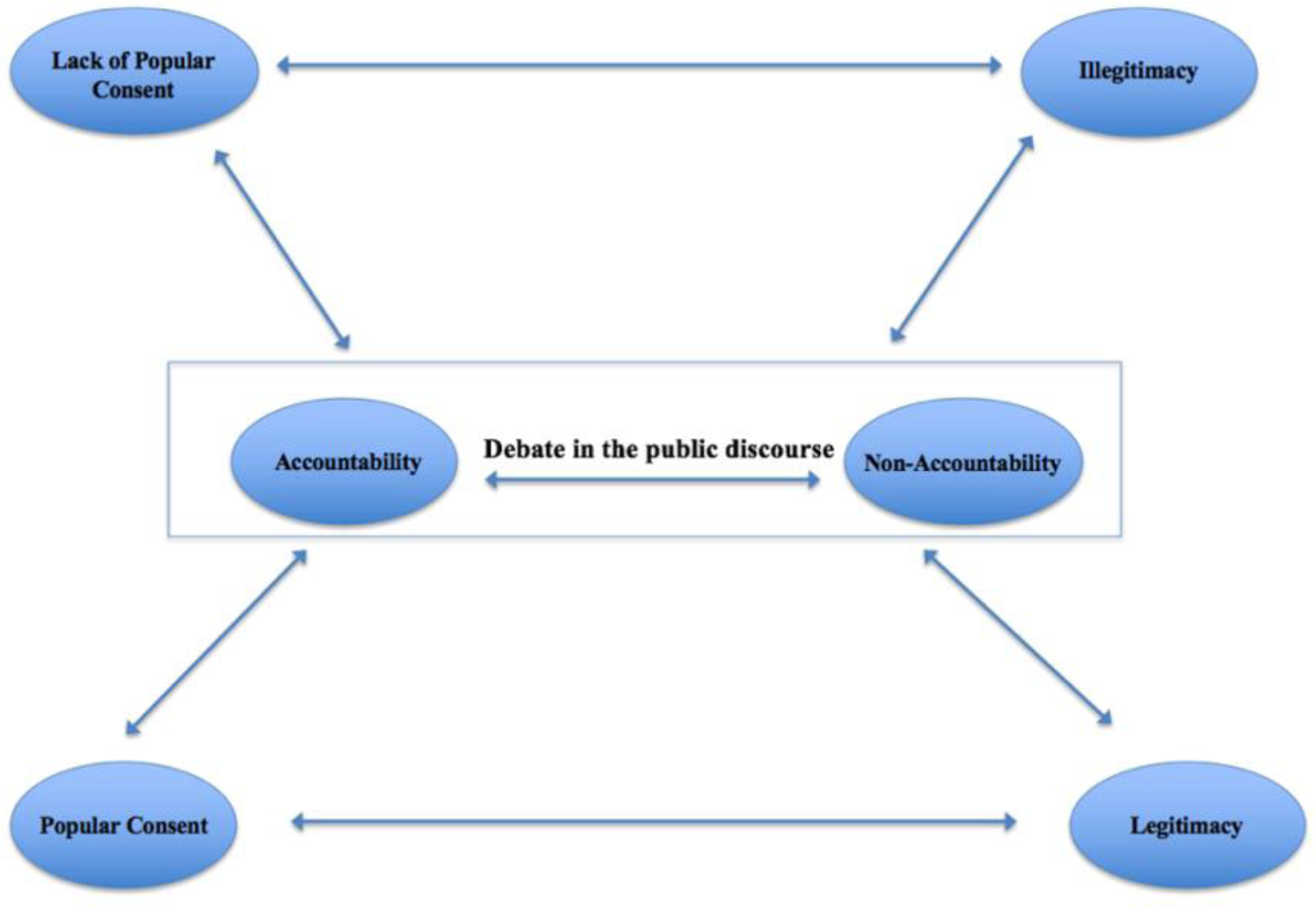
The dual cyclical relation between the accountability debate and the additional four central concepts.
The debate over police accountability served as a lynchpin, which was associated both with indicators of positive police-community relations and with indicators of negative police-community relations. No model that portrays both facets of the debate's effects, either in the abstract or as applied to a case study, has been presented in the literature. This article presents such a model, offering a more comprehensive understanding of the impact of the police accountability debate in post-Troubles nationalist West Belfast. This more inclusive understanding yields potential implications for the advancement of representation theory as it applies to West Belfast and for applications of representation theory in other contexts; the section that follows discusses these implications in detail.
Theoretical Implications for the Representation Theory of Policing
This section explores the theoretical implications of the conceptual models presented in the previous section. As described in the literature review, the representation theory of policing asserts that police oversight structures and accountability mechanisms facilitate the incorporation of public input into institutional policy; they thereby allow for more effective civilian representation and bolster democratic legitimacy afforded to police (McNulty, 2001). The “accountability rationale” is one iteration of this theory, asserting that accountability generates popular consent and thereby promotes increased democratic legitimacy (Baldwin, 1987). Examining the aforementioned data in light of these theoretical frameworks prompts one to consider whether the process of accountability reforms’ implementation did, indeed, successfully incorporate the nationalist community's interests and facilitate the construction of a new police force viewed as more acceptable and accountable to that community.
In short, the data superficially support the application of the representation theory of policing to post-Troubles nationalist Belfast. Acceptance of accountability mechanisms and the accountability of the force did generally accompany increases in indicators of democratic legitimacy. However, when contextualized within the newspaper's overall coverage of police reform, the data do not map onto the representation theory as neatly. Rather, the data suggest that the relationship between accountability measures and levels of legitimacy was more complex than a simple positive correlation. Substantive debate regarding police accountability (or lack thereof) in public discourse marked the transition from the tacit presumption of the police force's unacceptability and illegitimacy to widespread public engagement in the police reform process and endorsement of police accountability mechanisms. The debate over accountability resulted in both coverage that portrayed the force as accountable and legitimate and antithetical coverage that affirmed its unacceptability and illegitimacy.
Thus, the data ultimately suggest that, not only were increases in accountability and legitimacy correlated, but also, and perhaps more importantly, that lively and contested debate regarding police accountability was associated with, and may have been a crucial component of, efforts to strengthen democratic legitimacy. The introduction of accountability mechanisms, therefore, was a beneficial measure, not only due to its association with rises in legitimacy indicators, but also because strengthened accountability mechanisms catalyzed the promotion of police accountability and reform to a prominent topic in public discourse. These findings thereby advance the representation theory of policing and the “accountability rationale” as applied to nationalist West Belfast by contextualizing the positive correlation between police accountability and legitimacy within both concepts’ relationships to popular consent, non-accountability, illegitimacy, and a lack of popular consent. Future researchers may draw upon this more comprehensive understanding of these conceptual links when crafting studies that apply the representation theory of policing to other contemporary contexts.
Political and Practical Implications for Contemporary Police Reform Movements
This article focuses on transitional West Belfast as a case study of a policing reform process that shaped an evolving relationship between the police and a community historically distrustful of them. Despite the study's limited scope, its theoretical implications may yield insights pertinent to strained police-community relations throughout the world. The murder of George Floyd in May 2020 in Minneapolis prompted a global outcry and a wave of mass protests, bolstered by activism conducted over several generations, most recently and notably by the Black Lives Matter Movement. These demonstrations have prompted the widespread realization of the urgency of addressing institutional racism, and particularly patterns of aggressive policing steeped in prejudice and militarized violence (Ankel, 2020).
Policymakers, activists, and lay citizens of nations throughout the world joined American activists in calling for radical reforms that reimagine the role of policing in society and disentangle police-community relations from discriminatory dynamics of violence and domination (Ankel, 2020; Nossiter & Méheut, 2020). Indeed, protests in response to Floyd's murder occurred in 4,446 cities and towns across every continent (except Antarctica) in the six months following the tragedy (Creosote Maps, 2020). Activists and lay citizens decried Floyd's murder and police violence in the United States; yet, protests also provided a platform for participants to air grievances regarding police violence at home, highlighting parallels and differences between police violence in the U.S. and in their respective communities.
In the interest of space, this article cannot explore the dynamics of police violence in any one of the individual non-American municipalities that participated in protest. However, to provide a generalized example, the protests across the European Union prompted recognition among predominantly white institutions and communities that issues of structural racism and police violence are not isolated to the U.S. (Rios, 2020). The European Network Against Racism (ENAR) attributes Europeans’ lack of awareness regarding these issues largely to the dearth of data regarding police violence and race-based crime in the E.U.; without the concrete “proof” regarding the pervasiveness of such violence, institutions pretend it does not occur, forestalling the possibility of systemic change (ENAR, 2021; Rios, 2020). Going forward, European nations must collect reliable, comparable data on police brutality and race-based crime (ENAR); yet, in the meantime and beyond, Europeans can utilize data and insights regarding police violence and reform in other jurisdictions, which, despite differing political dynamics and histories, nonetheless face similar barriers to securing the safety and equality of all citizens. This article regarding police legitimacy-building efforts in transitional West Belfast aims to contribute to this repository of knowledge and experience from which lay citizens, advocates, and academics throughout the world can draw to inform their understanding of police reform, movement strategy, and future research.
Given the recent proliferation of the “Defund the Police Movement,” particularly in the United States, some progressive advocates disparage research regarding police accountability, alleging that such proposals promote “piecemeal reforms” incapable of ending police violence (Movement for Black Lives, 2022). “Defund the Police” “call[s] for a national defunding of police” and “investment in our communities and the resources to ensure Black people not only survive, but thrive” (Black Lives Matter, 2022). Yet, the “Defund” movement itself recognizes that institutional responses to endemic social issues like violent crime, traffic, gender-based violence, and mental illness will remain essential, whether or not the institutions addressing them resemble typical policing structures (Black Lives Matter, 2022). Therefore, regardless of the type or extent of systemic reforms adopted, identifying strategies for building accountable structures for delivering policing services will remain essential to the project of ending police violence, whilst ensuring that social needs are met.
The issue of democratic legitimacy lies at the heart of these discussions regarding police reform and the development of just and effective policing. Police effectiveness is predicated upon public support and cooperation, and this support is inextricably tied to public perceptions of the force's legitimacy; indeed, the primary reason members of the public cooperate with the police is their acceptance of the police as legitimate legal authorities (Tyler, 2004). Therefore, activists and policymakers must identify measures that promote police legitimacy and prioritize such policies in reform negotiation and implementation processes. This article contributes to this discussion by affirming that, in post-Troubles West Belfast, police legitimacy was associated not only with accountability, but also with substantive public debate regarding police accountability. These findings, while not directly applicable to other contexts absent further research, suggest that similar dynamics may operate elsewhere and, consequently, that the establishment of police accountability as a prominent topic in public discourse may serve as a crucial aspect of building police legitimacy in other contexts.
The question follows, then: how can reform advocates fuel the debate regarding police accountability and maintain the prioritization of police accountability measures in the face of organized opposition, such as police unions and conservative political influence? The Andersonstown News’ coverage of police accountability offers answers. This article is predicated upon the conception that media both shapes, and is shaped by, public discourse. News outlets’ coverage, or lack thereof, plays a central role in determining the issues that the public considers urgent and critical. Therefore, advocates should encourage media outlets to continue centring coverage of police accountability by participating in protests and public debates and by contributing directly to media coverage by, for instance, submitting op-eds or “letters to the editor” to local news outlets. 3 The vast majority of articles in The Andersonstown News in which indicators of police accountability appeared focused on some combination of protests, public events or debates about police reform, and accountability mechanisms’ involvement in investigations of police misconduct. This underscores that, in addition to the establishment and functional operation of accountability mechanisms, coordinated action can be a central component of promoting police accountability as a topic in public discourse. This finding is consistent with a recent study of 177 American cities that found no effect of police accountability mechanisms on officer-involved fatalities of racial minorities, but identified a significant inverse correlation between such fatalities and print media coverage of protests advocating for accountability mechanisms (Olzak, 2021). In the U.S. and in West Belfast, protests both engendered by and generative of public debate regarding accountability have served as an imperative part of improving policing outcomes. Advocates in jurisdictions throughout the world should take account of these findings when crafting social movement strategy, in light of the findings’ potential applicability to advocates’ home communities.
Conclusion
This article explored transitional police-community relations in nationalist West Belfast in order to characterize the conceptual link between police accountability and legitimacy and thereby evaluate the representation theory of policing. Its findings substantiate the application of the representation theory of policing to post-Troubles West Belfast, yet also suggest that the conceptual model was more complex than a simple bidirectional positive association. Rather, contested debate regarding police accountability, which manifested as mutually reinforcing increases in indicators of both accountability and non-accountability, fuelled both a boost in indicators of legitimacy and a ‘backlash’ response that underscored the police's continued unacceptability to segments of the community. Accordingly, the article presented an original, more complex model of these theoretical links, which illustrated the multifaceted response to debate regarding police accountability. It demonstrated that contested debate regarding police accountability was integral to police legitimacy-building efforts in West Belfast. The establishment of effective accountability mechanisms was crucial, not only because it accompanied a boost in indicators of legitimacy, but also because such mechanisms promoted police accountability to a prominent position in public discourse and facilitated the political prioritization of police reform.
Future researchers may draw upon this more comprehensive understanding of the conceptual links between police accountability and legitimacy in transitional West Belfast when studying policing reform, and representation theory specifically. In particular, the finding that contested debate regarding police accountability was integral to the advancement of police legitimacy highlights the importance of expanding the scope of one's research beyond a study of positive indicators of police accountability to include indicators of the accountability debate more broadly, negative indicators included. These findings also provide a potential avenue for future development of the representation theory, as they identify the need to determine the generalizability of this article's findings and to further characterize the link between the debate over police accountability and legitimacy in the public discourse.
While this article does contribute to academia's understanding of the conceptual relationship between police accountability and legitimacy, it is limited in that its scope is constricted to the case study of the predominantly nationalist area of West Belfast, to a traditional media source, and to a newspaper with a militant bent. Therefore, in order to determine the generalizability of the article's findings, researchers can conduct structurally similar studies that explore the relationship between police accountability and legitimacy in other contemporary contexts with more common political dynamics. Researchers may also wish to select as data sources other platforms for public discourse, such as social media and protest messaging. This research will thereby further advance representation theory and contribute to academia's understanding of the conceptual link between police accountability and legitimacy. The consequent more comprehensive conception of the role of public discourse regarding police accountability will ultimately benefit both academics’ conceptual understanding and practitioners’ efforts to strengthen the democratic legitimacy of policing institutions and repair relations between the police and communities historically marginalized and distrustful of police.
Footnotes
Appendix: Coding Manual
Declaration of Conflicting Interests
The author(s) declared no potential conflicts of interest with respect to the research, authorship, and/or publication of this article.
Funding
The author(s) received no financial support for the research, authorship, and/or publication of this article.
