




Abstract
The study of controversial issues in schools has been discussed extensively. There is less understanding of pedagogies addressing these issues in controversial geographic areas. This study examined approaches to teaching controversial issues in Golan Heights schools from the mid-1980s to the early 2000s. Analysis of materials from five elementary schools showed strategies avoiding engagement with controversy. This approach compromises democratic values and hinders public discourse. The findings provide insights for developing democratic participation among youth as future citizens and may inform democratic participation in other controversial regions.
Introduction
Research has established the significance of teaching controversial issues (CIs) in schools (Garrett, 2020; McAvoy & Hess, 2013), yet understanding their implementation in contested geographical areas remains limited. This study examines the educational approach to CIs in the Golan Heights during a period of political uncertainty (mid-1980s to early 2000s), when discussions about returning the territory to Syria created significant public debate in Israel (Kipnis, 2013).
The Golan Heights presents a unique case study: captured from Syria in 1967 and predominantly populated by Druze residents, the region has maintained relative calm despite its disputed status (Heitner, 2016; Sulimani & Kletter, 2022). The research investigates how the regional educational system balanced democratic education principles with local ideological messages during this period of uncertainty, offering valuable insights into managing CIs in complex political environments. This analysis provides a crucial understanding for educational systems addressing sensitive issues in contested regions, particularly relevant given current geopolitical dynamics (Mason, 2022). This research contributes to our understanding of how schools can effectively manage controversial topics while fostering both democratic values and community cohesion.
Teaching CIs: A Multifaceted Challenge
CIs are defined as subjects that involve value judgments and disputes that cannot be resolved solely through facts or evidence (Wellington, 2017). The importance of teaching CIs stems from their role in developing democratic participation skills (Hess, 2008) and their potential to foster critical thinking, enhance social sensitivity, and improve communication skills (Alscher et al., 2022; McAvoy & Hess, 2013; Zimmerman & Robertson, 2020). However, educators face challenges, including political pressures and maintaining pluralistic classroom environments (Hess, 2008; McAvoy & McAvoy, 2021). Furthermore, teachers’ effectiveness in addressing CIs depends on their preparation, institutional support, and the relevance to students’ lives (Cohen, 2020; Kelly, 1986; McAvoy & Hess, 2013). In divisive settings, fear of backlash often deters teachers from addressing controversial topics (Iglesias et al., 2017; Pollak et al., 2018).
In the context of the Golan Heights, schools must navigate between Israeli national education system guidelines and regional educational needs (Israel Ministry of Education and Culture, 1996; Kogahinoff, 2020). This creates unique challenges, particularly when local and national interests diverge (Lamm, 2000; Shamai & Arnon, 2005). The regional education system employs a community-based approach, recognizing the influence of family and community on students’ education (Arthur & Baily, 2000) while reflecting community members’ perspectives on the common good (Sparrow et al., 2021).
Practices for Addressing CI
Effective educators comprehend these challenges; they aim to achieve a curriculum that encourages critical thinking and avoidance of impartiality (Kello, 2016), their own personal beliefs, or personal interest in an issue (McAvoy & Hess, 2013), which could exacerbate societal divisions. Teachers use different strategies to handle CIs in the classroom.
Teachers typically approach CIs as pedagogical practice, reflection, curriculum enhancement, and disciplinary content (Alscher et al., 2022). In the Israeli context, focus of the primary curriculum on national ethos often leads to controversy avoidance (Erlich-Ron & Gindi, 2021). Pedagogical approaches range from avoidance to perspective-taking and empathy-building (Flensner, 2020). CIs often emerge unexpectedly and remain confined to the mandatory curriculum (Sætra, 2021); however, engaging with them enhances students’ critical thinking and democratic commitments (Badri, 2016).
Researchers have identified three broad strategies and methods utilized by educators to address CIs in the classroom: overt teaching, direct avoidance, and indirect avoidance. Each of these approaches possesses distinct characteristics and underlying justifications.
Overt teaching of CIs involves explicitly integrating CIs into the curriculum (typically in subjects such as history, social sciences, and citizenship education) or in an open response to spontaneous classroom discussion (Cassar et al., 2021). This approach is evident in two main forms: proactive teaching, in which educators intentionally design lessons around a CI to promote critical and constructive discourse among students, and reactive teaching, which involves responding to spontaneous classroom discussion with immediate educational intervention (Savenije & Goldberg, 2019). The primary goal of open teaching is to equip students with the cognitive and emotional tools necessary to examine a CI critically from multiple perspectives.
Direct avoidance occurs when educators consciously choose not to discuss or teach a CI in order to prevent divisive situations in the classroom or the community (Hess, 2008; Levinson, 2006). An example is the avoidance of discussing the Holocaust in European classrooms, to thwart the potential emergence of Holocaust denial issues among students and their families (Bowen & Kisida, 2020; Savenije & Goldberg, 2019). This method might reduce risks, but it also deprives students of the opportunity to engage in in-depth dialogue and develop critical thinking skills.
Indirect avoidance, a more complex form of avoidance, takes inspiration from Barad's (2003) concept of a “diffraction pattern.” This approach is subdivided into three specific types, each based on a different rationale: The first, reflective avoidance, involves educators presenting subject matter in a manner that conforms to prevailing social or community views, avoiding alternative perspectives (Cassar et al., 2021). The second, adoption of a government-endorsed narrative about the CI, often takes place without sufficient preparation for a comprehensive discussion, thereby stifling in-depth class debates to avoid potential conflicts (Hess, 2008). The third type, experiential avoidance, involves teachers using pedagogical methods, such as role-playing, to emphasize similarities rather than differences, structuring CI discussions to entertain multiple viewpoints, but refraining from encouraging the discussion towards definitive conclusions.
This theoretical framework supported the goal of the present study, in which we analyzed how educational institutes and teachers navigated the complexities of teaching CIs during a particularly divisive period in the Golan Heights in Israel. Like many regions in the world, political and ideological practices are deeply intertwined in the Golan, and controversy is ongoing (Nelson, 2018).
Purpose of the Study
The aim of the present study was to investigate and analyze the educational strategies adopted by schools in the Golan Heights to deal with the teaching of CIs associated with the region's geopolitical status. Focusing on the period of uncertainty between the mid-1980s and early 2000s, the research examined how the regional education system navigated between the need to strengthen local identity and the challenges involved in discussing politically sensitive topics. Based on analysis of educational materials and questionnaires, we sought to better understand the tension between education for democratic values and the tendency to avoid direct engagement with CIs in a geopolitically challenged area.
Research Question
Based on the purpose of the study, the main research question was: How did schools in the Golan Heights navigate the teaching of CIs related to the region's geopolitical status during the period of uncertainty from the mid-1980s to the early 2000s?
Hypotheses
The study examined the following hypotheses:
The educational materials used in Golan Heights schools will largely avoid explicit discussion of the ongoing political controversy regarding the region's future, instead focusing on local geography, history, and environmental studies.
The educational materials used in Golan Heights schools will primarily present positive or neutral messages regarding the Golan as part of Israel, rather than critical or negative perspectives.
Method
The approach employed in this study links pedagogical practices to broader social and historical phenomena (Moore, 2010; Vujadinović & Šabić, 2017). The research data were drawn from archived educational materials from the mid-1980s to the early 2000s in a purposive sample of five schools, with different demographic characteristics.
This research was based on three complementary data sources: (a) analysis of 90 worksheets from five different schools in the Golan Heights, both elementary (Grades 1–6) and high schools (Grades 7–12), (b) data collected from 504 high school students in 1995 using the Attitudes During a Period of Uncertainty questionnaire (Shamai & Arnon, 2005), and (c) data collected from an additional group of students in 2005 using the same questionnaire. The worksheet analysis provided insights into the content of educational materials and teaching approaches across the educational continuum; the questionnaire data captured high school students’ perspectives on how schools dealt with the uncertain status of the Golan.
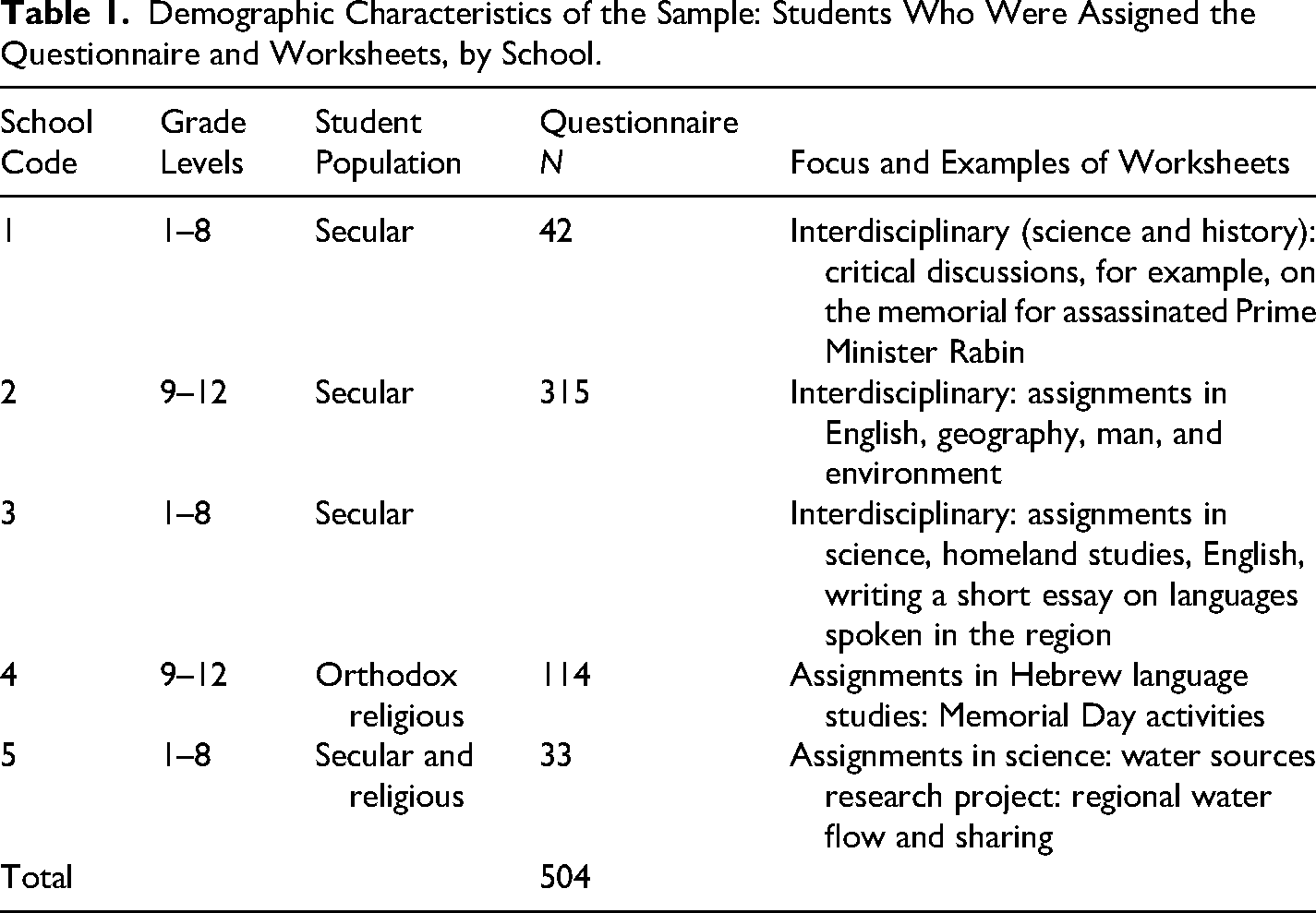
The questionnaire (Shamai & Arnon, 2005) was administered to students in Grades 9–12 in four high schools in the region (see Table 1), as part of a broader study on local identity and sense of belonging in the Golan Heights. In the current analysis, we used the questionnaire data to triangulate and enrich the findings from the worksheet analysis, allowing us to examine how older students perceived the way their schools addressed issues related to the status of the Golan.
Demographic Characteristics of the Sample: Students Who Were Assigned the Questionnaire and Worksheets, by School.
School worksheets provide unique insights into classroom-level handling of CIs, reflecting local context and teacher discretion. Unlike textbooks, worksheets offer a view of day-to-day teaching practices and how CIs are navigated in real time. Worksheets provide a structured format that can help reinforce specific learning objectives and skills, allow students to practice and reinforce what they have learned, and serve as an effective assessment tool (Dowling et al., 2019; Wolfe, 2009). However, they may lack engagement, limit critical thinking, and adopt a one-size-fits-all approach that does not cater to diverse learning needs (de Lijster et al., 2016). The approach adopted here is consistent with the use of archival learning materials (de Lijster et al., 2016; Dror, 2021), which enables examination of how schools in the Golan Heights balanced education for democracy with the practical complexities of their geopolitical context.
Most (75%) of the worksheets were produced by the national Ministry of Education and the others (25%) were produced by educators from the four Educational R&D Golan Pedagogical Centers (including the independent Katzrin Local Council). Some materials were assigned in lessons that did not necessitate reference to a location (in this case, the Golan Heights), such as English classes. Others were used in teaching subjects of regional relevance, such as geography, science, and environmental studies.
At the time of the research, there were eight public schools in the research area; four belonged to the State Religious education system, three to the general (secular) State education system, and one was affiliated with both. There were four high schools in the region: two secular and two religious (one for girls and one for boys). The region also had a “semi-private school” (one in which students manage their educational processes) for Grades 1–12. For comparison, we also examined the results of the Attitudes During a Period of Uncertainty questionnaire, which was administered in 1995 to 504 junior high-school students in the four aforementioned schools, and analyzed by Shamai and Arnon (2005). The demographic characteristics of the students who were assigned each worksheet, as well as the focus of the different worksheets, are presented in Table 1.
Data Analysis
We analyzed 90 learning tasks distributed as worksheets during lessons. To decode the educational materials, we performed a qualitative content analysis. Relevant units, especially those on uncertainty or CIs, were marked and subsequently categorized (Hodder, 2000). Student worksheets were coded to organize ideas of meaning (McKibben et al., 2020). We aimed to discern the types of messages—explicit, implicit, or absent—that the worksheets conveyed related to the geopolitical status of the Golan. Quantitative assessments, made by calculating the frequency of code words, yielded estimates of the prominence of particular perspectives or topics (Burnard, 1996). Descriptive statistics were used to analyze the responses to the attitude questionnaire. We calculated means, standard deviations, and percentages for each item to measure central tendency. This quantitative analysis complemented our qualitative findings, providing a perspective on students’ views of the Golan's geopolitical status.
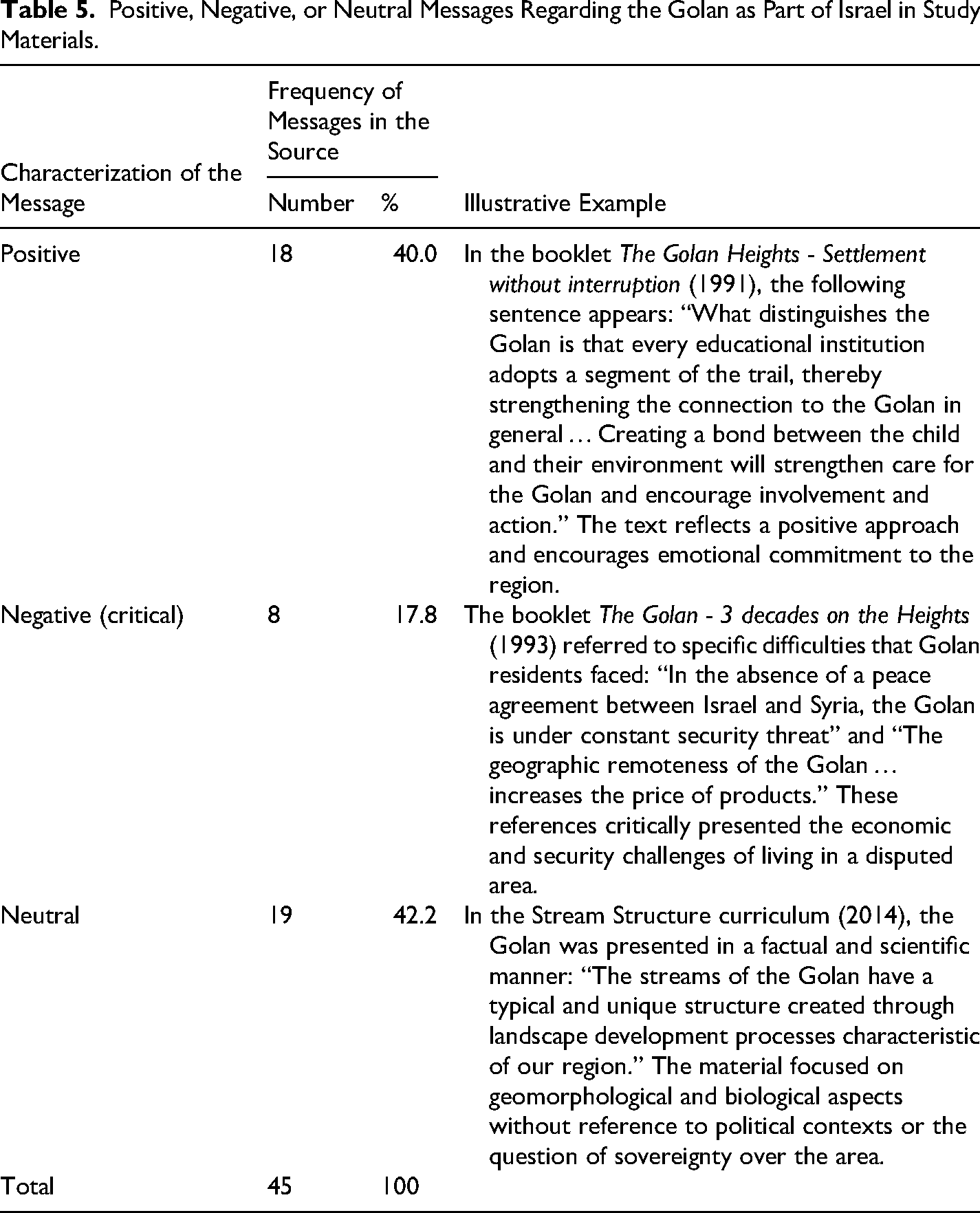
In the second stage of analysis, we found that many of the educational materials contained multiple or mixed messages about the Golan. Therefore, we chose a “message unit” rather than an entire worksheet as our unit of analysis. A message unit was defined as a coherent segment (paragraph, sentence, image, map, or any other visual element) that expressed a position or reference regarding the status of the Golan. A single worksheet could contain several message units, sometimes varying in character. The coding process involved identifying all message units in each of the 90 worksheets analyzed and classifying them according to message type (the Golan as part of Israel, as a region in its own right, or as a divided area) and character (positive, negative, or neutral). Thus, the 45 messages presented in Table 5 represent separate message units identified throughout all the materials analyzed, and not necessarily the number of worksheets. This approach allowed for a more precise analysis of the complexity in educational materials, which often combined different types of messages within the same worksheet.
Our worksheet analysis used a two-tiered approach: first, the metadata (title, audience, subject) were examined to establish context, and then, the messaging content was categorized by tone (positive, negative, neutral) and geopolitical lexicon. We examined how the materials referred to the region (e.g., “northeastern Israel,” “Golan Heights,” and “our home”), referenced borders, and employed ideologically charged terminology (e.g., “pioneers,” settlement terminology, and “Zionism”). This framework allowed us to analyze CI teaching during a period of political uncertainty.
Results
The findings show that there were discussions about the future of the Golan in the students’ homes, mainly in family conversations and among siblings. In addition, in response to a separate question, the students answered that most of the conversations about the situation in the Golan were initiated by parents (56%). This indicates the central role of the family in shaping the political and ideological attitudes of the adolescents (Table 2).
Responses to Questionnaire on Attitudes Administered to High School Students in the Golan in a Period Uncertainty.
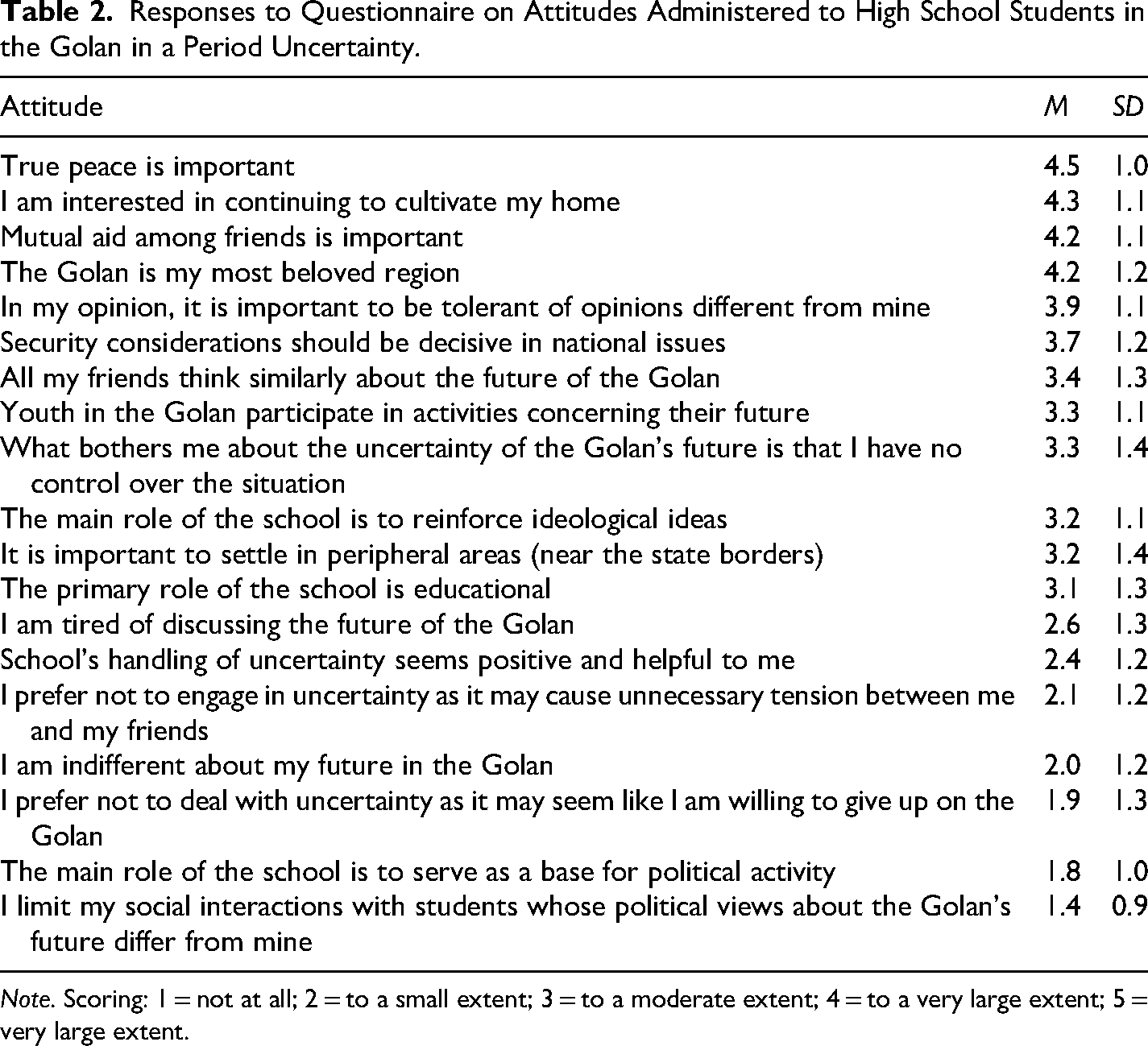
Note. Scoring: 1 = not at all; 2 = to a small extent; 3 = to a moderate extent; 4 = to a very large extent; 5 = very large extent.
Based on the responses, schools played a significant but secondary role; although students perceived the reinforcement of ideological beliefs as a function of the school, similar to its educational role (means of 3.0–3.2 out of 5 for both), they did not see it as a venue for direct political activity (low average of 1.6–1.8). The findings demonstrate social resilience and relative openness among adolescents to different opinions, despite political tensions, as reflected in high social cohesion and a low tendency to reduce social contact due to differing opinions (low average of 1.4 out of 5.0). Moreover, a strong attachment to the Golan as their most beloved region (average of 4.2 out of 5.0) was reinforced during periods of uncertainty, highlighting the importance of local identity in coping with political challenges. Finally, despite the significant emotional impact of the political situation (average of 3.0 out of 4.0 for Golan residents), the results indicate good coping and adaptation capabilities. No variance was found among the schools.
The findings indicate diverse fields of study in which there was reference to the Golan, but with a tendency to avoid deep, direct engagement with political controversies. Instead, there was a preference for building local identity and a sense of attachment to the area through “safer” topics, such as nature, geography, history, and environmental education. An interdisciplinary approach and limited critical discussions were evident, but mainly focused on noncontroversial aspects. Sensitive topics, such as Jewish history and settlement in the area, were handled cautiously. While this approach allows for in-depth education about the area and can strengthen the connection to it, it raises questions about the extent to which students are prepared to deal with future political and social complexities. Importantly, the analysis did not indicate intentional teacher bias or complete avoidance of CI discussion, suggesting that there was an effort to maintain educational balance on these sensitive topics.
The analysis of the worksheets revealed three main categories of themes related to teaching about the geopolitical status of the Golan: the focus of the study materials dealt with the Golan as a space and a home; the wording of the messages in the materials obscured disputes (Wansink et al., 2018); and the messages regarding the Golan were mostly positive.
Table 3 presents the results of the first stage of the thematic analysis: the number of times different terms associated with the CI were used and their classification into disciplines that deal specifically with the geographic region and those in which the region was incidental to the lessons.
Discipline and Reference to the Golan in the 90 Worksheets.
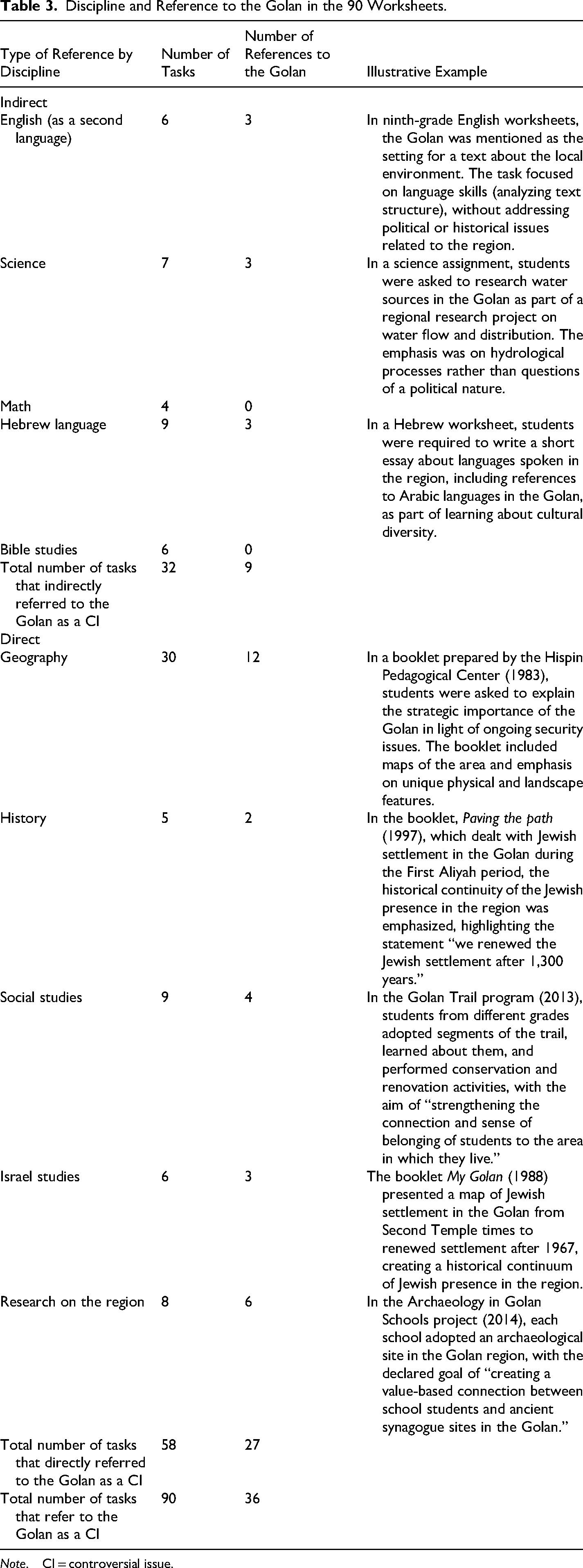
Note. CI = controversial issue.
As shown in Table 3, most of the materials analyzed (N = 58, 64.3%) directly addressed the Golan. Most of the assignments were in subjects that involved studying the region and were developed for elementary schools. Younger students learned about the region in Israel Studies classes, in which they became familiar with their area of residence, or in social studies classes. In high school, information about the Golan was taught in geography class and in research assignments. Many of the assignments in other disciplines (N = 32, 35.6%) also referred indirectly to the Golan as a CI.
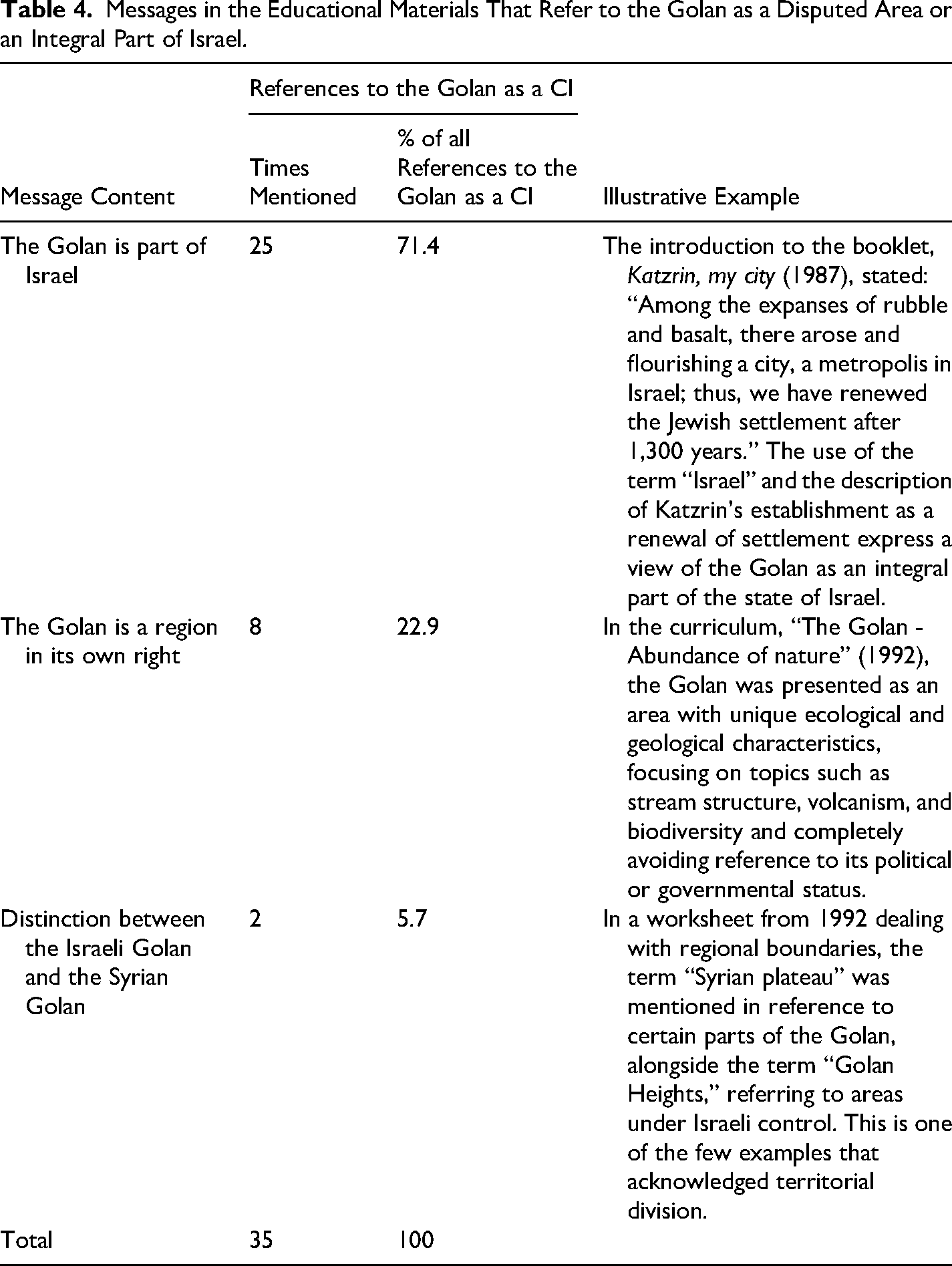
Table 4 presents messages that emphasize the CI and obscure the controversy by presenting Israel's sovereignty over the region as a matter of national consensus. Most of the study materials analyzed identified the Golan as part of Israel and a matter of broad and neutral public consensus, unlike more controversial aspects of national security (Table 4).
Messages in the Educational Materials That Refer to the Golan as a Disputed Area or an Integral Part of Israel.
Positive, Negative, or Neutral Messages Regarding the Golan as Part of Israel in Study Materials.
The materials consistently presented distinctive themes. A Hispin geography booklet (1983) directly emphasized the Golan's strategic importance to Israel's security. In contrast, a Katzrin Pedagogic Center brochure (1987) described the ancient village of Katzrin archaeologically, and did not explicitly link it to modern Jewish settlement. Other materials, such as the My Golan geography maps for Grades 4 and 5 (Bnei Yehuda School, 1988) and history units featuring post-1967 settler narratives (Golan Settlements Committee, 1998), more explicitly reinforced the Golan–Israel connection.
The messages in the analyzed materials were intended to strengthen students’ identification and emotional connection with a home whose future was in doubt. They portrayed the Jewish presence and Israeli sovereignty over the Golan as having a symbolic meaning to be protected and of supreme practical importance for Israel's security (Sagy, 1998; Shamai & Arnon, 2005).
Table 5 shows the distribution of positive, negative (critical), and neutral messages conveyed by the materials regarding the future of the Golan as part of Israel. Many bore multiple or mixed messages. Most of the materials conveyed a positive message about the Golan as part of Israel; a minority contained negative (critical) messages (Table 5).
The introduction to a booklet about the Golan city of Katzrin, written for use in history classes, offers a passionate case in point: “Among the expanses of rubble and basalt, there arose and flourished a city, a metropolis in Israel; from this, we have renewed the Jewish settlement after 1,300 years” (Golan Pedagogic Center, 1987, p. 4). Thus, the text lauded the renewal and establishment of modern settlement on the Golan and stressed Israel's historical right to the land. The same booklet also presented neutral messages, as in the objective language used in a broad overview of archaeological findings at the site, including a mosque and a church in addition to the synagogue as significant aspects.
Another positive and emotional message of local pride appeared in materials about the Golan for fourth graders: “You are privileged to live in a part of the Land of Israel that is unique [with its] views of the volcano, the basalt rocks, clear streams of water, plants, and animals, and the relics from the past” (Bnei Yehuda School, 1988, p. 4).
To summarize the findings, we sorted the selected materials according to three categories: approach, degree of belonging, and nature of the message. The approach category differentiated between direct and indirect references to the CI of the Golan. The degree-of-belonging category involved two aspects. One distinguished message that represented the Golan as an area of disputed sovereignty from those that assigned it indisputably to Israel. The other referred to Golan residents’ sense of regional belonging. The nature-of-the-message category divided the statements about the Golan being part of Israel into positive, critical, or neutral. These categories yielded an overall picture of the diverse ways in which the Golan CI was addressed in the selected schools. These findings are supported by the results of the School Students’ Attitudes During a Period of Uncertainty questionnaire that was administered to students in Golan schools.
The results reveal a complex interplay between direct and indirect approaches to the Golan issue. The predominance of neutral (42.2%) and positive (40.0%) messages about the Golan as part of Israel, alongside emphasis on identification with Israel (71.4%), suggests an approach that is consistent with ideological education. This potentially fosters belonging, but can limit critical engagement with the region's complex history, addressing our research question on navigating political education and ideological reinforcement in this sensitive context.
Discussion
Our analysis revealed how pedagogical materials communicated underlying messages during a period of regional uncertainty. This approach strengthened social cohesion and national identity, but it also raised concerns about indoctrination and suppression of differing viewpoints. Like McAvoy and Hess (2013), we found that teachers avoided addressing CIs directly, focusing instead on heritage and history. Direct engagement with the Golan's status was largely confined to citizenship, history, and social science classes.
The study units that directly address the CI generally took a uniform stance on the region, seeing the Golan as an inseparable part of Israel. Political positions that advocated negotiations over the region's future were not presented. Only students in middle and high school were exposed to the Syrian side of the story, and even then, on a limited scale. For example, little attention was given to the tens of thousands of people who fled to Syria from villages in the Golan when Israel occupied the area (Kipnis, 2013). The region's geopolitical complexity was presented not as a dispute, but as a given. The Arab (Druze and Muslim) population that inhabited the Golan when it was part of Syria before June 1967 was mentioned only in demographic statistics about the area, and not as a basis for discussion of current political issues.
The public messages about the Golan's future that filtered into the schools did not explore the issue in its full complexity. This approach reflects not only a total mobilization of the local population towards an indoctrinatory education of prevailing ideology. It also indicates (Journell, 2022) the potential suppression of critical thinking, the marginalization of minority viewpoints, and the creation of a monolithic narrative that could hinder future efforts at conflict resolution. However, in the context of people returning to their ancestral land under constant security threats, such an approach might be seen as necessary for survival and national cohesion. This may have influenced the students and teachers to limit their exposure to open debate about the controversy. Indeed, we found that the controversy about the region was usually avoided, most probably to refrain from arousing strong emotions that could endanger social solidarity, even though it would have strengthened the students’ skills in democratic participation. Thus, teachers missed an opportunity to guide students along the path to becoming citizens capable of dealing with complex concepts. In particular, the widespread practice of actively avoiding discussion of the CI in classes compromised some important teaching goals of mature democracies, such as cultivating democratic values; creating a space that allows for disagreement, pluralism, and tolerance of differing opinions; and developing students’ communication skills and social sensitivity.
We found that educational materials used in the Golan schools did not prompt discussion or critique through open questions, but rather used phrases that developed the students’ sense of local identity and affiliation with the Golan. Avoidance of the controversy over the region's future and the use of materials and tasks that sent specific messages suggest that ideological education was an underlying goal. Furthermore, the curricular materials promoted an educational perspective that strengthened local identity and promoted an educational perspective that obviated discussion. This may be seen not only as an outcome of teacher discomfort with controversy, but as an active preference for ideological education that strengthens identity, sense of belonging, and consensus, ultimately serving the interests of the region's dominant group, which saw the Golan as part of Israel. Such a choice raises ethical questions about the role of education in shaping national narratives and identities, especially in contested regions.
The analysis of the worksheets and educational materials revealed three main avoidance strategies implemented in Golan schools during the research period:
Indirect evasion: Teachers redirected attention from controversial aspects to neutral topics, emphasizing physical, natural, or historical features and avoiding contemporary political issues. This aligns with Hess's (2008) “topic avoidance” and Levinson's (2006) “procedural neutrality,” where seemingly objective information tacitly reinforces specific ideological perspectives without directly addressing sensitive issues. Alignment with official positions: Materials consistently presented the Golan as part of Israel's territorial and historical continuity, favoring the dominant narrative without presenting alternatives. This reflects what McAvoy and Hess (2013) termed “privileged discourse” and corresponds with Apple's (2004) analysis of curriculum as a mechanism for transmitting selective cultural knowledge that reinforces existing power relationships. Emphasis on shared elements: The educational programs brought together diverse student populations around non-controversial shared interests (environmental conservation, heritage, community development) and carefully avoided underlying political differences. This resembles Cassar et al.'s (2021) concept of “selective pluralism,” which acknowledges diversity only within parameters that do not challenge foundational assumptions.
All three strategies reflect Barad's (2003) “diffraction patterns,” which are characterized by deliberate intervention in educational discourse to serve immediate pragmatic needs for community cohesion but raise questions about democratic education. As Zimmerman and Robertson (2020) argued, such avoidance might protect short-term harmony, but it undermines long-term democratic capacity building, highlighting the tension between schools as democratic institutions and as transmitters of national narratives in contested regions.
In the case at hand, avoidance seemed to alleviate the difficulties that administrators of State schools faced, given the expectation that they should adhere to the official state position while avoiding positions that clashed with prevailing regional opinion, which primarily supported maintaining hold of the Golan (Heitner, 2016). Given this quandary, teachers in these schools used materials that reflected the dominant ideological position in the region and skirted the controversy itself. Their considerations were not only pedagogical; essentially, the widespread practice in these schools of an active yet indirect avoidance strategy left the controversy outside the classroom walls, despite the fact that it was intensely present in students’ and teachers’ lives. Teachers on the Golan avoided triggering discomfort in the community that might affect the classroom experience by using tactics to avoid internal debate among residents of the Golan while presenting neutrality toward the Ministry of Education, as suggested by Zimmerman and Robertson (2020). This effort to avoid the conflict echoes the findings of other studies from Israel and elsewhere that detected teachers’ tendency to avoid CIs in class due to fear of students’ reactions or confrontations with them (Alscher et al., 2022; Cohen, 2020; Erlich-Ron & Gindi, 2021; Harel et al., 2020; McAvoy & Hess, 2013).
We analyzed this avoidance as “not neutral.” It was, for example, also reflected in school policies that supported students who missed school because they were participating in protests or demonstrations against an Israeli withdrawal from the Golan. Moreover, since the regional education system is part of the national system, its avoidance of the issue had political significance. By refraining from explicitly taking a position on the controversy or upholding the region's hegemonic opinion that opposed that of the state, the system maintained a secure position vis-à-vis state institutions, as Osler (2011) found. The regional leadership emphasized the crucial importance of the Golan for the nation at large. In doing so, it positioned itself as a branch of the state (Heitner, 2016; Shamai & Arnon, 2005). Thus, it was able to receive financial support from the state for the purpose of hiring additional educational psychologists and educators, who remained on the Golan even after the political situation stabilized (Arthur & Baily, 2000). Subsequently, it received state aid and autonomy to implement regional educational programs that, although given consensual titles such as environmental or innovative education, promoted the creation of a united Golan community and strengthened students’ sense of regional belonging. This approach highlights the complex interplay of education, national security, and identity formation in contested regions. It may be effective in building a strong sense of local identity and consensus, but it also raises significant ethical and practical challenges. The long-term implications of such an approach on democratic values, relations with neighboring communities, and the ability to engage in future peace processes warrant careful consideration.
In comparing the Golan case to similar situations worldwide, we found a common pattern in contested regions where education becomes a tool for nation-building and security (Nelson, 2018). However, the Golan case is unique in its context of a people returning to their ancestral land under constant threat. This raises critical questions about the balance between national security needs and democratic educational ideals. Future research should explore the long-term effects of such educational approaches on social cohesion, democratic participation, and conflict resolution capabilities in similar geopolitical contexts. Moreover, it's crucial to consider how such educational strategies might evolve in response to changing political landscapes and potential peace processes.
Some limitations of the research should be noted. As a case study, it focused on CIs in a limited region – a limitation that may impair the generalizability of its findings. The reliance on textual analysis and the lack of empirical verification of the current applications of teachers’ avoidance strategies in the Golan context are also noted. In addition, the textual analysis did not examine school principals’ and teachers’ actual behavior at the school level. Nevertheless, their choice of materials from the curricular corpus implies a reluctance to confront the CI and avoidance of the issue in their daily conduct in class.
Some methodological limitations should be noted. Analyzing historical educational materials from a contemporary perspective introduces potential interpretive bias despite our efforts to contextualize them within their period (mid-1980s to early 2000s). Our textual analysis cannot fully capture how these materials were actually used in classrooms, as teachers might have supplemented or contextualized them in ways not evident in the documents. Additionally, the retrospective nature of this study limits our understanding of the decision-making processes behind the creation and selection of these materials.
Future research could compare the current situation of teaching controversial topics in schools in the Golan today to past findings, as well as extend the geographical scope to other regions or countries. Such research could provide a more comprehensive understanding of CI avoidance and its implications. These future studies could offer valuable insights into the subtleties of balancing the objectives of national identity formation, social cohesion, and principles of democratic education in different cultural and political contexts.
Conclusion
The research reveals that teachers tend to avoid teaching CIs when conflicts are ongoing, a phenomenon termed “active avoidance.” This behavior manifests in three ways: indirect avoidance of sensitive topics, adherence to official government positions, and focus on commonalities while avoiding disagreements.
This study's findings offer valuable insights for teaching CIs in other disputed regions worldwide. By identifying these avoidance strategies, educators in similar contexts can recognize these patterns and develop more balanced approaches that honor both community cohesion and democratic education. Educational systems in divided societies could benefit from frameworks that allow age-appropriate exploration of CIs, gradually introducing multiple perspectives as students develop critical thinking skills, better preparing them to engage constructively with complex geopolitical realities while maintaining social cohesion.
This situation creates a fundamental dilemma within the educational system—between the need to cultivate critical thinking and plurality of opinions essential for democracy, and the tendency to strengthen national resilience and collective identity during ongoing conflict. Pluralistic education is crucial in addressing this dilemma as it develops students’ critical thinking skills, ability to listen and contain opposing views, and understanding that complexity is an inherent part of social reality. To address this situation, it is essential to develop teaching practices that encourage open and respectful discourse in the classroom. Therefore, it is imperative that teachers receive appropriate training that provides them with confidence in facilitating complex classroom discussions, as part of nurturing active and responsible democratic citizenship.
Footnotes
Acknowledgements
This research was made possible through the generous cooperation of several institutions. We express our deep appreciation to the Golan Archives, the Golan Regional Council, and the Golan Local Council for providing access to documents vital to our study. Special thanks to the archivists for their assistance, which was essential to the completion of this research. We also wish to acknowledge the prime contribution of the late Professor Shmuel Shamai, whose decades of research in the Golan region and expertise on sense of place formed the conceptual framework for this study, and whose dedication to understanding educational processes in contested regions continues to inspire our work.

Ethics Approval Statement
Approved by the Ethics Committee of the Tel Hai Academic College.
Author Contribution
All authors contributed equally to this work.
Funding
The authors received no financial support for the research, authorship, and/or publication of this article.
Declaration of Conflicting Interests
The authors declared no potential conflicts of interest with respect to the research, authorship, and/or publication of this article.